Tag: Marty Schladen

  • FirstEnergy admits it controlled dark money group started by DeWine aide

    FirstEnergy admits it controlled dark money group started by DeWine aide

    BY: MARTY SCHLADEN and Ohio Capital Journal

    Columbus, Ohio – The mammoth scandal surrounding a 2019 energy bailout appeared to creep closer on Thursday to the administration of Ohio Gov. Mike DeWine.

    FirstEnergy said in a deferred prosecution agreement that the man DeWine appointed to lead the Public Utility Commission of Ohio took a $4.3 million payment and then acted on behalf of the Akron-based power company instead of as the state’s top regulator. 

    That man, Sam Randazzo, has resigned. 

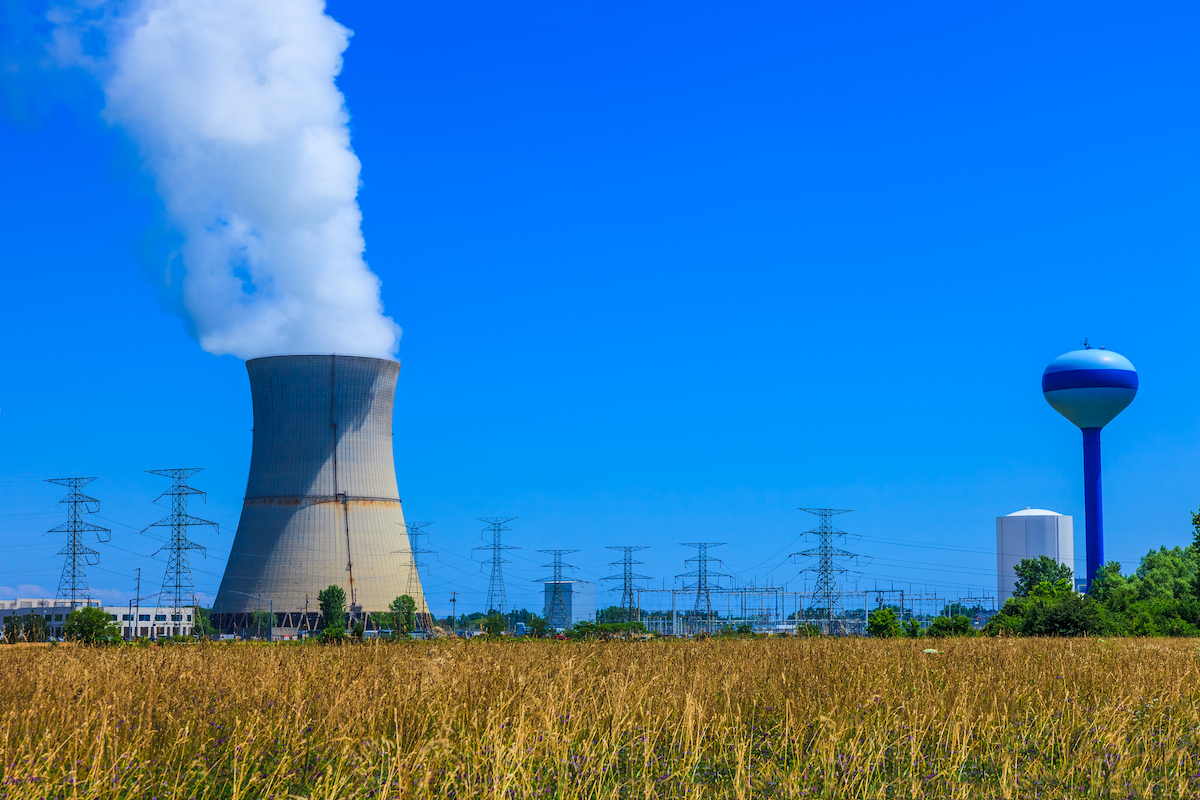
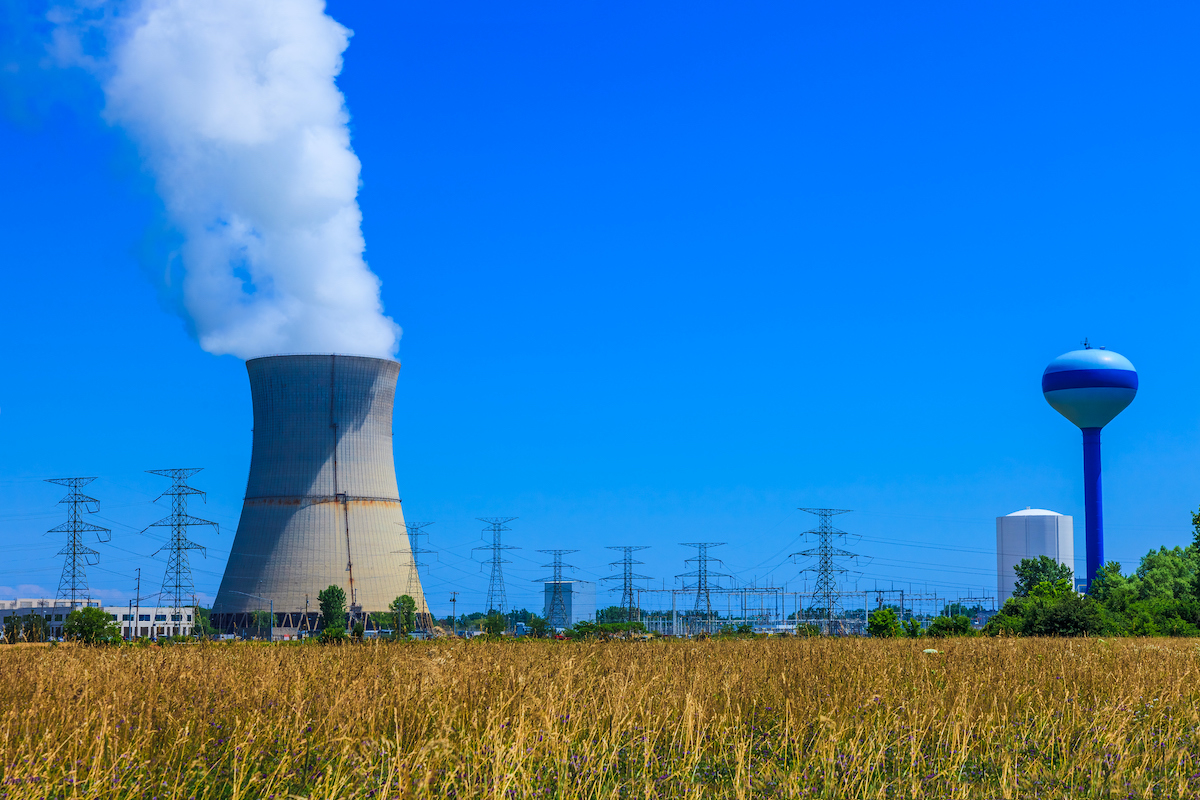
    But FirstEnergy also helped control a 501(c)(4) “dark-money” group started by a senior DeWine aide while he was still a FirstEnergy lobbyist, the agreement showed. The company passed a torrent of money through the secretive group as part of a successful $61 million effort to buy a $1.3 billion, ratepayer-funded bailout, the document FirstEnergy signed off on said.

    While Acting U.S. Attorney Vipal J. Patel slammed the dark money group, DeWine and the aide, Legislative Affairs Director Dan McCarthy, didn’t respond to requests for comment. DeWine has staunchly defended McCarthy since the scandal broke almost exactly a year ago.

    Patel held a press conference in Cincinnati on Thursday to announce that his office had entered into a deferred prosecution agreement with FirstEnergy. The company will pay $230 million and, if it lives up to the terms of the agreement, will have a charge of conspiracy dismissed.

    Former Ohio House Speaker Larry Householder, R-Glenford, has been charged in the case. He was stripped last year of his speakership and he was ejected from the House earlier this year.

    Two of Householder’s associates charged in the case have pleaded guilty and a third, Neil Clark, took his own life in March.

    For its part, FirstEnergy fired CEO Chuck Jones and two other executives and is conducting an investigation of its own.

    In Cincinnati Wednesday, Patel stressed that the investigation is continuing. But he wouldn’t comment on matters other than the agreement with FirstEnergy. 

    DeWine aide McCarthy hasn’t been charged and last summer, he denied wrongdoing. But Partners for Progress, the dark-money group he founded, was a topic of the prosecution agreement.

    Then still a FirstEnergy lobbyist, McCarthy founded it, “weeks after certain FirstEnergy Corp. senior executives traveled with (Householder) on the FirstEnergy Corp. jet to the presidential inauguration (of Donald Trump)  in January 2017,” the agreement said.

    The prosecution agreement added, “Although Partners for Progress appeared to be an independent 501(c)(4) on paper, in reality, it was controlled in part by certain former FirstEnergy Corp. executives, who funded it and directed its payments to entities associated with public officials. 

    “For example, FirstEnergy Corp. executives directed the formation of Partners for Progress and decided to incorporate the entity in Delaware, rather than Ohio, because Delaware law made it more difficult for third parties to learn background information about the entity. Certain FirstEnergy Corp. executives were also involved in choosing the three directors of Partners for Progress, two of whom were FirstEnergy Corp. lobbyists.”

    Millions would flow through Partners for Progress while McCarthy was its president and tens of millions more would later run through it and into the furious effort to pass the bailout after McCarthy resigned to become DeWine’s legislative affairs director in early 2019.

    The prosecution agreement also appears to refer to McCarthy as “Official Aide 1”  as he worked on DeWine’s behalf to help pass the bailout that DeWine would sign later that year.

    It cites emails among energy executives saying that Official Aide 1 and others were “fighting” to extend the term of a bailout of two failing nuclear reactors in Northern Ohio.  It also cites a text-message discussion between a FirstEnergy executive and the aide about language that would make the bailout harder to challenge in a referendum.

    And in the press conference, Patel said the scandal would never have happened if not for the dark-money group of which McCarthy was president and another, Generation Now, which has pleaded guilty.

    “This effort would not have been possible — both in the nature and the amount of the money provided — without the use of 501(c)(4)s,” Patel said.

    The acting U.S. attorney called the scheme, and even the name of McCarthy’s former dark-money group, dishonest.

    “These are supposed to be, according to the (tax) code, social welfare organizations. You all see a lot of social welfare going on? I don’t,” Patel said, adding, “What about these names? Partners for Progress? What are the partners here? The conspirators? What’s the progress? Passage of (the energy bailout) through bribery?”

    While DeWine’s office didn’t respond to questions on Thursday, the governor in February defended his legislative affairs director.

    “As far as I know, Dan McCarthy has been well-respected for many, many years, long before he started working for me as our legislative director and I have faith in his integrity,” DeWine said.

    For Dayton Mayor Nan Whaley, a Democrat challenging DeWine in the 2022 election, that’s not good enough.

    “Today’s charges make clear that this corruption case reaches the highest levels of government in Ohio,” she said in a statement. “Enough is enough. It’s time for Gov. DeWine to come clean about his knowledge and involvement in this scandal.”

  • Ohio’s unvaccinated might be in as much danger now as they were in February. But state officials can’t directly track them

    Ohio’s unvaccinated might be in as much danger now as they were in February. But state officials can’t directly track them

    By Marty Schladen and Ohio Capital Journal

    More than 5 million Ohioans have started getting vaccinated against the coronavirus — and a few lucky ones will win a million bucks or a free ride to college for doing so.

    That has overall disease, hospitalization and death numbers plummeting as Ohio Gov. Mike DeWine ends covid restrictions on Wednesday. 

    But the 64% of Ohioans who haven’t begun their vaccinations appear to be in as much danger as they were in the deadly days of February. That’s when nearly 2,000 Ohioans were hospitalized with covid — about three times the 622 who were hospitalized with the disease on Tuesday.

    In other words, unvaccinated Ohioans might not be getting the right message from good coronavirus news because it doesn’t seem to apply to them. 

    Unfortunately, state health officials can’t say for sure.

    The Washington Post last week published a state-by-state analysis assuming that vaccinations were at least 85% effective at keeping people out of the hospital with covid. It recalculated covid metrics excluding 85% of vaccinated people and compared resulting rates to what they were for the general population before vaccines were widely available.

    Ohio came out in the middle of the pack, which isn’t great. It showed that among the unvaccinated, the state’s daily rate of covid hospitalizations of 40 per 100,000 people is similar to what it was for the population as a whole on Feb. 16.

    Most of Ohio’s neighbors have similar hospitalization rates among the unvaccinated. In Indiana, West Virginia and Kentucky it’s 40 per 100,000.

    Neighboring Michigan for months has been hammered with a fast-spreading variant and its unvaccinated population is estimated to have 60 hospitalizations per 100,000. Pennsylvania also has an unvaccinated hospitalization rate of 60 per 100,000, the analysis said.

    The analysis used conservative assumptions about how effective the vaccines are based on scientific data. Even so, they’re still just estimates.

    Tantalizingly, officials with the Ohio Department of Health have data about who’s sick and who’s been vaccinated, but not the technology to match them up. 

    “Within the disease reporting system (ODRS), there is a notation for whether someone is vaccinated or not,” spokeswoman Megan Smith said in an email. “However, it is not possible to run a report by vaccine status at the state level because of the limitations of the system.”

    Meanwhile, state leaders are continuing to try to persuade Ohioans to get vaccinated. They have credited the Vax-a-Million promotion for a 28% vaccination increase during the first two weeks of the promotion among people who could have gotten shots before it was announced.

    “Ohio’s Vax-a-Million drawing was designed to bring attention and excitement to vaccination efforts around the state,” ODH Director Stephanie McCloud said in a statement. “This data showing significant increases in vaccination numbers during the two weeks since the contest was announced demonstrates it is working. Vaccines are our best tool to return to the lives we remember from before the pandemic.”

  • Consumer protection? New DeWine regulatory chief says most overcharges can’t be refunded

    Consumer protection? New DeWine regulatory chief says most overcharges can’t be refunded

    Getty Images

    By Marty Schladen and Ohio Capital Journal

    Gov. Mike DeWine’s latest appointee to lead Ohio’s scandal-plagued utility regulator last week raised concerns among some lawmakers and consumer watchdogs. She claimed that her agency has only a very limited ability to make electric companies refund billions in improper charges to ratepayers.

    There was always going to be scrutiny when Jenifer French made her first appearance last Wednesday before the Ohio Senate and Public Utilities Committee. 

    DeWine appointed her in March to chair the Public Utilities Commission of Ohio. DeWine’s first appointee, Sam Randazzo, resigned in November after the public learned that a lobbyist believed to be Randazzo got a $4.3 million payment from Akron’s FirstEnergy just as Randazzo took over as Ohio’s top utility regulator. 

    For its part, FirstEnergy last year fired its top executives after discovering the payment to Randazzo — and after federal prosecutors accused it of being at the center of a $61 million bribery scandal that resulted in a $1.3 billion bailout that greatly benefited FirstEnergy and associated companies.

    French, a former Franklin County Common Pleas judge, told the Senate committee that she wanted to use her background to restore public confidence in the agency. 

    But Sen. Mark Romanchuk, R-Ontario, wanted to get down to specifics.

    “You mentioned something about public trust and public trust, I believe, is fixing this refund problem,” he said. “Since 2009, there has been about about $1.5 billion that has been deemed improper at the court and that money was not refundable back to the ratepayers — the people who paid that money.”

    Romanchuk was referring to charges that the PUCO allowed, but that the Ohio Supreme Court later struck down as illegal. 

    The funds include $456 million FirstEnergy got, supposedly to modernize the utility grid. But at least some of the money was placed into a pool that FirstEnergy’s out-of-state utilities could borrow from. 

    Allowing electric companies to pocket improper proceeds from ratepayers is not a business-friendly practice, Romanchuk told French.

    “That was $1.5 billion that was pulled out of our economy, and I would argue that’s not a good thing as we compete with other states and other countries around the world,” he said.

    French replied, in essence, that while her agency has the power to allow rate increases, it has scant power to get the money back when the increases are ruled to be illegal. 

    At issue is why the PUCO, when it grants rate increases, doesn’t routinely say they’ll have to be refunded if the courts strike them down or if the utilities don’t use the money as they promise.

    “My understanding is that there are very limited circumstances in which the PUCO can set rates that are capable of being refunded at the end,” French said. “For the most part, it’s the call of the legislature.”

    Romanchuk disputed that. He pointed to a 2019 Ohio Supreme Court decision saying that if the PUCO had built a refund mechanism into the “rider” that allowed FirstEnergy to collect $456 million, it could have forced the company to pay it back when an audit showed the money wasn’t used for its stated purpose.

    The decision said that a 1953 law “bars any refund of recovered rates unless the tariff applicable to those rates sets forth a refund mechanism… FirstEnergy’s tariffs for the modernization charge, however, contain no refund mechanism.”

    French said she was unfamiliar with that decision. 

    A year before, the court said something similar in a case in which FirstEnergy was allowed to make yet another upcharge. In that case, the PUCO was asking that the company refund $43 million in “imprudent” purchases of renewable energy credits.

    Referring back to its 1957 Keco Industries v Cincinnati decision, the court said that refunds would amount to illegal “retroactive ratemaking” because the fees the utilities ended up collecting would differ from those filed in the original tariffs. In other words, once a rate is legally set, the PUCO can’t change it willy-nilly, the decision said.

    But the 2018 decision additionally said this: “FirstEnergy also asserts that the plain language of (the 1953 law) bars any refund in this case because the ($43 million) rider did not specify a refund process. We agree.”

    So why wouldn’t refunds be legal under Keco if a provision for them is a part of the original order?

    French said it was her understanding of the Keco case that unless a rate increase was of a special type — a “reconciled rider” — the only way refunds can happen is if the General Assembly changes the law.

    “If it is not provided for in a law… or a reconciled rider, refunds would require a statutory change,” she said. “I think the Supreme Court was very clear about that. If there are opportunities for us by statute to be permitted to determine whether a rider is refundable or not, certainly that is something we would look into.”

    That rationale can be hard to understand. In emails, PUCO spokesman Matt Schilling was asked why his agency doesn’t routinely make a refund mechanism part of any rate increase.

    He said the decisions to which French and Romanchuk were referring relied on two separate authorities. French was talking about the Keco decision, while Romanchuk was talking about a decision based on the 1953 statute, Ohio Revised Code 4905.32.

    Neither, however, uses the term “rider” and none of the subsequent Supreme Court decisions Schilling provided contains the term “reconciled rider.”

    The state’s official consumer watchdog, the Ohio Consumers’ Counsel, said nothing stops the PUCO from building refund mechanisms into rate hikes that are later ruled to be unlawful.

     “In the words of former Supreme Court Justice Paul Pfeifer, it ‘boggles the mind’ that Ohio consumers are denied refunds of utility charges after the court finds a PUCO order to be improper,” spokesman J.P. Blackwood said in an email. He added that PUCO commissioners seem to be substituting their own judgement for that of the Supreme Court. 

    “That PUCO commissioners have protected utilities more than consumers by not making certain charges refundable, further shows that the selection process for PUCO commissioners needs reform,” he said. 

    Last Wednesday, Sen. Teresa Fedor, D-Toledo, put those sentiments more succinctly.

    “It’s time for the board members of the PUCO to start siding with the citizens of Ohio,” she said.

  • Without supporting data, Ohio to end federal unemployment supplement

    Without supporting data, Ohio to end federal unemployment supplement

    By Marty Schladen and Ohio Capital Journal

    Citing fears that a $300-a-week federal unemployment supplement was keeping Ohioans from returning to the workforce, Gov. Mike DeWine on Thursday announced that he would end it. 

    However, the governor was unable to cite any data showing that businesses’ trouble finding workers was due to the supplement and not other dislocations caused by the coronavirus pandemic.

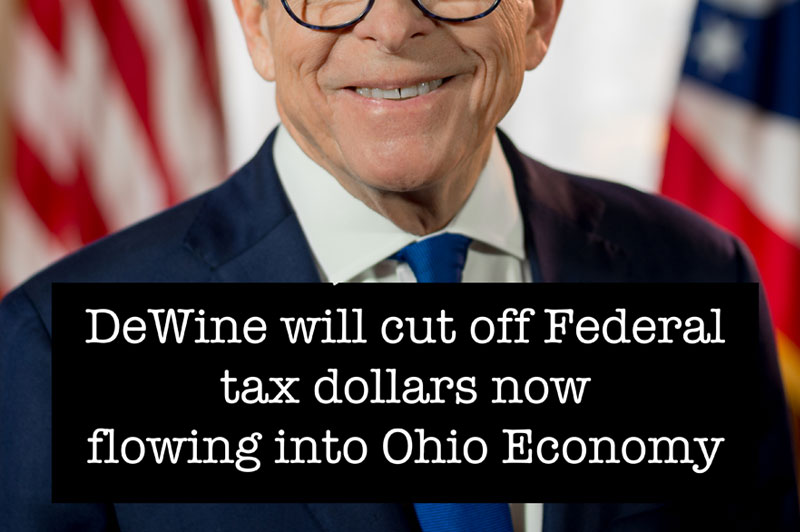
    Ohio will join 13 other Republican-led states in cutting off the payments to hundreds of thousands of Americans even though the benefit is shouldered entirely by the federal government. DeWine said he will wait until June 26 to terminate the supplement so those who haven’t already been vaccinated can do so before re-entering the workforce.

    The governor said he was undertaking the move because Ohio unemployment is near pre-pandemic levels and employers around the state are complaining that they can’t find needed workers. He said that problem is made worse because the extra $300 a week made some Ohioans calculate that it’s a better deal to just stay home.

    “The federal assistance is in some cases certainly discouraging people from going back,” DeWine said.

    That theme has been echoed by other Republican governors as they justify ending the benefit. DeWine’s move also was applauded by the National Federation of Independent Business, which has received hefty funding from the billionaire Koch family and in the past has fought laws requiring paid sick leave.

    “Ohio’s economy is growing and growing faster than our neighboring states. We need a robust workforce to maintain our positive trajectory,” Roger Geiger, NFIB’s Ohio executive director, said in a statement. “The time for additional unemployment payments is over. We appreciate Ohio Gov. Mike DeWine for recognizing that now is the time to strongly encourage everyone to get back to work.”

    But some independent experts have said the issue is more complex. They believe problems with child and adult care, ongoing disruptions in certain industries and other dislocations caused by the pandemic are keeping many on unemployment.

    Republican governors are “misguided in their thinking about why people aren’t returning to work,” Rebecca Dixon, executive director of the National Employment Law Project, told the Washington Post last week. “There are all of these ways our care infrastructure is not back up.” 

    The argument that increased benefits are keeping people out of the workforce also doesn’t seem to be supported by the most recent employment numbers, Paul Krugman, a Nobel Prize-winning economist and self-described liberal, wrote Monday in the New York Times.

    One would expect a $300-a-week supplement to most impact the behavior of low-wage workers. But Krugman pointed out that the April jobs report shows low-wage jobs like leisure and hospitality growing robustly while better-paid work in professional and business services actually fell.

    Asked whether he had data showing that federal supplements are keeping large numbers of Ohioans on the unemployment rolls, DeWine said, “If you look at why jobs are not being filled, I’m sure it’s multiple reasons. But whenever you go in and the market is distorted in that sense, you have certain consequences when you do that and should do that when you have a crisis.

    “And we’re coming out of the crisis economically… This couldn’t go on forever. The federal government was going to end this — unless they change their mind — they were going to end this in September. We’re moving it up a little bit. We think that’s the appropriate thing.”

    Dayton Mayor Nan Whaley, who is seeking the Democratic nomination for governor, released a statement saying she emphatically does not believe that ending the federal benefit early is the appropriate thing.

    “As we come out of this crisis, the problem facing Ohioans is the same one we had before coronavirus: wages are too low,” she said. “One good job should be enough, and for too many of our friends and neighbors, it isn’t. Mike DeWine is turning down money that could help Ohioans because he’s worried about politics. When I’m governor, I’ll be worried about paychecks.”

  • As in other states, Ohio might be running out of people who want shots

    As in other states, Ohio might be running out of people who want shots

    By Marty Schladen and Ohio Capital Journal

    Some county health departments in Ohio are again telling state officials this week not to send them any more coronavirus vaccines. That’s because they haven’t been able to use up the supplies they already have.

    It might be part of a national phenomenon. The news organization Axios reported this week on a paper by the Kaiser Family Foundation saying that based on its polling, just over 60% of Americans say they’ll get a vaccine.

    “We estimate that across the U.S. as a whole we will likely reach a tipping point on vaccine enthusiasm in the next two to four weeks,” the paper said. “Once this happens, efforts to encourage vaccination will become much harder, presenting a challenge to reaching the levels of herd immunity that are expected to be needed.”

    The paper conceded that the percentage of people willing to get a shot has crept up over time, so “61% may be a floor, not a ceiling.”

    Even so, it portends a struggle to get to the 70% threshold that epidemiologists say is necessary to achieve “herd immunity,” the point at which the virus starts to find it difficult to find new hosts so it can keep spreading and evolving.

    That’s an issue in Ohio.

    Everyone 16 and older has been eligible to get a shot since the beginning of the month. But as of Wednesday just 38% of the state’s population had received a first dose of the vaccine and just 28% had completed it.

    Further complicating the problem is that a fast-spreading variant that has ravaged Michigan has been spreading into Ohio, affecting the state’s northern counties first.

    The presence of that variant and other factors have put the unvaccinated in more peril now than at any other time in the pandemic, Robert M. Wachter, chairman of the department of medicine at the University of California at San Francisco, wrote Monday in a column in the Washington Post.

    Because more people — especially the elderly — have been vaccinated, case numbers, hospitalizations and deaths are far down from their winter peaks. But the numbers that health officials are counting now are affecting a smaller slice of the population: those who haven’t been vaccinated, and particularly those who haven’t survived an infection, Wachter wrote.

    “The problem is that the aggregate numbers — even if they show down-trending test positivity rates, hospitalizations and deaths — may be masking an important duality,” Wachter wrote. “The situation may be getting enormously better in the growing vaccinated population, while at the same time growing somewhat worse in the unvaccinated group.”

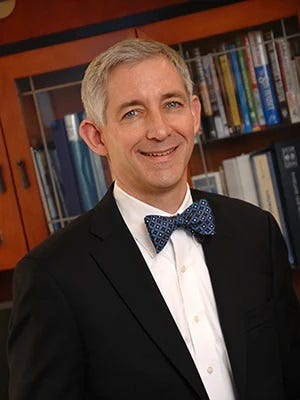
    Bruce Vanderhoff, medical director for the Ohio Department of Health, was asked Wednesday about younger Ohioans who might not think they’re particularly at risk if they don’t get vaccinated. 

    Bruce Vanderhoff, medical director for the Ohio Department of Health

    Doctors around the country report more covid hospitalizations and complicationsamong young people, partly as a result of the increasing dominance of the B.1.1.7 variant. Yet just 27% of Ohioans 20 to 29 have received at least a first dose of the vaccine.

    Vanderhoff said the risk extends beyond the individual.

    “People who don’t get the vaccine are not only putting themselves at risk, they’re putting others at risk as well,” he said. “We’re doing a disservice to the people we care about.”

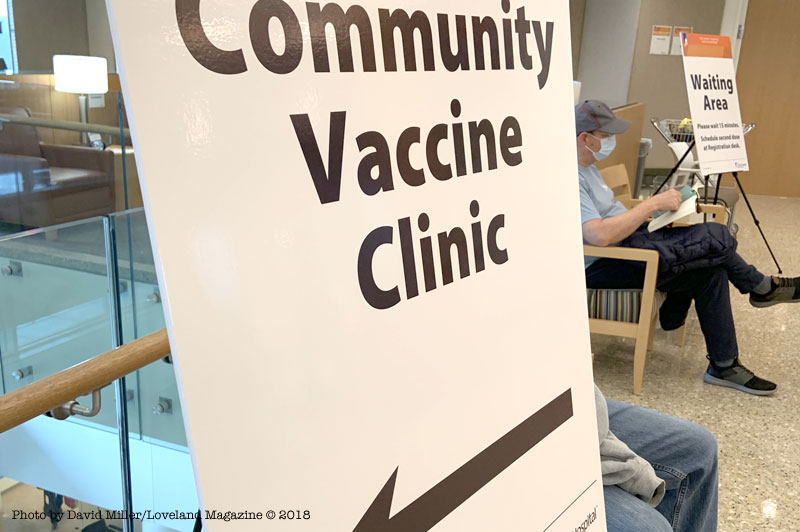
    Gov. Mike DeWine said health officials are doing everything they can think of to make it easier to get a shot, including expanding walk-up vaccination centers, taking shots into neighborhoods and workplaces and offering vaccines to family physicians.

    He’s also trying to convince people that they have a responsibility to family and community.

    “You can’t be sure everybody you come in contact with has been vaccinated,” DeWine said. “We’re not in this separately. This is not a decision that people make and only they live with the consequences.”

  • Coronavirus cases in Ohio, neighboring states might be inching back up

    Coronavirus cases in Ohio, neighboring states might be inching back up

    By Marty Schladen and Ohio Capital Journal

    After a disastrous January, coronavirus cases in Ohio steadily marched downward. Then in recent weeks, they hit a plateau. Now, even as greater numbers of Ohioans get vaccinated, case numbers might be inching back up.

    Ohio might be part of a disturbing national trend.

    The Johns Hopkins University Coronavirus Resource Center published a set of graphs titled, “America is reopening. But have we flattened the curve?” They map shows trends for each state and color codes them — red for states with increasing case numbers and blue for states where numbers are dropping. How deeply shaded they are indicates how quickly cases are dropping or falling in a state.

    The red in Ohio’s graph is so light that it barely amounts to a blush. More disturbing, is that every neighboring state but one is a deeper shade. Kentucky is a very light shade of blue.

    The trend extends across the country. The U.S. Centers for Disease Control and Prevention last week said that the seven-day average of coronavirus cases nationally was up 7% over a week earlier.

    That prompted CDC Director Rochelle Walensky on Monday to say she felt a sense of “impending doom.” 

    “Now is one of those times when I have to share the truth and I have to hope and trust you will listen,” Walensky said, according to the Charlotte Observer. “Right now I’m scared.” 

    Those comments prompted President Joe Biden to call on governors in states that had ended their mask mandates to reinstate them.

    “People are letting up on precautions, which is a very bad thing,” Biden said, according to the New York Times.  “We are giving up hard-fought, hard-won gains.”

    The recent rise in cases is probably driven by several factors.

    States like Texas have lifted mask mandates and indoor capacity limits. Not only does that take away tools to limit the spread of the virus, it could send a message that the pandemic is over and precautions are no longer needed.

    Ohio’s mask and other orders remain in place. And Gov. Mike DeWine rarely misses an opportunity to urge the public to take precautions against the virus.

    But as the weather is warming and vaccines are becoming increasingly available, people might be letting their guard down. For example, about half the clientele was unmasked on Saturday at a crowded Columbus convenience store near the softball fields at Lou Berliner Park.

    Also, several new variants of the virus are spreading more rapidly than their predecessors. As they crowd out earlier versions of the virus, the spread — and mutations into even more dangerous variants — could accelerate further, experts have said.

    The CDC on Sunday said that the number of cases of the “UK variant” — B.1.1.7 — had jumped 115% in Ohio over a week earlier, the Cincinnati Enquirer reported.

    Also potentially hampering Ohio’s fight to squelch the disease is that the state will soon have plenty of vaccine, but millions of unvaccinated Ohioans.

    Such “vaccine reluctance” stems from several sources. 

    Some members of minority groups might distrust the health system after a history of abuse or neglect, meanwhile racial inequities in health care access still impede care. Some people have bought into the myth that vaccines cause autism. Still others might not be able to conveniently find one.

    There is also a political dimension. 

    After a year of former President Donald Trump making false statements about the coronavirus, an NPR-PBS-Marist poll conducted earlier this month found that almost half of Republican men said they had no intention of getting vaccinated.

    While other former presidents came together earlier this month to boost the vaccine effort, Trump skipped the event. Trump and his wife, Melania, quietly were vaccinated before they left the White House in January.

    It appears that many Ohioans are skipping the shot for one reason or another.

    Cohorts of older Ohioans who have been eligible for the vaccine for more than a month appear to show the trend. They approach about 70% getting at least a first dose and then the increase slows to a crawl.

    The most vaccinated group of Ohioans by age is now those 70-74, of whom 72% have received at least a first dose.

  • A year into pandemic, DeWine says Ohio on the right path to lift restrictions but can’t ease up yet

    A year into pandemic, DeWine says Ohio on the right path to lift restrictions but can’t ease up yet

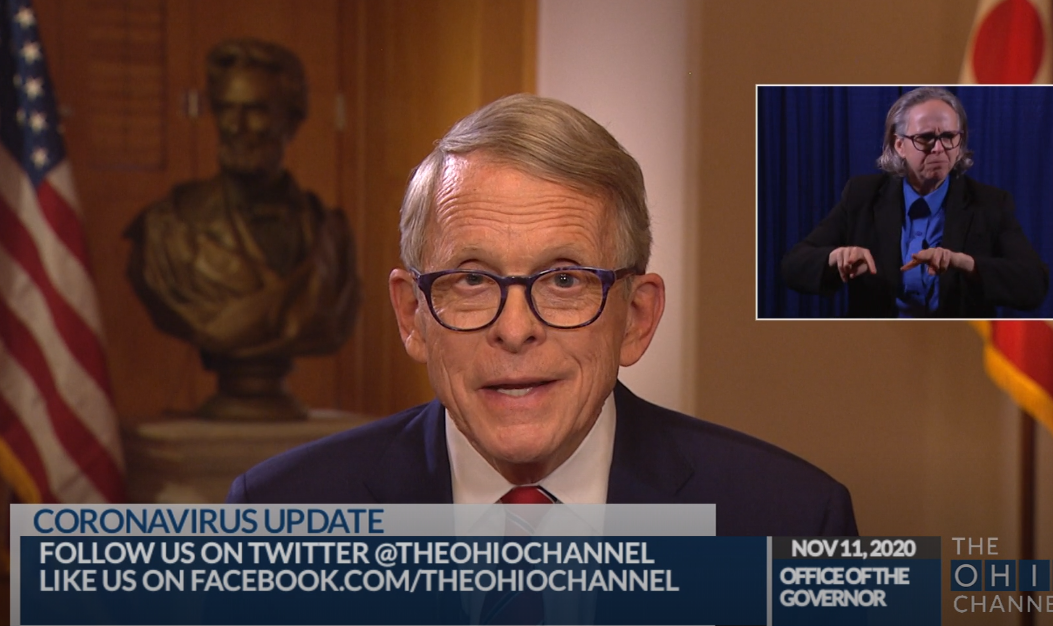
    Gov. Mike DeWine is pictured during a statewide address. Photo courtesy Ohio Channel.

    By Marty Schladen and Ohio Capital Journal

    A year ago Wednesday, the coronavirus pandemic officially started in Ohio when the decision was made to cancel The Arnold sports festival. 

    On Thursday, Gov. Mike DeWine gave a primetime address to tell Ohioans that a return to normal is in sight — so long as they don’t become complacent.

    “No marathoner pulls out on purpose at the 25th mile marker,” DeWine said.

    The governor made some news during the speech. He announced that he would lift all remaining health orders once the number of coronavirus cases drops to 50 per 100,000 Ohioans.

    That might seem distant, with Wednesday’s rate standing at 179 per 100,000. But DeWine noted that the rate has been falling rapidly, from 445 on Feb. 23 and 731 on Dec. 3.

    “Ohio is on the right path to get us to 50,” DeWine said.

    However, such drops can’t be counted on to continue. Federal health officials reported this week that daily numbers appear to be hitting a plateau at levels that might seem low after the past several months, but were perceived as quite high last summer.

    Also concerning is that at least six worrisome variants of the virus are struggling to gain a foothold. Some are more transmissible, others more lethal and still others less susceptible to the three vaccines that have been approved in the United States.

    DeWine’s unusual primetime speech was to mark the one-year anniversary of Ohio’s fight against the disease.

    “None of us then fully understood the battle ahead,” he said. “This has been a tough year. Many of you have lost a parent. grandparent, sibling, spouse. Some of you have even lost a child. Some of you have lost your job. Some of you have lost your business.”

    It also was to announce the metrics by which he’ll decide to lift remaining health orders.

    But it also seemed a repudiation of two other Republican governors’ announcements in recent days that they were lifting all of their orders — including ones requiring mask wearing in indoor public spaces. Texas Gov. Greg Abbott and Mississippi Gov. Tate Reeves both made such announcements on Tuesday, prompting widespread condemnation from public health experts and from President Joe Biden.

    Anthony Fauci, the leading communicable disease expert in the country, said the daily number of new cases needs to be one-sixth of what it is now before ending mask mandates should be considered.

    DeWine didn’t mention other states, but he made it clear that Ohio’s mask mandate would remain in place for the time being. As he touted the rapidly growing number of vaccines coming into Ohio, he said, “We have one battle-tested tool that has worked so well and that is the mask.”

    The governor also appealed to Ohioans’ community spirit — a spirit that critics have said is lacking in Abbott and Reeves’ approach to the pandemic.

    “It’s been a difficult year,” DeWine said. “But we did what Ohioans always do. We rallied together. We sacrificed. We showed the world our Ohio grit. Our communities have come together.”

  • Never needed? Senate president predicts little opposition to nuclear bailout repeal

    Never needed? Senate president predicts little opposition to nuclear bailout repeal

    By Marty Schladen and Ohio Capital Journal

    A billion-dollar nuclear subsidy was the subject of an intense fight in 2019 and great controversy since. But the president of the Ohio Senate this week predicted that a repeal will make it through the House, Senate and that Gov. Mike DeWine will sign it.

    The reason: The company that owns the nuclear reactors no longer wants the money, he said. And that raises serious questions about whether the subsidies were needed in the first place.

    The subsidy was the product of House Bill 6. The legislation was passed in 2019 after a nasty fight which led to federal criminal charges against then-House Speaker Larry Householder, four associates and a dark-money group. 

    Prosecutors said $61 million from Akron-based First Energy and associated groups was used in the corrupt effort to pass the bailout. Two of Householder’s associates and the dark money group have pleaded guilty, FirstEnergy’s CEO was fired and Gov. Mike DeWine’s appointee to chair the Public Utility Commission of Ohio has resigned as part of the scandal. 

    Despite intense calls for a full repeal of HB 6, it remains in place — although a Franklin County Judge has temporarily stopped collection of the money by the owner of the nuclear plants, FirstEnergy successor Energy Harbor.

    DeWine and others have said they want a repeal, but they want to continue to subsidize the Northern Ohio nuclear plants for environmental reasons.

    “We were for nuclear power,” he said Tuesday, referring to his initial support for HB 6. “Nuclear power was the only way in this state, today, that we can have very much non-carbon production. It’s the only way we can do it.”

    But early this month, Sens. Jerry C. Cirino, R-Kirtland, and Michael Rulli, R-Salem, introduced legislation, Senate Bill 44, to get rid of the subsidies. On Wednesday it received a hearing by the Senate Energy and Public Utilities Committee.

    Despite the governor’s statements, Senate President Matt Huffman, R-Lima, said he expects the repeal legislation to become law.  

    “I think that provision will likely get passed out of the Senate and I think it will pass out of the House and get signed by the governor,” Huffman told the governing board of the Ohio Consumers’ Counsel, the state’s official utility watchdog. “When I say the House and the governor, I’m not speaking for them, nor have I spoken to them about this. But if a large company that got a subsidy in a dubious way… says ‘We don’t want it,’ that seems to me to be a pretty easy call.”

    Energy Harbor, the owner of the plants, didn’t respond to requests for comment on Wednesday. But Huffman was apparently referring to a December 2019 ruling by the Federal Energy Regulatory Commission and Energy Harbor’s response to it. 

    The ruling said, in essence, that the company that would become Energy Harbor would have to cut its prices if it was going to sell its subsidized nuclear energy onto the massive grid that serves all or part of 13 states, including Ohio. 

    It would “threaten the competitiveness” of the long-term, or “capacity,” marketplace if companies like Energy Harbor could sell subsidized power on the same basis as power that wasn’t subsidized. So Energy Harbor and the others have to discount it according to a formula, the ruling said.

    Recent developments appear to be a sharp reversal from 2019.

    As proponents pushed HB 6, they threatened that closure of the Ohio nuclear plants was imminent if they didn’t get a bailout — and quickly. But Huffman’s statements on Tuesday indicate that Energy Harbor has no plans to shutter the plants even now that it isn’t getting the money. 

    “I don’t want the nuclear power plants to close,” he said. “However, it’s been made clear to me that the plants will not close if this subsidy is removed. In fact, they’re better off because of machinations at another level. In fact, these subsidies will likely harm these power plants.”

    There’s other evidence that Energy Harbor’s pre-bankruptcy predecessor, FirstEnergy Solutions, might not have been as broke as it claimed in 2019. 

    Shortly after emerging from bankruptcy in early 2020, it did an $800 million stock buyback. Such buybacks typically raise stock values, in this case enriching shareholders just months after pleading poverty and winning a $1 billion bailout from Ohio ratepayers.

    The federal ruling also raises questions about whether it was wise even to start the bailout fight, which has caused so much damage in Ohio. On June 29, 2018, more than a year before DeWine signed HB 6 into law, FERC issued a ruling strongly foreshadowing what it later did: effectively erase the subsidies bailout supporters had gained if they wanted to sell power into the long-term market.

  • DeWine refuses to explain aide’s role in bailout scandal

    DeWine refuses to explain aide’s role in bailout scandal

    By Marty Schladen and Ohio Capital Journal

    If you asked most people to start up a dark money group and then funnel more than $1 million through it and into another such group, they’d probably want to know what it was going to be used for.

    But now that the second 501(c)(4) dark-money group, Generation Now, has pleaded guilty to being at the heart of one of the biggest bribery and money laundering scandals in Ohio history, Gov. Mike DeWine is refusing to discuss what one of his top aides was told when he formed the first dark money group, Partners for Progress.

    Generation Now pleaded guilty earlier this month to being the major conduit of money between Akron-based FirstEnergy and related organizations and the effort to pass House Bill 6, a $1.3 billion bailout that mostly went to two nuclear plants FirstEnergy started spinning off in 2016. DeWine signed the bill into law in 2019.

    Last summer, federal authorities arrested then-Speaker Larry Householder and four associates as part of the scandal and two of the associates later pleaded guilty.

    As he announced the arrests, U.S. Attorney David DeVillers stressed that the dark money made the massive scandal possible.

    “I don’t see how (the conspiracy) could possibly have happened” without it, DeVillers said.

    The feds haven’t accused DeWine’s aide, Legislative Affairs Director Dan McCarthy of wrongdoing, but they refer to his dark-money group in an affidavit supporting Householder’s arrest as “Energy Pass-Through.”

    Among the activities Generation Now pleaded guilty to was engaging in transactions “designed to conceal the nature, source, ownership and control of the payments” from FirstEnergy and associated companies.

    But DeWine and McCarthy don’t want to discuss whether McCarthy intended to obscure that FirstEnergy was bankrolling an effort to prop up nuclear plants it was spinning off.

    Asked last week about the matter, DeWine Press Secretary Dan Tierney pointed to a statement McCarthy issued last summer when The Cincinnati Enquirer first reported that he’d started a dark money group that helped fund the HB 6 effort.

    In it, McCarthy explained that in addition to his lobby work for FirstEnergy, he had also worked with people who had adversarial relationships with Householder and one of his indicted associates, Neil Clark, so “any insinuation I was involved in this disgusting scheme is without merit.” 

    But he didn’t explain why he founded Partners for Progress two days after the founding of Generation Now, or why a week later his dark money group got $5 million from FirstEnergy and within a month it was forwarding some of that money to Generation Now. 

    In early 2019, McCarthy stopped lobbying for FirstEnergy and resigned as president of Partners in Progress to become DeWine’s legislative affairs director. The following October, while McCarthy was advocating for HB 6 in that capacity, FirstEnergy and associates wired $20 million to McCarthy’s former money group and it forwarded $10 million of that to Generation Now the same month, the federal affidavit said.

    Despite these and other revelations about DeWine appointees, DeWine on Tuesday declined to give a more complete explanation of what McCarthy believed he was doing when he started Partners for Progress and began funneling money into a now-guilty dark money group.

    “As far as I know, Dan McCarthy has been well-respected for many, many years, long before he started working for me as our legislative director and I have faith in his integrity,” DeWine said.

  • Scandal-ridden FirstEnergy agrees to give up new upcharge

    Scandal-ridden FirstEnergy agrees to give up new upcharge

    By Marty Schladen and Ohio Capital Journal

    Many FirstEnergy customers weren’t recession-proofed when the coronavirus pandemic hit, but Akron-based FirstEnergy made sure that it was.

    Now, after firing its top management in the wake of a corruption-riddled 2019 law championed by the Akron-based company, FirstEnergy has agreed to stop collecting an upcharge that was part of it, Attorney General Dave Yost said Monday. As it currently stands, the charge is worth about $102 million a year to the company, Yost said.

    “A private company, probably as a matter of morality, shouldn’t be able to guarantee its profits against the marketplace by operation of the law,” Yost said in a virtual press conference.

    Yost last year sued FirstEnergy after federal authorities arrested then-House Speaker Larry Householder and four associates — two of whom later pleaded guilty — in connection with the 2019 passage of House Bill 6. The bill forced all Ohio utility customers to pay more than $1 billion over 10 years to bail out two failing nuclear reactors owned by a former FirstEnergy subsidiary. It also forces ratepayers to pay hundreds of millions propping up two aging, coal-fired power plants — including one that isn’t even in Ohio.

    Prosecutors say FirstEnergy and related groups funneled $61 million through 501(c)(4) “dark money” groups and into an effort to make Householder speaker and to pass and protect the utility bailout. U.S Attorney David DeVillers said it was likely the biggest bribery scandal in Ohio history.

    The bill also contained the mechanism that FirstEnergy agreed to stop collecting from on Monday. 

    In an email, FirstEnergy spokeswoman Jennifer Young said, “FirstEnergy’s Ohio utilities filed an application on Feb. 1 with the Public Utilities Commission of Ohio to end the collection of decoupling revenues permitted by HB 6. This will need to be considered and approved by the PUCO and is the first step toward a partial resolution with the Ohio Attorney General and other parties, subject to court approval. Working to constructively resolve this matter in cooperation with the Ohio Attorney General and other parties is part of decisive actions the board and management are taking to position FirstEnergy for the future and continue to deliver safe, reliable electric service to our customers. FirstEnergy’s leadership is committed to transparency and integrity in every aspect of its business.”

    Even by the standards of arcane utility regulation, “decoupling rider” can make the eyes glaze. But the context in which this one came about might make them pop.

    FirstEnergy’s board last year fired CEO Chuck Jones after an internal investigation found that the company in January 2019 had paid $4 million to a former lobbyist who had just taken a position with the state’s regulator — the Public Utilities Commission of Ohio. That’s when Gov. Mike DeWine appointed Sam Randazzo, a former FirstEnergy lobbyist, to chair the commission.

    Randazzo resigned after federal agents raided his Columbus house in November and DeWine is still looking for a successor. Even though he was supposed to be regulating utilities, emails released in January show that Randazzo played a role in shaping HB 6, the massive energy bill.

    Perhaps not coincidentally, bill’s decoupling rider guaranteed revenue for the company for which Randazzo had previously lobbied and from which Randazzo collected $4 million as he took his seat on the utility commission. 

    The decoupling mechanism was created in 2008 to offset electric company revenue losses due to energy efficiency programs. For example, if an electric company gives away or subsidizes things like LED light bulbs, such a rider would allow the company to recoup revenue it loses from selling less electricity. 

    The kicker with the FirstEnergy decoupling rider is that HB 6 gutted Ohio’s energy efficiency programs at the same time that it all but required the PUCO to approve it. The rider set the high-consumption year of 2018 as the baseline and allowed the company to upcharge its customers to meet that baseline.

    A tracker maintained by the state’s official utility watchdog, the Ohio Consumers’ Counsel, indicates that FirstEnergy has collected $27 million from the rider over the past year.

    “Two million consumers will be paying FirstEnergy about $310,722 per day in 2021, compared to about $51,259 per day in 2020,” consumer counsel spokesman J.P. Blackwood said in a statement issued before Monday’s news. “In other words, every day the legislature delays repealing HB 6, FirstEnergy gets another $310,722 from consumers. What a deal!”

    In a 2019 earnings call, then-First Energy CEO Jones seemed to think it was a good deal. He said the rider made the company “somewhat recession-proof.”

    In a statement issued after his press conference, Yost said the rider was the product of corruption plain and simple.

    “Under its now removed prior leadership, FirstEnergy built a feeding trough that it thought would guarantee it record profits year after year, filled with unearned money out of Ohioans’ pockets,” he said. “This agreement recognizes the corrupt influence used to guarantee a for-profit company above-market returns for years to come by operation of law.”

    Last Wednesday, as he introduced a bill to eliminate the decoupling charge, state Rep. Mark Romanchuk, R-Ontario, noted that it allowed FirstEnergy to lock in nearly $1 billion in annual revenue based on its best earnings in a decade. 

    “This transfers the risk of weather and economic conditions to the ratepayers,” Romanchuk said. “The nation and Ohio are currently experiencing an economic slowdown due to the pandemic. Because the decoupling rider did not account for weaker consumption due to economic conditions, the utility will continue to receive $978 million in distribution revenue at a time when businesses were shut down and families are struggling to make ends meet.”

    A judge has already stopped collection of nuclear bailout funds because of the criminal allegations against Householder and others. But that doesn’t mean FirstEnergy and other Ohio utilities haven’t profited from charges that were later declared to be unlawful.

    There’s no mechanism to recoup the $27 million FirstEnergy has already gotten from the decoupling rider. 

    That’s in addition to more than $1 billion collected from Ohio residents and businesses since 2009 that the state Supreme Court later ruled to be unlawful. Of that, more than $400 million was collected by FirstEnergy that was supposed to upgrade its distribution system but at least some of which was shared with out-of-state utilities.

    Yost said it’s up to the legislature to make well-connected utilities refund money from charges that are declared illegal.

    “It strikes me as fundamentally unjust,” he said. “The law is what it is and we’re stuck with the law until it’s changed.”