Tag: Marty Schladen

  • DeWine: No comment on abortion ban that forced a child to Indiana

    DeWine: No comment on abortion ban that forced a child to Indiana

    BY: MARTY SCHLADEN – Ohio Capital Journal

    t appears that a 10-year-old rape victim had to leave Ohio for an abortion. But Ohio Gov. Mike DeWine isn’t commenting on the fact that a law he signed making that necessary if she didn’t want to become a mother.

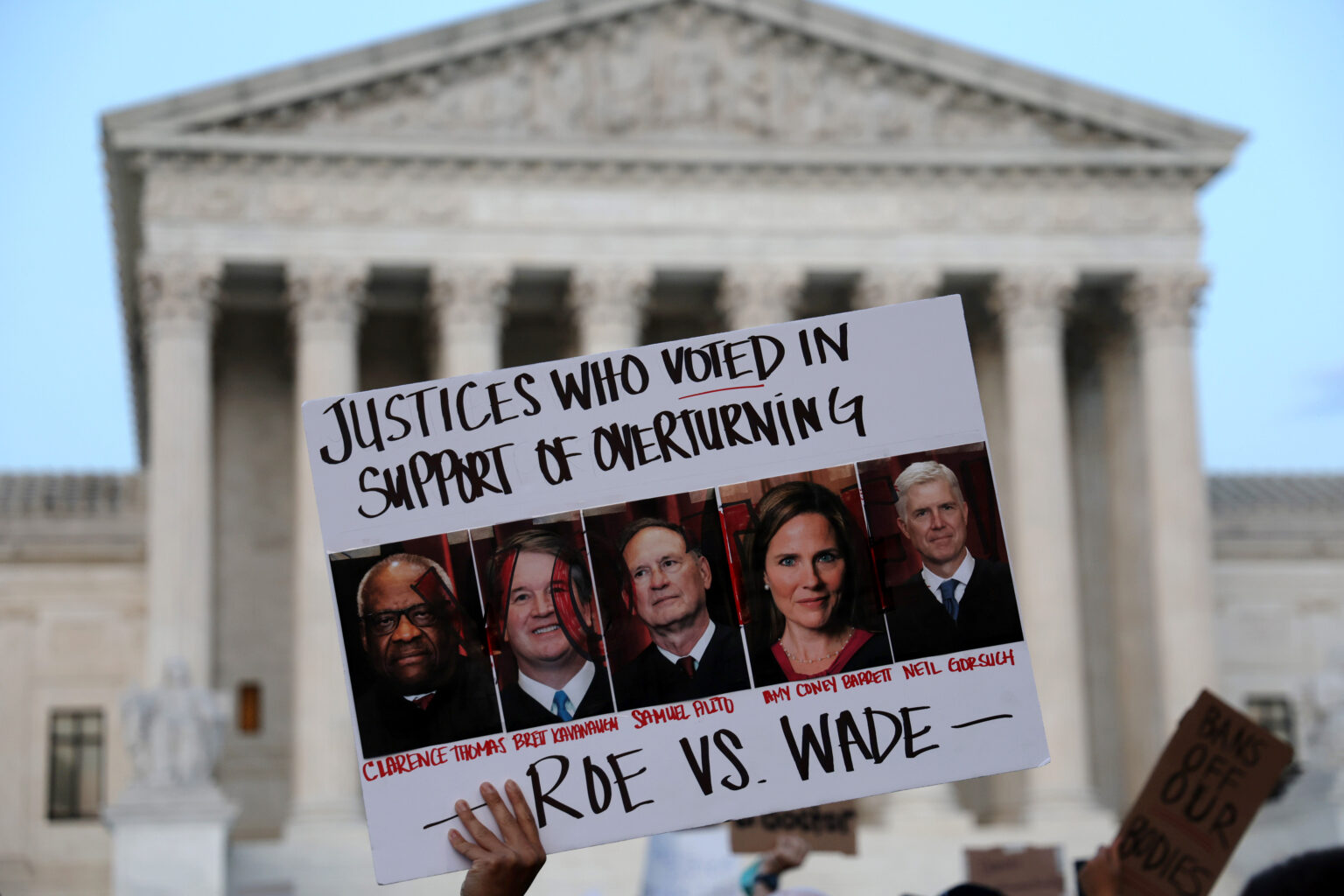
    Shortly after the U.S. Supreme Court overturned Roe v Wade and cleared the way for the law to take effect, the child was on her way to Indiana for an abortion because she couldn’t get one in Ohio, an Indianapolis OB-GYN told the Indianapolis Star. The doctor, Caitlin Bernard, told the paper that an Ohio child-abuse doctor had called, saying the child was six weeks and three days pregnant and needed help.

    That was three days after the six-week limit the DeWine-signed law places on abortion in Ohio. It makes no exceptions for women and children who are victims of rape and incest.

    The story has made national news. But DeWine seemed unprepared Wednesday to discuss whether legislation he championed is forcing children out of state if they don’t want to have their rapists’ babies.

    “Yeah, first of all, I have no more information than you do or anybody does. Reading in the in the paper, it came came as you know, from a story out of out of Indiana from from a doctor over there,” he said as part of a rambling answer to a question from the Cincinnati Enquirer, according to a transcript.

    DeWine went on to say it was “gut-wrenching” as a father and grandfather to think about a 10-year-old being raped, and that he hoped the doctors caring for her reported the assault to law enforcement. But he didn’t address the fact that a law he signed put girls like her in such an onerous situation.

    In a follow-up on Thursday, DeWine Press Secretary Dan Tierney was asked whether the governor thinks juvenile rape victims who become pregnant should be able to get abortions, or whether he believes they should be forced to carry their pregnancies to term. Tierney didn’t answer directly.

    “You have access to Governor DeWine’s recent comments on these issues, including that the only information available on the Indiana matter was from Indiana media reports,” Tierney said in an email. “I do not have further comment for you beyond yesterday’s remarks and the Governor’s numerous and extensive comments since the” Supreme Court decision overturning Roe v Wade.

    While DeWine and his spokesman underscored that media reports were all they knew about the incident involving the Ohio 10-year-old, there have been warnings that something like this was likely to happen.

    Shortly after DeWine signed the six-week ban in 2019, CBS News reported on an Ohio 11-year-old who was repeatedly raped by a 26-year-old, impregnating her. If the Ohio law was cleared by the Supreme Court, the story said, the girl could be left with few options after six weeks of pregnancy. 

    The story also describes victim-blaming the child experienced at a “pregnancy care center.” It cited a police report quoting an employee describing the 11-year-old rape victim as “rebellious” and that she “refuses to listen to her mother and runs away from home all the time.”

    At six weeks, as many as a third of women don’t know they’re pregnant, and it’s a safe bet that even fewer girls do. And while statistics on pregnancies resulting from rape are sparse, it seems likely that Ohio and other states that don’t allow abortions in cases of rape or incest are going to force more children into the most difficult of situations.

    The U.S. Centers for Disease Control and Prevention estimates that about 18 million women experience vaginal rape in their lifetimes and that almost 3 million become pregnant from it. The 2018 research from which those statistics were drawn said it was “the first in over 20 years to offer a nationally representative prevalence estimate of (rape-related pregnancy) of U.S. women…”

    That’s an apparent reference to a 1996 paper published in the American Journal of Obstetrics and Gynecology. It was based on a three-year survey of 4,008 women that sought to determine “the prevalence and incidence of rape and related physical and mental health outcomes.”

    Its findings relating to young rape victims are not reassuring.

    “Among 34 cases of rape-related pregnancy, the majority occurred among adolescents and resulted from assault by a known, often related perpetrator,” an abstract of the study said. “Only 11.7% of these victims received immediate medical attention after the assault, and 47.1% received no medical attention related to the rape.” 

    It added that almost a third of adolescent rape victims didn’t know they were pregnant for 12 weeks — more than double the point at which their abortions would now be illegal in Ohio.

    “A total 32.4% of these victims did not discover they were pregnant until they had already entered the second trimester; 32.2% opted to keep the infant whereas 50% underwent abortion and 5.9% placed the infant for adoption; an additional 11.8% had spontaneous abortion,” the paper said.

    DeWine and his spokesman were reluctant this week to say whether he thinks young rape victims should be forced to carry pregnancies to term. But his office earlier this month confirmed his support of a bill restricting abortion in Ohio even further — and also making no exceptions for rape and incest.

    For Aileen Day, communications director for Planned Parenthood Advocates of Ohio, DeWine owns the consequences of the abortion bills he signs — whether he addresses them directly or not.

    “DeWine signed the six-week ban into law and he is the reason the 10-year-old Ohioan had (to) jump through repeated obstacles to get the health care she needed,” Day said in an email. “It is truly disgusting that he’s not being held accountable for all the harm he has caused Ohio. DeWine’s team has bragged that he is the most anti-abortion governor in Ohio’s history and his history backs that up by signing 10 dangerous abortion restrictions and bans into law.” 

    Follow OCJ Reporter Marty Schladen on Twitter.
  • The bedeviling details: Roe decision leaves Ohio health providers scrambling

    The bedeviling details: Roe decision leaves Ohio health providers scrambling

    BY: MARTY SCHLADEN – Ohio Capital Journal

    Abortion foes celebrated victory in a 50-year fight on June 24, when the U.S. Supreme Court overturned Roe v Wade and allowed states to severely restrict — or even eliminate — women’s access to abortion. But for those who care for pregnant women, the ideological victory posed a swarm of burdensome questions they haven’t begun to answer.

    Jason Sayat, a Central Ohio OB-GYN, said the Friday the decision came down started as any other. He and his colleagues juggled a full office load with duties in the labor-and-delivery ward. 

    “Then we were hit with the information that Roe v Wade was reversed,” he said, describing how through the rest of the day they dealt with not just patients’ medical conditions, but also their fears about what the cancellation of a constitutional right to abortion meant for them.

    Within hours, the confusion increased when Attorney General Dave Yost filed a motion to lift an injunction against a 2019 Ohio law prohibiting abortions after six weeks of pregnancy — a point at which as many as a third of women don’t even know they’re pregnant

    Sayat said “it really put things dramatically and quickly into focus in terms of how these restrictions were well in place within hours.”

    The six-week ban is far from the only abortion restriction that could be coming down the pike in Ohio. One lawmaker says she has the votes and support of Gov. Mike DeWine to ban almost all abortions, even in the case of rape or incest.

    The flurry of anti-abortion laws and proposals has Ohio’s major health systems on their heels. 

    Individual practitioners such as Sayat, who declined to name his employer, are saying they need to know that Ohio health systems will have their backs in the months ahead. But he said that as of last week, “we’re still waiting for directives.”

    He explained that while the political debate over abortion tends toward the simplistic, caring for pregnant women in the real world is anything but.

    For example, Ohio’s six-week law allows later abortions if there’s a “medically diagnosed condition that so complicates the pregnancy of the woman as to directly or indirectly cause the substantial and irreversible impairment of a major bodily function.” But who determines whether those conditions have been met? The Department of Health? The police?

    “What this has all come down to is the violation or disruption of personal medical decision-making between the decisions of the patient and their trusted health care team or physician,” Sayat said. “It’s so individualized and complex that laws like this can’t apply to that. It’s not as black-and-white.”

    And, he said, in situations where continuing a pregnancy is incompatible with the health of the mother, doctors and patients need to be able to make decisions “without fear of reprimand or imprisonment on felonious charges.”

    The American Medical Association didn’t mince words in the wake of the Supreme Court decision overturning Roe v Wade.

    The organization “is deeply disturbed by the U.S. Supreme Court’s decision to overturn nearly a half century of precedent protecting patients’ right to critical reproductive health care — representing an egregious allowance of government intrusion into the medical examination room, a direct attack on the practice of medicine and the patient-physician relationship, and a brazen violation of patients’ rights to evidence-based reproductive health services,” AMA President Jack Resneck Jr. said the day of the decision. “States that end legal abortion will not end abortion—they will end safe abortion, risking devastating consequences, including patients’ lives.”

    Ohio’s major hospital systems — operating in a state dominated by anti-abortion officeholders — have been much more cautious in their public statements. 

    The Capital Journal last week asked them four questions:

    • Will your organization provide out-of-state abortion care to your employees should they need it?
    • Will it defend practitioners making medically sound decisions — for example, terminating a pregnancy to protect the mother — to the fullest extent should they be accused of violating current or future restrictions on abortion in Ohio?
    • Are you concerned that current or future restrictions might make it more difficult to attract and retain talented practitioners?
    • Does your organization believe that, in restricting abortion, lawmakers and the courts are inserting their religious beliefs into the doctor-patient relationship?

    Many responded by saying they don’t have any answers yet. Tausha Moore of Toledo-based ProMedica gave a typical response.

    “Regarding your inquiry, we are in the process of evaluating recent changes to better understand the impact they will have on health care in the communities we serve,” she said in an email.

    Marti Leitch of Ohio State’s Wexner Medical Center made a similar statement.

    “Ohio State is closely examining the decision from the Supreme Court and changes in state law,” she said. “If necessary, the medical center and College of Medicine will make adjustments to be in compliance with the law.”

    Dorsena Drakeford of Cleveland’s MetroHealth also said her system is also reviewing the situation.

    Amanda Nageleisen of the University of Cincinnati Health System also said it was continuing to review the situation, but “We remain deeply committed to the sanctity of the patient-health care provider relationship and will balance patients’ and health care providers’ interests in accordance with all federal and state laws.”

    It appears that a big question the state’s hospital systems are grappling with involves ending pregnancies when they’re deemed medically necessary.

    “While OhioHealth hospitals and clinics have not and do not provide elective termination procedures, we acknowledge that there are times when the life and safety of a patient may be threatened by acute medical complications, even early in pregnancy,” spokeswoman Stephanie Stanavich said in an email. “We will continue to offer care to our patients within the confines of any new regulatory landscape and always within the best practice standards of care.”

    As the big hospital systems formulate their policies, Sayat, the OB-GYN, said he hopes they keep practitioners in mind.

    “I think that the biggest part is that we as providers need to feel supported and feel like we have the resources to navigate the complexity of scenarios we’re presented with,” he said.

  • Newly revealed texts suggest regulator knew rate hike was improper

    Newly revealed texts suggest regulator knew rate hike was improper

    FirstEnergy’s headquarters in Akron. Source: Google Maps.

    Former PUCO chair also said he knew FirstEnergy could keep the money

    BY: MARTY SCHLADEN – Ohio Capital Journal

    More evidence emerged Friday that Ohioans for years have faced questionable utility increases that were granted out of possibly dubious motives.

    On June 19, 2019, FirstEnergy’s leaders were furiously pushing what would later be called one of the biggest bribery and money laundering schemes in Ohio history. The same day, the Ohio Supreme Court struck down a big rate increase the Public Utility Commission of Ohio had granted to FirstEnergy three years earlier, saying it was illegal.

    In reference to the ruling, then-FirstEnergy Vice President Michael Dowling exchanged texts with Asim Haque, who until several months earlier had been chairman of the PUCO, the entity that regulates monopoly utilities such as FirstEnergy.

    One of Haque’s messages suggests that he knew a rate increase he voted to allow FirstEnergy to implement was illegal, but that the Akron-based utility would be allowed to keep the $460 million it had already collected.

    “And knowing that it would likely be found illegal and could not be refunded, I knew you would hold onto the funds,” Haque wrote in the text, which was first reported by Eye on Ohio and the Energy News Network.

    The news organizations received the texts as part of a records request. The Office of Ohio Consumer Counsel, the state’s official watchdog, first obtained the messages. It provided copies to the Capital Journal as part of a separate request.

    In an email, Haque said that he was only joking.

    “My text exchange with Mike Dowling was tongue-in-cheek based on my previous contentious interactions with him and the company,” he said. “You will see at the bottom of the text message(s) that I say that I’m kidding. FirstEnergy was not a fan of mine, and the notion of my picture in the halls of their Akron headquarters would have been especially absurd.”

    The last part was a reference to a separate text in which Haque told Dowling he “was the regulator who annoyed you most” but because of the rate increase Haque supported, “I should have a small picture in memoriam within those hallowed halls in Akron.”

    However, it’s hard to see comments about supporting a likely illegal, non-refundable rate increase as a joke, said Rob Kelter, an attorney with the Environmental Law and Policy Center, which has opposed many FirstEnergy revenue requests.

    “It’s one thing to make a joke about your picture being in the hallowed halls in Akron and he was kidding around,” Kelter said Friday. “But as far as that one key comment that he knew it would likely be declared illegal, that it couldn’t be refunded? That’s unacceptable.”

    In a regulatory filing, the consumers’ counsel said something similar.

    “Distressingly, we learned from FirstEnergy’s (text messages) that it apparently was known within the PUCO that the (rate increases) would likely be found illegal and that, even so, FirstEnergy would get to hold onto the funds because they could not be refunded to consumers.”

    FirstEnergy spokeswoman Jennifer Young said in an email that she couldn’t comment because of ongoing litigation.

    To justify his support for the increase, Haque, the former regulator, said FirstEnergy had asked for one worth $4.5 billion, while the one he supported was worth much less. He added, “it was above all a sensible decision and it was right for Ohio consumers, as I explained in my concurrence to the decision…”

    The Supreme Court, however, didn’t agree, and subsequent investigations of the increase raise even further questions.

    Called a “distribution modernization rider,” the increase was supposed to raise money to upgrade the electrical grid. But the order allowing it didn’t place many restrictions on how the money could be spent.

    It said that grid modernization could be expensive, and that the funds could be used to pay for it directly. But then it added that FirstEnergy could use the huge new pot of cash to support grid modernization “indirectly.”

    We “recognize that the (subsidiaries) and FirstEnergy Corp. may use revenue from Rider DMR to indirectly support grid modernization investments …,” the filing allowing the rate hike said. “Such steps should lower the cost of borrowing the funds needed to invest in grid modernization and may include reducing outstanding pension obligations, reducing debt, or taking other steps to reduce the long-term costs of accessing capital.”

    It’s not clear FirstEnergy did even that. It placed some of the funds into a pool from which utilities the company owned in other states could borrow. And a subsequent audit said that FirstEnergy didn’t track the money from the rate increase, so it’s impossible to say how it was spent.

    And, because the PUCO didn’t build in a refund mechanism, the $460 million FirstEnergy collected from the rate hike is part of $1.5 billioncollected from illegal, but non-refundable utility hikes granted by the PUCO since 2009.

    In not building in a refund mechanism, the PUCO said not that it was trying to protect consumers, but the monopoly utilities. Making the rate increases “subject to refund would be counterproductive and impose additional risks on the Companies,” the PUCO wrote in an order.

    Kelter, of the Environmental Policy Law Center, said he could only partly believe Haque’s claim that he was joking with Dowling the day the Supreme Court struck down the rate hike.

    “You can give Chairman Haque the benefit of the doubt that some of that was in jest,” Kelter said. “But not the part about what he did for them in terms of getting them the money knowing that their order was likely to be overturned — doing that anyway so that they could collect the money for a few years in the interim.”

    In the same message, Haque, an appointee of former Gov. John Kasich, hinted at worse things to come.

    Haque concluded the text by saying, “It’s up to chair Randazzo now to find a path for you.”

    That was a reference to Sam Randazzo, current Gov. Mike DeWine’s appointment to chair the PUCO. Randazzo later resigned after the FBI searched his Columbus condo amid revelations that FirstEnergy paid him more than $4 million just before he became the state’s top utility regulator. That was part of $22 million the utility had paid to entities controlled by Randazzo over the years.

    While he was supposed to be regulating utilities, FirstEnergy said Randazzo played a role in writing House Bill 6, of which federal investigators said FirstEnergy and its associates corruptly plowed $61 million into its passage and received a $1.3 billion ratepayer bailout in return.

    Former Ohio House Speaker Larry Householder, R-Glenford, and four associates were charged in the case. Dowling and Randazzo have not been charged and deny wrongdoing.

  • Ohio Secretary of State says he didn’t call for Supreme Court chief’s ouster

    Ohio Secretary of State says he didn’t call for Supreme Court chief’s ouster

    (Photo by Susan Tebben, OCJ.) 

    BY: MARTY SCHLADEN – Ohio Capital Journal

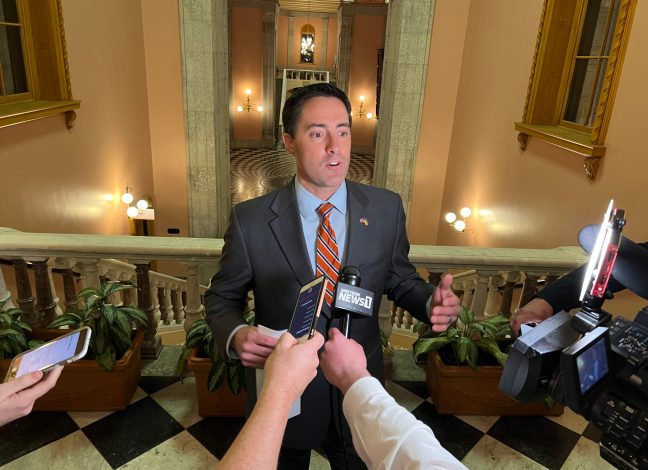
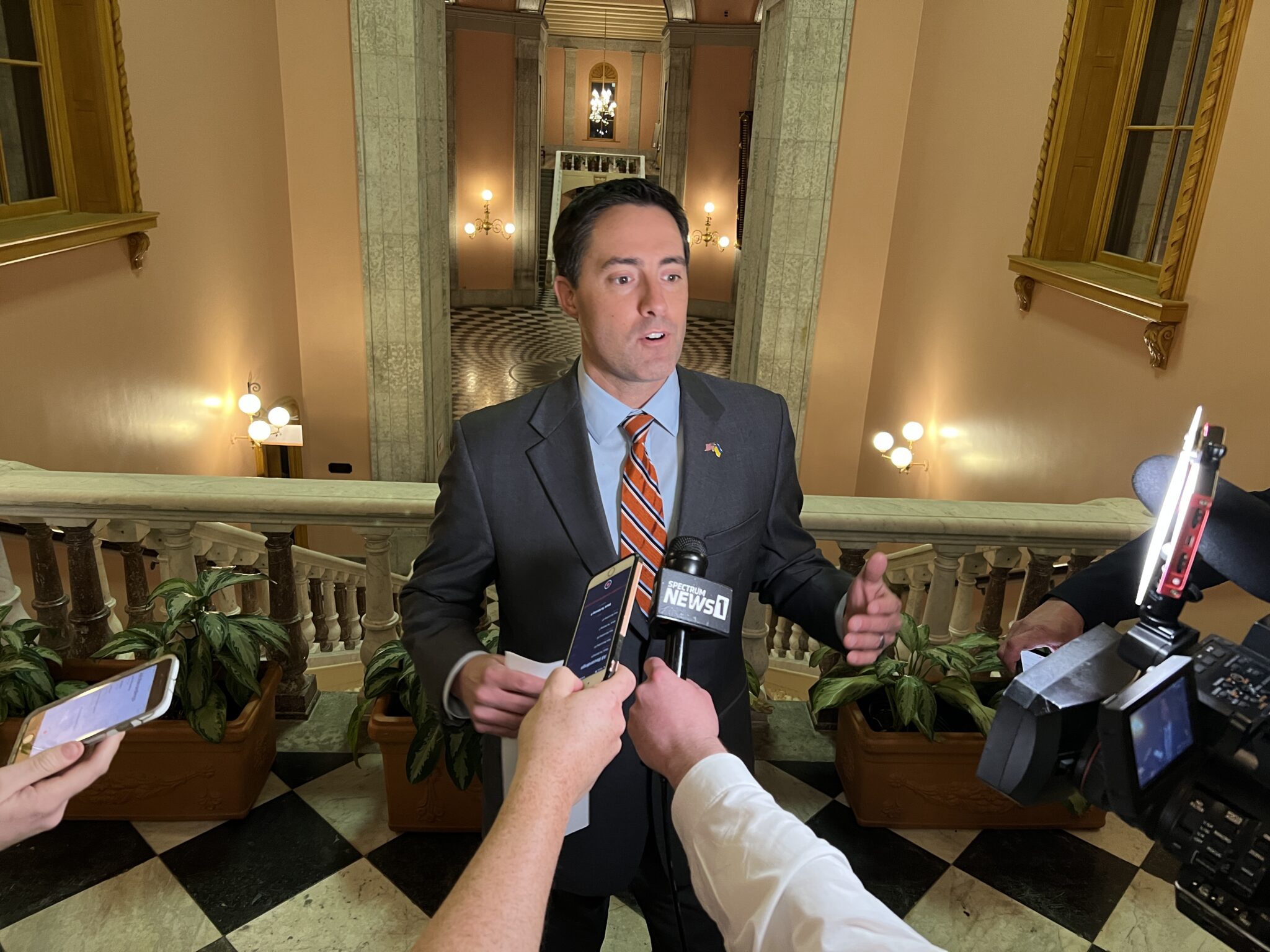
    Ohio Secretary of State Frank LaRose on Tuesday denied that he had called for the impeachment of Ohio Supreme Court Chief Justice Maureen O’Connor after she had repeatedly ruled against LaRose and the rest of her fellow Republicans on the Ohio Redistricting Commission.

    LaRose’s comments come four days  after he told a group of Union County Republicans that Justice O’Connor had “violated her oath of office” and that for the legislature to impeach her  “may be the right thing to do”.

    Audio obtained by the OCJ of Secretary Frank LaRose speaking at a Union County Republicans breakfast last week.

    The state’s top elections official was at the Franklin County Board of Elections on Tuesday as he kicked off early voting for most of this year’s primaries. It won’t include ballots for state legislative candidates because of a dispute over gerrymandering — a fracas over the boundaries of the districts in which members of the state House and Senate will run. 

    Tired, apparently, of partisan gerrymandering, Ohio voters in 2015 overwhelmingly approved a constitutional amendment that requires districts be drawn so that the partisan makeup of the legislature resembles the partisan breakdown in recent statewide elections. 

    That’s not how things stand now. Republicans have won recent elections with about 54% of the vote, but they control 65% of the seats in the state House and 78% of the state Senate.

    This year, using the new system for the first time, the five Republicans on the seven-member redistricting commission have passed four sets of maps that O’Connor and the three Democrats on the Supreme Court have ruled are too partisan.

    Republican Justice Pat DeWine has continued to sit in the case even though several ethics experts have said he has a clear conflict because his father, Gov. Mike DeWine, is a member of the redistricting commission. Justice DeWine has voted in favor of upholding the maps that his father and the other Republicans have passed.

    Meanwhile, Republican frustration with O’Connor, who will leave the court at the end of the year, has been boiling over. Some Republican members of the legislature last month floated the idea of impeachment.

    Gov. DeWine called the notion “extraordinary” and said it’s a bad idea to talk about removing judges whenever one disagrees with their decisions. But LaRose, the secretary of state, wasn’t so reticent on Friday when asked at a Union County Republican breakfast if O’Connor should be impeached.

    “I think that she has not upheld her oath of office, and that to me is a basic test of a public servant,” he said. “That’s up to the state legislature, whether they want to impeach the chief justice or not. I certainly wouldn’t oppose it.”

    LaRose stipulated that any impeachment would take so long that “it may feel really good, and it may be the right thing to do because she’s violated her oath of office by making up what she wants the law to say instead of interpreting what it actually says. But I don’t know if it would accomplish much, but I’d be fine with it if they did.”

    At Tuesday’s event, LaRose tried to draw a distinction between saying impeachment may be the right thing to do and actually calling for it.  

    “The thing that I did was not call for anybody to be impeached,” he said. “I answered a question that was asked at a little breakfast gathering where I was with a group of supporters in Union County and what I said was, ‘It’s up to the state legislature.’ There are 33 senators and 99 representatives. If they gather evidence and hold that trial for an impeachment, if they decide as the people’s representatives to do that, then I don’t oppose that.”

    LaRose and some legislative Republicans are not alone in being frustrated by the redistricting battle. For the second time, the Supreme Court has ordered members of the commission to show why they shouldn’t be held in contempt for failing to pass maps that comply with the court’s interpretation of the state Constitution. Responses were submitted on Monday.

    Some members have argued that they shouldn’t be held individually liable for the actions of a seven-member body they don’t control. And some have argued for the court to simply impose maps on the commission would overstep its powers as a judicial body.

    LaRose on Tuesday said holding contempt proceedings is another overreach.

    “It’s a ridiculous idea that a co-equal branch of government would be held in contempt for doing our job in a way that the court doesn’t like,” he said. “What we have attempted to do all throughout this process is follow the rules that are set out in the Constitution — and not just the one part of the Constitution that the court seems to be focusing on, but all of the line-drawing rules in the Ohio Constitution.”

    LaRose was asked if he was attacking a co-equal body by publicly saying that he, a statewide official, was OK with the impeachment of a Supreme Court justice who had ruled against him.

    “Certainly not,” he said. “The Constitution lays out the process for impeaching and removing a justice from the Ohio Supreme Court or other elected officials. That’s not a power I have. I can express my opinion as a citizen just like any of us can and what I was telling this group of supporters in Union County a couple days ago is that if the state legislature found evidence and carried out that process, then I wouldn’t stand in the way of that.

    “And I certainly have concerns that the court has delved into really the politics of this more than they should have. But that’s a choice up to the General Assembly and certainly not a choice I get to make. I was simply expressing my opinion,” he said.

    Democratic Secretary of State candidate Chelsea Clark said LaRose’s comments about O’Connor make him unfit for his office.

    “It’s now obvious to anyone that Frank LaRose can’t be trusted to administer organized elections and now when he’s called out for the chaos, he wants to blame the referees,” she said in an email. “To claim ‘it would feel good’ to impeach the chief justice because he disagrees with the court’s rendering is pathetic. For someone who claims to believe in separation of powers, Secretary LaRose has no problem trying to overturn the will of the people.”

    LaRose on Tuesday said primary elections for legislative seats most likely will take place in August.

  • LaRose would ‘be fine with’ chief justice’s impeachment over redistricting rulings

    LaRose would ‘be fine with’ chief justice’s impeachment over redistricting rulings

    Ohio Secretary of State Frank LaRose talks to reporters. (Photo by Susan Tebben, OCJ.)

    Ohio elections chief says O’Connor ‘violated her oath’ by rejecting GOP-drawn districts

    BY: MARTY SCHLADEN – Ohio Capital Journal

    Ohio Secretary of State Frank LaRose on Friday said he “certainly wouldn’t oppose it” if the legislature impeached Ohio Supreme Court Chief Justice Maureen O’Connor over her joining in rulings rejecting GOP-generated maps for Congress and the legislature, according to a recording of a breakfast meeting with Union County Republicans.

    LaRose, who is not a lawyer, said in the recording his fellow Republican “violated her oath of office by making up what she wants the law to say instead of interpreting what it actually says.”

    O’Connor joined the court’s three Democrats in ruling multiple times that the congressional and legislative maps approved by a majority vote of Republicans violated the Ohio Constitution by unfairly favoring the GOP. 

    Some Republican members of the legislature had previously raised the possibility of impeaching O’Connor, who will leave office at the end of the year. But LaRose, the state’s top elections official, is apparently the first of the five Republicans on the state’s seven-member redistricting commission to say he’d go along with it.

    Such calls to effectively end the career of a judge because her rulings didn’t go the GOP’s way have been too extreme for at least one other Republican on the commission — Gov. Mike DeWine.

    “This is an extraordinary measure to take,” he said when the idea was floated earlier this month. “I think we don’t want to go down that pathway, because we disagree with a decision by a court, because we disagree with a decision by an individual judge or justice. Not a good idea.”

    LaRose’s spokesman was sent a transcript of the secretary’s comments about O’Connor. The spokesman was also asked whether LaRose believes judges should be removed whenever LaRose thinks they misinterpret the law — and whether such a belief undermines the entire purpose of having courts. The spokesman, Rob Nichols, didn’t respond to an email and a phone call.

    LaRose made his comments about O’Connor at the Union County Republican Breakfast on Friday, according to a recording obtained by the Capital Journal. The source of the recording provided it on the condition of anonymity.

    County Republican Party Chairman Justin Hogan didn’t immediately respond to an email requesting comment.

    On the recording, the secretary of state was asked, “Can you talk about the ex-Republican O’Connor, should she be impeached?”

    LaRose replied: “I think that she has not upheld her oath of office, and that to me is a basic test of a public servant. That’s up to the state legislature, whether they want to impeach the chief justice or not. I certainly wouldn’t oppose it.”

    He was referring to repeated rulings in which O’Connor sided with the court’s Democrats in saying that maps passed by the Republican majority on the redistricting commission were illegally gerrymandered. 

    In recent statewide elections, voters have supported Republicans by roughly a 54-46 margin. But the maps produced by Republicans favor the party to have much greater representation in the legislature and Congress.

    They violate constitutional amendments overwhelmingly passed by Ohio voters requiring that the partisan makeup of the state legislature and congressional delegation resemble the general partisan makeup of the state, O’Connor has ruled.

    GOP members of the commission were called to the state Supreme Court on Monday to show why they shouldn’t be held in contempt after ignoring maps generated by independent commissioners and passing another set of maps that again heavily favors Republicans.

    The impasse has created a constitutional crisis in Ohio, with deadlines approaching for the primary, but no district boundaries in which candidates can run. LaRose on Friday acknowledged that impeaching O’Connor wouldn’t end the crisis, but on the recording said it might “feel really good.”

    “I don’t know if it will solve our current problem because the impeachment process would take a couple months and we’re going to need to have district lines way before that,” he said. “And so it may feel really good, and it may be the right thing to do because she’s violated her oath of office by making up what she wants the law to say instead of interpreting what it actually says, but I don’t know if it would accomplish much, but I’d be fine with it if they did.”

    LaRose didn’t explain how O’Connor misinterpreted the law, much less how such a misinterpretation would violate a justice’s oath of office.

    The secretary of state’s sharp partisan tone is a stark departure from the bipartisan one LaRose struck when he initially ran for office in 2018.

    At the time, he told The Columbus Dispatch that he wanted to “bring a sense of civility and bipartisanship to how we conduct elections.”

    He added: “I want to be part of a party that wins elections because we work harder, have better candidates and we have better ideas.”

    More recently, LaRose has taken a harsher line, including taking to Twitter twice in February to make sweeping, misleading attacks on a supposedly partisan news media, and saying former President Donald Trump is right to make his claims about voter fraud.

    The Associated Press noted on Thursday that LaRose posted the first such tweet a day after learning he’d drawn two opponents in the Republican Primary. Both have parroted Trump’s false claims about rampant voter fraud in the 2020 presidential election, AP reported.

  • Expert: Hard to know if COVID variant will surge in U.S. or how badly

    Expert: Hard to know if COVID variant will surge in U.S. or how badly

    BY: MARTY SCHLADEN Ohio Capital Journal

    The last thing people want to hear right now is that the coronavirus might have mutated yet again into yet another deadly variant, extending the pain, death, and inconvenience of a pandemic that we long hoped would be over.

    However, whether the subvariant of omicron known as BA.2 will hit the United States as hard as it’s hitting other parts of the world is hard to say at this point, an expert at modeling the disease said Wednesday.

    The pandemic has been full of unpleasant surprises and BA.2 is no exception. Scientists estimate that it’s one-and-a-half times as transmissible as the original omicron strain, BA.1, and is overtaking it.

    Europe, and particularly the United Kingdom, have seen an increase in the new variant in recent months, but that hasn’t been the case everywhere, said Stephen Kissler, a research fellow in the Department of Immunology and Infectious Diseases of Harvard University’s T.H. Chan School of Public Health.

    “The question of if and when a surge is coming and how large is very open,” Kissler said in a Zoom conference with reporters. “I know that we’ve seen surges that are dominated by BA.2 across much of Europe. But in contrast, for example, in South Africa we saw a major BA.1 wave — that’s where we saw the omicron wave first — and now there’s a lot of circulation of BA.2, but it hasn’t really caused an increase in cases so much that it’s lengthened the decline and given the epidemic a very long tail.”

    Kissler explained that vaccination rates in the U.S. are lower than those in Europe, but higher than those in South Africa. That could mean that more Americans have developed antibodies against the omicron variants than have Europeans.

    “To the extent that that gives us protection against BA.2 we might see dynamics that are more similar to what happened in South Africa,” he said.

    Seasonality and other factors likely will play a role, Kissler said, with spring in the United States being a season of relatively low spread and fall a season of relatively high spread.

    So if there is a surge here of the new variant, how will it affect Americans of varying ages?

    “In many ways it will likely resemble our experience with COVID-19 up to this point,” Kissler said.

    And past experience has shown one factor to be hugely important: vaccination. 

    Kissler said that being vaccinated, along with a booster dose, “really goes a long way toward helping to protect you from symptomatic disease and especially severe disease. The biggest delineation I imagine seeing is that people who are boosted will probably fare better than people who are unboosted.”

    Another important factor is age, with the elderly having less natural resistance to all variants of the coronavirus than the young. Vaccines and boosters, though, can be a great equalizer.

    “A vaccinated and boosted person over the age of 75, their risk is probably on the order of — if not lower than — an unvaccinated 20-year-old,” Kissler said.

    COVID eventually will go from being a pandemic disease that spikes rapidly and overwhelms resources to an endemic one where a background level is present, sickening and even killing people, but in semi-predictable ways. Sadly, however, hopes that it will disappear altogether are small.

    Looking forward, one simple public-health measure might be most effective, Kissler said.

    “In many ways, one of the best things we can do to manage outbreaks is to just to continue to keep informing people how much COVID is circulating in their communities and make it just as accessible as a weather report,” he said. “A lot of data suggest that people tend to adjust their behavior accordingly.”

    He said that probably won’t be enough to quell future waves of COVID, or be adequate in the face of major new variants.

    “But as we continue to deal with COVID and we think about this permanent circulation of COVID-19 in the population — recognizing that there’s going to be different dynamics in different places, different patterns across the year — making it clear what’s happening in any given community at any given time through passive surveillance is probably the best thing we can do right now,” he said.

  • With inflation, supply-chain kinks, plight of Ohio food banks grows

    With inflation, supply-chain kinks, plight of Ohio food banks grows

    Shelves of canned foods sit partially empty. Photo by Justin Sullivan/Getty Images.

    BY: MARTY SCHLADEN – Ohio Capital Journal

    For millions of Ohioans, world events are making it harder to fill their pantries and refrigerators, an official who helps oversee the state’s food banks said on Wednesday. Those pressures will only increase pantries’ need for state assistance, she said.

    The coronavirus pandemic had already put pressure on the state’s food banks as demand increased and supply-chain disruptions made it harder and more expensive to get food. Now the Russian invasion of Ukraine is poised to further squeeze global flows of wheat and fuel, exacerbating those trends, said Lisa Hamler-Fugitt, executive director of the Ohio Association of Foodbanks.

    Further complicating the picture is that the new scarcity of food is slashing commercial contributions to organizations that supply the neediest Ohioans, making them desperate for help.

    “I would say that is an understatement,” Lisa Hamler-Fugitt said. “Overall, donations are down substantially. Before we went into the pandemic, private-sector donations from food manufacturers, wholesalers, retailers and local food and fund drives would range from 45% to 50 % of all we had to distribute. Since the pandemic that has declined dramatically.”

    Lisa Hamler-Fugitt

    Now the portion donated by commercial suppliers is closer to 33% at the same time that costs to purchase and transport food are growing. Consider:

    • Eggs that cost food banks 40 cents a pound in 2019 now cost 94 cents, a 135% increase.
    • Ground beef that cost $2.14 a pound in 2019 costs $2.84, a 33% increase.
    • Pasta has gone from 42 cents a pound in 2019 to 70 cents now, a 66% hike.

    Also, a $2,000 per-child tax credit expired in December, plunging an estimated 10 million American children and 280,000 in Ohio back into poverty. Hamler-Fugitt said that of families receiving the credit, 59% said food was their No. 1 expense, so its expiration is increasing demand at Ohio food banks even as costs go up.

    “Families that were standing in grocery store lines are back in our food pantries,” she said.

    Federal data appear to support that claim. The Census Bureau’s Household Pulse Survey estimated that about a month after the credit expired, 339,000 Ohio families with children sometimes or often didn’t have enough to eat in the past seven days. 

    Compare that to the period from Sept. 15-27 when the credit was in full force. Then an estimated 264,000 Ohio families with children sometimes or often didn’t have enough to eat, the survey said.

    If those estimates are accurate, that means food insecurity for families with children has leapt 28% since the expiration of the child tax credit.

    In addition to all the other inflationary pressures on food, Hamler-Fugitt said she suspected another: price gouging.

    “I hear from the farmers saying, ‘We’re not making any more money.’ How is that possible?” she said.

    In his State of the Union Address Tuesday, President Joe Biden echoed that suspicion. He said concentration in the meatpacking industry is alarmingly high.

    “Guess what, you got four basic meat packing facilities,” he said. “That’s it. You play with them or you don’t get to play at all. And you pay a hell of a lot more. A hell of a lot more because there’s only four.”

    The White House estimates that those four companies — JBS, Cargill, National Beef Packing and Tyson Foods — control 85% of beef packing in the United States, 54% of poultry and 70% of pork. The administration says it’s making an effort to promote competition in those sectors and across the economy. 

    But even if those efforts are eventually successful, Hamler-Fugitt said Ohio food banks need help more quickly. She praised the support they’ve gotten from Gov. Mike DeWine throughout the pandemic, but said the food centers need $183 million for supplies, operating costs and to upgrade their infrastructure.

    Ohio has more than $600 million in unexpended funds from the American Rescue Act and about $500 million more is on the way, Hamler-Fugitt said. A DeWine spokesman didn’t immediately respond to a request for comment.

  • As if COVID wasn’t bad enough, experts warn of lingering symptoms

    As if COVID wasn’t bad enough, experts warn of lingering symptoms

    BY: MARTY SCHLADEN –  Ohio Capital Journal

    With nearly 5,000 new cases of COVID per day, Ohio and the rest of the world are still dealing with a pandemic that started nearly two years ago. What we’ve barely begun to deal with, two experts said last week, is the long hangover many experience as “long COVID.”

    That expression refers to a set of symptoms that linger for months after a person is infected with coronavirus. They include maladies of the lungs, heart, eyes, liver, brain, bladder, kidneys and pancreas. They also include problems of a less tangible nature, such as a loss of smell, chronic brain fog, headache and fatigue.

    And, according to an October study published by the Journal of the American Medical Association, many, many people are likely affected by long COVID. The review of 57 studies found that more than half of the coronavirus patients followed were still suffering from symptoms of long COVID more than six months after they were infected. 

    With 78% having been hospitalized with COVID, that group appeared to have suffered worse infections than did the general population. Conversely, people who are fully vaccinated are far less likely to be hospitalized, and 49% less likely to develop long COVID, according to a study conducted in the United Kingdom.

    Even so, the consequences of the condition are likely to be huge.

    Ohio, for example, has seen more than 84,000 COVID hospitalizations, so it seems plausible that well over 40,000 Ohioans have suffered — or are still suffering — long COVID.

    Nationally, “you’re talking about 30, 40, 70 million people,” Brett Giroir, who early in the pandemic was assistant secretary of the U.S. Department of Health and Human Services, said last week during a webinar organized by the National Institute for Healthcare Management Foundation. 

    As they were during the early days of the pandemic, policy makers are groping for ways to deal with long COVID without much in the way of scientific information to work with so far.

    “We’re unfortunately dealing with from a position of a real lack of knowledge,” Walter Koroshetz, director of the National Institutes of Health’s Institute of Neurological Disorders and Stroke, said during the webinar.

    “We’re really trying hard to understand what is the biological basis for the problems that people are experiencing and hoping to get some answers very quickly that can then be used to help patients,” Koroshetz added.

    Giroir now is working with the health consulting firm Leavitt Partners on several issues, including problems related to the pandemic. He offered a broad framework for dealing with long covid.

    “How do we organize the healthcare sector” in response to long COVID? he asked. “Do we have long COVID clinics. Do we have telehealth triage? How do we care for this 30 to 50% of 140 million people who potentially have long COVID?”

    Giroir is proposing several steps to deal with the issue. Among them are helping medically underserved populations through grants to federally qualified health centers and primary-care practices, a national survey on the condition and by working to raise public awareness of it.

  • Ohio’s Medicaid director owns the stock of some major contractors, but won’t say how much

    Ohio’s Medicaid director owns the stock of some major contractors, but won’t say how much

    A group representing small pharmacists says large chains, especially CVS, are moving patients’ prescriptions to their own stores without consent. CVS adamantly denies that. Photo by Marty Schladen, Ohio Capital Journal.

    It’s unclear if she disclosed potential conflict during massive procurement

    BY: MARTY SCHLADEN and Ohio Capital Journal

    Since she became director of the Ohio Department of Medicaid in January 2019, Maureen Corcoran has owned stock in some of the department’s biggest contractors. Given the size of those contracts, they could have increased the value of the stock Corcoran owned.

     Ohio Medicaid Director Maureen Corcoran. Official photo.

    But while she complied with one set of state disclosure requirements, Corcoran won’t say just how much stock she owns in such companies as CVS Health, UnitedHealth Group and Express Scripts — each of which has done billions of dollars worth of business with the Medicaid department since Corcoran started running it. 

    In addition, Corcoran won’t say if she filed legally required affidavits disclosing that she had an ownership stake in corporations the department hired earlier this year as part of its $20 billion managed-care re-procurement or the company the state hired to run its $1 billion OhioRISE program. Should they be found, violations of the law could carry criminal penalties and invalidate contracts signed without proper disclosures.

    Big money

    When Corcoran took the reins of the Medicaid department, she held a stake in some companies that were getting a lot of scrutiny over their business with the state. Two were CVS Caremark and OptumRX, pharmacy middlemen that together were handling more than $2 billion a year in prescription-drug transactions for the department.

    Ohio’s independent pharmacists and others accused the companies of several questionable practices — including charging a lot more for drugs than they were paying pharmacists. A state-commissioned analysis showed that in 2017, CVS and Optum charged almost a quarter-billion dollars more for drugs than they reimbursed the pharmacies that had bought and dispensed them.

    The findings were still big news — and the companies were suing the Medicaid department — when Corcoran took control just after Gov. Mike DeWine took office at the start of 2019. Even so, Corcoran held onto stocks in CVS Caremark owner CVS Health and in OptumRX owner UnitedHealth.

    According to disclosures filed with the Ohio Ethics Commission, Corcoran owned at least $1,000 worth of those companies’ stock. 

    Given that they were among 180 stocks and mutual funds she disclosed owning as of Jan. 31, 2019, it’s possible that Corcoran wasn’t even aware that she held stakes in companies that did such high-profile business with her agency. Whatever the case, Corcoran held onto shares in the companies through 2019 and 2020, her ethics filings show.

    Under Ohio’s aging ethics laws, agency bigwigs like Corcoran are allowed to own stock in companies with which their departments do business so long as their holdings don’t exceed 5% of the company’s outstanding stock. In the case of Medicaid’s big contractors, that would mean the director would have to be one of the wealthiest people in Ohio to violate the provision.

    CVS and UnitedHealth are the fourth and fifth-largest corporations in the country by revenue. In order to violate the ethics provision, Corcoran would have to have owned a combined $18 billion worth of the companies’ stock in 2019. 

    Potential for conflict

    That’s a clear sign that the state’s ethics laws need to be updated, said Catherine Turcer, executive director of Common Cause Ohio, a watchdog group.

    “Five percent of a company’s stock in the 70s, 80s or even the 90s wasn’t anywhere near what it is now,” Turcer said.

    In addition, knowing just how much Corcoran’s investments with Medicaid contractors were worth would go a long way toward showing how big a conflict of interest she has. If it’s just over $1,000, the conflict might seem nominal, but if it’s much more, it would be a lot more serious, Turcer said.

    “There are two things Maureen Corcoran could do,” Turcer said. “One would be to publicly identify how much over the $1,000 she owns and allow the public to weigh in. The other thing she could do so the public didn’t worry about the conflict of interest is actually divest herself of these stocks.”

    Last Friday, the Medicaid department was asked the value of Corcoran’s investments in CVS, UnitedHealth and Express Scripts, a third pharmacy middleman with which the department has done business.

    A spokeswoman for the department said it would respond to those and other questions, but as of Tuesday afternoon, it hadn’t. The spokeswoman also didn’t answer questions about when responses would be forthcoming.

    Bigger problem?

    Potentially more ominous for Corcoran and her department is another question they haven’t responded to: Whether Corcoran filed affidavits disclosing her interest in companies with whom the department recently entered into huge contracts.

    This year, the Medicaid department implemented a big redesign of its managed care program. 

    To gain more insight into drug transactions, the department will work next year with a single drug middleman contracted directly with the department — instead of being hired by managed-care providers as they have in the past.

    But while UnitedHealthcare’s OptumRx might be losing that business, the Medicaid department is hiring UnitedHealthcare Community Plan of Ohio to be one of six companies administering the state’s $20 billion-a-year managed-care program.

    The re-procurement has raised other questions. Also hired was a plan owned by managed-care giant Centene, which agreed earlier this year to pay out more than $1 billion to Ohio and 21 other states after being accused by Attorney General Dave Yost of fleecing taxpayers. Corcoran has struggled to explain why her department would keep doing business with the company.

    The state also is creating OhioRISE, an ambitious program intended to help 60,000 Ohio children with the most complex behavioral health and other needs. Aetna Better Health of Ohio was selected in April to administer the $1 billion program.

    The company is a subsidiary of insurer Aetna. CVS — in which Corcoran has been invested — bought the Aetna for $70 billion in 2019.

    It’s unclear whether Corcoran continues to own stock in UnitedHealth or CVS, or whether she disclosed any ownership when contracts were let this year. 

    But the state law governing such disclosures spells out potential criminal penalties for violations and it says any contract so made “is void and unenforceable.”

  • Ohio gov thinks a law is making kids sick and says it’s unconstitutional. He won’t challenge it

    Ohio gov thinks a law is making kids sick and says it’s unconstitutional. He won’t challenge it

    DeWine spokesman says risks are too high

    BY: MARTY SCHLADEN and Ohio Capital Journal

    Some are questioning Gov. Mike DeWine’s sincerity when he says he’s doing all he can to fight the spread of coronavirus among children.

    DeWine and the leaders of children’s hospitals are in a panic over the lack of masking in Ohio schools. Hospital admissions of children with covid are up 536% since July and the hospitals report that they’re being overwhelmed by the surging delta variant and an unusual jump in other respiratory illnesses.

    [Watch video] Ohio Children’s Hospital leaders briefing for school administrators –…

    DeWine and the hospitals are pleading with local school officials to enact their own mask mandates because DeWine says his hands are tied by Senate Bill 22 — a law the GOP-controlled legislature passed in March over his veto. 

    It circumscribes the governor’s ability to issue health orders such as his 2020 statewide mask mandate by limiting them to 30 days. After that, the legislature would have to sign off in order to continue them.

    Asked on Tuesday why he wouldn’t impose a mask mandate as a temporary measure, DeWine said he didn’t want to muddy the issue.

    “All that will do is cause a great deal of confusion and then I think people would say, ‘Well there’s no mandate on, there’s no requirement on, we can go back, there’s really no reason to keep masks on,” the governor said. “I’m afraid what would happen is we would slide backwards, we would go the wrong way.”

    However, some noted that when SB 22 was passed, the governor, who is a lawyer, didn’t believe it would stand up in court.

    “Lots of talk out there excusing @GovMikeDeWine‘s refusal to issue a school mask mandate,” Katie Paris, founder of the group Red Wine and Blue, tweeted. “His hands are NOT tied. He could issue a mandate today and if the legislature fights it, he could take them to court.”

    She followed up with a thread that included the statement DeWine issued when he vetoed SB 22.

    “We believe that significant portions of SB 22 are unconstitutional,” the statement says. “Parts of the bill violate the separation of powers doctrine embedded in our Ohio Constitution; other parts violate Article II, Section 15 of the Ohio Constitution, proscribing how laws must be made; and even other parts of the bill likely violate Article IV, Section 5 of the Ohio Constitution, by exercising power reserved to the judiciary.” 

    Loveland School Superintendant Mike Broadwater

    Loveland School Superintendant Mike Broadwater told Loveland Magazine on Thursday, “It is unfortunate that Governor DeWine no longer has the power to issue health orders that would put every school district across the state in the same situation if that’s what he feels is best. But by leaving it to local control, he’s allowing each district to make the decision that fits best for their community.”

    The current policy of the Loveland City School District is that students in grades PreK-6 are required to wear a mask indoors. Students in grades 7-12 do not have to wear face coverings. All others, while in the buildings must wear masks.

    The Legislative Service Commission also questioned the legality of a draft of the bill, writing that it “might be vulnerable to a constitutional challenge on the grounds that the legislature cannot take such an action by resolution.” But for some reason, it was dropped from the final version of the bill, which was otherwise unchanged.

    Asked why DeWine doesn’t just impose a mask order and fight it out in court, Press Secretary Dan Tierney on Wednesday said it was too risky.

    “Somebody who’s advocating for that is hoping that a judge puts on an immediate restraining order that would allow (the mask mandate) to continue, but you also have to weigh the chance that a judge could rule the other way: that the legislative recision is perfectly valid,” Tierney said.

    He added that DeWine’s current approach — persuading local officials to put on their own mask mandates — is making rapid progress. The portion of students in schools with mask mandates has jumped from 35% on Sept. 1 to 54% on Tuesday, Tierney said.

    “We went from a little over a third to a little over a half of students being in a school where everybody wears a mask in less than two weeks,” he said.

    But while DeWine is blaming the GOP supermajority in the legislature for sapping his ability to fight his coronavirus, on Wednesday he signed off on legislative maps that would preserve that supermajority. Even as DeWine helped to approve the maps, he questioned whether they would survive a court challenge, Gannett journalist Haley BeMiller reported.

    The move by DeWine — who has also criticized President Joe Biden’s vaccination-or-test mandate — prompted a blast from John Hagner, campaign manager for Dayton Mayor Nan Whaley, who is seeking the 2022 Democratic gubernatorial nomination.

    https://twitter.com/JHagner/status/1438485210811748356

    “Mike DeWine on Tuesday: the gerrymandered Republican supermajority is keeping me from protecting kids and keeping them in school,” Hagner tweeted. “Mike DeWine on Wednesday: ok, let’s have four more years of an even more gerrymandered Republican supermajority.”

    Reporter Jake Zuckerman of the Ohio Capital Journal and David Miller, Editor of Loveland Magazine contributed to this rstory.