Tag: Marty Schladen

  • Paying the disabled like everyone else would reduce poverty, economists say

    Paying the disabled like everyone else would reduce poverty, economists say

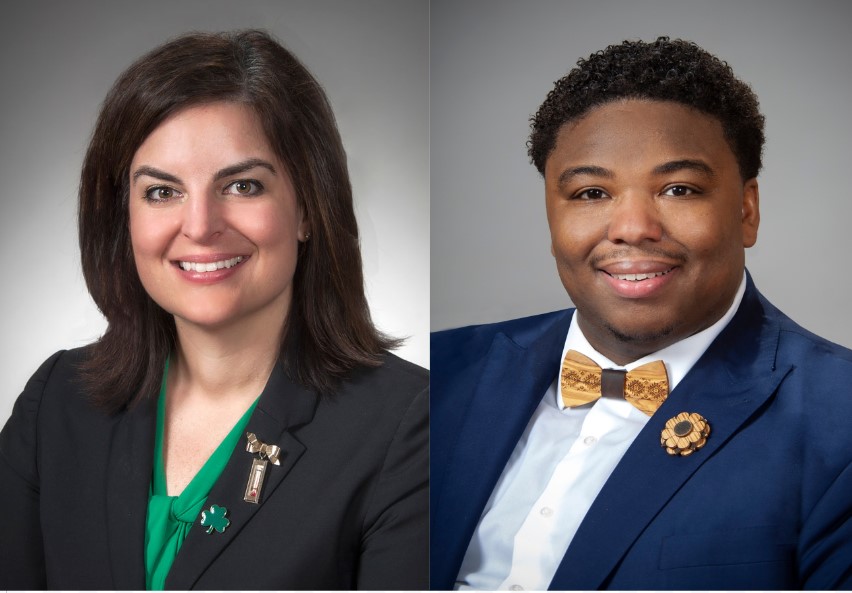
    Ohio Reps. Brigid Kelly, D-Cincinnati, and Dontavius Jerrells, D-Columbus. Official photos.

    BY: MARTY SCHLADEN – Ohio Capital Journal

    Ohio’s minimum wage is set to increase in January from $9.30 an hour to $10.10, but unless the law changes the disabled will be left far behind.

    They can currently earn the state’s “subminimum” wage of $4.25 an hour and can be paid substantially less than that, NBC 4 reported. Now Ohio Reps. Brigid Kelly, D-Cincinnati, and Dontavius Jerrells, D-Columbus want to raise it to where it will be for most other workers.

    That would lift some people out of poverty, a majority of a panel of Ohio economists said earlier this week. But a majority was also uncertain whether it would be an overall help to the state economy.

    In a survey conducted by Scioto Analysis, 12 of 18 economists said the measure would reduce poverty. Three disagreed and three were uncertain or had no opinion.

    Four economists agreed that paying the disabled the regular minimum wage would be good for the overall economy. Four disagreed and 10 were either uncertain or had no opinion.

    In the comments that accompany the survey, Youngstown State University economist Albert Sumell said increasing minimum wages for the disabled is no silver bullet, but it would be beneficial.

    “The effect will be modest but clearly some individuals with disabilities would benefit,” he said.

    On the other hand, Kent State University economist Curtis Reynolds questioned whether subminimum wages were what prompted some employers to hire disabled workers in the first place.

    “The challenge, of course, is whether individuals will still have job opportunities at the higher wage,” wrote Reynolds, who said he was uncertain about the effect of raising the wages. “If yes, then the higher minimum wage would reduce poverty. If not, then it will not reduce poverty. I am not sure which will happen for this population (which has not been studied as much in research on minimum wage policies).”

    The economists’ uncertainty about whether raising minimum wages for the disabled would grow the economy was even more pronounced. Some of the uncertainty stemmed from the relatively small number of disabled workers and how little minimum-wage workers of any group earn.

    But some of the economists argued that there are other reasons for undertaking the increase.

    “I think the main goal of minimum wages is to create equitable growth and dignity for workers,” wrote Jonathan Andreas of Bluffton University. “I’d be in favor of more equity and dignity even if it caused a little less growth, but the research on minimum wages generally finds that it doesn’t cause problems so it looks like a way to increase equity without hurting growth. I’ve never seen research about the minimum wage for people with disabilities so I haven’t seen enough information to know.”

    Follow Marty Schladen on Twitter.

  • Despite reports of harm, DeWine refuses comment on abortion ban law

    Despite reports of harm, DeWine refuses comment on abortion ban law

    BY: MARTY SCHLADEN – Ohio Capital Journal

    With Gov. Mike DeWine’s blessing, Ohio is in court, fighting to reimpose strict abortion regulations under a law he signed in 2019. But he’s refusing to publicly comment on the numerous stories of suffering it caused during the 11 weeks it was enforced.

    The law DeWine signed, Senate Bill 23, bans abortion after fetal cardiac activity can be detected. That’s about five or six weeks into a pregnancy — a point so early that many women and girls don’t yet know they’re pregnant.

    The law makes no exceptions for rape and incest. It includes some protections for the life and health of the mother, but doctors — who can be charged with felonies under the law — say they’re too vague to be workable.

    SB 23 was unenforceable until June 24 because it violated the 1973 U.S.  Supreme Court decision in Roe v Wade. But then the U.S. Supreme Court conservative majority handed down its decision in Dobbs v Jackson Women’s Health, overturning Roe and its protections of the right to an abortion.

    Almost immediately, SB 23 went into effect and just a week later, the Indianapolis Star reported that the law had forced a 10-year-old rape victim from Columbus to travel there for an abortion. The incident made for international news, but DeWine refused to comment on it, other than to say child rape is “gut wrenching.”

    After that, more horror stories came in the form of sworn affidavits filed by doctors and other workers in Ohio abortion clinics. 

    They included two more minors who had been impregnated by rapists and cancer patients who couldn’t get abortions needed for treatment because their doctors were afraid of being charged with crimes and losing their medical licenses. 

    Other women were diagnosed with fetal abnormalities so severe that their pregnancies couldn’t be successful. Under SB 23 they had to leave Ohio for abortions if they didn’t want to carry those fetuses for months.

    On Sept. 14, enforcement of SB 23 was paused when a Cincinnati judge granted a temporary restraining order against it and then later issued a preliminary injunction. The case is expected to make its way to the Ohio Supreme Court, on which DeWine’s son, Pat, sits as a justice.

    In the face of news of medical and emotional problems caused by SB 23, Gov. DeWine has been steadfastly silent. 

    “Our office has no new comments on the issue or the ongoing litigation at this time,” Press Secretary Dan Tierney said in an email Monday. He said something similar 10 days earlier.

    Also, some of the governor’s recent conduct might be seen partly as an attempt to avoid questions about the impact the abortion law he signed is having on some women and girls. 

    He has refused to debate his Democratic challenger in the Nov. 8 election, Nan Whaley. Also in recent weeks, DeWine has made few appearances in central Ohio, where he’d be likely to face the Capitol press corps.

    At the same time, he may be quietly signaling his support for even more sweeping abortion measures.

    After the Dobbs decision, state Rep. Jean Schmidt, R-Cincinnati, introduced a bill that would ban abortions at any point in a pregnancy with only narrow exceptions to protect the life and health of the mother. She said she had the governor’s support.

    DeWine apparently hasn’t spoken publicly about the measure, House Bill 598. But a spokesman didn’t dispute Schmidt’s claims.

    Follow Marty Schladen on Twitter.

  • Affidavits: More pregnant minors who were raped denied Ohio abortions

    Affidavits: More pregnant minors who were raped denied Ohio abortions

    Documents describe dozens of painful situations under Ohio abortion restrictions

    BY: MARTY SCHLADEN – Ohio Capital Journal

    At least two more minors made pregnant by sexual assault were forced to leave Ohio to avoid having their rapists’ babies, according to sworn affidavits filed by abortion providers.

    The affidavits were filed in Cincinnati as part of a lawsuit aimed at stopping enforcement of Ohio’s strict new abortion law, which it temporarily did last week. Originally paused for two weeks, on Tuesday the enforcement delay was extended to at least Oct. 14.

    If true, the affidavits show that a Columbus 10-year-old was not the only child or teen rape victim forced to leave the state. They also describe more than two dozen other instances in which the abortion law put women under extreme duress.

    The descriptions include those of three women who threatened suicide. They also include two women with cancer who couldn’t terminate their pregnancies and also couldn’t get cancer treatment while they were pregnant. 

    Another three examples were of women whose fetuses had severe abnormalities or other conditions that made a successful pregnancy impossible. Even so, they couldn’t get abortions in Ohio. 

    And in three cases, debilitating vomiting was caused by pregnancy — so bad in one case that a woman couldn’t get off the clinic floor. But neither could these women get abortions in Ohio, the affidavits said.

    The documents were filed in the case Preterm-Cleveland v (Ohio Attorney General) Dave Yost. Having already gotten a temporary order restraining enforcement of the abortion law — Senate Bill 23 — clinics across Ohio are now seeking a preliminary injunction.

    In doing so, they’re arguing that SB 23 is so onerous that it violates women’s due-process rights under the Ohio Constitution. 

    Disrupted clinics

    Gov. Mike DeWine signed the law in 2019, but it couldn’t be enforced until the U.S. Supreme Court overturned Roe v Wade on June 24. Many of the affidavits describe how, as soon as the decision overturning Roe was announced that Friday, work at Ohio clinics was thrown into chaos.

    Ohio law had allowed abortions until 20 weeks of pregnancy. Now, with only limited exceptions for the life and the health of the mother, no abortions were allowed after fetal cardiac activity could be detected by ultrasound.

    In the affidavits, clinic workers said that usually happens after five to six weeks of pregnancy — a point at which as many as a third of women and girls don’t know they’re pregnant.

    The new, much-earlier cutoff sent clinic workers scrambling.

    “In the days after S.B. 23 took effect, we had to cancel over 600 appointments,” Sharon Liner, medical director of Planned Parenthood Southwest Ohio, said in her affidavit. “Many patients broke down in tears in our office. Many patients that we could not reach by phone who came to our health center expecting to have their appointment were extremely upset; some threatened to hurt themselves because they were so distraught.”

    Liner added, “We have had at least three patients threaten to commit suicide. Another patient said she would attempt to terminate her pregnancy by drinking bleach. Another asked how much Vitamin C she would need to take to terminate her pregnancy.”

    In July, 60% of patients at the clinic had to be turned away because fetal cardiac activity had been detected by the initial ultrasound, Liner said. 

    The Ohio law requires a 24-hour waiting period and a second negative ultrasound before an abortion can be performed. Because things are changing so quickly at that stage of development, another 16% of women who’s fetuses had no cardiac activity during the first exam were turned away in July because it was detected in the second, Liner said.

    The Ohio law requires a 24-hour waiting period and a second negative ultrasound before an abortion can be performed. Because things are changing so quickly at that stage of development, another 16% of women who’s fetuses had no cardiac activity during the first exam were turned away in July because it was detected in the second, Liner said.

    “When we tell patients we cannot help them, they are extremely distressed, and all we can offer them is resources, information and emotional support,” Liner said in her affidavit, which was taken while S.B. 23 was still being enforced.

    Ohio clinics have been referring patients who were ineligible for abortions here to clinics and hospitals in Michigan, Pennsylvania, Illinois and New York to get them. 

    Planned Parenthood of Greater Ohio and other organizations have announced stepped-up assistance to help patients get to those states. But many — including at least one homeless woman — said problems with things like transportation, child care, poverty and getting time off work make the trips virtually impossible, according to the affidavits.

    Allegra Pierce, a medical assistant at Preterm-Cleveland, doubted that most women turned away at Ohio clinics during the 11 weeks S.B. 23 was enforced ever made it out of state.

    “The majority of patients I talk to say that they can’t travel out of state to access abortion care,” Pierce said in her affidavit. “Even though many patients can access sources of funding for seeking an abortion, there are so many barriers that make traveling out of state inaccessible for many of our patients, including the cost of travel, child-care responsibilities, and difficulty getting time off of work, just to name a few. Even those patients who are able to travel out of state often have a hard time getting an appointment due to increasingly long wait times at clinics in states where abortion is still legal.”

    More victims

    In July, when Ohio Attorney General Dave Yost was raising unfounded doubts about the existence of a 10-year-old rape victim, there were plenty of data indicating that the story was all too plausible.

    In 2021, Ohio’s Children’s Advocacy Centers saw 6,717 cases of sexual abuse against Ohioans between infancy and adulthood. And in 2020, the most recent year for which statistics are available, 571 girls aged 17 or younger received abortions in Ohio, according to the state department of health. Fifty-two of them — or one a week — were 14 or younger.

    Sadly, the affidavits filed in late August and early September by workers at abortion clinics provide further evidence that child and teen rape and subsequent pregnancy is a problem in Ohio. But so long as fetal cardiac activity is detected, S.B. 23 requires such victims to either have those babies or scramble out of state and try to find an abortion.

    Adarsh E. Krishen, chief medical officer for Planned Parenthood of Greater Ohio, told of a minor who had been sexually assaulted and had to travel to Michigan for an abortion because of S.B. 23. Krishen’s organization operates clinics in Columbus and Cleveland.

    “This patient experienced immense trauma from the assault itself and then endured further trauma from a forensic interview alongside a physical exam to collect evidence for the ongoing police investigation,” Krishen said in his affidavit. “This trauma was further exacerbated by needing to wait over three weeks for her appointment. In each step of this process she felt the complete denial of bodily autonomy and safety, something all people, especially children, should unequivocally have at all times.”

    Another example shows how S.B. 23 makes police investigation of child and teen rapes more difficult.

    Aeran Trick, operations manager of Women’s Med Center of Dayton, told of “a 16-year-old girl living in Southwestern Ohio who had become pregnant after being sexually assaulted by a family member.”

    As with the 10-year-old from Columbus, Trick said this teenager was forced to go to Indianapolis for an abortion.

    “The local Ohio law-enforcement agency — which was already involved at the time the clinic was contacted about the patient — had to drive to our Indianapolis clinic to retrieve the tissue for crime lab testing related to the sexual assault investigation,” Trick’s affidavit says. “I am concerned that Ohio’s ban and the need to travel increasingly far distances to obtain abortion care not only causes unimaginable harm to these young victims, but could also hamper law enforcement’s ability to investigate and prosecute these cases in the future.”

    Cornered by cancer

    The affidavits filed as part of the effort to stop S.B. 23 describe two cancer patients put in the most impossible of situations by the law. 

    Both seem to illustrate doctors’ reluctance to terminate pregnancies despite the law’s exceptions for maternal health — exceptions that doctors say are woefully ill-defined. With potential penalties that include felony charges and the loss of professional licenses, some doctors have refused to terminate even though their patients’ health is at risk.

    In the days after S.B. 23 took effect, a pregnant 25-year-old went to a clinic operated by Planned Parenthood of Southwest Ohio, said Liner, the medical director there. The patient had recurrent cancer and was undergoing chemotherapy when she learned that she was pregnant.

    Chemotherapy is dangerous during the first 12 weeks of pregnancy and this patient had already skipped one treatment. But when the clinic determined that she was eight weeks pregnant, workers there said they couldn’t perform an abortion, Liner said.

    “Due to the patient having cancer while pregnant, we sought documentation to support a medical exception to S.B. 23 for this patient,” Liner said in her affidavit. “Her provider of care did not feel comfortable providing this and the patient had to travel out of state for an abortion to resume her cancer treatment, which caused further delay.”

    The effect of delaying chemotherapy on the patient’s health might be hard to determine, but it seems unlikely that it was good.

    Just three days after S.B. 23 took effect, a 37-year-old suffering stage III melanoma went to Women’s Med Center in Dayton, Trick, the operations manager there, said. The woman was told by her doctors that she had to terminate her pregnancy before they could treat her, so she, too, would have to leave the state, Trick said. 

    “Upon learning that she would need to travel out of state to have her abortion, the patient broke down and cried inconsolably despite the attempts of multiple staff members, including myself, to console her,” Trick said in her sworn affidavit.

    Other illnesses

    In addition to those cases, women with conditions that made successful pregnancies impossible had problems getting doctors outside the clinics to treat them, David Burkons, medical director of Northeast Ohio Women’s Center said. Two patients at the clinic said they had tubal, or “ectopic,” pregnancies “but the doctors (at emergency rooms) were afraid to treat them without being absolutely certain there was no intrauterine pregnancy,” Burkons wrote in his affidavit.

    “In one case, the patient’s fallopian tube ruptured, and surgery (was needed) rather than medical management, which would have been possible if they had acted sooner,” he said. “In the other, my nurse intervened to convince a physician to treat the patient, but only several days later, which was emotionally wrenching for the patient.”

    The affidavits also detail cases of fetal abnormalities and other problems so severe that pregnancies can’t result in a successful birth. One patient at a Planned Parenthood clinic in Southwest Ohio had a fetus with abnormalities including “a lack of lower extremities and the contents of the fetus’s abdomen, including possibly the heart, protruding through a defect in the abdominal wall,” Liner, a doctor, said in her sworn statement.

    Because S.B. 23 doesn’t allow women in such cases to abort their pregnancies if they don’t pose an imminent threat to their health, they either have to leave the state for an abortion or carry the fetus to term — even though that “can be extremely distressing for patients,” Liner said.

    In another case, this one in Dayton, a woman was 13 weeks pregnant but had no amniotic fluid, prompting her doctor to tell her the pregnancy was “nonviable.”

    “However, because the fetus still had fetal heart tones, the physician discharged her with instructions to call the office if she developed a fever,” Trick said in her affidavit. “The patient was very distressed and expressed to (clinic) staff that she felt abandoned by her physician during an incredibly difficult experience. I’m concerned that confusion over the meaning of S.B. 23’s health exceptions has led physicians to avoid providing medically necessary care out of caution, and I worry about patients in similar positions who aren’t able to independently find an accessible abortion provider without their physician’s help.”

    Clinic workers also reported cases of incessant vomiting caused by pregnancy, including in a high-school senior who found it impossible to attend class and finish her diploma. 

    Another girl, 16, had vomited so much that she lost 20 pounds, Trick, of the Dayton clinic, reported. The girl’s mother didn’t have a reliable car, so she had to rent one to take her daughter to Indianapolis for an abortion, Trick said.

    At the same clinic, another patient was “so sick she was lying on the floor vomiting into a bucket,” Trick wrote. 

    The woman wasn’t only afraid that her condition would prevent her from making it to Indianapolis, Trick said. The woman had four kids to care for and she was the manager of a large retail store.

    “She was concerned that she was going to lose her job because of all the time she had to take off to travel to and from the clinic for abortion care in addition to her repeated absences due to being hospitalized for her condition,” Trick wrote.

    Undermining its own purpose

    Proponents of S.B. 23 meant to dramatically curtail the number of abortions in Ohio. But the clinic workers said that for some patients, it’s having the perverse effect of rushing them to terminate pregnancies before they’ve had a chance to decide whether that’s what they really want.

    Pierce of Preterm-Cleveland said that at five to six weeks, “these patients are very early on in their pregnancies and many of them have not had a chance to wrap their minds around the fact they are pregnant. A number of patients have told me that they wish they had more time to think about whether to continue the pregnancy.

    “For example, I recently spoke with a patient with a young baby at home who had become pregnant again only months after giving birth,” Pierce’s affidavit continues. “She had experienced many postpartum health issues, and she was not sure if she was physically or mentally ready to go through a pregnancy again so soon. She wanted time to work through this decision but was terrified that if she waited she would no longer be able to have an abortion.”

    In their lawsuit, the abortion clinics seem to be contending that in forcing such an early decision, S.B 23 denied that woman’s due-process rights under the Ohio Constitution. They seem to be asserting the same rights for the other women they describe in the affidavits as being injured by S.B. 23.

    Whether Ohio’s court system agrees will be decided in the coming months.

    Follow Marty Schladen on Twitter.

  • Feds to provide $50M in food assistance to Ohio

    Feds to provide $50M in food assistance to Ohio

     Shelves of canned foods sit partially empty. Photo by Justin Sullivan/Getty Images.

    BY: MARTY SCHLADEN Ohio Capital Journal

    Ohio’s foodbanks say they’re desperate as summer is turning to fall. Demand has skyrocketed with increasing food costs at the same time that their resources have evaporated. And with current supply chain disruptions, they need to order food now if they hope to have it when winter comes.

    And even though the state is sitting on unprecedented fund balances of $7.4 billion and another $1.3 billion in unexpended American Rescue Plan Act funds, the administration of Gov. Mike DeWine so far hasn’t answered the foodbanks’ entreaties for $50 million in emergency assistance.

    The U.S. Department of Agriculture partially answered that call on Wednesday when it announced that it would put up nearly $1 billion nationally to purchase food for emergency providers such as foodbanks. Another $500 million will go to emergency food systems so they can buy commodities themselves. And $500 million will go to school lunch and breakfast programs, the USDA announced.

    “Food banks and schools are the backbone of our nutrition safety net, serving tens of millions of children and families,” Stacy Dean, Deputy Under Secretary for Food, Nutrition, and Consumer Services, said in a statement. “The Biden administration understands that supply chain disruptions and high food costs have created uncertainties for these crucial partners, and we are committed to equipping them with the resources they need to keep communities fed, strong, and healthy.”

    In a joint statement, the Ohio’s Foodbanks said that Ohio will get $50 million worth of help starting next year.

    “For many months, our foodbanks have been strained nearly to a breaking point,” the foodbanks said. “Some are operating in deficit budgets, purchasing food just to keep enough balanced products on the shelves for our hunger-relief partner organizations and the people we serve together. We have been buying more privately purchased food than ever before, at record prices. Just like Ohio families, foodbanks have been paying higher rates to keep our coolers on, our day-to-day operations afloat, and our trucks moving.”

    In an email, Ohio Association of Foodbanks Executive Director Lisa Hamler-Fugitt stressed that the federal assistance likely won’t come until January and Ohio foodbanks’ needs are immediate.

    “We need food now to meet the increasing need,” she said. “We have also requested that (Agriculture Secretary Tom) Vilsack send letters to the governors urging them to use ARPA funding to support foodbanks and emergency food assistance programs.”

    In their joint statement, the foodbanks made a similar appeal.

    “We want to be ready to distribute this food to Ohio families and balance the limited menu of USDA commodities with Ohio-grown, raised, and produced foods, and that’s where the state of Ohio can join with us,” it said. “By matching this $50 million investment by USDA with $50 million in the state of Ohio’s ARPA funds, Gov. DeWine and members of the Ohio General Assembly can ensure that the Ohioans hardest hit by the pandemic and ongoing economic uncertainty can count on us for the help they need in the future. 

    “Immediate ARPA funds will prevent a bleak holiday season, as well as help our network reinforce its storage and distribution capacity for the months ahead and support Ohio agriculture. We look forward to working with our state and federal partners to continue to keep our communities’ needs met.”

    Follow Marty Schladen on Twitter.

  • In top-secret documents case, Portman wants to investigate the investigators

    In top-secret documents case, Portman wants to investigate the investigators

    BY: MARTY SCHLADEN Ohio Capital Journal

    It now appears that secrets of the most sensitive nature were among the documents former President Donald Trump hung onto after more than a year of entreaties by the government to return them. Having to do with another nation’s nuclear-weapons capabilities, one set of documents in Trump’s possession was so sensitive that only a few senior government officials are allowed to see them and only then on a need-to-know basis, the Washington Post reported Tuesday.

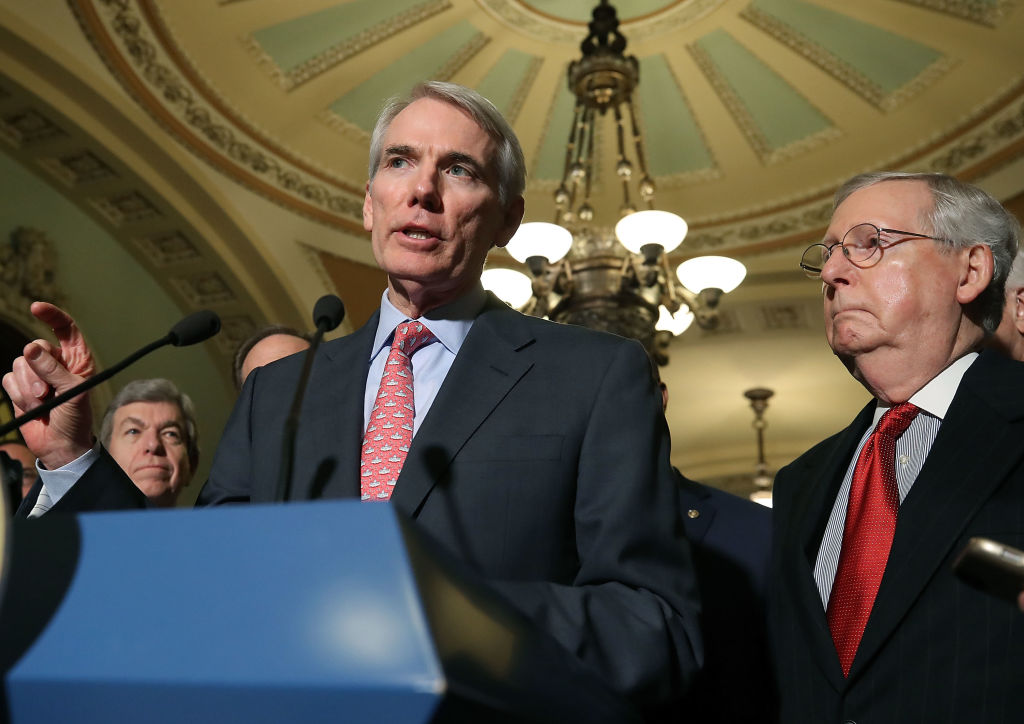
    One might think that the most senior Republican on the Senate Homeland Security and Government Affairs Committee would want to know what Trump was doing with those documents and how much his possession of them might have jeopardized national security. But since the Aug. 8 search of Trump’s South Florida club and residence, it appears that the only statement Sen. Rob Portman, R-Ohio, has made about the matter has been to call for a congressional investigation of the FBI.

    “As the Lead Republican on the Senate Homeland & Governmental Affairs Committee, I call on @SenGaryPeters to utilize the broad jurisdiction of the Cmte, which includes jurisdiction over the National Archives & Records Admin, to perform oversight on this issue & ensure transparency,” Portman tweeted on Aug. 14.

    Portman quickly followed that with, “The Attorney General and the FBI should now demonstrate unprecedented transparency and explain to the American people why they authorized the raid.”

    Many other Republicans — eager to stay in Trump’s good graces — were quick to attack the FBI for conducting the court-sanctioned search. They also attacked the Justice Department for seeking it after trying more voluntary methods to get Trump to return the classified documents.

    “I’ve seen enough,” House Minority Leader Kevin McCarthy said in a tweeted statement. “The Justice Department has reached an intolerable state of weaponized politicization.”

    Republicans on the House Judiciary Committee, led by Ohio Republican Rep. Jim Jordan, in two separate tweets said, “This is what happens in third world countries. Not the United States,” and, “If they can do it to a former President, imagine what they can do to you.”

    And Rep. Marjorie Taylor Greene, R-Ga., simply tweeted “DEFUND THE FBI!”

    But unlike those officials, Portman in January announced that he isn’t seeking reelection. Even so, he apparently hasn’t condemned an attack on the FBI office in his hometown of Cincinnati or a rash of threats to the FBI that are thought to partly be a product of the rhetoric by Trump and his supporters.

    Portman’s staff didn’t respond to questions for this story. And some observers are confused as to why Portman wouldn’t speak out against attacks on federal law enforcement or call on Trump to explain his actions as he has called for the FBI and Justice Department to do.

    “He’s been a real puzzle to me,” Paul Beck, a political science professor emeritus at Ohio State, said last week. “You’d think by the time he decided to retire, he’d kind of freed himself from the clutches of Trump. But for some reason or another, he doesn’t feel that way.”

    With his mild, polite demeanor, Portman is far from the Trumpiest member of the Senate. But he has been enthusiastic about some of the former president’s initiatives — particularly the 2017 tax cut.

    “But that’s done,” Beck said. “The question now is, what more does he want from (Trump)? It may well be that what Portman wants is for Republicans to retake the Senate in 2022 and maybe… stymie the Biden administration for the next two years.”

    Similarly to Portman, former Vice President Mike Pence on Aug. 17 said he was “deeply troubled” by the search of Trump’s club and residence. And he called on Attorney General Merrick Garland to explain more about the Justice Department’s reasons for undertaking the search — which the department has done through subsequent court filings.

    But, the Washington Post reported, Pence also called on his fellow Republicans to tone down their rhetoric.

    “These attacks on the FBI must stop,” the paper reported Pence as saying. “Calls to defund the FBI are just as wrong as calls to defund the police.”

    Pence, whom Trump attacked during the Jan. 6 Capitol riot even as rioters were chanting to hang the vice president, is widely believed to be positioning himself for a presidential run. And he’s taken several other steps to distance himself from the former president

    Is it possible that Portman by contrast is considering becoming a lobbyist post-retirement and he doesn’t want to alienate Trumpworld?

    “The question is, where does he want to live?” Beck said. “I don’t know that he’s ready to go back and live in Lebanon, Ohio. Does he want to settle in Washington, D.C. and earn fairly big bucks as a lobbyist? It may well be that to do that he can’t be on the outs with Trump, but he also doesn’t have to be at all aggressive in supporting Trump’s efforts to rescind the results of the 2020 election.” 

    Or Portman could simply be emulating Senate Minority Leader Mitch McConnell, R-Ky., a frequent target of Trump’s ire.

    “You would think that Portman would be distancing himself from Trump,” Beck said. “Maybe he’s doing what Mitch McConnell is doing and that is saying nothing. And McConnell can’t be happy.” 

    Follow Marty Schladen on Twitter.
  • Diabetes activists applaud drug reforms, say more needs to be done

    Diabetes activists applaud drug reforms, say more needs to be done

    Getty Images photo of diabetes patient injecting insulin.

    BY: MARTY SCHLADEN – Ohio Capital Journal

    Pricing reforms under a sweeping law signed on Tuesday by President Joe Biden are great for diabetics, but much more needs to be done, an activist said Wednesday.

    As part of the Inflation Reduction Act, monthly out-of-pocket insulin costs for Medicare recipients were capped by the law at $35 a month. Together with capping all drug costs for Medicare patients at $2,000 a year, the new law is being lauded as a boon for seniors struggling to balance their drug costs with all their other expenses.

    Among medicines, insulin is one that is particularly difficult for those who need it to live without. For diabetics, it helps regulate blood-glucose levels that, if left untreated, can cause blindness, nerve and kidney damage and even death.

    But even though it’s been around for a century, insulin prices aren’t as cheap as one might think for a class of drugs that has been researched, manufactured and marketed for so long. In fact, until recently, list prices have been increasing rapidly.

    “The list price of insulin per milliliter in the United States increased, on average, 2.9% annually from 1991-2001, 9.5% per year from 2002 and 2012, 20.7% annually between 2012 and 2016, and 1.5% per year from 2016-2018,” the American Action Forum reported in 2020.

    And that can lead to some excruciating choices if you can’t afford it. The Commonwealth Fund in 2020 reported that among non-Medicare patients, huge numbers had difficulty affording their insulin between 2014 and 2017; from nearly half of the uninsured living below the poverty line to 3% of people with good insurance and who were making five times the poverty level, or nearly $100,000 for a family of four.

     Source: The Commonwealth Fund

    “Bottom line for diabetics, we can’t afford to wait,” said John Kennedy, an advocate with Ohio Insulin 4All, said Wednesday in a press conference hosted by the group Protect Our Care. 

    Kennedy added, “We’re impatient, but our impatience comes from a really good place. It’s because the more time that passes means more diabetics are going to have to make really difficult choices that nobody should have to make; whether to put food on the table or to take the whole dose of their insulin. As we know, about a quarter of all diabetics have said that they ration their insulin supply because they just can’t afford it.”

    For Medicare patients, the Kaiser Family Foundation reports that average monthly out-of-pocket insulin costs increased 39% between 2007 and 2020. Now those monthly costs range from $16 to $116, or $192 to $1,392 a year.

    With average out-of-pocket insulin expenses for Medicare patients at $54 a month in 2020, the $35-a-month cap in the Inflation Reduction Act represents a more than a 50% savings, KFF reported last month.

    While capping those costs — and directly negotiating Medicare insulin prices with drugmakers — is surely welcome news to seniors with fixed incomes, it won’t do much for many other diabetic Americans.

    One reason is that the new law keeps intact the opaque system under which giant drug middlemen extract big discounts from drugmakers in exchange for covering them. The three largest middlemen — or pharmacy benefit managers — in the U.S. control more than 70% of the marketplace and each is owned by a corporation that also owns a top-10 insurance company.

    And because the system isn’t transparent, it’s unknown how much of the rebates the middlemen and their affiliated insurers are pocketing.

    In a paper published last year in the Journal of the American Medical Association’s Health Forum, three researchers at the University of Southern California assed what happened with the prices of 32 insulin products between 2014 and 2018. And despite the fact that drugmakers such as Eli Lilly, Sanofi and Novo Nordisk tend to get most of the blame for rising costs, it shows that others are also culpable:

    • List prices went up by 40% while net, or post-rebate, prices received by drugmakers dropped by 31%.
    • The share of insulin expenditures retained by pharmacy benefit managers such as CVS Caremark, OptumRx and Express Scripts increased by 154.6%
    • The share retained by pharmacies, the largest of which is CVS, increased by 228.8%
    • The share retained by wholesalers such as Cardinal Health, AmerisourceBergen and McKesson increased by 74.7%.

    While he lauded the insulin measures in the Inflation Reduction Act, Kennedy, the diabetes advocate, they were far from sufficient.

    “The way that pricing is done is so hidden; it’s not transparent at all and that’s a big, big, big problem,” he said. “And yes pharmacy benefit managers have played a big role in this secret process — hidden process — that is used to determine what the costs are going to be. But they’re just one player in this game. PBMs certainly share a chunk of the blame, but there’s a lot of blame to go around.”

    Follow Marty Schladen on Twitter.

  • Experts: Dems’ drug measures are good for seniors. But there are downsides

    Experts: Dems’ drug measures are good for seniors. But there are downsides

    BY: MARTY SCHLADEN – Ohio Capital Journal

    The sweeping Inflation Reduction Act passed by Democrats in the U.S. Senate on Sunday takes on an issue that Americans have been screaming about for years: the high cost of prescription drugs.

    But while it will bring immediate relief to millions of seniors, several experts have said it may dampen development of new drugs and new uses for existing ones. And, they say, it fails altogether in addressing one of the fundamental drivers of increasing drug costs for all Americans — the massive, non-transparent system of rebates charged by huge drug middlemen.

    “I would broadly characterize the package as a mixed bag with a lot of missed opportunities,” said Antonio Ciaccia, CEO of 46brooklyn Research, an Ohio-based drug-pricing data firm. 

    Along with its provisions to address climate change and to go after wealthy tax cheats, the bill seeks to ease drug costs for patients enrolled in Medicare, the federal health program that primarily benefits Americans over 65. 

    One of the most powerful ways it would do that is by capping out-of-pocket drug costs for seniors in Medicare Part D at $2,000 a year starting in 2025, the Kaiser Family Foundation reported

    “That out-of-pocket cap is amazing,” Ciaccia said. “You can’t imagine the number of seniors who are rationing their care, having family members who are having to pony up for treatment, sometimes forgoing it, taking out of their retirement in order to do it. So let’s be very clear. I think that policy is unbelievably good and necessary.”

    The bill also would also ease seniors’ burden by eliminating all out-of-pocket costs for vaccines starting next year. And it would eliminate the 5% copayment for seniors in the “catastrophic tier” of Part D starting in 2024. 

    Medicare recipients enter that tier after their putative out-of-pocket costs reach $7,050 (in 2022). But Medicare counts much of what drugmakers and others also pay while patients are in the so-called “coverage gap” toward their out-of-pocket expenses.

    In addition, the Senate bill would employ several mechanisms to control drug prices — but only for Medicare patients.

    Starting next year, it would require manufacturers to pay a refund if their price increases exceed the rate of inflation. That provision would apply to all medicines costing more than $100 per year.

    In 2026, the bill also would start targeting certain, high-cost drugs. 

    The system is a little complicated. But in a nutshell, it breaks drugs down into two categories — “small-molecule” drugs — think most of the traditional pills you take — and “biologics,” medicines consisting of more elaborate molecules that often have to be administered by injection or infusion.

    Based on their classification, the government would give makers of certain expensive drugs different periods of time after they receive FDA approval to sell their products at whatever prices they want. But after nine years, makers of some expensive small-molecule drugs would have to start selling them at progressive, steep discounts. Makers of some pricey biologics would have to start doing so after 13 years.

    Supporters of the Inflation Reduction Act describe what would happen after those exclusivity periods as “negotiation,” but drugmakers might not have much of a choice. As explained by KFF, the discounts are laid out in the bill, as are hefty fines for drugmakers who refuse to participate.

    Perhaps predictably, an industry group representing drug manufacturers isn’t happy with it.

    “Once the government can set prices for life saving medicines, it will demand even more control over the health care of American patients and the collateral damage from this bill will only grow,” Stephen J. Ubl, President and CEO of the Pharmaceutical Research and Manufacturers Association, said in an Aug. 7 statement. “There is still time to reject this partisan bill and work on bipartisan reforms that lower costs at the pharmacy and protect the hope patients have for new treatments. We urge the House to do what’s needed to stop this dangerous bill and deliver the kind of meaningful patient-centered reforms the American people are counting on.”

    That might be a self-interested argument. But some independent experts also raised concerns that the discounts spelled out in the bill would dampen investors’ enthusiasm for plowing money into pharmaceutical research. 

    Craig Garthwaite, director of the Program on Healthcare at Northwestern University’s Kellogg School of Management, wrote that in their first stages of development, ideas for new drugs often migrate from university laboratories to small companies. Those companies then try to attract venture capital from investors who know that such projects are often a bust, but some offer huge rewards, Garthwaite wrote late last month in the health publication STAT News.

    Only after these technologies prove promising are they bought by larger drugmakers who have the resources to conduct clinical trials, facilitate government approval, then mass produce and market the drugs, he wrote. Garthwaite argued that by limiting the ultimate profitability of some drugs, the new rule would limit the venture capital needed to fund innovation in its earliest stages. 

    “So the new legislative carve-out won’t save anyone,” he wrote. “Subsequent price controls will still erode startup valuations and therefore investment. Venture capital companies could no longer count on exiting their investments with the same level of returns because any future buyer would be staring down the price-control barrel.”

    However, others have argued that the scope of those controls would be limited. The legislation passed on Sunday calls for controls to be placed on 10 drugs in 2026, 15 in each of the two years after that and 20 in 2029 and each year after that.

    In its analysis, the Congressional Budget Office also said the bill’s impact on innovation would be miniscule, reducing the number of new drugs introduced over the next 30 years by just over 1%.

    But should the Inflation Reduction Act become law, it will take away what some experts see as a much more powerful tool to curb drug inflation. It would preserve protections huge drug middlemen enjoy from federal anti-kickback laws.

    The biggest three middlemen, known as pharmacy benefit managers, are all combined with major insurance companies and each corporation is among the 25 largest corporations in the United States. In Medicare, Medicaid and in the private insurance market, they decide which drugs are covered and they extract huge rebates from drugmakers in exchange for putting their products on lists of covered drugs, or formularies. 

    The transactions are non-transparent so it’s not known how much of those rebates the pharmacy benefit managers are passing along or how much they’re putting in their pockets. However, research has shown that inflating rebates have led to even greater inflation in the list prices. 

    Those are the prices you pay if you don’t have insurance. They’re also often what your copayments, coinsurance and deductibles are based on. And that’s not just for people on Medicare, that’s for everybody.

    The Trump administration proposed and then delayed a rule that would have effectively prohibited pharmacy benefit managers from extracting rebates from drugmakers in exchange for covering their drugs. After the Biden administration also delayed the rule, the bill passed by the Senate on Sunday would eliminate it altogether.

    Former FDA Commissioner Scott Gottlieb said that the big disparity between list prices and net prices for drugs was already a big problem and several provisions in the Senate bill likely will make it worse.

    “Because rebates often flow to insurers and not patients, this phenomenon partly unwinds the effects of community rating by requiring generally sicker patients taking expensive medications to pay more,” he wrote with Benedic N. Ippolito, a senior fellow at the American Enterprise Institute. “If anything, policymakers should be looking for ways to attenuate the large divergence between high list prices of drugs and lower post-rebate, ‘net’ prices.”

    Ciaccia, the Ohio drug pricing analyst, said the system in the United States has become so screwed up that it’s inevitable that the fixes for Medicare patients in the Inflation Reduction Act would come with costs elsewhere.

    “Let me ask you this: Why do we need these caps in the first place?” he said. “It’s because some of these medications are so over-inflated it’s ridiculous. It’s not realistic for (seniors) to obtain them without some sort of collateral damage due to our pricing system.”

    Follow Marty Schladen on Twitter.

  • Climate change is already costing cities. It’s going to get much worse

    Climate change is already costing cities. It’s going to get much worse

    Human-caused climate change is accelerating – and Ohio’s cities and towns are going to have to pay big money to cope with it, a new report says. Source: Wikimedia Commons

    BY: MARTY SCHLADEN – Ohio Capital Journal

    Ohio’s cash-strapped cities and towns are going to need to find billions more a year to keep pace as challenges from climate change intensify over the coming decades, according to a new analysis.

    Climate denialists have long ignored the overwhelming scientific consensus around global warming. That got a little harder last year when the International Panel on Climate Change last year analyzed 14,000 studiesand concluded that human activity is causing global warming and that we’re locked in to seeing it worsen over the next 30 years.

    And the warming has taken on a more visceral cast over the past week, with 100 million Americans under heat warnings, Central England smashing heat records after 250 years of record keeping, and as much of the rest of the Northern Hemisphere sizzles as well.

    Of course, hot summers aren’t the only consequence of climate change. Increasing mean global temperatures have a lot of knock-on effects and cities — including those in Ohio — are having to deal with them.

    “Communities across Ohio have been coping with increasing temperatures, flooding, erosion, and climate-related extreme weather events for years,” the report by the Ohio Environmental Council, Power a Clean Future Ohio, and Scioto Analysis that was issued Wednesday said. 

    It added “These climate damages are projected to only intensify in approaching decades, generating new costs associated with climate-driven disaster recovery and adaptation, as well as creating a major strain on already overstretched taxpayers and cash-strapped local governments. Unless we see drastic changes at every level of government to address carbon emissions in the next few years, these impacts will only continue to worsen — and the cost to address them will skyrocket.”

    The report looked at the available literature on climate-related phenomena such as more-intense precipitation, worse algal blooms, and more and hotter days. Then it applied them to Ohio cities to estimate what adapting to the phenomena will cost annually by 2050.

    The estimate: at least $1.8 billion to $5.9 billion per year in 2021 dollars.

    “This represents a 26% to 82% increase of current spending levels for environment and housing programs for local governments in Ohio over a 2019 baseline, for just 10 of the 50 climate impacts identified in Ohio,” the report said. “Policymakers should know that these costs will not instantly appear in mid-century, but in most cases will start to accumulate this decade and steadily increase until they reach the projected midcentury estimates.”

    Some of the increased expenses with which Ohio communities will have to contend if global temps rise by 2 to 3 degrees Celsius by 2100:

    More air conditioners in schools, operating more cooling centers and paying for more electricity — Currently, the typical school district installs air conditioning when there are at least 32 school days when temperatures exceed 80 degrees F. By 2025, school districts across the state are expected to have 36 to 46 such school days per year, the report said, and the number will continue to increase from there.

    By 2050, installing air conditioners where they’re needed in urban, poor districts in cities like Cincinnati, Columbus, Cleveland, Akron, Dayton and Toledo is expected to cost between $41 million and $200 million, the report said. 

    In addition to those costs, local governments will be called upon to open cooling centers for people without air conditioning more often and they’ll have to pay more for electricity to keep those and other government buildings cool. Wednesday’s report estimates that will result in tens of millions more in annual expenses for local governments.

    Road repair — Extreme heat, rapid freeze-and-thaw cycles and more intense storms all damage roads. The report estimates that such additional maintenance will cost $170 million to $1 billion a year. 

    And that’s extra damage to roads that are already in bad shape.

    “In 2021, Ohio’s roads received a ‘D’ rating from the American Society for Civil Engineers,” Wednesday’s report said. “The scorecard also notes that 17% of Ohio’s roads are in poor condition and the average Ohio motorist pays an extra $500 per-year in costs due to driving on damaged roads.”

    According to the report, local governments are expected to need to spend more than $3.2 billion annually by 2030 just in order to catch up on deferred maintenance projects and begin to address future maintenance needs.

    Protecting drinking water — Algal blooms introduce toxins into important Ohio sources of drinking water, particularly Lake Erie. Global warming exacerbates such blooms in at least two ways: It causes more intense storms that wash more fertilizer into the water, which, because it’s warmer, promotes more algae growth.

    Lakefront cities such as Toledo, Sandusky, Lorain and Cleveland will have to pay $580 million to $2.2 billion more a year by 2050 to protect their water supplies, the report said.

    Stormwater management — As anyone who’s lived through severe flooding can attest, it can cause huge amounts of damage, disruption and threaten people’s lives and health. The report estimates that Ohio municipalities will have to lay out an additional $140 million to $150 million per year by 2050 to upgrade their systems to deal with more, and more-intense, storms brought about by climate change.

    The analysis lays out many other areas where costs are expected to increase — and it raises the question of who should pay them.

    “Instead of relying on taxpayers to bear these costs, policymakers could consider alternative funding sources, such as holding accountable the corporations most responsible for causing and exacerbating climate change, and ensuring they pay their fair share of the costs of adaptation and resilience, just as many Ohio communities have held opioid manufacturers accountable for the costs of the opioid crisis,” it said.

  • Docs dispute AG’s claim that Ohio law allows 10-year-olds to get abortions

    Docs dispute AG’s claim that Ohio law allows 10-year-olds to get abortions

    Ohio Attorney General Dave Yost. (Photo by Justin Merriman/Getty Images)

    BY: MARTY SCHLADEN – Ohio Capital Journal

    A defiant Dave Yost on Wednesday told News 5 in Cleveland “I never apologize for speaking the truth” when asked if he should apologize for an interview he did on Fox News a night earlier.

    That was when he raised doubts with host Jesse Watters that a 10-year-old Ohio rape victim had actually been forced to go to Indiana for an abortion as a consequence of a highly restrictive abortion law that Yost had supported.

    Less than 24 hours later, Yost’s doubts were proven to be unfounded when The Columbus Dispatch reported that a 27-year-old man had been arrested on charges of raping the child. But in addition to expressing unfounded doubts, Yost appears to have made at least two serious factual errors in that three-minute Fox interview.

    First was his insistence that the Ohio Bureau of Criminal Investigation hadn’t processed a rape kit in the case, and that cast serious doubt on whether the incident ever happened. Turns out that the state’s own Child and Adolescent Sexual Abuse Protocol lays out many circumstances under which a child victim wouldn’t have a rape exam.

    But much more significantly, Yost also claimed that if a 10-year-old gets pregnant in Ohio, she can still get an abortion under exceptions regarding the health of the mother.

    “Ohio’s heartbeat law has a medical emergency exception,” Yost told Watters. “It’s broader than just the life of the mother. This young girl — if she exists and if this horrible thing actually happened to her, it breaks my heart to think about it — she did not have to leave Ohio to find treatment.”

    That statement was quickly amplified on social media. But two Ohio OB-GYNs — doctors who are required to follow the new law — disputed that analysis on Thursday.

    The dispute appears to hinge on who knows more about the risks of pregnancy — Yost, or doctors who care for pregnant patients.

    One instance under which the law says abortions are allowed after six weeks is if there’s a “medically diagnosed condition that so complicates the pregnancy of the woman as to directly or indirectly cause the substantial and irreversible impairment of a major bodily function.”

    That sheds little light on how old mothers have to be under the law to face such risks, said Jason Sayat, a Columbus OB-GYN.

    “It states specifically ‘medically diagnosed condition’ and as far as I can tell, adolescent pregnancy is not a medically diagnosed condition that’s listed,” he said.

    Maria Phillis, a Northeast Ohio OB-GYN who is also a council chair with the American College of Obstetricians and Gynecologists, explained that the law makes two types of exceptions for the health of the mother.

    One is an emergency: an imminent threat of death or severe, lasting health problems for the mother. Phillis said such a situation could include “somebody who’s imminently bleeding out on the table, or having a stroke or cardiac arrest — things that are like, imminently if I don’t do something right now, somebody’s going to suffer death or severe consequences.”

    The other exception is if there’s a medically diagnosed condition that can “cause the substantial and irreversible impairment of a major bodily function.”

    Both Phillis and Sayat said such a situation can arise with very young mothers — and with a lot older ones, too. 

    “Pregnancy itself overall is a risk for anyone who enters it,” Phillis said. “It completely alters the broad physiology of the body. It alters the heart function… It alters kidney function. It alters a number of different body systems and folks that have preexisting disease or complications are at a higher risk of bad outcomes.”

    The youngest mothers are at higher risk for early births, restricted fetal growth, and a condition known as preeclampsia. They’re also at higher risk for postpartum depression — although the Ohio law expressly says it “does not include (an exception for) a condition related to the woman’s mental health.”

    Pregnant girls face those risks, but Phillis and Sayat said other groups of expectant women face elevated danger as well.

    “There are risks like that associated with any number of things,” Phillis said. “Just being African American puts you at risk for some of those same things. Just being obese puts you at risk for some of those things. Just being above 35 puts you at risk for some of those things.” 

    She added that being very young “certainly is a higher-risk pregnancy than for someone who is older and more mature, but it’s a little harder to say that this specific thing — her age — is going to put her at a higher risk than other conditions, say chronic hypertension, chronic diabetes. It’s hard to really put that together.”

    So are the dangers faced by very young mothers greater than those faced by other groups?

    “It’s really hard to compare,” Phillis said. “Most studies, when they look at different risk groups, are taking one thing at a time. Compiling risks, it’s always difficult to say… I would not feel comfortable doing a direct comparison. We’re really not set up to say who has the most risky pregnancy.”

    Despite making the claims he did on Fox, Yost’s office didn’t answer Thursday when asked to explain how the risks faced by pregnant girls who are very young are legally distinguishable from those faced by other women. He also refused, as has Gov. Mike DeWine, to say at what age he believes adolescents should be required to have their rapists’ babies. 

    Sayat, the Columbus OB-GYN, said laws like the one DeWine and Yost support are too blunt of instruments to govern doctors’ work.

    “That’s why we practice the medicine that we do,” he said. “If it was clear-cut and pregnancies were black and white, we wouldn’t have to do the training that we do or be prepared for all the different types of scenarios and emergencies we do.”

    Meanwhile, Indiana Attorney General Todd Rokita pushed Yost’s criticisms of Caitlin Bernard — the Indianapolis OB-GYN who first disclosed the 10-year-old’s abortion — to another level Thursday. Rokita said he was investigating Bernard with an eye toward taking her license or filing criminal charges, but was vague about what rules or laws she might have broken. 

    Also Thursday, Sen. James Lankford, R-Okla., blocked a bill that would have protected women’s and girls’ rights to cross state lines to get an abortion, as the Ohio 10-year-old did.

    Phillis, the OB-GYN from Northeast Ohio, said such things are driving colleagues out of the profession and limiting options for pregnant women and girls.

    “I really worry about my patients,” she said. “It’s a dangerous time to be alive in Ohio.” 

    Follow Marty Schladen on Twitter.
  • Retired teachers go to court for Ohio pension records

    Retired teachers go to court for Ohio pension records

    BY: MARTY SCHLADEN – Ohio Capital Journal

    An analyst working for Ohio retired teachers went to court last week seeking records relating to the state pension funds. 

    The analyst is trying to determine whether teachers’ pension money is being squandered on high-fee “alternative” investments such as private equity and hedge funds. He is also investigating whether external consultants directing such investments are also being paid by the firms in which retirement system money is being invested.

    Edward Siedle is president of Benchmark Financial Services, which investigates pension funds on behalf of their members. Last week, former Ohio Attorney General Marc Dann filed for a writ of mandamus on Siedle’s behalf to get records from the State Teachers Retirement System. 

    If successful, Ohio’s 10th District Court of Appeals will order the teachers retirement system, or STRS, to turn over a boatload of documents relating to its investments.

    In an interview, Dann said Siedle has been seeking the records since last year.

    “We’re not some gadfly trying to throw a wrench in the operation of STRS,” Dann said. “These are members of STRS who hired a professional to analyze the work that STRS is doing on their behalf. We want documents that will help that expert give an honest and accurate analysis.”

    He added, “To the extent that they say our requests are trade secrets or are too voluminous, it makes you think maybe they don’t want us to look so closely at this.”

    However, STRS spokesman Nick Treneff said that his agency has been working with Siedle and has already turned over many records.

    “We did try to work with Siedle on his request,” Treneff said.

    In a report last year, STRS said it had already turned over a boatload of information.

    “Over a period of three months, from February to May 2021, STRS Ohio sent 24 emails and a thumb drive to counsel, amounting to 812 documents and over 22,000 pages,” it said, adding that remaining requests are “overly broad.”

    Lawyers for Ohio state agencies commonly use such language in response to records requests. It will be up to the court to determine whether in this case STRS is using it, as Dann says, to stonewall. 

    But the stakes are pretty high.

    STRS is managing $92 billion on behalf of 166,000 active members. And, as benefits have become stingier, some of those members have become suspicious that the agency is making dubious investments through politically connected entities.

    The governor and the leaders of the General Assembly appoint “investment experts” to the STRS board of directors, and many of the state’s retired teachers believed the investments made on their behalf have underperformed.

    The distrust was evident in a newsletter written last August by Robin Rayfield, executive director of the Ohio Retired Teachers Association.

    “STRS has overstated investment returns while under-reporting the fees and costs associated with those investments,” he said.

    Part of the distrust surely stems from the fact that the pension fund stopped paying cost-of-living increases in 2017 — although it is planning a 3% increase this year.

    Treneff, the STRS spokesman, said the freeze was due to new rules set down by the legislature in 2012. State and local governments were still reeling from the Great Recession and there were nationwide concerns about unfunded pension liabilities.

    The retired teachers association points out that the General Assembly hasn’t increased its contribution rate to the pension fund in 38 years.

    But it did act to shore STRS up by cutting benefits. The cost-of-living hike was cut from 3% to 2% and teachers were made ineligible for any increases until they’ve been retired for five years. 

    The General Assembly also required that the system have enough assets to pay off any liabilities within 30 years. In 2017, when the fund didn’t appear likely to meet that requirement, the living increase was suspended. 

    Treneff said it was due to reduced investment-return assumptions, longer lifespans and lower-than-expected payroll growth.

    “That was painful for sure,” he said. “It wasn’t an easy decision.”

    But with five STRS employees making salaries and bonuses totaling more than $500,000 in 2020 — and with 64 making more than $200,000 the same year —  frustration and suspicion among Ohio teachers and retirees was perhaps predictable.

    And, with the U.S. Securities and Exchange Commission in January finding a raft of problems with the transparency and honesty of private equity funds, it’s also probably understandable that pension fund members have turned their suspicions on its alternative investments.

    Treneff, the system spokesman, was quick to point out that those investments are providing the system’s second-best returns. 

    The best? The American stock market. 

    Over the past decade, it has provided a 14.8% return on investments, while the system’s alternative investments have provided 11.84% once fees are subtracted, Treneff said.

    So why make a substantially worse-performing investment with teachers’ money? To avoid putting too many eggs in one basket, Treneff said.

    “The goal is to build this (pension) fund as fast as you can without taking wild risks,” he said, adding, “you don’t want one downturn in the stock market to destroy you.”