Tag: Marty Schladen

  • Ohio tax breaks adding up, watchdog says

    Ohio tax breaks adding up, watchdog says

    Loveland, Ohio, and Columbus

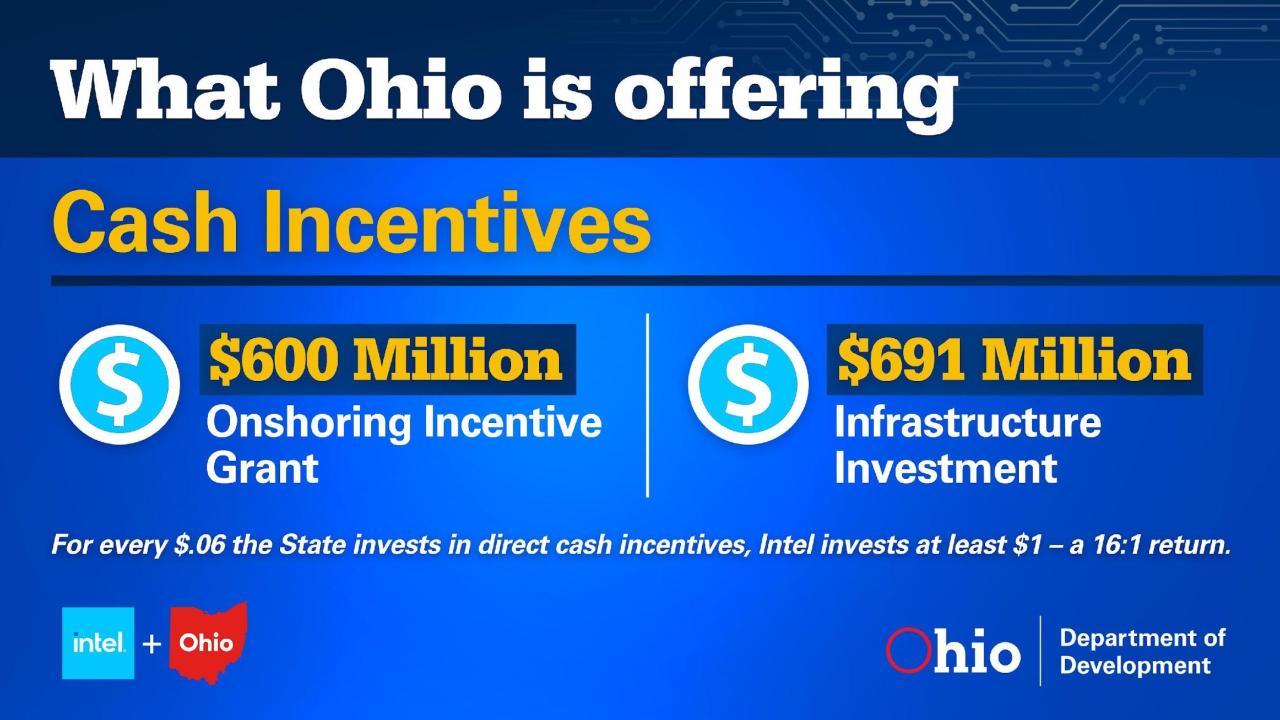
    Part of the incentive package offered to Intel by the state of Ohio. (Screenshot from Ohio Dept. of Development presentation)

    BY:  Ohio Capital Journal

    A new analysis says that 15 new tax breaks — many benefiting wealthy people and corporations — are coming online in Ohio.

    That will swell the total cost of tax breaks in the state to $11 billion a year, equal to 37% of the state’s annual revenue, the report by Policy Matters Ohio said.

    The new breaks will cost the state an additional $450 million a year as the state has ended a process to review the worthiness of its tax breaks, the report said.

    “Tax breaks are ballooning with little oversight,” Zach Schiller, Policy Matters’ research director, said in a written statement. “The General Assembly should restore a tax expenditure review committee, eliminated in the state budget two years ago, and rein in unproductive tax breaks that reinforce inequality in our state.”

    A big portion of the new tax breaks will go to Intel as part of a $2 billion incentive package in exchange for an investment of at least $20 billion to build a chip plant in New Albany and create at least 3,000 jobs. The new jobs are good news for Ohio, but some economic research indicates that in all but a fraction of cases, businesses would make the same location or expansion decisions regardless of the tax incentives they’re given.

    Meanwhile, the poorest Ohioans shoulder a disproportionate share of the state and local tax burden and House Republicans are proposing to make that burden heavier with House Bill 1, which would flatten that state income tax.

    The Policy Matters report said too many Ohio tax breaks favor people and corporations that need them the least.

    “While some tax breaks are well-directed, such as the Earned Income Tax Credit, which provides needed aid to low and moderate-income working families, a host of them should be repealed or cut back,” it said. “The business income deduction, also known as the LLC loophole, disproportionately rewards a small number of high-income individuals and costs an estimated $1 billion a year with negligible economic impact. Owners of data centers such as Facebook, Amazon and Google are receiving a sales-tax exemption worth more than $250 million over two years, though these facilities employ few workers.”

    The report also called out huge tax breaks to drug wholesalers Cardinal Health, McKesson and AmeriSource Bergen. The companies got those breaks even as the state sued them over claims that they fed and profited from Ohio’s opioid epidemic.

    “Suppliers to big drug distributors including Cardinal Health don’t have to pay much or any Commercial Activity Tax, though this was exposed as a tax dodge by the Kasich Administration’s budget director six years ago,” the report said. “Big retailers like Wal-Mart and Target are profiting from the discount on sales tax they collect, as then-taxation department commissioner Joe Testa testified years ago.”

    The report also called on lawmakers to resume evaluations of how effective tax breaks are at achieving their stated purpose. While many of Ohio’s tax breaks have been sold as job creators, the Buckeye State had the third-worst job growth of any state between February 2022 and February 2023, according to the U.S. Bureau of Labor Statistics.

    “Some tax breaks, such as Governor (Mike) DeWine’s proposed low-income housing tax credit, can be beneficial,” Schiller said. “But the General Assembly should set up a mechanism to rigorously scrutinize the tax breaks we have and cut back on unproductive exemptions and deductions that are proliferating in our tax code.”

    ___________________________

    MARTY SCHLADEN

    Marty Schladen has been a reporter for decades, working in Indiana, Texas and other places before returning to his native Ohio to work at The Columbus Dispatch in 2017. He’s won state and national journalism awards for investigations into utility regulation, public corruption, the environment, prescription drug spending and other matters.

    MORE FROM AUTHOR

    ___________________________

  • AEP doesn’t have much to say about its support for corrupt utility bailout

    AEP doesn’t have much to say about its support for corrupt utility bailout

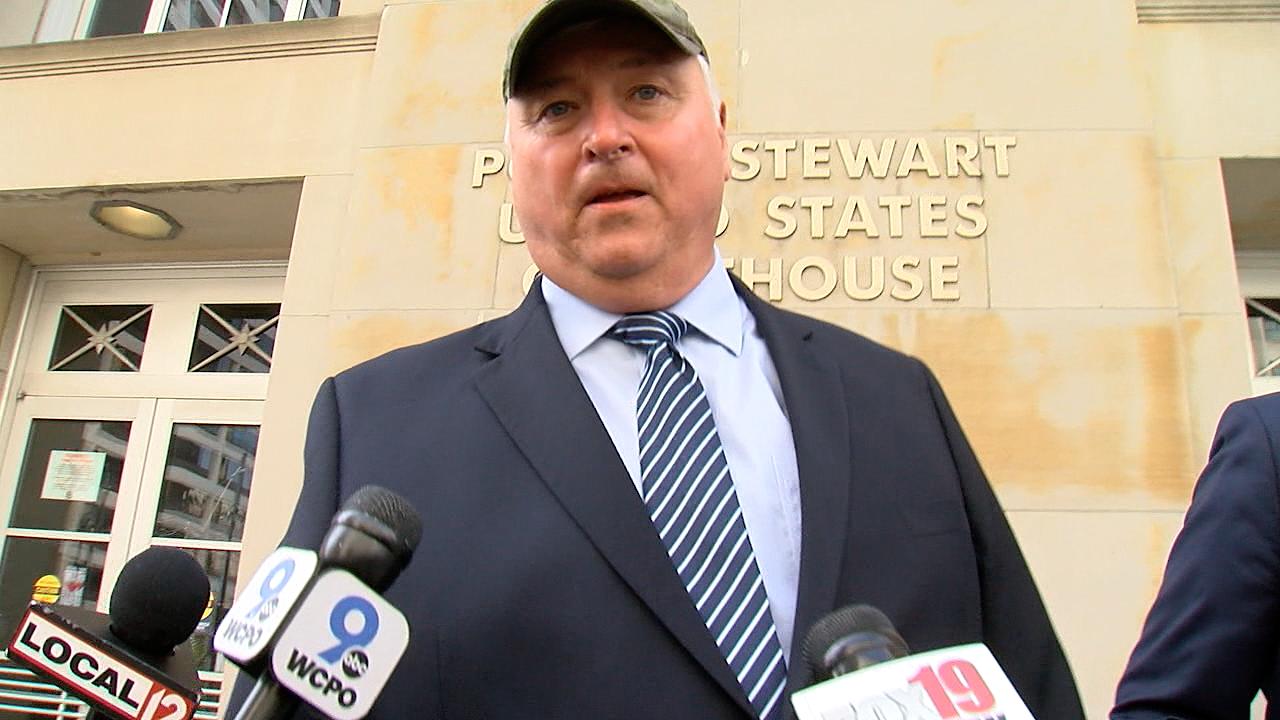
    Larry Householder speaks after guilty verdict. Photo by: WEWS/WCPO.

    BY:  Ohio Capital Journal

    Columbus-based utility giant AEP wasn’t at the epicenter of a historic bribery and money-laundering scandal in 2019. But it also wasn’t very far away as a corrupt deal was hatched in the Ohio Capitol to use $61 million in bribes to pass a $1.3 billion bailout.

    The name of the nation’s sixth-largest electric utility came up repeatedly in the seven-week criminal trial that ended earlier this month in the racketeering convictions of former Ohio House Speaker Larry Householder and former state GOP Chairman Matt Borges.

    Through its dark-money group, AEP provided more than $900,000 that was used to help pass the bailout. And to date, it has received more than $60 million to subsidize aging coal plants that belong to a consortium in which it owns a 40% stake.

    Just after the utility bailout was passed and a repeal attempt was thwarted, AEP spent another $500,000 through the same dark money group on an effort that stood to keep Householder in the speakership well into the 2030s. During the trial, a federal prosecutor asked a Householder co-defendant who had pleaded guilty why AEP would spend so much to keep the speaker in power.

    “It kind of went without saying that they support anything that’s good for the speaker because anything that’s good for the speaker is good for them,” the aide, Jeffrey Longstreth, testified.

    But everything changed when Householder and four others were arrested in July of 2020. Now AEP doesn’t seem interested in talking about its actions prior to that.

    Mysterious money

    Lobbyists and other wired-in parties on Capitol Square knew that as the battle heated up over the 2019 bailout measure — House Bill 6 — a geyser of cash was financing the effort to pass and protect it from repeal.

    It was logical to suspect that the money was coming from a utility industry that stood to benefit. But there was no way to be sure because it was coming through 501(c)(4) dark money groups that don’t have to disclose their donors.

    But then the FBI got involved.

    Acting on a tip, it launched an investigation. Using subpoenas, wiretaps, confidential informants, forensic accountants and undercover agents, investigators were able to grope their way through the dark money smokescreen and determine who was really behind the push for an unpopular corporate bailout.

    By far and away the biggest donor was the biggest beneficiary — Akron-based FirstEnergy. Starting in 2017 it ponied up what would become about $60 million to elect representatives who would vote to make Householder speaker in 2019 and then to pass and protect HB 6. In return, it stood to get about $1 billion of the benefit of the bailout — a return of more than $16 on each dollar it invested.

    But AEP is getting an even better return — more than $66 for every one of its dollars that made their way into the dark money group that fueled the HB 6 scheme. And, because the part of the bailout that benefits AEP is the only part of HB 6 that hasn’t been repealed, AEP is continuing to collect that money. That means returns from its dark money expenditure will only improve over time.

    AEP hasn’t been accused of wrongdoing in the scandal, and a spokesman denied that it acted improperly.

    “AEP participates in legislative and regulatory processes ethically and in compliance with the laws of the states where we operate,” the spokesman, Scott Blake, said in an email. “As we have previously stated, we do not believe that AEP was involved in any wrongful conduct.”

    And a board member of the dark money group AEP solely funded, Empowering Ohio’s Economy, claimed it didn’t know its dollars were used for nefarious purposes — even though it was at least partly in on the secret of HB 6’s mysterious funding.

    “Obviously, knowing what we know now, we wouldn’t have made the donations,” the board member, J.B. Hadden, told the Dayton Daily News in December 2020.

    The company is, however, being investigated by the U.S. Securities and Exchange Commission about its involvement in the passage of HB 6.

    Belated transparency

    However, AEP didn’t seem all that eager week to discuss its contributions which, until Householder was arrested, were secret. In the wake of the scandal, the company decided to start disclosing what dark money groups it contributes to, but only going forward.

    “We adopted a revised political engagement policy in 2021, which is available at ​https://aep.com/investors/governance/politicalengagement,” Blake said. “Under that policy, beginning with contributions made in 2020, AEP has disclosed its contributions of $5,000 or more to 501(c)(4) social welfare organizations as part of AEP’s annual disclosures. Organizations that receive contributions from AEP are subject to their own disclosure requirements.”

    But since the company started making such disclosures, Empowering Ohio’s Economy hasn’t appeared on them. AEP was the group’s sole contributor and its top lobbyist, Tom Froehle, was on its board.

    The dark money group gave $700,000 to Generation Now, a dark money group controlled by Householder, that has since pleaded guilty to its role in the scandal. It gave another $200,000 to the Coalition for Opportunity and Growth, which ran TV ads supporting House candidates who would back Householder for speaker.

    During the Householder trial, two of Householder’s co-defendants and other witnesses testified how money from Generation Now financed savage attacks on opponents of Householder candidates. And, when the recall campaign got underway, it paid for false, anti-China commercials, private eyes and “blockers” — people who harassed and even assaulted petition circulators, witnesses testified.

    In an early 2019 text message presented to the jury, Borges described efforts to get AEP on board with a bailout that primarily benefited FirstEnergy.

    “Lots of pressure from FE, AEP, renewable standards, setbacks… so thought is to move a comprehensive package and let everyone get a little (bit) of what they want,” Borges said.

    Then in testimony, Householder’s fixer, Longstreth, described what AEP got.

    “They received a benefit of… there were two coal plants in southwest Ohio,” Longstreth testified. “I’m not exactly sure where. One of them is actually just over the line in Indiana. I’m not sure where the other one is. They had to be created because of the U.S. Department of Defense needed them created 50 years ago (it was actually 68.) I don’t really know all of the details on it, but they received some benefit for running those plants on a continuing basis.”

    Longstreth, who pleaded guilty to his involvement in the conspiracy, was referring to the Ohio Valley Electric Corporation, or OVEC, in which AEP holds a 40% interest. According to the Office of Ohio’s Consumers’ Counsel, the corporation so far has received about $152 million in ratepayer subsidies as a consequence of the corruptly passed HB 6.

    But Blake, the AEP spokesman, didn’t respond directly when asked if the HB 6 arrests in July 2020 had anything to do with its decision to report dark-money contributions going forward.

    “The decision to list contributions over $5,000 to 501(c)(4) organizations was made in the second half of 2020, and the reporting began with contributions made that year,” he said. “AEP has not made a contribution to Empowering Ohio’s Economy since 2019.”

    In addition, Blake wouldn’t comment on the misleading way Empowering Ohio’s Economy described itself in 2019 as it made huge, secret contributions of AEP money that ended up being used in a bribery and money-laundering scandal. On its IRS Form 990, the group blandly described its purpose as:

    “Promoting Ohio as well-suited to host and support major conventions or similar events and as an attractive destination for travel, business meetings and vacations. The methods of achieving these purposes include funding and hosting major conventions and meetings via internet, professional organizations, and social media education to the general public.”

    Even though AEP was the dark money group’s sole contributor and its top lobbyist sat on its board, Blake said it wasn’t AEP’s job to answer for the misleading description.

    “501(c)(4) organizations are subject to their own reporting requirements and any questions about what they reported would need to be addressed by them,” he said.

    Subsidizing coal in a warming world

    The Intergovernmental Panel on Climate Change earlier this month warned that greenhouse gas emissions must be cut swiftly and dramatically to spare future generations from the worst consequences of global warming. So subsidizing two coal plants built during the Eisenhower administration might not seem the best use of ratepayer resources.

    It also might seem important to avoid rewarding corporate attempts to secretly buy ratepayer subsidies for their regulated monopolies.

    But legislative attempts to end the HB 6 coal subsidies so far have been unsuccessful and Blake cited last year’s jumps in natural gas prices as a reason for keeping the $130,000-a-day subsidies in place.

    “The recent increase in natural gas prices has shown that (the Ohio Valley Electric Corporation) offers customers price stability,” he said. “As we transition to cleaner resources, power from the OVEC plants offer security from rising natural gas prices and can provide power when renewables like wind and solar are unavailable.

    Blake added, “Having reliable generation resources is critical to providing the reliable power our customers need. Customers receive a credit when OVEC outperforms the energy market. The current mechanism supports only the actual costs of providing secure, reliable energy.”

    Indeed, default rates for customers of AEP, FirstEnergy and other Ohio utilities are all jumping this month to reflect high wholesale rates last year, when gas prices were high — partly as a consequence of disruptions caused by war in Ukraine. But keeping the dirty, coal-fired plants spinning now might make less sense because natural gas prices are down dramatically, and closer to their 10-year average.

    Householder’s friend

    While AEP might have wanted to distance itself from secret spending supporting Householder just after his arrest, it showed no such compunction in the months immediately before the feds broke up the racketeering scheme.

    Householder’s fixer, Longstreth, testified how — fresh off his HB 6 success — the speaker turned his sights to even bigger game. He’d used tens of millions in secret utility dollars to create a political juggernaut that made him speaker and that enabled him to pay off his financial backers. Now he sought to keep his juggernaut dominating Ohio politics — possibly until 2036.

    Longstreth had discovered that the idea of reforming Ohio’s legislative term limits polled well and he and his boss figured they could push one with an important catch. It would limit lifetime service to 16 years, but if it would reset the clock on everybody. That would mean the then-61-year-old Householder could serve until he was 77.

    To fund the scheme, Householder and his aides again turned to businesses that stood to gain the most from having close allies in the government — the utilities whose monopoly subsidiaries’ revenues were controlled by it.

    After he was approached in early 2020, then-First Energy CEO Chuck Jones in a text message described Householder as “an expensive friend.” But FirstEnergy quickly agreed to secretly spend $2 million on Householder’s tenure-enhancement scheme.

    On the witness stand in the Householder trial, Longstreth described a similarly warm reception from AEP’s then-CEO Nick Akins. Longstreth said he attended a meeting in early 2020 at AEP’s Columbus headquarters with Householder, Akins and two lobbyists.

    Longstreth testified that Akins’ reception to the plan that stood to make Householder speaker well into the next decade was “very positive.”

    “It was probably a 30-minute meeting,” Longstreth said, according to a transcript of the trial. “Fifteen minutes of it, you know, exchanging pleasantries and talking about anything that they had going on and then 15 minutes of us explaining it, and they said sounds great, we’ll get back to you and they did get back to us and said they would be supportive.”

    Shortly thereafter, AEP contributed $500,000 to the dark money group Householder set up for the initiative through AEP’s own dark money group, Empowering Ohio’s Economy.

    But then forces struck that were beyond the control of even Householder and Ohio’s largest utility companies. Neither can be counted on to intervene in the future.

    Asked why the term-limits initiative didn’t get off the ground, Longstreth referred to a Feb. 29, 2020 email he sent to FirstEnergy providing instructions on how to wire money into Householder’s new dark money organization.

    “COVID hit like two weeks later, and then we were arrested in July,” Longstreth testified. “So it never happened.”

    _______________________________

    Marty Schladen
    MARTY SCHLADEN

    Marty Schladen has been a reporter for decades, working in Indiana, Texas and other places before returning to his native Ohio to work at The Columbus Dispatch in 2017. He’s won state and national journalism awards for investigations into utility regulation, public corruption, the environment, prescription drug spending and other matters.

    MORE FROM AUTHOR

  • Think tank blasts Ohio flat tax proposal

    Think tank blasts Ohio flat tax proposal

    [vc_row][vc_column][vc_column_text]

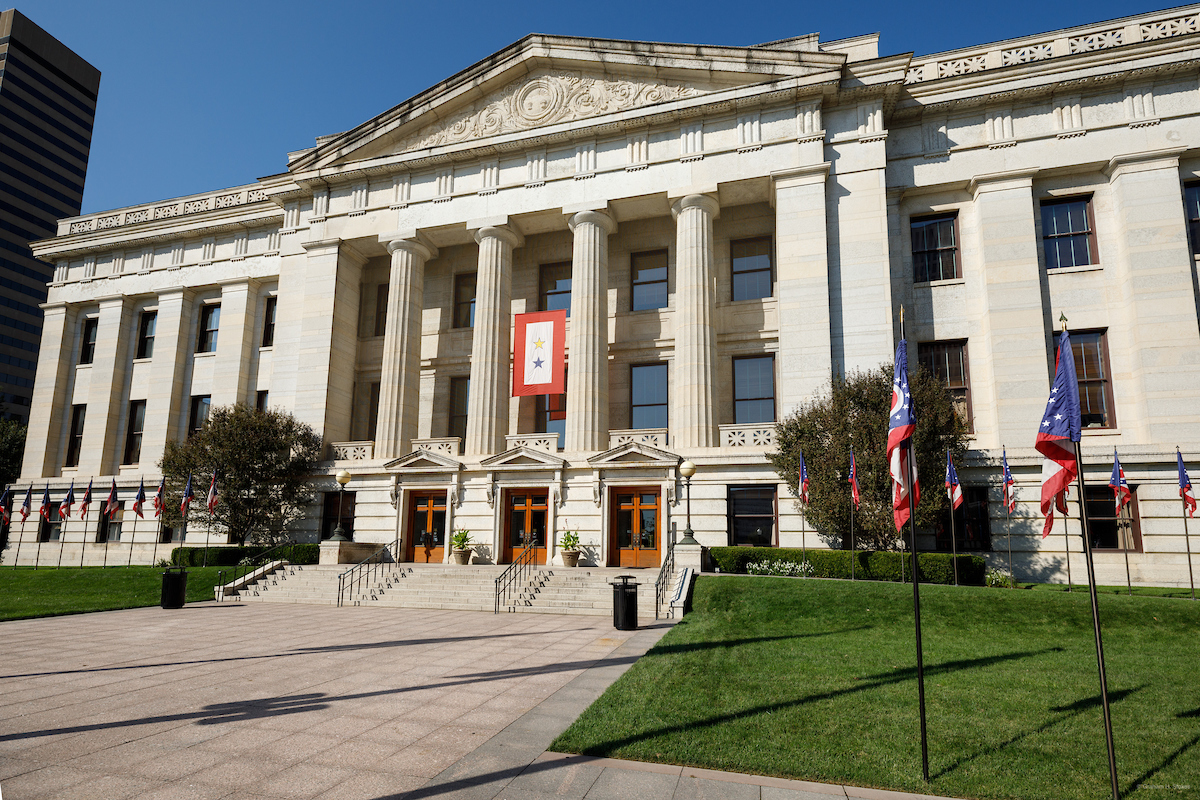
    The Oho Statehouse, Columbus, Ohio. (Photo by Graham Stokes for the Ohio Capital Journal. Republish photo only with original story.)

    The way that the law is written would only complicate the state’s school-funding woes, take money from libraries, and increase property taxes for farmers and homeowners, it added.

    BY:  Ohio Capital Journal

    It sounds fair. If everybody paid income taxes at the same rate, the rich would pay more because of their higher incomes and the poor would pay less because they make less in the first place.

    But an Ohio proposal to enact such a “flat” state income tax ignores a host of other taxes, said a progressive public policy think tank. And the way that the law is written would only complicate the state’s school-funding woes, take money from libraries, and increase property taxes for farmers and homeowners, it added.

    “One of the myths that we have to dispel is that flat taxes make things fair,” said Guillermo Bervejillo, a state policy fellow at Policy Matters Ohio. “It’s quite the opposite. One of the things people forget when they talk about income taxes is that there’s a whole array of state taxes.”

    Bervejillo was speaking in reference to House Bill 1, which, as the bill number implies, is a top priority of the Ohio House’s Republican leadership. A spokesperson for that leadership didn’t respond to questions about the many criticisms that Policy Matters made of the bill.

    One is that many economists have long argued that so-called “flat” income taxes add to the overall tax burden shouldered by the poor and act as yet another means of lightning that of the wealthy.

    “There’s use taxes, sales taxes, excise taxes, taxes that are generally focused around consumption and use,” Bervejillo said.

     Graphic from the Center on Budget and Policy Priorities. 

    He explained that those kinds of taxes are the same for everybody, no matter her or his income. Buy a $100 pair of shoes in Ohio and you pay $5.75 in state sales tax regardless of whether you make $100 in a minute or in a whole day of work.

    “You can only buy so much toilet paper,” Bervejillo said, explaining why sales and excise taxes fall more heavily on the poor. “You can only drive so many miles.”

    The cumulative impact of those taxes is that the poor pay much more as a percentage of their income in state and local taxes than do the rich.

    “On average, the lowest-income 20% of taxpayers face a state and local tax rate more than 50% higher than the top 1% of households,” the Institute on Taxation and Economic Policy said in a report, Who Pays? “The nationwide average effective state and local tax rate is 11.4% for the lowest-income 20% of individuals and families, 9.9% for the middle 20 percent, and 7.4 percent for the top 1%.”

    Federal and state income taxes are the few exceptions that were originally structured to be “progressive.” In other words, they were intended to fall most heavily on those with the greatest ability to pay.

    And it’s true that if you take those and all other taxes into account, the richest Americans pay a bigger portion of their incomes out in taxes than poorer Americans. But the spread isn’t very wide.

    In 2019, the poorest 20% of Americans paid 20.2% of their incomes in taxes, while the richest 1% paid 33.7%, the Institute on Taxation and Economic Policy reported.

    But in Ohio if you take just state and local taxes into account, the script is flipped. In 2018, the poorest 20% paid almost twice as much of their income in such taxes — 12.3% — as the richest 1%, who paid just 6.5% of their lavish incomes in state and local taxes, the institute reported.

    And if Ohio were to enact a flat income tax, it would come on the heels of other measures in which the state has foregone large sources of revenue largely to the benefit of the wealthy.

    Ohio is giving up about $1 billion a year on a tax break for limited liability corporations. It was sold as a way to incentivize mom-and-pop businesses, but a 2017 analysis by the Ohio Legislative Service Commission found that as much as $450 million of that annual benefit was going to the highest 0.5% of Ohio wage earners.

    Meanwhile, there’s been no evidence that the cut improved Ohio’s jobs picture. It was 39th among states for job growth in February 2003 — well before the LLC tax cut was implemented, according to data compiled by Arizona State University’s Seidman Institute. By last month, Ohio ranked 46th in year-over-year job growth.

    And former Gov. John Kasich created JobsOhio by diverting funds from the state liquor monopoly. It’s spent more than $1 billion on things like incentives for wealthy businesses to locate to Ohio, but the agency has struggled to show that those expenditures have made much of a difference to the state’s jobs picture.

    But aside from fairness, Policy Matters raised another objection to HB 1 — it’s not paid for. Working from a fiscal analysis of the bill by the Legislative Services Commission, the group found that after the initial phase-in:

    • Property taxes on farmers and homeowners would increase at least $600 million a year because of “changes in the bill and the operation of Ohio’s existing property tax limit, known as House Bill 920.”
    • Schools, libraries and local governments would lose hundreds of millions of dollars a year.
    • There would be $780 million in annual net losses to the state that are not paid for in the bill.

    Bervejillo said it’s not hard to understand why pain would spread to large swaths of Ohioans from the flat-tax proposal.

    “At the end of the day, there’s only two things you can do when you cut taxes on the wealthy,” he said. “You can either cut services — and who depends more on services than low-income people? Or you increase sales and use taxes and gas taxes and cigarette taxes that fall disproportionately on low-income and working-class Ohioans.”

    _________________________________

    Marty Schladen
    MARTY SCHLADEN

    Marty Schladen has been a reporter for decades, working in Indiana, Texas and other places before returning to his native Ohio to work at The Columbus Dispatch in 2017. He’s won state and national journalism awards for investigations into utility regulation, public corruption, the environment, prescription drug spending and other matters.

    MORE FROM AUTHOR
    [/vc_column_text][/vc_column][/vc_row]

  • After other risky investments, Ohio pension system won’t say what it lost on failed bank

    After other risky investments, Ohio pension system won’t say what it lost on failed bank

    BY: MARTY SCHLADEN –  Ohio Capital Journal

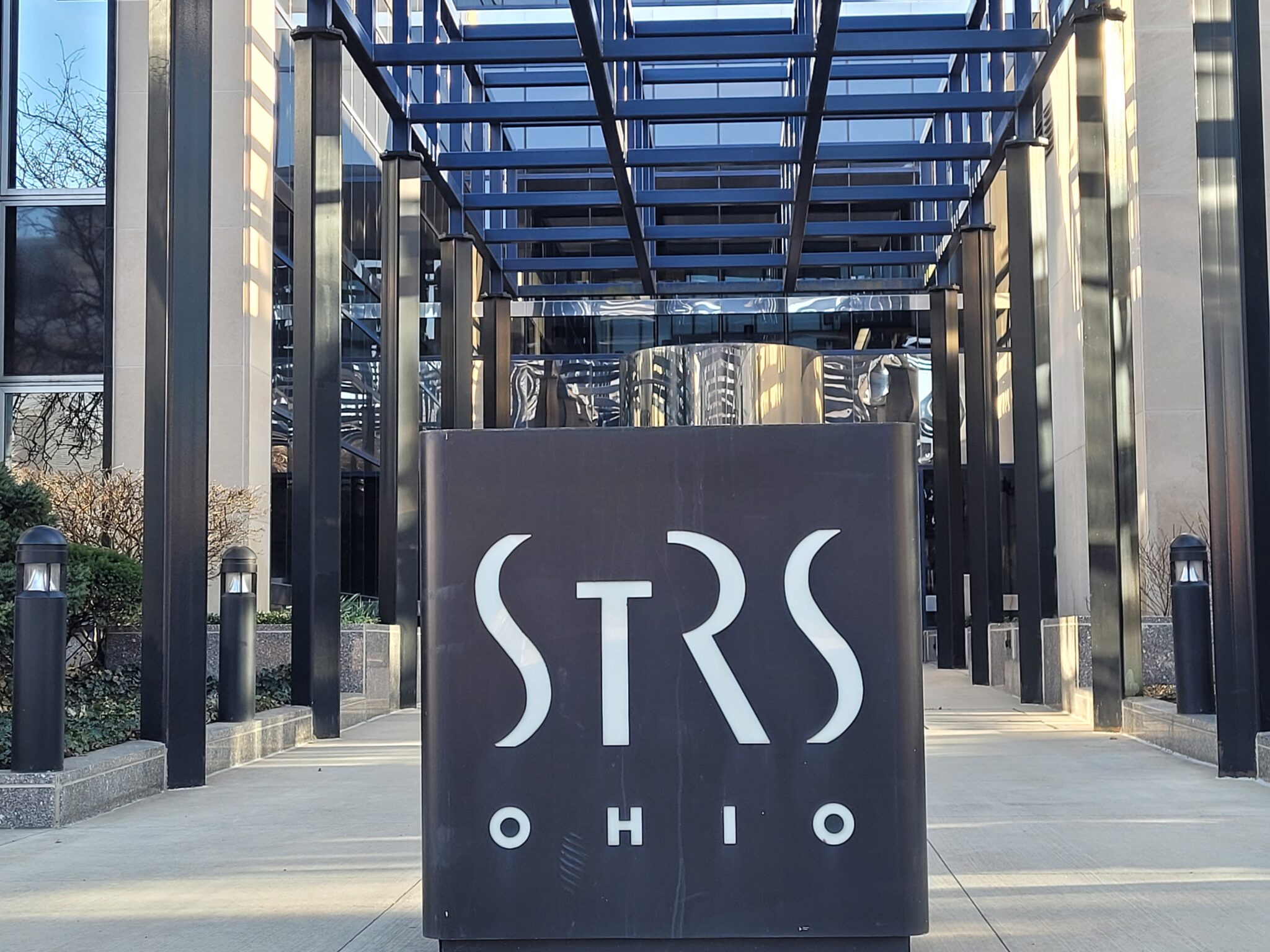
    The entrance to the Ohio State Teachers Retirement System headquarters in Columbus. Photo by Marty Schladen, Ohio Capital Journal.

    The Ohio State Teachers Retirement System still hasn’t said exactly how much of its members’ money it lost when Silicon Valley Bank failed last weekend.

    The system is already under fire for big salaries and for paying $10 million in bonuses last August — two months before actual losses of $5.3 billion came in for the prior year. That was  77% higher than some of the employees receiving bonuses estimated. And many of those paying into the system are rankled because the big money is going out to system employees while retirees have gotten only one, 3% cost-of-living increase since 2017.

    The federal government and banks around the world have been scrambling to maintain investor confidence since last week, when Silicon Valley Bank made a series of desperate moves to shore up its balance sheet. That prompted a run on its deposits and ultimately its failure.

    The bank’s leaders pushed for deregulation, which the Trump administration granted in 2018. Then it made a number of risky investments that allowed it to grow rapidly — and then to implode.

    The Ohio State Teachers Retirement System, or STRS, manages much of the $90 billion it controls in-house instead of farming it out to big firms. The system has already lost big on other investments that on the surface looked risky.

    When news of the Silicon Valley Bank, or SVB, failure broke, the teachers retirement system put out a statement that might have sought to minimize its loss.

    “As of last Wednesday, STRS Ohio held shares of Silicon Valley Bank (SVB) worth $27.2 million or 0.03% of STRS Ohio’s total fund,” the statement, issued on Tuesday, said. “Many other public pension funds held shares of SVB, the nation’s 16th largest bank and a component of both the S&P 500 and Russell 3000 indices.”

    It also noted investments the system didn’t make.

    “STRS Ohio did not own shares of Signature or Silvergate — two other financial institutions involved in the current crisis,” the statement said.

    The figure reported by STRS might be far less than its actual losses. Wednesday of last week was when SVB went into free fall, meaning that the value of its stock was likely much lower than when STRS bought it.

    In a tweet on Monday, the executive director of a public pension watchdog said STRS owned 171,000 shares worth almost $40 million, which would have made it the largest such loss by a public pension system in the United States.

    In an article published on Wednesday, the watchdog, Anthony Randazzo, updated his list using the $27.2 figure stated by STRS as the value of the stock in SVB as of last Wednesday. That put it at No. 2 on the list and far behind the California Public Employees Retirement Fund, which reported an updated number of $67 million.

    Also on the list were the Ohio Public Employees Retirement System, with a $7 million investment in SVB, and the Ohio School Employees Retirement System, with an updated amount of $421,000.

    But it’s still not publicly known how much STRS actually lost in the fiasco. In other words, what were the shares worth when the system bought them?

    STRS spokesman Dan Minnich was asked on Wednesday morning and again on Thursday morning for that figure.

    “As with your previous questions, I will forward these to the appropriate persons,” he replied on Thursday. “When I receive information back, I will provide it to you.”

    STRS also didn’t answer questions about $10 million it lost last year when the cryptocurrency platform FDX imploded. Crypto investments are uninsured and largely unregulated, so it’s perhaps unsurprising that at least one company involved with it failed. On Thursday, there were reports that the company’s founder plundered the company of more than $2 billion in investors’ money

    In 2021, the Dayton Daily News reported on another STRS investment that lost far more teacher money than the SVB and FTX investments combined. It lost $525 million on Panda Power Investments, a private equity firm.

    It was one of the system’s high-fee “alternative” investments that are riskier than its traditional investments. In addition, they have performed almost three percentage points worse over the previous decade, spokesman Nick Treneff said last summer.

    Asked in 2021 by the Daily News about STRS’s giant loss in Panda, Treneff responded by pointing out that 85% of the system’s alternative investments make money.

  • Former Ohio speaker, GOP chair found guilty of racketeering

    Former Ohio speaker, GOP chair found guilty of racketeering

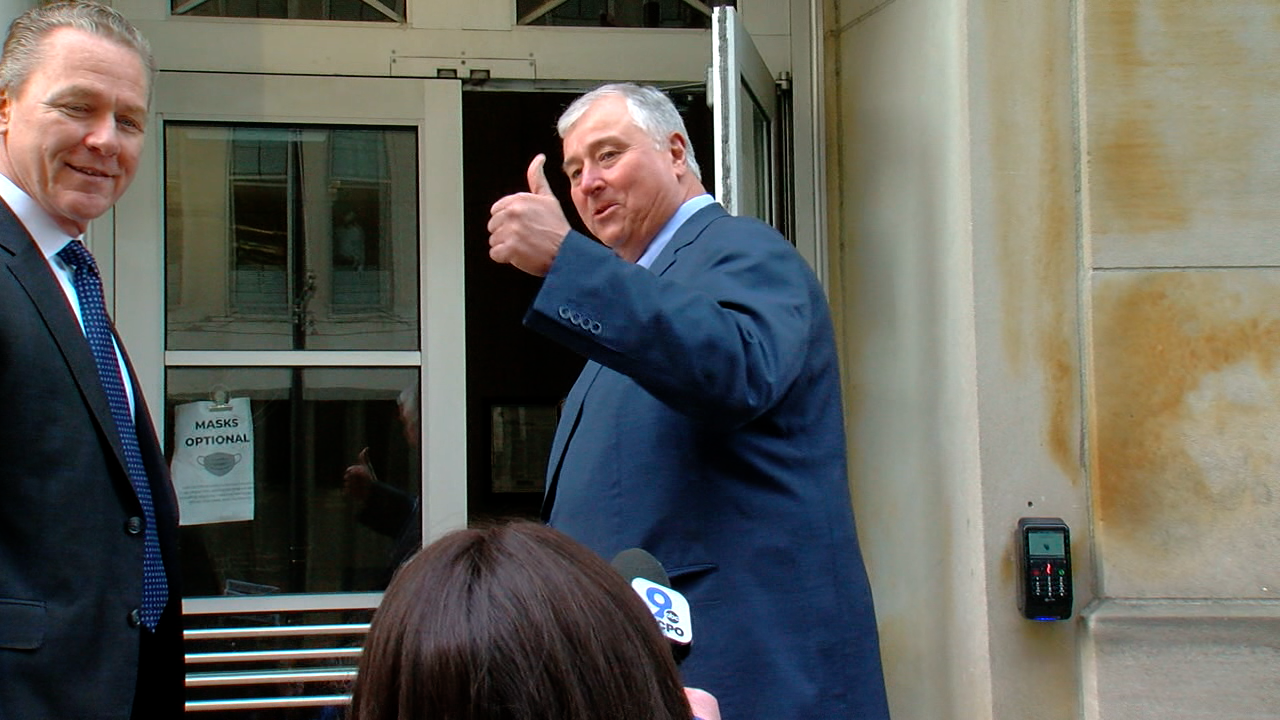
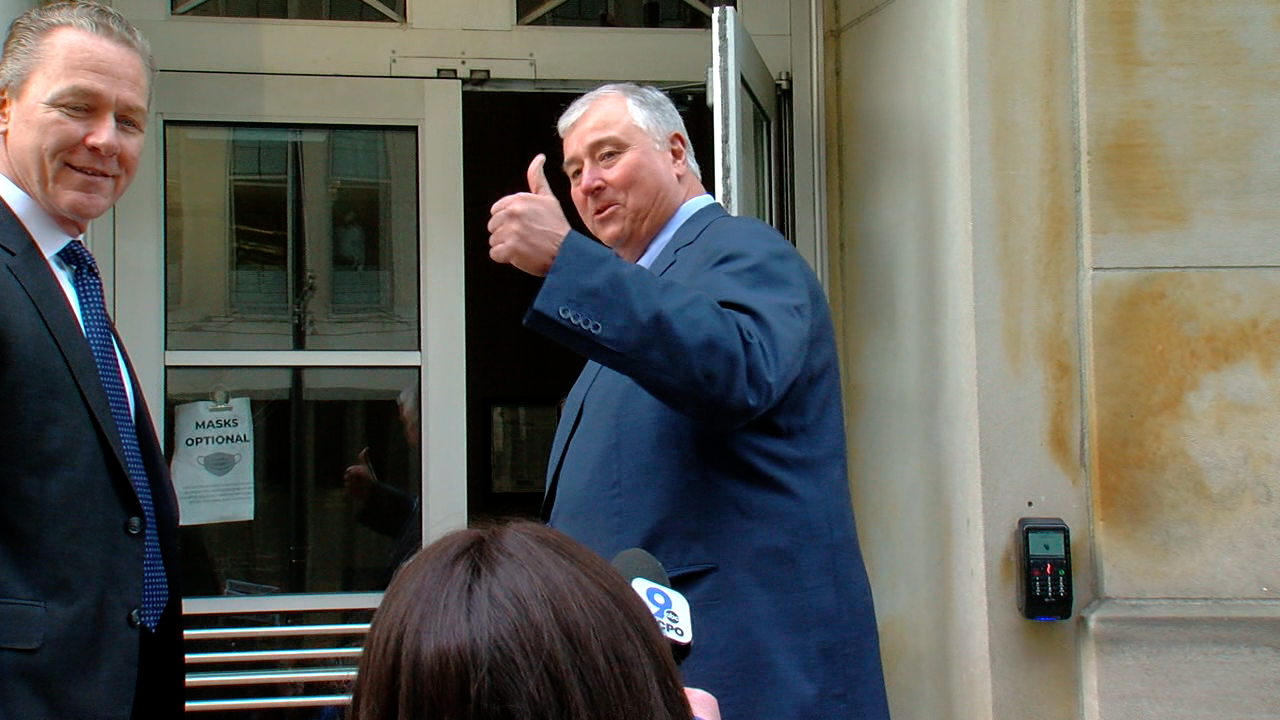
    Former Ohio House Speaker Larry Householder gives the thumbs up as he enters the courthouse where he is expected to testify Wednesday, March 1, 2023. Photo from WEWS.

    BY: MARTY SCHLADEN – MARCH 9, 2023 2:03 PM Ohio Capital Journal

    CINCINNATI — After more than nine hours of deliberation, a jury on Thursday found former Ohio House Speaker Larry Householder and state Republican Chairman Matt Borges guilty of felony racketeering charges in connection with a billion-dollar utility bailout that was passed in 2019.

    Both men face maximum sentences of 20 years in what prosecutors said was likely biggest bribery and money laundering scandal in Ohio history. U.S. District Judge Timothy Black will schedule a sentencing hearing.

    After the verdict, one of Householder’s attorneys, Steven Bradley, confirmed what observers have suspected almost from the start of testimony.

    “Of course we’re going to appeal the verdict,” he told reporters minutes after the jury left the courtroom. Householder stood off to the side in a blue business suit, clutching a camouflage trucker cap.

    He affirmed that he would continue to fight the charges.

     Convicted felon Larry Householder outside the federal courthouse in Cincinnati where a jury found him guilty of racketeering. Photo by Marty Schladen, Ohio Capital Journal.

    “This is just the first step in the process,” Householder said. “Stay tuned.”

    As part of the racketeering scheme, Akron-based FirstEnergy and other utilities paid tens of millions into an effort to elect friendly lawmakers in 2018 who would vote to make Householder speaker the following year. Immediately after taking the speaker’s gavel, Householder worked furiously to pass a $1.3 billion bailout, the vast majority of which benefited FirstEnergy subsidiary FirstEnergy Services.

    The company was being dragged down by losses from its nuclear and coal plants and executives were seeking a bailout. While it got more than $1 billion out of the deal, Householder got political power as well as more than $500,000 personally, jurors found. Borges played a smaller role, but he paid a $15,000 bribe to help defeat an attempt to repeal the bailout and he received more than $100,000 in funds that originated with FirstEnergy, prosecutors said.

    The verdict could have far-reaching implications for the use of “dark money” — funds paid into 501(c)(4) organizations that don’t have to reveal the sources of their funding. In the wake of the 2010 U.S. Supreme Court decision Citizens United v FEC, the use of such funds has become ubiquitous in state and national politics.

    Thursday’s verdict might start to start to draw some boundaries around such expenditures.

    In the case of the Ohio bailout, a financially strapped Householder found common cause with a financially ailing FirstEnergy. After paying billions to prop up a subsidiary with failing and nuclear and coal plants, the parent corporation in 2016 decided to send the subsidiary into bankruptcy. They wanted a ratepayer subsidy for the failing nuclear and coal plants so they could be sold off after the subsidiary emerged from bankruptcy.

    FirstEnergy’s top executives were seeking a bailout at the same time a financially strapped Householder was seeking a return to the Ohio speakership. Their relationship grew in luxurious settings that belied the financial problems besetting both.

    Householder attended a World Series game in November 2016 in the FirstEnergy box in Cleveland with CEO Chuck Jones. Two months later, Householder flew to Donald Trump’s inauguration aboard FirstEnergy’s private jet and stayed in the same $500-a-night hotel as Jones. Prosecutors showed the jury photos of Householder’s son and a FirstEnergy executive in the back of a limousine just outside a fancy steakhouse dinner.

    Within weeks of the inauguration, Householder’s underling set up Generation Now, a 501(c)(4) dark money group into which FirstEnergy almost immediately started pouring what would become tens of millions of dollars.

    The money was used to fund support staff for candidates who would vote to make Householder speaker and to finance attack ads against their opponents.

    When opponents started gathering signatures to repeal the bailout law, House Bill 6, FirstEnergy poured $36 million into an effort to block it. Householder took control of the push to block the repeal, while Borges assisted — both by pressuring Attorney General Dave Yost and by paying $15,000 for inside information about the petition campaign.

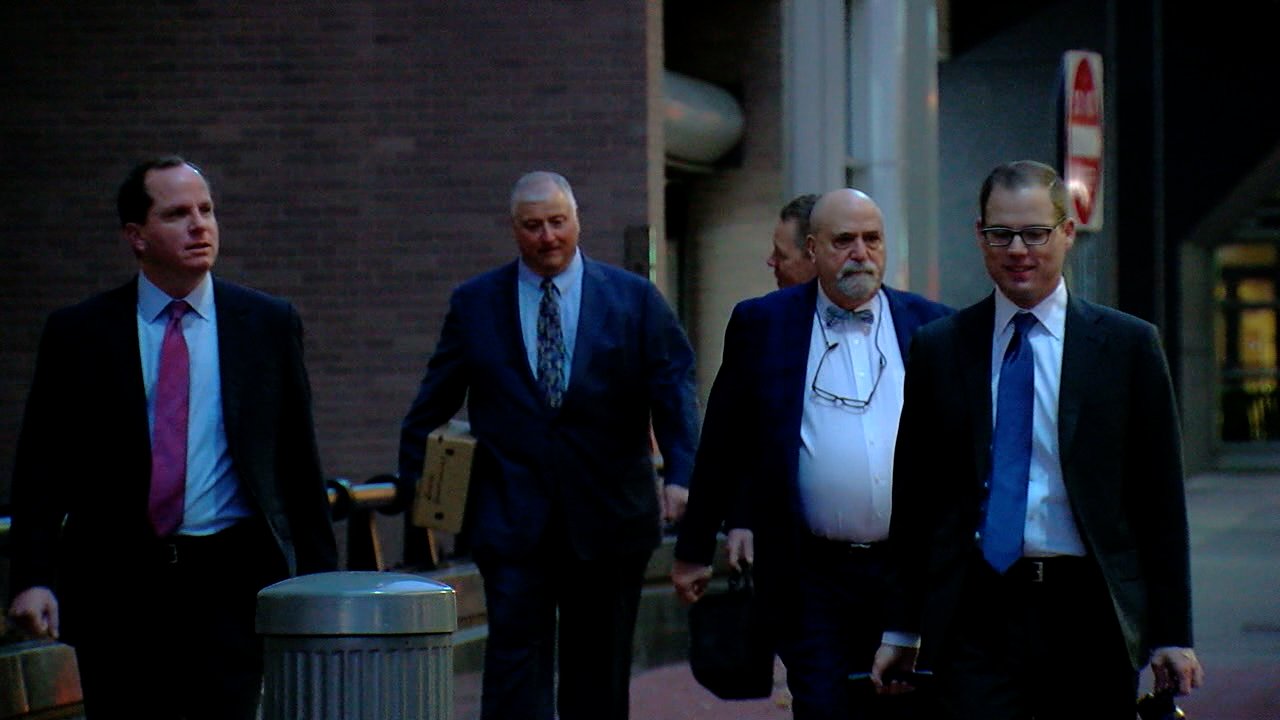
     Center, former Ohio Republican Party chair, and statehouse lobbyist, Matt Borges with his attorneys outside of the federal courthouse. Photo courtesy of WEWS.

    That money was used to finance a torrent of misleading, anti-China ads and a petition-blocking effort that in some cases devolved into outright battery, witnesses testified.

    And because it was dark money, the public couldn’t know that it was FirstEnergy that was financing the gargantuan fight to pass and protect a much larger bailout from which it benefited — until federal law enforcement stepped in. During the trial, investigators from the FBI described how they used accountants, informants, subpoenas and wiretaps to unravel the tangle of dark money groups and political-action committees that were used to obscure the origins of the funds that were used in the scheme.

    “Today was a victory for the people of Ohio,” U.S. Attorney Kenneth L. Parker said on the steps of the Potter Stewart U.S. Courthouse shortly after the verdict. Parker declined to answer whether further indictments can be expected in the case — including for Jones and other FirstEnergy executives who paid the money that the jury on Thursday determined to be bribes.

    Also unknown is whether Gov. Mike DeWine’s first appointee to chair the Public Utilities Commission of Ohio, Sam Randazzo, will be charged. Randazzo took $4.3 million from FirstEnergy shortly before being nominated to the post and once nominated, he helped write the bailout law, House Bill 6. He resigned shortly after the FBI searched his Columbus condo in 2020.

    The verdict might be sending shock waves around Capitol Square and other power centers because defense attorneys for Householder and Borges argued that the conduct described by prosecutors was perfectly legal — politics as usual.

    In a statement, Parker offered a different take.

    “As presented by the trial team, Larry Householder illegally sold the statehouse, and thus he ultimately betrayed the great people of Ohio he was elected to serve,” the U.S. attorney said. “Matt Borges was a willing co-conspirator, who paid bribe money for insider information to assist Householder. Through its verdict today, the jury reaffirmed that the illegal acts committed by both men will not be tolerated and that they should be held accountable.”

    Outside the courthouse, Householder said that he will go back to his Perry County farm to plant a garden and fish with his kids while federal authorities complete a pre-sentence report and a sentencing hearing is scheduled.

    That his attorneys plan to appeal has been suspected almost since testimony began on Jan. 23. On Feb. 1, they undertook the risky gambit of accusing Judge Black of being biased against their client in open court.

    They also took a risk by placing Householder on the stand to testify in his own behalf. During cross examination, Assistant U.S. Attorney Emily Glatfelter confronted Householder with numerous inconsistencies and apparent falsehoods.

    Householder was asked just after the verdict if he thought the decision to testify was a mistake. He said it wasn’t

    “I waited two-and-a-half years to tell my story,” he said. “I wanted the opportunity to speak.”

  • On the stand, former House speaker confronted by prosecutors with inconsistencies

    On the stand, former House speaker confronted by prosecutors with inconsistencies

    Former Ohio House Speaker Larry Householder gives the thumbs up as he enters the courthouse where he is expected to testify Wednesday, March 1, 2023. Photo from WEWS.

    BY: MARTY SCHLADEN – Ohio Capital Journal

    The cross examination prompted some observers to say Householder badly damaged his defense against federal racketeering charges by using the risky tactic of testifying in his own defense. It marked the end of the evidentiary phase of the trial. Closing arguments will begin Tuesday.

    Householder and former Republican Party Chairman Matt Borges are accused in a scheme to use $61 million in funds mostly from Akron-based FirstEnergy to make Householder speaker and then to pass and protect a $1.3 billion bailout that primarily went to prop up a subsidiary’s failing nuclear plants.

    Over more than five weeks of testimony, prosecutors have put on evidence they say proves Householder passed the bailout in return for massive 501(c)(4) “dark money” contributions and for more than $500,000 in personal benefits. Perhaps as a sign that they didn’t believe things were going well, Householder and his defense team took the controversial step of putting him on the witness stand on Wednesday.

    Defense attorneys are usually reluctant to put their clients on the stand because prosecutors can use cross examination to catch them in lies. That seemed to be Assistant U.S. Attorney Emily Glatfelter’s goal as she cross-examined Householder on Thursday.

    Hardball

    Glatfelter played secret recordings of conversations that jarringly contradicted Householder’s claims that as speaker, he wanted to be a peacemaker. Under its earlier leadership, Householder said, the House Republican Caucus was too “divisive.”

    “I didn’t want enemies. I wanted friends,” Householder said Wednesday, trying to refute claims that he was an autocratic leader who demanded unstinting loyalty from lawmakers and contributors.

    Glatfelter played a wiretap recording of a conversation between Householder and Neil Clark, a lobbyist who was charged in the conspiracy and later died by suicide.

    “We like war and you know that Neil,” Householder told Clark. Then referring to Republican Reps. Dave Greenspan and Scott Lipps, whom Householder considered insufficiently supportive, he said, “If you f**k with me, I’ll f**k with your kids.”

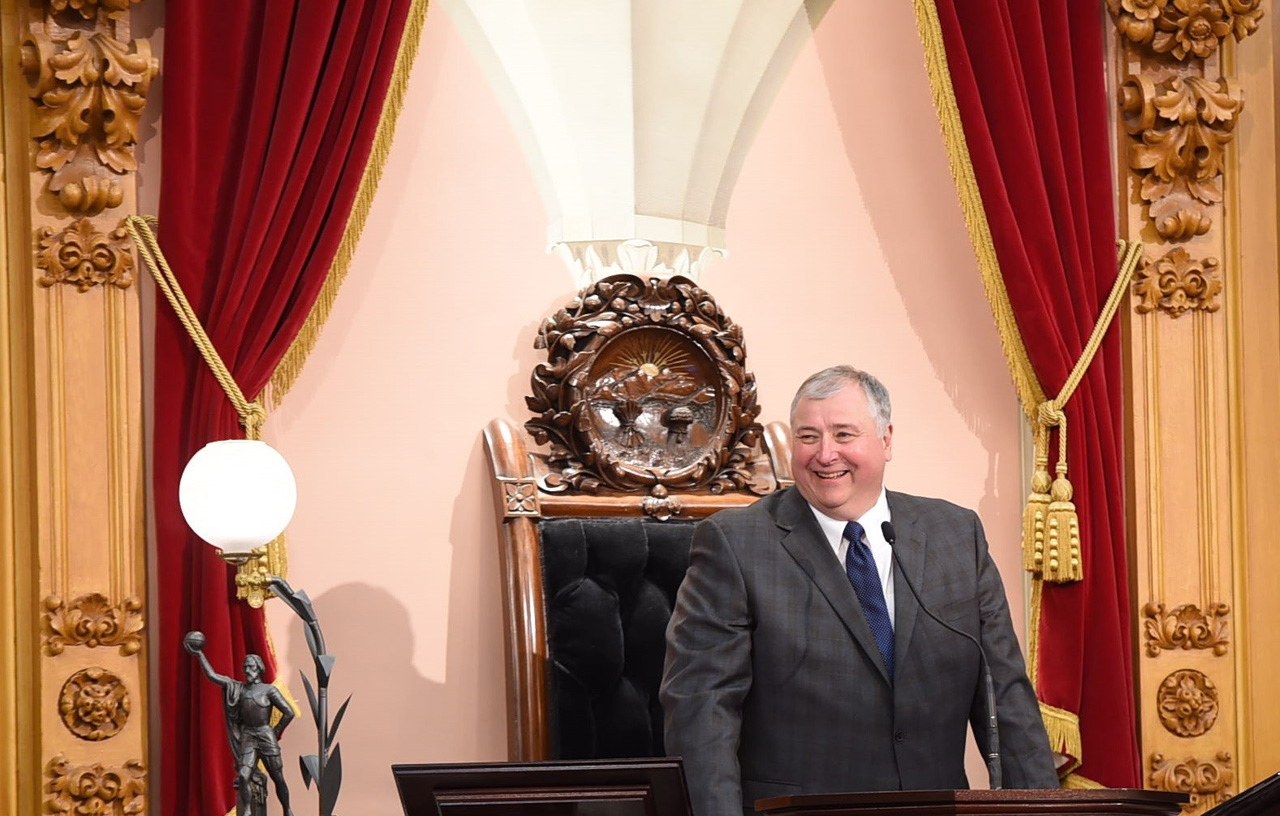
     Former House Speaker Larry Householder, R-Glenford. Source: Ohio General Assembly.

    The former speaker had earlier denied being involved in using dark, or “C4” money to make attack ads, but when Clark asked “You’re talking about C4 money?” Householder responded, “Yeah.”

    When Glatfelter asked Householder if he punished contributors and lawmakers who supported his foes instead of him, Householder said, “I can’t think of any consequences” he had meted out to non-supporters.

    Then Glatfelter played a recording between Householder and Clark in which they discussed what to do about non-supporters.

    “We can f**k them over later,” Householder said.

    In the dark about dark money

    The prosecutor also didn’t buy Householder’s claim of general ignorance about the operations of Generation Now, a 501(c)(4) dark money group into which FirstEnergy pumped scores of millions to pass and protect the bailout legislation. The entity was created and controlled by Jeffrey Longstreth, Householder’s underling, a few weeks after Householder flew with FirstEnergy Vice President Michael Dowling to Donald Trump’s 2017 inauguration aboard FirstEnergy’s corporate jet.

    Householder claimed that he was so new to the dark money game that Longstreth had to explain how such groups worked.

    And, as he did through much of the cross examination, Householder answered questions repetitively and seemingly grudgingly. When asked by Glatfelter what the former speaker thought the purpose of Generation Now was, Householder responded, “To educate the public on important issues and support candidates who support those issues.”

    Records and testimony from Longstreth — who pleaded guilty in the case — indicated that dark money from Generation Now was used to make and run ferocious attack ads against opponents of “Team Householder.” Then it was used to claim without evidence that an effort to repeal the bailout was really a Chinese effort to take over the Ohio energy grid. 

    Because such groups don’t have to disclose their contributors, FirstEnergy was able to keep its fingerprints off its involvement in passing and protecting legislation of such interest to the company.

    Prosecutors also played recordings and showed written messages indicating that Householder was involved in planning Generation Now-funded messages. But asked by Glatfelter several times on Thursday what he believed the dark money group actually did, Householder tried not to move far from his initial answer.

    The group was for “educating the public on issues that are important to Ohio and me and supporting candidates who support those issues,” he said.

    Champagne travel for a “country Republican”

    The former speaker and the prosecutor also clashed over Householder’s flight to the Trump inaugural. Householder and his son were invited to do so by Cleveland businessman Tony George.

     Former FirstEnergy CEO Charles “Chuck” Jones. Source: FirstEnergy, via Flickr

    Glatfelter asked what George’s relationship with FirstEnergy was. Householder said George “knew Chuck” — referring to FirstEnergy CEO Chuck Jones.

    Incredulous, Glatfelter said, “There’s a difference between knowing somebody and having access to his company jet, right?”

    Householder said that the only reason Dowling, the FirstEnergy vice president, flew with the group is because George said someone from the company had to be on the flight. The implication, apparently, was that the trip wasn’t part of the plan for a FirstEnergy bailout.

    Householder said he agreed to take the flight to save time. But traveling by private jet might not fit with  his explanation earlier in the day of the difference between him and Borges.

    “He’s a country club Republican and I’m more of a country Republican,” Householder said.

    The former speaker also claimed that he didn’t intend to fly free. 

    “From day 1, I was going to pay for that flight,” he said.

    More than two months later, Householder paid FirstEnergy $2,647. He said he paid then because that’s how long it took for FirstEnergy to send him a bill — not because the Dayton Daily News had written a story about the flight and the questionable appearance that it made.

    That Householder would take a private jet without knowing what the cost would be is difficult to square with another statement he made about himself when he testified a day earlier.

    “Anybody who’s been around me knows I’m cheap,” Householder said. “I drive a 2001 GMC Sonoma and I don’t like to spend money.”

    Glatfelter punched other holes in Householder’s attempts Wednesday to distance himself from FirstEnergy executives on the trip to the Trump inaugural. She showed that George reserved rooms at the same hotel for Householder and CEO Jones within a minute of each other and paid the same amount for both — $1,500. 

    Householder said he believed the Ohio Republican Party paid for his room.

    Personal payments, questionable sources

    Observers have said that one of the most damning kinds of evidence against Householder is that Longstreth had paid more than $500,000 to settle a lawsuit against the speaker, repair a house he owned in Florida, and to retire credit card debt. Longstreth said he had papers drawn up to formalize the payments as loans, but Householder never would sign them.

    Householder said his plan was to pay Longstreth when the Florida house was sold. When it finally did sell — for nearly $700,000 — Householder said he couldn’t pay Longstreth because both had been arrested in July 2020 and he believed any payments to a co-defendant could be used against him. The former speaker said he planned to pay Longstreth when the case is over.

    Householder also showed a curious lack of interest in the sources of Longstreth’s money. 

    Longstreth testified that he received millions in FirstEnergy money through Generation Now and into a separate account that he used to pay Householder’s debts, hire contractors, pay himself, and the like.

    Glatfelter asked Householder where Longstreth got the money to pay Householder’s debts and to run the sweeping political operation.

    “His business wasn’t my business,” Householder said of the man he hired to recruit candidates, get them elected, and then get them to vote to make him speaker.

    Lack of disclosure

    Glatfelter also took Householder to task for not disclosing debts and gifts in compliance with state ethics laws. 

    He didn’t disclose a $1.89 million judgment against him over a failed Alabama coal mine. Nor did he disclose 2016 World Series tickets that were given him at a discount from the going rate of $2,500 apiece, Glatfelter said. And he failed to report the $1,500 hotel room George got him for Trump’s inauguration.

    Householder testified that his attorney filed the disclosures and that he had only “glanced over” them. 

    Glatfelter pointed him to the portion of the disclosures in which the filer says he or she knows the contents of the disclosure and has to swear it’s accurate — a legally binding attestation similar to the one Householder made before testifying. She asked Householder if the documents bore his electronic signature.

    “I don’t even know what an electronic signature is,” he replied.

    Pressed, Householder responded with several versions of, “I relied on the advice of my attorney.”

  • Householder denies D.C. dinners, tying donations to legislation

    Householder denies D.C. dinners, tying donations to legislation

    BY: MARTY SCHLADEN – Ohio Capital Journal

    Former House Speaker Larry Householder, R-Glenford. Source: Ohio General Assembly.

    CINCINNATI — Former Ohio House Speaker Larry Householder on Wednesday claimed that he never promised any legislative action to FirstEnergy in exchange for the tens of millions the company paid into a 501(c)(4) dark money group he controlled.

    He also denied attending dinners in Washington, D.C., during Donald Trump’s inauguration during which other witnesses said he met with top FirstEnergy executives. 

    And the former speaker denied that he demanded unquestioning loyalty from lawmakers whose elections he worked for. Instead, he said, he wanted them to be independent thinkers.

    After sitting through federal court testimony since Jan. 23, Householder on Wednesday took the witness stand in his own defense. That’s considered by many lawyers to be a risky strategy because he will be subject to cross examination by prosecutors who are eager to catch the former speaker in a lie.

    Householder, a Republican from Glenford, and former Ohio GOP chair Matt Borges are being tried on accusations of racketeering in a case that federal prosecutors have said is likely the biggest bribery and money laundering scandal in Ohio history. 

    Householder is accused of masterminding a scheme to use $61 million in utility money to elect House members who would vote to make him speaker at the beginning of 2019. He led the effort to pass a $1.3 billion ratepayer bailout of failing nuclear and coal plants the following July and then protected it from a repeal campaign that failed in October 2019. Prosecutors say the bailout was explicitly tied to FirstEnergy’s contributions.

    On the stand, Householder introduced himself as a guy from Appalachia who had worked for years to protect Ohio’s energy independence. But he also made a number of statements prosecutors are likely to challenge.

    One is that as it neared passage, the bailout law, House Bill 6, became the object of “misinformation” in commercials that he said were financed by the American Petroleum Institute. The nuclear reactors the law would subsidize couldn’t compete with natural gas, which Householder said the petroleum institute supported instead of nuclear power.

    However, in his testimony, Householder didn’t point to anything specific that the group had misstated. Similarly, he complained of misinformation in a Cleveland Plain Dealer editorial, but he didn’t point to anything specific, nor did he say whether he asked for a correction.

    At the same time, the former speaker seemed guilty of some misinformation of his own.

    Householder said one of the chief goals of House Bill 6 — dubbed the “Ohio Clean Air Program” — was to lower carbon emissions. But the bill provided hundreds of millions in subsidies to coal-burning plants owned by FirstEnergy subsidiary FirstEnergy Solutions and other Ohio utilities.

    Householder’s claimed concern for carbon emissions also seems to clash with earlier statements he made on the stand. He testified that he was president of a group that owned an Alabama coal mine and that during an earlier stint in the Ohio House, he worked to subsidize coal production.

    Householder also tried to soften his image after three former House Republicans portrayed the former speaker as a heavy-handed autocrat who demanded loyalty at all times. He pointed out that even though they didn’t vote to make him speaker and they voted against HB 6, he didn’t remove Reps. Laura Lanese and Dave Greenspan from their leadership positions.

    In secret FBI recordings played earlier in the trial, lobbyist Neil Clark described Householder as ruthless and said he told Greenspan that because the lawmaker had opposed HB 6, Householder would never allow legislation Greenspan wanted to move forward. What Householder wanted, witnesses testified, were “casket carriers” — people so loyal that they would stay with him until he died and then lower his casket into the ground.

    But Householder on Tuesday said he didn’t want blind loyalty, he wanted independence. As for wanting casket carriers, that meant “I didn’t want enemies. I wanted friends,” Householder testified.

    Householder also disputed some of the basic factual allegations that had been made against him. 

    He denied testimony from former aide Jeffrey Longstreth that in an Oct. 10, 2018 meeting, lobbyist Robert Klaffky slid a $400,000 check from FirstEnergy Services across a conference table and under Householder’s hand. It was a FirstEnergy Services employee who gave him the check and there was no conference table to slide it across, Householder said.

    Even if that’s true, it’s hard to square that account with other parts of Householder’s testimony.

    At issue in the case is whether Householder pushed the bailout legislation in exchange for all the millions he received from FirstEnergy. He said he had little involvement in Generation Now, the main 501(c)(4) dark money group the company paid into and which supported Householder-friendly candidates and ferociously attacked their opponents.

    Householder said his understanding was that Generation Now was “a vehicle that would educate the public on issues that were important to Ohio.”

    But on Wednesday, Householder said he accepted a $400,000 check from FirstEnergy Solutions that was made out to Generation Now, which was created and controlled by Longstreth, his underling. The former speaker conceded that it was a huge contribution — and the jury might find it hard to credit that he played such a passive role in the group’s activities.

    Householder also denied Longstreth’s account of a dinner during Trump’s 2017 inaugural. Longstreth testified that he sat at one end of a long table in a crowded steakhouse with FirstEnergy Vice President Michael Dowling, while Householder sat at the other with CEO Chuck Jones. Longstreth said he couldn’t hear the conversation at the other end of the table, but he did hear Dowling instruct him to set up an organization that could accept “undisclosed and unlimited contributions” from FirstEnergy and its subsidiary. 

    Householder testified that he went to the inaugural with his wife and several of his sons and only briefly saw Jones and Dowling, but didn’t dine with them. Instead, he and his family went to the inauguration, the parade that followed and attended functions where they were photographed with such luminaries as former Indiana University basketball coach Bob Knight, Householder said.

    However, Householder said he and one of his sons flew to D.C. and back on a FirstEnergy jet. 

    The former speaker testified that on March 29, 2019 — more than two months later — he wrote a check for $2,647 reimbursing the company for the flight. But he didn’t say why it took him that long to make the payment or what prompted him to do so.

    In addition, paying for flights on private jets crashed pretty hard against another bit of Householder’s testimony Wednesday — that he is very frugal.

    “Anybody who’s been around me knows I’m cheap,” Householder said. “I drive a 2001 GMC Sonoma and I don’t like to spend money.”

  • Citing a hazy memory, former rep seems to distance himself from scandal

    Citing a hazy memory, former rep seems to distance himself from scandal

    State Rep. Nino Vitale, R-Urbana. Photo from Ohio House website.

    Vitale was said to be a big supporter of Householder now charged with racketeering

    BY: MARTY SCHLADEN – Ohio Capital Journal

    CINCINNATI — Former state Rep. Nino Vitale on Tuesday testified that he didn’t have much of a memory for — nor was he much interested in — raising money or campaigning for office. At several points, the Republican from Urbana even said he didn’t remember what year he was first elected to the legislature (it was 2014.)

    But on cross examination, federal prosecutors showed him records and written communications indicating that Vitale was regarded as an enthusiastic member of “Team Householder” who, as part of the team, received thousands in campaign funds and other assistance that originated with Akron-based FirstEnergy.

    As former Speaker Larry Householder’s appointee to chair the Energy and Natural Resources Committee, Vitale in 2019 helped to pass a $1.3 billion bailout that primarily benefited FirstEnergy. When they announced arrests in the summer of 2020, federal prosecutors said the bailout was at the center of what was likely the largest bribery and money-laundering scandal in Ohio history.

    Vitale was called by Householder’s lawyers in the trial, which started on Jan. 23. Householder and former Ohio Republican Party Chairman Matt Borges are charged with racketeering in an alleged scheme to use $61 million in utility money to elect friendly lawmakers who would make Householder speaker and then bail out FirstEnergy’s failing nuclear and coal plants.

    Vitale has long been known for controversial political gestures — including refusing to wear a mask at the height of the coronavirus pandemic because human faces are “the likeness of God.

    But on Tuesday, Vitale portrayed himself as a reluctant politician. In a possible nod to how uncompetitive his district was, the former lawmaker said he didn’t have to do much to get reelected.

    “The whole marketing side of things wasn’t big on my radar because my district elected me overwhelmingly and frequently,” Vitale said.

    Householder’s attorneys seemed to call Vitale and other Householder supporters in the House to testify so they could say they believed the bailout law was good public policy. But U.S. District Judge Timothy Black limited such testimony, saying the proceeding wasn’t a referendum on the merits of House Bill 6.

    Vitale also said he never felt pressured to support Householder for speaker or to support the bailout. 

    But Assistant U.S. Attorney Megan Gaffney Painter then posed a series of questions that seemed to be intended to show that Householder made Vitale chairman of the Energy and Natural Resources Committee not because Vitale had any particular qualifications, but because he was an enthusiastic member of Team Householder who would do the speaker’s bidding.

    Vitale tried to refute that characterization.

    When Painter tried to get him to agree that he had little in his background to school him in large-scale electricity generation or the management of the state’s natural resources, Vitale wouldn’t. 

    “I know quite a lot about those topics, actually,” he testified.

    Vitale said he works for his wife’s family’s company, which makes parts for truck brakes. It has an electricity substation and it sits on 30 acres, and those factors gave him expertise on the power grid and the environment, Vitale said.

    When Painter proposed that Vitale had no academic credentials that would make him expert in those areas, Vitale disagreed again, saying his business degree provided him with such knowledge.

    “In a business degree, part of what you study is energy inputs to a business,” Vitale said.

    The former lawmaker also claimed that he wasn’t very familiar with FirstEnergy and had to be convinced to support the bailout bill. Then Painter displayed a text message from FirstEnergy Vice President Michael Dowling to CEO Chuck Jones on Feb. 17, 2019 — before the bill was introduced. Earlier testimony showed that the executives believed the bailout was critical to their company, and Jones had asked Dowling who was going to chair the House Energy and Natural Resources Committee.

    “Nino Vitale from Springfield will chair,” Dowling responded. “Good friend and bigtime (Householder) supporter.”

    Confronted with the message, Vitale said he’d only met Dowling a few times.

    Vitale also disputed that it was Householder who first broached the idea of Vitale being chairman.

    “I asked him,” Vitale said.

    Then Painter played a voicemail message that Vitale left for Householder in January 2019, just after Householder had been made speaker. In it, Vitale said he had talked the matter over with his family.

    “I’m in if that’s what you want me to do,” Vitale said.

    As Painter tried to move on to another question, Vitale insisted that chairing the Energy and Natural Resources Committee was originally his idea.

    And to refute Vitale’s claims that he was half-hearted about fundraising and political marketing, Painter displayed an October 4, 2017 text message Vitale sent to Jeffrey Longstreth, Householder’s right-hand man in making him speaker and then passing the bailout. It certainly seemed to link FirstEnergy’s policy agenda to Vitale’s desire for corporate contributions.

    FirstEnergy lobbyist “Ty Pine wants to meet with me on a legislative matter and I want to meet with him on a contribution matter,” Vitale said in his message.

    After more than a month, testimony in the trial is entering the homestretch. Householder’s final witnesses — including Householder himself — are expected to testify Wednesday and Thursday. Then it will be Borges’ turn to call any witnesses he may have.

    After that, the prosecution and the defense teams will make closing statements, Judge Black will instruct the jury and then it will deliberate.

  • Ohio utility regulator front and center in massive bailout scandal

    Ohio utility regulator front and center in massive bailout scandal

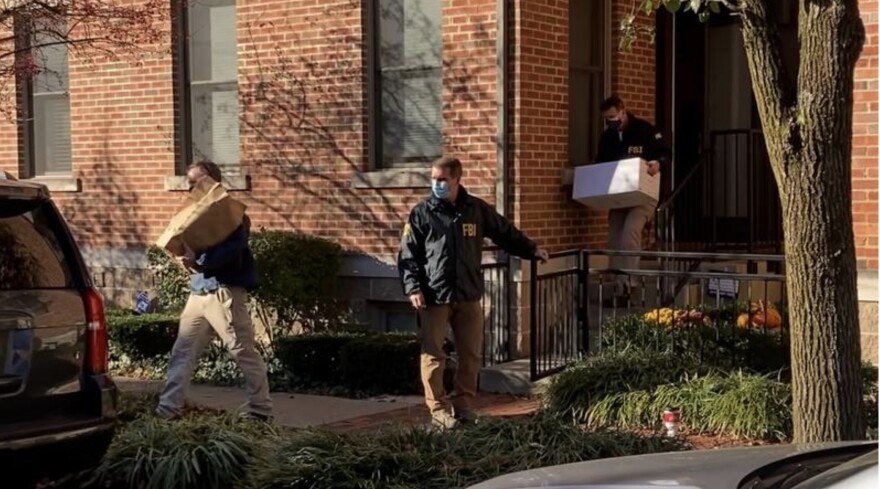
    FBI agents remove boxes of materials from PUCO Chairman Sam Randazzo’s condo in Columbus Nov. 17, 2020. Photo courtesy of Daniel Konik/Statehouse News Bureau.

    BY: MARTY SCHLADEN – Ohio Capital Journal

    CINCINNATI — Ohio’s utility regulator is at the center of a massive bribery and money laundering scandal that has been the focus of a trial here since late last month. In 2019, its chairman and a very recent senior official played a central role in writing corrupt bailout legislation that would give more than $1 billion in subsidies to companies the Public Utilities Commission of Ohio was supposed to be regulating.

    But did their role in the process violate any PUCO rules? The answer is unclear.

    When it comes to being a consumer watchdog, the PUCO doesn’t have the best track record. 

    Since 2008, it has granted more than $1 billion in electric rate increases that were later declared illegal by the Ohio Supreme Court. But, thanks to the way the increases — or “riders” — were written, there’s no way to force utilities to return those ill-gotten gains to ratepayers.

    In at least one of those instances, a regulator might have known the rate hike was illegal when he voted to grant it.

    In June of 2019 — as Akron-based FirstEnergy was funneling millions through dark-money groups to pass the bailout that is the subject of the trial here — the Supreme Court struck down an increase that had already paid the company a non-refundable $460 million. Asim Haque, who months earlier was chairman of the PUCO, sent a FirstEnergy executive a text suggesting that Haque knew the increase was illegal when he voted for it. Haque then said he was just kidding.

    Then, just last month, the PUCO approved an increase of more than 50% in fixed rates for Columbia Gas without making the company go through a formal process to show that it needs the money. That means that after five years throughout much of Ohio, it likely will cost nearly $60 a month just to have gas service  — regardless of whether you live in a 500 square-foot apartment or if you live in a mansion on a five-acre lot. Any payments for gas itself will be in addition to that amount.

    It doesn’t appear that Columbia owner NiSource needed the money. Last year, before the PUCO allowed the rate hike, NiSource’s profits came in $217 million — or 41% — higher than expected. Then, a month after the increase was granted, NiSource announced it was increasing its profit forecast for 2023.

    In a press release, the company boasted of “strong regulatory execution” — including by winning the fixed-rate increase from the PUCO.

    And then there’s House Bill 6, the 2019 law that is the subject of the trial in federal court here that has been ongoing since Jan. 23.

    Former Ohio House Speaker Larry Householder and former Ohio Republican Party Chairman Matt Borges are on trial for their participation in what prosecutors say is likely the biggest bribery and money laundering scandal in Ohio history. They allege that $61 million that mostly came from FirstEnergy was used to make Householder speaker in 2019, and then to pass and protect the $1.3 billion bailout. Most of that money was intended to prop up FirstEnergy’s failing nuclear and coal plants.

    No current or former PUCO employees have been charged in the scandal. But, to put it charitably, the conduct of at least two of them was puzzling — given that the agency’s mission is to protect ratepayers who don’t have a choice about buying the utilities’ products.

    In January 2019, Householder won the speakership and was beginning his push for a FirstEnergy bailout. At the same time,  FirstEnergy lobbyist Ty Pine sent PUCO senior advisor Pat Tully’s resume to Jeff Longstreth, Householder’s right-hand man, according to testimony in the trial. Within weeks, Tully had moved from his PUCO job to one as senior advisor for energy policy in the House Republican Caucus.

    Sam Randazzo, a former FirstEnergy consultant, was confirmed as Gov. Mike DeWine’s nominee to chair the utility commission in April 2019. When he nominated Randazzo, DeWine brushed off warnings that his nominee had “opaque and undisclosed” ties to FirstEnergy.

    In the Householder trial, Tully testified that while Randazzo was still a nominee, he met with Tully, Householder and Rep. Nino Vitale R-Urbana. From there, Tully worked with Randazzo to help draft the utility bailout, HB 6, and to reconcile it with draft legislation submitted by FirstEnergy. The bill secured final passage in July 2019 — months after Randazzo had taken the helm at the utility commission.

    In other words, Ohio’s top utility regulator helped write a law that gave a billion-dollar bailout to a company he was supposed to be regulating on the ratepayers’ behalf. And he was heading an agency that over the previous decade had awarded electric utilities more than $1 billion in illegal, non-refundable rate hikes.

    Randazzo would later resign after the FBI in 2020 raided his Columbus condo. And in a deferred prosecution agreement, FirstEnergy admitted that it paid him $4.3 million just before he became PUCO chairman.

    But does the PUCO have any rules against the role Randazzo played in drafting HB 6? 

    Asked if the agency had a policy prohibiting a commissioner from helping write legislation affecting a utility he or she is supposed to be regulating, spokesman Matt Schilling initially seemed to say that it did not.

    “The PUCO is a state agency and will always be responsive to requests for information or technical assistance to the Ohio General Assembly on matters related to utilities and commercial transportation,” Schilling said in an email last week.

    But in answer to a follow-up, Schilling seemed to say something different. He was asked if that means PUCO believes there was nothing inherently improper about its chairman helping to draft legislation creating subsidies for utilities the agency regulates.

    “No, I never stated anything like that,” Schilling replied. “The PUCO does not comment on ongoing proceedings or court cases.”

    So what about commission employees doing as Tully did when he had a FirstEnergy lobbyist passing out his resume? After all, you might pull punches as a regulator if you’re hoping to land a job with one of the companies you’re supposed to be regulating.

    Schilling’s response might not be very reassuring. He cited a law that “prohibits Commission employees from seeking employment with utilities regulated by the Commission.”

    But Schilling also sent along agency guidance that contains a pretty big loophole.

    “Although this law prohibits Commission employees from soliciting Commission-regulated utilities for employment, it does not prevent employees from considering employment opportunities with these utilities in instances in which the utility approaches the employee,” it said.

    It seems that, after the fact, it might be difficult for the PUCO to figure out who approached whom when an employee jumps ship for a well-paid utility job. And its protections against conflicts of interest during the hiring process don’t seem ironclad.

    “However, if you are contacted by a utility concerning a possible job offer, you must immediately advise your supervisor of the contact so that your supervisor can limit your duties to matters which do not involve the utility in question while any discussions are taking place,” the guidance said.

    In Tully’s case, he didn’t end up directly on FirstEnergy’s payroll. But he did help write a law that the company paid more than $60 million for.

  • Defense lawyer boils over in Ohio utility bailout and political bribery racketeering trial

    Defense lawyer boils over in Ohio utility bailout and political bribery racketeering trial

    Former Ohio House Speaker Larry Householder, a Perry County Republican, second from left, with attorneys outside of his racketeering trial. Photo courtesy of WEWS.

    BY: MARTY SCHLADEN – Ohio Capital Journal

    CINCINNATI — The defense of former Ohio House Speaker Larry Householder erupted Thursday in Householder’s epic corruption trial.

    Defense attorney Mark Marein of Cleveland suggested it was because of U.S. District Judge Timothy Black’s unfairness. But it came after a day in which the defense team’s attempts to undermine prosecution witnesses’ credibility might have come to naught.

    The sparks flew in the fourth week of the trial. Householder and former Ohio Republican Party Chairman Matt Borges are accused of racketeering in a scheme to use $61 million in utility money to make Householder speaker and pass a $1.3 billion bailout that mostly benefited Akron-based FirstEnergy, the primary contributor.

    Earlier on Thursday, defense attorney Steven Bradley cross examined Jeffrey Longstreth, who operated as Householder’s right-hand man through his bid for the speakership and the 2019 passage and defense of the bailout law, House Bill 6.

    Longstreth was arrested along with Householder, Borges, and two others in July 2020. He is now cooperating with prosecutors in exchange for a sentencing recommendation of less than six months.

    The dinners

    During direct examination Wednesday, Longstreth described fancy dinners with Householder and FirstEnergy’s top executives during Donald Trump’s inauguration in 2017 in Washington, D.C. 

    At one, Longstreth described being at one end of a long table with FirstEnergy Vice President Michael Dowling in a noisy steakhouse, while Householder sat with company CEO Chuck Jones at the other. Longstreth said he couldn’t hear the conversation at the other end of the table, but at his end Dowling told him FirstEnergy needed help and it wanted to help Householder become speaker.

    Dowling instructed Longstreth to set up an organization to receive FirstEnergy’s millions, Longstreth said. 

    “He said (the money) needed to be undisclosed and unlimited contributions,”  Longstreth testified on Wednesday.

    Apparently seeking to impeach Longstreth’s memory, Bradley on Thursday showed the jury an itinerary indicating that Jones took the FirstEnergy corporate jet to D.C. the morning after the steakhouse dinner. He also produced a credit card receipt showing that Jones attended a dinner at a different restaurant the following night than where a second, more-intimate dinner was described by Longstreth on Wednesday.

    But Assistant U.S. Attorney Emily Glatfelter asked Longstreth if itineraries change. He agreed they often do.

    She then produced credit card receipts and car records that indicated Jones may well have been in D.C and could have attended the first dinner as Longstreth described. She also showed that on the following night, the dinner Bradley said Jones attended ended about 30 minutes before the one Longstreth said he attended began.

    Longstreth testified that it was common at presidential inaugurations to attend multiple receptions and dinners in the same evening. Apparently that’s a major purpose of the quadrennial gatherings: To stay in $600 hotels, eat multiple $200 dinners, and figure out how to split up the taxpayers’ —or  ratepayer’s — money.

    Whistleblower former state Rep. Dave Greenspan

     Former State Rep. Dave Greenspan, R-Westlake. Official photo.

    After Longstreth left the stand, the prosecution called former state Rep. Dave Greenspan, R-Westlake. He said he never voted to make Householder speaker and he never supported House Bill 6. 

    “I didn’t believe in corporate bailouts,” Greenspan said, explaining that this one was especially hard to support because FirstEnergy hadn’t shown that it needed the money and the bill put no restrictions on how it was spent. “There was nothing in the bill that required FirstEnergy to do anything.”

    As a sign of how unpopular the bill was, 17 Republicans voted against it when it passed the House in April 2019. And it’s an important reminder that it would never have become law without the support of Ohio House Democrats.

    Greenspan described the intense pressure he was under from Householder and lobbyist Neil Clark to vote for the bill. He was so disturbed by it that he contacted a member of the U.S. Marshal’s Service, who put him in touch with the FBI.

    During cross examination, Marein, another of Householder’s attorneys, seemed dumbfounded that Greenspan contacted the FBI, which he referred to as the “Federal Bureau of Investigation” in a tone that in many places would pass for shouting.

    Then, as he tried to read lengthy passages of Greenspan’s grand jury testimony, Judge Black repeatedly cut the attorney off and told him to ask a question.

    Another attack at the judge

    On Feb. 1, Marein undertook a risky gambit by accusing the judge of bias, saying that Black had it in for his client because Householder opposed Black’s run for Ohio Supreme Court 22 years ago. After the jury filed out Thursday afternoon, Marein doubled down.

    He started off so loudly that Black admonished Marein to show the same respect for him that Black believed he’d shown Marein.

    A little more quietly, Marein said, “You’re really tying our hands. Overruling our objections. Quite frankly, I don’t know what’s going on.”

    Then he added, “Is there something personal against Mr. Householder?”

    When Marein finished, Black asked, “Is that all?”

    Marein said yes, Black banged his gavel and said, “We’re in recess.”