Tag: Marty Schladen

  • Pharmacies file antitrust suit against massive drug middleman

    Pharmacies file antitrust suit against massive drug middleman

    A CVS store. Photo by Lynne Terry, Oregon Capital Chronicle, States Newsroom.

    BY:  Ohio Capital Journal

    A class-action suit has been filed in federal court on behalf of community pharmacies claiming that health giant CVS has used its dominance as a drug middleman to force pharmacies to pay large, after-the-fact fees in Medicare transactions.

    The suit was filed last week in Seattle on behalf of Osterhaus Pharmacy, which until last year did business in Maquoketa, a small town in eastern Iowa. The lawyers representing the pharmacy say they also represent other, “similarly situated” pharmacies.

    It’s the latest antitrust action against CVS and two other dominant middlemen — Express Scripts and OptumRx — which are known as pharmacy benefit managers. The Federal Trade Commission last year opened an investigation into all three companies, and Ohio Attorney General Dave Yost in March sued Express Scripts, alleging violations of the state’s antitrust law.

    Pharmacy benefit managers, or PBMs, occupy a pivotal position in the drug-supply chain.

    Each of the big three is part of a corporation that also owns a major health insurer. CVS owns Aetna, UnitedHealth owns OptumRx and Express Scripts and Cigna are part of the same corporation.

    The PBMs represent those and other insurers when it comes to filling prescriptions for people covered by the insurers. Among their functions, they create lists of drugs that are covered by the plans, create networks of pharmacies and they determine how much to reimburse those businesses for the medicines they dispense.

    The suit filed in Seattle argues that under the Medicare Part D program — which covers prescriptions for the elderly — CVS is forcing pharmacies to join its networks and agree to a system of arbitrary clawbacks long after CVS Caremark initially reconciles claims.

    The company is able to do so because it and the other two large PBMs are estimated to control 80% of that marketplace, the suit says. In other words, pharmacies have to sign contracts on CVS’s terms or give up the business of millions of insured patients.

    And in addition to its heft as a PBM, CVS is “vertically integrated.” It owns the largest retail pharmacy chain, a large mail-order pharmacy operation and a top-10 insurer. The lawsuit filed last week said CVS is able to control too many sides of prescription transactions.

    “This vertical consolidation has served CVS Caremark well,” it said. “It now controls not just the pricing of drugs, not just the selection of the drugs covered by Part D Plans, and not just the selection of pharmacies in each Part D network; CVS Caremark also controls access to at least a third of the Medicare beneficiaries enrolled in PBM-affiliated Plans. Pharmacies must accept the increasingly anti-competitive pricing and contract terms set forth by CVS Caremark or face exclusion from its Part D network.”

    For its part, CVS said the claims are false.

    “We believe the allegations are without merit and intend to defend ourselves vigorously,” spokesman Phillip Blando said in an email Monday.

    The suit alleges that some CVS fees in the Medicare Part D program violate the Sherman Antitrust Act of 1890 — which is aimed at keeping companies from using market dominance to suppress competition.

    That body of law has strong ties to Ohio. The Sherman Act was sponsored by an Ohio senator, John Sherman, and signed by an Ohio (and Indiana) president, Benjamin Harrison.

    The Buckeye State also has long had its own antitrust law, which the suit filed in Seattle last week referenced as it quoted from Yost’s suit against Express Scripts.

    “PBMs are modern gangsters… ” the Ohio suit says. “They were designed to protect and negotiate on behalf of employers and consumers after Big Pharma was criticized for overpricing medications, but instead they have absolutely destroyed transparency, scheming in the shadows to control drug prices on all sides of the market.”

    The latest suit specifically targets direct-and-indirect remuneration, or DIR, fees charged by CVS in its Part D program.

    Those are performance-based fees pharmacies have to pay if they want to be in the CVS network. The suit says CVS’s use of them has grown dramatically and increasingly rapidly over the past 13 years.

    “From 2010 to 2020, pharmacy DIR fees increased by more than 100,000%—that is, they grew more than 1,000 times larger,” the suit said. “In 2021, DIR fees increased an additional 33% from 2020 levels to $12.6 billion.”

    The suit says that all network pharmacies must pay minimum DIR fees, but they can be forced to pay much more because of factors pharmacies can’t control.

    “For example, CVS Caremark penalizes an Independent Pharmacy on adherence if a patient discontinues fulfilling her prescriptions at the pharmacy, regardless of circumstances,” the suit says. “The cause may be that the patient spends winters in a different part of the country and fills her prescriptions there, or the patient was told by the physician to discontinue using a drug, or the patient died, or the manufacturer has discontinued manufacturing the drug. CVS Caremark could assess performance so that Independent Pharmacies are not penalized for these events, none of which is within pharmacy control or actually measures pharmacy performance, but it has chosen not to do so.”


    Marty Schladen
    MARTY SCHLADEN

    Marty Schladen has been a reporter for decades, working in Indiana, Texas and other places before returning to his native Ohio to work at The Columbus Dispatch in 2017. He’s won state and national journalism awards for investigations into utility regulation, public corruption, the environment, prescription drug spending and other matters.

    MORE FROM AUTHOR

  • After two rejections, is Ohio attorney general slow-walking anti-gerrymandering amendment?

    After two rejections, is Ohio attorney general slow-walking anti-gerrymandering amendment?

    BY:  Ohio Capital Journal

    One might think that a movement associated with a former state Supreme Court chief justice could draft a petition summary that passes legal muster. But twice already, Ohio Attorney General Dave Yost has rejected summaries of a petition to put an anti-gerrymandering amendment on Ohio’s November 2024 ballot.

    So far, nobody’s explicitly accusing Yost of deliberately slow-walking approval of the anti-gerrymandering amendment, but frustration is growing — and one advocate of redistricting reform pointed out that further delays can become critical quickly.

    “The slower this goes, there are increasingly serious consequences,” said Catherine Turcer, executive director of Common Cause Ohio, which supports the amendment.

    Ohio’s legislative and congressional districts are highly gerrymandered. While Donald Trump carried the state by less than eight percentage points in 2020, Republicans control 68% of seats in the state House, 78% in the state Senate and 66% of the state’s seats in the U.S. House of Representatives.

    Ohio voters apparently didn’t want things to be this way. In 2015 and 2018, redistricting amendments to curb extreme partisan gerrymandering in the legislature and Congress both passed with more than 70% of the vote.

    But since the 2020 Census, seven sets of maps passed by the Republican-dominated Redistricting Commission have been rejected by the Ohio Supreme Court. By effectively running out the clock, the districts rejected by the court are still in effect.

     Former Chief Justice of the Supreme Court of Ohio Maureen O’Connor. (Photo by Graham Stokes for Ohio Capital Journal. Republish photo only with original story.) 

    Former Chief Justice Maureen O’Connor, a Republican, voted with the court’s three Democrats to reject the GOP-drawn maps, until she was forced to retire because of her age in 2022. Now she’s working with the group Citizens Not Politicians to put another constitutional amendment on the ballot.

    She says this one will close loopholes by creating a truly independent redistricting commission made of up of citizens that won’t place a partisan thumb on the scales.

    It would ban partisan gerrymanders and create a 15-member commission of Republicans, Democrats and independents to draw the lines. Current and former officeholders, lobbyists and large donors would be banned from sitting on it.

    Despite the claims made by GOP leaders during their August attempt to restrict citizen access to the process, voter-initiated amendments to the Ohio Constitution are anything but easy.

    First activists have to draft a proposed amendment and a summary of it, gather 1,000 signatures from registered voters and submit them to the attorney general. If the Ohio Attorney General approves the petition summary as accurate, then they have to gather more than 400,000 signatures from registered voters — with a percentage coming from each of 44 of the state’s 88 counties.

    And, because many signatures are typically disqualified, proponents try to gather hundreds of thousands more than the minimum. It’s an intensive, costly, time-sensitive process.

    Two petition summary rejections and a third submission in waiting

    So far, Citizens Not Politicians has twice had its petition summaries rejected.

    On Aug. 23, Attorney General Yost rejected the first summary, citing nine instances of “omissions and misstatements.”

    For example, the summary said that a bipartisan panel appointing commissioners would hire a professional search firm to “assist” it. But the proposed amendment says that the consulting firm would “solicit applications for commissioner, screen and provide information about applicants, check references, and otherwise facilitate the application review and applicant interview process.”

    The summary was, well, too summary, Yost ruled.

    “The summary thus diminishes the actual role of the search firm in the application process, by merely stating the search firm would ‘assist’ the panel,” the ruling said.

    Then after listing specific shortcomings the attorney general found in the first summary, the letter made a statement that made it seem all but certain that a second attempt would fail as well.

    “The above instances are just a few examples of the summary’s omissions and misstatements,” it said.

    A spokeswoman for Yost didn’t respond when asked why the attorney general didn’t specify the other problems he found with the petition summary. She also didn’t respond to a question asking whether Yost, who is eyeing a run for governor, believes extreme partisan gerrymandering is a problem in the United States.

    Citizens Not Politicians quickly gathered another 1,000 signatures and submitted a new summary. On Sept. 14, Yost rejected that as well, but this time he cited only one deficiency.

    The summary didn’t explain that the proposed amendment lays out a specific method of determining the party affiliation of redistricting commission members, while the amendment would leave it to the GOP-controlled Ohio Ballot Board to determine the affiliations of members of the panel that would select those commissioners, Yost wrote.

    “To be clear, a fair and truthful summary should articulate this distinction so that a signer can understand the Amendment’s true meaning and effect,” Yost’s letter said. “Otherwise, the summary misleads a signer into misbelieving that party affiliation is judged consistently and with the same objective criteria when it is not.”

    Citizens Not Politicians submitted a third version of the summary language last Friday and Yost has until Oct. 2 to accept or reject it. The group was less than pleased with the latest ruling.

    “We are disappointed and frustrated that the Attorney General has chosen to reject our petition summary for a second time,” its spokesman, Chris Davey, said in a statement. “We adjusted our summary language as the Attorney General requested on the first submission, and we know our summary language was accurate.”

    The impacts of delays

    Advocates of the gerrymandering amendment might seem like they have a long time to get their ducks in a row, but time can grow short quickly and delays can be disastrous for them.

    It’s not perfectly analogous, but Yost played a role in another delay — one that helped kill an attempt to repeal the corruptly passed House Bill 6. That’s the bribery scheme in which Akron-based FirstEnergy paid more than $60 million and got a $1.3 billion ratepayer bailout in return. Former Ohio House Speaker Larry Householder, R-Glenford, is now serving a 20-year prison term for his role in the scandal, but somehow, HB 6 remains on the books.

    The law was so objectionable that as soon as it passed in 2019, a strong effort at a voter-initiated repeal was announced.

    Leaders of the attempted repeal had 90 days after the law’s enrollment to gather at least as many valid signatures as 6% of the number who voted in the most recent gubernatorial election — about 265,000 in 2019. But first, they had to submit a summary of the ballot language along with 1,000 valid signatures for review by the attorney general and the Ballot Board.

    Yost rejected the first summary that was submitted and by the time a second was approved — along with another batch of 1,000 signatures — the repeal team had only 54 days left of the original 90 to submit more than a quarter-million valid signatures.

    With 40% of the clock expired — and with FirstEnergy spending more than $30 million on a brutal, dishonest campaign to thwart the repeal — time ran out before circulators could gather enough signatures to get it on the ballot.

     Anti-gerrymandering protest. (Photo by Olivier Douliery, Getty Images.)The timetable for the anti-gerrymandering isn’t nearly that compressed, but each passing week is crucial, Turcer, of Common Cause Ohio, said. 

    “It could be that this is standard operating procedure,” she said of the two rejections so far. “But it could slow things down so much that they can’t collect signatures during early voting and Election Day.”

    She was referring to Nov. 7, when a closely watched abortion rights amendment is expected to draw many Ohioians to the polls. In-person early voting starts Oct. 11 — just 22 days away.

    Turcer explained that early voting and Election Day are important for petition circulators because that’s when registered voters — the group eligible to sign petitions — are gathered at county boards of election during early voting and at polling places on Election Day.

    Assuming Yost approves the summary language on Oct. 2, it still has to be approved by the Ballot Board and petition forms need to be printed.

    “Citizen initiatives are incredibly challenging,” Turcer said. “But they’re much harder if you have a compressed time period.”


    Marty Schladen
    MARTY SCHLADEN

    Marty Schladen has been a reporter for decades, working in Indiana, Texas and other places before returning to his native Ohio to work at The Columbus Dispatch in 2017. He’s won state and national journalism awards for investigations into utility regulation, public corruption, the environment, prescription drug spending and other matters.

    MORE FROM AUTHOR

  • Ohio utilities’ efficiency programs among the worst in wake of corrupt utility law, report says

    Ohio utilities’ efficiency programs among the worst in wake of corrupt utility law, report says

    Getty Images

    BY:  Ohio Capital Journal

    House Bill 6 wasn’t only a bad law because it involved $61 million in bribes in exchange for a $1.3 billion utility bailout.

    Most of the bailout payments have been repealed, but somehow the law — the product of perhaps the biggest corruption scandal in Ohio history — remains on the books. And after it eliminated most efficiency programs, Ohio utilities have gone from above average to among the worst in the country, according to an analysis that was released last week.

    One of them, Columbus-based AEP, acknowledged that in the absence of the efficiency programs, acknowledged that the elimination of the programs has limited what it can offer customers to save electricity.

    The American Council for an Energy Efficient Economy, a Washington, D.C.-based non-profit, publishes an efficiency scorecard of the nation’s 53 largest electric utilities once every three years.

    It found that in 2018 — a year before the corrupt bailout was passed — Duke Ohio had the 18th-best score for efficiency programs. AEP Ohio had the 21st-best programs, according to the scorecard. Edison Ohio came in at 34th.

    But the scorecard published last week looked at data related to efficiency programs in 2021 — a year after HB 6 took effect. It found that AEP and Duke tied for 49th out of 53.

    In an email, AEP spokesman Scott Blake said “House Bill 6 ended energy efficiency requirements, which hampers our ability to offer programs to customers. AEP Ohio had implemented many successful energy efficiency programs prior to this change in state law. Our customers have expressed interest in energy efficiency, and we have proposed to offer a new menu of voluntary programs in our Electric Security Plan currently under consideration by the Public Utilities Commission of Ohio. They would need to approve those programs in order for us to offer them to customers.”

    Edison Ohio is a subsidiary of Akron-based FirstEnergy, which paid more than $60 million to finance the corrupt bailout law that gutted efficiency standards. It finished dead last in the most recent efficiency score.

    The 2019 law was ramrodded by former House Speaker Larry Householder, R-Glenford. The vast majority of the money it required from ratepayers went to prop up two failing nuclear plants in Northern Ohio. FirstEnergy wanted to prop them up so it could sell them and avoid liability for cleaning up the sites when they’re shut down.

    With global temperatures increasing at an alarming rate, HB 6 makes warming worse in at least two ways.

    It forces Ohio ratepayers to spend hundreds of millions propping up two aging coal plants — including one that isn’t even in Ohio. And it gutted energy-efficiency and renewable standards that utilities formerly had to adhere to.

    The efficiency standards were built into consumers’ bills to incentivize the use of technologies that save electricity and thus obviate the need for more carbon-spewing generation. For example, they enabled Ohio utilities to offer discounts on fluorescent light bulbs when they were relatively expensive, but much longer-lasting and efficient than incandescent bulbs.

    The idea was that with greater demand, manufacturers would scale up production and make them more cheaply. That approach helped to allow the federal government to completely phase out the sale of incandescent bulbs this year.

    The way efficiency standards worked, regulators set goals and offered “shared savings” to utilities and consumers once those goals were met. Rob Kelter, a senior attorney with the Environmental Law and Policy Center, conceded in an interview last month that the efficiency incentives weren’t perfect.

    “I think there were some legitimate concerns that legislators raised about the value of efficiency and whether the programs were well-run,” he said. “But the programs were always pretty good and they delivered good value to customers.Were we too generous with the incentives for utilities? Yeah. A little bit.”

    For example, Kelter said, when they were collecting money from incentives for fluorescent bulbs, utilities were slow to move to the next technology, LED bulbs, because they had a sure thing in fluorescents.

    Regardless of the programs’ merits, some Ohio officials have long opposed efficiency standards.

    Sam Randazzo — whom Gov. Mike DeWine in 2019 nominated to chair the Public Utilities Commission — had previously worked as a utility lobbyist to repeal efficiency and renewable standards.

    In a deferred prosecution agreement with the federal government, FirstEnergy said it bribed Randazzo $4.3 million to do its bidding as he was poised to become the state’s top regulator. The FBI searched his Columbus condominium a few months after the July 2020 arrests of Householder and four others in the HB 6 conspiracy, but Randazzo hasn’t been charged.

    During Householder’s federal court trial earlier this year, witnesses testified that even though he was supposed to be regulating utilities, Randazzo helped draft HB 6, the corrupt bailout legislation. Perhaps predictably, it eliminated efficiency and renewable standards and prompted the news organization Vox to call it “the worst energy bill of the 21st century.”

    One reason Randazzo and the HB 6 conspirators might have been so eager to eliminate the efficiency and renewable programs was to use the resulting savings as what government insiders call a “pay for.” The bailout that was going to FirstEnergy — and to a much lesser extent AEP and other utilities — was going to show up on ratepayers’ bills. So those pushing the legislation looked for other things to cut to pay for the new charges.

    On the witness stand, Householder, who was later sentenced to 20 years in prison, said he “wanted to do away with costly mandates.” He and other HB 6 supporters claimed that eliminating efficiency and renewable standards would save consumers more than $1 billion.

    But federal prosecutors smashed those claims, showing that the supporters’ math didn’t take the full cost of HB 6 into account. Householder and the others also failed to mention that through efficiency programs, ratepayers stood to save by using less electricity.

    The efficiency scorecard that found such precipitous drops among Ohio utilities in the wake of HB 6 scores them according to numerous metrics. But more than half of the available points are from three straightforward ones: net annual and lifetime electricity savings, and peak demand reduction.

    The latter measure is important because when electricity demand reaches a peak, system operators often have to fire up gas-powered generation facilities to meet it. By contrast, when customers use electricity during off-peak times, they’re pulling power that’s already on the grid.

    Mike Specian, lead author of the efficiency scorecard, praised the three big Ohio utilities for some of their offerings — including discounts to customers who use power at off-peak times.

    However, Specian said in an email, “the cancelation of utilities’ efficiency programs (in HB 6) had an adverse impact on nearly every other aspect of utility performance that we evaluated, including for low-income customers.”

    Duke didn’t respond to questions for this story.

    Lauren Siburkis, a FirstEnergy spokeswoman, said in an email that she isn’t “able to comment on the (efficiency) report itself.” But she said her company has numerous efficiency programs that it voluntarily offers customers.

    They include $100 rebates for energy-efficient appliances such as refrigerators, freezers and clothes dryers. The company also incentivizes efficiency among commercial and industrial customers through its commercial lighting program, Siburkis said.

    Blake, of AEP, said a bill is moving through the legislature that would allow ratepayers to voluntarily participate in efficiency programs.

    “The legislature is considering House Bill 79, a bipartisan effort sponsored by Bill Seitz and Bride Rose Sweeney, that would allow AEP Ohio and other utilities to offer energy efficiency programs while giving customers the option to participate,” Blake said.


    Marty Schladen
    MARTY SCHLADEN

    Marty Schladen has been a reporter for decades, working in Indiana, Texas and other places before returning to his native Ohio to work at The Columbus Dispatch in 2017. He’s won state and national journalism awards for investigations into utility regulation, public corruption, the environment, prescription drug spending and other matters.

    MORE FROM AUTHOR

  • Report: CEOs who pay poorly do fabulously

    Report: CEOs who pay poorly do fabulously

    BY:  Ohio Capital Journal

    Ticketmaster isn’t just crappy to its customers and to the musicians whose shows it manages ticket sales for.

    As a dominant event middleman, it tacks on hefty fees and has the effrontery to call them “convenience charges.” And bands complain that by the time parent company Live Nation Entertainment deducts its many cuts for their shows, they’re left struggling to survive while others profit from their work.

    Turns out, Live Nation also pays its employees poorly while paying its CEO, Michael Rapino, like a pharaoh. In 2022, the median Live Nation employee earned just $25,673, while Rapino hauled in a tidy $139 million, or more than 5,400 times as much as the employee who fell in the middle of his company’s income distribution, according to a report that was released today.

    The findings were part of the 29th annual “Executive Excess” report by the Institute for Policy Studies, a progressive Washington, D.C. think tank. While companies complained about the lack of available workers during the pandemic, this year’s report says that for at least 100 corporations, executives managed to keep worker pay down while giving themselves huge raises.

    “In response to strikes and union organizing drives, corporate leaders routinely insist that they simply lack the wherewithal to raise employee pay,” the report said. “And yet top executives seem to have little trouble finding resources for enriching themselves and wealthy shareholders.”

    The report said that in the case of Live Nation, the company wants investors to know that the situation isn’t as unfair as all that. If you take into account the fact that most of the company’s employees are part-time and and set them aside — and if you set aside a mammoth payment Rapino received in 2022 — the CEO only made 350 times as much as his median-paid, full-time worker did.

    “In its (U.S. Securities and Exchange Commission) proxy statement, the company takes great pains to point out that if you nix the CEO’s $109 million stock grant and all of the company’s primarily part-time employees from the calculation, the Live Nation pay ratio would be merely 353 to 1,” the report said.

    The mechanism CEOs have often used to boost their pay over the past few years has been the stock buyback. Instead of reinvesting profits in research, equipment or in rank-and-file employees, companies often use a hefty chunk of that money to repurchase shares of company stock — which increases the value of those shares and those that remain outstanding.

    Companies say they do stock buybacks to consolidate ownership, stabilize stock prices or return value to shareholders. But by happy coincidence, the executives deciding to do the buybacks are often huge shareholders in their companies because much of their compensation is in the form of company stock.

    In other words, when company leaders undertake stock buybacks, they’re usually giving themselves big raises.

    The huge, plutocrat-friendly Trump tax cuts in 2017 sparked a wave of stock buybacks that seems to have continued through 2022. But while they boosted executive pay, at least in the early going, the average worker saw little benefit.

    In fact, workers’ share of corporate income continued its decades-long slide — while executives were lavishly rewarded for enacting mass layoffs and keeping down workers’ pay.

    The Institute for Policy Research report compiled a list of the “Low Wage 100” — the 100 firms listed on the S&P 500 who paid the worker that fell in the middle of their pay range the least. When the researchers looked at this group, they found that it bought back $340 billion worth of stock in 2022 and their CEOs’ stock holdings increased at three times the rate of their median workers’ pay.

    At the top of the buyback list was home-improvement mega-store owner Lowes, which bought back $35 billion in stock. While its median employee made just less than $30,000 in 2022, CEO Marvin Ellison made $17.5 million, the report said.

    While many workers for Low Wage 100 companies effectively subsidized their CEOs’ gargantuan salaries with under-compensated work, employees with half those companies were also subsidizing them with their federal tax dollars.

    Fifty one of the companies received a combined $24 billion in federal contracts between fiscal years 2020 and 2023. During the same period, those companies engaged in $160 billion worth of stock buybacks, the report said.

    Amazon was the biggest in the group, getting more than $10 billion in federal business, much of it for classified work for the National Security Agency and the Department of Defense. As it did, Amazon’s top corporate leadership has done quite well.

    “Under CEO Andy Jassy’s two years at the helm, Amazon has spent $5.9 billion on stock buybacks, an outlay that has helped inflate Jassy’s personal stock holdings to $265 million,” the report said. “These millions do not include the bulk of his 2021 mega-grant, a reward that will vest over 10 years.”

    There have been steps taken to address the interconnected problems of stock buybacks, skyrocketing executive pay and depressed wages.

    As part of the 2022 Inflation Reduction Act, Congress passed and President Biden signed a 1% excise tax on buybacks and Biden proposed raising it to 4% in this year’s State of the Union address.

    The Department of Commerce also plans to give preference for subsidies under the CHIPS Act to semiconductor makers who don’t engage in buybacks, the Institute for Policy Studies report said.


    Marty Schladen
    MARTY SCHLADEN

    Marty Schladen has been a reporter for decades, working in Indiana, Texas and other places before returning to his native Ohio to work at The Columbus Dispatch in 2017. He’s won state and national journalism awards for investigations into utility regulation, public corruption, the environment, prescription drug spending and other matters.

    MORE FROM AUTHOR

  • Multiple signs that federal corruption investigation in Columbus heating up — again

    Multiple signs that federal corruption investigation in Columbus heating up — again

    Getty Images

    BY: Ohio Capital Journal

    After two former Republican officials in June were sentenced for their roles in a massive racketeering conspiracy, U.S. Attorney Kenneth Parker said the investigation was continuing. At least two signs emerged last week that the proceedings might be intensifying.

    Former Ohio House Speaker Larry Householder was sentenced to 20 years in federal prison on June 29 and former state GOP Chairman Matt Borges was sentenced to five years a day later. Both played roles in a scandal in which Akron-based FirstEnergy and other utilities paid more than $61 million to pass a $1.3 billion ratepayer bailout that was mostly intended for a subsidiary that FirstEnergy was spinning off that owned two Northern Ohio nuclear plants.

    In addition to Householder and Borges, two others who were arrested in July 2020 have pleaded guilty and a third died by suicide.

    But on March 10, just after a jury convicted Householder and Borges, a reporter asked Parker an obvious question: What about the people who paid the bribes? Would they be charged? Parker would only say that the investigation was continuing.

    Attorneys for the men who were FirstEnergy’s top executives at the time of the conspiracy — former CEO Chuck Jones and former Vice President Michael Dowling — have already said in court filings that they believe federal investigators are looking at their clients.

    This month brought two more pieces of evidence that federal investigators are considering further prosecutions in the bribery and money laundering scandal.

    On Aug. 4, Hilary M. Williams, who is representing FirstEnergy, submitted a filing in a massive class-action case against the company over the bailout scandal. She informed the scores of lawyers for the pension and investment funds suing the company that they’re not the only ones who want to see the emails and text messages the FirstEnergy executives sent as the bribery scheme was taking place.

    “Counsel… we confirmed this morning that we may disclose to the parties that certain governmental authorities have requested the production of the entire contents of iPad and iPhone devices used by Mr. Jones or Mr. Dowling from January 1, 2016 through December 31, 2020,” Williams wrote. “In keeping with the protocol in this matter, those documents will be produced to all parties, and we expect to do so at approximately the same time that production is made to the requesting governmental authorities.”

    She added. “Mr. Dowling and Mr. Jones used more than a dozen devices during the relevant time period, and processing and reviewing the contents of those devices requires substantial processing time and then time to review for confidentiality and privilege. We are working to complete the review as quickly as possible, and expect to make these productions on or about September 15, 2023.”

    A spokeswoman for the U.S. attorney’s office didn’t comment on whether the “governmental authorities” Williams referred to worked for Parker, whose office prosecuted Householder and Borges.

    However, Parker last week sent a letter to the Public Utility Commission of Ohio asking the regulator to further postpone its investigation into the racketeering scandal.

    “The PUCO proceedings involve issues related to the U.S. Department of Justice of the United States’ investigation, and the United States believes that continued discovery in the PUCO proceedings may directly interfere with or impede the United States’ ongoing investigation,” the letter said. “For that reason, the United States respectfully requests that PUCO stay the PUCO proceedings for a period of six months from the date of this letter. The United States reserves the right to request that the stay be extended beyond this time.”

    Among those the feds may be investigating are Jones, Dowling and Sam Randazzo, whom Gov. Mike DeWine nominated to chair the PUCO in early 2019.

    In a deferred prosecution agreement, FirstEnergy said it paid Randazzo a $4.3 million bribe just before his nomination in exchange for favors the ostensible regulator did for the company. Randazzo denies wrongdoing, but in the Householder trial, witnesses testified that Randazzo played a key role in drafting the corrupt bailout legislation.

    Plaintiffs in the class-action suit earlier this month filed texts and emails between Jones, Dowling and Randazzo. They indicate that the three met in Randazzo’s Columbus condo in December 2018 and arranged to pay the soon-to-be regulator $4.3 million and made it clear that they expected something in return. They also appear to indicate that in addition to his work on the the bailout, Randazzo helped exempt FirstEnergy from a 2024 rate review it had been required to undergo.

    The class-action plaintiffs are accusing FirstEnergy of violating securities law by concealing its illegal conduct from investors. Last week, they filed a transcript of an earnings call from July 23, 2020 — days after Householder, Borges and three others were arrested in the racketeering conspiracy. In it, Jones appeared to mislead analysts about his and his company’s role in it.

    “I believe that FirstEnergy acted properly in this matter, and we intend to cooperate fully with the investigation to, among other things, ensure our company and our role in supporting House Bill 6 is understood as accurately as possible,” said Jones, who would be fired months later. “In the meantime, we wanted to share our preliminary perspective on this issue and reinforce the values with which we operate our company.”

    Jones also claimed that he and his subordinates followed “the highest standards of conduct.”

    “This is a serious and disturbing situation,” he said. “Ethical behavior and upholding the highest standards of conduct are foundational values for the entire FirstEnergy family and me personally. These high standards have fostered the trust of our employees, our customers and the financial community. We strive to apply these standards in all business dealings including our participation in the political process.”

    Jones sat for a sworn deposition in the class-action case in July. Last week, U.S. Magistrate Judge Kimberly Jolson ordered Dowling to sit for one in October.


    Marty Schladen
    MARTY SCHLADEN

    Marty Schladen has been a reporter for decades, working in Indiana, Texas and other places before returning to his native Ohio to work at The Columbus Dispatch in 2017. He’s won state and national journalism awards for investigations into utility regulation, public corruption, the environment, prescription drug spending and other matters.

    MORE FROM AUTHOR
  • Money paid, favors done. Messages detail relationship between Ohio regulator and energy executives

    Money paid, favors done. Messages detail relationship between Ohio regulator and energy executives

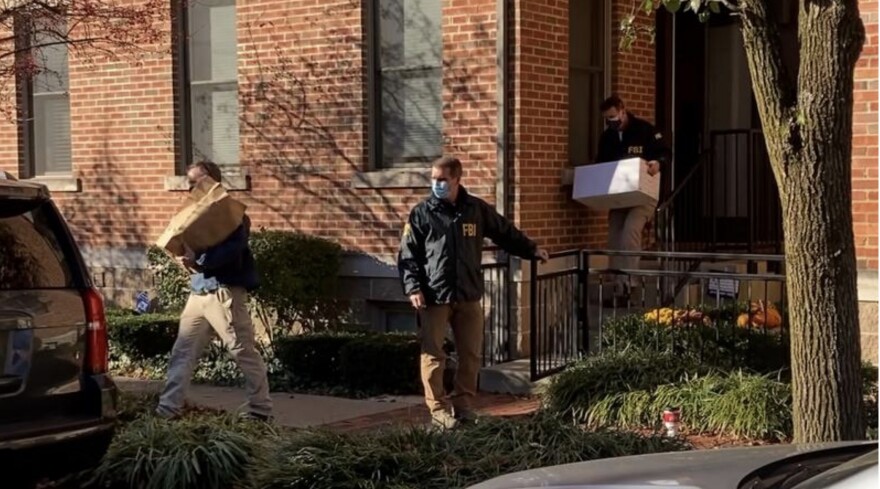
    FBI agents remove boxes of materials from PUCO Chairman Sam Randazzo’s condo in Columbus Nov. 17, 2020. Photo courtesy of Daniel Konik/Statehouse News Bureau.
    BY:  Ohio Capital Journal

    In early 2019, news of financial ties between Akron-based FirstEnergy and the man incoming-Gov. Mike DeWine had named to lead the Public Utilities Commission of Ohio began to spread. And as it did, FirstEnergy’s top executives feared they wouldn’t have a regulator they could control, according to documents filed in federal court late last week.

    “Great. Now we have none on the list” of nominees, then-CEO Chuck Jones texted Vice President Michael Dowling. Jones later added, ruefully, “Always need a backup plan.”

    As it happened, the nominee, Sam Randazzo, ended up being appointed to the commission after being paid $4.3 million by FirstEnergy. He proceeded to help draft a law providing the utility with a $1.3 billion bailout. The company spent another $60 million to pass and then to protect it from a citizen-initiated repeal in what law-enforcement officials have called one of the biggest bribery and money-laundering scandals in state history.

    Randazzo, Jones and Dowling haven’t been charged in the scandal, but after a jury trial that convicted two others, two guilty pleas, and a suicide, the three men could be the next targets as federal authorities continue their probe.

    If authentic, the communications filed on Friday indicate that the three met in Randazzo’s Columbus condo in December 2018. And they appear to show that the FirstEnergy executives agreed to pay Randazzo a large sum in exchange for favors when Randazzo became the state’s chief regulator.

    Another communication 23 months later — just after the FBI searched the condo in November 2020 — shows Randazzo providing a friend “the number for my home which the FBI does not have.”

    Demanding records

    Lawyers for Randazzo, Jones and Dowling didn’t immediately respond to requests for comment Monday, but attorneys for the former executives have said in separate court filings that they believe the feds are investigating their clients.

    The documents filed in federal court on Friday are part of a huge class-action suit against FirstEnergy, Jones, Dowling and a number of other defendants.

    In a deferred prosecution agreement, FirstEnergy in 2021 agreed to pay $230 million and admitted wrongdoing, including by bribing Randazzo. But the class-action plaintiffs — large pension and investment funds — are arguing that the company violated securities law by not disclosing its corrupt conduct. And, they argue, the company lost much of its value when that conduct came to light, leaving investors holding the bag.

    Randazzo has denied wrongdoing and he isn’t a defendant in the case, but the class-action plaintiffs want him to produce all communications relating to how he spent the $4.3 million he got from FirstEnergy just as he was poised to become its most powerful regulator.

    The plaintiffs have been accusing Randazzo since April of foot-dragging. They obtained the messages they filed Friday from a third party and are pointing to them as examples of Randazzo’s lack of cooperation.

    Early arrangements

    The earliest of the messages was on Dec. 18, 2018, and it appears that the three men had recently met in the residence that the FBI later searched.

    “Got it, Sam,” Dowling, then the FirstEnergy vice president, texted Randazzo. “Good seeing you as well. Thanks for the hospitality. Cool condo.”

    The “got it” was in response to a column of numbers Randazzo sent that appear to indicate that he was expecting payments from FirstEnergy through 2024:

    • 2019 — 1,633,333
    • 2020 — 600,000
    • 2021 — 600,000
    • 2022 — 600,000
    • 2023 — 600,000
    • 2024 — 300,000

    A seventh entry said “Total 4,333,333” — an amount equal to what FirstEnergy said was a bribe.

    The following day, Jones, the CEO, told Randazzo that he wouldn’t have to wait that long for the money, according to the filings. Jones also made it clear that he expected access to Randazzo.

    “We’re going to get this handled this year, paid in full, no discount,” the message says. “Don’t forget about us or Hurricane Chuck may show up on your doorstep! Of course, no guarantee he won’t show up sometime anyway.”

    Randazzo’s response seemed to be meant to reassure — and he linked the money to favors.

    “Made me laugh — you guys are welcome anytime and anywhere I can open the door,” he said. “Let me know how you want me to structure the invoices. Thanks.”

    Connections

    But on Jan. 30, 2019, problems popped up with Randazzo’s nomination.

    FirstEnergy’s nuclear-owning subsidiary, FirstEnergy Solutions, was going through bankruptcy and it had listed the Sustainability Funding Alliance of Ohio on one of its disclosures. Randazzo controlled the group and FirstEnergy had paid him millions through it in the past. Now the press was on to the matter.

    “Chuck — Sam Randazzo is going to pull out of the PUCO process ASAP and it’s related to a disclosure on a (FirstEnergy Solutions) bankruptcy filing,” Dowling texted Jones, according to the documents filed Friday. “Reporters called (FirstEnergy) today inquiring about the relationship between (FirstEnergy Solutions) and a group called the Sustainability Funding Alliance of Ohio. You can guess the rest.”

    That’s when Jones lamented not having a “backup plan” in the event that Randazzo was not seated on the utility commission. Dowling agreed.

    “This is awful,” he wrote. “The FirstEnergy Solutions bankruptcy filing names that group and Sam names the same group on a financial disclosure statement. Unreal. I don’t know why it was listed in the (FirstEnergy Solutions) bankruptcy filing. The payments we made year-end ’18 came from (FirstEnergy) Corp. Services.”

    Dowling was ready to throw Randazzo under the bus if the connection proved to be an embarrassment to the incoming DeWine administration.

    “They’re going to be mad at Sam (and hopefully not us) for not disclosing the financial relationship,” Dowling wrote. “That’s Sam’s responsibility.”

    A day later, however, the financial connection between FirstEnergy and Randazzo apparently wasn’t sufficiently embarrassing and he was picked to head up the PUCO.

    “A bullet grazed the temple,” Dowling told Jones, according to one of the texts filed last week.

    “Forced DeWine/Husted to perform battlefield triage,” Jones responded, referring to Lt. Gov. Jon Husted. “It’s a rough game.”

    A still rougher game

    In a trial held in Cincinnati from late January to mid-March, prosecutors put on witnesses and displayed communications describing Randazzo’s 2019 role in drafting House Bill 6, the bailout bill. Not only did it provide $1 billion to prop up two failing nuclear plants FirstEnergy was spinning off, it charged ratepayers about $100 million a year to insulate the company from an economic downturn. For FirstEnergy, it was easy money, in other words.

    In June, U.S. District Judge Timothy Black sentenced former Ohio House Speaker Larry Householder, R-Glenford, to 20 years in prison for orchestrating the racketeering scandal. Former state GOP Chairman Matt Borges got five years for his role.

    By November of 2019, HB 6 was on the books after FirstEnergy and a subsidiary plowed $36 million into a brutal, dishonest effort to turn back a citizen-initiated repeal. But the FirstEnergy executives weren’t done with Randazzo.

    On Nov. 10, 2019, Jones texted a coal executive that another cloud loomed for FirstEnergy.

    “And the (FirstEnergy) rescue project is not over,” Jones said, according to documents filed as part of the class-action suit. “At (Edison Electric Institute) financial conference. Stock is gonna get hit with Ohio 2024. Need Sam to get rid of the ‘Ohio 2024’ hole.”

    That was an apparent reference to a requirement that FirstEnergy file a “rate case” with the PUCO in 2024. In such a proceeding, regulators assess a utility’s operations and make a judgment about whether its rates and revenues are reasonable.

    FirstEnergy was apparently afraid they wouldn’t be. On Nov. 21, 2019, just 11 days after Jones expressed his concerns, the PUCO under Randazzo’s leadership issued an order saying it was “no longer necessary or appropriate” to require FirstEnergy to file a rate case.

    The next day, Jones wanted to express his appreciation to Randazzo. He did so by sending the erstwhile regulator a list of prices for six energy stocks that day. FirstEnergy stocks were up 1.5%. The next highest was Avangrid, which was up 0.86%.

    “Thank you!!” Jones wrote.

    Randazzo replied, “Ha — as you know, what comes up may come down… Thanks for the note. Spoke to Mike (Dowling) last night.”

    Then Jones said, “My Mom taught me to say Thank you.”

    Flying high

    By the start of 2020, things seemed to be going well for those who orchestrated the bailout.

    FirstEnergy Solutions would emerge from bankruptcy in February as a separate company, Energy Harbor. The class-action plaintiffs argue that one of FirstEnergy’s major goals in the scheme was to prop up the nuclear plants, get them off their books and shed the liability of having to pay for a decades-long process to close and clean up after them.

    At the same time, FirstEnergy was funneling millions more dark-money dollars into an effort to get the state’s legislature to put a constitutional amendment on the ballot. It would change the state’s term-limits so Householder could stay speaker for another 16 years — and presumably continue to do the utilities’ bidding.

    But then in July 2020, it all crashed down.

    On July 21, the FBI arrested Householder, Borges and other conspirators. By the next day, FirstEnergy stock had lost 34% of its value, the class-action plaintiffs contend.

    FirstEnergy fired Jones and Dowling the following October. And then in November, 2020, Randazzo was forced to resign from the PUCO after the FBI searched his condo.

    “Pretty stressful few days which started Monday at 6:00 when 10-12 FBI agents with their guns drawn announced their arrival at our home,” Randazzo emailed a friend on Nov. 21, according to the documents filed by the class-action plaintiffs. “But, Carol and I are handling it and doing better each day. Neighbors, friends (like you) family, PUCO staff and people I have worked for over the years have been great. Roger Sugarman (his attorney) is my new hero. So onward!”

    Then Randazzo encouraged the friend to call him on the number he believed that the FBI didn’t have.

    _________________________

    Marty Schladen
    MARTY SCHLADEN

    Marty Schladen has been a reporter for decades, working in Indiana, Texas and other places before returning to his native Ohio to work at The Columbus Dispatch in 2017. He’s won state and national journalism awards for investigations into utility regulation, public corruption, the environment, prescription drug spending and other matters.

    MORE FROM AUTHOR

  • “Corners are cut to dispense prescriptions,” CVS employee tells Ohio Board of Pharmacy

    “Corners are cut to dispense prescriptions,” CVS employee tells Ohio Board of Pharmacy

    A CVS store. Photo by Lynne Terry, Oregon Capital Chronicle, States Newsroom.

    After years of buying and closing competitors, CVS understaffing leads to chaos and delays, Ohio regulator says

    BY: Ohio Capital Journal

    At least eight CVS pharmacies in Ohio are so understaffed that they have seen rampant turnover, dirty conditions, lack of controls over dangerous drugs and wait times as long as a month for prescriptions, according to reports by the Ohio Board of Pharmacy.

    The waits have been so long that a harried CVS pharmacist in Wooster said he was “actively triaging prescriptions to ensure lifesaving, life-sustaining medications are filled in a timely manner.”

    In one case, pharmacy workers told inspectors they begged their superiors — unsuccessfully — to close their pharmacies so they could catch up. In another, a pharmacy did intermittently close, making it impossible for patients to get their medicines during the closures.

    In another instance, Board of Pharmacy inspectors couldn’t tell if employees were stealing controlled substances. In yet another, they couldn’t tell if CVS was improperly billing insurers for scripts it didn’t fill.

    And in several additional cases, inspectors repeatedly found expired and adulterated drugs on pharmacy shelves and filled prescriptions that gave patients the wrong instructions.

    “Corners are cut to dispense prescriptions,” at least one employee at Toledo’s CVS store No. 10246 told investigators last year. Workers there added, “Supervisors/District Managers do not respond to staff calls for help,” the report said.

    The accounts come from inspection reports going back to 2020 that the Capital Journal obtained under the Ohio Public Records Act. At least some of the inspections came in response to patient complaints to the board, which licenses Ohio pharmacies.

    The inspections come after CVS — already the nation’s largest pharmacy retailer — has for years bought up competitors, closed them and moved the prescriptions of the closed pharmacies to existing CVS stores. Critics raised concerns about the practice, known as “buy and close,” at least as early as 2019.

    “Staff at this location was not increased,” a pharmacist at Dayton’s CVS store No. 2528 said last September after the store had absorbed two other closed pharmacies’ prescriptions. She quit the following month.

    For its part, CVS didn’t answer questions about specific allegations in the reports, which it referred to as “isolated incidents.”

    “We’re working with the Board of Pharmacy to resolve allegations of isolated incidents, most of which date back a year or more,” Amy Thibault, director of communications for CVS Pharmacy said in an email Wednesday. “The health and well-being of our patients is our number one priority.”

    Rampant turnover

    Pharmacies across the country found themselves under siege as the coronavirus pandemic took hold in the spring of 2020. They were conducting tests and, when they became available, providing COVID vaccines in addition to already administering those for flu and shingles.

    At the same time, some pharmacy employees were reluctant to work face-to-face with the public in a health care setting — especially before there were vaccines against a disease that has killed more than 1 million Americans.

    But according to the Board of Pharmacy reports, turnover in the CVS stores they investigated seemed particularly bad. And it seemed to be linked to stress from overwork — as well as the parent corporation’s inability or unwillingness to do anything about it.

    For example, when an inspector arrived at CVS store No. 2063 in Canton on Sept. 13, 2020, the staff was so harried that it took them 20 minutes to even acknowledge the inspector. The staff said that the store had lost a pharmacist and six technicians “within a short time.”

    As workers scrambled, they sweltered in a pharmacy in which the air conditioning unit was broken and an alarm in a drug cooler failed to warn them that it was too warm at 46.4 degrees Fahrenheit.

    “Pharmacy staff and an assistant store manager stated they have asked district leaders to close the store down temporarily to get caught up filling prescriptions as well as clean and organize the pharmacy, but this request was denied,” the report said.

    When an inspector returned to the pharmacy on Oct. 29, 2021, things had only gotten worse.

    “All pharmacy staff that was present for the September 2021 inspection quit or transferred out of CVS #2063,” the report said.

    Even more alarmingly, understaffing there created delays that easily could have harmed patients’ health — despite workers’ best efforts to “triage” which prescriptions to fill first.

    “The pharmacy was over a month behind in filling prescriptions,” the report said.

    Especially bad at CVS

    During the pandemic, conditions were universally difficult for pharmacies, but CVS might have been a special case.

    An owner of an independent pharmacy in Northern Ohio said things were rough for everybody, and that he’s still having trouble keeping enough pharmacy technicians on his staff. But, he said, that never led him to consider temporary closures, or anything like the delays filling prescriptions and other problems seen at some CVS stores.

    The pharmacist depends on CVS Caremark — the corporation’s gargantuan pharmacy benefit manager — for his business and asked not to be named. But, he said, he’s talked to CVS pharmacists who have been under pressure so great that it affected their mental health.

    The stress appeared to extend even to the upper ranks of CVS’s pharmacy operation.

    In July 2021, Ken Sidwell became leader of the district which includes Canton CVS store #2063. When he was interviewed by the Board of Pharmacy, he said the store was short-staffed when he got the job.

    Just three months later, Sidwell was gone. On Oct. 29, 2021, the new district leader, Kenneth Cook, told the Board of Pharmacy that the store “is in the process of hiring new pharmacy staff as well as transferring staff from an overstaffed CVS location.”

    CVS spokeswoman Thibault said the company’s policies ensure that its stores are not dangerously short of pharmacy workers.

    “Decisions about staffing, labor hours, workflow process, technology enhancements and other operational factors are made to ensure we have appropriate levels of staffing and resources in place at our pharmacies,” she said. “We have comprehensive policies and procedures in place to support prescription safety and we continue to make important strides, including using technology to support our pharmacy teams.”

    Buy and close

    Not only is CVS the nation’s largest pharmacy retailer, its parent corporation also owns Aetna, a top-10 insurer. It’s also buying up medical centers and physicians practices, helping to make it the nation’s sixth-largest corporation.

    And crucially for pharmacies everywhere, CVS owns the nation’s largest pharmacy benefit manager, CVS Caremark. It and Express Scripts and OptumRx are estimated to control more than 80% of the marketplace and they’re under investigation for possible anti-competitive practices by the Federal Trade Commission.

    Pharmacy benefit managers, or PBMs, act as middlemen for insurers in the drug supply chain. They decide which drugs are covered, so they have great power to negotiate huge, non-transparent rebates and other discounts from drugmakers.

    At the same time, they create pharmacy networks. And, because they control access to so many millions of patients, most small-chain and independent pharmacists think they have little choice about contracting with them on whatever terms the big PBMs choose.

    “Take-it-or-leave-it” contracts, the pharmacists call them.

    CVS has long said that it maintains strict firewalls between its retail and PBM operations, but small pharmacy operations in Ohio and elsewhere aren’t so sure.

    After seeing their reimbursements from CVS Caremark plummet in late 2016, CVS’s “Acquisition Unit” in 2017 sent many of its competitor pharmacies letters saying that it knew times were hard for them and offering to buy them out.

    In many instances, CVS didn’t put its sign on the store it had just purchased. CVS instead closed the stores and folded all of their prescriptions into an existing CVS pharmacy.

    Some pharmacists call the practice “buy and close.”

    In 2019, when CVS bought 20 stores owned by Medina-based Ritzman Pharmacy and closed all but three, critics said it was classic buy-and-close.

    Two of the now-closed pharmacies were in Wooster, one of the cities in which inspectors now find problems in a still-open CVS pharmacy. Three more — in Sugarcreek, Millersburg and Dover — were to the rural south of Canton and Massillon, where CVS stores found themselves seriously stretched in the years since.

    Mount Vernon-based Conway’s Pharmacy in 2019 partnered with Knox County to open a pharmacy in Danville on the edge of Amish Country after CVS bought and closed the only pharmacy there a few years earlier. The closure meant that Danville residents — many poor, disabled or both — had to drive 20 minutes or more to get their medicines or to consult with a pharmacist.

    Such practices have fueled fears that pharmacy deserts are being created in Ohio and elsewhere.

    Lack of accountability

    The constant churn in CVS staffing found by Board of Pharmacy investigators led to breakdowns in accounting for dangerous drugs, including opioids, the inspection reports said.

    For example, between June 10 and Sept. 22, 2022 Dayton’s CVS store No. 2528 reported 75 oxycodone, 100 hydromorphone and 70 amphetamine pills were missing. In each instance, “CVS Pharmacy was unable to determine a reason for the loss,” the inspection report said.

    For most of that period, no “Responsible Person” was in charge.

    The role is as the name implies. The Ohio Administrative Code says, “The Responsible Person shall be responsible for the practice of the profession of pharmacy, including, but not limited to, the supervision and control of dangerous drugs as required…”

    That person would normally be the managing pharmacist at a drugstore. But for months after May 26, 2022, there was no such person at the Dayton CVS, according to the report. Inspectors interviewed pharmacist Jean Getter, who said she was asked to serve as temporary manager after the previous Responsible Person, pharmacist Tyler Philo, left.

    Getter said that even though she wasn’t the Responsible Person, she asked for help sorting out the safe that contained controlled substances because “it was a mess.”

    “She asked the previous Responsible Person and also the District Leader about cleaning up the safe, but it never happened,” the report said.

    An inventory of dangerous drugs is supposed to be conducted whenever there is a change of Responsible Person at a pharmacy, but that kept not happening at the Dayton CVS, Getter said.

    “No one ever became the permanent Responsible Person, which is why Ms. Getter left CVS in August,” the report said.

    Then Pharmacy Board investigators interviewed Philo, the previous Responsible Person and learned something even more confounding.

    “He was not aware (four months after he left that) he was still listed as the Responsible Person for CVS Pharmacy #2528,” the report said.

    Controlled substances

    Board of Pharmacy inspectors also found serious potential problems in CVS stores’ tracking controlled drugs — including the kinds of drugs that have fueled Ohio’s opioid crisis.

    Some problems were as simple as leaving deliveries of dangerous drugs at the front of the store for nine hours because pharmacy staffers were too busy to get them. But others might have been more sophisticated.

    At Toledo CVS store No. 10246, inspectors conducted, Multiple audits consisting of 241 controlled substances were conducted by representatives from the Board between on or about November 11, 2021 and on or about April 27, 2022.”

    In 42% of cases, they found that too much or too little of the drugs had been provided. They discovered “significant losses” of amphetamines and the painkiller tramadol.

    “Additional losses and overages were discovered, some of which were reported to the board, but many were not reported at all, or not reported in a timely fashion,” report said. It added that auditing what happened to controlled substances was difficult “because CVS records showed multiple significant inventory adjustments and changes in medication counts…”

    Counterintuitively, investigators found that on some days when controlled substances were delivered to the Toledo pharmacy, inventories of the drugs actually went down. That might indicate “diversion” — a term used in the industry for stealing drugs.

    “It remains questionable if counts were entered as negative numbers in error, or if staff were entering negative numbers to mask the diversion of drugs received on that day,” the report said.

    In the same store, inspectors discovered chaotic conditions.

    On repeated visits, inspectors found “expired/adulterated” medications on pharmacy shelves and workers told them they hadn’t had time to address the issue. The inspectors also painted a picture of general chaos.

    “Shelving for drug storage had collapsed and medications were crushed beneath the shelving units. Drug stock crowded the aisle floors,” the report said, adding, “The counter used for non-sterile compounding was overflowing with (over-the-counter) medications and return-to-stock bottles. Staff food and beverages were also stored in this area. Moldy/rotting food was found on the counter.”

    Beyond delays and lacking controls, inspectors found another problem at the store that could endanger patients’ health.

    Inspectors on March 3, 2022 reviewed 49 prescriptions filled at the store. They found that seven “had errors in the directions to patients.”

    And when inspectors talked to employees, they heard echoes of the complaints at other CVS pharmacies they’d visited.

    • “The pharmacy is always short staffed.”
    • “The workplace was described as hectic. There is no downtime to catch up on tasks.”
    • “Morale among store employees is poor.”

    Delays and questions about improper billing

    When inspectors visited CVS store No. 8248 in Massillon in late 2021, they found a pharmacy so understaffed that “the pharmacy would close intermittently,” meaning “patients were unable to pick-up/receive their prescriptions.”

    They again found confusion over who was legally responsible.

    “The Responsible Person, Abbey Yannerella, was listed as the Responsible Person at this location as well as CVS #2063; however, she was no longer working at” the Massillon store, the report said.

    They found something else that raised serious questions.

    The store in October 2021 had more than 2,000 prescriptions waiting to be filled, the oldest of which had been waiting for 13 days. A month later, the pharmacist on duty told inspectors that after scripts go unfilled for 14 days, they’re “deleted from the queue.”

    The inspectors found one such prescription that was labeled “Print Ready.”

    “The prescription’s status indicating ‘Print Ready’ means the prescription was processed through insurance,” the report said. “When a prescription is deleted from the queue, the pharmacy does not reverse the insurance claim.”

    CVS didn’t respond directly when asked how often scenarios like this occur — or whether it routinely bills insurers for prescriptions it fails to fill for two weeks and then deletes from its system.

    On Nov. 28, 2021 a new Responsible Person, pharmacist Nayan Patel, had been named. He told investigators that the deletion of prescriptions after 14 days was a requirement of the U.S. Centers for Medicare and Medicaid Services. He added that the scripts are placed back into the queue after their deletion.

    However, “When asked to explain this process further, he could not elaborate,” the report said.

    Then on Feb. 4, 2022, the Board of Pharmacy learned that Patel was Responsible Person for two CVS pharmacies without the special permission required by the board. When the board notified a CVS district leader of that fact, “The district leader notified the board Mr. Patel is no longer the Responsible Person of” Massillon CVS store No. 8248, the report said.

    Penalties

    The board has notified CVS that it can impose penalties ranging from fines to revoking their licenses as a “Terminal Distributor of Dangerous Drugs” at each of the locations in which it found violations.

    So far, CVS store #3613 in Columbus received a $1,000 fine and a written reprimand last August, Board of Pharmacy spokesman Cameron McNamee said in an email Thursday. The violations outlined in that report seem considerably less severe than those found in some other CVS pharmacies.

    Violations found at CVS’s Canton store No. 2063 — where staff turnover was particularly rampant — are slated to be considered at the board’s Nov. 7-8 meeting McNamee said.

    Hearings for the other stores are yet to be scheduled.


    Marty Schladen
    MARTY SCHLADEN

    Marty Schladen has been a reporter for decades, working in Indiana, Texas and other places before returning to his native Ohio to work at The Columbus Dispatch in 2017. He’s won state and national journalism awards for investigations into utility regulation, public corruption, the environment, prescription drug spending and other matters.

    MORE FROM AUTHOR

  • Former GOP Chair Borges chair sentenced to five years in massive corruption case

    Former GOP Chair Borges chair sentenced to five years in massive corruption case

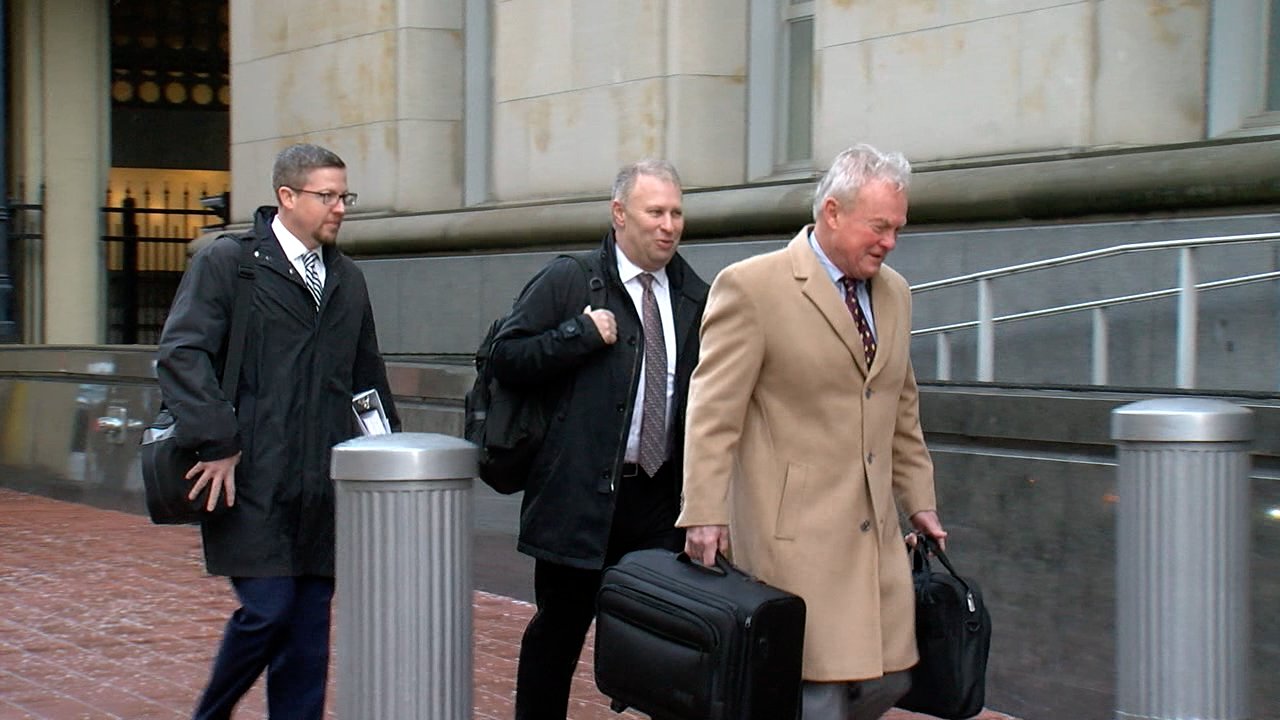
     Center, former Ohio Republican Party chair, and statehouse lobbyist, Matt Borges with his attorneys outside of the federal courthouse. Photo courtesy of WEWS.

    BY:  Ohio Capital Journal

    CINCINNATI — It was Matt Borges, the former chairman of the Ohio Republican Party, who was handcuffed by U.S. Marshals Friday after being sentenced to five years in prison for his participation in the biggest corruption scandal in state history.

    But federal prosecutors made clear that they were trying to send a message to other state leaders who played roles in the scandal and are now trying to pretend they didn’t.

    The sentencing of Borges, 51, follows the 20-year sentence U.S. District Judge Timothy Black meted out a day earlier to former Ohio House Speaker Larry Householder for masterminding the scheme. Akron-based FirstEnergy and other Ohio utilities ponied up more than $60 million between 2017 and 2020 to pass and protect a $1.3 billion ratepayer bailout that was mostly intended to benefit FirstEnergy.

    Borges received a lesser sentence because he was only involved in 2019, when FirstEnergy funneled $38 million into a dark-money group that funded an ugly, falsehood-strewn campaign to defeat a citizen-initiated repeal of the unpopular bailout. Because those voices were squelched — and because Ohio’s Republican legislature refuses to repeal the corrupt bailout — Ohioans continue to be harmed by the racketeering conspiracy, said Assistant U.S. Attorney Matthew Singer.

    The bulk of the subsidies — those going to two nuclear plants in Northern Ohio and a fee to “recession-proof” FirstEnergy — have been suspended. But Ohio ratepayers continue to pay hundreds of millions to prop two coal plants owned by AEP and other utilities, including one that’s in Indiana.

    The effort to gather enough voter signatures to put a repeal of the bailout — House Bill 6 — failed after Borges bribed a worker with the petition drive $15,000 for inside information and opened lines of communication with Republican officeholders.

    At the same time, teams of “blockers” harassed and allegedly assaulted petition gatherers and Householder’s minions flooded the airways with ads falsely claiming that the repeal effort was really China’s bid to take over the Ohio energy grid.

    The scheme Borges participated in was meant to “prevent Ohio voters from exercising their right to reject this corruption,” Singer said. “Ohioans never had the opportunity to vote up or down on this legislation.”

    Singer also pointed the finger at people only speaking out about Householder now and not earlier.

    “It’s interesting that some people are piling on (Householder) after the fact,” he said. “So many knew what was happening in real time and did nothing about it. Not only did they do nothing about it, they helped facilitate it.”

    Ohio Secretary of State Frank LaRose in a Tuesday appearance on Cincinnati’s 700WLW claimed that everybody who knew Householder knew he was “a crook” at the time the mammoth conspiracy was taking place. However, LaRose never spoke out against the deal at the time. And in text messages presented to the jury, FirstEnergy CEO Chuck Jones said that LaRose — who also heads up the Ohio Ballot Board — was giving him “private” updates about the signature-gathering effort.

    LaRose has refused to explain whether he was in communication with Jones or what he might have told him, but Singer, the prosecutor, seemed to refer to the state’s top elections official on Friday.

    Not only did Householder, Borges and their Republican allies squelch a citizen-initiated attempt to repeal the corrupt utility bailout, the gerrymandered legislature is now putting Issue 1 on the Aug. 8 ballot. It would make it virtually impossible for citizens to initiate amendments to the state Constitution. LaRose, a major supporter of the move, claims it will reduce corruption in Ohio.

    During Borges’ sentencing Friday, Singer decried the fact that many of the uncharged players in the racketeering scandal continue to thrive on Capitol Square. They include mega-lobbyist Robert Klaffkey, whom co-defendant Juan Cespedes testified slid a check for $400,000 in FirstEnergy dark money across a table to Householder during a 2018 meeting. Klaffkey denied sliding the check, but he didn’t deny being present.

    Singer said that it was remarkable that Klaffkey was “comfortable sitting in a room and sliding a $400,000 check to a public official.”

    Klaffkey is hardly alone.

    Megan Fitzmartin was paid hundreds of thousands as she aided Householder and co-defendant Jeffrey Longstreth in creating a Householder-friendly Republican majority in the state House. Now she’s policy director for the Republican supermajority in Ohio’s gerrymandered House.

    Corruption — and tolerance of it — corrodes our political foundation, Singer said.

    “Once corruption takes hold democracy itself becomes a charade,” he said.

    Cespedes and Longstreth are yet to be sentenced and U.S. Attorney Kenneth L. Parker on Thursday hinted that others might yet be charged in the scandal.


    Marty Schladen
    MARTY SCHLADEN

    Marty Schladen has been a reporter for decades, working in Indiana, Texas and other places before returning to his native Ohio to work at The Columbus Dispatch in 2017. He’s won state and national journalism awards for investigations into utility regulation, public corruption, the environment, prescription drug spending and other matters.

    MORE FROM AUTHOR

  • Federal judge blasts disgraced Ohio House speaker as a “bully,” sends him straight to jail

    Federal judge blasts disgraced Ohio House speaker as a “bully,” sends him straight to jail

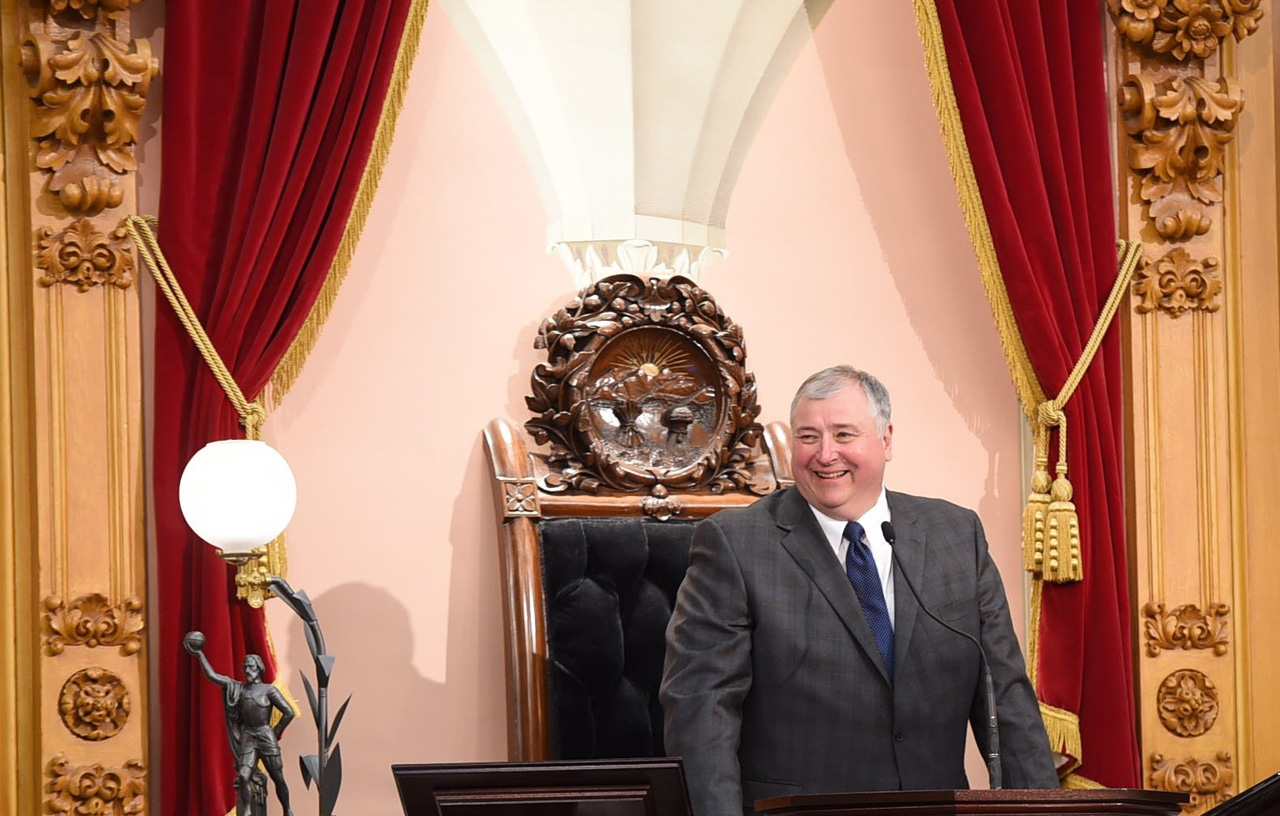
    Former House Speaker Larry Householder, R-Glenford. Source: Ohio General Assembly.

    BY:  Ohio Capital Journal

    CINCINNATI — Former Ohio House Speaker Larry Householder spent possibly his last moments as a free man around 2:30 p.m. Thursday and they couldn’t have been pleasant.

    U.S. District Judge Timothy Black gave the Glenford Republican the maximum possible sentence of 20 years and then ordered blue-shirted U.S. Marshals to immediately take him into custody. He rose, put his hands behind his back, the marshals cuffed him and led the once-powerful pol away.

    But before that humiliation, the judge blistered Householder for being the ringleader of a racketeering scandal in which Akron-based FirstEnergy paid him more than $59 million in bribes in exchange for a $1.3 billion bailout, most of which was intended to save two failing nuclear plants in Northern Ohio.

    Ratepayers could have used that money for things like education, health care or to start businesses, the judge said.

    “You handed that money to suits in private jets,” Black said.

    The judge made the speech and imposed the sentence after saying Householder clearly perjured himself during his criminal trial, which lasted from late January until mid-March.

    In it, Householder claimed to barely know FirstEnergy executives as federal prosecutors put on a mountain of evidence that Householder flew on their corporate jets, sat in their luxury boxes and dined in fancy restaurants as they plowed tens of millions of the corporation’s dollars into dark-money accounts.

    “You conned the people of Ohio and you tried to con the jury, too,” Black said in his gravely voice as Householder, clad in a gray suit and red tie, slumped his bulk back in his chair.

    The money from FirstEnergy and one of its subsidiaries was used to elect fellow Republicans in 2018 who would vote to make Householder speaker in early 2019. More than $500,000 of it was used to pay off Householder’s credit card bills, settle a lawsuit and to repair a house he owned in Florida.

    Tens of millions more went to pass the corrupt bailout — House Bill 6 — and to fund a thuggish campaign to thwart a citizen-initiated repeal.

    Earlier in the hearing, Assistant U.S. Attorney Emily Glatfelter said Householder used FirstEnergy’s dark money to crush a “citizen veto” and “because of this House Bill 6 remains in effect today.”

    That’s also because Republican supermajorities in Ohio’s gerrymandered legislature have refused to repeal the corrupt law even after arrests were made, and as they try to make it virtually impossible for citizens to initiate amendments to the Ohio Constitution.

    Also arrested in the scandal were lobbyists Juan Cespedes and Jeffrey Longstreth — who cooperated with prosecutors within days of their arrests — and Neil Clark, who died by suicide. Former Ohio GOP Chairman Matt Borges is slated for sentencing at 11 a.m. today, Friday.

    Steven Bradley, Householder’s attorney, sought leniency for his client. Referring to the possibility of a 20-year sentence, he said “That is effectively a life sentence for Larry Householder given his age and health situation.”

    Householder is 64 and overweight.

    Bradley argued that his client was around 60 when the racketeering conspiracy began in late 2016 and that prior to that, Householder did “innumerable” good deeds “for decades.” A 20-year sentence would “effectively give no consideration” to those good deeds, Bradley said.

    But when he spoke on his own behalf, Householder appeared to do more to harm his case than to help it, just as he did at trial.

    “My greatest commitment is to my creator… My next commitment is to my family,” he read from a prepared statement as he stood at the podium.

    Householder said that in the course of 38 years of marriage, “I can count on one hand” the number of nights he spent away from his wife, Taundra. Householder also described the crushing pain they suffered when they lost a four-year-old daughter.

    But then he pushed his claims past the point of plausibility.

    He said Taundra was planning to retire from her teaching position and next year, when he turns 65, he wanted to retire as well, saying he planned to “hang up my suit and tie.”

    Householder made that statement in the same courtroom where, only three months earlier, prosecutors put on testimony and displayed bank records and written messages from early 2020 that showed FirstEnergy and AEP putting money into dark money groups intended to fund an effort to change the state’s term limits so Householder could stay in office for as long as 16 more years.

    The former House speaker also implied that he wanted a lenient sentence not for himself, but for his family. Taundra, he said, would be alone while “I’ll be in a cold cell hours away.”

    But what might really have set Judge Black off was Householder’s profession of selfless public service.

    “My life has been a total and full dedication to making life better for those I serve,” he said.

    Black described voters who put out Householder yard signs, donated their hard-earned money to his campaigns, and pushed a button for him in the voting booth.

    “I’m not talking about some corporation or the (former FirstEnergy CEO) Chuck Joneses of the world,” Black said. Householder’s constituents who supported him “were saying, ‘I’m choosing to trust you,’ and you betrayed that trust,” the judge said.

    Black used Householder’s own words to give the lie to his claims. He quoted several recordings of Householder that were surreptitiously made during the conspiracy and played at trial.

    “If you’re going to fk with me, I’m going to fk with your kids,” Householder said in one of them.

    “Bottom line, you were a bully,” the judge said.

    If the federal racketeering statute didn’t cap sentences for a single count at 20 years, sentencing guidelines would have recommended life for the former House speaker, Black said. One reason for that is because Householder’s use of a mountain of hidden corporate money to elect a legislature, pass an exponentially bigger bailout for the company, and to crush a citizen repeal is “an assault on democracy,” the judge said.

    Black explained the special harm done by public corruption like that committed by Householder and his co-conspirators. To do so, he quoted former President Theodore Roosevelt, who ironically advocated the citizen-initiated amendment process in Ohio that Householder’s former Republican colleagues in state government are now trying to gut.

    “There can be no crime more serious than bribery,” Roosevelt said in a 1903 message. “Other offenses violate one law while corruption strikes at the foundation of all law.”

    When Borges, the former GOP chair, is sentenced today, it’s unclear what he’ll face. His involvement in the conspiracy was considerably less than Householder’s, but Judge Black showed that he’s not much in the mood for leniency when it comes to Ohio’s corrupt political culture.

    Also uncertain is when — or if — others might be charged.

    Former FirstEnergy CEO Chuck Jones and Vice President Micheal Dowling — as well as former FirstEnergy Solutions President John Kiani — directed the flood of corporate dollars into the Householder-controlled dark money groups, according to prosecutors.

    And FirstEnergy admitted in a deferred prosecution agreement that it paid  a $4.3 million bribe to Sam Randazzo just as Gov. Mike DeWine was appointing him to chair the Public Utilities Commission. Randazzo the helped draft the corrupt bailout law, according to trial testimony.

    On the steps of the Potter Stewart U.S. Courthouse just after the sentencing, U.S. Attorney Kenneth Parker was asked when or whether those men or others might be charged.

    “We continue to look through evidence and we continue to listen to recordings and speak to individuals, so if something’s there we’re going to go there, too, and address it,” he said.


    Marty Schladen
    MARTY SCHLADEN

    Marty Schladen has been a reporter for decades, working in Indiana, Texas and other places before returning to his native Ohio to work at The Columbus Dispatch in 2017. He’s won state and national journalism awards for investigations into utility regulation, public corruption, the environment, prescription drug spending and other matters.

    MORE FROM AUTHOR

  • Ohio Capital Journal wins seven Society of Professional Journalists awards

    Ohio Capital Journal wins seven Society of Professional Journalists awards

     States Newsroom photo


    “Congratulation to Loveland Magazine’s invaluable news source that reports from the Ohio Capital for you.” – David and Cassie

    Commentary by David DeWitt

    In the “Ohio’s Best Journalism Contest” from the Society of Professional Journalists, the Ohio Capital Journal won seven awards, including five first place finishes and two in second place. The contest covered stories and editorial from 2022.

    In digital media categories, OCJ Senior Reporter Marty Schladen won first place for best news story; OCJ/WEWS Reporter Morgan Trau won first place for best government/political reporting and first place for best education issues reporting; OCJ Editor David DeWitt won first place for best editorial writing; OCJ Editor David DeWitt and Columnist Marilou Johanek won first place for best overall commentary/opinion blog section; and OCJ Reporter Susan Tebben won second place for best government/political reporting and second place for best education issues reporting.

    We are incredibly honored and grateful for this recognition from our fellow journalists. We are also humbled by and grateful for all of the support we receive from our readers and Ohioans across the state.

    Below we will share the award-winning entries.

    If you’d like to support our work, please follow us on Facebook and Twitter, share our free newsletter subscription with family and friends, and consider making a tax-deductible donation.

    Best News Story – Marty Schladen – First Place

    Ohio docs say new abortion law has them working against oaths to do no harm

    Affidavits: More pregnant minors who were raped denied Ohio abortions

    While in effect, Ohio’s abortion ban led to chaos, suffering, and worse health care, doctor says

    Best Editorial/Criticism Writing – David DeWitt – First Place

    Ohio redistricting charade continues as GOP again passes more clearly rigged maps

    Campaign finance and pay-to-play corruption is also destroying the American Republic

    In 1912, Ohio voters asserted their democratic authority. Now Ohio Republicans want to rip it away

    Best Overall Commentary/Opinion blog (news organization) – David DeWitt and Marilou Johanek – First Place

    In 1912, Ohio voters asserted their democratic authority. Now Ohio Republicans want to rip it away

    Ohio Republicans’ attempted erasure of a 10-year-old rape victim is incredibly sick and disturbed

    Extremist Ohio legislators created the law forcing child rape victims to give birth

    Best Education Issues Reporting – Morgan Trau – First Place

    Comments about the Holocaust from representative sponsoring ‘divisive concepts’ bill raise concerns

    GOP passes bill aiming to root out ‘suspected’ transgender female athletes with genital inspection

    Former OSU professor begs for job back after ‘manic episode,’ university refuses

    Best Government/Political Reporting – Morgan Trau – First Place

    Comments about the Holocaust from representative sponsoring ‘divisive concepts’ bill raise concerns

    Ohio lawmaker who wrote bill requiring gun training for teachers owns gun training business

    Ohio Rep. behind bill limiting transgender care had never spoken to community

    Best Education Issues Reporting – Susan Tebben – Second Place

    Ohio governor, education groups at odds over board of ed district deadlines

    No changes planned for state board of education districts, despite redistricting changes

    Resolution condemning LGBTQ anti-discrimination language passed by Ohio’s state Board of Education

    Best News Story – Susan Tebben – Second Place

    Ohio Republicans abandon independent mapmakers to pass slightly modified GOP maps

    Deja Vu: Republicans use simple majority to pass 4-year maps

    Redistricting commission punts again, defies court order


    David DeWitt
    DAVID DEWITT

    OCJ Editor-in-Chief and Columnist David DeWitt has been covering government, politics, and policy in Ohio since 2007, including education, health care, crime and courts, poverty, state and local government, business, labor, energy, environment, and social issues. He has worked for the National Journal, The New York Observer, The Athens NEWS, and Plunderbund.com. He holds a bachelor’s degree from Ohio University’s E.W. Scripps School of Journalism and is a board member of the E.W. Scripps Society of Alumni and Friends. He can be found on Twitter @DC_DeWitt

    MORE FROM AUTHOR