Tag: Marty Schladen

  • Increasing the minimum wage will save 4,000 Ohio lives, study says

    Increasing the minimum wage will save 4,000 Ohio lives, study says

    BY:  Ohio Capital Journal

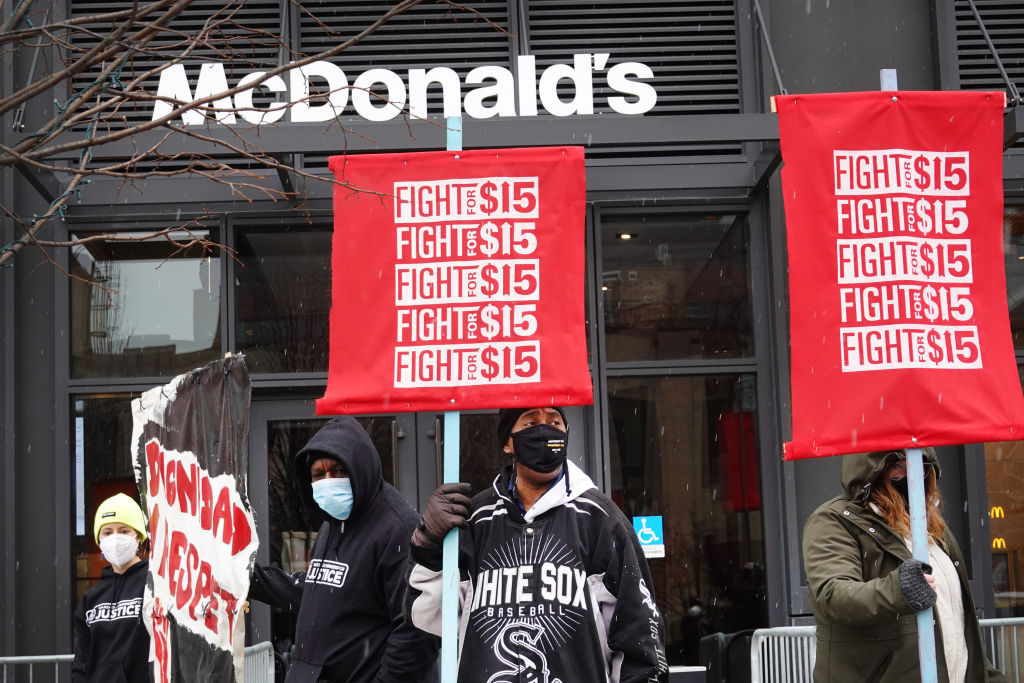
    There may be some drawbacks, but increasing Ohio’s minimum wage to $15 an hour would save 4,000 lives and create a $25 billion benefit to the state economy by 2036, according to a study released last month by Scioto Analysis.

    A group proposing to increase the minimum wage from the current $10.45 an hour to $12.45 and then to $15 did not submit petitions last week for the November ballot, and is now looking to bring the proposal to voters in 2025. The cost-benefit analysis by Scioto found that such an increase would reduce suicides, homicides, infant mortality and low-birthweight babies — phenomena that are associated with economic stress.

    The analysis identified two downsides to the proposed increase in Ohio.

    It would cost an estimated 73,000 jobs from employers who are likely to calculate that they can’t afford to pay the extra money. It also found that 89,000 fewer Ohioans would get associates and bachelors degrees, if national estimates are correct that increases in the minimum wage correlate to a 4% decrease in college enrollment.

    However, the analysis said those costs are far outweighed by the benefits of increasing the minimum wage.

    “We find increasing Ohio’s minimum wage to $15 per hour will result in a net benefit to society between $5 and $45 billion over the next ten years, with an average expected net benefit of $25 billion” it said. “The benefit will be driven by saved lives, with the minimum wage leading to an estimated total of 4,000 suicides, firearm homicides, and infant deaths avoided from 2027 to 2036.”

    The reasoning behind some the analysis’ estimated benefits:

    • Suicides — They relied on a 2020 study that said every $1 increase in the minimum wage corresponded to a 3.4% to 5.9% decrease in the suicide rate among adults with a high school education or less. Coupling that with the $9 million in value to the economy that the Federal Emergency Management Agency assigns to a single life, they found that suicides prevented would be worth $14 billion over 10 years in Ohio.

    • Gun violence — Economic insecurity is associated with homicide, and a Johns Hopkins University study this year found that every 1% increase in the state minimum wage relative to the state median income corresponded to a 1.3% decrease in firearm homicide rates. Given that roughly 820 Ohioans are killed by homicide each year, the state’s proposed minimum wage increase can be expected to save roughly 1,500 lives over the coming decade, creating a $13 billion benefit over 10 years under Ohio’s proposed increase.

    • Infant mortality — A study published last year in the Journal of the American Medical Association found that every $1 increase in the minimum wage is associated with a 4% decrease in infant mortality. With nearly 600 Ohio children between 28 and 364 days old dying in 2021, just over 1,000 infant lives would be saved over the next decade, creating a $9.1 billion benefit, the analysis said.


    Marty Schladen
    MARTY SCHLADEN

    Marty Schladen has been a reporter for decades, working in Indiana, Texas and other places before returning to his native Ohio to work at The Columbus Dispatch in 2017. He’s won state and national journalism awards for investigations into utility regulation, public corruption, the environment, prescription drug spending and other matters.

    Ohio Capital Journal is part of States Newsroom, the nation’s largest state-focused nonprofit news organization.

    MORE FROM AUTHOR

  • Economic benefits of eliminating Ohio income tax questioned

    Economic benefits of eliminating Ohio income tax questioned

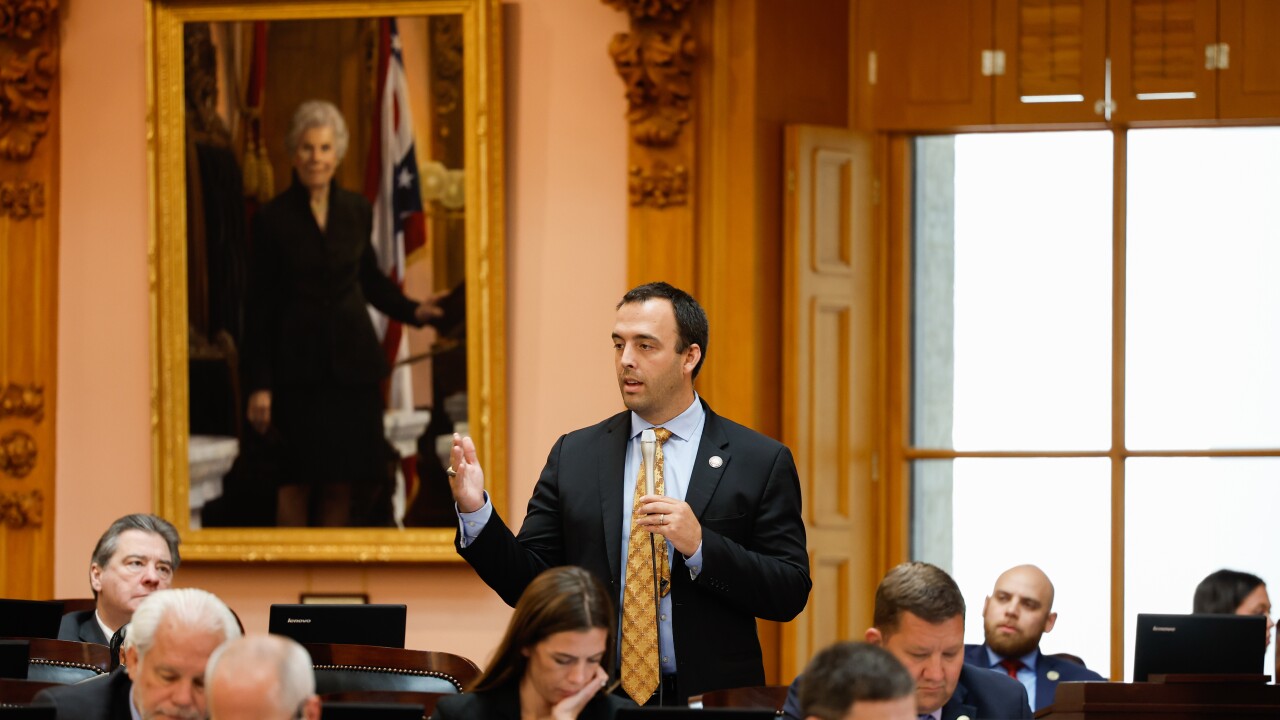
    State Rep. Adam Mathews, R-Lebanon, speaks during an Ohio House session at the Statehouse in Columbus, Ohio. (Photo by Graham Stokes for Ohio Capital Journal. Republish photo only with original article.)

    BY:  Ohio Capital Journal

    Some Ohio lawmakers have proposed eliminating the state income tax, saying it would strengthen the economy. But a majority of economists surveyed on the matter disagree.

    Republican lawmakers in both houses of the General Assembly filed a bill that would eliminate the income tax and the commercial activities tax by 2030 on the rationale that it would stimulate the economy.

    “Ohio is ready to reclaim our role as the economic engine of the Midwest,” state Rep. Adam Mathews of Lebanon said in a January statement. “This step ensures Ohio is a destination for businesses to grow and attract people who want to work and live here, raise a family, and truly thrive.”

    Politicians — particularly those on the right — have long claimed that tax cuts have a stimulative effect on the economy.

    But some economists have said it’s not that simple. The structure of the cuts is critical, and they have to be paid for with accompanying spending cuts, they say.

    In addition, income tax cuts tend to be regressive, meaning they most benefit the wealthy in ways that don’t trickle down effectively to lower-income families. The 2017 Trump tax cuts blew up the deficit while primarily benefiting the richest Americans, according to many analyses.

    In Ohio, the state is already foregoing $1 billion a year in taxes on limited liability companies in a way that mostly benefits the wealthy. It was sold on promises that the cut would stimulate economic growth.

    However, the LLC tax cut has been in place for a decade and the Federal Reserve Bank of Cleveland in March reported that Ohio’s economic growth between the fourth quarter of 2021 and the third quarter of 2023 was the fifth-worst of any state.

    In a survey released this week, a panel of 19 Ohio economists was mostly dubious that eliminating the Ohio income tax would help the state economy. Asked if they agreed that such elimination would stimulate growth, 11 disagreed, three agreed and four said they were uncertain. And all but one said eliminating the Ohio income tax would make it difficult to balance the state budget.

    In the comment section of the survey, Jonathan Andreas of Bluffton University said that eliminating the income tax would cut down on bureaucracy.

    “Although the federal income tax is a pretty efficient and very progressive way to generate revenues, state income taxes like Ohio’s are relatively regressive and Ohio’s is particularly burdensome relative to the smaller amount of revenue given that Ohio has three income tax authorities: state, school district, and local!” he wrote. “That is an absurd amount of bureaucracy for a much smaller amount of tax revenues than the feds get. I’d prefer that we just pay one income tax to the feds and have states generate revenues primarily through higher land taxes which are more efficient and about as progressive.”

    But another economist, Will Georgic of Ohio Wesleyan University, said the Ohio proposal smacks of one tried in 2012 and 2013 in Kansas by former Gov. Sam Brownback. It failed to deliver the promised growth and it nearly bankrupted the state.

    “I think that Ohio is more like Kansas than its lawmakers want to admit (and certainly more like Kansas than we are like Florida, Washington, Nevada, or Texas),” Georgic wrote, referring to states without income taxes. “This experiment did not go well for Kansas.”


    Marty Schladen
    MARTY SCHLADEN

    Marty Schladen has been a reporter for decades, working in Indiana, Texas and other places before returning to his native Ohio to work at The Columbus Dispatch in 2017. He’s won state and national journalism awards for investigations into utility regulation, public corruption, the environment, prescription drug spending and other matters.

    Ohio Capital Journal is part of States Newsroom, the nation’s largest state-focused nonprofit news organization.

    MORE FROM AUTHOR

  • Moreno blasted rivals over scandal. Now he’s welcoming a big player’s support

    Moreno blasted rivals over scandal. Now he’s welcoming a big player’s support

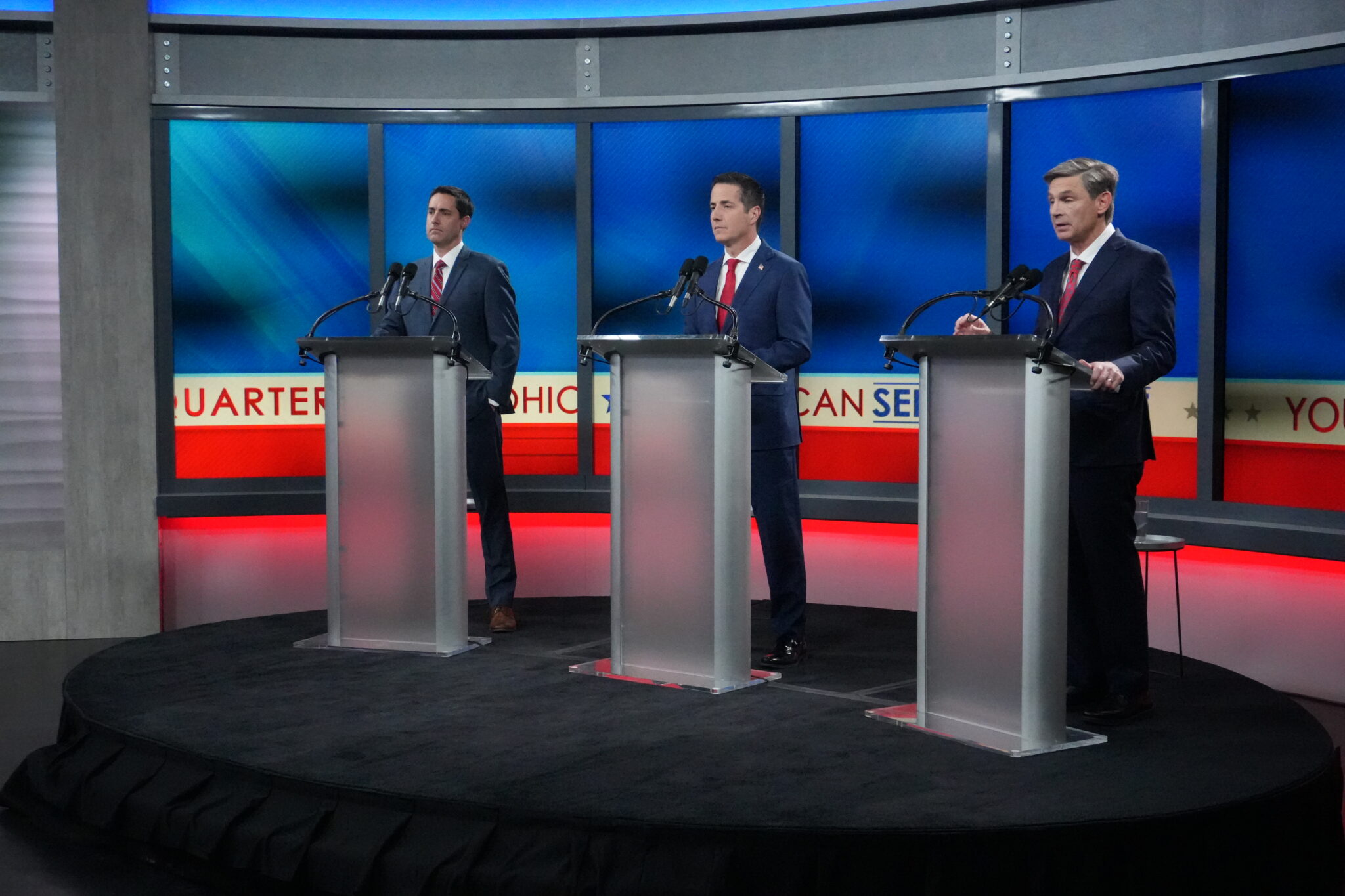
    (From left) Sec. of State Frank LaRose, Bernie Moreno, and state Sen. Matt Dolan, R-Chagrin Falls, on the debate stage before the March primary. (Debate pool photo courtesy of WCMH-TV.)

    BY:  U.S. Sen. Sherrod Brown

    During the GOP U.S. Senate primary, Cleveland businessman Bernie Moreno went after his opponents over their connections to the biggest bribery and money-laundering scandal in Ohio history.

    But now he’s welcoming the support of a man who brokered what was perhaps the key relationship in a scheme in which Akron-based FirstEnergy paid $61 million to purchase a $1.3 billion bailout that fell on the backs of ratepayers — which is to say everyday Ohioans.

    The supporter, Cleveland businessman Tony George, invited a now-convicted lawmaker to travel on FirstEnergy’s private jet to Donald Trump’s 2017 inaugural, and booked the lawmaker and FirstEnergy executives into the same hotel for days of events during which federal prosecutors say the conspiracy began. George was still communicating with the central players in 2020, when the FBI started making arrests.

    When asked to comment on the seeming hypocrisy, Moreno’s campaign didn’t respond directly. It instead attacked his Democratic opponent, incumbent Sen. Sherrod Brown.

    Crooked bailout

    A political newcomer, Moreno in March sailed past his more-experienced opponents buoyed by the endorsement of former President Donald Trump.

    Moreno was once a harsh Trump critic, calling him a “lunatic” and a “maniac.” But as with Ohio Sen. — and vice-presidential hopeful — J.D. Vance, Moreno got into politics and turned into an ardent supporter of Trump, who is now a convicted felon.

    Moreno might have experienced a similar conversion when it comes to 2019’s corrupt bailout law, House Bill 6.

    In a Spectrum News 1 debate on Feb. 19, Moreno went after his Republican opponents, State Sen. Matt Dolan and Secretary of State Frank LaRose.

    Dolan in 2019 voted for HB 6, but then later said he supported a full repeal.

    LaRose, Ohio’s top elections official, provided “private” information to FirstEnergy CEO Chuck Jones during a brutal-but-successful war to stop a repeal of the bailout, according to text messages from Jones that were presented during a criminal trial last year. LaRose at first refused to comment on the messages. Then last July, he said he didn’t recall conversations with Jones and others involved in the scandal.

    As a result of the bailout conspiracy, former House Speaker Larry Householder, R-Glenford, last year received a 20-year prison sentence and former Ohio Republican Party Chairman Matt Borges was sentenced to five years. Jones and former FirstEnergy Vice President Michael Dowling were charged by state authorities earlier this year.

    About 19-and-a-half minutes into February’s GOP Senate debate, LaRose attacked Moreno over what LaRose said was Moreno’s support for government subsidies of wind and solar energy. Moreno swung back with HB 6, the corrupt bailout law.

    “I was against HB 6,” Moreno said. “These guys weren’t. They’re going to have to answer for their involvement in that scandal to a different audience than the one that’s here tonight.”

    Moreno took another swing at Dolan on April 30, when he took to X to say.

    @dolan4ohio was the most helpful member to pass the CROOKED and CORRUPT FirstEnergy Bailout Bill! Matt is a GUARDIAN for the Left Woke Mob and the Swamp but not the people of Ohio,” he said.

    Support from “Individual B”

    That last sentence was an apparent swipe at the Dolan family’s ownership of Cleveland’s baseball team. In 2021 it changed its name from the Indians to the Guardians in response to Native American protests — to the fury of some of its fans.

    But as for Moreno’s problems with figures who were involved in the bailout scandal, they appear to extend only to his political opponents — not his supporters.

    On May 16, his campaign held a Bourbon With Bernie fundraiser in Mentor. Cleveland businessman Tony George was a host, a privilege for which George paid $2,500.

    In addition to being a Moreno supporter, George has had a long and lucrative relationship with FirstEnergy. Entities linked to George received nearly $11 million from FirstEnergy over the years, according to a state audit.

    Unlike FirstEnergy’s two top executives, Gov. Mike DeWine’s nominee to the Public Utilities Commission, Householder, Borges and three others, George has not been charged in the conspiracy, and there’s been no public indication that state or federal authorities plan to.

    But George’s role was substantial enough that he was called “Individual B” in FirstEnergy’s deferred prosecution agreement — a document in which the utility copped to its culpability for the bribery scandal, along with paying out $230 million. It lays out Individual B’s close relationship with FirstEnergy’s top executive and to Householder from the fall of 2016, when Householder was plotting his return to the House and then to regain the speaker’s gavel.

    During his trial, Householder implausibly testified that during the 2016 World Series, he randomly wandered into the FirstEnergy luxury box at Cleveland’s Progressive Field. Raising doubts that his visit was just happenstance, the deferred prosecution agreement includes a message from Jones, the FirstEnergy CEO, to George on Nov. 5, 2016 — just three days after Game 7 of the World Series.

    “Pass on to (Householder),” Jones said. “When we were talking on (Wednesday) I told him there was gonna be a sense of urgency (for a bailout) but couldn’t tell him all the details. If we don’t move on some type of supplant (sic) in (the) first half of 2017 it will be too late. These (nuclear) plants will be shut, sold, or bankrupt. I don’t have any contact info for him.”

    George responded, “He’s more than ready to craft something,” federal prosecutors said in closing arguments in Householder’s trial.

    Expensive junket

    The following January, George invited Householder — and flew with him, Householder’s son and FirstEnergy Vice President Michael Dowling — on the FirstEnergy jet to the Trump inaugural. George also booked Householder and then-CEO Jones into the same DC hotel.

    What followed were days of swanky steak dinners and other events during which prosecutors said the bailout scheme was hatched.

    FirstEnergy’s deferred prosecution agreement, or DPA, says that George continued as a conduit between Householder and Jones until 2020, when Householder was arrested.

    Before the feds brought the hammer down, Jones, George and Householder were plotting to change the Ohio Constitution so Householder could continue as speaker for another 16 years. That would have allowed them to continue to increase electricity rates and use the resulting dark money to dominate Ohio government in ways not calculated to benefit ratepayers, or the public at large.

    The DPA includes messages between Jones and George on Feb. 28, 2020. Jones referred to Householder as “an expensive friend,” but said it would be valuable to keep him in his position of power because, as Householder said, he could “get a lot done in 16 years.”

    George agreed, saying, “Probably more than 5 previous Speakers combined.”

    Then, George added, “He will make Ohio great again.”

    Response

    The Moreno campaign this week declined to answer questions about these matters on the record.

    It was asked whether Moreno was aware of George’s involvement in the HB 6 affair when Moreno accepted George’s support. It was also asked if Moreno would return George’s money and decline support in the future.

    Communications Director Reagan McCarthy responded by asking in an email, “When is Sherrod Brown going to return the donations made to his campaign over the years including when FirstEnergy admitted it was bribing public officials?”

    In fact, Brown donated the $21,000 he’d received from FirstEnergy over the years to Ohio food banks within 10 days of Householder’s 2020 arrest, according to Federal Election Commission records provided by the Brown campaign.

    “While Bernie continues to actively fundraise with key players of the FirstEnergy bribery scandal, days after the FirstEnergy scandal was revealed, the Friends of Sherrod Brown campaign donated FirstEnergy contributions to local food banks across the state,” a spokesperson said in an email.


    Marty Schladen
    MARTY SCHLADEN

    Marty Schladen has been a reporter for decades, working in Indiana, Texas and other places before returning to his native Ohio to work at The Columbus Dispatch in 2017. He’s won state and national journalism awards for investigations into utility regulation, public corruption, the environment, prescription drug spending and other matters.

    Ohio Capital Journal is part of States Newsroom, the nation’s largest state-focused nonprofit news organization.

    MORE FROM AUTHOR
  • Ohio’s leaders blocked (some) foreign money from issue campaigns. Advocates call it a dog-whistle

    Ohio’s leaders blocked (some) foreign money from issue campaigns. Advocates call it a dog-whistle

    Ohio Capital Journal

    Ohio’s Republican leadership last month refused to put Joe Biden on the presidential ballot unless the legislature adopted another measure that they claimed would protect against foreign money playing a role in the process by which citizens can initiate laws.

    But while some surely were concerned about malign foreigners improperly influencing state policy, some of them seemed to be playing on the same trumped-up fear of foreigners that they do in other contexts.

    When earlier problems arose with putting presidential candidates of both parties on the ballot, the legislature passed a “clean” bill fixing the problem as a routine matter.

    Moreover, with this latest law, Ohio lawmakers did nothing to bring transparency to dark money, which is flooding the state and can come from any source. It can be from foreigners, organized crime or interested parties — all unbeknownst to the electorate whose laws are being impacted. Such dark money played an indispensable role in the largest bribery scandal in Ohio — a scandal in which many of those same Ohio leaders played a part.

    In addition, critics said the move was really intended to make it more difficult for citizens to impose popular measures that the state’s gerrymandered supermajority opposes, such as protecting abortion rights and ending gerrymandering. As part of that, they said, it gives the state attorney general — who since 2011 has been a Republican — greatly enhanced powers to harass citizen-led attempts to change the law.

    Xenophobia

    Advocates for immigrants and others say that in pushing their “ban” on foreign money, some Republican leaders are playing on the anti-foreigner, anti-immigrant paranoia that Donald Trump has relentlessly whipped up since announcing his candidacy to be president in 2015.

    The new legislation not only bans contributions from foreign nationals, it also bans them from lawful permanent residents, or “green card” holders. That’s despite the fact that federal law allows such people to make contributions, and Bill Seitz, an attorney and a Republican member of the Ohio House, warned his colleagues that the prohibition could sink the entire measure in court.

    To an immigrant advocate, the dog whistle was easily audible.

    “They know what they’re doing, the people who are sponsoring these amendments,” said Lynn Tramonte, director of the Ohio Immigrant Alliance. “They’re making this about people who were born in other countries and adding on new categories of immigrants to be banned from donating money. The legislator who introduced that amendment knows that that makes it open to legal challenge. That was very clear. Both sides — Republicans and Democrats — expect that law to be challenged in court. So it was clearly not about the policy. It was about getting those headlines.”

    Some of the amendment’s staunchest supporters haven’t been shy about using such tactics.

    Secretary of State Frank LaRose was the first to flag the fact that the Democratic National Convention was too late to get Biden on the ballot under Ohio law. But instead of calling for a clean bill that would only fix that as the legislature had done in the past, LaRose had other demands.

    “Ohioans deserve confidence in the integrity of our elections, knowing that they aren’t being bought by foreign bullies or billionaires,” LaRose said in a May press release. “I hope the House does the right thing and takes action soon to close this loophole before it’s exploited again.”

    Other motives

    LaRose was referring to a Swiss billionaire who had made big contributions to the Tides Foundation, a U.S. group that helped finance Ohio voter efforts last year.

    One trounced an August attempt by LaRose and his allies to make it nearly impossible for citizens to initiate amendments to the Ohio Constitution. Then, in November, voters passed an amendment protecting abortion rights by a 14-point margin. LaRose had earlier told an audience of partisans that the August effort was 100% about stopping the abortion-rights measure in November.

    It’s not the only time LaRose, the state’s top elections official, has pressed a fear of foreigners into the service of what appear to be ulterior motives.

    For example, he’s conducted frequent voter purges, supposedly in the service of election integrity. Last year, he tried to make a splash by announcing that he had referred 641 cases of possible voter fraud to authorities.

    Sounds like a lot, but that’s only 0.0044% of the total votes cast. And when the Capital Journal did a follow-up investigation, less than 3% of those resulted in charges.

    In other words, just 0.000132% of the total number of votes cast since LaRose took office in 2019 might end in convictions. Yet LaRose last month announced yet another voter purge, claiming the threat of foreigners casting illegal ballots was why it was needed.

    “Ohioans overwhelmingly passed an amendment to our state Constitution which makes it clear that only U.S. citizens can vote in our elections,” LaRose said in a May 14 press release. “It is my duty under the law to uphold the Constitution, and the legislature has explicitly tasked me with ensuring that only eligible citizens can register and vote.”

    Spreading fear

    Elizabeth Neumann was deputy chief of staff of the U.S. Department of Homeland Security during the Trump administration.

    During a virtual press conference sponsored by the National Immigration Forum last week, she described how the “great replacement theory” — the idea that there’s a plot to replace white people, especially in positions of power — has led to numerous racist massacres. She said that whipping up fears of illegal voting is a softer version of the same theory that shooters invoked as they massacred people in Christchurch, New Zealand, a Walmart in El Paso, a Pittsburgh synagogue, and a Buffalo grocery store.

    “There’s a lot of conversation about how migrants are actually voting and this goes into that softer great-replacement theory and we anticipate that will continue to be a challenge this election year,” said Neumann, who is now chief strategy officer for Moonshot, which works to end online harms such as violent extremism and child trafficking.

    Tramonte, of the immigrant alliance, said the real aim of claims of illegal voting and purges and prosecutions is to scare marginal populations away from the polls. She said she helped conduct a focus group before last November’s election.

    “I heard from people who were citizens who said they were afraid to vote because they were afraid of being attacked,” she said. “They had a plan to go early in the morning and make sure they could get their vote cast because they wanted to make sure their voices were heard, but they were afraid.”

    In addition to not effectively addressing the problem of mystery money in our politics and making it harder and more frightening to participate in the process, there could be a darker consequence of the rhetoric around the bill Republicans demanded in exchange for putting a sitting president on the Ohio ballot.

    In an interview, Moonshot analyst Yuri Neves said that political leaders are invoking conspiracy theories when they insinuate that green card holders have a diabolical agenda or that masses of undocumented immigrants are voting illegally.

    “It suggests some coordinated plan by nefarious actors,” he said. “Depending on who you talk to, it’s globalists, Jews, etc. When we say it’s a conspiracy theory, it’s not just demographic changes happening as there always are. It’s that it’s some malevolent actors behind it. And that’s where it gets quite dangerous.”


    Marty Schladen
    MARTY SCHLADEN

    Marty Schladen has been a reporter for decades, working in Indiana, Texas and other places before returning to his native Ohio to work at The Columbus Dispatch in 2017. He’s won state and national journalism awards for investigations into utility regulation, public corruption, the environment, prescription drug spending and other matters.

    Ohio Capital Journal is part of States Newsroom, the nation’s largest state-focused nonprofit news organization.

    MORE FROM AUTHOR


  • Donald Trump is a convicted felon. Some Ohio leaders react with fury, others silence

    Donald Trump is a convicted felon. Some Ohio leaders react with fury, others silence

    BY  Ohio Capital Journal

    A Manhattan jury made history Thursday when it convicted Donald Trump of 34 felonies. They relate to how he paid a porn star to stay quiet just before the 2016 election — and his actions cast doubt on Trump’s legitimacy during his one term as president.

    Despite now being a felon, Trump is for the third time the GOP nominee. Most of Ohio’s Republican leaders reacted with outrage to his conviction, while the governor didn’t have much to say, and the one statewide Democrat said the jury had spoken.

    Sen. J.D. Vance is on the shortlist to be Trump’s vice presidential pick and he took to the airwaves to call Trump’s prosecution political, and to say a lot of other stuff as well. On X Thursday, Vance falsely accused the Democratic Party of inventing a crime just to prosecute Trump and he made reference to a conspiracy theory with anti-semitic overtones.

    “This decision is a disgrace to the rule of law and our Constitution,” Vance wrote. “Dems invented a felony to ‘get Trump,’ with the help of a Soros funded prosecutor and a Biden donor Judge, who rigged the entire case to get this outcome. This isn’t justice, it’s election interference.”

    Actually, as the jury found, it was Trump who committed election interference. And legal experts pointed out that Trump’s lawyers helped pick the jury, put on witnesses and had input in the jury’s instructions. Trump himself could have taken the witness stand, but chose not to.

    Speaking from the White House Friday, President Joe Biden criticized Trump supporters for claiming that the justice system was rigged against Trump without providing any concrete evidence.

    “It’s reckless, it’s dangerous, it’s irresponsible for anyone to say this was rigged just because they don’t like the verdict,” Biden said.

    Ohio Attorney General Dave Yost, a likely contender for the GOP nomination to be governor in 2026, also slammed the proceedings that ended in Trump’s conviction.

    “This verdict is likely to be overturned. It is not the first unjust verdict, and it is why we have courts of appeals,” he said on X. “The aptly named (Manhattan District Attorney) Alvin Bragg picked his defendant and campaigned on prosecuting him — disreputable and unethical conduct that tarnished the justice system.”

    When it comes to courts of appeal, Yost has had his own difficulties. A panel of the 6th U.S. Circuit Court of Appeals on Wednesday ruled that Yost was improperly blocking signature gathering for a proposed amendment to the state Constitution that would reduce immunities the state has have from being sued. Yost on Thursday said he’d seek a ruling from the entire court.

    Some of the AG’s critics have accused him of stalling.

    He refused to approve a summary of the ballot language, which supporters need if they’re to gather 420,000 verified signatures from registered voters in time for the measure to make the November ballot. Yost is refusing to answer questions about a similar maneuver in 2019 that helped kill a voter-initiated repeal of a law at the center of the biggest bribery scandal in Ohio history.

    Lt. Gov. Jon Husted is likely to vie with Yost for the gubernatorial nomination. Like many other Ohio Republicans, he, too, said he was outraged over Trump’s conviction for having an extramarital tryst with a porn star, paying to silence her in order to improperly influence an election and then falsifying business records to cover it all up.

    “This quote from President Trump is ultimately the truth of the matter: ‘The real verdict is gonna be Nov. 5, by the people,’” Husted said on X. He then reposted that while saying further, “If you are mad about it, do something about it by donating, volunteering and voting.”

    Ever merciless, some commenters reminded the lieutenant governor that he was roundly booed at a 2020 Trump rally in Vandalia as he encouraged attendees to wear masks at the height of the coronavirus pandemic. Trump played a lead role in politicizing mask wearing and downplaying a scourge that has killed nearly 1.2 million Americans.

    Ohio’s top elections official also rushed onto social media to defend a newly minted felon who tried to overturn the results of the 2020 election and thereby steal the votes of 81 million Americans.

    “Partisan prosecutor,” Secretary of State Frank LaRose said on X. “Activist judge. Sham trial. Bogus verdict. It’s a sad day in America when a political party is so afraid of losing its grip on power that they’re willing to abuse justice to game an election. This will not stand.”

    LaRose is a key player in Ohio’s epic gerrymanderingquestionable voter purges and restriction of voting access, so it’s interesting that he’d accuse others of desperately clinging to power.

    One wag also pointed out that a jury had just found that Trump falsified numerous business records to further his conspiracy and that as Secretary of State, LaRose is in charge of Ohio’s business records. It’s unclear what — if anything — LaRose would have done if the former president faked them here in the Buckeye State.

    Cleveland businessman Bernie Moreno, who is challenging Democrat Sherrod Brown for Ohio’s other Senate seat, was also vociferous in his support of the only ex-president to also bear the title “felon.”

    “Today is a dark day for American democracy,” Moreno said on X. “Joe Biden and his leftwing allies engaged in election interference to prosecute their top political opponent on bogus charges. This verdict is representative of a banana republic, not a democracy. Sherrod Brown and DC Democrats should be ashamed of this weaponization of our justice system.”

    His statement ignores the fact that the Biden Justice Department declined to prosecute Trump on the charges of which the New York jurors found him guilty. It also ignores the fact that the Biden Justice Department is prosecuting the president’s own son and a sitting Democratic senator.

    Brown, his Democratic opponent, is facing a hard reelection in a Republican-leaning state. When asked to comment on Trump’s conviction Friday, Sen. Brown stuck to general principals.

    “I’m not a lawyer or a judge but I’ve said from the beginning that no one is above the law,” he said in an email. “Ultimately this is up to the legal system to sort out and for the American people to decide in November.”

    Gov. Mike DeWine’s office didn’t immediately respond to a request for comment. He’s a Republican who got on Trump’s bad side early in the pandemic, when DeWine implemented health orders that were recommended by experts.


    Marty Schladen
    MARTY SCHLADEN

    Marty Schladen has been a reporter for decades, working in Indiana, Texas and other places before returning to his native Ohio to work at The Columbus Dispatch in 2017. He’s won state and national journalism awards for investigations into utility regulation, public corruption, the environment, prescription drug spending and other matters.

    Ohio Capital Journal is part of States Newsroom, the nation’s largest state-focused nonprofit news organization.

    MORE FROM AUTHOR
  • Ohio AG Yost is prosecuting others in utility scandal, but he won’t discuss his own involvement

    Ohio AG Yost is prosecuting others in utility scandal, but he won’t discuss his own involvement

    Ohio Attorney General Dave Yost. (Photo by Morgan Trau, WEWS.)

    BY:  Ohio Capital Journal

    Ohio Attorney General Dave Yost this year brought criminal charges against four figures who were involved in the biggest bribery scandal in state history.

    Many thought they were long overdue. That’s especially true of cases filed against men accused of funding the conspiracy, but who still hadn’t been charged by federal prosecutors four years after the last of the alleged wrongdoing took place — and almost a year after two others began lengthy prison sentences.

    But Yost’s own name came up several times in the federal trial and his office last week again ignored detailed questions about the matter.

    The attorney general played an important role in the defeat of an attempted repeal of the corrupt bailout. And there were claims that he believed that the bailout was a bad law, but kept his mouth shut out of loyalty to one of the conspirators — and to the law’s major beneficiary.

    The issue is politically fraught for Yost because the state charges he filed this year have raised new questions about Lt. Gov. Jon Husted’s involvement in the scandal. Yost and Husted are widely expected to face each other in the 2026 race to be Ohio’s Republican nominee for governor.

    New charges

    Former House Speaker Larry Householder, R-Glenford, was sentenced to 20 years in federal prison last June for his role in a scheme in which Akron-based FirstEnergy paid more than $60 million to make him speaker in 2018 and to pass and protect a $1.3 billion ratepayer bailout the following year. It’s one of the biggest scandals in Ohio history, and so far it has also sent former GOP Chairman Matt Borges to prison for five years, resulted in two more guilty pleas — and seen two defendants die by suicide.

    But U.S. Attorney Kenneth Parker sidestepped a pretty important question last June when he stood in front of the federal courthouse in Cincinnati and boasted to the press about the convictions and sentences his assistants had just won. He was asked, what about the people who paid the bribes? Would they be charged? If so, when?

    All Parker would say was that the investigation was ongoing.

    In December, his team indicted Sam Randazzo, Gov. Mike DeWine’s nominee to be Ohio’s top utility regulator. In a deferred prosecution agreement, FirstEnergy said it paid Randazzo a $4.3 million bribe just before he became regulator. From that post, he did a number of lucrative favors for the company related to the bailout and he improperly helped with other matters as well, according to the indictment.

    But still uncharged by the feds are former FirstEnergy CEO Chuck Jones and Vice President Michael Dowling, the executives alleged to have directed truckloads of company money into 501(c)(4) dark money groups that financed the scandal.

    In February, a team of state prosecutors led by Yost stepped into the void by securing a grand jury indictment against Jones, Dowling and Randazzo. The charges relate to the bailout scandal, and also to a decade’s worth of shady dealings that allegedly paid Randazzo more than $10 million and ripped off industrial energy users and residential customers alike.

    In April, Randazzo died by suicide.

    Other questions

    The state indictment also raised new questions about the cozy relationships between the DeWine/Husted administration, FirstEnergy and Randazzo.

    Weeks before they were inaugurated, DeWine and Husted had dinner in downtown Columbus with Jones and Dowling — FirstEnergy’s top leadership — and discussed whether Randazzo would be acceptable to regulate the company. Jones and Dowling then drove about a mile to Randazzo’s German Village residence and negotiated the $4.3 million payoff, according to text messages that are being used in multiple court proceedings.

    The state indictment alleges that DeWine’s chief of staff, Laurel Dawson, knew about the payoff before the governor appointed Randazzo to chair the Public Utilities Commission of Ohio. But Dawson — whose husband was a FirstEnergy lobbyist who allegedly received a $10,000 loan from Randazzo — isn’t talking publicly about what she knew or what she told her boss.

    DeWine also continues to stand behind his former governmental affairs director, Dan McCarthy, who lobbied the legislature on DeWine’s behalf to pass the bailout law.

    Just before taking that job, McCarthy, too, was a FirstEnergy lobbyist — a job in which he set up a dark-money group that became a conduit for tens of millions in funding for the scandal. In last year’s trial, the prosecution presented evidence that FirstEnergy VP Dowling in 2019 ordered a subordinate to keep the then-DeWine aide’s name off of a $10 million infusion into the corrupt bailout even after being told that it would violate IRS rules to do so.

    DeWine and his staff haven’t explained what McCarthy and Dawson knew about the corrupt machinations as the bailout law was in the works — or when DeWine signed it mere hours after its passage.

    DeWine, Husted and their administration also haven’t explained what they knew about the long, shady relationship between Randazzo and FirstEnergy described in the state indictment. The governor’s spokesman has tried to suggest that it was common knowledge, but extensive evidence shows that Randazzo and FirstEnergy went to great lengths to conceal it.

    DeWine also has said he didn’t know about millions in dark money contributions FirstEnergy made in 2018 to support his gubernatorial bid. But a University of Cincinnati political scientist said it’s simply not believable that a company would make that kind of an expenditure and not make sure the beneficiary knew about it. That seems especially true for a company that subsequently admitted that it paid millions more in outright bribes.

    For his part, Husted won’t comment on the $1 million in dark money FirstEnergy spent supporting his 2018 bid for governor, or whether he  promoted Randazzo for the regulatory job when he dropped his bid and joined DeWine’s ticket.

    The two had history. As House speaker in 2007, Husted appointed Randazzo to the PUCO Nominating Council — a position he held until DeWine nominated him to chair the agency.

    Questions for the Attorney General

    Husted and Yost, the attorney general, are widely regarded as the frontrunners for the 2026 GOP gubernatorial nomination in a state that hasn’t elected a Democrat to that job since 2006.

    There hasn’t been any suggestion that Yost brought charges in the bailout scandal as a way of embarrassing his likely opponent. But at the same time, Yost’s office has avoided questions about his own involvement in the bailout controversy.

    According to text messages presented at last year’s federal court trial, Yost was drawn into the fight at a critical time. The bailout passed the Householder-run House at the end of May 2019, but a month later, opposition was growing in the state Senate.

    Borges, the former GOP chair who had run some of Yost’s political campaigns, had a June 26, 2019 text conversation with Juan Cespedes, who was also being paid to push the corrupt bailout law. Borges intimated that Yost believed that the law was a bad one.

    The AG “‘would be out front (in opposition) if not for (FirstEnergy) support and your involvement,’” Borges quoted Yost as saying.

    A spokesperson for Yost declined to comment at the time, citing the fact that he’d been subpoenaed in the case.

    Regardless of the AG’s view, so many people agreed that the bailout was a horrible law that an effort to undertake the cumbersome repeal process was getting underway even before it passed. Borges noted to Cespedes that Yost would have to give his approval before a repeal could get on the ballot. The AG would try to help them there, too, Borges said.

    If there’s any way the law will allow him to reject the language, he will do it,” Borges texted.

    Regardless of why, Yost ended up doing just that.

    Crucial lost time

    DeWine signed the bailout, House Bill 6, the day the Senate passed it — July 23, 2019. Six days later, repeal advocates had gathered 1,000 signatures from registered voters and submitted a summary of the repeal to Yost for his approval.

    Time was of the essence because under Ohio law, repeal advocates had to gather another 265,000 voters’ signatures within 90 days of the law’s passage to get it on the ballot. But first they had to wait for Yost to approve the ballot summary.

    The attorney general waited the full 10 days allotted him and then issued a rejection letter that seems at odds with any concept of “summary.”

    It was a six-page, 1,535-word document that picked apart the summary in excruciating detail.

    “He listed a lot of different things,” said Rachael Belz, CEO of Ohio Citizen Action, which was strongly opposed to the bailout. “It seemed like a lot to overcome. It didn’t seem very neutral.”

    The repeal was a referendum — the only one for which Yost has considered summary language since he’s been attorney general. Of the 26 other summaries he’s rejected, the vast majority were for proposed constitutional amendments and the rest were for initiated statutes.

    His rejection of the summary for the bailout repeal stands out for its length. It’s more than twice as long as his other rejections are on average, according to information available on the attorney general’s website.

    In the event, Yost’s initial rejection did heavy damage to the repeal effort.

    Proponents on Aug. 16, 2019 submitted a new summary, which Yost certified on Aug. 29, 2019. But by that time, the repeal team had only 54 days left of the original 90 to gather and submit more than a quarter-million valid signatures. Their time to complete the gargantuan task was cut almost in half, in other words.

    What followed was a lying, xenophobic and sometimes-violent campaign to defeat the repeal into which FirstEnergy plowed $36 million in dark money. Perhaps unsurprisingly, the repeal couldn’t get enough signatures and parts of the corrupt bailout law are still on the books.

    Yost’s office didn’t respond to questions about his role in the repeal — or Borge’s statements that were presented at the former political boss’s criminal trial. But for Belz of Citizen Action, there’s plenty of blame to spread among Ohio’s statewide leaders.

    “I don’t think Yost’s hands are clean,” she said. “I don’t think Husted’s hands are clean. I don’t think DeWine’s hands are clean. I don’t know whose hands are clean. Frankly, that’d be a shorter list.”


    Marty Schladen
    MARTY SCHLADEN

    Marty Schladen has been a reporter for decades, working in Indiana, Texas and other places before returning to his native Ohio to work at The Columbus Dispatch in 2017. He’s won state and national journalism awards for investigations into utility regulation, public corruption, the environment, prescription drug spending and other matters.

    Ohio Capital Journal is part of States Newsroom, the nation’s largest state-focused nonprofit news organization.

    MORE FROM AUTHOR
  • What’s next after the FTC said the biggest grocers were inflating food costs?

    What’s next after the FTC said the biggest grocers were inflating food costs?

    BY:  Ohio Capital Journal

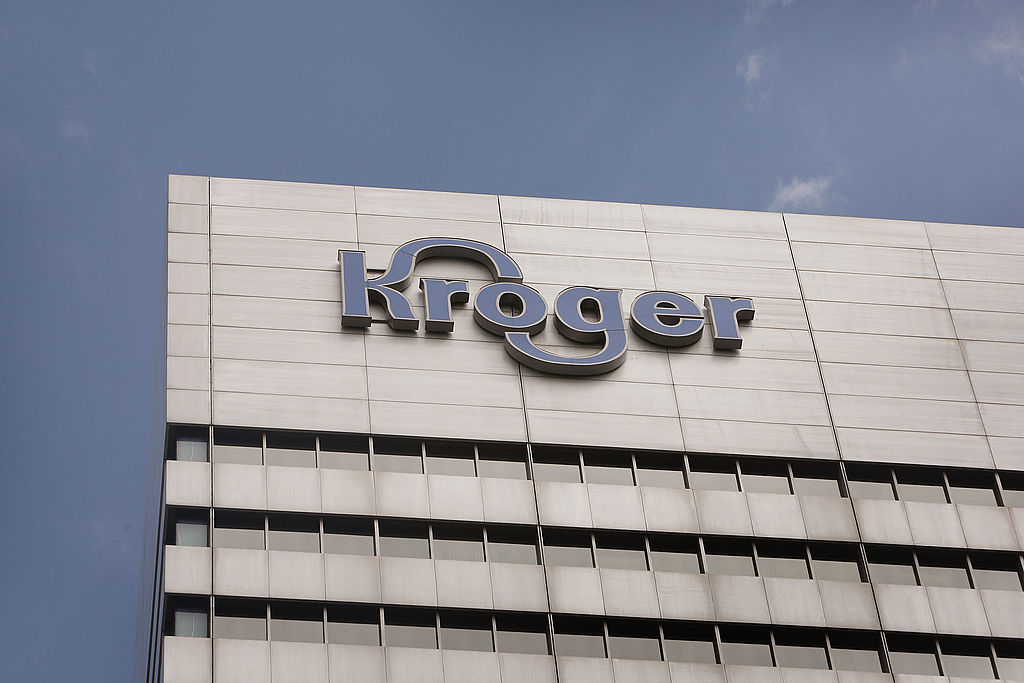
    The Federal Trade Commission in March released a report saying that the three largest grocers “accelerated and distorted” food costs amid supply disruptions caused by the coronavirus pandemic. It also said that prices — and profits — remain high for Kroger, Walmart and Amazon even after the supply kinks have straightened themselves out.

    But the country’s trade watchdog didn’t say in its report what might be done about it. The agency this week might have given a hint.

    The commission is already suing to block a proposed merger between Cincinnati-based Kroger and Boise, Idaho-based Albertsons, arguing that the deal will “eliminate fierce competition … leading to higher prices for groceries and other essential household items for millions of Americans.”

    But that’s unrelated to the findings of the “6(b)” report, which was started during the pandemic in November 2021. It found problems with consolidation in the grocery sector even without the Kroger-Albersons merger.

    Asked if the FTC planned to do anything about those problems, an agency official speaking on background on Monday said, “The report outlines several areas where further scrutiny by the FTC and policymakers is warranted. The report doesn’t specifically spell out any enforcement actions to be taken as a result of the report, but the report will inform the FTC’s future work as the Commission reviews potentially anticompetitive mergers and conduct as it works to protect consumers.”

    The report itself found several broad areas in which it said the three big grocers were using their size to suppress competition.

    One had to do with the big boys’ use of “on time, in full,” or OTIF, contracts with their suppliers. Because they’re such huge customers, they’re able to get strict guarantees that they’ll have their orders completely and promptly fulfilled or the supplier has to pay a steep penalty.

    The FTC report said that at the beginning of the pandemic, virtually no grocers were insisting that the terms of their OTIF contracts be met — an acknowledgement that supply-chain disruptions made it impossible. But as time wore on, some of the biggest grocers reimposed them with a vengeance, the report said.

    “Even as the supply chain crisis brought on by the pandemic continued, some retailers reimposed or even heightened the standards for their OTIF policies later in 2020,” it said. “For example, Walmart tightened its OTIF requirements in September 2020, requiring suppliers to achieve 98 percent OTIF compliance to avoid fines of 3%.”

    Imposition of the contracts had an anticompetitive effect because, in a time of scarcity, they directed limited supplies of some items to the biggest grocers while their smaller competitors went begging, the report said.

    In addition, large grocers are able to use their heft to negotiate constant, relatively low prices from suppliers, a practice known as “everyday low pricing.” Meanwhile, their smaller competitors depend on producer promotions to offer certain items at temporarily low rates.

    As the pandemic set in and producers were already struggling to fill orders, they had little incentive to voluntarily reduce prices. That created another mismatch between the biggest grocers and their smaller competitors, the FTC report said.

    “Promotions designed to increase sales made little sense when those producers were unable to meet existing demand,” it said. “These changes affected retailers differently depending on their pricing model. Most notably, these trade promotions reflect a significant amount of money within the industry, and so the competitive impact of these differential effects (or of the promotions generally), may warrant further study.”

    More broadly, food prices have jumped 25% over four years and they remain high even as supply problems related to covid have eased. Grocers have said their costs remain high, but according to the FTC report, food and beverage retailers saw their revenue rise to 6% over total costs in 2021 — higher than the previous peak of 5.6% in 2015. Then in the first three quarters of 2023, it went even higher — to 7% over costs.

    It seems that might be an avenue of further inquiry.

    “This profit trend casts doubt on assertions that rising prices at the grocery store are simply moving in lockstep with retailers’ own rising costs,” the report said. “Examining the cause or nature of rising industry profits is beyond the scope of this limited study into pandemic-related supply chain disruptions. However, the question warrants further inquiry by the Commission and policymakers.”


    Marty Schladen
    MARTY SCHLADEN

    Marty Schladen has been a reporter for decades, working in Indiana, Texas and other places before returning to his native Ohio to work at The Columbus Dispatch in 2017. He’s won state and national journalism awards for investigations into utility regulation, public corruption, the environment, prescription drug spending and other matters.

    Ohio Capital Journal is part of States Newsroom, the nation’s largest state-focused nonprofit news organization.

    MORE FROM AUTHOR
  • Gov. signals looming scandal at teachers’ pension fund

    Gov. signals looming scandal at teachers’ pension fund

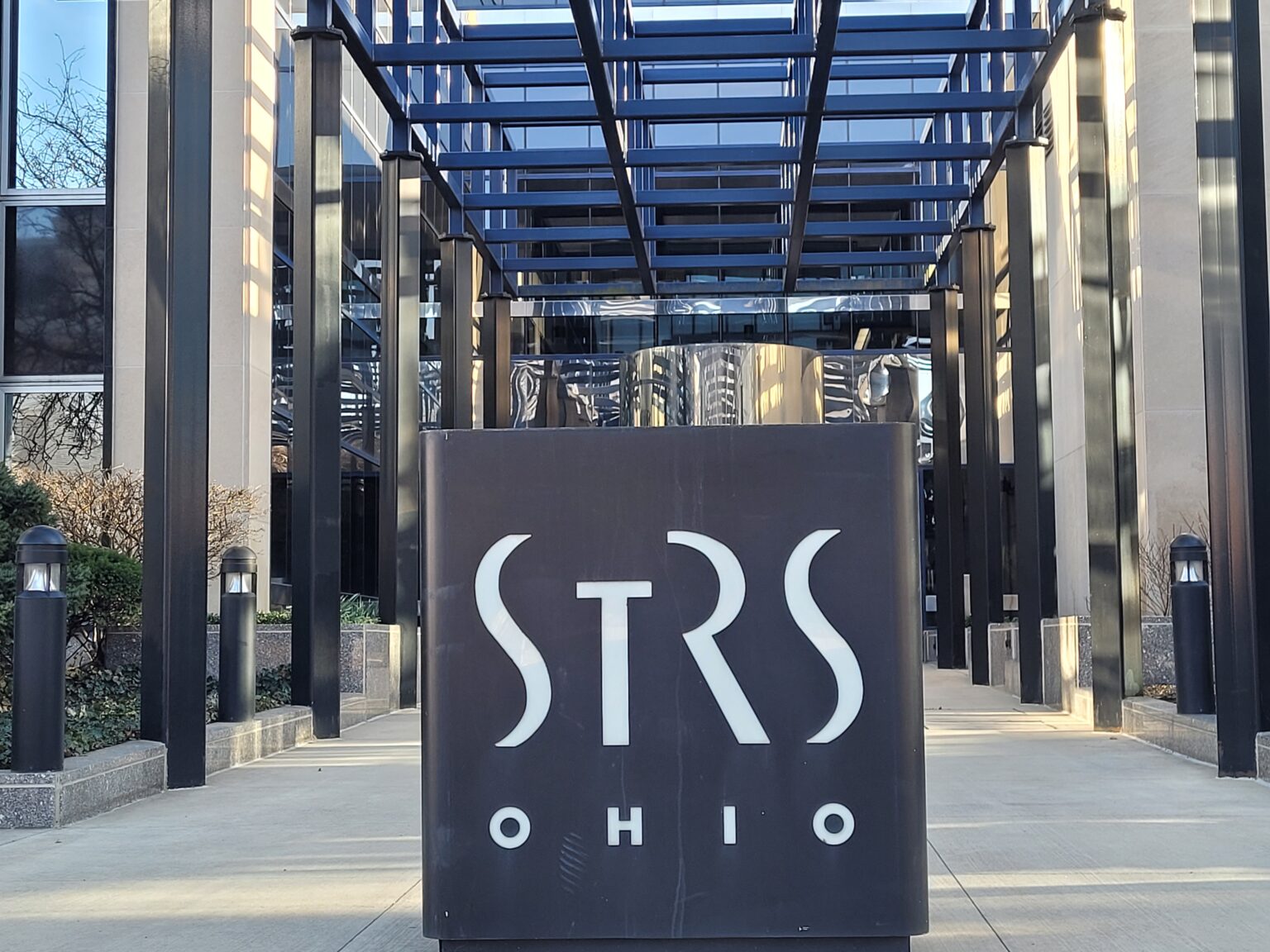
    The entrance to the Ohio State Teachers Retirement System headquarters in Columbus. Photo by Marty Schladen, Ohio Capital Journal.

    BY:  Ohio Capital Journal

    After years of complaints about gold-plated salaries, billions in investment fees and lackluster returns, things seem poised to hit the fan at Ohio’s State Teachers Retirement System.

    Gov. Mike DeWine on Wednesday issued a press release saying that he was alarmed at the news that a consultant for the $90 billion retirement plan, Aon, was severing its contract.

    “This is a huge red flag, calling into question how STRS is operating and providing oversight,” the press release said. “The unstated implication is that the governance issues at STRS are so concerning that Aon could not continue its contract in good faith. STRS may now be out of compliance with portions of audit recommendations due to Aon ending the contract.”

    The statement also cited unspecified allegations against members of the pension fund’s board, to which the governor appoints some members.

    “Additionally, my office has received documents containing some other disturbing allegations regarding the STRS board,” the statement said. “I have directed my staff to forward these documents to a number of relevant offices, including the Ohio Ethics Commission, the Ohio Retirement Study Council, Attorney General Yost, Auditor Faber, Treasurer Sprague, Secretary of State LaRose, and relevant members of the Ohio General Assembly. I encourage them to review the document and take any action that may be appropriate under any jurisdiction they may have.”

    Retirees have long complained of rarely getting cost-of-living increases while the retirement system awarded huge bonuses to already well-paid investment managers. For example, the system in 2022 handed out $10 million in bonuses just before announcing that the system’s investments  lost $5.3 billion that year.

    Last November, the system’s executive director, Bill Neville, was suspended amid employee complaints of inappropriate behavior.

    DeWine himself has fueled some of the controversy at the retirement system. Exactly a year ago, just as reformers were about to achieve a majority on the board, DeWine terminated a reform member.

    DeWine said the member, Wade Steen, didn’t attend board meetings regularly enough. But Steen countered that the charge was trumped up. The Ohio 10th District Court of Appeals said DeWine’s termination of Steen was unlawful and ordered that Steen be restored to his position.

    The turmoil at the teachers’ pension fund isn’t the only controversy facing the DeWine administration.

    DeWine and his lieutenant governor, Jon Hustedhaven’t explained their and their staffs’ involvement in an epic utility scandal that featured $61 million in bribes and a $1.3 billion ratepayer bailout as the payoff. A former house speaker and a former state GOP chairman are serving lengthy federal prison sentences in the scandal, which has also resulted in two suicides.


    Marty Schladen
    MARTY SCHLADEN

    Marty Schladen has been a reporter for decades, working in Indiana, Texas and other places before returning to his native Ohio to work at The Columbus Dispatch in 2017. He’s won state and national journalism awards for investigations into utility regulation, public corruption, the environment, prescription drug spending and other matters.

    Ohio Capital Journal is part of States Newsroom, the nation’s largest state-focused nonprofit news organization.

    MORE FROM AUTHOR
  • Ohio Lt. Gov. Husted won’t say if he knew about $1M dark-money contribution

    Ohio Lt. Gov. Husted won’t say if he knew about $1M dark-money contribution

    Donation came from utility behind massive bribery scandal

    BY:  – Ohio Capital Journal

    Ohio Lt. Gov. Jon Husted is refusing to say whether he was aware of a $1 million contribution in 2017 to a political group that was supporting his bid for governor. Instead, his office is only reiterating that the group wasn’t affiliated with the Husted campaign.

    The massive donation came from Akron-based FirstEnergy, which over the next two years ponied up more than $60 million in bribes in exchange for a $1.3 billion ratepayer bailout — a law that Gov. Mike DeWine signed just hours after it passed.

    The donation was discovered among a trove of documents that a group of news organizations including the Capital Journal requested from the Office of Ohio Consumers’ Counsel.

    As reported last week by the Energy News Network and Floodlight, the documents also contained emails indicating that Husted was lobbying DeWine to support the bailout. The lobbying came just 11 days after Husted abandoned his gubernatorial bid and joined DeWine’s ticket on Dec. 1, 2017.

    “Jon Husted called me to say he was meeting with DeWine on our issue to try and get him aligned to help keep the plants open,” a Dec. 12, 2017 email by FirstEnergy lobbyist Joel Bailey said.

    The plants were money-losing nuclear and coal plants that FirstEnergy wanted to prop up with the bailout and then spin off.

    FirstEnergy in 2021 signed a deferred prosecution agreement in which it admitted to paying bribes to elect a friendly Republican majority to the state House, which would elect a friendly speaker who would pass and protect the corrupt bailout.

    The company also admitted to paying a $4.3 million bribe to Sam Randazzo, DeWine’s pick to chair the Public Utilities Commission of Ohio, who died by suicide last week. A state indictment said that FirstEnergy executives arranged the bribe with Randazzo the same night they discussed his suitability as a regulator at a dinner meeting with Gov.-elect DeWine and Lt. Gov.-elect Husted on Dec. 18, 2018.

    The ensuing scandal has landed former House Speaker Larry Householder, R-Glenford, in federal prison for 20 years, and former Ohio GOP Chair Matt Borges for five. Two others have pleaded guilty and await sentencing. Another defendant, lobbyist Neil Clark, also died by suicide — clad in a “DeWine for Governor” T-shirt.

    DeWine and Husted haven’t been charged in case, and they adamantly deny wrongdoing.

    However, they haven’t publicly discussed just what they knew about Randazzo’s long-standing relationship with FirstEnergy, or what they knew about the torrent of dark money flooding from FirstEnergy into Capitol Square to pass and protect the bailout. They also haven’t discussed what senior administration officials with close ties to FirstEnergy might have known.

    Among the documents turned over once FirstEnergy made its agreement with federal prosecutors was a spreadsheet listing 501(c)(4) political contributions the company made in 2017.

    Such donations are called “dark money” because recipients don’t have to disclose their sources. By law, dark-money contributions can’t go directly to candidates, but they can go to groups that support them, but aren’t supposed to directly coordinate with them.

    The FirstEnergy spreadsheet is only now becoming public because the FBI investigated the scandal and the U.S. Department of Justice brought a prosecution. During the battle over the bailout law in 2019, there were suspicions that FirstEnergy was bankrolling the effort, but the press and public couldn’t know because the money was being funneled through dark-money groups — without which U.S. Attorney David DeVillers said the conspiracy would have been impossible.

    Now that FirstEnergy’s 2017 donation to a Husted-aligned group is known, it raises new questions.

    Special interests sometimes piously claim that they spend millions on politics solely in the interests of “good government.” But as was shown in Householder’s lengthy trial last year, corporate political donations are often — if not usually — intended to buy influence with people in government.

    In order for that to happen, a government official would have to know that a special interest had contributed on his or her behalf. But Husted — who is eyeing a 2026 gubernatorial run — won’t say whether he knew that FirstEnergy in 2017 gave a million bucks to a group supporting his earlier bid.

    His spokeswoman, Hayley Carducci, was asked if Husted knew of the contribution and if he did, when he learned of it. She was also asked if Husted persuaded DeWine to support the FirstEnergy bailout; what Husted knew about Randazzo’s links to FirstEnergy when he was picked to regulate the company; and whether he knew that FirstEnergy was flooding Cap Square with dark money in its effort to pass and preserve the bailout.

    In an email, Carducci repeated her earlier statement: “The Husted campaign never received this donation and is not affiliated with any of these groups.”

    She added, “As for your other questions, we will not be commenting.”


    Marty Schladen
    MARTY SCHLADEN

    Marty Schladen has been a reporter for decades, working in Indiana, Texas and other places before returning to his native Ohio to work at The Columbus Dispatch in 2017. He’s won state and national journalism awards for investigations into utility regulation, public corruption, the environment, prescription drug spending and other matters.

    Ohio Capital Journal is part of States Newsroom, the nation’s largest state-focused nonprofit news organization.

    MORE FROM AUTHOR
  • Digging into the latest indictment of former Ohio House Speaker Larry Householder

    Digging into the latest indictment of former Ohio House Speaker Larry Householder

    Former Ohio House speaker Larry Householder arrives for day two of his racketeering trial. (Photo by Morgan Trau, WEWS.)

    Some allegations address Householder’s actions after the feds arrested him in 2020

    BY:  Ohio Capital Journal

    Former House Speaker Larry Householder has again been indicted on charges related to his actions in a massive bribery and money laundering scandal.

    The Glenford Republican is already serving a 20-year sentence in federal prison after being convicted last March of racketeering in a scheme in which Akron-based FirstEnergy paid more than $60 million to purchase a $1.3 billion, ratepayer-financed bailout.

    The state charges concern some conduct Householder engaged in after he was arrested in July 2020. They also concern debts and other items that Householder admitted during his federal trial that he didn’t report to the Joint Legislative Ethics Commission as required.

    The former speaker faces maximum sentences of from three to eight years on each of the 10 state charges from the Cuyahoga grand jury. And importantly, if he’s convicted of one of the counts — theft in office — he’s permanently disqualified from holding public office.

    In a video accompanying the announcement of the indictment, Ohio Attorney General Dave Yost noted that Householder has served two different stints as speaker, and that if he’s successful in appealing his federal conviction, “he might well try for a third bite at the apple.”

    Five of the 10 state counts Householder faces stem from his use of campaign funds to pay lawyers after his July 2020 arrest. In the video in which Yost appeared, Deputy Attorney General Carol O’Brien said Householder knew that was illegal when he did it.

    Several other counts relate to Householder “not reporting significant credit card debts going back to at least 2016, as well as gifts from lobbyists and significant loans from individuals.”

    Among gifts Householder received from FirstEnergy were flights to and from the 2017 inaugural of Donald Trump.

    Householder is due in Cuyahoga Common Pleas Court to be arraigned on April 12.

    The new state charges follow the announcement last month of state charges against former FirstEnergy CEO Chuck Jones and Vice President Michael Dowling. The executives are accused of financing the $60 million scheme to bail out two unprofitable nuclear plants owned by the utility so they could spin them off.

    Also indicted was Sam Randazzo, Gov. Mike DeWine’s pick to be Ohio’s top utility regulator. Jones and Dowling paid Randazzo $4.3 million mere weeks before DeWine nominated him to the commission in February 2019.

    DeWine’s chief of staff, Laurel Dawson, knew of the payment, but an administration spokesman said she didn’t tell the governor until after the FBI searched Randazzo’s Columbus condo in 2020.

    The governor stands behind Dawson because it wasn’t until 2021 that the payment was alleged to be a bribe, the spokesman said.

    Randazzo was charged by federal authorities in relation to his role in the scandal in December.

    Despite all the prosecutions and allegations of wrongdoing, the bailout law, House Bill 6, is still on the books. As a result, ratepayers have ponied up nearly a quarter-billion dollars to prop up two aging coal plants.

    Despite the fact that Ohio ratepayers are shouldering that burden, one of the plants isn’t even in Ohio, but in Indiana instead.


    Marty Schladen
    MARTY SCHLADEN

    Marty Schladen has been a reporter for decades, working in Indiana, Texas and other places before returning to his native Ohio to work at The Columbus Dispatch in 2017. He’s won state and national journalism awards for investigations into utility regulation, public corruption, the environment, prescription drug spending and other matters.

    Ohio Capital Journal is part of States Newsroom, the nation’s largest state-focused nonprofit news organization.

    MORE FROM AUTHOR