Tag: Marty Schladen

  • Corruption tax? Policy expert says that’s basically what Ohio utility consumers have been paying

    Corruption tax? Policy expert says that’s basically what Ohio utility consumers have been paying

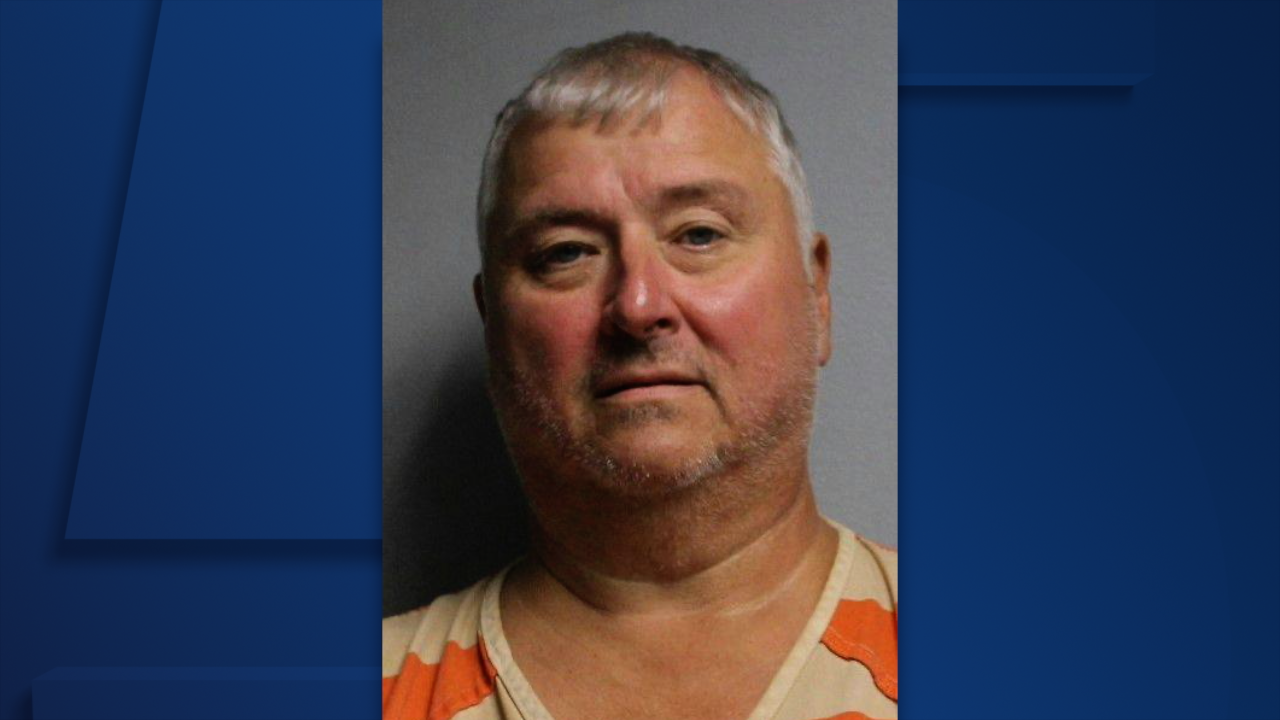
    Mugshot of former Ohio House Speaker Larry (Photo from the Butler County Jail.)

    BY:  Ohio Capital Journal

    Many politicians — especially conservatives — are loath to approve anything that could be construed as a tax increase.

    But since 2009, Ohio’s leadership has gone along with a number of questionable rate hikes demanded by regulated utilities. They’ve functioned in the same manner as tax increases — regressive ones with unsavory origins.

    There were new state charges earlier this month in Ohio’s massive FirstEnergy bribery scandal. They brought new attention to the issue, but that scandal is hardly the only time Ohio utilities have been able to impose questionable rate increases on their unsuspecting customers.

    In the scandal, Akron-based FirstEnergy paid more than $61 million in bribes in exchange for the 2019 passage and protection of a $1.3 billion ratepayer bailout. As a consequence, former House Speaker Larry Householder, R-Glenford, is serving a 20-year federal prison sentence.

    The state charges filed this month against two top FirstEnergy executives and the state’s top regulator pertain to those crimes. But they also describe more than a decade’s worth of additional shady increases in which payoffs played a central role.

    They accuse Sam Randazzo — whom Ohio Gov. Mike DeWine later appointed to be top regulator — of secretly helping FirstEnergy make huge, secret payments to powerful energy users. In exchange, the charges say, the industrial users dropped their opposition to rate increases FirstEnergy wanted to impose on all its customers.

    The payments might not have been illegal, but they functioned as kickbacks all the same.

    The Columbus Dispatch on Sunday reported that in 2008 then-Gov. Ted Strickland, a Democrat, tried to negotiate an end to the shady practice, but then-House Speaker Jon Husted killed the attempt, a former aide to Strickland told the paper. Husted is now DeWine’s lieutenant governor and is said to be planning a run in the 2026 Ohio Republican primary to be governor in his own right.

    Those increases are in addition to a whole slew of other rate hikes that Ohio’s erstwhile regulator has granted, but the state Supreme Court later ruled to be illegal. They total more than $1.5 billion worth altogether. Even though the gains have been ruled unlawful, utilities have gotten to keep them because the Public Utilities Commission of Ohio keeps granting such increases without building in a refund mechanism in the event they’re struck down.

    Jenifer French, DeWine’s appointment to replace the disgraced Randazzo, has repeated PUCO staff claims that such refund mechanisms are illegal. But the legal case seems dubious and watchdogs and lawmakers from both parties dispute it.

    So Ohio ratepayers have shelled out billions in illegal electric payments and untold millions more as the consequence of shady kickbacks to powerful companies. Those who allowed such payments are responsible for what is the functional equivalent of a tax increase, said Rob Moore, principal of Scioto Analysis, a Columbus firm that applies economics to questions of public policy.

    One reason they work the same as a tax is because one has little choice in 2024 about paying for electrical service, he said.

    “You can’t get away from it,” Moore said. “You’re going to have to pay something for electricity.” He later added, “That’s functionally no different from a tax.”

    And it’s one that falls extra-hard on the poor.

    Disconnected electricity and gas can destroy perishable food while also taking away the ability to cook it. For those who are struggling, finding money and getting to the store for one batch of food can already be a challenge. Having to do it again after arranging a reconnection can be even more difficult.

    Disconnection also can be used as a rationale for children’s services to break up a family, the Energy News Network reported in 2022.

    The news outlet reported that as part of a story about nearly 200,000 disconnections by Ohio electric utilities at the height of the coronavirus pandemic. Advocates asked the PUCO for relief, but the regulatory agency said it was powerless to act.

    Moore said that if you view utilities as the practical equivalent of a tax, it’s a regressive one.

    “In general, lower-income people pay more of their income on utilities than upper-income people,” he said.

    Moore cited a 2013 report by the U.S. Energy Information Agency saying that households in the bottom 20% of incomes made 6% of their total expenditures on home energy, while those in the top 20% paid half that.

    Energy-insecure households are likely to be poorer still. The agency last year reported that they paid 27% more in real terms than everybody else — $1.24 per square foot vs. 98 cents.

    As with the state and local tax burden, the extra costs Householder, the PUCO and others have imposed on Ohio seem to be falling most heavily on those least able to pay it.

    “Basically, he just levied a tax and lined his pockets with it,” Moore said of the former speaker.


    Marty Schladen
    MARTY SCHLADEN

    Marty Schladen has been a reporter for decades, working in Indiana, Texas and other places before returning to his native Ohio to work at The Columbus Dispatch in 2017. He’s won state and national journalism awards for investigations into utility regulation, public corruption, the environment, prescription drug spending and other matters.

    MORE FROM AUTHOR


  • [BREAKING] Ex-First Energy executives, Ohio utility regulator charged by state in bailout and bribery scandal

    [BREAKING] Ex-First Energy executives, Ohio utility regulator charged by state in bailout and bribery scandal

    From left to right: Former PUCO Chair Sam Randazzo, former FirstEnergy CEO Chuck Jones, former FirstEnergy VP Michael Dowling. (Mugshots from the Summit County Sheriff’s Office. Graphic by WEWS.)

    BY:  AND  Ohio Capital Journal

    Ohio law enforcement authorities on Monday filed numerous felony charges against two former First Energy executives and a former top utility regulator in what has been called the biggest bribery and money-laundering scandal in Ohio history.

    Ohio Attorney General Dave Yost announced scores of felony charges against a former regulator who also has been charged federally, and against two people who haven’t — former top executives for Akron-based FirstEnergy whom the company admitted paid more than $60 million in bribes between 2016 and 2020 in exchange for a $1.3 billion ratepayer bailout.

    Charged were Sam Randazzo, former chairman of the Public Utilities Commission. Already facing felony charges in federal court, the state indictment charges him with 22 more, including grand theft, bribery, and money laundering. The indictment accuses him of taking bribes from FirstEnergy from 2010 until just before he became chairman of the commission in 2019.

    Also charged were former FirstEnergy CEO Chuck Jones and Vice President Michael Dowling. Between them, they face 22 felony charges similar to those faced by Randazzo.

    “This indictment is about more than one piece of legislation,” Yost said Monday. “It is about the hostile capture of a significant portion of Ohio’s state government by deception, betrayal, and dishonesty.”

    The state charges that were announced Monday didn’t deal with much of the activity addressed in the federal case. They instead focused on the relationship between Jones, Dowling, and Randazzo between 2010 and early 2019, when they paid him $4.33 million just as he was becoming the state’s top utility regulator.

    The House Bill 6 scandal

    Back in 2019, former Ohio House Speaker Larry Householder took $61 million in bribes in exchange for legislation to give FirstEnergy a $1 billion bailout, named House Bill 6, all at the expense of the ratepayers.

    The scheme was revealed in three main ways — two separate whistleblowers and a phone wiretap.

    In March 2023, a jury found Householder and former Ohio Republican Party leader Matt Borges guilty beyond a reasonable doubt for their involvement in the racketeering scheme that left four men guilty and another dead by suicide.

    In late June that year, federal judge Timothy Black sentenced Householder to 20 years in prison. Borges got 5 years. The two surviving defendants took plea agreements early on, helping the FBI, and are still awaiting their sentencing. The feds are asking for 0-6 months for them.

    Until Monday, only federal indictments had been handed out.

    HB 6 mainly benefited FirstEnergy’s struggling nuclear power plants, but those provisions were later repealed. There are aspects of the bill still in place, though.

    The Ohio Valley Electric Corporation (OVEC) got a handout from the scheme. It expanded a bailout of the OVEC plants and required Ohioans to pay for two 1950s-era coal plants— one in the Southern area of the state and the other in Indiana. The main beneficiaries of this are American Electric Power Company (AEP), Duke Energy and AES Ohio.

    Despite this scandal becoming public years ago, ethics laws in the state have not changed to prevent schemes like this from happening.

    There are numerous bipartisan efforts to repeal HB 6 totally and to put forward ethics laws. None are going anywhere, it seems.

    Monday’s indictments

    AG Yost was joined by Summit County Prosecutor Sherri Bevan Walsh and Sheriff Kandy Fatheree for the announcement Monday.

    “The crimes committed by these individuals impacted the pocketbooks of every hard working Ohioan and further shook our faith in the institutions and organizations that we count on to represent us and to provide us with essential services,” Fatheree said. “Today, we take another important step in ensuring that justice is served for these crimes and that those who took advantage of the public’s trust are held accountable.”

    FirstEnergy as a company has already admitted in a deferred prosecution agreement to bribing public officials in Ohio, including a $4.3 million bribe to Randazzo. Jones and Dowling allegedly paid this to him.

    Randazzo pleaded not guilty to the federal charges against him in December.

    The Sustainability Funding Alliance of Ohio and IEU-Ohio Administration Company are also named in the filing. Randazzo controlled each of them, and they were allegedly shell companies created to further his criminal activity.

    Reactions

    While Monday was probably not the best day for Randazzo, Jones and Dowling, it was a great day for whistleblower Tyler Fehrman.

    Fehrman is the Republican operative-turned-FBI informant who is credited with exposing this mass public corruption at the Statehouse — and he is cheering the AG and Summit County for these arrests.

    “These guys deserve to have everything taken away from them,” Fehrman said. “They deserve it.”

    Borges attempted to bribe Fehrman, and threatened him, to be a part of the scandal — even at one point telling him that if he snitches, Borges would “blow up his house.”

    That conversation was actually set up and recorded by the feds. Instead of staying quiet, Fehrman testified, helping the jury to return guilty verdicts in the federal trial.

    Fehrman ended up having to change careers and flee the state due to fears of retaliation — and because he was ostracized — but now he gets to watch as the scheme continues to unravel.

    “You can hide your actions in the dark for a little bit,” Fehrman said Monday. “But the sun always rises and the truth always comes out. Every time one of these guys gets indicted, especially the people that made it possible for Matt and Larry to have the opportunity to do what they did to me — to see them get in trouble, it’s extremely vindicating.”

    He agreed with Yost’s statement that there can be no justice without holding the check-writers and the masterminds accountable.

    Case Western Reserve University law professor Mike Benza believes these charges are going to be hard to fight. When asked the best possible scenario for them, other than pleading guilty, he said their best bet could be to argue this is politics as usual.

    “It seems that the focus from the defense side is going to be much like the focus from Householder and Borges — this is just how things get done in Columbus,” Benza said. “This is just the normal sausage-making of public policy and it may not be pretty and you may not like it, but this is the reality and it doesn’t equal corruption.”

    Clearly, that wasn’t a winning argument in federal court.

    Part of the reason why it may have worked so poorly in Black’s federal courtroom is because Householder went against the advice of the vast majority of criminal defense attorneys and decided to testify in his defense.

    The now-convicted felon used the bribe money to put himself and his allies into power, demolishing and threatening anyone in his path, as well as paying off credit card debt and renovations to his home in Florida.

    Benza believes Randazzo, Jones, and Dowling are facing difficult days ahead.

    “Randazzo is probably going to be looking at dying in prison,” Benza responded. “Jones and Dowling are probably in that same boat.”

    Ferhman is hoping for more indictments, including high-profile names.

    “The clock is ticking for the other people that were involved,” Fehrman said.

    He named Gov. Mike DeWine Lt. Gov. Jon Husted as people of interest for him.

    DeWine has been complying with a subpoena he received in a civil case connected to the scandal, he said.

    FirstEnergy investors are suing for being negatively impacted financially by the scandal. They have subpoenaed documents from DeWine, and they’re scheduling a sworn deposition with Husted.

    In a one-on-one interview with the governor, DeWine was asked if he was nervous about the scandal, or, more importantly — if was he worried for Husted. DeWine said no to both.

    Randazzo has been named as the mastermind behind HB 6, due to him being one of the creators of it — according to the feds. But DeWine was how he came into power.

    DeWine was asked in the same interview if he regretted naming Randazzo the state’s top utility regulator.

    “Oh, look, if I knew what I know now, if I knew that — I certainly would not have appointed Sam Randazzo to that position,” DeWine responded.

    DeWine said he was the best person for the job, claiming that he wasn’t aware that Randazzo was FirstEnergy’s handpicked man.

    “While our office was not privy to the indictment and have not yet reviewed it, the indictment alleges very serious acts,” DeWine’s spokesperson Dan Tierney said Monday afternoon. “Our office has full faith in the criminal justice system to adjudicate these serious allegations in an appropriate manner.”

    ________________

    Marty Schladen
    MARTY SCHLADEN

    Marty Schladen has been a reporter for decades, working in Indiana, Texas and other places before returning to his native Ohio to work at The Columbus Dispatch in 2017. He’s won state and national journalism awards for investigations into utility regulation, public corruption, the environment, prescription drug spending and other matters. MORE FROM AUTHOR

    Morgan Trau
    MORGAN TRAU

    Morgan Trau is a political reporter and multimedia journalist based out of the WEWS Columbus Bureau. A graduate of Syracuse University’s S.I. Newhouse School of Public Communications, Trau has previously worked as an investigative, political and fact-checking reporter in Grand Rapids, Mich. at WZZM-TV; a reporter and MMJ in Spokane, Wash. at KREM-TV and has interned at 60 Minutes and worked for CBS Interactive and PBS NewsHour. MORE FROM AUTHOR

  • Ohio Gov. Mike DeWine and Lt. Gov. Jon Husted subpoenaed in civil suit over bailout scandal

    Ohio Gov. Mike DeWine and Lt. Gov. Jon Husted subpoenaed in civil suit over bailout scandal

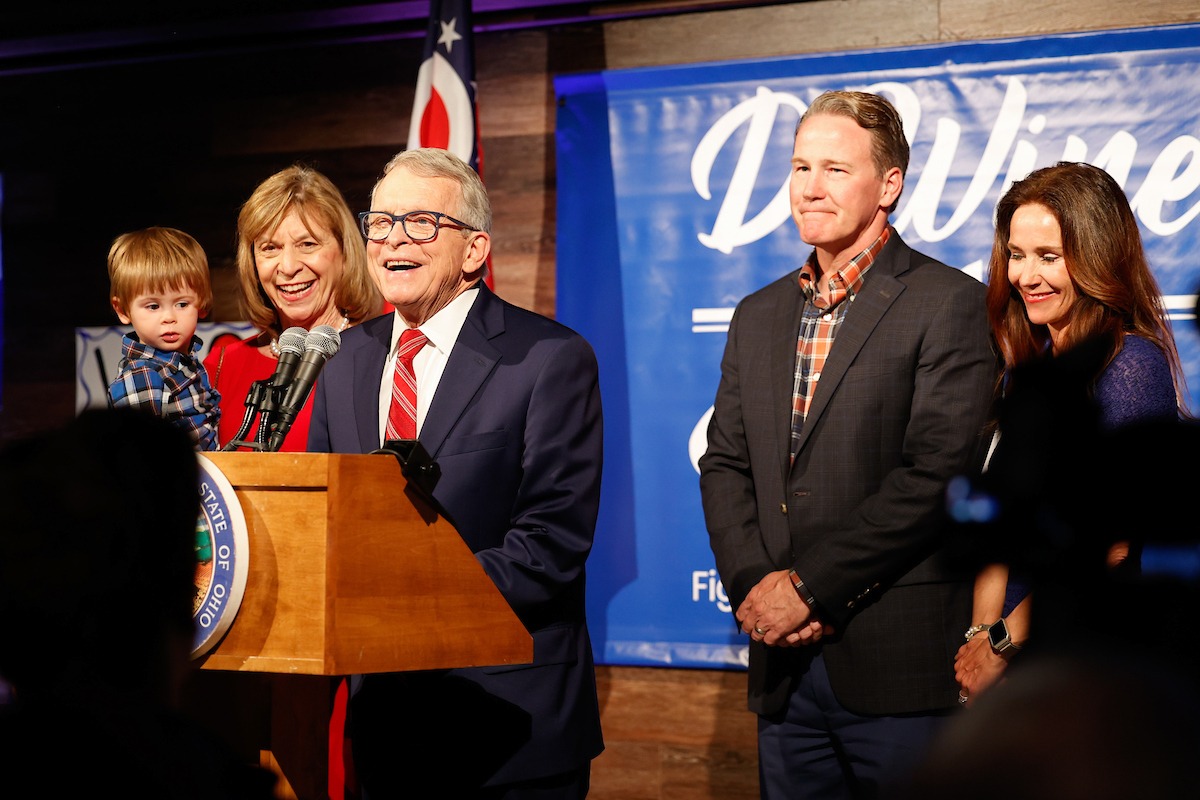
    COLUMBUS, OH — MAY 03: Ohio Gov. Mike DeWine joined on stage by First Lady Fran DeWine, grandson Calvin, Lt. Gov. Jon Husted and Second Lady Tina Husted to celebrate DeWine winning the Republican Party nomination for governor in the Ohio primary election, May 3, 2022, at the DeWine-Husted campaign headquarters, Columbus, Ohio. (Photo by Graham Stokes for the Ohio Capital Journal. Republish photo only with original article.)

    BY:  

    Plaintiffs in a civil suit related to a massive bribery and money-laundering scandal have subpoenaed documents from Ohio Gov. Mike DeWine and they’re scheduling a sworn deposition with Lt. Gov. Jon Husted.

    There have been four criminal convictions so far in the scandal and U.S. Attorney Kenneth L. Parker has said the investigation is continuing. However, there is no indication that DeWine or Husted is an object of it.

    Even so, members of the DeWine-Husted administration were significant players in the scandal and DeWine’s nominee to head up the Public Utilities Commission of Ohio could be a target of the probe.

    The demands for documents and testimony come in a class-action suit that big investors in Akron-based FirstEnergy filed against the company over its involvement in the scheme. Between 2017 and 2020, the company paid out more than $60 million to gain a $1.3 billion ratepayer bailout that was mostly intended to prop up two failing nuclear plants in Northern Ohio.

    Among those already convicted are former Ohio House Speaker Larry Householder, R-Glenford, who was sentenced to 20 years in prison for his role in what federal authorities said might be the biggest bribery and money-laundering scheme in Ohio history. Former state Republican Chairman Matt Borges in June was sentenced to five years for his role.

    However, others who played prominent roles in the scandal are yet to be charged.

    They include former FirstEnergy CEO Chuck Jones and former Vice President Michael Dowling, who directed the money to make Householder speaker in 2018 and then pass and and protect House Bill 6, the corrupt bailout legislation. They also include Sam Randazzo, DeWine’s first nominee to chair the Public Utilities Commission of Ohio.

    Jones, Dowling and Randazzo deny wrongdoing, but in a deferred prosecution agreement, FirstEnergy said Jones and Dowling paid Randazzo a $4.3 million bribe just as DeWine was selecting Randazzo to be FirstEnergy’s top regulator. In that post, Randazzo helped write the corrupt bailout bill and he helped FirstEnergy avoid a scheduled audit known as a “rate case” that was slated for 2024.

    Large investors such as pension and investment funds are suing FirstEnergy over the scandal, arguing that the company violated securities laws by not disclosing its reckless conduct. And then, when the feds made arrests in July 2020, its stock value plummeted — as did their investments.

    The plaintiffs in the civil case have been battling with Randazzo — who is not a defendant — since April over whether he has complied with judges’ orders to produce documents relevant to the $4.3 million in FirstEnergy money he received just before he began regulating the company.

    A magistrate judge and a special master in the case have consistently rebuked Randazzo for not cooperating more fully, with the most recent instance coming last week. Randazzo appealed up the food chain, asking Magistrate Judge Kimberly Jolson not to hold him to a disclosure order from the special master, Shawn K. Judge.

    The plaintiffs in the civil case asked Jolson to make Randazzo comply with Judge’s order to cough up more information. As part of the filing, they provided a table of depositions they’ve scheduled or are in the process of scheduling. To prepare for some, they presumably could use the information and documents they’re demanding of Randazzo.

    One deposition they’re scheduling is of Randazzo himself, which has a “target period” of March 4 to March 29.

    Another is of Husted, the lieutenant governor, which has a target period of Feb. 28 to March 19. Dave Anderson of the Energy and Policy Institute first flagged the document that listed Husted’s deposition.

    Hayley Carducci, Husted’s spokeswoman, on Tuesday said Husted is cooperating.

    “We’re aware of the civil investor lawsuit against First Energy,” she said in an email. “The Lt. Governor has already provided public records pertaining to this, and we will continue to comply as we have done in the past. There’s no new information to disclose.”

    As with Randazzo, Husted is not a defendant in the civil case.

    DeWine also has recently received a subpoena for documents in the civil case.

    “We’re reviewing it with counsel for what can be provided,” Press Secretary Dan Tierney said in an interview. “Our office is subject to the public records act and in a sense this is no different.”

    Tierney pointed out a distinction between the class-action suit and the case which has already convicted Householder and Borges and proceedings that could charge others.

    “This is a civil case and anybody has a right to bring a civil case if they want,” Tierney said of the proceeding in which the governor’s documents had been subpoenaed. “The civil process is where people say they’ve been damaged and they want the court to award damages. That is far different than the criminal case in which the federal government said public integrity laws had been violated.”

    He added, “It still remains in the criminal case that nobody in our office or the lieutenant governor’s office has been questioned or subpoenaed or had any legal filings like that.”

    Even in the absence of such requests, DeWine and his administration were involved several ways in the drafting and passage of the corrupt utility bailout:

    • He nominated Randazzo to head up the PUCO a day after it was publicly revealed that FirstEnergy had paid a group controlled by Randazzo millions of dollars over the years. “Forced DeWine/Husted to perform battlefield triage,” FirstEnergy CEO Jones said in a text message to Dowling. “It’s a rough game.”
    • While he was still a FirstEnergy lobbyist, Dan McCarthy set up Partners for Progress, a 501(c)(4) “dark money” group through which Jones, Dowling and others funneled millions into the conspiracy. DeWine hired McCarthy as his legislative affairs director and kept him in that post for a year after Householder and the others were arrested.
    • HB 6, the bailout legislation, was highly controversial as Householder jammed it through the legislature, other lawmakers testified at his trial. Even so, DeWine signed it the day it passed and when Householder was arrested, the governor’s first position was to keep the law in place — and part of it still is. DeWine reversed himself a day later, calling to repeal and replace the subsidies.

    Morgan Trau contributed to this report.


    Marty Schladen
    MARTY SCHLADEN

    Marty Schladen has been a reporter for decades, working in Indiana, Texas and other places before returning to his native Ohio to work at The Columbus Dispatch in 2017. He’s won state and national journalism awards for investigations into utility regulation, public corruption, the environment, prescription drug spending and other matters.

    MORE FROM AUTHOR

  • More signs that criminal investigation into Ohio utility bailout continues

    More signs that criminal investigation into Ohio utility bailout continues

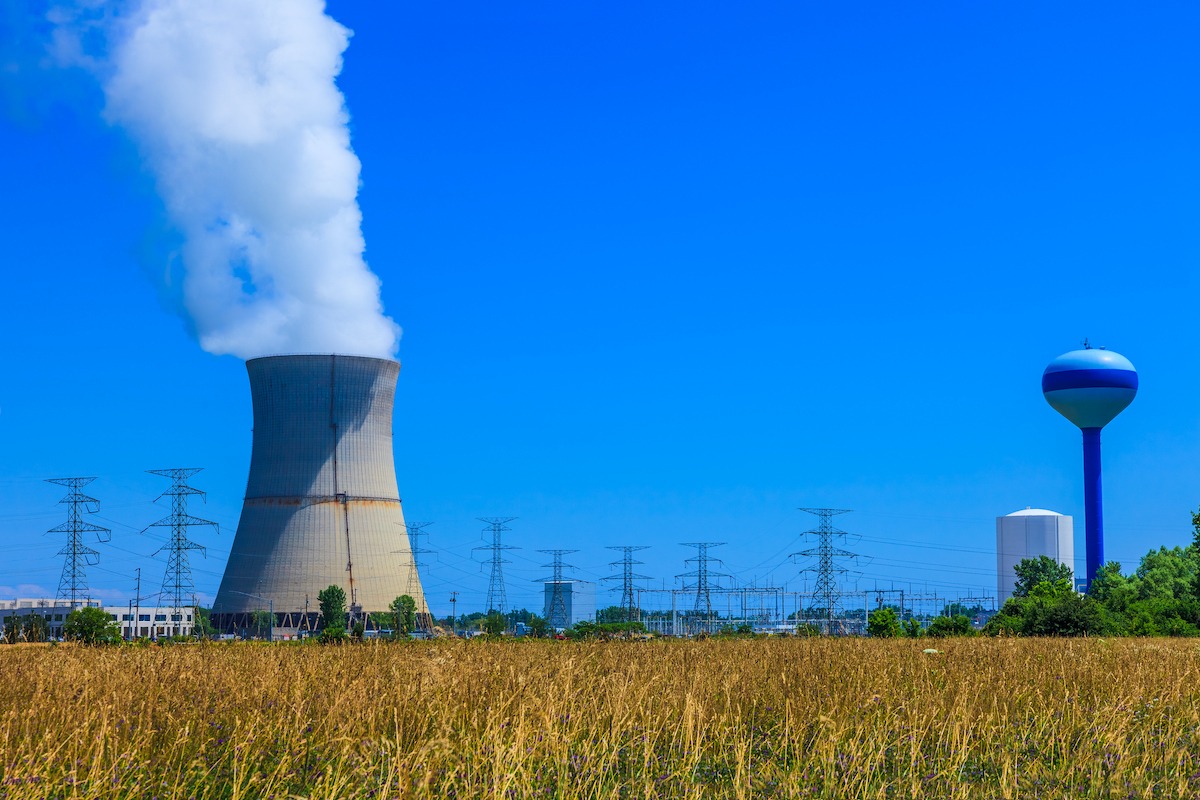
    Davis-Besse Nuclear Power Station with electricity pylons, Ohio. Getty Images.

    BY:  Ohio Capital Journal

    Five have been charged and four have been convicted in a massive bribery and money-laundering scandal, but there were more signs this week that the federal criminal investigation is continuing.

    In court documents filed in a separate case on Monday, a special master said that a major player in the conspiracy — Akron-based FirstEnergy — continues to cooperate with federal prosecutors. The same documents order the major beneficiary of the conspiracy, a former FirstEnergy subsidiary, to do more to cooperate in a federal class-action suit.

    Former House Speaker Larry Householder, R-Glenford, and former GOP Chairman Matt Borges in June were respectively sentenced to 20 and five years in federal prison for their roles in the conspiracy. Two others have pleaded guilty and await sentencing, while a third who was charged died by suicide.

    In the conspiracy, FirstEnergy and its then-subsidiary paid more than $60 million from 2017 to 2019 to make Householder speaker so he could pass and protect a $1.3 billion bailout. Of that sum, the vast majority was intended to prop up two nuclear plants owned by the subsidiary, then called FirstEnergy Solutions.

    Over the course of a six-week trial in Cincinnati early this year, prosecutors put on evidence that FirstEnergy found itself in a precarious state because its heavy investments in coal and nuclear-powered generation were being undercut by cheap natural gas. Top executives with the company — including then-CEO Chuck Jones and Vice President Michael Dowling — desperately sought a ratepayer bailout to prop up the nuclear plants so they could spin them off and get most of the liability associated with closing and cleaning them up off their books.

    In 2019, as Householder was shepherding the bailout through the legislature, FirstEnergy Solutions was in bankruptcy and emerged in February 2020. It had a new name, Energy Harbor, and it was no longer a subsidiary of FirstEnergy.

    Five months later, the FBI arrested Householder and the others. Then large pension and investment funds sued FirstEnergy, saying the reckless, undisclosed conduct of its top executives caused investors to lose billions when that conduct hit the public fan.

    FirstEnergy signed a deferred prosecution agreement admitting wrongdoing and agreeing to pay a $230 million penalty to the government. But that didn’t get it off the hook in the multiple civil suits it’s faced, including the class action filed in the Southern District of Ohio by large investors.

    As part of the suit, those investors have been battling FirstEnergy for communications and other information that might implicate officials other than Jones and Dowling, who were fired.

    They’re also battling Sam Randazzo. He isn’t named in the suit, but FirstEnergy said he took a $4.3 million bribe from Jones and Dowling just as Gov. Mike DeWine nominated Randazzo to chair the Public Utilities Commission of Ohio at the beginning of 2019. The class-action plaintiffs say Randazzo might be sitting on text messages and other communications relevant to the conspiracy.

    Jones, Dowling and Randazzo deny criminal wrongdoing in the scandal, but U.S. Attorney Kenneth L. Parker in June said that the investigation was continuing. On Monday, Special Master Shawn Judge also said in a court filing that the investigation continues — and that FirstEnergy is cooperating.

    “During this jury trial, the government highlighted Jones’s and Dowling’s purported relationships with Householder and involvement in the conspiracy,” Judge wrote, referring to the criminal trial earlier this year. “And multiple representations before the Court suggest that FirstEnergy’s cooperation with government investigations is ongoing.”

    Judge is helping to referee the numerous discovery disputes in the class-action case. In this instance, he ordered Energy Harbor to provide almost everything the FirstEnergy investors wanted.

    As a now-independent company, Energy Harbor said it’s not a defendant in the civil case, so it shouldn’t be put to the trouble and expense to provide the information the pension and investment funds are demanding.

    But Judge noted that while it was still a FirstEnergy subsidiary, the company “​​contributed $43 million of the $60 million paid to Householder and his affiliates in exchange for the official action of passing (the bailout law) and defending it from a repeal referendum.”

    In addition, Judge wrote, the subsidiary’s lobbyist, Juan Cespedes, helped direct some of those funds and pleaded guilty to his role in the racketeering conspiracy.

    Judge then ordered Energy Harbor to provide the plaintiffs with the information they requested, but reduced the time period the required documents span by several months.


    Marty Schladen
    MARTY SCHLADEN

    Marty Schladen has been a reporter for decades, working in Indiana, Texas and other places before returning to his native Ohio to work at The Columbus Dispatch in 2017. He’s won state and national journalism awards for investigations into utility regulation, public corruption, the environment, prescription drug spending and other matters.

    MORE FROM AUTHOR

  • OH AG forces Dollar General to pay up — by supporting food banks

    OH AG forces Dollar General to pay up — by supporting food banks

    The Dollar General store in Loveland, Ohio

    BY:  – Ohio Capital Journal

    Ohio Attorney General Dave Yost on Thursday announced that Dollar General would pay $750,000 to Ohio’s food banks.

    It was part of $1 million the chain — which typically locates itself in underserved neighborhoods — is paying to settle allegations that it ripped off customers by posting one price on store shelves and then charging more at the cash register.

    Auditors in Butler County found that one store there was engaged in the practice 88% of the time, and county auditors elsewhere in Ohio also found such activity, but less frequently.

    “Most people don’t shop at Dollar General because they have a lot of extra money to spend,” a statement from Yost’s office quoted him as telling a gathering of county auditors in Westerville Thursday. “So when a bottle of shampoo that should cost $1 costs $2 at the checkout, that’s a real thing. And you all brought it to light.”

    In signing the settlement, Goodlettsville, Tennessee-based Dollar General stipulated that it wasn’t admitting wrongdoing. But critics of the company, which has 980 stores in Ohio, say it does plenty of harm to poor communities — both out in the country and in big cities.

    In a June event hosted by the Institute for Self Reliance, panelists said that consolidation in the grocery sector — including by Dollar General — is driving independent stores out of poor neighborhoods and they’re taking healthy foods like fresh produce with them.

    One member of the panel, Rev. Dr. Donald Perryman of the Center of Hope Community Baptist Church in Toledo, said that police there compiled statistics indicating that the presence of such dollar stores increased crime. A September report by CBS News found similar problems nationwide.

    Workers at the stores aren’t just vulnerable to crime. Retail Dive this summer reported that Dollar General had racked up $21 million in fines from the U.S. Occupational Safety and Health Administration since 2017 and had paid just $4 million so far.

    A February report by The Institute for Self Reliance also told of what it called predatory, anticompetitive practices dollar stores use to drive traditional grocers away. It described how a small grocer called Dave’s Market was left struggling to survive in the Collinwood neighborhood of Cleveland.

    Seven Dollar General and Family Dollar stores popped up within a two-mile radius selling the packaged, processed foods that Dave’s also depended on for much of its profit. But the dollar stores didn’t sell the fresh produce and meat that Dave’s offered. The store closed and took those offerings with it last year.

    Then there’s the attorney general’s lawsuit, filed last November, claiming that some Dollar General stores were ripping off customers by pricing items one way on the shelves and then charging more when it came time to pay. Yost on Thursday told the county auditors that each of Ohio’s 88 counties has a Dollar General and food banks in each would get $1,000 for that first store. The remainder of the $750,000 would be divided up based on the number of stores a county has, he said.


    Marty Schladen
    MARTY SCHLADEN

    Marty Schladen has been a reporter for decades, working in Indiana, Texas and other places before returning to his native Ohio to work at The Columbus Dispatch in 2017. He’s won state and national journalism awards for investigations into utility regulation, public corruption, the environment, prescription drug spending and other matters.

    MORE FROM AUTHOR

  • Pharmacy middleman grants huge bonuses for winning business meant to help the poor

    Pharmacy middleman grants huge bonuses for winning business meant to help the poor

    BY:  Ohio Capital Journal

    Medicaid might be a taxpayer-funded health program for the poor, but that doesn’t mean others aren’t getting rich off of it — including employees of a company the state is suing on antitrust grounds.

    Several employees of drug middleman Express Scripts last year raked in bonuses of $750,000 each for getting the business of a managed-care company that depends on Medicaid for the bulk of its business.

    In other words, in addition to their already-high pay, they received bonuses that were 18 times the average American’s annual pay just for landing a contract.  And that contract is with a company that has already paid out $88.3 million to settle claims that it had defrauded the Ohio Medicaid program.

    It might be striking to the average taxpayer that people with huge corporations are profiting so lavishly off of programs for the poor. But one of the Express Scripts employees — who also helped prepare the company for a federal antitrust investigation — said the bonuses were “well earned.”

    Ohio Attorney General Dave Yost in March sued Express Scripts and several other healthcare companies under the Valentine Act — Ohio’s antitrust law — claiming that the companies participate in  “a complex ‘pay to play’ rebate system that, perversely, pushes manufacturers to increase drug prices in order to be placed on, or receive, preferred placement on PBM formularies.”

    As a pharmacy benefit manager, or PBM, St. Louis-based Express Scripts represents health insurers — including parent company Cigna — in drug transactions. It decides which drugs are covered and uses that leverage to extract rebates from drug manufacturers who want to get their products on its “formularies,” or lists of covered drugs.

    Express Scripts also creates networks of pharmacies and it decides how much to reimburse them for the drugs they dispense. And because it keeps much of the data about rebates and reimbursements secret, it’s hard to know how much they’re passing along to insurers and pharmacies and how much they’re pocketing.

    It’s sure to be a lot. Two thirds of Cigna’s $110 billion in revenue last year came from its Express Scripts subsidiary, the PBM’s former president said in a sworn statement in June.

    The executive, Amy Bricker, resigned her post earlier in January to take another with another vast healthcare player, CVS.

    That company owns another huge PBM, CVS Caremark, and between it, Express Scripts and OptumRx (part of UnitedHealth) they control the prescription coverage of more than 70% of the insured people in the United States.

    As part of her sworn statement, Bricker stuck to the company line.

    “As a PBM, Express Scripts’ goal is to reduce the cost of prescription medication for its clients—the Payor Entities,” she said. “As President of Express Scripts, I was responsible for Express Scripts’ relationships with its (client insurance companies) as well as the tools/levers utilized to lower the cost of prescription medications.”

    However, Yost and many others maintain that the big PBMs actually force drugmakers to raise list prices in order to provide ever-growing rebates to PBMs and there’s been some research to support that. And there’s the fact that an investigation found that in 2017, CVS Caremark and OptumRx billed Ohio Medicaid $223 million more for prescription drugs than they paid the pharmacies that had purchased and dispensed them.

    Those claims and others last year prompted the Federal Trade Commission to open a major, ongoing investigation into the big PBMs.

    Bricker said that while she was still president of Express Scripts, one of her duties was to help the company respond to the FTC investigation. But the whole reason she was making the statement centered around another major enterprise she led — acquiring the business of Centene.

    That company, also based in St. Louis, is the largest Medicaid managed-care company in the United States. It acts as health insurer on behalf of states as they administer the federal-state health program for the poor.

    When it acts as insurer, Centene hires PBMs to handle drug transactions. And in that capacity, the company has had its problems in Ohio and elsewhere. Yost sued Centene in early 2021 on claims that it used two of its own PBMs to bilk Ohio Medicaid out of tens of millions.

    Within months, the company agreed to pay Ohio $88.3 million to settle the suit — and it announced that it was setting aside more than $1 billion to settle similar claims with more than 20 other states that hadn’t even sued it. Centene later announced that it would exit the PBM business.

    Centene had used CVS Caremark as its PBM until last November, when it announced that it was moving $35 billion in prescription business on behalf of 20 million clients to Express Scripts.

    Centene manages care in health sectors other than Medicaid, such as Medicare and for prisons. But last year it derived almost two-thirds of its revenue — or $94 billion — from its Medicaid business, according to the company’s financial statements.  So roughly $23 billion of the new revenue Express Scripts is getting from the contract is coming from tax-funded health programs for the poor.

    As president of Express Scripts, Bricker led the effort to snatch that business away from CVS. But early this year after Express Scripts parent company Cigna didn’t make her part of its top executive team, Bricker announced that she was leaving and going to work for… CVS.

    Cigna and Express Scripts sued, citing a non-compete clause and expressing fears that Bricker might use insider knowledge to help win Centene’s business back for CVS. At least for now, a federal judge in Missouri has stopped Bricker from going to work for her erstwhile employer.

    The back-and-forth court filings shed some light on how prescription drugs and taxpayer-funded health programs for the poor are used to pad the paychecks of the very rich.

    In suing, Cigna cited the “high six-figure spot bonus” it gave Bricker after she got the Centene contract and it cited other big awards she received since 2019. The company is demanding that she repay $1.5 million in restricted stock and stock options that she received.

    For her part, Bricker didn’t betray any sense of irony in her response as she defended the huge “spot bonus” she got for winning a big book of mostly Medicaid business.

    “The Amended Complaint specifically references Express Scripts recent successful bid for the Centene contract, and that I earned a significant, one-time bonus for my integral role in achieving that business success,” she wrote in her sworn statement. “The bonus was $750,000. The context Cigna omits from its Amended Complaint is that the contract is worth billions of dollars to Cigna over its five-year term. Several members of the Express Scripts team received this one-time bonus which was appropriate given the magnitude of the contract and well earned.”

    Cigna didn’t respond when asked how many such bonuses it awarded or what Bricker’s total compensation was. Nor did it respond when asked how it justified them, given that most of the new business ultimately is from taxpayer dollars intended to provide healthcare for poor people.

    There’s a reason why Bricker might think a $750,000 spot bonus should be routine for a job well done. It pales in comparison to what the top bosses in her industry get.

    Cigna CEO David Cordani and CVS CEO Karen Lynch each were paid more than $20 million last year, while Centene CEO Sarah London was paid more than $13 million. For perspective — and assuming a 70-hour workweek — the lowest-paid of those executives gets in a day about as much as the median worker in the United States earns all year.


    Marty Schladen
    MARTY SCHLADEN

    Marty Schladen has been a reporter for decades, working in Indiana, Texas and other places before returning to his native Ohio to work at The Columbus Dispatch in 2017. He’s won state and national journalism awards for investigations into utility regulation, public corruption, the environment, prescription drug spending and other matters.

    MORE FROM AUTHOR

  • FirstEnergy seeks $1.4 billion more from Ohio ratepayers. Watchdog objects

    FirstEnergy seeks $1.4 billion more from Ohio ratepayers. Watchdog objects

    Getty Images

    BY:  Ohio Capital Journal

    Even as its former top executives await possible criminal charges for gouging ratepayers, Akron-based FirstEnergy is seeking a $1.4 billion rate increase. The state’s consumer watchdog objects, saying the company’s profits are higher than normal and that it should use a more thorough process to prove that it really needs the money.

    The electric utility is seeking the increase as part of its “electric security plan” — a package of investments aimed at improving reliability and efficiency.

    “Our plan will build on the significant enhancements we’ve made to reinforce the grid against progressively stronger storms,” a statement on the FirstEnergy website quotes Patricia Mullin, acting president of FirstEnergy’s Ohio operations, as saying. “We’re committed to making the right investments to ensure a modern, more reliable grid while also keeping electric bills affordable, and we will continue working with interested stakeholders to ensure an open and thorough review of our proposal.”

    However, the state’s consumer watchdog, the Ohio Consumers’ Counsel, is objecting to the proposal on several grounds. For example, OCC contends that FirstEnergy is already highly profitable and shouldn’t need more of the ratepayers money.

    That’s not true, FirstEnergy spokeswoman Lauren Siburkis said in an email.

    “Our most recently disclosed return on equity in Ohio (shared during the third quarter earnings call) shows that to be 6.2%, which is much lower than the recently authorized returns in Ohio of 9.5% to 10%,” she said.

    However, the company, which operates in several states, appears to be doing quite well overall. In its third-quarter financial disclosure, the company reported that so far this year its per share earnings are up 17% over last year.

    OCC, the consumer watchdog, also objects to the mechanism through which FirstEnergy is seeking the rate hike. It’s asking the Public Utilities Commission of Ohio to approve “riders” in a process that isn’t as rigorous as a full “rate case.” That’s when regulators and others scrutinize many aspects of a utility’s operations and its books to ensure they’re not unfairly profiting from the monopolies that regulators grant them.

    FirstEnergy has abused the rider process in the past. As part of a huge bribery and money-laundering scandal, the company in 2019 received a “decoupling rider” that allowed the company to bill customers tens of millions to cover shortfalls in revenue.

    Chuck Jones, then the company’s CEO, boasted to investors that the rider made the company “somewhat recession-proof.” The rider was repealed after FirstEnergy admitted wrongdoing in a deferred prosecution agreement.

    OCC is arguing that going through a full rate case is the best way to prevent mischief and inefficiency.

    “Reliance on an excessive number of trackers, riders and other special regulatory mechanisms decreases a utility’s incentive to manage all aspects of its business in a cost-effective manner,” regulatory auditing expert Greg Meyer said in testimony to the regulatory commission that OCC sent to reporters last week. “FirstEnergy seems to ignore the fact that under its proposed (electric security plan), FirstEnergy’s consumers will be required to pay for energy-efficiency programs, demand-response programs and the multiple riders, in between base rate cases. These charges will add costs to the bills of FirstEnergy’s consumers without a review of all the relevant factors of FirstEnergy’s operations.”

    Asked why FirstEnergy didn’t seek the rate hike as part of a full rate case, Siburkis seemed to say FirstEnergy couldn’t wait six months, when one is scheduled.

    “The settlement we reached in 2021, which received the PUCO’s approval and delivered $306 million in customer benefits, explicitly requires us to submit the rate case in May 2024, no sooner and no later,” she said.

    That settlement was a deferred prosecution agreement in which FirstEnergy ponied up $230 million in fines and said that in addition to other bad acts, Jones and former Vice President Michael Dowling bribed Sam Randazzo — Gov. Mike DeWine’s first appointment to chair the PUCO — $4.3 million in exchange for regulatory and other favors.

    Jones and Dowling were fired and Randazzo resigned. All three men deny wrongdoing, but in court filings, they have acknowledged that federal law enforcement is investigating their conduct.

    Four already have been convicted over their participation in the scandal. Former Ohio House Speaker Larry Householder in June was sentenced to 20 years in federal prison for shepherding the corrupt utility bailout through the legislature. Former state GOP Chairman Matt Borges was sentenced to five years for playing a lesser role, and two others have pleaded guilty and await sentencing.

    For six weeks early this year, federal prosecutors put on a mountain of evidence in a Cincinnati courtroom about how FirstEnergy spent more than $60 million helping Householder bribe and bully through a $1.3 billion utility bailout that benefitted that company far more than any other utility.

    Now it’s asking for almost the same amount without going through the most rigorous regulatory scrutiny. Asked why ratepayers should trust FirstEnergy’s claims, Siburkis said the company has turned the page on its ugly recent past.

    “FirstEnergy has accepted responsibility for its actions related to House Bill 6 and has taken significant steps to put past issues behind us,” she said. “Today, we are a different, stronger company with a sound strategy and focused on a bright future.”


    Marty Schladen
    MARTY SCHLADEN

    Marty Schladen has been a reporter for decades, working in Indiana, Texas and other places before returning to his native Ohio to work at The Columbus Dispatch in 2017. He’s won state and national journalism awards for investigations into utility regulation, public corruption, the environment, prescription drug spending and other matters.

    MORE FROM AUTHOR

  • Despite one response, recent polling indicates abortion-rights amendment has a good chance

    Despite one response, recent polling indicates abortion-rights amendment has a good chance

    BY:  Ohio Capital Journal

    A poll released last week received attention because a response to one of its questions. It seemed to show a close contest for an abortion-rights amendment that’s on the ballot next Tuesday.

    But a closer look at that and another recent poll indicate that opponents of the amendment still face an uphill fight.

    Issue 1 would build abortion rights into the Ohio Constitution up to the point of fetal viability outside the pregnant person’s body. It comes after the U.S. Supreme Court last year overturned Roe v Wade, clearing the way for enforcement of harsh state abortion limits already on the books.

    In Ohio’s case, that means banning the overwhelming majority of abortions after about six weeks of pregnancy — even when the pregnancy is the result of rape or incest.

    As horror stories stemming from enforcement of such laws proliferated, state ballot measures protecting abortion rights have been on an unbroken winning streak, with a measure last year carrying conservative Kansas by a gobsmacking 19-point margin.

    Those results leave abortion opponents desperate for a win and abortion-rights advocates eager to continue building momentum.

    So, when Ohio Northern University last week released a poll, one of its findings drew keen interest. It asked whether respondents agreed with the summary language of Issue 1 that will appear on the ballot. While that might sound like a technicality, the exact wording that will be on the ballot is important.

    In August, Secretary of State Frank LaRose, an abortion opponent, led a split Ohio Ballot Board in adopting a ballot “summary.” Not only is the “summary” roughly the same length as the amendment itself, it differs from the amendment in ways that critics say are intended to mislead.

    For example, it substituted the term “unborn child” for “fetal viability.”

    In an attempt to capture the effect that might have on the vote, pollsters at Ohio Northern asked some respondents whether they agreed with that amendment language and asked others whether they agreed with the language proposed by the League of Women Voters. The disparity was big.

    An overwhelming 68% agreed with the amendment as described by the League of Women Voters. But that number shrank to just 52% for the respondents who were asked about the language that will actually be on the ballot, thanks to LaRose and two others on the Ballot Board.

    But what does that mean practically?

    “Change in Ballot language may have big effect on support for Issue 1,” reads the title of that section of the Ohio Northern poll report.

    However, the same poll found that 65% of respondents think that abortion should be legal in most circumstances and 57% believed the Supreme Court shouldn’t have overturned Roe v Wade.

    More to the point, 70% said they had heard “quite a lot about Issue 1” and another 24% said they had heard some about it. That means that almost all respondents know something about the matter and presumably many will have formed opinions before going into the voting booth and seeing the Ballot Board’s language.

    “If this were a more obscure issue, the language would matter vastly more,” said University of Cincinnati political scientist David Niven. “But when this is the headline act of the entire election, almost no one is going to the polls to read the language on the ballot and make up their mind there.”

    If, as their detractors claim, LaRose and two others on the ballot board intended to dampen support for Issue 1 by using the language they did, they picked the wrong topic, Niven said.

    “There’s a boatload of good research that says language matters,” he said. “But it’s entirely based on the idea that you’re confronting this issue based on the language presented to you rather than confronting the issue based on deeply held beliefs.”

    The idea that the controversial ballot language will crash up against already-formed opinions also seems bolstered by another of the poll’s findings: When asked how they planned to vote on Issue 1, 60% said yes.

    That jibes with the results of the Baldwin Wallace University Ohio Pulse Poll released earlier in October. In it, 58% said they would vote in support of Issue 1.

    However, these are just polls — imperfect predictors in the best of circumstances. The fates of Issue 1, marijuana-legalizing Issue 2 and other matters on the ballot depend heavily on what happens Tuesday. That’s because more than 52% of respondents to the Baldwin Wallace poll said they’d wait until Election Day to cast their ballots.


    Marty Schladen
    MARTY SCHLADEN

    Marty Schladen has been a reporter for decades, working in Indiana, Texas and other places before returning to his native Ohio to work at The Columbus Dispatch in 2017. He’s won state and national journalism awards for investigations into utility regulation, public corruption, the environment, prescription drug spending and other matters.

    MORE FROM AUTHOR

  • LaRose uses state newsletter to promote Senate campaign

    LaRose uses state newsletter to promote Senate campaign

    Loveland, Ohio via Ohio Capital Journal

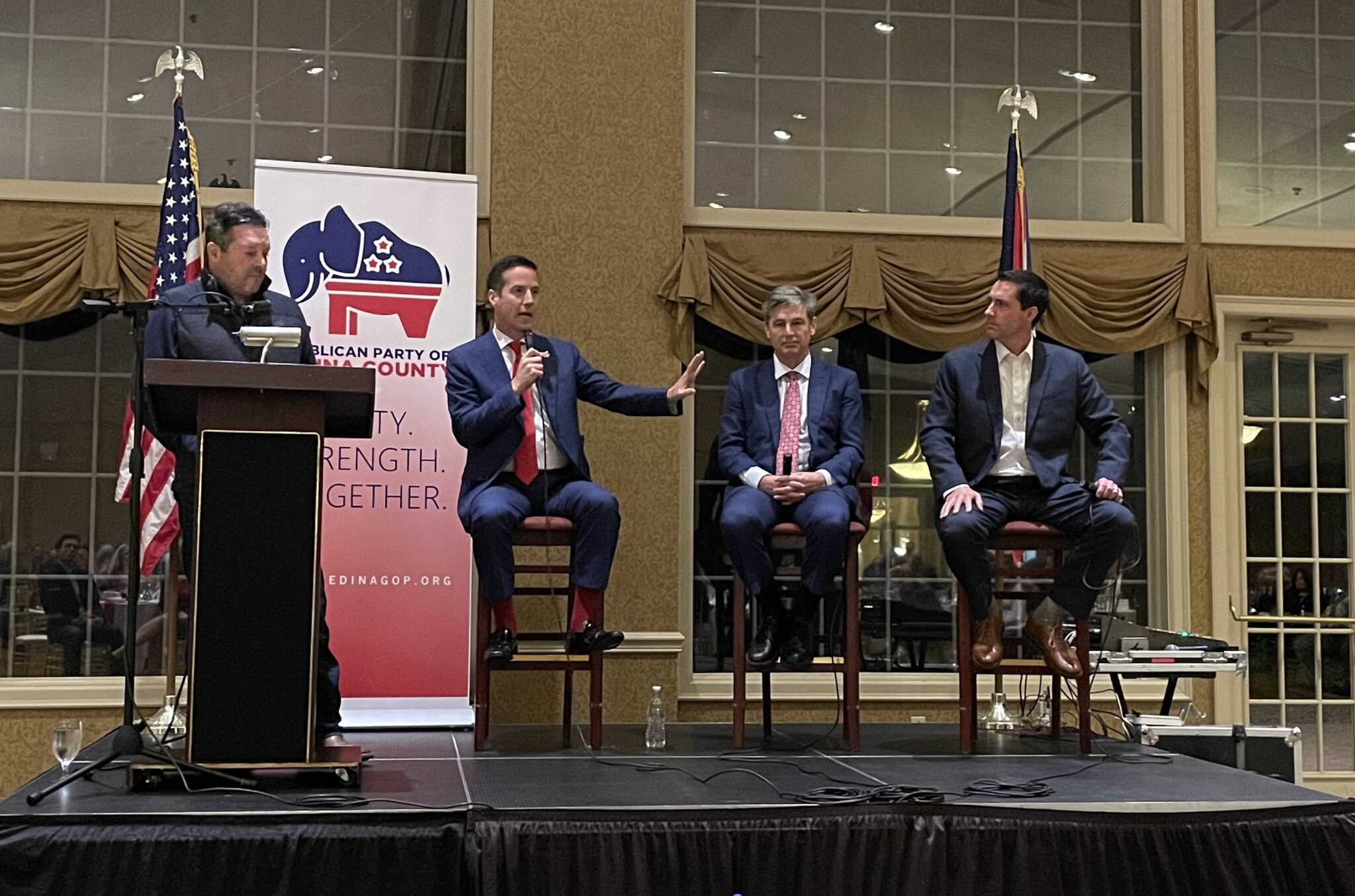
    Left to right, forum moderator, Bloomdaddy from WTAM Radio, Bernie Moreno, Sen. Matt Dolan, R-Chagrin Falls, OH Sec. of State Frank LaRose. (Photo by Nick Evans, Ohio Capital Journal.)

    BY:  

    Frustrated former employees told the press that in their office “everything revolved around” Secretary of State Frank LaRose’s run for U.S. Senate. Now LaRose appears to be using the taxpayer-funded office’s newsletter in that campaign.

    As a state official, LaRose isn’t supposed to use state resources in his political campaigns. And as secretary of state, it’s especially important that he wall off politics from his official duties because LaRose administers elections — including those in which he’s running.

    However, as he seeks the Republican nomination to take on Democratic U.S. Sen. Sherrod Brown next year, LaRose has become an increasingly hard-edged partisan as he seeks the endorsement of former President Donald Trump, who continues to attack the underpinnings of democracy itself.

    In addition to ignoring state Supreme Court orders regarding partisan gerrymandering, LaRose championed a measure in an August special election that would have made it almost impossible for citizen-initiated amendments to make it onto the ballot, much less into the Ohio Constitution. The measure failed badly, but LaRose and his allies tried to force it through ahead of a vote on an amendment protecting abortion rights that takes place a week from tomorrow, and an anti-gerrymandering amendment that is expected to be on the ballot in 2024.

    Substantial ethical questions also have arisen as LaRose juggles his senatorial ambitions with his duty to conduct secure, fair elections in Ohio.

    The Columbus Dispatch earlier this month reported on high staff turnover, with one former staffer telling the paper “Everything (in the secretary of state’s office) revolved around the Senate run.”

    Last month, NBC4 reported that LaRose was moving the secretary of state’s office from its location of 20 years and into a building where he had also registered his campaign with the Federal Election Commission.

    Then earlier this month, the Capital Journal reported that LaRose almost certainly recorded a campaign interview with election denier and conspiracy theorist Steve Bannon from the same building.

    LaRose refuses to answer questions about such activities. But he claims to have no campaign headquarters while he soon will be running his state office from the building where his campaign is registered.

    If LaRose uses people working on state time or uses state offices in his campaign, it could violate a section of Ohio law prohibiting the use of state resources to raise funds for a campaign.

    Paul Nick, executive director of the Ohio Ethics Commission, this week said his agency needs to know more about LaRose’s new office arrangements.

    “The Commission doesn’t pass judgment without first gathering and evaluating all of the facts,” Nick said in an email. “Determining whether a public official’s agency may relocate to the same office building as that official’s campaign headquarters requires deeper inquiry. We would encourage the Secretary of State to contact us for guidance on such questions.”

    Philip Richter, executive director of the Ohio Elections Commission, said his agency would have to be asked in order to look into the matter.

    “The only way for the Commission to take action on the statute is if an affidavit of complaint is filed with the Commission that would start the Commission’s processes on addressing those types of allegations,” Richter said in an email Thursday.  “The Commission cannot simply commence an investigation without the filing of a complaint.”

    Now LaRose appears to have used his office’s newsletter to promote his campaign.

    The Oct. 20 edition of the Secretary of State’s “Week in Review” offers updates about the coming election and it notes that October is Domestic Violence Awareness Month. There are also blurbs about LaRose’s travels and activities during the week.

    But the newsletter also has an “In Case You Missed It” section. It contained the top of an article by The Marietta Times that prominently featured the political message LaRose wants to convey to people who will be voting in the GOP Senate Primary.

    The second paragraph said LaRose “also confirmed his credentials as a conservative Republican who wants to make Sherrod Brown a former U.S. Senator, not the incumbent. Brown has been Ohio’s senior U.S. senator for a dozen years and the only Democratic statewide elected official in Ohio, with the exception of a few nonpartisan judicial races.”

    The newsletter then linked to the full story, which quoted LaRose bashing Brown for allegedly helping to make the country “weaker, poorer and less secure,” and the Biden administration over the economy and border security.

    LaRose’s office didn’t respond to questions about the newsletter.

    The state auditor is responsible for policing misuse of state resources. A spokesman said Thursday that a law regarding politicking in taxpayer-funded newsletters applies only to officials with “political subdivisions” such as counties. The law prohibits them from publishing a newsletter that “supports or opposes the nomination or election of a candidate for public office.”


    Marty Schladen
    MARTY SCHLADEN

    Marty Schladen has been a reporter for decades, working in Indiana, Texas and other places before returning to his native Ohio to work at The Columbus Dispatch in 2017. He’s won state and national journalism awards for investigations into utility regulation, public corruption, the environment, prescription drug spending and other matters.

    MORE FROM AUTHOR


  • Ohio Ballot Board approves anti-gerrymandering amendment. Proposal to go forward

    Ohio Ballot Board approves anti-gerrymandering amendment. Proposal to go forward

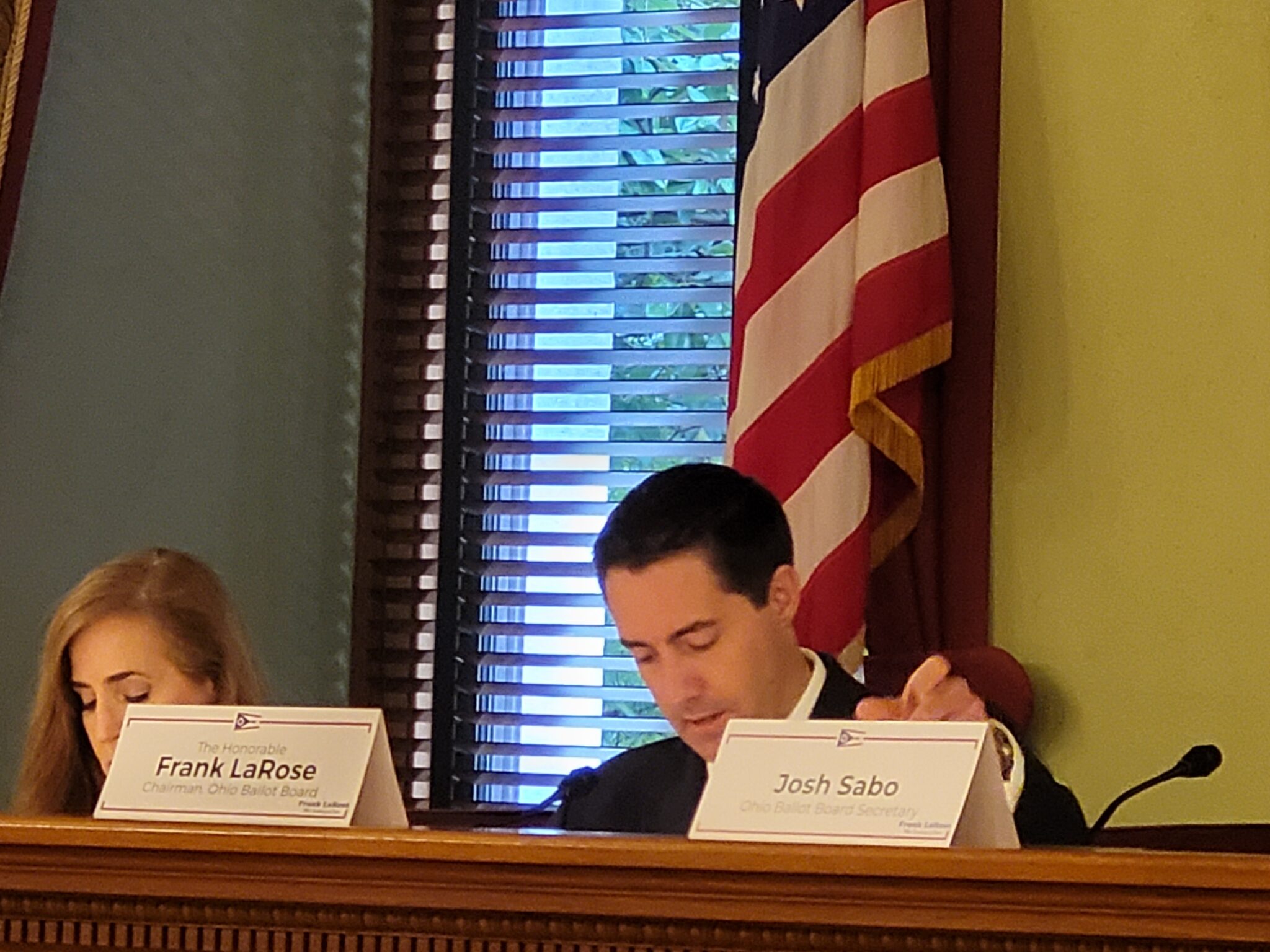
    Ohio Secretary of State Frank LaRose and the rest of the Ohio Ballot Board approve the language of a proposed anti-gerrymandering amendment that is likely to appear on the ballot next year. (Photo by Marty Schladen, Ohio Capital Journal.)

    Signature gathering can proceed

    BY:  Ohio Capital Journal

    Activists who hope to pass an anti-gerrymandering amendment to the Ohio Constitution can now begin gathering the nearly half-million signatures on the need to get the measure on the November 2024 ballot after the amendment was approved as a single issue by the Ohio Ballot Board Thursday.

    Without much ceremony, the board unanimously agreed that the proposed amendment pertains to a single subject, which is required under Ohio law.

    The timing of the approval is significant because early voting on two other measures that are on this year’s ballot started yesterday (Thursday.) Voting has begun on Issue 1, a constitutional amendment protecting abortion rights, and Issue 2, a voter-initiated statute legalizing recreational marijuana. The general election for those measures is Nov. 7.

    Activists trying to get the anti-gerrymandering amendment on next year’s ballot have to gather about 415,000 verified signatures of registered voters. And because of a relatively high rate of rejections in previous efforts, they want to gather hundreds of thousands more than that.

    They say that having the summary language approved now enables them to do their work at county boards of election, where registered voters are gathering to cast ballots on this year’s abortion and marijuana measures. Petition circulators will also be able to work voter-rich environments near polling places on Election Day.

    The approval comes in the nick of time for the activists. Attorney General Dave Yost twice rejected the summary language for the petitions as not adequately reflecting the proposed amendment itself before approving it on its third attempt.

    Ohio is regarded as one of the most extremely gerrymandered states in the country. While Donald Trump carried the state with less than 54% of the vote in 2020, Republicans control 68% of seats in the state House, 78% in the state Senate and 66% of the state’s seats in the U.S. House of Representatives.

    That’s despite the fact that in 2015 and 2018, amendments to curb extreme partisan gerrymandering in the legislature and Congress both passed with more than 70% of the vote.

    After the 2020 Census, the Republican-dominated Redistricting Commission created by those amendments seven times ignored rulings by a bipartisan majority of the Ohio Supreme Court. The rulings said the districts the commission had drawn violated the anti-gerrymandering provisions of those same amendments.

    So now Ohio’s lawmakers are representing districts that the state’s highest court has ruled unconstitutional.

    Former Chief Justice Maureen O’Connor, a Republican, voted with the court’s three Democrats in ruling that the districts were unconstitutional, but she was forced to retire last year because of her age.

    Now she’s working with anti-gerrymandering activists to try to get the latest proposed amendment on next year’s ballot. It attempts to eliminate power grabs when district lines are drawn by creating an independent commission to draw them. That’s in contrast to the current one, which is composed entirely of elected officials.

    Ohio Secretary of State Frank LaRose voted with the other Republicans on the Redistricting Commission in support of the current, unconstitutional maps. In his role as head of the Ballot Board, on Thursday he voted to approve the latest proposed anti-gerrymandering amendment. But he emphasized that it was only a vote on whether its language regarded a single subject.

    “I will remind you again that we are not here today to debate the merits of the proposal, but only whether it constitutes a single proposed amendment to the Ohio Constitution,” he said.

    But Sen. Paula Hicks-Hudson, D-Toledo, commented on the merits, anyway.

    “I’d like to recognize and support the citizens of Ohio who have moved to create a fair opportunity… for their districts to be drawn to reflect all the things Ohioans believe are important and to have a government that is responsive to the citizens of the state of Ohio,” she said.

    After that, LaRose again emphasized that the vote wasn’t on the merits of the proposed anti-gerrymandering amendment.


    Marty Schladen
    MARTY SCHLADEN

    Marty Schladen has been a reporter for decades, working in Indiana, Texas and other places before returning to his native Ohio to work at The Columbus Dispatch in 2017. He’s won state and national journalism awards for investigations into utility regulation, public corruption, the environment, prescription drug spending and other matters.

    MORE FROM AUTHOR