Tag: Marty Schladen

  • In split decision Ohio Supreme Court allows Aug. 8 election to go forward

    In split decision Ohio Supreme Court allows Aug. 8 election to go forward

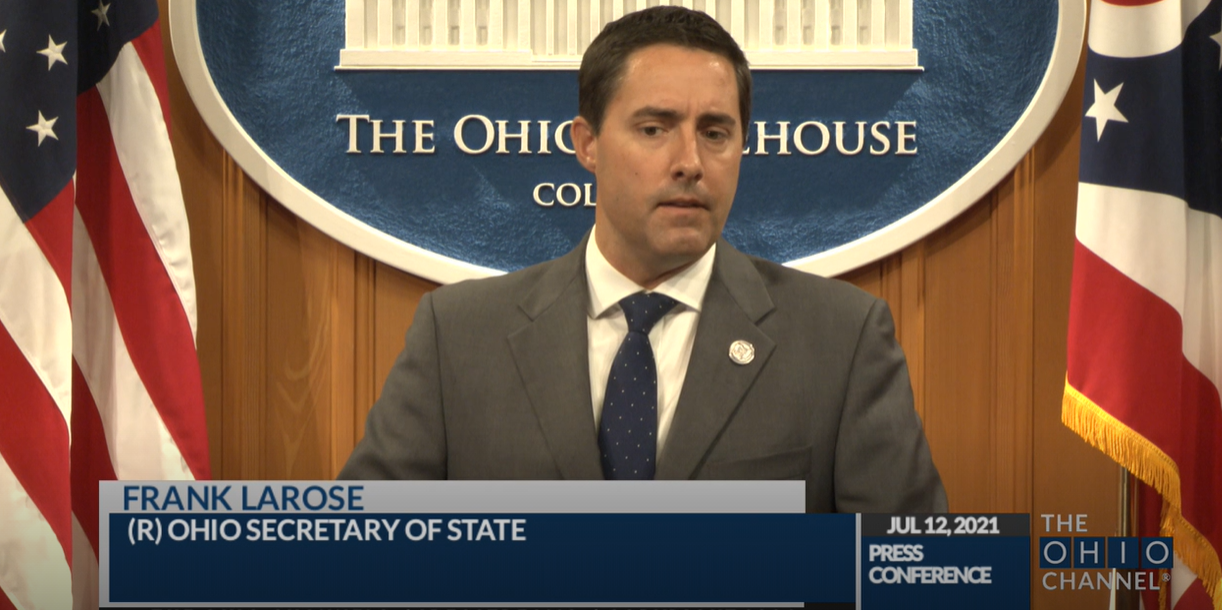
    “Gavel,” a sculpture by Andrew F. Scott, outside the Supreme Court of Ohio. Credit: Sam Howzit / Creative Commons.

    BY:  Ohio Capital Journal

    Along party lines, the Ohio Supreme Court on Friday gave the green light to an attempt by Republican leaders of the state’s gerrymandered legislature to make it much harder for voters to amend the state Constitution. The court ruled in a 4-3 decision that it’s OK for the issue to be placed on the Aug. 8 ballot even though the legislature just outlawed such elections in January.

    The Republican majority said that regardless of the law, the Ohio Constitution gives the legislature great latitude in deciding when elections will be held. In a dissent, the Democratic minority argued that while that might be the case, the legislature still has to follow the laws it has passed — and change the ones it doesn’t like.

    Issue 1 would raise the percentage of votes needed to pass a voter-initiated amendment from 50% to 60%. It would also require that a given number of the hundreds of thousands of signatures needed to get an amendment on the ballot come from each of Ohio’s 88 counties instead of the current 44.

    Critics — including bipartisan groups of former governors and attorneys general and more than 240 other groups — say the requirements would make voter-initiated amendments practically impossible. Some add that Issue 1 would greatly enhance the gerrymandered legislature’s power over the state Constitution relative to that of Ohio voters — the exact opposite of what former President Theodore Roosevelt argued for when he successfully advocated adoption of the current system in 1912.

    Republican leaders, including Secretary of State Frank LaRose, pushing the amendment have given inconsistent reasons for why it’s needed. But to partisan audiences they’ve conceded that one reason for putting the matter on the ballot in a low-turnout Aug. 8 election is to try to block a voter-initiated abortion-rights amendment expected to be on the ballot in November.

    One, Rep. Brian Stewart, R-Ashville, also admitted to colleagues last year that he wants to make it harder for another anti-gerrymandering amendment to pass. Ohio’s current lawmakers represent districts that an earlier bipartisan Supreme Court repeatedly ruled were unconstitutional under two amendments already overwhelmingly passed by voters.

    The voting-rights group One Person One Vote sought an order stopping the Aug. 8 election, noting that under a law signed by Gov. Mike DeWine on Jan. 6, almost all statewide August elections are prohibited.

    The Republican majority on Friday agreed — kind of. In its opinion it said the law does not authorize, “an August special election for a statewide office, question, or issue.”

    Even so, the opinion — signed by Republican Justices Sharon L. Kennedy, Pat DeWine and Joe Deters and concurred with by Justice Pat Fischer — says the legislature doesn’t have to follow that law.

    “Regardless of what the Revised Code provides with respect to special elections, however, Article XVI, Section 1 of the Ohio Constitution controls the matter before us,” it said. “That provision authorizes the General Assembly to submit the issue ‘at either a special or a general election as the General Assembly may prescribe.’”

    That’s ludicrous, Justice Michael Donnelly said, in essence, in one of two dissents. If the legislature wants to hold an Aug. 8 election, it needs to change the law that it so recently passed, he argued.

    “But rather than changing the law, the General Assembly and respondent, Secretary of State Frank LaRose, want to be told that the Ohio Constitution allows the General Assembly to break its own laws,” Donnelly wrote. “Rather than doing the work themselves, they want this court to fix their mess and do their work for them. Sadly, a majority of this court obliges.”

    Democratic Justices Melody Stewart and Jennifer Brunner joined in the dissent and Brunner wrote a separate dissent of her own.

    In it, Brunner said the majority is wrong to claim that since the Ohio Constitution delegates to the legislature the power to determine the time of elections, that allows it to violate the law it passed prohibiting them in August. Laws frequently constrain constitutional rights, such as those related to speech and guns, she argued.

    “Many of our statutory laws burden some constitutional right in some way, and yet they are presumed to be constitutional when enacted and are not struck down unless they are found to have impermissibly burdened a constitutional right,” she wrote.

    Dennis Willard, spokesman for plaintiffs One Person One Vote said in a statement that despite Friday’s reversal, his group would continue to work to get people to polls and vote no on Aug. 8.

    “Today’s ruling is disappointing, but the choice before voters remains the same no matter when we vote: Preserve majority rule in Ohio, or dismantle it,” he said. “We’re confident Ohio voters will see Issue 1 for the scam that it is: a corrupt power grab by special interests and politicians.”


    Marty Schladen
    MARTY SCHLADEN

    Marty Schladen has been a reporter for decades, working in Indiana, Texas and other places before returning to his native Ohio to work at The Columbus Dispatch in 2017. He’s won state and national journalism awards for investigations into utility regulation, public corruption, the environment, prescription drug spending and other matters.

    MORE FROM AUTHOR

  • Ohio Chamber won’t discuss its allies in effort to lock down state Constitution

    Ohio Chamber won’t discuss its allies in effort to lock down state Constitution

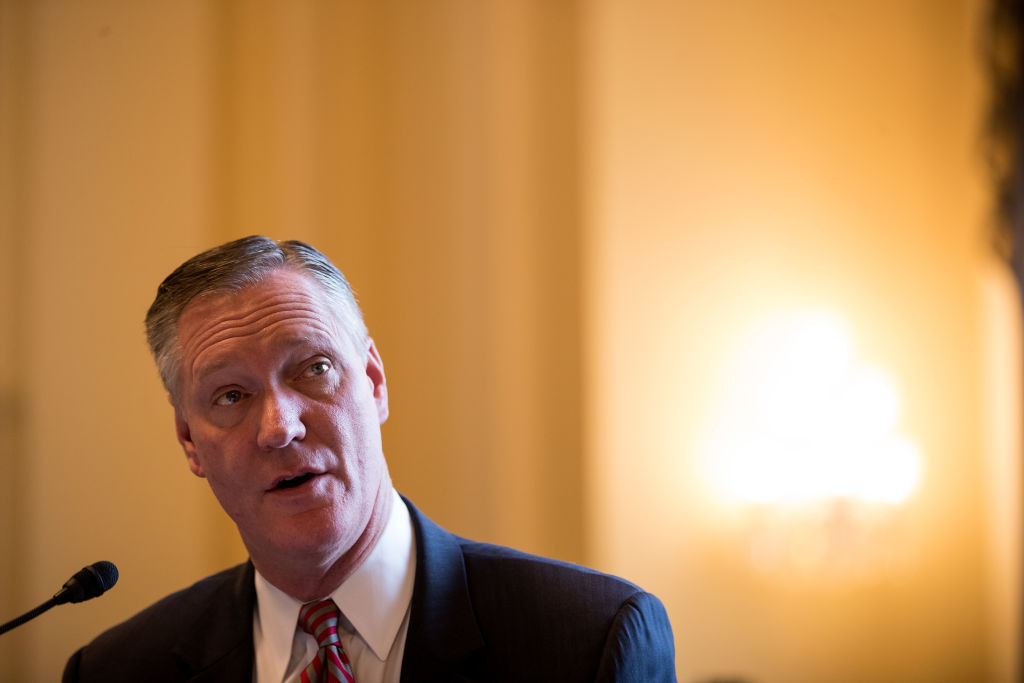
    Ohio Chamber of Commerce President Steve Stivers. (Photo by Drew Angerer/Getty Images, 2017.)

    They include abortion foes, gun-rights groups, an election denier, and the gerrymandered legislature

    BY:  Ohio Capital Journal

    The Ohio Chamber of Commerce is supporting a proposed amendment to the state Constitution that has huge implications for such issues as abortion, gun control, and even democracy itself.

    But Steve Stivers, president and CEO of the chamber, isn’t willing to talk about those things as his organization joins the effort to make it much harder for voters to amend the Ohio Constitution.

    The Chamber last month came out in support of a proposal by Ohio’s Republican-controlled legislature that would make it far harder for voters to gather enough signatures to put a constitutional amendment on the ballot. It would also require a majority of at least 60% to pass it instead of the current 50%. In doing so, the Chamber is joining forces with Ohio Right to Life, the Buckeye Firearms Association, and an out-of-state, election-denying billionaire.

    The measure, Issue 1, will be on the ballot Aug. 8 because Republicans in the legislature last month reversed a ban on such elections that they passed just last year because voter turnout in the dog days of summer is typically abysmal. In August 2022 it was 7.9%.

    On May 11, Stivers issued a statement saying the Chamber takes no position on abortion rights — even though the measure it’s supporting is intended to block a voter-initiated abortion-rights amendment that is expected to appear on the November ballot. Stivers also said the group isn’t taking a position on other “social” issues that are popular with voters, but the Republican supermajority in the state legislature — declared an unconstitutional gerrymander multiple times by a bipartisan Ohio Supreme Court — seems determined to stymie.

    “The Ohio Chamber Board voted today to take no position on the November election’s reproductive rights issue,” Stivers said. “The Ohio Chamber is a business association and takes positions on business issues, not social issues. While we support protecting our constitution in August, this has everything to do with subjects like minimum wage, employment at-will, and other business issues.”

    That ignores businesses’ interest in avoiding unpopular legislation such as Ohio’s harsh abortion restrictions passed out of an extremely gerrymandered legislatureA survey conducted last August indicated that a third of job seekers wouldn’t even consider working in states with strict abortion limitations and that 27% percent of workers in states with the most restrictive abortion laws wanted to leave.

    But Stivers, a former Republican congressman, has declined to discuss such things. Since issuing the May 11 statement, the Chamber hasn’t responded to requests for an interview with Stivers, and it ignored written questions that were sent as a follow-up.

    Lack of transparency

    The refusal of the state’s most prominent business organization to discuss the ramifications of a constitutional change it’s supporting adds another undemocratic layer to an initiative that already has many, said Catherine Turcer, executive director of Common Cause Ohio, which opposes State Issue 1. She said the Chamber and its members will sink lots of corporate money into the fight to cut voters’ power, but it doesn’t want to be open with them.

    “One of the challenges with corporate donations and business organizations is that the money does the talking,” Turcer said. “It gets spent on elections, but we don’t hear directly from the people behind it. And we should expect to hear that because at the end of the day, a corporation doesn’t get to vote. At the end of the day, a corporation is an artificial entity. (Behind them are) human beings making decisions and we should understand what is happening. Or at least the press should have an opportunity to ask questions.”

    The position the Chamber is taking in favor of State Issue 1 is out of step with four former governors of both parties, five former Ohio attorneys general, and more than 240 organizations — such as Turcer’s — who are adamantly opposed to the measure because they believe it would effectively lock Ohio voters out of their state Constitution.

    The provision Issue 1 seeks to change was championed by former President Theodore Roosevelt as a way to force an unresponsive government to address the public’s concerns.

    Adopted in 1912, it sets a high bar for voters to gain access to the Ohio Constitution. It requires supporters of an amendment to gather a large number of voter signatures (413,000 for the abortion-rights amendment planned for the November ballot) and it requires that a given number of them be gathered in each of 44 counties in the various regions of the state. After all that, it also has to gain a majority of the vote to become part of the Constitution.

    Under Issue 1, Republicans in the legislature, anti-abortion groups, pro-gun groups — and the Chamber — want to require 60% of the vote for an amendment to pass, even as they try to pass the restriction under the current, 50% requirement. In other words, they’re trying to get a simple majority in a low-turnout Aug. 8 election to pass an amendment saying that a 40% minority can quash future amendments supported by 59.9% of Ohio voters.

    Issue 1 “is a proposal to substantially diminish the most significant power held by the people, the power of initiative petition to amend the Ohio Constitution. Our Constitution leaves no doubt about this,” Ohio Supreme Court Justice Jennifer Brunner, wrote in a partial dissent published on Monday. She was dissenting because she thought the court didn’t go far enough in ruling that parts of Issue 1 are “likely to mislead voters.”

    Like Brunner, Turcer argues that the effort to enhance the power of the gerrymandered legislature relative to the voters is undemocratic. And — along with former Republican Gov. Bob Taft — she argues that even from the standpoint of its supporters, the measure is shortsighted.

    “It’s problematic that organizations decided to make it harder for citizens to change the Constitution because they don’t like specific policies. But it’s not always going to be 2023,” Turcer said. “There are a number of different ways we can improve the state and leaving that to a minority of Ohio voters is really scary. It’s really scary to think that a majority of voters — whether it’s 55% or 58% — approve of something, but they can’t actually put that policy in place.”

    Misleading claims

    Adding to accusations that the proposed change is anti-democratic are the misleading reasons proponents have given for needing it.

    Stivers, Ohio Secretary of State Frank LaRose, and other proponents argue that voter access needs to be ratcheted down to “protect” the Ohio Constitution from monied out-of-state interests. But when he announced an earlier version of the measure last year, LaRose couldn’t point to any examples of such interests amending the Constitution in the past.

    Nor will LaRose or Stivers comment on an out-of-state special interest who has donated more than $1 million in support of their effort to lock Ohio voters out of the state Constitution. That’s Illinois billionaire Richard Uihlein, who helped fund the rally that preceded the violent Jan. 6, 2021 riot at the U.S. Capitol, and who has since spent millions funding candidates who falsely claim Donald Trump won the 2020 election.

    At the same press conference last year in which LaRose claimed he was trying to protect the Constitution, he also claimed that he was thinking long-term. He said he wasn’t trying to block the expected amendment protecting abortion rights.

     The Republican majority members of the Ohio Redistricting Commission in 2021 and 2022. Top row from left, Ohio Gov. Mike DeWine and Secretary of State Frank LaRose. Bottom row from left Ohio Auditor Keith Faber, then-House Speaker Bob Cupp, and Senate President Matt Huffman. Official photos. 

    LaRose also denied that he wanted to foil another attempt by Ohio voters to stop extreme gerrymandering after he and other Republicans on the state Redistricting Commission ignored repeated orders by the state Supreme Court to follow earlier amendments passed with 70% of the vote. The Republican commissioners last year ran out the clock on the process and lawmakers in the consequently unconstitutional districts voted to put the amendment that would make it much harder for Ohio voters to amend the Constitution on the Aug. 8 ballot.

    In her dissenting opinion Monday, Justice Brunner said that by ignoring constitutional prohibitions against gerrymandering, Republican leaders make it easy to come up with the needed votes for the legislature to put a constitutional amendment on the ballot while making it almost impossible for voters to do the same.

    “If the General Assembly continues to ignore (anti-gerrymandering) orders of this court regarding the state legislative redistricting process, gaining a three-fifths vote should not be difficult for it to accomplish,” she wrote.

    Lack of candor

    Turcer of Common Cause said that business groups such as the Chamber ignore issues like gerrymandering at their peril. That’s because lawmakers from gerrymandered districts have every incentive to cater to the most charged-up elements of their base and ignore everybody else. It‘s an engine that produces extreme legislation that can prompt boycottsprotests and require businesses to provide special benefits to protect employees.

    “The folks who do support Issue 1 and the special election clearly don’t care about gerrymandering — the manipulation of district lines to manipulate elections and policy,” Turcer said. “Gerrymandering has a profound consequence for our business leaders and the business community. It is extremely short-sighted to not think about how challenging it will be to do a citizen initiative with the news rules that are in place.”

    LaRose again demonstrated in May that he was being less than forthright when he claimed his support for the effort was only out of concern for the future integrity of the Ohio Constitution, and not current fights over abortion and gerrymandering.

    “That’s not what this kind of a change should ever be about,” LaRose said last November.

    But last month, the state’s top elections official told Seneca County Republicans “It’s 100% about keeping a radical pro-abortion amendment out of our constitution,” WEWS reported.

    The lack of candor about their reasons for wanting to effectively lock Ohio voters out of the state Constitution seems to extend even to the name of the campaign committee supporting the measure: Save Our Constitution.

    “A more accurate name might be Save Our Constitution from Ideas We Don’t Like,” veteran Ohio political reporter Howard Wilkinson opined earlier this month.

    It’s possible that Stivers, the Chamber, and other business interests are narrowly focused on stopping a minimum wage hike to $15 an hour — which enjoys the support from 60% of the public.

    The Chamber might also be responding to pressure from legislative Republicans. The Cleveland Plain Dealer reported that GOP leaders last month put the arm on corporate lobbyists to contribute to the Issue 1 push as they draw up a multi-billion dollar state budget that is of great interest to the companies the lobbyists represent.

    Either way, Turcer said, the Chamber and its members are trying to water down democracy for their own, narrow purposes.

    “For political expediency, they would like to make it harder for us to participate in direct democracy,” she said. “They would prefer to dilute the power of voters rather than promote their own policy agenda with voters.”


    Marty Schladen
    MARTY SCHLADEN

    Marty Schladen has been a reporter for decades, working in Indiana, Texas and other places before returning to his native Ohio to work at The Columbus Dispatch in 2017. He’s won state and national journalism awards for investigations into utility regulation, public corruption, the environment, prescription drug spending and other matters.

    MORE FROM AUTHOR

  • As Borges delay is denied, former FirstEnergy execs say “no doubt” the feds are after them

    As Borges delay is denied, former FirstEnergy execs say “no doubt” the feds are after them

    Litigation, prosecutions in massive corruption scandal move forward

    BY:  Ohio Capital Journal

    Judges denied two delays in recent days that would have been key to a bribery and money laundering scandal that took place in Ohio between 2017 to 2020. Lawyers in one suit called it “one of the largest corruption and bribery schemes in U.S. history.”

    Denial of a delay in one court case means that a player will still be sentenced late next month.

    In denying the other, the judge in that case agreed with two former FirstEnergy executives who said federal law enforcement has them in its crosshairs. But she ordered that they be questioned under oath anyway.

    One of those denied was former Ohio Republican Party Chairman Matt Borges, who on March 9 was convicted of racketeering along with former Ohio House Speaker Larry Householder, R-Glenford. Two others who were also charged in 2020 pleaded guilty and a third died by suicide.

    Borges and Householder played very different roles in a scheme to use more than $60 million from Akron-based FirstEnergy to make Householder speaker at the start of 2019 so Householder could pass and protect a $1.3 billion ratepayer bailout that mostly benefited FirstEnergy. But both made heavy use of funds that were passed through 501(c)(4) “dark money” accounts that enabled them to disguise its FirstEnergy source.

    Householder directed the effort in 2018 to elect friendly representatives who would make him speaker. He led the 2019 legislative fight to pass the bailout. And he engineered the nasty, dishonest battle to beat back an attempted repeal.

    Borges’ role was much more limited. He acted as a go-between with statewide officials such as Attorney General Dave Yost and Secretary of State Frank LaRose — and he paid a worker on the repeal campaign $15,000 as the worker shared inside information about its likelihood of success.

    Even though Householder’s role in the scandal was much bigger than that of Borges, each faces a sentence of up to 20 years in prison on the one count of racketeering of which he was convicted. Householder is scheduled to be sentenced in the Potter Stewart U.S. Courthouse in Cincinnati on June 29. Borges was scheduled for sentencing the next day.

    But after his conviction, Borges asked the court for extra time to file post-trial motions asking that his conviction be thrown out. U.S. District Judge Timothy Black agreed, giving him until April 24.

    Borges didn’t file anything by that deadline. But on May 15, Borges again asked permission to file post-trial motions. He argued that his conviction was on much shakier ground in light of two decisions handed down on May 11 by the U.S. Supreme Court: Ciminelli vs. United States and Percoco vs. United States.

    Judge Black, however, on Monday agreed with Assistant U.S. Attorney Emily Glatfelter that the legal theories those decisions dealt with were “neither charged, nor argued, nor instructed” in Borges’ case. Black added that it’s important to keep the case moving.

    “Finally, this case has been litigated, tried, and a verdict returned. Defendant Borges is now scheduled for sentencing on June 30, 2023. Disrupting the schedule would needlessly undermine the interests in judicial efficiency and finality,” the judge wrote.

     Former FirstEnergy CEO Charles “Chuck” Jones. Source: FirstEnergy, via Flickr 

    Similarly, a separate federal judge declined to postpone sworn depositions of the two former FirstEnergy executives who directed more than $60 million in corporate cash to Householder-controlled dark money groups that fueled the scandal. She did so even as she acknowledged that former CEO Chuck Jones and former Vice President Michael Dowling “fear they are next in line for indictment” and don’t want to incriminate themselves in their depositions.

    U.S. Magistrate Judge Kimberly Jolson is helping to manage the administration of a massive class-action suit against FirstEnergy, Jones and Dowling over the Householder scandal. Investors say the recklessness of the scheme cost them big — especially when it came to light and stock values plummeted.

    Alleging federal securities fraud, lawyers for pension funds and other investors have said in court filings, “FirstEnergy and its most senior executives bankrolled one of the largest corruption and bribery schemes in U.S. history.”

    Judge Jolson already slapped Sam Randazzo — Gov. Mike DeWine’s chairman of the Public Utilities Commission of Ohio — for not producing documents related to the $4.3 million FirstEnergy paid him just as DeWine was nominating Randazzo. Even though he was supposed to be regulating the utility, Randazzo, who has not been charged, helped draft the corrupt bailout law.

    Last Friday, Jolson also rejected attempts by Jones and Dowling — the former FirstEnergy executives — to delay sworn depositions to September or even later. The depositions had been scheduled for this week and next, but plaintiffs and defendants agreed to a short delay while Jolson considered the request.

    In asking to hold off until Sept. 8, Jones and Dowling said that having to give a deposition under oath put them in a position in which they were damned if they did, and damned if they didn’t.

    Answering questions could put them in criminal jeopardy, but if they took the Fifth, the jury in the class-action case is free to conclude they have something bad to hide, Jones and Dowling argued. They added that it’s certain that the feds are coming after them.

    “Although the defendants in (the Householder trial) have been found guilty (but are yet to be sentenced) and charges have not yet been brought against Jones or Dowling, there can be no doubt that the government’s investigation into Jones and Dowling remains ongoing,” their motion said.

    Judge Jolson replied that she had to weigh those concerns against those of FirstEnergy investors, who already have been fighting the case for nearly three years.

    Jones and Dowling “say the stay is temporary, (but) their grounds supporting the stay could extend for months or even years,” Jolson wrote. “Presently, they request that the depositions be delayed until at least September 8, 2023. (Jones and Dowling) have chosen this date because it is the first date on which investigations and proceedings conducted by PUCO might resume—after a third six-month stay of those proceedings was recently granted at the request of” federal prosecutors.

    The judge added it didn’t help the former executives’ argument that they haven’t been indicted yet because waiting until that question is resolved is a recipe for further delay.

    Jolson said she understood the executives’ dilemma.

    “In sum, there is substantial overlap between the issues in this case and the criminal investigation surrounding the Householder case,” she wrote. “And (Jones and Dowling) are faced with legitimate concerns regarding the invocation of their Fifth Amendment rights.”

    Jolson added, however, that granting a delay would privilege the former executives who funded the corrupt bailout scheme over the aggrieved investors and the public.

    “A stay of these key depositions at this moment — with no clear end in sight — would throw a wrench into the works of discovery and impede or even halt the litigation,” she wrote. “It would privilege the interests of (Jones and Dowling) above those of Plaintiffs, the public (whose interests are particularly implicated given that this is a class action), and the Court.”


    Marty Schladen
    MARTY SCHLADEN

    Marty Schladen has been a reporter for decades, working in Indiana, Texas and other places before returning to his native Ohio to work at The Columbus Dispatch in 2017. He’s won state and national journalism awards for investigations into utility regulation, public corruption, the environment, prescription drug spending and other matters.

    MORE FROM AUTHOR

  • License amnesty program nets big gains for low-income drivers

    License amnesty program nets big gains for low-income drivers

     Two lines of cars wait for food assistance at the All People’s Fresh Market in Columbus. Photo by Marty Schladen, Ohio Capital Journal.

    BY:  Ohio Capital Journal

    Nearly a quarter-million Ohio drivers have taken advantage of a program started at the end of 2020 that is intended to reduce license-reinstatement fees or waive them altogether, the Ohio Poverty Law Center said Monday.

    The group released an analysis of the amnesty program, a bipartisan measure passed by the legislature. It found that nearly 223,000 drivers have participated and saved more than $136 million, with an average individual savings of $612.

    “The program has provided a lot of relief from the financial barriers that prevent hundreds of thousands of lower-income Ohioans from driving legally,” Zack Eckles of the poverty law center said during a virtual press conference. “Driving is essential for economic participation in the state of Ohio.”

    Suspensions stemming from driving under the influence of alcohol, drugs or with deadly weapons are not eligible for the amnesty. Instead, the program is aimed at people who just don’t have the funds to pay the fees to reinstate their licenses after being suspended for offenses such as driving with no proof of insurance.

    “Although reinstatement fees are distinct from punitive fines, they have many characteristics of a fine,” the report said. “For example, they vary by the type of offense or increase in amount for repeated offenses, and they can be extremely burdensome. One particularly punitive reinstatement fee is for non-compliance suspensions, which occur when a driver does not show proof of insurance at a traffic stop or at the time of an accident. These non-compliance suspensions carry reinstatement fees of $100 for the first offense, $300 for the second offense, and $600 for the third and any subsequent offenses within a five-year period.”

    To help ensure that only people who can’t afford reinstatement fees get reductions, the program requires that suspended drivers wait 18 months after at least one of their suspensions expire before they’re eligible. Presumably, people who can afford to pay won’t wait that long, but Eckles faulted the rule for holding those without funds “hostage” for 18 months before they can clear their fees and drive legally.

    People eligible for Medicaid, Supplemental Security Income, Ohio Workers First, Supplemental Nutrition Assistance or the VA Pension Benefit are eligible to have their reinstatement fees canceled and don’t have to wait 18 months because their eligibility for those programs demonstrates their financial need. However, Ohioans eligible for the waiver made up only about 5% of those who have participated in the amnesty program.

    Benefits of the amnesty extend well beyond making it easier for huge numbers of Ohioans to drive legally to work, school, medical appointments and the grocery store.

    Of the drivers applying for fee reductions, 85% paid their fees in full, paying $23 million to the Bureau of Motor Vehicles that it otherwise likely wouldn’t have collected. And, with an estimated 75% of those with suspended licenses continuing to drive illegally, the amnesty program probably has greatly reduced the number of uninsured drivers because participants have to furnish proof of insurance to participate.

    But even though nearly a quarter-million Ohioans participated in the program, that’s only a third of 748,000 that the BMV notified that they were eligible.

    That has implications beyond increasing the number of legal drivers on Ohio roadways. The Legal Aid Society of Cleveland last year estimated that about 1 million Ohioans have debt-related license suspensions. With Ohio’s heavily gerrymandered legislature passing one of the strictest voter ID laws in the country, that could have a huge impact in a state with about 8 million registered voters.

    To improve participation in the amnesty program, the Ohio Poverty Law center made three recommendations:

    • Standardize reinstatement fees at $25
    • Eliminate suspensions strictly resulting from unpaid fines and fees. “Driver’s license suspensions should only be imposed for dangerous driving, not for a person’s inability to pay a fee,” the report said.
    • Expand the program so that all 14% of Ohioans living in poverty are eligible for full waivers

    ______________________________

    MARTY SCHLADEN

    Marty Schladen has been a reporter for decades, working in Indiana, Texas and other places before returning to his native Ohio to work at The Columbus Dispatch in 2017. He’s won state and national journalism awards for investigations into utility regulation, public corruption, the environment, prescription drug spending and other matters.

    MORE FROM AUTHOR


  • Manufacturers, consumers blast plan to make ratepayers subsidize charging stations

    Manufacturers, consumers blast plan to make ratepayers subsidize charging stations

    An electric vehicle charging station. Photo courtesy Wikimedia Commons.

    BY:  Ohio Capital Journal

    The number of electric vehicles on U.S. roadways is expected to ramp up dramatically in the coming years, and with it the number of charging stations will have to grow as well.

    Now groups representing Ohio utility consumers and manufacturers are trying to kill a plan that would force ratepayers to finance the electricity infrastructure needed to serve those charging stations. The people who will be profiting from those stations or the utilities themselves should bear those costs, they said.

    In addition, they said, the way the language is written “is generally lacking in consumer protections.” That’s famously been a problem with Ohio utilities and the agency that’s supposed to be regulating them.

    A provision in House Bill 33, a draft state budget, would allow monopoly utilities to impose higher rates to fund economic-development activities such as supplying EV stations even though subsidies for such activities are already available from the state and local governments, the advocates said.

    “The federal government is making substantial funds available to local governments for electric vehicle charging stations,” Maureen Willis, legal director for the Ohio Consumers’ Counsel, told the House Finance Committee last week, according to a written copy of her testimony. “That is occurring under the federal infrastructure bill. Ohio’s share of the funding is significant.”

    The growth in sales of electric vehicles through the rest of the decade is expected to be enormous — going from 4.6 of all new passenger-vehicle sales in 2021 to a projected 40% to 50% in 2030, the U.S. Bureau of Labor Statistics reports.

    Driving such high expectations are a $7,500 tax credit for electric vehicles under last year’s Inflation Reduction Act. And earlier this month, President Joe Biden proposed two new EPA rules aimed at dramatically reducing greenhouse-gas emissions from vehicles by 2030.

    And, because nobody wants to drive a battery powered vehicle out into the boonies without being sure they’ll be able to charge it, $7.5 billion was built into last year’s Bipartisan Infrastructure Law to subsidize building out a national network of charging stations.

    Building out the system might seem laudable in the face of catastrophic climate change. But Ohio’s electric utilities and the Public Utilities Commission that’s supposed to be regulating them have a history of abusing ratepayers.

    The PUCO has allowed more than $1 billion in rate hikes that were later ruled illegal by the state Supreme Court. But, because of the way the “riders” were written, there’s no way to make the utilities refund the money. In one instance, Akron-based FirstEnergy collected $460 million and then couldn’t show whether the money was spent on bribes, much less whether any of it was spent on its stated purpose.

    And, speaking of bribes, the PUCO and a very recent employee in 2019 drafted a bailout law that was at the center of a scandal in which FirstEnergy and AEP spent $61 million to help pass a $1.3 billion bailout. Former House Speaker Larry Householder and former Ohio GOP Chairman Matt Borges last month were convicted of racketeering in the matter.

    Now, consumer and manufacturing representatives say, someone is again trying to give Ohio utilities broad latitude to raise rates on their customers.

    Ryan Augsburger, president of the Ohio Manufacturers’ Association, this week told the House Finance Committee that the provision in the draft budget would allow Ohio utilities to collect from ratepayers for expenses that taxpayers are already subsidizing. And, he said, the wording of the provision is so loose that utilities would have great flexibility in applying it.

    “The electric utilities are already poised to benefit from recovery of costs associated with infrastructure expansion,” Augsburger said, according to a written copy of his comments. “This new language grants electric utilities swift cost recovery from customers for all net costs associated with infrastructure development and economic development projects… Cost recovery from customers is to make the electric utility whole after (the utilities) have already received funds from the All Ohio Future Fund for the economic development projects.”

    Willis of the Consumers’ Counsel said the language allowing for utility increases “is generally lacking in consumer protections.”

    ___________________________

    MARTY SCHLADEN

    Marty Schladen has been a reporter for decades, working in Indiana, Texas and other places before returning to his native Ohio to work at The Columbus Dispatch in 2017. He’s won state and national journalism awards for investigations into utility regulation, public corruption, the environment, prescription drug spending and other matters.

    MORE FROM AUTHOR

  • U.S. Supreme Court justices take lavish gifts — then raise the bar for bribery prosecutions

    U.S. Supreme Court justices take lavish gifts — then raise the bar for bribery prosecutions

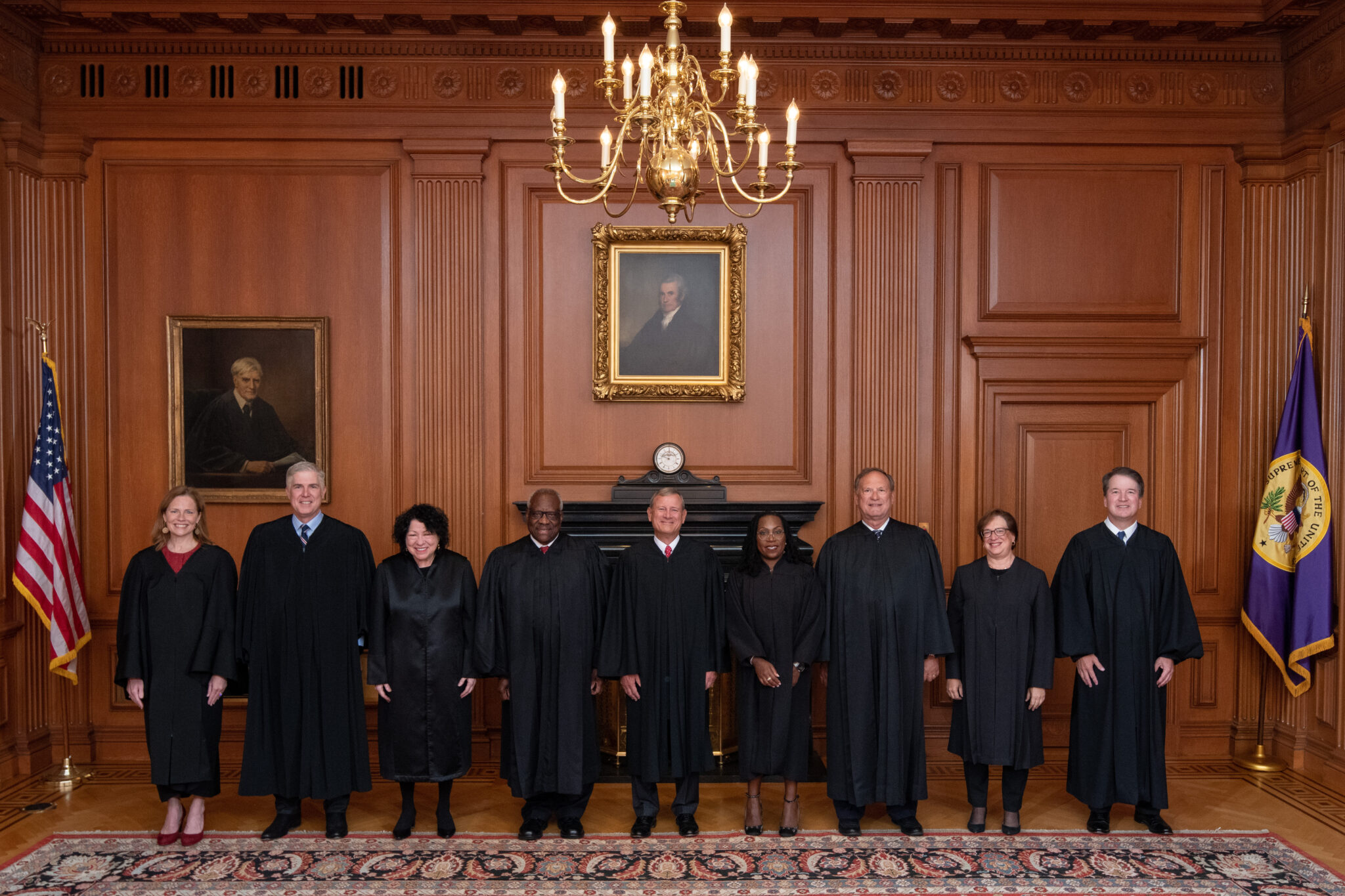
    Members of the U.S. Supreme Court in the Justices’ Conference Room. From left to right: Associate Justices Amy Coney Barrett, Neil M. Gorsuch, Sonia Sotomayor, and Clarence Thomas, Chief Justice John G. Roberts, Jr., and Associate Justices Ketanji Brown Jackson, Samuel A. Alito, Jr., Elena Kagan, and Brett M. Kavanaugh. (Photo from the Collection of the Supreme Court of the United States.)

     Ohio Capital Journal

    Justice Clarence Thomas might be the most egregious when it comes to taking gifts and not disclosing them, but he’s not alone. His colleagues on the U.S. Supreme Court also haven’t been shy about taking fancy freebies from rich people — many of whom have an interest in the actions of the court.

    The justices seem not to think it’s fair to have to entertain themselves on their $268,000 salaries that are in addition to whatever other income they get from book deals, investments and other sources. So it might not be a coincidence that in 2016, those same justices unanimously voted to make it a lot harder to prosecute public officials — including themselves — for accepting bribes.

    “Family trips”

    No matter how much fun they are to hang out with, average people aren’t likely to be offered a $500,000 Indonesian vacation on a private jet and a superyacht. Nor is a billionaire likely to buy your mother’s house, pour tens of thousands into it, and let her live there rent-free.

    But when ProPublica exposed those regal freebies — and the fact that Thomas failed to disclose those and others for decades — the justice in a statement characterized them as just the kinds of things good buddies do when they want to hang out. And he implied that his status as a Supreme Court justice had nothing to do with it.

    Describing Texas billionaire and conservative activist Harlan Crow and his wife as among Thomas and his wife’s “dearest friends,” Thomas wrote, “As friends do, we have joined them on a number of family trips during the more than quarter century we have known them.” He added that he had no conflict because it was “personal hospitality from close personal friends, who did not have business before the court.”

    Thomas made the claim even though Crow has spent at least $14.7 million on conservative causes over the years — including to move the judiciary to the right. That figure doesn’t include any 501(c)(4) dark money contributions by Crow that Thomas helped to facilitate with his affirmative vote in the 2010 split decision, Citizens United v FEC.

    Crow didn’t make Thomas’s acquaintance until he was on the Supreme Court and it seems unlikely that their friendship would be so dear if Thomas’s powers were limited to working a cash register — the most common job in the United States — as opposed to having a potentially dispositive say over the meaning of the U.S. Constitution. And in his statement, Thomas didn’t mention that as part of many of the freebies he’s taken from Crow, the justice was in close proximity with other conservative activists who also have had business before and a strong interest in the makeup of the federal courts.

    Across the ideological spectrum

    Thomas has been far from alone on the court in enjoying the largesse of the uber-wealthy.

    Late liberal Justice Ruth Bader Ginsberg in 2018 took a trip to Israel compliments of billionaire Morris Kahn, who had business before the court just a year earlier.

    Late Justice Antonin Scalia took at least 258 subsidized trips while he was on the court and he was on one when he suddenly died in 2016.

    Scalia’s more-liberal colleague, retired Justice Stephen Breyer, took at least 225 subsidized trips between 2004 and 2016. They include a 2013 trip to the exclusive island of Nantucket compliments of private-equity billionaire David Rubenstein, Gabe Roth, executive director of the group Fix the Court, reported.

    Those were some of the 1,309 trips Supreme Court justices took compliments of others between 2004 and 2019, according to a list compiled by the watchdog group Open Secrets. That’s nine trips per justice, per year, and it’s unlikely they stayed at the Holiday Inn on most of them.

    And those are just the ones that justices have disclosed. It’s unclear how many — like decades of Thomas’ travels — have been unreported, or whether the justices will suffer any consequences for not reporting them.

    Disturbing examples of such non-disclosure continue to flow in — thanks to investigative reporters, not the justices themselves.

    On Tuesday, Politico reported that Justice Neil Gorsuch had been trying for some time in 2017 to unload a 40-acre property he co-owned in Colorado. Nine days after he was confirmed to the Supreme Court, the property was purchased by the CEO of a law firm that has had numerous cases before the court — and whose clients Gorsuch has sided with much more often than not.

    Gorsuch disclosed that he made between $250,000 and $500,000 off of the sale, but he left blank the box that would have informed the public of the identity of the person who paid the money, and who had a lot of lucrative business that Gorsuch would preside over, Politico reported.

    Despite all the ethical lapses, at least some justices from across the ideological spectrum are indignant at the notion that their conduct should be scrutinized. When Sen. Chuck Grassley, R-Iowa, in 2006 proposed an inspector general to keep an eye on the justices, liberal icon Ginsberg likened it to “Stalinism, saying that such oversight ‘is a really scary idea’ that ‘sounds to me very much like [how] the Soviet Union was,’” Roth of Fix the Court wrote.

    Watering down bribery prosecutions

    In the midst of such hostility to oversight, the court in 2016 took up McDonnell v United States. Perhaps not surprisingly, it sided in its decision with a powerful public official who had taken expensive gifts from a wealthy friend who was pushing a special interest.

    Former Virginia Gov. Bob McDonnell and his wife had been convicted in 2014 on charges of bribery. But the McDonnells appealed their convictions, arguing that federal prosecutors failed to show that McDonnell undertook an “official act” in return for the presents they received.

    The couple got about $175,000 worth of stuff from Jonnie Williams, including rides in a private plane, a Rolex, $20,000 worth of designer clothing, a $50,000 loan and $15,000 for their daughter’s wedding. Williams, the CEO of Star Scientific, was trying to market a nutritional supplement made from a compound found in tobacco, and he wasn’t having much luck interesting the scientific community in conducting research.

    To help, the governor directed Williams’ proposals for research at the Medical College of Virginia and the University of Virginia School of Medicine to his director of health and human services. When that didn’t bear fruit, McDonnell hosted a lunch at the governor’s mansion and brought in university officials. Even so, the actual scientists were skeptical of Williams’ claims and didn’t embrace his supplement.

    As a general matter, governors have great sway over state budgets and public universities partly depend on state funding. Governors also often appoint public universities’ governing boards — in the case of the University of Virginia, the Board of Visitors. So, when McDonnell pushed Williams’ supplement on his health director and on university officials, it probably wasn’t easy for them to say no.

    But in writing for the Supreme Court in the case, Chief Justice John Roberts said McDonnell’s attempts to help Williams didn’t amount to an “official act.”

    “An ‘official act’ is defined as ‘any decision or action on any question, matter, cause, suit, proceeding or controversy, which may at any time be pending, or which may by law be brought before any public official, in such official’s official capacity, or in such official’s place of trust or profit,’” Roberts wrote.

    Somehow, he and the other eight justices couldn’t see it as an abuse of the governor’s place of trust or profit when he brought subordinates and quasi-subordinates to his official residence to hear a new-age medical pitch from a guy who had given the governor $175,000 in fancy presents. Perhaps the gifts the justices themselves were taking had influenced them in ways they didn’t see.

    Out of touch

    In an interview last week, Roth of Fix the Court said the Supreme Court decision in McDonnell made it a lot harder to prosecute public officials in federal court for taking bribes.

    “I think (the decision) appears to be a simultaneously textualist and tone-deaf decision,” he said. “The opinion is focusing on what the parameters of what the law are as written by Congress, but it’s never that easy. It’s never just, ‘Oh, hey, I’m going to do a bribe.’”

    Perhaps making it seem extra tone-deaf lately has been Roberts’ continued inaction as Thomas’s failure to report millions in gifts and payments to his wife from conservative groups is serially revealed.

    In concluding his opinion in McDonnell, the chief justice seemed to express his own hostility to oversight, slamming federal prosecutors for their “boundless interpretation” of bribery laws.

    The claim seems hard to square with exploding dark money expenditures by undisclosed special-interests as federal corruption prosecutions have gone down in recent decades. But Roberts implied that the feds are out of control when it comes to charging public officials with taking bribes.

    “There is no doubt that this case is distasteful; it may be worse than that,” Roberts wrote. “But our concern is not with tawdry tales of Ferraris, Rolexes, and ball gowns. It is instead with the broader legal implications of the Government’s boundless interpretation of the federal bribery statute. A more limited interpretation of the term ‘official act’ leaves ample room for prosecuting corruption, while comporting with the text of the statute and the precedent of this Court.”

    Recent revelations about the lavish freebies Thomas and his colleagues have been accepting cast the decision in a new light. Roth said that when the McDonnell decision was handed down seven years ago, the public wasn’t as sensitized to the fact that many on the court are taking ritzy presents from oligarchs, granting them extended facetime and then pretending it doesn’t influence their decisions.

    “I was screaming about this in 2016,” he said. “Now folks are getting wise to the fact that the lavishness is not restricted to state officials in Virginia, but it has in fact infected the highest court. It is an incredibly elite, incredibly out-of-touch institution.”

    Take me out to the ballgame

    Roberts illustrated such a lack of self-awareness in his opinion.

    He used an example of a social interaction that overzealous bribery prosecutions might dampen that is wildly different from Thomas’ trip to Indonesia, Ginsberg’s to the Holy Land and Scalia’s many, many luxurious hunting vacations that came compliments of billionaires. What’s wrong, Roberts asked, with constituents wanting to take an official to a good, old-fashioned ballgame?

    “The basic compact underlying representative government assumes that public officials will hear from their constituents and act appropriately on their concerns — whether it is the union official worried about a plant closing or the homeowners who wonder why it took five days to restore power to their neighborhood after a storm,” the chief justice wrote. “The Government’s position could cast a pall of potential prosecution over these relationships if the union had given a campaign contribution in the past or the homeowners invited the official to join them on their annual outing to the ballgame.”

    When wealthy patrons shower justices with gifts — the like of which average Americans will never see — it’s only logical to think they expect something in return, Roth said.

    “The justices say they only care about what they see or read that exists within the four corners of the page,” he said. “But clearly if someone is taking the time to get to know someone once he’s already on the court you can’t help but expect there to be some sort of quid pro quo or ulterior motives there.”

    He added that it’s up to Congress to fix the problem.

    “We need laws to change, not justices who don’t care that much about ethics to begin with,” Roth said.

    ____________________

    MARTY SCHLADEN

    Marty Schladen has been a reporter for decades, working in Indiana, Texas and other places before returning to his native Ohio to work at The Columbus Dispatch in 2017. He’s won state and national journalism awards for investigations into utility regulation, public corruption, the environment, prescription drug spending and other matters.

    MORE FROM AUTHOR

  • Ohio Attorney General Dave Yost jumps into Florida abortion fight

    Ohio Attorney General Dave Yost jumps into Florida abortion fight

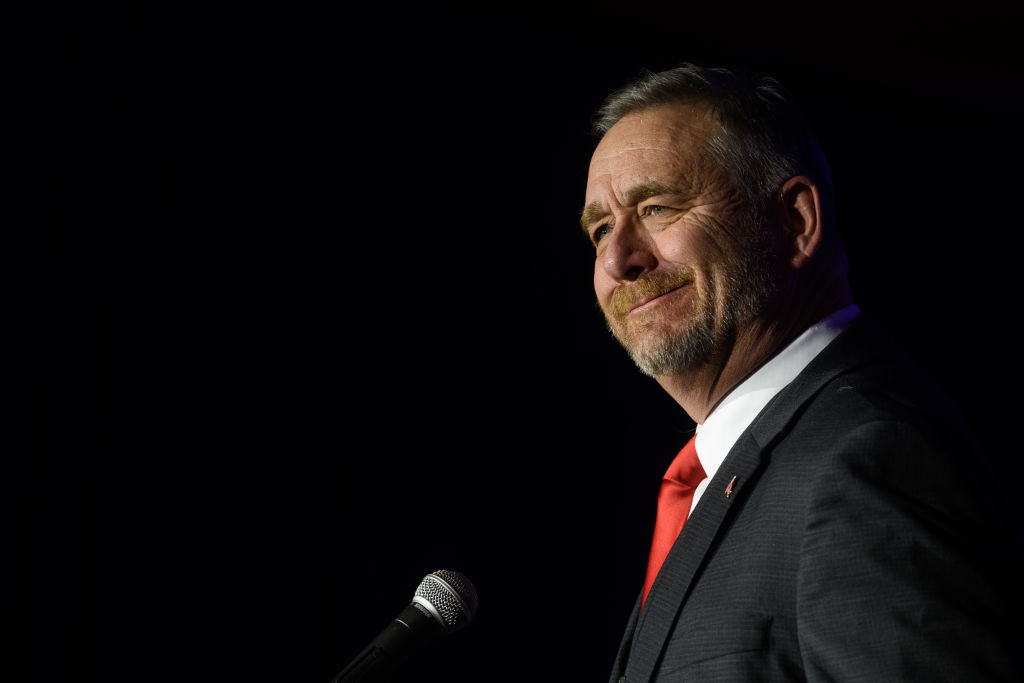
    Ohio Attorney General Dave Yost. (Photo by Justin Merriman/Getty Images)

    Question hinges around whether local prosecutors can be removed for saying they won’t bring charges under abortion bans

    BY:  – Ohio Capital Journal

    Ohio Attorney General Dave Yost and 14 other attorneys general are arguing in federal court that Florida Gov. Ron DeSantis was within his powers when he removed a local prosecutor who had spoken out against the state’s restrictive new abortion law.

    But the group that represents Ohio’s local prosecutors doesn’t seem comfortable with that claim, expressing worries that the Florida case threatens the principle of “prosecutorial discretion” — that faced with many possible crimes and limited time and resources, prosecutors need great latitude to decide which cases are most wisely brought.

    Yost said his friend-of-the-court brief doesn’t violate that principle. He said that he doesn’t want to impinge on prosecutors’ decisions about individual cases, but only to allow for their removal when they make blanket statements that they won’t enforce laws they don’t agree with.

    “This case is about a ‘prosecutor’s veto’ — the nullification of a democratically passed law by the act of an executive,” Yost said in an email Thursday. “The application of discretion to a single case is proper; the application of discretion to every case arising under a statute eliminates the legislative act itself, the core function of a democratically elected government.”

    Sunshine State spat

    Yost on Wednesday led the Republican attorneys general in filing a friend-of-the-court brief with the 11th U.S. Circuit Court of Appeals in Atlanta. It argues that DeSantis — who is widely thought to be seeking the Republican presidential nomination — had the power to remove Hillsborough County prosecutor Andrew Warren last August over positions Warren took regarding the state’s new abortion law and other matters.

    Warren, whose jurisdiction includes Tampa, signed declarations by a group of progressive prosecutors opposing charging people under laws restricting abortion and transgender care, the Florida Phoenix reported. DeSantis also objected to a Warren policy that his office usually would not bring low-level cases arising from bike or pedestrian stops in which a disproportionate number of minorities have historically been prosecuted, the Phoenix reported.

    Warren sued DeSantis in U.S. district court in an attempt to be reinstated.

    Judge Robert Hinkle found that DeSantis violated Warren’s First Amendment rights and separate provisions in the Florida Constitution by removing Warren. But, the judge ruled, the 11th Amendment to the U.S. Constitution barred him from reversing the removal because it was based solely on state law. In making the ruling, the judge looked past the First Amendment violation, saying DeSantis would have removed Warren even if he hadn’t violated the prosecutor’s free-speech rights.

    Warren appealed to the 11th Circuit, arguing that Judge Hinkle’s reasoning was “perverse.”

    “DeSantis’s violation of one (of Warren’s rights) cannot be permitted to excuse the violation of the other,” said a friend-of-the-court brief signed by Warren’s attorney. “The district court erred by ignoring the deeply intertwined nature of these protections. The decision below contributed to the disenfranchisement of Hillsborough County voters and allowed the governor to censor the speech of another duly elected official.”

    Separation of powers

    In their brief, Yost and the other Republican AGs argued that Warren and prosecutors like him jeopardize another constitutional principle when they say they’re not interested in bringing cases under laws with which they don’t agree — the separation of powers between the legislative and judicial branches of government. As part of the executive branch, it’s not a prosecutor’s job to decide which laws have force and which don’t, they said.

    The attorneys general of Alabama, Arkansas, Georgia, Kentucky, Louisiana, Mississippi, Missouri, Montana, Nebraska, South Carolina, South Dakota, Texas, Utah and West Virginia joined Yost in signing the brief. All of the states have some abortion restrictions on the books and most have laws that the Guttmacher Institute rates as “very restrictive” or “most restrictive.”

    Local prosecutors can’t unilaterally decide not to enforce those or other laws, the amicus brief said.

    “Those prosecutors have considerable discretion to decide whether to prosecute violations in particular cases,” the brief said. “They do not have the power to effectively repeal laws by categorically suspending enforcement.”

    It added, “The states can properly remove from office prosecutors who make non-prosecution pledges. These pledges violate the traditional separation of powers between government branches.”

    However, there are some devilish details involved. For example, how do you define “pledge” and how do you reconcile removing prosecutors for signing such documents with their right to free speech?

    Lou Tobin, executive director of the Ohio Prosecuting Attorneys Association, slammed prosecutors who make such pledges.

    He singled out Philadelphia District Attorney Larry Krasner, who survived an impeachment attempt after Krasner said the office would no longer prosecute marijuana possession, would slash prosecutions of sex workers, sought reduced sentences for other crimes and called to abolish Pennsylvania’s death penalty. Tobin also slammed Los Angeles County District Attorney George Gascon, who survived a recall attempt that started just when he took office. Like Krasner, Gascon did things like slash marijuana prosecutions and worked to end cash bail.

    But perhaps tellingly, Tobin didn’t mention the Florida prosecutor DeSantis removed and he said such an action is exceedingly grave.

    “Ohio has processes in place for the removal of public officers who refuse or willfully neglect to enforce the laws or to perform any official duty imposed by law,” Tobin said in an email Thursday. “It is a process that has been in place since before the General Code became the Revised Code in 1953, it does not involve the attorney general, it should not involve the attorney general, and it is a process that should be used rarely and with extreme caution.”

    Tobin also seemed to call out DeSantis for acting out of political motives.

    “Threats to unilaterally and summarily remove prosecutors from office are just as damaging to the justice system as people like Larry Krasner and George Gascon,” Tobin said. “We’re heading down a very dangerous road when those threats are made to score political points.”

    More than abortion

    In entering the dispute, Yost is again wading into national abortion politics. Last year, just after rushing to enact Ohio’s strict six-week abortion ban, the attorney general went on Fox News to question the existence of a 10-year-old rape victim who reportedly had to go to Indiana for an abortion. Days later, her existence was confirmed when Columbus police made an arrest in the case.

    While the Ohio law was in effect, obstetricians and maternal fetal medicine doctors said that aspects of it sometimes conflicted with what was in the best interest of their patients. DeSantis signed a similar law in Florida earlier this month.

    But Yost said that in filing the brief in the Florida case he wasn’t trying push local prosecutors to charge doctors every time they think abortion laws might have been violated. He was asked if he thought prosecutors should be able to bring a strong violent-crime or public-corruption case over a weak abortion case if they don’t have the resources to bring both.

    “Of course,” Yost replied. “… this is a case about one politician’s arrogance to cancel an entire category of criminal prohibition that was enacted by the elected Legislature. If you don’t see the danger in that, imagine your own most hated politician — whomever that might be — vowing that they will not prosecute Clean Water Act violations because it’s a violation of private property rights. Should such arrogance be without redress? Of course not.”

    Yost and his colleagues are arguing that prosecutors who say they won’t enforce abortion restrictions and other laws are abusing their power. But some critics argue that many of the post-Dobbs restrictions are themselves abuses of power. A majority of Americans don’t support them and many — such as Ohio’s six-week ban — were passed by gerrymandered legislatures.

    But Yost said his effort isn’t solely about enforcement of Ohio’s abortion law, under which doctors could be charged with felonies.

    “This is not an argument about abortion, although that was the individual motivation of the prosecutor who was removed,” he said. “But this same principle applies to prosecutors (who) would refuse to prosecute all thefts under a $1,000, or those who refuse to prosecute any firearms offense. Prosecutors do not get to make up the law, or revoke it — they only get to enforce it.”

    ____________________

    MARTY SCHLADEN

    Marty Schladen has been a reporter for decades, working in Indiana, Texas and other places before returning to his native Ohio to work at The Columbus Dispatch in 2017. He’s won state and national journalism awards for investigations into utility regulation, public corruption, the environment, prescription drug spending and other matters.

    MORE FROM AUTHOR

  • Economists: Ohio flat-tax would worsen inequality

    Economists: Ohio flat-tax would worsen inequality

    A concept of income disparity from Getty Images.

    BY:  Ohio Capital Journal

    An overwhelming majority of a panel of Ohio economists believes that a flat-tax proposal pending in the Ohio House would worsen economic inequality, according to a survey that was published Monday.

    Most of the 22 who responded also didn’t think that the proposal would spur economic growth.

    Inequality is a serious problem in the Buckeye State, where 30% of the population is covered by Medicaid, the federal-state health program for the poor, and where 40% of all births are also covered by the program.

    Meanwhile, Republican members of the state House of Representatives are pushing a measure that would require everyone to pay state income tax at the same rate regardless of their income. It’s more fair, the pitch goes, because people making more money would pay proportionately more in income taxes than those making less.

    But critics point out that taxes on income are far from the only way people pay to support state and local government. And other taxes — such as those on sales and gasoline — are charged without regard to whether an Ohioan makes $2.7 million a year or $27,000.

    When one takes all of those taxes into consideration, poorer Ohioans pay out nearly twice as much of their income in state and local taxes as the richest, the Institute on Taxation and Economic Policy reported.

    In 2018, the poorest 20% paid 12.3% of their income in such taxes as the richest 1%, who paid just 6.5%, the institute reported.

    The economists surveyed by Scioto Analysis agreed with that assessment. Adamantly.

    Eighteen of the 22 who responded said that the 2.5% flat income tax proposed in House Bill 1 would exacerbate inequality. Only one disagreed and the other three were uncertain.

    “A flat tax is a regressive tax in which low-income taxpayers carry a disproportionate share of the tax burden,” independent economist Kay Strong wrote in the comments section of the survey. “Further squeezing those least able to cover daily living expenses qualifies as truly draconian.”

    To some, the matter was self-evident.

    “This will so obviously increase inequality that it’s not even worth debating,” wrote Paul Holmes of Ashland University.

    A few other economists resorted to snark.

    “Giving $11,000 to high-income earners and $3 to low-income earners is an efficient way to increase inequality,” wrote Michael Myler of the University of Mount Union.

    In addition to falling more heavily on poorer Ohioans, an analysis by Policy Matters Ohio indicated that HB 1 would punch big holes in funding for local government, libraries, and schools. The loss of such services will also worsen economic inequality, some of the economists said.

    “The benefits will flow to higher income individuals but the spending cuts will hurt lower income individuals,” Bob Gitter of Ohio Wesleyan University said.

    There was less certainty about whether the flat tax would help grow the economy, but 12 of the 22 economists said it wouldn’t. Eight were uncertain and just two said they believed it would help expand the state economy.

    “Public services and goods are an important part of the necessary infrastructure to grow an economy,” Rachel Wilson of Wittenberg University said. “Cutting state income taxes will reduce the public infrastructure. Our current tax rate is very competitive with other states and doesn’t need to be reduced.”

    Conversely, David Brasington of the University of Cincinnati said the flat tax would force local governments to be more efficient and thus spur economic growth.

    “It will make local public services rely more on local taxation, and attract people and new businesses to the best-run municipalities,” he said.

    _______________________________

    MARTY SCHLADEN

    Marty Schladen has been a reporter for decades, working in Indiana, Texas and other places before returning to his native Ohio to work at The Columbus Dispatch in 2017. He’s won state and national journalism awards for investigations into utility regulation, public corruption, the environment, prescription drug spending and other matters.

    MORE FROM AUTHOR
  • After the end of COVID-era benefits, 70k older Ohioans struggle to fight hunger

    After the end of COVID-era benefits, 70k older Ohioans struggle to fight hunger

    Throughout the pandemic, families have turned to food banks for help. Harvesters, a private food bank, saw the amount of food distributed increase from 54 million pounds in 2019 to 65 million in 2020. In this picture, food is distributed at a drive-in in Kansas City, Kansas. (Harvesters — The Community Food Network).

    BY:  Ohio Capital Journal

    After Congress ended pandemic food assistance in February, 70,000 older Ohioans have seen food benefits slashed to $23 a month, in some cases down from $280.

    That has many making excruciating choices between food, medicine and utilities like electricity and gas, Lisa Hamler-Fugitt, executive director of the Ohio Association of Foodbanks, said Wednesday.

    And while it’s dire for anybody to live in hunger, that’s especially true the older you are, she said, because insufficient nutrition exacerbates conditions such as diabetes and depression and can take away seniors’ ability to live on their own. The end of COVID-era enhancements to benefits under the Supplemental Nutrition Assistance Program — or SNAP — has added to the already increasing number of older Ohioans seeking help at Ohio’s groaning food pantries, Hamler-Fugitt said.

    “They’re the canaries in the hunger coal mine,” she said, explaining that because most older Ohioans live on fixed incomes, they can’t earn their way out of food insecurity. “When they join the food line, they’re not leaving until they go into the nursing home or they pass away.”

    To help low-income people deal with the economic shocks from the coronavirus epidemic, Congress and the Trump administration in 2020 enhanced benefits under SNAP, the program formerly known as food stamps, and it eased eligibility to include households with somewhat higher incomes. And by literally putting food on the table, it had a big effect on poverty, the Center on Budget and Policy Priorities reported.

    “The temporary benefits pushed back against hunger and hardship during COVID,” the report said. “A study estimated that (enhanced allotments) kept 4.2 million people above the poverty line in the last quarter of 2021, reducing poverty by 10 percent — and child poverty by 14 percent — in states with (enhanced allotments) at the time. The estimated reduction in poverty rates due to (enhanced allotments) was highest for Black and Latino people.”

    But last December, Congress and the Biden administration decided to end the enhancements effective in February.

    “This change was made as part of a bipartisan compromise that created a permanent Summer Electronic Benefit Transfer (EBT) program to provide grocery benefits to replace school meals for some 30 million children in low-income families when schools are closed in the summer — a time when families with school-aged children are at higher risk for food insecurity,” the Center on Budget and Policy Priorities reported.

    Hamler-Fugitt said that in Ohio, the group over 60 was particularly hard hit in part because it’s an aging state. It has the 18th-highest percentage of residents over 65, for example.

    In some cases, seniors don’t have support systems and some are even supporting others, such as grandchildren and great-grandchildren. And the older one becomes, the more health complaints accumulate, often making it impossible to perform many of the jobs that are available.

    Hamler-Fugitt said her agency has been hearing about the real-life consequences of cutting back food benefits to older Ohioans.

    “You just can’t even believe these horror stories,” she said. “We’re interviewing them now about what their coping strategies are and it’s really, really scary. Before they had about $2 a meal — that was a best-case scenario. Now it’s 75 cents a day. That’s 25 cents a meal.”

    She explained that the permanent fix to the problem is at the federal level, where providing the U.S. Department of Agriculture with more resources could make the enhanced benefits permanent.

    But over the short term, advocates for the poor are asking the Ohio General Assembly to pony up $21 million for each of the next two years to ensure that every eligible Ohio household has at least a $50 monthly SNAP benefit.

    “The economic consequences of this for an aging state like Ohio are just huge,” Hamler Fugitt said.

    _____________________________

    MARTY SCHLADEN

    Marty Schladen has been a reporter for decades, working in Indiana, Texas and other places before returning to his native Ohio to work at The Columbus Dispatch in 2017. He’s won state and national journalism awards for investigations into utility regulation, public corruption, the environment, prescription drug spending and other matters.

    MORE FROM AUTHOR

  • Ohio SOS gives yet another reason to make it a lot harder for voters to amend Constitution

    Ohio SOS gives yet another reason to make it a lot harder for voters to amend Constitution

    [vc_row][vc_column][vc_column_text]

    Secretary of State Frank LaRose announces the referral of 117 cases of alleged voting and voter registration fraud stemming from the 2020 elections. Photo courtesy The Ohio Channel.

    BY:  Ohio Capital Journal

    Ohio Secretary of State Frank LaRose on Wednesday offered another rationale for making it much more difficult for voters to amend the Ohio Constitution. Now he’s saying it’s needed to fight a possible power grab like one that grew out of a massive bribery and money-laundering scandal.

    But LaRose didn’t mention in his op-ed that his name came up repeatedly in a criminal trial related to the scandal and that he appeared to be in close communication with some of its central figures.

    Nor did his office respond when asked whether LaRose ever spoke out against the corrupt utility bailout before the FBI started arresting people in July 2020.

    Slippery explanations

    The secretary of state — who is said to be eyeing a run for U.S. Senate next year — has been pushing to increase the portion of votes needed for a citizen-initiated amendment from 50% to 60%. As he and his allies have, they’ve given a shifting set of reasons for why that’s needed.

    Last November, during a lame-duck session of the legislature, LaRose and state Rep. Brian Stewart, R-Ashville, held a press conference saying that the change was necessary to prevent wanton amendments to the Ohio Constitution by monied special interests. But they didn’t point to any examples of how that had happened in the past.

    Many suspected an ulterior motive.

    LaRose sat on a Republican-dominated redistricting commission that last year ignored seven Ohio Supreme Court rulings saying that the legislative and congressional maps the commission produced violated anti-gerrymandering amendments overwhelmingly approved by Ohio voters. That prompted Maureen O’Connor, the outgoing Republican chief justice, to urge Ohioans to pass new, more-tightly written amendments this year.

    Ohio was also roiled when a highly restrictive abortion law took effect last June just after the U.S. Supreme Court overturned Roe v. Wade and horror stories poured out of abortion clinics and hospitals. An effort quickly started to get an amendment on the ballot protecting abortion rights after other protections easily passed in other states.

    But at last year’s presser, LaRose denied that his goal was to block anti-gerrymandering or abortion-rights amendments. The constitutional change he was advocating was a long-term, fundamental one that he didn’t seek to block such short-term disputes, he claimed.

    Just weeks later, however, Stewart, LaRose’s sidekick at the presser, sent a letter to his GOP colleagues in the House explaining the real reasons for making it harder for Ohioans to amend their constitution: to stop abortion-rights and anti-gerrymandering amendments that appear to be favored by strong majorities of Ohioans.


    [/vc_column_text][vc_raw_html]JTNDYmxvY2txdW90ZSUyMGNsYXNzJTNEJTIydHdpdHRlci10d2VldCUyMiUzRSUzQ3AlMjBsYW5nJTNEJTIyZW4lMjIlMjBkaXIlM0QlMjJsdHIlMjIlM0VIZXJlJTI2JTIzMzklM0JzJTIwdGhlJTIwZnVsbCUyMGxldHRlci4lMjBJdCUyMGFsc28lMjB0aWVzJTIwdGhlJTIwaXNzdWUlMjB0byUyMHJlZGlzdHJpY3RpbmclMjByZWZvcm0lMkMlMjBhbmQlMjByZXNwb25kcyUyMHRvJTIwdGhlJTIwb3JnYW5pemVkJTIwbGFib3IlMjBncm91cHMlMjB0aGF0JTIwcmFsbGllZCUyMGF0JTIwdGhlJTIwT2hpbyUyMFN0YXRlaG91c2UlMjB5ZXN0ZXJkYXkuJTIwJTNDYSUyMGhyZWYlM0QlMjJodHRwcyUzQSUyRiUyRnQuY28lMkZpbGhXTFBpV00wJTIyJTNFcGljLnR3aXR0ZXIuY29tJTJGaWxoV0xQaVdNMCUzQyUyRmElM0UlM0MlMkZwJTNFJTI2bWRhc2glM0IlMjBBbmRyZXclMjBUb2JpYXMlMjAlMjglNDBBbmRyZXdKVG9iaWFzJTI5JTIwJTNDYSUyMGhyZWYlM0QlMjJodHRwcyUzQSUyRiUyRnR3aXR0ZXIuY29tJTJGQW5kcmV3SlRvYmlhcyUyRnN0YXR1cyUyRjE2MDMxMzAzODQ3NDQ1MzQwMTYlM0ZyZWZfc3JjJTNEdHdzcmMlMjU1RXRmdyUyMiUzRURlY2VtYmVyJTIwMTQlMkMlMjAyMDIyJTNDJTJGYSUzRSUzQyUyRmJsb2NrcXVvdGUlM0UlMjAlM0NzY3JpcHQlMjBhc3luYyUyMHNyYyUzRCUyMmh0dHBzJTNBJTJGJTJGcGxhdGZvcm0udHdpdHRlci5jb20lMkZ3aWRnZXRzLmpzJTIyJTIwY2hhcnNldCUzRCUyMnV0Zi04JTIyJTNFJTNDJTJGc2NyaXB0JTNF[/vc_raw_html][vc_column_text]The attempt to rush a bill through lame duck last year failed.

    Now Stewart, LaRose and their allies are trying to pass it through Ohio’s now-unconstitutionally gerrymandered legislature. If it passes, it would put the measure requiring 60% of the vote to amend the state constitution on the ballot. And, since the vote would be under the existing rules, it would require just 50% of the vote to pass.

    Also on the pile of accusations that it’s a naked power grab is that LaRose, Stewart and their allies want to put the measure on the ballot in a low-turnout August election. They’re doing so just months after passing a bill that had LaRose’s support to eliminate such elections as costly and unnecessary — and three months before the abortion amendment is expected to hit the ballot.

    A new reason

    While he’s being accused of attempting a power grab, LaRose says he’s trying to stop them.

    On Tuesday, The Columbus Dispatch published an op-ed in which he furnished yet another reason to make it harder for voters to change the state Constitution. He cited an attempt by former House Speaker Larry Householder to pass an amendment changing the state’s term limits so Householder could stay speaker for another 16 years.

    It was part of a breathtaking scheme in which Householder and his allies took more than $61 million from Akron-based FirstEnergy and other utilities, used the money to make him speaker in January 2019, and then pass and protect a $1.3 billion ratepayer bailout that mostly went to FirstEnergy.

    Fresh off the passage of the bailout, Householder raised millions in early 2020 from FirstEnergy and AEP for his scheme that would allow him to stay longer in office. But it died with his arrest that July.

    It might seem ironic that LaRose would use a corruption scandal to gut a 1912 reform measure that was aimed at curbing corrupt, unresponsive government, but that’s what he argued. He said all it takes to change the Constitution now “is a well-funded, dishonest political campaign and a simple majority vote.”

    LaRose added that Householder planned to call his tenure-extension scheme “Ohioans for Legislative Term Limits, a deceptive name for a constitutional amendment that would more than double his term in office. It should come as no surprise that FirstEnergy Corporation, the company at the center of Householder’s racketeering scandal, agreed to bankroll the amendment campaign.”

    Significant omissions

    While he accused his opponents of “hysterical hyperbole” as he tries to make it 20% harder for voters to succeed in the already difficult process to amend the Ohio Constitution, there were some important things LaRose didn’t say in his Op-Ed.

    For starters, FirstEnergy didn’t only bankroll Householder in 2018 as the now-convicted former speaker elected a team of lieutenants who would hand him the speaker’s gavel. The utility also bankrolled LaRose to the tune of $25,000 that year as he ran for secretary of state.

    It was part of nearly $50,000 that the energy company — which signed a deferred prosecution agreement in the Householder scandal — has given LaRose, the campaign-finance tracker FollowTheMoney.org reports.

    And while LaRose is decrying the bailout now that there have been arrests and convictions, there was reason to know there was something wrong with it well before they took place.

    Insiders knew that somebody was burying Capitol Square in cash throughout the 2019 passage of House Bill 6, the corrupt utility bailout. That was especially true as FirstEnergy dumped what the FBI later determined was $36 million into a blatantly-dishonest-but-successful fight to beat back a repeal.

    Because the funds were non-disclosable 501(c)(4) dark money, it was impossible for the public to know exactly where they were coming from until the feds stepped in and used subpoenas and other special powers to find out.

    But HB 6 was such bad legislation and the campaign to stop the repeal so over-the-top that there was plenty of reason to suspect that somebody was being bought off to pass it. It was a massive corporate bailout that Householder and others were trying to officially declare a tax. Republican lawmakers who didn’t want to cast such a damaging vote described withering pressure from House leadership.

    Former friends

    LaRose’s office didn’t answer Wednesday when asked if the secretary of state ever spoke out against HB 6 before the FBI started making arrests.

    In the Cincinnati corruption trial that ran from late January to mid-March, federal prosecutors presented several communications to the jury that might indicate that LaRose was actually sympathetic to the effort to pass and protect the corrupt bailout.

    On July 23, 2019, as the repeal effort got underway, text messages flew between two prominent figures in the scandal: Matt Borges, the former Ohio Republican Party chairman who was convicted along with Householder; and Juan Cespedes, a lobbyist who pleaded guilty and cooperated with prosecutors.

    Borges told Cespedes he had received “a message from the secretary of state on the ballot-measure issue.”

    The men were hoping for help from LaRose. He’s chairman of the Ohio Ballot Board, which, along with Attorney General Dave Yost, has to approve the language of constitutional amendments before they’re circulated for the hundreds of thousands of needed voter signatures — and before they’re placed on the ballot.

    In the case of the HB 6 repeal, Yost initially sent the language back for revisions, then he and the ballot board approved it. But that wasn’t before the original 90 days opponents had to gather the signatures was whittled down to 53.

    In the end, time ran out before opponents could gather them. But at the beginning of the effort, Borges seemed to be talking to LaRose about what LaRose needed in exchange for his help.

    “LaRose is expecting us to be publicly supportive of him,” Borges said. “Apparently petitioners (for the repeal of HB 6) are going to call on him to step down from the ballot board because of ‘conflicts.’ He can be our friend in this process, so let’s be prepared to speak for him.”

    Continuing communication

    Later in the repeal fight, FirstEnergy’s two top executives discussed asking LaRose’s help with Yost. In addition to hamstringing the petition effort, supporters of the corrupt bailout wanted to have it officially declared a tax, and thus legally exempt from repeal.

    “I’ve been asked by (subsidiary FirstEnergy Solutions) to call Frank LaRose to get Frank to call Dave Yost,” Vice President Michael Dowling texted CEO Chuck Jones, according to messages put into evidence by prosecutors. “If Frank tells Yost that he believes HB 6 is a tax, Yost will come out publicly and say it, which (FirstEnergy Solutions) thinks helps with the Supreme Court. Frank is reluctant to make the call. I have a call in to Frank and I will ask him to do it.”

    LaRose may have been reluctant about making that call. But he apparently wasn’t reluctant to keep talking to the people who funded the scandal he’s now condemning and using as a reason to make it harder for voters to amend the Ohio Constitution.

    In October 2019 — shortly before the repeal effort failed — Jones sent a text to John Kiani, the chairman of the FirstEnergy subsidiary that was to receive $1 billion of the bailout. It indicated that both LaRose and Householder had been providing the FirstEnergy CEO with “private” information on the repeal effort.

    “For what it’s worth, LaRose and Householder think it’s game over,” Jones told Kiani. “But that is a private conversation unless they’ve told you the same thing. And Householder has a ‘quick fix’ anyway.”

    And then in November 2019 — just after the repeal failed — other messages indicated that LaRose wanted to cement a relationship with Kiani, the hard-charging former Enron executive whom Cespedes testified stood to make $100 million off the sale of FirstEnergy’s bailed-out nuclear and coal plants.

    Borges texted Cespedes that LaRose, “told me he wants to get to know Kiani, and I said, ‘Are you sure about that?’”

    Cespedes replied, “He will live to regret that.”[/vc_column_text][/vc_column][/vc_row]

    ____________________________________

    MARTY SCHLADEN

    Marty Schladen has been a reporter for decades, working in Indiana, Texas and other places before returning to his native Ohio to work at The Columbus Dispatch in 2017. He’s won state and national journalism awards for investigations into utility regulation, public corruption, the environment, prescription drug spending and other matters.

    MORE FROM AUTHOR