Tag: MEGAN HENRY

  • Ohio GOP proposal seeks to change voter-passed marijuana law with higher tax, lower THC levels

    Ohio GOP proposal seeks to change voter-passed marijuana law with higher tax, lower THC levels

    By:  Ohio Capital Journal

    A Republican lawmaker is trying to reduce the amount of marijuana grown at home, lower the level of THC in recreational marijuana, increase the tax, and redirect the revenue from it.

    Ohio Sen. Steve Huffman, R-Tipp City, recently introduced Senate Bill 56 which would make several changes to the state’s marijuana laws.

    “This bill is about government efficiency, consumer and child safety, and maintaining access to voter-approved adult-use marijuana,” Huffman said in his sponsor testimony last week.

    Ohioans voters passed a citizen-initiated law to legalize recreational marijuana in 2023 and sales started in August 2024. Since it was passed as a citizen initiative, Ohio lawmakers have the ability to change the law.

    The state’s total recreational marijuana sales were $292,874,669 as of Jan. 25, according to the Ohio Department of Commerce Division of Cannabis Control.

    The bill would lower THC levels in adult-use marijuana extracts from a maximum of 90% to a maximum of 70% and merge the state’s medical and recreational marijuana programs under the Division of Cannabis Control.

    “Consolidating both programs under the Division will allow for consistent requirements regarding testing, packaging, labeling, and advertising, especially those related to protecting children,” Huffman said in his testimony. “It also provides for streamlined licensing standards and general compliance procedures, cutting down on bureaucracy, red tape, and government waste.”

    On the home grow side, the law currently allows 12 marijuana plants to be cultivated at a single residence, but the bill would cut that in half. Huffman said folks who are growing marijuana at home could be supplying the illicit market.

    “The people did vote for home grow,” Huffman said. “I think that this is an example that we’re trying to move it to a little bit more reasonable.”

    S.B. 56 would require marijuana to be transported in the trunk of a car when traveling and it specifies that marijuana is only allowed in a private residence.

    “Ohio has long established open container laws regarding alcohol in motor vehicles; common sense mandates a similar rule for adult-use and medical marijuana access in motor vehicles,” said Steve Barnett, the Carroll County Prosecuting Attorney and a current officer of the Ohio Prosecuting Attorneys Association.

    The bill would also up the tax on adult-use marijuana from 10% to 15%, cap the number of active dispensaries at 350, and funnel all revenue from the adult-use tax to the state general fund. There are currently 128 marijuana dispensaries in Ohio as of Friday, according to the Ohio Department of Commerce.

    The current tax revenue is divided up in multiple ways — 36% to the cannabis social equity and jobs fund, 36% to the host community cannabis fund, 25% to the substance abuse and addiction fund and 3% to the Division of Cannabis Control and Tax Commissioner Fund.

    Ohio Senators tried to pass a similar bill during the previous General Assembly, but it died in the House.

    “So we’re basically telling the voters … screw you,” said Sen. Bill DeMora, D-Columbus. “You don’t know what you’re talking about. You passed it with an overwhelming majority of the state, but we know better.”

    Huffman responded by saying he believes his bill corrects “some of the societal needs.”

    “I don’t want to sit at the ball game and the guy next to my nine-year-old kid is smoking marijuana,” he said. “I think that’s wrong. That’s what the voters voted for. …  I wouldn’t say we’re gutting everything. We’re trying to improve it.”

    There is currently nothing in the bill related to expungement, so DeMora asked about the possibility of adding expungement to the bill and Huffman sounded open to that possibility.

    “Through this committee process, we will certainly be open to any type of amendments to do something along that line,” Huffman said.

    Despite Ohio Gov. Mike DeWine pleas to lawmakers to regulate or ban delta-8 THC products, hemp is not included in the bill. There was a bill in the last General Assembly that would have banned the sale of intoxicating hemp, but the bill never made it out committee.

    However, Huffman hinted that a separate bill dealing with hemp will be introduced soon.

    “I find both of them to be very complex issues,” he said.

    Follow OCJ Reporter Megan Henry on Bluesky.


    Megan Henry

    Megan Henry

    Megan Henry is a reporter for the Ohio Capital Journal and has spent the past five years reporting in Ohio on various topics including education, healthcare, business and crime. She previously worked at The Columbus Dispatch, part of the USA Today Network.

    Ohio Capital Journal is part of States Newsroom, the nation’s largest state-focused nonprofit news organization.

    MORE FROM AUTHOR


  • Ohio Senate bill aims to help students with math interventions, including high-dosage tutoring

    Ohio Senate bill aims to help students with math interventions, including high-dosage tutoring

    (Getty Images)

    By:  Ohio Capital Journal

    As Ohio math scores continue to be below pre-pandemic levels, a proposed bill would bring math interventions to Ohio school districts that score below certain proficiency standards.

    Ohio Sen. Andrew Brenner, R-Delaware, recently introduced Senate Bill 19 which would require school districts or individual schools to come up with a math achievement improvement plan if they don’t have at least 52% of students receive a proficient score in math comprehension. A student’s comprehension is rated at one of five levels of proficiency: limited, basic, proficient, accomplished, and advanced.

    The bill would also require every district to create a math improvement and monitoring plan for students who qualify for math intervention services.

    During the 2022-23 school year, almost a third of Ohio students scored “limited” on their math proficiency, Brenner said Wednesday during his sponsor testimony.

    “Clearly, a disturbing number of Ohio children are in need of significant and prolonged academic intervention before it is too late to address their desperately-needed learning deficiency,” Brenner said to the Senate Education Committee.

    He introduced a similar bill in the last General Assembly and it passed unanimously in the Senate, but died in the House Primary and Secondary Education Committee.

    “It is still needed to address the critical need for learning acceleration for Ohio’s students most in need of additional academic support,” Brenner said in his sponsor testimony.

    GET THE MORNING HEADLINES.


    Under the bill, schools would be required to develop math improvement and monitoring plans for each student that qualifies for math intervention services within 60 days after getting the student’s third grade assessment math results.

    A math improvement and monitoring plan would identify the student’s “specific math deficiencies,” describe the additional instructional services they will receive, offer a chance for their parent or guardian to be involved, outline a monitoring process and offer high-dosage tutoring at least three days a week.

    Alabama, Mississippi, and Tennessee have enacted math legislation similar to what Ohio is proposing and those states have seen their math scores improve, said Lindsey Henderson, math policy director for ExcelinEd.

    “It’s never too late to get policy in place to move the needle on math improvement,” she said. “It’s really exciting to see states really taking a leap and going after it like they did literacy.”

    A lot of education policy at the state level has focused on reading in recent years.

    Ohio’s 2023 budget included provisions that are going toward implementing the science of reading, which is based on decades of research that shows how the human brain learns to read and incorporates phonemic awareness, phonics, fluency, vocabulary, and comprehension.

    Forty states and the District of Columbia have passed or implemented new policies related to evidence-based reading instruction since 2013, according to Education Week.

    “Reading has taken a lot of oxygen, for good reason,” Henderson said. “Reading and writing is a skill you can’t be an engaged citizen without, but the next most important skill is going to be mathematics. … We would never say I’m not a literacy person, that’s not socially acceptable. But to say that I’m not a math person is a socially acceptable thing to say, and we’re really trying to change that narrative.”

    S.B. 19 is not just limited to math. The bill would also require school districts to provide evidence-based academic intervention services to students based on their English language arts state assessment.

    National Report Card

    Ohio math and reading scores continue to be below pre-pandemic levels, according to the latest report from the National Center for Education Statistics.

    The Nation’s 2024 Report Card was released this week and the only increase at the national level was a slight bump in fourth grade math. There was no significant change with eighth grade math and scores declined in four and eighth grade reading.

    Approximately 235,000 fourth-graders from 6,100 schools and 230,000 eighth-graders from 5,400 schools participated in the 2024 math and reading assessments between January and March of last year.

    For Ohio, the average fourth-grade math score was 239, two points higher than the national average and one point higher than the state’s fourth grade math scores in 2022. The scale for NAEP scores is 0-500.

    The state’s average eighth-grade math score was 279, seven points higher than the national average and three points higher than the state’s 2022 test.

    Ohio’s average fourth-grade reading score was 216, two points higher than the national average, but three points less than the state average in 2022.

    The state’s average eighth-grade reading score was 260, three points higher than the national average, but two points lower than Ohio’s score in 2022.

    Aaron Churchill, Ohio Research Director for the Thomas B. Fordham Institute, called the state’s NAEP scores a disappointment.

    “Overall, these results indicate that far too many Ohio students are struggling to master core math and reading skills,” he said in a statement.

    Follow OCJ Reporter Megan Henry on Bluesky.

    YOU MAKE OUR WORK POSSIBLE.

    _________________
    Megan Henry
    Megan Henry

    Megan Henry is a reporter for the Ohio Capital Journal and has spent the past five years reporting in Ohio on various topics including education, healthcare, business and crime. She previously worked at The Columbus Dispatch, part of the USA Today Network.

    Ohio Capital Journal is part of States Newsroom, the nation’s largest state-focused nonprofit news organization.

    MORE FROM AUTHOR

  • 1 ,777 Ohioans died by suicide in 2023, according to new Ohio Department of Health report

    1 ,777 Ohioans died by suicide in 2023, according to new Ohio Department of Health report

     (Photo by Quentin Young/Colorado Newsline.)

    By:  Ohio Capital Journal

    This story is about suicide. If you or someone you know needs support now, call, text or chat the 988 Lifeline.

    More than 1,700 Ohioans died by suicide in 2023, according to the Ohio Department of Health.

    The number of Ohioans who died by suicide decreased 1% in 2023, according to ODH’s 2023 Suicide Report.

    “Every death by suicide is a tragedy that deeply affects so many,” said ODH Director Bruce Vanderhoff. “This is a sobering fact, and it is why, even though we take some encouragement from this slight decline, we are committed to continuing to work hard to drive those numbers down further.”

    This is the first time in three years there has been a decrease. 1 ,777 Ohioans died by suicide in 2023 — 20 fewer than 2022.

    “While this decrease in suicide deaths is certainly a step in the right direction, we must continue to make improvements in suicide prevention and mental health,” Ohio Gov. Mike DeWine said in a statement. “Depression and suicide remain a serious threat – especially to our kids. If anything, our progress should inspire us to further advance our commitment to this life-saving work, because the life of every Ohioan is precious.”

    GET THE MORNING HEADLINES.


    Nearly five Ohioans died by suicide each day — including one person ages 10-24 every 36 hours, according to the report.

    “These are moms, dads, brothers, sisters, neighbors, co-workers and all of these losses are truly a human tragedy and a reminder that we have to do more,” said LeeAnne Cornyn, director of the Ohio Department of Mental Health and Addiction Services. “We want all Ohioans to be well, get well and stay well, so that they can live up to their full God given potential every single day.”

    Suicide was the 12th leading cause of death overall in Ohio and was the second-leading cause of death among Ohioans ages 10-14 and 20-34, according to the report.

    Nearly 70% of Ohio suicide deaths were white-non-Hispanic males and Ohioans ages 45-54 was the age group with the highest rate of suicide deaths, according to the report.

    Firearms were used in more than half of all Ohio suicide deaths and and the use of drug poisoning increased by 11% in 2023, according to the report.

    Black non-Hispanic females and white non-Hispanic females saw the largest decrease in rate of suicide deaths, both by 6%, according to the report.

    The 988 Suicide & Crisis Lifeline launched in July 2022 and Ohio’s 19 call centers have responded to more than 440,000 calls, chats and texts.

    “Every single Ohioan plays a role in reducing suicides, and that’s why we have also worked to equip thousands and thousands of Ohioans with the skills that they need to recognize mental illness or substance use disorder and have the skills that they need to talk to their peers, to talk to their family members and help connect them to care,” Cornyn said.

    Follow OCJ Reporter Megan Henry on Bluesky.

    YOU MAKE OUR WORK POSSIBLE.


    Megan Henry
    Megan Henry

    Megan Henry is a reporter for the Ohio Capital Journal and has spent the past five years reporting in Ohio on various topics including education, healthcare, business and crime. She previously worked at The Columbus Dispatch, part of the USA Today Network.

    Ohio Capital Journal is part of States Newsroom, the nation’s largest state-focused nonprofit news organization.

    MORE FROM AUTHOR

  • Ohio GOP lawmaker again proposes to overhaul higher ed, ban diversity efforts and labor strikes

    Ohio GOP lawmaker again proposes to overhaul higher ed, ban diversity efforts and labor strikes

     Ohio State Sen. Jerry Cirino, R-Kirtland, introduced Senate Bill 1 on Jan. 22, 2025. (Photo by Megan Henry, Ohio Capital Journal).

    Cirino’s proposed overhaul failed to move forward under previous Ohio House Speaker Jason Stephens, but has new potential life under Speaker Matt Huffman

    By:  Ohio Capital Journal

    A Republican state senator has reintroduced a controversial proposal to massively overhaul higher education in Ohio, including a ban on diversity and inclusion efforts as well as a ban on labor strikes by faculty and staff.

    Kirtland Republican state Sen. Jerry Cirino’s proposed Senate Bill 1 — the Advance Ohio Higher Education Act — was introduced during a press conference Wednesday and is similar to the bill Cirino introduced during the last General Assembly, with some additions.

    “It’s called Senate Bill 1 for a reason,” Cirino said. “It is our top priority, and we’re going to move this along quickly. … We’ve already had a lot of hearings on Senate Bill 83.”

    He said the bill is going to be on a fast track and Senate Higher Education Committee Chair Kristina Roegner said hearings on the bill will likely start next week.

    “We are promoting more speech, not less speech, as some of our opponents have said, more discussion and debate on all topics, less indoctrination, institutional support by trustee actions and policy moves that we’re requiring the trustees to make, to support an environment of diversity of thought,” Cirino claimed.

    S.B. 1 includes “virtually everything from Senate Bill 83,” said Cirino, who is the vice chair of the Ohio Senate Higher Education Committee.

    GET THE MORNING HEADLINES.


    Cirino’s former higher education bill, Senate Bill 83, was unable to make it across the finish line during the previous General Assembly. It passed in the Senate and in the House committee, but former Ohio House Speaker Jason Stephens, R-Kitt Hill, never brought it to the House floor for a vote. The previous bill underwent 11 revisions.

    Cirino made good on his promise to reintroduce a similar bill in January and the bill could have an easier time in the House now that Matt Huffman, R-Lima, is the House Speaker.  Lawmakers in the Ohio House plan on introducing a companion bill.

    What is in S.B. 1?

    S.B. 1 has yet to be posted online, but Cirino said the bill includes a post-tenure review, annual performance reviews of faculty, a retrenchment provision that would block unions from negotiating on tenure and public syllabuses. The bill would prohibit political and ideological litmus tests in hiring, promotion, and admissions decisions.

    A big change with S.B. 1 is banning diversity, equity and inclusion courses in addition to the trainings. The former bill would have banned mandatory diversity, equity and inclusion training unless it is required to comply with state and federal law, professional licensure requirements or receiving accreditation or grants.

    “(DEI) has become institutionalized discrimination paid for by the taxpayers,” Cirino said.

    Ohio House Rep. Bob Young, R-Dayton, said the focus of the bill shouldn’t be the DEI ban.

    “Let’s truly focus on why we’re here and who we are in higher education, and that is to educate a workforce to compete globally and grow Ohio and jobs and families and attract more people to come in,” Young said.

    The on faculty and staff’s ability to strike is back in the bill, something Cirino claimed was not an anti-labor issue.

    “When a student signs up for instruction for a semester, they pay in advance, or they can’t go into the class,” Cirino said. “That represents a contract between the students and the institution, and because there are public institutions, therefore a contract with the state, they have to deliver that instruction and trade for the dollars per pen.”

    Youngstown State University workers went on strike for a few days in 2020 over pay disputes, and Wright State University went on strike for almost three weeks in January 2019 over pay disputes and health care.

    “The threat of (a strike) is what is used, and the students are being used as pawns in order to get better working hours, a better dental plan, or whatever the case may be,” Cirino said. “If we value higher education the way we do, we should also value the fact that that contract needs to be fulfilled, and nothing except force majeure should ever get in the way of students getting what they have paid in advance for.”

    S.B. 1 would shorten university board of trustees terms from nine years down to six years.

    “It’s been difficult to find trustees willing to make nine year commitments and the governor agrees with this,” Cirino said. “We’re talking about not just changing their terms, but also requiring new trustee training programs that would be adjudicated through the Chancellor’s Office.”

    Requiring students to take an American history course is also back in the bill.

    “I have become more and more convinced of that necessity over time now, since we first wrote the bill, as I’ve talked with more and more young people who have no clue about so many important things about our history and our founding documents and so on,” Cirino said.

    Opposition to S.B. 1

    Cirino acknowledged there will be lots of opposition with S.B. 1, just as there was with his previous bill.

    “Senate Bill 1 is a misguided attempt to micromanage higher education in Ohio, imposing unnecessary restrictions on our universities, faculty, and students,” state Sen. Casey Weinstein, D-Hudson, said in a statement.

    More than a dozen students from the Ohio Student Association protested S.B. 1 with chants of “When Black studies are under attack, what do we do? Stand up, fight,” and “Higher ed will be dead,” among others.

    “The students that were out here protesting are probably getting extra credit for being here,” Cirino said. “I don’t believe that they have studied the bill and all the implications of this legislation and the impact on higher education in Ohio. I believe that they were asked to be here by their professors.”

     Brielle Shorter, a 20-year-old Ohio State University student, protests against Senate Bill 1 on Jan. 22, 2025. (Photo by Megan Henry, Ohio Capital Journal). 

    Brielle Shorter, a 20-year-old Ohio State University student, was among the students who protested against the bill Wednesday.

    “No, we are not here for extra credit,” she said. “That’s not how this works. I believe that this bill is being pushed very fast and very rapidly.”

    Pranav Jani, president of the Ohio State University chapter of the American Association of University Professors and an English professor, said Cirino’s quip about students protesting for extra credit is “one of the most insulting things I’ve ever heard said about students.”

    “It shows how out of touch he is with what happens in the classroom,” Jani said.

    If this bill is signed into law, Shorter — who is from Cincinnati and wants to be a psychiatrist — said she would go out-of-state to continue her education.

    “I fear that I can no longer call Ohio my home,” Shorter said. “It feels like students are being pushed out, and it feels like I might be one of them.”

    Many college students have said they would move out of Ohio if this bill was signed into law, but Cirino called that “a red herring” during Wednesday’s press conference.

    Education organizations were quick to oppose S.B. 1.

    “(S.B. 1) uses culture war politics to attack workers’ rights and turn campuses into hostile environments for people of color, immigrants, and other marginalized communities,” Ohio Federation of Teachers President Melissa Cropper said in a statement.

    Ohio Conference of the American Association of University Professors Executive Director Sara Kilpatrick hopes Cirino will listen to the students’ concerns with this bill.

    “He’s not interested in hearing opposing views, which shows that this bill isn’t about intellectual diversity, but is actually about pushing a partisan agenda,” Kilpatrick said in a statement.

    Follow OCJ Reporter Megan Henry on Bluesky.

    YOU MAKE OUR WORK POSSIBLE.

    ________________
    Megan Henry
    Megan Henry

    Megan Henry is a reporter for the Ohio Capital Journal and has spent the past five years reporting in Ohio on various topics including education, healthcare, business and crime. She previously worked at The Columbus Dispatch, part of the USA Today Network.

    Ohio Capital Journal is part of States Newsroom, the nation’s largest state-focused nonprofit news organization.

    MORE FROM AUTHOR

  • Possible TikTok ban could restrict how many Ohio small businesses connect with customers

    Possible TikTok ban could restrict how many Ohio small businesses connect with customers

    The TikTok app is displayed on an Apple iPhone. (Photo Illustration by Drew Angerer/Getty Images)

    By:  Ohio Capital Journal

    TikTok could be banned in the United States on Sunday, which could impact how many Ohio small businesses reach customers.

    Hoggy’s BBQ, which opened in 1991, has been using TikTok since 2020 and posts daily videos that gives viewers a behind-the-scenes look at the restaurant. Their videos range from breaking down their recipes to going through various items on the menu.

    “We’ve worked really hard on it,” said Kyle Turner, the restaurant’s director of marketing and business. “It’s not the end of the world. We will survive and we’re on the other platforms, which will help with marketing, but it will limit our reach. It’ll definitely hurt our marketing capacity a little bit.”

    Small businesses have used TikTok to connect with customers in new ways.

    “To have (TikTok) just sort of taken away all of a sudden could feel very alarming and just be a really difficult pill for many businesses to swallow, having built their following … and a real connection with those people on that platform,” said Alexa Fox, an associate professor of marketing at the University of Akron who teaches a social media marketing class.

    President Joe Biden signed legislation into law last year that requires TikTok’s parent company ByteDance to sell TikTok or the social media platform will be banned out of concern that ByteDance would share user data with the Chinese government or push propaganda and misinformation.

    TikTok argues the ban would violate the U.S. Constitution’s First Amendment free speech protection.

    The United States Supreme Court heard arguments on banning TikTok last week and can make a decision at any moment. President-elect Donald Trump will be inaugurated on Monday and he recently called on the court to pause the ban from taking effect.

    If the ban goes through over the weekend, new users would be unable to download TikTok. Current users would still have the app on their smartphones, but the app would eventually become not usable over time.

    GET THE MORNING HEADLINES.


    TikTok was released in 2016 and has grown to more than 1 billion monthly active users, including more than 170 million users in the U.S.  — making it one of the most popular social media platforms. Other platforms like Instagram, Facebook and YouTube Shorts also promote short-form videos, but that doesn’t necessarily mean accounts will have the same success they currently do on TikTok.

    “To say it’s going to be a one-to-one comparison is probably not very accurate,” Fox said. “Other social media platforms have not been very successful at replicating the environment that TikTok offers in order to really build a large following and connect with people using the features that the platform offers.”

    Hoggy’s BBQ

    Hoggy’s BBQ has more than 27,600 followers on their TikTok account and they have posted a video every day for the past three and a half years.

    “(TikTok) increased our visibility,” Turner said. “It introduced us to a lot of different ideas, different people, and it definitely played a major role in the success and the growth we’ve had the last five years.”

    They didn’t want the restaurant’s TikTok account to be like a television commercial, he said.

    “The main goal is just to have a face to the place, be authentic, and don’t be overly corporate,” Turner said.

    Their TikTok has garnered national attention and even caught the eye of Texas Monthly’s BBQ Editor Daniel Vaughn, who paid a visit to Hoggy’s BBQ. People from Indianapolis, Detroit and Philadelphia have come to Columbus just to eat at Hoggy’s, Turner said.

    “They literally drove from those places to come to eat Hoggy’s and drive back, which was pretty crazy to me, but really cool,” he said. “Before TikTok, we didn’t really have that.”

    Follow Ohio Capital Journal Reporter Megan Henry on Bluesky.

    YOU MAKE OUR WORK POSSIBLE.


    Megan Henry
    Megan Henry

    Megan Henry is a reporter for the Ohio Capital Journal and has spent the past five years reporting in Ohio on various topics including education, healthcare, business and crime. She previously worked at The Columbus Dispatch, part of the USA Today Network.

    Ohio Capital Journal is part of States Newsroom, the nation’s largest state-focused nonprofit news organization.

    MORE FROM AUTHOR

  • Ohio Gov. Mike DeWine signs forced-outing, mandated religious release time policy bill into law

    Ohio Gov. Mike DeWine signs forced-outing, mandated religious release time policy bill into law

    By:  Ohio Capital Journal

    Ohio Gov. Mike DeWine has signed a bill into law that will require school districts to create a mandatory religious instruction release time policy and require educators to out a students’ sexuality to their parents.

    The law will take effect 90 days after DeWine signed the bill.

    Ohio lawmakers passed House Bill 8 during the final day of the lame duck session in 2024 and LGBTQ advocates called on DeWine to veto the bill.

    State Reps. D.J. Swearingen, R-Huron, and Sara Carruthers, R-Hamilton, introduced H.B. 8. Supporters called the bill the “Parents’ Bill of Rights” while opponents called it the “Don’t Say Gay” bill, due to its similar language to Florida’s ‘Don’t Say Gay’ law that passed in 2022.

    The bill requires public schools to let parents know about sexuality content materials ahead of time so they can request alternative instructions.

    GET THE MORNING HEADLINES.


    It also prohibits any sexuality content from being taught to students in kindergarten through third grade. H.B. 8 defines sexuality content as “oral or written instruction, presentation, image or description of sexual concepts or gender ideology.”

    This bill is one of a few anti-LGBTQ bills that became law during the most recent General Assembly.

    This new law strengthens Ohio’s existing law around religious release time by creating a mandate. Currently, Ohio allows school district boards of education to make a policy to let students go to a course in religious instruction during the school day, but this now becomes a requirement for Ohio school boards.

    “Parents, not government bureaucrats, should be making healthcare and education decisions for their kids,” Center for Christian Virtue President Aaron Baer said in a statement. “H.B. 8 protects children by safeguarding parents’ rights to make important decisions for their children.”

    The United States Supreme Court upheld religious released time laws during the 1952 Zorach v. Clauson case, which allowed a school district to have students leave school for part of the day to receive religious instruction.

    Religious release time instruction must meet three criteria: the courses must take place off school property, be privately funded, and students must have parental permission.

    LifeWise Academy, a Hilliard-based religious instruction program, already enrolls students in about 160 Ohio school districts and celebrated the governor’s signing.

    “All Ohio families have the freedom to choose off-campus religious instruction during school hours for their students,” LifeWise said in a statement.

    Two central Ohio school districts, Westerville and Worthington, rescinded their religious release time policy last year. Both districts formerly allowed LifeWise Academy to take public school students off-campus for Bible classes during school hours.

    “We are especially grateful that any local programs that had been put on hold will be able to resume their growing programs and that communities will now have the clarity they need to provide families with the opportunity to choose Bible-based character education for their child,” LifeWise said in a statement.

    Follow OCJ Reporter Megan Henry on Bluesky.

    YOU MAKE OUR WORK POSSIBLE.

    ______________
    Megan Henry
    Megan Henry

    Megan Henry is a reporter for the Ohio Capital Journal and has spent the past five years reporting in Ohio on various topics including education, healthcare, business and crime. She previously worked at The Columbus Dispatch, part of the USA Today Network.

    Ohio Capital Journal is part of States Newsroom, the nation’s largest state-focused nonprofit news organization.

    MORE FROM AUTHOR

  • Dr. Amy Acton is running for Ohio governor

    Dr. Amy Acton is running for Ohio governor

    Dr. Amy Acton addresses reporters at a news conference in 2020. (Ohio Capital Journal photo by Jake Zuckerman.)

    By:  Oho Capital Journal

    Former Ohio Health Department Director Dr. Amy Acton announced on Tuesday that she is running for Ohio governor in 2026.

    “Today, I filed papers to run for Governor because I refuse to look away from Ohioans who are struggling while self-serving politicians and special interests take our state in the wrong direction,” she said in a statement. “It’s time to give power back to the people and our communities. It’s time for a change.”

    Acton is running as a Democrat while Ohio has become increasingly more Republican in recent years. Ohio Supreme Court Judge Jennifer Brunner is the only Democrat in statewide office in Ohio. Acton first hinted at a run for governor during the summer at the Democratic National Convention.

    “I’m a doctor, not a politician,” Acton said in her statement. “I solve problems by bringing people together regardless of party to find solutions. So unlike most of our leaders I know the answer to moving our state forward isn’t giving politicians more power, it’s giving people more freedom.”

    Ohio Gov. Mike DeWine is term-limited. On the Republican side, Ohio Attorney General Dave Yost plans on running for governor. Former Republican Presidential Candidate Vivek Ramaswamy is also a potential GOP contender. Lt. Gov. Jon Husted has also expressed interest in running for governor, but he currently appears to be the front-runner to be appointed to fill J.D. Vance’s soon-to-be-open U.S. Senate seat. DeWine has yet to announce his pick, a task he must do before the Jan. 20 inauguration.

    For the Democrats, there is speculation about whether Ohio Minority Leader Allison Russo, D-Upper Arlington, will also run for governor.

    GET THE MORNING HEADLINES.


    DeWine appointed Acton to be ODH director in 2019 and she quickly became a household name in Ohio during the early days of the COVID-19 pandemic. She accompanied DeWine during his daily afternoon press conferences in the spring of 2020, donning her white lab coat, and helped translate complex medical terminology into plain English.

    She received a mix of praise and criticism during this time, and protesters even showed up to her Bexley house. Acton resigned as ODH Director in June 2020 — months after Ohio’s first confirmed COVID-19 case.

    After her time on DeWine’s cabinet, she went back to work at the Columbus Foundation and helped found the Center for HumanKindness.

    “My entire career I’ve been listening to Ohioans … and I’ve developed a deep connection with people across our state,” Acton said in her statement. “People share their struggles with me and how hard they work to keep up with the cost of groceries, childcare, healthcare, and other expenses. They feel left behind and like no one cares.”

    Acton grew up in Youngstown — experiencing homelessness at one point.

    “I remember what it was like to feel hungry, worry about where I would sleep, and how I would stay warm,” Acton said. “At times I felt invisible–and I know that so many Ohioans feel the same way.”

    She went on to earn a medical degree from what was formerly called the Northeastern Ohio University College of Medicine and received a master’s degree in public health from Ohio State University.

    “I believe we can build an Ohio where our people have a little breathing room–an Ohio where your zip code doesn’t determine success,” Acton said. “An Ohio that empowers local communities, not politicians. An Ohio with good-paying jobs, safe neighborhoods and thriving businesses where people can raise their families, age with dignity, and lead a happy and healthy life.”

    Acton lives in Bexley with her husband Eric, who is a teacher and coach in Bexley City Schools. Together they have six children.

    Follow OCJ Reporter Megan Henry on Bluesky.

    YOU MAKE OUR WORK POSSIBLE.

    _______________
    Megan Henry
    Megan Henry

    Megan Henry is a reporter for the Ohio Capital Journal and has spent the past five years reporting in Ohio on various topics including education, healthcare, business and crime. She previously worked at The Columbus Dispatch, part of the USA Today Network.

    Ohio Capital Journal is part of States Newsroom, the nation’s largest state-focused nonprofit news organization.

    MORE FROM AUTHOR

  • Bill that would expand fracking leases on state property is going to Ohio Gov. Mike DeWine

    Bill that would expand fracking leases on state property is going to Ohio Gov. Mike DeWine

    By:  Ohio Capital Journal

    A bill that would expand fracking leases in state public lands, parks, and wildlife areas from three years to five is going to Ohio Gov. Mike DeWine’s desk for his signature.

    Once he receives the bill, DeWine will have 10 days to sign the bill into law or veto it.

    State Reps. Dick Stein, R-Norwalk, and Patrick Brennan, D-Parma, introduced House Bill 308 last year and it originally defines nuclear energy as green energy in Ohio.

    Ohio has two nuclear reactors — Davis–Besse Nuclear Power Station in Northwest Ohio and the Perry Nuclear Power Plant in Northeast Ohio.

    The bill passed the Ohio House this summer, with ten Democrats voting against it.

    The Ohio Senate added a few amendments to the bill — including one that increases a standard lease for fracking under state parks to five years. The current law is three years.

    “We need to continue to frack, and allowing the extension of that is also important,” Sen. Andrew Brenner, R-Delaware, said during last week’s Senate session.

    State Sen. Kent Smith, D-Euclid, had many issues with the bill.

    “This is perhaps the least popular thing that we will do in the entire General Assembly,” Smith said. “Why are we extending the lease in this amendment again without public consideration?”

    The U.S. Department of Energy defines renewable energy as coming from “unlimited, naturally replenished resources, such as the sun, tides, and wind.”

    “This bill would designate nuclear energy as green energy, which is kind of mystifying to me, because it’s clearly not,” Smith said. “It has so much radioactive waste, it’s clearly not clean. It’s certainly not renewable.”

    H.B. 308 passed last week in the Ohio Senate with a 24-6 vote. Sen. Catherine Ingram was the only Democrat to vote for the bill.

    House concurrence

    The Ohio House voted 65-26 to concur with the changes made to the bill later that same day. Brennan voted against concurrence on his own bill, saying he hoped it would play out in conference committee.

    “I remain steadfast in favor of nuclear expansion in the state of Ohio,” he said. “… I am not anti-fracking, but I believe our state parks are sacrosanct,” he said. “I think when we created our state parks, we created a contract with the people that we would leave our state parks alone. I’m just a purist when it comes to our state parks.”

    Only three Democrats voted for concurrence — state Reps. Richard Dell’Aquila, Joe Miller, and Elgin Rogers, Jr.

    GET THE MORNING HEADLINES.


    State Rep. Don Jones, R-Freeport, lives where fracking takes place in eastern Ohio and said the fracking process has been refined over the years.

    “You will never know where fracking has occurred,” he said. “We’re not going to damage our state parks. We’re not going to hurt our state parks.”

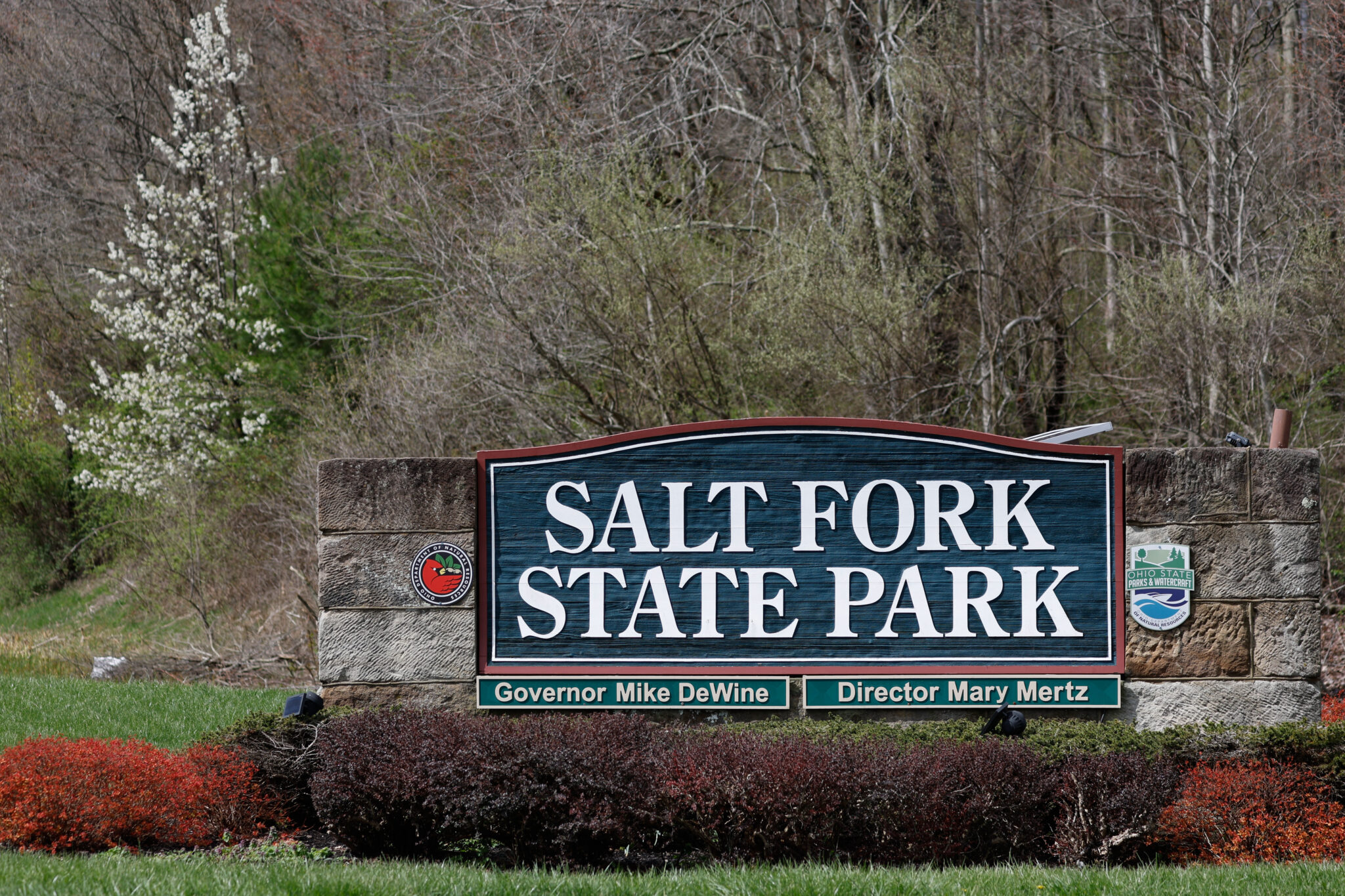
    The Ohio Oil and Gas Land Management Commission has selected various bidders to frack Salt Fork State Park, Valley Run Wildlife Area and Zepernick Wildlife Area. The vote on this bill comes days after OGLMC selected an Oklahoma-based company to lease about 30 acres of land in Egypt Valley in Belmont County for fracking.

    “This expansion of fracking is going to industrialize our beautiful parks and transform them into places people avoid, not enjoy,” Cathy Cowan Becker, steering committee member of Save Ohio Parks, said about H.B. 308.

    Former Ohio Gov. John Kasich signed a law allowing drilling companies to frack in state parks in 2011. Potential drillers need to get permission from the Oil and Gas Commission, but Kasich never appointed anyone to the committee.

    A fracking amendment was added to a bill during the last lame duck two years that passed and Gov. Mike DeWine signed it into law in January 2023. The law requires the Ohio Department of Natural Resources to allow fracking for natural gas in Ohio’s public land and state parks.

    “Ohio legislators have once again sold out our state parks and public lands to the oil and gas industry through an amendment to an unrelated bill during the lame duck session, with no notice or chance for public testimony,” Becker said.

    Follow OCJ Reporter Megan Henry on Bluesky.


    Megan Henry

    Megan Henry

    Megan Henry is a reporter for the Ohio Capital Journal and has spent the past five years reporting in Ohio on various topics including education, healthcare, business and crime. She previously worked at The Columbus Dispatch, part of the USA Today Network.

    Ohio Capital Journal is part of States Newsroom, the nation’s largest state-focused nonprofit news organization.

    MORE FROM AUTHOR

  • Hemp industry workers testify against bill that would ban intoxicating hemp products

    Hemp industry workers testify against bill that would ban intoxicating hemp products

    People who spoke out against Senate Bill 326 bill called for regulations, not a ban on sales — arguing that would cause the illicit market to flourish.

    By:  Ohio Capital Journal

    Workers in the hemp industry spoke out against a bill that would ban intoxicating hemp products in Ohio, effectively putting them out of business. These are known as delta-8 THC products that are often sold at smoke shops and corner stores.

    Those who spoke out against Senate Bill 326 during last week’s Senate Government Committee Meeting called for regulations, not a ban on sales — arguing that would cause the black market to flourish.

    “Strict bans will only support illicit sales of these products, with no enforceable safety or age requirements, which does nothing to address the issues legislators have cited as the need for new hemp legislation,” said Jonathan Miller, general counsel for the U.S. Hemp Roundtable.

    Ohio Gov. Mike DeWine has been asking lawmakers to regulate or ban delta-8 THC products and State Sen. Steve Huffman, R-Tipp City, introduced S.B. 326 last month.

    Twenty-five people submitted opponent testimony on S.B. 326 last week and nearly 20 people submitted proponent testimony on the bill last month.

    Marijuana is legal in Ohio and is not considered an intoxicating hemp product. The 2018 Farm Bill says hemp can be grown legally if it contains less than 0.3% THC.

    “Senate Bill 326 aims to make illegal an industry made up of thousands of small businesses but in fact it will simply strengthen the black market,” said JD McCormick, president of the American Healthy Alternatives Association.

    Several Ohioans have turned to hemp as an alternative to opioid pain prescriptions, he said.

    “A 2023 economic impact report on the United States cannabinoid industry indicates that Ohio’s hemp-derived cannabinoid market is responsible for $704,782,000.00 in revenue,” he said. “It also estimates the hemp-derived product industry provides 8,157 jobs with $327,448,000.00 in wages for the employees of the industry, and approximately $40,524,970.00 in annual sales tax receipts.”

    GET THE MORNING HEADLINES.


    Mo Dayem owns six smoke shops across the state that sells hemp products.

    “S.B. 326 bill would jeopardize my business and my employees,” he said. “I assure you that the industry is in support of reasonable regulations. We want the responsible businesses to continue to operate and ensure there are not bad actors, and unsafe products, in the market.”

    The hemp industry supports banning sales to people under 21, testing products, labeling requirements, and restrictions, Dayem said.

    “Some products that have garnered media attention are packaged like known children’s candy brands,” he said. “This should be prohibited, and the industry agrees they should be off the market.”

     Delta-8 products purchased from a gas station. (Photo by Megan Henry, Ohio Capital Journal). 

    Doug Strahm owns two CBD stores — Happy Harvest Delaware and Happy Harvest Marion — and he said this bill would destroy his business.

    “My family’s financial stability and well-being, as well as the jobs of our employees, are all tied to this industry,” he said.

    About 80% of their sales come from delta products, which they only sell to customers 21 and older.

    “The median age of our customers is actually around 45 years old,” Strahm said.

    Jaimee Courtney owns a CBD store in Bellefontaine where most of their customers are over 55.

    “These are responsible adults seeking relief and wellness without the intoxicating effects of marijuana,” she said.

    Courtney shared the story of a 90-year-old customer who says taking CBD gummies has helped her stop having seizures.

    “I think this ban would hurt people more than it would actually help,” she said.

    Lawmakers are trying to get their bills passed before the current General Assembly comes to a close at the end of the month, meaning any bills that don’t pass will die and would have to be reintroduced in the next General Assembly, which starts in January.

    Follow OCJ Reporter Megan Henry on X.


    Megan Henry
    Megan Henry

    Megan Henry is a reporter for the Ohio Capital Journal and has spent the past five years reporting in Ohio on various topics including education, healthcare, business and crime. She previously worked at The Columbus Dispatch, part of the USA Today Network.

    Ohio Capital Journal is part of States Newsroom, the nation’s largest state-focused nonprofit news organization.

    MORE FROM AUTHOR

  • Ohio House passes bill that could cause expelled students to undergo a psychiatric assessment

    Ohio House passes bill that could cause expelled students to undergo a psychiatric assessment

    By:  Ohio Capital Journal

    The Ohio House passed a bill that would allow school districts to create a policy to expel a student that poses an “imminent and severe endangerment” to the safety of other students or school staff for 180 school days, and possibly longer.

    House Bill 206 passed with a 65-15 vote during Wednesday’s session. The bill now heads to the Ohio Senate for consideration. Any bill that does not pass by the end of the year will die and would have to be reintroduced next General Assembly.

    State Reps. Gary Click, R-Vickery, and Monica Robb Blasdel, R-Columbiana, introduced H.B. 206 last summer, which passed in the Ohio House Primary and Secondary Committee a little over a year ago.

    “House Bill 206 will grant greater flexibility to schools when expelling dangerous individuals, while also producing a re-entry plan designed to promote the safety and protection of all students and staff,” Robb Blasdel said.

    She said the bill will give more control to school administrators, parents and mental health professionals “when dealing with the most difficult and stressful cases they encounter, understanding that these decisions are best made at the local level.”

    H.B. 206 defines “imminent and severe endangerment” as bringing a firearm or a knife “capable of causing serious bodily injury” to school, making a bomb threat to a school building, causing serious physical harm to someone at school or making an “articulated or verbalized threat, including a hit list, threatening manifesto, or social media post, that would lead a reasonable person to conclude that the pupil poses a serious threat,” according to the bill’s language.

    The bill would allow a district school board to create a policy that would authorize the superintendent to create conditions for an expelled student to meet before being reinstated — including an assessment by a psychiatrist, licensed psychologist, or licensed school psychologist to evaluate if the student poses a danger.

    GET THE MORNING HEADLINES.

    After the assessment, the expelled student can be reinstated “if the superintendent determines that the pupil has shown sufficient rehabilitation,” according to the bill.

    A student’s expulsion can be extended 90 days at a time and there is no limit on how many times a student’s expulsion may be extended, according to the bill.

    “Our current law says that you can only be expelled for 180 days, and then you must be permitted to return to school, readmitted unconditionally,” Click said. “And while we do believe in rehabilitation, we also think that there ought to be safety first. We ought to consider the safety of our students, safety of our teachers, the safety of the faculty and everyone that’s on that property. This just allows flexibility for schools to make sure that the student has been rehabilitated and that the students and the teachers are safe when the student returns to school.”

    There are about 180 school days in an average school year and the bill would require the superintendent to come up with a list of alternative educational options for the expelled student.

    While all of the votes against the bill came from Democrats, 10 Democrats voted for the bill. Ohio House Minority Leader Allison Russo, D-Upper Arlington, was one of the 15 Democrats who voted against the bill.

    “For me, it was the disproportionate impact that expulsions have on children of color,” Russo said on why she voted against the bill. “I don’t think that there are enough safeguards in that bill to protect and provide necessary mental health and behavioral health support for children who are in … crisis. I think there’s a more thoughtful way to do that.”

    Children’s Defense Fund Ohio released a report earlier this year that found that Black male students were 4.3 times more likely to be suspended or expelled than their white peers.

    The report discovered that Black students represented 39.7 per 100 students with “discipline occurrences.” Disabled students who were suspended or expelled accounted for 22.2 of every 100 students and students considered economically disadvantaged saw 21.5 discipline occurrences per 100 students.

    The Ohio Poverty Law Center said the bill is well-intentioned, but needs work.

    “HB 206 … still places far too much discretion in the hands of school officials to expel a student indefinitely,” Ohio Poverty Law said in a statement. “One of the greatest predictors of academic success is being present in the classroom, and we must exercise extreme caution when giving schools the power to remove students from school for extended periods.”

    Follow OCJ Reporter Megan Henry on X.

    YOU MAKE OUR WORK POSSIBLE.

    ______________
    Megan Henry
    Megan Henry

    Megan Henry is a reporter for the Ohio Capital Journal and has spent the past five years reporting in Ohio on various topics including education, healthcare, business and crime. She previously worked at The Columbus Dispatch, part of the USA Today Network.

    Ohio Capital Journal is part of States Newsroom, the nation’s largest state-focused nonprofit news organization.

    MORE FROM AUTHOR