Tag: MEGAN HENRY

  • Ohio Republican lawmaker says giving preferred pronouns on application indicates political leaning

    Ohio Republican lawmaker says giving preferred pronouns on application indicates political leaning

    By:  Ohio Capital Journal

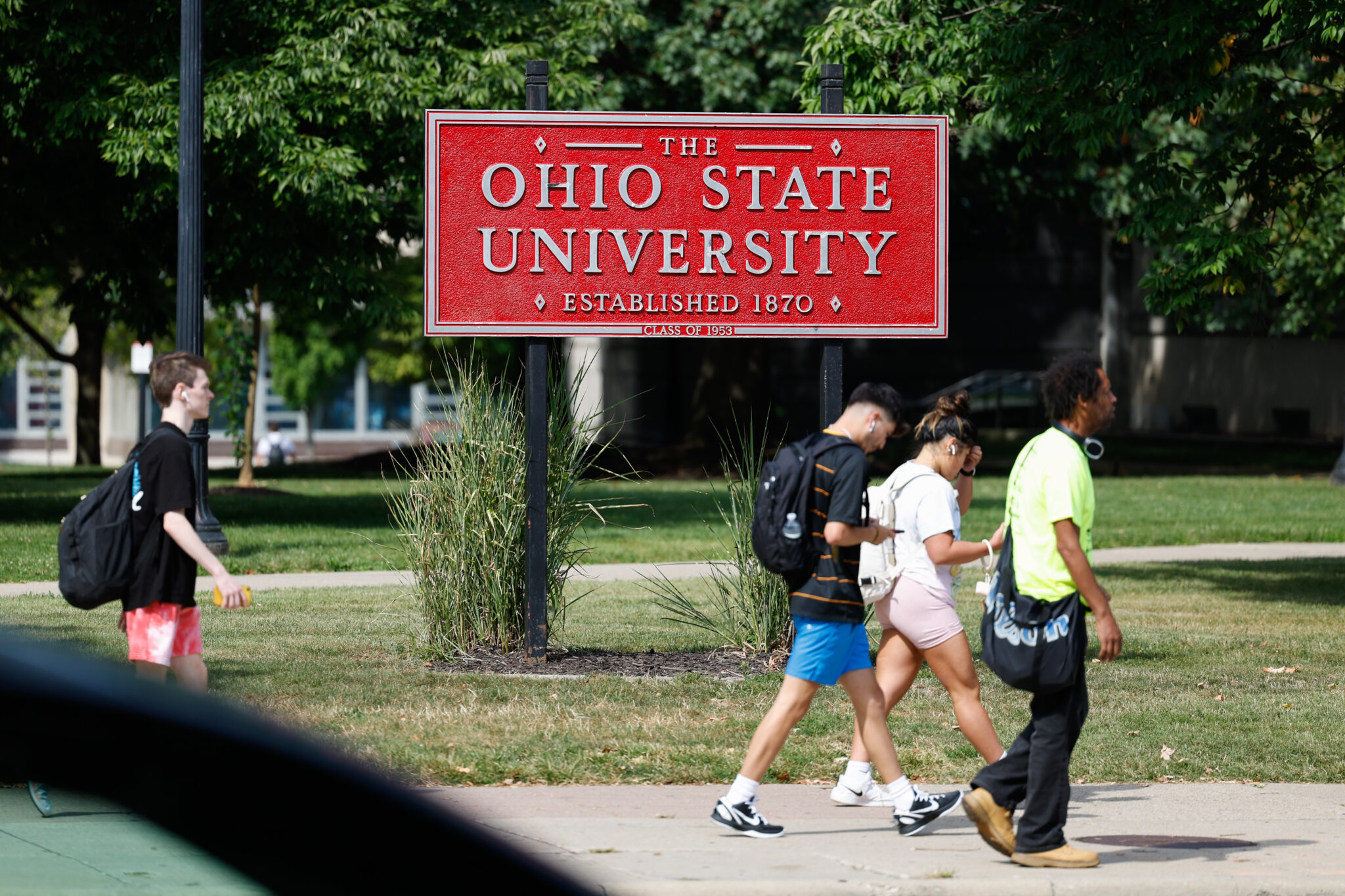
    A Republican lawmaker said she wants to ban Ohio public universities from asking for prospective students’ preferred pronouns on college applications because, she claims, that could indicate their political ideology and possibly affect their admission.

    State Rep. Gail Pavliga, R-Portage County, recently introduced House Bill 686, which would also prohibit a public university from asking a job candidate their preferred pronoun on an employee application. Ohio has 14 public universities.

    “There is no need for a university to require this information, it is clearly not a sufficient indicator of someone’s college readiness,” Pavliga said in her sponsor testimony at a recent Ohio House Higher Education Committee meeting. “So why should it be included in our applications? Providing an optional field for pronoun usage outrightly distinguishes groups based on their political ideology.”

    Anecdotally, she said she has talked to many young Republicans who said they don’t fill out pronoun questions on applications.

    “Those who do not respond to the pronoun prompt are much more likely to lean right on a political spectrum and those who do answer the prompt are much more likely to lean left on a political spectrum,” Pavliga said. “Applicants should not be declined admission based on their political ideology, yet without this bill that is a strong reality.”

    H.B. 686 addresses bias in higher education, she said.

    GET THE MORNING HEADLINES.


    “We are trying to assess the readiness of an individual, whether it be for employment at the university or for admission as a student,” Pavliga said. “The usage of a pronoun really provides no indication of that readiness or that qualification.”

    State Rep. Beryl Brown Piccolantonio, D-Gahanna, said people generally prefer to be addressed in the way they identify and said there is sometimes confusion around her name, causing her to sometimes receive correspondence addressed to her as Mr. Piccolantonio.

    “Beyond the issue of bias, do you think that there is any purpose to making sure that when we address people, that we’re addressing them in the way that they actually live in the world?” she asked.

    Pavliga responded by saying although a person’s preferred pronoun wouldn’t be asked on the application, she said nothing in H.B. 686 would prohibit a question from being asked about a person’s preferred pronouns at any other time.

    The Common App, an online portal many students use to apply to several colleges and universities, has an optional pronoun question. More than 1,000 colleges and universities nationwide use the Common App as part of the application process — including 13 of Ohio’s public universities. Northeast Ohio Medical University does not use the Common App.

    “I am sure if some of the biggest colleges in the country request for the field to be deactivated for their institution, that wouldn’t be a problem,” Pavliga said.

    Even though the bill is introduced by a Republican, Higher Education Committee Chair Rep. Tom Young, R-Washington Twp., said H.B. 686 isn’t a Democrat or Republican bill.

    “It’s a matter of choice and options on the applications,” he said.

    Nearly two-thirds of LGBTQ young people said it would be helpful for the people in their lives to know about more pronouns, according to the Trevor Project’s 2023 survey of mental health. 

    Follow OCJ Reporter Megan Henry on X.


    Megan Henry
    Megan Henry

    Megan Henry is a reporter for the Ohio Capital Journal and has spent the past five years reporting in Ohio on various topics including education, healthcare, business and crime. She previously worked at The Columbus Dispatch, part of the USA Today Network.

    Ohio Capital Journal is part of States Newsroom, the nation’s largest state-focused nonprofit news organization.

    MORE FROM AUTHOR

  • Ohio Gov. Mike DeWine signs transgender bathroom ban bill into law

    Ohio Gov. Mike DeWine signs transgender bathroom ban bill into law

    Getty Images.

    By:  Ohio Capital Journal

    Ohio Gov. Mike DeWine has signed a bill into law banning transgender students from using school bathrooms and locker rooms that match up with their gender identity.

    The law requires people at Ohio K-12 schools and universities use the restroom that aligns with their gender assigned at birth. It also bans students from sharing overnight accommodations with people of the opposite sex from their assigned sex at birth at K-12 schools.

    This does not prevent a school from having single-occupancy facilities and does not apply to someone helping a person with a disability or a child younger than 10 years old being assisted by a parent, guardian or family member.

    The law will take effect 90 days after DeWine signed the bill.

    A lawsuit is expected to be filed against this. The Ohio Capital Journal interviewed a Cleveland attorney over the summer about potential legal challenges with the bill, such as who would police such a policy?

    Several transgender Ohioans, allies and educators called on DeWine to veto the bill. The Ohio Capital Journal recently talked to a family who plans on moving out of Ohio because of anti-transgender legislation at the Statehouse.

    The bathroom ban (House Bill 183) was added to a bill that revises College Credit Plus (Senate Bill 104) in the eleventh hour of a House Session at the end of June before the lawmakers went on an extended break.

    GET THE MORNING HEADLINES.

    The Ohio Senate concurred with the changes made to S.B. 104 during their first session back from break.


    State Reps. Beth Lear, R-Galena, and Adam Bird, R-New Richmond, introduced H.B. 183. State Sen. Jerry Cirino, R-Kirtland, introduced S.B. 104.

    About 3% of high school students identify as transgender, according to recent data from the Centers for Disease Control and Prevention.

    The American Medical Association officially opposes policies preventing transgender individuals from accessing basic human services and public facilities consistent with gender identity.

    Slightly more than half of transgender and nonbinary youth in Ohio considered suicide in 2022, according to the Trevor Project.

    About a third of LGBTQ+ students were prevented from using the bathroom that aligned with their gender and slightly more than a quarter were stopped from using the locker room that aligned with their gender, according to Ohio’s 2021 state snapshot by GLSEN, which examines the school experiences of LGBTQ middle and high school students.

     Ohio Gov. Mike DeWine gives his 2024 State of the State address in the Ohio House chambers at the Ohio Statehouse on Wednesday afternoon. (Pool photo by Barbara J. Perenic, Columbus Dispatch.) 

    Forty-two percent of transgender and nonbinary students were unable to use the bathroom that aligned with their gender and 36% couldn’t use the locker room that aligned with their gender, according to the Ohio GLSEN report.

    Transgender youth who can’t use the bathroom that aligns with their gender are at a greater risk of sexual violence, according to a 2019 study published in the journal Pediatrics.

    Other states with transgender bathroom bans

    Arkansas, Idaho, IowaKentuckyOklahoma, Tennessee, AlabamaLouisianaMississippiNorth Dakota, Florida, and Utah have laws that ban transgender people from using the bathroom that matches their gender identity in schools.

    Florida, Oklahoma, Idaho, and Tennessee’s laws have all been challenged. The U.S. Court of Appeals for the 9th Circuit blocked Idaho’s law last year.

    North Carolina made history in 2016 by becoming the first state to ban bathroom access to transgender people. The law was quickly appealed in 2017 and settled in federal court in 2019, but the state ended up losing hundreds of millions of dollars as the NBA All-Star Game and NCAA events were moved out of state.

    Follow OCJ Reporter Megan Henry on X.


    Megan Henry
    Megan Henry

    Megan Henry is a reporter for the Ohio Capital Journal and has spent the past five years reporting in Ohio on various topics including education, healthcare, business and crime. She previously worked at The Columbus Dispatch, part of the USA Today Network.

    Ohio Capital Journal is part of States Newsroom, the nation’s largest state-focused nonprofit news organization.

    MORE FROM AUTHOR

  • Adoption Modernization Act passes Senate, one step closer to Ohio Gov. Mike DeWine’s desk

    Adoption Modernization Act passes Senate, one step closer to Ohio Gov. Mike DeWine’s desk

    By:  Ohio Capital Journal

    A bipartisan bill that would modernize Ohio’s adoption process unanimously passed the Ohio Senate last week.

    House Bill 5  heads back to the Ohio House for concurrence. The House unanimously passed the bill last year and would head to Gov. Mike DeWine’s desk for his signature if the chamber concurs with the changes. The Ohio House’s next scheduled session is Dec. 4.

    State Reps. Sharon Ray, R-Wadsworth, and Rachel Baker, D-Cincinnati, introduced the bill last year at the start of the General Assembly and this piece of legislation is personal to both of them. Ray was adopted as a child and Baker has three adopted children.

    Ray and Baker worked with probate judges to come up with the bill. The state’s probate judges go through the Ohio Revised Code every few years to try to update various sections, including the adoption laws.

    “Most of the changes are fairly minor, but it really will streamline the process for the adoption process in Ohio,” State Sen. Nathan Manning, R-North Ridgeville, said during last week’s Senate session. “It really will help those practitioners and those judges and those families that are going through this process.”

    GET THE MORNING HEADLINES.


    State Sen. Paula Hicks-Hudson, D-Toledo, said H.B. 5 is vital legislation that is long overdue.

    “It is a good bill, and it does, what I think, will really shave off some of the anxiety, some of the problems that folks who are trying to go through that process, and also for children who are not sure about being in limbo for as long as the current processes,” she said.

    More than 3,300 Ohio children are waiting to be adopted, according to AdoptUSKids, a national nonprofit that connects foster care children to families.

    What’s in the bill?

    In addition to modernizing the state’s adoption process, H.B. 5 would offer more consistency from county to county.

    For foster-to-adopt situations, Ohio law requires a six month waiting period before an adoption can take place and says time spent in the foster home can be counted towards the waiting period. H.B. 5 would include kinship caregivers in that provision in an effort to speed up the adoption process.

    H.B. 5 would allow an adult with a developmental disability to be adopted. Ohio’s law current only allows adults with an intellectual disability to be adopted.

    The bill would double financial support for pregnant mothers to cover living expenses, increasing it from $3,000 to $6,000.

    Under the bill, a court could reconsider an adoption decree if there is evidence the child is a victim of trafficking.

    The bill also touches on foreign adoptions. Ohio law currently permits parents to petition the court to finalize a foreign adoption. H.B. 5 would allow foreign adoption decrees to be automatically finalized if either parent is an Ohio resident and an IR-3 or IH-3 visa has been issued to the child by the U.S. Citizenship and Immigration Services of the U.S. Department of Homeland Security.

    Follow OCJ Reporter Megan Henry on X.

    YOU MAKE OUR WORK POSSIBLE.

    ______________
    Megan Henry
    Megan Henry

    Megan Henry is a reporter for the Ohio Capital Journal and has spent the past five years reporting in Ohio on various topics including education, healthcare, business and crime. She previously worked at The Columbus Dispatch, part of the USA Today Network.

    Ohio Capital Journal is part of States Newsroom, the nation’s largest state-focused nonprofit news organization.

    MORE FROM AUTHOR

  • Provisions removed from Ohio bill that would add accountability to private schools, voucher program

    Provisions removed from Ohio bill that would add accountability to private schools, voucher program

    Getty Images

    By:  Ohio Capital Journal

    A Republican bill to provide more accountability for Ohio private schools had several provisions removed in a substitute version passed by committee, including the elimination of funding transparency and standardized testing requirements.

    State Reps. Gayle Manning, R-North Ridgeville, and Bill Seitz, R-Cincinnati, introduced House Bill 407 earlier this year and Rep. Sarah Fowler Arthur, R-Ashtabula, introduced a substitute bill with the changes that was adopted during last week’s Ohio House Primary and Secondary Education Committee Meeting.

    Eliminated from the bill was a provision that would have required private schools to submit an annual report to the Ohio Department of Education and Workforce showing how state funds received from voucher scholarship programs are being used. The bill would also have required DEW to post the reports on its website.

    The substitute bill also removed a provision that would have required private schools to annually report the family income of each EdChoice voucher scholarship student who also got tuition help from scholarship granting organizations to DEW.

    The changes nixed a requirement that voucher scholarship students take the same standardized tests public school students take, which would leave the law unchanged. Private schools are required to test voucher students through either the standardized test or the alternative assessments.

    GET THE MORNING HEADLINES.


    The substitute bill kept a provision that requires DEW to issue state report cards for private schools that enroll scholarship students.

    Ohio spent nearly a billion dollars on private school scholarship programs for the 2024 fiscal year, the first full year with near-universal school vouchers. During this time, nonpublic school enrollment increased 2% and public school enrollment declined slightly.

    “The danger of taking public dollars is that over time there’s going to be more and more demands from the public, from the schools that are accepting those dollars,” said state Rep. Sean Patrick Brennan, D-Parma. “They’re demanding accountability for those dollars, and rightfully so.”

    Manning said she introduced the bill because her and Seitz are “fiscal conservatives,” saying no organization asked them to introduce the bill.

    “If we have a superintendent that is being paid $500,000 in Upper Arlington schools, everybody knows about it, and we should,” Manning said. “If we have one that’s being paid $500,000 in a school that’s receiving vouchers, they have every right to do, but if we don’t know about that, and parents don’t have that knowledge, to me, that’s what this is all about. We need the knowledge of where the money is going.”

    She said the purpose of the bill is answer questions about where the money goes — whether it’s going to students, classrooms, or people on the school board.

    Most parents had already decided where they were going to send their child to school by the time the state budget passed last summer that allowed the near-universal vouchers, Vice President for Ohio Policy at the Fordham Institute Chad Aldis said when asked if the students who are receiving vouchers were already attending private schools.

    “I think this year, seeing the number of new students who enter, will be a better indication of who is entering (private schools),” he said.

    After reviewing the bill’s changes, Executive Director of the Ohio Christian Education Network Troy McIntosh went from opposing the bill to being an interested party.

    “We firmly believe that EdChoice serves students best when the state does not over-regulate providers,”he said. “In particular, the bill’s requirement that DEW create a report card for EdChoice providers is concerning, without knowing what the form of that would look like.”

    Despite the changes to the bill, Executive Director for the Ohio Alliance of Independent Schools Dan Dodd, said it would still cause an administrative burden to schools.

    “We would like to focus more of our attention and resources on educating children and less time on paperwork that gets submitted to DEW,” he said. “We don’t think that the education that you receive at a public school district is the same that you receive at a private school. We would reject the idea that apples to apples comparisons on a state website, using test data or some other type of metric is not the best way to determine whether or not a certain type of school or a certain type of education is best for your child.”

    About half of the Ohio Alliance of Independent Schools’ 46 member schools participate in the state’s school voucher program — up from about a third a couple years ago, Dodd said.

    Tuition for member schools of Ohio Alliance of Independent Schools range from between $12,000-$17,000 for elementary school to upwards of $20,000 for high schools he said.

    “Our schools largely don’t make (EdChoice) mandatory, that I’m aware of, for every family to sign up, and those families at the higher income levels that receive less money through the voucher are probably more inclined to not participate,” Dodd said.

    Follow OCJ Reporter Megan Henry on X.


    Megan Henry
    Megan Henry

    Megan Henry is a reporter for the Ohio Capital Journal and has spent the past five years reporting in Ohio on various topics including education, healthcare, business and crime. She previously worked at The Columbus Dispatch, part of the USA Today Network.

    Ohio Capital Journal is part of States Newsroom, the nation’s largest state-focused nonprofit news organization.

    MORE FROM AUTHOR

  • Poison control center workers support Ohio Senate bill that would ban intoxicating hemp products

    Poison control center workers support Ohio Senate bill that would ban intoxicating hemp products

    Chris Lindsey, director of state advocacy and public policy for the American Trade Association for Cannabis and Hemp, holds up a bag of Delta-9 THC smashers as part of proponent testimony for Senate Bill 326 during the Senate General Government Committee on Nov. 19, 2024. (Screenshot courtesy of The Ohio Channel).

    Ohio Gov. Mike DeWine called on lawmakers earlier this year to regulate or prohibit delta-8 THC products.

    By:  Ohio Capital Journal

    Health care workers and some folks in the hemp and cannabis industry spoke at the Statehouse in favor of a bill that would ban intoxicating hemp products in Ohio.

    Nearly 20 people submitted proponent testimony for Senate Bill 326 during Tuesday’s Senate General Government Committee meeting. State Sen. Steve Huffman, R-Tipp City, introduced the bill earlier this month after Ohio Gov. Mike DeWine called on lawmakers earlier this year to regulate or ban delta-8 THC products.

    “Currently in Ohio, delta-8 and other intoxicating hemp products are frequently sold in places where young people have easy access such as convenience stores, gas stations, and online marketplaces without any age limits,” said Maggie Lutterus, the advocacy and public policy coordinator of Prevention Action Alliance. “These products are often in the form of gummies, cookies, vapor products, even breakfast cereals, and other consumables that are particularly appealing to younger individuals.”

    SB 326 is necessary for the health and safety of consumers, she said.

    “Unlike traditional cannabis, hemp products— often marketed as “natural” or “wellness” products, are not manufactured or packaged consistently,” Lutterus said.

    Eleven percent of high school seniors nationwide and 15% of high school seniors from the Midwest reported using delta-8 products in the last year, according to a study published earlier this year by the Keck School of Medicine of the University of Southern California.

    GET THE MORNING HEADLINES.


    The bill defines intoxicating hemp products as containing more than 0.5 of a milligram of delta-9 THC per serving, two milligrams of delta-9 THC per package, or 0.5 of a milligram of total non-delta-9 THC per package, according to the bill’s language. Marijuana is not considered an intoxicating hemp product and is legal in Ohio.

    The 2018 Farm Bill says hemp can be grown legally if it contains less than 0.3% THC.

    “The problem is that the Farm Bill was never intended to set up a system for consumer products,” said Chris Lindsey, director of state advocacy and public policy for the American Trade Association for Cannabis and Hemp.

    An adult serving of marijuana is generally considered to be about 10 milligrams of delta-9 THC, he said.

    “You buy a gummy in a licensed dispensary in Ohio, and there’s a limit to how potent that gummy can be,” Lindsey said. “That’s to protect consumers so they don’t consume too much.”

    He went to a Columbus convenience store before the committee meeting and bought some intoxicating hemp products, including a bag of Delta-9 smashers that says it has 500 milligrams of THC per piece of candy and 10,000 milligrams in one package.

    “This would cause an overdose in any adult,” he said, holding up the product. “How you can get a product like this out to the market, I don’t understand. The good news is this is almost certainly not accurate, that’s the best version of this, this is simply lying.”

    Not having clear labeling leaves customers in the dark about what they are buying and the potential dangers involved, Lutterus said.

    “If we are to allow them to continue selling THC, they would need the same oversight as our adult-use marijuana facilities,” said Mike Getlin, director of licensing & public Affairs, of Nectar Markets of Ohio. “We must have extensive camera coverage of every square foot of every gas station, convenience store, and vape shop in the state. … There must be state sanctioned and regulated labs testing all products throughout the supply chain and product tracking systems capable of tracing back to origin sources.”

    Accidental poisonings reported to the Ohio Poison Center have increased 280% since 2021, around the time when hemp products containing delta-8 THC became more accessible, said Dr. Hannah Hays, medical director of the Central Ohio Poison Center and Chief of Toxicology at Nationwide Children’s Hospital.

    “When children access these products, they can experience severe symptoms including hallucinations, confusion, loss of consciousness, and respiratory failure,” she said. “We currently receive several calls each day for exposures to cannabinoids, including intoxicating hemp products, in children under 6 years. A quarter of children who consume intoxicating hemp products require admission to the hospital, and more than a third of those admitted require ICU level care.”

    Follow OCJ Reporter Megan Henry on X.


    Megan Henry
    Megan Henry

    Megan Henry is a reporter for the Ohio Capital Journal and has spent the past five years reporting in Ohio on various topics including education, healthcare, business and crime. She previously worked at The Columbus Dispatch, part of the USA Today Network.

    Ohio Capital Journal is part of States Newsroom, the nation’s largest state-focused nonprofit news organization.

    MORE FROM AUTHOR

  • Majority of Ohioans are in favor of universal free school meal program, according to poll

    Majority of Ohioans are in favor of universal free school meal program, according to poll

    Students getting their l lunch at a primary school. Photo by Amanda Mills/Centers for Disease Control and Prevention.

    By:  Ohio Capital Journal

    Two-thirds of Ohioans support a universal free school breakfast and lunch program for all public school children, according to a Republican research firm.

    “This is extremely rare in a time where voters are really reluctant to support further spending, either at the state or federal level,” Alexi Donovan, vice president of Tarrance Group Polling, said Monday during the Ohio Legislative Children’s Caucus monthly meeting.

    This month’s meeting heard testimony on the importance of universal school meals and Tarrance Group Polling surveyed 600 Ohio voters about this topic in May.

    “It is clear from the research and the data over the years, universal school meals help students thrive, physically, mentally, socially and educationally,” said John Stanford, director of Children’s Defense Fund–Ohio.

    In Ohio, 1 in 6 children, or about 413,000 kids, live in a household that experiences hunger. Despite that, more than 1 in 3 children who live in a food insecure household do not qualify for school meals, according to a 2023 report from Children’s Defense Fund-Ohio.

    “We believe that in a country as wealthy as we are, we should not have hungry children,” said Lisa Quigley, director of Solving Hunger.

    Exposing students to various fruits and vegetables through school meals helps them get a taste for “food that’s far more nutritious than what a lot of them are bringing to school,” she said.

    “What we’re finding in the schools that are doing universal school meals, the food is getting better,” Quigley said.

    National security

    Children’s hunger is a national security issue, said Cynthia Rees, Ohio’s director for the Council for a Strong America.

    The U.S. Department of Defense conducted a study in 2020 that found 77% of young people between the ages of 17 and 24 are ineligible for military service without a waiver. The most prevalent disqualification rate was for being overweight at 11%, above drug and alcohol abuse (8%) and medical/physical health (7%).

    “It is critical to recognize that overweight and obesity can often be manifestations of malnutrition, food insecurity or the lack of access to affordable healthy foods often result in consuming cheaper and more accessible food, which often lack nutritional value,” Rees said.

    GET THE MORNING HEADLINES.


    The food insecurity rate for Ohio children is 15%, with some counties having rates up to 24%, Rees said.

    “Increasing children’s access to fresh and nutritious food now, including through free school meals for all students, could help America recover from the present challenges and bolster national security in the future,” she said. “The military has a long standing interest in the health and nutrition of our nation’s youth.”

    Universal school meals would eliminate the stigma of categorizing students who receive free and reduced meals and those that don’t, Rees said.

    “Instead, all students can just have a meal together,” she said. “When we make school meals accessible to all, we remove that stigma.”

    Ohio legislation

    Last year’s budget bill allowed any student who qualified for free or reduced school breakfast or lunch got those meals for free during the 2023-24 school year.

    Currently in Ohio, children are eligible for free or reduced school meals if their household income is up to 185% of the federal poverty line, which is $57,720 for a family of four, according to the United States Department of Health and Human Services.

    State Reps. Darnell Brewer, D-Cleveland, and Ismail Mohamed, D-Columbus, introduced a bill earlier this year that would require public schools to provide a meal to any student that asks.

    House Bill 408 would also ban a district from throwing away a meal after it was served “because of a student’s inability to pay for the meal or because money is owed for previously provided meals.” The has only had sponsor testimony so far in the House Primary and Secondary Education Committee.

    Follow OCJ Reporter Megan Henry on X.


    Megan Henry
    Megan Henry

    Megan Henry is a reporter for the Ohio Capital Journal and has spent the past five years reporting in Ohio on various topics including education, healthcare, business and crime. She previously worked at The Columbus Dispatch, part of the USA Today Network.

    Ohio Capital Journal is part of States Newsroom, the nation’s largest state-focused nonprofit news organization.

    MORE FROM AUTHOR

  • Transgender Ohioans and allies are asking Gov. Mike DeWine to veto bathroom ban bill

    Transgender Ohioans and allies are asking Gov. Mike DeWine to veto bathroom ban bill

    By:  Ohio Capital Journal

    Transgender Ohioans, allies and educators are calling on Ohio Gov. Mike DeWine to veto a transgender bathroom ban bill.

    The Ohio Senate voted along party lines to concur Senate Bill 104 Wednesday during their first session back from break. The Ohio House added House Bill 183 (the bathroom bill) to Senate Bill 104 and passed S.B. 104 in June during the last House session before going on break.

    DeWine will have 10 days to sign the bill into law or veto it once he receives it, but he has previously indicated he would sign the bill.

    If the bill is signed into law, it would require Ohio K-12 schools and colleges to mandate people use the bathroom or locker room that aligns with their gender assigned at birth. It would also prevent students from sharing overnight accommodations with people of the opposite sex from their sex assigned at birth for K-12 schools.

    “Trans students are just like students everywhere,” Equality Ohio Executive Director Dwayne Steward said in a statement. “They just want to feel safe and secure in their schools. S.B. 104 is a dangerous bill that puts vulnerable trans youth at risk for abuse and harassment.”

    Anne Anderson, the mom of a transgender high school student, said her family plans on moving out of Ohio because of the anti-transgender legislation.

    “I’m not going to let my daughter suffer through their bigotry,” she said. “My daughter is the shell of a person she once was because of all of this.”

    Anderson said her daughter did not want to go to school the morning after the Senate passed S.B. 104.

    “She will not be going in the boys bathroom,” Anderson said. “It’s just not happening.”

    The American Medical Association officially opposes policies preventing transgender individuals from accessing basic human services and public facilities consistent with gender identity.

    GET THE MORNING HEADLINES.


    “This bill ignores the material reality that transgender people endure higher rates of sexual violence and assaults, particularly while using public restrooms, than people who are not transgender,” Jocelyn Rosnick, policy director for the American Civil Liberties Union of Ohio, said in a statement. “All Ohioans deserve to access the facilities they need, in alignment with their gender identity, without fear of harassment or bullying.”

    Slightly more than half of transgender and nonbinary youth in Ohio considered suicide in 2022, according to the Trevor Project.

    Several organizations are encouraging people to contact DeWine and ask him to veto S.B. 104.

    “Governor DeWine can veto this anti-trans bathroom bill,” Christina Collins, executive director of Honesty for Ohio Education, said in a statement. “It is necessary now more than ever to show our trans community that this is not the will of the people but rather the disposition of extremists in our state legislature that do not represent our communities.”

    Mallory Golski with Kaleidoscope Youth Center said she is hearing people wonder if they will need to start carrying around their birth certificates.

    “It leaves it up to individual school districts to create their own policy, so there’s a lot of uncertainty of what if one school district does it one way and one does it another,” she said. “Will I be penalized for using the bathroom that is allegedly the wrong bathroom?”

    Another question she is hearing is who would enforce the policy?

    “Is it that local community’s law enforcement?” Golski asked. “Is it the principal?”

    People have told her DeWine’s voicemail has been full a couple of times since S.B. 104 passed.

    “It’s clear that Ohioans are overwhelmingly contacting the governor and urging him to veto this legislation,” Golski said.

    Transgender people will always be part of Ohio, said TransOhio Executive Director Dara Adkison.

    “Ohio is a state that held over a hundred prides this year, with thousands and thousands in attendance, that is Ohio,” Adkison said in a statement. “To trans Ohioans and our allies remember that this is our state too, do not seed its story to a bigoted minority.”

    Ohio Federation of Teachers President Melissa Cropper said there are real safety issues that need to be addressed.

    “There is no epidemic of student assaults in bathrooms and locker rooms,” Cropper said in a statement. “There is however an epidemic of gun violence in our schools and communities; firearms are the leading cause of death for American children and teens.”

    State Sen. Jerry Cirino, R-Kirtland, originally introduced S.B. 104 to revise the College Credit Plus Program. Sen. Andrew Brenner, R-Delaware, is also a sponsor of the bill. State Reps. Beth Lear, R-Galena, and Adam Bird, R-New Richmond, introduced the bathroom bill last year.

    Follow OCJ Reporter Megan Henry on X.

    YOU MAKE OUR WORK POSSIBLE.

    __________________
    Megan Henry
    Megan Henry

    Megan Henry is a reporter for the Ohio Capital Journal and has spent the past five years reporting in Ohio on various topics including education, healthcare, business and crime. She previously worked at The Columbus Dispatch, part of the USA Today Network.

    Ohio Capital Journal is part of States Newsroom, the nation’s largest state-focused nonprofit news organization.

    MORE FROM AUTHOR

  • What will happen to J.D. Vance’s Ohio U.S. Senate seat?

    What will happen to J.D. Vance’s Ohio U.S. Senate seat?

     COLUMBUS, Ohio — OCTOBER 06: Republican Ohio U.S. Sen. J.D. Vance speaks during the Ohio March for Life rally against November’s Issue 1 reproductive rights amendment, October 6, 2023, outside the Statehouse in Columbus, Ohio. (Photo by Graham Stokes for Ohio Capital Journal. Republish photo only with original article.)

    By:  Ohio Capital Journal

    Ohio U.S. Sen. J.D. Vance will become the next vice president, thus creating a vacancy in the U.S. Senate.

    Former President Donald Trump and his running mate Vance defeated Vice President Kamala Harris and Minnesota Gov. Tim Walz in the presidential election that was called Wednesday morning by the Associated Press. Vance will have to resign from his Senate seat before being sworn in as vice president during Inauguration Day on Jan. 20.

    It is now up to Ohio Gov. Mike DeWine to pick a Republican to fill Vance’s open Senate seat until a special election is held in 2026. Whoever DeWine appoints must run in the 2026 special election if they want to keep their seat.

    Vance is currently serving his first term in the U.S. Senate after being elected over Democratic Rep. Tim Ryan in 2022. Whoever wins the 2026 special election will serve the remainder of Vance’s term, which expires in 2028.

    DeWine has yet to give any indication as to who he is considering as a replacement to fill Vance’s Senate seat, but there are several potential names that have been circulating including state Sen. Matt Dolan, Lt. Gov. Jon Husted, Republican National Committee Committeewoman for Ohio Jane Timken, former Republican presidential candidate Vivek Ramaswamy, and Ohio Sec. of State Frank LaRose, among others.

    Republican Bernie Moreno defeated incumbent Democratic U.S. Sen. Sherrod Brown in a hotly contested Senate race on Tuesday. Some have speculated whether Brown might seek the Ohio U.S. Senate seat in 2026.

    Follow OCJ Reporter Megan Henry on X.


    Megan Henry
    Megan Henry

    Megan Henry is a reporter for the Ohio Capital Journal and has spent the past five years reporting in Ohio on various topics including education, healthcare, business and crime. She previously worked at The Columbus Dispatch, part of the USA Today Network.

    Ohio Capital Journal is part of States Newsroom, the nation’s largest state-focused nonprofit news organization.

    MORE FROM AUTHOR

  • Ohio spent nearly a billion dollars on private school voucher scholarships in 2024

    Ohio spent nearly a billion dollars on private school voucher scholarships in 2024

    Getty Images.

    By:  Ohio Capital Journal

    Ohio spent nearly a billion dollars on private school scholarship programs for the 2024 fiscal year, the first full year with near-universal school vouchers.

    The total scholarship amount for Ohio’s five private school scholarship programs was $970.7 million, according to final data from the Ohio Department of Education and Workforce. Well more than a third that money ($406.7 million) was from Education Choice Expansion scholarships.

    “I think this does have potentially a negative impact on students, on public schools around the margins, as you see those enrollment trends, but then in the big picture, when you have close to a billion dollars in public money that’s going to private schools, that means a billion dollars in state money that’s not available to meet the needs of the nearly 90% of kids that attend our public schools,” said Ohio Education Association President Scott DiMauro.

    The $970.7 million number is higher than the estimated $964.5 million the nonpartisan Ohio Legislative Service Commission predicted when it came to the scholarship programs.

    The five private school scholarship programs are the Autism Scholarship Program, the Jon Peterson Special Needs Scholarship Program, the Cleveland Scholarship, the Education Choice Scholarship and the Educational Choice Expansion Scholarship Program.

    Students on the autism spectrum are eligible to receive vouchers up to $32,455 for the Autism Scholarship Program. Students who have an Individualized Education Program (IEP) from their district are eligible for the Jon Peterson Special Needs Scholarship. The Cleveland Scholarship is for all students living in the boundaries of Cleveland Metropolitan School District. Students living in the boundaries of a low-performing school district are eligible for Education Choice scholarships.

    Lawmakers expanded the Education Choice-Expansion eligibility to 450% of the poverty line last year through the state budget — creating near-universal school vouchers. This means a family of four above the $135,000 income threshold can still be eligible for at least 10% of the maximum scholarship.

    K-8 students can receive a $6,165 scholarship and high schoolers can receive a $8,407 scholarship in state funding under the expansion.

    There were 93,159 applicants for the EdChoice Expansion scholarships and 89,794 were awarded scholarships, according to ODEW data. The amount of EdChoice-Expansion scholarship payments more than tripled from fiscal year 2023 to fiscal year 2024.

    For the traditional EdChoice scholarships, there were 44,020 applicants and 42,779 were awarded scholarships — totaling $273.1 million, according to ODEW data.

    During this time, nonpublic school enrollment increased about 2%, going from 169,807 in fiscal year 2023 to 173,156 in fiscal year 2024, according to ODEW data.

    Public school enrollment declined slightly — dropping about 6,000 students from the 2022-23 school year to the 2023-24 school year.

    Most of these new EdChoice Expansion scholarships are students who were already attending private schools, DiMauro said. Ohio’s voucher program started with the Cleveland Scholarships back in 1996.

    “This was intended to help students who didn’t have the resources to have options outside of public schools,” DiMauro said. “(The EdChoice Expansion) is clearly intended to benefit people that had long ago made the decision to send their kids to private schools.”

    In some cases, the universal vouchers have allowed private schools to increase tuition, he said.

    GET THE MORNING HEADLINES.


    “The increased revenue comes at the expense of the state,” DiMauro said. “It’s the private schools themselves that are directly being subsidized through this program, even more than families are.”

    If private schools are going to accept vouchers, DiMauro wishes there was more transparency when it comes to private school tuition.

    The OLSC predicts the five scholarship programs’ payment total will exceed a billion dollars next year.

    Aaron Churchill, Ohio’s research director for the Thomas B. Fordham Institute, thinks these scholarship payment figures are sustainable year-to-year.

    “I do think we can walk and chew gum at the same time,” he said. “We can support great public schools. We can provide the resources for them. … We can also empower families with greater choice. And I think that’s the direction that Ohio is moving.”

    Total payments for the five scholarship programs for the past five fiscal years, according to ODEW data:

    • $610.2 million in fiscal year 2023
    • $554.5 million in fiscal year 2022
    • $444.5 million in fiscal year 2021
    • $394.2 million in fiscal year 2020
    • $346.6 million In fiscal year 2019

    Remaining scholarships

    For the Cleveland Scholarship this fiscal year, there were 8,626 applicants and 8,361 scholarships were given — totaling $53.6 million, according to ODEW data.

    There were 5,610 applicants for the Autism Scholarship and 5,385 were awarded for $141.7 million, according to ODEW data.

    For the Jon Peterson Scholarship, there were 9,439 applicants and 9,082 scholarships were awarded, totaling $95.6 million, according to ODEW data.

    Follow OCJ Reporter Megan Henry on X.


    Megan Henry
    Megan Henry

    Megan Henry is a reporter for the Ohio Capital Journal and has spent the past five years reporting in Ohio on various topics including education, healthcare, business and crime. She previously worked at The Columbus Dispatch, part of the USA Today Network.

    Ohio Capital Journal is part of States Newsroom, the nation’s largest state-focused nonprofit news organization.

    MORE FROM AUTHOR

  • PAC with ties to Richard Uihlein donated $500,000 to Ohioans for a Healthy Economy Action Fund

    PAC with ties to Richard Uihlein donated $500,000 to Ohioans for a Healthy Economy Action Fund

    Stock image from Getty Photos.

    Ohioans for a Healthy Economy Action Fund recently started running an attack ad against the three Democratic candidates running for Ohio Supreme Court.

    By:  Ohio Capital Journal

    A conservative group heavily funded by Republican megadonor Richard Uihlein — who has supported candidates who falsely denied the results of the 2020 election — donated half a million dollars to a PAC with ties to the Ohio Chamber of Commerce over the summer, according to recently published Federal Election Commission data.

    The Fair Courts America PAC gave $500,000 to Ohioans for a Healthy Economy Action Fund back in August, the Super PAC affiliated with Ohioans for a Healthy Economy, Inc which recently started running an attack ad against the three Democratic candidates running for Ohio Supreme Court.

    “Criminals let loose. Destroying lives. Even our children aren’t safe because Melody Stewart, Michael Donnelly and Lisa Forbes put their agenda above our safety,” the voice over says in the ad.

    Incumbent Democratic Justice Donnelly is being challenged by Republican Hamilton County Court of Common Pleas Judge Megan Shanahan.

    Incumbent Democratic Justice Stewart is being challenged by incumbent Republican Justice Joseph Deters, who decided not to run for his current seat and instead chose to go up against Stewart for a full six-year term.

    Democratic Judge Forbes, of the Eighth District Court of Appeals, and Republican candidate Dan Hawkins, of the Franklin County Court of Common Pleas, are competing for Deters’ open seat, a term that expires on Dec. 31, 2026.

    “Fair Courts America is basically just moving its money to this group in Ohio, which is then spending on the ads,” said Evan Vorpahl, a senior researcher at True North Research.

    Republicans currently have a 4-3 majority on the Ohio Supreme Court. Depending on the outcome of the election, the Democrats could flip the court or the Republicans could strengthen their hold on the court.

    Fair Courts America and Richard Uihlein

    Fair Courts America formed in February 2022 and has spent millions of dollars on various state Supreme Court races — including Alabama, Wisconsin, Pennsylvania, Kentucky and Illinois.

    Fair Courts America is affiliated with Richard Uihlein’s Restoration of America. Uihlein also donated $333,000 to Fair Courts America on two occasions recently — Aug. 28 and Sept. 19.

    Fair Courts America and Restoration of America did not respond to questions sent by the Capital Journal.

    Uihlein, an Illinois Republican, has been involved in Ohio politics before.

    Last year, he donated more than a million dollars to the failed campaign that was trying to make it harder to amend the state’s constitution. He helped finance the majority of the group “Protect Our Constitution” during last year’s August Special Election. 57% of Ohioans voted against the measure that would have raised the threshold to amend the state’s constitution to 60%.

    Uihlein is a big funder of Club for Growth Action, which has run millions in ads backing Bernie Moreno for Senate and helped fund a Super PAC that supported Ohio Secretary of State Frank LaRose’s failed Senate primary campaign earlier this year.

    Uihlein is opposed to abortion and has invested in many anti-abortion causes, Vorpahl said.

    GET THE OHIO CAPITAL JOURNAL MORNING HEADLINES.


    “For someone like Uihlein, Ohio and the Ohio Supreme Court seem right for the picking,” said Jessica Dickinson, the Ohio Fair Courts Alliance’s Outreach and Elections Manager. “I think especially since we’ve had partisan labels to the ballot … even though the abortion amendment passed, they’ve really been making those inroads into Ohio.”

    The Ohio Supreme Court will rule on abortion access decisions, so whichever justices are elected this year will help determine what abortion care looks like in Ohio.

    “Powerful people have always tried rigging the rules in their favor, and they are targeting state and federal courts,” Vorpahl said. “They’re trying to take America backwards and control who we can be, who we can love, how we can care for our bodies, our families and the world. And they’re ultimately just trying to put their thumbs on the scales of justice with their fortunes.”

    Uihlein has contributed to some extreme causes in recent years. The Chicago Tribune reported he was a big contributor to the “March to Save America” rally that took place before the deadly attack on the U.S. Capitol on Jan. 6, 2021.

    A Daily Beast report published in November 2022 said Uihlein and his wife Elizabeth have donated almost $2 million to Republicans since the Jan. 6 insurrection and more than 80% of those candidates denied or questioned the 2020 election results.

    Richard and Elizabeth started Uline — a shipping, packaging and industrial supplies company that started in their basement in 1980. Richard is the CEO and their company has more than 9,000 employees.

    Ohioans for a Healthy Economy

     COLUMBUS, Ohio — APRIL 20: The Ohio Chamber of Commerce in Columbus, Ohio. (Photo by Graham Stokes for Ohio Capital Journal) 

    Ohioans for a Healthy Economy Action Fund seems to be a shell group for the Ohio Chamber of Commerce, Dickinson and Vorpahl said.

    The address listed for Ohioans for a Healthy Economy Action Fund is the same as the address for the Ohio Chamber of Commerce, according to a Federal Election Commission form.

    The Ohio Chamber of Commerce and Ohioans for a Healthy Economy Action Fund also did not respond to questions sent by the Capital Journal.

    Ohioans for a Healthy Economy Action Fund also ran ads during the 2018, 2020 and 2022 Ohio Supreme Court races, Dickinson and Vorpahl said.

    The Ohio Chamber of Commerce endorsed Deters, Shanahan and Hawkins for Ohio Supreme Court.

    “It’s about keeping their preferred judges on the bench,” Dickinson said. “Business entities and billionaires in these corporations want to keep the court’s current majority because it’s good for business.”

    Follow OCJ Reporter Megan Henry on X.


    Megan Henry
    Megan Henry

    Megan Henry is a reporter for the Ohio Capital Journal and has spent the past five years reporting in Ohio on various topics including education, healthcare, business and crime. She previously worked at The Columbus Dispatch, part of the USA Today Network.

    Ohio Capital Journal is part of States Newsroom, the nation’s largest state-focused nonprofit news organization.

    MORE FROM AUTHOR