Tag: NICK EVANS

  • GOP mum, Majewski irate after AP story questions his characterization of military record

    GOP mum, Majewski irate after AP story questions his characterization of military record

     Still from the music video for “Lets Go Brandon Save America” featuring J360, Savannah Craven and Ohio GOP congressional candidate J.R. Majewski.

    BY: NICK EVANS – Ohio Capital Journal

    Republicans are holding their tongues after the Associated Press published a story indicating GOP congressional nominee J.R. Majewski exaggerated his service record. Majewski himself is lashing out at the AP, threatening to sue and insinuating they worked with his opponent U.S. Rep. Marcy Kaptur, D-OH.

    On the campaign trail Majewski has presented himself as combat veteran who deployed to Afghanistan. In reality, the AP reported, he spent the bulk of his active-duty career in Japan, before deploying in 2002 to an airbase in Qatar for six months.

    That airbase provides support services throughout the Middle East, including Afghanistan. Part of Majewski’s job as a “passenger operations specialist” took him to airbases throughout the region to load and unload. But the AP reported his campaign didn’t initially address whether he ever traveled to Afghanistan. They further noted Majewski was not awarded a service medal for those who spent 30 days consecutively or 60 days non-consecutively in the country.

    Majewski’s response

    Since the AP’s story published, Majewski has attempted to push back.

    In a friendly interview with NewsMax he insisted that yes, he had “set foot” in Afghanistan. He went on to describe his service and effectively confirmed the AP’s reporting.

    Although working from an airbase more than 1,200 miles from Afghanistan’s Bagram Airfield seems far from “combat” to a lay person, it actually counts under federal law. As the AP noted, because of an executive order signed by George H.W. Bush, support bases are considered combat zones.

    https://twitter.com/JRMajewski/status/1573165305681281024

    Still, he was clear that most of his time was spent away from the front lines.

    “Myself and other airmen deployed to Qatar,” he said. “That was where CENTCOM was, that was our staging base and we deployed from there all throughout the area of responsibility. We’re the people who gave supplies to the front line. We’re the people that transported the fighters to the front line.”

    Asked directly if he can call himself a combat veteran, Majewski offered: “I believe so.”

    Friday, Majewski gave a more forceful denunciation. He called the story “blatantly false” and a “politically motivated hit piece.” He added that he was considering suing the reporters.

    But Majewski offered no evidence to refute the story, instead insisting “anyone insinuating that I did not serve in Afghanistan is lying.” The AP’s report indicates Majewski didn’t deploy directly to Afghanistan, and that Majewski himself was evasive about whether and for how long he served there.

    As for the medal, Majewski argued he separated from the Air Force honorably before the service began awarding it. Although he has the right to request an update to his records, Majewski said, he has yet to do so.

    The Majewski campaign did not immediately respond to requests for comment about whether he served enough time to earn honor or whether he has requested it.

    What lawmakers had to say

    Rep. Bill Johnson, R-OH, represents the southern and eastern rim of the state in congress. A veteran himself, Johnson guards the honors that men and women in uniform accrue. In 2011, he co-sponsored stolen valor legislation that would’ve fined and imprisoned anyone who fraudulently claimed to have “served in a combat zone” with “the intent to obtain anything of value.” That legislation didn’t pass, and instead a narrower measure tied medals went forward in 2013.

    But in a statement, Johnson withheld judgment about Majewski. He explained that for nearly 27 years he lived by the Air Force’s core values.

    “Integrity First, Service Before Self, and Excellence In All We Do,” Johnson said. “Those core values taught me, as a commander and a leader, not to make snap judgments about people without all the facts. And in this case I simply don’t have all the facts.”

    Two other incumbent Ohio congressmen served in uniform as well. U.S. Rep. Brad Wenstrup, R-OH, served as a physician in the U.S. Army, and U.S. Rep. Warren Davidson, R-OH, was U.S. Army Ranger. Neither lawmaker responded to a request for comment.

    Veteran rhetoric on the campaign trail

    Before securing former President Trump’s endorsement, the most substantial rhetorical blow J.D. Vance landed came at the expense of fellow candidate and Marine veteran Josh Mandel.

    Throughout the primary race Mandel emphasized his service as a core reason for voters to choose him. He went so far as to end several ads with the tagline, “Send in the marine.” But after Mandel nearly came to blows with Mike Gibbons in a dispute about private sector employment, Vance criticized Mandel.

    “I think the way you use the U.S. Marine Corps, Josh, is disgraceful — it’s not a political tool,” Vance said.

    “This guy wants to be a U.S. Senator,” he added derisively. “He was up here, ‘hold me back, hold me back, I’ve got two tours in the Marine Corps.’ What a joke.”

    But Vance’s campaign declined to weigh in on Majewski’s exaggerations of his service record.

    Political fallout

    Majewski has drawn scrutiny for suggesting states that voted for Donald Trump in 2020 secede and attending the January 6 “Stop the Steal” rally. He shelled out money to help others attend the rally as well. In an interview with Spectrum News he insisted he did nothing wrong.

    “I hated what happened,” Majewski said of January 6, “And it’s a total injustice to keep having to answer questions about why I was there.”

    But it appears Majewski’s descriptions of his service record may be more damaging to his candidacy.

    In a statement, his opponent Rep. Kaptur said, “the idea that anyone, much less a candidate for the United States Congress, would mislead voters about their service in combat is an affront to every man and woman who has proudly worn the uniform of our great country. J.R. Majewski owes each of these heroes a full explanation about his deception.”

    Republicans in Ohio may stay mum, but the National Republican Congressional Committee has announced it will cancel a roughly $1 million ad buy in the race. The main campaign committee for House Republicans abandoning a candidate is a significant signal of their read of the contest.

    Congressional race watchers at Sabato’s Crystal Ball changed their rating from toss-up to leans Democratic shortly after the news came out as well.

    Follow OCJ Reporter Nick Evans on Twitter.

  • State health officials preach prevention as Monkeypox, COVID-19 continue spread

    State health officials preach prevention as Monkeypox, COVID-19 continue spread

    Blood sample tube positive with Monkeypox virus. Getty Images.

    BY: NICK EVANS – Ohio Capital Journal

    Ohio Department of Health officials emphasized calm and caution during an update Thursday. Cases of Monkeypox are on the rise nationally, and COVID-19 continues to spread as children prepare to return to school. Both present challenges, health officials explained, but the state is well-positioned to respond.

    Monkeypox

    Monkeypox cases so far have come primarily from to the community of men who have sex with men. The latest data from the CDC show 99% of cases affect people assigned male at birth, and for those cases with information about sexual activity, 99% report male to male sexual contact.

    As of Aug. 10, there are more than 10,000 cases of Monkeypox nationally. But since reporting it’s first case in June, Ohio Health Director Dr. Bruce Vanderhoff explained the state has confirmed just 75 cases.

    “Most of Ohio’s cases are in our large metro areas, with only a few cases reported in other jurisdictions,” Vanderhoff said.

    Unlike COVID-19, he said, Monkeypox spreads “mostly through close intimate contact with someone who has Monkeypox, most often through direct contact with the infectious rash, source scabs or body fluids from a person with Monkeypox or from respiratory secretions during prolonged face to face contact.”

    Because of those limits on transmission, Vanderhoff said the risk of contracting the disease remains low for most Ohioans. The biggest challenge Ohio faces is short supply of the Jynneos vaccine.

    “Because Ohio has had comparatively fewer cases than other states, our allocations have likewise been less than some harder hit states,” Vanderhoff said. “Rest assured that Ohio continues to actively advocate for more vaccines, and as more vaccine has become available has properly placed orders for the maximum allocated dose.”

    Between a shipment of more than 5,000 doses that arrived this week and more on the way, health officials expect to eclipse 13,500 doses soon. And that supply will stretch even further since the FDA approved a shallower, intradermal injection that uses about 1/5 as much of the drug.

    OhioHealth infectious disease medical director Dr. Joseph Gastaldo still urged caution.

    “I think it’s important for people to realize that if you get the vaccine it’s not a Monkeypox free pass,” he warned, “meaning that you still have to wait to be fully vaccinated, and that is two weeks after the second dose to have the maximum protection for Monkeypox.”

    COVID-19

    The CDC also announced new guidance for COVID-19 Thursday. Among the changes, people exposed to the virus can skip quarantine but need to wear a high-quality mask for 10 days and test on the fifth day. The CDC still advises people who have contracted the virus to isolate from others regardless of their vaccination status.

    Dr. Vanderhoff noted any health update where COVID-19 isn’t the first topic on the agenda is a good sign, but he stressed the virus is still circulating widely in the state. He insisted that getting fully vaccinated and boosted remains the best protection against severe disease.

    Despite new variant-specific boosters planned for this fall, Vanderhoff urged anyone who is currently eligible for a booster to get it rather than wait.

    “Waiting for that new booster may not however, be the best way to protect yourself now,” he said. “For older unvaccinated are not up to date on vaccinations and you’re at continued risk for more serious illness. I encourage anyone who’s not up to date with their vaccination, including those currently eligible for a first or second booster to seize this opportunity, to prepare for the fall.”

    He also said the percentage of kids entering kindergarten fully immunized has slipped the last few years. Vanderhoff diplomatically chalked this up to COVID-19 limiting opportunities for doctors’ visits or remote learning reducing parents’ sense of urgency. Later he acknowledged vaccine-skepticism is likely playing some role as well.

    Dr. Michael Forbes from Akron Children’s Hospital said they overcome that hesitancy by drawing connections to other everyday precautions.

    “The message to families that we really try to communicate is we try to prevent what’s preventable,” Forbes said. “That’s what we do when it comes to helmets, seatbelts. Bad things can happen and do happen. But as parents we have a duty to protect our children. And so having an effective, safe vaccine that prevents these common illnesses I think is really important.”

    Follow OCJ Reporter Nick Evans on Twitter.
  • A weekend of protests in Columbus following Dobbs decision

    A weekend of protests in Columbus following Dobbs decision

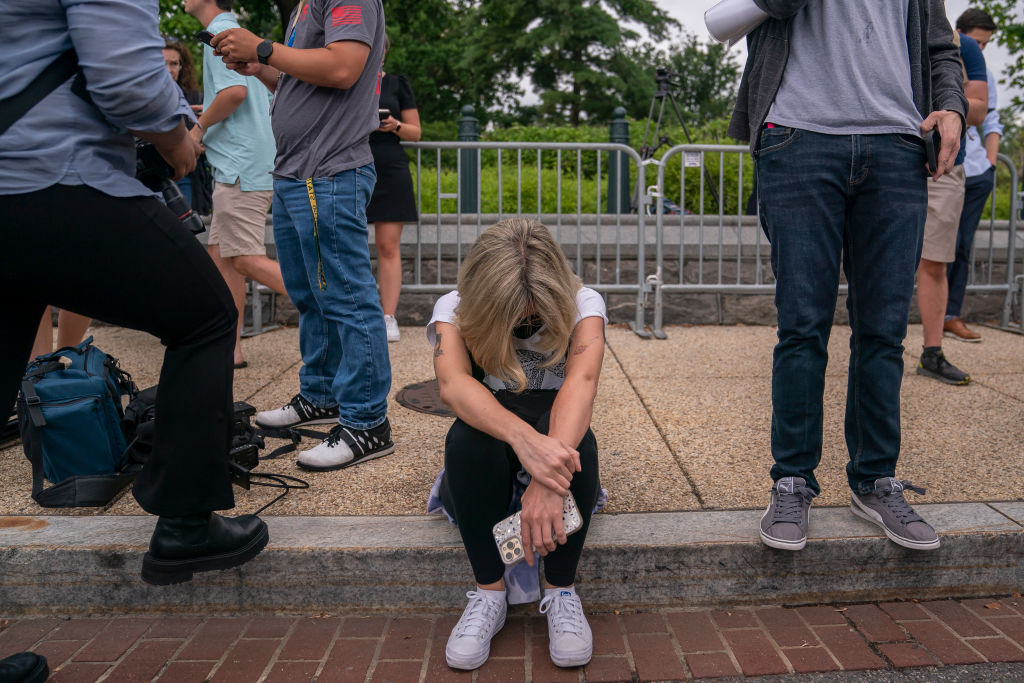
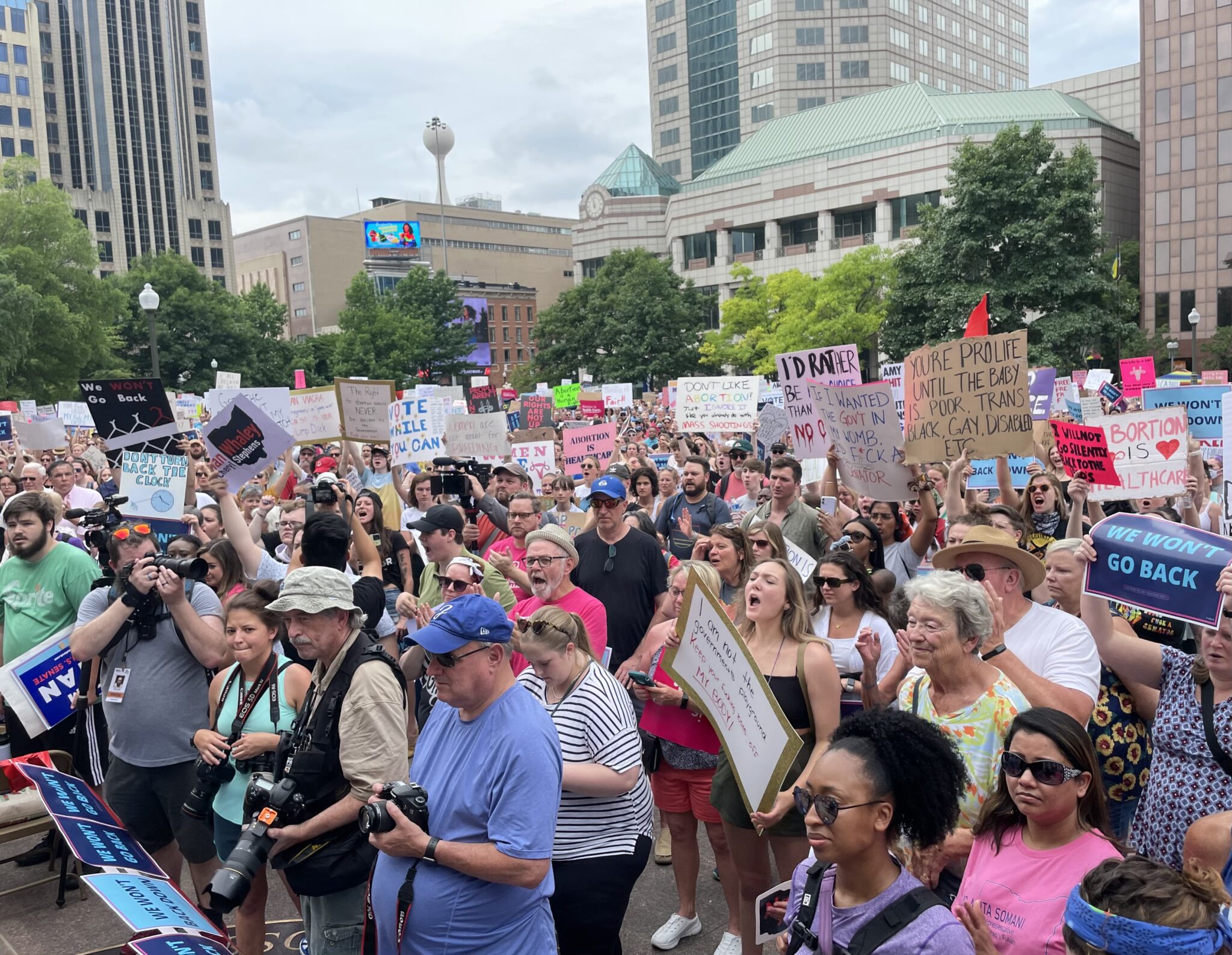
    Protesters gathered at the statehouse to voice opposition to the Dobbs decision overturning Roe v. Wade. (photo by Nick Evans)

    BY: NICK EVANS – Ohio Capital Journal

    Over the weekend protesters rallied in demonstrations large and small voicing their opposition to the U.S. Supreme Court’s decision overturning Roe v. Wade.

    The Attorney General

    Saturday afternoon a couple dozen people gathered near the end of a sleepy street in Beechwold. Demonstrators brought bullhorns, pots and pans, even a vuvuzela, and organizers handed out pamphlets describing what areas are and aren’t public property. Then they marched up a narrow side street to Attorney General Dave Yost’s home.

     Protesters demonstrating outside the home of Attorney General Dave Yost. (Photo by Nick Evans, OCJ.)

    “After his workday, he comes home, kicks his feet up, has real nice evening,” organizer Mandy Shunnarah-Reed told the group before they set out. “Meanwhile, the rest of us have to live with the consequences of the decisions he’s made about our bodies and our livelihoods, 24-7, 365. We don’t get to just not worry about it, because it’s not business hours.”

    “So that is why we are annoying him on a Saturday,” she said.

    The group grew to about 50 and they made a racket of chants, whistles and smashing cookware at the foot of Yost’s driveway while a security agent from the AG’s office looked on. The cacophony was short lived though — after about twenty minutes they learned Yost wasn’t home.

    Some Ohioans employed similar tactics to voice opposition to COVID-19 restrictions and to intimidate then-health director Amy Acton early in the pandemic. But Katie McKeel and her husband John were quick to draw a distinction.

    Katie carried a sign that read “my body, my rights, my vote, my voice will be heard in 2022.” But the “22” was taped on. She first made the sign in 2018 for the women’s march in Washington D.C.

    “If my right to my choice and my self-autonomy and what I do with my own body is not as important as the airspace of our elected officials, I find that to be completely out of whack,” Katie said.

    “We haven’t threatened Dave Yost. Amy Acton got death threats,” John chimed in. “That’s a big difference.”

    Christy Williams came to the protest with her daughter, and she argued that banning abortions won’t reduce the number that occur, it will just make them more dangerous. Like the McKeels, she believed their right to protest should take precedence.

    “This is a civil right,” she said. “You can do this.”

    The Statehouse

    Sunday morning thousands of people turned up at the Statehouse for a rally put on by the Ohio Democratic Party. Notably, although not surprisingly, many of the groups spanned generations. Mothers with daughters and even granddaughters showed up together waving handmade signs. Picking up on that, U.S. Sen. Sherrod Brown noted up he was there with his wife, his daughters and grandkids. Brown told the crowd “we need a plan,” and argued for electing two new Democratic U.S. Senators and maintaining the Democratic majority in the House.

    “If we can carry out this plan, by this time next year the Senate and the House of Representatives will have codified Roe v. Wade,” Brown argued.

    The problem is, picking up Senate seats while keeping the House is a pretty tall order for a midterm election amid persistent inflation. The court’s decision to overturn Roe surely changes the political calculus, but it’s unclear how much.

    The other issue, as people like Nina Turner have pointed out, is that Democrats already have control of all the levers of power they need to codify abortion protections — they simply haven’t acted because some Democratic senators oppose ending the filibuster.

    Speaking afterward, Brown acknowledged some members of his caucus are “not in the right place” when it comes to the filibuster, but he insisted with two new members the party would act.

    “If we have two more Democrats, we will change the filibuster rules, so that a majority can speak,” Brown said. “All we’re asking for is majority rule.”

    One candidate looking to flip a Senate seat in Brown’s plan spoke to the crowd as well. Ohio Democratic U.S. Senate nominee Tim Ryan described the whiplash of marching to the Supreme Court building on Friday to protest with his 18-year-old daughter, in D.C. for an internship, alongside fellow congresswomen who were part of the fight that led to Roe in the first place.

    “This is a struggle,” Ryan said. “This is a struggle for this election, and the next election, and the next election in the decades to come because we’re gonna turn this around, and we’re gonna make sure that this never happens again.”

     Tim Ryan addressing the crowd outside the statehouse. (Photo by Nick Evans, OCJ.)

    Ryan acknowledged afterward that some voters might feel pessimistic in light of Democrats’ unwillingness to roll back the filibuster and take action to protect abortion access at the federal level. But he urged them not to check out.

    “So I would say you have a chance now,” Ryan said. “We are where we are. You have a chance to actually make that difference right here in Ohio.”

    While Ryan and Brown made the case for federal action, Democratic gubernatorial nominee Nan Whaley made a more immediate, explicit argument.

    “Ohio is ground zero for this fight,” Whaley insisted. “We are one of the largest states in the country where abortion is on the ballot.

    Whaley called Gov. Mike DeWine the “most anti-choice governor in the country” and chastised him for urging people to be civil in the wake of the decision. What’s civil about taking away rights, forcing women to maintain a pregnancy or risk dying on an operating table she asked.

    Like Brown and Ryan she drew a bright line from the court decision to the ballot box.

    “This is not a drill. This is not a hypothetical,” Whaley told the crowd. “Our lives and our children’s lives are on the line. I refuse to go back and I know I am not alone.”

  • Ohio Attorney General Yost files for 6-week abortion ban as Roe is overturned

    Ohio Attorney General Yost files for 6-week abortion ban as Roe is overturned

    Advocates pledge renewed fight for abortion access

    BY: SUSAN TEBBEN AND NICK EVANSOhio Capital Journal

    As Ohio Attorney General Dave Yost filed court motions to enact Ohio’s six-week abortion ban, a motley bunch of protesters gathered near the Ohio Statehouse on Friday in a tiny sliver of shade cast by the William McKinley statue.

    They held signs declaring “abortion is healthcare” or “abortion is a human right.” Another read “our democracy, it is broken.”

    Ohio Attorney General Dave Yost. (Photo by Justin Merriman/Getty Images)

    Cheri Wells stood next to her one-year-old daughter, Lux, who was strapped into a stroller.

    “I brought my daughter down here because this absolutely has everything to do with her, too,” she said.

    “It’s taking away her rights to overturn Roe vs. Wade, as well,” she said. “I mean, it’s all about controlling women, period.”

    Advocates surge ahead

    Advocacy groups and leaders for and against abortion spoke out on the U.S. Supreme Court’s ruling overturning the nationwide right to abortion included in Roe v. Wade.

    Religious and anti-abortion groups praised the decision that overturned abortion legalization that had been in place since the early 1970s, and continued their push for prohibitions in Ohio.

    “Ohio Right to Life encourages our pro-life legislative majorities and Governor DeWine to be ambitious and end abortion once and for all in our great state,” said anti-abortion lobby Ohio Right to Life’s president Michael Gonidakis.

    The anti-abortion groups have state leaders on their side, as Gov. Mike DeWine promised backing for the six-week ban that has been tied up in federal court, and Attorney General Yost put the wheels in motion for that ban to become effective.

    In a motion filed less than an hour after the Dobbs decision was released by the U.S. Supreme Court, Yost’s office asked to dissolve the injunction that kept the state abortion ban from going into effect in 2019 when it was passed by the Ohio General Assembly.

    “Because there exists no just reason for delay, defendants respectfully request this court immediately dissolve the preliminary injunction and dismiss this case,” Yost wrote in the motion to the U.S. District Court for the Southern District of Ohio.

    Later Friday night, a court granted the motion, and Gov. Mike DeWine signed an executive order permitting the Ohio Department of Health to set rules for the law.

    Those in the pro-abortion realm are not sitting on their laurels after the much-anticipated decision came through.

    In a Friday afternoon press call, members of Planned Parenthood of Ohio said while the ruling had been expected, even before a draft opinion leaked to the public, the results were no less devastating.

    “Ohioans should not have to figure out how to safely provide health care for themselves,” said Iris Harvey, president and CEO of Planned Parenthood of Greater Ohio. “It’s an attack on your rights, an attack on your privacy and your freedom.”

    Though abortion is now legal at six weeks rather than 20 weeks after a missed period, pro-abortion advocates maintained a message that until a court rules or another ban is put in place, abortion is still legal in the state of Ohio.

    Case Western Reserve University law professor Jessie Hill, who has worked on cases defending reproductive rights, said there “are still legal moves to be made” and lawyers intend to continue pursuing options.

    One way in which Hill said abortion advocates can move forward is by giving advice that is protected under the First Amendment.

    “The state can not, as a general matter, ban truthful, factual information,” Hill said.

    Working within the state’s legal system is also in the playbook to keep abortion legal.

    “Our in-state strategy ensures that we protect the Ohio Supreme Court, which has been a backstop for securing reproductive justice,” said Rhiannon Carnes, co-founder and co-executive director of the Ohio Women’s Alliance Action Fund.

    The group is working with partners to “implement harm reduction measures to ensure that people who need an abortion can obtain the essential health care they deserve,” according to a statement by the OWA. A “voter education plan is also” being launched as the August 2 primary and November general election approach.

    “We are all coming together to build independent political power against those stigmatizing abortion and forcing their political objective on our lives and bodies,” Carnes said in the statement.

    One Small Step

    In the Ladies Gallery at the Ohio Statehouse, a group of anti-abortion activists held a press conference to applaud the Dobbs decision. The room, set aside to honor the achievements of women in Ohio politics, regularly hosts events of all kinds, but the setting wasn’t lost on the speakers.

    Beth Vanderkooi of Greater Columbus Right to Life described abortion as a “systemic injustice” meant to discriminate against women.

    “True advocates for women’s rights would work together to bring down these injustices rather than tell women that their path to equality, to liberty and to freedom, rests on the dismembered bodies of their dead children,” she said.

    The organizers sought to cast Friday’s decision as a watershed achievement for civil rights, comparing it to the reversal of Dredd Scott and Plessy and invoking the words of Martin Luther King, Jr. They also propped it up as a landmark historical event on the order of the moon landing or D-Day.

    “It’s one small step for babies,” Created Equal vice president Seth Drayer insisted, “one massive leap for humankind, because Dr. King famously said that injustice anywhere is a threat to justice everywhere.”

    While abortion advocates prepare for their next moves, Created Equal’s president Mark Harrington said their fight was far from over. Invoking Winston Churchill, he called the Dobbs decision “the end of the beginning.”

    That posture certainly means advocating for greater restrictions or even the elimination of abortion at the state level, but given Justice Clarence Thomas’ suggestion that the court should next revisit rulings on the legality of same-sex marriage and relationships, as well as contraceptives, some worry the right to an abortion is far from the only one under threat.

    Despite promising continued action, Harrington distanced his organization from Thomas’ remarks.

    “The idea that one justice which we may or may not agree with on these other issues, says that from the bench in his opinion, doesn’t really matter unless the court actually has a case,” Harrington said. “And there’s no future that I can see where that’s actually going to occur in the short term.”

    While Harrington and others who spent years fighting abortion look to the future with the wind in their sails, people like Cheri Wells are looking ahead with uncertainty. The leak of Justice Samuel Alito’s draft opinion in Dobbs may have undercut the shock of the decision, but the despair is just as deep.

    “For some reason, in the back of my mind,” she said, “I thought someone was gonna save us.”

  • Lawmakers propose new ‘self-defense’ high school graduation requirement

    Lawmakers propose new ‘self-defense’ high school graduation requirement

    State Rep. Tom Young, R-Washington Township.

    BY: NICK EVANS –  Ohio Capital Journal

    New legislation from Ohio state Reps. Tom Young, R-Washington Township, and Andrea White, R-Kettering, would require next year’s class of high school freshmen to take a course on recognizing and responding to threatening situations in order to graduate. The idea for the so-called “Student Protection Act” came from a number of recent high school graduates as part of an extracurricular project.

    Abby Purdy described how the proposal came from conversations she had with fellow Olentangy High School students Sydney Schultz and Vaidehi Patel about walking to their cars after work in the dark.

    “Everyone had very similar fears, and it kind of just sprouted from there,” Purdy explained. “We had a survey and many of the responses conveyed the same fears and we felt that self-defense would be the best way to help people feel that they have the tools to protect themselves.”

    Patel, Purdy and Schultz repeatedly invoked the idea of self-defense, as did the bill’s sponsors, but that’s a bit of a misnomer. Speaking afterward, Young acknowledged they struggled with how best to describe the course’s aims, but he was clear they’re not envisioning some sort of martial arts training.

    “No, this is not Tae Kwon Do, throwing people across a mat or anything like that,” he explained. “It’s raising an awareness on how to prevent and then respond to an aggressive situation — mentally, and perhaps a way to get out of a situation.”

    Rep. White emphasized the importance of teaching students how to respond to bullying and assault.

    “These behaviors should never be tolerated or allowed to go unreported,” she said. “And reinforcing this message with our young people while equipping them with the defensive tactics and proactive strategies that they can use to help protect themselves and avoid dangerous situations is critical.”

    Although the measure isn’t explicitly meant to teach students how to respond to a school shooting, last week’s shooting at an elementary school in Uvalde, Texas looms large. Young offered hopes that the coursework they’re proposing might discourage violence indirectly.

    “I would hope that this would not only raise awareness to prevent things happening to yourself and how to de-escalate, but also hopefully being aware of their classmates or somebody who’s struggling, that it opens up a dialog.”

    Young and White want districts to bring in school resource officers or certified self-defense instructors to provide demonstrations of self-defense. The legislation is silent, however, on who qualifies as an outside instructor or what form their demonstrations should take. Because the course will be part of the health class, teachers will also have to complete a course in self-defense training, but it’s up to the districts to determine which programs qualify.

  • A judge ordered Dewitt McDonald released last month, so why is he still in prison?

    A judge ordered Dewitt McDonald released last month, so why is he still in prison?

    Getty Images.

    BY: NICK EVANS Ohio Capital Journal

    Right now, Dewitt McDonald is sitting in prison at Richland Correctional Institution even though late last month a judge ordered his release.

    McDonald’s case goes back to a 1994 drive-by shooting in Sandusky that left one woman dead. Prosecutors claimed McDonald was in the car, and they charged him with aiding and abetting the crime. McDonald has maintained his innocence.

    A jury nevertheless convicted McDonald in 1995 and he was sentenced to life with no eligibility of parole for 20 years.

    “Dewitt McDonald has now been incarcerated 27 going on 28 years without even one hearing giving him access to parole,” his attorney Kimberley Corral explained.

    And therein lies the controversy that led to Erie County Judge Tygh Tone issuing a March 29 writ of habeas corpus to McDonald. That order directed officials to release McDonald from prison. Attorney General Dave Yost’s office is appealing to keep him behind bars, and sued Judge Tone in a state appeals court for good measure.

    The state’s aggressive pursuit of the case is notable given the underlying facts of the case. In his federal filings for relief, McDonald’s attorneys raise a number of reasons they say to doubt McDonald’s guilt. It’s not clear, they argue, that he was in the car at the time of the shooting or even that bullets fired from the car killed the victim, Vivian Johnson. Prosecutors secured McDonald’s conviction largely on the testimony of a woman named Krista Harris.

    During the first grand jury hearing, Harris said McDonald was with her at the time of the shooting, and the grand jury didn’t recommend charges. Before the second grand jury, her story flipped and they returned an indictment.

    A few years later though, she told state investigators that county prosecutor Kevin Baxter had coerced her into providing false testimony in McDonald’s case and one other by threatening her with criminal charges. She also alleged Baxter coerced her into an ongoing non-consensual sexual relationship. Baxter’s brother Edward corroborated Harris’ story. Baxter himself denied it.

    Yost’s office declined to comment on McDonald’s case, “given the pending litigation in the Erie County Court of Common Pleas, the 6th Circuit Court of Appeals and the Ohio Supreme Court.”

    The state’s central argument for why McDonald hadn’t gotten a parole hearing comes down to arithmetic. The Ohio Department of Rehabilitation and Corrections contends McDonald won’t be eligible for a parole hearing until he’s served 36 years, because they’re stacking the terms for other offenses on top of the 20 years listed in his sentencing documents.

    “So, all of the sudden, his term is 36 to life,” Corral said, “which was just a decision by an administrative agency. It was not supported by any court order.”

    After she filed a motion to clarify, the court came down on the side of McDonald — he should be eligible for a parole hearing after 20 years. That was in November of 2020. The state’s subsequent appeals to the circuit and supreme court were unsuccessful. In December last year, McDonald still hadn’t gotten a parole hearing, so Judge Tone issued another order, this time directing the parole board to hear his case “immediately.”

    Instead, the state pushed the court to dismiss McDonald’s appeals. Two months later Judge Tone issued the order to release McDonald.

    In the current appeal, Yost’s office contends the habeas order is invalid because it originated in Erie County rather than Richland County where he was incarcerated. In response, Corral agrees that state law requires a habeas claim be filed where an inmate is held, but said that McDonald was being held in the Erie County jail at the time she filed. The state argues back that he was only in Erie County temporarily for a court hearing. They also contend the case can’t be transferred to Richland County.

    “If you follow the state’s logic,” Corral argued, “the state has the sole authority to move prisoners around from county to county. They could defeat every single habeas ever filed by just moving someone after the litigation is complete.”

    “That can’t possibly be the procedure intended by the legislature, and that’s not what courts have held in the past,” she continued.

    As it stands, McDonald’s case is a mess.

    The circuit court, faced with the state’s appeal of Judge Tone’s habeas decision and a writ of prohibition against the judge, sidestepped the matter and sent the case back to the trial court for the Tone to explain his decision or rescind it. Meanwhile McDonald’s defense has appealed to the state supreme court.

  • How much a map costs: one law firm accounts for 1/3 of redistricting expenses

    How much a map costs: one law firm accounts for 1/3 of redistricting expenses

    Ohio Redistricting Commission co-chair state Sen. Vernon Sykes talks to Senate President Matt Huffman during Sunday’s meeting of the ORC. The commission ended up throwing out independent mapmaker work and adopting a slightly revised version of the third map, already rejected by the Ohio Supreme Court. (Photo: Susan Tebben, OCJ)

    BY: NICK EVANS – Ohio Capital Journal

    As lawmakers consider their next move on redistricting, the overall cost has ballooned to nearly $1.8 million, according to an accounting through April 19 provided by the Legislative Services Commission.

    The bulk of that expense has been charged to the Legislative Task Force on Redistricting, which has accounted for $983,283 going back to August of 2019. Their biggest single line item was a $282,271 expenditure to Ohio University, the school tasked with preparing census data for mapmakers. All told, the school received $427,597 for its efforts.

    The second biggest line item charged to the Legislative Task Force was $103,000 to the law firm Nelson Mullins Riley & Scarborough. GOP lawmakers hired two Nelson Mullins attorneys, Thomas Farr and Phillip Strach, at a total cost of $114,500 to advise the General Assembly on redistricting. Farr and Strach made a name for themselves in part by defending North Carolina’s racially gerrymandered maps in court.

    That advice might be expensive, but their representation costs more. Once the maps were challenged in court, Senate President Matt Huffman and House Speaker Bob Cupp again turned to Nelson Mullins to serve as their defense team. So far, they’ve run up nearly $475,000 in attorneys’ fees.

    Between the firm’s work as special counsel advising mapmakers and its work unsuccessfully defending those maps in court, Nelson Mullins has earned $589,512.62 — roughly a third of the total cost of redistricting already, with more billable hours to come.

    And that’s not the only firm making money representing the Republican leaders — Taft, Stettinius & Hollister has made $30,986 representing Huffman and Cupp. In addition, a different law firm, Organ Law, has brought in $68,022 representing the Ohio Redistricting Commission.

    Across the aisle, meanwhile, the law firm Ice Miller has raked in $174,792 representing Democratic members of the Commission, Sen. Vernon Sykes and House minority leader Allison Russo.

    In all, Ohio has spent nearly $750,000 on litigation through April 19.

    The $1.8 million accounting provided by the Legislative Services Commission could be far from the end of redistricting’s expenses. Late last month Republican members of the Ohio Redistricting commission decided to ignore the proposals offered by a pair of independent mapmakers they brought in to draft boundaries. That episode cost the state $89,000, but the invoice from only one of the mapmakers is reflected in the current accounting.

    Similarly, there are more bills coming on the legal front. The most recent invoice is dated April 11 — four days before the state supreme court tossed lawmakers’ fourth try at drawing legislative boundaries.

  • House GOP leader on Justice Maureen O’Connor impeachment: ‘All options are on the table’

    House GOP leader on Justice Maureen O’Connor impeachment: ‘All options are on the table’

    BY: JAKE ZUCKERMAN AND NICK EVANS – Ohio Capital Journal

    Columbus, Ohio – A ranking House Republican left open the possibility of impeaching the chief justice of the Ohio Supreme Court, which this week rejected Republicans’ third proposed legislative redistricting map. 

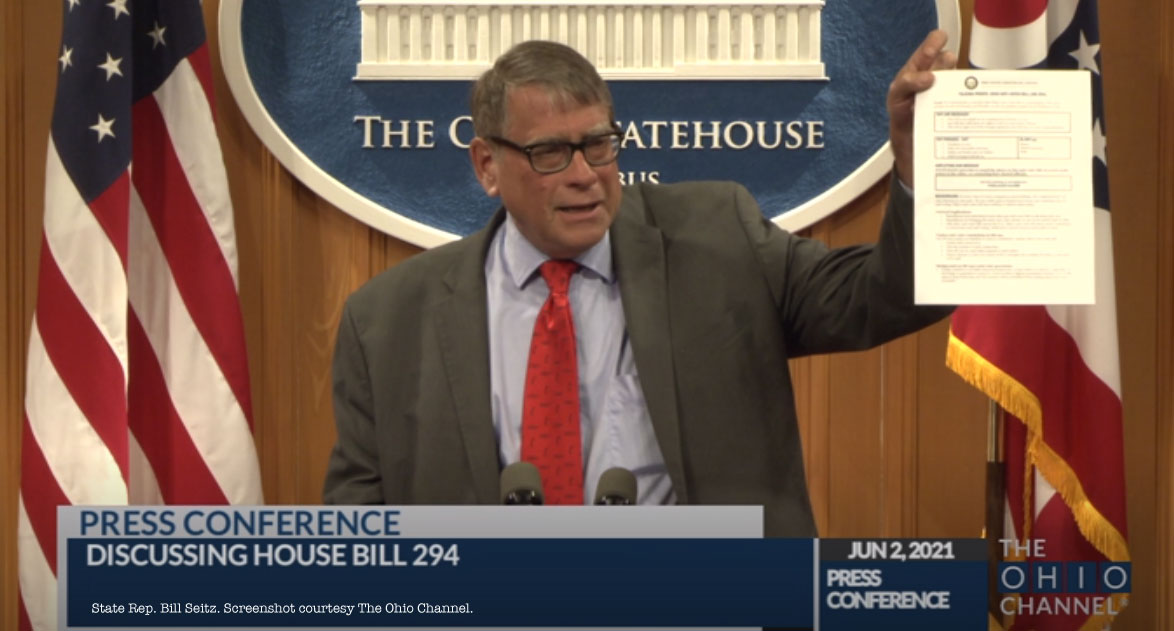
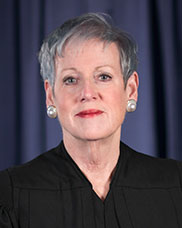
    During a private GOP caucus phone call Thursday, House Majority Leader Bill Seitz and Rep. Jon Cross voiced support for impeaching Justice Maureen O’Connor, according to a person on the call. O’Connor, also a Republican, has acted as a swing vote on two high-stakes redistricting cases and sided with Democrats on the bench finding the maps disproportionately favored Republicans in violation of the Ohio Constitution. 

    Justice Maureen O’Connor

    Through a spokesman, Seitz, a longtime Cincinnati lawmaker and influential caucus member, declined to comment on caucus discussions but said Friday “nothing has been decided, and that all options are on the table.”

    Cross, a Kenton Republican, declined comment, noting “we (I) don’t comment about caucus meetings.”

    The call, held Thursday afternoon, lasted about 20 minutes, the source on the call said. In it, Seitz presented an argument that included old precedent for the House moving to impeach a justice after an unfavorable court decision. 

    When Cross offered what was described as a more fiery argument for impeachment, House Speaker Bob Cupp, R-Lima, ended the call, according to the source. Cupp’s office did not respond to requests for comment about the caucus call or his position on impeachment. 

    Cupp spent six years on the Ohio Supreme Court bench, serving alongside O’Connor for his entire tenure.

    On Facebook Thursday, hours before the caucus call, Cross wrote “enough is enough,” and that O’Connor had violated Ohio law related to altering the time, place or manner of an election.

    The claim about Seitz’ support marks the most senior legislator in favor of the possibility of impeaching O’Connor. Also Thursday, Rep. Scott Wiggam, R-Wooster, a committee chairman, said on social media “it’s time to impeach Maureen O’Connor now.

    https://twitter.com/Scott_Wiggam/status/1504496308584919044

    The hubbub comes in response to the court’s redistricting ruling late Wednesday evening. A four-justice majority found “beyond a reasonable doubt” that the most recent maps violated the constitution, particularly the provisions prohibiting partisan favoritism. While uncertainty remains, the ruling could force lawmakers to either move the May primary election date or create a second primary election date for non-statewide races. In a letter this week, Secretary of State Frank LaRose indicated the plan for now is to proceed with two separate primary elections.

    The decision on whether to pursue impeachment won’t be up to him, but Gov. Mike DeWine advised against the move Friday. 

    “This is an extraordinary measure to take,” he said. “I think we don’t want to go down that pathway, because we disagree with a decision by a court, because we disagree with a decision by an individual judge or justice. Not a good idea.”

    Three House Republicans publicly floated the concept of impeaching DeWine himself in 2020 for his COVID-19 response. The idea went nowhere. 

    The Supreme Court is currently reviewing a second, GOP-proposed congressional redistricting map after overturning the first effort on constitutional grounds. 

    Not long before the redistricting fiasco, O’Connor publicly broke from Republicans on judicial integrity. The Ohio Republican Party, with the 2020 presidential election looming, blasted a lower court’s ruling on election procedures and Franklin County Common Pleas Judge Richard Frye as a “partisan judge.” In an unusual move, O’Connor called the statement “disgraceful” and “deceitful” and emphasized the concept of judicial independence. 

    “This is a blatant and unfounded attack on the independence of the Ohio judiciary,” she wrote. 

    “To accuse a judge of deciding the matter before him on partisan politics and further accuse the judge of ‘obstruction of his judicial responsibility’ is without merit and is meant to further the false narrative that judges have no conscience, no legal responsibilities, and no capacity to decide what the law is beyond the raw politics of the issue.”

    An impeachment would be an extreme, though not unprecedented reaction. In fact, the Ohio Legislative Service Commission notes all eight impeachments in Ohio’s history were against judges. For instance, in 1808, members of the Ohio House grew angry enough at a ruling by Justice George Tod that they sought his impeachment. He survived via one vote in the state Senate, according to the court. Justice Calvin Pease was impeached and acquitted as well around the same time. 

    The Ohio Supreme Court gave state lawmakers until March 28 to submit a new proposal. The Ohio Redistricting Commission, a bipartisan panel of statewide and legislative officials, is scheduled to meet Saturday. 

    Morgan Trau contributed to this story.

  • Recreational marijuana backers submit signatures

    Recreational marijuana backers submit signatures

    BY: NICK EVANSOhio Capital Journal

    A group pushing for recreational marijuana in Ohio is one step closer to the ballot after the Coalition to Regulate Marijuana Like Alcohol submitted 200,000-plus signatures to state officials. Now county boards of elections begin the work of verifying signatures.

    The coalition’s plan would allow Ohioans over 21 possess, use, and purchase cannabis. They propose a 10% tax on sales that would fund social equity and addiction programs. Another portion of that revenue would bolster the general funds of cities that choose to allow dispensaries within their borders. The plan would even allow adults to grow a limited amount of cannabis at home.

    “The success of our petition drive shows just how eager Ohioans are to end prohibition and legalize the adult use of marijuana,” coalition spokesman Tom Haren said in a press release. “We look forward to receiving the results of the Secretary of State’s review, and are eager to begin working with legislators on this important issue.”

    Signature gatherers overshot the required threshold of 132,877 by about 70,000 to provide a buffer for any signatures that get thrown out. So long as they meet the required overall number and get a designated portion from at least 44 of the state’s counties, the proposal goes to state lawmakers. If lawmakers choose not to approve the measure, the coalition has the chance to get another round of signatures to put their proposal on the ballot.

    At this point, the ballot seems like the most likely path to approval, but that doesn’t mean the GOP-controlled legislature is blind to the shortcomings in Ohio’s existing marijuana program. Sen. Steve Huffman, R-Tipp City, has shepherded a measure through the Senate that would make significant under-the-hood changes to the state’s marijuana policy while leaving the overall structure intact. That bill passed the Senate last week.

    But provisions like allowing homegrown marijuana are a non-starter for Huffman.

    “Because that’s recreational marijuana,” Huffman said in a November interview about his bill. “If you’re going to grow five for your medical purpose, you know, the neighbor kids going to steal one, [and] you’re going to sell a couple.”

    And Huffman isn’t alone. A recent poll conducted by Gongwer News Service shed light on how much the ground is shifting when it comes to marijuana — 43% of Republican lawmakers supported adult use, dead even with those who oppose it.  But when it comes to homegrown marijuana, the GOP is far more unified in its opposition. When it comes to personal use, 64% of GOP members registered opposition and 86% said they are against people growing cannabis for commercial use.

    Assuming the coalition’s signatures meet requirements, lawmaker have four months to act on their proposal.

  • Ohio senators mulling major revisions to medical marijuana system

    Ohio senators mulling major revisions to medical marijuana system

    BY: NICK EVANS – Ohio Capital News

    Ohio senators have filed legislation that represents a broad revision of the state’s medical marijuana system. Among the changes is language expanding access to the drug if a physician “reasonably” believes their patient’s symptoms would be relieved or they would otherwise benefit from marijuana.

    It’s a potentially massive expansion of eligibility for patients after years of piecemeal additions to the list of qualifying conditions. But for the bill’s sponsor, Sen. Steve Huffman, R-Tipp City, a streamlined regulatory structure is the measure’s primary aim.

    “The biggest example is the Department of Pharmacy regulates dispensaries, and the Department of Commerce regulates cultivators,” Huffman described. “So if you own one of each you have to go to each one to make business decisions.”

    He notes the Department of Pharmacy will still manage a database of prescriptions through the Ohio Automated Rx Reporting System, or OARRS, but most oversight will fall under the purview of a new Division of Marijuana Control housed in the Commerce Department. Huffman also believes the measure will encourage the department to offer more licenses as the market grows and put pressure on license holders to bring product to market rapidly.

    Senate Minority Leader Kenny Yuko has signed on as cosponsor of the bill. It doesn’t cover everything on his wish list — he notes it lacks employment protections for people prescribed the drug — but he sees it as an important step forward.

    “I know the need. I know what we did in 2016 was just the smallest of fractions of what was needed here in Ohio,” Yuko said. “What this bill does is trying to move us in the right direction. Is it all inclusive? Not even close. Does it cover all the issues I want covered? Not yet.”

    Meanwhile, the proposal is competing for attention with three recreational marijuana proposals — two in the Statehouse and the third at the ballot box. Huffman and Yuko both draw a distinction between medical and recreational pot, insisting that their measure and the other ideas are completely different conversations. But as the universe of qualifying patients expands, the distinction between recreational and medicinal gets blurry.

    One notable aspect left out of Huffman and Yuko’s measure are provisions for home cultivation. Both measures in the House make allowances for it. Democratic Reps. Casey Weinstein of Hudson and Terrence Upchurch of Cleveland would allow up to 12. Meanwhile Republican Reps. Jamie Callender of Concord and Ron Ferguson of Wintersville would allow six plants with up to two of them flowering. The ballot measure would allow home grown marijuana as well, capping the amount at six plants per person and no more than 12 per residence.

    Yuko doesn’t oppose giving Ohioans latitude to grow their own, noting some constituents have complained about long drives to a dispensary.

    “I think it’s fair,” Yuko said. “I think it’s fair.”

    As for a specific amount, Yuko said he’d leave that determination to “the experts.”

    But Huffman is skeptical of home cultivation. He worries it might support illicit sales or become a magnet for theft. He also contends restricting production to regulated growers is a consumer safety consideration.

    “I don’t know what other medicine you grow or make yourself at home,” Huffman says. “And so that’s why we’re staying away from home grown. It’s to keep the quality up.”