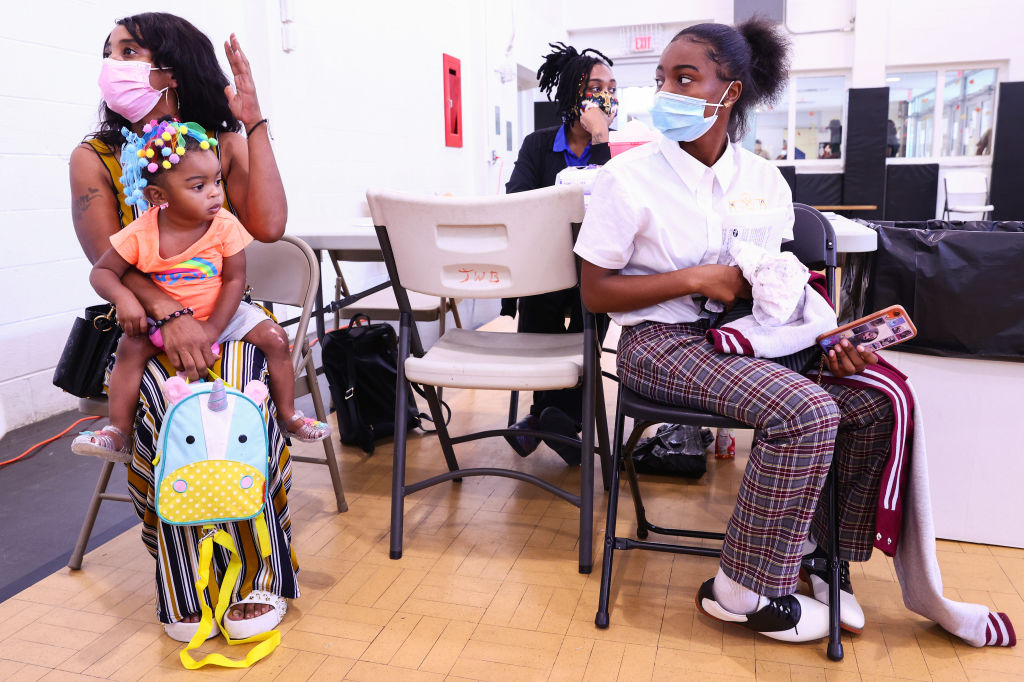
A paper issued last month by Scioto Analysis concluded that every dollar spent on universal pre-K in Ohio would produce $3.80 in benefits.
Unsurprisingly, most of that benefit comes in the form of greater future earnings of kids who attend pre-K and then show up to kindergarten prepared to learn, the analysis said.
“Seven dollars of every $10 of benefits generated by a universal prekindergarten program come from future labor market earnings of children,” Scioto Analysis Principal Rob Moore said in a written statement accompanying the report. “According to the evidence we have, universal prekindergarten could be a strong long-term economic development investment for Ohio.”
The Ohio state government doesn’t fund universal pre-K. Some cities, including Cincinnati, Cleveland, Dayton, and Toledo, have funded pre-K programs that are less than universal.
Head Start is a federal pre-K program, but in Ohio and most other states, eligibility is generally restricted to families living at or below federal poverty guidelines. For a family of four, that’s less than $42,000 a year.
In Ohio, 57% of three and four-year-olds were enrolled in pre-K in 2022. Using the Washington State Institute for Public Policy’s benefit-cost analysis of universal prekindergarten, the Scioto Analysis report modeled the impact on the economy if 71% of Ohio’s preschoolers went to prekindergarten.
It found that adding 29,000 Ohio kids to the program would benefit the economy by cutting the time kids would later spend repeating grades, in prison, or needing special education. But by far and away, the biggest benefit was in kids’ future earnings.
“This benefit occurs because children develop essential cognitive and social skills during prekindergarten which lead to higher academic achievement and better job prospects,” the report said.
In its draft of the biennial budget, the Republican leadership of the Ohio House has been generous to the state’s wealthiest interests.
GET THE MORNING HEADLINES.
The billionaire Haslam family wants $600 million to move the Browns out of downtown Cleveland and into a new stadium in Brook Park. House Finance Committee Chairman Brian Stewart, R-Ashville, built that funding into the budget, calling it “a once-in-a-lifetime project.” He added that new stadiums are “huge economic drivers.”
However, most economists who have studied them would disagree.
They say stadiums by and large don’t create new spending. Instead, they shift existing discretionary spending from one part of a regional economy to another, experts say
“The empirical evidence shows repeatedly that stadium subsidies fail to generate new tax revenue and new jobs or attract new businesses,” the Tax Foundation said in an October report. “While attending a sporting event or a concert in a new, publicly subsidized venue might benefit fans of the team or those who attend the event, those subsidies shift spending that would have occurred in other parts of the city or state in the absence of a new sports stadium or arena.”
Meanwhile, by developing intellectual capital, public education provides multifaceted benefits to the economy, experts say.
“Research shows that individuals who graduate and have access to quality education throughout primary and secondary school are more likely to find gainful employment, have stable families, and be active and productive citizens,” Dana Mitra of Pennsylvania State University said in a research report. “They are also less likely to commit serious crimes, less likely to place high demands on the public health care system, and less likely to be enrolled in welfare assistance programs.”
However that may be, the Ohio House budget would slash funding for public education far below what’s called for under a 2021 plan to make it sufficient to meet the requirements of the Ohio Constitution.
The Fair School Funding Plan calls for $666 million in new spending on public education. The Republican House budget would provide only $226 million.
Marty Schladen
Marty Schladen has been a reporter for decades, working in Indiana, Texas and other places before returning to his native Ohio to work at The Columbus Dispatch in 2017. He’s won state and national journalism awards for investigations into utility regulation, public corruption, the environment, prescription drug spending and other matters.
Ohio Capital Journal is part of States Newsroom, the nation’s largest state-focused nonprofit news organization.
Rep. Brian Stewart, R-Ashville, testifying in the Ohio House. (Photo by Nick Evans, Ohio Capital Journal.)
____________________
In particular, Stewart and state Rep. Jean Schmidt, R-Loveland, complained about cases dragging on. Schmidt, like Stewart, has been on the receiving end of a multi-year OEC case.
____________________
Lawmakers argue the Ohio Election Commission has outlived its usefulness and the Secretary of State or county boards of elections should handle campaign finance violations
The Ohio House’s version of the budget would eliminate the independent group charged with enforcing state campaign finance laws. With the Ohio Election Commission gone, those duties would fall to the Secretary of State and county boards of elections. Lawmakers slipped the provision into the 5,000-plus page bill as part of a wide-ranging amendment the day before the vote.
But lawmakers’ frustrations with the commission became apparent months ago.
At a February hearing, state Rep. Brian Stewart, R-Ashville, expressed “grave concerns” about the commission and said its process is “substantially broken.”
“I’m getting texts and calls here from other members saying, this is the time to make some reforms,” he said at the time, “and I hope we do that as part of this process.”
Stewart’s irritation stems in part from his own case before the commission, which took roughly three years to resolve. The commission determined he made no violation; the challenger is appealing that decision.
Even critics of the House plan acknowledge the commission’s shortcomings. But they contend such drastic changes belong in a standalone bill with plenty of opportunity for public testimony.
Ohio state Rep. Brian Stewart, R-Ashville, discussing the House budget. (Photo by Nick Evans, Ohio Capital Journal.)
Lawmakers’ complaints
GET THE MORNING HEADLINES.
With a current annual budget of about $642,000, the Ohio Elections Commission is a rounding error in a budget spending more than $44.5 billion General Revenue Fund dollars a year. The governor’s spending proposal pushed its annual budget north of $800,000. At that February hearing, OEC Executive Director Phil Richter showed up to explain how the extra funding would cover a new filing system and an additional employee to take over when he retires.
Instead, lawmakers lit into the commission.
In particular, Stewart and state Rep. Jean Schmidt, R-Loveland, complained about cases dragging on.
“There are multiple committees over the last several years,” Schmidt said, “who have been required to attend hearings, and the decisions go into a year, two years, delay, delay, delay, before a decision is rendered. Sir, that costs people time. It also costs people money.”
State Rep. Jean Schmidt, R-Loveland. (Photo from the Ohio House website.)
Schmidt, like Stewart, has been on the receiving end of a multi-year OEC case.
In an interview, Stewart argued lawmakers have been raising concerns about the commission for years. He pointed to a 2014 U.S. Supreme Court ruling invalidating an Ohio law against false campaign statements. That decision eliminated an entire class of OEC complaints, he argued, “but of course, (the) government never sort of adjusted and kind of right-sized the operation.”
Stewart also brushed off concerns about lawmakers who have faced OEC complaints leading the effort to eliminate the agency.
“The best people in the position to reform an agency,” he argued, “are those who have spent years being drug through the mud and seeing how completely inefficient it is.”
More important, Stewart stressed, lawmakers aren’t changing campaign finance law — they’re looking for better enforcement.
“Everything that’s legal is still legal,” he said. “Everything that’s illegal is still illegal, and you will still have all the same appeal rights that you do today to take your matter to court.”
Traffic cops
Chris Hicks hates a liar. Talking with him for 10 minutes and it’s obvious his skin crawls seeing powerful people get away with it. He’s unabashedly conservative but has no problem going after members of his own party if they’re breaking the law. He’s filed numerous complaints with OEC, including the ones against Stewart and Schmidt.
In Hicks’ telling, it started with a different candidate named Allen Freeman. In 2020, he was one of several candidates backed by then-House Speaker Larry Householder. Freeman blanketed Cincinnati airwaves with ads, which struck Hicks as weird — the vast majority of that audience wasn’t in his district, and he reported spending only about $15,000.
Hicks found Federal Communications Commission reports of more than $100,000 in ad buys on Freeman’s behalf, paid for by Householder-aligned groups. The OEC eventually fined Freeman $50,000, but his campaign wound up burning through its cash to pay for his defense.
Hicks explained the Freeman case was just a starting point for him. “Some of these invoices had a bunch of other candidates on them,” he said. Since then, he’s driven back and forth more than a dozen times from his home outside Cincinnati to OEC hearings in Columbus, pursuing various campaign finance cases.
“I have no love for the OEC at all, as you can tell,” he said. “But everything about what’s happening right now is demonstrative of how f-ed up things in Ohio are.”
He complained about lawmakers “dumping” the changes into the budget to evade public hearings and can’t believe Democrats aren’t making a bigger issue of it.
Hicks thinks maybe it’s got to get worse before it gets better.
“The funny part is, if it stays in there, it’s probably better than the OEC,” he said. “Because it’s going to create absolute chaos — absolute chaos.”
Catherine Turcer with Common Cause Ohio March 22, 2023, at the Statehouse in Columbus, Ohio. (Photo by Graham Stokes for Ohio Capital Journal)
Putting the process in the hands of county boards, whose members are often local party leaders, or a state hearing officer, hand-selected by the Secretary of State, will remove any semblance of neutrality, he contended.
Catherine Turcer, who heads up the government watchdog group Common Cause Ohio, has her own frustrations with the OEC, but she’s decidedly against the burn-it-all-down approach. She agrees the process takes too long and the results can be lackluster, but she argued lawmakers abolishing the commission is the wrong answer.
“As opposed to thinking about how they could create greater transparency,” she said, “and how they could make an elections commission that would be functional and strong and robust, they’re thinking about eliminating it.”
Turcer criticized lawmakers for scrapping the commission as part of the budget, rather than in a standalone bill. And she rejected Stewart’s suggestion that nothing’s lost in handing off the commission’s responsibilities.
“That doesn’t take care of making sure that these, you know, traffic cops, essentially, that they’re as independent as possible,” she argued. “I think the problem is, by eliminating it, you’re essentially setting up a system of cronyism.”
The stakes
Phil Richter understands the complaints about his agency and said he’s open to working on improvements. But he insists the foundational idea — an independent body overseeing campaign finance — was a good one.
“For the state of Ohio to take this step, and step away from an independent, bipartisan organization reviewing these kinds of matters, I think that, to me, would be a black mark on the state,” he said.
With oversight in the purview of partisan actors, he warned, any decision will be open to claims of partisanship. Beyond the optics, Richter argued devolving decisions to county boards could be a mess. He described explaining the House proposal to a former member recently who interrupted, “wait a minute, that means there could be 88 different versions and 88 different interpretations of the statutes.” Richter added there’s a conflict of interest in asking the same body to audit campaign filings and judge cases, too.
“Again,” he said, “that’s why this commission was created — was to separate those instances.”
None of those concerns make an impact on Stewart.
“You have seven folks who don’t even have to be lawyers, playing judge and trying to hear cases over a period of years,” he said. “That’s a silly system.”
Follow Ohio Capital Journal Reporter Nick Evans on X or on Bluesky.
Nick Evans
Nick Evans has spent the past seven years reporting for NPR member stations in Florida and Ohio. He got his start in Tallahassee, covering issues like redistricting, same sex marriage and medical marijuana. Since arriving in Columbus in 2018, he has covered everything from city council to football. His work on Ohio politics and local policing have been featured numerous times on NPR.
Ohio Capital Journal is part of States Newsroom, the nation’s largest state-focused nonprofit news organization.
WASHINGTON — The U.S. Department of Education said Monday that it will resume collections May 5 for defaulted federal student loans.
After pausing during the early weeks of the COVID-19 pandemic, the agency has not collected on defaulted loans in over five years. More than 5 million borrowers sit in default on their federal student loans, and just 38% of borrowers are current on their payments, the department said.
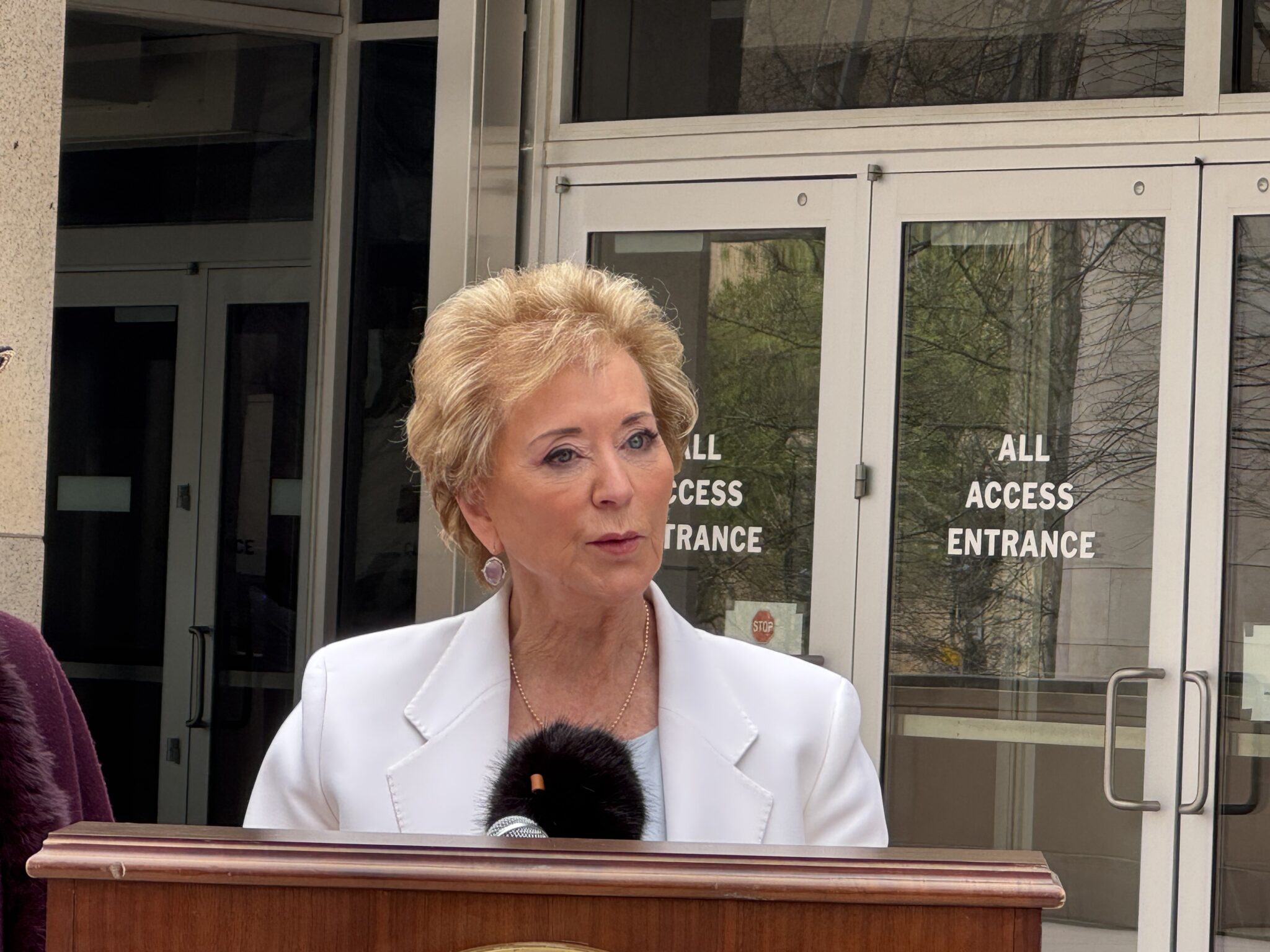
“American taxpayers will no longer be forced to serve as collateral for irresponsible student loan policies,” U.S. Secretary of Education Linda McMahon said in a statement Monday.
During last year’s presidential campaign, President Donald Trump criticized his predecessor and successor, President Joe Biden, for his efforts to erase student debt. McMahon resumed that line of attack Monday, blaming Biden’s administration for unreasonably raising borrowers’ expectations of forgiveness.
“The Biden Administration misled borrowers: the executive branch does not have the constitutional authority to wipe debt away, nor do the loan balances simply disappear. Hundreds of billions have already been transferred to taxpayers,” McMahon said.
She added that “going forward, the Department of Education, in conjunction with the Department of Treasury, will shepherd the student loan program responsibly and according to the law, which means helping borrowers return to repayment — both for the sake of their own financial health and our nation’s economic outlook.”
The department said the Office of Federal Student Aid will restart the Treasury Offset Program, which the U.S. Treasury Department administers, on May 5.
The Education Department statement said all borrowers who are in default will get emails over the next two weeks “making them aware of these developments and urging them to contact the Default Resolution Group to make a monthly payment, enroll in an income-driven repayment plan, or sign up for loan rehabilitation.”
The department said the Office of Federal Student Aid will “send required notices beginning administrative wage garnishment” later this summer.
More than 42.7 million borrowers owe more than $1.6 trillion in student debt, according to the department.
The administration claims that “instead of protecting responsible taxpayers, the Biden-Harris Administration put them on the hook for irresponsible lending, pushing the federal student loan portfolio toward a fiscal cliff.”
____________
Shauneen Miranda
Shauneen Miranda is a reporter for States Newsroom’s Washington bureau. An alumna of the University of Maryland, she previously covered breaking news for Axios.
Ohio Capital Journal is part of States Newsroom, the nation’s largest state-focused nonprofit news organization.
A new analysis of state public health systems shows Ohio’s has some of the worst funding support in the nation, and that funding could go down even more in the newest state budget.
Using 2021 data from the State Health Access Data Assistance Center, the Health Policy Institute of Ohio found that the state spent $24 per person on public health, “far less than most other states.”
“Overall, Ohio’s investment in public health is lower than many other states at both the state and local levels,” the institute stated.
According to the data, only 12 states are worse than Ohio for state public health funding, with the worst being Missouri, at $6.54 per person in 2021. The highest ranked was the District of Columbia, at $370.56 in per-capita spending that year.
Source: Health Policy Institute of Ohio
Public health involves everything from vaccine awareness and health education to food and water safety.
While health outcomes are influenced by clinical care like primary care check-ups, health behaviors and the social, economic, and physical environment make up a bigger part of the health outcome influences, according to policy briefs by the institute.
“Public health workers focus on stopping health problems before they start,” the HPIO stated in a recent policy brief. “For example, public health workers prevent injuries and deaths by providing parents with information about how to correctly install infant car seats, distributing drug overdose reversal medication and raising awareness of senior fall prevention programs.”
Other public health roles include nurses at school-based health centers, restaurant inspectors, public assistance program nutritionists, epidemiologists who look at health trends like infant mortality, and workers who conduct home visits as part of the Help Me Grow program.
That program, along with infant vitality programs are portions of the state budget that may see cuts, even as public health advocates ask the state to support the sector more than it already does.
In the Ohio House’s version of the state budget, $22.5 million would be cut from the Help Me Grow program in fiscal year 2027, representing a 26% reduction. Infant vitality programs would see cuts of more than $2 million each in 2026 and 2027, a nearly 10% cut. The programs, both housed under the Ohio Department of Children and Youth, are still awaiting final numbers, as the Ohio Senate takes up its budget discussions. A final draft will then be developed by both chambers, before it’s sent to the governor by July 1.
GET THE MORNING HEADLINES.
The House version of the budget leaves local health department support unchanged, with that support set at the same $2.379 million the line item received in 2024 and this year. State funding for infectious disease prevention and control within the Ohio Department of Health will also receive relatively the same amount of funding as it received in 2024, though the House version drops the budget slightly from the estimated 2025 funding. The 2025 estimate by the state has funding at $5.2 million, and the House set funding for 2026 and 2027 at $4.9 million per year.
In Ohio, 2023 annual financial reports from the Ohio Department of Health and the Association of Ohio Health Commissioners showed 72% of local health department revenue comes from the local level, including local government funds, public health levies in some areas and fees. Federal funding distributed by the state makes up 16% of the revenue, 6% is from other state sources, and 5% comes from direct federal funding to local departments. Local health departments only receive 1% of their revenue via state subsidy, according to the data.
Source: Health Policy Institute of Ohio
The Health Policy Institute’s review of 2024 Ohio Department of Health data shows it receives half of its revenue from federal sources, 31% from the state and 19% came from the federal response to the COVID-19 pandemic.
With $979 million in state fiscal year 2024, the state used that revenue almost equally across three topics: disease prevention, implementation of the federal Women, Infant and Children (WIC) program, and services related to COVID-19 and other infectious diseases, according to an HPIO policy brief on public health basics. These three topics each took 22% to 23% in ODH expenditures.
Another 11% went to family and community health services, 6% went to maternal and infant vitality, 5% to administrative services, 4% to “quality assurance” for long-term care facilities, 4% for public health preparedness information and 2% for “other family and community health services” passed through local health districts.
Public health initiatives yield an average return on investment of $14 for every dollar spent, through improved health outcomes, reduced health care costs and increased productivity, according to the institute’s public health analysis.
Among other policy recommendations, the instituted urged continued or even increased support for the federal Public Health Infrastructure Grant would be important to “strengthen the public health workforce, foundational capabilities and data systems through the end of 2027.”
The public health sector has faced struggles like high turnover, high burnout rates in existing employees and a lack of adequate pay.
“Consistent delivery of these services across the state depends upon an adequate public health workforce,” the HPIO stated.
Susan Tebben
Susan Tebben is an award-winning journalist with a decade of experience covering Ohio news, including courts and crime, Appalachian social issues, government, education, diversity and culture. She has worked for The Newark Advocate, The Glasgow (KY) Daily Times, The Athens Messenger, and WOUB Public Media. She has also had work featured on National Public Radio.
Ohio Capital Journal is part of States Newsroom, the nation’s largest state-focused nonprofit news organization.
Protesters dressed as characters in “The Handmaid’s Tale,” a dystopian novel about life under a totalitarian regime. They were protesting President Donald Trump at the Ohio Capitol on April 19. (Photo by Marty Schladen, Ohio Capital Journal.)
A larger-than-expected crowd went to the Ohio capitol on Saturday to protest President Donald Trump and the many controversial actions of his young administration. It was one of at least 47 across Ohio and more than 700 across the United States.
Columbus police said that the crowd appeared to approach 3,000. That was smaller than the roughly 5,000 who turned out on April 5, when millions protested nationwide. But with the Easter holiday and fewer sponsoring organizations, smaller crowds were expected on Saturday.
Large crowds also gathered in Cincinnati, rainy Akron, and other cities across the Buckeye State. They were sponsored by the group 50501.
Photo by Marty Schladen, Ohio Capital Journal.
Organizers chose April 19 to protest in part for its symbolic value. On that day in 1775, the first battles of the Revolutionary War were fought in Lexington and Concord, Mass.
Playing off of that theme, many carried signs Saturday denouncing Trump and accusing him of trying to be a king.
But perhaps more concerning is that his administration has been invoking a law not used in 80 years, accusing some migrants of membership in gangs, and deporting them to a notorious Salvadorean prison. He has defied court orders — including one to bring back a man whom the administration admitted was deported in error.
The U.S. Supreme Court early Saturday morning ordered a temporary halt to the deportations. So the stage seems to be setting for a confrontation between the judiciary — which has no army to enforce its orders — and an executive who sometimes has been disinclined to heed them.
That was on the minds of many at the Columbus protest. Chuck Ardo of Lancaster said that his family migrated to the United States from Slovakia when he was a child, and that his parents survived the Holocaust.
“Fascism is something I’ve always been aware of,” he said. “Due process and the Constitution, that’s what matters. I don’t know if these people are deportable or not. But they all deserve due process and that’s what’s missing here. They’ve labeled them ‘terrorists,’ but on what grounds? What proof have they shown?”
Sen. Chris Van Hollen, D-Md., last week visited the wrongly deported man, Kilmar Armando Abrego Garcia, at the Salvadorean prison. He said that if Trump has evidence that Abrego Garcia is in a gang, he needs to present it court — not just claim it on social media.
For Ardo, Trump’s actions have a disturbing historical echo.
“Donald Trump is doing many of the things Hitler did as he rose to power,” he said. “Hitler attacked the courts. He attacked the universities. I’m not accusing anybody of being a Nazi here, but while history doesn’t repeat itself, it rhymes.”
Debbie Wood of Powell said the president has been acting like a king in other ways as well.
“Trump did not win in a landslide,” she said. “More people voted for someone else than for him. He does not have a mandate. Even the people who voted for him did not vote to ruin the VA. They didn’t vote to fire people who do cancer research. They didn’t vote to take food out of the mouths of hungry people. Ruining the national parks. Nobody voted for any of that stuff.”
She added, “People are getting more and more angry. He’s sending people away to concentration camps without due process. Ignoring court orders. Who does that? We would be in jail.”
Photo by Marty Schladen, Ohio Capital Journal.
Gary Bennett of St. Clairsville stood at the base of a monument to former President William McKinley holding a sign that mocked Trump and slammed him for gutting the staff at the National Park Service. He said that’s just one problem among many he has with the new administration.
“We could make signs every day of the week and there would still be signs to make,” he said. “Me and my wife just retired, and we don’t want him to take away our Social Security. That’s just one thing.”
Chris Glass of Delaware said she’s also upset about many things Trump is doing, and that protesting helps.
“There is something very nice about the camaraderie,” she said. “It’s a sense that people do care. I think we represent the country better than our current government does.”
Last updated 5:03 a.m., Apr. 21, 2025
Marty Schladen
Marty Schladen has been a reporter for decades, working in Indiana, Texas and other places before returning to his native Ohio to work at The Columbus Dispatch in 2017. He’s won state and national journalism awards for investigations into utility regulation, public corruption, the environment, prescription drug spending and other matters.
Ohio Capital Journal is part of States Newsroom, the nation’s largest state-focused nonprofit news organization.
The “Hands Off” protest April 5, 2025 at the Ohio Statehouse in downtown Columbus. (Photo by David DeWitt, Ohio Capital Journal.)
• Stand Up Oxford • Cincinnati National Day of Action: Rally ‘Heard Round the World • Wilmington National Day of Action: Rally Heard ‘Round the World • Middleton National Day of Action: Rally Heard ‘Round the World,
At least 47 protests of President Donald Trump and his administration are planned in Ohio for on Saturday. They’ll be part of more than 600 events planned nationwide.
The group 50501 is organizing the effort after joining dozens of others in sponsoring massive “Hands Off!” rallies across the country on April 5. It says its mission is to “fight to uphold the Constitution and end executive overreach.”
Trump also is trying to unilaterally alter the status of hundreds of thousands of migrants who are legally in the country and force them back to hazardous homelands such as Afghanistan and Haiti. In addition, Trump is trying to use the government to attack law firms that have sued him and his enemies, and go after a state attorney general who successfully sued him in 2023.
Melissa Portala, a leader of Toledo Persist, said that it’s vital for people to exercise their right to protest to protect all their other democratic rights.
GET THE MORNING HEADLINES.
“We need people to stand up and show the rest of the public that people are speaking out,” she said. “If they don’t see that, then they feel helpless, and a lot of people do feel helpless until they see other people speaking out… Public protest is the only way that people have to be visible. This is how we can have our voices heard.”
On April 5, millions turned out across the country to protest the actions of Trump and his administration — including tens of thousands across Ohio. In Toledo alone, between 3,000 and 4,000 showed up, according to the estimates of organizers who used clickers, Portala said.
“We started on one side of a bridge,” she said. “It took 45 minutes to walk across it, the crowd was so big.”
Portala said she expected smaller crowds this time around for several reasons.
The group 50501 is the sole national organizer, while dozens of groups were behind the April 5 protests. This one was called with less lead time for local organizers to plan and get the word out. And this Saturday’s protests fall the day before Easter, when many have longstanding family obligations, Portala said.
Details about the 47 Ohio protests can be found here. A national listing can be found here.
Portala said she expects participation in such events to grow in the coming months.
“I think the population is waking up and saying, ‘Oh my goodness, we’re in some deep trouble here, we need to actually take some action,’” she said.
Marty Schladen
Marty Schladen has been a reporter for decades, working in Indiana, Texas and other places before returning to his native Ohio to work at The Columbus Dispatch in 2017. He’s won state and national journalism awards for investigations into utility regulation, public corruption, the environment, prescription drug spending and other matters.
Ohio Capital Journal is part of States Newsroom, the nation’s largest state-focused nonprofit news organization.
A measure moving through the Ohio Senate would direct public schools to display historical documents like the Declaration of Independence or the Bill of Rights. It also includes the Ten Commandments, a religious document. The measure is one example in a wave of state legislation attempting to roll back a bright line separating religious displays from public school classrooms.
The proposals take their cue from a bill in Louisiana requiring the display of the Ten Commandments. Five school districts challenged that law. A district court judge blocked it from taking effect, but only in those districts. The case is currently before the U.S. 5th Circuit Court of Appeals.
In 1980, the U.S. Supreme Court overturned a Ten Commandments law in Kentucky. But following a 2022 decision in favor of a high school football coach who regularly prayed with players at games, religious organizations sense an opening.
A Stateline report earlier this year found legislation modeled on Louisiana’s bill in 15 states. That list doesn’t include Ohio’s measure.
What it does
The sponsor, Sen. Terry Johnson, R-McDermott, contends the bill will expose students to documents that have “served as the backbone of our legal and moral traditions as a people.” Schools can also set up monuments inscribed with one of the documents on the list.
An amendment, adopted last week, directs classrooms to display at least four of the approved documents for all classes from 4th grade to 12th.
The lineup includes what you’d expect. In addition to the Declaration and the Bill of Rights the Constitution is an option. But several others, while significant, are a bit of a stretch for a grade school classroom. Schools could display the Articles of Confederation or the Northwest Ordinance. They could go back even further to the Mayflower Compact or Magna Carta.
“Simply put,” Johnson argued, “This legislation intends to reintroduce disciplined historic principles — those same principles upon which our Founding Fathers drew inspiration and put to writing — back to the classroom.”
Classes could also display the United States or Ohio motto. Both were established in the 1950s more than a century after the last Founding Father died.
Support and pushback
For all Johnson’s insistence on legal traditions and historic principles, his supporters give the game away. Among those urging lawmakers to pass the bill, there are no historians or legal scholars, no societies dedicated to the founding or to teaching young people.
Instead, there are just three groups, all of them Christian organizations, backing the effort: The Family Research Council, Christian Business Partnership, and Ohio Christian Alliance.
Last week Ohio Christian Alliance President Chris Long testified that the displays offer “a complement” to existing social studies curriculum. “Students remember better when they have visual aids,” he said.
Democrats on the committee asked whether they should leave decisions about displays to the teachers actually leading classes. Sen. Kent Smith, D-Euclid, drew comparison to the Christian Alliance’s longstanding offer to provide state lawmakers with a framed copy of the Ten Commandments.
“Do you think that might be the way to go in this case?” he asked, suggesting school districts should have the same choice.
Sen. Catherine Ingram, D-Cincinnati, zeroed in on a provision setting a July 1, 2026 deadline, but only for displays stemming from donations. Although Republicans on the panel didn’t offer a straight answer, it appears the deadline would apply to all displays. The measure requires districts to determine the overall cost and then accept either donated funds or donated displays to meet the requirements.
The measure received much harsher criticism at an earlier hearing. Gary Daniels, chief lobbyist for the ACLU of Ohio, rejected arguments that the Ten Commandments are one choice among many, or fundamental the country’s founding. The organizations supporting the bill will start lobbying districts if the bill passes, he argued, and commandments about worship, respecting parents or prohibiting adultery have nothing to do with the founding of the United States.
In short, he said, the bill is “a plainly obvious attempt to impose explicit religious beliefs and practices on young, captive audiences in our public schools.”
Follow Ohio Capital Journal Reporter Nick Evans on X or on Bluesky.
YOU MAKE OUR WORK POSSIBLE.
_______________
Nick Evans
Nick Evans has spent the past seven years reporting for NPR member stations in Florida and Ohio. He got his start in Tallahassee, covering issues like redistricting, same sex marriage and medical marijuana. Since arriving in Columbus in 2018, he has covered everything from city council to football. His work on Ohio politics and local policing have been featured numerous times on NPR.
Ohio Capital Journal is part of States Newsroom, the nation’s largest state-focused nonprofit news organization.
Anti-hunger advocates saw a mixed bag with the final Ohio House version of the state budget, and they’re hoping to claw back some losses via the Senate’s draft.
It maintained some reductions to a children’s hunger initiative, and gave food banks across the state only “core funding,” without an increase that they say they need as the number of people asking for food continues to increase. And federal food assistance through the Supplemental Nutrition Assistance Program (SNAP) often doesn’t cover the needs of Ohio residents.
The final House budget draft still includes SNAP work requirements and regulations, some of which were in Gov. Mike DeWine’s executive budget, and some were added by the House.
GET THE MORNING HEADLINES.
The Children’s Hunger Alliance will still fight against cuts to its programs as the budget moves to the Senate. DeWine’s proposal asked for $3.75 million each year in federal Temporary Assistance for Needy Families (TANF) funds to be given to the alliance. The House reduced that amount to $2.5 million.
The cut could cause major problems for children in Ohio who need the help, according to the alliance. They include 2.8 million fewer meals and a doubling of the number of schools on a waitlist to join the program.
The hunger alliance’s president and CEO, Michelle Brown, said Columbiana and Athens counties would lose 150,000 meals in an Appalachian region that sees significant food insecurity already.
“We are urging the Senate to honor their commitment to children and by increasing CHA’s funding by $2.5 million over the biennium, to restore flat funding as proposed by the governor,” the alliance said in a statement after the House budget was passed.
The Hunger Network in Ohio criticized not only the hunger program cuts, but also cuts to the Fair School Funding Plan and the Housing Trust Fund. The network pressed the Senate to “adopt fiscally responsible investments to create a stronger Ohio that prioritizes Ohio neighbors who are struggling to make ends meet.”
The House-passed version of the bill didn’t include a provision of DeWine’s budget that would have provided free breakfast or lunch to school districts that participate in federal school meal programs and have a student population with at least 25% eligible for free or reduced-priced meals.
The measure removed from the budget by the House used the federal Community Eligibility Provision, something that also could be up for cuts on the federal end. The provision allows schools to participate based on the percentage of students in a school district who participate in other assistance programs like SNAP and TANF. Currently, schools are eligible if they have up to 40% participation in such programs.
Earlier this year, a congressional committee proposed changing the eligibility level for the provision. It would raise the participation percentage to 60%, a change that hunger relief advocates said could impact more than 280,000 Ohio children, and millions nationwide.
The House budget did retain DeWine’s language on the state’s school meal programs. It would reimburse districts to allow those eligible for reduced-priced meals to receive them for free. The previous state operating budget included $4 million for that purpose.
For the Ohio Association of Foodbanks, an earmark from TANF dollars of up to $24.5 million a year made it from the governor’s budget proposal to the House’s draft. The association is expected to use the money for food distribution, summer meal programs, SNAP outreach and even free tax filing services, according to budget documents. The provision also mentions “capacity building” equipment as part of the earmarked funding.
But the group still sees the need to fight for more on the Senate side, especially amid increasing demand and potential cuts to federal food assistance. The U.S. House passed a budget on Thursday, with funding cuts that could number in the trillions. They could include at least $880 billion in programs such as the SNAP program.
The Center on Budget and Policy Priorities stated at least $230 billion in federal cuts have been proposed through 2034 from the U.S. House Agriculture Committee, overseers the SNAP program, and reductions could come “largely or entirely” from SNAP.
The association’s executive director, Joree Novotny, said the group plans to ask the Senate to add $4.93 million per fiscal year to help offset rising food costs and allow the food banks to continue to source food locally.
“Since 2020, food prices have surged by nearly 24%, meaning the same level of funding buys significantly less, both in consumers’ grocery carts and in our own purchasing power as a statewide hunger relief network,” Novotny said in a statement. “…With modest additional support, Ohio’s foodbanks will continue to stretch every dollar to maintain access to healthy foods when seniors and working families are forced to turn to us for help.”
YOU MAKE OUR WORK POSSIBLE.
_______________
Susan Tebben
Susan Tebben is an award-winning journalist with a decade of experience covering Ohio news, including courts and crime, Appalachian social issues, government, education, diversity and culture. She has worked for The Newark Advocate, The Glasgow (KY) Daily Times, The Athens Messenger, and WOUB Public Media. She has also had work featured on National Public Radio.
Ohio Capital Journal is part of States Newsroom, the nation’s largest state-focused nonprofit news organization.
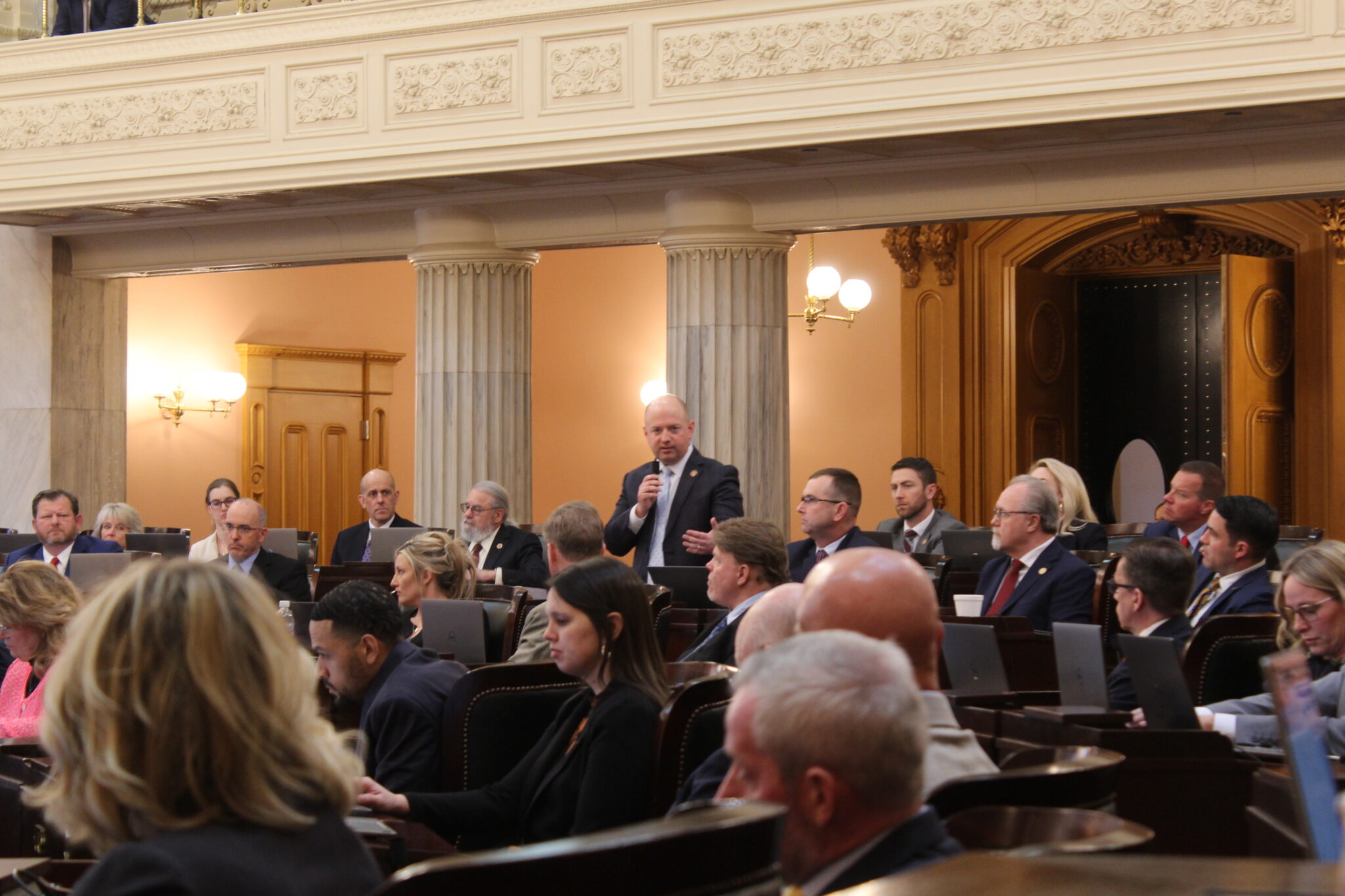
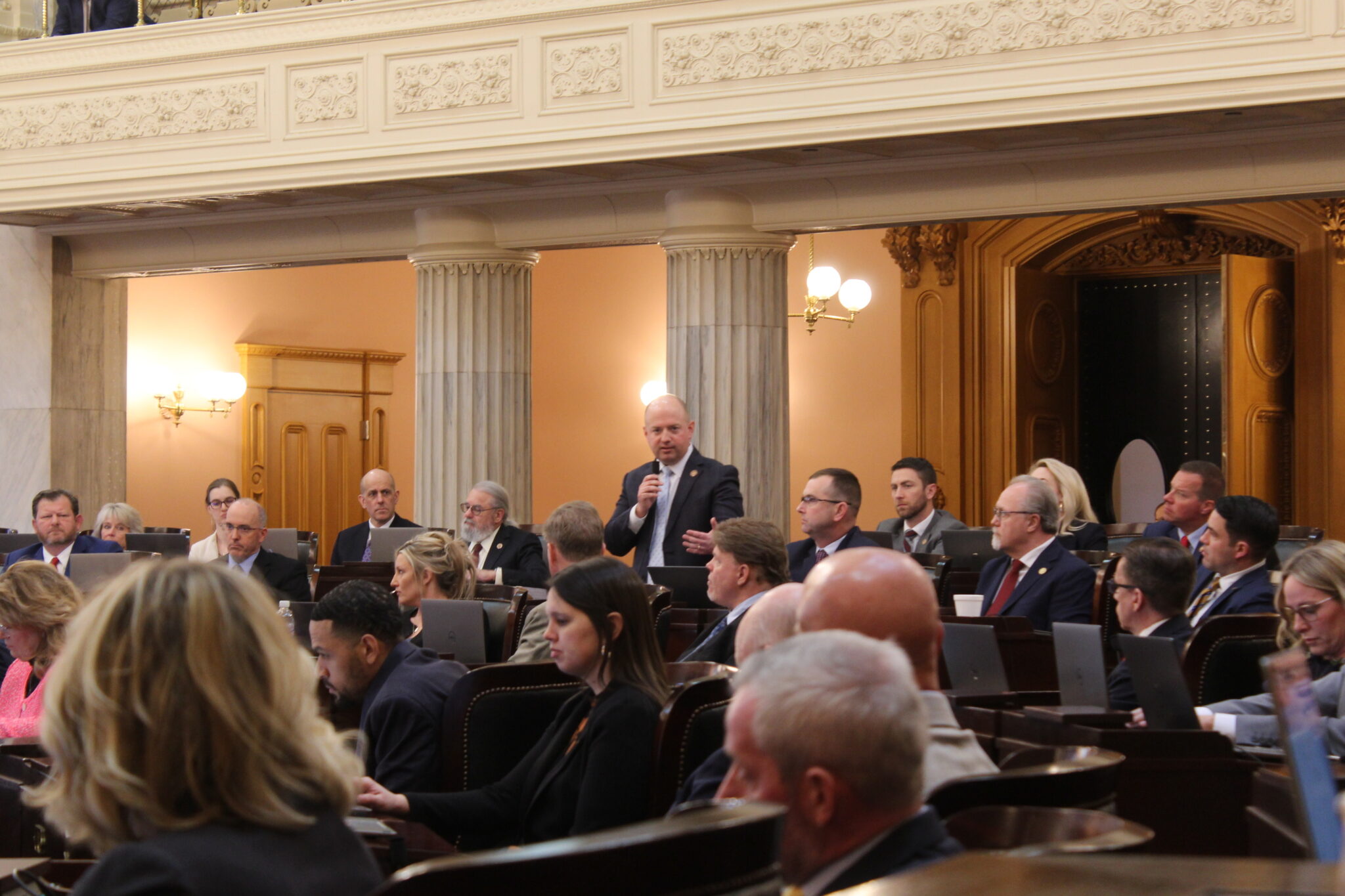
The Ohio House advanced its two-year spending plan Wednesday despite sharp criticism from the chamber’s Democrats. The House’s version of the operating budget nixes several of the governor’s policy priorities and helps fund a new stadium for the Cleveland Browns.
The bill also walks back of some the House’s initial plans, but only slightly.
A proposal to force property tax reductions on the back of school district rainy day funds will allow administrators to carry over 30% of their budget instead of 25%. Budget drafters are scrapping a new population-based system for distributing library funding, but they’re not giving up on moving to a dollar figure appropriation instead of a percentage of the general revenue fund.
With Wednesday’s vote, the budget now moves to the state Senate, where lawmakers are sure to roll out on their own slate of changes. They’ll have time to mull it over as lawmakers leave for a two-week Easter recess.
The 2026 fiscal year begins on July 1; lawmakers have until then to finish off the budget.
Stadium funding skirmish
Ohio House Finance Chairman, state Rep. Brian Stewart, R- Ashville, kicked off testimony, describing how the spending plan eliminates taxes from the governor’s proposal and spends $4.4 billion less in state money.
Those tax increases in governor’s proposal would’ve paid for a $1,000 child tax credit and a new fund for future stadium deals.
Instead, House Republicans favor a $600 million bond package in support of Cleveland’s proposed facility. “It is the most conservative stadium funding proposal in America,” Stewart insisted, arguing tax receipts from the project will pay back the debt. He went on to offer an amendment increasing from $38.5 million to $50 million a deposit paid by Brown’s ownership.
And that’s about where things went off the rails.
Rep. Sean Brennan, D-Parma, piped up with an amendment to Stewart’s eliminating the bond package entirely.
Rather than letting that Brennan proceed, House Speaker Matt Huffman ordered the chamber to stand at ease for several minutes. When session resumed, Huffman quickly called a vote despite Democratic lawmakers’ objections and points of order.
In the confusion, many Democrats didn’t wind up voting on the amendment at all. It passed 55-15.
Schools, property taxes, libraries and Medicaid
Many Democrats objected to a K-12 funding model that abandons the so-called fair school funding plan lawmakers have been working toward in the last two budget cycles. State Rep. Bride Rose Sweeney, D-Westlake, said that setting aside that formula returns to an ad hoc funding approach the Ohio Supreme Court ruled unconstitutional.
“This proposal is leading Ohio students and taxpayers back down a path of artificial guarantees, back to square one, back to residual funding, back to the days where school (funding) was based not on what it cost to educate a child, but what the General Assembly decides that it feels like paying for education.”
While school districts worry about how much funding is coming in, they could also have to consider how much is sitting on their balance sheet. The budget would direct county officials to pare back the property taxes which support schools if a district maintains a balance worth more than 30% of their annual budget.
“We are saying that government is not a piggy bank,” state Rep. David Thomas, R-Jefferson, argued, criticizing those carryovers as a poor return on taxpayers’ investment.
State Rep. Jack Daniels, R-New Franklin, defended the changes to library funding. He said “no agency is entitled to an increase,” and that making appropriations based on a percentage of the general revenue fund amounts to an “obligation.” And he complained the budget isn’t actually cutting dollars to libraries.
“They feel they’re being cut, when in fact, we are not cutting,” he said. “We’re just not providing the increase they expect.”
Notably, the Ohio Library Council determined the House proposal would appropriate at least $40 million less each year than the governor’s proposal.
Democrats also worry that the budget locks the state into radical changes to the Medicaid program if federal government makes even modest reductions to its 90% share of the program.
“If federal funding drops even slightly, say from 90% to 89% the entire program would be ended,” Rep. Rachel Baker, D-Cincinnati said. “That’s right, a 1% cut in federal funding would terminate the program that provides health care access to almost 800,000 Ohioans.”
Rep. Stewart downplayed the likelihood of federal changes, but argued the state expanded the program on the promise that the federal government would cover 90% of the program.
Rep. Jean Schmidt, R-Loveland, meanwhile praised the budget for “push(ing) back against the wokeness we are facing by prohibiting Medicaid funds from being used for discriminatory DEI programs and establishing a statewide policy recognize that there are only two sexes.”
Final tally
Rep. Dani Isaacsohn, D-Cincinnati said, “We are not the sexiest state, but that’s not what makes Ohio so special.”
Ohio doesn’t have beaches or mountains to draw people in, but it can offer quality of life.
“People move here because they want to start family, they want to buy a home, they want to send their kids to a great school,” he said. But with the House proposal, lawmakers “are failing to meet those basic benchmarks.”
“The only piece of this budget — that is big and complicated — that got the full breadth of the creativity of this body,” he argued, “is a $600 million subsidy for billionaires who own a failing sports team,”
In his closing remarks, Rep. Stewart dismissed Democrats’ criticism.
“You know how many GRF general revenue fund dollars that are being spent for the Cleveland Browns in this budget?” he said. “Zero — zero, not one dollar.”
Stewart concluded the House proposal represents more money than the current budget for K-12 schools, higher ed, child care, and libraries. The measure would also amount to more than $4 billion in property tax relief — the largest, he said, in state history.
“Voting no on this budget means you are voting against all of those things,” he said. “That’s a tough vote, folks. Voting no on this budget is a master’s class in missing the forest for the trees.”
In the end, five Republicans voted against the proposal, but it still passed easily 60-39.
Follow Ohio Capital Journal Reporter Nick Evans on X or on Bluesky.
Nick Evans
Nick Evans has spent the past seven years reporting for NPR member stations in Florida and Ohio. He got his start in Tallahassee, covering issues like redistricting, same sex marriage and medical marijuana. Since arriving in Columbus in 2018, he has covered everything from city council to football. His work on Ohio politics and local policing have been featured numerous times on NPR.
Ohio Capital Journal is part of States Newsroom, the nation’s largest state-focused nonprofit news organization.
WASHINGTON — The U.S. Capitol Police chief testified Tuesday that President Donald Trump’s decision to pardon people convicted of assaulting police officers on Jan. 6, 2021, had negative repercussions on morale within the department and for police across the country.
“I think there was an impact, not only to the Capitol Police, but an impact nationwide when you see folks that are pardoned — and I’m really referring to the ones that were convicted of assaulting police officers,” J. Thomas Manger said during a hearing on the department’s budget request.
“I think that’s what bothered most cops and it did certainly have an impact on the USCP,” Manger added. “We’ve got so much change that officers are experiencing over the last four years, so I’m trying to keep them focused on moving forward. But it certainly did have a negative impact. For cops all over this country, you wonder when you put your life on the line every day, and does it matter?”
On Trump’s first day in office, he pardoned nearly 1,500 people who were convicted of crimes related to attacking the U.S. Capitol on Jan. 6, 2021, while members of Congress moved through the process to certify President Joe Biden’s win of the Electoral College vote.
Many of those people went to the Capitol after attending a rally near the White House where Trump repeated false claims about winning the 2020 presidential election, despite numerous failed court cases and no evidence of widespread voter fraud.
Manger testified during the House Appropriations Legislative Branch Subcommittee hearing that the department has made numerous improvements since the attacks, but that its nearly $1 billion budget request is necessary to hire more officers and continue updating equipment.
“I recognize that there are other police departments of a similar size whose budget is not as large as ours. But we’re not an ordinary law enforcement agency,” Manger said. “The USCP is unlike any traditional police department. In fact, our mission incorporates elements similar to the FBI, U.S. Secret Service and the federal protective service.”
Manger said that in the four years since the Jan. 6 attack, USCP has made substantial changes to how it operates and that many of its “mission requirements simply did not exist four years ago.”
_____________
Jennifer Shutt
Jennifer covers the nation’s capital as a senior reporter for States Newsroom. Her coverage areas include congressional policy, politics and legal challenges with a focus on health care, unemployment, housing and aid to families.
Ohio Capital Journal is part of States Newsroom, the nation’s largest state-focused nonprofit news organization.