An infusion of federal funds is coming to Ohio, targeted at improving kindergarten readiness.
The Ohio Department of Job and Family Services is set to receive a total of $48 million over three years as part of the U.S. Department of Health and Human Services’ Preschool Development Grant, according to an announcement from Gov. Mike DeWine’s office.
ODJFS Director Matt Damschroder said plans for the grant are “expansive,” and will include “culturally appropriate trauma training, credentialing and parent supports,” along with “creating long-term and sustainable local, state and federal funding for early childhood education programs.”
Through a partnership with the state departments of education, health, mental health and addiction, Medicaid and developmental disabilities, the grant will also be used to expand child care for special needs, homeless and English language learners.
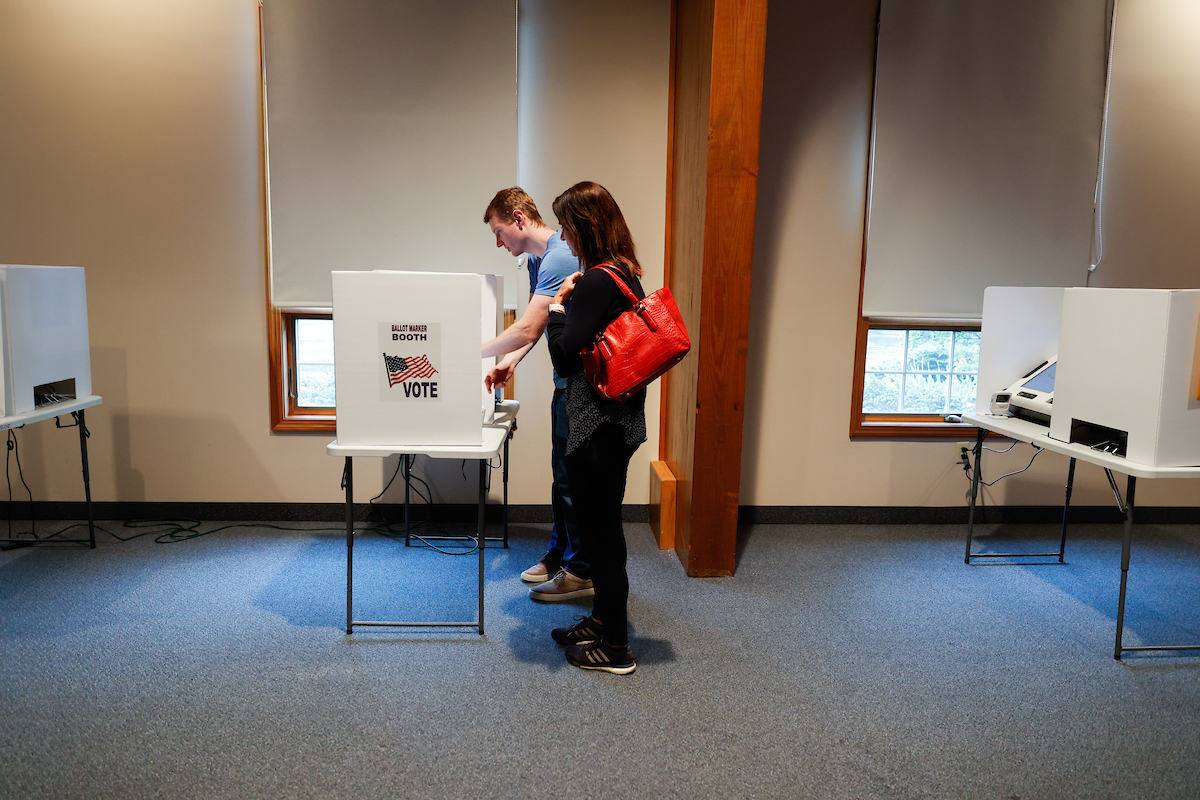
Franklin County Recorder Daniel O’Connor is blasting Ohio’s Republican leaders for excluding county-issued veterans’ identification from the list of IDs one can use to vote under the state’s controversial new law.
Gov. Mike DeWine signed House Bill 458 earlier this month after it was rushed through a lame-duck session by the heavily gerrymandered legislature in December. In previous elections, voters could establish their identities not only with valid drivers’ licenses, but also with documents such as utility bills and the county-issued vets IDs.
It might be hard to see significant problems with the old system. Secretary of State Frank LaRose found possible fraud in just one of every 222,000 votes cast in the 2020 election. But the state’s GOP leaders enacted HB 458 anyway, requiring Ohioans to have a driver’s license, state ID, passport or military ID to cast a vote.
So far, it’s been tricky for researchers to show that strict voter ID laws suppress turnout because of problems with data and methodology. But voting rights advocates say that it only stands to reason that such laws would disproportionately affect the poor and communities of color.
Those groups are less likely to have driver’s licenses or the documents needed to get one in the first place. And a report last year by the Legal Aid Society of Cleveland showed that a million Ohioans have licenses that are suspended because of debts relating traffic fees and fines and unpaid child support. That’s a number equal to one-eighth of the state’s registered voters.
Those suspensions fall overwhelmingly on poor urban communities that — perhaps not coincidentally — are much more likely to vote for Democrats.
In terms of military IDs, HB 458 allows people with federally issued military and veterans’ ID cards to use those to vote. It also allows Ohio National Guard IDs.
But it doesn’t appear to allow veterans’ cards that are issued by county recorders’ or veterans’ services offices under a 2016 law. To be issued one, a veteran has to produce a discharge form — DD-214 — and other forms of identification.
O’Connor spokeswoman Hanna Detwiler said that about 5,000 Franklin County residents have such IDs, but it isn’t clear how many will be disenfranchised under HB 458.
“I’m not sure how many veterans have our card as their only form of ID,” she said in an email. “But obviously things happen — like losing a wallet — where this might be the only form they have after showing the two additional forms of ID when initially getting the card.”
Asked about the omission, DeWine Press Secretary Dan Tierney in an email said, “the bill did reduce the number of forms of identification that could be used and instead specified state-issued (and certain federal-issued) photo IDs. The bill provided for the (Bureau of Motor Vehicles) issued state identification cards as the photo IDs available at no cost to Ohio voters.”
Tierney added, “My understanding from legislative testimony is that, by far, the most common ID used for voting in Ohio are state-issued drivers’ licenses.”
O’Connor, the Democratic county recorder, in a statement slammed GOP officials for not publicly announcing that this form of veterans’ ID will no longer be accepted at polling places.
“It’s bad enough that in the middle of the night, the Ohio legislature decided to target our right to vote,” he said. “But specifically invalidating the free state-issued ID our office provides to retired service members is unacceptable, and I will not stay silent about it.”
A coalition of reproductive rights groups, along with the ACLU of Ohio say they plan to have a pro-abortion ballot initiative on the Ohio Attorney General’s desk by February.
Ohioans for Reproductive Freedom announced the plan to do this with the help of a recently hired “general consultant” with experience boosting ballot initiatives on the topic in two other states.
The coalition – made up of Planned Parenthood Advocates of Ohio, Abortion Fund of Ohio, New Voices for Reproductive Justice, the Ohio Women’s Alliance, Preterm-Cleveland, Pro-Choice Ohio and Unite for Reproductive & Gender Equity (URGE), along with the ACLU of Ohio – said the amendment would “explicitly protect reproductive freedom for all Ohioans.”
“We are working expeditiously and prudently because we know that skipping steps or rushing the process would be a reckless approach when stakes are so high,” said Erin Scott, co-founder and director of the Ohio Women’s Alliance, in a joint statement of ORP members.
Mission Control, Inc., was hired by the group to help with the effort, after previously working on ballot initiative campaigns in Kansas and Kentucky, both of which showed voters in support of abortion rights. The company has offices in Washington, D.C., Connecticut, Colorado and California.
ORP said it has “completed initial language drafting and is now moving into comprehensive qualitative and quantitative research and message testing.”
Anti-abortion groups were quick to criticize the effort, saying support for the measure wouldn’t come in Ohio.
“Any attempt to change Ohio’s constitution by these large out-of-state abortion groups will ultimately fail here in Ohio,” said Peter Range, Ohio Right to Life CEO, in a statement.
The religious lobby group Center for Christian Virtue acknowledged Mission Control’s success in other states, but also said the Ohio effort is “doomed to fail.”
CCV president Aaron Baer used his statement against the measure to support a joint resolution that would make it harder for the state constitution to be amended by raising the voting threshold to 60%. The measure was HJR 6 in the last General Assembly, and is now being led by state Rep. Brian Stewart, R-Ashville, and state Rep. Derrick Merrin, R-Monclova.
After more than hour behind closed doors, a bloc of Ohio Republicans led by state Rep. Derek Merrin, Monclova Twp., trooped through the Ohio Statehouse.
The faction — thirty-odd lawmakers who wound up on the losing side of the House Speaker’s race last week— climbed three floors and squeezed into the clerk’s office.
After pausing for photos they filed a new version of their proposal to make it harder for Ohioans to pass constitutional amendments.
The proposal asks voters to raise the passage threshold for future amendments. The idea proved controversial and ran out of steam at the tail end of the last legislative session.
But with the resolution taking center stage now, as spurned Republicans lock horns with new Speaker Jason Stephens, it seems clear many in the party aren’t ready to drop the issue.
New Year’s resolution
Right after his plan went off the rails, sponsor Rep. Brian Stewart, R-Ashville, said he was “Looking forward to January.” Stewart noted then that Republican numbers were thin — a point he’d warned about previously — but argued there was plenty of support in the caucus.
Angry brian stewart is interesting. Maybe one of stephens' promises to ohio dems was to kill any bills like hjr 6? 👀 https://t.co/LtVzqMc46N
The outlook got a bit murkier after the speaker vote. Stewart, an ally of presumptive speaker Merrin, was set to be a part of leadership this term. After the floor revolt gave the gavel to Stephens, Stewart seemed to indicate his proposal was collateral damage.
Wednesday, though, Stewart filed his “Ohio Constitution Protection Amendment” alongside more than 30 GOP co-sponsors. He noted two substantive changes from the previous version.
“The new version would require that signatures come from all 88 counties instead of just 44,” Stewart said. “If an amendment is going to apply to every Ohio and then every community should have a hand in putting that potential constitution amendment on the ballot.
“We’re also going to eliminate the cure period for constitutional amendments,” Stewart added. That period allows citizen-led organizations to gather additional signatures if their initial batch doesn’t meet requirements to make the ballot.
Even with Wednesday’s show of force, Stewart has a long way to go to get his resolution on the ballot. Three-fifths of the members in both chambers have to approve the resolution first. In the House, that’s 60 votes. Only 45 Republicans voted for Merrin in speaker’s race, and only 38 participated in Wednesday’s rogue caucus meeting — a handful of them over the phone.
Ohio Secretary of State Frank LaRose. (Photo by Justin Merriman/Getty Images)
Getting the band back together
While Stewart counts votes, supporters outside the House appear to be gearing up for another try, too. After previously deferring to House lawmakers, Secretary of State Frank LaRose seems to be on board. Monday at Gov. Mike DeWine’s inaugural celebration, LaRose said he wasn’t done pursuing changes.
“What I was talking to the new speaker about and to Rep. Stewart about was the importance of getting this done,” LaRose explained.
“Today people might want to pretend or think that it’s about, abortion or redistricting or whatever issue, but 50 years from now, it could be about holograms and flying cars,” LaRose said. “We just don’t know what the things are that are going to come up, but if it can’t get 60% it probably belongs in the Ohio Revised Code and not in the Ohio Constitution.”
Here's the full letter. It also ties the issue to redistricting reform, and responds to the organized labor groups that rallied at the Ohio Statehouse yesterday. pic.twitter.com/ilhWLPiWM0
Shortly before HJR 6 stalled out, Cleveland.com obtained a memo written by Stewart urging GOP members to back the proposal. In it, he directly tied the effort to short-circuiting future abortion and redistricting ballot measures.
Opponents are lining up, too. In a statement Wednesday, Jen Miller from the League of Women Voters of Ohio promised a fight.
“For over a century, everyday Ohioans have had the freedom to collect signatures and pass ballot initiatives that make our lives better,” she said. “This resolution is unnecessary, unpopular, and undemocratic, and our broad coalition stands ready to defeat it.”
Deadlines
Democratic House Leader Allison Russo addressed the issue with reporters on Monday as well. She acknowledged “throughout even lame duck, speaking with both (Rep.) Merrin and Speaker Stephens, (the proposed amendment threshold change) was something that I expressed concern about.”
She didn’t directly address whether killing any future proposal was part of a deal with Speaker Stephens.
Stewart’s initial plan was to get the question on the ballot this May. To make that happen, lawmakers would need to pass the resolution by Feb. 1. Russo noted with leadership still figuring out committee membership, that’s not looking likely.
Stewart, though, argued his colleagues are ready to advance the resolution, and he put the ball in Speaker Stephens’ court.
“We certainly believe in introducing it today that we have ample opportunity to do that again,” Stewart said. “So we’re ready to pass it. It’s a question of whether the current leadership’s appetite is there as well.”
“What Representative Stewart deserves and what the citizens Ohio deserve is a debate on this issue,” Merrin chipped in. “We want to have a debate and see where see where the votes are at.”
Left to right, state Reps. Phil Plummer, R-Dayton, Derek Merrin, R-Monclova Township, Brian Stewart, R-Ashville. (Photo by Nick Evans, OCJ.)
The math
For all their bluster, Merrin’s camp faces some challenging math. The chances of them peeling off a single Democratic vote are virtually nonexistent. Even if all 45 Republicans who didn’t back Stephens are on their side, they still can’t force a floor vote.
That maneuver, known as a discharge motion, requires a majority of members to sign on — at least under previous House rules. Convincing five members to back a discharge motion, and then fifteen to back a controversial ballot measure, may not be an insurmountable task, but it’s far from likely.
Speaking Wednesday, Merrin and Rep. Phil Plummer, R-Dayton, put special emphasis on the rules package for the coming session. They argued the House should set rules giving greater latitude to individual members and sap some of the speaker’s power to control the process or punish members.
Whether they’ll propose making it easier to force a vote is unclear. Why Speaker Stephens would go along with it if they did is similarly unclear.
For his part, LaRose kept things positive — focusing on the goal rather than the ways and means. He wants to see the idea advance “whether it’s in the next few weeks or the next few months.” And in a feat of understatement, LaRose brushed off its previous failure.
“The goal here was always to start a conversation,” LaRose said. “We’ve certainly done that.”
If you don’t have health insurance — or just want to explore your options — go to healthcare.gov on or before Jan. 15 to get covered with affordable health insurance now.
Having and keeping good quality affordable health care is personal for me. The Affordable Care Act saved my life.
In 2017, I walked into a doctor’s office with a nagging cough and walked out with a stage four cancer diagnosis. My Obamacare policy paid for the six months of chemotherapy and a month of radiation treatments I needed to be in remission today. As a small business owner, before the ACA I was only eligible for junk insurance. If I still had that policy, I would be bankrupt or dead.
Nobody knows what our future holds. From an accident to an unexpected diagnosis, we all deserve great health care when we need it. When we are sick or injured, our focus should be on healing, not living through sleepless nights worrying how to pay for it.
In the past, Affordable Care Act health insurance policies weren’t always affordable for some middle class Americans like me and perhaps you, too. At the time I was diagnosed, I did not qualify for financial help.
These health insurance savings are especially important for self-employed people, small business owners and employees, gig workers, temp workers, and older people who have retired but are not yet eligible for Medicare.
To find out what discounts you are eligible for (and also whether you may be eligible for Medicaid or other programs in your state), go to healthcare.gov and plug in your estimated income for 2023. If you live in a state with its own state-based health insurance exchange, you will be redirected to the website for your state.
The deadline for open enrollment is Jan. 15. After that date, you would only be able to sign up if you qualified for a special enrollment period — perhaps you moved, or experienced a life change such as getting married or divorced, or lost health insurance through your employer.
There is much more work to do, but we have come far on making health care more affordable in the past few years.
Even if you didn’t qualify for help before, the subsidies available through the Inflation Reduction Act mean that millions more Americans like you and I will get financial assistance. Take a few minutes to go through your options, and figure out what coverage possibilities you’re eligible for.
If there is more you want to know about open enrollment and your options, check out my CareTalk show and podcast, where experts answer your health insurance questions and talk through larger issues in our health care system.
Time is running out to ensure you and your family have access to affordable health care this year. The life you save could be your own. Get covered through healthcare.gov today.
A law recently signed by Ohio Gov. Mike DeWine finally removes derogatory language about people with disabilities from state law, a move years in the making.
Advocates praised the passage and signing of the Mental Health and Disability Terminology Act, introduced with bipartisan sponsors as House Bill 281.
The bill was years in the making, and removes words like “idiot,” “lunatics,” and “derangement” that were still a part of Ohio Revised Code.
“The words are very stigmatizing, they’re very traumatizing and antiquated,” said Katherine Yoder, executive director of Ohio’s Adult Advocacy Centers. “It’s one of those things that as society … and as people’s humanity evolves, language is the most obvious thing that changes.”
As the work began in 2021 to get the bill into the Ohio House, legislators reacted with surprise, mainly because they thought the changes had already been made.
State agencies were renamed in 2009 to remove the word “mental retardation” from county and state agencies, but the language remained in revised code.
Yoder said it’s common for people to think these language changes have been made to eliminate words so commonly known as pejorative, but those not working directly with people with disabilities may overlook changes that haven’t been made.
So, when the attempt to remove the language was put together in 2021, Yoder was relieved to find the legislative push led by organizations doing the work. It’s one thing to be supportive of the moves and take charge without knowing the world in which people with disabilities live, Yoder said.
“It’s another thing to kind of step back and allow that community or that cultural group to make the necessary changes and advocate for themselves,” Yoder said.
Part of the measure’s journey through the Ohio House and Senate was educating legislators in committee meetings. HB 281 passed quickly through the House with state Reps. Dontavius Jarrells, D-Columbus, and Tom Young, R-Washington Twp. at the helm.
“It’s something that obviously you have to seek out and you have to learn,” Yoder said.
The legislation was bolstered by a host of organizations, such as Nationwide Children’s Hospital, the Ohio Association of County Behavioral Health Authorities, the Ohio Developmental Disabilities Council, Disability Rights Ohio, and the Mental Health & Addiction Advocacy Coalition.
“Emphasizing a person’s humanity and individuality rather than defining them solely by a specific characteristic fosters understanding and inclusion, and the use of people-first language in statute will promote more equitable access to the benefits of our laws and civil society,” said Erich Bittner, director of government relations for the Ohio Association of County Boards of Developmental Disabilities, during a November meeting of the Senate Health Committee.
For the Adult Advocacy Centers, language is particularly important because of the work they do helping crime victims who have developmental disabilities. Language is a “foundational piece” to avoid marginalizing individuals, and when Ohio Revised Code can be cited with antiquated language still included, equity is hard to achieve, according to Yoder.
In criminal justice, Yoder said there’s a gap in training for those investigating crimes where the victim has disabilities. From talking to victims to creating accessibility at courthouse for those attending court cases, the many layers of changes needed to help start with allowing the voices of the victims to be heard.
“The justice system was never set up with people with disabilities in mind,” Yoder said.
With the language changes approved, advocates are hoping to move forward with more changes, like increased representation in criminal justice with forensic interviewers, more specifically trained to help those with disabilities through criminal cases.
“The goal or the focus (of forensic interviewing) is not helping people with developmental disabilities find their voice,” Yoder said. “They already have their voice. It’s about allowing their voice to be heard.”
As the year goes along, advocates also hope to receive some of the remaining American Rescue Plan funds to help build facilities for advocacy work, and to tackle crimes like benefits trafficking – the victimization of people with disabilities for their government assistance checks.
The State Teachers Retirement System of Ohio has been flagging the results of a special audit conducted in response to complaints from some teachers and retirees. But for its part, the group representing the state’s retired teachers isn’t backing down from its critiques of the system.
The examination, conducted by state Auditor Keith Faber, was prompted by retirees who have received few cost-of-living adjustments in recent years while retirement system employees have gotten big salaries and bonuses. And, in the most recent fiscal year, they did so as their investments lost billions.
In a Dec. 29 statement, the retirement system noted that the probe found no evidence of illegal conduct.
“The special audit found no evidence of fraud, illegal acts or data manipulation related to the funds held in trust by STRS Ohio for its members,” the statement said.
It added, “The special audit’s findings include, ‘STRS’ organizational structure, control environment and operations are suitably designed and well monitored, both internally and by independent experts. These experts help assure that STRS follows applicable asset and liability measurement, reporting, investing and cash management laws, professional standards, and best practices. Our conclusions are consistent with the findings of these independent firms.’”
The same statement quoted STRS Executive Director Bill Neville as saying, “It is noteworthy that the special audit’s findings refute much of the inaccurate information circulated about STRS Ohio over the past two years, and the report provides extensive detail and analysis in support of its conclusions.”
However, at least some of the complaints retirees have been raising don’t involve claims of criminality.
At least 200 of the retirement system’s 500 employees make more than $100,000 a year. And, with bonuses, in the 2021-2022 fiscal year 33 of the system’s employees made more than $300,000. Nine made more than $500,000.
The retirement system manages about $90 million in teachers’ assets. The system makes traditional investments, while also putting money into high-fee “alternative” investments such as private equity and hedge funds.
In making such investments, the system is effectively trying to beat the stock market. STRS spokesman Nick Treneff has said alternative investments also allow for a more diversified portfolio, which can help to manage risk.
But over at least the medium term, the stock market has proven to be the better investment.
Over the past decade, it has provided a 14.8% return on investments, while the system’s alternative investments have provided 11.84% once fees are subtracted, Treneff said in July.
Retirement system salaries and bonuses have grown large as retiree benefits have stagnated.
The latter group got a 3% cost-of-living bump in their benefits last year — their first since 2017. Treneff has explained that the freeze was due to new rules set down by the legislature in 2012. State and local governments were still reeling from the Great Recession and there were nationwide concerns about unfunded pension liabilities.
In addition, the General Assembly hasn’t increased its contribution rate to the pension fund in 38 years.
But what really has retirees incensed is the way the STRS board handled staff bonuses last year. In August, it awarded $10 million in bonuses even though it estimated that it would lose $3 billion in an environment that was brutal for investors.
Then in October, the actual numbers for alternative investments came in. System losses were 77% higher than original estimates — $5.3 billion.
For perspective, the losses follow $22.3 billion in gains a year earlier, according to the system’s financial statements.
However, the retired teachers union argued, if staffers are going to do well in times of plenty, they shouldn’t do so well when times are bad. Also, the group argued, the system’s board should have delayed awarding bonuses until after the actual loss figures came in instead of using a big underestimate.
In light of those occurrences, the Ohio Retired Teachers Association wasn’t mollified by a clean audit
“As expected, the State Auditor confirmed that a broken system yields broken results,” ORTA’s Executive Director Robin Rayfield said in a statement. “Although finding no direct evidence of criminal activity, the Auditor confirmed that the board allowed the staff to use an accounting gimmick to pay themselves $10 million in bonuses despite losing $5.3 billion last year. For years, the board’s bad policies have yielded bad results for teachers, who are working longer and paying more for less, while enriching STRS staff. The only way to change bad policies is to change the STRS board, which teachers will do in this Spring’s election.”
WASHINGTON – On the eve of the second anniversary of the U.S. Capitol insurrection, congressional Democrats and dozens of veterans on Thursday in a press conference called on incoming House Republican leaders to condemn political violence and hold their members who supported the attack accountable for their actions.
Meanwhile, President Joe Biden is scheduled on Friday to host a ceremony where he will speak about the Jan. 6 attack, and award medals to a dozen people who “demonstrated courage and selflessness during a moment of peril for our nation,” according to a White House official.
Rusty Bowers, the former speaker of the Arizona House who resisted pressures to overturn 2020 election results.
Jocelyn Benson, the Michigan secretary of state who faced armed protesters outside her home when she resisted pressure over election results.
Al Schmidt, a former GOP commissioner in Philadelphia and member of the Philadelphia County Board of Elections who during the 2020 election faced threats for defending the integrity of the election.
At the veterans’ press event near the Capitol Reflecting Pool, House members Jason Crow of Colorado, Chrissy Houlahan of Pennsylvania and Mikie Sherrill of New Jersey talked about how their values to uphold democracy started with their military service when they took an oath to protect the Constitution.
They voiced their concerns about how many veterans were part of the Jan. 6 mob.
“When you raise your right hand, and you take that oath to give everything to your country, that is a lifetime commitment,” Crow said. “A lifetime commitment and uniform, but continuing to fight for and preserve our democracy, and never has that been more important than the era that we live in right now.”
Extremism worries
U.S. Rep. Chrissy Houlahan, D-Penn., with military veterans at the U.S. Capitol on Thursday, Jan. 5, 2023. Houlahan spoke at a press conference about the second anniversary of the Jan. 6, 2021 attack on the Capitol calling on the House Republican majority to denounce political violence. Photo by Ariana Figueroa/States Newsroom.
House Democrats have held hearings and issued reports that have shown the growing worries about extremism among veterans and have recommended the U.S. Department of Veteran Affairs protect veterans from those groups. Separately, an analysis by NPR found that 1 in 5 of the defendants charged for their involvement in the riot were veterans.
“While the individuals who descended upon and disrespected these storied halls represent a very small fringe faction of the population, it is no secret that they were inspired by some of the most senior officials in our government who failed to accept the results of the 2020 election,” said Houlahan.
She, Crow and Sherrill were in the House chamber during the insurrection, when hundreds of pro-Trump supporters stormed the Capitol in an attempt to prevent members of Congress from certifying the results of the 2020 presidential election.
President Donald Trump was impeached for a second time for his role in the insurrection, and a special committee investigating the attack unanimously voted to refer him and others to the Justice Department for potential criminal charges, including inciting or aiding an insurrection.
The special House panel investigating Jan. 6 found that Trump was directly involved in efforts to pressure state officials in Georgia, Arizona and elsewhere to overturn the 2020 election results in their states.
White House awards
Michael Fanone, who served as a Metropolitan Police Department Officer and defended the Capitol on Jan. 6, 2021, suffering injuries, spoke at a press conference on the second anniversary of the attack on the Capitol, calling on the House Republican majority to denounce political violence. Photo by Ariana Figueroa/States Newsroom.
This will be the first time Biden will give out the Presidential Citizens Medal, which is awarded to individuals who have done an extraordinary act of service for the United States or fellow Americans.
Among the recipients will be Eugene Goodman, the U.S. Capitol Police officer who is credited with diverting rioters from the Senate floor, allowing senators and staff to evacuate.
The president will also posthumously award a medal to the late Brian Sicknick, a Capitol Police officer who was injured while responding to the Jan. 6 attack and later died.
Michael Fanone, a Metropolitan Police Department Officer who responded to the Jan. 6 attack and was injured, will also receive a medal. Fanone later resigned, and has continued to put pressure on congressional Republicans to acknowledge their role in spreading the false narrative that the 2020 presidential election was stolen.
He most recently sent a letter signed by more than 1,000 veterans to top Republican leaders on Wednesday, calling on them to denounce political violence and the Jan. 6 attack.
Fanone, who was at the press event, said he wants MAGA Republicans to know “that myself and thousands, tens of thousands of veterans and members of the law enforcement community are paying very close attention to the things that they’ve said.”
He singled out Reps. Marjorie Taylor Greene of Georgia and Kevin McCarthy of California, who is struggling to garner enough votes to secure the position of speaker of the House.
“This type of chaos will happen every single day in the House as some of the most extreme politicians our country has ever seen hold our democracy hostage,” Fanone said about the speaker race that has continued for three days.
Without a speaker, no members of Congress can be sworn in and the chamber cannot conduct government business such as committee meetings or constituent services.
The veterans’ press conference was hosted by Courage for America, an initiative organized by progressives to speak out against extremism and counter the GOP House, and Common Defense, a grassroots organization that works to promote progressive ideas in the veteran community.
A ‘new sense of hope’
Sherrill, who served in the Navy for nine years, said she remembers being crouched in the House gallery, a cell phone in one hand, calling her loved ones, and a gas mask in the other.
“I had this great sense of sorrow that it had come to this,” she said about veterans who attacked the Capitol. “The other side of my brain had really a sense of rage. How dare they?”
“And yet as I sit here today … I think about how far we’ve come with the January 6 hearings,” she said, adding that many people who ran as election deniers lost their campaigns.
“I feel a new sense of hope,” Sherrill said. “Our democracy is stronger and more resilient than ever, and so it’s with almost a sense of joy, that I start this new term in Congress, because I know the American people have our back.”
While the trial of former Ohio House speaker Larry Householder will hold the attention of many this year, the battle over public school funding will also be subject to court drama.
Public school districts, some individual students in public schools, and the Ohio Coalition for Equity and Adequacy of School Funding, spent the last year fighting to keep a lawsuit on the books in Franklin County Common Pleas Court. That lawsuit aims a direct hit at Ohio’s EdChoice private school voucher program, which plaintiffs say takes away needed funding from the public schools attended by a vast majority of Ohio students.
The private school voucher system goes against the Ohio Constitution’s demand for a “thorough and efficient system of common schools throughout the state,” the schools and their advocates say.
Late in 2022, Franklin County Common Pleas Judge Jaiza Page denied attempts by the Ohio Department of Education, the state Board of Education, and a group of “Catholic school family intervenors” and other individuals, hoping to quash the lawsuit.
“Plaintiffs have adequately pleaded that the difference in funding levels has resulted in students in the public-school districts being denied adequate facilities and learning supports,” Page wrote in denying the private school advocates’ request to end the case.
The ODE and the state board argued the public school group didn’t have standing to sue, but Page rejected that argument as well, saying the problem in the case is “unique to students within the districts and is not experienced by the general public,” and could be rectified by the state.
EdChoice, first implemented in 2005, has been a point of contention for the state legislature and public/private school advocates across the state for decades, since the first time the Ohio Supreme Court deemed the state’s education funding system unconstitutional.
That case, DeRolph v. State of Ohio, was ruled on multiple times by the state’s highest court, but the rulings were the same: the state’s public school funding system doesn’t meet the requirements of the state constitution.
While both the public school advocates who filed the suit and private school supporters who discredit the case use DeRolph to argue their sides, Page found the private school supporters’ interpretation that a court does not have the authority to establish per pupil funding without merit.
“This ignores the fact that the DeRolph court held that the level of funding was unconstitutional and was a violation of the ‘thorough and efficient system’ clause,” Page wrote.
In all the decisions, the General Assembly was ordered to come up with a new system of education funding. Ohioans have yet to see a plan come to full fruition.
Another former House speaker, Bob Cupp, worked with fellow legislator John Patterson to put together an education plan that would later be called the Fair School Funding Plan. But the plan requires a six-year phase-in, something legislative leadership wasn’t willing to do when the budget came up in the last General Assembly.
“For the 2023 school year, only 33% of the Fair School Funding Plan will be funded,” Page wrote in her most recent decision in the case.
Public school students in the districts represented in the case are funded at $340, $1,700 and $2,800 per pupil, based on their grade level, in core funding from the Ohio Department of Education.
Currently, the vouchers allow students who choose to attend private schools instead of their public school district to receive $5,500 for kindergarten through eighth grades and $7,500 for high schoolers.
The program has seen expansions over the years, and with the passage of House Bill 110 in 2021, private school vouchers were directly funded through the state, rather than filtered through adjacent public school districts.
A new expansion was proposed last month, though it didn’t make it through the end of the General Assembly, and will have to be reintroduced. That could be possible in the new year with a bolstered GOP supermajority full of “school choice” advocates.
With a new budget cycle upcoming, public school advocates are hopeful more funding for the plan may be ahead, though Senate President Matt Huffman has said one priority on the topic of education for this General Assembly will be an overhaul of the entire education system in the state.
That overhaul could include a restructuring of the Ohio Department of Education and a changing of roles for the state Board of Education, which could add a layer of fog to the state’s educational future and delay funding changes as the potentially brand new department finds its footing.
The 134th General Assembly saw the legislation in the waning hours of their term, but the legislation ultimately fell short as amendments and the 2,000-page volume of the bill tripped up its success.
Meanwhile, the department and the other state education leaders named in the lawsuit have until Jan. 20 to file responses in the case.
The new year could include many different developments in the redistricting arena, but one thing is for sure: new maps have to be on the agenda.
But this time around, majority leaders may not have as much trouble getting maps through the current approving authority: The Ohio Supreme Court.
With the departure of Chief Justice Maureen O’Connor due to age limits, Justice Sharon Kennedy was elected to take the top spot, and Kennedy made clear how she felt about redistricting in the past, accusing the court majority of judicial overreach in rejecting maps as unconstitutional.
The maps have gone through the ringer: Statehouse district maps have been rejected by the state’s highest court five times, and congressional maps have been turned down twice.
After the last round of rejection, GOP members of the Ohio Redistricting Commission turned to a federal U.S. District Court for an answer, which came in the form of the temporary approval of a map passed in February, but still deemed unconstitutional by the state supreme court.
The three-judge panel in federal court said they did not intend for the map to last ten years, or even the four years laid out in the constitutional amendment that reformed the process. The ORC could pass a map without bipartisan support, but the map would only last four years.
The GOP took another step around the Ohio Supreme Court, by appealing to the U.S. Supreme Court on congressional redistricting, and the power of the state legislature over the state supreme court.
The nation’s highest court has not yet decided whether it will take up the case, and is still deciding a different redistricting-related case, Moore v. Harper, which also addresses the role of the state legislature in elections.
U.S Sen. Sherrod Brown pointed to ousted Ohio House Speaker Larry Householder’s corruption scandal as part of the problem the state is having in attempting to resolve the redistricting issue.
“This state government is the most corrupt in the country,” Brown said on a press call. “I think there’s no question about that.”
Householder wasn’t a part of redistricting, but his predecessor as Speaker, Bob Cupp was, along with Senate President Matt Huffman.
“Of course, (GOP members of the legislature) know they’re losing elections all over the country based on the fact that they are out of step with the majority of voters, so they believe the only way to win is change the rules,” Brown said.
Legislative leaders have not made any indication for sure as to when the process will start again, though the need to pass a new state budget may slow the process down.
Voting advocates have said they are pulling together a new ballot measure, that could change redistricting yet again. Outgoing Chief Justice Maureen O’Connor has said she plans to help anti-gerrymandering efforts.