Tag: Ohio Capital Journal

  • Education sees some funding boosts, some missed opportunities in 2022

    Education sees some funding boosts, some missed opportunities in 2022

    BY: SUSAN TEBBEN – Ohio Capital Journal

    Next year is sure to be a busy one when it comes to education in Ohio, with potential state agency overhauls and funding changes still on the agenda for the state legislature.

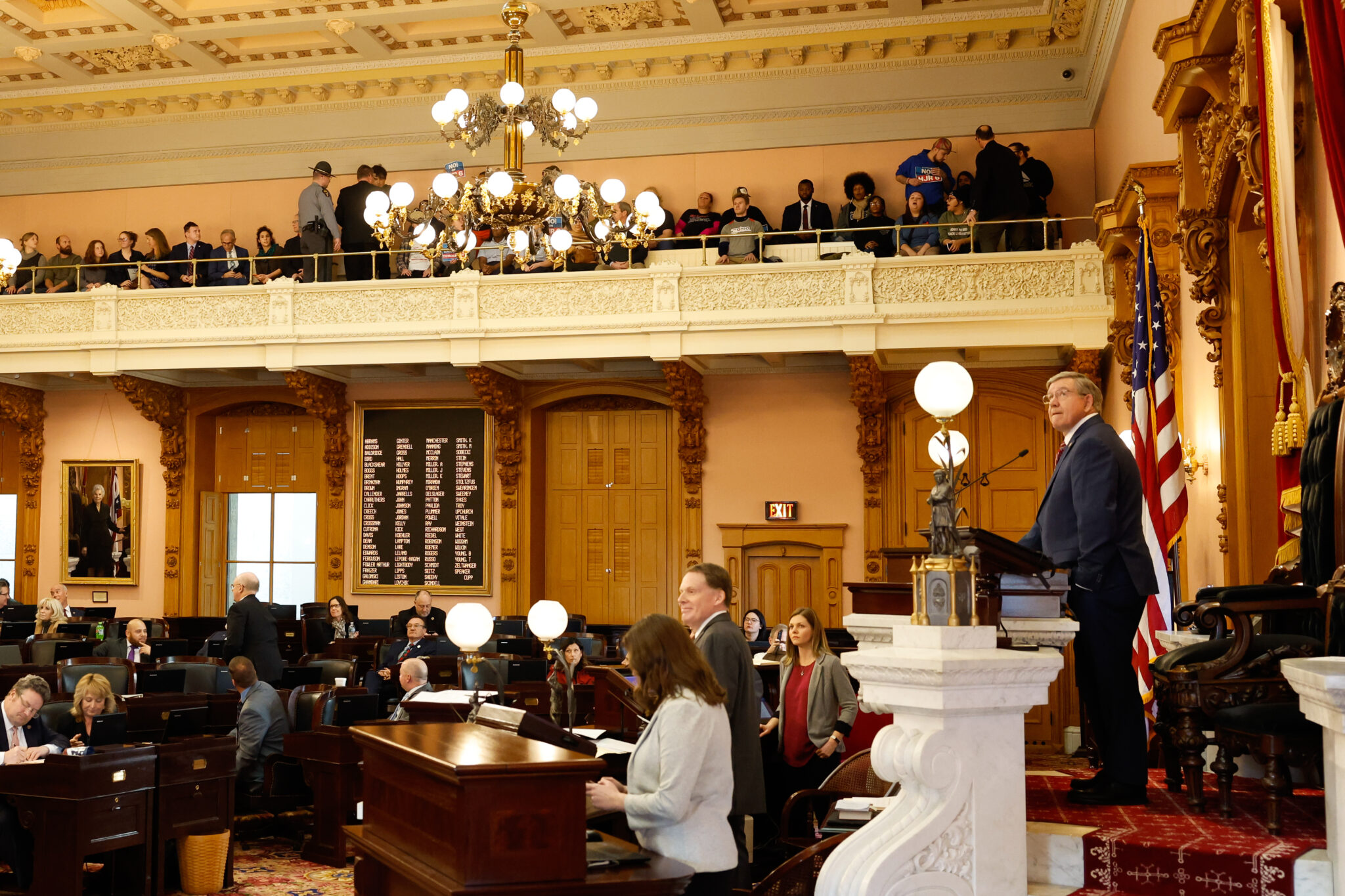
    The end of 2022 was capped by an 11th-hour push and ultimately failure for an attempted overhaul of the Ohio Department of Education and the state Board of Education. Senate Bill 178 was never passed in an Ohio House committee, so it was folded into another bill with controversial provisions, House Bill 151.

    House Bill 151 included bans for trans youth in participating in sports based on their gender identity, and after SB 178 was included, the bill came in at more than 2,000 pages. But despite delaying the vote until after 2 a.m. on the last day of the legislative session, the bill and its many provisions failed to garner enough votes in the House.

    LGBTQ advocates hailed the failure of House Bill 151, which still would have required the use of birth certificates to prove a student’s gender, despite the elimination of a provision that would have required a genital exam.

    “I can not begin to express my gratitude to the hundreds of community members and advocates who stood up for the rights of all transgender youth to participate in all parts of life as whole people, including sports, just like everyone else,” said Alana Jochum, executive director of Equality Ohio, after the bill failed to pass.

    Dr. Rhea Debussy, director of external affairs for Equitas Health and former facilitator for the NCAA’s Division III LGBTQ OneTeam Program, said the thrill of seeing the legislation voted down was tempered by concern that the bill even existed.

    “It’s very alarming that a group of legislators thought bullying gender expansive and intersex youth was an urgent need for the final hours of Ohio’s 134th General Assembly,” Debussy said in a statement.

    Senate Bill 178

    Education officials not only celebrated the failure of HB 151’s anti-trans legislation, but the downfall of the rapid-fire education overhaul they overwhelmingly said needed more time and more vetting.

    “OEA believes it is worth taking a hard look at how Ohio’s schools are governed and supported at the state level,” said OEA President Scott DiMauro in a statement. “However, collaboration is key.”

    Senate President Matt Huffman said he was “disappointed that our school reform bill and our attempt to do something about girls’ sports … I’m disappointed that those things failed.”

    But Huffman maintained the stance he took after the Senate passed HB 151 on to the House for a vote earlier this month, that if the education overhaul part of the bill didn’t pass during the 134th GA, it would move on to the 135th.

    “I’m glad we took the vote because we kind of have on the record who’s where, and there probably is a lot more due diligence that needs to be done on that issue,” Huffman said.

    Some ups, more downs

    While some funding changes were implemented — such as $56 million in state funding for Disadvantaged Pupil Impact Aid, increases in Elementary and Secondary School Emergency Relief funds and federal monies for school security and safety — public schools are still looking for full funding of the Fair School Funding Plan (formerly called the Cupp-Patterson plan, after Speaker Bob Cupp and former state Rep. John Patterson, the legislators who created it). The plan was previously funded for the two years of the current General Assembly, but needs another four-year commitment of funds to be fully phased in.

    That plan, according to the OEA, “represents the first constitutional school funding system in the state in decades.”

    The effort for better public school funding is flanked by a lawsuit moving forward in Franklin County Common Pleas Court that seeks to nullify the EdChoice private school voucher system in the state. A coalition of school districts and individuals joined together to file the lawsuit, and Franklin County Judge Jaiza Page recently ruled against the Ohio Attorney General’s Office, who argued the lawsuit should not be allowed to continue.

    “This means we will put vouchers on trial in a court of law,” the coalition behind the lawsuit, Vouchers Hurt Ohio, wrote in an email newsletter, though the timeline for the court case could go on for some time.

    Private school vouchers are on the minds of congressional Ohioans as well, with U.S. Sen. Sherrod Brown pushing for more investment in federal Head Start programs and more funding for public schools.

    “We have a state government, one of whose major aims seems to be to privatize public schools,” Brown said in a press call. “They have moved more and more money out of public education into religious schools and other private schools … and really undermined what state government should be doing and that is funding public education for the great majority of students in our state.”

    Teachers unions and public officials alike wanted to see efforts to stem the state’s teacher shortage, a rise in the teacher wages that have stagnated over the last 25 years and changes to the third-grade reading guarantee, both of which saw action in the legislature, but did not come to fruition.

    As the state’s Board of Education awaits the fate of the department and the board itself, they still have a decision to make: the search for a superintendent of public instruction.

    The board spent months on issues such as a resolution condemning racism in education, then a resolution repealing that racism measure, and finally a resolution urging the federal government not to include gender identity in anti-discrimination language that would impact education policy.

    But in their December meeting, they decided to punt on the issue of hiring a search firm to select candidates to fill the open position that heads the department.

    The board voted to wait until SB 178 was passed or rejected by the legislature, for fear that candidates for the position might change their minds once they found out how the roles of superintendent would change under the new bill.

  • In COVID’s third winter, biggest threat is three viruses at once

    In COVID’s third winter, biggest threat is three viruses at once

    BY: NICK EVANS – Ohio Capital Journal

    Ohio health officials are urging caution again this winter. But entering our third holiday season with COVID-19, the nature of those warnings is a bit different.

    Three at once

    As Ohio Department of Health Director Dr. Bruce Vanderhoff explained, this year the threat is multiple respiratory viruses at once.

    “Unlike the last two winters, it’s not just about COVID,” he said. “But the combination of COVID, influenza, and RSV, especially for those whose health is more vulnerable or who have not been adequately vaccinated against flu and COVID-19.”

    RSV, or respiratory syncytial virus, often feels like a common cold for adults and otherwise healthy children. But for infants, the elderly or immunocompromised people it can be dangerous. According to the CDC, RSV is the most common cause of bronchitis and pneumonia among kids 12 months old and younger.

    Unlike COVID-19 and flu, RSV has no vaccine.

    Precautions and metrics

    As ever, Vanderhoff’s chief precautionary recommendations are for people feeling ill to stay home and for everyone to wash their hands regularly. In situations where people must leave the house, officials recommend wearing an N95 mask.

    He also urged those who haven’t gotten vaccinated for the flu or COVID-19 to do so.

    “Vaccination is the safest and most dependable way to assure that you’re maximizing that cellular immunity I talked about,” Vanderhoff explained. “It gives your immune system its best opportunity to confront and beat the virus.”

    According to the CDC, the COVID-19 community level — a statistic based on number of hospital admissions and number of cases per 100k population — is low in many Ohio counties. Twelve rank as ‘high’ based on those metrics.

    Dr. Joe Gastaldo, OhioHealth medical director for infectious diseases, said people should be especially cautious in those counties.

    “In those scenarios, regardless of vaccination status, the recommendation is to wear a mask,” he said. “If you’re not feeling well wear a mask. I think specifically if you have an at-risk condition, or are immunocompromised, I would advise you as an infectious disease doctor to wear a mask indoors in public.”

    The CDC’s more familiar community transmission metric, based on cases per 100k population and percentage of positive tests, remains high throughout the state. All but nine of the Ohio’s 88 counties rank high for community transmission and none are low.

    As for RSV and the flu, Vanderhoff noted this year both started earlier and rose more rapidly than in past years. Both viruses have receded from their peak, he explained, but remain dangerous for some populations.

    Follow OCJ Reporter Nick Evans on Twitter.

  • Report: Ohio’s CEOs take home nearly 400 times typical employee

    Report: Ohio’s CEOs take home nearly 400 times typical employee

    BY: SUSAN TEBBEN – Ohio Capital Journal

    The CEOs of some of Ohio’s biggest companies saw big paydays, much bigger than their employees, according to a report by an Ohio-based think tank.

    An analysis found that of the 54 large state employers who file reports under the federal Securities and Exchange Commission, average pay for CEOs was up to $21.7 million in 2021, a rise from $16 million in 2020.

    All but one of the CEOs studied were paid more than $5 million and 44 made more than $10 million, according to the report. All but three of the companies reporting to the SEC paid their CEOs “more than 100 times what they paid their median worker in 2021,” the report stated.

    “Meanwhile, these 54 corporations cut median pay for workers or added more low paying jobs, pushing the median pay down from $51,494 in 2020 to $48,283 last year,” Policy Matters Ohio said in a statement on the report.

    Companies including Wal-Mart, Victoria’s Secret and Starbucks were in the mix, and were also flagged for a median pay of less than $26,500, which is the federal poverty level for a family of four.

    “Last year, corporate price gouging made it harder for many Ohioans to make ends meet, but many of the CEOs driving the problem did better than ever,” according to the report’s author, Michael Shields.

    Shields said policymakers need to focus on reducing incentives “that give CEOs a personal pay boost for corporate decisions that harm workers and consumers” and limiting CEO power over pay decisions.

    Tax penalties, government contracts, price gouging and worker compensation mandates could all be addressed to help bridge the wage gap, Policy Matters recommended.

    “CEO pay is a major driver of inequity and excessive pay gains captured by CEOs reduce financial resources available to pay other working people,” the report stated. “Policymakers at all levels of government can make differetn choices so working people share in the prosperity their work makes possible.”

  • What will DeWine sign? Lawmakers passed more than 30 bills on last day of session

    What will DeWine sign? Lawmakers passed more than 30 bills on last day of session

    BY: NICK EVANS – Ohio Capital Journal

    Barring an emergency, Ohio’s lawmakers have headed home for the holidays. That puts the ball in Gov. Mike DeWine’s court to sign or veto the final burst of legislation passed in the Statehouse. If the governor does nothing, legislation will take effect without his signature. But he has ten days after receiving the bills — not counting Sundays — to take action if he chooses.

    He’ll have a lot to work through between now and then. During the legislature’s overnight final session, they approved more than 30 pieces of legislation now heading to the governor. The highlights have gotten extensive coverage, but there was a lot of other legislative action as well.

    Thursday, DeWine’s office received a raft of 24 bills. The deadline for action on those is January 3.

    Here’s what passed:

    HB 513: Tax deduction for cigarette wholesalers when retailers fail to pay. A late amendment tacked on prohibitions for local tobacco regulations.

    HB 45: Began as a two month amnesty window for delinquent state taxes. Amendments appropriated $6 billion in federal COVID relief.

    HB 66: Numerous tweaks to local taxing authority and reporting as well as $30 million for minor league sports teams.

    HB 254: Established domestic violence fatality review boards.

    HB 558: Modified state’s donated drug repository program

    HB 107: Revised Ohio’s elevator laws

    HB 343: Modified crime victim’s rights

    HB 353: Ohio’s “Testing Your Faith Act” which directs higher ed institutions to develop accommodations for students who need to be absent for religious reasons.

    HB 392: Authorized transport of police dogs injured in the line of duty. An amendment made provisions for riding in a fifth wheel trailer and mounting safety devices on a windshield.

    HB 578: Created new specialty license plates and memorial highway designations.

    HB 567: Required common pleas courts post their docket online.

    HB 504: Raised penalties for disrupting religious services.

    HB 545: Privileged peer support communications.

    HB 554: Allowed state board of education to issue temporary licenses to teachers with expired certificates or licenses.

    HB 281: Updated statutory terms related to people with disabilities or suffering from mental illness.

    HB 569: Allows higher ed institutions to offer scholarships to people serving as family caregivers.

    HB 575: Set policy for regulating the solvency of fraternal benefit societies.

    HB 35: Permitted Ohio mayors to solemnize marriages.

    HB 279: Shortened timeline for filing certain wrongful death claims.

    HB 487: Altered bidding process for Ohio ballot printing contracts to allow out of state vendors/printers to participate.

    HB 462: Prohibited “swatting

    HB 150: Establish a rural practice incentive program to pay student loans for attorneys working in public offices or underserved communities.

    SB 63: Allowed county probation offices to accept credit card payments. A House amendment added on a new liquor permit for auto-sports facilities.

    SB 131: Required the issuance of certain occupational licenses if a person has experience in that field in a different state.

    SB 202: Prohibited restricting parental rights due to the parent’s disability. House amendments gave lawyers credit toward judicial eligibility for out of state practice time and created a bail study task force.

    SB 302: Made changes to the state unemployment compensation system.

    SB 288: Made numerous changes to the criminal code.

    SB 33: Changed Community Reinvestment Area policy to allow greater deduction to 529 education savings plans.

    SB 164: Altered animal cruelty laws and prohibited shelters from using gas chambers to put down pets.

    SB 16: Increased penalties for assault or menacing when the victim is a first responder. The measure also gave local governments explicit authorities when dealing with a riot or mob and prohibited any limitations on firearm rights due to a state of emergency.

    HB 405: Clarified rules of county hospital boards, gave coroners access to a law enforcement database and allowed treasurers to send bills electronically.

    HB423: Designated the American Soap Box Derby Ohio’s official gravity racing program.

    HB 501: Made a series of changes related to township authorities including allowing them to regulate small solar facilities.

    HB 509: Updated numerous occupational licensing provisions.

    HB 458: Began as a measure eliminating August special elections except for Congress. The Senate amended the bill to include strict new photo-ID requirements for voters as well as tighter limitations on returning absentee ballots.

    HB 364: Changed application process for sewer and water infrastructure surcharges

    Plaudits and veto calls

    Already, forces are gearing up inside the statehouse and out urging Gov. DeWine to veto certain measures. Others are lending their support.

    Attorney General Dave Yost applauded the anti-swatting legislation saying, “these prank calls are designed to do one thing — cause a panic.” The Ohio Association of Election Officials meanwhile thanked lawmakers for a $7.5 million appropriation for electronic poll books.

    Democrats zeroed in on a different part of the same bill. The measure would disqualify developments using the federal low income housing tax credit from using a state credit for rehabbing historic buildings.

    “These provisions, added at the eleventh hour of a lame duck session, were added with zero input from developers and affordable housing advocates. The policies are bad for Ohioans and bad for Ohio business,” they wrote in a press release.

    Democrats also urged DeWine to veto HB 458 which would impose strict new photo ID requirements for voters.

    At the city level, mayors have criticized the bill barring local tobacco regulations. The city of Columbus approved a flavored tobacco ban just days before state lawmakers acted. And the mayors might be in luck. DeWine has hinted at a potential veto, citing his past work fighting big tobacco.

    Clarification: an earlier version of this story stated DeWine’s deadline for vetoing any legislation was December 26. That calculation was incorrectly based on when the legislature passed legislation rather than when DeWine receives it.

    Follow OCJ Reporter Nick Evans on Twitter.

  • Ohio health care leaders want child health investment by year’s end

    Ohio health care leaders want child health investment by year’s end

    Adobe Stock photo.

    BY: SUSAN TEBBEN – Ohio Capital Journal

    A coalition of health care advocates want to see congressional investment in child health care by the end of the year, including permanent funding for the Children’s Health Insurance Program.

    The coalition, Protect Our Care Ohio, held a press event to push for improvements to maternal health, child outcomes and the issues like discrimination that can increase mortality and lower birth rates, particularly in Black Americans and Black Ohioans.

    “Our Black babies are dying at a rate of three times that of which babies, even here in Toledo/Lucas County,” said Celeste Smith, former coordinator of the Toledo/Lucas County Commission on Minority Health.

    An 2020 analysis by the Commonwealth Fund showed that maternal deaths have been increasing in the U.S., but that most of those deaths are preventable. They found that a “relative undersupply of maternity care providers, especially midwives” and a lack of “comprehensive postpartum supports” contributes to the mortality rates in the country.

    The study also found that more than half of pregnancy-related deaths happen after birth.

    The CDC found that Black babies make up the highest number of deaths per live births in the country as well, with a maternal death rate for Black mothers of three to four times the rate of white mothers.

    Part of the problem, Ohio health advocates say, is the price of health care. For those families that have insurance, often the plans they can afford leave holes in coverage. Many plans chosen for their affordability have high deductibles, even those provided by an employer.

    “Employee-sponsored health care is no longer the gold standard,” said Erika White, chair of the Healthy Lucas County CHIP (Children’s Health Insurance Program). “In reality, many families can not afford their employer health plans and that means the care that we need for our children is falling to the side.

    It is for that reason that the CHIP program through Medicaid is such a needed resource, White said.

    The CHIP program works through Medicaid and separate CHIP programs and is funded both through states and federal block grants.

    According to an annual report filed with the U.S. Department of Medicaid, Ohio’s child enrollment in CHIP rose more than 4% between 2020 and 2021. The increase was due to “economic and policy changes related to the COVID-19 pandemic,” according to the report.

    The Ohio Department of Medicaid has “educated state agency partners and numerous community stakeholders that work with low-income families” to increase outreach efforts, but in terms of reaching uninsured children, Ohio “does not have an effective way to measure” the outreach methods, the report stated.

    One way the problem could be helped is through the permanent authorization of funds for CHIP, which is currently active through June 2023.

    “CHIP is a block grant program, meaning Congress must act periodically to extend funding for the program,” White said.

    A lapse in the funding could mean a lack of health care access for millions of children, more than 9 million nationally in most recent figures from the U.S. Department of Medicaid.

    spending bill being considered by Congress could be the way forward for child health care funding, and an easy way for lawmakers to show their priorities, Smith says.

    “As we reach the end of the year, Congress has not just an opportunity but an obligation to take meaningful action to confront this preventable crisis,” Smith said.

  • Four ways to help people with disabilities get work

    Four ways to help people with disabilities get work

    ROB MOORE – Ohio Capital Journal

    A bill currently in the Ohio General Assembly would eliminate the subminimum wage for people with disabilities.

    Currently, companies in Ohio are allowed to apply for a waiver from the state minimum wage to hire people with disabilities. The goal of this program is to make it easier for companies to hire people with disabilities and therefore to give more people with disabilities jobs.

    I was talking to Michael Hartnett, a policy analyst I work with at Scioto Analysis about this problem earlier today. He brought up a few options for the state to increase employment of people with disabilities without paying them less.

    Job training

    Providing more funding for job training programs for people with disabilities can help give people with disabilities skills that are valuable for employers. The federal Employment and Training Administration provides funds for training people with disabilities.

    The state of Ohio even has an office called the Bureau of Vocational Rehabilitation. The Bureau specifically focused on providing individuals with disabilities the services and support necessary to help them attain and maintain employment. More funding for training programs referred through the Bureau could increase employment of people with disabilities.

    Grants for making workplaces accessible

    One reason it is hard to hire people with disabilities is because employers may have trouble accommodating workers with disabilities in traditional workplaces. For instance, if a job traditionally requires typing, people with limited dexterity would typically not be a candidate. A grant for a job that requires some typing could allow a company to hire a scribe part- or full-time to type for that person.

    One example of this type of program is the Retaining Employment and Talent after Injury/Illness Network (RETAIN) Initiative, a federal program that Ohio takes part in. Eight state teams received competitive awards to develop and run pilot programs aimed at helping workers stay at or return to the workforce following an illness or injury. A similar program could be developed for counties and cities if this program is successful.

    Subsidizing wages for people with disabilities

    The Earned Income Tax Credit is a popular wage subsidy aimed at bringing low-wage people into the labor force. A weakness of the Earned Income Tax Credit is that it is targeted at families, so people without children often have a small credit. Having a larger credit for people with disabilities or making the state earned income tax credit refundable for people with disabilities are two policy levers policymakers have for making it easier for people with disabilities to go to work.

    Mandates for accommodation

    A final option is to just tell employers they need to accommodate. The Americans with Disabilities Act requires employers to reasonably accommodate workers with disabilities. Strengthening state law around accommodations could require employers in Ohio to work harder to accommodate people with disabilities.

    A 2018 study estimated that making it easier for people with disabilities to work would bring 10.7 million people into the U.S. workforce and would increase national GDP by $25 billion. If this is the case, that means more people with disabilities in Ohio’s workforce would mean hundreds of thousands of new workers and hundreds of millions of more dollars in the state economy. This looks like a win for everyone.

  • In early morning vote, Ohio House agrees to send voter ID restrictions to the governor

    In early morning vote, Ohio House agrees to send voter ID restrictions to the governor

    The legislation, which initially eliminated most August special elections, became a vehicle for broader election restrictions included photo ID requirements

    BY: NICK EVANS – Ohio Capital Journal

    After a protracted day at the Ohio Statehouse, lawmakers approved sweeping new voting restrictions including photo ID requirements early Thursday morning. That proposal now heads to the governor.

    The House gaveled in for session early Wednesday afternoon, and after half an hour of ceremonial proceedings broke for recess. Rep. Tim Ginter, R-Salem, described the break as 30 minutes “more or less.”

    It took nearly six and a half hours for lawmakers to get back to work.

    Turns out they had a holiday party in the Statehouse atrium.

    After recess

    When House lawmakers returned to their desks, they didn’t jump straight to the controversial measures. They concurred on a bland smattering of measures amended in the Senate. Lawmakers made tweaks to occupational licensure and township authorities. They even made the All-American Soap Box Derby Ohio’s official gravity racing program.

    After that they went back to farewell speeches.

    Later, the House took up Senate Bill 202. The proposal prohibits disability from being used as a pretext for denying or limiting parenting rights. Representatives tacked on a series of unrelated amendments. Rep. Bill Seitz, R-Cincinnati, proposed a task force to study the state’s bail system to see how many people are being held for lack of money.

    “As is so much the case with so many things in Ohio — simple things that you would think we would know — we don’t know!” Seitz said.

    Other amendments allow county prosecutors to represent other officials, provide a salary bump for a Fulton County judge instead of replacing a retiring colleague, and allow lawyers to apply out of state experience toward their judicial candidacy.

    Lawmakers then took up and passed an unemployment compensation measure. Once they were done, the chamber went back into recess so the GOP could hold a caucus meeting.

    Voting legislation

    All the while, lawmakers whipped votes and opponents made a handful of eleventh-hour appeals.

    AARP’s state director Holly Holtzen wrote a letter to the House members arguing older Ohioans are “disproportionately affected” by voter ID requirements.

    “While AARP supports fair and effective procedures to detect and prevent voter fraud, we also want to ensure that Ohio’s 50+ population can exercise their voices in elections,” Holtzen wrote. “We understand that state lawmakers have a responsibility to balance these two elements but doing so responsibly and with sufficient debate is crucial.”

    The organization made a similar appeal in 2011 for a voter ID measure that didn’t go forward.

    Fifteen minutes before midnight, the House returned to take up voter ID legislation.

    The Senate added the language to legislation eliminating most August special elections.

    In addition to requiring voters to show a photo ID at the polls and allowing one drop box per county, the bill makes a series of cuts to the voting timeline. Absentee ballot requests must arrive a week, rather than three days, before Election Day. The final day of early voting will disappear, with its hours redistributed through the previous week. Absentee ballots postmarked the day before the election have to arrive within four days rather than the 10 allowed under current law.

    The debate

    Rep. Seitz explained the changes on the House floor and dismissed Democrats’ complaints about voter ID requirements.

    “What we’re doing is we’re saying anyone who does not have a driver’s license in Ohio can get a photo ID at the BMV — free. Free, free free,” Seitz said.

    Seitz also insisted he’d earned two concessions from the Senate that would be included in amendments to a separate bill. Under those changes, ballot drop boxes would be available outside regular business hours provided there’s 24-hour video monitoring. The other amendment would give boards more than four days to make their way through provisional ballots.

    Then Seitz argue the legislation represents a “missed opportunity” for Democrats. He pointed to the Senate reducing the number of proposed drop boxes from three to one.

    “As I predicted on day one with our bill,” Seitz said, “if you do not like this bill, if you are not willing to work with us on this bill, do not be surprised when at the end of the day you will get a bill that is much less to your liking.”

    Rep. Bride Rose Sweeney, D-Cleveland, pushed back, disputing Seitz’s characterization.

    “When you’re working from a basis of removing the right to vote,” she said, “that is not really a place that me and my colleagues on this side of the aisle feel that we are ever going to be in a position of supporting something.”

    Sweeney criticized the reduced time for absentee ballots to arrive after the election, and she invoked GOP concerns about voter fraud to do so. If one unlawful vote is one too many, she argued, isn’t disenfranchising one voter too many?

    Rep. Richard Brown, D-Canal Winchester, picked up the idea of voter fraud, too, and went in a different direction. He noted Secretary of State Frank LaRose’s reports of how safe and accurate Ohio elections are.

    “If our election system is the gold standard, which other states emulate and look to for how they should run their elections, then why are we changing anything at all?” Brown asked. “There’s no need to change anything. There is no problem to solve here. In fact, the changes suggested in this bill and the amendments, solve no problems, but create new ones.”

    Rep. Kent Smith, D-Euclid, noted “nothing good happens after midnight,” as he began his testimony early Thursday morning. Nevertheless, House lawmakers voted to concur with the Senate amendments around 12:30 a.m. With a vote of 55 to 32, the House passed the measure and it now heads to the governor.

    Follow OCJ Reporter Nick Evans on Twitter.

  • Ohio education overhaul falls short

    Ohio education overhaul falls short

    BY: SUSAN TEBBEN – Ohio Capital Journal

    The Ohio House did not agree to Senate amendments to a bill banning trans athletes from participating in youth sports based on their gender identity, leaving behind more than a thousand pages of state education overhauls loaded in at the last minute.

    House Bill 151, with language from Senate Bill 178 attached to it was voted down in the House by a 46-41 vote after 2 a.m. on Thursday morning following an entire day of hemming and hawing.

    The education overhaul is not completely done yet. Even if lawmakers decline to move forward in the current General Assembly, Senate President Matt Huffman previously pledged to bring the bill back in the new year, with a General Assembly that will have an even larger GOP supermajority.

    The education overhaul part of the bill, which entered the House as a standalone this week after passing the Senate last week, would have restructured the Ohio Department of Education into the Department of Education and Workforce, and reduced the state Board of Education roles down to superintendent searches, teacher conduct and licensure issues.

    “The system is not working, it doesn’t prioritize our students,” said bill sponsor state Rep. Don Jones, R-Freeport.

    The department, and most of the roles currently under the state board of ed and state superintendent’s purview would have been put under the governor’s office umbrella, according to the bill.

    The State Board of Education put off hiring a search firm for the next superintendent due to concerns about budgetary changes SB 178 might bring and fears the legislative uncertainty might “pollute” the marketplace of candidates.

    The bill also received pushback from public school education advocates and some homeschooling groups. The Ohio Education Association and the Ohio Federation of Teachers both spoke against the bill in committee hearings, not only decrying claims that the ODE was unresponsive and inaccessible, but also criticizing the pace at which the bill came through the General Assembly.

    SB 178 sponsor state Sen. Bill Reineke, R-Tiffin, said attempts to redo the state agencies have been years in the making and urgency is needed to help improve student success.

    “I’m not looking at growing an organization; I’m looking at making it more efficient and more structurally purposeful,” Reineke said on Tuesday as he defended his bill in House Primary and Secondary Education Committee.

    It was up to that committee to pass the standalone bill over to the House for a full vote, something that didn’t happen in a Tuesday night committee that went until about 9 p.m., or a Wednesday morning meeting that recessed before the House’s session began, and didn’t return even after multiple recesses in that body.

    When committee chair state Rep. Gayle Manning, R-North Ridgeville, was asked the status of the bill or the committee at about 9 p.m. Wednesday night, she said she was waiting to see what the GOP caucus was thinking on the matter.

    Amidst the day-long discussion, the Senate decided to take matters into its own hands, inserting SB 178 into HB 151, originally meant to be a teacher mentorship bill that was made to include a ban on athletes competing on teams based on their gender identity.

    The Senate also tried to slide in language from a bill that would have banned COVID-19 vaccine mandates for K-12 students.

    After the additions, HB 151 passed on a party-line 23-7 vote in that chamber, moving it back to the House.

    The controversial part of HB 151 was added in another late-night move in June, when HB 151 was up for passage in the House before moving on to the Senate. The trans athletes part of the bill no longer includes a requirement for genital inspections of children suspected of being transgender, something Senate President Matt Huffman previously said he wouldn’t support.

    Verification of a student’s gender will be done using a birth certificate in the new version of the bill.

    The bill’s sponsor, state Rep. Don Jones, R-Freeport, wouldn’t speak on the trans athletes part of the bill when he introduced the bill in the Senate, but on the House floor he stood in support of it.

    “This bill only applies to K-12 education, so our daughters in grades kindergarten through 12 will not have to compete with biological males in primary and secondary schools,” Jones said.

    The bill would impact very few Ohio students and policies are already in place to keep equality in youth sports, causing LGBTQ advocates, education leaders and the Ohio High School Athletic Association to stand against the bill as unnecessary.

    The original language of the bill would make changes to the Ohio Teacher Residency Program and teacher mentorship.

    Democrats pushed hard for the House not to support the bill as amended, saying stakeholders needed to be involved and more time was needed to find out the impact of it.

    State Rep. Phil Robinson, D-Solon, continued an argument made by critics of the bill that the volume of the bill didn’t get the proper review by legislators or individuals in Ohio education.

    “Passing something at 1 o’clock or 2 o’clock in the morning that no one’s read and no one’s seen … is not the way to change education in the state of Ohio,” Robinson said.

    State Rep. Jeff Crossman, D-Parma, said the bill was “moving deck chairs on a sinking ship” by addressing issues that don’t solve the true problems in Ohio education.

    State Rep. Juanita Brent, D-Cleveland, said the bill would impact economic success in Ohio by making conferences question coming to the state and businesses wonder whether or not to bring employees to the state. She also said passage of the bill in the middle of the night would send a message to current Ohio voters as well.

    “We’re telling Ohioans who elected us that they can’t be seen in this process,” Brent said.

  • Ohio Senate bill passed with provisions for fertility fraud

    Ohio Senate bill passed with provisions for fertility fraud

    BY: CHANTAL BROWN –  Ohio Capital Journal

    Ohioans may soon get protections from fertility fraud after an extensive criminal justice reform bill was passed by the Senate last Wednesday. 

    A 27-2 bipartisan vote sent the bill to the House where lawmakers will further scrutinize it before being sent to Gov. Mike DeWine for final approval. The bill was first introduced in February by state Sen. Nathan Manning. 

    “Some of the aspects of this bill will be labeled as tougher on crime. Increasing penalties and looking at ways to make sure that our society is safe in the short term. A lot of this bill is long-term and making sure that people that have entered our judicial system, exit the judicial system as better people,” Manning said.

    Manning said that he had been working on such criminal justice reform bill for two years. However, it includes some of the changes based on recommendations of the Ohio Criminal Justice Recodification Committee from its Final Proposal issued on June 15, 2017. The original 1,792-page bill was shaved down to 975 pages by the time Manning and his colleagues were set to vote.

    The bill focuses on various aspects of criminal law regarding crimes and correctional facilities, trial procedures, correctional officers and employees, coroner records, inmate internet access, and civil protection orders. It also has provisions for delinquent child adjudications and case transfers, youthful offender parole review, traffic offenses, certificates of qualification for employment, licensing collateral sanctions, criminal record sealing and expungement, State Criminal Sentencing Commission duties, and certain assisted reproduction matters.

    One assisted reproductive matter includes when a health care professional uses reproductive material from a person or source that the parties receiving the procedure did not consent to. This is also known as fertility fraud.

    An example of fertility fraud is a health care professional using his sperm to fertilize the egg of one of his patients, despite the patient having only consented to use the sperm of another donor. Currently, Ohio law does not prohibit a doctor from using his sperm to impregnate a patient or other misrepresentations about the donor, and provides no legal protection for women and their children who find out years later.

    Manning shared his reactions on the Senate floor Wednesday and said he watched the 2019 Netflix documentary, “Our Father.

    The documentary detailed a woman discovering that she had 90 half-siblings all fathered by fertility doctor Donald Cline.

    “This is something I was not aware of,” Manning said. “It was shocking to me that this was happening and even more shocking that under the law, with talking to prosecutors and legal experts, that this was not illegal.” 

    One of the proponents of the bill was Betsie Norris. Norris is the executive director and founder of Adoption Network Cleveland. In her testimony in a committee hearing Tuesday, she explained that fertility fraud can have harmful implications on communities and adoptees. 

    “Although fertility fraud may seem unrelated to adoption, in reality, adoptees share many of the same concerns as donor-conceived individuals,” Norris said. 

    Norris said that there have been laws established in nine other states to protect people from this act amongst the increased awareness of the issue since the 2019 documentary.

    “With the advent of 23 And Me and other similar companies, this phenomenon has only recently come to light, so corrective legislative action is both timely and appropriate,” Norris said. 

    Carrie Lauterbach, a resident of Oakwood, Ohio, explained that this was all too familiar to her in her testimony.

    “After taking a direct-to-consumer DNA test, I discovered I had six half-siblings and consequently discovered all the half-siblings are related to the fertility doctor our mothers used to conceive us,” Lauterbach said.

    Lauterbach said that she can provide a unique perspective on the situation because not only is she a product of fertility fraud, she is a medical professional and has sought treatment for herself. 

    “Because of my experience with fertility treatment, and understanding the oaths medical professionals take, I find the doctor’s actions particularly reprehensible,” Lauterbach said. 

    According to an analysis by the Ohio Legislative Service Commission, any person who violates the bill’s prohibition can be charged with a third-degree felony. The court must also notify any professional licensing board of the health care professional if they plead guilty or are convicted.

  • Minimum wage increase brought to Ohio House committee

    Minimum wage increase brought to Ohio House committee

    BY: SUSAN TEBBEN – Ohio Capital Journal

    A new push for a $15 minimum wage was introduced in the Ohio House, attempting to speed up the progress of a constitutional amendment passed nearly two decades ago.

    Democratic state Reps. Dontavius Jarrells and Brigid Kelly said their new bill not only addresses criticisms of quick implementation of a minimum wage increase, but also make a difference for struggling Ohioans.

    “We heard concerns of colleagues and made a longer runway for the increases,” Kelly told the House committee on Commerce and Labor. “But the longer we wait to act, the less impactful this action will be.”

    House Bill 69 would phase in those increases to reach $15 per hour by 2027.

    Since the bill never received a hearing after it was initially filed in February of 2021, an amendment would be needed to change the language, which set the first increase to happen on Jan. 1, 2022.

    The sponsors pointed to a constitutional amendment passed in 2006 that raised minimum wage in Ohio yearly with the rate of inflation. With inflation at the highest level since the Reagan administration, the minimum wage starting January 2023 will be $10.10 per hour, and $5.05 for tipped employees.

    “The bottom line is this: When people have more money in their pockets, they spend it and they spend it in businesses and communities all across Ohio,” Kelly said.

    Jarrells said he receives calls to his office often talking about hard decisions families in Ohio are making, like putting food on the table in lieu of needed medications, because affording both isn’t an option.

    “When we think about the impact of just not thinking critically about how do we make sure salary or wages match our productivity, there are families who simply are going without,” Jarrells said.

    Debate in the committee centered around whether adding more money would solve problems, namely bringing people back to the workforce.

    State Rep. Don Jones, R-Freeport, argued that some businesses are offering more than $15 per hour, or at least increasing pay, and still aren’t able to bring more employees in. He said the issue was the workforce, not the wage.

    “We can sit here and raise the minimum wage to $15 an hour, and people are going to want $20,” Jones said.

    He used the example of a McDonald’s offering $13 an hour, though he didn’t specify whether the job was full-time or part-time.

    Kelly said though food serve and retail workers are among those struggling to pay bills because of low wages or low hours, the problem extends to other categories of workers, like home health services. She and Jarrells agreed that while they see wage as a fixable issue on its own, there’s no reason not to work on both wage and workforce.

    “We can think about what we would like aspirationally to be true, or we can think about what people are experiencing right now, which a lot of time is multiple part-time jobs, no benefits, challenges with transportation, challenges with housing security, and also working with governmental agencies to get benefits that aren’t necessarily aligned with one another,” Kelly said.

    The bill is flanked by a proposed ballot initiative, which would bring the minimum wage to $15 per hour in 2028.

    But if neither the bill — which faces a Republican supermajority and a quick timeline with the General Assembly set to end Dec. 31 — nor the ballot initiative are successful, that doesn’t mean more legislative measures aren’t on the horizon. Kelly expressed confidence that Jarrells would continue the efforts in the next General Assembly.

    “We can continue to ignore it at our own peril, but Ohioans deserve better, they’ve earned and deserve a raise,” Kelly said.