Tag: Ohio Department of Health

  • Monkeypox is spreading but the Ohio Department of Health hasn’t spread the message

    Monkeypox is spreading but the Ohio Department of Health hasn’t spread the message

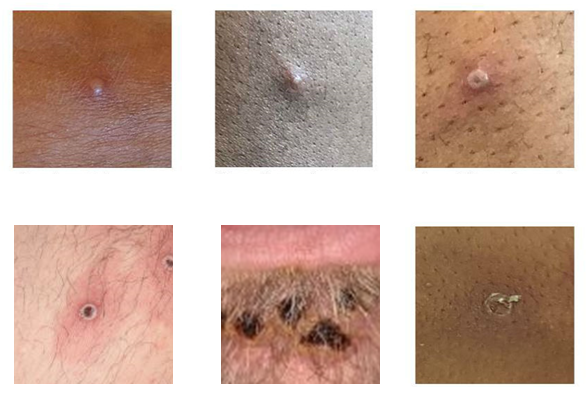
    The monkeypox virus causes lesions that can resemble sores from acne, an ingrown hair or other viruses. They are infectious until the scab is fully healed. (UK Health Security Agency/CDC).

    A Guest Column by Kenyon Farrow

    It may come as a surprise to most people in Ohio that in addition to dealing with the ongoing problem of COVID-19 ebbs and flows of infections and variants, we actually have an entirely different infectious disease to be concerned about: monkeypox. And the Ohio Department of Health (ODH) has done very little else to engage the public in any detail about the virus, how it’s spread, any plans to scale up testing and when the state might be able to access the vaccines that are approved to prevent contracting the virus.

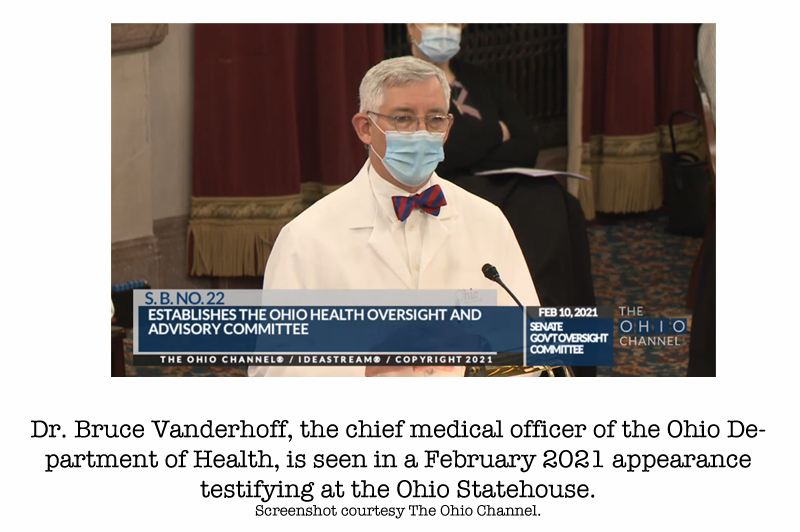
    So far, all we’ve gotten is one press release announcing the first suspected case of monkeypox in the state. On June 13, the Ohio Department of Health issued a press release announcing this case, with messaging from ODH Director Dr. Bruce Vanderhoff, that seemed to downplay the threat monkeypox could play to the health of Ohioans. 

    “What I want to emphasize strongly is that monkeypox does not spread easily between people, and so the risk to Ohioans generally is very low,” he said. 

    Dr. Vanderhoff is correct in one sense. Monkeypox, compared to airborne virus like COVID-19, is less efficient in spreading from person to person. But it does spread through physical contact with someone who has contracted the virus — and that contact can be sexual contact, but also kissing, cuddling, bodily fluids and any contact where you could come into contact with the lesions that most often accompany an infection, and without testing can sometimes be mistaken for other diseases like herpes or congenital syphilis. And while monkeypox is rarely fatal, it is an extremely excruciating illness for those who contract it. Furthermore, it is more dangerous for infants and children, and pregnant people. 

    Since June 13, when the ODH first announced a suspected case, we now have 3 documented cases, according to the Centers for Disease Control & Prevention. While this number may seem low and like nothing most Ohioans should worry about, the truth is we actually do not have an accurate count to know whether monkeypox is spreading here, and how rapidly. 

    The ODH has not launched any public education materials in the form of televised or radio public service announcements, social media posts, press conferences or outreach efforts so most Ohioans would know about the virus, how its spread, and how to protect themselves. ODH has not announced any places around the state where one can get tested for monkeypox if you suspect you may have it. 

    And even if monkeypox cases here are currently few in number, they may not stay that way. Unlike COVID-19 where summertime has typically meant lower transmission rates because people are outdoors more and have windows open to allow clean air to circulate, there are more events where people come into close contact with one another. Airports and flights are packed. Summer is full of music festivals, county fairs, amusement parks and all sorts of events where people are often in close contact. Prisons and jails, due to medical neglect, overcrowding and unsanitary conditions created by lack of care, can also become a venue through which monkeypox could spread in and out of carceral settings. 

    Furthermore, monkeypox seems to be spreading rapidly in most American cities among LGBTQ people, particularly gay/bisexual men. June was Pride Month and every corner of the state has had pride festivals last month (and folks from Ohio, including myself, who’ve traveled to pride festivals in other cities and back) how do we actually know whether we have more cases without doing the proper public education and outreach campaigns connected to an infrastructure to offer testing to people who think they’ve been exposed?  

    JYNNEOS (also known as Imvamune or Imvanex) is a 2-dose vaccine for monkeypox currently in limited supply in the U.S., and according to the U.S. Health and Human Service’s (HHS) Office of the Assistant Secretary of Preparedness & Response, only 4 doses (enough for 2 people to be fully vaccinated against monkeypox) have been distributed to Ohio until more doses can be secured and imported later this year. 

    But will ODH or Gov. Mike DeWine advocate for Ohioans to get access to this vaccine once more doses become available? And will the set up a monkeypox testing and distribution plan?

    I certainly hope so. But in the current political climate, it would not shock me if yet again good public health policy is taking a back seat to politics, endangering the lives of Ohioans in the process. The Ohio GOP’s in the last few years has passed anti-LGBTQ legislation, further criminalized abortion after the Supreme Court decision overturning Roe v. Wade, and their 2021 bill to dismantle the authority of the ODH to be able to issue and enforce measures to protect Ohioans during public health emergencies, all add up to ways in which ODH may have been the victim of state capture by personal and political interests that have zero to do with the stated mission of the organization. 

    One only need to look at what happened a month prior to the June notice on the first possible monkeypox case in Ohio—two ODH staffers (who were in the sexually transmitted infections prevention department) were fired or resigned because they included information about an upcoming training for medical providers on how to prescribe a medication used for women experiencing miscarriages or for abortions up to 10 weeks (which was 6 weeks before the U.S. Supreme Court decision to overturn Roe v. Wade) in an e-newsletter (first reported by Ohio Capital Journal on June 22). 

    The OCJ piece also noted that ODH’s HR department also took issue with the newsletters promotion of “National Masturbation Month; Honor Our LGBT Elders Day; International Day Against Homophobia, Pansexual and Panromantic Visibility Day; SLAM (Sexuality, Liberators, and Movers); Black and Blue – Suicide in our own Leather, Kink and Queer Communities; and National Condom Month.” 

    How is the STI prevention program at ODH supposed to do prevention work without taking advantage of these anniversaries to get the public’s attention? Is this the reason why they’ve been so lackadaisical about monkeypox virus education, outreach and testing? 

    To be sure, no one was looking for a monkeypox outbreak in 2022. As someone who’s worked in public health on infectious diseases as a policy advocate and journalist for more than two decades, this wasn’t on my radar either. But that’s the thing with infectious disease — they take advantage of human frailty and ignorance. And just when you least expect it, they’ve find a way to grow and to thrive. And ignorance on a virus and how to prevent it, and government negligence in creating educational, outreach, testing and vaccination opportunities become ways that diseases spread. 

    So knowing this, one would expect our state health department leadership to take more of an active role publicly to get ahead of what could be a real public health catastrophe. I hope they choose public health over politics. 

  • State health department fires employee over abortion drug reference in newsletter

    State health department fires employee over abortion drug reference in newsletter

    Photo by Jane Norman/States Newsroom.

    BY: JAKE ZUCKERMAN – Ohio Capital Journal


    Two Ohio Department of Health employees lost their jobs after the publication of a newsletter with notice of a training program for a drug used in medical abortions. One was fired, another resigned.

    Jessica Warner, who worked in the sexually transmitted infections unit of the Bureau of Infectious Diseases, authored the department’s STI prevention training newsletter each month. It went out to clinical care providers and local health departments that focus on STIs and HIV in Ohio.

    In the May edition of the newsletter, Warner included an item about looming deadlines for a program through the University of Chicago that trains clinics on providing mifepristone. The drug is usually prescribed for women who experience a miscarriage or seek to induce an abortion within 10 weeks of gestation.

    The mifepristone reference in the newsletter spans about 20 words in length and occurs halfway through.

    “The Mifepristone item in the newsletter is in direct conflict with the agency’s mission and is an embarrassment to ODH,” reads a human resources report on Warner’s firing, which Warner provided to the Ohio Capital Journal.

    Warner was fired Friday. Her supervisor, Karen Nicosia, received a five-day suspension, according to ODH. Nicosia’s supervisor, Laurie Rickert, resigned effective as of Friday. Both Nicosia and Rickert could not be reached for comment.

    HR investigators asked Warner if she knew that her “advocacy” on mifepristone is not supported by the agency, according to a memorandum of their findings that Warner provided. They wrote that she’s aware of ODH’s “posture” on abortion issues. They asked if she believed the topic of abortions was contrary to ODH’s mission.

    “I would hope not,” Warner responded. “It is a public health issue and as public health workers, it would be counterproductive to ODH’s mission to not support health care initiatives … I did this intentionally and did nothing wrong in sharing public health care community resources to health care providers.”

     Screenshot of HR documentation provided by Jessica Warner. Investigators circled the newsletter item that sparked her ouster from ODH.

    While ODH’s memorandum on Warner’s conduct describes ODH’s anti-abortion stance, few outside the department were aware it exists. For instance, the two bipartisan leaders of the House Health Committee said they didn’t know ODH had a formal position on abortion. Lobbyists for both Planned Parenthood, which supports abortion, and Ohio Right to Life, which does not, said in interviews they were unaware as well.

    The department is ran by an appointee of Gov. Mike DeWine, who in 2019 signed one of the most restrictive abortion laws in the nation.

    Warner, an ODH employee since June 2019, sent her last newsletter out at 9:24 a.m. on May 6. Eleven minutes later, Nicosia texted Rickert warning that the newsletter included a mention about a “funding opportunity to expand access to abortion medications.” Rickert, who was on jury duty, couldn’t respond until 10:45 a.m. Warner, at Nicosia’s behest, sent out a “corrected” version without the “abortion-related content” at 11:34 a.m.

    While the mifepristone item drives much of the HR investigation’s focus, the report also lays out elements of various editions of the newsletters that ODH took umbrage with.

    For instance, ODH questioned Warner about newsletter pieces noting National Masturbation Month; Honor Our LGBT Elders Day; International Day Against Homophobia, Panseuxual and Panromantic Visibility Day; SLAM (Sexuality, Liberators, and Movers); Black and Blue – Suicide in our own Leather, Kink and Queer Communities; and National Condom Month.

    Warner said the investigators were particularly interested in the masturbation month element. As she told them, masturbation acts as a preventative to reduce STI transmission. It also functions as a sexual alternative for people who test positive for an STI who don’t wish to spread it to others. Nicosia made similar comments in her interview with HR.

    During the interview, Warner noted she knew that ODH couldn’t work with Planned Parenthood or award it any grants. The investigators asked if she knew why.

    The mifepristone bit overshadowed a grim snapshot of STIs in Ohio noted in Warner’s newsletter. Syphilis, it states, is rising across Ohio in adults and newborn babies of infected mothers. Total syphilis cases increased 46% over a three-year period, and congenital (spreading to a fetus) cases increased from 19 in 2019 to 48 in 2021 — a 152% leap.

    The technical answer: In 2016, Gov. John Kasich signed a GOP-backed law requiring ODH to ensure that its various programs to combat diseases like HIV or cervical cancer didn’t award grants to organizations that perform or promote “nontherapeutic” abortions. The law was upheld in 2019 by a federal appellate court in a challenge brought by Planned Parenthood of Greater Ohio, which provides abortions along with many other services like cervical cancer screenings and HIV testing.

    Warner, however, answered that it’s because politicians’ “ignorance and opinions get in the way of providing access to necessary health care to Ohioans.”

    Investigators later said Warner “displayed contempt and disrespect to elected leaders” in response to her questioning.

    ODH did not respond to a list of specific questions for this article. Ken Gordon, a department spokesman, said the department generally doesn’t comment on personnel matters. However, he said ODH “disagrees with the characterization of why the employee was terminated.” He declined to answer follow-up questions.

    “As to the issue of abortion, the department follows applicable laws, including Ohio Revised Code 3701.034, which prohibits the use of funding to promote nontherapeutic abortion,” he said.

    Warner’s firing occurred amid a fever pitch of the fight over abortion access in America. The newsletter itself came out three days after the news outlet Politico obtained a leaked, draft version of a Supreme Court decision that reportedly had the votes to overturn Roe v. Wade. She was fired in late June. The Supreme Court is expected to issue its final opinion in the case by month’s end.

    Nicosia noted the timing in her interview with ODH and accused Warner of being an advocate. Warner said she was doing her job as a public health worker.

  • Hamilton County Overdose Deaths Remain Relatively Steady Despite Statewide Increases

    Hamilton County Overdose Deaths Remain Relatively Steady Despite Statewide Increases

    Hamilton County, Ohio – Hamilton County Addiction Response Coalition (HC ARC) released its annual report on the State of the Addiction Crisis in Hamilton County. In 2021, overdose deaths remained relatively steady despite statewide increases reported by the Ohio Department of Health.

    Hamilton County has made several adjustments in response to the addiction crisis. The Quick Response Team (QRT) is now a full-time program that includes reactive overdose follow-up and proactive outreach in hotspot communities.

    To read the full report, click HERE.

  • Starting Monday masks optional for all students and no more contact tracing in Loveland City School District

    Starting Monday masks optional for all students and no more contact tracing in Loveland City School District

    by David Miller

    Loveland, Ohio – Beginning Monday, Loveland City Schools will implement a “mask-optional” policy for all students in grades PreK-12. The exception to this policy is for students in the HeadStart PreK program, which is set by federal guidelines.

    Also on Monday, the District will be updating its COVID protocols to align with new guidance from the Ohio Department of Health (ODH) which you can read below. Dr. Bruce Vanderhoff from ODH has said that schools are no longer required to do contact tracing. 

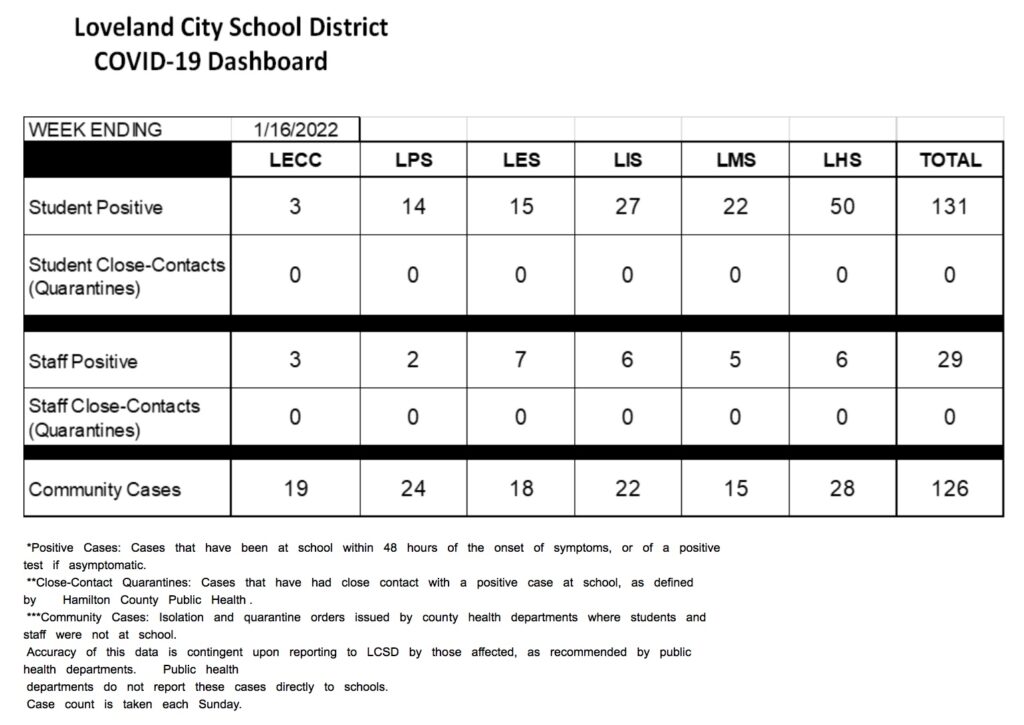
    HERE is the January 23 COVID 19 Dashboard from the District. New case counts won’t be issued again until this Monday afternoon.

    Going forward, the only time District staff will do contact tracing is when it is requested by Hamilton County Public Health or ODH because of an outbreak or cluster of COVID cases in one of our buildings.

    Masks will still be required on all school buses. Masking will continue to be “recommended” in school buildings.

    Announcing the new policies in the District newsletter, Superintendent Mike Broadwater said, “I’ve heard from so many of you over the last few months, respectfully sharing your thoughts on the issue of masks. I know that some families will see this as a welcome change, and others will hear this news with concern. I’m hopeful that within a few days of being fully mask-optional, those concerns will melt away as we see more smiling faces in our buildings.”


    To: Local Health Departments and K-12 School Superintendents
    From: Dr. Bruce Vanderhoff, MD, MBA, Director, Ohio Department of Health
    Date: Jan. 26, 2022

    Subject: Contact Tracing and Case Investigation Statement

    As COVID-19 has evolved, public health mitigation strategies have had to adjust periodically to address new challenges. The quick spread of the Omicron variant and its rapid clinical course have made universal contact tracing, case investigation and exposure notification impractical when combined with newly reduced timelines for quarantine and isolation.

    Therefore, effective immediately:

    • The Ohio Department of Health recommends that local health departments (LHDs) shift from universal contact tracing, case investigation and exposure notification to a cluster or outbreak-based model. This strategy prioritizes people in high-risk settings, such as congregate residential settings (e.g., shelters, correctional facilities, and nursing homes) or for certain circumstances such as outbreaks or clusters in specific settings or in relation to initial cases or clusters associated with new variants, as appropriate.

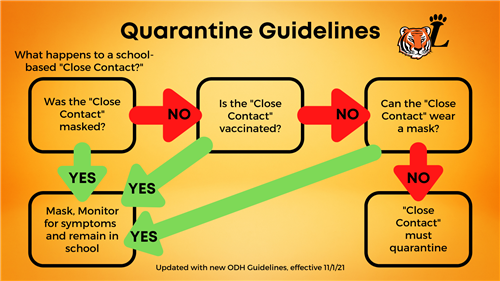
    • Schools may discontinue universal contact tracing but are expected to assist LHDs with contact tracing, case investigation and exposure notification related to outbreaks or clusters in schools as determined by the LHD. K-12 schools should continue to follow ODH’s protocol, “Mask to Stay, Test to Play,” and allow asymptomatic students to attend school while wearing a mask if they have been exposed to someone with COVID-19. The best place for kids is in school, in-person, full-time.

    • ODH also will change the school case reporting cadence to weekly. Schools should report positive student and staff cases to their LHDs by close of business on Fridays. LHDs will continue to report on the same weekly cadence. This schedule will begin on Friday, Feb. 4. ODH will continue to evaluate related school reporting requirements.

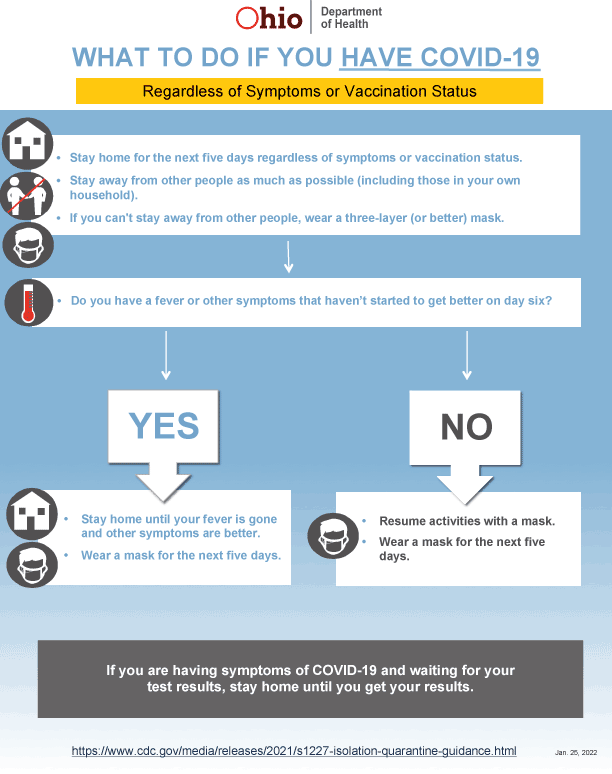
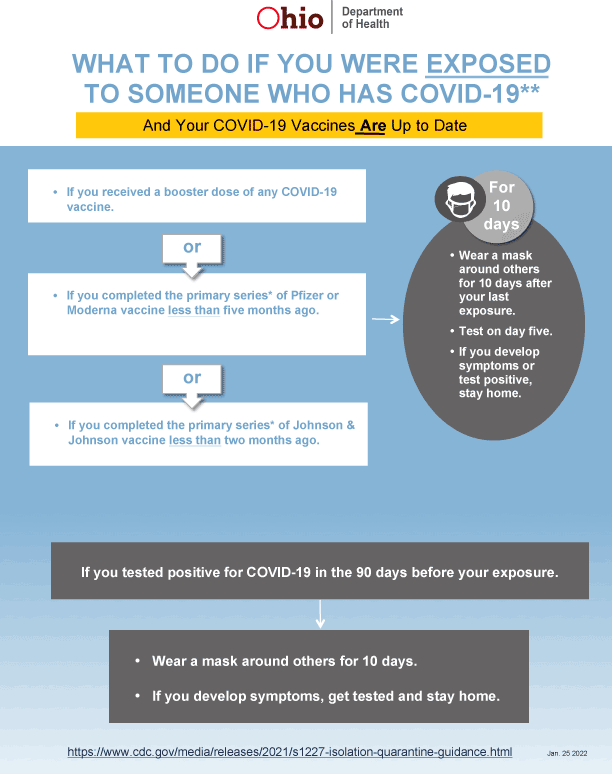
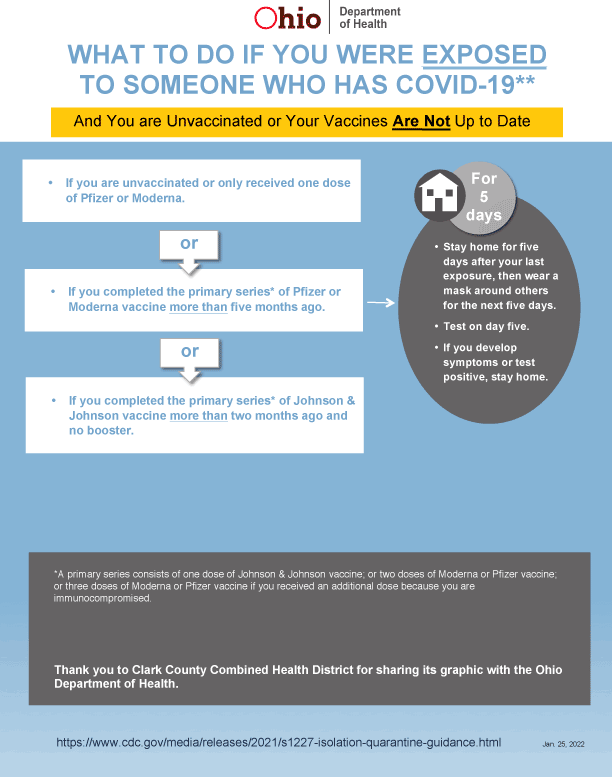
    LHDs should continue providing education and messaging to the general public about steps to take after exposure or a positive test. The attached flow chart may be shared with the public to explain how they should proceed after testing positive for COVID-19 or being exposed to someone who has COVID-19.

    This is also a good time to remind the public of mitigation strategies that work against transmission of COVID-19 and other infectious diseases:

    • Please encourage people to stay up to date with COVID-19 vaccinations, including booster doses. COVID-19 vaccines and boosters are the best prevention tool we have against severe illness and death.

    • Reinforce the importance of mask wearing, physical distancing, improving ventilation, hand washing, cough etiquette, testing, and staying home if you are sick.


    The flow chart

  • Superintendent: Why there were no quarantined students or staff in Loveland Schools last week

    Superintendent: Why there were no quarantined students or staff in Loveland Schools last week

    by David Miller

    Loveland, Ohio – After publishing the Loveland School District’s latest COVID 19 Dashboard on Tuesday, January 18, many readers wondered how there could be so many positive cases in the schools but zero students or staff who were quarantined.

    In an email yesterday I asked Superintendent Mike Broadwater: “I have a question that has come up after we published the latest COVID 19 Dashboard image yesterday. People are wondering why there were no quarantine figures on it.”

    Broadwater answered via email saying, “In regards to the Dashboard, there are no more quarantines with the new guidelines set forth by ODH (Ohio Department of Health). The only time you will see a quarantine would be if the family opts to quarantine their child rather than mask to stay. You’ll notice all zeroes with the exception of a few single quarantines since the new guidelines were released.”

    New CDC Guidelines were implemented 1/3/2022 and are reflected in subsequent reporting.

    Readers can view all of the COVID 19 Dashboard reports at this LINK.

    The current District quarantine and mask policy is found on the District website and states:

    Effective November 1, 2021

    The Ohio Department of Health (ODH) has made a few minor changes to the quarantine recommendations for K-12 schools, and these new guidelines should help us keep our students healthy and in the classroom, where they learn best. 

    These guidelines will not change our current masking policy, but will change how we handle situations where a student has been identified as a “close contact/direct contact.” 

    Mask to Stay/Test to Play

    Direct contacts, regardless of vaccination or masking status, may remain in the classroom environment if they do the following:

    • Wear a mask for 14 days after their last date of exposure.
    • Self-monitor, or parent-monitor, for symptoms of COVID-19.
    • Isolate and get tested if they start to experience symptoms associated with COVID-19 (regardless of the level of severity).
    • Consistent with guidance for others quarantining in lower-risk environments, students and staff may discontinue these quarantine procedures after seven days – if they don’t develop symptoms and test negative between days 5-7.

    Direct contacts may continue to participate in extracurricular activities if they do the following:

    • Wear a mask when able. (This includes: transportation; locker rooms; sitting/standing on the sidelines; and anytime the mask will not interfere with breathing, the activity, or create a safety hazard.)
    • Test on initial notification of exposure to COVID-19.
    • Test again on days 5-7. If they are negative at this time, they will test out of quarantine.

    You can read the full policy from the Ohio Department of Health by following this link

    We believe the guidance from ODH will keep our students safe, and in school as much as possible, which has been our goal this year.

  • Governor provides update on COVID-19 hospitalizations and Ohio National Guard deployment

    Governor provides update on COVID-19 hospitalizations and Ohio National Guard deployment

    Ohio Governor Mike DeWine announced today that he has ordered the mobilization of an additional 1,250 members of the Ohio National Guard to support hospitals with the most critical needs across the state. The mobilization comes on the same day the state set an all-time high for the total number of COVID-19 hospitalizations during the pandemic.

    The Ohio Hospital Association reported today that 5,356 people are currently hospitalized with COVID-19. One in four patients are COVID-19 positive. This surpasses the previous hospitalizations record of 5,308 on Dec. 15, 2020. Of today’s hospitalizations, 1,228 patients are in the ICU, which is approaching the record high of 1,318 ICU patients reported on Dec. 15, 2020.

    While Southwest Ohio is not seeing the same volume of patients as northern parts of the state, Richard P. Lofgren, MD, President and Chief Executive Officer, UC Health, expressed concerns about the surge in cases making its way across the entire state during the coming weeks.

    Ohio National Guard Deployment
    As hospitals struggle with staffing to support the surge in COVID-19 patients, Governor DeWine announced during a press conference today, that he has asked Major General John C. Harris, Jr., Adjutant General, Ohio National Guard, to mobilize an additional 1,250 members of the Ohio National Guard, bringing the total deployment of National Guard members working with Ohio’s healthcare systems to 2,300 members.

    “This is not something we take lightly… We are asking them to leave their families, their jobs and homes. This is a huge sacrifice,” Governor DeWine said.

    Governor DeWine previously authorized the deployment of 1,050 Ohio National Guard members on Friday, Dec. 17. Major General Harris said the Ohio National Guard’s goal is to augment hospitals’ medical staff and wraparound services. Teams including nurses and medics will provide clinical care and non-medical teams will offer support services such as food service, patient transportation within facilities, and administrative support.

    Approximately 460 Guard members are deployed in the Cleveland area; more than 160 in the Toledo area; about 100 in Columbus area. Smaller numbers of the Guard will be deployed in the coming days in Mansfield, Dayton, and Lima to support hospitals. Guard personnel are also supporting testing sites in Cleveland and Akron.

    “The National Guard has been indispensable,” said Robert Wyllie, MD, Chief Medical Operations Officer, Cleveland Clinic.

    The Ohio Department of Health and the Ohio Hospital Association are working daily with Ohio hospitals to assess staffing needs to determine the most appropriate support from the Ohio National Guard.

    “Everybody agreed when the decision was made to send in the National Guard to our hospitals … All the way through this, we are going to be guided by where they are needed most today. It should give people confidence that everybody is on the same page here. Let’s deploy them where they are needed the most,” Governor DeWine said.

    Hospitals
    Hospitals have been taking extraordinary measures to manage this COVID-19 surge, including postponing elective surgeries, while battling staffing shortages as a result of COVID-19 infection or exposure, and burnout.  

    The northern parts of Ohio have been particularly hard hit, especially the greater Cleveland area, where one in three patients are COVID-19 positive, including ICU patients, according to OHA data.

    “The hospital systems are under significant stress in Northern Ohio,” Dr. Wyllie said. “We are running 2,000 tests a day. Let me tell you about those tests: 36% of the people going into the Walker Center for testing are testing positive for COVID.”

    Statewide, the COVID-19 positivity rate is 25%, according to Ohio Department of Health data.

    The state’s strategic hospital zone and region structure has allowed hospitals to work together with neighboring hospitals to balance the load of patients. This structure continues to be vital as cases and hospitalizations dramatically rise statewide and staffing remains a significant concern.

    While Southwest Ohio is not seeing the same volume of patients as northern parts of the state, Richard P. Lofgren, MD, President and Chief Executive Officer, UC Health, expressed concerns about the surge in cases making its way across the entire state during the coming weeks.

    “Unfortunately, the pandemic is not over … we are seeing more cases now than we have ever seen along the way,” he said. “Now, the spread of Omicron is adding fuel to this raging fire. One of the things that I want to make sure that people understand, is that this not only affects the care of people with COVID, but also affects people who don’t have COVID. It squeezes out our ability to take care of patients with other life-serious or life-threatening problems, such as heart attacks and strokes.”

    Governor DeWine also spoke with Jennifer Hollis, a critical care nurse at OhioHealth Riverside Methodist Hospital in Columbus, about her experience in the hospital.

    “I just want everybody to be able to walk a mile in my shoes and kind of understand as a critical care nurse, what I am seeing when I am coming into work. It is beyond difficult,” Hollis said. “Our beds are full. There is nowhere else to go, and we are just as short-staffed as everyone else is seeing as well … We are tired, we are frustrated, and we want the best for all of our patients.”

    Hollis urged Ohioans to get vaccinated to protect themselves, their loved ones, and their communities. “I’ll continue to fight for you, when you won’t fight for yourself. Please get vaccinated. Quarantine if you are symptomatic. Get tested,” she said.

    Vaccination, prevention
    Governor DeWine emphasized that the COVID-19 vaccines remain a powerful tool to keep people out of the hospital. Since June 1, 2021, there have been 35,962 admissions, and 92.5% of those have been among people who are not fully vaccinated.

    Now more than ever, it’s critical to follow prevention strategies including getting vaccinated, getting a booster shot if eligible, wearing face masks, washing your hands frequently, getting tested, and staying home if sick, even if symptoms are mild.

    “We are looking now at an impact of COVID-19 that is unlike anything we’ve seen before in this pandemic,” said Bruce Vanderhoff, MD, MBA, Director, Ohio Department of Health. “We have access to a powerful tool that can really shield us from the worst outcomes of COVID-19, and that is vaccination.”

    As of today, more than 6.9 million Ohioans have received at least their first dose of a COVID-19 vaccine. That’s 63% of those Ohioans eligible (ages 5 and older). More than 2.6 million have received an additional dose, or a booster dose.

    Masking in Schools
    Today, the Ohio Hospital Association also distributed a letter from the Ohio Hospital Association and Ohio Children’s Hospital Association to Ohio school superintendents, administrators and school board members encouraging them to implement a masking requirement when students return from the holiday break. A masking requirement in schools will help limit community spread of COVID-19 and keep students in school, the letter said. 

    Holidays
    Dr. Vanderhoff encouraged Ohioans to celebrate safely this holiday weekend so we can all have a healthy start to 2022. “As we get ready to ring in a new year, please, think about the steps you can take to prevent COVID-19 spread before you gather. Keeping vaccinations up to date, appropriate testing, staying home if you feel the least bit sick, masking especially in crowded indoor environments, proper ventilation, and regular handwashing can all help prevent the spread of COVID-19, flu, and other illnesses this season,” he said.

  • School vaccine records missing for tens of thousands of Ohio students

    School vaccine records missing for tens of thousands of Ohio students

    “The question is, why are the schools not collecting this data?”

    BY: JAKE ZUCKERMAN and Ohio Capital Journal

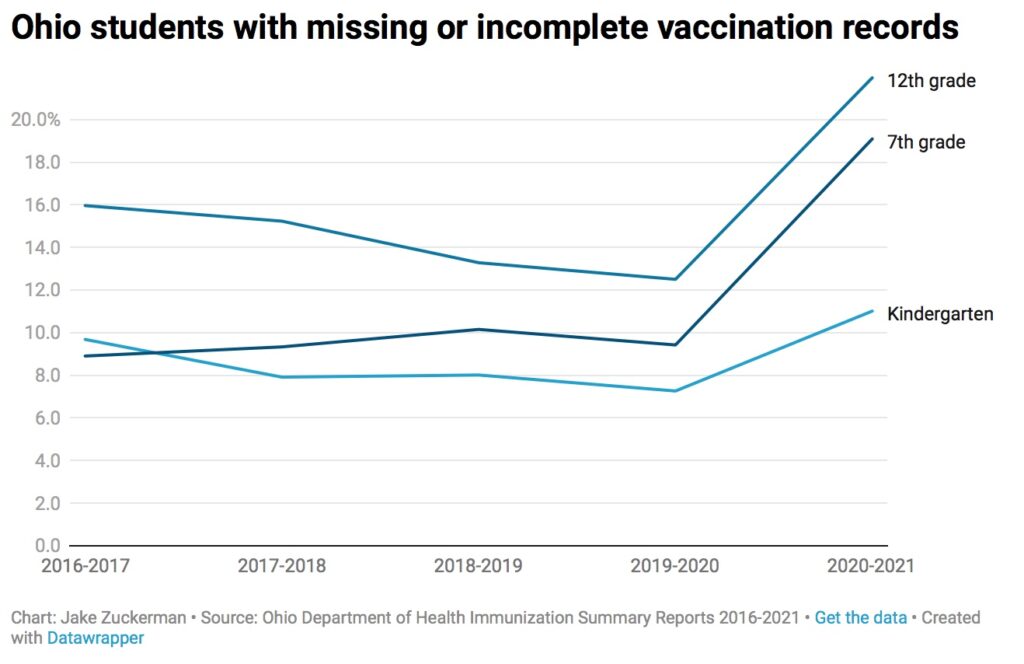
    School vaccination records were missing or incomplete among roughly 1 in 5 sampled Ohio middle and high school students last year, despite state law requiring local boards of education to track immunizations records of all enrolled students.

    All Ohio students, per state law, must be vaccinated against mumps, tetanus, polio, measles, Hepatitis B, chicken pox and meningococcal diseases. They can claim exemptions in writing due to natural immunity from prior infection; a medical contraindication; or for “reasons of conscience, including religious convictions.”

    Though the law requires local boards of education to keep immunization summaries available on request for inquiring parents, schools statewide are failing to track vaccination among tens of thousands of students. 

    “The question is, why are the schools not collecting this data?” said Madhav Bhatta, an epidemiologist at Kent State University. “If it’s required by law that every child either get vaccinated or have a medical exemption … then why is there missing data?”

    In the 2020-2021 school year, when a nascent pandemic shuttered schools and doctors’ offices, only 76% of 12th grade students submitted proof of receiving the meningococcal vaccine, according to immunization data obtained in a public records request from the Ohio Department of Health. The vaccine protects against meningitis and other, sometimes-lethal illnesses caused by the same bacteria. 

    About 22% of 12th graders had no exemption on file, leaving the picture unclear whether communities have high enough vaccination coverage to protect students. 

    That same year, only 78% of 7th grade school students statewide showed proof of receiving all vaccinations. Data was missing or incomplete on 19% of all 7th graders. 

    The missing data spans beyond the threshold for herd immunity for some vaccines. For instance, in the 2019-2020 year, 7.2% of kindergarteners and 9.4% of 7th grade students didn’t have all vaccination records or exemptions on file. 

    According to the World Health Organization, a community loses “herd immunity” — a threshold of community protection where a disease lacks viable hosts to spread — against measles when coverage falls below 95%. About 2.5% of students claimed a “conscience” objection, and a fraction of a percent claimed medical contraindications — which means they have diagnosed conditions where certain medical treatments such as a vaccine may cause harm.

    “If [students with incomplete data] don’t have it on file because they are not vaccinated, that’s a problem,” Bhatta said. “We want as high a level of vaccination as possible to reduce the risk of transmission within a community.”

    CDC research shows childhood immunization rates dropped significantly in 2020. However, the problem predates the pandemic. State data shows between 7.2% and 12.5% of sampled Ohio students did not show proof of vaccination or claim any exemption in 2019-2020 either. 

    The reports also lack data on vaccination by race or socioeconomic status, two major social determinants of health. 

    When contacted, different state agencies passed the blame or pointed fingers at county school boards, which are responsible for collecting data at the local level. 

    Vaccine hesitant?

    Amid a COVID-19 pandemic that has hospitalized nearly 64,000 Ohioans and killed more than 20,600, 38% of the age-eligible population remains unvaccinated after eight months of availability

    The COVID-19 vaccine data stands in stark contrast to the roughly 3% of public-school students who formally claim a nonmedical exemption year over year, raising more questions about the missing data. 

    Concerns about outbreaks of rare diseases among unvaccinated communities isn’t just a hypothetical. 

    Widespread vaccination eradicated measles in the U.S., but the virus can cause outbreaks when a host imports and spreads it among unvaccinated people. In early 2014, two unvaccinated Amish men returned to Knox County from the Philippines, unknowingly carrying measles, a highly infectious but vaccine-preventable disease. Amish communities tend to abstain from vaccination.

    The two men seeded an outbreak that caused 383 infections in nine counties over four months, according to a report in the New England Journal of Medicine. About 90% of the victims were unvaccinated. Health officials mounted an awareness campaign and surged in more than 12,000 MMR vaccine doses for some 10,600 people to eventually smother the outbreak.

    Researchers also note that unvaccinated people are not randomly distributed. Rather, they tend to concentrate in certain areas. Thus, statewide vaccination numbers can mask the vulnerability of some specific counties. 

    The missing data is a “significant concern,” according to Amy Bush Stevens, vice president of the Health Policy Institute of Ohio.

    HPIO analyzed the data obtained from the Ohio Department of Health. According to its analysis, students in non-Appalachian, rural communities are most likely to claim exemptions to vaccination mandates. Students in metropolitan counties are most likely to not submit their vaccination records. 

     Screenshot from Health Policy Institute of Ohio analysis of Ohio Department of Health Immunization Summary Report data.

    The missing data blurs a critical picture of whether students are protected, she said. 

    “Childhood vaccinations are a highly effective way to prevent infectious diseases among kids that have killed many children in the past,” she said. 

    Who’s to blame?

    The law requires local boards of education to provide a summary of student immunizations to the state health director every year. 

    When contacted, both the Ohio Department of Education and the Ohio Department of Health sidestepped blame and pointed at the local schools. 

    Alicia Shoults, an ODH spokeswoman, said ODH provides funds for local health departments to do “assessment site visits for compliance.” The pandemic, however, limited this practice, and officials are still reviewing data to determine why so many students’ immunization records were missing last year. 

    “Ultimately, at the local level, schools are responsible for enforcement,” she said. 

    The Ohio Capital Journal requested data on school vaccination exemptions in May from the Ohio Department of Education. Spokeswoman Mandy Minick initially stated no such data exists. When asked about the data later obtained from ODH, its missing components, and the state law that requires it, she deflected blame. 

    The law prescribes roles to local schools and the state health director, not ODE, she said. 

    “The Department of Education does not have a prescribed role in the collection of this data,” Minick said.  

    A spokesman for the Ohio School Boards Association reviewed the immunization data but said he didn’t have anything to add. 

    OCJ contacted six county school boards overseeing schools with high rates of incomplete data. Only Youngstown City School District responded. 

    Of 152 seniors at Chaney High School in 2020-2021, 122 didn’t submit proof of vaccination or notice of exemption for the meningococcal vaccine — the only vaccine students must receive while in high school. 

    In the 2018-2019 school year (the 2019-2020 data is not broken out by high school), 89 of 158 students were missing meningococcal vaccine records. 

    If a meningitis outbreak emerged, officials wouldn’t immediately know who’s protected and who isn’t, costing precious time as vaccines are surged in. 

    Denise Dick, communications director for Youngstown City Schools, said while the pandemic worsened things, there has been a historical problem getting families to submit paperwork related to vaccination. However, the district is establishing in-school, optional vaccination appointments for a full spectrum of shots. 

    No one is forced to vaccinate, she said, but the goal is to make it as easy as possible for students. In the meantime, she acknowledged the district is flying blind as far as protection against infectious disease. 

    “Whether they’re not getting them, or they’re not giving us the record, we just don’t know that,” she said. 

    Solutions?

    Amy Bush Stevens, from HPIO, has the fixes large and small. 

    On the mechanical side, HPIO analyzed a 2012 CDC survey of states and found Ohio is one of 18 states that doesn’t require health care providers and payers to report immunization data. 

    Some choose to, but others don’t. Mandatory reporting, she said, would clear the air on who’s vaccinated and who isn’t. (An ODH spokeswoman did not respond to an interview request with an administrator of ImpactSIIS, the state’s immunization information system.)

    The current system, Stevens said, puts the burden on parents to submit records. For parents, especially those with lower incomes who move more often or change physicians, it’s too easy for documentation to get lost in the shuffle. 

    Another idea: tie reimbursement funding from Medicaid managed care plans more strongly to vaccination rates. More vaccination now equals lower costs of care down the line. And more outreach to eligible families to the Children’s Health Insurance Plan, which covers childhood vaccination, would help as the rate of uninsured children ticks up in Ohio. 

    And then there are structural changes. Public health departments are chronically underfunded in Ohio and one of the few fail safes for low-income, undocumented, or uninsured families. The Columbus Dispatch reported last year that Ohio spends less per capita on public health than all but three states

    “Anything we can do to increase the public health workforce will help with that and make sure that kids with no other source of care get their childhood immunizations,” Stevens said. 

    The chances of a serious legislative fix are slim. Anti-vaccination attitudes are prevalent among Ohio’s Republican-controlled legislature. Earlier this summer, lawmakers passed (and Gov. Mike DeWine signed) one bill restricting schools from mandating vaccination against COVID-19 while the shots are available under a more limited emergency use authorization from federal regulators. The House Health committee has teed up a hearing on a much broader bill imposing a number of restrictions related to all vaccinations for Tuesday morning. 

    Other pending legislation would ban “vaccine passports” related to COVID-19. Discussion of the bills among proponents often dubiously characterizes a heavy-handed government forcing vaccines on the unwilling. 

    Among health experts, however, the reality is simple: Less vaccination equals more infectious disease. 

    “If you don’t rely on the school system to report — that’s the only way we could get a semblance of aggregated data,” Bhatta said.

  • Ohio Department of Health Releases Updated K-12 School Guidance

    Ohio Department of Health Releases Updated K-12 School Guidance

    The Ohio Department of Health released updated recommendations for K-12 schools yesterday. The guidance strongly recommends COVID-19 vaccinations for staff and eligible students; consistent mask-wearing for individuals who are not yet fully vaccinated; and layering prevention measures that include good ventilation, regular cleaning, handwashing, covering coughs, and sneezes, and staying home when sick. The Ohio Department of Health also strongly recommends those who are not fully vaccinated consistently wear masks, which have proven a very effective tool for reducing the spread of the virus.

    During a press conference on Monday, July 26, Ohio Department of Health Chief Medical Officer Bruce Vanderhoff, MD explained, “While there are no mandates associated with this guidance, we believe that the recommendations we are issuing are essential to the health of Ohio’s youth and the success of the coming school year. The safety of Ohio’s children is paramount, and the preventive measures that schools take will help protect Ohio’s students.”

    Skip to the 3:45 minute mark where the press conference begins

    To view the guidance, please visit https://coronavirus.ohio.gov/static/responsible/schools/K-12-Schools-Guidance.pdf.

    COVID-19 vaccines are widely available throughout the state for those 12-years or older. Younger children will be returning to school without being vaccinated. Many providers offer walk-in appointments, or Ohioans can schedule a vaccination appointment at gettheshot.coronavirus.ohio.gov. Ohioans who want to learn more about the safety, efficacy, and side effects of COVID-19 vaccines should talk to their doctor, nurse, or pharmacist, or visit coronavirus.ohio.gov/vaccine to learn more.

    Current Loveland schools mask requirement

    Loveland Magazine –  Jul 28, 2021

  • Latest increase in cases, hospitalizations has Ohio health officials pushing vaccines

    Latest increase in cases, hospitalizations has Ohio health officials pushing vaccines

    BY: TYLER BUCHANAN and Ohio Capital Journal

    On Tuesday, the state reported 744 new positive cases within the previous 24 hours, a daily total that hadn’t been seen since May.

    Dr. Bruce Vanderhoff acknowledges that as the public face of the Ohio Department of Health he is repeating himself a lot these days.

    Dr. Bruce Vanderhoff

    But the message is important enough to continue repeating in simple terms, ODH’s chief medical officer said Wednesday.

    “It really comes down to, are you vaccinated and safe or are you unvaccinated and vulnerable?”

    Ohio once again finds itself at a crossroads. After months of declining rates of new cases, hospitalizations and deaths, Ohio is now seeing increases thanks mostly to a new “Delta variant” that officials say is even more contagious.


    I think it is absolutely the case that we are now looking at a pandemic of the unvaccinated.

    – Dr. Bruce Vanderhoff, Ohio Department of Health


    Vaccination rates here have all but stalled, concerning those like Vanderhoff who fear the state will slip back into a public health crisis as schools look to return to class next month.

    “I think it is absolutely the case that we are now looking at a pandemic of the unvaccinated,” he told reporters .

    Vanderhoff was joined by two pediatricians, including Dr. Patty Manning-Courtney, the chief of staff at Cincinnati Children’s Hospital. The recent rise in cases has them worried not just of the Delta variant, but what else could be on the horizon.

    Patricia Manning-Courtney, MD

    Manning-Courtney said her hope is Ohioans will get vaccinated before the state experiences an even worse variant that could significantly impact the youth population. She fears a scenario of Ohio learning “the hard way” that vaccines are necessary for public health.

    The latest surge

    The state’s COVID-19 numbers declined throughout the spring, leading Gov. Mike DeWine and ODH to rescind the swath of public health mandates.

    There was reason for optimism:  The two-week average was down to just 17.6 cases per 100,000 residents as of July 7.

    But since then, that average has more than doubled to 37.8.

    On Tuesday, the state reported 744 new positive cases within the previous 24 hours, a daily total that hadn’t been seen since May. The state is recording a greater proportion of cases and hospitalizations among younger people, according to ODH data.

    “It appears that this surge is being driven by yet another variant, the Delta variant,” Vanderhoff said, “which is, as I’ve shared before, even more contagious than the (alpha) variant that preceded it.”

    The Delta variant is now present in more than one-third of all new cases in Ohio and is on its way to being the dominant variant of COVID-19, Vanderhoff said.

    ‘Captains of the ship of their own health’

     President Biden recently said COVID-19 vaccine misinformation is costing Americans lives. (Photo by Alex Wong/Getty Images)

    Unlike a year ago, when mitigation tactics like distancing and face masks were seen as the most effective ways to protect oneself from the virus, a proven vaccine is now available for Ohioans.

    But it remains difficult to convince a majority of residents here to get vaccinated.

    A vast number of Ohioans received shots when they were first made available, with a boost in vaccinations this spring with the widening of eligibility and the announcement of a Vax-A-Million sweepstakes. (Franklin County is among the places still experimenting with vaccine incentives; those who get their first dose at Columbus-area clinics receive a $100 Visa gift card.)

    On the whole, the statewide vaccination rate has stagnated. More than 5.3 million Ohioans have completed their vaccination doses, but that still reflects just 45.5% of the total population. 

    DeWine had said his lottery idea was meant to target those who were not anti-vaccine, but needed some kind of boost to schedule their appointment.

    Now, after months of availability, Vanderhoff and others believe there is still a large segment of the population who can be convinced. These are well-intentioned people with understandable concerns that can eventually be swayed to change their minds, the officials hope.

    Misinformation spread online and in public spaces isn’t helping matters. Vanderhoff agreed with a recent statement by President Joe Biden that vaccine misinformation shared around on social media platforms is contributing to ongoing hesitancy and COVID-19 deaths.

    “I think there have been people who are sharing information in a very authoritative way that is not scientifically accurate,” Vanderhoff said. “As a physician, that’s very distressing, because we want people to make their own decisions of course. We want people to be the captains of the ship of their own health, but we want them to make their decisions on the basis of good, well-founded, scientific information.

    Dr. Amy Edwards

    “Frankly, it’s heartbreaking when we see people who are cascading information that is not scientifically based,” he added.

    Dr. Amy Edwards, the associate medical director of pediatric infection control at UH Rainbow Babies & Children’s Hospital, said vaccine misinformation has been around long before the coronavirus. She noted an example of seeing a child die of the whooping cough.

    “That’s unacceptable to me,” she said. “It should just never happen.”

    Vanderhoff and the pediatricians tried to dispel fears about the vaccine harming children. They noted rare cases of myocarditis, an inflammation of the heart muscle that has been reported in a small number of children this year.

    But Edwards called this a “rare side effect” that impacts as few as one in every 100,000 or more that receive the vaccine.

    “The risk is much higher from the virus itself,” she said.

    While there continue to be some examples of vaccinated people getting COVID-19, most are protected against serious outcomes like hospitalizations and deaths. 

    All of the 130 people in Maryland who died of the virus in June were unvaccinated. Other states have reported similar statistics, including Alabama, where 96% of the COVID-19 deaths between April and mid-July were unvaccinated. 

    “The issue of breakthrough with this kind of a vaccine against this kind of virus,” Vanderhoff said, “is really the issue of: Are you seeing people get severely ill? Are they ending up in the hospital? Are they dying? We’re just not seeing that in appreciable numbers with this vaccine.”

    Asked about future health orders with school returning in the fall, Vanderhoff said he could not disclose ongoing policy discussions within the state health department. He said ODH will be providing guidance and recommendations “in the near future.”

  • Ohio vaccine lottery shifts to opt-in system; officials mum on specific aims

    Ohio vaccine lottery shifts to opt-in system; officials mum on specific aims

    By Jake Zuckerman and Ohio Capital Journal

    The Ohio Department of Health recontoured its COVID-19 vaccine lottery program, requiring inoculated Ohioans to register for entry in the $1 million sweepstakes instead of being automatically entered by virtue of voter registration and vaccination.

    The change is likely to whittle down the number of entrants, thus increasing the odds of winning one of five drawings starting the week of May 24. Health officials said Monday they made the changes to enable a vaccination verification system.

    ODH Director Stephanie McCloud, speaking to reporters, declined to quantify exactly how much she hopes or expects the lottery will drive up demand for vaccinations.

    She said international media attention of the unorthodox effort and a social media buzz about it are evidence of early success.

    “It is not a numeric goal,” she said. “As I mentioned earlier, we are already seeing the success of this program. It is to create awareness, to make sure that those individuals who may not fully understand may now have an interest in asking the questions they may have put off asking about the vaccine.”

    Ohioans’ demand for vaccination has unmistakably plummeted. On March 31, more than 107,000 Ohioans received a vaccine dose against COVID-19. On April 30, fewer than 24,000 did, according to an analysis of state health department data.

    All told, fewer than 43% of Ohioans have started the vaccination process, compared to the national rate of 47%.

    Gov. Mike DeWine announced the vaccine lottery in a statewide briefing May 12, coupled with news of removing nearly all health orders in early June.

    On Monday, he noted a modest increase in vaccine uptake May 14 as 25,000 Ohioans got their first shots, compared to about 13,000 per day on average over the preceding week. He cited this as early evidence of success of the lottery in incentivizing vaccination.

    However, on May 10, federal officials greenlit use of the Pfizer-BioNTech vaccine on children aged 12-15, possibly contributing to some of the uptick. The CDC and DeWine administration formally updated their guidance May 12.

    A health department spokeswoman declined a request for vaccine data among children aged 12-15.

    As further evidence, DeWine said uptake among adults aged 30-74 increased slightly last week after two weeks of decline in the cohort.

    Lottery details

    At the briefing Monday, officials with the state lottery and state health department provided further details about the lotteries.

    Alongside the $1 million drawings, vaccinated Ohioans aged 12-17 can enter to win one of five full-ride scholarships (including room, board, tuition and books) to any Ohio state college or university.

    Ohioans can enter the lottery pool by visiting www.ohiovaxamillion.com or by calling 1-833-427-5634. Entrances will be carried over through all five drawings. State officials say they will remove all duplicate entries and verify vaccination records for all winners.

    To be eligible, a winner must be a U.S. citizen and Ohio resident; not be incarcerated for a felony conviction; not be an employee of ODH, the governor, or the state lottery; not be both a blood relative or spouse and a household member of an employee of ODH, the governor or the lottery; and must have received at least the first dose of a Pfizer-BioNTech, Moderna or Johnson & Johnson COVID-19 vaccine.

    ODH is using federal stimulus funds to pay out on winnings. The first winners will be announced at 7:29 p.m. May 26. Subsequent announcements are set to occur each of the next four Wednesdays.

    Read details on the lottery from ODH here.