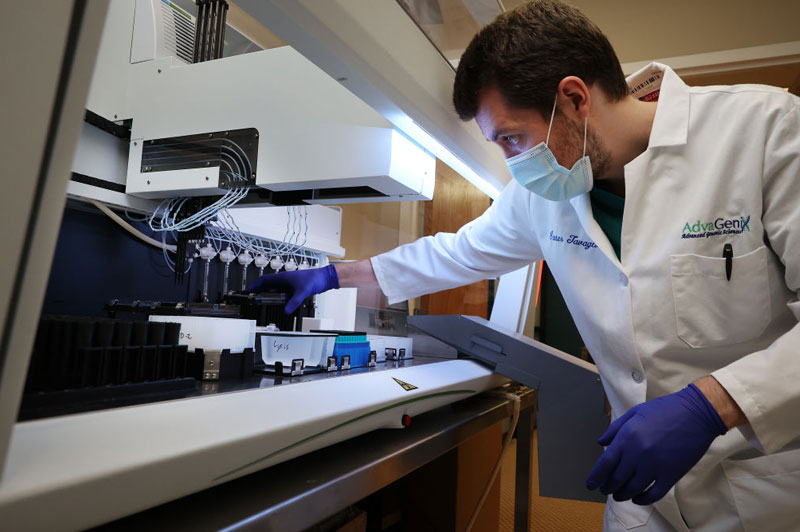
Lab Technician Carter Tavaglione loads at Janus G3 automated workstation with coronavirus test samples at Advagenix, a molecular diagnostics laboratory, on August 05, 2020 in Rockville, Maryland. Photo by Chip Somodevilla/Getty Images.
As many as 4,000 COVID-19 deaths “may have been underreported” and will be added to the state’s pandemic death toll this week, according to a Wednesday news release from the state health department.
Under the previous tally from the Ohio Department of Health, 11,856 residents died of COVID-19. The 4,000 unreported deaths will be added later this week.
“Process issues affecting the reconciliation and reporting of these deaths began in October,” ODH said in a news release. “The largest number of deaths were from November and December.”
The release contained sparse detail despite the seismic adjustment to the pandemic’s net toll.
Dan Tierney, a spokesman for Gov. Mike DeWine, said ODH discovered the issue causing the undercounting.
He said the ‘reconciliation’ issue is between two Ohio databases — one used to track infectious diseases and a separate one for death certificates — but didn’t have details.
“What the actual error was, I do not have those specifics,” he said.
The ODH release states the issue was identified by the department “during a routine employee training.”
ODH spokeswoman Melanie Amato did not respond to questions.
The news broke as ODH Director Stephanie McCloud was testifying to the House Finance Committee, which is in the process of crafting the state budget. McCloud made no mention of the discrepancy.
Reached after the hearing, Rep. Allison Russo, D-Columbus, said she wasn’t given any advance warning about the death adjustment.
She expressed frustration at the lack of a heads-up, especially given the current budget proposal contains a $25 million in public health data infrastructure.
“She had a perfect opportunity to give us a heads up that this is happening,” Russo said. “This is a 34% increase in our deaths. That’s pretty damn significant.”
Ohio Auditor of State Keith Faber has been probing ODH’s data processes since the summer. However, he was seeking documentation from people who received “results for [COVID-19] tests the individual did not take,” indicating he was looking for an inflated case count, not a depressed death count.
ODH’s release states it will continue working with Faber’s office.
Allie Dumski, a Faber spokeswoman, declined to comment and referred inquiries to ODH.
“Our audit work on the COVID reporting is ongoing and it is our policy not to discuss until it is completed and released by our office,” she said.
The Ohio Disease Reporting System, as this outlet has reported, is about two decades old and cannot be queried for information like where Ohioans are becoming infected with COVID-19. This has created a donut hole for policy makers handling time-sensitive decisions like restaurant closures or lockdowns.
Governor DeWine announced on January 22 at 5 PM that the Curfew will last until January 30.
Loveland, Ohio – Governor DeWine announced that the Ohio Department of Health will extend Ohio’s 10 PM to 5 AM curfew. Additional details will be forthcoming.
The curfew does not apply to those going to and from work, those who have an emergency, or those who need medical care. The curfew is not intended to stop anyone from getting groceries or going to the pharmacy. Picking up carry-out or a drive-thru meal and ordering for delivery is permitted, but serving food and drink within an establishment must cease at 10:00 p.m.
The curfew was first enacted in November and was expected to last 21-days.
The curfew, was set to expire this Saturday.
CURRENT CASE DATA
In total, there are 849,704 confirmed and probable cases of COVID-19 reported in Ohio and 10,518 confirmed and probable COVID-19 deaths. A total of 44,315 people have been hospitalized throughout the pandemic, including 6,465 admissions to intensive care units. In-depth data can be accessed by visiting coronavirus.ohio.gov.
Video of today’s full update, including versions with foreign language translation, can be viewed on the Ohio Channel’s YouTube page.
For more information on Ohio’s response to COVID-19, visit coronavirus.ohio.gov or call 1-833-4-ASK-ODH.
Loveland, Ohio – Ohio Governor Mike DeWine and Lt. Governor Jon Husted today provided the following updates on Ohio’s response to the COVID-19 pandemic.
PHASE 1B TIMELINE
Governor DeWine today reemphasized the vaccine distribution timeline for Phase 1B of Ohio’s vaccination program which is set to begin next week with those ages 80 and older.
This week: Today, the Ohio Department of Health will receive information from the federal government on Ohio’s vaccine allotment for the upcoming week. This information, including which providers will receive vaccines and how many, will be communicated to local health departments this evening. Each county health department, in partnership with their local emergency management agency and vaccine providers, will communicate vaccine distribution plans with the media and the public on Wednesday and Thursday. The process to vaccinate those in each county will vary depending on the provider. Some are expected to hold walk-up clinics, others may take appointments, etc.
On Thursday, the Ohio Department of Health will launch a tool on coronavirus.ohio.gov to assist citizens looking for a provider that has been allotted vaccines. The tool will be searchable by zip code or county, but it will not be updated in real-time. It is critical that those eligible to receive a vaccine consult local sources to determine up-to-date vaccine availability.
Hospitals that are vaccinating their frontline healthcare workers as part of Phase 1A must complete these vaccinations by Sunday, January 17.
Week of January 18: Vaccine providers will begin receiving their first allotment of vaccines for those ages 80 and older. Vaccines will be delivered on Monday, Tuesday, and Wednesday. Each provider will begin administering vaccines the day after they receive their shipment. All vaccines must be distributed within seven days.
Week of January 25: Vaccinations are anticipated to begin for those ages 75 and up following the same process outlined above. Vaccinations will also be available to those with severe congenital, developmental, or early-onset medical disorders. Additional information on how these individuals can choose to receive their vaccines is forthcoming.
Week of February 1: Vaccinations are anticipated to begin for those ages 70 and up following the same process outlined above.
Week of February 8: Vaccinations are anticipated to begin for those ages 65 and up following the same process outlined above.
Vaccine providers are not expected to vaccinate everyone in each age group in one week. As new age groups are authorized to receive vaccinations, previous age groups will continue receiving the vaccine.
Senior citizens with questions on the vaccination process are urged to contact the Area Agencies on Aging at www.aging.ohio.gov or by calling 1-866-243-5678.
NURSING HOME VACCINATIONS
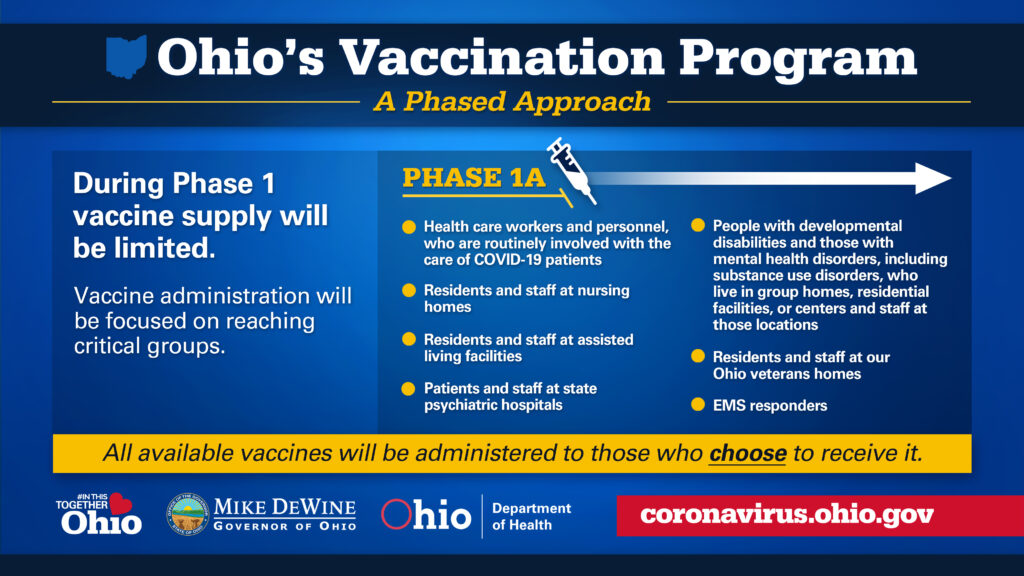
To date, 85 percent of Ohio’s nursing homes have been visited by a vaccine provider as part of Phase 1A. Vaccine providers anecdotally tell the Ohio Department of Health that the number of residents and staff accepting the vaccine is increasing.
In Ohio’s two nursing homes operated by the Ohio Department of Veteran Services, 92 percent of veterans have accepted the vaccine. Regarding staff, 60 percent have opted to receive the vaccine in the Sandusky home and 42 percent have chosen to be vaccinated in the Georgetown home.
Loveland, Ohio – As more vaccine is produced more groups of people will be prioritized. However, it may be the middle of 2021 before the vaccine will be widely available to the Clermont County community.
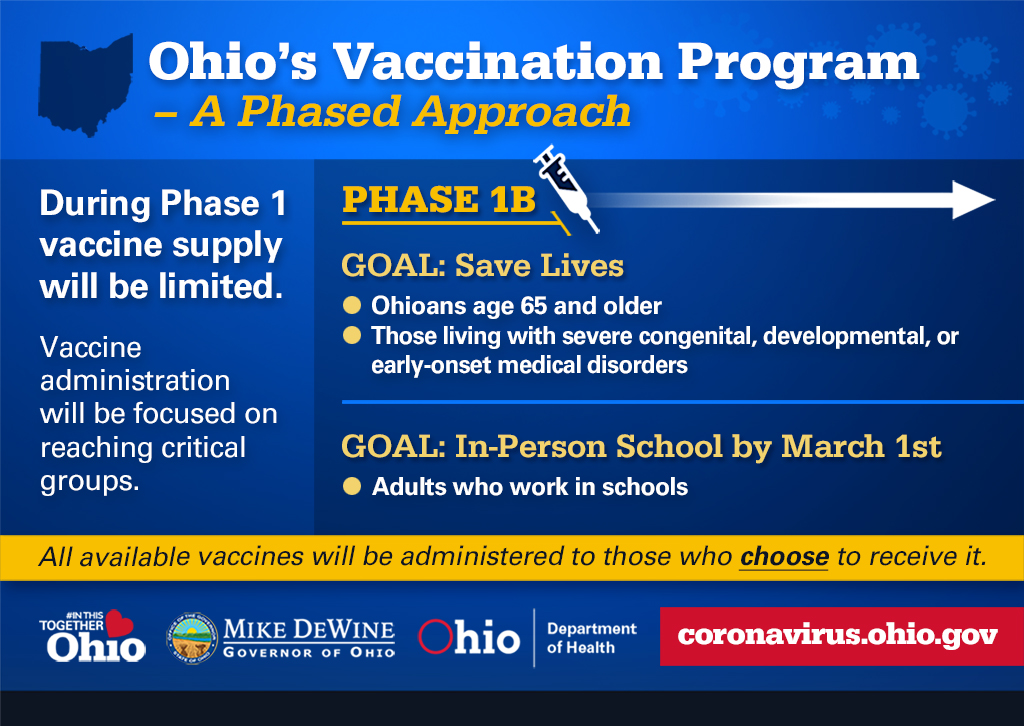
Beginning the week of January 18, Ohio will be vaccinating people who fall into phase 1B. That includes:
• Ohioans 65 and older • Those with severe congenital or developmental disorders • Employees of K-12 schools that wish to remain or return to in-person learning
Because the vaccine is still very limited in supply, Ohio will take a tiered approach to vaccinate group 1B. Ohio will follow this timeline for vaccinating group 1B.
Week of January 18 – Ohioans 80 years of age and older
Week of January 25 – Ohioans 75 years of age and older
Week of February 1 – Ohioans 70 years of age and older; K-12 school employees
Week of February 8 – Ohioans 65 years of age and older
If you or a loved one falls into group 1B and is eligible to be vaccinated, get on the:
Completing this survey will put you on the waiting list. A public health staff member will contact you to schedule an appointment or provide additional information about your vaccination options.
This revised order clarifies that in-person compassionate care visits are permitted in nursing homes and similar facilities. The new order does not change required precautions all visitors must take, including but not limited to, wearing of a facial covering and social distancing.
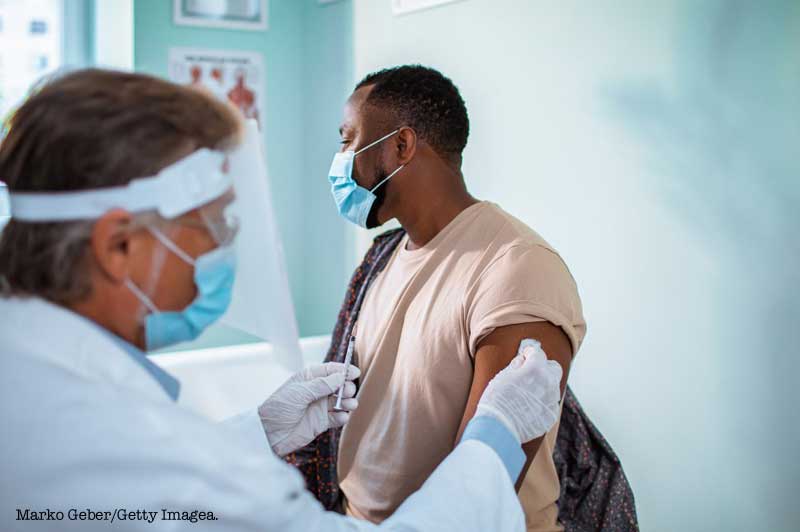
Today, Governor DeWine announced that people in phase 1B of Ohio’s vaccination distribution plan will be able to receive vaccinations beginning on Tuesday, January 19.
Those 80 years of age and older will be prioritized first in this next phase, roughly totaling 420,000 Ohioans. Ohio is expected to receive 100,000 doses during the first week of distribution to Phase 1B.
“With up to 420,000 people 80 years and above, and only 100,000 doses available the first week, it will take several weeks to vaccinate those 80 years of age and older,” said DeWine. “Phase 1B will take a few weeks, and a lot of coordination in distribution.”
DeWine says that vaccines for Ohioans 80 years of age and older will be administered by physicians, local health departments, hospitals, federally qualified health centers, in-home health service providers, and some retail pharmacies. As of today, the Ohio Department of Health said that approximately 1,700 providers have registered to distribute vaccines.
Phase 1A
Additionally, the Ohio Department of Health will be hosting a webinar for registered providers to discuss expectations, and instructions for distribution. Additional details will be shared with registered providers in the coming days.
Governor DeWine anticipates vaccinations will be available to Ohioans 75 years of age and older beginning Monday, January 25. The following week, vaccinations will be available to those 65 years of age and older.
“As we include other age ranges, please know that does not mean vaccinations will be complete for the previous age range,” said Governor DeWine.
The week of January 25 will also include vaccinations for Ohioans with severe congenital, developmental, or early onset medical disorders. Additional details about distribution for this group is not yet available.
CURRENT CASE DATA
In total, there are 753,068 confirmed and probable cases of COVID-19 reported in Ohio and 9,462 confirmed and probable COVID-19 deaths. A total of 40,469 people have been hospitalized throughout the pandemic, including 6,092 admissions to intensive care units. In-depth data can be accessed by visiting coronavirus.ohio.gov.
Schools
DeWine also announced that during the week of February 1 that vaccinations will be available for personnel in Ohio schools. The Ohio Department of Heath will send forms to Ohio superintendents to indicate their school plans to go back to in full in-person and hybrid learning by March 1, as well as indicate the number of staff they believe will choose to take the vaccination. Superintendents will also be asked if a community partner has been identified to help with the administering of the COVID-19 vaccines to school personnel.
Dr. Bruce Vanderhoff, Chief Medical Officer for the Ohio Department of Health, provides this statement related to the coronavirus variation that was first seen in the United Kingdom.
“Although virus variations are normal, and most do not impact the behavior of a virus, this variation is notable because it appears to be more contagious than other variants of the coronavirus,” said Dr. Vanderhoff. “Fortunately, this variant doesn’t appear to be more severe or to impact those who are already immune, but it worries us because a more contagious variant could lead to more people getting sick, more people being hospitalized, and more people dying.”
Ohio currently has three times the number of COVID-19 hospitalizations that it had on November 1 and nearly seven times the number of COVID-19 hospitalizations that it had on October 1.
Dr. Vanderhoff stressed the importance of continuing Ohio’s coronavirus protocols of social distancing, avoiding crowds, washing hands, wearing masks, and accepting the vaccine when available to prevent the spread of all variants of the coronavirus and to prevent further increases in hospitalizations.
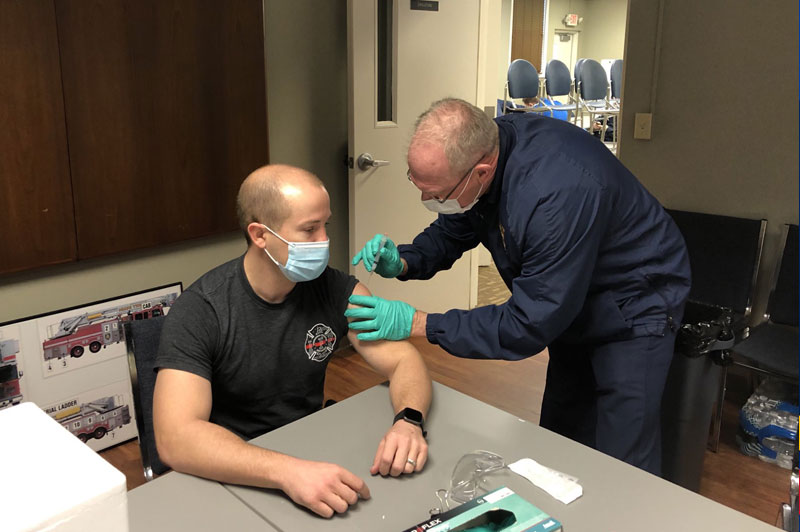
Columbus, Ohio – Ohio Gov. Mike DeWine got a lot of attention Wednesday when he said that 60% of nursing home workers who were offered a coronavirus vaccine refused to take it.
But state health officials on Thursday said there’s no organized effort to track refusals among people they consider so critical that they’ve been given first crack at the scarce vaccines.
In a press conference, DeWine implored people who are eligible for the vaccine to accept it, warning that it could be a long time before they get another chance. That argument might seem pretty compelling, given that a fast-spreading variant of the virus has popped up in two states, ICU beds are filling and the two approved vaccines have trickled out at a rate far lower than the Trump administration promised.
But DeWine lamented that many nursing home workers are passing on the vaccines anyway.
“Our bigger concern is the amount of staff who are not taking it,” he said. “I don’t have data in front of me, but anecdotally, it looks like somewhere around 40% of staff at nursing homes are taking the vaccines and 60% are not taking it.”
The statement went viral. A tweet about it generated more than 5 million impressions as of Thursday evening.
60% of Ohio nursing home staff refusing covid vaccine @GovMikeDeWine says
DeWine made his statement about nursing home workers “from some reports we have been hearing from our pharmacy partners,” Ohio Department of Health spokeswoman Melanie Amato said in an email Thursday. “It ranges in facilities, but this is a rough average. Remember the nursing home are largely being vaccinated by Walgreens/CVS as part of the federal program. We rely on them for the information. Same with hospitals. We track vaccines that have been given. We don’t track who would have refused.”
Neither CVS nor Walgreens could immediately be reached for comment. While they are handling vaccinations in congregate settings such as nursing homes, they aren’t in charge of vaccinating hospital staff, paramedics and the like. Ohio health officials apparently aren’t tracking the rate at which those groups are refusing the vaccine, either.
Dan Tierney, DeWine’s press secretary, said that despite the low level of nursing home workers agreeing to be vaccinated, the governor isn’t considering a mandate — at least for now.
“On mandating the vaccine for these groups, we are still in the rollout of this phase, and our message to Ohioans is that if you are in group 1A, we urge you to take the vaccine now, because it may be months before there is another opportunity available to you,” he said. “We believe that increasing awareness will help increase the utilization rate. Ultimately, it is up to each health care provider to determine which workers they employ meets the criteria in group 1A to receive the vaccine in this phase.”
“Students and teachers exposed to a COVID-positive person in school are no longer required to quarantine as long as the exposure occurred in a classroom setting and all students/teachers were wearing masks and following other appropriate protocols.”
by David Miller
Loveland, Ohio – Governor Mike DeWine announced Wednesday that Ohio is changing its guidance regarding quarantines following an in-classroom exposure in K-12 schools. The Ohio Department of Health said, “Moving forward, students and teachers exposed to a COVID-positive person in school are no longer required to quarantine as long as the exposure occurred in a classroom setting and all students/teachers were wearing masks and following other appropriate protocols.”
Loveland Magazine has reached out to Loveland Superintendent, Dr. Amy Crouse and the District health team to inquire whether the District will adopt DeWine’s newest protocol, however, neither are available for immediate response. (Thank you for your email. Our offices are closed through Sunday, January 3, 2021. I am out of the office with limited access to email.)
Loveland school students return to the classroom on Monday, January 4.
“This evaluation confirms for us that Ohio’s classrooms are a safe place for our students and that the commitment our schools have made to keeping kids safe in the classroom is working,” said DeWine.
Schools should continue to require quarantines for exposed students in situations where masking and distancing protocols were not followed. The updated quarantine guidance does not apply to after-school activities, including sports, according to the new guidelines.
The Centers for Disease Control and Prevention announced in early December new quarantine guidelines for people who were exposed to coronavirus, reducing the length of time from 14 days to 10 days without symptoms or seven days with no symptoms and a negative test. The Loveland School District announced on December 4 that they would implement these less stringent quarantine requirements.
Meanwhile: The Associated Press reports that California has the nation’s 2nd confirmed case of a new and apparently more contagious variant of the coronavirus. Read on…
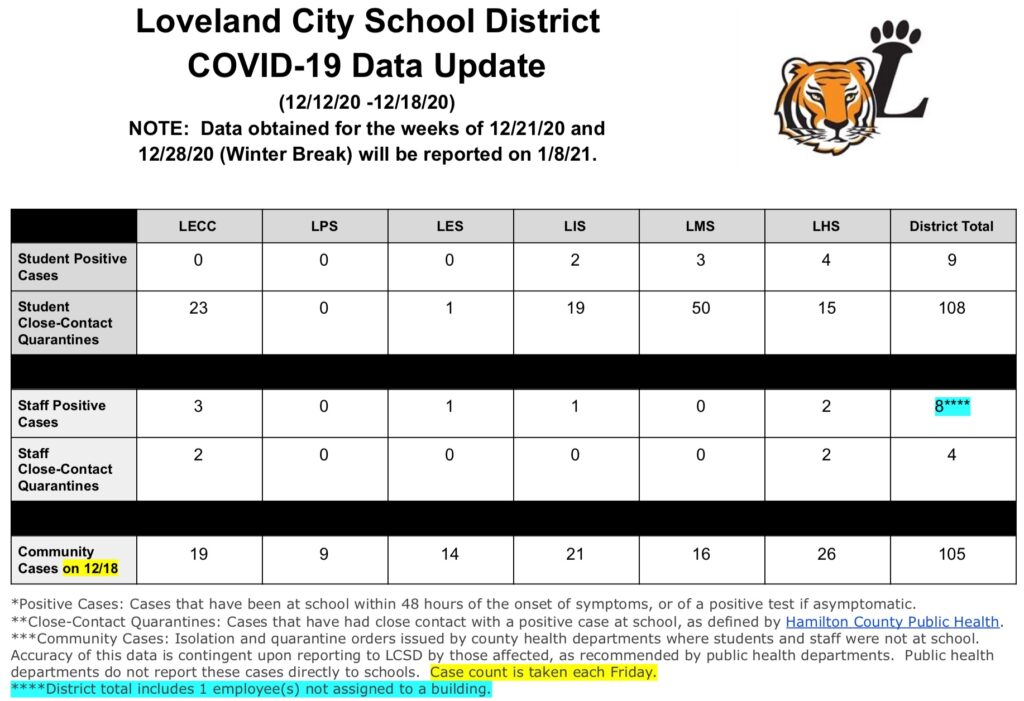
Here is the last Covid 19 Dashboard that was published by the District (12/12/20 -12/18/20) right after classes dismissed for Winter Break:
Because of the data we now have, we’re changing our guidance and are no longer recommending that students who have been exposed to another COVID+ student quarantine – as long as all students have been wearing masks and the exposure took place in a classroom setting.
The Ohio Department of Health is extending the 10 PM to 5 AM statewide curfew for another three weeks until January 23. Governor Mike DeWine said, “This is b/c we don’t yet know what effect the holidays may have on our hospitals and health care systems, so we must continue to be cautious.”
As a reminder, the curfew does not apply to those:
✅ going to and from work ✅ who have an emergency or need medical care
The curfew is not intended to stop anyone from getting groceries/going to the pharmacy.
Picking up carry-out or a drive-thru meal and ordering for delivery is permitted, but serving food and drink within an establishment must cease at 10:00 p.m.
Columbus, Ohio – The 133rd Ohio General Assembly wrapped up its term with a flurry of lame-duck activity last week, closing out a challenging year of legislating amid a global pandemic.
Lawmakers hurried to get priority bills passed and sent to Gov. Mike DeWine’s desk for a signature before the two-year term ended. There were, however, a number of major legislative projects that did not get passed.
Here are some of the priorities falling to the 134th General Assembly, which starts in January:
What to do with House Bill 6?
After months of deliberation about House Bill 6, lawmakers have decided to punt any repeal or replacement effort to 2021.
HB 6 is the $1.3 billion nuclear bailout bill at the center of what has been called the largest corruption scheme in state history.
In the days after Speaker Larry Householder and four other political operatives were arrested in July, one thing was clear: Ohio lawmakers needed to do something about the tainted bill.
DeWine, who signed the bill into law in 2019, called for its repeal. Householder was removed as House Speaker. His replacement, Rep. Robert Cupp, R-Lima, said one of the first priorities of his speakership would be addressing HB 6.
Davis Bees Nuclear Power Station with electricity pylons, Ohio. Getty images.
Cupp did create a new “House Select Committee on Energy Policy and Oversight,” which met nine times between September and December to hear testimony on various attempts to repeal HB 6.
Members could not come to an agreement on how to best approach HB 6; some wanted a full repeal, others wanted only certain portions replaced and a few defended the whole bill as being good public policy, even if it did come about through sordid means.
Two of those involved have already pleaded guilty in federal court; the cases against Householder and two others are ongoing.
Householder was reelected to another term and it remains to be seen if the chamber will take a vote in 2021 to expel him. When Cupp was elected as speaker in July, he indicated such a vote would wait until after the new term starts.
School spending reform will take more time
The Ohio Supreme Court ruled the state’s school funding model was unconstitutional back in 1997. Decades later, lawmakers are still working to figure out a constitutional and equitable substitute.
A bipartisan funding overhaul passed the House in early December, but did not make it through the Senate.
Sen. Matt Dolan, R-Chagrin Falls, who chairs the Senate Finance Committee, wrote in a December letter “there is not enough time in the legislative session for the Senate to have the in-depth hearings this bill deserves.” Dolan suggested the new formula could be passed as a piece of the next state budget, which will be decided in the first half of 2021.
Republicans still concerned about pandemic authority
For all the condemnation leveled against Ohio’s pandemic response by Republican lawmakers in 2020, the legislature achieved little this year in the way of curbing the government’s executive powers.
Between May and December, Republicans introduced numerous bills targeting the pandemic authority of the governor and the Ohio Department of Health (ODH). Only a few of them passed, and DeWine followed through on a pledge to veto any bill restricting ODH’s ability to issue health orders meant to stem the spread of COVID-19.
DeWine vetoed a bill over the summer which would have reduced the penalties for violating a public health order. Lawmakers did not seek a veto override.
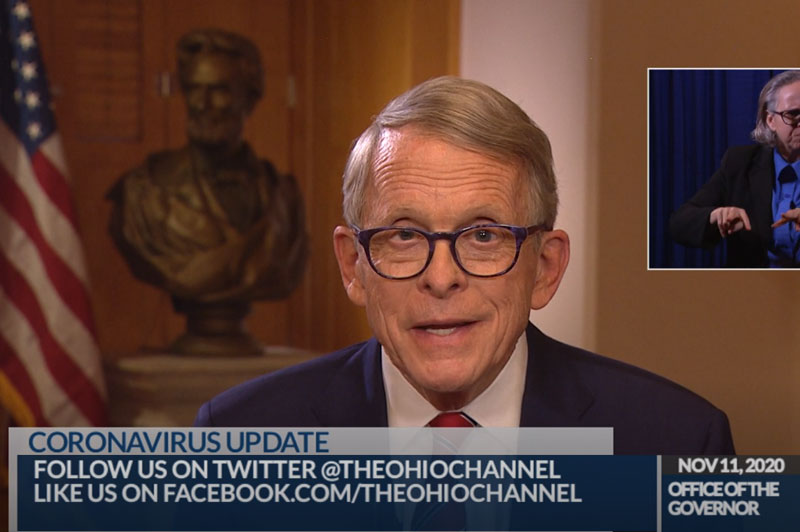
Gov. Mike DeWine is pictured during his statewide address on Wednesday, Nov. 11. Photo courtesy Ohio Channel.
More recently, DeWine vetoed a bill to prevent ODH from issuing widespread quarantine orders (it also would’ve given lawmakers authority to vote down any public health orders). Despite protests and pressure from conservative lawmakers to override the veto, such a vote was not taken during the lame-duck session.
Late in the term, lawmakers debated efforts to make future health orders more fair to business owners, should they be necessary. At other points this year, legislators said they wanted to address the state’s pandemic authority for future crises beyond the coronavirus. Those efforts may come up again in 2021.
Campaign finance and election reform
These were two hotly-debated topics this year in large part because of the presidential election cycle and the House Bill 6 scandal.
As the Ohio Capital Journal has reported, lawmakers proposed a wide array of improvements to the state’s election system over the past term — from automated voter registration to online absentee ballot requests. Some legislators expressed worry about approving reforms during an election year, which may provide an opportunity for reforms to be heard during an “off year” like 2021.
The HB6 scandal involved allegations of bribery money being funneled through “dark money” groups in order to influence Ohio elections and public policy. These groups are registered nonprofits which are not required to disclose who funds them.
Ohio Secretary of State Frank LaRose, whose office oversees campaign finance in the state, came out in favor of improved transparency when it comes to “dark money groups.” He supported legislative efforts which followed Householder’s arrests to require such groups to publicly disclose their financial activity.
Secretary of State Frank LaRose is flanked by state Reps. Gayle Manning and Jessica Miranda during a press conference in support of HB 737.
A bipartisan bill proposing reforms to the state’s campaign finance system did not receive a hearing in 2020, but these efforts may carry over to the new term.
Split opinions on criminal justice reform
There was much attention paid to the legislature’s work to reform the Ohio criminal justice system, with plenty of disagreements leading to mixed results.
Lawmakers passed Senate Bill 1, which expands access to drug treatment programs in lieu of convictions and broadens the description for criminal records that may be sealed.
A separate bill to reclassify low-level drug offenses from felonies to misdemeanors passed the Senate last June, but was not taken up for a vote during the House’s lame-duck session. The bill sought to divert drug offenders into treatment rather than criminal punishment.
Despite bipartisan support in the Statehouse and among civil rights groups, the bill remained controversial among law enforcement groups and prosecutors. The Ohio State Bar Association came out against the bill, arguing in testimony that some drug offenders “must have serious consequences hanging over their heads like the threat of a felony and prison time” in order to commit to a treatment program.
Rep. Bill Seitz, R-Green Twp., a supporter of the bill who will serve as Majority Floor Leader next term, told The Cincinnati Enquirer that work will continue in 2021 on criminal justice reform.
A legislative attempt to cripple the Ohio Department of Health’s legal authority to respond to pandemics died a quiet death Tuesday evening after the Senate President opted against attempting to override a gubernatorial veto.
This puts a lid — for 2020, at least — on a months-long effort from Republicans to wrest “ultimate authority” in matters of quarantine and isolation from the ODH director, as it exists in state law.
Senate Bill 311 would allow lawmakers to vote down public health orders, such as the statewide mask mandate.
It would also prevent ODH from issuing a statewide or regional quarantine or isolation order against people who have not been exposed to or diagnosed with an infectious disease. Legal experts say this would preclude the health department from issuing stay-at-home orders, as it did this Spring.
The legislation formed a wedge between Republican lawmakers and GOP Gov. Mike DeWine, who vetoed the bill earlier this month after calling the proposal a “disaster.” Lawmakers have pushed a string of different attempts to weaken ODH’s public health power since April.
Lawmakers passed the bill despite opposition from the Ohio Hospital Association, the Ohio State Medical Association, and public health officials. They said the bill would weaken the state’s ability to respond to COVID-19, which has killed 8,252 Ohioans since March.
Senate President Larry Obhof, R-Medina, spoke to reporters late Tuesday night after the final full voting session of the 133rd General Assembly. He said passing separate legislation designed to force ODH to treat large and small businesses more equitably in the event of another shutdown was a viable alternative to a veto override. The House would need to approve this by year’s end.
The Senate passed SB 311 with 20 votes, leaving none to spare on the 3/5 majority needed to override. Four Republican senators — Matt Dolan, Peggy Lehner, Stephanie Kunze, and Kirk Schuring — joined with Democrats to oppose the bill.
However, the political calculations change. A single vote flip wouldn’t have made much difference on passage but could torpedo the veto override outright, which must begin in the Senate per constitutional rules.
It would also have needed 60 votes in the House, a more complex endeavor.
The House passed SB 311 with 58 GOP votes, two shy of the override threshold. Three likely yes votes were absent at the time.
During interviews earlier this month, they both declined comment on whether they’d vote to override the veto.
A rash of COVID-19 cases among House lawmakers also scuttles the whip count. At least seven House lawmakers have contracted COVID-19 in December. The Cincinnati Enquirer reported at least 13 House legislators were absent from voting Tuesday, including six Republicans.
Obhof described the legislation passed Tuesday as a pragmatic compromise, although he still supports SB 311. He said the thinned-out House Republican caucus was a factor in his decision, but not the driving force.
“The House hasn’t had 60 Republican members in in weeks,” he said. “That’s not why we didn’t pass it, but I think it is an important background fact when you see some members clamoring for that and demanding that.”