Tag: Ohio Department of Health

  • Ohio announces initial vaccine plan

    Ohio announces initial vaccine plan

    By Marty Schladen and Ohio Capital Journal

    If approvals go according to plan, Ohio will get more than a half-million doses of coronavirus vaccine between Dec. 15 and the end of the month, Gov. Mike DeWine said on Friday.

    While more than expected, the amount is far from adequate in a state with a population approaching 12 million.

    “The race has started and it’s started in a very robust way,” said Bruce Vanderhoff, medical director for the Ohio Department of Health.

    Even so, officials had to make some painful choices about who would be first in line for a first dose, to be followed by a booster either three or four weeks later, depending on the vaccine, DeWine said. 

    That means prisons and jails, where inmates and staff have been dying of covid since the start of the pandemic, will not be among the first to be vaccinated. Nor will service workers such as grocery store clerks, who potentially are exposed to the virus every day.

    “We have not gotten beyond (determining who will be in the first group) but the goal will be to save the most lives,” DeWine said on a day when more than 10,000 new coronavirus cases and 129 more deaths were reported.

    Among those in the first group will be:

    • Health care workers and staff caring for covid patients
    • Emergency medical responders
    • People with underlying health conditions living close to each other and their caregivers. They include people and workers in nursing homes, assisted living centers, veterans homes and the like.

    DeWine stressed that the exact number of doses won’t be known until the week they’re due to arrive. He added that as initial rounds are doled out, they’ll be paired with boosters to be sent later.

    Joseph Gastaldo, director of infectious diseases at OhioHealth, said the vaccines awaited in Ohio are being made by Pfizer and Moderna. They still are awaiting final approval by independent panels of experts working under the auspices of the U.S. Food and Drug Administration and the Centers for Disease Control and Prevention. That approval is expected in the next two weeks.

    Approvals of other vaccines are hoped for, but there are a few factors that make it hard to predict when a big enough portion of the Ohio population will have been vaccinated to it difficult for the virus to spread.

    One is that about half of Ohioans are reluctant to get it, DeWine said. He said he hopes public information campaigns and news of the vaccines’ safety and efficacy will counteract the skepticism.

    Also, it’s unclear what other vaccines might be coming online, how quickly, or how fast production and distribution can be scaled up. Add those together and it’s uncertain when average folks can line up for a shot in the arm.

    “I don’t think anyone knows that,” DeWine said.
  • District responds to staff shortage by adopting shorter quarantine period

    District responds to staff shortage by adopting shorter quarantine period

    Loveland District says staff absences may cause last-minute notice of school closing

    Loveland, Ohio – In a news release issued this afternoon, the Loveland School District said that during the next few weeks, some school buildings may have to temporarily switch to remote learning because of staff absences.

    The District said in the release, “This year it has become challenging to find substitute teachers, and we may run short on staffing due to COVID-19 cases or quarantines.” If this happens, a switch to remote learning will happen on a school-by-school basis. The District said they are trying to plan ahead so that families can plan ahead, however, these changes may happen as late as the morning of scheduled attendance.

    They suggest that parents and caregivers should begin considering how they might handle a possible late-notice class cancelation.

    The District said they will notify families as “quickly as possible” about closings through their alert notification system, the website, Facebook (Loveland City Schools), and Twitter (@lovelandtigers) pages.

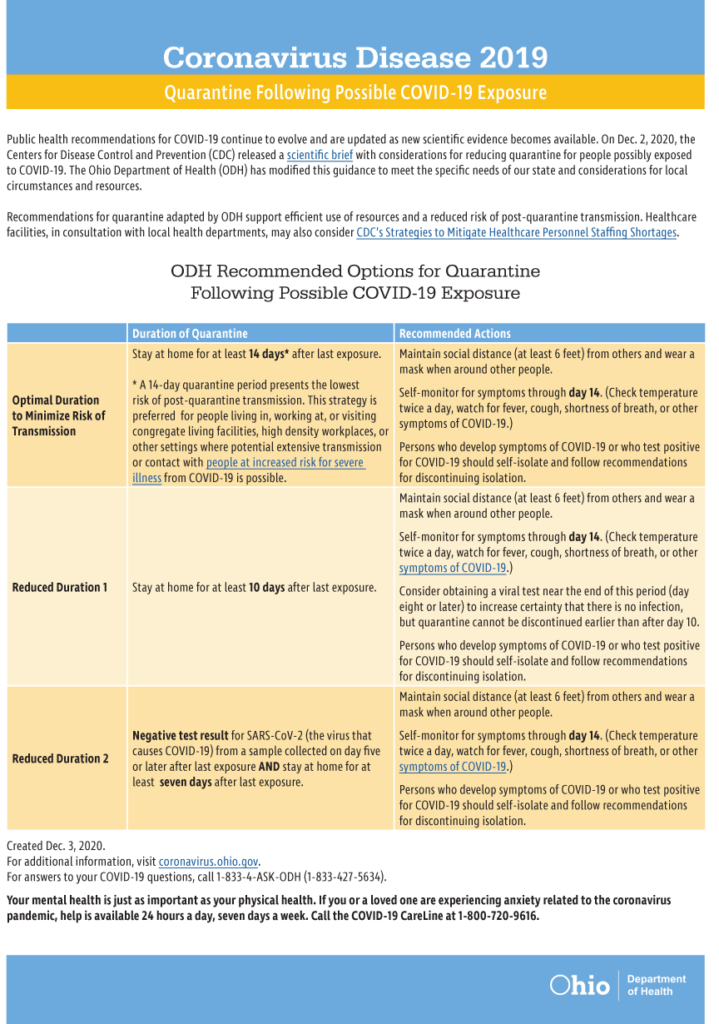
    CDC still recommends 14 days however District adopts a less restrictive “acceptable alternative” quarantine period

    The Centers for Disease Control and Prevention (CDC) announced a change in guidance for quarantines. The new guidance shortens the quarantine period for someone who has been exposed to a positive COVID-19 case. The Ohio Department of Health has also adopted the new CDC guidelines, as has Hamilton County Public Health. 

    The District said in the release that the new less restrictive guideline notification came to them late today. They will begin implementing those directives and will personally notify families affected.

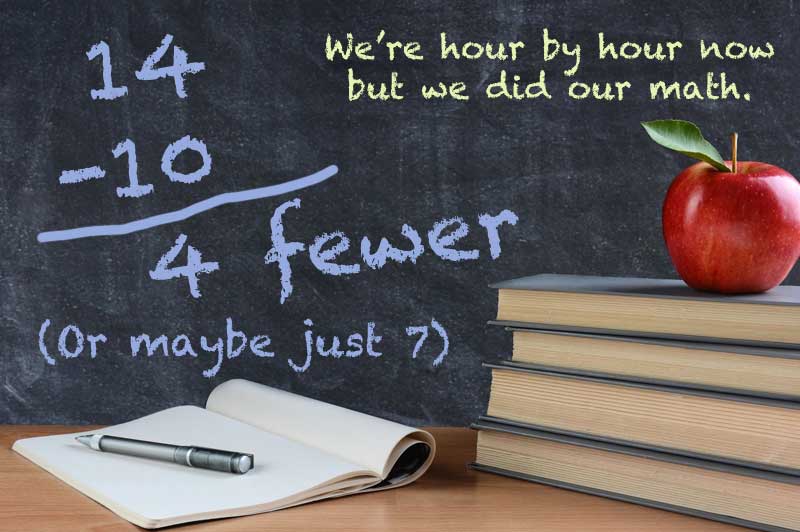
    The Centers for Disease Control and Prevention announced new quarantine guidelines for people who were exposed to coronavirus, reducing the length of time from 14 days to 10 days without symptoms or seven days with no symptoms and a negative test. Officials said the shorter time period is intended to encourage more people to quarantine.

    Ohio Department of Health Chief Medical Officer Dr. Bruce Vanderhoff said today, “Staying home for 14 days after contact is still the safest way to limit possible spread of COVID-19. We continue to recommend this time period for people in congregate living facilities, such as nursing homes; in workplaces with a large number of employees; and in other settings in which COVID-19 could spread extensively.”

    Dr. Andy Thomas, chief clinical officer at The Ohio State University Wexner Medical Center, yesterday warned that “Ohio is not yet seeing the impact of gatherings that took place over Thanksgiving because hospitalizations are a lagging indicator. Symptoms generally develop within 10 days of transmission, and hospitalizations typically occur a week after diagnosis.”

    According to CBS News the CDC rationale for the less restrictive guidelines is:

    “Reducing the length of quarantine may encourage more people to do so, especially when they may not be able to work during quarantine time,” CDC’s COVID-19 Incident Manager, Dr. Henry Walke, told reporters on a call Wednesday. He said the agency still recommends 14 days, but is now offering two “acceptable alternative quarantine periods.” 

    According to the District, “We are pleased with these new recommendations from an educational perspective. Our goal is to keep students learning in our school buildings and shortening the required quarantine time is key.”

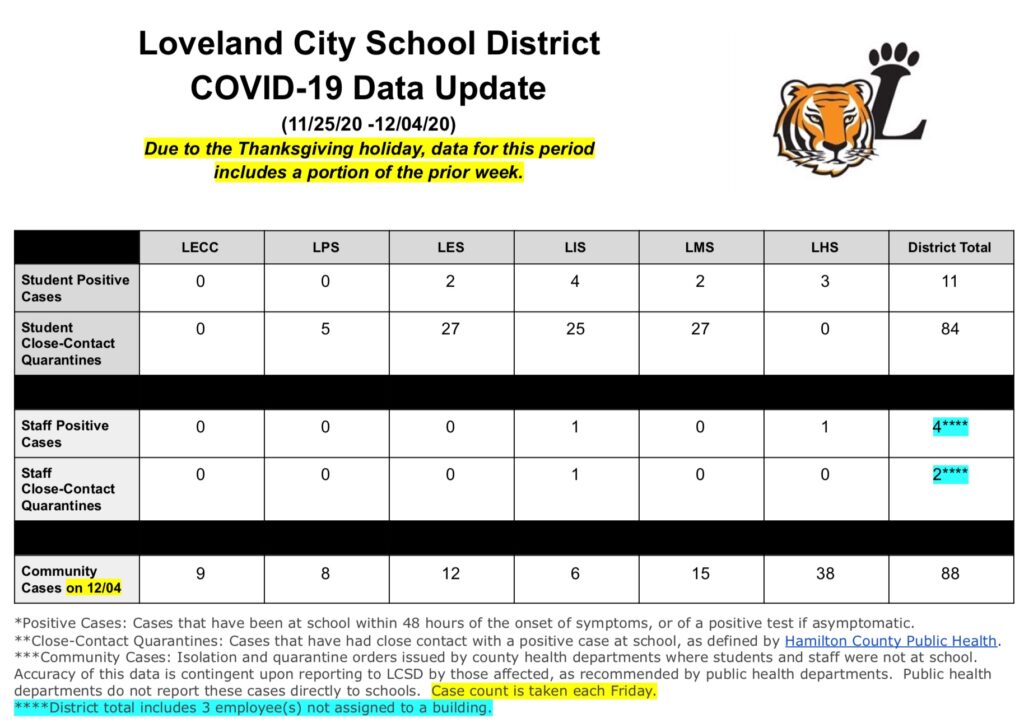
    This is the District’s COVID 19 Dashboard published today:

    On 12/03/20, the district was notified that a non-teaching, non-school-based staff member tested positive for COVID-19. This staff member was last at work on 11/30/20.

    On 12/03/20, the district was notified that a student at Loveland Intermediate School tested positive for COVID-19. This student was last at school on 11/18/20.

    On 12/03/20, the district was notified that a student at Loveland Middle School tested positive for COVID-19. This student was last at school on 11/18/20.

    On 12/04/20, the district was notified that a student at Loveland Elementary School tested positive for COVID-19. This student was last at school on 11/30/20.

    On 12/04/20, the district was notified that a student at Loveland Intermediate School tested positive for COVID-19. This student was last at school on 12/02/20. 

    On 12/03/20, the district was notified that a student at Loveland Intermediate School tested positive for COVID-19. This student was last at school on 12/01/20.

    On 12/02/20, the district was notified that a teaching staff member at Loveland Intermediate School tested positive for COVID-19. This staff member was last at school on 11/24/20. No close contacts were identified for this confirmed case.

    On 12/02/20, the district was notified that a student at Loveland Elementary School tested positive for COVID-19. This student was last at school on 11/30/20.

    On 12/1/20, the district was notified that a non-teaching staff member at Loveland High School tested positive for COVID-19. This staff member was last at work on 11/18/20. No close contacts were identified for this confirmed case.

  • [VIDEO] Governor visits RSS Warehouse site as State prepares for vaccine distribution

    [VIDEO] Governor visits RSS Warehouse site as State prepares for vaccine distribution

    BREAKING UPDATE: Bloomberg News has reported this morning (12-2-2020) that the Pfizer vaccine scheduled for the Loveland Area has received approval in Britain. “The emergency authorization clears the way for the deployment of a vaccine that Pfizer and its German partner have said is 95% effective in preventing illness. The shot will be available in Britain from next week.” This is ahead of decisions in the U.S. and European Union. Read on…

    Today, Ohio Governor Mike DeWine toured the Ohio Department of Health’s Receipt, Store, and Stage (RSS) warehouse facility located in Central Ohio, to see the facility and review the process that will be used to redistribute the COVID-19 vaccine in Ohio.

    The Ohio Department of Health’s Vaccine Preparedness Office has been preparing for the arrival of the vaccine for months, distributing adult influenza vaccine with the same process that will be used to distribute the COVID-19 as a test exercise, and running daily drills with prototype packaging to break down and repackage the vaccine in smaller units.

    There are currently 2,931 active COVID 19 cases in Clermont County

    There are currently 33,498 active COVID 19 cases in Hamilton County.

    There are currently 9,421 active COVID 19 cases in Warren County.

    On Monday, the Ohio Department of Health took part in a nationwide end-to-end training exercise with the packaging that will be used to distribute the Pfizer vaccine. The Pfizer vaccine is expected to be the first manufacturer to receive the Emergency Use Authorization (EUA) by the Food and Drug Administration (FDA). The vaccine will be shipped to Ohio using the following process:

    • The Pfizer vaccine will be shipped directly to Ohio’s 10 prepositioned hospital sites. As vaccine supply increases, additional providers will receive direct shipments if ordering 975 doses or more of the vaccine.
    • Providers requiring fewer than 975 doses, such as smaller local health departments and physician’s offices, will not receive a direct shipment from Pfizer. In these cases, Pfizer will ship the vaccine to the ODH RSS warehouse, where the vaccine will be redistributed in increments of 100. The warehouse is equipped with ultracold freezers that can each hold up to 720,000 doses to be stored in the RSS at any one time.
      • When vaccinations are ready to be shipped from the RSS warehouse, they must be removed from ultracold storage and repackaged with dry ice in under two minutes. To ensure the vaccine can be repackaged safely, quickly, and effectively, ODH staff and members of the Ohio National Guard are running daily practice drills that include the following steps:
        • Each box is transported to a table where the vials are counted.
        • The box is closed and handed off to another team member who will place the vaccine box in a larger cold shipping container lined with bubble wrap..
        • Once the correct number of doses are placed in the larger cold shipping container, dry ice is added to the package, along with a sheet of cardboard. The lid is replaced and the package proceeds to the next step.
        • The package is sealed, a shipping label is applied, and the package is moved out for delivery.
        • All packages will be delivered to the providers within six hours. The vaccine will remain stable if sealed in the original shipping container from the RSS warehouse with dry ice for up to 5 days.
    • Vaccine National Drug Control (NDC) and lot number information will all be tracked electronically, and parcels will be tracked as they are delivered. Each delivery vehicle will contain a GPS enabled device.

    U.C. Health at the Cincinnati Medical Center is one of Ohio’s 10 prepositioned hospital sites.

    Here is video of ODH staff and members of the Ohio National Guard practice drills

    Upon granting of an emergency use authorization, it is anticipated that the Moderna vaccine will be shipped directly to providers administering the vaccine and will not be processed by ODH at the RSS warehouse.

    Health care workers and nursing home residents should be at the front of the line when the first coronavirus vaccine shots become available, an influential government advisory panel said on Tuesday.

    The Advisory Committee on Immunization Practices who make recommendations to the Centers for Disease Control and Prevention voted 13-1 today that Health care workers and nursing home residents should receive coronavirus vaccine shots when they become available.

    The vaccine requires two doses to be effective.


  • City Hall won’t cancel public hearing despite stay at home recommendations from State and plea from residents

    City Hall won’t cancel public hearing despite stay at home recommendations from State and plea from residents

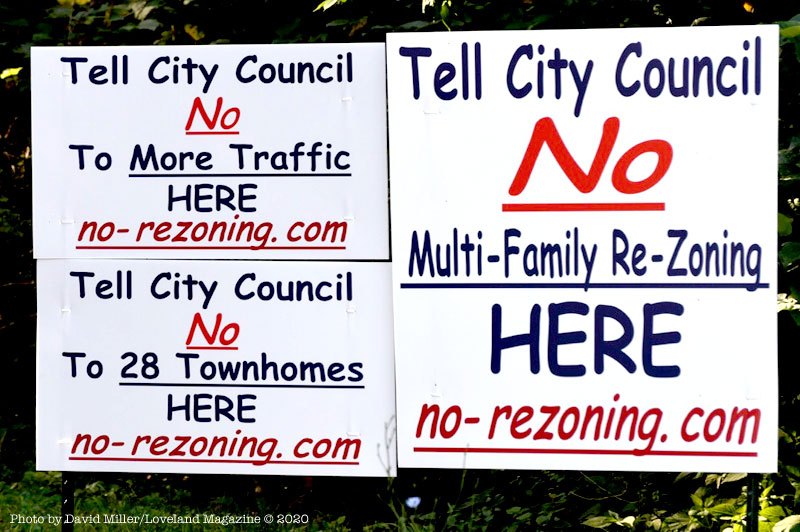
    Loveland, Ohio – There is a public hearing Tuesday night at Loveland City Hall – to hear from the public and despite resident’s pleas about their COVID 19 concern, it will go on as scheduled. The legal requirement to avail the residents of the city the opportunity to make their case face-to-face with their elected council members whether or not they want condos built on North Second Street (St. Rt. 48) south of Sentry Hill subdivision with the potential use to build 25 condominiums.

    Resident Dave Stanton who lives in Sentry Hill wrote to City Manager Dave Kennedy and his assistant Tom Smith on November 16 outlining several reasons for delaying the hearing:

    “With the number of people that want to speak at the Public Hearing, we are requesting that the Public Hearing scheduled for November 24th be postponed until the COVID Levels return to Level 2 in all three counties and the State of Ohio changes their advisories to allow Public Gatherings. This request is for the best of the City Council, City Staff, and Loveland Residents in following the advisories and staying healthy.”

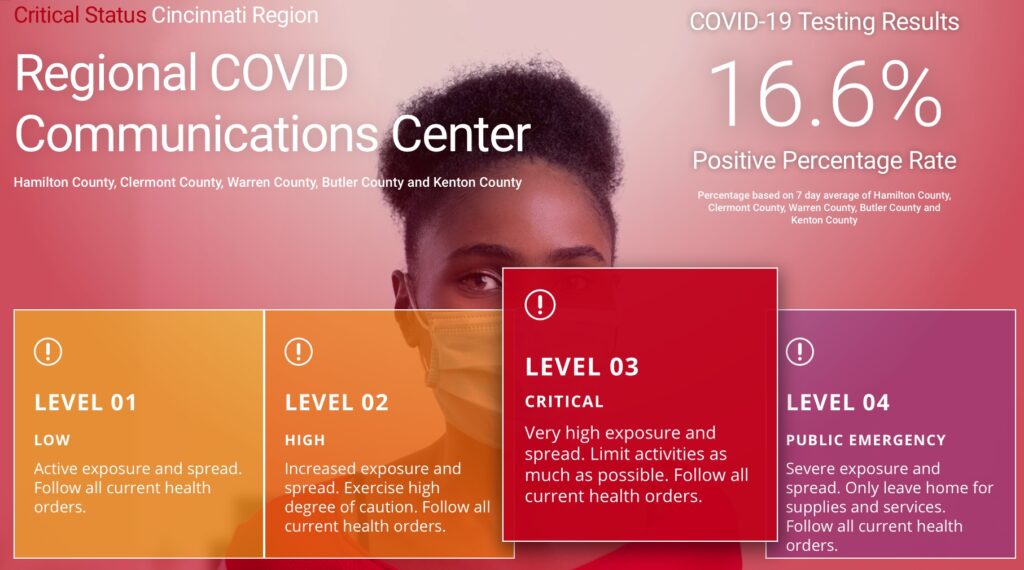
    A Level 3 Public Emergency means there is very high exposure and spread. The advisory is to, “Limit activities as much as possible.”

    Over the past two weeks, there have been 1,365 COVID 19 cases in Clermont County, 5,602 in Hamilton County, and 1,556 in Warren County. The revised health order issued by the Ohio Department of Health on November 20 said minimize the spread of COVID-19 through airborne particles passing between people in close contact there should be no activities in open congregate areas. Local doctors are pleading for people to stay home.

    Stanton told the City administrators that the rezoning public hearing is very important to all residents however specifically the residents of North Loveland who wish to be heard in person and in front of the people they elected.

    “Our concerns are with the current COVID virus at Level 3 in all 3 counties (Hamilton, Clermont, Warren) and participating in a public meeting based on the current advisories from Governor DeWine on Public Gatherings,” Stanton wrote. “Even with the City following the current CDC COVID guidelines, the 3 counties continue to see a significant increase in the number of new daily COVID cases.”

    Stanton pointed out the State advisories on public meetings:

    • Avoid gatherings, limit contact with people outside of your household, and reconsider holiday plans
    • Reconsider hosting or attending gatherings of any size – this includes with friend and family

    When Stanton did not hear back from Kennedy or Smith he followed up in another email on November 18 asking, “Can you please provide an update on this request for delaying the Rezoning Public Hearing in regards to the current COVID advisories?” He concluded with, “I need to let our residents know the status of the Public Hearing”

    With “social distancing guidelines in place in the council chamber the occupancy has been greatly reduced. With 7 council members, the City Manager and his assistant, the Council Clerk, the city attorney, the Finance Director, police and fire chief, there are but a handful of seats remaining for an audience. A public hearing on a subject as controversial as this project is would, pre-pandemic, be expected to garner 50 or more attendees.

    The response Stanton received from Smith was a pert, “The public hearing is scheduled for Nov. 24th .”

    Stanton replied today copying all of the city council with a renewed plea on behalf of the 92 residents who have signed a petition opposing the re-zoning. He also attached the petition to his email along with the names of residents and the comments his group has gathered on their “No-Rezoning” website. So far 124 comments are opposing the condo project.

    Stanton’s plea today to postpone the hearing said:


    Dear Council Members;

    We the citizens of Loveland are extremely disappointed in the City’s position and the response on not delaying this Rezoning Public Hearing until this current COVID crisis situation improves. This is based on Governor DeWine’s advisory on Mass Gatherings and all 3 Counties being at Level 3.

    We have many people that want to speak directly to the City Council on this rezoning to have their voices heard. But, they are uncomfortable in attending a Mass Gathering with the risks associated with COVID under the current state and local county advisories. They will not be able to attend tomorrow’s public hearing.

    We ask that you reconsider your position and delay this Rezoning Public Hearing until things improve and you can hear directly from the Citizens of Loveland. This rezoning is a very important issue for North Loveland and all of the Loveland Citizens in regards to following the current Comprehensive Plan and the lack of a plan on solving the RT 48 traffic congestion issues.

    Attached are the responses from the no-rezoning website and the signed petition in opposition to this rezoning.

    Thank you,
    Dave Stanton


    Joe Farruggia with Zicka Homes has been trying to rezone property off North Second Street (St. Rt. 48) south of the Sentry Hill subdivision with the potential use to build a 28-unit condominium development called the Blossom Hill Project since the first week in June. He has submitted three variations of the proposal, the latest on October 20. The current proposal is to limit the project to 25 or fewer individual units.

    The site is approximately 5.5 acres on St. Rt. 48 adjacent to the Sentry Hill subdivision and on the opposite side of the street of the Loveland Health Care facility.

    Council is expected to make the first of two required votes on the re-zoning tomorrow night.


    For more background on the condo proposal and video of resident opposition:

    For 3rd time Zicka is back requesting condo approval

    By Loveland Magazine -Oct 28, 2020

  • Read the revised health order to limit mass gatherings in Ohio

    Read the revised health order to limit mass gatherings in Ohio

    Loveland, Ohio – On Monday, Governor Mike DeWine announced that Ohio Department of Health Interim Director Lance Himes signed a revised health order to limit mass gatherings in Ohio. 

    “Despite the health order that limited mass gatherings to 10 people that was signed in April remaining in effect, we have seen rampant spread of the virus as a result of banquets, wedding receptions, and social gatherings following funerals,” said Governor DeWine.  “We have seen great tragedy associated with such events.  It’s not the ceremonies causing the problem.  It’s the party afterward.”  

    In order to minimize the spread of COVID-19 through airborne particles passing between people in close contact, wedding receptions, funeral repasts, and other events at banquet facilities are subject to the following restrictions:

    • No socializing or activities in open congregate areas and no dancing. 
    • Guests must be seated at all times. Traditional wedding reception events such as first dance, toasts, tossing the bouquet and cutting the cake are permitted.
    • If serving food and beverages, guests must be served at their seats. No self-serve buffets and no self-serve bar areas permitted.
    • Masks must be worn at all times unless actively consuming food or beverages.
    • No more than 10 people should be seated at a table and those individuals must be from the same household.

    This order does not apply to religious observances; First Amendment protected speech, including petition or referendum circulators, and any activity by media; and to governmental meetings which include meetings that are required to be open to the public.

    This order went into effect November 17, 2020 at 12:01 AM.

  • Hamilton County Sheriff will enforce statewide curfew

    Hamilton County Sheriff will enforce statewide curfew

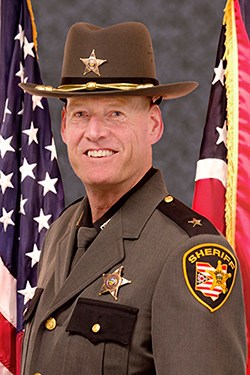
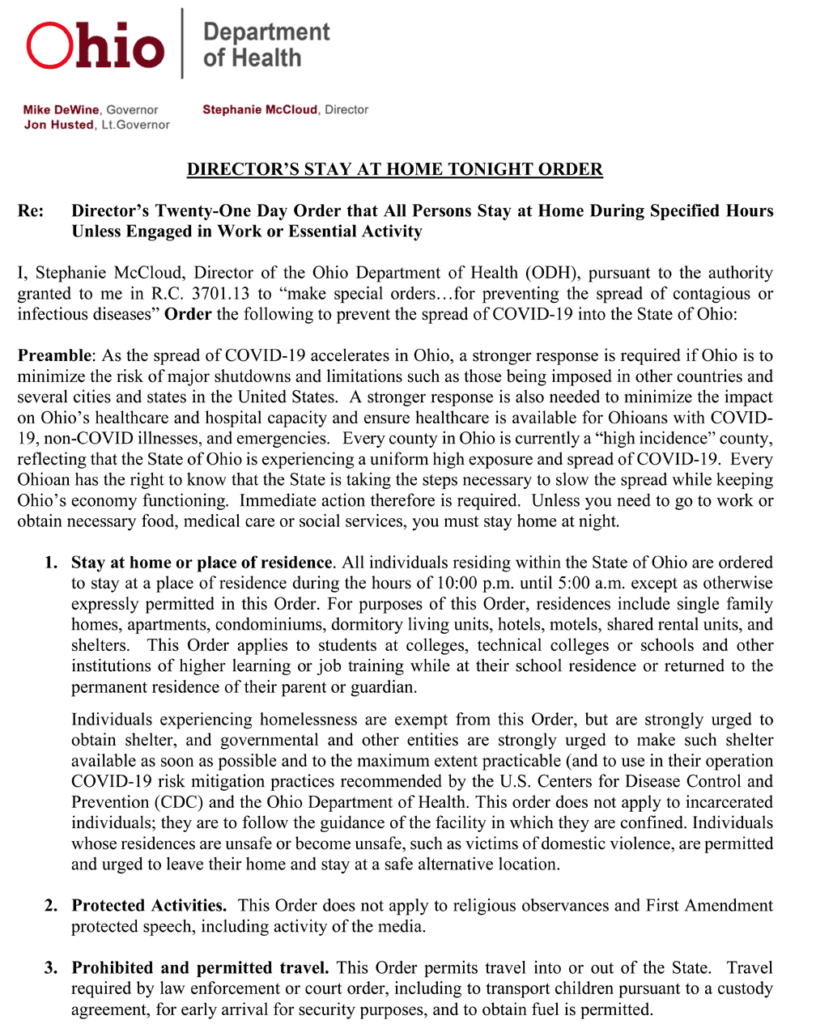
    Hamilton County, Ohio – Sheriff Jim Neil reports that beginning Thursday at 10 PM, the Hamilton County Sheriff’s Office has begun enforcement of the “Statewide Curfew” issued by the Ohio Department of Health. (Read the Health Order below)

    Neil said in a press release, “We’re asking all citizens and businesses to comply with the order. Restaurants and bars must stop serving in person customers at 10 PM during the curfew period. Takeout, however, can remain open beyond 10 PM. Violators will receive a verbal warning to comply with the order. After being verbally warned, the violator(s) will be cited under 3701.352, Ohio Revised Code, Misdemeanor of the 2nd degree.”

    Sheriff Jim Neil

    The Neil noted that the curfew does not include the following:

    •   Individuals going to and from work
    •   Those who have an emergency
    •   Those who need medical care
    •   Grocery shopping
    •   Going to the pharmacy
    •   Picking up carryout or a drive-thru meal. Delivery is also permitted
    •   Yes, you can still take your dog outside or go for a walk My goal as Sheriff of Hamilton County is to keep my deputies and the general public safe

    Health Order Signed Encouraging Ohioans to Stay Home

    (COLUMBUS, Ohio)—Ohio Governor Mike DeWine on Thursday announced that Ohio Department of Health Director Stephanie McCloud signed a health order encouraging people to stay at home during specified hours unless they are working or engaged in an essential activity.

    “As COVID-19 continues to spread in Ohio, we need a stronger response to minimize the impact on Ohio’s healthcare and hospital capacity and ensure healthcare is available to those that need it,” said Governor DeWine. “With this order we are discouraging get-togethers and gatherings to minimize the spread of the virus while minimizing the economic impact of a complete shutdown.”

    According to DeWine the specifications in this order include:

    • Individuals within the state must stay at a place of residence during the hours of 10 PM and 5 AM except for obtaining necessary food, medical care, or social services or providing care for others.
      • This order doesn’t apply to those that are homeless. Individuals whose residences are unsafe or become unsafe, such as victims of domestic violence, are encouraged to leave their homes and stay at a safe, alternative location.
      • The order does not apply to religious observances and First Amendment protected speech including activity by the media.
    • The order permits travel into or out of the state and permits travel required by law enforcement or court order, including to transport children according to a custody agreement, or to obtain fuel.

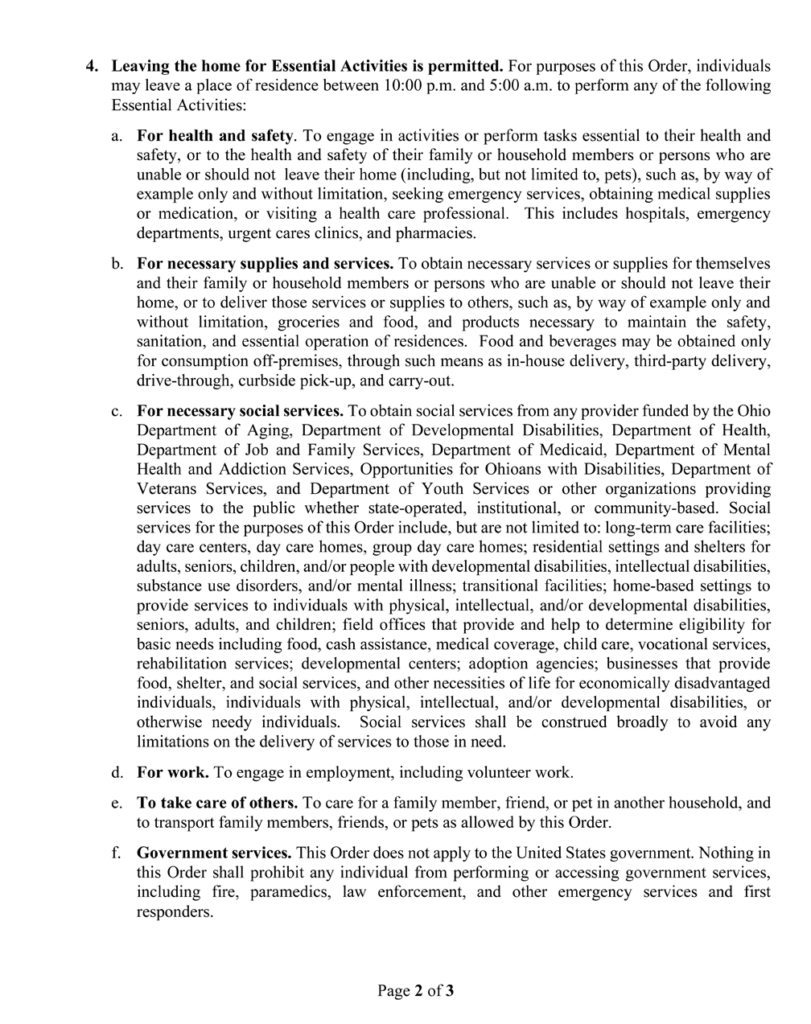
    Individuals are permitted to leave a place of residence during the hours of 10 PM and 5 AM for the following essential activities:

    • Engaging in activities essential to their health and safety or the health and safety of those in their households or people who are unable to or should not leave their homes, including pets. Activities can include but are not limited to seeking emergency services, obtaining medical supplies or medication, or visiting a health care professional including hospitals, emergency departments, urgent care clinics, and pharmacies.
    • To obtain necessary services or supplies for themselves and their family or members of their household who are unable or should not leave their home, to deliver those services or supplies to others. Examples of those include but are not limited to, obtaining groceries and food. Food and beverages may be obtained only for consumption off-premises, through such means as delivery, drive-through, curbside pickup and carryout.
    • To obtain necessary social services.
    • To go to work, including volunteer work.
    • To take care of or transport a family member, friend, or pet in their household or another household.
    • To perform or obtain government services.

    The order will apply for the next 21-days.


  • Loveland Police and Fire Chiefs respond to questions about local vaccine distribution

    Loveland Police and Fire Chiefs respond to questions about local vaccine distribution

    Loveland, Ohio – “Many things are still in flux. We are on daily morning briefings with the Health Department and Homeland Security officials. Many of the questions you have asked are being ironed out at this time,” said Loveland/Symmes Fire Chief Otto Huber.

    Loveland Magazine asked both Huber and Loveland Police Chief Sean Rahe several questions yesterday as local delivery of a COVID 19 vaccine approaches. Chief Huber responded on behalf of both department chiefs.

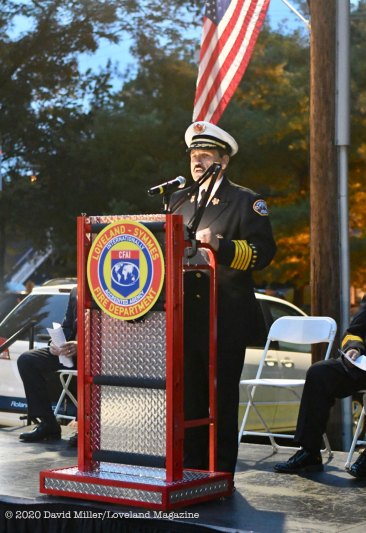
    Loveland/Symmes Fire Chief Otto Huber speaking at Loveland’s 9/11 ceremony in September.

    First responders will be in Phase 1 of Ohio’s vaccine distribution plan along with high-risk healthcare workers, and seniors living in congregate settings (i.e. nursing homes).

    Ohio Capital Journal reported on Tuesday that Federal regulators could allow two COVID-19 vaccines for emergency use as early as December, but getting the vaccines from out-of-state manufacturers to 11.7 million Ohioans poses a web of logistical challenges.

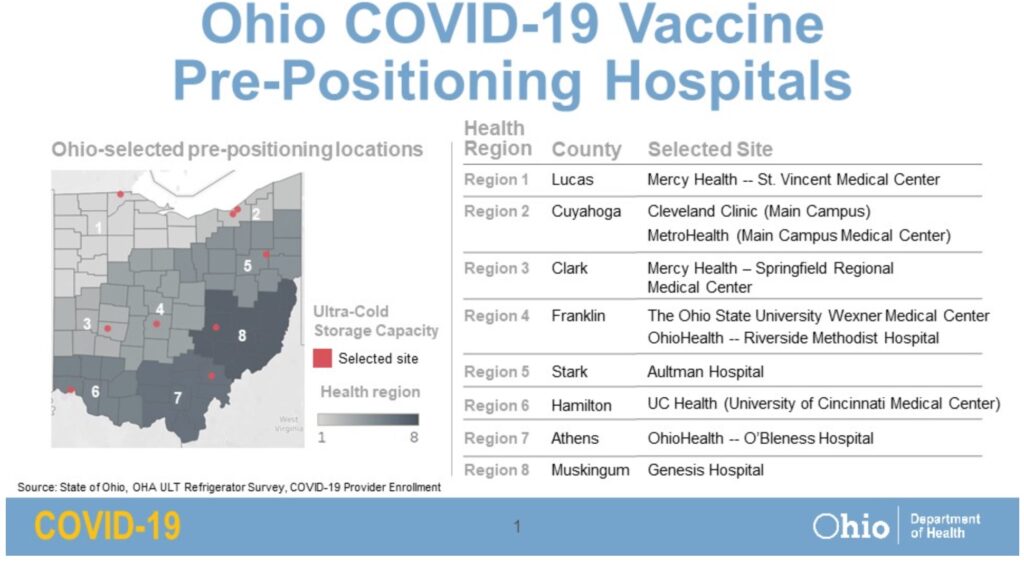
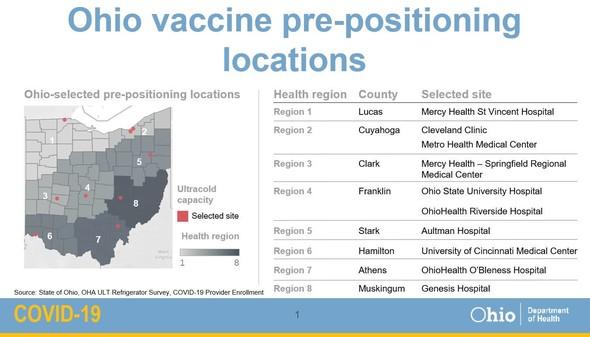
    The Ohio Department of Health has identified 10 sites across the state that will receive the pre-positioned vaccine after a COVID-19 vaccine is given emergency-use authorization. Once the Centers for Disease Control and Prevention’s Advisory Committee on Immunization Practices issues its recommendation on how to use the vaccine, these sites will begin administering the vaccine immediately to those who choose to receive it and are identified as able to receive it in the first stage.

    The ten pre-positioned sites were selected based on geography, population, and access to ultra-cold storage capacity. The University of Cincinnati Hospital Medical Center in Clifton is the Cincinnati area site.

    The Chiefs were asked if they have established any policy about their employees receiving the vaccine when it becomes available and if officers and firefighters will be required to be vaccinated. The chiefs were also asked whether they will be vaccinated. Huber said, “We will be providing the opportunity for our staff to receive vaccines as they are offered.”

    Huber also said, “At this point, we will be leaning on our Medical Director Dr. Policastro for guidance. We hope to have a plan finalized with the Health Department very soon. Keeping our staff safe so that we can safely provide service to our residents is our highest  priority.”

    Loveland Magazine also asked if there was anything that can be shared about plans for distribution in the City of Loveland or Symmes Township when a vaccine is available to the general public and whether local Kroger stores are the designated point of distribution for area residents when the vaccine is universally available. “Loveland and Symmes are both points of distribution however we do not know yet if they will choose to open those PODS,” said Huber.

    Under the draft issued by the Statehouse that was released on October 28, Ohio would implement a 4-phase approach to distributing the COVID-19 vaccine once it’s available.

    A summary of the phases are as follows:

    Phase 1 – High-risk healthcare workers, first responders, seniors living in congregate settings (i.e. nursing homes)

    Phase 2 – Public health workers, teachers and school employees, homeless individuals, prison workers and inmates, persons with mental health in group homes or institutions, and individuals with a medical condition putting them at greater risk of mortality due to COVID-19

    Phase 3 – Students, young adults, children, and individuals in high risk occupations

    Phase 4 – Universal availability


    You can read the complete draft: ODH Draft COVID-19 Plan that was released on October 28.

  • Ohio’s vaccine prepositioning plan

    Ohio’s vaccine prepositioning plan

    The Ohio Department of Health has identified 10 sites across the state that will receive the pre-positioned vaccine after a COVID-19 vaccine is given emergency-use authorization. Once the Centers for Disease Control and Prevention’s Advisory Committee on Immunization Practices issues its recommendation on how to use the vaccine, these sites will begin administering the vaccine immediately to those who choose to receive it and are identified as able to receive it in the first stage.

    Ohio will first vaccinate those who are most at risk, including those who work in long-term care facilities, nursing homes, and other congregate-care facilities, high-risk health care workers, and first responders.  

    The ten pre-positioned sites were selected based on geography, population, and access to ultra-cold storage capacity. Other sites will begin receiving shipments of vaccine following final approval, potentially just days after the pre-positioned sites begin administering the vaccine.  

    Ohio Vaccine Pre-Positioning Locations

    Here are the highlights of Ohio’s draft COVID-19 immunization plan. You can read the complete draft: ODH Draft COVID-19 Plan that was released on October 28.

    Under the draft, Ohio would implement a 4-phase approach to distributing the COVID-19 vaccine once its available.

    A summary of the phases are as follows:

    Phase 1 – High-risk healthcare workers, first responders, seniors living in congregate settings (i.e. nursing homes)

    Phase 2 – Public health workers, teachers and school employees, homeless individuals, prison workers and inmates, persons with mental health in group homes or institutions, and individuals with a medical condition putting them at greater risk of mortality due to COVID-19

    Phase 3 – Students, young adults, children, and individuals in high risk occupations

    Phase 4 – Universal availability

  • DeWine announces new curfew to try to slow covid spread

    DeWine announces new curfew to try to slow covid spread

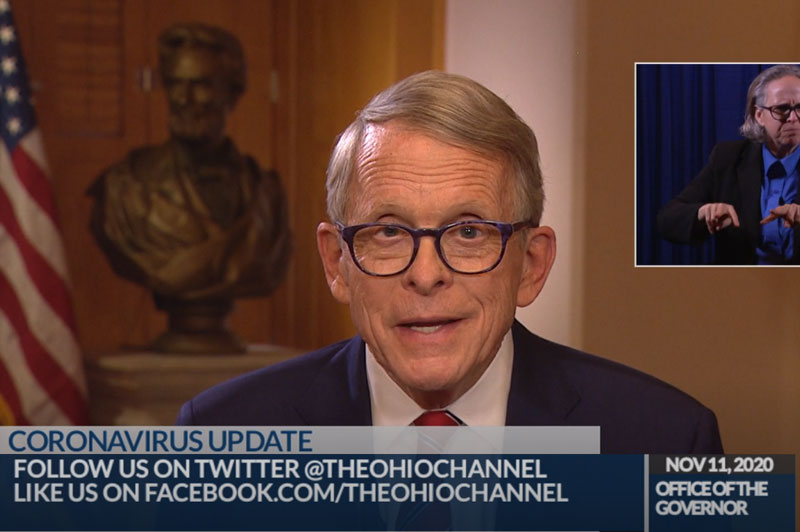
    Gov. Mike DeWine is pictured during his statewide address on Wednesday, Nov. 11. Photo courtesy Ohio Channel.


    By Marty Schladen and the Ohio Capital Journal


    Desperate to slow the spread of coronavirus, Ohio Gov. Mike DeWine on Tuesday announced a new curfew intended to decrease person-to-person contacts and new infections.

    The move was greeted with skepticism in some quarters.

    DeWine said that starting at 10 p.m. on Thursday, there will be a 21-day statewide curfew from 10 p.m. to 5 a.m. Bars, restaurants and retail stores will have to close. But there will be exceptions for pharmacies, grocery stores, food delivery, drive-through and pickup service.

    Technically, people who violate the curfew could be charged with a second-degree misdemeanor, punishable by 90 days in jail and a $750 fine. But as he has with other covid-related health orders, DeWine said he he’s not eager to see people charged.

    “We do not expect law enforcement to go pull people over because they’re out beyond 10 o’clock,” he said. “But if they’re seeing something going on, this is a way they can walk up and say, ‘Hey guys, you’re here… there’s a curfew. Why don’t you just go home?’”

    The governor added, “No one’s been charged under these health orders,” he said. “That doesn’t mean they couldn’t be, but they haven’t so far.”

    The curfew comes as Ohio experiences its most alarming spike in coronavirus infections and hospitalizations since the start of the pandemic early this year.

    On Tuesday, state health authorities reported 7,079 new cases over the past 24 hours, a 36% increase over the 21-day average. They also reported 368 new coronavirus hospitalizations, only a little less than the state record of 386 set on Nov. 10.

    The swelling numbers have placed Ohio hospital staffs in a “precarious situation,” said Bruce Vanderhoff, chief medical officer for the Ohio Department of Health. He said medical workers are fatigued from fighting the disease since March and they have to balance that work with living in communities and with families where the virus is increasingly prevalent.

    DeWine said his goal was to reduce the number of person-to-person contacts and thereby stop the virus from spreading. He asked Ohioans to voluntarily do that through such measures as condensing the number of trips they make to the grocery and buying more when they do. At the same time, he urged people to do what they can to remotely maintain emotional connections.

    However, critics noted that the curfew doesn’t go as far as one imposed in the spring. For example, the earlier order imposed limits on how many people can be in stores when they’re open.

    Asked what scientific basis he used in issuing the order, DeWine said, “We know the basic science. The basic science is fewer contacts, less spread.”

    The likely effectiveness of the curfew was disputed by at least one scientist in the field. Kent State epidemiologist Tara C. Smith tweeted that she didn’t know any professionals who thought it would work.

    DeWine, however, might have felt the curfew was as far as he could go. It had the support of the Ohio Restaurant Association, likely meaning that there was some negotiation behind it.

    Also, DeWine is a member of a party led by president who in October visited Circleville and said the media were hyping the virus to hurt his reelection chances. The president predicted the media would stop covering coronavirus on Nov. 4 — the day after the election.

    Covid skepticism runs so deep in elements of the Republican Party that at the same time that DeWine was announcing the curfew, Ohio Senate President Larry Obhof, R-Medina, was testifying in favor of his bill to repeal an earlier health order requiring bars to stop serving at 10 p.m.

    For his part, DeWine said he hopes the curfew will “push more people toward home.”

    “I think if we do these things it gives us a shot at slowing (the coronavirus) down,” the governor said. “Most of what we’re doing and the decisions I’m making are between two bad choices.”


    Marty Schladen

    Marty Schladen has been a reporter for decades, working in Indiana, Texas and other places before returning to his native Ohio to work at The Columbus Dispatch in 2017. He’s won state and national journalism awards for investigations into utility regulation, public corruption, the environment, prescription drug spending and other matters.

  • DeWine announces revised mask and social gathering orders

    DeWine announces revised mask and social gathering orders

    At the end of September, Ohio averaged under 1,000 new cases per day; this week, Ohio hit a record high of more than 6,500 new cases reported in a single 24-hour period.

    At the end of September, Ohio averaged under 1,000 new cases per day; this week, Ohio hit a record high of more than 6,500 new cases reported in a single 24-hour period.

    In a statewide address to Ohioans Wednesday evening, Ohio Governor Mike DeWine called on citizens to recommit to their individual efforts to prevent coronavirus spread as Ohio moves through its most intense, widespread, and dangerous surge of cases to date.

    Ohio is currently facing a record number of coronavirus-related hospitalizations and intensive care admissions, with nearly 3,000 people in the hospital, including more than 700 people in the ICU.

    During the first week of November alone, 104 Ohioans infected with the coronavirus died.

    To reinforce the necessity of wearing masks and slowing virus spread, Governor DeWine announced two forthcoming orders:

    Revised Mask Order

    DeWine said, “To protect frontline workers and customers, the Ohio Department of Health will reissue Ohio’s mask order and add the following provisions:

    • Each store will be required to post a sign outlining face-covering requirements at all public entrances to the store;
    • Each store will be responsible for ensuring that customers and employees are wearing masks; and
    • A new Retail Compliance Unit, comprised of agents led by the Ohio Bureau of Workers’ Compensation, will inspect to ensure compliance. 
    • A first violation will result in a written warning and a second violation will result in closure of the store for up to 24 hours.

    New Social Gathering Order

    Ohio’s April order that limits public events and private gatherings of more than 10 people is still in effect, however, there has been rampant spread of the virus as a result of banquets, wedding receptions, and social gatherings following funerals according to DeWine.

    “To address the tragedies that have resulted from such events, the Ohio Department of Health will issue an order that will place significant new restrictions on these social activities,” DeWine said.

    Specifically, open congregate areas will no longer be permitted to open, and everyone will be required to be seated and masked unless they are actively consuming food or drinks.

    Bars, restaurants, and fitness centers may remain open, but this will be reassessed one week from tomorrow for potential closure. 

    “If the current trend continues and cases keep increasing, we will be forced to make these closures,” said DeWine. “I am very well aware of the burden this will place on employees and owners, but these are places where it is difficult or impossible to maintain mask-wearing, which we know now is the chief way of slowing this virus.”

    Concern for healthcare workers

    “With this new wave of COVID-19, the onset of flu season, and an already-exhausted group of healthcare workers, there are serious concerns that there won’t be enough people to fully staff our healthcare facilities in the next few weeks,” said DeWine. “If we don’t change this, Ohio won’t be able to provide appropriate care for COVID patients or for Ohioans who require other emergency care for things like accidents, strokes, and heart attacks. Hospitals will again be forced to postpone important, but less urgent, care.”

    Although testing capacity in Ohio has nearly doubled, the number of people testing positive for the coronavirus has increased almost four times. At the end of September, Ohio averaged under 1,000 new cases per day; this week, Ohio hit a record high of more than 6,500 new cases reported in a single 24-hour period.

    “As we wait for the vaccine, which could come as soon as December, we have so much to protect,” said DeWine. “What each Ohioan does in his or her own life impacts every citizen and every place we desperately want and need to keep open– our schools, nursing homes, hospitals, and businesses.”

    For Governor DeWine’s entire address, visit ohiochannel.org or read his prepared remarks at coronavirus.ohio.gov.