Tag: pandemic

  • [DeWine] COVID-19 Update for Ohio: highest levels ever of hospitalizations among those under 50

    [DeWine] COVID-19 Update for Ohio: highest levels ever of hospitalizations among those under 50

    Around 97 percent of patients of all ages in Ohio hospitals today are unvaccinated.

    When you get COVID-19 without the protection of a vaccine, there is a very real risk you’ll end up in the hospital or the obituary pages.

    Columbus, Ohio – Ohio Governor DeWine today provided an update on the increased impact that COVID-19 is having on Ohio’s younger populations and the stress that the surge of cases is having on hospitals statewide.

    “The bottom line is that we’re seeing our highest levels ever of hospitalizations among those under 50 years old,” said Governor DeWine. “Those who are getting very sick, being hospitalized, and dying of COVID are getting younger and younger. And it is because they are not vaccinated.”

    • Today, there were 459 newly-reported hospitalizations, the highest number of new hospitalizations since January.
    • The number of new hospitalizations for COVID-19 of those under 50, was the highest during the entire pandemic during the week of Sept. 5th, when Ohio hospitals admitted 398 patients under the age of 50.
    • During the most recent completed reporting week (Sept. 5 — Sept. 11), 230 Ohioans 39 and younger were admitted to the hospital, which is the highest number of admissions for COVID in this age group during the entire pandemic, even higher than during the winter surge levels when no one was vaccinated.
    • Around 97 percent of patients of all ages in Ohio hospitals today are unvaccinated.
    • In July, 48 percent of COVID-19 deaths were among those 69 years old and younger. In August, preliminary data shows that an average of two people younger than 50 died of COVID-19 in Ohio every day.

    • Last month, preliminary numbers showed 18 Ohioans 39 and younger died from COVID-19. This is compared to five people in that age range who died in June and two people in that age range who died in July.

    Dr. Bruce Vanderhoff, Director, Ohio Department of Health
    “If you are young and unvaccinated it’s now probably only a question of when, not if, you get COVID-19. When you get COVID-19 without the protection of a vaccine, there is a very real risk you’ll end up in the hospital or the obituary pages. The numbers really tell it all, COVID has changed and is now making younger Ohioans who are not vaccinated very sick. Don’t become a statistic when there is a simple, safe, and effective alternative. Go out today and get vaccinated.”

    Suzanne Bennett, M.D., Extracorporeal Membrane Oxygenation (ECMO) Program Director, University of Cincinnati Health
    “These rising numbers of sick COVID patients places a significant burden on our hospital beds, our medical teams, and worse yet, it creates scenarios that no one wants to think about where we do not have the space for patients who would otherwise benefit from receiving their care at large academic medical centers. We now need the help of the people in our community more than ever so that no one else needs to die from this disease.”

    Alan Rivera, M.D., Hospitalist, Fulton County Health Center
    “We are in a crisis mode. As compared to last year, our nursing staff is down probably 50 percent. We have nurses leaving the field, retiring early, or finding jobs elsewhere because of the long hours and the emotional strain. On top of that, our COVID numbers are now going up. In June and July I didn’t see any COVID patients. Now, the majority of the census in our hospital are COVID patients, and they’re younger, anywhere from 30 to 50.”

    Joe Bates, R.N., B.S.N., Clinical Coordinator, Critical Care Unit, Genesis HealthCare System (Zanesville)
    “We’re seeing the younger population being hit hardest with this right now. Our average age right now that we’re seeing is around 59, with many of them being younger, as compared to last year when the average was about 78 years of age. Of the COVID positives that we currently have in the ICU, none of them are vaccinated who are on the ventilator.”

    Terri Alexander, R.N., P.C.C.N., Summa Health (Akron)
    “It’s just a sad, sad situation that we’re dealing with, and it’s tragic because it’s just so preventable. Please, please, please, get vaccinated. We live in a culture that has never experienced coming to the hospital and getting turned away, and I think people can’t fathom what that’s truly like until its them or their family members who are coming in and getting turned away.”

  • Latest increase in cases, hospitalizations has Ohio health officials pushing vaccines

    Latest increase in cases, hospitalizations has Ohio health officials pushing vaccines

    BY: TYLER BUCHANAN and Ohio Capital Journal

    On Tuesday, the state reported 744 new positive cases within the previous 24 hours, a daily total that hadn’t been seen since May.

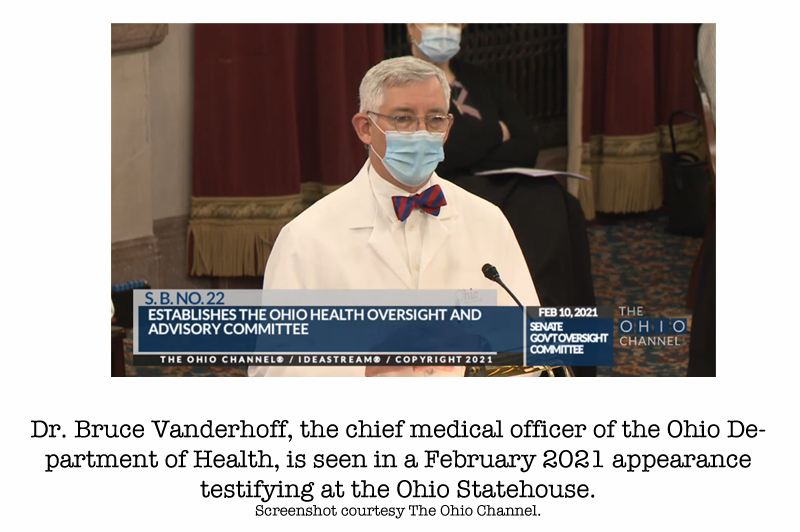
    Dr. Bruce Vanderhoff acknowledges that as the public face of the Ohio Department of Health he is repeating himself a lot these days.

    Dr. Bruce Vanderhoff

    But the message is important enough to continue repeating in simple terms, ODH’s chief medical officer said Wednesday.

    “It really comes down to, are you vaccinated and safe or are you unvaccinated and vulnerable?”

    Ohio once again finds itself at a crossroads. After months of declining rates of new cases, hospitalizations and deaths, Ohio is now seeing increases thanks mostly to a new “Delta variant” that officials say is even more contagious.


    I think it is absolutely the case that we are now looking at a pandemic of the unvaccinated.

    – Dr. Bruce Vanderhoff, Ohio Department of Health


    Vaccination rates here have all but stalled, concerning those like Vanderhoff who fear the state will slip back into a public health crisis as schools look to return to class next month.

    “I think it is absolutely the case that we are now looking at a pandemic of the unvaccinated,” he told reporters .

    Vanderhoff was joined by two pediatricians, including Dr. Patty Manning-Courtney, the chief of staff at Cincinnati Children’s Hospital. The recent rise in cases has them worried not just of the Delta variant, but what else could be on the horizon.

    Patricia Manning-Courtney, MD

    Manning-Courtney said her hope is Ohioans will get vaccinated before the state experiences an even worse variant that could significantly impact the youth population. She fears a scenario of Ohio learning “the hard way” that vaccines are necessary for public health.

    The latest surge

    The state’s COVID-19 numbers declined throughout the spring, leading Gov. Mike DeWine and ODH to rescind the swath of public health mandates.

    There was reason for optimism:  The two-week average was down to just 17.6 cases per 100,000 residents as of July 7.

    But since then, that average has more than doubled to 37.8.

    On Tuesday, the state reported 744 new positive cases within the previous 24 hours, a daily total that hadn’t been seen since May. The state is recording a greater proportion of cases and hospitalizations among younger people, according to ODH data.

    “It appears that this surge is being driven by yet another variant, the Delta variant,” Vanderhoff said, “which is, as I’ve shared before, even more contagious than the (alpha) variant that preceded it.”

    The Delta variant is now present in more than one-third of all new cases in Ohio and is on its way to being the dominant variant of COVID-19, Vanderhoff said.

    ‘Captains of the ship of their own health’

     President Biden recently said COVID-19 vaccine misinformation is costing Americans lives. (Photo by Alex Wong/Getty Images)

    Unlike a year ago, when mitigation tactics like distancing and face masks were seen as the most effective ways to protect oneself from the virus, a proven vaccine is now available for Ohioans.

    But it remains difficult to convince a majority of residents here to get vaccinated.

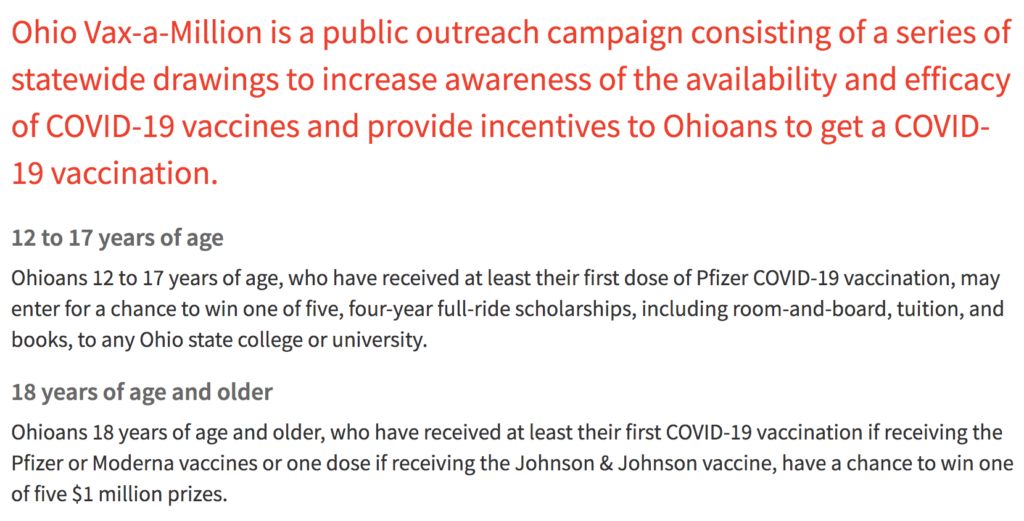
    A vast number of Ohioans received shots when they were first made available, with a boost in vaccinations this spring with the widening of eligibility and the announcement of a Vax-A-Million sweepstakes. (Franklin County is among the places still experimenting with vaccine incentives; those who get their first dose at Columbus-area clinics receive a $100 Visa gift card.)

    On the whole, the statewide vaccination rate has stagnated. More than 5.3 million Ohioans have completed their vaccination doses, but that still reflects just 45.5% of the total population. 

    DeWine had said his lottery idea was meant to target those who were not anti-vaccine, but needed some kind of boost to schedule their appointment.

    Now, after months of availability, Vanderhoff and others believe there is still a large segment of the population who can be convinced. These are well-intentioned people with understandable concerns that can eventually be swayed to change their minds, the officials hope.

    Misinformation spread online and in public spaces isn’t helping matters. Vanderhoff agreed with a recent statement by President Joe Biden that vaccine misinformation shared around on social media platforms is contributing to ongoing hesitancy and COVID-19 deaths.

    “I think there have been people who are sharing information in a very authoritative way that is not scientifically accurate,” Vanderhoff said. “As a physician, that’s very distressing, because we want people to make their own decisions of course. We want people to be the captains of the ship of their own health, but we want them to make their decisions on the basis of good, well-founded, scientific information.

    Dr. Amy Edwards

    “Frankly, it’s heartbreaking when we see people who are cascading information that is not scientifically based,” he added.

    Dr. Amy Edwards, the associate medical director of pediatric infection control at UH Rainbow Babies & Children’s Hospital, said vaccine misinformation has been around long before the coronavirus. She noted an example of seeing a child die of the whooping cough.

    “That’s unacceptable to me,” she said. “It should just never happen.”

    Vanderhoff and the pediatricians tried to dispel fears about the vaccine harming children. They noted rare cases of myocarditis, an inflammation of the heart muscle that has been reported in a small number of children this year.

    But Edwards called this a “rare side effect” that impacts as few as one in every 100,000 or more that receive the vaccine.

    “The risk is much higher from the virus itself,” she said.

    While there continue to be some examples of vaccinated people getting COVID-19, most are protected against serious outcomes like hospitalizations and deaths. 

    All of the 130 people in Maryland who died of the virus in June were unvaccinated. Other states have reported similar statistics, including Alabama, where 96% of the COVID-19 deaths between April and mid-July were unvaccinated. 

    “The issue of breakthrough with this kind of a vaccine against this kind of virus,” Vanderhoff said, “is really the issue of: Are you seeing people get severely ill? Are they ending up in the hospital? Are they dying? We’re just not seeing that in appreciable numbers with this vaccine.”

    Asked about future health orders with school returning in the fall, Vanderhoff said he could not disclose ongoing policy discussions within the state health department. He said ODH will be providing guidance and recommendations “in the near future.”

  • 1st grade teacher to her ‘Stay at Homies’ Thank you for believing in me

    1st grade teacher to her ‘Stay at Homies’ Thank you for believing in me

    by Jennifer Miller

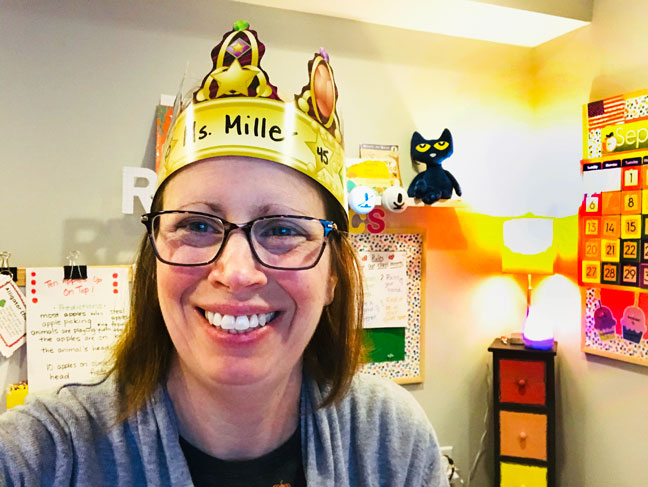
    During this past year, I took on the challenge of teaching a remote section of first grade for Loveland Schools. To date, this has been the most difficult work situation that I have faced as a teacher during my twenty-three-year career. I started the school year with 38 first graders. Just that hurdle alone made this an imposing task from the start. I remember thinking to myself, “How will I ever be able to deliver meaningful instruction to that many six and seven-year-olds? How will I establish a relationship with each one of them? What if I let my students down?” 

    My remote teaching team and I immediately had to dig in and make this work for our students. I quickly figured out how to manage thirty-plus students on Zoom calls during the day and created a daily schedule. I did my best to find helpful answers to parent questions and concerns, even though I often didn’t have the answers because so much of what we were doing was new to us all. As the first few weeks turned into the first month of remote learning, I found my way and admitted to my parents that I may not have all the answers about all the new challenges of this unique school year, but what I do know about is the development of six and seven-year-olds. So I asked for their trust. And the rest, as they say, is history.

    After many afternoons and nights of stress and reinventing my practices to meet the needs of the situation, I pulled up my bootstraps and really dug into the school year. I had a job to do and my students deserved and needed my very best. I became the technology and wifi expert at my home, I figured out routines such as bi-weekly supply pick-ups; monthly drive-ups at my home for treats, crafts, and encouragement; and I came up with a working schedule that would not overwhelm our district’s young remote learners – or their parents or caretakers, with whom I recognized the need to partner with more than ever. As the year progressed, I had many students transition back to in-person school and from late winter to the end of the school year, I had eighteen students. 

    I can say with confidence that my students had a wonderful and meaningful learning experience this school year. My parents, students and I worked hard to create a caring and respectful online learning environment. On any given day on any given zoom call, my students and I could be found laughing and learning and being silly. We knew the names of each other’s pets, siblings, and other family members. We even knew what everyone had for lunch. Simply put, we were a learning community and, by extension, a family.

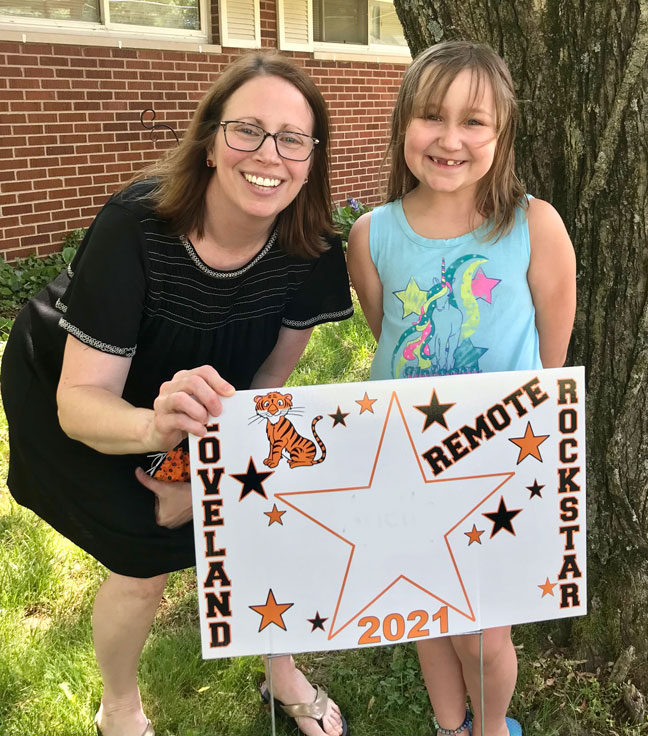
    I invited my families to drive by my home in Loveland every month of this past school year so that we could say “hi” in person. I usually had a small treat for them, and I collected a lot of notes, cards, and flowers through the windows of their cars. Those drive-thrus proved to be one of the highlights of our school year together. A few even left me in tears afterward as I realized how awesome we all had made a difficult situation. To be honest, it was a great relief and extra rewarding to find that we could still have such a strong, supportive, and caring learning community in the midst of a pandemic while doing remote school from home. We celebrated birthdays, holidays, and milestones together such as the 50th and 100th days of school. During the Spring we celebrated being reunited with family members and friends as vaccines became available. And on a daily basis, we celebrated each other’s reading, writing, and goals scored over the weekend at soccer. And of course, lost teeth and new haircuts.

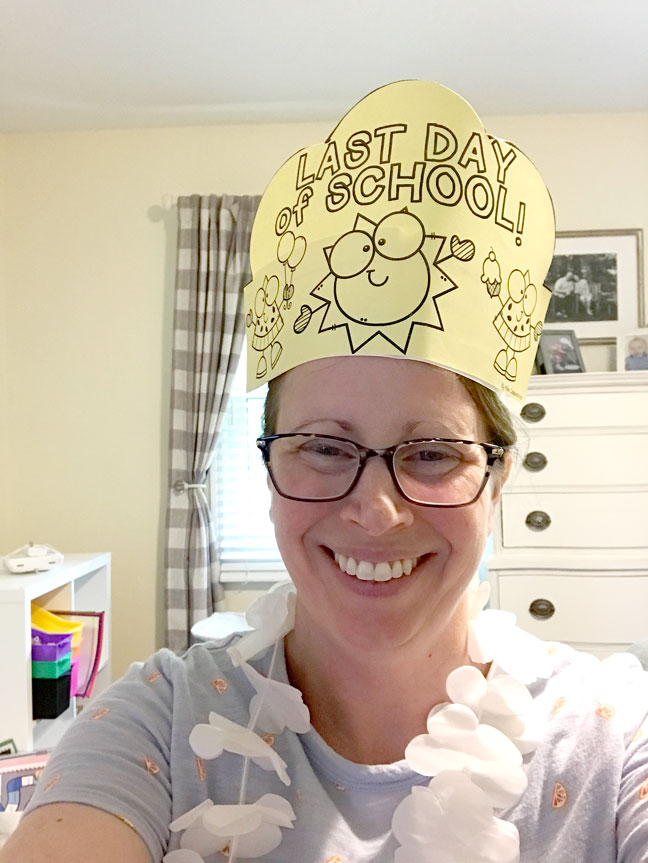
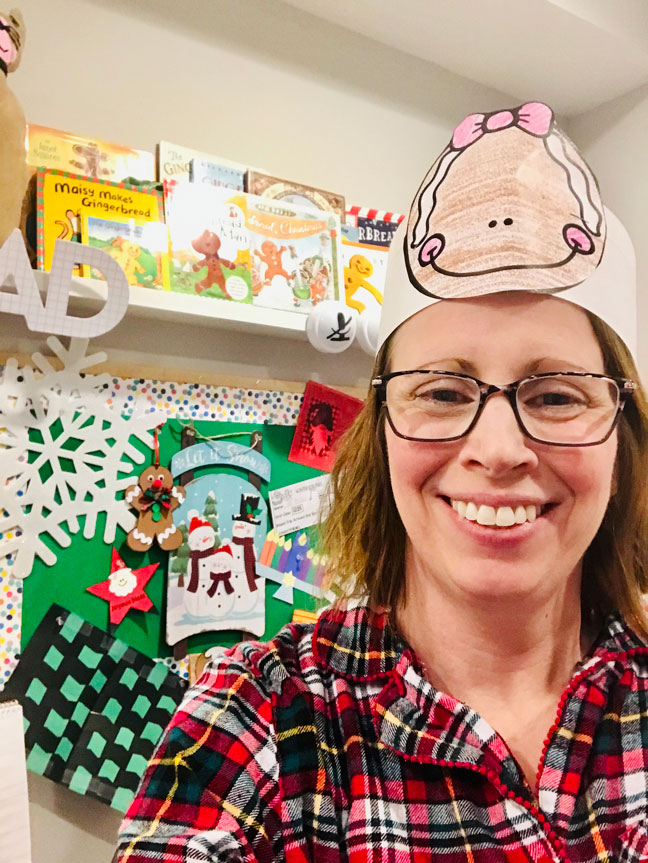
    As I look back on our school year, I can safely say that we all had a wonderful school experience. Somewhere in between bad wifi connections and reminding them to “unmute,” all of our wrinkles and rough spots were smoothed over. My hope for my remote students is that when they look back on being a kid many years from now, that some of our memories will be there for them and spark joy. Maybe they will remember our renditions of the Gingerbread Man through reader’s theater. Or maybe the puppet shows put on with their siblings as they retold a story via video. Or maybe it was the simple joy of buddy-reading with a friend in a Zoom breakout room. I know for me, when I look back on this school year, I will remember the faces that greeted me each day with a smile during this pandemic and the trust they had in me all along. 

    To My Stay at Homies: Thank you for believing in me. Thank you for believing in yourselves. Thank you for always having a smile on your face even when you didn’t want to be on a Zoom Call. Thank you for letting me into your home each day. Thank you for sharing your funny stories and jokes with me. Thank you for finding humor in something each and every day. Thank you for laughing at how silly Frog and Toad were with me. Thank you for always asking how I was doing. Thank you for being my anchor during a tough and sometimes sad time. Thank you for being you.

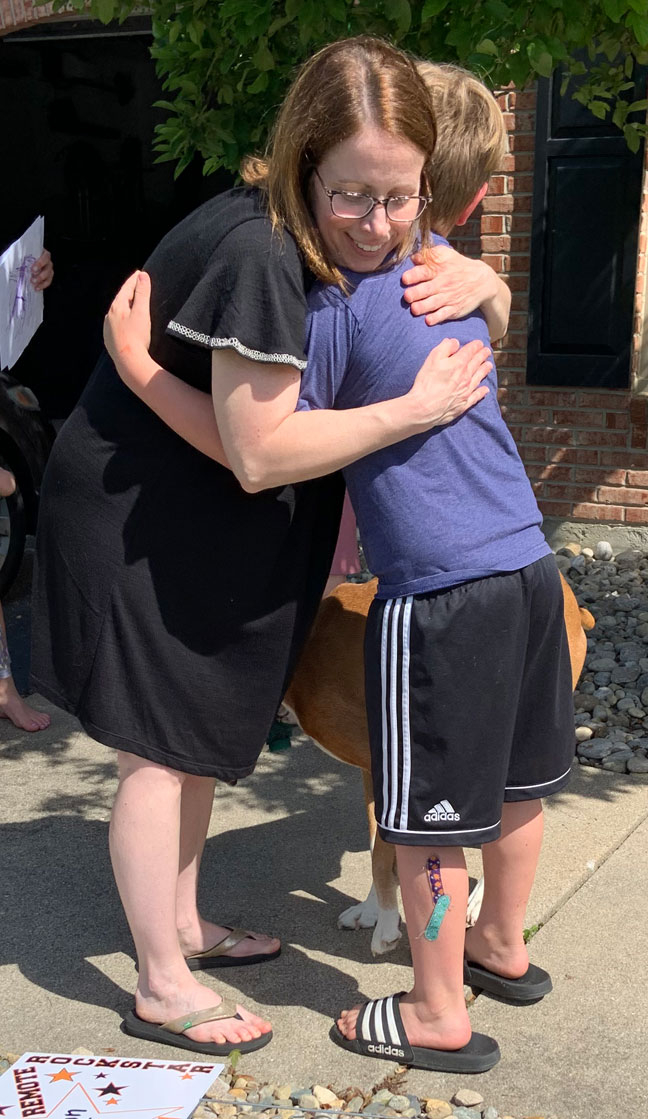
    I love all of you and I can’t wait for more hugs and to see you at LPS in August. 

    Love,

    Ms. Miller

  • DeWine reminds unvaccinated Ohioans to continue wearing masks

    DeWine reminds unvaccinated Ohioans to continue wearing masks

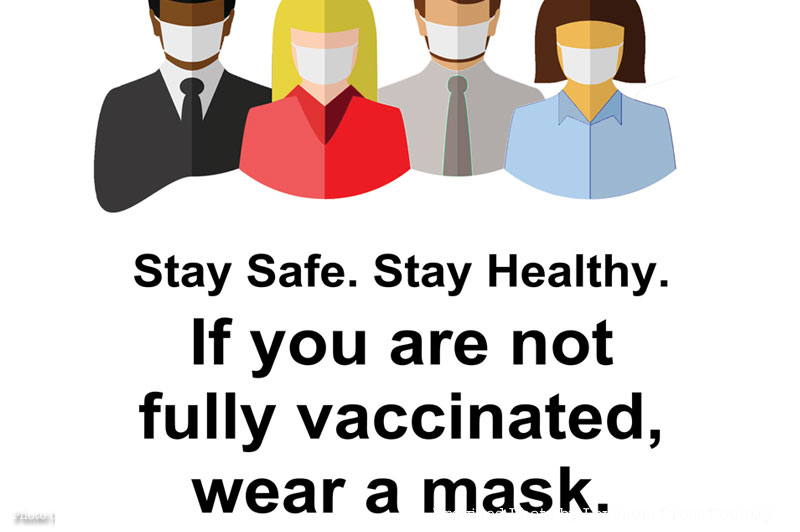
    Columbus and Loveland, Ohio – Ohio Governor Mike DeWine today reminded Ohioans of the importance of getting vaccinated against COVID-19 and for those that are not fully-vaccinated to wear masks indoors, as statewide mask mandates lift tomorrow.

    “Ohioans have done a great job during the pandemic. And, with more than 5 million Ohioans who have received at least the first dose of the COVID-19 vaccine, we are getting back to living the lives we want. However, it is important that we all still remember that there are a significant number of Ohioans who remain unvaccinated and are at-risk, including everyone under the age of 12. It’s important that those not fully vaccinated continue to wear masks indoors and follow other preventative measures to keep themselves as healthy as possible,” said Governor Mike DeWine.

    More than 5.3 million Ohioans have received their first vaccinations and 4.6 million have completed the vaccination series.

    An individual is considered fully vaccinated two weeks after their second dose of Pfizer or Moderna COVID-19 vaccines or two weeks after the single dose of the Johnson & Johnson vaccine.

    For businesses and organizations looking to update signage in their facilities, appropriate signs are available at coronavirus.ohio.gov.

    Ohioans can find the vaccination site nearest them at gettheshot.coronavirus.ohio.gov.

    American Flag Over Blue Paper Texture Background
  • Ohio House passes state budget; here’s what to know

    Ohio House passes state budget; here’s what to know

    Step closer toward a constitutional school funding model

    By Tyler Buchanan and Ohio Capital Journal

    Loveland, Ohio – Ohio took a step closer toward a constitutional school funding model with the passage Wednesday of a two-year operating budget in the Ohio House of Representatives, a sweeping bill that also proposes an across-the-board income tax cut, a broadband internet expansion plan and more spending to aid businesses struggling from the pandemic.

    The House passed a two-year, $74.4 billion budget for Fiscal Years 2022 and 2023 by a vote of 70 to 27. 

    Democrats took issue with certain portions of the budget, but its education funding reforms helped lead a dozen of them to ultimately join the Republican majority in approving the bill.

    The budget now heads to the Ohio Senate, which will negotiate its own version over the coming months. Members of both legislative chambers will eventually hash out disagreements before a final version is sent to Gov. Mike DeWine for approval this summer.

    “We are investing in Ohio’s priorities and Ohio’s future,” said Rep. Scott Oeslager, R-North Canton, who serves as the House budget chairman as he has for several previous budget cycles.

    Oeslager said the ongoing pandemic has presented a wide array of challenges for Ohio, and the ongoing needs associated with the crisis are evident. He complimented House members for crafting a “balanced, responsible and truly meaningful” budget.

    This budget does not include any federal spending from the American Rescue Plan. Speaker Bob Cupp, R-Lima, said Ohio has not yet received this relief funding and a forthcoming committee would determine how best to spend it. 

    Here are budget highlights as approved by the Ohio House of Representatives.

    Education funding model overhaul

    Amesville Elementary in the Federal Hocking School District. Photo from district website. Lawmakers approved a new education funding model in the House budget passed on Wednesday.

    It has been more than 24 years since the DeRolph v. State decision was handed down by the Ohio Supreme Court, which ruled Ohio’s state funding model does not provide an equal opportunity for all students to learn and is therefore unconstitutional.

    Lawmakers were tasked with determining a more equitable, constitutional funding model — something they have failed to accomplish in the decades since.

    Cupp has led a renewed push to reform the funding system in recent years and said after Wednesday’s vote he was glad this budget achieves that goal.

    The House-approved budget includes a nearly $2 billion increase in school funding, with most districts expected to receive more funding over the next six years. (A spreadsheet showing the funding estimates for each individual district in Ohio was published by The Columbus Dispatch.)

    The Loveland City School District may receive $941,996 additional State tax dollars according to the Columbus Dispatch.

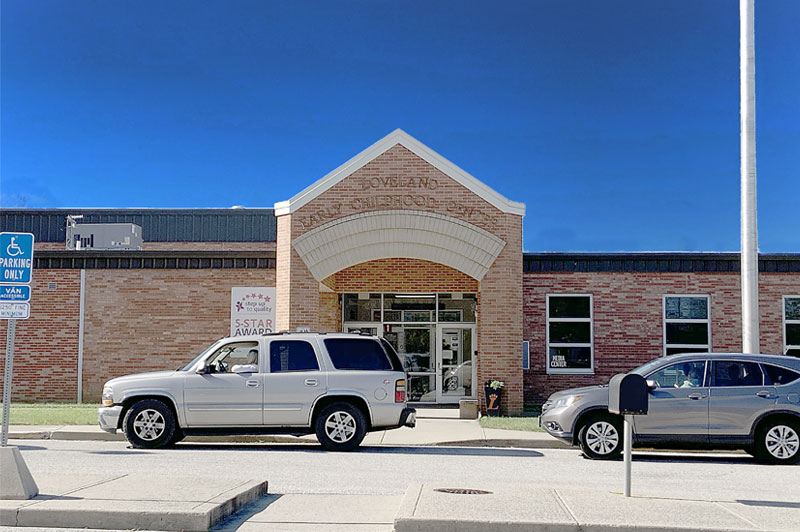
    The Loveland Early Childhood Center in Loveland, Ohio (Photo by David Miller/Loveland Magazine © 2020)

    Cupp said he did not want to speculate on potential disagreements the Senate may have with this funding plan, but hoped there would be more productive conversations between members of the two chambers on this subject.

    “We think they will agree that it is a very good plan going forward,” he said.

    Detailed Ohio Capital Journal reporting on the education reforms included in this budget is forthcoming.

    More spending for COVID-19 relief, and vacating penalties for public health violations

    The budget includes relief spending to benefit a variety of Ohio businesses.

    Millions of dollars would go toward helping entertainment venues, bars, restaurants and hotels. Additionally, there is a “New Business Relief Grant” program to specifically help those businesses that opened after Jan. 1, 2020.

    Republicans also inserted a budget provision that would vacate all public health violations incurred by Ohio businesses since March 2020. 

    A number of Ohio bars, including several on the island village of Put-In-Bay, were cited in 2020 for violating COVID-19 health orders. The House budget would expunge these violations and repay any fines levied against businesses. Photo from the Ohio Investigative Unit.

    Businesses that have faced penalties for violating public health orders, such as not enforcing mask and distancing mandates, would have their violation records expunged. Any disciplinary actions currently in progress would be halted. 

    The state would be forced to repay any fines levied and reinstate licenses revoked. The Legislative Service Commission (LSC) estimates this would amount to $100,000 in fines repaid to health order offenders.

    This provision mirrors a separate bill introduced by Republicans earlier this year

    Cupp defended this provision by saying Ohio businesses failed to abide by public health orders because the virus was an “unknown” phenomenon in 2020.

    “The restrictions were new, they were different, and a lot of businesses sort of got caught up in this administrative web. As we work our way out of the pandemic, we think it’s important to take another look at (the violations) and to give them some sort of the benefit of the doubt…,” Cupp said.

    Tax cuts

    Another main portion of the bill involves income tax cuts and deductions.

    There is a 2% personal income tax cut for all earners, which LSC estimates would save taxpayers around $380 million in the coming two years. 

    “Once more, the wealthy and big businesses will fare far better than working families under this budget,” said Rep. Michael Skindell, D-Lakewood, who unsuccessfully proposed taking out the tax cut and diverting it to other priorities.

    He cited data from the Institute on Taxation & Economic Policy, which was promoted by the think tank Policy Matters Ohio, which shows the tax cut would primarily benefit the richest Ohioans.

    Those earning under $40,000 per year would receive virtually no benefit from this tax cut, the study found. Ohioans earning between $40,000-61,000 per year would see their taxes cut by an average of $7 over the course of an entire year.

    The top 1% of Ohio earners, those making more than $490,000 per year, would comparatively see their taxes cut by an average of $612 each year.

    Skindell said the tax cut shows a “huge disparity and continues the tax shift in this state.”

    Separately, the House budget institutes an income tax deduction on capital gains earnings for Ohio-based “venture capital operating companies.” Such investors could deduct all of their earnings from investments in Ohio businesses and 50% of earnings from investments in businesses elsewhere.

    LSC estimated this provision may cost the state tens of millions of dollars per year in income tax revenue lost.

    Broadband internet expansion

    The House budget includes $190 million in funding toward new broadband internet expansion projects. (Photo by Leonardo Fernandez Viloria/Getty Images).

    Ohio lawmakers have worked toward a bipartisan effort this year of expanding broadband internet access in the state.

    With several bills already progressing toward that end, lawmakers opted to include the proposed “Ohio Residential Broadband Expansion Grant Program” in this budget.

    The budget allocates $190 million over the next two years toward grants to pay for new broadband expansion infrastructure projects.

    Other pieces of the budget

    Here are some other noteworthy provisions from the budget bill:

    • The governor had proposed changing antiquated language in Ohio law to clearly state all couples can adopt children (LGBTQ couples are legally allowed to in Ohio). The governor suggested changing the phrase “husband and wife” to read “legally married couple,” but Republican lawmakers took out this change to leave the original language in place.
    • The budget allocates millions of dollars for firefighting equipment and training, along with millions more for a law enforcement training program.
    • The budget provides $25,000 to Ohio domestic violence groups to give clients travel vouchers, gas cards and ridesharing credits.
    • Millions of dollars will go toward the Foundation for Appalachian Ohio, as well as money for workforce development around the state and in Appalachian communities.
    • The budget includes greater investments for maternal/infant health programs.

    The budget does not include several major proposals from the governor, including gun safety reforms and a $50 million public relations campaign for Ohio.

  • Loveland income tax deadline now May 17

    Loveland income tax deadline now May 17

    Loveland, Ohio – The Ohio Tax Commissioner has recently extended the State income tax filing deadline from April 15, 2021, to Monday, May 17, 2021, following a similar change made by the IRS and Treasury Department. This means that the deadline for filing with cities such as Loveland has also changed.

    Loveland Fiance Director Mark Medlar – Photo City of Loveland

    Mark Medlar, the Loveland Fiance Director told Loveland Magazine that the income tax filing deadlines for City are set by the Ohio Revised Code and can only be adjusted by the State of Ohio Tax Commissioner. This change automatically applies to cities like Loveland regarding 2020 taxes. Medlar said, “It is important to remember that this does not apply to taxes related to 2021 earnings. If you are required to make quarterly estimated tax payments for 2021, you will need to make those payments as scheduled.”

    IRS extends Federal filing for individuals until May 17

    The Treasury Department and Internal Revenue Service have announced that the federal income tax filing due date for individuals for the 2020 tax year will be automatically extended from April 15, 2021, to May 17, 2021. The IRS will be providing formal guidance in the coming days.

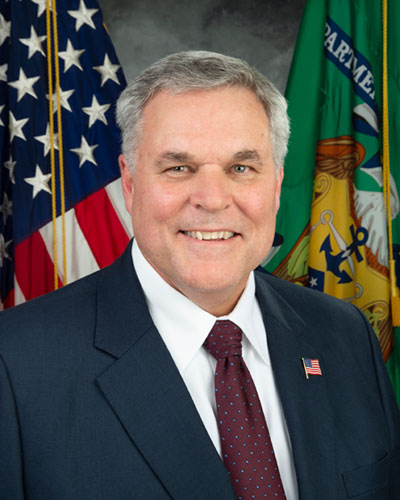
    IRS Commissioner Chuck Rettig – Photo by IRS

    “This continues to be a tough time for many people, and the IRS wants to continue to do everything possible to help taxpayers navigate the unusual circumstances related to the pandemic, while also working on important tax administration responsibilities,” said IRS Commissioner Chuck Rettig. “Even with the new deadline, we urge taxpayers to consider filing as soon as possible, especially those who are owed refunds. Filing electronically with direct deposit is the quickest way to get refunds, and it can help some taxpayers more quickly receive any remaining stimulus payments they may be entitled to.”

    Individual taxpayers can also postpone federal income tax payments for the 2020 tax year due on April 15, 2021, to May 17, 2021, without penalties and interest, regardless of the amount owed. This postponement applies to individual taxpayers, including individuals who pay self-employment tax. Penalties, interest, and additions to tax will begin to accrue on any remaining unpaid balances as of May 17, 2021. Individual taxpayers will automatically avoid interest and penalties on the taxes paid by May 17.

    Individual taxpayers do not need to file any forms or call the IRS to qualify for this automatic federal tax filing and payment relief. Individual taxpayers who need additional time to file beyond the May 17 deadline can request a filing extension until Oct. 15 by filing Form 4868 through their tax professional, tax software or using the Free Filelink on IRS.gov. Filing Form 4868 gives taxpayers until October 15 to file their 2020 tax return but does not grant an extension of time to pay taxes due. Taxpayers should pay their federal income tax due by May 17, 2021, to avoid interest and penalties.

    The IRS urges taxpayers who are due a refund to file as soon as possible. Most tax refunds associated with e-filed returns are issued within 21 days.

    Estimated tax payments

    This relief does not apply to estimated tax payments that are due on April 15, 2021. These payments are still due on April 15. Taxes must be paid as taxpayers earn or receive income during the year, either through withholding or estimated tax payments. In general, estimated tax payments are made quarterly to the IRS by people whose income isn’t subject to income tax withholding, including self-employment income, interest, dividends, alimony or rental income. Most taxpayers automatically have their taxes withheld from their paychecks and submitted to the IRS by their employer.

  • LHS’s Coach Parker is Stronger Than Ever…and so are his Tigers!

    LHS’s Coach Parker is Stronger Than Ever…and so are his Tigers!

    by Cassie Mattia

    Loveland, Ohio – The LHS Women’s Basketball Team is still doing it #ourway while keeping their head coach #parkerstrong!

    The 2020-2021 LHS Women’s Basketball season was quite the eventful one! The Tigers not only captured the ECC title for the second year in a row during a chaotic Pandemic but were also able to successfully motivate their coach, Darnell Parker as he battled cancer and dealt with the loss of his father giving him the strength to not only beat Cancer but also win the ECC Coach of the Year title for the second year in a row.

    Here at Loveland Magazine, we decided it would be a great idea to catch up with Coach Darnell Parker via Zoom to see just how he felt about the 2020-2021 basketball season, the COVID-19 Pandemic, and his personal journey with cancer.

    So without further ado, Loveland Magazine TV brings to you our loyal readers, “One-On-One Zoom Style With Darnell Parker!” Believe me, you don’t want to miss this inspiring interview!

    Click below to view the Zoom interview now!

    Thank you to team photographer Gayle Rothmeeler for allowing the use of her wonderful photos during this Zoom interview!

  • YouTube censors Ohio House hearing video for COVID-19 misinformation

    YouTube censors Ohio House hearing video for COVID-19 misinformation

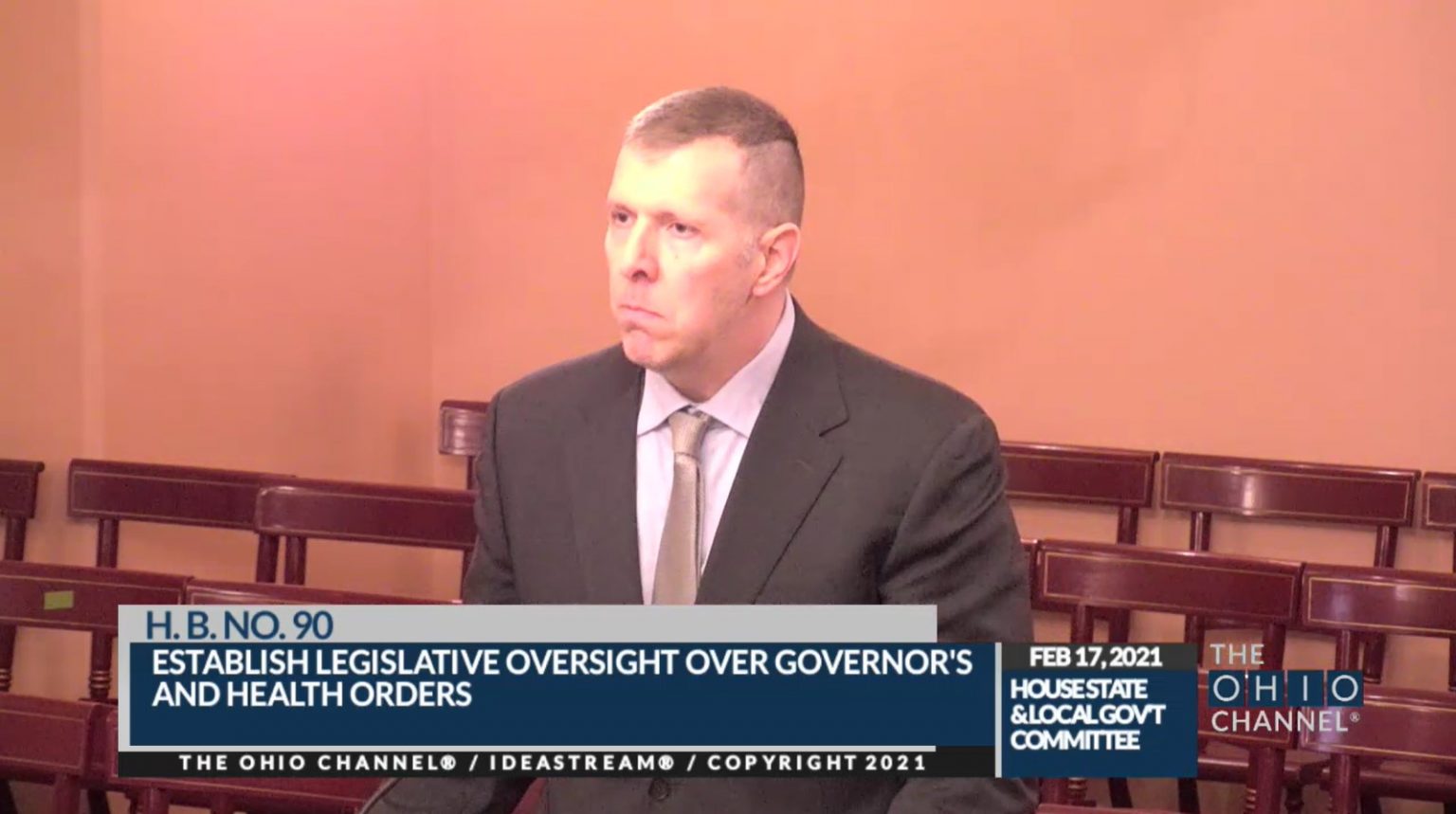
    Tom Renz speaks to the House State and Local government Committee Feb. 17. Source: Ohio Channel.

    By Jake Zuckerman and Ohio Capital Journal

    Columbus, Ohio – The opening testimony Wednesday in support of a legislative effort to allow lawmakers to vote down public health orders went far enough off the rails for YouTube to remove footage of the speaker.

    Tom Renz, an attorney for Ohio Stands Up, filed a lawsuit in federal court in September seeking to overturn any and all health orders related to the COVID-19 pandemic. A federal judge last week deemed the arguments nearly “incomprehensible” and ordered Renz to show cause for why he shouldn’t dismiss the suit for procedural errors.

    The Ohio Advocates for Medical Freedom, an anti-vaccine activism group aligned with Renz, posted to YouTube footage of Renz’s 35-minute, oftentimes rambling testimony to the House State and Local Government Committee.

    The video was soon taken down for violating YouTube’s terms of service.

    “We have clear Community Guidelines that govern what videos may stay on YouTube, which we enforce consistently, regardless of speaker,” said Ivy Choi, a spokeswoman for Google, which owns YouTube.

    “We removed this video in accordance with our COVID-19 misinformation policy, which prohibits content that claims a certain age group cannot transmit the virus. We do allow material with sufficient educational, documentary, scientific or artistic (EDSA) value.”

    The policy states videos cannot spread medical misinformation that contradicts local health authorities’ or the World Health Organization’s medical information about COVID-19.

    In his testimony, Renz baselessly claimed no Ohioans under the age of 19 have died of COVID-19. Data from the Ohio Department of Health shows 10 children in the age group have died of the disease during the pandemic.

    Similarly, Renz said children can neither contract nor spread COVID-19. He even claimed the CDC says this as well, which is untrue. CDC guidance states children can contract and spread the coronavirus.

    While it’s unclear which specific COVID-19 misinformation from Renz sparked YouTube’s decision, there’s a lot to choose from.

    Renz’s testimony was a firehose of COVID-19 conspiracy theorizing: He said unspecified entities “provide funding for people to find a COVID-19 death;” the ODH “whitewashes” its coronavirus data; that PCR testing, which public health officials consider to be a premier diagnostic, is “garbage” or “absolutely useless.”

    He claimed the lockdown orders of the spring to be “the most drastic curtailment of rights ever taken in American history.” The statement was made without acknowledgement to the enslavement of Black Americans, the mass detention of Japanese Americans to internment camps during World War II, the forced relocation of Native Americans, or any number of national atrocities through American history.
    While YouTube removed the footage, Ohio Republican lawmakers praised Renz for the testimony.

    Chairman Scott Wiggam, who has falsely proclaimed that Donald Trump won the 2020 presidential election, praised Renz for bringing “the other side of the data” to the table.

    Rep. Diane Grendell, who without evidence accused ODH of publishing “corrupted” data to a panel of state senators in November, also praised Renz.

    Footage of the hearing is still publicly available on the Ohio Channel, and OAMF has since re-uploaded it to Rumble, which has looser content guidelines.

    Renz made the statement supporting House Bill 90, which would allow lawmakers to vote down public health orders related to the pandemic. A similar version of the proposal passed the Senate earlier this week.

    The lawsuit against ODH was Renz first filing in federal court after passing the bar on his fifth attempt, according to records from the Ohio Supreme Court.

    His “about me” page for his website claims lists no prior legal experience besides serving as a clerk on the Indian Supreme Court. However, in a prior interview, he said he did not remember when he served on the court and said he did not speak Hindi.

    Renz declined to answer questions about his testimony.”
    “This should not be right and left and we should not be fighting over facts,” Renz told lawmakers. “The question I would ask to the people who are saying that I’m incorrect or lying, is who are you working for and how much are you getting paid? Because inevitably, I’m finding they typically are working for someone or getting paid somewhere.”
  • ‘Trust issues’ prompt nursing home workers to decline COVID-19 vaccine, union says

    ‘Trust issues’ prompt nursing home workers to decline COVID-19 vaccine, union says

    By Jake Zuckerman and Ohio Capital Journal

    Nursing home workers are passing on their chance at early access to the COVID-19 vaccine, officials say, blowing a crosswind against a scarce supply of doses and a pandemic in a tailspin.

    Gov. Mike DeWine first drew attention to the issue Wednesday, claiming during a televised press briefing that roughly 60% of staffers who were offered the vaccine declined it.

    “I think in this case, [DeWine] is on target,” said Pete Van Runkle, executive director of an industry association representing Ohio’s long term care facilities.

    “I talk to a lot of members on a regular basis. They are reporting a pretty low uptake among staff.”

    Patrick Schwartz

    Patrick Schwartz, a spokesman for Leading Age Ohio, an elder advocacy group, said he’s hearing mixed reports of some providers finding that 90% of staff chose to take the vaccine while others are “well below 50%.”

    He attributed the shortfalls to misinformation and fear surrounding the potential for an adverse reaction to the vaccine.

    “Many staff are simply ‘not yet ready,’ which will hopefully change as they see more and more colleagues vaccinated without side effects and confidence continues to build,” he said.

    “By contrast, an overwhelming majority of residents seem willing to accept the vaccine, with many coming from the generation that saw polio and other deadly diseases wiped out by life-saving vaccines.”

    The local Service Employees International Union surveyed its members on the issue, it said in a statement Monday.

    The responses, according to SEIU 1199 President Becky Williams, indicate a trust problem between an exhausted, underpaid, underappreciated, and in many cases already-infected staff and health authorities.

    She said this is a “substantial issue” that’s bigger than just the union and requires outreach and education from the state.

    “Workers commented that the vaccine appeared rushed and unproven without enough data to show that it would be effective,” she said.

    “Some workers are also concerned that the vaccine could cause fertility issues among women who may want to have a child. There are trust issues among frontline health care workers — some of which preceded the pandemic. These trust issues continue after so many nursing home workers have been on the frontlines of the pandemic without hazard pay and support such as needed personal protective equipment.”

    Several news outlets have debunked this notion of ‘fertility issues’ related to the vaccine. A quick scroll through the right Facebook group can deluge visitors with this and similar pieces of misinformation relating to the vaccine.

    The Ohio Capital Journal called 13 state long-term care facilities Monday, who have each reported at least 100 COVID-19 cases among their residents, to discuss vaccination among their staffs. No administrators agreed to an interview.

    Two vaccines (one from Moderna and one jointly from Pfizer and BioNTech) are currently approved for emergency use against COVID-19. They are both two-dose vaccines, taken several weeks apart.

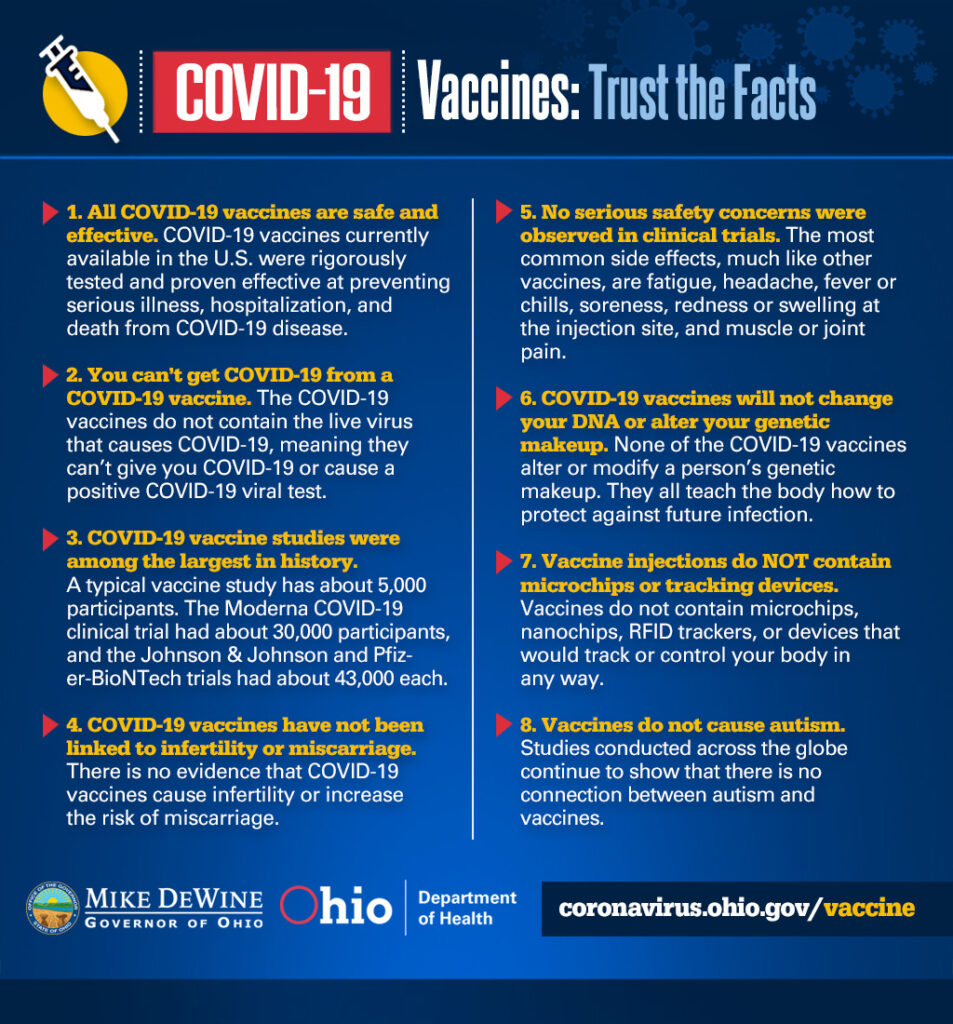
    Company data reviewed by the Food and Drug Administration shows both vaccines are about 95% effective preventing symptoms of COVID-19. While side effects (sometimes more intense than a standard flu vaccine) have been reported with both products, none of the vaccine trials have reported any serious safety concerns, according to information from Johns Hopkins University.

    Before coming to market, both vaccines underwent large scale clinical trials over the course of months. They are now under review via continuous monitoring for problems and side effects from the FDA and the CDC.

    The vaccine hesitancy comes as COVID-19 has infected 727,000 Ohioans, put about 39,000 in the hospital, and killed at least 9,143 since March.

    At least 4,856 of those deaths occurred among residents of Ohio’s long-term care facilities.

    Nationally, more than 353,000 Americans have died of COVID-19 and nearly 21 million have been infected.

    Tory Harper Hogan, PhD

    There are several theories as to why nursing home workers would rebuff a vaccine dose, according to Tory Hogan, an Ohio State University professor who researches nursing homes and infection control.

    She said some probably just don’t trust health authority; some have “been in the trenches” of the pandemic for a year now, prompting them to shrug off the unknown risk of vaccine for the better-known risk of infection; some probably just don’t want to be the guinea pigs.

    “There has been so much misinformation about everything in this process,” she said.

    Wood County Health Commissioner Ben Robison said he’s detected some vaccine hesitancy and refusal across all industries. However, some who deny at first are likely to come around.

    “Anecdotally, we’ve heard among some of the populations we’re reaching with our vaccine, some have initially said no and then later said yes,” he said.

    Some employers, especially in the health care industry, mandate the flu vaccine and other immunization. However, Van Runkle said the industry is already dealing with a widespread staffing shortage, only worsened by the pandemic.

    He said most of Ohio’s nursing homes do not even mandate the flu vaccine. Mandating a COVID-19 vaccine would worsen staffing problems.

    “We don’t need another reason for people not to work in our facilities,” he said.

    A vaccine mandate would backfire

    Hogan agreed that a vaccine mandate would backfire, and Williams, from SEIU, said education and outreach should drive universal vaccination.

    The Ohio Department of Health has shipped 341,100 Moderna first-doses, as well as 9,750 Pfizer first-doses plus another 9,750 Pfizer second-doses, according to ODH spokeswoman Melanie Amato. Only about 162,942 Ohioans have started the vaccination process, which is prioritizing health care workers, first responders and nursing home staff and residents.

    ODH said it is not actively tracking vaccine declination rates. CVS Health, a company administering the doses in state long term care facilities, isn’t either.

    “We do not have visibility to how many staff members at a facility decline to be vaccinated,” said CVS Health Spokesman Charlie Rice-Minoso.

    “While we aren’t provided with full staff rosters, based on feedback from our teams in the field we’re seeing more vaccine hesitancy among staff when compared with residents.”

    Walgreens, another company administering the vaccines, did not respond to inquiries.

    Looking at the bigger picture, Hogan said governments from the federal to local level need to do a better job understanding why some are declining vaccination. Similarly, she said they need to emphasize, as they did during the polio years, that vaccination is the patriotic thing for Americans to do.

    “It takes consistently pushing the right message, the correct and accurate information,” she said. “That takes money, a federal response, all levels. We’re struggling with that a lot.”