Tag: pandemic

  • High risk conditions for COVID-19 span far and wide in Ohio

    High risk conditions for COVID-19 span far and wide in Ohio

    Along with diseases known to increase risk, the CDC lists 12 other conditions that “might” increase the risk of people who have them. These include other massively common conditions like hypertension, liver disease, pregnancy, smoking and others.

    By Jake Zuckerman and Ohio Capital Journal Edited by Loveland Magazine

    cccccc

    The underlying health conditions that lay a path for severe COVID-19 complications are widespread in Ohio, potentially affecting as much as half the population, according to experts, state data and government research.  

    Take obesity: Ohio Department of Health 2017 survey data estimates that 34% of Ohioans are obese. Similarly, more than 74,000 Ohioans were diagnosed with cancer that same year.

    Dr. Peter Pronovost (Photo by University Hospitals)

    “The statistics are about 60% of the public has one or more chronic diseases,” said Dr. Peter Pronovost, a University Hospitals physician. “Four in 10 have two or more diseases.”

    The ubiquity of chronic disease in Ohio complicates any policy response when there’s no easy-to-draw line between people at low-risk for COVID-19 and those at higher risk levels.

    It also illuminates the reality of a “herd immunity” strategy, as reportedly offered by an influential adviser to President Donald Trump. This would entail allowing the virus to run its course through the population unimpeded, purportedly allowing healthier people to develop antibodies at a large enough volume to break down chains of transmission.

    The CDC lists eight diseases known to increase risk of severe illness from COVID-19. The list, coupled with data from the Ohio Annual Cancer Report, Behavioral Risk Factor Surveillance System annual report from 2018, and other state and federal sources, shows how deep chronic disease runs in the Buckeye state.

    • Cancer: 74,000 cases diagnosed in 2017
    • Chronic kidney disease: About 15% of U.S. adults have chronic kidney disease, per the CDC
    • COPD (chronic obstructive pulmonary disease): 8.3% of Ohio adults have COPD
    • Immunocompromised state from solid organ transplant: 1,916 Ohioans received organ transplants in 2019
    • Obesity: 34% of Ohio adults are obese. An additional 34% are overweight
    • Serious heart conditions: Heart disease is the leading cause of death in Ohio
    • Sickle cell disease: Not tracked population wide, but 181 newborns in 2019 tested for the disease, and another 3,444 newborns are carriers
    • Type 2 diabetes: 11.3% of Ohio adults are diabetic — about 1 million people

    According to recent CDC research analyzing survey data from more than 3,000 U.S. counties, nearly half the population had at least one condition placing them at high risk for COVID-19 complications.

    In rural counties, it’s even higher.  

    Dr. Nirav Vakharia (Photo by the Cleveland Clinic)

    “When we go beyond age as a risk factor … if we’re just thinking about these chronic diseases, they’re so prevalent, it’s hard to isolate a young, healthy cohort,” said Dr. Nirav Vakharia, a physician from the Cleveland Clinic.

    Health care groups in Ohio are undertaking different efforts to help residents with some of these conditions to stay at home.

    LifeCare Alliance, an in-home health care agency, has seen a spike in the number of meals it has delivered to the homes of its diabetic patients since the pandemic began.

    “If you have diabetes, the chances of you having a mild case of the coronavirus is much less — you’re gonna have a harder case, because your immune system just can’t fight it off,” said CEO Charles Gehring. “Patients have been scared to death by coronavirus.”

    Similarly, Pronovost, the chief clinical transformation officer with University Hospitals, said the health care network recently accelerated its efforts to provide proactive care for people with chronic diseases.

    He said staff is reaching out to patients to ensure they’re properly managing and controlling their diseases, like keeping insulin or blood pressure at healthy levels.

    “The idea is we want to make sure chronic disease people are doing all they can to avoid being hospitalized and avoid needing to go to the [emergency room],” he said.

    Early data shows the network reduced hospital admissions of certain chronic disease patients by 28%, and emergency visits by 79%, he said. 

    “The idea is we want to make sure chronic disease people are doing all they can to avoid being hospitalized and avoid needing to go to the [emergency room],” he said.

    Along with diseases known to increase risk, the CDC lists 12 conditions that “might” increase the risk of people who have them. These include other massively common conditions like hypertension, liver disease, pregnancy, smoking and others.

    As of Wednesday, COVID-19 has killed 4,176 Ohioans. The virus has infected nearly 120,000 state residents and put more than 13,500 in the hospital.

    Jake ZuckermanJake Zuckerman is a statehouse reporter. He spent three years chronicling the West Virginia Legislature for The Charleston Gazette-Mail after covering cops and courts for The Northern Virginia Daily.
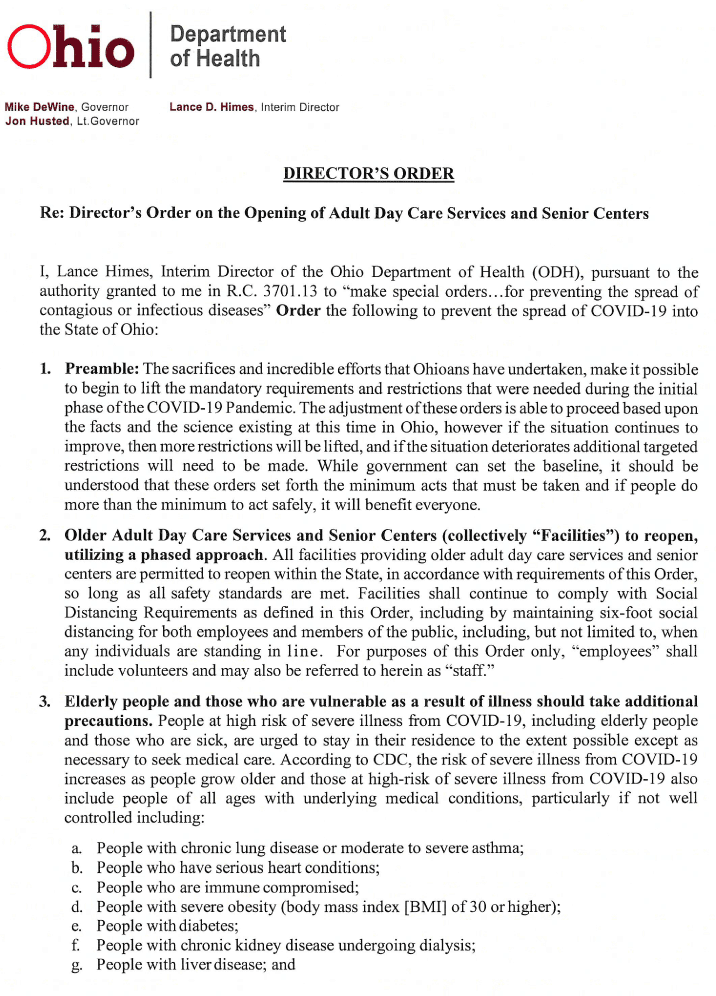
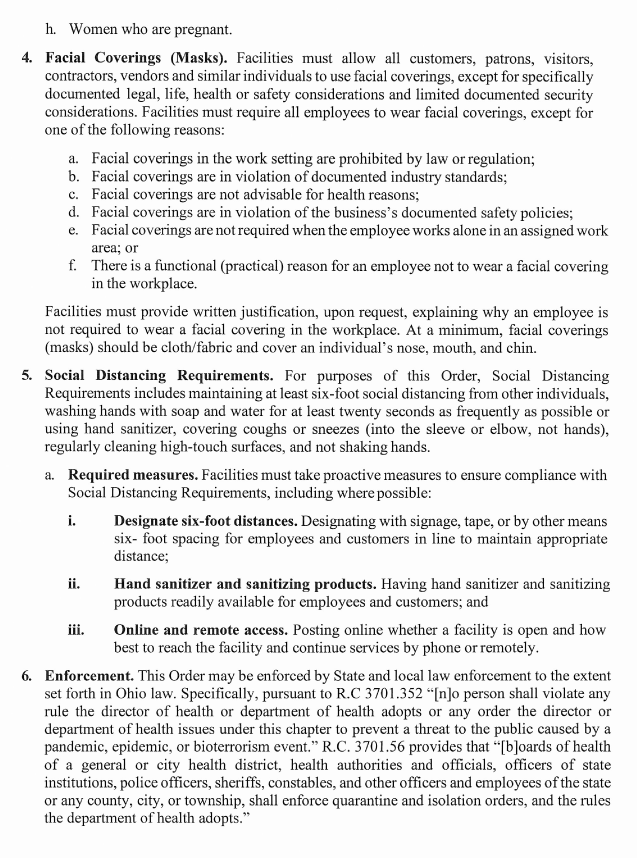
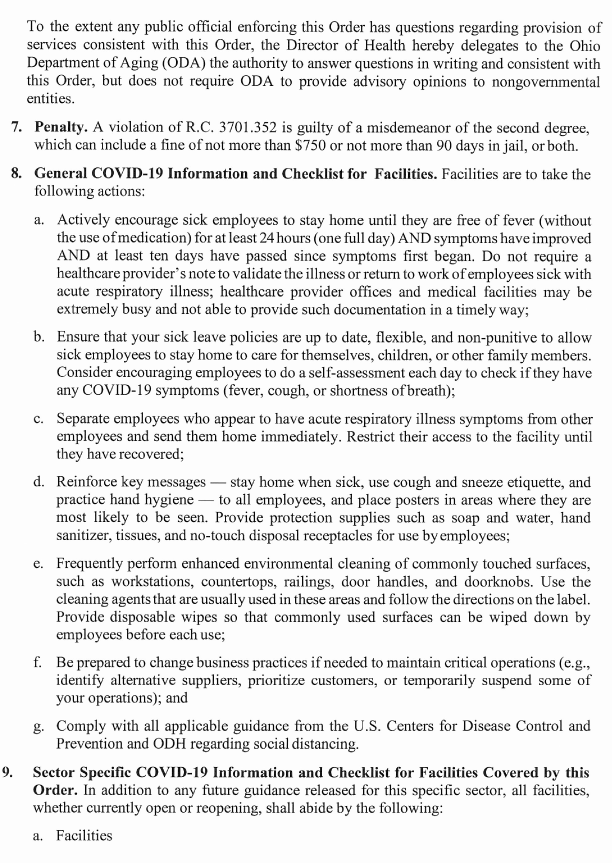
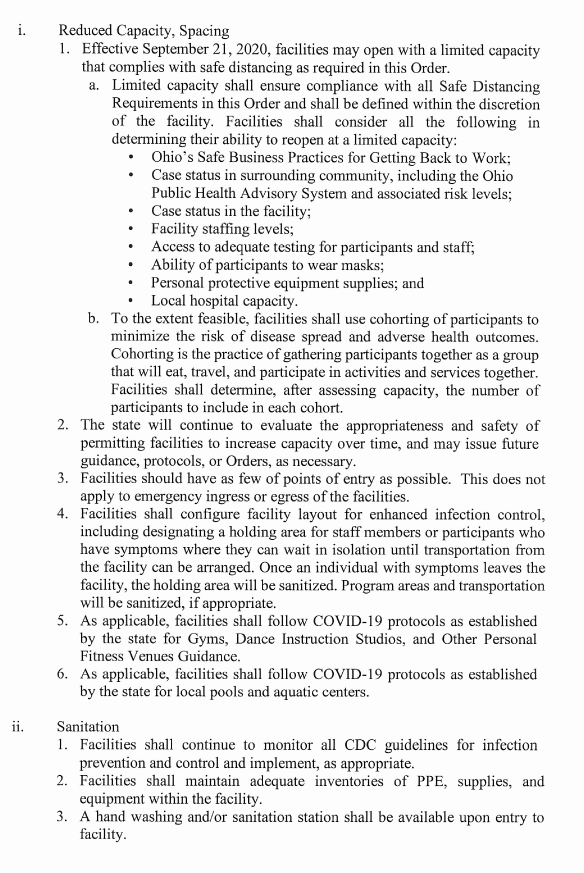
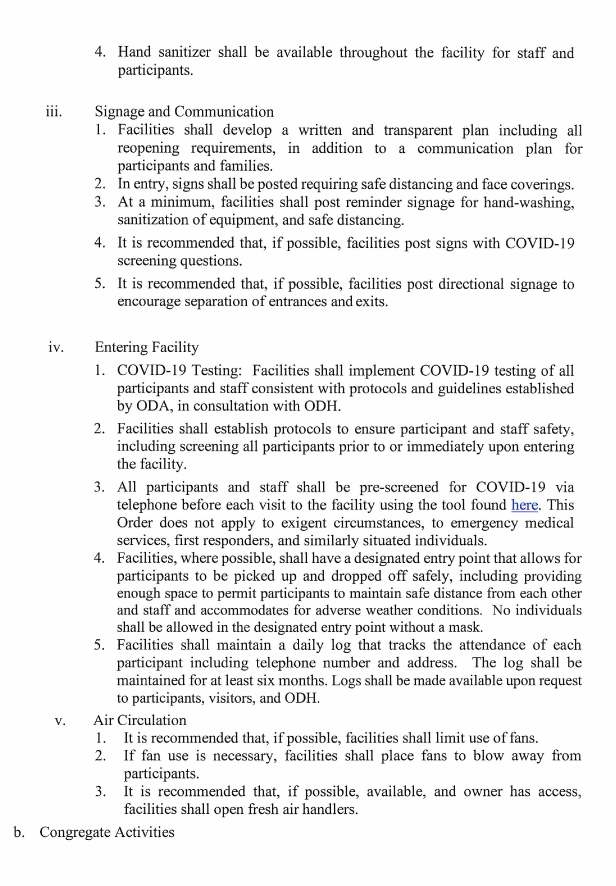
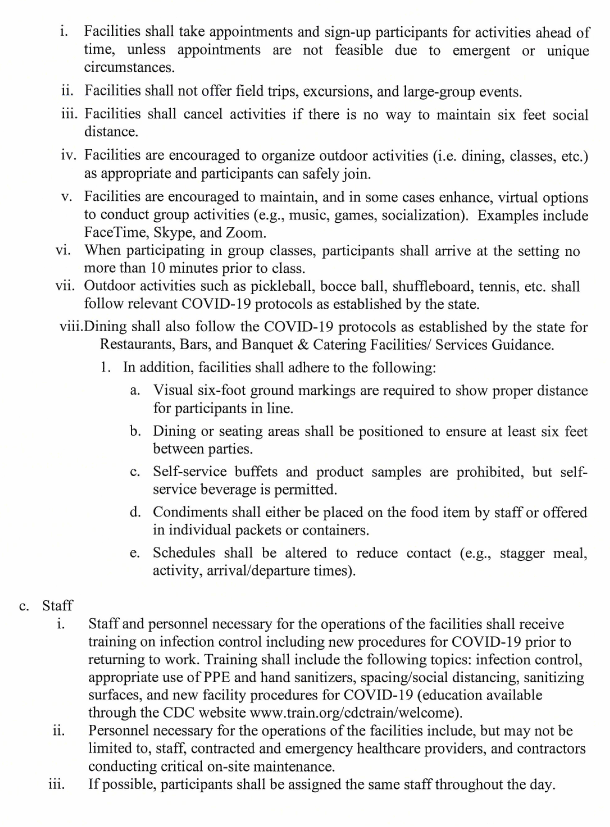
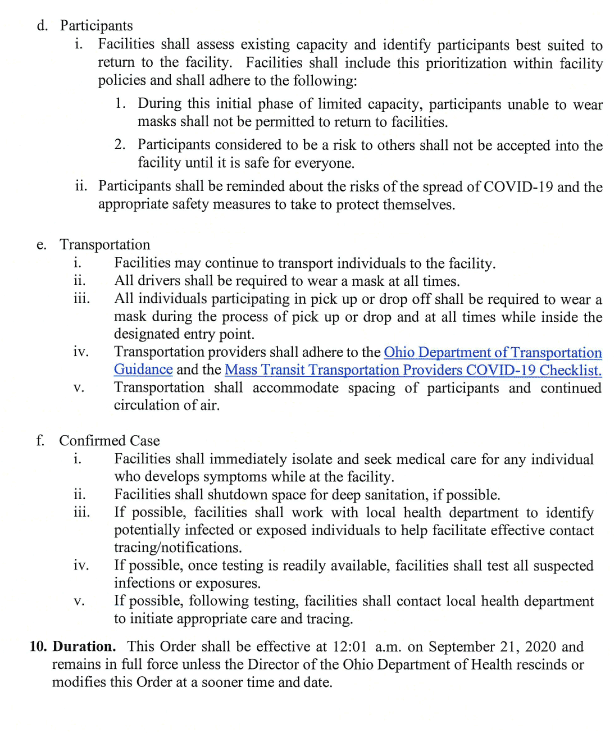
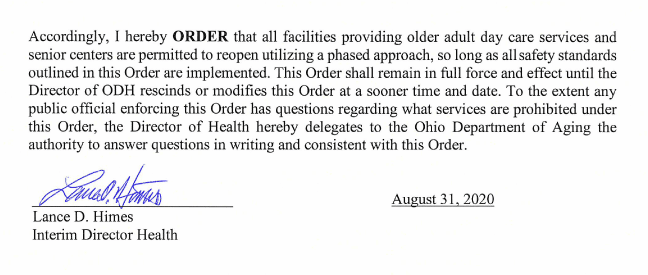
  • Order on the opening of adult day care services and senior centers signed by Ohio Health Director

    Order on the opening of adult day care services and senior centers signed by Ohio Health Director

    Columbus, Ohio – Ohio Governor Mike DeWine announced that the following order has been signed by Ohio Department of Health Interim Director Lance Himes:

  • Reopening begins for Ohio’s colleges: Here’s how it looks

    Reopening begins for Ohio’s colleges: Here’s how it looks

    Susan Tebben

    By Susan Tebben – The Ohio Capital Journal

    Some of Ohio’s colleges and universities have begun moving students in, but the navigation of a school year amid a pandemic is still a balancing act.

    For Miami University, classes began this week, with all undergraduate courses online or remote. The plan is to keep it that way until at least Sept. 21, according to the plan posted to the school’s website. 

    “When we began planning last spring, we had hoped that the COVID-19 pandemic would be in significant decline before classes were scheduled to begin,” Miami president Greg Crawford told students. “Instead, cases are rising in many states. With 40% of our Oxford students coming from outside Ohio, we’ve been monitoring the situation closely.”

    Those that are on campus are required to wear masks, and as students come back, they can be reported to the Office of Community Standards if they repeatedly refuse to comply with an instructor’s direction to use a mask or face covering.

    Mask requirements are the norm among Ohio’s public colleges and universities, as are 14-day quarantines for students coming from states considered COVID-19 hotspots. 

    Also the norm this school year are phased reopenings, like those at The Ohio State University, Ohio University, Kent State University, Shawnee State University, Cleveland State University, and the University of Cincinnati.

    The first move-in dates for UC, Aug. 14 and 15 were considered “drop-off only,” meaning students could bring their stuff to campus, but then had to return home until the 16th. 

    Another regular part of public colleges’ and universities’ schedules is a return to at least some form of in-person class instruction that ends after Thanksgiving break. The last two weeks, including final exams, will be taken remotely at OSU, Central State University, UC, KSU and Wright State University, among others.

    Kent State and the University of Toledo have eliminated their fall break to allow students to receive a full semester despite adjusted opening dates.

    Toledo said they adjusted their Fall semester “based on the possibility of having a second wave of COVID-19 in late fall,” taking into account CDC data on the pandemic and state recommendations for higher education.

    Bowling Green State University went so far as to cancel their Winter 2021 session and provide a $1,500 credit for the first 2,000 students who cancelled their housing assignment before the school year began this week. 

    “It is important you understand that we are HIGHLY encouraging you not to live on campus this fall,” information on the university’s COVID-19 plan page stated.

    BGSU started their staggered move-in this week for those that had no other option than to take up residence, and are set to begin classes on Aug. 31. Students there will also be online only beginning Nov. 30. 

    OU phased in their reopening by allowing certain graduates and undergraduates “in a carefully selected set of academic programs” to begin their time on campus. Most students will begin remotely on Aug. 24, but students like third-year students in the College of Health Sciences and Professions’ nursing program and juniors and seniors in the Army Reserve Officer Training Corps (ROTC) are eligible to participate in the university’s first phase of schooling. 

    Universities throughout the state sticking with in-person instruction have instituted class-size reductions, along with “hybrid-remote” forms of teaching. Central State spelled out a “cohort attendance” model in its reopening plan, which would break large classes into groups, with the cohorts attending classes on alternating days. This model goes along with a 50% reduction in class sizes, something Wright State anticipates as part of its plan as well.

    “At this time, the university conservatively estimates that one-third of classes will have in-person components while the majority of in-person classes will also deliver all content remotely to provide flexibility to students who are unable or do not feel comfortable returning to campus,” said Wright State president Susan Edwards in a letter to the university community.

    Many of Ohio’s public higher education institutions have also created pledges for students connected to prevention of coronavirus, and in some cases can spur disciplinary action if not signed. 

    Testing and contact tracing for COVID-19 are a regular part of all public school plans, though the ways in which the testing is done vary from school to school

    The spring semester plan is still to be determined for most schools. The University of Akron plans to continue hybrid online and in-person instruction into the spring, but others are still watching the success of their fall semesters to plan for the future.

    “Decisions are forthcoming,” stated the UC reopening plan.


    Susan Tebben

    Susan Tebben is an award-winning journalist with a decade of experience covering Ohio news, including courts and crime, Appalachian social issues, government, education, diversity and culture. She has worked for The Newark Advocate, The Glasgow Daily Times, The Athens Messenger, and WOUB Public Media. She has also had work featured on National Public Radio.
  • Mocha and Graham Crackers visit hospice and William (Bill) Stroup

    Mocha and Graham Crackers visit hospice and William (Bill) Stroup

    Laurie Stroup Smith

    Loveland, Ohio – William (Bill) Stroup, a resident of Loveland for 45 years, has been a patient at Hospice of Cincinnati Blue Ash since early March. Several weeks ago, he mentioned to his son that he would like to go to Belterra Park, formerly known as River Downs, to watch the horses race as he had each summer for decades.

    Family members discussed the possibility with his care team, knowing the pandemic would present additional challenges that could not be ignored. Instead of allowing him to leave the safety of the facility, the decision was made to bring the races to him.

    On August 10, Hospice staff decorated Bill’s room with horse-related banners, brightly-colored signs, and cutouts of jockey helmets.

    In addition to brightening up his room, they borrowed horse-racing DVDs from the library, purchased a Kentucky Derby t-shirt for him to wear, and brought him a sweet tea “mint julep.”

    The highlight of the day was the interaction with Mocha and Graham Crackers, two miniature horses from Cincinnati Therapeutic Riding and Horsemanship. After spending time at Bill’s window, the ponies were led through the hospice halls for the enjoyment of other patients.

    Bill and his family especially want to thank Karen Hipsher, LSW, and her team for facilitating this phenomenal experience. Hospice once again went above and beyond, taking into consideration the emotional needs of a patient in addition to the physical and spiritual needs while creating beautiful memories for everyone involved.


    Laurie Stroup Smith grew up in Loveland and graduated from Loveland High School in 1994. She writes Amish and Contemporary Romance stories.

  • LYBO Wednesday sandlot-esq pick up games: Loveland fields full of kids living America’s pastime

    LYBO Wednesday sandlot-esq pick up games: Loveland fields full of kids living America’s pastime

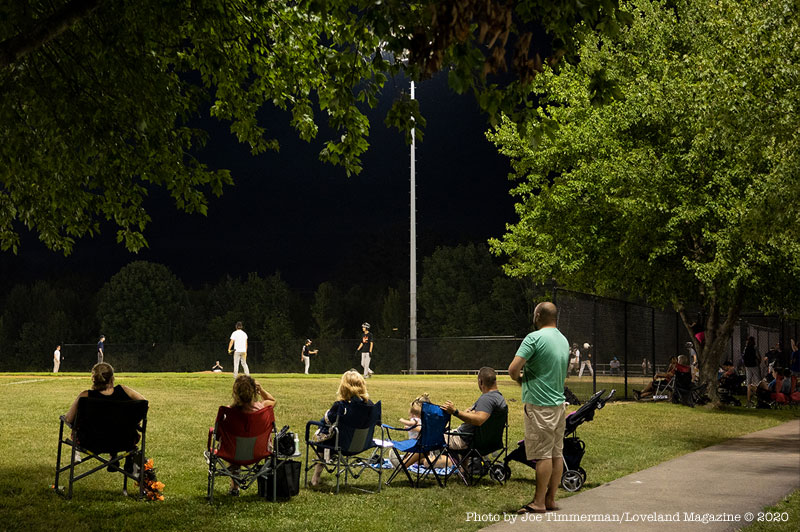
    Parents sit along the outfield to watch their kids play during a Wednesday night pick-up game at at Phillips Park in Loveland, Ohio.

    Joe Timmerman graduated from Loveland High School in 2019 and will return to his studies in photojournalism at Ohio University this month.

    By Joe Timmerman

    Loveland, Ohio – Walking up to the baseball fields at Phillips Park on Wednesday July 29, the air feels like summer again as the fields are full with kids living in America’s pastime.

    Every Wednesday night since the first week of July, as the sun sets in Loveland, Ohio, kids have been playing baseball together again. Since the COVID-19 pandemic has brought upon these unusual times of social distancing, quarantine, and the cancellation of most future gatherings — the Loveland Youth Baseball Organization came up with the idea of pick-up baseball games. 

    With youth sports becoming seemingly more and more competitive as each year goes by, it was refreshing to watch a Sandlot-esq pick up game happening in our own town.

    In conversation with Matt Kapszukiewicz, the president of LYBO, I learned that they had been throwing the idea of pick-up games around for about a year or so, and that Rob Steinman, another LYBO board member, originally came up with the idea. “We decided to launch it because these older kids had no-one else to play against… so we blended them into a t-shirt league once we got a handle on what COVID-19 meant,” Kapszukiewicz said. 

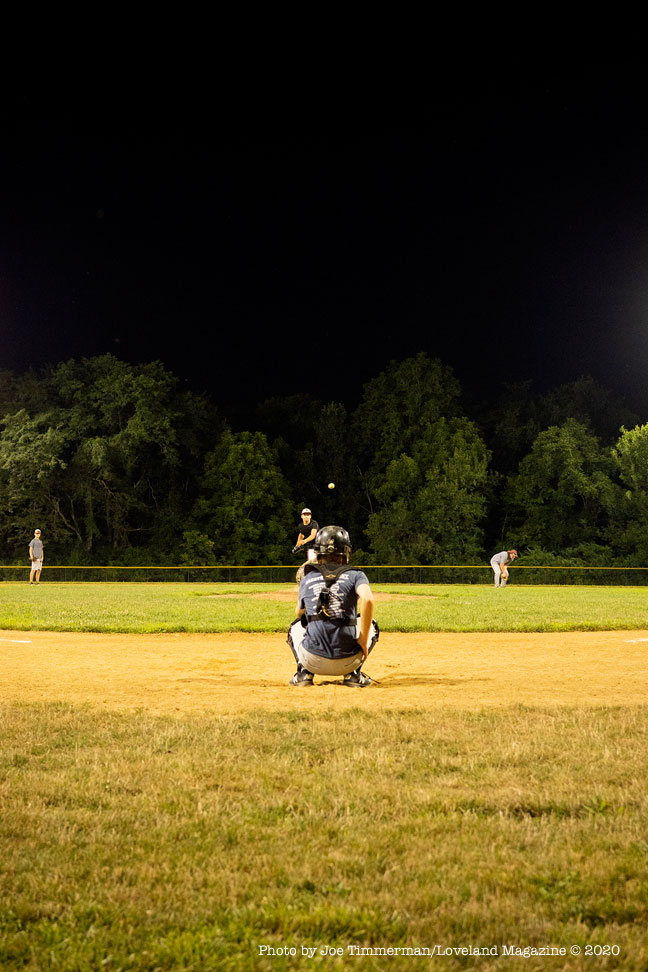
    A warm up pitch is thrown before the last inning of a pick-up game with no score on Wednesday July 29 at Phillips Park in Loveland, Ohio.

    When my dad and I made it to the third base fence line with our baseball gloves in hand to check out the night’s pick up game, there were a couple open spots in the outfield. Tom Sackett, my dad’s friend and the supervisor for the game, told us to run out and join in. Before too long, I overheard a conversation between the right fielder and the infield players. 

    “Yeah, I don’t even know… it doesn’t matter.” 

    “Hey, what’s the score?”

    “Uh, 1-0 maybe”

    “Yeah, I don’t even know… it doesn’t matter.” 

    With youth sports becoming seemingly more and more competitive as each year goes by, it was refreshing to watch this a Sandlot-esq pick up game happening in our own town. 

    “These kids are having a blast out here… just run out there and do whatever you want, play wherever you want,” Sackett said. Sackett is a former LYBO board president and the coach of the Loveland Express, a 16u team that his son plays on, who like most teams this summer, had their season cancelled.

    “These kids are having a blast out here… just run out there and do whatever you want, play wherever you want,” Sackett said.

    About half of the 16 kids that showed up to play are 16 year olds, the rest are 15, and they all go to Loveland High School.

    After talking to a few parents who came to watch the game, I found out that there are usually about twice as many kids that show up to play on Wednesdays, but a player on Loveland’s football team tested positive which resulted in a quarantine for the entire team. 

    We had more fans than the Reds!

    “(These games) are providing an opportunity for the kids to get out and get some exercise, everything else has pretty much been cancelled at this point. Kids, friends, and even the adults had something to do… just sitting there watching a pick-up baseball game — we had more fans than the Reds. (Wednesday nights) have been valuable for building community and offering an opportunity to stay fit,” Kapszukiewicz said. “We (LYBO) didn’t charge anything, we provided umpires — it kind of cost us money to put on, but it was an investment that was worth it. We just wanted kids to get out and play ball.”

    LYBO is putting teams together this week for organized fall baseball games as local teams are starting to want to play again. From ages four and up, spring sign ups will start as early as December. You can sign up for fall or spring baseball or find more information on getting involved with Loveland Youth Baseball Organization on LYBO.org

  • OHSAA Releases Additional “Return To Play” Recommendations

    OHSAA Releases Additional “Return To Play” Recommendations

    Loveland, Ohio – The Ohio High School Athletic Association (OHSAA) made another sports announcement on July 22nd giving more specific “Return to Play” guidelines for the sports of cross country, field hockey, football, golf, soccer, and tennis.
    The updated guidelines also included a Student Pledge that all student-athletes are now required to sign before participating in a sport this Fall.

    Below is the OHSAA’s 2020 COVID-19 Individual Sports Recommendations:

    The OHSAA’s Interim Executive Director, Bob Goldring spoke about the updated sport-specific guidelines in the newsletter the OHSAA released on July 22nd.

    “The COVID-19 coronavirus pandemic has presented the OHSAA with a myriad of challenges. The Executive Director’s Office, with support from its Board of Directors and feedback from the Ohio Joint Advisory Committee on Sports Medicine, the National Federation of State High School Associations and the Ohio Department of Health along with support from the Ohio Lt. Governor’s Office, offer a Return to Play document as recommendations on how our member schools can consider approaching the many components of ‘opening up’ sports with the objective of commencing the fall sports seasons on August 1, 2020. The OHSAA fully intends to support its member schools and the student-athletes who desire to compete in interscholastic athletics and will continue to assess all areas as more information becomes available. We encourage you to especially pay attention to the early pages of the document closely since they indicate that many of the recommendations can ONLY be utilized if mandates from the Ohio Department of Health Director’s Order are modified.

    Included below are the updated “Return To Play” recommendations brought to you by the OHSAA.

    1. The OHSAA understands that the physical and mental benefits of participation in education-based interscholastic athletics are numerous and are heightened even more during this pandemic. Students who participate learn life lessons in an environment that cannot be duplicated. Academic achievement, the development of leadership, and social skills as well as the mental health benefits are known to be greatly enhanced in students who participate in our programs compared to those who do not. There is no doubt that the COVID-19 coronavirus pandemic has already resulted in thousands of our students missing out on these life-shaping educational experiences over the past several months, and we certainly hope we can return to some type of normalcy as it relates to interscholastic athletics soon. With that being said, in order for interscholastic athletics to occur, we all need to follow the protocols that have been put in place.
    2. The recommendations within the Return to Play document for the resumption of the varsity, non-varsity, and 7th-8th grade interscholastic athletic seasons and participation opportunities have been made with the health, safety, and well-being of all student-athletes in mind.
    3. The risk of coronavirus transmission will still be present to some degree as interscholastic athletics activities begin in August and will continue until there is a widely available vaccine or therapeutic care, possibly through the 2020-21 school year.  While the science about COVID-19 is evolving, it will be important to remain vigilant and nimble to respond to new developments. Students and their families, along with school personnel, must recognize these risks and implement best practices to reasonably mitigate these risks. Participation in school activities is voluntary and every individual will need to evaluate the risk versus the benefits of athletics participation. Those immunocompromised students and staff, or those who live with family members with elevated health concerns, should evaluate associated risks of participation and may choose not to participate. According to the Center for Disease Control and Prevention (CDC), the virus that causes COVID-19 is thought to spread mainly from person to person, mainly through respiratory droplets produced when an infected person coughs, sneezes or talks, and also may be produced when yelling, cheering, singing and spitting. These droplets can land in the mouths or noses of people who are nearby or possibly be inhaled into the lungs. Spread is more likely when people are in close contact with one another (within about six feet). Risk mitigation strategies should be aimed at reducing the likelihood of a person being exposed to respiratory droplets coming from another person. Every school is different, and every athletics activity is different. Certain mitigation strategies may be feasible in one school or for one activity, but not another.
    4. Schools should attempt to significantly mitigate exposures by:
      • Maintaining physical distancing while not on the field or court of play;
      • Requiring face coverings while not on the field or court of play;
      • Reducing or greatly eliminating unnecessary travel;
      • Reducing or eliminating sharing of common equipment, and
      • Reducing or eliminating contact frequency with student-athletes from schools and non-interscholastic programs outside of each school’s league/conference or normal competition sphere.

    As things develop and are consistently adapting to make Ohio High School sports the safest possible during the COVID-19 pandemic Loveland Magazine will continue to bring you the latest local sports updates! We wish all those planning on participating in high school sports this year the best of luck and to please adhere to the safety guidelines so that fans, family, and other students may enjoy watching you compete this year!

  • Pandemic, Pivot, Prosper – Panel of business leaders

    Pandemic, Pivot, Prosper – Panel of business leaders

    Advertisement
    Join us next week on July 30 for this powerful panel of business leaders who pivoted to make smart and impactful business decisions during the height of the pandemic shutdown.

    Virtual attendance option available!!

    Pandemic, Pivot, Prosper

    A Panel Discussion from Regional Business Leaders who took bold steps to pivot during the beginning of the pandemic.

    Coronavirus has made it critical for businesses to shift their business models and get creative. See how these regional business leaders pivoted their business to increase profits, impact their communities, and continue to see the benefits of those decisions.

    Panel Facilitated by Jack Peters, Executive Director of Advisor Development, Horter Investment Management.

    Please note that masks and social distancing are required at this event.

    Panel sponsored by FocusCFO and LMRCA. Drink ticket and giveaways included.

    Meet the Panelists:

    David Kennedy

    David has been the Loveland City Manager for six years, after serving as the Village Administrator of New Richmond Ohio for twenty five years.  His education includes a Bachelor Degree in Urban Planning form Miami University (Oxford) and a Master’s Degree in Community Planning from the University of Cincinnati.  He was born and raised on the west side of Cincinnati and has been married to Mary Jo for 30 years.  They have two Children, Anna and Jacob.

    Patrick Thompson

    Nurtur Salon began in 2006 at their current Lane Avenue location with less than 15 employees and a dream. Patrick Thompson, owner of Nurtur Salon as well as several Aveda Institutes (most notably Aveda Institute of Columbus) had a vision to deliver an unparalleled experience in a comfortable, non-judgmental environment. Nurtur Salon still strives (and excels) at this cultural mission to this day, even with three salon locations and 100 employees.  In 2012 Nurtur expanded from their original Upper Arlington location into a second location in the Grandview community with enormous success. In October 2015, Nurtur expanded into a third location in the Brewery District. In addition to this growth, Nurtur is proud to celebrate its tenth consecutive years as one of Salon Today Magazine’s Top 200 Salons. This speaks to their dedication to Nurtur’s team, guests, and community. With business growing at all their locations and their reputation in the beauty industry going strong, Nurtur has set their sights on a goal to open more salons in Columbus!

    Pete DeLois

    Pete DeLois is a family man through and through.  When he opened Recreations Outlet in 1989, it was with the intention of bringing joy to the families in his community.  For the past 30 years, Pete and his team at Rec Outlet have been hard at working building fun all over Ohio and the surrounding areas.  By specializing in only the highest quality wooden swing sets, top of the line basketball goals, and the safest trampolines on the market, customers know they can trust the expertise of the Rec Outlet team.

    Pete graduated from Kent State University in 1983 with a degree in Criminal Justice.  Prior to opening Recreations Outlet, he owned Invisible Fence of Cincinnati and Columbus from 1983 to 1995.  He loves baseball, racquetball, and all things food, but his passion will always be for his family.

  • Here is how the Great Oaks campuses will open in the Fall

    Here is how the Great Oaks campuses will open in the Fall

    Here is how the Great Oaks campuses will open in the Fall.

    Please note:  The following information applies only to high school students at Great Oaks campuses.

    Our community, and the world, continues to adapt to the ongoing pandemic. In all that we do at Great Oaks, the safety and health of our students, staff and visitors is our highest priority. Whenever students, staff and visitors are together in a Great Oaks building, we expect that social distancing (at a minimum of 6 feet) is practiced, face coverings will be worn by all, and the buildings and equipment will be frequently cleaned and sanitized. We also encourage such healthy personal habits as regular hand-washing. 

    The following information reflects the most recent planning; information can change if circumstances change.

    Update July 20, 2020

    Academic classes will be held online

    In order to maximize the amount of hands-on, career-technical education available to students, all in-person classes will be in the career lab with the career-technical instructor.  English, mathematics, social studies, and science classes will be held remotely.  Students will spend all day two days per week in their career-technical program.

    As part of this schedule, students will have time to meet individually with academic instructors while on campus, which will support their online learning.  It also means that the same group of students will stay in the same room—their career lab—for the full day, reducing the number of times per day needed to sanitize rooms as we would if students changed classes for multiple periods daily.

    Students will attend the campus on Mondays and Thursdays as part of the A group, or Tuesdays and Fridays as part of the B group.  During the remaining three days, students will work remotely on academic work and other homework, with Wednesday set aside for one-on-one remote assistance.

    This schedule will run for the first quarter, until October 16.


  • LHS’s Andy Cruse Gives Preview of up and Coming Football Season!

    LHS’s Andy Cruse Gives Preview of up and Coming Football Season!

    by Cassie Mattia

    Loveland, Ohio – As student-athletes across Ohio are gearing up to start practicing and competing, the Loveland Tigers Football Coach, Andy Cruse, is more than excited to get his team ready for the 2020-2021 season!

    Over the past several months, all contact sports in the state of Ohio were put on hold due to the COVID-19 pandemic, forcing student-athletes to take it upon themselves to prepare for their up and coming sports seasons. Ohio coaches of course tried to impact their student-athletes as much as possible virtually, but for many high school athletes having coaches physically there motivating them through tough practices is what the athletes are saying they both want and need!

    Recently OHSAA released guidelines for all Ohio High School sports programs in regards to what the protocol will be once practices and competitions begin. With that being said I decided to check in with LHS’s Head Football Coach Andy Cruse to see just how these guidelines will affect the football program, the student-athletes, the coaches, and the loyal Tiger spectators. Here is the Loveland Tiger Football 411 featuring Coach Andy Cruse!

    Cassie   Have you started in-person practices yet with the team and coaches and if so are there any restrictions?
    Coach Cruse   We began workouts with restrictions on June 1st. We have done football-related activities for a while now, but just recently started having limited contact during on-field training. We officially begin our season on August 1st.
    Cassie Have you had fewer players come out for the team because of COVID-19 and the Pay-to-Play implementation?
    Coach Cruse   Surprisingly, no. We have had the best attendance since I’ve been the Head Coach at Loveland. I truly believe that quarantine made our athletes appreciate football and being together more. Many of them had to be very creative in their workouts without a weight room, so being able to train in our beautiful weight room has been great for all of them.
    Cassie Have you named team captains and if so who are they?
    Coach Cruse  We have not. This is something we will do early on in August. We have many players that have really emerged as leaders since last December.
    Cassie How are you and your staff handling the COVID-19 pandemic and restrictions? Has it been tough or have you successfully managed the situation?
    Coach Cruse Our staff has handled it very well. Head Coaches did a walk thru on everything with Brian Conatser, our AD before we started workouts and then my staff and I did a walk-thru of how the workouts would go before we started back up on June 1st. My staff and I, like the rest of the athletic department, are taking every precaution necessary and are following the guidelines that the state has put out. Initially, it was very different than what we were used to. We have told our players from the beginning of quarantine that we must adjust and adapt moving forward and that is exactly what we have done.
    Cassie Do you have any returning Seniors or stand-out players from last year? What are your expectations for this year in regards to wins and losses?
    Coach Cruse We return 9 out of 11 starters on offense and many defensive players return with varsity experience. This team is quietly gaining more and more confidence. It has been a joy to be around them since June 1st as it is very clear they enjoy working hard and being around each other. My expectations are to be competitive in every game we play and to respond to adversity that is thrown our way this season. Senior standouts include QB Calvin Cloud, OL Zach DeWitt, WR Tyler Lake, WR Aaron Morton, DE Gabe Ogdan, and TE/LB Austin Lodor. There are a number of other players we expect big things from this season too. As a whole, we are seeing a lot of competition for playing time, which is what we want.
    Cassie The ECC recently added 3 more schools to the conference making the conference that much more competitive! This year who are you excited to compete against and who do you think will be challenging to compete against?
    Coach Cruse The ECC is a terrific conference and will continue to be even more challenging. In our conference for football, every week is an absolute battle. There are no easy games on our schedule but we embrace that challenge and are excited about it!
    Cassie Are you able to hold any fundraisers for the athletes or events to help with the pay-to-play fees?
    Coach Cruse Unfortunately we missed out on a couple of things we had planned due to COVID-19. We will be selling discount cards until July 30th around the community. Be on the lookout for our players and please help support Loveland Athletics!
    Cassie In your own words, talk about your experience with the quarantine, COVID-19, and trying to be the best coach you can be during this time.
    Coach Cruse Quarantine was a unique time for all people for a lot of reasons. For me personally, I really enjoyed the time with my family, especially being with my daughter every single day! She is 8 months old now, so seeing how much she has changed in a few months and being with her every step of the way has been a blast. It was time I would’ve never gotten had COVID-19 not happened.
    Overall, I looked at quarantine as an opportunity to get better every day. Just like we stressed with our players, I tried to have a routine every day to make sure I was productive.  I am not a huge reader, but during quarantine, I quickly became one. I read about a book every 1-2 weeks and really enjoyed it. There were also a number of virtual football clinics that my staff and I attended as well.
    Aside from that, we had a team meeting every week, at least one position meeting a week with players and a number of staff meetings. I grew to really look forward to these interactions with our players and coaches. When it all started, we decided as a staff that we wanted to make sure we were in constant communication with our players. We felt that checking in with them to see how things were going at home, how school was going, and then how workouts were going was going to be very important. We also took it as an opportunity to get closer as a team by getting to know each other better.
    Check out the Loveland Tigers football schedule for this up and coming season!
    2020-2021 Loveland Tigers Football Schedule
    8/28 Sycamore
    9/4 at Princeton
    9/11 Turpin
    9/18 West Clermont
    9/25 at Milford
    10/2 Little Miami
    10/9 at Walnut Hills
    10/16 at Kings
    10/23 Anderson
    10/30 at Winton Woods
    For more of your latest local sports news stay tuned to the Sports 411 With Me, Cassie Mattia! Oh and by the way…GO TIGERS!
  • Ohio Department of Health stresses that teens and young adults are crucial in fight against COVID-19

    Ohio Department of Health stresses that teens and young adults are crucial in fight against COVID-19

    Columbus, Ohio – Lance D. Himes, interim director of the Ohio Department of Health (ODH), is calling on Ohio teens and young adults to take precautions to protect themselves and others against the dangers of COVID-19.

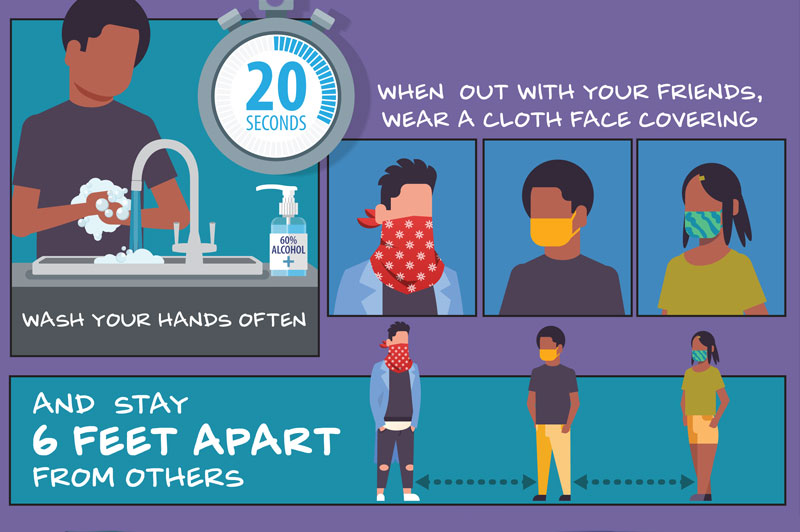
    Himes said it is essential that young people stay home and away from others if they are sick, adhere to 6-foot social distancing, and wear facial coverings when they go out. Avoid gathering in large crowds, huddling in groups, and sharing hugs or drinks.

    “Young people have given up a great deal since this pandemic first hit and are eager to get back to normal,” Himes said. “I thank them for their sacrifices and urge them to create a new normal in which they find ways to safely socialize, wear masks, keep a safe distance, and look out for one another.”

    ODH has prepared guidelines for parents and others for talking with young people about COVID-19. The guidelines include tips for preventing the spread and navigating new social norms. The Centers for Disease Control and Prevention also has produced a series of fact sheets for young adults:

    The average age of people with COVID-19 in Ohio has been steadily decreasing, showing that more and more young people are being exposed, and have become ill. Even those who don’t experience symptoms or only mild ones can unknowingly carry the disease and pass it to parents, grandparents, or other family and friends who may become seriously ill.

    “Teens and young people must do everything in their power to protect themselves, their families and friends, and all Ohioans against this very real and very serious threat,” Himes said.

    Taking steps to prevent COVID-19 also shows appreciation and offers protection for essential workers who provide healthcare and deliver food, packages, and other items. Further, reducing the spread of the pandemic is critical to prevent hospitals from becoming overcrowded. Overcrowded hospitals and overburdened healthcare workers make it more difficult to care for patients in critical need—a grandparent suffering from COVID-19, an aunt having complications delivering a baby, a father with chest pain, or a friend hurt in a car crash.

    “Teens and young people must do everything in their power to protect themselves, their families and friends, and all Ohioans against this very real and very serious threat,” Himes said. “You will save lives, prevent suffering, and help tame a pandemic that places all of us at risk.”