Tag: pandemic

  • The family court judge who threatened a mother with contempt of court for getting her child a COVID-19 test

    The family court judge who threatened a mother with contempt of court for getting her child a COVID-19 test

    By Marshall Allen and Rachel Dissell | December 18, 2020

    OHIO JUVENILE COURT JUDGE TIMOTHY GRENDELL THOUGHT CORONAVIRUS PRECAUTIONS WERE OVERBLOWN, AND MADE SURE PEOPLE KNEW IT. IN ONE CASE HE FORBADE A MOTHER FROM GETTING HER CHILDREN TESTED FOR COVID-19. THEN, ONE OF THEM HAD TO GO TO THE EMERGENCY ROOM.

    Ohio juvenile court Judge Timothy Grendell has been outspoken about his belief that the COVID-19 pandemic is overblown. 

    At a protest rally in May, just steps away from where he presides over family court, Grendell proclaimed that public health restrictions to contain the pandemic were unconstitutional and “we should be allowed to get back to our lives.” The following month, he testified to state lawmakers in Columbus that health authorities and a “drumbeat” of media coverage had “created an atmosphere of fear” surrounding the virus.

    But Grendell hasn’t confined his views to the public square. A few weeks after he testified to lawmakers, he referred to the pandemic as a “panic-ademic” in the midst of a custody proceeding in his courtroom in Geauga County, outside Cleveland. And he has claimed that 15 mothers in his court have used the virus as an excuse in custody cases to “mess with” their exes’ parenting time.

    Then, on Oct. 2, Grendell made an order that legal experts call unheard of, and medical experts say could cause harm. The judge banned two parents, who were wrangling over custody of their young boys, from having the “children undergo COVID-19 testing” without his approval, according to the court record.

    A doctor subsequently ordered a coronavirus test for one of the boys before admitting him to a children’s hospital for severe breathing problems. When Grendell found out, he threatened to find the mother in contempt of court, a move that could lead to her being thrown in jail. 

    Legally, judges have wide discretion to resolve disputes between parents. Some courts have issued standing orders that general concerns about COVID-19 should not disrupt established parenting schedules. But medical experts told ProPublica that a COVID-19 test is often essential for health care providers to protect themselves and to decide on the best course of treatment for a patient.

    “We are unable to provide the right kind of care without it,” said Dr. Robert Wachter, chair of the department of medicine at the University of California, San Francisco. “It’s basically blindfolding us or asking us to take care of someone with an arm tied behind our back.”

    Judges around the country have received media attention for their rulings related to the pandemic. ProPublica reported in July that a Michigan judge sent a 15-year-old girl to juvenile detention, ruling she violated her probation by failing to complete her homework while remote learning. The Michigan Court of Appeals ordered her immediate release later that month.

    In April, a judge in South Florida temporarily took custody away from a doctor because she treated patients with COVID-19, the Miami Herald reported. In Iowa, a judge sentenced a mother to 10 days in jail for refusing to follow a child visitation ruling due to COVID-19 concerns, according to the Sioux City Journal. And another judge in South Florida required a mom to wear a mask if she wanted to see her child, wrote the South Florida Sun Sentinel

    The conflict between public health precautions and individual freedoms has been extreme in Ohio, which was among the first states to issue sweeping health orders to prevent the spread of the coronavirus. Rising discontent with the orders this spring led angry citizens to march on the Ohio Statehouse, chanting “Open Ohio” and breaking several windows. Protesters showed up at the suburban Columbus home of Amy Acton, then the director of the Ohio Department of Health. Some carried rifles. One woman carried a sign with an anti-Semitic message aimed at Acton, who is Jewish. Acton later resigned and some conservative lawmakers turned their attention to Gov. Mike DeWine, a Republican, with some demanding his impeachment and his arrest, to no avail. 

    Grendell’s wife, Diane, an Ohio state representative and former appellate judge, introduced legislation to terminate the state COVID-19 emergency public health orders.

    Infection numbers were low early on in Ohio, but since October the seven-day average of new daily COVID-19 cases has spiked tenfold, to about 10,000 on Dec. 13. Daily deaths and hospitalizations also have jumped to record highs. 

    Timothy Grendell, a Republican former legislator who has been on the bench for more than a decade, has long been a polarizing figure in Ohio political and legal circles. That reputation extends to his courtroom. ProPublica has spoken to mothers and grandmothers in four additional cases who said Grendell has been unfair to them. Some said they have filed complaints against him. Investigations are confidential until concluded; Grendell has not been disciplined by the Office of Disciplinary Counsel of the Supreme Court of Ohio.

    In May, Grendell sent Stacy Hartman’s two teenage sons to juvenile detention after they refused a court-ordered visit with their father. The judge also threatened to hold Hartman in contempt of court and jail her if she didn’t take them to the visit, according to a court transcript. Hartman told ProPublica that she begged that her two boys not be locked up during a pandemic. After the local ABC television affiliate reported on the story, Hartman said mothers and some grandmothers started to call her with stories about their cases in Grendell’s courtroom. Each of the cases was different. But Hartman was struck by one similarity: “Everybody is scared about what he is going to do.”

    The judge also has been embroiled in public spats, sometimes with other elected or political officials. In one high-profile example, in 2014, he threatened to hold the chairwoman of the Geauga County Republican Party in contempt of court after he learned she had privately characterized him as a “narcissist and mentally ill.” The matter was dropped.

    Several family law attorneys told ProPublica that they refuse to take cases in Grendell’s court because they do not believe he treats parties in cases fairly. They asked to speak on the condition of anonymity because they did not want to risk the judge filing a complaint against their licenses. 

    Grendell declined ProPublica’s request to be interviewed for this story. In his most recent judgment entry, on Dec. 9, he said the mother at the center of the COVID-19 testing case had failed to return the children on several occasions, “using COVID-19 or her concerns about the children and COVID-19 as the reason for not complying with the Court’s orders.”

    Through his court administrator, Grendell said that he was prohibited from commenting on pending cases, or about broader accusations related to his conduct. He said his decisions are “always in the best interest of the children” and “based on sound law and the actual facts in the case.” Grendell reiterated that he has seen situations where one parent repeatedly misuses COVID-19 testing and quarantining to prevent the other parent from spending court-ordered time with children. 

    “The court is fully cognizant of the seriousness of COVID and understands the need for all members of the public to be careful and to engage in the necessary and recommended safeguards,” Grendell said.

    Amplifying a Dispute

    The pandemic had exacerbated an already tense parenting arrangement between Richard Sherrick and Kimberly Page, who were never married but have two boys who are 6 and 4. The two have lobbed accusations and counteraccusations against each other. Page felt ongoing anxiety about her health and the health of the boys. Medical records she provided to ProPublica document the boys’ chronic conditions, including asthma, autism and other ailments. The boys’ Cleveland Clinic pediatrician had deemed them high risk if they became exposed to the coronavirus. 

    On four occasions since April, Page said, the boys were quarantined or they had to be taken to the doctor or hospital for treatment, which delayed their return to Sherrick. The delays were typically brief, she said. She said that she communicated with her ex each time, and that there have been times in the past when he had delayed returning them to her. 

    Sherrick and his attorney, Robert Zulandt, did not return multiple requests from ProPublica to comment. In court, Sherrick has accused Page of using visits to doctors and hospitals as an excuse to keep the boys longer than her allotted parenting time. He also has alleged that his ex is obsessive to the point that it creates fear and anxiety for the children and that she has had the children overtreated and tested for COVID-19 and other illnesses. She has disputed those characterizations.

    After Grendell issued his ruling prohibiting a COVID-19 test without his permission, Page contacted Geauga County Health Commissioner Tom Quade to talk about it. Quade told ProPublica that he reached out to his agency’s lawyer but ultimately decided not to get involved because the order didn’t apply to his agency, which does not provide COVID testing. 

    Quade said he did not have all the details about the judge’s order, but it seemed consistent with Grendell’s “this is a big nothingburger” feeling about COVID-19. In their mostly rural county of about 90,000 people, the judge and his wife have repeatedly made public comments that minimize the health threat of the pandemic, he said.
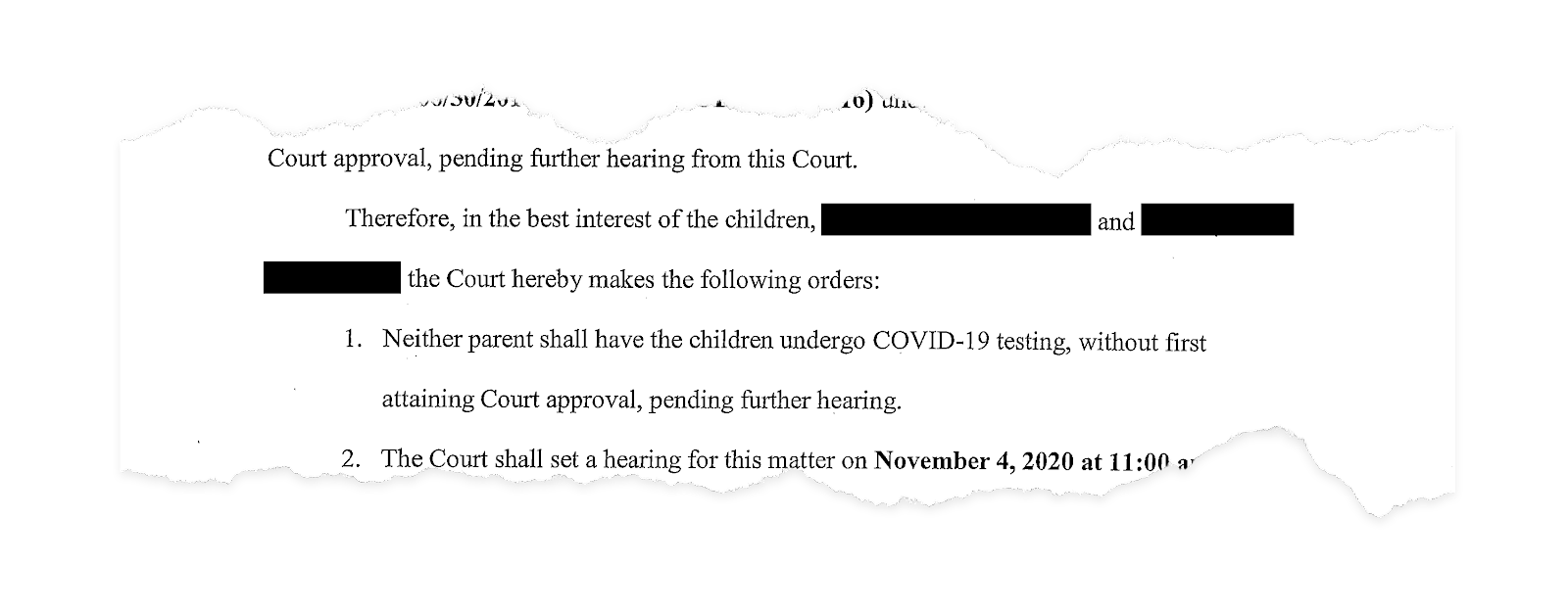
    The judge’s order banning the two parents from having their sons tested for COVID-19 without court approval.

    Family court judges like Grendell have wide discretion to make decisions in the best interests of children in the middle of custody or abuse cases, experts say. 

    There are times a judge could issue orders that either require medical treatment or forbid it, like if a child had terminal cancer and the parents disagreed about treatment, said Sharona Hoffman, co-director of the Law-Medicine Center at Case Western Reserve University. But those types of decisions are generally made after a judge hears evidence from both sides on the issues, Hoffman said. In this case, Grendell made the order on his own motion, without a specific request from either parent to ban the test.

    “There is no downside to getting a COVID test,” Hoffman said.

    The danger of the judge’s order, if followed, is that it might lead to one of the boys not getting medical treatment he needs, said Michelle Mello, a health law and policy professor at Stanford University. What’s striking from a medical-legal perspective, Mello said, is that the child’s test was given during a hospital visit. “It’s standard of care,” Mello said. “Nobody gets into a hospital and around other patients without a COVID test. There’s a public health reason.”

    Page said her attorneys warned her against taking her child to the hospital on Nov. 2 for fear of violating the judge’s order. But her son’s breathing was so labored that she and her new husband, a doctor, believed he had to go to Akron Children’s Hospital. The child was administered a COVID-19 test before being admitted and treated during an overnight stay. The test was negative. 

    The hospital declined to comment about the case, but said in a statement that it performs COVID-19 tests when they are deemed medically necessary and on patients who are admitted with respiratory symptoms. 

    Saying Page had failed to return the children on time, Sherrick filed an emergency motion with the judge for custody of the children. The next day, Grendell suspended Page’s custody and sent his constable to the hospital to retrieve the child and hand him off to his father. The child’s younger brother was picked up from the home of Sherrick’s mother.

    About a week later, Grendell ordered Page to appear before him “to show cause why you should not be held in Contempt of Court for failing to abide by parenting time … and for failing to abide by the order prohibiting COVID-19 testing, unless approved by the Court first.”

    On Nov. 20, Grendell issued a new interim order that the children could be tested if they had symptoms and if their pediatrician recommended it. That same day the court ordered supervised visitation. Page has disagreed about the parameters suggested for visitation, so she still has not seen her children. 

    Page’s attorney said she could still be held in contempt of court, for violating the original order not to have the children tested for COVID-19.  Hearings in the case have been delayed until January. 

    “Panic-ademic”

    Grendell’s no-testing order wasn’t the first time COVID-19 had been a point of contention in the case.  

    Page accused Sherrick of failing to provide adequate medical care for the boys, and her parenting time included multiple visits to doctors and emergency rooms. Page’s medical records show they have undergone five tests for COVID-19 between them.

    In a June 29 hearing, Grendell dismissed the virus as a relevant factor: “There is zero evidence that COVID is a danger to 6-year-olds — zip,” Grendell said, according to the court reporter’s transcript of the hearing. 

    Page had a fever the day before the hearing, a possible symptom of COVID-19, so she sat in her car. Grendell accused her and other mothers — at least 15 total, he said — of improperly using the virus as “a reason to mess with” the parenting time of fathers. “So this is like the cause du jour,” Grendell said. “Hey, you know, I want to mess with the ex or with the dads, since most of these people never married, and COVID-19 gives me an excuse to mess with his parenting schedule.” 

    Earlier in the pandemic, the COVID-19 “fear factor” made sense, Grendell continued. But now that it was “almost July 1st, it’s not doing much for me,” he said. 

    Before COVID-19, people brought home colds and diseases every day, he said, branding the pandemic a “panic-ademic.”
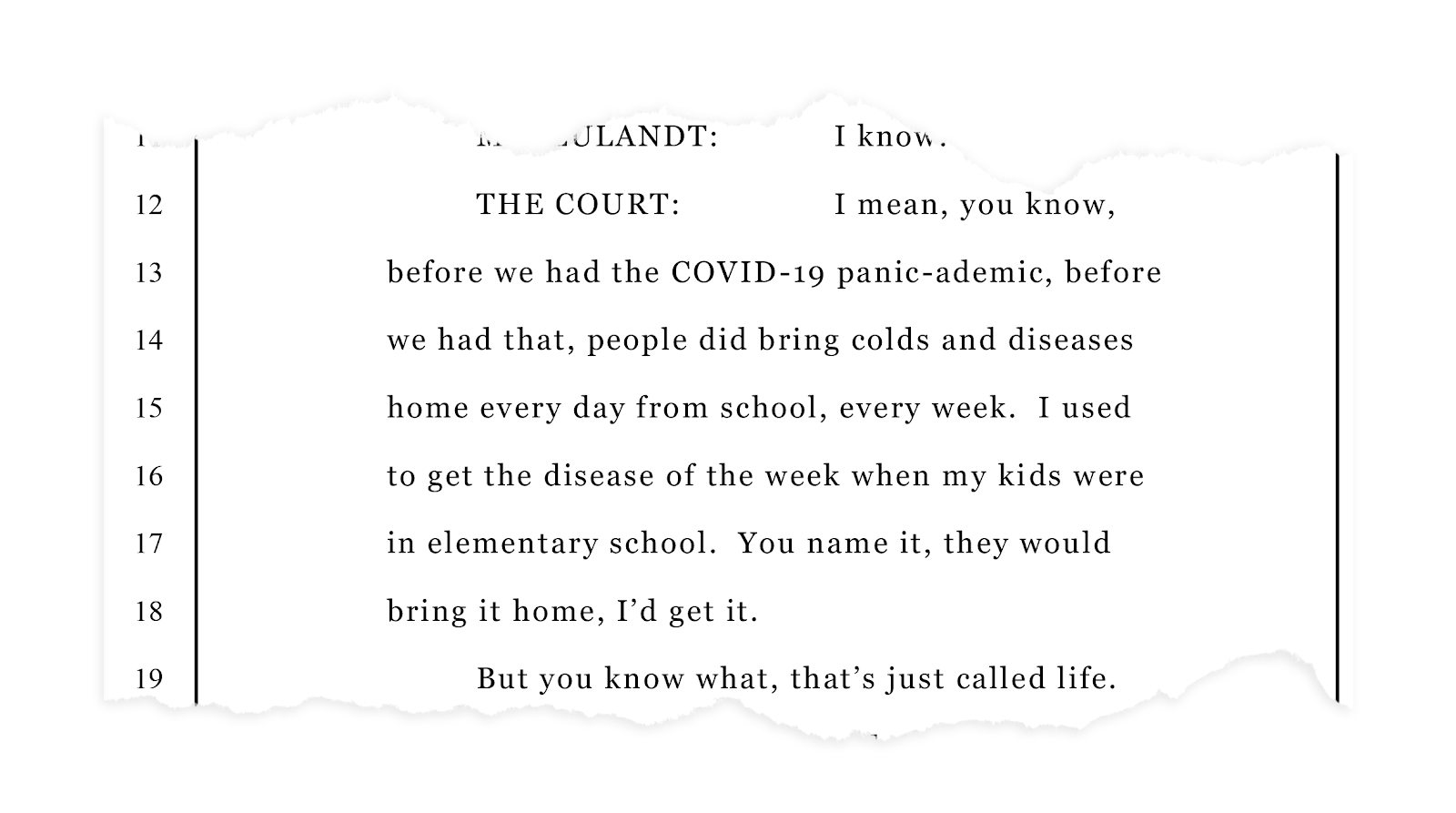
    The transcript from a June 29 hearing shows Grendell expressing views on the pandemic in court.

    Near the conclusion of the hearing, Grendell issued a threat: “I’m going to make this crystal clear,” he said. “The next person who doesn’t follow the orders is going to see a contempt citation coming their way.”

    Friction between Page and Sherrick continued. She thought it was too risky for her elder son to attend school in person. He wanted her to stop scheduling so many medical appointments for the children, which delayed their return to him. On Sept. 23, Page went to Sherrick’s home and picked up the child to take him to the hospital, according to a court filing, and was late returning him to Sherrick. Sherrick filed a handwritten motion the next day, claiming Page had a pattern of not returning the boys, and asking for custody. 

    Grendell then personally called Page’s cellphone, and left a voicemail, saying Sherrick said the child needed to be returned, and instructing her to call him. “I certainly would like an explanation, and I don’t believe COVID at this time period is a legitimate one,” he said on her voicemail, which was provided to her attorneys and ProPublica. It is highly unusual for a judge to call a litigant in a proceeding directly. Grendell did not return ProPublica’s request to comment about the voicemail. 

    Grendell’s order prohibiting testing for COVID-19 came about a week later. The evidence in the dispute still has not been heard in court.

    “He Knows He Makes the Rules”

    Page said she reached a breaking point after losing custody of her children and being accused of contempt of court. One set of attorneys warned her not to speak publicly about her case and withdrew from representing her after she ignored their advice. 

    As a mother, Page said she felt she had to speak out because attorneys have been reluctant to challenge Grendell and without that, she can’t see the case getting resolved fairly. “This judge needs to be held accountable to somebody other than our family,” Page said. 

    Page’s new attorney, Lee Potts, said when he took over the case he understood it was complicated. But the blanket order prohibiting COVID-19 testing seemed to “come out of nowhere.”

    Since Grendell himself made the motion, it made Potts wonder: “Who is telling you this stuff? How are you getting this information?”

    Though Sherrick did not respond to requests for comment, his mother, Bonnie Sherrick, lamented the effect the case is having on her grandchildren. She said that her son, as well as Page and Grendell, have all contributed to the problems, but that there’s no reason Page should be penalized for properly managing the medical conditions of the children. “She has been a good mother,” Sherrick said of Page. 

    Nobody seems to be able to stop Grendell, Bonnie Sherrick said of the judge. “He knows he makes the rules.”

    Have you had issues related to COVID-19 affecting your court case? Please share your story with ProPublica by emailing tips@propublica.org. Here’s how to send tips and documents to ProPublica securely.

  • Sherrod Brown: Trick after trick to pay people less

    Sherrod Brown: Trick after trick to pay people less

    “If even a global pandemic will not get corporations to rethink their exploitative business model, it’s time to stop letting them run the economy.”

    By: U.S. Sen. Sherrod Brown

    In the early months of this pandemic, as businesses and feel-good news stories hailed America’s workers as the heroes of our time, I published an open letter to America’s corporate leaders, imploring them to live up to their ad campaigns and invest in the workers who make their businesses successful. I wrote: If you truly believe that workers are essential to your companies, then treat them that way.

    All that has changed are that corporate profits have gone up.

    Since then, CEOs have not been beating down my door to discuss renewed efforts to invest in their workers. It has been six months, and all that has changed are that corporate profits have gone up, hazard pay has disappeared, and more workers have died. Since the pandemic started, hundreds of thousands of American workers have died of COVID-19 after contracting the virus on the job.

    Even as small businesses have shuttered in communities all over the country, profits for the largest retail companies have soared during the pandemic. Workers’ pay, predictably, has not. The Brookings Institution studied the 13 biggest retailers in the country and found that their earnings have shot up 39% compared with last year, and stock prices are up 33%. But wages have only gone up by about $1 an hour. 

    Trick after trick to pay people less 

    Amazon’s quarterly profits increased by close to a staggering 200%. Yet it rolled back its still-meager $2-per-hour raise in June, and announced a one-time bonus of just $300 per worker. Yes, you read that correctly — not $3,000, but $300, from a company that brought in $280 billion in revenue last year. 

    The company also has no plans to change its broader business model built on exploiting workers, largely workers of color and women, and busting unions. Amazon makes ample use of contractors, including what it calls “Amazon Flex” drivers — and as with other “gig economy” jobs, “flex” is just corporate PR speak for denying workers their rights as employees. 

    Of course Amazon is far from alone in its treatment of workers, nor is this problem new. For decades, corporations have used trick after trick to pay workers less and deny them health careretirement savingspaid leave and basic job security. We’ve seen the results of this corporate business model that treats workers as expendable: Profits go upCEO pay soars, and stock buybacks explode. And the middle class shrinks. 

    Profits go up, CEO pay soars, and stock buybacks explode. And the middle class shrinks.

    If even a global pandemic, where America’s workers have been on the front lines, will not get corporations to rethink their exploitative business model, it’s time to stop letting them run the economy. They had their chance. They failed. If corporate America won’t deliver for its workers, then government and unions must.

    In this presidential election, American voters made it clear they’ve had enough of the current system, where Wall Street runs the show. Joe Biden ran a campaign appealing directly to what he called the backbone of our country: hardworking people who get their money from a paycheck, not the stock market. And he won a commanding victory — over 81 million Americans gave him a 7-million-vote margin, more votes than any other presidential candidate in U.S. history, and a mandate for change. 

    It’s time for us to deliver results.

    An economy that reflects our values

    We can’t go back to business as usual before the pandemic, when it wasn’t working for a whole lot of people. If we are to build back better, we must create a new system centered on the dignity of work.

    In my open letter in June, I laid out actions corporations could take on their own, like raising base pay to $15 an hour. Since many of them refuse, we must raise the federal minimum wage to $15 an hour. Workers are still not safe on the job, so President-elect Biden must immediately issue an OSHA Emergency Temporary Standard forcing corporations to protect their workers from contracting or spreading the virus in the workplace and strengthen overall enforcement, so workers don’t have to worry about getting injured or becoming ill just for doing their job. 

    Many companies still deny their employees paid sick days, even during a pandemic.

    Many companies still deny their employees paid sick days, even during a pandemic, so we must pass a national paid family leave plan. Corporations are expanding rather than ending the exploitative “independent contractor” business model, so we must use the law to make them treat their workers as the true employees that they are. Corporations continue to coerce workers out of forming unions, so we must pass the PRO Act to guarantee workers a voice in their workplace.

    We can deliver on every measure of economic security I outlined in June, with or without corporate CEOs’ blessing. The economy isn’t physics — it’s not governed by scientific laws outside our control. It’s made up of people making choices about our values and what kind of society we want to live in.

    We have the power to change how the economy works, so it rewards work instead of greed. We can create more jobs at middle class wages. We can give people power over their lives and schedules. We can expand economic security and opportunity for everyone. Americans voted for this change, and we will not wait for corporations to reform themselves on their own. They never have. They never will. It’s up to the rest of us create a country where all work has dignity.

  • Ohio’s latest hospital bed and equipment capacity data

    Ohio’s latest hospital bed and equipment capacity data

    Ohio’s latest staffed hospital bed and equipment capacity data, comes via public records lawsuit

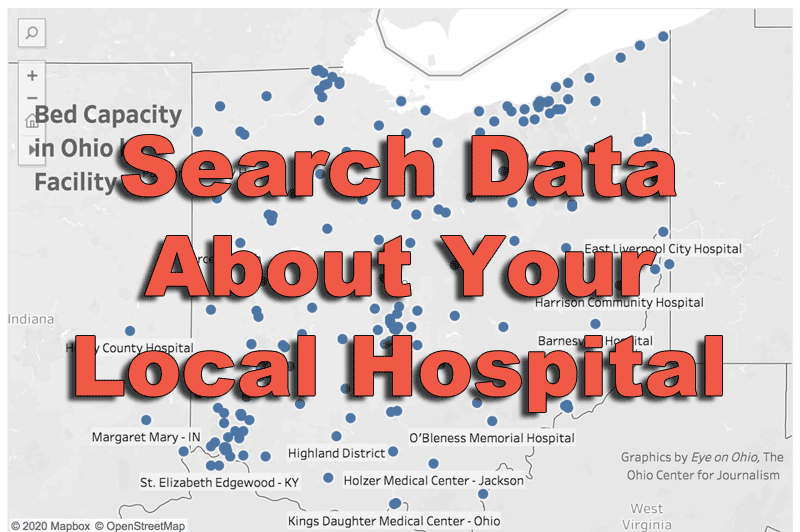
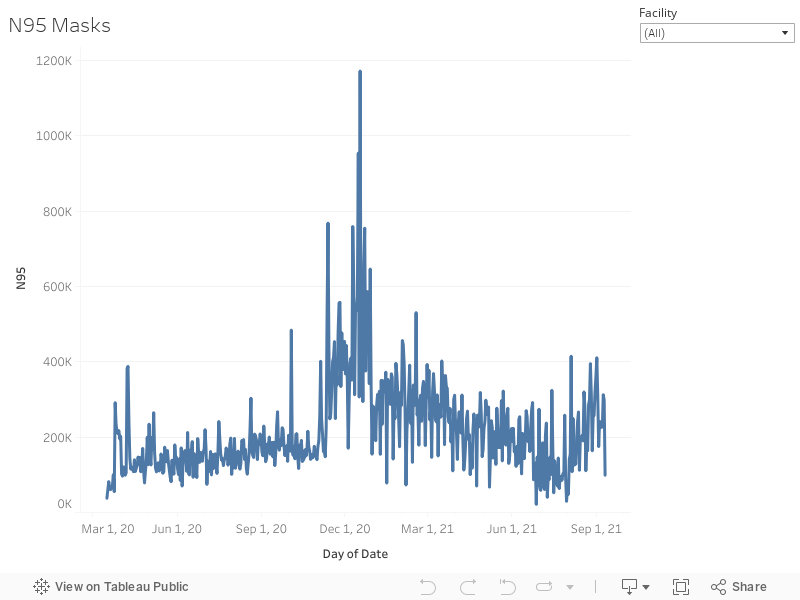
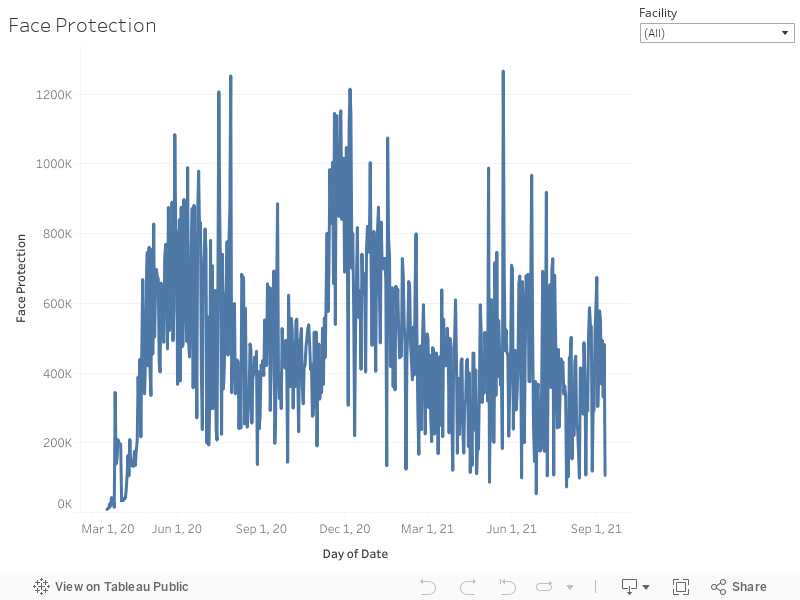
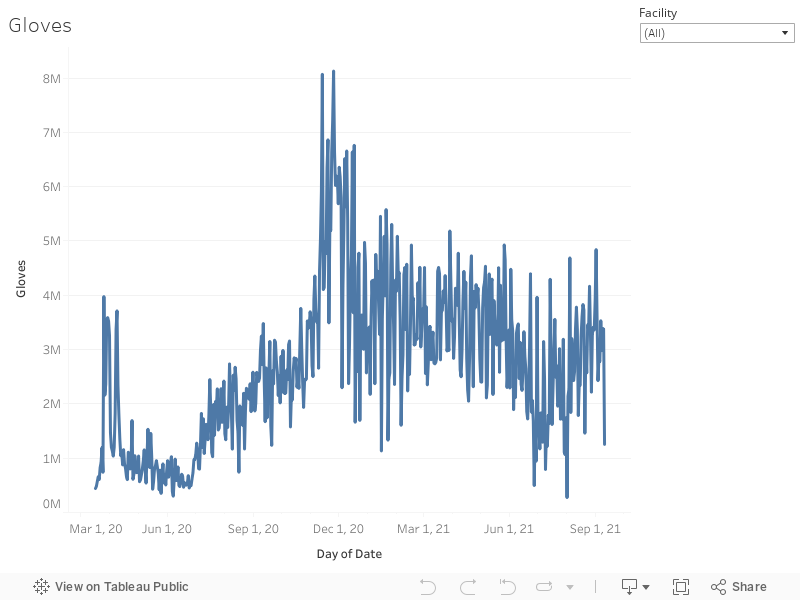
    After a seven month legal battle, Eye on Ohio won a public records lawsuit over hospital capacity numbers. As the ongoing pandemic continued to surge, the Ohio Court of Claims ruled in mid November that the Department of Health must share public records with Eye on Ohio, showing the number of beds and ventilators available for COVID-19 patients at individual hospitals throughout the state. Eye on Ohio sought records with the data as a way to provide readers with timely, local information about the ability of healthcare facilities in their area to deal with the pandemic.

    Loveland Magazine provided support for gathering this data via our membership dues in newspaper trade organizations.

    Now, You Can Explore the Data About Your Local Hospital on Your Own

    Last Updated: Dec. 14

    Data Current up to: Dec. 11

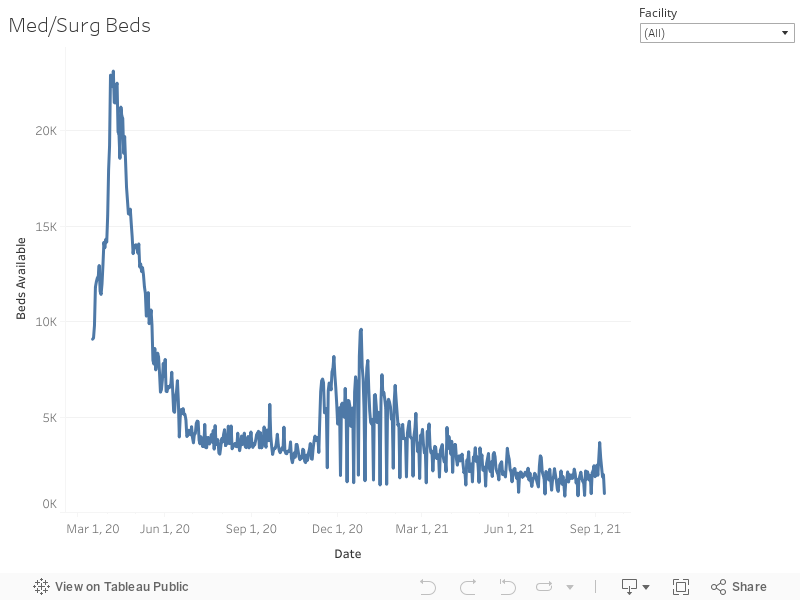
    Medical Surge Beds for Adults

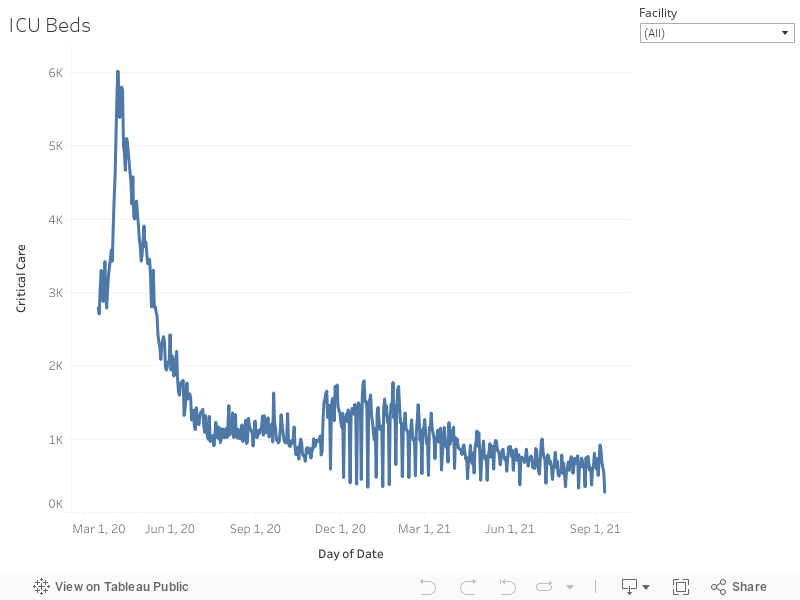
    Adult ICU Beds

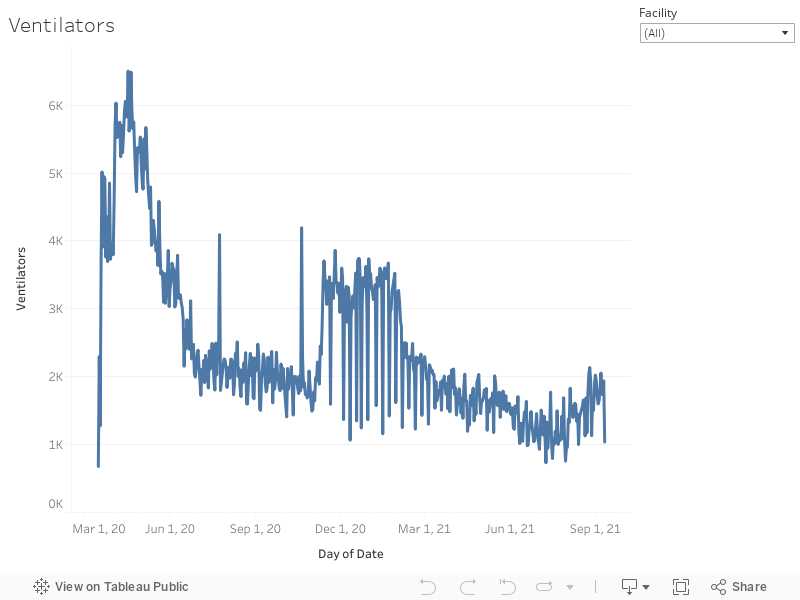
    Ventilators 

    N95 Masks

    Face Protection

    Gloves

    Infectious Isolation Beds


    Note: Infectious isolation beds reflect the difference between airborne and droplet precautions:Initially, Covid-19 was thought to be spread primarily by “droplets” when patients cough, sneeze, sing or breathe. Most larger droplets are thought to float to the floor within 6 feet or so. Airborne Infection Isolation rooms are for diseases spread by “airborne” diseases when the concentration of pathogens that stays in the air is high enough to make someone else sick. Those rooms are recommended, but not always required, for COVID patients.


    Eye on Ohio sought records with the data as a way to provide readers with timely, local information about the ability of healthcare facilities in their area to deal with the pandemic.

    “In times of crisis transparency is paramount,” said Rebekah Crawford, who has her Ph.D. in Health Communication, Relating & Organizing from Ohio University.

    People want credibility and clear lines around what is known and what is uncertain. “When risk communicators are at their best,” Crawford said, “they remain credible by showing what is known and what is not known and by being clear about why we don’t know, and what we’re going to do to find out.” 

    When Eye on Ohio first requested records, at the end of March, the state had only about 2,200 confirmed cases and 55 deaths, according to the online Johns Hopkins Coronavirus Resource Center. As of November 12, Ohio had approximately 274,500 confirmed cases, and about 5,700 people had died from the disease.

    As of today, Ohio has approximately 529,508 confirmed cases, and about 7,645 people have died from the disease.

    Transparency Matters

    Leaders in times of crisis tend to assume that the public is going to panic, Crawford said, even though “research actually shows that panic isn’t the most prominent or even in the top ten of reactions that people have to communications of risk. People are most likely to be in denial. Studies of 9-11 show that people were excessively polite as they exited the World Trade Center because people don’t panic, they get especially compliant and cooperative in high stress or high risk situations.”

    Lack of transparency creates suspicion, hurts credibility, and diminishes trust-worthiness. Crawford said, “people who are untrained in risk communication go to that ‘don’t panic’  communication mode.” 

    Another misnomer is the assumption that people can’t understand how to interpret the information, so, Crawford said, “rather than taking it upon themselves to communicate in a transparent and understandable way they withhold information and say ‘we’ll make decisions for you’ which doesn’t work when people are anxious.”

    “A risk expert cannot look at some numbers and then tell a community ‘this isn’t a problem for you’ because the community may decide that it is a concern ‘because you don’t speak for us or understand what we value,’” Crawford said.

    Transparency is key for the public so individual communities can take the information given and decide for themselves what actions should be taken and individual needs addressed based on the needs and values of their demographic.

    A Need for Transparency

    Reporters initially sought information from individual hospitals but were told that all information was being funneled to the Ohio Hospital Association, which in turn provided it to the Department of Health. And the Department of Health had arranged for the data to be entered into a database called Surgenet. 

    According to a court affidavit, Surgenet was first developed by the Greater Dayton Area Health Information Network (GDAHIN). The software was subsequently enhanced to its present “all hazards” function as “a tool to be utilized during an emergency involving the public’s health which could severely impact hospital services.” Eye on Ohio was told that only the Department of Health would grant access to the materials.

    Eye on Ohio then filed a formal public records request for access to the data or records with it. After cancelling a meeting that had been scheduled to discuss the request, the Department of Health then issued a flat-out denial, claiming the records were “security and infrastructure records” under an exception to the state’s public records law.

    Eye on Ohio had  no option but to file a case with the Ohio Court of Claims.

    The court said the statutory language for that security exception just didn’t fit. That part of the Ohio Revised Code exempts security and infrastructure records that are prepared for the express purpose of protecting against or responding to terrorism, school shootings or similar acts of attack or sabotage. None of those apply to the COVID-19 pandemic.

    “Exceptions to disclosure are strictly construed,” wrote Special Master Jeff Clark in his October 20 report and recommendation. “And, in this case, the Department of Health failed to connect the data sought by Eye on Ohio with the prevention, mitigation or response to any existing or anticipated act of terrorism.”

    “To meet the burden of proof regarding alleged security records, ODH must offer more than its own conclusory labeling,” Clark wrote. He likewise rejected the Department of Health’s assertion that it should be able to stop release of the records because it didn’t want to discuss them.

    “Even assuming, arguendo, that some hospitals would rather not disclose their bed and resource availability, it is well-settled that public offices may not withhold records merely because of a policy preference for confidentiality,” Clark wrote.

    Court of Claims Judge Patrick McGrath approved the Special Master’s report and recommendation on November 10.

    Disclosure of the mounting strain on hospitals in their vicinity might also make people more vigilant in their efforts to control the pandemic and to “flatten the curve” of cases. Otherwise, as scientists have previously warned, the pandemic will cause even more deaths that could have been avoided.

    As for the resistance against complete transparency, “Far be it from me to criticize people who are providing care at a great risk to their own health in a time of heightened need,” Crawford said. “I’m not talking about the doctors and the nurses who are working in the hospitals, but the managers and administrators who are at the upper echelon of those really hierarchical corporations in some cases are motivated not to cooperate and share information. It really goes counter to public health needs and the demands in care and I would say ethical and medical provision.” 

    Eye on Ohio relies on support from readers like yourself. Even a small amount would help them improve their coverage.

    Donate

    Click here to read the metholodgy


    Your donation to Loveland Magazine can provide funds to pay for our current membership fees to the Ohio News Media Association which makes these vitally important public affairs stories possible for you, our readers.

  • Lawmakers seek Ohio moratorium on evictions, foreclosures

    Lawmakers seek Ohio moratorium on evictions, foreclosures

    State Reps. David Leland, D-Columbus, and Jeffrey Crossman, D-Parma

    By Tyler Buchanan and the Ohio Capital Journal

    Ohioans struggling to pay their rents or mortgages may head into 2021 without the housing protections and public assistance that have carried them through much of the pandemic this year.

    A federal moratorium on evictions is about to expire. Two other relief programs helping unemployed Americans are set to run out. There are believed to be thousands of Ohioans who are in immediate risk of eviction due to unpaid rent, with many low-income earners still working reduced hours or remaining out of work entirely. 

    Back in March, two Democratic lawmakers proposed a statewide moratorium on eviction and foreclosure actions so long as Ohio stayed under a state of emergency amid the COVID-19 pandemic. The economy has rebounded somewhat from historic unemployment in the spring, but the virus outlook looks grim as the state heads into the cold winter months.

    State Reps. David Leland of Columbus and Jeffrey Crossman of Parma believe the moratorium is needed now more than ever. 

    “This is not just a humane thing to do,” Leland said in a committee hearing on the bill Thursday morning, “it’s not just asking you to embrace the holiday spirit. Instead, as we survey the landscape after these tumultuous nine months and ahead of next year’s budget negotiations, this is a way to save numerous low-income Ohioans’ from unimaginable hardship.”

    “The urgency of this legislation is really right now,” Leland continued.

    Under House Bill 562, landlords could still file eviction actions, but courts would be prevented from acting on them while the state of emergency is in place. Law enforcement officers could not carry out eviction orders either. Courts would not be able to conduct any business pertaining to foreclosures and must halt all pending foreclosure actions.

    This moratorium would apply to residential and commercial properties.

    Nearly two-dozen Democrats and one Republican have supported the bill as cosponsors.

    iStock / Getty Images Plus

    ‘Last remnants of the safety net’

    The large-scale CARES Act signed into law in March has provided trillions of dollars of relief, but many of its programs benefiting Ohio tenants have already run out or are about to. 

    This includes the Pandemic Emergency Unemployment Compensation and the Pandemic Unemployment Assistance programs, which have helped those who have lost work during the crisis. Both programs end the day after Christmas.

    In September, the Centers for Disease Control and Prevention (CDC) issued a nationwide moratorium on evictions for residential properties. It prohibits U.S. landlords and property owners from evicting a tenant for unpaid rent. 

    That moratorium is set to expire on New Year’s Eve.

    “Just as covid cases are exploding and our hospitals are filling, and just as the coldest parts of winter are setting in, hundreds of thousands of Ohioans are set to be stripped of the last remnants of the safety net Congress put in place back in March,” Leland said.

    Ohioans struggled to pay their housing costs even with that safety net in place. A survey from this past summer found more than a half-million residents could not pay rent in June 2020.

    Now these same residents potentially face 2021 without the CDC moratorium and without relief assistance — unless Congress acts again to pass a relief bill to close the gaps left by the still struggling economy.

    A total of $50 million from the CARES Act was allocated for emergency rental assistance in October. But advocates say more is needed.

    “Unless the Senate stops blocking any meaningful relief, we’re really worried about what’s going to happen in 2021,” said Marcus Roth, a spokesman for the Coalition on Housing and Homelessness in Ohio, last month.

    That’s also the hope of Gov. Mike DeWine, who again called on Congress to pass a relief bill during his COVID-19 press conference on Thursday. 

    DeWine was asked if he supported the CDC extending its eviction moratorium into 2021. 

    “I’d have to take a look at that. I don’t know,” DeWine answered. “But look, this is a problem. This is a problem and is something that we are in fact focused on.”

    Lt. Gov. Jon Husted argued that a moratorium alone does not address the costs faced by property owners and suggested such action should be paired with further government relief.

    “There’s still somebody that has a mortgage to pay on that facility, who has a default that could potentially happen with their lender, which creates a whole chain of events and series of events,” Husted said. “So there has to be a financial solution to go along with any moratorium so that we don’t create a chain reaction in the system that causes additional problems.”

    Unintended consequences to a moratorium?

    In committee, state Rep. D.J. Swearingen, R-Huron asked the HB 562 sponsors about the “unintended consequences” of continuing a moratorium in Ohio. Swearingen noted that property owners still have costs such as repairs and that smaller banks may not be able to carry so many unpaid loans.

    State Rep. D.J. Swearingen, R-Huron

    Crossman acknowledged those concerns but said the ramifications of doing nothing would have a greater impact on individuals.

    “I think we just have to ask ourselves, who’s in a better position to bear the burden here? The individual who is not making any income trying to keep their family fed and clothed and in a housing situation during the middle of a pandemic, particularly if they don’t have a job, or a lender who can maybe take a two- or three-month pause from getting their mortgage payments?”

    Crossman said the latter is in “a far better position financially” to handle the issue. 

    Lawmakers also heard testimony from Dan Acton, a lobbyist for the Ohio Real Estate Investors Association who spoke in opposition to passing an Ohio moratorium. He said his organization consists of a few thousand “smaller” real estate investors who typically own single-family housing units.

    He claimed these property investors operate on “razor-thin profit margins.” When tenants do not pay their rent bills, Acton said, this reduces the “profits for a property owner that could otherwise be used to reduce the overall debt on a property or make improvements.”

    “The pandemic and the resulting eviction moratoria and payment delays are leaving our members on the brink of failure,” Acton said, arguing it would be “dangerous” for the government to “interfere” with a private leasing contract. 

    Leland said a moratorium is not meant to be a “long term-solution,” but would allow Ohioans to stay in their home until winter passes, the economy rebounds and a vaccine is made available.

    Separately, Leland and fellow Democratic Rep. Juanita Brent of Cleveland also sponsored House Bill 744 that would allocate around $270 million from the state’s “rainy day fund” to pay for a new COVID-19 Emergency Rental Assistance Program. No action has been taken on this bill.

  • DeWine announces new curfew to try to slow covid spread

    DeWine announces new curfew to try to slow covid spread

    Gov. Mike DeWine is pictured during his statewide address on Wednesday, Nov. 11. Photo courtesy Ohio Channel.


    By Marty Schladen and the Ohio Capital Journal


    Desperate to slow the spread of coronavirus, Ohio Gov. Mike DeWine on Tuesday announced a new curfew intended to decrease person-to-person contacts and new infections.

    The move was greeted with skepticism in some quarters.

    DeWine said that starting at 10 p.m. on Thursday, there will be a 21-day statewide curfew from 10 p.m. to 5 a.m. Bars, restaurants and retail stores will have to close. But there will be exceptions for pharmacies, grocery stores, food delivery, drive-through and pickup service.

    Technically, people who violate the curfew could be charged with a second-degree misdemeanor, punishable by 90 days in jail and a $750 fine. But as he has with other covid-related health orders, DeWine said he he’s not eager to see people charged.

    “We do not expect law enforcement to go pull people over because they’re out beyond 10 o’clock,” he said. “But if they’re seeing something going on, this is a way they can walk up and say, ‘Hey guys, you’re here… there’s a curfew. Why don’t you just go home?’”

    The governor added, “No one’s been charged under these health orders,” he said. “That doesn’t mean they couldn’t be, but they haven’t so far.”

    The curfew comes as Ohio experiences its most alarming spike in coronavirus infections and hospitalizations since the start of the pandemic early this year.

    On Tuesday, state health authorities reported 7,079 new cases over the past 24 hours, a 36% increase over the 21-day average. They also reported 368 new coronavirus hospitalizations, only a little less than the state record of 386 set on Nov. 10.

    The swelling numbers have placed Ohio hospital staffs in a “precarious situation,” said Bruce Vanderhoff, chief medical officer for the Ohio Department of Health. He said medical workers are fatigued from fighting the disease since March and they have to balance that work with living in communities and with families where the virus is increasingly prevalent.

    DeWine said his goal was to reduce the number of person-to-person contacts and thereby stop the virus from spreading. He asked Ohioans to voluntarily do that through such measures as condensing the number of trips they make to the grocery and buying more when they do. At the same time, he urged people to do what they can to remotely maintain emotional connections.

    However, critics noted that the curfew doesn’t go as far as one imposed in the spring. For example, the earlier order imposed limits on how many people can be in stores when they’re open.

    Asked what scientific basis he used in issuing the order, DeWine said, “We know the basic science. The basic science is fewer contacts, less spread.”

    The likely effectiveness of the curfew was disputed by at least one scientist in the field. Kent State epidemiologist Tara C. Smith tweeted that she didn’t know any professionals who thought it would work.

    DeWine, however, might have felt the curfew was as far as he could go. It had the support of the Ohio Restaurant Association, likely meaning that there was some negotiation behind it.

    Also, DeWine is a member of a party led by president who in October visited Circleville and said the media were hyping the virus to hurt his reelection chances. The president predicted the media would stop covering coronavirus on Nov. 4 — the day after the election.

    Covid skepticism runs so deep in elements of the Republican Party that at the same time that DeWine was announcing the curfew, Ohio Senate President Larry Obhof, R-Medina, was testifying in favor of his bill to repeal an earlier health order requiring bars to stop serving at 10 p.m.

    For his part, DeWine said he hopes the curfew will “push more people toward home.”

    “I think if we do these things it gives us a shot at slowing (the coronavirus) down,” the governor said. “Most of what we’re doing and the decisions I’m making are between two bad choices.”


    Marty Schladen

    Marty Schladen has been a reporter for decades, working in Indiana, Texas and other places before returning to his native Ohio to work at The Columbus Dispatch in 2017. He’s won state and national journalism awards for investigations into utility regulation, public corruption, the environment, prescription drug spending and other matters.

  • Protecting Your Loved Ones during Thanksgiving Break

    Protecting Your Loved Ones during Thanksgiving Break

    Ohio State University College of Public Health Dean Amy Fairchild sent the following message to students today.

    Dear Buckeyes:

    As we wrap up our final days on campus and look toward the holidays, I’d like to remind you of the critical role you play in preventing the spread of COVID-19.

    Most importantly, we know that household transmission is the primary way that this virus is infecting people. One night at a bar or party means that you can bring the virus home, where it can spread rapidly. You have the power to reduce infections, including among your loved ones who may risk severe illness, hospitalization and death. I cannot emphasize enough that what may be a symptom-free inconvenience for one person can be devastating to another — and I say that underscoring that the pandemic’s severity is increasing throughout our nation and our state by the day.

    By now you know what is required to do your part — proper masking when you’re in the same room as others, physical distancing, hand hygiene and staying far from large gatherings and within a small, consistent bubble of close friends and roommates. Parties simply aren’t worth it, particularly when cases are increasing in our community and on and around our campus.

    I strongly recommend that, if you are able, you head home for the holidays as soon as you can if you receive a negative test result from routine testing this week. If you are not planning to leave this week, I urge you to test twice before heading home for break. The first test, part of our routine weekly screening, should be today, tomorrow or Wednesday. From that point forward, before you depart for home, please be especially careful by limiting unnecessary contact with others, maintaining physical distancing and wearing a mask any time you cannot avoid being with other people. If you plan to leave next week, the second test should be on Monday or Tuesday. Regardless of your planned departure date, out of concern for the safety of your family and friends, you must wait for your final “exit test” results before you head home. Testing hours and instructions are available on the Safe and Healthy Buckeyes website. If you are positive you should work closely with Ohio State’s Case Investigation and Contact Tracing Team to make your plan for isolating to stop spread of the virus.

    If your results are negative, remember infection can take several days to be detected, which is why we test routinely. Continuing to follow precautions when you go home is your best bet for limiting illness in your families. Among those precautions: Wear masks on the car ride home, or however you’re getting home. Crack the windows. Limit the family coming to pick you up to one person.

    During break, please resist the temptation to let the expectations we’ve set at Ohio State fall by the wayside. I understand that what feels “normal” is to visit with all of the friends and family you’ve missed, but we are in a time when those visits — especially if they include many people who aren’t masked and distant — can have serious repercussions, sending ripples through multiple families and social circles. Think about ways to bundle up against the Ohio fall and winter, keep the group small and spend some time outside.

    If you know you were in riskier situations on campus, and especially if you have higher-risk loved ones at home, consider a 14-day self-quarantine in a room by yourself if that is possible. Wait 14 days to visit extended family who are vulnerable to the virus, including grandparents.

    Thank you for all you’ve done this semester to keep us Together As Buckeyes and for your continued commitment to keeping your family, friends and our entire community safe and healthy.

    Sincerely,

    Amy Fairchild, PhD, MPH

    Dean of the College of Public Health

  • After seven month legal battle, Eye on Ohio wins public records lawsuit over hospital capacity numbers

    After seven month legal battle, Eye on Ohio wins public records lawsuit over hospital capacity numbers

    Eye on Ohio is still waiting for the records

    By Bonnie Jean Feldkamp and Kathiann M. Kowalski

    This article provided by Eye on Ohio, the nonprofit, nonpartisan Ohio Center for Journalism. Please join their free mailing list as this helps them provide more public service reporting. Loveland Magazine provides support for Eye on Ohio through membership in the Ohio News Media Association.

    As the ongoing pandemic continues to surge, the Ohio Court of Claims ruled last week that the Department of Health must share public records with Eye on Ohio, showing the number of beds and ventilators available for COVID-19 patients at individual hospitals throughout the state. 

    The ruling comes seven months after Eye on Ohio initially sought the records. 

    “In times of crisis transparency is paramount,” said Rebekah Crawford, who has her Ph.D. in Health Communication, Relating & Organizing from Ohio University.

    People want credibility and clear lines around what is known and what is uncertain. “When risk communicators are at their best,” Crawford said, “they remain credible by showing what is known and what is not known and by being clear about why we don’t know, and what we’re going to do to find out.” 

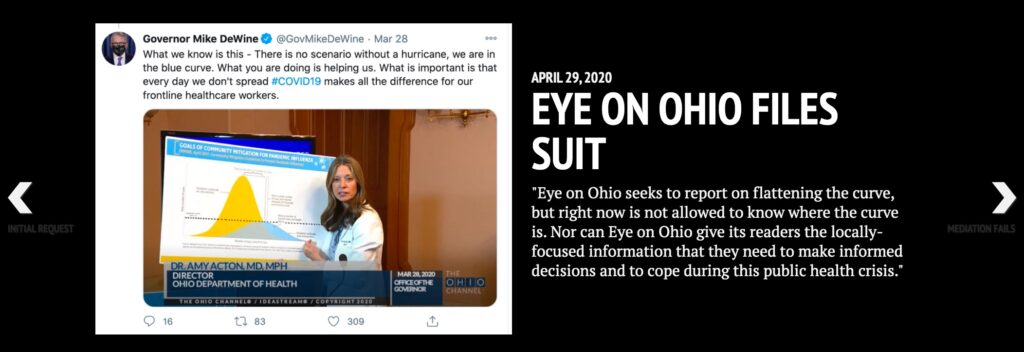
    View the Eye on Ohio timeline pursuing the Department of Health public records COVID 19

    When Eye on Ohio first requested records, at the end of March, the state had only about 2,200 confirmed cases and 55 deaths, according to the online Johns Hopkins Coronavirus Resource Center. As of November 12, Ohio had approximately 274,500 confirmed cases, and about 5,700 people had died from the disease.

    “We are in the midst of our third wave in Ohio,” Gov. Mike DeWine said in his November 11 address to the state. There had been warnings that cases would climb when weather turned cooler and people spent more time indoors again. But, DeWine stressed, the surge is “much more intense, widespread, and dangerous.”

    “As of today, every single one of our 88 counties has a high rate of virus spread, and areas of our state that were previously untouched—our rural areas—are being hit especially hard,” DeWine said.

    If current trends don’t change, some parts of the state are “maybe two or three weeks out” from hospitals having to crowd out non-COVID-related care as they try to keep up with the surge, reported Andy Thomas, a medical doctor at Ohio State University’s Wexner Medical Center, during the governor’s November 9 press conference. 

    Eye on Ohio sought records with the data as a way to provide readers with timely, local information about the ability of healthcare facilities in their area to deal with the pandemic. 

    In a state with nearly 45,000 square miles, that local information could tell citizens more about Ohio’s readiness to deal with emergencies for all its residents. Availability of beds and respirators in Cincinnati, for example, would mean little if hot spots of emergencies were concentrated in Ashtabula, nearly 300 miles away by car.

    Transparency Matters

    Leaders in times of crisis tend to assume that the public is going to panic, Crawford said, even though “research actually shows that panic isn’t the most prominent or even in the top ten of reactions that people have to communications of risk. People are most likely to be in denial. Studies of 9-11 show that people were excessively polite as they exited the World Trade Center because people don’t panic, they get especially compliant and cooperative in high stress or high risk situations.”

    Lack of transparency creates suspicion, hurts credibility, and diminishes trust-worthiness. Crawford said, “people who are untrained in risk communication go to that ‘don’t panic’  communication mode.” 

    Another misnomer is the assumption that people can’t understand how to interpret the information, so, Crawford said, “rather than taking it upon themselves to communicate in a transparent and understandable way they withhold information and say ‘we’ll make decisions for you’ which doesn’t work when people are anxious.”

    “A risk expert cannot look at some numbers and then tell a community ‘this isn’t a problem for you’ because the community may decide that it is a concern ‘because you don’t speak for us or understand what we value,’” Crawford said.

    Transparency is key for the public so individual communities can take the information given and decide for themselves what actions should be taken and individual needs addressed based on the needs and values of their demographic. 

    A Need for Transparency

    Reporters initially sought information from individual hospitals but were told that all information was being funneled to the Ohio Hospital Association, which in turn provided it to the Department of Health. And the Department of Health had arranged for the data to be entered into a database called Surgenet. 

    According to a court affidavit, Surgenet was first developed by the Greater Dayton Area Health Information Network (GDAHIN). The software was subsequently enhanced to its present “all hazards” function as “a tool to be utilized during an emergency involving the public’s health which could severely impact hospital services.” Eye on Ohio was told that only the Department of Health would grant access to the materials.

    Eye on Ohio then filed a formal public records request for access to the data or records with it. After cancelling a meeting that had been scheduled to discuss the request, the Department of Health then issued a flat-out denial, claiming the records were “security and infrastructure records” under an exception to the state’s public records law.

    Eye on Ohio had  no option but to file a case with the Ohio Court of Claims.

    The court said the statutory language for that security exception just didn’t fit. That part of the Ohio Revised Code exempts security and infrastructure records that are prepared for the express purpose of protecting against or responding to terrorism, school shootings or similar acts of attack or sabotage. None of those apply to the COVID-19 pandemic.

    “Exceptions to disclosure are strictly construed,” wrote Special Master Jeff Clark in his October 20 report and recommendation. “And, in this case, the Department of Health failed to connect the data sought by Eye on Ohio with the prevention, mitigation or response to any existing or anticipated act of terrorism.”

    “To meet the burden of proof regarding alleged security records, ODH must offer more than its own conclusory labeling,” Clark wrote. He likewise rejected the Department of Health’s assertion that it should be able to stop release of the records because it didn’t want to discuss them.

    “Even assuming, arguendo, that some hospitals would rather not disclose their bed and resource availability, it is well-settled that public offices may not withhold records merely because of a policy preference for confidentiality,” Clark wrote.

    Court of Claims Judge Patrick McGrath approved the Special Master’s report and recommendation on November 10.

    In 2020, so far there have been 24 public records cases resolved in Ohio. In 14 cases, the party dismissed the action because records were provided. In seven cases, the party just dismissed the case. It’s not clear if the records were provided or they just weren’t relevant any more. Just three were decided by the Court of Claims. 

    What’s next

    Despite the court’s ruling, Eye on Ohio is still waiting for the records. In response to its journalists’ requests for access to the database, attorney Socrates Tuch wrote, “Instead, the Department is preparing a data extract to be provided on an Excel spreadsheet or sheets. Doing so is taking time as the Department staff attempts to accommodate this task with the COVID response.”

    Ohio law generally requires a reasonable time for production of public records. However, Eye on Ohio first sought the records with the information at the end of March. And the Special Master’s October 20 report came out more than three weeks ago.

    Eye on Ohio again pressed for production of the materials on Friday. 

    “We are working on gathering the records and when they are ready, we will send them along,” responded Press Secretary Melanie Amato at the Department of Health.

    When Eye on Ohio finally gets the materials, it plans to provide further reports on it and on updated data. Its journalists hope that more complete, local information can help the public as the pandemic continues. 

    Disclosure of the mounting strain on hospitals in their vicinity might also make people more vigilant in their efforts to control the pandemic and to “flatten the curve” of cases. Otherwise, as scientists have previously warned, the pandemic will cause even more deaths that could have been avoided.

    As for the resistance against complete transparency, “Far be it from me to criticize people who are providing care at a great risk to their own health in a time of heightened need,” Crawford said. “I’m not talking about the doctors and the nurses who are working in the hospitals, but the managers and administrators who are at the upper echelon of those really hierarchical corporations in some cases are motivated not to cooperate and share information. It really goes counter to public health needs and the demands in care and I would say ethical and medical provision.” 

  • Clermont County allocates CARES Act funds to entities affected by pandemic

    Clermont County allocates CARES Act funds to entities affected by pandemic

    Clermont County continued to allocate nearly $10 million in Coronavirus Aid, Relief and Economic Security (CARES) Act funding. Another nearly $10 million in CARES Act funding has been allocated for local municipalities and townships.

    The Board of County Commissioners on Nov. 4 approved memorandums of understanding and agreements with a number of entities for use of CARES Act funding.

    • Clermont County Public Health: $542,000 primarily for expenses related to preparing for vaccinations and reimbursement of personnel;
    • Clermont County Park District: $75,000 for equipment, materials and supplies used to mitigate or respond to the pandemic;
    • Public and private schools: not to exceed $1 million for equipment, materials, supplies and other items used to mitigate or respond to the pandemic;
    • Public and private schools: not to exceed $60,000 for costs of business interruption and required closures due to the pandemic;
    • Clermont Senior Services: not to exceed $45,000 for equipment, materials, supplies and/or other items used to mitigate or respond to the pandemic;
    • YWCA of Greater Cincinnati: not to exceed $110,000 for costs of business interruption and additional costs caused by required closures arising from the pandemic, while serving Clermont County clients;

    Funds already had been allocated for other uses, such as $1 million for a small business relief program. The county is continuing to identify pandemic-related expenses and work with social service agencies who may have costs tied to COVID-19 that would be covered by the CARES Act.

    The county has until Nov. 20 to encumber expenses and the end of the year to spend these funds.

  • A RED TIDE: 65% of Ohioans now living in counties with ‘very high’ levels of COVID-19

    A RED TIDE: 65% of Ohioans now living in counties with ‘very high’ levels of COVID-19

    Jake Zuckerman is a statehouse reporter. He spent three years chronicling the West Virginia Legislature for The Charleston Gazette-Mail after covering cops and courts for The Northern Virginia Daily.
     
    This story was written by Jake Zuckerman with local news added by Loveland Magazine staff.

    Thursday was Ohio’s worst day of the pandemic and all evidence suggests things are likely to worsen, according to interviews and new state data.

    Nearly 2,200 new COVID-19 infections were reported Thursday, the state’s third record breaking day last week.

    There were 1,041 Ohioans in the hospital with COVID-19 — about 100 shy of the all-time high set in late July. The COVID-19-hospitalized population has nearly doubled since mid-September.

    A “Public Emergency” has been declared in RED counties – with very high exposure and spread.

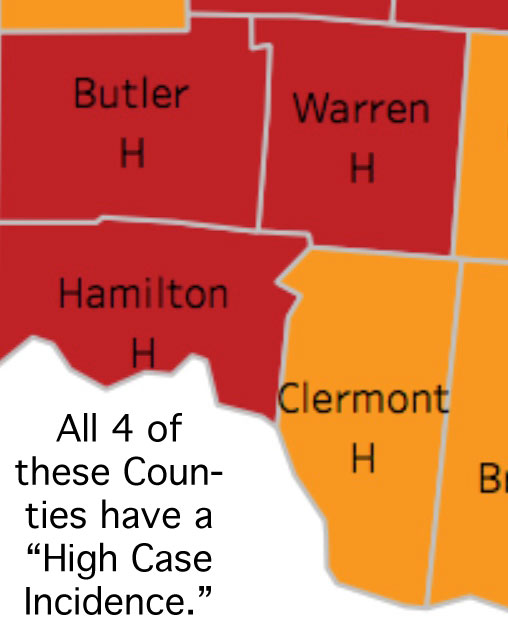
    On Thursday, Governor DeWine released Ohio’s updated Public Health Advisory System map. New health data compiled by the Ohio Department of Health found that 29 counties currently have a very high risk of exposure and spread (Level 3): Hamilton, Butler, and Warren are among the “RED” counties.

    “We’ve gone up dramatically in a relatively short period of time,” Gov. Mike DeWine said to reporters Thursday.

    “What you’re seeing in today’s numbers should get our attention,” DeWine said. “There’s a red tide flowing all over the state of Ohio.”

    The good news: More Ohioans than ever are being tested for the new coronavirus. The bad news: The rate at which those tests are coming back positive has doubled since Sept. 23, a sign the virus is growing more prevalent.

    Thirteen new counties turned red this week indicating “very high exposure and spread” on the Ohio Public Health Advisory System — a product of seven inputs like hospital visits, outpatient care visits in a county, population-adjusted infection rates and others. Twenty-nine counties are red, spanning about two-thirds of the state’s population.

    “What you’re seeing in today’s numbers should get our attention,” DeWine said. “There’s a red tide flowing all over the state of Ohio.”


    DeWine said some of the newly-turned red counties are slated to host community events like political rallies, pub crawls and social gatherings and that “now is really the time to rethink whether these are in the best interest of the community.”

    He did not address his own administration’s decision to exempt recent rallies for President Donald Trump from the statewide mask requirement.

    View previous week’s DATA

    While DeWine said there are no plans in store for any kind of statewide stay-at-home order, he declined to promise against instituting the policy down the line.

    All told, nearly 176,000 Ohioans have contracted COVID-19. Nearly 17,000 have been hospitalized, and 5,038 have died since March.

    In red counties, health department staff said they continue to see spread at family gatherings like bonfires, birthday parties and barbeques.

    Jennifer Hiestand, a public information officer at the Zanesville-Muskingum County Health Department, estimated 60% of people in public are wearing masks. Contact tracers have found “mini outbreaks” that are seemingly the result of people letting their guards down.

    In red counties, health department staff said they continue to see spread at family gatherings like bonfires, birthday parties and barbeques.

    “People just made the decisions not to social distance or not to wear a mask, those things that they probably should have,” she said.

    Mahoning County Health Commissioner Ryan Tekac said he is seeing a lot of the county’s progress this summer start to erode as cold weather drives people inside.

    “I think there are some concerns right now that individuals are putting their guards down,” he said.

    Ohio’s recent case surge fits in with a national trend. The New York Times reports cases are trending upward in 41 states, especially in the Midwest.

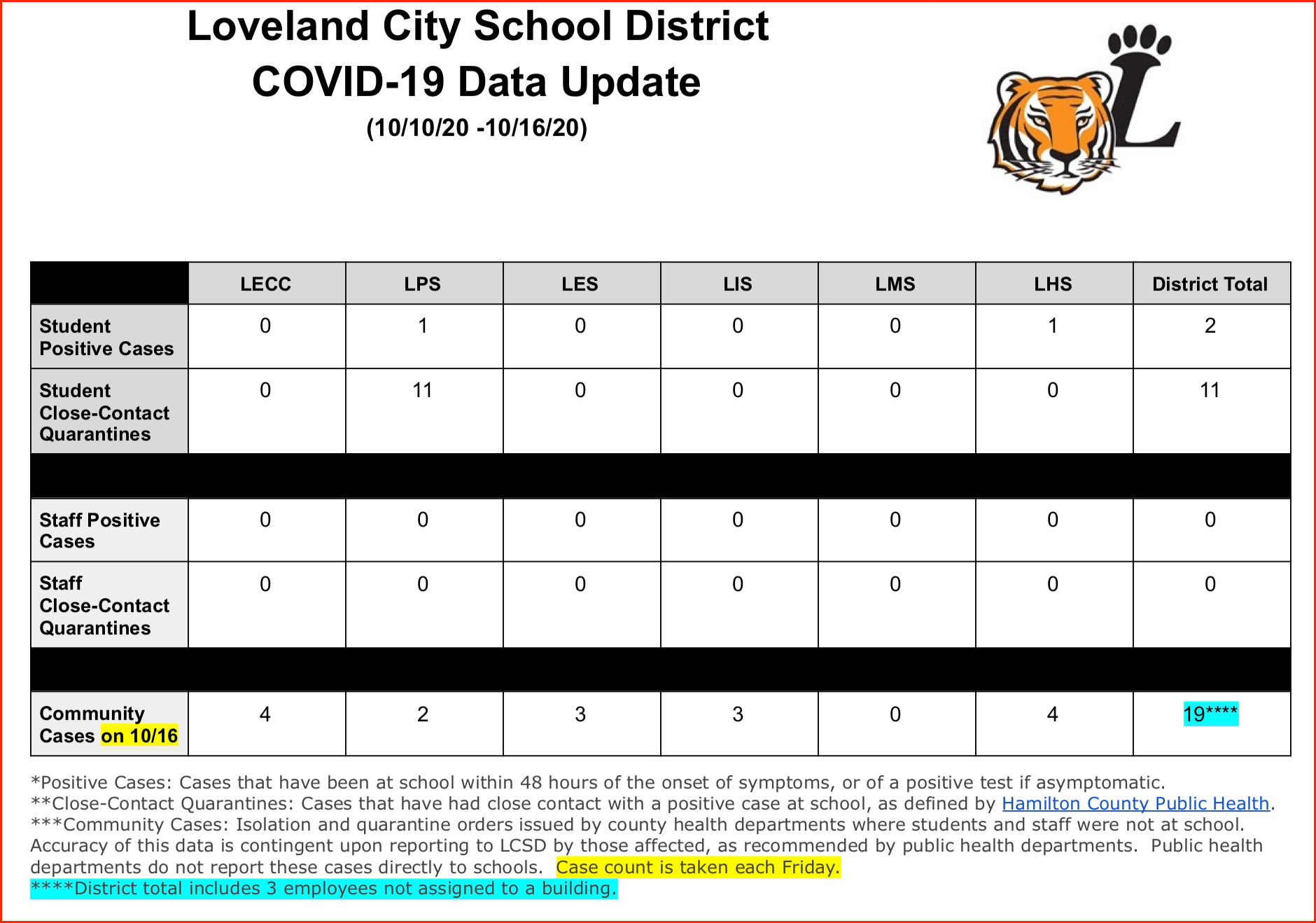
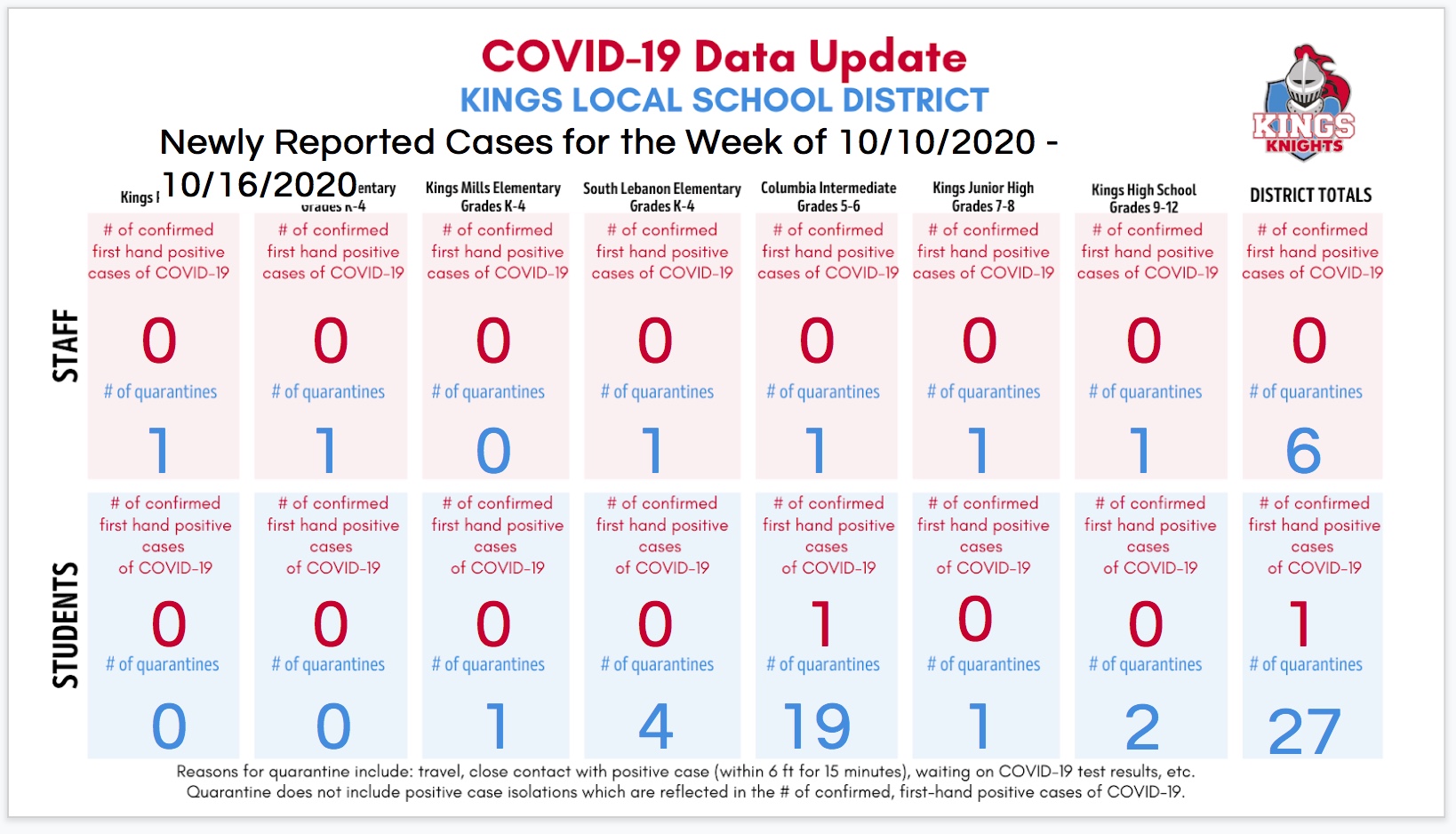
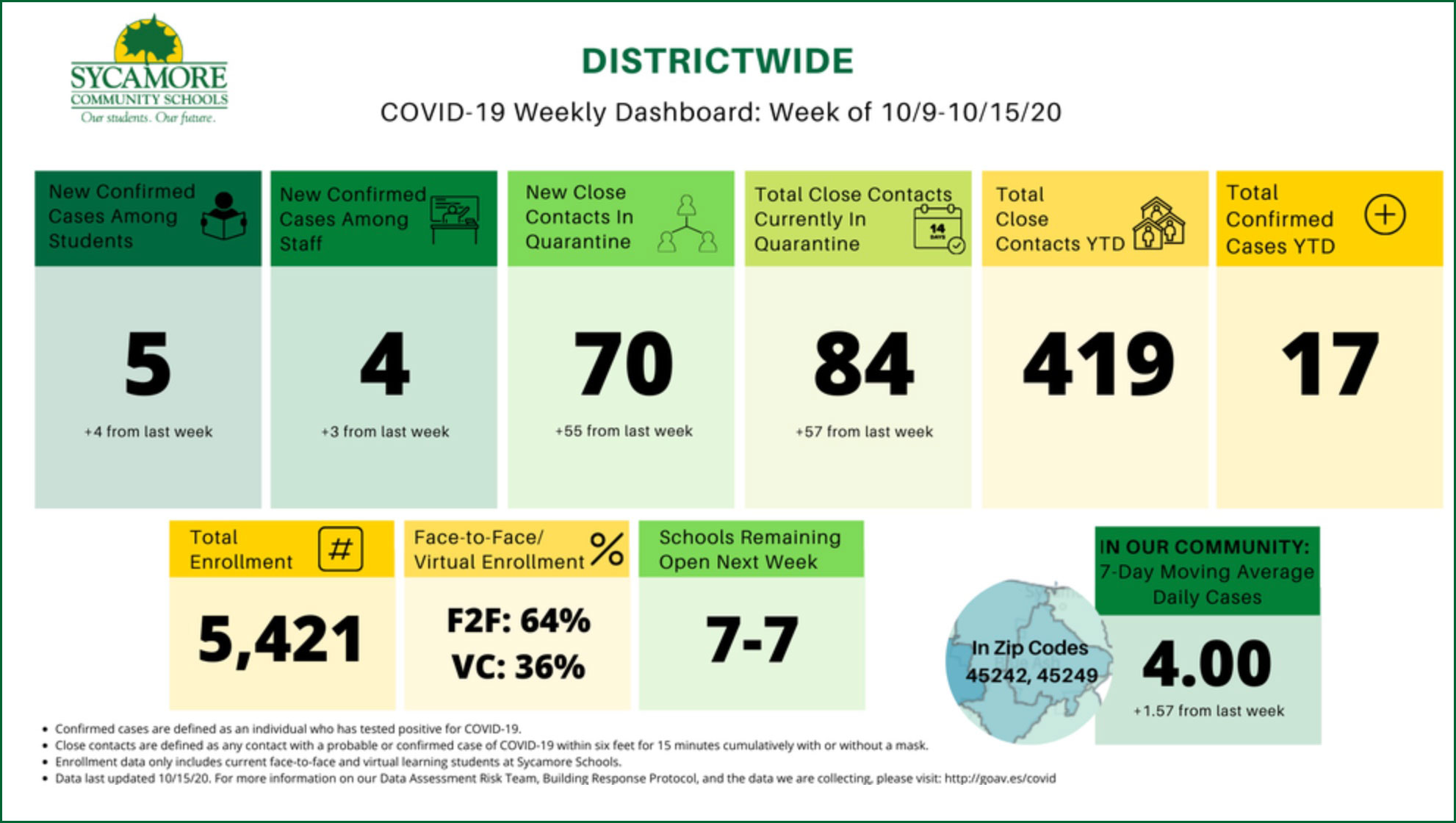
    Sycamore Aves mom reminds us of the importance to stay home if you’re experiencing COVID-19 symptoms. These next few weeks will be crucial. Please do your part so we can stay in school!

    Two holidays are coming up that will test Ohio’s public health discipline — Halloween and Thanksgiving.

    Tekac said there’s a lot of concern, especially with Thanksgiving, about the potential for outbreaks. However, he said people know the guidance; wear masks, keep your distance, wash your hands, outside is better than inside.

    He said at a certain point it comes to individuals making their own good decisions.

    Dr. Anthony Fauci, the top infectious disease expert at the National Institute of Health, told CBS News it’s an “unfortunate fact” that Thanksgiving will cause a lot of spread and suggested skipping out on the tradition this year.

    “I think given the fluid and dynamic nature of what’s going on right now and the spread and uptick of infections, I think people should be very careful and prudent about social gatherings,” he said.

  • The spirit of perseverance of LHS cheer  coach Emily Christman

    The spirit of perseverance of LHS cheer coach Emily Christman

    By Zach Connor, ESP Media

    Loveland, Ohio – Being a competitive cheer coach is hard work. Being an occupational therapist for special needs children is tough. Fighting cancer takes toughness.  Doing all three at the same time?  Seemingly impossible, yet at Loveland High School, it’s exactly what Varsity Cheerleading Coach Emily Christman has been doing for the past year.

    Loveland High School Varisty Cheer Coach Emily Christman (Photo Provided)

    Emily is a Xavier University grad where she cheered for the Muskies basketball team while working on her Master’s degree for Occupational Therapy.  She made her way to Loveland in 2015 filling in for a cheerleading coach on maternity leave, parlaying into full time coaching status by 2017.  Everything was moving along as planned until October of 2019 when Christman’s life would be forever changed.

    A trip to the doctor and multiple scans and tests would reveal that Emily Christman had cancer in the breast and lymph nodes.  “The entire month of October was just a whirlwind…and by November I was starting chemo.”  Christman would require treatments every three weeks, receiving six of them in total. 

    “I feel very fortunate because I didn’t really have some of the heavy hitting side effects that some people can get.” As if the pandemic wasn’t enough to deal with, fast-forward to March of 2020 when Emily would need a double mastectomy.  The next few months would see more radiation treatments through the month of May, and even now Emily still has to go in for a treatment once every three weeks, which will last until January. 

    This story is re-published with the permission of the Loveland High School Athletic Department where it was first published.

    Never allowing herself to get down about it all she is quick to point out that even these current treatments are not nearly as taxing as they might seem.  “Again, all things considered, it really was probably the best of the worst situation.”

    While one might think a cancer diagnosis would slow someone down, it seemed to have the opposite effect on Emily as she was just recently married in August, so for those of you keeping track, that would be two full time jobs, fighting off cancer, and planning/getting married all happening simultaneously. 

    Her diagnosis hasn’t slowed down the ability to get the best out of Loveland Tigers competitive cheer squad either: 2018 saw the team place 3rd in the Eastern Cincinnati Conference (ECC), and 2019 had them climb up to 2nd place.  “There’s only one spot left to climb and we definitely have the girls to do it…it’s just an awesome group that we have.”

    Emily could not have had a better attitude when I spoke with her about everything she’s been through and she is truly a success story and someone Loveland Athletic Director Brian Conatser is happy to have.  As for the secret behind making the oftentimes chaotic schedule work and the long car rides between jobs?  Emily kept it simple, “that’s what podcasts and E-books are for.”