Tag: Susan Tebben

  • Ohio lawmakers reintroduce medically unproven ‘abortion reversal’ bill

    Ohio lawmakers reintroduce medically unproven ‘abortion reversal’ bill

    A study on the “reversal” method was suspended in 2019 after women had to be hospitalized for severe vaginal bleeding.

    By Susan Tebben and Ohio Capital Journal

    Ohio lawmakers are once again proposing that patients be made aware of a controversial and unproven “abortion reversal” method.

    State Reps. Kyle Koehler, R-Springfield, and Sarah Fowler Arthur, R-Ashtabula, are the main sponsors of a bill they are calling the “Abortion Pill Reversal Information Act.” Two-dozen Republicans in the Ohio House of Representatives have signed on as cosponsors.

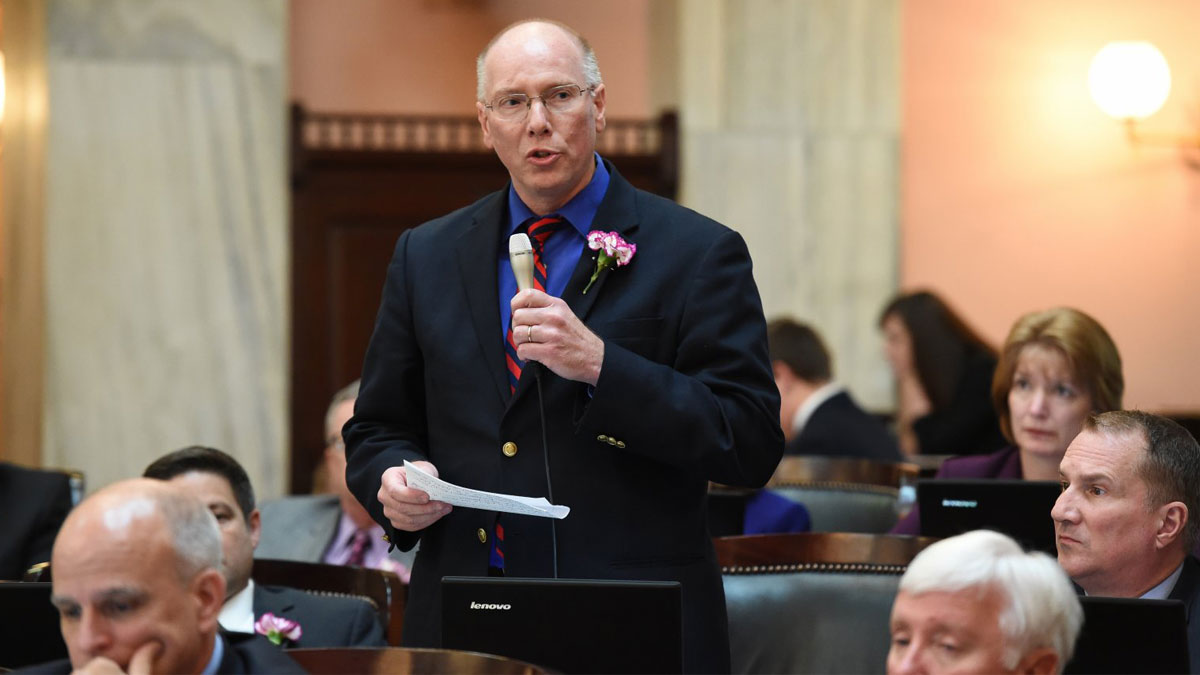
    Jean Schmidt (R-Loveland) is a co-sponsor of the Abortion Pill Reversal Information Act.

    “This bill does not require women to reverse their abortions,” Koehler said in a provided statement released alongside the Ohio Right to Life group. “Instead, this legislation provides scientific and proven medical information to mothers in crisis.”

    House Bill 378 involves the medication abortion drug mifepristone, which is used in conjunction with a drug called misoprostol, to end pregnancy. Physicians would be required to tell patients about a method that anti-abortion advocates say would “reverse” the abortion.

    State Reps. Kyle Koehler, R-Springfield, and Sarah Fowler Arthur, R-Ashtabula.

    The so-called “abortion pill reversal protocol,” the sponsors say, involves administering additional progesterone to counteract the progesterone-blocking effects of the first dose of the medication abortion drug.

    But the method has not been proven effective and has been criticized by medical professionals. A study on the “reversal” method was suspended in 2019 after women had to be hospitalized for severe vaginal bleeding. Ohio Right to Life’s executive director Stephanie Ranade Krider, serving as vice president at the time, called the study “at best morally questionable and worst, coercive of these women who no doubt needed support when facing an unplanned pregnancy.”

    Advocates like Jen Moore Conrow, executive director for the Cleveland nonprofit abortion clinic Preterm, say the method is “untested, unproven and potentially unsafe,” and so is intervening on conversations between a doctor and a patient.

    “Any law that dictates what physicians must say to patients really interferes with the doctor-patient relationship, particularly if physicians are forced to give false information,” Moore Conrow told the Ohio Capital Journal.
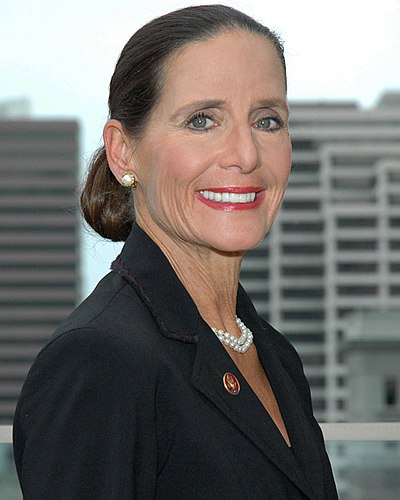
    Jean Schmidt (R-Loveland) is a co-sponsor of the Abortion Pill Reversal Information Act

    A bill with similar aims was approved by the Ohio Senate in 2019, but never made it out of a House committee.

    Similar bills have been introduced or passed in several other states, with limited success. A federal judge blocked North Dakota’s law in 2019, and Arizona repealed its “abortion reversal” law in 2015 after the state failed to provide experts to defend the law in court.

    The American Medical Association felt compelled to challenge the North Dakota legislation, which it said would provide “false, misleading, non-medical information about reproductive health.”

    The American College of Obstetricians and Gynecologists also spoke out against legislator-prescribed medical advice.

    “Claims regarding abortion ‘reversal’ treatment are not based on science and do not meet clinical standards,” ACOG stated on the method.

    Abortion is legal in Ohio up to 20 weeks gestation.

    The Ohio General Assembly is currently on break for the summer, so consideration of the bill will not take place until the fall. There is a separate abortion-regulation effort in the Senate, in which Republican sponsors are seeking to criminalize physician inaction during “botched” abortions — or abortions in which a baby is born alive, something that is statistically rare.


  • Marriage shouldn’t negate rape, bill supporters say

    Marriage shouldn’t negate rape, bill supporters say

    By Susan Tebben and Ohio Capital Journal

    Supporters of a bill removing a loophole for spousal rape and sexual assault say the state needs to stop the double-standard that exists when it comes to sex crimes.

    Heather McComas-Harrison said she spoke from experience when imploring a House committee on Thursday to pass House Bill 121, to remove language in Ohio law that excepts spouses in offenses such as rape, sexual battery and gross sexual imposition.

    McComas-Harrison said it’s unfair that her husband shouldn’t be charged for sex crimes she said were perpetrated against her over many years and resulting in physical and emotional injuries, because of the mere existence of a marriage license.

    “Perfect strangers come across each other and one rapes the other, society gasps and is appalled and wants justice for the person who was raped,” McComas-Harrison told the House Criminal Justice Committee. “Yet when two people…have vowed to honor each other and the like, (they) have zero rights to justice when raped by their lifetime partner.”

    McComas-Harrison said it’s wrong of the state to allow a request for a divorce on the grounds of rape, but not give survivors rights or even the right of the spouse to receive treatment through the Ohio Department of Rehabilitation and Corrections.

    Micaela Deming, policy director and staff attorney for the Ohio Domestic Violence Network, said House Bill 121 gives equal access to the law for those experiencing rape, within marriages and outside of them.

    Citing a National Institute of Justice report, Deming said 40 to 45% of women in abusive relationships are sexually assaulted by their abusive partner, with more than half of those women assaulted multiple times. Even with these statistics, Deming said married women have less legal protection from rape than unmarried women.

    “Indeed, current law serves as a disincentive for women to enter into marriage, knowing that they will lose legal protection if their spouse decides to be violent,” Deming testified to the committee.

    Louis Tobin, executive director of the Ohio Prosecuting Attorneys Association, agrees that the presence of a legal document designating two people as spouses should not make the difference when it comes to sex crimes.

    “Ultimately, someone with a viable allegation of spousal sexual abuse should not be prevented from seeking and obtaining justice out of concern that some other individuals will try to abuse our criminal justice system by making false allegations,” Tobin testified to the committee.

    The law would also allow a person’s spouse to testify in the prosecution of those alleged crimes.

    Tobin was asked by state Rep. Bill Seitz, R-Cincinnati, whether, for example, a contentious divorce would be considered when looking at allegations of sexual misconduct against a spouse.

    “Down the line, somewhere in that 25-year period (the statute of limitations for rape in Ohio), they get divorced, they got fights over the kids, and the spouse says ‘well, here’s a wonderful idea, let’s run down to my friendly local prosecutor and charge this other spouse with spousal rape or gross sexual imposition,’” Seitz posed to Tobin.

    Tobin said in any legal case, an allegation still has to rise to the level of probable cause and eventually proof beyond a reasonable doubt, no matter the source of the allegation.

    “I think there’s no difference between a woman who was in a relationship 12 years ago showing up to make that allegation (and) a woman who was married 12 years ago showing up to make the allegations,” Tobin said. “Prosecutors have to sort that stuff out and just because you’ve got a marriage document, I think, doesn’t make the…rape or the sexual assault any different.”

    The bill is one of two currently circulating in the statehouse that address spousal rape, and another of several attempts to amend Ohio law on the topic.

  • K-12 funding boost headed to districts, ACT/SAT opt-out bill headed to the House

    K-12 funding boost headed to districts, ACT/SAT opt-out bill headed to the House

    By Susan Tebben and Ohio Capital Journal

    Columbus, Ohio – The Ohio legislature approved COVID-19 pandemic-related measures to bring more federal monies to K-12 schools, and the House will review another bill to reduce testing requirements for students.

    The Ohio Senate unanimously passed House Bill 170 on Wednesday, with the House promptly agreeing to the Senate’s version of the bill the same day.

    “Parents, teachers and students in the communities that we represent are depending on this,” said state Sen. Teresa Fedor, D-Toledo, during the Senate session on Wednesday.

    The bill provides a total of $857 million to the Ohio Department of Education in federal CARES Act funding to K-12 schools.

    Included in the bill is $7 million for duties performed by the Ohio National Guard during the pandemic, and $173 million for the state Department of Health to expand COVID-19 testing and support.

    Another $154.9 million will go to the Emergency Assistance to Non-Public Schools, and $633 million to the Elementary and Secondary Relief (ESSER) funds.

    The bill also permits the Auditor of State to audit the spending by the Ohio Department of Education and each school district for money appropriated for fiscal year 2021 and funds received via COVID-19 stimulus packages, the CARES Act and the American Rescue Plan.

    A piece of legislation helping students and their schools avoid using standardized testing as a metric of learning is on its way for a full House full vote.

    House Bill 82 was quickly passed out of the House Primary & Secondary Committee this week, moving forward a measure to allow students to opt out of state-funded administration of the ACT and SATs.

    There was no discussion of the bill before it was passed out of committee, but the bill had the support of the Ohio School Counselor Association and the Ohio Education Association. The bill’s sponsors, GOP state Reps. Jon Cross and Don Jones, said the stress of the tests on students and a trend in higher education of making ACT/SAT scores optional for admission make state spending on the tests unnecessary.

    Currently, all high school juniors are required to take a college admission test as part of the state’s College and Work Ready Assessment System. The state pays $40 per student for the ACT and $36.35 per student for the SAT, according to an analysis by the Legislative Service Commission.

    That amounts to $4.9 million in state spending in fiscal year 2019, most of which was used for the ACT.

    Should the bill be passed and go into effect during the 2021-22 school year, the first class to be allowed to opt out would be the class of 2026.

  • John Becker wanted to charge Gov. Mike DeWine with terrorism. Clermont County prosecutor wants his money back

    John Becker wanted to charge Gov. Mike DeWine with terrorism. Clermont County prosecutor wants his money back

    State Rep. John Becker, R-Union Twp. File photo from Ohio House website.

    Becker served parts of Loveland and Miami Township

    By Susan Tebben and Ohio Capital Journal

    The former Clermont County prosecutor is asking for a refund after a former state legislator asked him to investigate the Ohio governor for terrorism.

    Ohio Attorney General Dave Yost told the 12th District Court of Appeals that he, too, thinks former state Rep. John Becker should pay “reasonable attorney fees” after filing an affidavit asking for seven felonies and three misdemeanors to be leveled against Gov. Mike DeWine.

    Yost wrote in a brief to the court that an alternative to the approximately $4,000 reimbursement from Becker could be to “order Becker to spend a day observing criminal trials in open court, so that he can better understand the gravity of the matters for which prosecutorial and judicial resources must be preserved.”

    Court documents say Becker, who left the legislature due to term limits, filed a “private citizen affidavit” last September, accusing DeWine of engaging in a pattern of corrupt activity, terrorism, inducing panic, making a terroristic threat, complicity and conspiracy. He also alleged that DeWine had committed bribery, coercion, interference with civil rights and “patient abuse or neglect.”

    All of these charges were leveled against the governor “for his handling of the ongoing COVID-19 pandemic throughout the state of Ohio, but more specifically, within Clermont County,” according to court documents.

    The case was referred to then-county prosecutor D. Vincent Faris because of the felony charges. After reviewing the affidavit that same day, Faris told the county clerk “I…do not find a basis for the filing of a complaint pursuant to this private citizen’s affidavit.”

    Two days later, Becker’s attorney asked to see the records related to the investigation Faris had done, and after receiving all the documents the prosecutor’s office said they had, asked the court to compel Faris to “act in accordance with his clear legal duty.”

    The “extremely short time frame” of Faris’ investigation and lack of investigatory records, Becker said, proved the prosecutor “did not conduct an ‘actual,’ ‘meaningful’ and ‘legitimate’ investigation into his allegations” against the governor.

    Faris argued to the court that several of Becker’s allegations were “so vague” that they made further investigation “futile.”

    The appeals court found that Faris had conducted an investigation, and that the time of an investigation isn’t set in Ohio Revised Code, adding that the time involved depends on the type of allegations made.

    “(Ohio Revised Code) requires the prosecutor to conduct an ‘investigation,’ not an ‘investigation that takes longer than five hours and results in the production of voluminous investigatory records’ as Becker suggests,” the court wrote in their decision.

    The court ruled that Faris is allowed to hold a hearing to impose “sanctions” on Becker, saying Becker’s conduct in the case “goes beyond a mere disagreement with the arguments presented by an opposing party.”

    “Considering the record in this case, it is clear that the only ‘investigation’ that would satisfy Becker is one that would result in Prosecutor Faris issuing a warrant for Governor DeWine’s arrest and subsequent prosecution,” the court wrote. “But Prosecutor Faris is not required to bend the law in order to satisfy one man’s efforts to grandstand and garner media attention for himself to score political points with his (now former) constituents.”

    A date for the hearing on sanctions against Becker was not specified in the court’s decisions.

  • Subject of ’91 education funding lawsuit sees hope in new formula in state budget

    Subject of ’91 education funding lawsuit sees hope in new formula in state budget

    By Susan Tebben and Ohio Capital Journal

    In 1991, Sheridan High School freshman Nathan DeRolph thought Ohio’s education funding formula would change before he entered college.

    He and his parents had filed a lawsuit against the state that would eventually make it to the Ohio Supreme Court, fighting against the overreliance on property taxes built into public school funding.

    “I kind of naively, I think, thought by the time I’m a senior in high school, this will all be wrapped up and hopefully there will be a new funding plan in place, and generations after me won’t have to deal with the same challenges,” DeRolph said.

    Three decades later, he just watched his daughter graduate from high school, under the same funding system his family fought against, through multiple supreme court decisions.

    The Ohio legislature still has not overhauled the system, as ordered by the state’s high court decisions.

    “Over 30 years, that’s 3 million kids that have been through a broken system, and we can’t afford to have another 30 years of the same broken system,” DeRolph said.

    He and his father, Dale, told a virtual forum hosted by the League of Women Voter’s and the Children’s Defense Fund Ohio that they see hope in the new push to include a funding formula overhaul in the latest biennial budget.

    The overhaul being considered for the new budget was already set up after years of work by now-Speaker Bob Cupp and former state Rep. John Patterson.

    The overhaul, which started this year as a separate piece of legislation carried over from the last General Assembly, would lessen the weight of property taxes on the funding formula, basing 40% of the formula’s funding on the income levels of the district.

    In the previous budget, the present school formula only took on a small part of district funding, as 82% of Ohio’s districts weren’t a part of the formula found to be unconstitutional.

    “What that means is districts were either not getting enough money that the formula says they should have gotten, or they’re getting more money than the formula says they should receive,” said Tom Hosler, superintendent of Perrysburg Schools, and a member of a workgroup that has spent years searching for a solution to the education system.

    Hosler said the $6,020 per student that is the current base cost — the most basic amount it takes to educate a child — is a result of “patchworking” and “fixing things on the fly” rather than a comprehensive dissection of Ohio districts.

    “Why $6,020? We don’t know,” Hosler said. “We don’t know how it got there and we…have no idea how those dollars are to be spent or allocated, or how they came to us. It’s just the number.”

    The need for a new funding model also comes from continually increasing education costs, and the inability for the current education model in the state to keep up, according to Steve Dyer, director of government relations for the Ohio Education Association.

    That includes the ratio of local to state share of education within the funding model.

    “2020 was the highest local share of education costs we’ve had since 1985,” Dyer said during the forum.

    Comparing the amount of non-human services budget being allocated for primary and secondary education, data cited by Dyer showed the state is committing 6% less than was distributed in 1975.

    When it comes to privatization of education, or the inclusion of private schools and charter schools in the public school funding via the EdChoice voucher program, Dyer said districts get about $1.6 billion less than they did before the voucher programs were paid for through district budgets.

    That $1.6 billion matches up with the increase in property taxes the state has seen since 2003, when the Ohio Supreme Court issued its final ruling on the DeRolph.

    “It’s not rocket science,” Dyer said. “If the state isn’t picking it up, local taxpayers are, or our kids are suffering with fewer resources or fewer opportunities.”

    The state budget is currently being considered by the Ohio Senate, and a final version is due by July.

  • Planned Parenthood sues Ohio over telemedicine abortion law

    Planned Parenthood sues Ohio over telemedicine abortion law

    By Susan Tebben and Ohio Capital Journal

    The national and state chapters of Planned Parenthood sued the state of Ohio Thursday over a law set to go into effect in mid-April that prohibits abortion services conducted through telemedicine.

    The lawsuit regards Senate Bill 260, signed into law in January and banning an available telehealth option for what’s called a medication abortion. In a medication abortion, a two-pill regimen is given to a patient, as opposed to removing a fetus or fetal tissue surgically.

    The telemedicine abortion law prohibits physicians from conducting abortions or providing abortion-inducing drugs to a pregnant person without the physical presence of a physician. Violating the law could result in a fourth-degree felony charge for the physician.

    Currently, abortion in Ohio is legal up to 22 weeks gestation.

    Ohio currently requires at least two visits to a health center before an abortion can take place, once for an ultrasound and discussion with a physician about the procedure, and another at least 24 hours later for the actual abortion.

    With medication abortion, the second visit does not have to occur at one of Planned Parenthood’s ambulatory surgical clinics, but can instead happen at one of the health centers that may be closer to the patient, staffed with a nurse practitioner, midwife or advanced practice registered nurse on site, according to the clinics.

    “Once at a health center services as a telemedicine medication abortion site, a patient is connected by videoconference with a physician located in Cincinnati, or in East Columbus, or Bedford Heights,” the lawsuit states.

    The medicine is ingested “under observation by the physician,” and a health center staff member is present in person.

    According to Planned Parenthood, the telehealth option helps, as it does in other medical fields, with medical care that could be limited in certain communities.

    “Ohio is one of the most medically underserved states in the country, a problem particularly felt by Black communities, people of color, as well as the LGBTQ+ community in our state,” said Iris Harvey, president and CEO of Planned Parenthood of Greater Ohio, in a statement. “Telemedicine is key tool to address those disparities.”

    The suit, filed in Hamilton County Court of Common Pleas because of the Planned Parenthood Southwest Ohio Region listed as a party, claims the law “irrationally prohibits abortion providers from using telemedicine to provide medication abortion to Ohioans.”

    “SB 260 carries felony criminal penalties and draconian civil and professional sanctions for abortion providers who violate it,” the suit states.

    The suit was filed against the Ohio Department of Health, ODH director Stephanie McCloud, the State Medical Board of Ohio, along with prosecutors of Hamilton County, Franklin County and Cuyahoga County, all of which have Planned Parenthood clinic locations.

    The system of clinics is asking the court to prevent local prosecutors and state agencies from enforcing the law because it “blatantly violates the Ohio Constitution’s guarantees of substantive due process, equal protection and free choice in health care,” according to court documents.

    The suit even claims abortion access would be cut off completely in Butler, Mahoning and Richland counties, which would go against current Ohio law allowing abortions for pregnancies up to 22 weeks.

    The clinics also noted state officials’ praise of telemedicine in other types of medicine. The state has also passed legislation to lessen telemedicine regulations as they were attempting to ban the use of it in abortion services.

    Telemedicine has become a hot topic amid the pandemic, as use of the services for everything from primary care to dentistry increased during stay-at-home orders and precaution protocols.

    The lawsuit cited the federal Centers for Medicare and Medicaid Services, which called telemedicine “a cost-effective alternative” to traditional medical care.

  • Milford and Lakota schools become centers of learning for COVID-19 best practices

    Milford and Lakota schools become centers of learning for COVID-19 best practices

    By Susan Tebben and Ohio Capital Journal

    Milford and West Chester, Ohio – Two Ohio school districts with some of the highest cumulative case rates for COVID-19 say as they remained in-person, their safety protocols only got better.

    Milford Exempted Village School District in Clermont County has remained in-person since the fall, and has had to close twice due to staff absences.

    “We simply had too many staff out sick or quarantined and couldn’t find the subs,” Wendy Planicka, director of communications and public relations for the district, told the OCJ. “We have shut down grade levels at a few of our elementary buildings as well, but not an entire elementary building.”

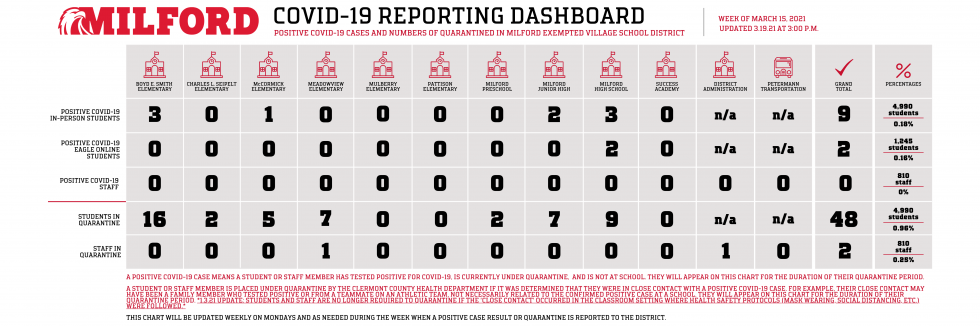
    The school district, like many in the state, provides weekly counts of COVID-19 cases on their website, along with cumulative district-wide data.

    Since Aug. 1, the district has reported 649 total cases in their district of 6,235 students and 810 staff members.

    Currently 4,990 students are enrolled in-person, with 1,245 students enrolled in the district’s virtual program, Eagle Online.

    Planicka said community spread has been the “number one cause of our cases,” followed by spread through athletics or non-school sponsored activities such as family parties.

    “There have been two or three cases where we believe spread happened in an athletic setting — for example when football was in season last fall, at one point almost the entire football team was quarantined due to possible spread,” Planicka said.

    The school implemented protocols that require an investigation into every positive case, including contact tracing in partnership with Clermont County Public Health and a minimum 10-day quarantine period for students and staff who test positive.

    In schools, a mask requirement is in place, and custodians are to disinfect desk areas every evening, along with using an electrostatic sprayer “at least every 30 days” according to Milford’s protocol list.

    Milford’s reopening plan was developed to make the return to school as safe as possible, but not to return the school to exactly as it was, according to the plan itself.

    “School will not look the same as it did prior to March 2020,” the plan stated. “These changes may be temporary or they may be permanent. Time will tell.”

    Milford’s latest COVID 19 Dashboard (https://www.milfordschools.org/services-and-programs/return-to-learning-20/covid-case-reporting-61/)

    Butler County’s Lakota Local Schools had the highest number of cases since the pandemic counts began, with more than 700 total student cases, according to state data. The school is also home to 14,000 students, having reopened to in-person learning on August 17.

    “Since then, our students have had the opportunity to attend school all day, every day,” said Betsy Fuller, community relations director for the district.

    There is a virtual learning option at Lakota, being utilized by 3,000 students, according to Fuller.

    In the five months that made up their first semester, the school reported 5,172 students in quarantine. The worst month for positive cases in students was December, with 221 of the 468 reported in that semester happening then.

    “We traced many of the positive cases to holiday gatherings and celebrations happening outside of school between Halloween and Thanksgiving,” Fuller said. “It is also important to note that very few cases, if any, could actually be linked back to classroom spread.”

    The district had guidelines in place as soon as it reopened, including requiring face coverings for all K-12 students, desk cleanings between classes, assigned seating at lunch, and block scheduling to avoid frequent class changes.

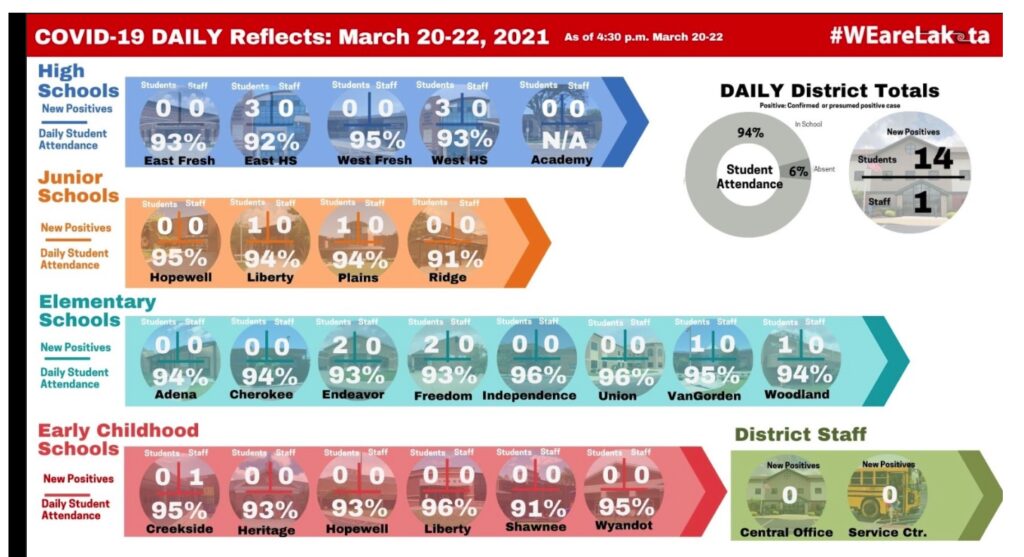
    In the three months of the second semester so far, the district has reported 345 positive cases, but a 93% student attendance rate.

    Lakota’s latest COVID 19 Dashboard (https://www.lakotaonline.com/cms/One.aspx?portalId=216799&pageId=24411613)

    In February, the state implemented a vaccination program specifically for teachers and school personnel, making returning to school or already conducting in-person instruction a pre-requisite to districts receipt of vaccination doses.

  • Ohio abortion ban with felony charges back in the works, targeting Roe v. Wade

    Ohio abortion ban with felony charges back in the works, targeting Roe v. Wade

    By Susan Tebben and Ohio Capital Journal

    The battle on abortion in Ohio will only be stopped by the U.S. Supreme Court or a change in the U.S. Constitution, according to reproductive law experts and those once again pushing for abortion bans.

    Two state legislators have introduced a bill making abortion procedures a felony, which marks the second time in as many years that a bill was introduced hoping for the overturning of Roe v. Wade, the national Supreme Court decision that said abortion was legal nationwide.

    A physician accused of “causing or inducing an abortion” would face an official charge of “criminal abortion,” which would be a fourth-degree felony under the new Senate Bill, introduced recently in the Ohio Senate.

    If signed into law, the bill would not take into effect until either the U.S. Supreme Court overturns the 1973 decision in Roe. V. Wade, which legalized abortion nationwide, or an amendment to the U.S. Constitution “upholds Ohio’s authority under the federal system to prohibit abortion,” according to a statement from bill cosponsor state Sen. Kristina Roegner’s office.

    “I believe that when the U.S. Supreme Court considers a challenge to Roe, they will realize that the original decision from 1973 was seriously flawed, and return the authority regarding abortion to the states,” Roegner said in the statement.

    Nearly a year ago to the day, former state Rep. John Becker introduced similar legislation, which would have barred state funds from being disbursed for abortion-related services and created a first-degree felony charge of “abortion manslaughter.”

    Becker’s bill never received a hearing, and therefore never moved in the 133rdGeneral Assembly. Currently, abortions are legal in Ohio up to 22 weeks gestation.

    Both bills have an exception in the event that “the abortion was necessary to prevent the death of the pregnant woman,” according to language in the current bill.

    Ohio is one of a few states trying to pass anti-abortion laws and create a review of Roe v. Wade.

    The abortion fight in the state has been going on since Roe v. Wade was decided, but a law professor who also works on abortion challenges says the last few years have been more active than most.

    “I think there’s almost nothing that’s beyond the pale right now,” said Professor Jessie Hill of Case Western Reserve University.

    Hill is also cooperating attorney for the ACLU, which has five lawsuits against state abortion measures going on simultaneously, including one filed this weekchallenging a law on burial and cremation after surgical abortions. Since Hill returned to Ohio in 2001, she’s only seen efforts to regulate abortion ramp up year after year.

    “All of a sudden these bills started passing, and in the last few years they’ve been more and more extreme,” Hill said, adding that gerrymandering creating a Republican-leaning legislature contributed to the increase in anti-abortion legislation.

    Anti-abortion groups are lining up to support the bill, with lobby group Ohio Right to Life calling the legislation “powerful and life-affirming.”

    “For the first time since abortion was legalized, we have a pro-life majority on the (U.S.) Supreme Court,” said Mike Gonidakis, president of Ohio Right to Life. “Roe v. Wade hangs by a thread. Ohio must be prepared for what comes next.”

    Planned Parenthood’s Ohio chapter said the newest bill restricts access to care rather than making lives better.

    “S.B. 123 is the latest egregious attack on abortion access from leaders in the Ohio General Assembly who are only focused on eliminating legal access to abortion, to the neglect of everything else – including the pandemic.”

    Hill sees a constitutional amendment as a long shot, with a requirement of support from 75% of states in order to make that happen.

    Targeting a U.S. Supreme Court decision is a bigger possibility, and even if the high court decides not to overturn the decision as a whole, Hill says cutting back the protections included in Roe v. Wade is something not often considered as the debate continues.

    “I think it’s an under-appreciated possibility that the court is not really interested in overturning Roe v. Wade, but that they would reduce it to almost nothing,” Hill said.

    The new Ohio bill will now be assigned to a House committee for hearings and consideration.

  • Education budget debate begins as Jan. budget shows declines in higher ed, K-12

    Education budget debate begins as Jan. budget shows declines in higher ed, K-12

    Getty Images.

    By Susan Tebben and Ohio Capital Journal

    Subcommittees on K-12 and higher education are beginning their discussions on the new operating budget this week, and they have plenty of budgetary information to look at, including declines shown in the January budget report.

    The Ohio House Finance subcommittee on higher education will take their first look at the pieces of the state operating budget that touch on higher education this week

    As they look to the future of funding colleges and universities in the state, the Office of Budget and Management gave a look at last month’s disbursements, and year-to-date funding disbursements that were below estimates.

    According to the most recent OBM monthly budget data report, January disbursements for higher education was 3.9% below estimates, a total of $7.2 million less than the month before.

    The state budget agency said declines came from below-estimate spending in the Ohio College Opportunity Grant, Choose Ohio First Scholarship and National Guard Scholarship programs. These programs had “lower-than expected requests for reimbursement from higher education institutions,” according to the OBM.

    In his executive budget proposal, Gov. Mike DeWine wants to raise the Ohio College Opportunity Grant award total by $500, and build award 2,000 more scholarships the Choose Ohio First program.

    On the year, higher education institutions received 1.2% less than the year before, and compared to January 2020, they received 11.5% less in disbursements last month.

    The executive budget proposal increases the state’s share of instruction, the main source of direct state aid colleges and universities receive, by 1.8% over the biennium “to maintain quality and provide support services.”

    The House Finance subcommittee on primary and secondary education has the operating budget as the only measure on the agenda for its meeting, scheduled for Thursday morning.

    They will look at the governor’s proposals to disburse more than $13 billion through fiscal years 2022 and 2023, including $1.1 billion in student wellness services.

    DeWine’s budget proposal adds $125 million in foundation funding that were taken away during pandemic budget cuts.

    In January, the OBM reported disbursements of $7.2 million to the Ohio Department of Education, nearly 1% below estimates for the month.

    The declines were credited to lower spending on EdChoice private school voucher program expansion, early childhood education and pupil transportation.

    The OBM report said early childhood education has been shifted away from the general revenue fund, and the EdChoice and transportation drops were due to offset payments and overspending on transportation in December.

    “The below-estimated spending was partially offset by the above-estimated disbursements for the Foundation Funding line item as the College Credit Plus payment to colleges for the summer and fall 2020 terms was above estimate,” the report stated.

    The primary and secondary education subcommittee also has a bill overhauling the funding formula for the state’s public school system on their desk to be considered during this General Assembly.

    An overhaul of that formula would change the sources and methods of disbursement to schools, releasing some of the burden on property taxes, and creating a payment system that goes more directly through the state.

    State aid to the schools through the foundation funding totaled $715.1 million in January, $8 million above estimates, according to the OBM. But disbursements were 6.2% less than January of last year, accounting for a $50 million loss.

  • Indigent burial program may see more action amid opioid epidemic, COVID-19 pandemic

    Indigent burial program may see more action amid opioid epidemic, COVID-19 pandemic

    By Susan Tebben and Ohio Capital Journal

    A state program to help those who can’t afford to bury their loved ones might see more action than usual, and cause the need for re-education for townships that have to pay for these burials.

    The Indigent Burial and Cremation program works with townships and municipalities to reimburse some of the costs of funeral disposition. When a resident is found to fall below the federal poverty line, Ohio law requires that a local government pay for the burial or cremation.

    But local government officials have said the program wasn’t used often in its last version, nearly two decades ago.

    More recently, however, several townships have called the state’s Board of Embalmers and Funeral Directors to get information about the program, and there are currently 450 applications being processed, according to Cheryl Grossman, the board’s executive director.

    “We look for that number to grow dramatically,” Grossman said.

    While a death certificate isn’t required with the application for funding reimbursement, Grossman and others have said the ongoing opioid epidemic and the COVID-19 pandemic could cause the program to have increased use.

    “The opioid crisis is not going away and in some places it’s only being exacerbated by the COVID-19 crisis,” said Heidi Fought, executive director of the Ohio Township Association.

    The program was a part of the budget more than a decade ago, but budget cuts led to the elimination of it until the last budget bill, passed in July of 2019.

    The new budget line item moved the program from the state Department of Job and Family Services to the Board of Embalmers and Funeral Directors and allowed the reimbursement of a total of $2 million.

    Under the new version of the program, a township can get reimbursed for up to $1,000 in burial or cremation expenses for an adult, and up to $750 for a child. Those numbers are a slight increase from the previous program, where reimbursements were set at $750 for an adult and $500 for a child.

    The Board of Embalmers and Funeral Directors seems to be the only state agency with information on the program. Representatives from the Ohio Department of Job and Family Services, the Department of Health, the Office of Budget and Management and the Auditor of State all referred questions about the use and payment of the program to the board.

    “While the local governments in the Southeast Region receive some funding, it is usually sporadic and nominal,” said Denise A. Blair, assistant chief auditor in the Southeast Region for the Auditor of State. “It would not rise to the level of materiality that would be included in our scope.”

    The OTA specifically lobbied to bring back the funding for the indigent burial program in the last budget, despite the rarity of a cut program returning to the state budget.

    “The fact that it did come back does show that the need is there,” Fought said.

    The need to re-educate townships on the existence of the program and how to be reimbursed for it is also there, because of the turnover over of local officials in the period between the program’s existence, according to Fought.

    Only local government representatives can apply for the reimbursement, so individuals have to go through those government officials to get help with their funeral disposition.

    The Ohio Township Association says the push to increase the program’s funding will continue, especially considering local governments are required to pay for indigent burials whether or not there is money in the program’s coffers to reimburse them.

    “A local government entity must carry out this duty even if funds are no longer available through the program,” according to the embalming and funeral directors board page on the program.

    The program is needed as a state program because poverty does not focus on one particular county, nor does the need for burials or cremations.

    “Indigency knows no boundaries,” said Fought. “They’re in central Ohio or Cleveland or Cincinnati, they’re everywhere.”