In early September, former Bengals tight end Tyler Eifert announced that he would choose to honor the memory of David Dorn, a retired St. Louis police captain who was killed in June of this year.
Christopher Ball is a longtime Loveland resident and an attorney
Eifert was selected by the Bengals in the first round of the 2013 NFL Draft and played his first seven seasons in Cincinnati. He recently signed a 2-year $9.5 million deal with the Jacksonville Jaguars, where he hopes to make a comeback after several injury-plagued seasons with the Bengals.
The NFL’s new stance is a stark reversal from its prior positions. In 2016 the league refused to allow Dallas Cowboys players to wear decals to honor five police officers killed by a sniper in downtown Dallas. Even Jerry Jones, the owner of the Cowboys, felt that allowing players to put unique messages on their helmets or wear pink to honor cancer survivors, would open “Pandora’s Box’ that would be difficult to ultimately control. In 2013 Bears wide receiver Brandon Marshall was fined for wearing green shoes to highlight issues surrounding mental health.
Whatever you may think of his opinions, Colin Kaepernick’s visible on-field protests against systemic racism and police violence are unquestionably a large part of the reason that he is no longer playing football. Prior to 2020, it was clear that the National Football League was doing all that it could to keep politics, protests, and uniform variance out of its brand.
Now that has all changed.
Roger Goodell has admitted that both he and the league were wrong for not listening to protesting players sooner. The new decal initiative is the National Football League’s attempt to, at least in part, allow its players to express their non-football opinions on the field, while they are at work, doing their jobs. While the new rules were ultimately put in place to allow players to place decals on their helmets “bearing names or initials of victims of systemic racism and police violence” Eifert’s choice sends a different message, one very similar to those of the 2016 Dallas Cowboys. Eifert himself has a long history of supporting military and first responders during his career, and so his choice to honor David Dorn is not surprising.
What will be interesting to see is whether the league will allow him to wear a decal honoring Dorn even though, by most standards, the slain police captain is not a “victim of systemic racism or police violence.” Early reports suggest that the players will be allowed to pick from an approved list of names, with options such as George Floyd, Breonna Taylor, and Ahmaud Arbery. While the NFL has not officially released its policy on decals, nor have they provided the complete list of names from which its players can choose, Eifert’s decision to honor Dorn is one that will no doubt spark debate on the boundaries of the NFL’s new policy.
Whether it opens Pandora’s box, as Jerry Jones once feared, is yet to be seen.
While the world anxiously awaits the day a vaccine becomes available to help prevent COVID-19, I wanted to take a moment for a more general vaccine discussion.
xxx
As has been evidenced through the COVID-19 pandemic, vaccination is perhaps the most valuable public health tool available. Some of us are old enough to remember friends, relatives and classmates stricken by polio. Many of us remember chicken pox, mumps and measles – the disease staples of childhoods past.
xxx
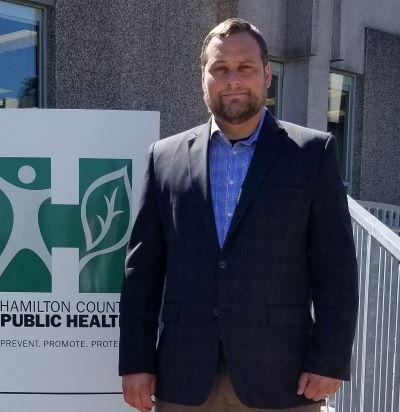
Greg Kesterman is the Hamilton County Health Commissioner
xxx
When is the last time you heard about a child with polio? For young parents, how many of you have comforted your sick children through chicken pox, mumps or measles. My guess is that there are not many parents, if any at all, who have had to deal with these issues in the last 25 years.
xxx
The reason we hear so little about these diseases today is simple – immunization has significantly reduced these illnesses in the United States. However, without continued immunization programs, these diseases, many of which are still prevalent in less-developed countries, can quickly return.
xxx
That is what makes our current trend of vaccinations disturbing. Hamilton County Public Health has experienced a decline of more than 50 percent in the number of vaccines administered in our clinics as compared to the same time period last year. Our trend mirrors current national vaccination numbers.
For the upcoming influenza (flu) season, influenza vaccination will be more important than ever.
xxx
Efforts to reduce transmission of COVID-19, such as stay-at-home and shelter-in-place orders, have led to decreased use of routine preventive medical services, including immunizations. Ensuring that routine vaccination is maintained during the COVID-19 pandemic is essential for protecting individuals and communities from vaccine-preventable diseases and outbreaks. Routine vaccination prevents illnesses that lead to unnecessary medical visits, hospitalizations and further strain the healthcare system.
xxx
For the upcoming influenza (flu) season, influenza vaccination will be more important than ever to reduce the impact of respiratory illnesses in the population and resulting burdens on the healthcare system during the COVID-19 pandemic.
Vaccination is most effective when the majority of a community receives it.
xxx
Many parents are concerned about vaccine safety. After all, if these diseases are truly things of the past, why do we need to vaccinate our children? Vaccination is most effective when the majority of a community receives it. No vaccine is 100 percent effective and for this reason, immunization of the majority of a community helps prevent communicable disease from spreading. This theory is called “herd immunity” and is particularly effective in protecting the most vulnerable in our society, such as infants and those with compromised immune systems.
xxx
There has also been considerable misinformation about potential side effects of various vaccines. According to the Centers for Disease Control and Prevention (CDC), the United States has the safest vaccine supply in its history. The United States’ long-standing vaccine safety system ensures that vaccines are as safe as possible. It detects problems rapidly and allows us to respond.
xxx
Please make certain vaccinations for you and your children are up-to-date.
The U.S. Food and Drug Administration (FDA) ensures the safety, effectiveness, and availability of vaccines for the United States. Before the FDA licenses (approves) a vaccine, the vaccine is tested extensively by its manufacturer. FDA scientists and medical professionals carefully evaluate all the available information about the vaccine to determine its safety and effectiveness.
xxx
As we enter the fall, back-to-school season and of course, flu season, I urge everyone to get a flu shot. In addition, please make certain vaccinations for you and your children are up-to-date. Need help with vaccination? We can help those either under-insured or with no insurance, as well as those on Medicaid or in a Medicaid HMO to get properly immunized. Call us at 513-946-7882 for information.
There are 4 vaccines recommended for preteens. These vaccines can prevent very serious diseases like meningitis and HPV cancers.
Call the Hamilton County Public Health Clinic at 513-946-7600
Immunizations play an important role in the health of children and adults. Vaccines help prevent diseases that were once common in this country, including polio, measles and whooping cough. The Centers for Disease Control and Prevention (CDC) estimates that each year, 43,000 U.S. adults die from vaccine-preventable diseases.
Hamilton County Public Health holds immunization clinics across the county. No one is turned away based on ability to pay.
We are living in the age of fake news. No, not the “deep state is out to get the president” kind. The real “fake news” is all around us, spreading partially by word of mouth and at certain political rallies, and much more so on Facebook and Instagram, as people pass along rumors and myths that fit their world view.
So what?
Scott DiMauro, a high school social studies teacher from Worthington, was elected President of the Ohio Education Association in 2019 after having served as vice president for six years. Over his 29-year career as an educator, Scott has worked to provide students the critical thinking and decision-making skills they need to be successful citizens in our democratic society. He has likewise advocated for students, educators and strong public schools at all levels of his union.
Well, for one thing, it is frustrating. As educators, we teach facts — the laws of physics, the branches of government, grammar rules, math formulas — things that don’t change, no matter how you feel about them. More importantly, we teach critical thinking. It is a reflection of the era in which we live that the children in our classrooms can separate fact from fiction better than some adults.
The widespread misinformation circulating among adults is threatening the foundation of our democracy. There is a chance a considerable number of Americans will not vote in the coming election or will cry foul over the results because of lies they have read online.
To be clear, the long-standing method of absentee voting by mail is safe and secure, and any attempt to say otherwise is misinformation.
In one recent Facebook post I came across, a well-respected community leader falsely claimed that a) there was no way of ensuring that someone who votes by mail can’t also vote in person, b) ballots sent to wrong addresses based on voter records could be cast by the current resident, and c) someone who receives a ballot they shouldn’t have could cast a second vote for their candidate of choice if that candidate was behind in votes.
None of this is true.
Ohio keeps track of who requests absentee ballots and those voters are not allowed to vote on Election Day. If you requested an absentee ballot and still show up to vote in person — whether because you never received your
The widespread misinformation circulating among adults is threatening the foundation of our democracy.
ballot, never mailed your ballot or, as some would claim, you’re trying to vote a second time in the same election — you would need to cast a provisional paper ballot which goes through layers of verification before it is counted after Election Day. Any attempt to vote twice will be caught and that person would likely face prosecution.
Procedures in Ohio prevent ballots from being sent to the wrong addresses. Voters must submit an absentee ballot application by mail or in-person at their local board of elections. The absentee ballot application requires voters to provide their address, as well as their name, date of birth, and either their driver’s license number or the last four digits of their Social Security number. Each application is compared with voter registration records to ensure the person requesting the ballot is who they say they are and is eligible to vote.
The notion that someone would cast a second ballot based on the current vote tally is ludicrous. While absentee ballots can be scanned into the system before Election Day in Ohio, they are not tabulated until polls close at 7:30 p.m. on Nov. 3. Absentee ballots must be postmarked by Nov. 2.
Bottom line: For as long as there has been absentee voting, there have been safeguards in place to prevent fraud.
It is worth noting, though, that ballots sent by the correct deadline will be accepted and counted up to ten days after Election Day to allow for delivery time. Because of the high volume of absentee ballots expected to be cast this year, we probably will not receive the full election results until at least mid-November. This does not mean the final, certified tally is not legitimate; it simply means every legitimate vote counts.
Bottom line: For as long as there has been absentee voting, there have been safeguards in place to prevent fraud. Ohio has had no-fault absentee voting since the 2006 Gubernatorial Election, and members of both political parties have enjoyed using it since then. Incidents of voter fraud are exceedingly rare to the point of being essentially non-existent in Ohio, despite the calumny on the internet claiming otherwise.
What is true is that there will be more absentee ballot applications and returns going through the mail this fall than usual because of safety concerns amid the global pandemic. Couple that with operational changes handed down from a political appointee who has vowed to run the U.S. Postal Service like a business, rather than the public service it was always intended to be, and it’s not hard not to envision delivery delays this election season.
That makes it absolutely critical that you request and return your absentee ballot as early as possible, if you intend to vote by mail.
You can apply now to receive a ballot in the first batch of mailings, which will go out Oct. 6. Fill it out and return it right away, taking care to fully complete the information on the ID envelope, which will again be compared with voter registration records to ensure no nonsense has occurred. Ballots can be returned by mail or in secure drop boxes provided by every county board of elections the state.
I’m alarmed by the current misinformation epidemic that will dissuade some Americans from casting their ballots and the resulting impact that will have on our system of government.
Ohio will also offer four weeks of early in-person voting in every county, for those who do not want to contend with the process by mail but want to avoid long Election Day lines that could be COVID-19 hotbeds.
Ohio’s educators care deeply about ensuring free and fair elections. As a social studies teacher with three decades of experience, I’m alarmed by the current misinformation epidemic that will dissuade some Americans from casting their ballots and the resulting impact that will have on our system of government.
No matter how you choose to vote – absentee by mail, early in-person, or on Nov. 3 — the most important thing is that you cast your ballot. Our democracy depends on it.
Check out these two voter guides recently published by Loveland Magazine with information about requesting absentee ballots. Keep in mind that Ohio officials are recommending you stay ahead of these absolute dates to ensure your mail coming to and from the post office is delivered in time for your vote to count.
Tonya Schaeffer, M.Ed, LPCC-S is a co-owner of Hope Restored Counseling Services, LLC in the West Loveland Historic District at 600 West Loveland Avenue. She can be reached at 513-683-HOPE (4673)
by Tonya Schaeffer
According to National Institute of Mental Health, suicide is a major public health problem and a leading cause of death in the United States. The effects of suicide go beyond the person who acts to take his or her life – it can have a lasting effect on family, friends and communities.
Are Suicide Rates Increasing?
The American College Health Association (ACHA) states that the suicide rate among young adults, ages 15-24, has tripled since the 1950’s.On average, there are 129 suicides per day in the U.S. More males die from suicide than females (approximately four male deaths by suicide for each female death by suicide). However, females attempt suicide three times more often than males.
Some risk factors for suicide include: previous attempts; depression and other mental health disorders; family history of a mental health or substance disorder; family history of suicide; drug and alcohol abuse; family history of violence, including physical or sexual abuse; impulsivity and or poor self control; hopelessness; medical illness; firearms in the home; and being exposed to others’ suicidal behavior, such as a family member, peer or media figure.
There are many other factors that could lead to suicide, too. Even among people who have risk factors for suicide, most do not attempt it. It remains difficult to predict who will act on suicidal thoughts.
The following behaviors may be a sign that someone is thinking about suicide: talking about wanting to die or wanting to kill themselves, sharing feelings of hopelessness, or feeling empty or numb. Other behaviors include planning or looking for a way to kill themselves, such as searching online for ideas, stocking up on pills or newly acquiring potentially lethal items (firearms or ropes). In addition, talking about being a burden to others, giving away important possessions, displaying extreme mood swings, or suddenly changing from very sad to very calm or happy are telltale signs.
Often in my office, a parent might be confused about how serious they should take their child talking about suicide. They might think their child is just seeking attention. However, suicidal thoughts or actions are a huge red flag that the person is in distress and an alert they need help. Any warning sign or symptom of suicide should not be ignored. Threatening to die by suicide is not a typical response to stress and should not be taken lightly.
Addressing Some Common Myths of Suicide
If I talk about suicide, then it might put the idea in their head.
This is not true! Several studies examining this concern have demonstrated that asking people if they are having suicidal thoughts or behaviors does not induce or increase such thoughts or experiences. Asking someone directly, “Are you thinking of killing yourself,” can be the best way to identify someone at risk for suicide. Another myth is people believing that talking to the person directly can’t make a difference to them. Talking to the person can help tremendously – it opens up a line of communication. Ignoring or minimizing a person’s feelings, thoughts or actions surrounding suicide is not advisable.
Most of the time a family member or friend are the first people to notice the warning signs of suicide. If someone tells you they are going to kill themselves, do not leave them alone, and do not promise anyone you will keep their suicidal thoughts a secret. It is important to have a plan in place to make sure the individual is as safe as possible. But, you should seek professional help as soon as possible.
As a mental health professional, suicide is a major concern and we are quite often assessing for it. The amount of request for services related to suicide has increased dramatically over the years.
If you have someone in your life who you believe is suicidal, don’t wait to reach out for help.This is not something to take lightly. In fact, if they are displaying risk factors and have a plan, take them to a local emergency room to be assessed. All too often people are seeing warning signs and reach out to us for services, and due to demand we can’t accommodate them in their time of need.
Resources
If you know someone in crisis, you can also call the toll-free NATIONAL SUICIDE PREVENTION LIFELINE at 1-800-273-TALK (8255), 24 hours a day, 7 days a week. The service is available to everyone. The deaf and hard of hearing can contact the LIFELINE via TTY at 1-800-799-4889. All calls are confidential.
Contact social media outlets directly if you are concerned about a friend’s social media updates, or dial 911 in an emergency.
The Crisis Text Line is another resource available 24 hours a day, 7 days a week. Text “HOME” to 741741.
Tonya Schaeffer, M.Ed, LPCC-S is a co-owner of Hope Restored Counseling Services, LLC in the West Loveland Historic District at 600 West Loveland Avenue. She can be reached at 513-683-HOPE (4673)
Loveland, Ohio – William (Bill) Stroup, a resident of Loveland for 45 years, has been a patient at Hospice of Cincinnati Blue Ash since early March. Several weeks ago, he mentioned to his son that he would like to go to Belterra Park, formerly known as River Downs, to watch the horses race as he had each summer for decades.
Family members discussed the possibility with his care team, knowing the pandemic would present additional challenges that could not be ignored. Instead of allowing him to leave the safety of the facility, the decision was made to bring the races to him.
On August 10, Hospice staff decorated Bill’s room with horse-related banners, brightly-colored signs, and cutouts of jockey helmets.
In addition to brightening up his room, they borrowed horse-racing DVDs from the library, purchased a Kentucky Derby t-shirt for him to wear, and brought him a sweet tea “mint julep.”
The highlight of the day was the interaction with Mocha and Graham Crackers, two miniature horses from Cincinnati Therapeutic Riding and Horsemanship. After spending time at Bill’s window, the ponies were led through the hospice halls for the enjoyment of other patients.
Bill and his family especially want to thank Karen Hipsher, LSW, and her team for facilitating this phenomenal experience. Hospice once again went above and beyond, taking into consideration the emotional needs of a patient in addition to the physical and spiritual needs while creating beautiful memories for everyone involved.
Laurie Stroup Smith grew up in Loveland and graduated from Loveland High School in 1994. She writes Amish and Contemporary Romance stories.
Due to stay-at-home orders and safety concerns, blood supplies across the nation have decreased dramatically.
by David Siders,
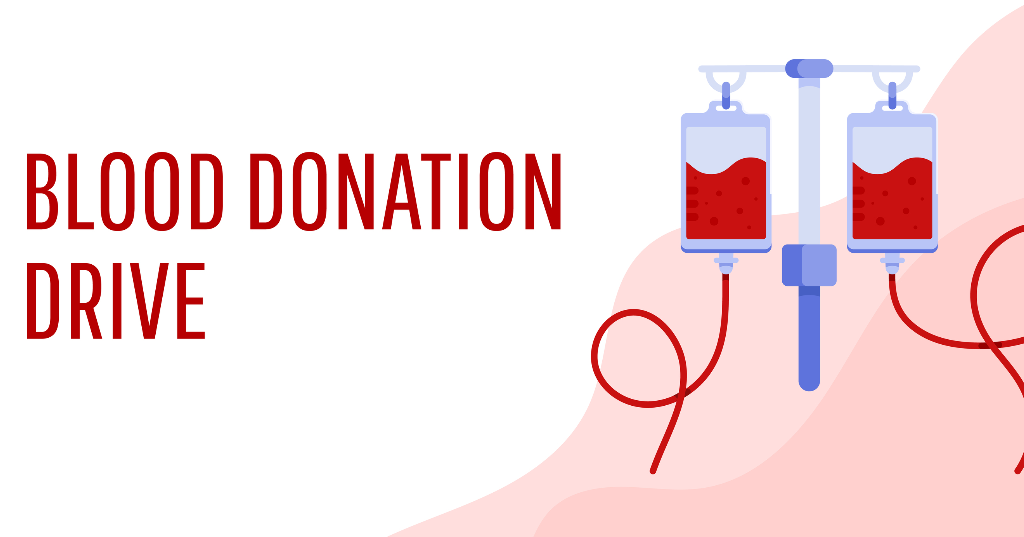
The COVID-19 pandemic has wreaked havoc on so many of the resources people rely on to survive. One such area that may come as a surprise to some is Cincinnati’s supply of blood donations. Due to stay-at-home orders and safety concerns, blood supplies across the nation have decreased dramatically. Unfortunately, the life-or-death situations that require these donations have not.
If you’re looking for ways to do good in your community during this difficult time, one easy thing to do is to give blood during the Library’s Summer Blood Drive Tour with Hoxworth Blood Center. Blood donation is a safe, sterile process and there is no risk of contracting the COVID-19 virus by donating blood. We need all eligible blood donors to schedule a donation at their earliest convenience.
Every day the Library is striving to find new ways to connect our communities to vital needs and resources.
Every day the Library is striving to find new ways to connect our communities to vital needs and resources. Our goal is to contribute to community health and well-being, especially during these challenging times of the pandemic.
“Hoxworth is the only steward of the blood supply here in the Cincinnati area…”
“Hoxworth is the only steward of the blood supply here in the Cincinnati area—and as such, we rely on the partnerships of local organizations to help us collect much needed blood products,” said Cara Nicolas, Associate Director of Public Relations at Hoxworth Blood Center. “Summer tends to be one of the hardest periods for blood banks across the country, as usage increases but donor turnout falls, and the COVID-19 pandemic has only created additional complications for organizations like Hoxworth. We are immensely grateful to the Public Library for hosting these truly lifesaving blood drives with us this summer.”
Interested donors make appointments on Hoxworth’s website, or call for telephone appointments; walk-ins are permitted when open time slots are available. As a thank you, donors receive two free vouchers for future tickets to a Cincinnati Reds baseball game that can be redeemed through the 2021 season.
Donations can be made at the following locations from 11:30 a.m.–5:30 p.m.
Let me start by saying my family and I have been residents of Loveland for over 25 years. Our children have gone through and graduated from the Loveland School System. Of all the areas we looked at when we moved here from Columbus, we felt at home in Loveland. Until recently.
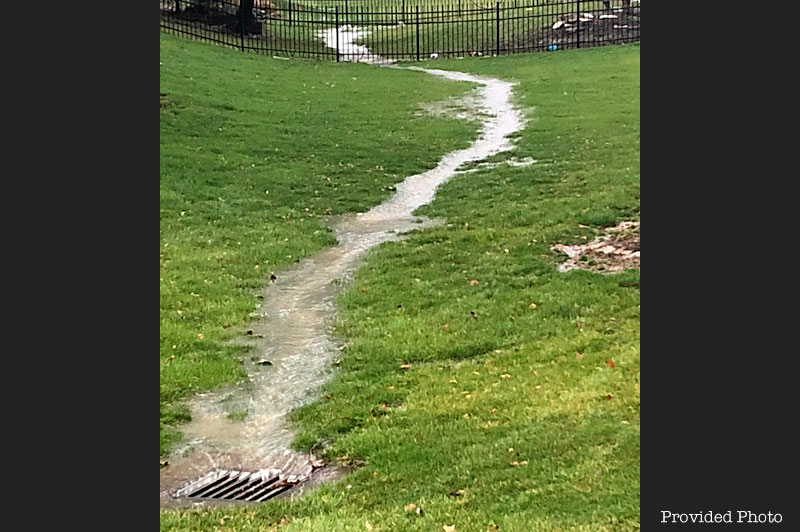
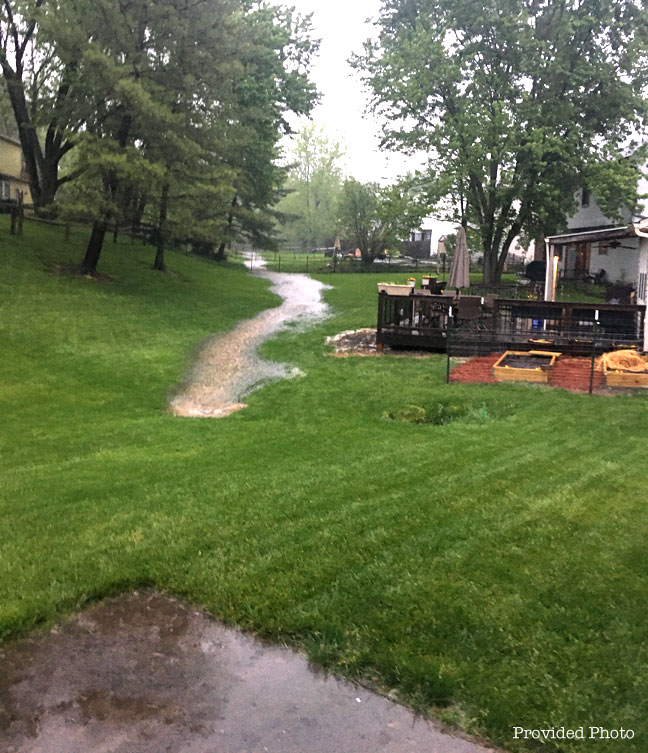
There is a storm sewer line that runs between mine and my neighbor’s house. The line sits equally on both of our properties. This storm sewer takes the rainwater from a great many homes around us and runs it out to the main sewer in the street.
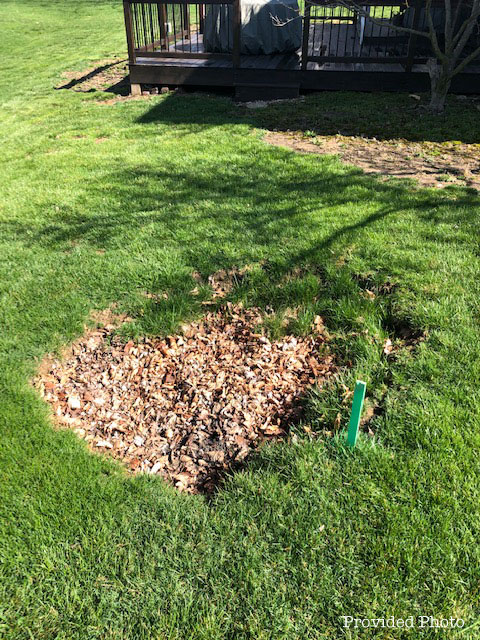
Over the years, the storm sewer has come apart and has started to cause a large sinkhole between the 2 houses.
Not only is this an eyesore but it is extremely dangerous.
Now we have 2 additional sinkholes starting on the sewer line. We have had a company come out and run a camera through the line and we can see where the pipe has come apart and water is leaking through.
My neighbor has reached out to the City of Loveland and had some communications with City Manager Dave Kennedy about this issue. During a phone call, Mr. Kennedy agreed with my neighbor that we have a problem and the city should look into the issue. In fact, Mr. Kennedy suggested we meet and discuss the problem in person.
Under a prior City Administration when my neighbor called and complained about the other sinkholes appearing in his yard, the City sent out a crew to fill in the holes. So you see, this is not our first time reaching out to them on this matter.
My neighbor did receive an email back from Mr. Kennedy stating that since the storm sewer is on a “Private Easement” the repair is not the responsibility of the City of Loveland.
This property was surveyed way before we moved in. So we had no input into the private vs public easement classification. Nor would we know the difference. We are not surveyors or lawyers.
There are seven other storm sewers in our subdivision and only two are private. The other five are public and the city takes care of them.
This is my opinion is an outrage. How can some surveyor 30-40 years ago arbitrarily pick a description and the City let it stand? Do not the City’s past repairs indicate that they felt the problem belonged to them in the first place?
When we have reached out to Mr. Kennedy to meet and discuss, we have not received a response back. Again this is an outrage.
To anyone living currently in Loveland and anyone planning on moving to Loveland, I say take a good hard look at your decision. The city government has no problem taking your tax dollars but when you need their help, they are nowhere to be found.
It makes you wonder why anyone would want to live here in the first place.
On August 15, 2020, the LIFE Food Pantry will host our annual Student Life Shop, back to school event at Prince of Peace Church in Loveland.
Last year, with help from our community, we gave away over 165 backpacks. It’s so rewarding to see the excited faces on the children as they prepare to go back to school.
Each registered LIFE Food Pantry client may sign up their school-age child for this event. Every student will receive a backpack filled with grade-appropriate supplies along with personal care items and school spirit wear.
Registration takes place in July. Please refer to our website for registration details.
For those of you interested in donating, a list of needed supplies is also posted. Lifefoodpantry.org.
Thanks again to everyone who has helped to make this event a success!
Sharon Raess is the Event Co-Chair of the annual Student Life Shop. Contact ger at lifefoodpantry@yahoo.com.
I took my child into the BMV this past week to get her driving temps and it dawned on me that we have more novice drivers on the road right now than at any other time in my life.
Between parents putting off getting temps for winter birthdays due to weather and the COVID shutdowns – BMV being closed for the past 3 months, along with the BMV testing center for licensing still being closed, all in-car driver’s ed classes being closed and just everyone generally staying in, we have 4 -6 months of new drivers on the road right now.
As I take my child out, she keeps pointing out to me other new drivers on the road that she knows.
I would ask that licensed drivers be especially patient and assume that if a teen driver is at the wheel with an adult in the car that they are inexperienced.
Please don’t tailgate, rush up on a car in front of you, honk impatiently or zoom by these drivers. Please give a new driver extra space and pay extra attention when you are driving.
It may take until fall for the glut of new drivers to get through driver’s ed and be licensed.
Right now there is 4-6 times the normal number of inexperienced drivers on the road and we all need to be aware of it and act accordingly.
Pedestrians also need to pay extra attention when crossing streets, new drivers may not stop in the same way an experienced driver would, and this advice goes double for being on the bike trail and crossing a road.
We need to pay extra attention to nighttime driving and bad weather driving. We need to not only pay attention to our own driving but pay extra attention to other drivers.
Please help everyone to stay safe and avoid accidents.
Hello Loveland friends – I really hope if you read this first sentence and find the time to read these next several paragraphs. It’s lengthy but I think it’s important.
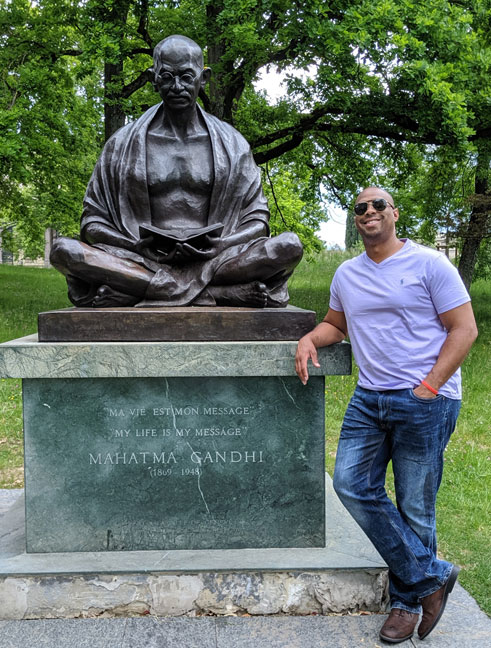
Since graduating from Loveland High School in 1998, Eric Armstrong obtained degrees in Chemical Engineering and Spanish from Purdue University. When not working in technical sales; he enjoys traveling the world in his free time.
Systemic racial inequality, prejudice, ‘White Privilege’, are tough topics, powerful words. I imagine white people; are uncomfortable when they hear them, feel defensive when directed towards them, and I think most importantly are confused about what to do about them.
You see racists are easy to identify and label, they wear hoods, yell slurs, and burn crosses. Racists don’t hide their disdain, they’re proud of it, and most importantly I imagine 90% of White Americans can say unequivocally “I’m not a racist, that’s not me!” “My family raised us to…”, “I have very close ____ friends.” etc…
Other words, however, are harder to define
The other words however are harder to define; they are subtle, woven into our nation’s very fabric, everyday behavior, and actions. Unfortunately, our country was built and founded on them. In their most basic forms, even Black Americans can struggle to explain them, it’s often an uneasy feeling or a story, the way you were treated. It’s some simple task that Black Americans worry about that would never cross the mind of a white person.
A profound ignorance exists in education
Moreover, IF you as a White American can comprehend the definitions and give examples of these words, then you’d realize 100% of White Americans have existed/participated/enabled them. That’s honestly what is at the core of everything happening today. A profound ignorance exists and the cure is education, open dialogue, and a paradigm shift in how we respond.
I personally haven’t said much about what’s happened recently about the rash of killings locally here in Indianapolis or across the country. I’ve admittedly deflected and given short PC answers. There are two reasons and they are shared by many Black Americans;
1) It reopens painful feelings and emotional wounds, and if you’re a Black American who has existed as I have (fairly comfortably) it’s a jarring reminder of what could happen to you and your friends, family, and colleagues.
2) It’s exhausting. If you know me, I enjoy talking and pushing the boundaries of comfort on many topics. I don’t shy away from talking about race if engaged and I try to keep the conversation light so I’m approachable and those who truly want to understand, learn and change have a safe place to do so. However, for every one of those interactions, there are 20 other conversations, comments, posts, when White American dismiss Black Americans’ experiences as “one-off occurrences” or say “why do you make everything about race. It isn’t always about race.” Or “Well if “______Black American” wasn’t doing _____, _____ wouldn’t have happened.”
Something different is happening now
So admittedly, lazily, embarrassingly, I felt like this latest response was going to be the US status quo. People get fake mad, they post “Black Lives Matter” and are upset for a while, some Black Americans protest and march, then in a couple months things/people go back to ‘normal’.
But I decided to write this because something different is happening. White Americans are out marching too, they’re verbalizing the issues and not just repeating buzz words. Most importantly they’re engaging us. They’re messaging me, texting me and asking me to have conversations. They’re asking me what those confusing words mean to ME, asking what my experience has been.
A business colleague who I consider a friend sent me this;
“Weird non-work related question. Would you be interested in coming to our house for dinner in the next two weeks? No need to answer tonight. The bigger human conversation is that our kids need to meet people who don’t look like them.”
WOW.
Maybe it WILL be different this time…
Because if everyone wants to know how we “fix things” how we “make it better”. That’s it in a nutshell. White Americans must willingly have a lot of introspection, ask questions of themselves and Black Americans, and state the following:
“I acknowledge that though I’m not a racist; I’m ignorant, uninformed, and contributing to prejudice, systemic racism, and white privilege with my inactivity. My posts and words are NOT enough.”
How do you know you are contributing to this climate?
What are the questions? How do you know you are contributing to this climate?
If as a White American you’ve ever posted or said, “Skin color doesn’t matter to me.” or “I don’t see race.” Unless you are actually visually impaired; you’re saying (whether you intend to) I’m not recognizing that because your skin is brown, your experience in this world has been markedly different than mine.
It must be acknowledged that race is a factor, a variable in a human’s life experience and reactions, questions, interactions, must be adjusted.
Change your language to take that into account, instead say, “I actively try not to let my inherent biases and ignorances negatively impact how I interact with Black Americans.” SEE COLOR, VALUE DIFFERENCES.
If as a White American you’ve called something ‘ghetto’ or used the word as an adjective to associate things with Black Americans. I compare it with how people use the word ‘gay’ to describe something they dislike.
Or you’ve said “_____ doesn’t act black” or “_____ isn’t really even black.” Your words mean you believe they exhibit positive characteristics ascribed to White Americans.
Other behavior
How about these? You have many black friends and co-workers… right? Have you been to their homes or invited them to yours? Do you vacation with them? Have these conversations with them?
It may not be how you treat those Black American friends and colleagues. How do you interact with the Black Americans who are strangers? Do you strike up conversations? Do you avoid sitting by them, cross the street, wait for the next elevator…?
I have seen a lot of this world and our country and I’ve been invited into the homes of strangers internationally and never to the homes of some of my ‘friends’ here in the US.
My Christian friends; do you attend diverse church services? What does your congregation look like? God valued/preaches inclusion and diversity but why is the church segregated?
How about the neighborhood where you live? Any Black neighbors? Do your kids have Black American classmates? Do Black American kids play with your kids at your home and vice versa? If you say “No, there just aren’t Black Americans where I live. I live there because it’s safe and has good schools.” Well if there are no Black Americans there; are they in the underperforming schools and unsafe neighborhoods? The separate but equal ones?
You have to ask why is that?
If you asked your kids who are three Black Americans they know? Are they all celebrities/athletes? Do you go to businesses, concerts, read books, and see movies by Black Americans? You have to ask why is that? Who/what experiences are you exposing yourself and family to or limiting them from becoming educated about?
Racist people are not the problem – I call it arms length prejudice
Again, the racist people are not the problem. We know where they stand and what they believe. It’s the tolerant White Americans, the ones that have casually existed with Black Americans. I call it arms length prejudice. You have been fine with Black people having equal rights as long as it doesn’t change your world, come into your neighborhood, school, or church. As long as it doesn’t date your sons and daughters.
Have you been social distancing from Black Americans?
Have you been social distancing from Black Americans? You have to ask yourself have you been perpetuating that arm’s length distance whether subconsciously or consciously? Do you want things to change? Do you really care about the Black friend(s) or those Black strangers that you post black squares and Black lives matter hashtags about? It’s going to take more than posts and rhetoric. If you care about Black Americans but stand by while prejudiced comments are being spoken or ‘posted’ then it won’t change.
If it’s tolerated by our leaders and business owners as them just “speaking their mind” or “telling it how it is” then you are supporting their harmful rhetoric.
Our young humans
Many of you are currently raising the young humans who will determine how Black Americans are treated in the next 20 to 40 years and beyond. If you change their experiences and relationships with Black Americans you will change the behaviors and outcomes. Posts, black squares, and words are fantastic; education, action, and follow up are better.
It’s time for conversations
Marching and demonstrating serves only to keep the issue in front of people’s minds. The actual work is done right here with us having the conversations and listening. Calling people out, calling yourself out. A lot of people want to be healthy, but don’t want to exercise. I see the same behavior with race. A lot of White Americans want the conversations about race to stop, for the problems to go away, but they don’t want to do the hard work to get us there.
A lot of people want to be healthy, but don’t want to exercise.
It’s time for these conversations. For White Americans to ask your friends of color about the first time they were called the n-word or were pulled over/followed for no reason?
These conversations that must be had between Blacks and Whites are going to be uncomfortable they’re going bring upon Whites feelings of guilt and shame and often times Blacks may be embarrassed or angry, not at you, about their struggle; but it’s an important step in healing and understanding.
Conversations can start today
Lastly, both Blacks and Whites must understand that changing a behavior takes a long time. Some people estimate it takes 10,000 hours of doing a task to master it. How many hours have you and your children spent discussing, interacting, and educating yourself about Black Americans? Black Americans, how many conversations have you opened yourself up to with White Americans? This is not going to happen overnight…but the conversations can start today.
I LOVE YOU ALL & GOD BLESS
Eric Armstrong graduated from Loveland High School in 1998



Christopher Ball is a longtime Loveland resident and an attorney
 Whatever you may think of his opinions, Colin Kaepernick’s visible on-field protests against systemic racism and police violence are unquestionably a large part of the reason that he is no longer playing football. Prior to 2020, it was clear that the National Football League was doing all that it could to keep politics, protests, and uniform variance out of its brand.
  victims of systemic racism and police violence” Eifert’s choice sends a different message, one very similar to those of the 2016 Dallas Cowboys. Eifert himself has a long history of supporting military and first responders during his career, and so his choice to honor David Dorn is not surprising.






 Laurie


 Over the years, the storm sewer has come apart and has started to cause a large sinkhole between the 2 houses.
  This property was surveyed way before we moved in. So we had no input into the private vs public easement classification. Nor would we know the difference. We are not surveyors or lawyers.





 Since graduating from Loveland High School in 1998, Eric Armstrong obtained degrees in Chemical Engineering and Spanish from Purdue University. When not working in technical sales; he enjoys traveling the world in his free time.