‘A Neighborhood Cleanup’ volunteers cleaned up the Loveland rope swing and the surrounding trails alongside the National Scenic and Wild Little Miami River on June 2 in Loveland.
Joe Timmerman lives on the East side of Historic Downtown Loveland. He studies Photojournalism at Ohio University and is an LHS graduate. Read more about Joe.
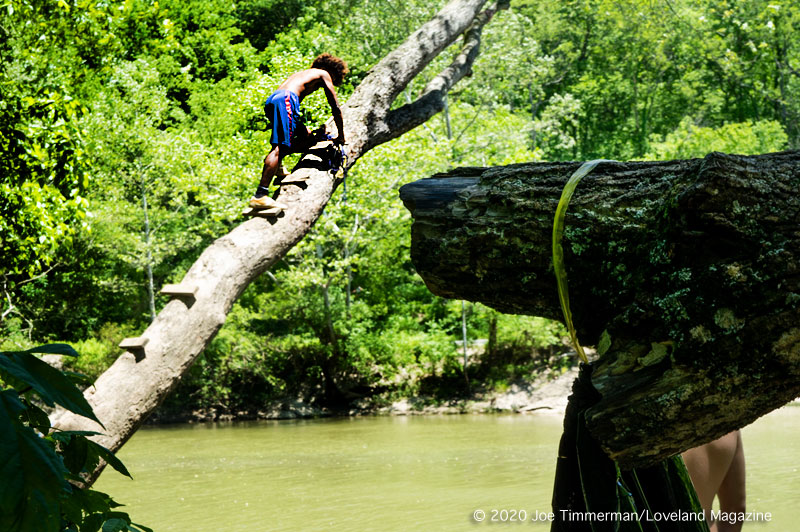
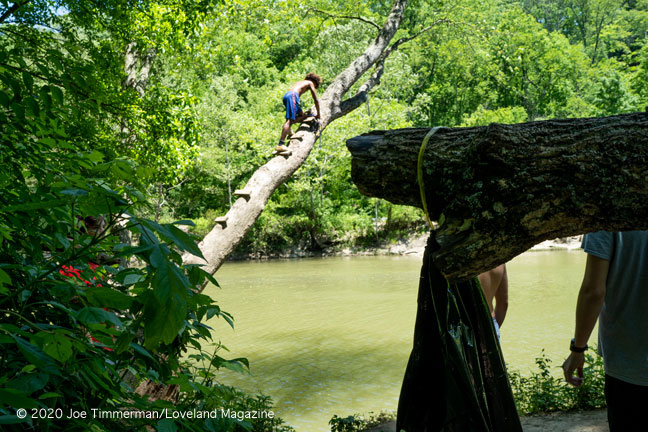
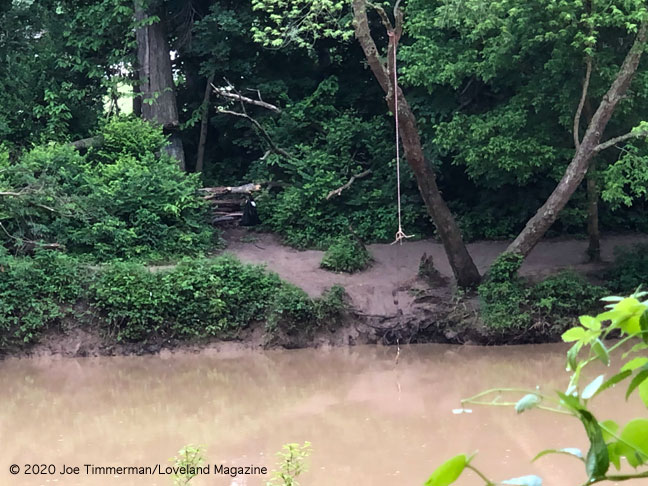
On the morning of Tuesday, June 2nd, while kayaking down the river with my father and my brother Jacob, we stopped to jump off the rope swing. As I climbed the tree where the rope swing hangs, two Loveland police officers walked up the trail holding an already cut-down rope swing in their hand and making their way to cut down the main swing that I was about to jump off.
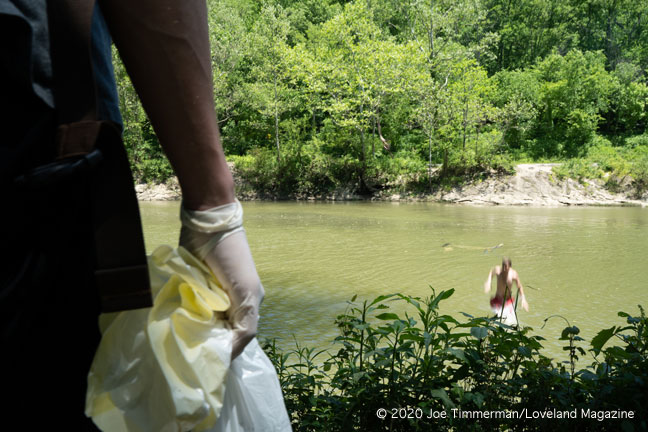
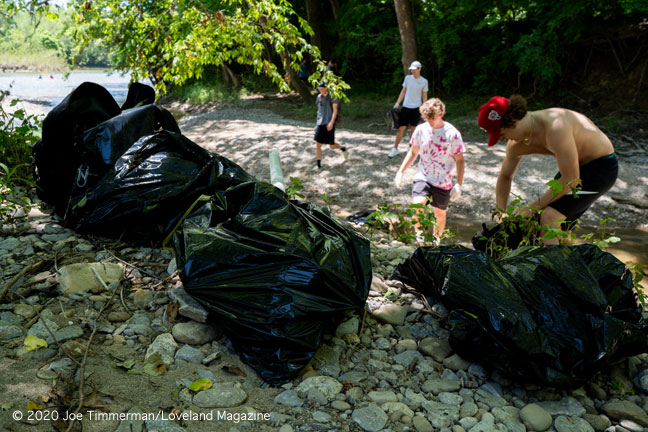
‘A Neighborhood Cleanup’ volunteers Elijah Suttschenko, Alex Schefft, Ian Fields, and Joey Fields carry trash bags full of litter picked up along the Little Miami River rope swing in Loveland, Ohio on June 2. This rope swing is a popular spot in Loveland where people hang out in the summer, though it is often riddled with litter left by some who visit.
While talking to them, we found that they had received numerous complaints from concerned parents in the area after their kids had been fighting, littering, and causing trouble down around the river and at this rope swing.
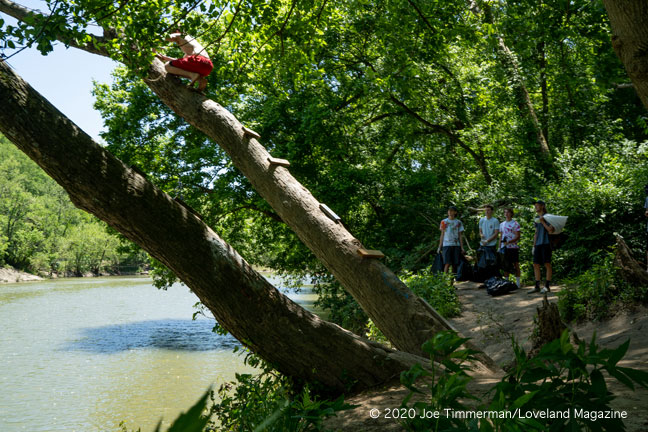
Volunteer, Joey Fields, holds a trash bag full of litter picked up around the rope swing area, while someone jumps off the swing and into the Little Miami River. Fields and 9 other ’A Neighborhood Cleanup’ volunteers, along with about 15 bystanders who were hanging out at the rope swing joined the effort to clean up the area.
I told the officers about ‘A Neighborhood Cleanup’ and the growing message that the cleanup carries with people who genuinely care about the places where we live and the places where we enjoy hanging out.
I told them about how the effort started last summer, with its first official cleanup day on August 17th, 2019 — where, with the help of my parents and friends, we cleaned up parts of our town including the East Loveland Nature Preserve, the Loveland Bike Trail, and this same rope swing area as we encouraged others to do the same in their own neighborhoods.
An empty trash bag was tied to a tree limb along the trail from Betty Ray Park to the Little Miami River rope swing where visitors can easily throw their trash in, rather than leaving litter on the ground or in the river.
The officers decided not to cut down the rope swing that morning and to reconsider their options, but they did say they were going to come back later in the day to decide whether they would cut it or leave it.
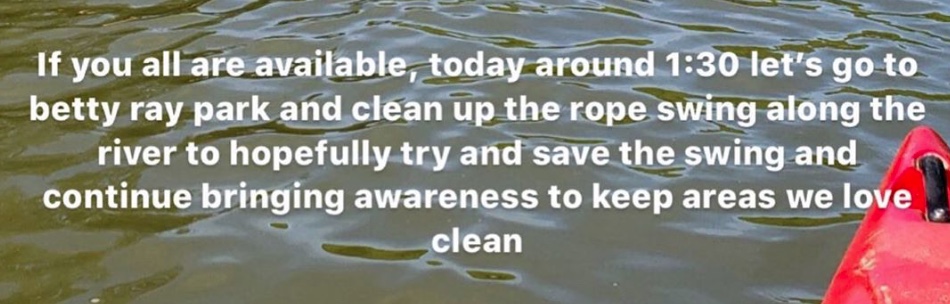
After finishing our morning kayaking, I posted a photo that my dad took of the river with a message explaining what had happened at the rope swing to the @aneighborhoodcleanup Instagram account and made a group message with 20 of my friends who I know care about the effort.
An excerpt from the Instagram plea for help with cleaning the riverbank and saving the legendary Loveland Rope Swing.
A few minutes later, I had multiple responses from friends who said they would help out and at 1:30 PM that same day, we met at Betty Ray Park with a box of large trash bags and latex gloves.
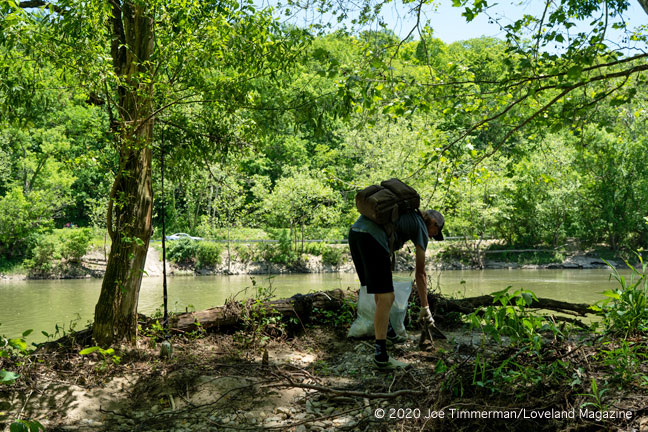
Volunteer, Joey Fields, reaches to pick up trash off the ground across from the Loveland Bike Trail and alongside the Little Miami River in Loveland, Ohio on June 2, The rope swing cleanup was completed in about 20 minutes with the help of 20 or more volunteers, which allowed plenty of time to continue down the river to pick up more trash.
When we walked to the swing with trash bags in our hands, we were met by about 15 kids from various communities around the area who were enjoying the rope swing. Within minutes of showing up and explaining the situation, a handful of the people there grabbed trash bags and started helping with picking up the litter.
With about 15-20 people coming together to pick up the littered bottles, cans, boxes, and rusty metal, the rope swing area only took about 20 minutes to clean.
‘A Neighborhood Cleanup’ volunteers Riley Hamil, Ian Fields, Graham Davis, Joey Fields, Laine Dannemiller, and Megan Korniak fill bags with trash found alongside the Little Miami River in Loveland. After cleaning up the rope swing area, volunteers continued southbound down the riverside to another hangout spot riddled with litter.
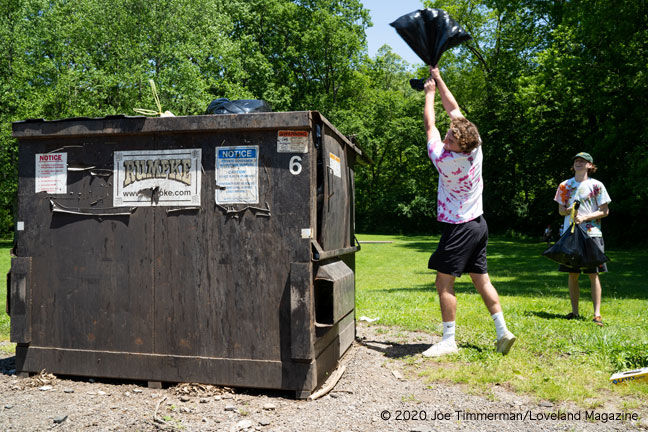
Those who helped carried the 10 or so full trash bags to the dumpster found at the edge of the Betty Ray Park parking lot near the entrance of the rope swing trailhead.
Before moving on down the river to continue cleaning, we tied a trash bag to a tree limb along the rope swing trail to encourage people who visit to throw their trash in.
By Friday, June 5 while walking on the bike trail my dad and I noticed that the rope swing was still hanging from the tree and the empty trash bag left alongside it was now full.
Ian Fields and Elijah Suttschenko throw trash bags filled with litter found alongside the Little Miami River into a dumpster at the edge of Betty Ray Park’s parking.
To anyone from the Loveland community and the communities in the area who visit these beautiful nature preservations — please urge your children, your friends, your family, and yourself to respect these areas and to carry your trash out when you leave. Even if the trash isn’t yours, be the change that you want to see in your community and start making a difference — it’s amazing to see how others will do the same.
Thank you to everyone in Loveland who helped clean up and who continues to support ‘A Neighborhood Cleanup’. Our efforts made a difference in saving the rope swing and hopefully together as a community we can keep the river and the places we love clean.
The rope swing still hangs from its tree and a trash bag left by ‘A Neighborhood Cleanup’ from earlier in the week hangs full — with no litter in the surrounding area on Friday, June 5.
LOVELAND MOM’S LONG RACIAL AWARENESS JOURNEY AND WHY WHITE AMERICANS NEED TO FOLLOW HER PATH
by Daniel P. Finney
Kristi Kinne-Hayes grew up in Jefferson, a Green County, Iowa city made of 4,200 almost all white people. Kristi played six-on-six girls’ basketball and became one of the best players in the state.
A Guest Column by Independent journalist Daniel P. Finney who writes for paragraphstacker.com
She knew local police officers by their first names and thought of them as just another face in the crowd rather than law enforcement.
Kristi played college basketball at Drake University, leading the Bulldogs to an NCAA Tournament berth her senior season in 1995. She seldom thought about race even though she played alongside and was friends with people of different races.
She had a longtime friend who played softball at Drake who was mixed race and never knew until someone asked her friend about her race in a Kansas City bar.
But life, love and motherhood changed her perspective and her long journey from racial indifference, maybe even racial ignorance, to awareness and empathy is one all Americans — especially whites — need to take right now.
A background like Kristi’s makes it seem unlikely that she would comment on the ghastly death of George Floyd at the hands of Minneapolis police. But life, love and motherhood changed her perspective and her long journey from racial indifference, maybe even racial ignorance, to awareness and empathy is one all Americans — especially whites — need to take right now.
Kristi graduated from Drake, survived ovarian cancer and met and married Jonathan Hayes, a former University of Iowa tight end who played for the legendary Hayden Fry during the famed coach’s revitalization of the program in the early 1980s.
Hayes is also African-American. But a mixed-race relationship didn’t expose Kristi to the racial hatred the corrupts America’s soul.
The first time Kristi brought Johnathan home to Jefferson to watch a ballgame, fans swarmed the Hawkeye hero for autographs.
“That was so traumatic for me because when I was at the game, people came up for my autograph,” Kristi said. “I told Jonathan they only wanted his autograph because they already had mine.”
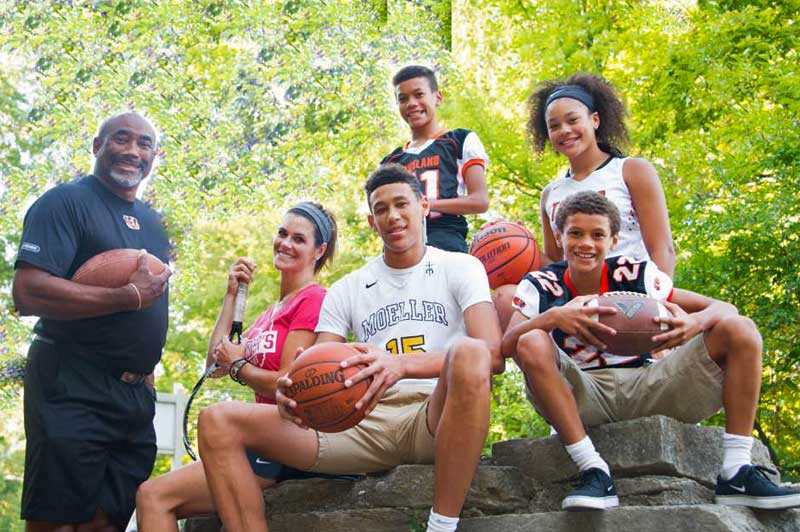
The couple settled in Cincinnati, where Jonathan served as tight ends coach for the NFL’s Bengals.
They had four children. Yet it wasn’t until their eldest daughter, the couple’s second child, turned 16 that evil racism finally struck the mother of four mixed-race children.
Kristi and Jonathan bought a new car and gave their older vehicle to their daughter. They put the old plates on their daughter’s vehicle and paid the fees, but Ohio Department of Transportation computers hadn’t yet processed the transaction.
One evening their daughter came home pale.
She said, ‘I was sure they were going to shoot me.
Kristi asked her what was wrong.
She had been pulled over by police. The car tags were wrong.
“She said, ‘I was sure they were going to shoot me,’” Kristi said. “I thought, ‘Why would you think they would shoot you?’”
And the privilege of being a white star athlete from small town Iowa evaporated. She was now the mother of four children whose facial characteristics most white people would identify as black.
“If there’s a little bit of brown, to other white people, you’re black,” Kristi said.
Living with racism did not limit her children’s success. Eldest son, Jaxson Hayes, was a first-round draft pick by the NBA’s New Orleans Pelicans last year.
Daughter Jillian is a highly prized women’s basketball recruit committed to the University of Cincinnati.
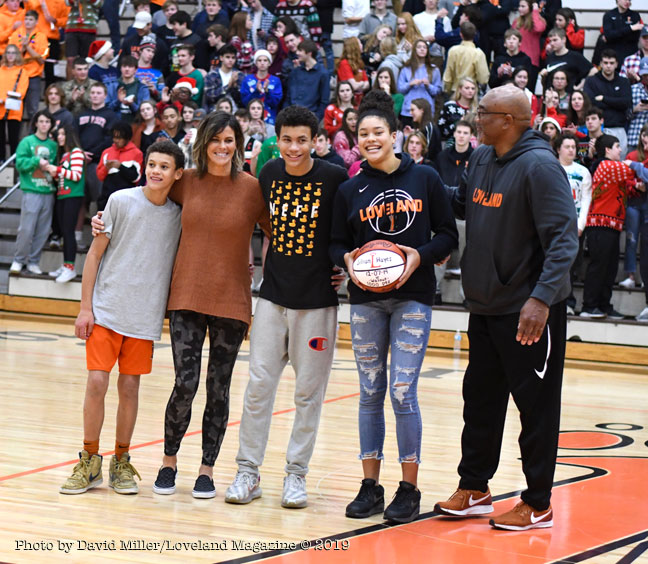
Jillian Hayes and her family on the night she accepted her commemorative 1,000th point ball.
Kristi reminds them that she doesn’t care if other people label them black only, just remember that their white mother and her family loves them just as much as their African-American father and his family.
“Your name is clean,” Kristi tells her kids, “keep it that way.”
Still, she worries. Jaxson is off in New Orleans, just turned 20 years old and having the time of his life as an NBA rookie despite the league shutdown due to coronavirus.
She tells her children that if they are pulled over, put their hands at 10 o’clock and 2 o’clock on the steering wheel.
“I never thought I would have to tell my children that,” Kristi said.
The true horror of this event: None of those officers moved to stop their fellow officer from committing a crime. It was depraved indifference.
Kristi saw the news reports and videos of a Minneapolis police officer putting his knee in the back of George Floyd, an African-American man suspected of forgery.
Three other police officers stood by and did nothing. They were all fired. As of this writing, it’s unknown if they will be criminally charged.
The killing of Floyd is a complete institutional failure by the Minneapolis police. That officer pressed his knee into the back of that handcuffed man’s neck as he pleaded for mercy, he could not breath and eventually lost consciousness and died.
He stared into the crowd almost as if he was daring someone to tell him he was wrong. The crowd pleaded with him to render aid, to check Floyd for injury or get him some water.
The officer refused.
A friend of mine made this observation a few years ago: “There’s two things we learned from everybody having cameras on their phone: There are no UFOs and police sometimes kill people for no reason.”
The true horror of this event: None of those officers moved to stop their fellow officer from committing a crime. It was depraved indifference.
Here in Des Moines, some of my police sources told me they were aghast at another cop so drunk on power that his defiance led to the death of a man.
“When you have him in cuffs, get him up and in a car and off to the station,” one cop told me. “That diffuses the situation right there.”
Another cop told me police administrators were circulating a video by a top training instructor illustrating the dangers of the knee in the back hold and all Des Moines cops will have to sign off on having watched it.
There’s been little local backlash at Des Moines police because of the Minneapolis killing, but the danger of using national stories to paint local pictures hangs over every police station.
Kristi saw that news and it moved her. She lives in Cincinnati, a city that saw race riots in 2001 after police shot an unarmed African American teenager. Kristi and her family moved to Cincinnati after that terrible period.
So what does all this have to do with Kristi Kinne-Hayes, the great Iowa basketball star?
But motherhood long ago took the woman from Jefferson’s ability to be color blind.
Moved by the story, Kristi posted to her Instagram a trending meme of the officer with his knee in the back of Floyd’s neck and former NFL quarterback Colin Kaepernick kneeling during the national anthem. The caption read: “This is why.”
So what does all this have to do with Kristi Kinne-Hayes, the great Iowa basketball star?
ESPN commentator Emmanuel Acho pleaded with white America in a video posted to his Twitter feed Tuesday.
“My white brothers and sisters, we need y’all’s help,” Acho said. African-Americans have been outraged as people continued to die unnecessarily, but white Americans have remained mostly indifferent or hesitant to raise their voice in protest.
We need to take the journey Kristi Kinne-Hayes took in her 46 years. She went from living blind to race because it never directly affected her to having a profound understanding of just how horrible racism is in this country.
I’m not saying you need to repost the meme or start hashtagging everything #blacklivesmatter.
But we must all do our very best to engage empathy for people who are not like us.
It’s very hard for anyone to see life through the perspective of someone who has lived so differently.
Our failure to do that is already too late for so many, the latest being George Floyd.
Daniel P. Finney, independent journalist – Cut loose and cashiered by corporate media, lone paragraph stacker Daniel P. Finney makes his way telling stories about his city, state and nation. No more metrics or Google trends, he writes stories about people and life ignored by the oligarchy. ParagraphStacker.com is reader-supported media. Please consider donating at paypal.me/paragraphstacker.
As I reflect on what I can do as white woman in America to change our society, I am overwhelmed with doubt and uncertainty.
by Trinity Mahan Walsh
I grew up with White Privilege that I didn’t even know I had. Growing up in Loveland in the 80’s and 90’s, it was a pretty white town. I went to Loveland Schools for 13 years, with maybe 3-5 classmates of color. It never seemed weird to me, but I did notice. We really didn’t talk about race in my house. Not because we were afraid to talk about it or my parents are bad people (they are loving and wonderful), but it just wasn’t anything we “needed” to consider. White privilege.
Trinity Mahan Walsh grew up in Loveland, Ohio, graduated LHS in 1994, and is now a Guidance Counselor at Highlands High School in Fort Thomas, Kentucky.
I often thought about what it was like for my black classmates to live in Loveland. To be a very, very small minority in our school and town. It wasn’t until I was in high school, I had my first real black friend. Yep… HIGH SCHOOL! I wasn’t as brave as I am now to ask the question, “How do you feel living here?” I am sure it was hard, but I am grateful for her seeing me as “safe” and accepting. I wanted to be her friend because she is awesome and not because she is black.
I’ve always considered myself to be accepting of everyone and the least racist person around. As I reflect on my friend choices over the years, I must have known early on who had the same types of life views as me, as I am still friends with several of those people today. But still, my circle of friends doesn’t include too many people of color. I’d like to believe that this isn’t a choice, it’s just how my life is, but now as I really think about it, it is a choice.
I live in a predominantly white community and work at a predominately white school. Searching out friends of color to say that I have diverse friends seems disingenuous. I don’t avoid it, my life is such that I very rarely travel in circles where my diversity factor could even be expanded.
Why did I move to a town much like where I grew up? Comfort. Is that bad to say? I don’t think so. We all want to live where we are comfortable. Does it help expand our understanding of each other as human beings? Not necessarily, but we can choose to find other ways to make sure we do find ways to understand each other.
I don’t mind if I look “stupid” because I can guarantee that these white faced teenagers have the same questions as me.
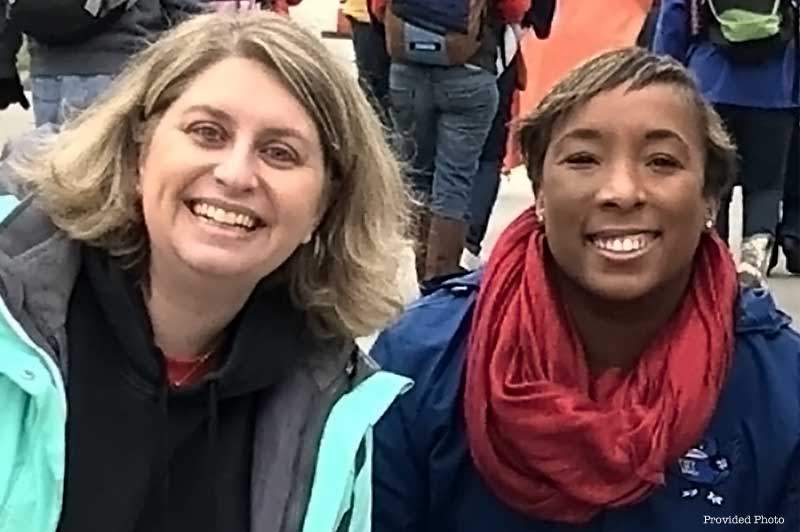
Trinity Mahan Walsh and fellow educator Elise Carter
One of the greatest blessings in my life has been my friendship with Elise Carter. You guessed it… she’s black. She and I have the most frank and honest conversations about what it’s like to be a person of color, especially working in a predominately white school.
She has opened my eyes to issues that I didn’t know existed… not because I chose to look the other way, but as a part of my white privilege I never had to consider. And, what I consider to be the most powerful part of our friendship is that we OPENLY talk about race issues.
At the high school where we work, she and I often have very honest and frank conversations in front of students. I don’t mind if I look “stupid” because I can guarantee that these white faced teenagers have the same questions as me. And, like I was in high school with my friend, they are too ashamed and scared to ask the questions. So I will ask for them.
I want them to see that she and I can have real conversations about what it’s like to be a person of color in America. She will be the first to tell the students, “I am not a spokesperson for the black community, but I will give you my perspective.” Probably one of the most powerful conversations we can have with the students is to tell them, it’s OK to call her black. She IS black! “Guys, you can call me black. I know I am! Are you offended when I call you white?” This is a common phrase from her.
One of the most heartbreaking conversations that we have ever had is about “the talk.”
One of the most heartbreaking conversations that we have ever had is about “the talk.” As we started that conversation, I honestly and truly thought we were having a totally different conversation. I couldn’t understand why she was talking to me about giving her then 5-year-old son “the talk.”
As a mother of white boys “the talk” is about sex.
As a mother of black boys “the talk” is VERY different. It was never something I had ever thought about; I didn’t have to. And if you are like me, and are still wondering what “the talk” is, ask yourself these questions: Do I have to warn my son about the way he approaches a white woman? Do I have to warn my son that when he is running, it might appear that he is not just getting exercise? Do I have to warn my son that when he is 16 and gets pulled over for going a few miles over the speed limit, the situation can turn ugly very, very quickly? Do I have to warn my son that when he is hanging out with his white friends and things get rowdy, he might be the one blamed for anything that might go wrong?
And this list goes on and on.
I want to break into tears when I think about anyone ever wanting to harm her son just because of the color of his skin. It hurts me to my core. He is kind, loving, inquisitive, and hilarious – just the same as any other 7-year-old boy. And it isn’t just her son, but every mother’s black son.
If you’re a dumb white girl with white privilege like me, start asking questions.
I am grateful every day that she is willing to be my friend and continues to educate this white girl about the reality of the world. If you’re a dumb white girl with white privilege like me, start asking questions. IT IS OK! We can only get better as a society when we start asking each other what it’s like to be them. You may not be able to relate personally, but you certainly can try and understand.
I am trying, and when I don’t hit the mark, I hope that someone calls me out on it.
I wasn’t raised to be racist or not racist. And now recognizing that white privilege, I am trying to make some different choices in raising my children with open and honest conversations about the world we live in. I am trying, and when I don’t hit the mark, I hope that someone calls me out on it.
You may judge what is happening with riots in your own personal way. You don’t have to agree with what is happening around our country, but just consider the why.
As I reflect on what I can do as white woman in America to change our society, I am overwhelmed with doubt and uncertainty. What I know I can do is to keep having those open and frank conversations with Elise and with our students. I am an educator, and that is my gift. This is one way that I can use it. You don’t need to be a trained educator though to have these conversations, too.
I’ll leave you with this one last thought…
I’ll leave you with this one last thought… do not surround yourselves with people only like you. Your face-to-face personal interactions, but even easier on social media. I am “friends” with so many different types of people with so many different perspectives on the world on social media. I actively choose to not de-friend people who have sometimes very different views than me. Yes, sometimes what they post makes me mad – raging mad – but I cannot grow as a person if I do not read what they are saying, consider it, and then come to my own conclusion. The greatest gift we can give each other is agreeing to disagree, but at the same time agree to just be good and loving humans.
If you need some more perspective on the issue of “the talk,” take a few minutes to read this powerful article:
Greetings to our Loveland “All About Art” Summer Art Camp families, past and present. We hope this article finds you and your family safe and healthy during this unprecedented time. Although we are sad to cancel art camp this year, we look forward to holding camp next summer in 2021 with the same “Spaced Out” theme we had planned to use this year.
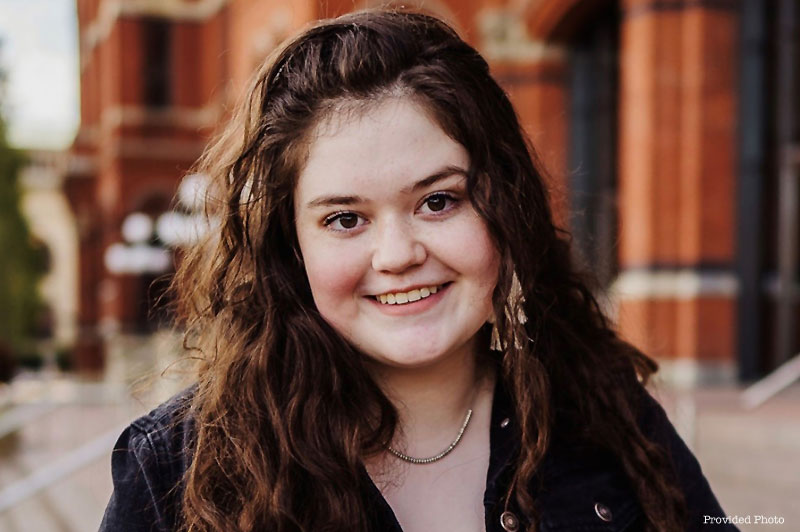
Kim Richardson is an”All About Art” Summer Camp Art Instructor and Loveland Parent
The Loveland “All About Art” Summer Art Camp, which is sponsored by the Loveland Elementary PTA, has been holding art camps every summer since 2005, serving Loveland area school children in Kindergarten through 8th grade. Several talented certified art educators with years of classroom teaching experience have helped run this camp over the last 15 years. And next summer… Jennifer Drydyk, Aly Mardin, and myself will be teaching art camp.
Art projects and art adventures center on a new theme each year. Our art camp is a great way for young artists to extend their artistic learning into the summer months by enjoying visually enriching adventures and experiences as they explore the many intriguing aspects of art through sculpture, painting, drawing, mixed-media, printmaking, video, and so much more!
NEW for NEXT SUMMER’S ART CAMP
Next year we are going to open up art camp to 9th graders for one year only. These students are part of the current 8th grade class who are missing out on their last year of eligibility for this year’s summer art camp. Parents-if you are interested in getting your K-8th grade child on a waiting list for next summer, please email Jennifer Drydyk at jdrydyk@mac.com.
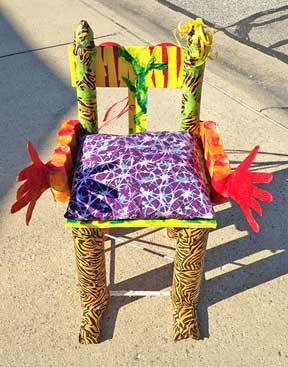
A chair design project
Although the camp is sponsored by the Loveland Elementary PTA, the camp is available for all children regardless of the child’s school district. However, Loveland City School children will have priority registration.
Until we meet again, please stay safe, healthy, and artistically creative! We look forward to seeing you next summer in 2021.
Like and Follow the Loveland Elementary PTA on Facebook
The Loveland Elementary PTA exists because…
They go beyond books & budgets
School fees and district budgets only go so far. Through our members and volunteers, we organize, fund and put on many of the activities and events our kids get to experience when they aren’t in class, so they develop a love of learning and have fun at the same time.
Engaging our kids takes more than activities and assemblies. And we all agree, Loveland Tiger Teachers and staff are the best! So we also provide funds to each of them for use to add classroom supplies, school necessities and curriculum enhancements. Last year we were able to give over $24,000 to our teachers and staff.
They go full S.T.E.A.M. ahead
This year at LPS and LES, our kids will have a chance to ‘MAKE’ learning fun in the new technology enabled Maker-spaces at each school thanks to funds provided from the LEPTA!
They make every day great
From the day each new school year begins, the LEPTA is there to inspire our kids love of fun and learning. We help our teachers and staff bring subjects to life and engage every child in new ways.
Each year, the funds we raise through the LEPTA FUNdraisers help us provide the following
In honor of Tracy’s strength and courage and her lifelong desire to go to college, the Loveland Initiative Tracy L. Johnson Scholarship Committee has selected Loveland High School graduate Keller Walls to receive a $1,500 scholarship. She has demonstrated a strong interest towards education and in serving her community. Keller was acknowledged for receiving the scholarship in a video presentation during the LHS Senior Awards Ceremony on May 13, 2020. Keller will be attending Ohio State University, majoring in journalism or education.
Congratulations Keller on your achievements and best wishes for continued success in your college career and beyond!
The Loveland Initiative has awarded 23 college scholarships to high-school graduates living in the Loveland City School District, due to the success of the Christmas Toy Store program. Thank you to our wonderful and generous supporters. We are SO PROUD of our AWESOME community we live in and look forward to a continuing partnership with you.
Why haven’t you written anything about the fiasco last weekend in downtown Loveland when hundreds of people were congregating without any protection or social distancing. That was so dangerous and should be a top story.
I’m William Gibbs-Heard, a graduating senior at Loveland High School, and instead of having a graduation party, I decided, because of the virus, that I should hold a sock drive.
For the graduation year of 2020, I would like to collect 2,020 pairs of new socks, or more, by the time I turn 18 on June 11th.
I want to do this in an effort to help those who are homeless and less fortunate than us. Due to all of the depression and fear surrounding the community in times like these, I want to be able to be a light in someone’s life by providing something to them that is so simple, yet very necessary.
I am accepting money donations through Paypal, Venmo, and Cashapp (all of which are listed below), as well as setting up a drop-off point at my house, 1205 W Main Street, Loveland, OH 45140.
After a totally unprecedented plan of action to safeguard the senior students, Newstead had just 3 days to cram in as much knowledge as she could, to try and pass her long case exam.
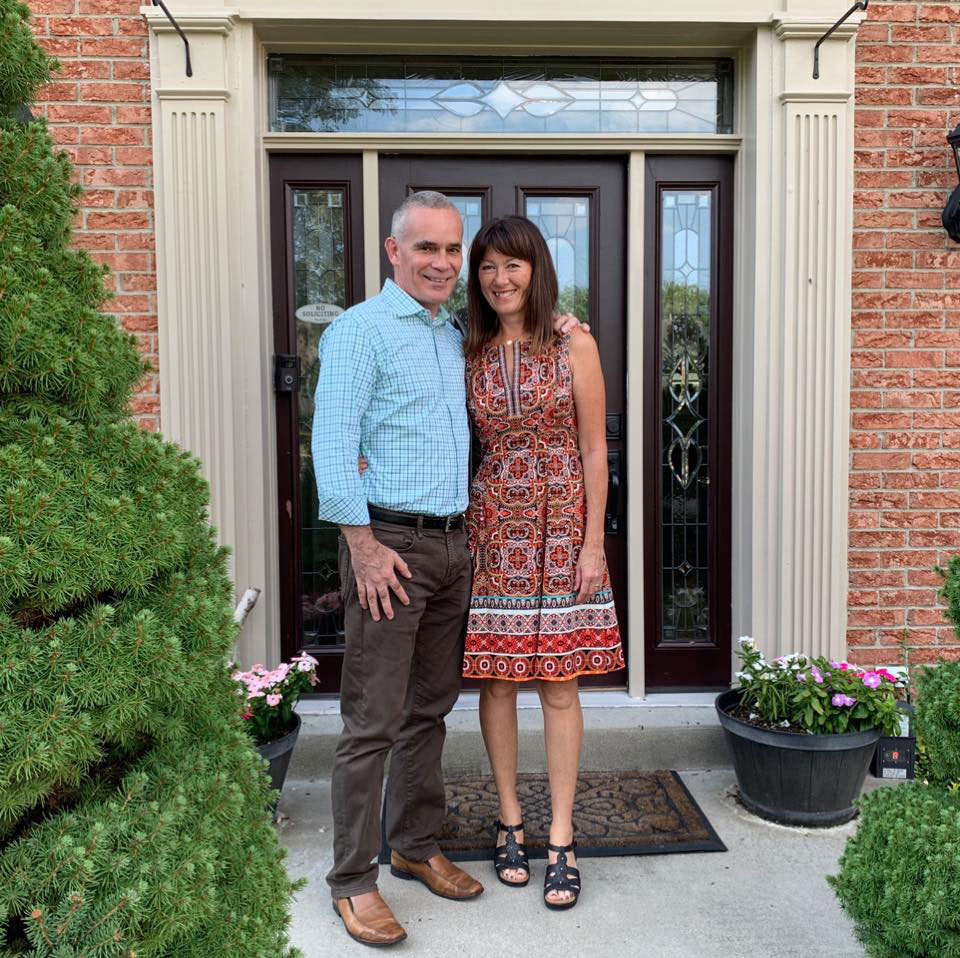
Paul and Sarina Newstead
by Paul Newstead
My wife Sarina told me about Loveland Magazine and I thought that this story about our daughter could be a little piece of happiness during these stressful times.
Our daughter Sabrina Newstead attended the Loveland school system from the time we moved to Loveland from England back in 1999. After graduating LHS in 2012, she attended Ohio Northern University and graduated with a Bachelor of Science (Biology Pre-Med) degree. She was then accepted into the Royal College of Surgeons Ireland (RCSI) for her Medical Degree program.
In the middle of March this year, the COVID-19 virus took hold in Ireland. RCSI thought that all graduation exams were going to have to be canceled since they were all due to be held this April. After a number of serious talks within RCSI, they decided upon a totally unprecedented plan of action to safeguard the senior students. In fact, they decided to bring forward all of their end of year medical school exams by 7 weeks! This had never happened before.
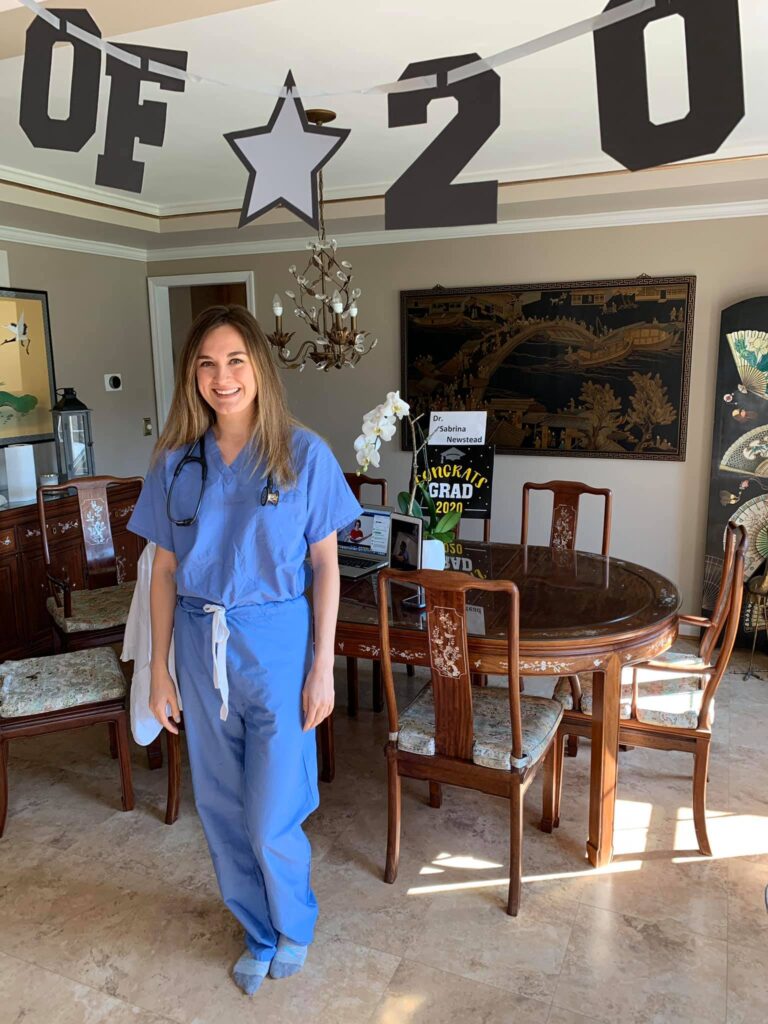
Sabrina Newstead attended the Loveland school system from the time we moved to Loveland from England back in 1999. She graduated from Loveland High School in 2012.
All the students were told about this. They had not even finished their classes and of course, had not even begun to revise for their end of year exams. Emotions were at fever pitch. To make matters worse, due to scheduling of the incredibly difficult “Long-Case” practical exams, Sabrina was told that her exams would start in just 3 days’ time on a Sunday.
She had just 3 days to cram in as much knowledge as she could, to try and pass her long case exam. All doctors, professors, and examiners were amazed. This news even hit the press in Ireland (Read the story in The Irish Times). Other colleges were laughing at RCSI thinking that they were overreacting. However, RCSI had the last laugh as the Irish government began to close schools and colleges.
Sabrina took her long case exam and was then told to pack up and leave Ireland as soon as possible because President Trump had declared that he was going to close international borders. She had less than 48 hours to pack up her 4-year apartment and leave the country.
‘Match Day’ (a day in which final year medical students find out if they have matched to a residency program in the states) was the day she was leaving Ireland, and if she did not match back to residency, she had to turn around and go back to Ireland to begin her intern year there. So she took a chance and came home.
She grabbed as much as she could and packed 3 suitcases.
She grabbed as much as she could and packed 3 suitcases. She managed to get the last flight out of Ireland bound for Boston and then Cincinnati. Her flight was delayed by 4 hours due to the new medical tests that were being performed in Boston. However, the flight eventually took off, and during the flight home, over the Atlantic, she received an email congratulating her for matching to the United States for her 3-year residency program.
Sabrina made it home and 4 days later.
Sabrina made it home and 4 days later found out that her new hospital for residency was The Christ Hospital in Cincinnati. Such great news for us all.
Once home, she spent the next 2 weeks studying 14 hours a day, in self-quarantine, in her bedroom. RCSI had two more final exams for her to take before she could graduate. She took these two exams and then finally clicked “End Exam” to finish the last exams of her medical school journey.
Students then wait anxiously for “Reading of results day” which was today, April 22nd. On this day, all graduating students in RCSI discover their results by reading student numbers based on their grades and degree awarded.
Sabrina was awarded a First Class Honors Bachelor’s Degree in Medicine, Bachelor’s Degree in Surgery, and Bachelor’s Degree in Obstetrics.
The celebration at home for Sabrina Newstead
It was incredible. RCSI did a live stream from their offices in Dublin, Ireland. Each of the professors spoke of their absolute admiration for the class of 2020. Never before has a graduating year taken their final medical exams with no prior time for studying.
She was awarded a First Class Honors Bachelor’s Degree in Medicine, Bachelor’s Degree in Surgery, and Bachelor’s Degree in Obstetrics.
Congratulations to all the new doctors graduating this year, during the middle of a pandemic. We all support you.
Since the stay at home order went into place, people are sharing the fact they are drinking more.
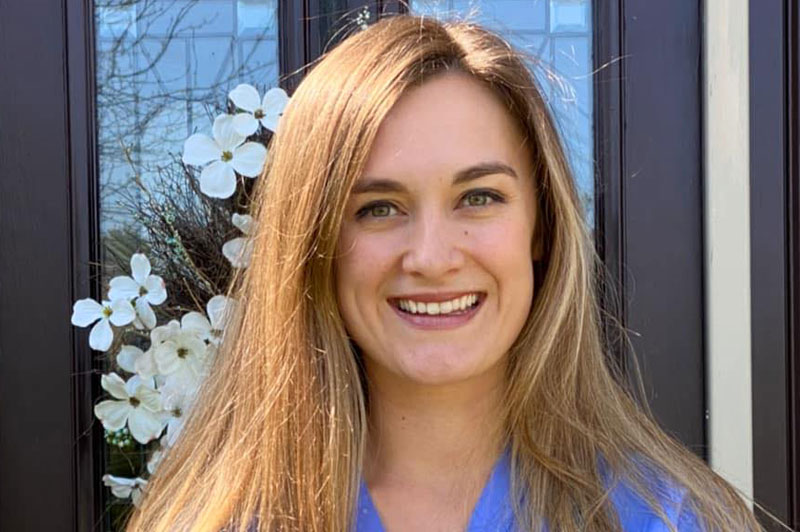
Tonya Schaeffer, M.Ed, LPCC-S is a Licensed Professional Clinical Counselor and co-owner of Hope Restored Counseling Services in Loveland.
by Tonya Schaeffer, M.Ed, LPCC-S
April is Alcohol Awareness Month.According to the Ohio Division of Liquor Control, people in Ohio bought 1.11 million more gallons of adult beverages than they did last year at this time. The extreme stress, worry, and isolation during the Coronavirus and lockdown are likely leading people to increase their consumption of beer, wine, and liquor.
Stress, anxiety, loneliness, and feelings of depression can be a trigger for drinking. Often while drinking, a person may feel more calm, relaxed and even numb. However, alcohol is a depressant, both mentally and physically. For people who may already be prone to depression or anxiety, these emotions can be increased. Drinking alcohol has an impact on one’s ability to get a goodnight’s sleep.Without quality sleep, the ability to regulate our emotions can be even more difficult.
The use of alcohol to cope anytime isn’t a great choice, but during times like what we are all experiencing now, it can be creating a bigger issue.
The use of alcohol to cope anytime isn’t a great choice, but during times like what we are all experiencing now, it can be creating a bigger issue. According to the National Institute on Alcohol Abuse and Alcoholism, alcohol affects the brain’s communication pathways and can affect the way the brain functions. Alcohol can also impact one’s heart, liver, pancreas and increase the risk of a variety of cancers.
Recently, in the medical community, there have been discussions around the use of alcohol weakening a person’s immune system, making your body a target for illness and disease. Since the stay at home order went into place, people are sharing the fact they are drinking more. They have expressed that they are having virtual happy hours through work, and while connecting with friends and family.
Recently, in the medical community, there have been discussions around the use of alcohol weakening a person’s immune system.
It is one thing to have a few drinks, but an entirely different situation if you are finding yourself turning to the use of alcohol to cope. First, be aware of your current consumption of alcohol. Gauge if your drinking is increasing. Pay attention to when you are reaching for that drink. Is it to escape the current reality, numb any feelings you want to avoid, or is it becoming something you are using to make yourself get through the day?
Consider a more effective coping skill such as going for a walk, start an exercise routine, work in your yard, or spend some quality time with your family. If you can’t be with your loved ones, make more of an effort to reach out to them. Take time to read or work on a puzzle, start a craft or work on a project around the house.
If you feel like you are struggling with the use of alcohol, you can go online to the National Institute on Alcohol Abuse and Alcoholism.They offer a variety of options including treatment during physical distancing.
I respectfully ask you to withdraw the levy from the upcoming ballot.
In light of the current Covid-19 pandemic, many families in our community are, and may suffer, devastating financial consequences: jobs furloughed, businesses closed, some possibly forever, retirement income severely decimated, and a very uncertain economic future.
Right now we are frightened, stressed, exhausted from the current pandemic, and exhausted from the constant dissent over this levy that has been going on for months. Families are struggling to cope with working from home while home-schooling their children or not working at all, paying bills, putting food on the table, and a myriad of other things.
It is unconscionable for you to move forward with this levy.
And you ask for more money in a community already overburdened with very high taxes.
There are those lucky ones who have the income to fall back on, who will weather this storm, and will press you to move forward.Maybe they want an elitist school system, all the bells and whistles. Personally, I have always appreciated the diversity here, the small-town flavor, and hope we can hang on to it, regain the cohesiveness we once had.
These are unprecedented times, extraordinary times that demand extraordinary leadership. Our community has supported you for decades, dug deep to give you what you’ve asked. We all have to conserve, cut back, and live within our means. It’s time for you to do the same. There are many other areas to cut back other than bussing. You may just have to look harder to find them. I can think of several off the top of my head.
It is unconscionable for you to move forward with this levy. Do the right thing. Be the leaders we need and want. Do it for this wonderful community.


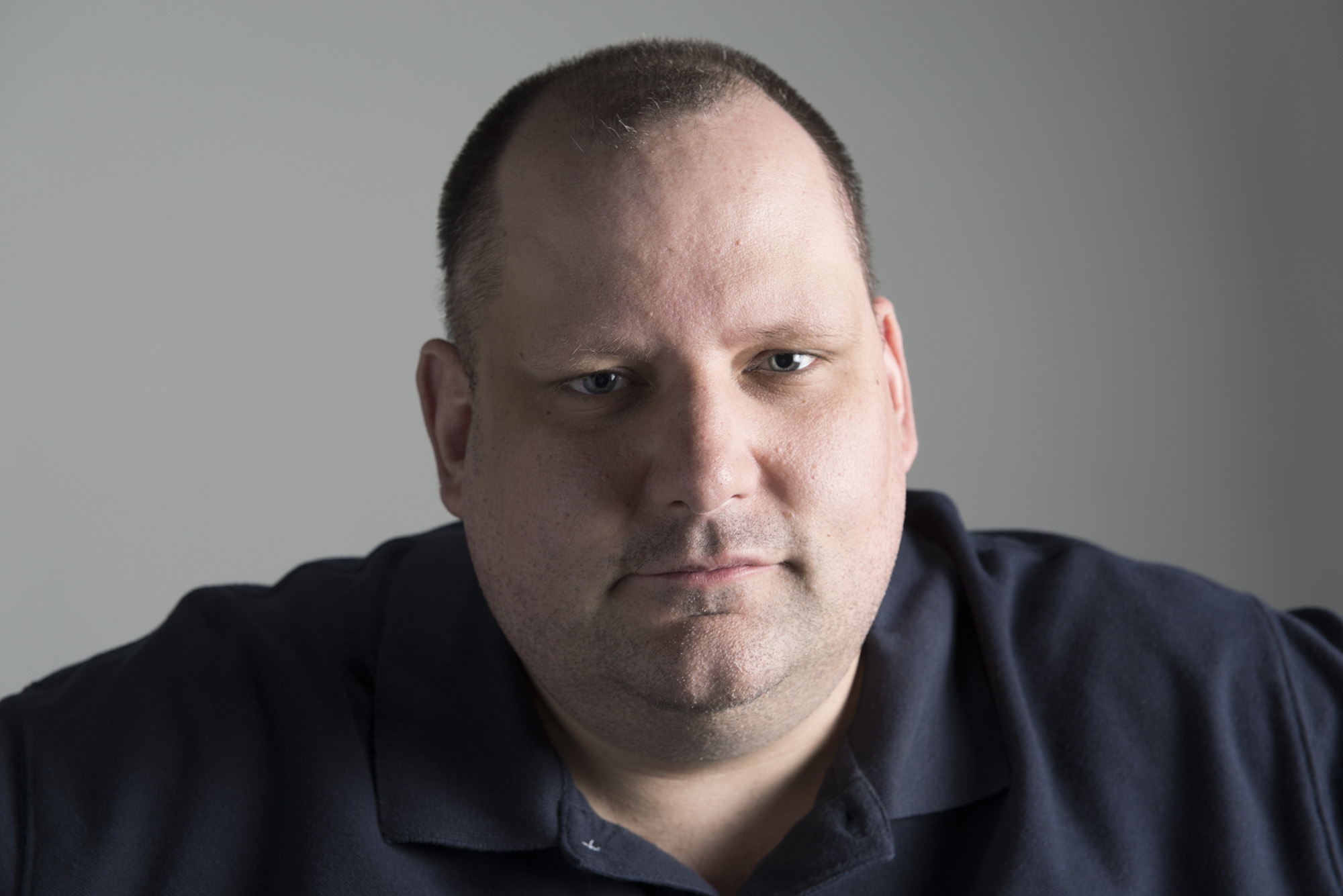
Joe Timmerman lives on the East side of Historic Downtown Loveland. He studies Photojournalism at Ohio University and is an LHS graduate. Read more about Joe.

 A Guest Column by Independent journalist Daniel P. Finney who writes for