Author: Loveland Magazine

  • Ohio Republicans launch effort to make citizen-led amendments harder to pass for voters

    Ohio Republicans launch effort to make citizen-led amendments harder to pass for voters

    Secretary of State Frank LaRose (speaking) alongside Rep. Brian Stewart, R-Ashville, introducing a constitutional amendment requiring a 60% supermajority for all future citizen-led ballot amendments. (Photo by Nick Evans, OCJ.)

    Legislative Republican leaders also negotiating other changes, nix plan for automated voter registration

    BY: NICK EVANS – Ohio Capital Journal

    Lawmakers raised two ideas Thursday with massive implications for Ohio voters. One is an initiative requiring citizen-led constitutional amendments gain a 60% supermajority at the ballot for passage, the other is a House bill aimed at rewriting the underlying infrastructure of how the state conducts elections.

    The amendment

    State Rep. Brian Stewart, R-Ashville, joined Ohio Secretary of State Frank LaRose to introduce their plan to “safeguard Ohio’s constitution from special interests,” by proposing the supermajority for passage.

    “We have repeatedly watched as special interests buy their way onto the statewide ballot and then spend millions of dollars drowning the airwaves to secure fundamental changes to our state by a vote margin of 50% plus one vote,” Stewart argued.

    Their plan singles out the citizen-led process for amending the state constitution and raises the threshold for passage to 60%. The signature threshold for making the ballot would remain unchanged. LaRose argued lifting that benchmark would give the same interest groups a relative advantage.

     Ohio Secretary of State Frank LaRose. Official photo.

    “If a special interest group can afford to pay, you know, million dollars to hire people with clipboards,” LaRose reasoned, “they can afford to pay a million and a half dollars to hire more people with more clipboards.”

    The stakes are high for any groups whose ideas have fallen on deaf ears in Columbus. The prospects for abortion protection, recreational marijuana, minimum wage increases, gun violence prevention, or further redistricting reform provisions are effectively non-existent in the GOP-controlled Statehouse. LaRose and Stewart’s proposal would move the goal posts for any of those ideas.

    The proposal itself, of course, will need to go to voters and get just 50% plus one to alter the Ohio Constitution. It will follow a different process, too. Stewart’s resolution would make the ballot through a General Assembly vote rather than the citizen signature-gathering process.

    That lawmaker-led process won’t see any changes in the threshold for passage, either. LaRose and Stewart dismissed any suggestion their approach is unfair. Lawmakers have to meet a supermajority benchmark, too, they argued. It’s on “the front end” where they have to clear a 2/3 supermajority to make the ballot.

    Under maps declared to be unconstitutional gerrymandering by a bipartisan majority on the Ohio Supreme Court, Ohio Republicans once again won rock-solid supermajorities in the Ohio House and the Ohio Senate last week.

    LaRose and Stewart highlighted how 11 of 16 citizen-led amendments have failed since 2000, so it wasn’t clear exactly why they want to raise the bar higher as they also noted of the five measures that passed, three cleared 60% at the ballot box.

    The legislation

     Republican Ohio House Majority Leader Bill Seitz. Official photo.

    Meanwhile, state Rep. Bill Seitz, R-Green Township, kicked off Thursday morning by proposing sweeping changes to an already sweeping elections bill. The biggest move involved nixing the automated voter registration language contained in the initial proposal.

    Those provisions would’ve leaned heavily on the Bureau of Motor Vehicles to help voters register or update their registration any time they interact with the agency. If voters’ registration is regularly updated, the thinking goes, there will be fewer names to purge. But Seitz said after months of negotiations, the Ohio Senate hasn’t budged.

    “If we’re going to get anything done,” Sietz said, “we’ve got to have an agreement between two chambers, and the Senate does not yet feel comfortable with automated voter registration, even though I am comfortable with it.”

    “But it takes two to tango as they say,” he added with a wry chuckle.

    Among other changes, voters would be able to request absentee ballots online, but they’d have to submit paper requests on a specific form. The deadline for requesting one would be seven days before an election. The bill trims the deadline for absentee ballots to arrive post-election to seven days as well.

    Drop boxes would be available for the duration of early voting, but they’d be restricted — no more than three, all on board of elections premises and under 24/7 video surveillance.

    The bill eliminates the final day of early voting but distributes those hours in the week prior by extending weekday hours.

    Seitz also dropped a number of ID provisions from the original bill. He noted Senate legislation plans to offer free photo-ID to anyone — not just poor Ohioans as his bill envisioned.

    “They can be, you know, Leslie Wexner or Carlin Lindner III and they could still get a free photo ID,” he quipped referencing the founder of The Limited and the co-CEO of American Financial Group.

    Pushback

    A slew of press releases were released Thursday afternoon from good government groups and voters rights organizations slamming the Stewart and LaRose proposal to increase the passage threshold for citizen-initiated amendments.

    As for the Seitz proposal, voting rights advocates applauded the inclusion of online ballot requests and funding for electronic poll books. But League of Women Voters of Ohio Director Jen Miller warned the proposal would make elections “more complicated, expensive and inefficient.”

    She urged lawmakers to expand in person voting hours during the final weekend of early voting. Miller argued boards will get more bang for their buck expanding weekend voting compared to tacking on extra early morning hours during the week.

    Miller also pushed them to reconsider the automated voter registration they’d just removed. She argued 22 other states have similar policies including West Virginia, Georgia and Michigan.

    “It removes barriers to registration, but it also helps every voter because the accuracy of voter rolls are improved and it can reduce administrative costs for the boards of elections,” Miller explained. “And we reduce our provisional ballot counts which are typically very high in Ohio.”

    Miller returned to the idea of excessive provisional ballots in a discussion of stricter voter ID requirements.

    “When someone votes provisionally, which of course we support, that actually takes away all workers from the process,” Miller explained. “It increases lines, and it also increases a lot of post-election work for boards of elections. So we think that the system as is works.”

    Speaking afterward, Seitz rejected out of hand the idea that more stringent voter ID requirements could increase the number of provisional ballots cast.

    “I don’t buy that at all, that’s crap,” he said, “look at everything you need a photo ID for in life, okay?”

    Follow OCJ Reporter Nick Evans on Twitter.

  • Jeopardy champion Ohioan, others testify against anti-LGBTQ health care bill

    Jeopardy champion Ohioan, others testify against anti-LGBTQ health care bill

    Amy Schneider, Dayton native and Jeopardy! champion, leaves the Ohio House Families, Aging and Human Services Committee after testifying against House Bill 454. Schneider, who is a trans woman, said the bill would be “tragic” for Ohio children. Photo: Susan Tebben, OCJ

    BY: SUSAN TEBBEN – Ohio Capital Journal

    A packed and stuffy Families, Aging and Human Services committee room was flanked by multiple overflow rooms, where applause could be heard after parents, trans advocates and individuals implored the committee not to approve of House Bill 454, a bill created by committee member state Rep. Gary Click, R-Vickery.

    One of the testimonies came from Dayton native Amy Schneider, a trans woman who went on to become a Jeopardy! super champion, and has used her platform to support her fellow LGBTQ+ community members.

    “To be given the chance in Ohio, where I spent 30 years of my life, to have a chance to make a difference and have a chance to actually, if nothing else, slow down these laws and give trans kids a little bit longer to be safe, then I’ve just got to do it,” Schneider told the OCJ before she gave her testimony to the committee.

    In her testimony, she sought not to demonize those who support the bill, but to ask that they do what they claim is the main goal of the bill: protecting children.

    “But if you do share that goal, then passing this bill would be a tragic mistake,” Schneider said. “Because far from protecting children, this bill would put some of them in grave danger, a danger that not all them would survive.”

    https://youtube.com/watch?v=5sRGUicLu6Q%3Ffeature%3Doembed

    Several of those that testified, including Schneider, called gender-affirming care “life-saving” care, in that it would help suicide rates among trans individuals, and the overall mental health of those attempting to live as they want to live.

    “With this bill, I wouldn’t be able to appear as I want to appear to the public with a form that would greatly appeal to me,” said 15-year-old Cass Steiner, who appeared alongside her mother, Kat. “This would likely send me, and everyone else who is expecting treatment, into another deep depression.”

     State Rep. Gary Click, R-Vickery, looks on as the House Families, Aging and Human Services Committee, of which he’s a member, listens to testimony against his bill restricting gender-affirming care, House Bill 454. The bill did not see a vote on Wednesday.
    Photo: Susan Tebben, OCJ

    In the middle of two hours of testimony, Click introduced a substitute version of the bill, that he said was an attempt to “meet in the middle” of opposition and support.

    In the new version, puberty blockers or hormone therapy is allowed for minors, but only after a doctor confirms that the child “has received on a routine basis and for at least a two-year period counseling related to gender dysphoria, mental health and the risks of gender transition,” according to the sub bill’s analysis by the Legislative Service Commission.

    A doctor must also screen for other things that “may be influencing the minor’s gender dysphoria,” including depression, autism or ADHD, and “ensure that these comorbidities are treated and stabilized for at least two years.”

    Along with conducting other physical, sexual, mental and emotional abuse screenings, a second doctor must be consulted and agree to the treatment plan.

    Asked twice how the two-year time frame was decided on, Click told reporters it was “discussed by some other folks who came up with that and I thought that sounded reasonable.”

    He did not specify who he consulted with to come to that amount of time.

    The substitute bill also seeks to keep track of the number of medical and therapy appointments the minor attended before a physician recommended hormones or puberty blockers, any mental health conditions before being diagnosed with a “gender-related condition” and any follow-up the minor received after treatment.

    The bill also requires physicians to report “the number of minors who resumed identification with their biological sex,” and “the number of minors for whom the physician previously prescribed drugs or hormones who have not been prescribed those hormones or drugs for one year or more,” according to the LSC analysis.

    https://youtube.com/watch?v=WUIJG2_rhU8%3Ffeature%3Doembed

    That information would be reported on a yearly basis to the General Assembly and to the Ohio Department of Health.

    Like the abortion ban that is currently held up in court, violating HB 454 could put doctor’s medical licenses at risk, and the state Attorney General would be authorized to bring against anyone violating the bill, should it become law.

    The bill was not voted on during Wednesday’s committee meeting, with chair Susan Manchester, R-Waynesfield, adjourning the meeting immediately after the last witness of the day finished.

    It’s not clear what the fate of the bill will be from here, with the General Assembly’s session ending at the end of December. More hearings could be scheduled, which Click supports because he said there are more people to hear from, particularly those who have been “damaged” by gender-affirming care.

    He said the testimony he heard on Wednesday wasn’t anything he hadn’t heard before, but it didn’t change his mind on the bill.

    “(Children) have to have that period to work through this to make sure this isn’t a phase, it’s not a social contagion … we want to give them that legitimate chance to work through this,” Click said.

    He said he won’t “write anything off” in terms of new amendments to the bill, but he feels the bill has come as close to “the middle” as possible.

    “There are proponents of this bill who are not happy with some of the concessions that we made, and of course the opponents aren’t happy with the fact that we didn’t make enough,” Click said.

    For Schneider, she sees attempts to keep trans folks from getting the care they need as a negative response to success and progress the trans community has had over the last few decades. Progress that will continue, she says.

    “The momentum will continue to be on our side and there’s this pain right now, but this is just sort of the last gasp of that resistance,” Schneider said.

  • Education advocates say Ohio legislature should focus on funding, not regulating curriculum

    Education advocates say Ohio legislature should focus on funding, not regulating curriculum

    Getty Images

    BY: SUSAN TEBBEN – Ohio Capital Journal

    Groups keeping an eye on the Ohio legislature’s handling of education are hoping the General Assembly focuses on funding and appealing to new teachers, rather than bills regulating curriculum and “divisive” issues.

    The Ohio Education Association is continuing it’s push to eliminate mandatory retention from the third-grade reading guarantee, focusing their attention getting through to the state Senate.

    “I’m optimistic, I think now that we’re past election season, we can focus on finding common ground and really making sure that we’re addressing the needs of students,” said Scott DiMauro, head of the OEA.

    The association has already put out a series of recommendations for improving recruitment and retention strategies for teachers, including taking away financial barriers and prioritizing “the need to have a diverse teaching pool to serve all our communities.”

    “I’m encouraged that there have been a lot of productive conversations at the regional level and with policymakers who I think share this concern,” DiMauro said.

    The Ohio Federation of Teachers has also spotlighted the training of teachers and the retention of quality teachers as part of their state priorities.

    “Teachers are still tired and we need to look at how we make the education system work them,” said OFT executive director Melissa Cropper.

    What education policy groups don’t want to see is rushed legislation that flies through the lame duck session without the ability for transparency and accountability. This includes bills that have already been introduced, like House Bill 616, the most recent “divisive concepts” bill brought by state Reps. Jean Schmidt, R-Loveland, and Mike Loychik, R-Bazetta, to regulate the curriculums in schools, including legislating when and how sexual orientation and gender ideology can be included in school lessons.

    But Cropper isn’t as worried about “extremist” bills being pushed through before the end of the year because the Republican majority has increased based on general election results, theoretically giving the GOP no reason to fast-track bills or attach them quickly to other bills.

    “We are certainly opposed to anything being passed during a lame duck session when there’s not time for anything to be vetted,” Cropper said. “But given the results of the election, I don’t think that there’s any urgency on their part to do anything.”

    HB 616 is not currently scheduled to appear in committee this week, as the legislature comes back from its summer recess.

    DiMauro said he’s not sure what the prospects for education policy will be going into the lame duck session, but more than that, he wants to see more focus on “committing resources to a funding plan that primarily fits the needs of students and teachers.”

    “We know that it’s critical for the future of our state … that Ohio is a welcoming place for educators,” DiMauro said.

    Both education leaders were bolstered by the results of the Ohio State Board of Education races that took place on November 8, wherein two incumbents were unseated, and another race put a former Democratic legislator and teacher on the board to replace outgoing member Kirsten Hill.

    “I don’t think these are tiny changes, I think these are huge changes,” Cropper said. “We finally have some more people on (the board) who are there because they want to make this education system work for students and … is not about some culture war agenda.”

  • Fall viruses are hitting with a vengeance. Tips for a healthier holiday season

    Fall viruses are hitting with a vengeance. Tips for a healthier holiday season

    Flu, RSV and COVID-19 are the current viruses going around at the moment as we approach the 2022 holidays. Here is what you can do to keep your loved ones safer.

    By: Katie Kerwin McCrimmon, UCHealth

    Flu, RSV and COVID-19 infections all are skyrocketing just as we’re gearing up for the Thanksgiving and Christmas holidays.

    “We are officially in respiratory viral season. That includes everything you can think of from the common cold to more severe illnesses, and it has begun with a vengeance,” said  Dr. Michelle Barron, senior medical director of infection prevention and control for UCHealth and one of the top infectious disease experts in Colorado.

    “Sometimes we have a slow start to the respiratory season. Not this year,” Barron said. “We went from nothing to hundreds of cases in a very short time frame.”

    Barron is advising people who are sick to avoid large gatherings.

    We don’t have to go back to the isolation of the 2020 Thanksgiving and holidays season. But Barron is encouraging people to think of others before they travel or show up at a big Thanksgiving dinner or another holiday gathering.

    “Use your common sense. If you’re sick, you don’t want to give your illness to grandma and grandpa. At the end of the day, the goal is to still be able to do things and enjoy the holidays. Just do it in a way that doesn’t impact others badly,” said Barron, who is also a professor at the University of Colorado School of Medicine on the Anschutz Medical Campus.

    Her guidance is straightforward and familiar to most people since this is the third Thanksgiving and Christmas holiday season we’re facing since the pandemic began in early 2020.

    Barron’s advice for staying healthier over the 2022 holidays includes:

    • Getting vaccinated to prevent COVID-19 and flu. (There’s no vaccination yet to prevent RSV (Respiratory Syncytial Virus), but there may be one for pregnant women soon.)
    • Staying home from work, holiday gatherings and parties if you’re sick.
    • Washing your hands frequently.
    • Wearing a mask in crowded indoor settings.
    • Testing yourself or going to your doctor’s office to get tested if you are sick. If you test positive, there are therapies that can help people early in the course of a COVID-19 or flu illness.
    • Seeking emergency medical care immediately if you or your child can’t breathe or you are experiencing any other kind of medical emergency.
    • Get preventive care like regular vaccines for children and adults and keep current on medications for chronic illnesses like diabetes.

    “Now is the time. If you have not done it yet, get your flu shot and your COVID-19 bivalent booster,” Barron said.

    Health experts at the U.S. Centers for Disease Control and Prevention (CDC) also are urging people to think about indoor air quality. Keep in mind that respiratory illnesses spread through the air. Using air filters and opening windows to ventilate crowded indoor settings can help reduce the spread of respiratory illness. See how ventilation might help you stay safer by checking out the CDC’s interactive ventilation tool.

    Viruses going around at the moment in 2022

    The current infectious disease outlook is worrisome since doctors and public health experts are fighting a trifecta of foes: flu, RSV and COVID-19.

    Last year, health experts worried about a potential “twindemic” of flu and COVID-19 cases. COVID-19 infections increased dramatically last fall and winter, but the flu season wasn’t as bad as feared.

    This year, flu and RSV have hit early and COVID-19 infections are increasing this fall, just like they have for three years in a row. Twin infectious diseases that were worrisome in past years have morphed into a trio causing illnesses this year.

    “If you are sick, do not show up at gatherings or wear a mask,” Barron said, reiterating the perennial advice she gives at this time of year.

    “Be very cognizant that these infections can disproportionally impact our elderly, our very young children, and our immunocompromised hosts,” Barron said. “We want to make sure that these people don’t get infected and that everybody’s equally able to enjoy the holidays, illness free.”

    Many people are tired of being careful or wearing masks. But the evidence is clear. Wearing a mask on a plane or in a crowded grocery story can drive down infection rates.

    “There is zero debate on this,” Barron said. “Masking works. If you really want to see your loved ones during vacation, wearing a mask will help you prevent the spread of illnesses.”

  • Biden student debt relief plan thrown out by Texas judge; new applications halted

    Biden student debt relief plan thrown out by Texas judge; new applications halted

    BY: ARIANA FIGUEROA – Ohio Capital Journal

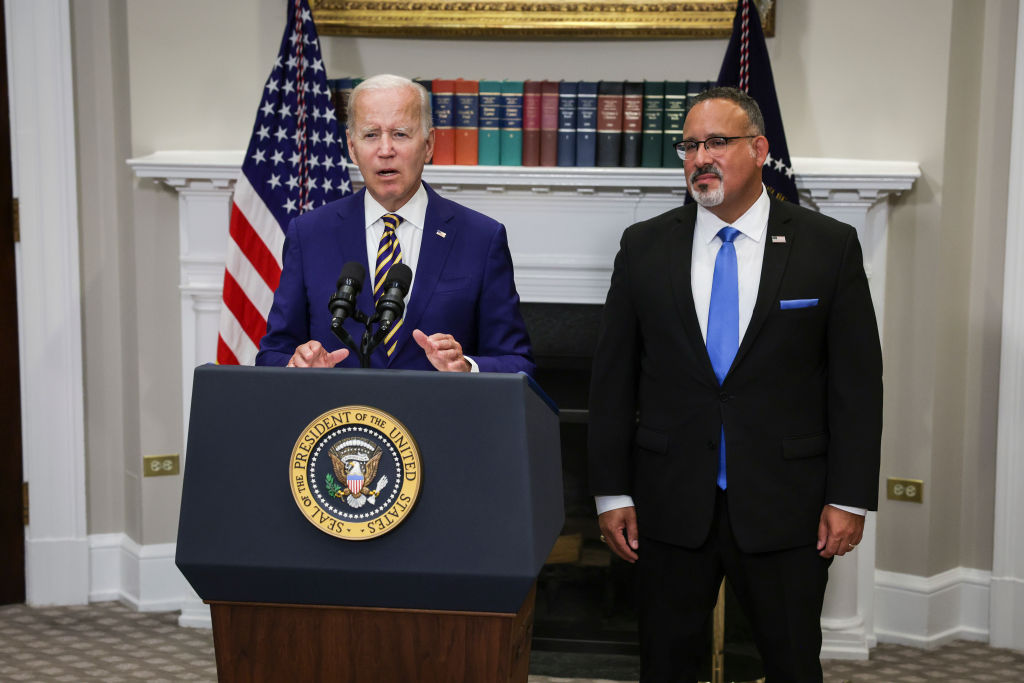
    WASHINGTON — Late Thursday a federal judge in Texas struck down the Biden administration’s student debt relief plan, ruling that the program is unlawful, in a blow to 16 million student debt borrowers already approved for relief.

    The U.S. Department of Education now is no longer accepting applications for the program, according to the student aid federal website.

    “Courts have issued orders blocking our student debt relief program,” according to the website. “As a result, at this time, we are not accepting applications. We are seeking to overturn those orders.  If you’ve already applied, we’ll hold your application.”

    In Fort Worth, U.S. District Judge Mark Pittman, an appointee of former President Donald Trump, in his 26-page judgment called the program an “unconstitutional exercise of Congress’s legislative power” and ruled in favor of two borrowers, backed by a conservative advocacy group, who brought the challenge.

    The Department of Justice has already filed an appeal of the ruling, White House press secretary Karine Jean-Pierre said in a statement.

    “The President and this Administration are determined to help working and middle-class Americans get back on their feet, while our opponents — backed by extreme Republican special interests — sued to block millions of Americans from getting much-needed relief,” Jean-Pierre said.

    She added that the Department of Education will continue to hold onto the information of student debt borrowers who applied for the program — about 26 million — so the department “can quickly process their relief once we prevail in court.”

    Of those 26 million borrowers who applied for the program that launched in October, 16 million have been approved, she said.

    The debt relief program was initially halted by an appeals court in late October following an emergency request from six Republican-led states who argued that the president does not have the authority to wipe out debt, and it should be left to Congress to make that decision. The court is considering the request by the states for an injunction.

    That lawsuit was filed on behalf of Republican Iowa Gov. Kim Reynolds, and by Republican attorneys general in Nebraska, Arkansas, Missouri, South Carolina and Kansas.

    Legal barrage

    Since the White House’s announcement of the program last month, there have been multiple challenges to it.

    The plaintiffs in Thursday’s case argued that the Biden administration did not follow the proper rule making procedure and was unlawful.

    The conservative advocacy group that backed the plaintiffs is the Job Creators Network Foundation, which was founded by billionaire Bernie Marcus, who also co-founded Home Depot.

    Elaine Parker, the president of Job Creators Network Foundation, said in a statement that Thursday’s ruling “protects the rule of law which requires all Americans to have their voices heard by their federal government.”

    “This attempted illegal student loan bailout would have done nothing to address the root cause of unaffordable tuition: greedy and bloated colleges that raise tuition far more than inflation year after year while sitting on $700 billion in endowments,” Parker said.  “We hope that the court’s decision today will lay the groundwork for real solutions to the student loan crisis.”

    One of the two plaintiffs, Myra Brown, had a business loan forgiven through the Biden administration’s Paycheck Protection Program. She owns the Texas business Desert Star Enterprises Inc, which was granted a $48,000 loan, where $47,996 was forgiven on April 27, 2022.

    Under the Biden administration’s plan, student loan borrowers can qualify for up to $10,000 in loan forgiveness, while the recipients of Pell Grants can apply for up to $20,000 in debt relief. The program is intended to assist borrowers who, in 2021, earned no more than $125,000 per year, and couples who earned up to $250,000 per year.

    ​​More than 43 million Americans have student loan debt, and the Federal Reserve estimates that the total U.S. student loan debt is more than $1.76 trillion.

    The non-partisan Congressional Budget Office in September found that as of June, the White House’s debt forgiveness program would eliminate about $430 billion of the $1.6 trillion of student debt. The report in June preceded another increase in the total debt to $1.76 trillion.

    The Texas federal judge, Pittman, wrote in his opinion that “[w]hether the Program constitutes good public policy is not the role of this Court to determine.”

    He determined that the student loan debt forgiveness program was one of the “the largest exercises of legislative power without congressional authority in the history of the United States.”

    Pittman said that the HEROES Act did not grant the approval of the $400 billion student loan forgiveness program.  The Biden administration relied on the 2003 HEROES Act while enacting its debt relief program, because that law provides loan assistance to military personnel.

    “In this country, we are not ruled by an all-powerful executive with a pen and a phone. Instead, we are ruled by a Constitution that provides for three distinct and independent branches of government,” Pittman wrote.

    Legal standing questions

    Another lawsuit filed against Biden’s student loan forgiveness program has been dismissed due to lack of standing.

    The Brown County Taxpayers Association, a Wisconsin organization that advocates for conservative economic policy on behalf of its members, brought an emergency request to block the program to Justice Amy Coney Barrett — who is assigned to the 7th Circuit Court of Appeals — but was denied.

    A federal district court in Missouri threw out the case by the six Republican-led states that argued the Biden administration violated the Administrative Procedure Act by not adhering to the proper rule making process.

    U.S. District Judge Henry Autrey, an appointed judge of former President George W. Bush, of the Eastern District of Missouri issued a 19-page ruling that declared those states didn’t have legal standing to sue the Biden administration over its student debt cancellation program, despite the “important and significant challenges” they have raised in the case.

    In Autrey’s decision, he seemed to agree with attorneys from the Biden administration that a potential loss of tax revenue in the future did not give the states enough standing to sue.

    “It is hard to make a cake if you don’t have a pan to put that cake in,” Autrey said during oral arguments. “That pan is standing. It doesn’t matter if you have all the ingredients.”

    But GOP states brought a successful emergency request to the 8th Circuit Court of Appeals, asking the federal appeals court to block the Biden administration’s plan from rolling out until the court ruled on the emergency request from the GOP state’s legal challenge.

    Following the Texas judge’s decision, the Student Borrower Protection Center, an advocacy group that focuses on relieving student debt, called on the Biden administration to extend the pause in student loan payments, which is set to end Jan. 1, 2023. The pause was set in place in early 2020 by the Trump administration due to the pandemic.

    “The devastating result of this court’s decision today is that tens of millions of student loan borrowers across the country now have their vital debt relief blocked as a result of this farcical and fabricated legal claim,” SBPC deputy executive director and managing counsel Persis Yu said in a statement. “The Biden Administration cannot now resume payments. It must use all of its tools to fight to ensure that borrowers receive the debt relief they need.”

  • DeWine appointee, fellow State Board of Ed incumbent unseated in general election

    DeWine appointee, fellow State Board of Ed incumbent unseated in general election

    BY: SUSAN TEBBEN – Ohio Capital Journal

    Dr. Jenny Shafer Kilgore, a member of the state Board of Education, speaks in support of a bill to eliminate the teaching of “divisive concepts” in schools. Kilgore lost her race for re-election in Tuesday’s general election. Photo from The Ohio Channel

    Two incumbents on the Ohio State Board of Education were not reelected in Tuesday’s general election.

    One unseated member was part of a movement on the board to rescind an anti-racism resolution that mired the state board in controversy, and the other was a governor-appointed member before he sought election to the board.

    Of the 19 members of the board, 11 are elected and the rest are appointed by the governor.

    The school board races were also different this year because of a district shuffle caused by statewide redistricting. Though the changes were spurred by changes in the statehouse and congressional voting districts, decisions on what the school board districts looked like were approved solely by the governor.

    Incumbent Dr. Jenny Kilgore, an elected board member since 2019, lost her bid for reelection, with challenger Katie Hofmann edging past her in a margin just north of 30,000 votes.

    Kilgore was a vocal opponent of an anti-racism resolution passed following the death of George Floyd and social unrest in the country regarding racial issues, though she abstained from the initial vote on the measure. A movement then began to rescind the resolution as conservative outcry for so-called “critical race theory” and “indoctrination” came to a head in Ohio. The resolution was also rescinded amid efforts in the Ohio legislature to put up “divisive concept” bills that would ban discussions of the impact of race on history if it was determined to create “guilt” among white students.

    District 4 board member Kilgore also participated in public protests against “critical race theory” in schools, and testified before a legislative committee, saying House Bill 327 “would allow teachers to teach the subject without the distractions of critical race theory… they would have more opportunity to focus on the subject matter.”

    Fellow incumbent Tim Miller lost his bid to join the board as an elected member to challenger Tom Jackson. Jackson received 44% of the vote in unofficial results from Tuesday. Miller was more than 50,000 votes behind Jackson, also narrowly falling behind a third challenger, Cierra Lynch Shehorn, by just under 600 votes.

    Miller was appointed by Gov. Mike DeWine in 2021 to fill Sarah Fowler Arthur’s District 10 seat left vacant when she joined the Ohio House.

    The outgoing member was instrumental in sending a resolution condemning the Biden administration for changes to anti-discrimination regulations that would include gender identity if accepted on the federal level to executive committee, rather than a full board of ed vote.

    Also elected on Tuesday was former state senator and Toledo-area educator Teresa Fedor, who defeated opponent Sarah McGervey with 56% of the unofficial vote totals in the District 2 race.

    Hofmann said the elections that happened on Tuesday show the need for a different tack on the board of ed.

    “The election of Theresa Fedor, Tom Jackson and (Hofmann) is a clear message that people in Ohio want high quality public schools, not more charters or vouchers,” Hofmann said in a statement to the OCJ. “Ohio public schools must be welcoming, accepting and inclusive where ALL children are respected.”

    Though all state board of ed races are considered non-partisan, the changes to the board are encouraging to the Democratic party as a whole and education associations in the state as well, despite “mixed results” in other general election races.

    “I think having dedicated candidates who are going to reject some of the extremism we’ve seen on the state board of education … is really going going to help change the dynamic in terms of the issue and hopefully refocus the state board on really what students need,” said Scott DiMauro, president of the Ohio Education Association.

    Elizabeth Walters, chair of the Ohio Democratic Party, praised “taking the majority” on the school board, saying the current school board “has become this dysfunctional show of what happens when we elect people who aren’t focused on the things that parents and students care about most.”

    She also said the party worked to bring in candidates, and is prepared to recruit more in the future.

    “We worked hard to recruit strong folks for these seats who have strong backgrounds in education and who can be advocates for what teachers and students really need to be successful here in Ohio,” Walters said in a Wednesday press call.

    Follow Susan Tebben on Twitter.

  • [Documentary] How Loveland, Ohio’s Simpson Farm was preserved in its pristine beauty

    [Documentary] How Loveland, Ohio’s Simpson Farm was preserved in its pristine beauty

    Loveland, Ohio – Here is a Loveland Magazine Documentary. It is a love story of how 27 years ago the Simpson Farm in the West Loveland Historic District was preserved in its pristine beauty and in perpetuity.

    Local residents banded together and fought hard to establish a 41-acre conservation covenant that was eventually placed on the Simpson Farm deed.

    You will learn how the Drees’ bulldozers and proposed condos eventually lost traction and were steered away from Loveland.

    It was a four-year “labor of love” to keep the acreage in the heart of our “Sweetheart City” untouched by human hands so all future generations of girls and boys could fall in love with it as well.

    You can win the fight against City Hall and “developers” when precious greenspace needs protecting.

    This is a love story. As often happens, love stories often mingle with their nightmares and the familiar sleepless nights. First, the love story though, and perhaps at a later time what the current heartache is.

    (You can view the story in a larger size by using the “+” button.)


    Here you can watch the accompanying video. Featured are the sights and sounds of the wildlife that resides on the “Farm”. The primary reason for the effort that began 25 years ago was to provide a sanctuary and a peaceful place for the animals you see in this video.

    The Restrictive Covenant Establishing the Conservation District

  • J.D. Vance and Tim Ryan make final appeal to voters from townhall stage

    J.D. Vance and Tim Ryan make final appeal to voters from townhall stage

    J.D. Vance answering questions on stage at a FOX townhall in Columbus. (photo by Nick Evans)

    BY: NICK EVANS – Ohio Capital Journal

    In a Fox News townhall one week from election day, Ohio’s U.S. Senate candidates tackled questions from the audience and moderators Bret Baier and Martha MacCallum about energy, the border, abortion, the Paul Pelosi attack, and more.

    The event takes the place of the third debate both campaigns have said they wanted but couldn’t ever agree to schedule. The nominees staked out a bit of new ground and clarified some existing positions. But in general, the forum offered a chance for Republican J.D. Vance and Democrat Tim Ryan to make one final broad appeal to voters.

    Tim Ryan

    The townhall format gave each candidate roughly equal time on stage and Ryan got the first crack. The first question came from a Deerfield woman in the audience named Beverley. She pressed Ryan asking him to “look me in the face” and explain how clean energy provisions in the Inflation Reduction Act will reduce inflation.

    In a blunt show of honesty, he told her he couldn’t.

    Ryan argued as he has previously, for addressing short term inflation through a tax cut. But he went on to defend the broader legislation, too. He argued those subsidies are helping encourage private investment in vehicle, battery and solar manufacturing around the state.

    “I want Ohio to be the manufacturing powerhouse of the world,” Ryan argued. “If it’s not us, it’s China. So we have to go all in on these products of the future. But where I think I’m different as a Democrat, I think we go all in on natural gas.”

    Most notably, though, Ryan broke with the state party and offered his support for Issue 1. The measure demands judges consider public safety when setting the dollar amount for bail. They can already consider public safety for other conditions, but the state supreme court earlier this year ruled it’s unconstitutional to jack up cash bail in an effort to keep defendants in jail. State law already allows prosecutors to argue for holding dangerous defendants without the opportunity for bail.

    Familiar rhetoric from Ryan on avoiding “stupid fights” and restoring Roe v. Wade got strong responses. Sparring with the moderators on the latter, Ryan refused to place a hard cut off on performing the procedure when a mother’s life is in danger. Ignoring the state’s six-week abortion ban currently on hold, Martha MacCallum pressed him on why the 22 weeks Ohio women currently have isn’t enough. (Ohio’s six-week abortion ban is temporarily on hold by a Hamilton County judge while a lawsuit against it proceeds.)

    “If there’s a medical problem, you don’t know that until the end,” Ryan argued back. “And here, the point is, this is America. This is a country built on freedom, right? And this is the largest governmental overreach into the private lives of individual citizens in the history of our lifetime.”

    “I thought my friends on the other side were, like, against big government, against invasion into the private lives of people,” he added.

    In addition to his lines on bipartisanship and abortion, Ryan got a good response to the idea of legalizing marijuana. He didn’t get as far with his argument that investing in border security is necessary, but a wall isn’t always practical and is often too easily circumvented.

    Ryan’s biggest negative reaction came to questions about the Jan. 6 insurrection. He acknowledged that his past comments about needing to “confront” and “kill” the MAGA movement were poorly phrased.

    “Kill the movement,” Ryan clarified to Baier. “And maybe that wasn’t a great choice of words. Absolutely confront and absolutely stop the extremist movement happening.”

    But a moment later Ryan faced a chorus of jeers when he described 140 Capitol Police officers getting injured during the insurrection and one of them getting killed.

    “We’ve all seen the tape,” Ryan said.

    J.D. Vance

    Vance took the stage next. And from the boisterous applause as he walked out to the lighter cross examination from the moderators, it’s pretty safe to say he got the friendlier draw.

    To blunt Ryan’s attacks that Vance is an “extremist,” he opened with a couple of olive branches. He offered that Democrats were right to allow Medicare to negotiate for lower drug prices.

    “We absolutely have to work together,” Vance said of governing with a Democratic president. “That’s one of the things Tim talks a lot about, working together. But when Republicans win the majority as I think we do, we have to act like we have the majority, we have to do things not just talk about doing things.”

    Vance argued “opening the pipelines and opening up our energy industry” would bring prices down “pretty immediately.” Energy experts meanwhile contend increasing domestic production would have a limited impact when the price of commodities like oil are determined by a global market.

    In terms of immigration, a top issue for Vance, he got a strong response from saying he’d back Arkansas Republican U.S. Sen. Tom Cotton’s RAISE Act. He explained that measure would prioritize immigrants based on skills rather than familial connections.

    “I think the immigration policy in the United States should be about what skills and what attributes do you bring to the table,” he said.

    “You let people into your country based on merit, not on who they know,” he added.

    Vance once again expressed confidence in the integrity of upcoming election and even said he’d support “the guy who wins” even though they’ll disagree on big issues.

    He explicitly condemned the attack of Nancy Pelosi’s husband as “disgusting” after Ryan suggested he’d been silent on it. Vance pushed back that he’d condemned it from the outset and that “the effort to turn this into a political issue is actually a real problem here.” In the next breath he went on to argue the attacker is an illegal alien.

    “My view very simply is that we need to deport violent illegal aliens, ok?” he said.

    He argued the attack — by a man claiming Nancy Pelosi is the “leader of the pack of lies told by the Democratic Party”— is not reflective of Republicans. It’s reflective of people living in the country illegally.

    Asked directly whether he ban abortion in Ohio and nationally, Vance said, “Look, I’m pro-life, I am pro-life.”

    He went to argue 90% of abortion policy should be set at the state level. But he explained his support for a “minimum national standard” that would ensure we’re not “aborting babies who can feel pain who are fully formed.”

    Vance has expressed support for South Carolina Republican Lindsey Graham’s 15 week federal abortion ban. Describing the provision as a minimum standard though is misleading. It would limit any state from allowing abortion after 15 weeks, but states would be allowed to set more stringent restrictions.

    Vance’s claims that a fetus is “fully formed” or can “feel pain” are similarly dubious. Fetal viability is generally considered to be about 23 or 24 weeks. An American Medical Association policy brief contends “the preponderance of evidence” shows even a 20-week fetus is unable to feel pain, and cites a study putting that benchmark closer to 29 or 30 weeks.

    Follow OCJ Reporter Nick Evans on Twitter.

  • Doctors call on DeWine to answer questions about abortion laws

    Doctors call on DeWine to answer questions about abortion laws

    BY: MARTY SCHLADEN – Ohio Capital Journal

    Days after Gov. Mike DeWine said the medical community will be consulted as Ohio considers future abortion legislation, a group of more than 1,400 doctors implored him to answer questions about a law he’s already signed.

    The Ohio medical community has said that to date, DeWine and Republican lawmakers have shown little interest in what doctors have to say when it comes to abortion. Then, late last week, DeWine seemed to reinforce that impression, declining to respond to a list of nine questions that Ohio Physicians for Reproductive Rights sent him and Democratic gubernatorial nominee Nan Whaley.

    The group was formed in the wake of the June 24 U.S. Supreme Court Decision overturning the right to an abortion under Roe v Wade. In Ohio and nationally, medical groups said that decision ignores the health care aspects of abortion.

    DeWine’s non-response is unacceptable, said Lauren Beene, a Cleveland-area pediatrician and a director of Ohio Physicians for Reproductive Rights.

    “These are very important questions that people need to know his stance on because … this can have a lot of implications on a person’s health and their ability to get medical care,” she said, explaining that Ohio’s abortion restrictions can discourage doctors from living here — or even women worried about having the full range of medical options. 

    “If you have somebody who’s running for governor who can’t or won’t answer the question of whether or not he supports a bill that would make all abortion illegal except in the most dire of circumstances,” Beene said, “from a medical perspective (that) doesn’t really make any sense. What does that even mean? It’s not good at all.”

    She was referring to proposed legislation that would go even further than Senate Bill 23, a law DeWine signed in 2019 and which took effect when the U.S. Supreme Court overturned Roe v. Wade on June 24. 

    SB 23 outlaws almost all abortions after about five or six weeks of pregnancy and it doesn’t make exceptions for victims of rape and incest. It makes some exceptions to protect the life and health of mothers, but doctors have complained that they’re vague and practitioners are reluctant to risk felony charges for running afoul of them.

    Several doctors interviewed by the Capital Journal have said they repeatedly tried to warn DeWine and the legislature of the hazards of SB 23 before it was passed and signed in 2019, but they were ignored. Then, shortly after enforcement began in the summertime, many of the things they warned of came to pass.

    Just a week into enforcement, an Indianapolis doctor reported that she aborted the pregnancy of a 10-year-old rape victim from Columbus who couldn’t get one under the Ohio law DeWine had signed. In the following weeks, Ohio doctors told of having to call lawyers first as patients’ lives were fading in front of them — and even then being terrified of the consequences while performing lifesaving terminations.

    Then, in sworn affidavits, doctors and other workers at Ohio abortion clinics reported other horrors under SB 23. They included two more rape victims under 18 who couldn’t get abortions in Ohio; two cancer patients who couldn’t get the abortions they needed to start chemotherapy; and three women whose fetuses had severe abnormalities or other conditions that made a successful pregnancy impossible. Even so, they, too, couldn’t get abortions in Ohio. 

    SB 23 was in force for 11 weeks before a Cincinnati judge temporarily paused it. 

    Now DeWine and Attorney General Dave Yost are in court trying to get the stay lifted. But through it all, DeWine has refused to say whether he thinks it’s a good thing that SB 23 makes women and girls have their rapists’ babies — nor has he said much about women facing the medical problems described in the abortion clinics’ affidavits.

    DeWine has refused to debate Whaley, but last week in a joint appearance with her before the Cleveland Plain Dealer editorial board, he gave his most extensive recent comments about abortion in Ohio.

    DeWine said policymakers will listen to the medical community as further abortion restrictions are considered. However, he only did so after seeming to repeat Yost’s false assertion that under SB 23, a 10-year-old can get an abortion based on her age alone. 

    The law mentions no age at which a rape victim is too young to be forced to have that baby. And several obstetricians told the Capital Journal that while pregnancy in a 10-year-old is riskier than the average pregnancy, that’s also the case for the obese, diabetics, older mothers — and women with a host of other conditions that SB 23 makes no exceptions for.

    But in the future, DeWine said, medical experts will be heard.

    “As we go through debates and discussions, my belief would be that that 10-year-old would have been able to have an abortion in Ohio because of that,” DeWine told Whaley and the editorial board, referring apparently to SB 23’s health exceptions. “If I’m wrong — if I was wrong — and we’re going to hear more from medical professionals, then these are the things that we’ll need to work out, that the legislature will work out as it debates this bill.”

    Despite being asked twice by Whaley, DeWine didn’t answer whether he agreed with the provision in SB 23 forcing such young girls to have their rapist’s babies. DeWine also hasn’t said whether he agrees with the law’s requirement that victims of rape and incest must carry their pregnancies to term regardless of their age.

    In their written questions, Ohio Physicians for Reproductive Rights asked the governor to state his position on proposals that would go even further, including House Bill 704 “that would declare a fertilized egg, a single cell, to be legally the same as a human being.” 

    DeWine didn’t respond. When asked about the doctors’ questions, DeWine Press Secretary Dan Tierney on Tuesday said in an email, “The Governor has no additional comments beyond his previous statements at this time.”

    For Beene, one of the directors of the doctors’ group, DeWine’s silence is telling.

    “We have doctors in all specialties all across the state,” she said. “And if we have questions and he won’t answer them, what does that say to the public? For us as physicians, we’re very frustrated with him not wanting to answer.”  

    Follow Marty Schladen on Twitter.