Author: Loveland Magazine

  • COVID-denial, election-denial not far apart, OSU researchers found

    COVID-denial, election-denial not far apart, OSU researchers found

    BY: SUSAN TEBBEN – Ohio Capital Journal

    You’ve probably heard of “gateway” drugs, but a group of researchers at Ohio State University say there’s such a thing as a “gateway conspiracy.”

    A duo of surveys done by psychology researchers and supported by the National Science Foundation seek to bolster the field of “conspiracy theory research,” which an announcement of the study said “to date has tended to look for traits that predict the tendency to believe in conspiracy theories at a given point in time.”

    The “gateway conspiracy” that OSU researchers tested in the surveys “argues that conspiracy theory beliefs prompted by a single event lead to increases in conspiratorial thinking over time.”

    One survey asked 501 people questions “assessing their beliefs in COVID-19 conspiracy theories, political ideology” and their affinity for the theories in June 2020.

    About 100 of the participants came back in December of the same year and were asked “statements gauging their level of conspiratorial thinking,” including their believe in the false idea that there had been extensive voter fraud in the 2020 presidential election.

    Results from the surveys show those that believed false theories about the pandemic were “more likely to later report they believed that the 2020 presidential election had been stolen from Donald Trump through widespread voter fraud, which is also not true.”

    A possible trigger for these beliefs? A sense of distrust, according to OSU psychology professor Russell Fazio, senior author of the survey study.

    “It’s speculative, but it appears that once people adopt one conspiracy belief, it promotes distrust in institutions more generally — it could be government, science, the media, whatever,” Fazio said in announcing the study.

    COVID-19 was ripe for conspiracy because individuals felt a lack of control, according to Fazio’s fellow study author, Javier Granados Samayoa.

    “With COVID-19, there was this large event that people could not control, so how could they make sense of it? One way is by adhering to conspiracy theories.”

    The study also found that the high likelihood of rabbit-hole-opening theories causing negative outcomes for believers and those around the believers spotlights the importance of tamping down COVID-19 conspiracies.

    “Not only do COVID-19 conspiracy theories threaten lives and economies in the present, they may also create problems down the road by leading to heightened conspiracist ideation,” the study stated. “Policymakers would be wise to consult the research that has tested strategies by which belief in conspiracy theories can be blunted.”

    Those policymakers could include conspiracy theorists, if the November election ends up a certain way. From U.S. Congress, all the way down the general election ballot, there are candidates who questioned the validity of the 2020 election and claimed voter fraud.

    One such candidate, Terpsehore “Tore” Maras, independent candidate for secretary of state, asked the Ohio Supreme Court to change the rules when it comes to election observers and allow her to choose her own observers, against the legal mandate that four other candidates also petition for more poll watchers.

    That case has yet to be decided.

  • Ohio, other states sitting on huge piles of money, new report says

    Ohio, other states sitting on huge piles of money, new report says

    BY: MARTY SCHLADEN – Ohio Capital Journal

    Ohio has enough in its rainy day fund to operate the state government for 35 days on that money and nothing else. If you factor in the money it has in other unexpended balances, the number of days grows to 73, according to a report released last week by the Pew Charitable Trusts.

    It’s part of a trend in which states are sitting on reserves that are at or near record levels after states got unprecedented federal assistance during the coronavirus pandemic while their revenue collections didn’t drop off as much as they feared. In 21 states — including Ohio — collections even exceeded pre-pandemic growth.

    Governments aren’t banks and their basic role isn’t to sit on huge reserves of taxpayer money. But today’s big reserves might come in handy in the not-too-distant future. Government data released Thursday said that gross domestic product grew at an annualized rate of 2.6% in the second quarter, but experts warned that other signs of a coming recession loom.

    As anyone who watched government finance during the Great Recession between 2007 and 2009 knows, in such circumstances tax collections can plummet, leaving state and local governments to face excruciating choices for years.

    “States use reserves and balances to manage budgetary uncertainty, including revenue forecasting errors, budget gaps during economic downturns, and other unforeseen emergencies, such as natural disasters,” the Pew report said. “This financial cushion can soften the need for spending cuts or tax increases when states need to balance their budgets.”

    In addition, large cash reserves can give states and local governments better credit ratings, allowing them to float bonds and otherwise borrow at better rates. 

    “For example, Fitch Ratings upgraded Michigan’s credit rating in July 2022, citing the state’s buildup of reserve levels as part of its rationale,” the report said.

    However, the amounts states are sitting on can be eye-popping. For purposes of comparison, Pew expresses them in terms of the number of days states can operate solely on their reserves. Those amounts range from 350 days for Wyoming to 12 for Illinois.

    At 71 days, Ohio comes in a little below the 50-state median of 89 days.

    In dollar amounts, Ohio is estimated to have $5.5 billion in reserves for 2022. That’s far in excess of any year since at least 2000 except for last year, when reserves totaled $7.4 billion, according to the Pew report.

    And those amounts don’t count unexpended federal coronavirus dollars to the states. This summer, Governing Magazine reported that at the end of 2021, states had spent just 27% of those funds. 

    In August, Cleveland.com reported that Ohio had spent nearly two-thirds of its $5.4 billion in American Rescue Plan funds, primarily repaying an unemployment loan, on law enforcement and sewer grants, and on incentives for the Intel chip plant.

    Meanwhile, other pressing needs only partially have been met. 

    Ohio’s foodbanks say they’re desperate for supplies and infrastructure. In May they requested $50 million in emergency funding and have made an overall request of more than $100 million to also upgrade their infrastructure.

    So far all they’ve gotten from the state is $15 million in coronavirus funds that Gov. Mike DeWine announced earlier this month.

    Follow Marty Schladen on Twitter.
  • Paying the disabled like everyone else would reduce poverty, economists say

    Paying the disabled like everyone else would reduce poverty, economists say

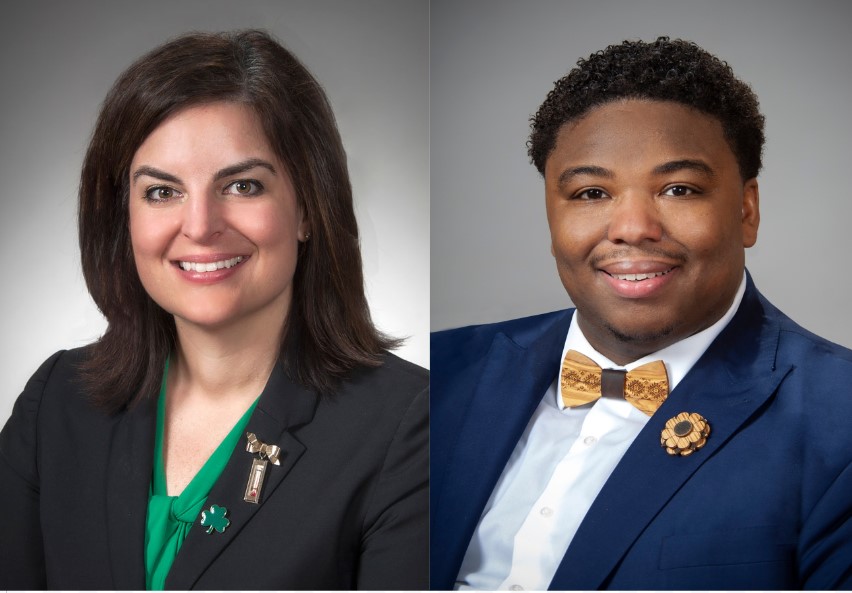
    Ohio Reps. Brigid Kelly, D-Cincinnati, and Dontavius Jerrells, D-Columbus. Official photos.

    BY: MARTY SCHLADEN – Ohio Capital Journal

    Ohio’s minimum wage is set to increase in January from $9.30 an hour to $10.10, but unless the law changes the disabled will be left far behind.

    They can currently earn the state’s “subminimum” wage of $4.25 an hour and can be paid substantially less than that, NBC 4 reported. Now Ohio Reps. Brigid Kelly, D-Cincinnati, and Dontavius Jerrells, D-Columbus want to raise it to where it will be for most other workers.

    That would lift some people out of poverty, a majority of a panel of Ohio economists said earlier this week. But a majority was also uncertain whether it would be an overall help to the state economy.

    In a survey conducted by Scioto Analysis, 12 of 18 economists said the measure would reduce poverty. Three disagreed and three were uncertain or had no opinion.

    Four economists agreed that paying the disabled the regular minimum wage would be good for the overall economy. Four disagreed and 10 were either uncertain or had no opinion.

    In the comments that accompany the survey, Youngstown State University economist Albert Sumell said increasing minimum wages for the disabled is no silver bullet, but it would be beneficial.

    “The effect will be modest but clearly some individuals with disabilities would benefit,” he said.

    On the other hand, Kent State University economist Curtis Reynolds questioned whether subminimum wages were what prompted some employers to hire disabled workers in the first place.

    “The challenge, of course, is whether individuals will still have job opportunities at the higher wage,” wrote Reynolds, who said he was uncertain about the effect of raising the wages. “If yes, then the higher minimum wage would reduce poverty. If not, then it will not reduce poverty. I am not sure which will happen for this population (which has not been studied as much in research on minimum wage policies).”

    The economists’ uncertainty about whether raising minimum wages for the disabled would grow the economy was even more pronounced. Some of the uncertainty stemmed from the relatively small number of disabled workers and how little minimum-wage workers of any group earn.

    But some of the economists argued that there are other reasons for undertaking the increase.

    “I think the main goal of minimum wages is to create equitable growth and dignity for workers,” wrote Jonathan Andreas of Bluffton University. “I’d be in favor of more equity and dignity even if it caused a little less growth, but the research on minimum wages generally finds that it doesn’t cause problems so it looks like a way to increase equity without hurting growth. I’ve never seen research about the minimum wage for people with disabilities so I haven’t seen enough information to know.”

    Follow Marty Schladen on Twitter.
  • “Special paper.” Ohio Auditor floats theory of election fraud

    “Special paper.” Ohio Auditor floats theory of election fraud

    BY: MARTY SCHLADEN – Ohio Capital Journal

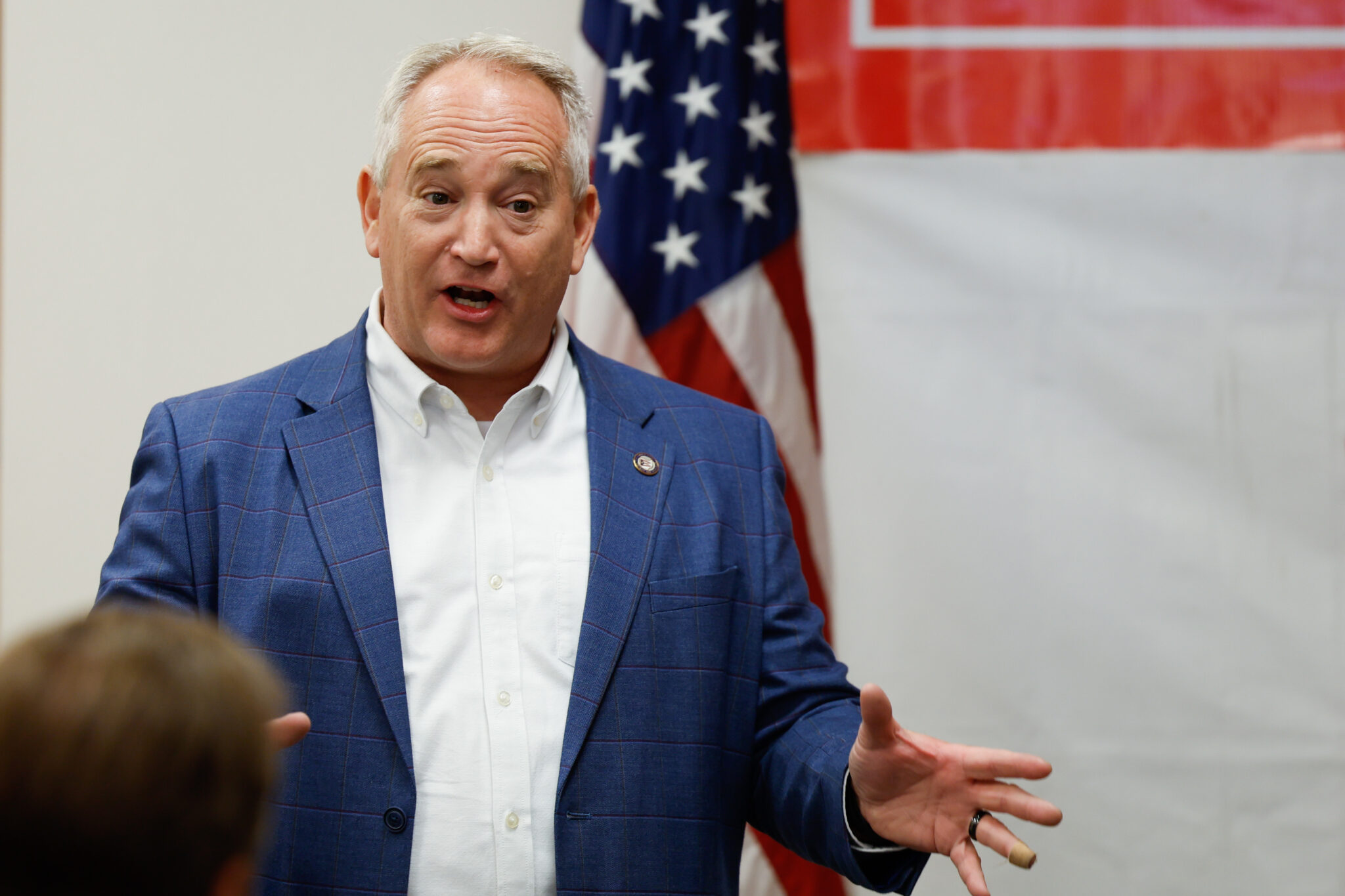
    Ohio Auditor Keith Faber last Tuesday told members of the Westerville Tea Party that it was unlikely that widespread fraud occurs in Ohio elections.

    But that didn’t stop him from holding out a sinister possibility: that the Cuyahoga County Board of Elections might be diverting special voting-machine paper to other states where unscrupulous elements might use them to produce unsolicited, fraudulent ballots.

    For his part, the director of the board of elections there said his office was doing no such thing and that the state auditor’s office had never contacted his agency about the matter.

    With Republicans holding all statewide offices except the U.S. Senate seat occupied by Sherrod Brown, a Democrat, officials like Faber are in a tight spot when it comes to election fraud.

    Former President Donald Trump continues to falsely claim that he was cheated out of the presidency in 2020 by a rigged election. And now, other Republican candidates are mimicking his past behavior by refusing to say whether they’ll accept the results if they lose on Nov. 8.

    Experts say such talk is crippling our democracy by undermining faith in its most basic process. Indeed, about 70% of Republicans believe the 2020 presidential election was rigged despite Trump’s epic failure to produce any evidence of that.

    So Ohio’s elected Republicans have a base that’s deeply skeptical of elections at the same time that those officials are running them. 

    Secretary of State Frank LaRose, the official responsible for administering elections, has hyped the possibility of cheating while simultaneously touting how extremely rare it’s been in elections he’s run. In February, LaRose slammed the media for supposedly downplaying voter fraud just after he found just the possibility of one fraudulent vote for every 222,000 cast in Ohio in 2020.

    Faber, the state auditor, seemed to be trying to take a similar tack last week when a member of the Tea Party audience asked him if he audited elections.

    According to an audio recording of the session, Faber said that it was the job of the secretary of state to audit elections, but the state auditor could look at other things handled by county boards of election, such as their money. He added that his office investigated some of those matters in the wake of the 2020 election.

    Faber told the crowd that while he believes it’s hard to cheat in Ohio elections, that might not be the case elsewhere.

    “What I found out is the paper, the paper we use to vote in Ohio, OK, is special paper,” he said. “You need special paper to run the machines. But there really wasn’t ever any inventory done on the paper, OK? And so that supply if you audit that, we’re going to start doing a count. If you ordered 100 (thousand) sheets of paper and you only voted 20,000 people, you better have 80,000 sheets left.”

    He added, “And so we started asking those questions. And I wasn’t really worried because of the difficulty in Ohio of creating extra fake ballots because of the controls. But there was nothing to say the Cuyahoga County Board of Elections who ordered a million sheets of paper didn’t somehow quietly drop off 50,000 of them over here in (another state.) Because the paper is the same from machine to machine and state to state and so we started asking those questions. And I talked to a number of people at local boards of elections and said if you’re going to cheat, what would you do? And so we started looking at that. So the short answer is no. I don’t audit the election.” 

    Faber’s office was asked if it will audit voting-machine paper used in the Nov. 8 election, and if it did, whether it would do so in all 88 Ohio counties. 

    “The Auditor of State’s Office regularly audits all of Ohio’s counties for fiscal and operational controls,” the emailed reply said. “These engagements include boards of elections. These most recent audits included an examination, after consultation with the Secretary of State’s Office, of a number of board of elections’ required policies and procedures. While no significant findings were issued, a number of minor discrepancies were identified at boards of elections across Ohio. Those discrepancies and the Auditor’s recommendations to address them are included in counties’ publicly accessible audit reports.”

    Faber’s staff was also asked whether he had any reason to suspect that Cuyahoga County — the most racially and ethnically diverse in Ohio — had or was planning to sneak voting-machine paper out of state for use in fraudulent voting.

    The communications staff didn’t address that question. Nor did it address whether there was any evidence that the kind of voting fraud Faber described had ever been done anywhere in the United States.

    Anthony Perlatti, director of Cuyahoga County Board of Elections, said in a phone interview Tuesday that his office isn’t handing ballot paper in the way Faber described. He said his agency uses a third-party vendor to print ballots.

    “In terms of having piles and piles of blank ballot stock at our offices, we don’t have that,” he said, explaining that the vendor prints off of massive rolls of paper. “I’ve never heard of people sending blank ballot stock elsewhere for people to try to manufacture ballots. It doesn’t make any sense to me. We definitely don’t do it in Cuyahoga County.”

    Perlatti added that his agency keeps track of the ballots it handles.

    “We send (the already-printed ballots) out to the polling locations,” he said. “When they come back, we do an inventory of what have that is unused and what we haven that is used, so this doesn’t really make a whole lost of sense to me.”

    Asked if Faber’s office contacted the Cuyahoga County Board of Elections to learn how it uses ballot stock, Perlatti said, “No. We really, from an elections standpoint, we really don’t have much interaction at all with the auditor’s office. The auditor’s office comes in more so with county in general on things like payroll and county procurement.”

    Faber’s office did say that the state auditor believed the 2020 presidential election was on the up and up. Faber “has consistently stated that Ohio’s elections are some of the best run in the country and that Joe Biden is the President of the United States,” his office said.

    To the Ohio Democratic Party, Faber’s statements to the Westerville Tea Party amounted to pandering.

    “Add Keith Faber to the list of GOP politicians who are pandering to MAGA Republicans and dabbling in conspiracy theories in order to further their own political ambitions,” spokesman Matt Keyes said in an email. “Keith Faber knows better, but is more focused on shamefully clinging to power than being honest with the voters of Ohio.” 

    Trump-driven falsehoods about election integrity have led to widespread attacks on election workers, including “terroristic threats.” But Perlatti said that elections officials are “unique people.”

    “We have tremendous pride in our work,” he said. “We have tremendous integrity in what we do. We know that we’re doing the right thing and doing it with the product we produce, which is an accurate, correct, open, accessible, fair election which is one of the fundamental things that this country is based upon.”

    Follow Marty Schladen on Twitter.
  • Ohio legislative committee passes rule defining fetal heartbeat

    Ohio legislative committee passes rule defining fetal heartbeat

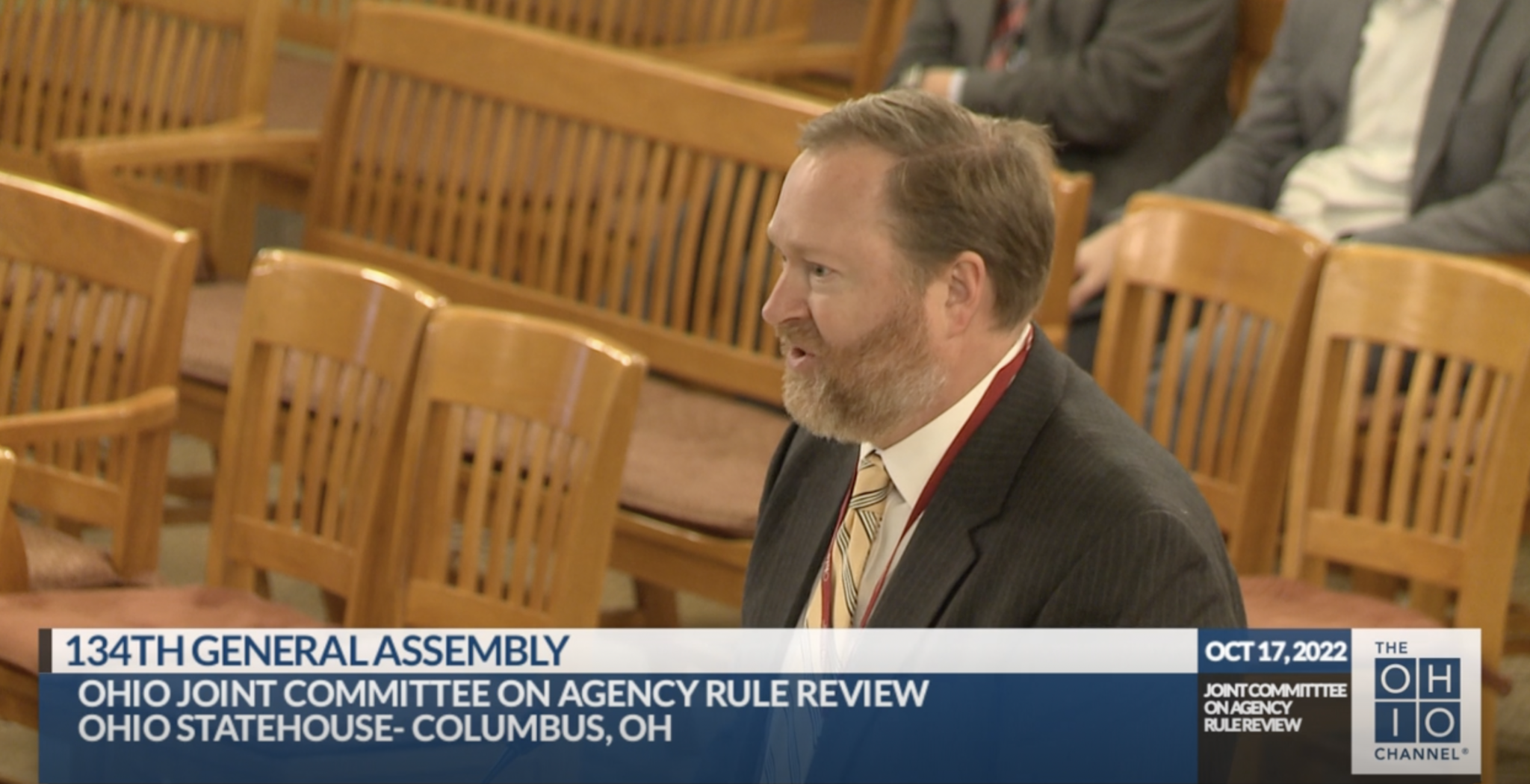
    Ohio Department of Health Assistant Director Lance Himes answers questions from the Joint Committee on Agency Rule Review. Photo courtesy of The Ohio Channel

    Rule passes despite court case holding back abortion ban and Dem objections

    BY: SUSAN TEBBEN – Ohio Capital Journal


    An Ohio legislative committee passed a rule on methods of identifying a fetal heartbeat that matched language in a previously passed abortion law, despite the fact that the law can’t currently be enforced.

    The Joint Committee on Agency Rule Review passed an administration rule from the Ohio Department of Health entitled “appropriate methods for determining presence of fetal heartbeat,” despite Democratic efforts to invalidate the rule.

    Democrats on the committee objected to the rule, saying it violated not only existing state rules for medical care related to abortions, but also case law about how a rule is passed.

    In the rule, a fetal heartbeat is defined as “cardiac activity or the steady and repetitive rhythmic contraction of the fetal heart with the gestational sac.”

    ODH Assistant Director Lance Himes said the definition of cardiac activity was taken “verbatim from Senate Bill 23.”

    A physician should determine the presence of a fetal heartbeat in a method “consistent with the person’s good faith understanding of standard medical practice,” according to the rule.

    This includes ultrasound equipment which allows the physician “to give the pregnant woman the option to view or hear the fetal heartbeat.”

    What isn’t defined in the rule is when a “medical emergency exception” applies, a concern doctors have expressed with regard to the abortion law, even testifying to that effect in court hearings on the law.

    “I would defer to the physicians who are interpreting this law and rule to determine, in their judgment, which is standard medical practices as defined in the statute and rule, for their determination as to whether it would be a medical emergency,” ODH Assistant Director Lance Himes told JCARR.

    In writing this rule, Himes said the ODH was “not tasked with further defining medical emergency.”

    The passage by JCARR this week represents the official passage of the rule, which was previously just an emergency rule put in place when Senate Bill 23 was implemented, hours after the U.S. Supreme Court decision in Dobbs, that overturned Roe v. Wade.

    State Rep. Kristin Boggs, D-Columbus, took issue with the rule being passed without public input and said the passage of the rule as an emergency, then “stacking” the non-emergency rule on top was “in violation of our JCARR standards and in violation of (Ohio Revised Code).”

    Himes acknowledged that no public hearing was held on the rule, but said Ohio Revised Code does not require one and “we did not have a stakeholder request out there for input.”

    “The regular rule filing does offer forums like JCARR for individuals to come and make public comment … but a public hearing was not required,” Himes said.

    Boggs also said the fact that SB 23 is currently unenforceable – a Hamilton County judge blocked the law indefinitely as the ACLU and Planned Parenthood clinics attempt to get the law thrown out – means there’s “no statutory authority to put forward this rule at this time.”

    “So right now, as I see it, there are two reasons that have merit that would suggest that even passing this rule today would invalidate it in the future,” Boggs said.

    State Sen. Andrew Brenner, R-Delaware, pushed back against the idea that the rule did not follow JCARR processes.

    “This actually is going through the JCARR process, because that’s what we’re doing right now,” Brenner said. “So I don’t know how that would be a violation of doing something right now that we’re doing.”

    State Rep. Michael Skindell, D-Lakewood, said the new rule conflicts with a Medicaid rule allowing for reimbursement of services if an abortion is the result of rape or incest and one from the Department of Veterans Services regarding abortion services when a pregnant person’s life is in danger or in the case of rape or incest. He argued the six-week ban would create a situation in which those services could not take place, therefore violating the Medicaid and Veterans Services rules.

    “This (ODH) rule violates it once there’s a detectable heartbeat,” Skindell said.

    Himes did not speak to the Medicaid rule, but said the ODH administrative rule “only sets forth the appropriate methods for determining a heartbeat. It does not speak to the legality of abortion related to rape or incest.”

    Skindell entered a motion to invalidate the rule, which was defeated on a 5-4 vote along party lines.

  • Ohio’s U.S. Senate nominees clash in final debate

    Ohio’s U.S. Senate nominees clash in final debate

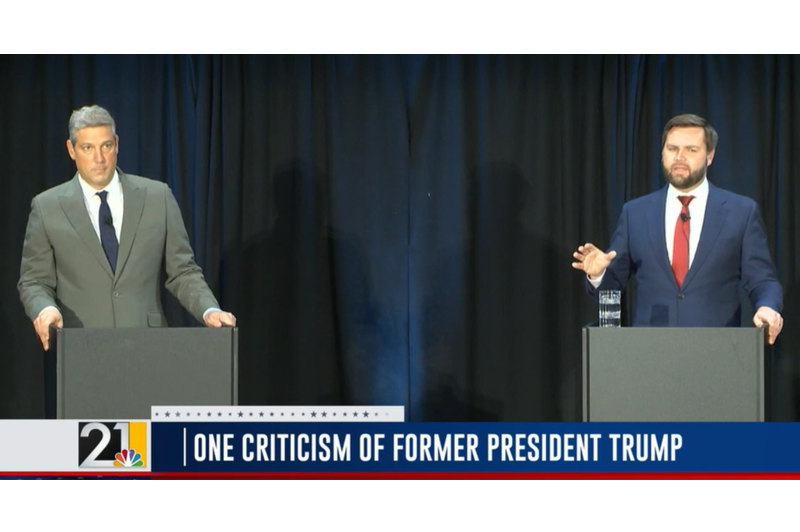
    Ohio U.S. Senate Democratic candidate Tim Ryan, left, and Republican candidate J.D. Vance, right. Screenshot courtesy of WFMJ broadcast of debate in Youngstown on Oct. 17, 2022.

    BY: NICK EVANS – Ohio Capital Journal

    Ohio’s U.S. Senate nominees met Monday in a contentious, final debate of the campaign.

    Polling has continued to show a dead heat within margins of error between Democratic candidate Tim Ryan and Republican candidate J.D. Vance, who are looking to replace outgoing Ohio U.S. Sen. Rob Portman.

    Outside Youngstown’s Stambaugh Auditorium, a 1920’s marble-columned behemoth, two groups of supporters waved signs and chanted slogans for their favored candidate. Inside, it was less rowdy. Attendance was limited to members of the media.

    Mining for disagreements

    The fireworks started early after a pair of questions delving into the nominees’ perceived subservience to their party’s leaders. Former Vindicator columnist Bertram de Souza brought up Donald Trump’s quip at a local rally that “J.D. is kissing my ass.” He pressed Vance to describe some point of disagreement with the former president.

    Vance pointed to figures in the Trump administration like John Bolton who lobbied for “limitless non-stop wars,” but quickly shifted to dismiss Trump’s comment.

    “Donald Trump told a joke,” Vance said. “He told a joke at a rally based on a false New York Times story.”

    That article suggested Vance and other candidates may not be enthusiastic about Trump visiting their states. Vance then turned the charge on Ryan, arguing he’s beholden to House Speaker Nancy Pelosi and Senate majority leader Chuck Schumer.

    “The guy who’s subservient to the national party is Tim Ryan,” Vance argued, “who has been begging for these guys to come into this race and save him from the campaign that he’s been running.”

    De Souza asked Ryan to describe an issue where he disagreed with Speaker Pelosi, and Ryan brought up his bid challenging her as House Speaker.

    “You have to have the courage to take on your own leaders,” he said. Turning to Vance he added, “these leaders in D.C., they’ll eat you up like a chew toy.”

    “Mitch McConnell gave you $40 million dollars to prop up your campaign. Peter Thiel gave you $15 million. That’s $55 million, J.D. What do you think they want for that?” Ryan asked. “They want your loyalty, and you proved that you’ll kiss their ass, too.”

    Replacement Theory

    The night closed on an acrimonious note as well.  De Souza pressed Vance about his embrace of replacement theory, which contends that white citizens are being systematically replaced by non-white immigrants. The National Immigration Forum explains adherents believe there is a “plot designed to undermine or ‘replace’ the political power and culture of white people living in western countries.”

    On stage, Vance offered a toned down version of the idea. He argued “Democratic leadership… say they want more and more immigration because if that happens they’ll ensure that Republicans are never able to win a national election.”

    Vance added that his wife’s family immigrated to the country, but stressed that they came legally.

    Ryan meanwhile cut right to the racism at the heart of replacement theory. He said the theory was the “primary motivator” of a mass shooting in May at a predominately Black grocery store in Buffalo.

    “Some sicko got this information that he’s peddling,” Ryan said. “Again, those extremists that he runs around with, Marjorie Taylor Greene, Ted Cruz, all these guys that want to stoke this racial violence.”

    “We’re tired of it, J.D.” he said. “This kid goes to a grocery store in Buffalo where Black people shop and shoots them up. No. We want to move on from that.”

    Ryan had struck a nerve, both said. He called Ryan disgusting, disgraceful, and shameful at different points.

    “I’ll tell you exactly what happens, Tim,” he said. “What happens is that my own children, my biracial children get attacked by scumbags online and in person because you are so desperate for political power that you’ll accuse me, the father of three beautiful biracial babies, of racism.”

    “We’re sick of it,” Vance said. “You can believe in a border without being racist and you can believe in the country without being a racist, and this just shows how desperate this guy is for political power.”

    Later this week Vance campaigns around the state with Sens. Tim Scott, R-South Carolina, Tom Cotton, R-Arkansas, and Ted Cruz, R-Texas. Tim Ryan will be crisscrossing the state in the coming week but without any surrogates alongside.

    Asked after the debate if he was concerned about his lack of support from national Democrats when Vance has had numerous visit and an influx of campaign cash, Ryan brushed it off.

    “We don’t need them, we’re going to win without them,” he said.

    Follow OCJ Reporter Nick Evans on Twitter.

  • Ohio Republican group urges GOP, swing voters to reject J.D. Vance

    Ohio Republican group urges GOP, swing voters to reject J.D. Vance

    Former Cincinnati Councilmember and Hamilton County Commissioner Phil Heimlich is part of a coalition of Ohio Republicans encouraging voters to reject Trump-aligned candidates like J.D. Vance.

    BY: NICK EVANS – Ohio Capital Journal

    With November’s election looming, a group of Republicans are hitting the campaign trail this week. But instead of stumping for the GOP, they’ll be encouraging voters to back the Democrat, Tim Ryan, in Ohio’s race for U.S. Senate.

    They’re working with an organization called Welcome PAC which emphasizes Democratic Party outreach to independents and “future former Republicans.” LinkedIn co-founder Reid Hoffman is the group’s primary donor. The PAC contends there’s a large pool of swing voters who reject former President Donald Trump. They’ve made it their mission to encourage those voters to reject Trump allied candidates as well.

    And that’s how Phil Heimlich found himself teaming up with a handful of other Ohio Republicans campaigning for Tim Ryan. Among them are two high level former staffers for outgoing U.S. Sen. Rob Portman — chief of staff John Bridgeland and legislative affairs director Jonathan Petuchowski. Former state Auditor James Petro, former state Rep. Rocky Saxbe, retired Major General Dennis Laich, and former Shelby County GOP chairman Chris Gibbs round out the list.

    There are a lot of “formers” in that lineup, though. While they’re pitching a return to a different era of Republican politics, it’s possible the party has picked up and moved on without them. Vance’s campaign makes no bones about its position on WelcomePAC:

    “Ohioans shouldn’t be fooled: this bogus organization isn’t ‘Republican’ — it’s a Democrat trick funded by a far-left super donor,” campaign spokesman Luke Schroeder said in a statement.

    While Hoffman has donated to plenty of Democrats, he has also contributed the $13,700 legal maximum to Gov. Mike DeWine and Secretary of State Frank LaRose, both of whom are Republicans.

    Vance opposition

    Heimlich himself is a former Cincinnati city councilmember and Hamilton County Commissioner, and he argued his conservative credentials are rock solid.

    “I was never considered a kind of a wishy-washy RINO type,” he said.

    Heimlich continues to describe himself as a loyal Republican, but said he can’t support nominees who deny the 2020 election or countenance the Jan. 6 insurrection.

    “We’re taking a stand against the wing of the Republican Party that engages in crazy conspiracies like Q-Anon, and, most importantly, we are choosing to put country over party,” Heimlich said. “J.D. Vance is lined up with the crazies, with the traitors. He has lined up with the people who tried to overthrow this government, the people who tried to overturn a legitimate election.”

    “We are supporting Tim Ryan because we’re putting country first,” he continued. “Tim Ryan is not only a moderate Democrat, but he is a pro-democracy Democrat and he’s running against an anti-democracy Republican.”

    This isn’t the first time Heimlich has made this sort of pitch. He and some of the same Republicans campaigning against Vance urged voters to reject Donald Trump in 2020. That effort, known as Operation Grant, invoked former president and civil war general Ulysses S. Grant’s role unifying the country.

    Heimlich explained this latest coalition doesn’t oppose Republicans reflexively, but it isn’t just Vance he opposes.

    Heimlich unsuccessfully challenged Ohio Republican U.S. Rep. Warren Davidson in the primary and criticized Davidson’s vote to overturn the 2020 election. He called out Ohio U.S. Rep. Jim Jordan, too, describing him as a Republican who “put party over country.”

    “In fact, they put one particular person, Donald Trump, over the interest of our country,” he added.

    Split-ticket voting

    When it comes to DeWine, Heimlich is more amenable. He expressed disappointment DeWine hasn’t made a more forceful stand against the former president, but credited him for not denying the election or praising insurrectionists.

    “One of the things we’re saying to people is, look, if you’re a patriot, don’t vote the party line, vote the country line,” Heimlich said. “So, if you want to vote for Mike DeWine for governor, fine, but please don’t vote for an election denier like J.D. Vance. Vote for DeWine and then vote for Tim Ryan.”

    Schroeder, with the Vance campaign, questioned the coalition’s Republican credentials. He argued it’s disingenuous to continue presenting themselves as part of the party.

    “(The) individuals involved are donors to Tim Ryan, Pete Buttigieg, Joe Biden, and liberal PACs, and one member even served as a political appointee for President Obama,” Schroeder said. “It’s a shame that these individuals have chosen to lie to Ohioans about who they really are.”

    In 2020, the Operation Grant pitch didn’t move Ohio into the win column for Joe Biden. Trump won the state by a margin nearly identical to his 2016 win. But in the aftermath, the organization argued it forced the Trump campaign to expend resources in Ohio, which they say helped Biden win elsewhere.

    This cycle, with the election limited to Ohio, they won’t have the same leeway. But then again, it’s far from clear Vance commands the same allegiance as the former president.

    Organizers of the group expect to make stops in Youngstown, Toledo, Cleveland, Akron, and Dayton in the coming weeks.

    Follow OCJ Reporter Nick Evans on Twitter.

  • COVID deniers take vandalism case to Ohio Supreme Court

    COVID deniers take vandalism case to Ohio Supreme Court

     Photos from court documents of stickers placed on the Plain City Public Library.

    BY: JAKE ZUCKERMAN – Ohio Capital Journal

    The Plain City Public Library asked her to leave in January 2021 for repeatedly refusing to wear her mask, as was state policy at the time.

    Court records indicate Julie Dean’s “unruly behavior had been a continual issue for the library.” Two months later she came back with her husband and some hard-to-remove stickers.

    “THERE IS NO PANDEMIC,” reads the first one. “Your own government is waging psychological warfare on you.”

    “LIVE IN FEAR,” reads the other. “(It makes you easier to control.)”

    Julie and Samuel Dean were subsequently accused and convicted of misdemeanor criminal charges of trespassing and criminal mischief. Their case set off a bizarre bout of trials and appeals that distill some of the anger and paranoia that continues to dog the coronavirus pandemic.

    Their case, which led to a $250 fine and two-day prison sentence, is now pending with the Ohio Supreme Court. The stickers, placed on a library drop box installed during the pandemic, have since only been partially removed.

    After the court appointed the Deans an attorney, the couple fired him and chose to represent themselves. They soon filed near-identical motions a judge found nearly impossible to decipher but mentioned an objection to “undertake a medical intervention without any informed consent and without any medical necessity.”

    In a pre-trial hearing, Samuel Dean asked that the court dismiss the charges against him, claiming in prepared remarks that his rights under the Americans With Disabilities Act were violated. However, court records state he repeatedly “refused” to say what kind of accommodations he sought. When a judge said he can’t help if he doesn’t know how, Samuel Dean read the same prepared statement again.

    “That does nothing for me,” the judge said.

    He later found Samuel Dean in contempt for talking over him and fined him $250. The judge then called Julie Dean’s case. She then read the same prepared remarks as her husband before telling the judge that he had “been served.”

    “Well, I haven’t,” the judge responded before setting the matter for trial.

    The deans then both filed affidavits with the Ohio Supreme Court seeking to disqualify the judge from their case. Those were denied.

    The case then went to trial. The Deans acted as their own attorneys. After 20 minutes of deliberation, a jury found each of them guilty on two counts. They each received a $250 fine and 90 days in jail, but they only needed to serve two. They haven’t yet served those sentences.

    The trespassing charge against Samuel Dean was dismissed on appeal earlier this month. Judge Stephen Powell of the Twelfth Appellate District found that because he hadn’t been previously banned from the library, he wasn’t trespassing. (A dissenting judge argued his criminal intent to deface the library should have waived his privilege to be on its property.)

    On Monday, the Deans appealed their case to the Ohio Supreme Court. L. Bradfield Hughes, an attorney with Porter, Wright, Morris and Arthur, said in court filings that the case raised “questions of public and great general interest.”

    They argued they have been improperly denied the use of an ADA coordinator at lower court proceedings. An attorney with the Madison County Prosecuting Attorneys office denied this, noting that both state and federal courts who reviewed the matter ruled there has been no such violation. In the related federal lawsuit, Julie Dean claimed she suffers from hearing and memory loss. Samuel Dean said he suffers PTSD. These disabilities, they said, “substantially limit their life activities” and were ignored by the court. The claims were dismissed.

    Attorneys for both sides didn’t respond to phone calls.

    Chris Long, director of the library, said in an interview that it’s easy to focus on the loudest blips on the radar. But far more prevalent are ordinary bookworms staying positive in a difficult era.

    “Public libraries, we see a lot everyday, pandemic and no,” she said. “For every difficult situation, we encounter dozens more of people wanting to help.”

  • GOP mum, Majewski irate after AP story questions his characterization of military record

    GOP mum, Majewski irate after AP story questions his characterization of military record

     Still from the music video for “Lets Go Brandon Save America” featuring J360, Savannah Craven and Ohio GOP congressional candidate J.R. Majewski.

    BY: NICK EVANS – Ohio Capital Journal

    Republicans are holding their tongues after the Associated Press published a story indicating GOP congressional nominee J.R. Majewski exaggerated his service record. Majewski himself is lashing out at the AP, threatening to sue and insinuating they worked with his opponent U.S. Rep. Marcy Kaptur, D-OH.

    On the campaign trail Majewski has presented himself as combat veteran who deployed to Afghanistan. In reality, the AP reported, he spent the bulk of his active-duty career in Japan, before deploying in 2002 to an airbase in Qatar for six months.

    That airbase provides support services throughout the Middle East, including Afghanistan. Part of Majewski’s job as a “passenger operations specialist” took him to airbases throughout the region to load and unload. But the AP reported his campaign didn’t initially address whether he ever traveled to Afghanistan. They further noted Majewski was not awarded a service medal for those who spent 30 days consecutively or 60 days non-consecutively in the country.

    Majewski’s response

    Since the AP’s story published, Majewski has attempted to push back.

    In a friendly interview with NewsMax he insisted that yes, he had “set foot” in Afghanistan. He went on to describe his service and effectively confirmed the AP’s reporting.

    Although working from an airbase more than 1,200 miles from Afghanistan’s Bagram Airfield seems far from “combat” to a lay person, it actually counts under federal law. As the AP noted, because of an executive order signed by George H.W. Bush, support bases are considered combat zones.

    https://twitter.com/JRMajewski/status/1573165305681281024

    Still, he was clear that most of his time was spent away from the front lines.

    “Myself and other airmen deployed to Qatar,” he said. “That was where CENTCOM was, that was our staging base and we deployed from there all throughout the area of responsibility. We’re the people who gave supplies to the front line. We’re the people that transported the fighters to the front line.”

    Asked directly if he can call himself a combat veteran, Majewski offered: “I believe so.”

    Friday, Majewski gave a more forceful denunciation. He called the story “blatantly false” and a “politically motivated hit piece.” He added that he was considering suing the reporters.

    But Majewski offered no evidence to refute the story, instead insisting “anyone insinuating that I did not serve in Afghanistan is lying.” The AP’s report indicates Majewski didn’t deploy directly to Afghanistan, and that Majewski himself was evasive about whether and for how long he served there.

    As for the medal, Majewski argued he separated from the Air Force honorably before the service began awarding it. Although he has the right to request an update to his records, Majewski said, he has yet to do so.

    The Majewski campaign did not immediately respond to requests for comment about whether he served enough time to earn honor or whether he has requested it.

    What lawmakers had to say

    Rep. Bill Johnson, R-OH, represents the southern and eastern rim of the state in congress. A veteran himself, Johnson guards the honors that men and women in uniform accrue. In 2011, he co-sponsored stolen valor legislation that would’ve fined and imprisoned anyone who fraudulently claimed to have “served in a combat zone” with “the intent to obtain anything of value.” That legislation didn’t pass, and instead a narrower measure tied medals went forward in 2013.

    But in a statement, Johnson withheld judgment about Majewski. He explained that for nearly 27 years he lived by the Air Force’s core values.

    “Integrity First, Service Before Self, and Excellence In All We Do,” Johnson said. “Those core values taught me, as a commander and a leader, not to make snap judgments about people without all the facts. And in this case I simply don’t have all the facts.”

    Two other incumbent Ohio congressmen served in uniform as well. U.S. Rep. Brad Wenstrup, R-OH, served as a physician in the U.S. Army, and U.S. Rep. Warren Davidson, R-OH, was U.S. Army Ranger. Neither lawmaker responded to a request for comment.

    Veteran rhetoric on the campaign trail

    Before securing former President Trump’s endorsement, the most substantial rhetorical blow J.D. Vance landed came at the expense of fellow candidate and Marine veteran Josh Mandel.

    Throughout the primary race Mandel emphasized his service as a core reason for voters to choose him. He went so far as to end several ads with the tagline, “Send in the marine.” But after Mandel nearly came to blows with Mike Gibbons in a dispute about private sector employment, Vance criticized Mandel.

    “I think the way you use the U.S. Marine Corps, Josh, is disgraceful — it’s not a political tool,” Vance said.

    “This guy wants to be a U.S. Senator,” he added derisively. “He was up here, ‘hold me back, hold me back, I’ve got two tours in the Marine Corps.’ What a joke.”

    But Vance’s campaign declined to weigh in on Majewski’s exaggerations of his service record.

    Political fallout

    Majewski has drawn scrutiny for suggesting states that voted for Donald Trump in 2020 secede and attending the January 6 “Stop the Steal” rally. He shelled out money to help others attend the rally as well. In an interview with Spectrum News he insisted he did nothing wrong.

    “I hated what happened,” Majewski said of January 6, “And it’s a total injustice to keep having to answer questions about why I was there.”

    But it appears Majewski’s descriptions of his service record may be more damaging to his candidacy.

    In a statement, his opponent Rep. Kaptur said, “the idea that anyone, much less a candidate for the United States Congress, would mislead voters about their service in combat is an affront to every man and woman who has proudly worn the uniform of our great country. J.R. Majewski owes each of these heroes a full explanation about his deception.”

    Republicans in Ohio may stay mum, but the National Republican Congressional Committee has announced it will cancel a roughly $1 million ad buy in the race. The main campaign committee for House Republicans abandoning a candidate is a significant signal of their read of the contest.

    Congressional race watchers at Sabato’s Crystal Ball changed their rating from toss-up to leans Democratic shortly after the news came out as well.

    Follow OCJ Reporter Nick Evans on Twitter.

  • Affidavits: More pregnant minors who were raped denied Ohio abortions

    Affidavits: More pregnant minors who were raped denied Ohio abortions

    Documents describe dozens of painful situations under Ohio abortion restrictions

    BY: MARTY SCHLADEN – Ohio Capital Journal

    At least two more minors made pregnant by sexual assault were forced to leave Ohio to avoid having their rapists’ babies, according to sworn affidavits filed by abortion providers.

    The affidavits were filed in Cincinnati as part of a lawsuit aimed at stopping enforcement of Ohio’s strict new abortion law, which it temporarily did last week. Originally paused for two weeks, on Tuesday the enforcement delay was extended to at least Oct. 14.

    If true, the affidavits show that a Columbus 10-year-old was not the only child or teen rape victim forced to leave the state. They also describe more than two dozen other instances in which the abortion law put women under extreme duress.

    The descriptions include those of three women who threatened suicide. They also include two women with cancer who couldn’t terminate their pregnancies and also couldn’t get cancer treatment while they were pregnant. 

    Another three examples were of women whose fetuses had severe abnormalities or other conditions that made a successful pregnancy impossible. Even so, they couldn’t get abortions in Ohio. 

    And in three cases, debilitating vomiting was caused by pregnancy — so bad in one case that a woman couldn’t get off the clinic floor. But neither could these women get abortions in Ohio, the affidavits said.

    The documents were filed in the case Preterm-Cleveland v (Ohio Attorney General) Dave Yost. Having already gotten a temporary order restraining enforcement of the abortion law — Senate Bill 23 — clinics across Ohio are now seeking a preliminary injunction.

    In doing so, they’re arguing that SB 23 is so onerous that it violates women’s due-process rights under the Ohio Constitution. 

    Disrupted clinics

    Gov. Mike DeWine signed the law in 2019, but it couldn’t be enforced until the U.S. Supreme Court overturned Roe v Wade on June 24. Many of the affidavits describe how, as soon as the decision overturning Roe was announced that Friday, work at Ohio clinics was thrown into chaos.

    Ohio law had allowed abortions until 20 weeks of pregnancy. Now, with only limited exceptions for the life and the health of the mother, no abortions were allowed after fetal cardiac activity could be detected by ultrasound.

    In the affidavits, clinic workers said that usually happens after five to six weeks of pregnancy — a point at which as many as a third of women and girls don’t know they’re pregnant.

    The new, much-earlier cutoff sent clinic workers scrambling.

    “In the days after S.B. 23 took effect, we had to cancel over 600 appointments,” Sharon Liner, medical director of Planned Parenthood Southwest Ohio, said in her affidavit. “Many patients broke down in tears in our office. Many patients that we could not reach by phone who came to our health center expecting to have their appointment were extremely upset; some threatened to hurt themselves because they were so distraught.”

    Liner added, “We have had at least three patients threaten to commit suicide. Another patient said she would attempt to terminate her pregnancy by drinking bleach. Another asked how much Vitamin C she would need to take to terminate her pregnancy.”

    In July, 60% of patients at the clinic had to be turned away because fetal cardiac activity had been detected by the initial ultrasound, Liner said. 

    The Ohio law requires a 24-hour waiting period and a second negative ultrasound before an abortion can be performed. Because things are changing so quickly at that stage of development, another 16% of women who’s fetuses had no cardiac activity during the first exam were turned away in July because it was detected in the second, Liner said.

    The Ohio law requires a 24-hour waiting period and a second negative ultrasound before an abortion can be performed. Because things are changing so quickly at that stage of development, another 16% of women who’s fetuses had no cardiac activity during the first exam were turned away in July because it was detected in the second, Liner said.

    “When we tell patients we cannot help them, they are extremely distressed, and all we can offer them is resources, information and emotional support,” Liner said in her affidavit, which was taken while S.B. 23 was still being enforced.

    Ohio clinics have been referring patients who were ineligible for abortions here to clinics and hospitals in Michigan, Pennsylvania, Illinois and New York to get them. 

    Planned Parenthood of Greater Ohio and other organizations have announced stepped-up assistance to help patients get to those states. But many — including at least one homeless woman — said problems with things like transportation, child care, poverty and getting time off work make the trips virtually impossible, according to the affidavits.

    Allegra Pierce, a medical assistant at Preterm-Cleveland, doubted that most women turned away at Ohio clinics during the 11 weeks S.B. 23 was enforced ever made it out of state.

    “The majority of patients I talk to say that they can’t travel out of state to access abortion care,” Pierce said in her affidavit. “Even though many patients can access sources of funding for seeking an abortion, there are so many barriers that make traveling out of state inaccessible for many of our patients, including the cost of travel, child-care responsibilities, and difficulty getting time off of work, just to name a few. Even those patients who are able to travel out of state often have a hard time getting an appointment due to increasingly long wait times at clinics in states where abortion is still legal.”

    More victims

    In July, when Ohio Attorney General Dave Yost was raising unfounded doubts about the existence of a 10-year-old rape victim, there were plenty of data indicating that the story was all too plausible.

    In 2021, Ohio’s Children’s Advocacy Centers saw 6,717 cases of sexual abuse against Ohioans between infancy and adulthood. And in 2020, the most recent year for which statistics are available, 571 girls aged 17 or younger received abortions in Ohio, according to the state department of health. Fifty-two of them — or one a week — were 14 or younger.

    Sadly, the affidavits filed in late August and early September by workers at abortion clinics provide further evidence that child and teen rape and subsequent pregnancy is a problem in Ohio. But so long as fetal cardiac activity is detected, S.B. 23 requires such victims to either have those babies or scramble out of state and try to find an abortion.

    Adarsh E. Krishen, chief medical officer for Planned Parenthood of Greater Ohio, told of a minor who had been sexually assaulted and had to travel to Michigan for an abortion because of S.B. 23. Krishen’s organization operates clinics in Columbus and Cleveland.

    “This patient experienced immense trauma from the assault itself and then endured further trauma from a forensic interview alongside a physical exam to collect evidence for the ongoing police investigation,” Krishen said in his affidavit. “This trauma was further exacerbated by needing to wait over three weeks for her appointment. In each step of this process she felt the complete denial of bodily autonomy and safety, something all people, especially children, should unequivocally have at all times.”

    Another example shows how S.B. 23 makes police investigation of child and teen rapes more difficult.

    Aeran Trick, operations manager of Women’s Med Center of Dayton, told of “a 16-year-old girl living in Southwestern Ohio who had become pregnant after being sexually assaulted by a family member.”

    As with the 10-year-old from Columbus, Trick said this teenager was forced to go to Indianapolis for an abortion.

    “The local Ohio law-enforcement agency — which was already involved at the time the clinic was contacted about the patient — had to drive to our Indianapolis clinic to retrieve the tissue for crime lab testing related to the sexual assault investigation,” Trick’s affidavit says. “I am concerned that Ohio’s ban and the need to travel increasingly far distances to obtain abortion care not only causes unimaginable harm to these young victims, but could also hamper law enforcement’s ability to investigate and prosecute these cases in the future.”

    Cornered by cancer

    The affidavits filed as part of the effort to stop S.B. 23 describe two cancer patients put in the most impossible of situations by the law. 

    Both seem to illustrate doctors’ reluctance to terminate pregnancies despite the law’s exceptions for maternal health — exceptions that doctors say are woefully ill-defined. With potential penalties that include felony charges and the loss of professional licenses, some doctors have refused to terminate even though their patients’ health is at risk.

    In the days after S.B. 23 took effect, a pregnant 25-year-old went to a clinic operated by Planned Parenthood of Southwest Ohio, said Liner, the medical director there. The patient had recurrent cancer and was undergoing chemotherapy when she learned that she was pregnant.

    Chemotherapy is dangerous during the first 12 weeks of pregnancy and this patient had already skipped one treatment. But when the clinic determined that she was eight weeks pregnant, workers there said they couldn’t perform an abortion, Liner said.

    “Due to the patient having cancer while pregnant, we sought documentation to support a medical exception to S.B. 23 for this patient,” Liner said in her affidavit. “Her provider of care did not feel comfortable providing this and the patient had to travel out of state for an abortion to resume her cancer treatment, which caused further delay.”

    The effect of delaying chemotherapy on the patient’s health might be hard to determine, but it seems unlikely that it was good.

    Just three days after S.B. 23 took effect, a 37-year-old suffering stage III melanoma went to Women’s Med Center in Dayton, Trick, the operations manager there, said. The woman was told by her doctors that she had to terminate her pregnancy before they could treat her, so she, too, would have to leave the state, Trick said. 

    “Upon learning that she would need to travel out of state to have her abortion, the patient broke down and cried inconsolably despite the attempts of multiple staff members, including myself, to console her,” Trick said in her sworn affidavit.

    Other illnesses

    In addition to those cases, women with conditions that made successful pregnancies impossible had problems getting doctors outside the clinics to treat them, David Burkons, medical director of Northeast Ohio Women’s Center said. Two patients at the clinic said they had tubal, or “ectopic,” pregnancies “but the doctors (at emergency rooms) were afraid to treat them without being absolutely certain there was no intrauterine pregnancy,” Burkons wrote in his affidavit.

    “In one case, the patient’s fallopian tube ruptured, and surgery (was needed) rather than medical management, which would have been possible if they had acted sooner,” he said. “In the other, my nurse intervened to convince a physician to treat the patient, but only several days later, which was emotionally wrenching for the patient.”

    The affidavits also detail cases of fetal abnormalities and other problems so severe that pregnancies can’t result in a successful birth. One patient at a Planned Parenthood clinic in Southwest Ohio had a fetus with abnormalities including “a lack of lower extremities and the contents of the fetus’s abdomen, including possibly the heart, protruding through a defect in the abdominal wall,” Liner, a doctor, said in her sworn statement.

    Because S.B. 23 doesn’t allow women in such cases to abort their pregnancies if they don’t pose an imminent threat to their health, they either have to leave the state for an abortion or carry the fetus to term — even though that “can be extremely distressing for patients,” Liner said.

    In another case, this one in Dayton, a woman was 13 weeks pregnant but had no amniotic fluid, prompting her doctor to tell her the pregnancy was “nonviable.”

    “However, because the fetus still had fetal heart tones, the physician discharged her with instructions to call the office if she developed a fever,” Trick said in her affidavit. “The patient was very distressed and expressed to (clinic) staff that she felt abandoned by her physician during an incredibly difficult experience. I’m concerned that confusion over the meaning of S.B. 23’s health exceptions has led physicians to avoid providing medically necessary care out of caution, and I worry about patients in similar positions who aren’t able to independently find an accessible abortion provider without their physician’s help.”

    Clinic workers also reported cases of incessant vomiting caused by pregnancy, including in a high-school senior who found it impossible to attend class and finish her diploma. 

    Another girl, 16, had vomited so much that she lost 20 pounds, Trick, of the Dayton clinic, reported. The girl’s mother didn’t have a reliable car, so she had to rent one to take her daughter to Indianapolis for an abortion, Trick said.

    At the same clinic, another patient was “so sick she was lying on the floor vomiting into a bucket,” Trick wrote. 

    The woman wasn’t only afraid that her condition would prevent her from making it to Indianapolis, Trick said. The woman had four kids to care for and she was the manager of a large retail store.

    “She was concerned that she was going to lose her job because of all the time she had to take off to travel to and from the clinic for abortion care in addition to her repeated absences due to being hospitalized for her condition,” Trick wrote.

    Undermining its own purpose

    Proponents of S.B. 23 meant to dramatically curtail the number of abortions in Ohio. But the clinic workers said that for some patients, it’s having the perverse effect of rushing them to terminate pregnancies before they’ve had a chance to decide whether that’s what they really want.

    Pierce of Preterm-Cleveland said that at five to six weeks, “these patients are very early on in their pregnancies and many of them have not had a chance to wrap their minds around the fact they are pregnant. A number of patients have told me that they wish they had more time to think about whether to continue the pregnancy.

    “For example, I recently spoke with a patient with a young baby at home who had become pregnant again only months after giving birth,” Pierce’s affidavit continues. “She had experienced many postpartum health issues, and she was not sure if she was physically or mentally ready to go through a pregnancy again so soon. She wanted time to work through this decision but was terrified that if she waited she would no longer be able to have an abortion.”

    In their lawsuit, the abortion clinics seem to be contending that in forcing such an early decision, S.B 23 denied that woman’s due-process rights under the Ohio Constitution. They seem to be asserting the same rights for the other women they describe in the affidavits as being injured by S.B. 23.

    Whether Ohio’s court system agrees will be decided in the coming months.

    Follow Marty Schladen on Twitter.