Pricing reforms under a sweeping law signed on Tuesday by President Joe Biden are great for diabetics, but much more needs to be done, an activist said Wednesday.
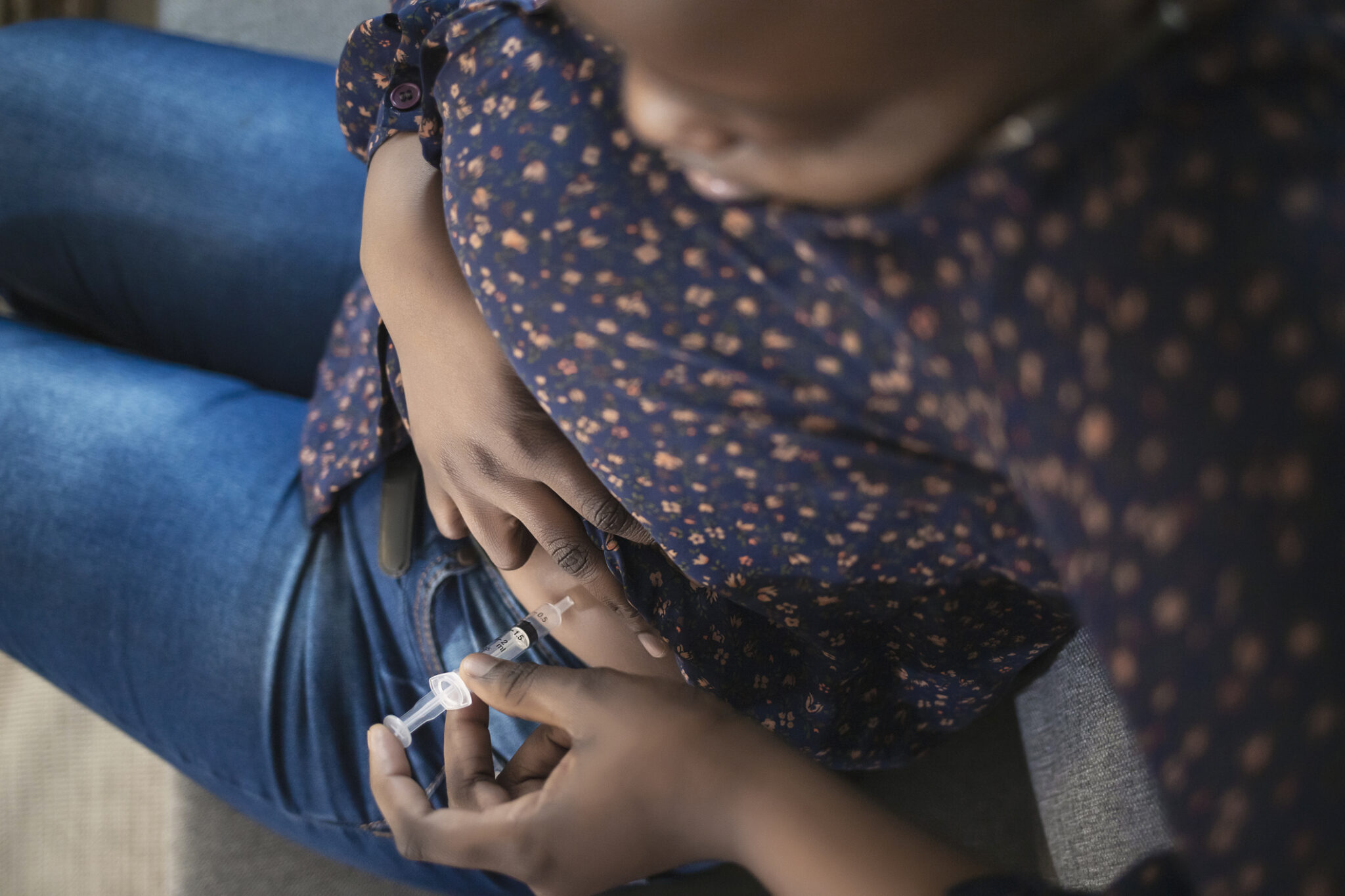
As part of the Inflation Reduction Act, monthly out-of-pocket insulin costs for Medicare recipients were capped by the law at $35 a month. Together with capping all drug costs for Medicare patients at $2,000 a year, the new law is being lauded as a boon for seniors struggling to balance their drug costs with all their other expenses.
Among medicines, insulin is one that is particularly difficult for those who need it to live without. For diabetics, it helps regulate blood-glucose levels that, if left untreated, can cause blindness, nerve and kidney damage and even death.
But even though it’s been around for a century, insulin prices aren’t as cheap as one might think for a class of drugs that has been researched, manufactured and marketed for so long. In fact, until recently, list prices have been increasing rapidly.
“The list price of insulin per milliliter in the United States increased, on average, 2.9% annually from 1991-2001, 9.5% per year from 2002 and 2012, 20.7% annually between 2012 and 2016, and 1.5% per year from 2016-2018,” the American Action Forum reported in 2020.
And that can lead to some excruciating choices if you can’t afford it. The Commonwealth Fund in 2020 reported that among non-Medicare patients, huge numbers had difficulty affording their insulin between 2014 and 2017; from nearly half of the uninsured living below the poverty line to 3% of people with good insurance and who were making five times the poverty level, or nearly $100,000 for a family of four.
Source: The Commonwealth Fund
“Bottom line for diabetics, we can’t afford to wait,” said John Kennedy, an advocate with Ohio Insulin 4All, said Wednesday in a press conference hosted by the group Protect Our Care.
Kennedy added, “We’re impatient, but our impatience comes from a really good place. It’s because the more time that passes means more diabetics are going to have to make really difficult choices that nobody should have to make; whether to put food on the table or to take the whole dose of their insulin. As we know, about a quarter of all diabetics have said that they ration their insulin supply because they just can’t afford it.”
For Medicare patients, the Kaiser Family Foundation reports that average monthly out-of-pocket insulin costs increased 39% between 2007 and 2020. Now those monthly costs range from $16 to $116, or $192 to $1,392 a year.
With average out-of-pocket insulin expenses for Medicare patients at $54 a month in 2020, the $35-a-month cap in the Inflation Reduction Act represents a more than a 50% savings, KFF reported last month.
While capping those costs — and directly negotiating Medicare insulin prices with drugmakers — is surely welcome news to seniors with fixed incomes, it won’t do much for many other diabetic Americans.
And because the system isn’t transparent, it’s unknown how much of the rebates the middlemen and their affiliated insurers are pocketing.
In a paper published last year in the Journal of the American Medical Association’s Health Forum, three researchers at the University of Southern California assed what happened with the prices of 32 insulin products between 2014 and 2018. And despite the fact that drugmakers such as Eli Lilly, Sanofi and Novo Nordisk tend to get most of the blame for rising costs, it shows that others are also culpable:
List prices went up by 40% while net, or post-rebate, prices received by drugmakers dropped by 31%.
The share of insulin expenditures retained by pharmacy benefit managers such as CVS Caremark, OptumRx and Express Scripts increased by 154.6%
The share retained by pharmacies, the largest of which is CVS, increased by 228.8%
The share retained by wholesalers such as Cardinal Health, AmerisourceBergen and McKesson increased by 74.7%.
While he lauded the insulin measures in the Inflation Reduction Act, Kennedy, the diabetes advocate, they were far from sufficient.
“The way that pricing is done is so hidden; it’s not transparent at all and that’s a big, big, big problem,” he said. “And yes pharmacy benefit managers have played a big role in this secret process — hidden process — that is used to determine what the costs are going to be. But they’re just one player in this game. PBMs certainly share a chunk of the blame, but there’s a lot of blame to go around.”
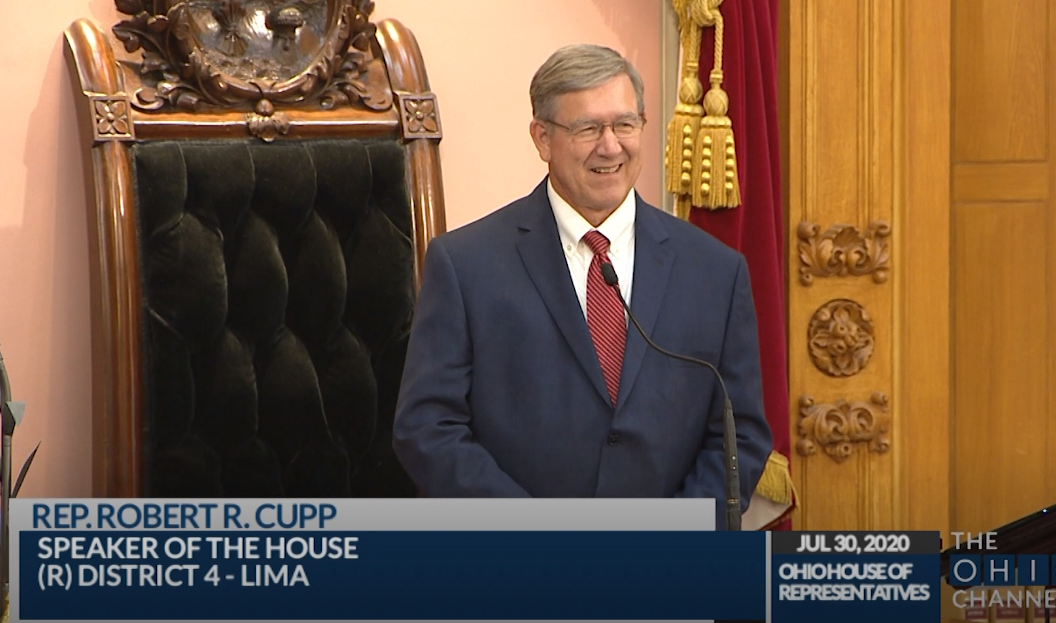
The Ohio House Speaker wrote a letter to members of his party claiming “intentional misinformation” and the “myth” of a deadline for congressional redistricting, and signaling an appeal to the U.S. Supreme Court.
The Ohio Supreme Court turned down the most recent drafts of congressional district lines in the state, saying the partisan breakdown unduly favored Republicans and didn’t match the breakdowns of election results in the state.
In the court decision, the court majority ruled that “within 30 days, the General Assembly must pass a plan that complies with the Constitution.”
Speaker Bob Cupp, however, said in his letter to fellow Republicans that “out-of-state activists have peddled the myth” of a deadline this week.
“It is false, has zero basis in fact, and either shows a lack of understanding of our legal system, or it is an attempt to intentionally sow confusion over the 2022 elections,” Cupp said in the letter, provided to media by a spokesperson.
Cupp, a former state supreme court justice, then argues a deadline for new congressional maps “does not commence until all appeals are final,” including a deadline for appeal to the U.S. Supreme Court of 90 days from the date of the state supreme court decision.
Cupp did not explicitly say the legislative leaders would be appealing to the U.S. Supreme Court, but said the General Assembly’s 30-day clock wouldn’t start until after the nation’s highest court decided not to review the appeal.
When asked for clarification, a spokesperson for Cupp said a U.S. Supreme Court appeal “is a very real option that we have time to thoroughly consider.”
The final date to appeal, Cupp states based on the state supreme court’s decision date of July 19, is Oct. 17.
“So, there is no state constitutional requirement to draw new congressional districts for the 2024 election cycle before then,” Cupp wrote.
This is the third time the General Assembly has been asked to redraw congressional maps. The last time the state supreme court rejected the maps, the General Assembly didn’t take action, and the effort moved, as was ordered by the Ohio Supreme Court, to the Ohio Redistricting Commission.
No mention of U.S. Supreme Court appeal was brought up at that time, despite the fact that Cupp was House Speaker and co-chair of the ORC.
After being rejected in January, new congressional maps were passed by the ORC in March.
Cupp’s compatriot in the other legislative chamber, Senate President Matt Huffman, commented to media, saying no action is expected from the Ohio Senate on congressional maps.
A spokesperson for Huffman did not comment other than to confirm the accuracy of a Dispatch story in which Huffman said the Ohio Supreme Court does not have the power to dictate the Ohio legislature’s duty in redistricting. He also said the U.S. Supreme Court could definitively answer the question of redistricting authority in Ohio.
The ACLU of Ohio, which has been a party in several of the legal challenges to congressional and legislative redistricting, called Cupp’s legal argument a “gambit” at the “11th hour.”
Freda Levenson, legal director for the ACLU of Ohio, said the Ohio Supreme Court “ordered the legislature, in no uncertain terms, to draw a map by tomorrow.”
Because the OSC’s order to draw a new map ruled purely on matters of Ohio law, it is not appealable in federal court,” said Levenson. “So there is no legitimate way to try to extend the Ohio Supreme Court’s deadline.”
Gov. Mike DeWine and his administration played a hands-on role passing an allegedly pay-for-play nuclear bailout and appointing an industry-friendly regulator who has since been accused of taking a $4.3 million bribe, documents and messages show.
Calendar records show DeWine, a Republican, met repeatedly to discuss energy policy with FirstEnergy Corp. officials and at least once with GOP House Speaker Larry Householder, who has been criminally accused of taking a separate, multimillion-dollar bribe from the company to pass the bailout.
Despite a cautionary letter from environmental groups and a 198-page dossier from his former campaign staffer warning against the move, DeWine appointed Sam Randazzo in 2019 to the head of the Public Utilities Commission of Ohio. FirstEnergy last summer admitted it paid Randazzo a $4.3 million bribe. Randazzo has not been charged with a crime and denies wrongdoing.
Newly released text messages show FirstEnergy executives describing an open line with the administration on the selection and inside support from Ohio’s chief executive.
“When the Gov Elect asked me about attributes, I listed integrity, work ethic, creativity, thick skin, circumspection in public statements,” FirstEnergy’s then CEO texted Randazzo about the open PUCO seat in December 2018, just before DeWine took office.
“You fit all of those.”
Former FirstEnergy CEO Charles “Chuck” Jones. Source: FirstEnergy, via Flickr
In one text, FirstEnergy executive Mike Dowling credits DeWine and Lt. Gov. Jon Husted with performing “battlefield triage” to save Randazzo’s appointment before a key vote. Both DeWine and Husted have previously denied that a redacted version of the text message that appeared in criminal documents referred to them.
Federal prosecutors accused House Speaker Larry Householder of secretly controlling a nonprofit that took $60 million from FirstEnergy. He allegedly used the money to enrich himself personally and politically and to ensure the passage of House Bill 6, which provided a massive bailout to two nuclear plants owned at the time by FirstEnergy. Householder was charged with racketeering and awaits trial. Two alleged conspirators pleaded guilty.
FirstEnergy admitted last summer to the $60 million payment as well as a separate $4.3 million bribe to Randazzo just before he started as Ohio’s top utility regulator. The payment topped off $22 million in consulting fees to Randazzo since 2010 from the company.
Court documents from prosecutors reveal no focus on DeWine, who has not been charged with any crime. However, a review of records turned over in subpoenas, public records requests for his official calendars by the Energy and Policy Institute, text messages attached to regulatory filings, and others show DeWine and his staff repeatedly influencing and shepherding HB 6 into law.
On the campaign trail in July 2018, DeWine visited one of the nuclear plants that would receive a bailout, his official calendar shows. A month later, he met with FirstEnergy executives at their Akron headquarters. In October of that year, DeWine met with FirstEnergy at a fundraiser for Republican governors.
FirstEnergy contributed about $1 million in total to DeWine’s campaign, political organizations supporting it, and to another nonprofit supporting his daughter’s campaign for county prosecutor, according to the Dayton Daily News.
After winning a close race, DeWine, Husted, Jones and Dowling celebrated over dinner at The Athletic Club in Columbus. The next day, Jones sent Randazzo the text message (above) indicating they discussed the open PUCO seat.
In January of 2019, the FirstEnergy officials texted one another trying to fill not just one but two open PUCO seats, all the while mentioning phone calls with “DeWine guys” about it.
“That’s their plan but nothing certain until Sam’s [Randazzo’s] meeting [with DeWine],” Jones texted Dowling. “Four people in DeWine world, you, Sam, and I know about this.” The PUCO seats would eventually be filled by Randazzo with another commissioner renewed.
Dowling relayed to the other two men a message from Josh Rubin — a DeWine 2018 campaign adviser and a FirstEnergy lobbyist. He said once Randazzo takes office, DeWine will “lean on him on everything.”
Several texts focus on HB 6. The bill (and eventual law) would bail out FirstEnergy’s nuclear plants, subsidize two coal plants owned by other Ohio utility companies, and create a “decoupling” mechanism that effectively put ratepayers on the hook to guarantee certain revenue streams of FirstEnergy’s. Prosecutors estimate the bill as worth about $1.3 billion to the company.
Two days before the bill was introduced, DeWine’s calendar shows a slot for an “Energy Discussion” at the governor’s residence. Later that month, after the bill was repeatedly criticized during an opponent testimony hearing at the statehouse, DeWine, Husted, Randazzo and various staffers all met up at 5 p.m. for what the governor’s calendar calls a “Nuclear Bailout Bill Discussion.”
Over the next month, DeWine’s calendars show two entries for energy policy meetings, plus a call with Householder about HB 6, and another call on the bill.
On June 9, 2019, DeWine showed signs of wavering.
“Sam, what do we know about whether nuclear plants need this boost?” DeWine, using his personal email, wrote to Randazzo. “One editorial suggested testimony was not conclusive.”
Dowling paid a visit to the governor’s residence the next day. Randazzo responded to DeWine’s email on June 11, casting doubt on the studies referenced in the editorials.
On July 1, Dowling texted Jones.
“Just had a long conversation with JHusted just now,” he said, going on to explain that Husted sought to extend the length of the bailout. “All is well.”
Court records contain another text from Jones stating that “State Official 2,” later confirmed to be Husted, joined with others in “fighting to the end” for a beefier bailout.
After a long slog, lawmakers passed HB 6 on July 23, 2019. DeWine signed it into law mere hours later.
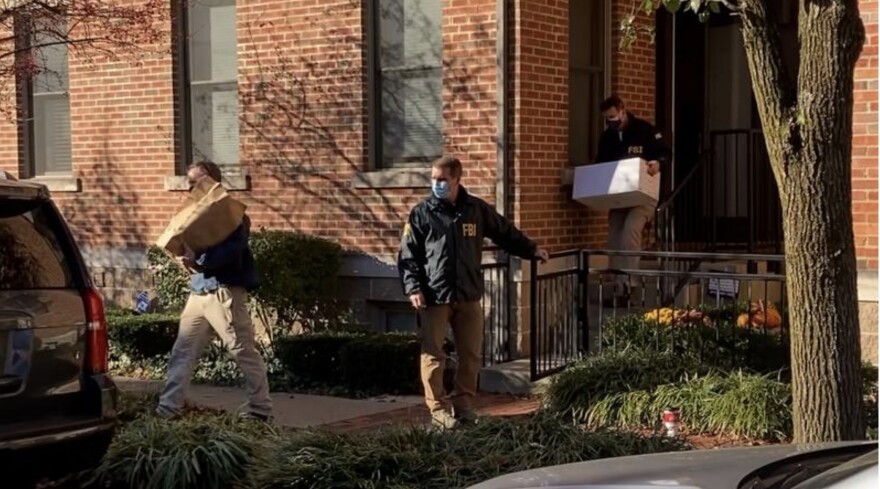
FBI agents remove boxes of materials from PUCO Chairman Sam Randazzo’s condo in Columbus Nov. 17, 2020. Photo courtesy of Daniel Konik/Statehouse News Bureau.
Loyalty to staff and HB 6
As the FBI made its first arrests, DeWine began a pattern of defending HB 6 on the merits and showing unflinching loyalty to his staffers, some of whom have ties to FirstEnergy.
Householder, his political strategist, a prominent GOP lobbyist, and two FirstEnergy lobbyists were arrested and charged with racketeering in connection with HB 6 on July 21, 2020. The next day, DeWine stood by the law he signed.
“Because people did bad things does not mean that the policy is not a good policy,” he said.
He reversed himself the next day and called for a repeal of the bill.
In October, FirstEnergy fired Jones, Dowling, and fellow executive Dennis Chack as it waged an internal investigation. The company fired another two executives days later “due to inaction and conduct that the Board determined was influenced by the improper tone at the top.”
At this point, the public remained unaware of the multimillion-dollar financial arrangement between the embattled FirstEnergy and Randazzo. However, on Nov. 16, 2020, FBI agents were seen raiding Randazzo’s condo and removing boxes of material from inside. The next day, FirstEnergy submitted a little-noticed securities filing outlining the $4.3 million payment.
Despite the images of FBI agents entering Randazzo’s condo, DeWine publicly defended his appointee.
“We have no indication he’s under investigation or he’s the target of an investigation. We’ll wait until we find additional facts,” he said in a Nov. 17, 2020 news conference. “Look, the FBI many times will indicate if someone is a target. They have not indicated he’s a target. I have no reason to think he’s a target. I don’t know. So, we’re waiting for additional information, quite candidly. I hired him. I think he’s a good person. If there is evidence to the contrary, then we’ll act accordingly, but not going to act without facts.”
Randazzo would resign three days after that statement.
Mid-summer 2021, FirstEnergy signed a deferred prosecution agreement with the U.S. Department of Justice. The company agreed to pay a $230 million penalty and cooperate with investigators to avert a charge of honest services wire fraud.
The agreement contained a lengthy set of facts from the company, stating it paid the $64 million in bribes in exchange for official action from Householder and Randazzo.
Days after the agreement was announced, DeWine held a press conference on anti-hazing legislation. Reporters asked questions afterward about the agreement, including a line that refers to “State Official 1” and “State Official 2” lobbying to ensure Randazzo’s appointment. DeWine said he’s “not aware” of anyone in his administration, including himself, appearing in the document. Husted, in a statement, said he too “does not believe” he’s referenced in the document.
Texts obtained by the Ohio Consumers’ Counsel from FirstEnergy and attached to a regulatory filing contain the unredacted version of the text, identifying DeWine and Husted by name.
In 2017, a lobbyist named Dan McCarthy created a nonprofit entity called Partners for Progress to engage in “advocacy in support of nuclear power,” tax records show. FirstEnergy would later admit to paying $25 million to Partners for Progress, some $15 million of which went to Householder’s nonprofit.
DeWine hired McCarthy as his legislative director in 2019, around the time McCarthy stepped down from the organization’s board. In February 2021, after media reports identified McCarthy’s role with Partners for Progress, DeWine defended McCarthy.
“As far as I know, Dan McCarthy has been well-respected for many, many years, long before he started working for me as our legislative director, and I have faith in his integrity,” DeWine said.
McCarthy resigned in September 2021.
DeWine response
In a phone interview, DeWine spokesman Dan Tierney said the OCC-obtained text messages and meetings listed by the Ohio Capital Journal contain no new information.
The texts, he said, in fact show the lack of a role from DeWine and Husted within the scandal. He said prosecutors have not subpoenaed him or any of his employees.
“This all along has been a Larry Householder scandal and a FirstEnergy scandal,” he said.
When asked whether DeWine, a former prosecutor and attorney general, detected any sense of impropriety during all his contacts with Householder and FirstEnergy leading up to the passage of House Bill 6, he declined comment.
Husted offered a similar comment through a spokeswoman, stating that “there is nothing new here” in the texts, emails and meetings.
“This kind of advocacy is well within his responsibilities as a public official, and, as we know, the bill was ultimately passed with bipartisan support,” he said.
This story was originally published by ProPublica. ProPublica is a Pulitzer Prize-winning investigative newsroom. Sign up for ProPublica’s The Big Story newsletter to receive stories like this one in your inbox.
Late one afternoon last October, Dr. Shelley Odronic sat in her office and, just as she had thousands of times before, slid a rectangular glass slide onto her microscope.
A pathologist who works in rural Ohio, Odronic leaned forward to examine tissue from the placenta of a woman who had recently given birth. She increased the magnification on the microscope. Never had she seen so many tiny, congealed reservoirs of blood or such severe inflammation of the tissue, a sign the placenta had been fighting an infection.
“Right away, I knew it wasn’t compatible with life,” Odronic said.
She asked her secretary to print out the patient’s chart. In dark letters were the words “fetal demise.” A stillbirth, the death of a fetus at 20 weeks or more of pregnancy. But that didn’t solve the mystery. Odronic had examined many placentas from pregnancies that ended in stillbirth. None looked like this — withered and scarred.
Odronic kept reading. No chronic medical conditions. Good prenatal care. Then, buried in the middle of the report, she spotted something. Seven days before the stillbirth, the mother had tested positive for COVID-19. Odronic wondered if the virus could explain the damage to the placenta. In the world of placenta pathology, a new affliction is unusual, especially one so dramatic in presentation and so devastating in effect.
In the world of placenta pathology, a new affliction is unusual, especially one so dramatic in presentation and so devastating in effect.
Her mind traveled to Dr. Amy Heerema-McKenney, a pathologist at Cleveland Clinic and an expert on the placenta, who had trained Odronic during residency. Odronic went to sleep that night with a pit in her stomach and a plan to call her former teacher in the morning.
Heerema-McKenney was in her office when the phone rang. As she listened, she knew that what Odronic was describing was what she and her colleagues had observed repeatedly over the past several months: a patient positive for the coronavirus, a placenta destroyed by COVID-19, a baby stillborn.
Their next discovery was equally stunning. None of the stillbirths they studied involved a pregnant person who had been fully vaccinated. The doctors checked with colleagues across the country and around the world. The fatal pattern held.
Unvaccinated women who contracted COVID-19 during pregnancy were at a higher risk of stillbirths. They also were more likely to be admitted to the intensive care unit, give birth prematurely or die. Yet their greatest protection — the COVID-19 vaccine — sat largely untouched, buried under doubt, polluted by disinformation.
Pharmaceutical companies and government officials failed to ensure that pregnant people were included in the early development of the COVID-19 vaccine, a calamitous decision made amid the urgency of a rapidly spreading pandemic. That decision left pregnant people with little research to rely on when making a critical decision on how best to keep the babies growing inside of them safe.
Their greatest protection — the COVID-19 vaccine — sat largely untouched, buried under doubt, polluted by disinformation.
At the same time that research was excluding pregnant people from vaccine trials, a full-scale assault on vaccination was unfolding online. Taking advantage of the lack of data, conspiracy theorists, anti-vaxxers and even some medical professionals spread false claims about the vaccine’s safety in pregnancy, leading many pregnant people to delay or refuse the vaccine. Even now, with numerous studies unequivocally announcing the safety of the vaccine for pregnant people, some doctors have failed to communicate the dangers of COVID-19 to pregnant people or the vaccine’s role in mitigating it.
The Centers for Disease Control and Prevention contributed to the confusion with vague early messaging about whether pregnant people should get vaccinated. While Americans lined up at pharmacies and stalked vaccine websites in hopes of securing a shot last year, pregnant people had some of the lowest vaccination rates among adults, with only 35% fully vaccinated by last November. Meanwhile, many Americans were already moving on to their boosters after federal officials that month expanded eligibility for the additional shots to anyone 18 or older. And much of the country was beginning to return to pre-pandemic life. The Sunday after Thanksgiving, for instance, set the record for the busiest day of air travel since March 2020.
November also marked a key moment in the understanding of COVID-19’s impact on stillbirths. A CDC study looking at 1.2 million births in the first 18 months of the pandemic found that more than 8,000 pregnancies ended in stillbirths, including more than 270 of them in patients with a documented COVID-19 diagnosis at the time of delivery.
Although stillbirths were rare overall, babies were dying. The risk of a stillbirth nearly doubled for those who had COVID-19 during pregnancy compared with those who didn’t. And during the spread of the delta variant, that risk was four times higher.
The risk of a stillbirth nearly doubled for those who had COVID-19 during pregnancy compared with those who didn’t.
Indeed, doctors discovered that some stillbirths resulted from COVID-19 directly infiltrating the placenta, a condition they named SARS-CoV-2 placentitis. Cases were found even in people whose COVID-19 symptoms were mild or nonexistent. In some cases, however, placentas were discarded with medical waste without being tested for COVID-19, and parents never learned what led to their baby’s stillbirth.
COVID-19 also led to stillbirths among pregnant people who became exceedingly ill after contracting the virus. It damaged their lungs and clotted their blood, putting their babies in such severe distress that they were born before they could take their first breath.
“These are pregnancies that should not have ended,” Heerema-McKenney said.
She and others had tried to alert the CDC as well as maternal and state health organizations to their findings, but she said they either didn’t get a response or were told they needed to collect more data and publish studies. Pathologists are experts in disease diagnosis, dealing with death and illness from the safe distance of their labs. Convincing obstetricians who met with patients daily or doctors who were making policy recommendations was a challenge.
“I tried to sound the alarm. We tried so hard to get people to listen,” Heerema-McKenney said. “It was a really frustrating place to be as pathologists doing these autopsies, looking at these placentas and saying, ‘God, no, not another case.’”
Around the same time Heerema-McKenney was examining the damaged placentas, Ginger Munro was on life support in a hospital 250 miles away in another part of Ohio.
She and her husband, Kendal, had been trying to have a child for five years. They hadn’t expected that she’d get pregnant in the middle of a pandemic. But when her pregnancy test came back positive in the spring of 2021, she rushed to post a picture of it in an online pregnancy group. “Is it just me or can you see the 2 lines??” she asked.
The pandemic had already brought much change to their lives. Ginger, who lives in the small town of Washington Court House in southwest Ohio, quit her job as assistant nutrition director with the county’s Commission on Aging. She stationed hand sanitizer throughout her house and in her car, and she only went grocery shopping early in the morning. If she noticed someone in an aisle, she skipped it.
“I knew the virus was real,” she said, “but I was terrified to take the vaccine.”
Ginger worried that the vaccine’s development had been rushed, and she hadn’t seen any data showing it was safe for pregnant people. At this point, the CDC had not explicitly recommended the vaccine during pregnancy. Ginger already worried she was tempting fate by getting pregnant at 40; she said she didn’t want to risk endangering her baby by taking the vaccine.
Besides, if it was really important, her doctor would have mentioned it, and, she said, she would have followed his advice. But, she said, he never did. Her family hadn’t gotten vaccinated either. In a mostly rural county where less than half of the residents were vaccinated, they were hardly alone.
Her doctor declined to comment through a spokesperson at the hospital system where he works; the spokesperson said the hospital couldn’t disseminate information about the vaccine to pregnant patients before it was recommended.
Ginger’s pregnancy progressed without complications. She and Kendal shared the news of a new baby with Ginger’s two daughters from a previous marriage. At their kitchen table, near a sign that read “eat cake for breakfast,” Sophia, then 14, covered her mouth with both hands while Hailee, then 18, simply beamed.
At a backyard gender reveal three months later, Ginger’s growing belly resembled a basketball against her tiny frame. She leaned in to kiss her husband, her long, dark hair falling onto her shoulders. Red confetti rained down on the deck.
Kendal, an aircraft maintenance and avionics manager at an airport two counties away, worked through the pandemic. In the summer, when they realized his cough was actually COVID-19, it was too late. Ginger was sick.
When they realized his cough was actually COVID-19, it was too late. Ginger was sick.
Having trouble reaching her doctor, she went to two different emergency rooms. One, she said, declined to treat her with monoclonal antibodies, which research had shown can be an effective treatment for pregnant people with COVID-19. The other, which described her in medical records as “an exceedingly pleasant individual admitted with symptomatic COVID-19 pneumonia,” transferred her about an hour away to the University of Cincinnati Medical Center. There, records show, she was admitted with acute respiratory distress syndrome due to COVID-19.
The University of Cincinnati doctor asked Ginger and Kendal — who was on FaceTime because of the hospital’s COVID-19 protocols — about “fetal priority.” Ginger made her wishes clear: Save the baby, their baby, the baby they had tried so hard to have. Kendal, who was worried about both his wife and their unborn child, said he went along with Ginger in that moment.
“You were so scared,” Kendal wrote in a notebook that night. “We told each other over and over how much we loved each other.”
They hung up so the doctors could insert a breathing tube. Before they could begin, Kendal called back three more times just to hear her voice.
Doctors put Ginger on ECMO, a form of life support reserved for the sickest patients. Kendal, Hailee, Sophia and Ginger’s mother and sister were later allowed in the hospital two at a time, and they prayed at her bedside nearly every night. Ginger was sedated, her face swollen and obscured by tubing, her cheeks flattened by the crush of the ventilator straps, her wrists tied down so she wouldn’t accidentally pull out her breathing tube.
Her family took solace in knowing the baby’s heartbeat was steady and her ultrasounds were normal. The doctors gave Ginger medication to help the baby’s lungs mature in case she was born early. After more than 30 days on ECMO, doctors took Ginger off the machine only to put her back on the next morning. She was the first patient in the hospital’s history to be placed on ECMO twice.
The plan, records show, was to deliver at 28 weeks. But the day after Ginger was put back on life support, Kendal got the call telling him the baby was on her way. As doctors prepared for the delivery in Ginger’s intensive care room, the family camped out in the waiting room, jittery from excitement and vending machine snacks. They talked about baby names and future family outings. They pulled the waiting room chairs together to form makeshift beds and covered themselves with blankets they brought from home.
They don’t know if they actually fell asleep before a nurse burst through the doors screaming at them to follow. “She’s coming! She’s coming!” They didn’t make it far before they were blocked by doctors and nurses, some huddled over an incubator in the middle of the hall and the rest crowded around Ginger.
Hailee tried to peer over the sea of blue scrubs to catch the first glimpse of her little sister. She smiled beneath her black mask. She’ll be OK, she said to herself.
But after a few minutes of trying to revive the baby, a doctor told Kendal it was time. Kendal nodded, asked for a chair and collapsed as he tried to process his daughter’s death.
Then another wave of grief washed over him. Someone would have to tell Ginger.
Ginger’s medical records describe a baby born at 27 weeks “without signs of life” after an “uncomplicated delivery.” Her placenta had separated from the wall of the uterus, the risk of which studies have shown increases with COVID-19.
When Ginger woke up, she looked down at her sunken belly and realized she had given birth. She assumed her daughter was in the newborn intensive care unit. Ginger was barely able to speak around the tube in her trachea, but after a few days in which no one brought the baby to her, she couldn’t wait any longer. Ginger turned to her mother and sister and mouthed the words, “Where’s the baby?”
When Ginger woke up, she looked down at her sunken belly and realized she had given birth. She assumed her daughter was in the newborn intensive care unit.
The room fell silent. They called Kendal, who rushed to the hospital. He told her what had happened. He described their daughter’s dark hair and her long fingers and toes, just like her mother’s.
Ginger, who had always loved the sweet smell of a newborn’s breath, whispered to her husband.
“Did you smell her breath?”
“She wasn’t breathing,” he said.
In the hurried quest for a safe and effective COVID-19 vaccine, pharmaceutical companies and government officials did not include pregnant people in their initial plans. It’s a failure that continues to reverberate.
“They absolutely should have been included in COVID vaccine trials from the beginning,” said Kathryn Schubert, president and CEO of the Society for Women’s Health Research, a Washington, D.C.-based nonprofit that advocates for the inclusion of women in research and clinical trials.
Researchers and advocates have spent more than four decades trying to dismantle the belief that it’s unsafe or unethical for pregnant women to participate in clinical trials. A couple years ago, it seemed like they had finally prevailed.
Shortly before leaving office, President Barack Obama signed into law the 21st Century Cures Act, which established the Task Force on Research Specific to Pregnant Women and Lactating Women. The group found longstanding obstacles, including liability concerns, to including pregnant and lactating people in clinical research. It concluded that recommending halting medication or forgoing treatment while pregnant may actually endanger the health of the mother and her fetus more than the treatment itself.
The need for everything from asthma to depression medication doesn’t stop when a person gets pregnant, and when a catastrophic event such as a pandemic hits, experts said, pregnancy should not preclude someone from receiving life-saving treatment.
Around the same time, researchers discovered that the Zika virus, which was mainly transmitted through mosquitoes, could pass from a pregnant person to their fetus and cause severe birth deformities. A second group of experts joined together to develop separate guidance on including pregnant people in the research, development and deployment of pandemic vaccines.
Both groups pushed to remove pregnant women from a list of vulnerable populations that required additional review before being allowed to participate in research. Instead of proving that pregnant women should be included, manufacturers would need to provide compelling evidence for why they shouldn’t.
In 2018, the federal task force issued recommendations calling for including pregnant and breastfeeding people in biomedical research, and the Department of Health and Human Services adopted some of the guidance. But a gap remained between what the task force and others insisted was needed and what was actually happening.
“We were frustrated because COVID-19 provided an opportunity to implement the recommendations of the task force,” said Dr. Diana Bianchi, the director of the Eunice Kennedy Shriver National Institute of Child Health and Human Development and the chair of the task force.
In February 2021, Bianchi and her colleagues published an article lamenting the exclusion of those who were pregnant or breastfeeding from the initial COVID-19 vaccine clinical trials. “Pregnant and lactating persons should not be protected from participating in research, but rather should be protected through research,” they wrote.
Ruth Faden, the founder of the Johns Hopkins Berman Institute of Bioethics, helped lead the group that issued the guidance after Zika. She and others urged manufacturers to include pregnant people in the development of the COVID-19 vaccine as part of Operation Warp Speed, the federal program that provided billions of taxpayer dollars to pharmaceutical companies to speed up vaccine production.
“There is a playbook in place so that when the U.S. launches Operation Warp Speed, it should be pretty obvious what should be done,” she said. “It’s not like no one knows how to do this, either ethically or technically.
“Nevertheless, it doesn’t happen,” Faden added. “Once again, pregnant people are left behind.”
A spokesperson for Pfizer said the company followed guidance from the Food and Drug Administration. Although pregnant people were not included in the initial vaccine clinical trials, Pfizer tested its vaccine on pregnant rats and did not identify any safety concerns. The company subsequently launched a clinical trial with pregnant women but halted it because at that point the vaccine had already been recommended for pregnant people.
Similarly, Moderna also studied its vaccine on pregnant animals, but the company said it made the decision “to prioritize the study of the safety and efficacy” of the vaccine in adults who weren’t pregnant. It called that approach “consistent with the precedent to study new vaccines in pregnant women only after demonstration of favorable benefit and risk in healthy adults.”
In response to questions from ProPublica, Johnson & Johnson referred a reporter to its website, which didn’t address the relevant issues.
Some government officials, including several from the Food and Drug Administration, said they support having pregnant women take part in clinical studies of vaccines for emerging infectious disease, including COVID-19. A spokesperson for the National Institute of Allergy and Infectious Diseases, which is part of the National Institutes of Health, said the agency did not “dictate the protocol development” for the trials and said that responsibility lies with the companies.
The failure to include pregnant people early on in COVID-19 vaccine trials was, at least in part, a casualty of the tremendous urgency to respond to an intense public threat and develop the vaccine as quickly as possible, Faden said. But multiple groups had published road maps on how to ethically include pregnant people without slowing down that process.
“I can’t tell you how many pregnant people might not have died or how many stillbirths might not have occurred if the playbook had been followed,” she said, “but I’m willing to bet it was a significant chunk that would have been prevented if there had been a full-throated, evidence-based recommendation for COVID-19 vaccines in pregnancy almost simultaneous to when it was available for the rest of the adult population.”
“I can’t tell you how many pregnant people might not have died or how many stillbirths might not have occurred if the playbook had been followed,” she said.
By the time the CDC specifically recommended the vaccine for pregnant people, in August 2021, the damage had been done.
A dizzying and vague series of advisories led to confusion and delayed vaccinations. When the COVID-19 vaccines were first made available in December 2020, the CDC said health care workers and residents of long-term care facilities should be prioritized, but the shots were not explicitly recommended for pregnant people. Instead, the agency said on its webpage for vaccines and pregnancy that pregnant health care workers “may choose to be vaccinated.” In explaining that decision, the CDC said that experts had considered how mRNA vaccines, which do not contain the live virus, work. They concluded that the vaccines “are unlikely to pose a risk for people who are pregnant.”
“However,” the CDC added, “the potential risks of mRNA vaccines to the pregnant person and her fetus are unknown because these vaccines have not been studied in pregnant women.”
In January, the World Health Organization recommended against pregnant people getting the vaccine unless they faced increased risk, such as complicating comorbidities or exposure to the virus due to a job in health care, but the agency later reversed course.
A few months later, in March 2021, the CDC continued its lukewarm messaging that pregnant people “may choose” to be vaccinated. The agency listed some points for pregnant people to consider discussing with their health care providers, starting with how likely they are to be exposed to COVID-19.
After a promising study showed that the vaccine was safe for pregnant people, CDC Director Dr. Rochelle Walensky said at a White House briefing in late April that the CDC was recommending the vaccine for them. But the CDC did not update its website to reflect her comments and said the agency’s guidance had not changed: Pregnant people “may choose to be vaccinated.”
Once again, pregnant people were put in the precarious position of receiving ambiguous and inconsistent recommendations. In May 2021, the CDC reiterated that pregnant people faced an increased risk of getting severely ill from COVID-19, but the language surrounding the vaccine — “If you are pregnant, you can receive a COVID-19 vaccine” — was noncommittal.
A CDC spokesperson, responding to questions from ProPublica, said in an email that pregnant people were part of the first recommendations in December 2020 that encouraged people 16 and older to get vaccinated. At that time, data about the safety and efficacy of the vaccine during pregnancy was limited “because pregnant people had been excluded from pre-authorization clinical trials,” so the CDC included additional supporting language for pregnant people, saying they were eligible and could choose to receive the vaccine. The agency said its recommendations were based on available evidence and evolved throughout the pandemic.
Before making changes to its guidance, the CDC had its team of scientists review available data to ensure that there was “an abundance of evidence.”
“For each update to the statement of risks during pregnancy, multiple types of studies and the strength of evidence for each were reviewed,” another CDC spokesperson said. “These reviews of the evidence were accompanied with discussions among subject matter experts both internally and externally with clinical partners for an ultimate determination of risk.”
Dr. Cynthia Gyamfi-Bannerman, a perinatologist and chair of the department of obstetrics, gynecology and reproductive sciences at the University of California, San Diego School of Medicine, shared the daunting task of making vaccine recommendations for pregnant people as part of COVID-19 task forces for two leading organizations, The American College of Obstetricians and Gynecologists and the Society for Maternal-Fetal Medicine.
In the beginning, she said, the only pregnancy-specific data they had came from a few dozen participants who were inadvertently included after becoming pregnant during the clinical trials and from some pregnant animal data.
“It played out in real time in the COVID pandemic because we see the effects of not including pregnant people in these trials,” Gyamfi-Bannerman said. “We couldn’t make a strong recommendation, so pregnant people were hesitant. I think that directly led to fewer people using the vaccine than we would have wanted.”
At the end of June 2021, the CDC added a general update to its website to reflect the dangers of the delta variant tearing across much of the country. “Getting vaccinated prevents severe illness, hospitalizations, and death,” it wrote. “Unvaccinated people should get vaccinated and continue masking until they are fully vaccinated.”
But it wasn’t until Aug. 11, eight months after the first vaccine was administered, that the CDC issued its formal recommendation that pregnant and breastfeeding people get vaccinated.
“The vaccines are safe and effective,” Walensky said in a statement at the time, “and it has never been more urgent to increase vaccinations as we face the highly transmissible Delta variant and see severe outcomes from COVID-19 among unvaccinated pregnant people.”
August would prove to be the deadliest month for COVID-19-related deaths of pregnant people. The CDC issued an emergency call the next month strongly recommending the vaccine to pregnant people, noting that approximately 97% of pregnant people hospitalized with COVID-19 were unvaccinated. The dangers to symptomatic pregnant people included a 70% increased risk of death, and their developing babies could face a host of perils, including stillbirths.
August would prove to be the deadliest month for COVID-19-related deaths of pregnant people. The CDC issued an emergency call the next month strongly recommending the vaccine to pregnant people, noting that approximately 97% of pregnant people hospitalized with COVID-19 were unvaccinated. The dangers to symptomatic pregnant people included a 70% increased risk of death, and their developing babies could face a host of perils, including stillbirths.
Researchers have yet to determine exactly why some pregnant people with COVID-19, vaccinated and unvaccinated alike, deliver stillborn babies, while others do not. Attempts to answer that question have been hindered, in part, by incomplete data. The CDC’s statistics on COVID-19-related fetal and maternal deaths are undercounts. The CDC has data on less than 73,000 birth outcomes following a mother’s confirmed COVID-19 diagnosis in 2020 and 2021, of which 579 were pregnancy losses.
That information was sent in by fewer than three dozen health departments, and those estimates don’t include states like Mississippi, which in September reported 72 COVID-19-related stillbirths since the start of the pandemic, nearly double what the state would have expected, according to data from the Mississippi State Department of Health. Preliminary state data shows total stillbirths increased there in 2020 then dipped in 2021, but were still higher than pre-pandemic numbers.
A separate CDC database shows more than 220,000 COVID-19 cases and at least 305 deaths among pregnant people.
“CDC recognizes that pregnant people faced challenging decisions about how to best protect themselves in the setting of uncertainty related to both the infection and the COVID-19 vaccine,” a CDC spokesperson said, adding, “COVID-19 vaccination remains one of the best ways to protect yourself and your family from serious illness from COVID-19.”
Heartbroken and determined, Jaime Butcher has emerged as an unofficial ambassador for the vaccine, posting in online pregnancy and stillbirth forums about the risks of being pregnant and unvaccinated.
No one, she said, told her of the risks. Doctors, the CDC and health officials, she continued, aren’t doing enough to inform people. Even now, well into the pandemic’s third year, the message still isn’t getting through.
No one, she said, told her of the risks. Doctors, the CDC and health officials, she continued, aren’t doing enough to inform people. Even now, well into the pandemic’s third year, the message still isn’t getting through.
“I kept seeing it happening more and more to women and it wasn’t talked about,” she said. “They just say, ‘Oh, get the vaccine,’ which is great, but they don’t talk about what getting the virus can do to pregnant women.”
As a wedding planner, Butcher was surrounded by love. She found it with her husband, then in the daughter growing in her belly, who they named Emily after Butcher’s grandmother.
Butcher suffered five miscarriages before, she said, she opened an email from an in-vitro fertilization clinic confirming her pregnancy in the summer of 2020. She screamed, and her husband rushed to wrap her in a hug.
They waited until she was five months along to announce her pregnancy at Thanksgiving. The next day, Black Friday, they bought a high chair, a tummy time mat and pink onesies.
They were taking precautions, Butcher said, especially since the vaccine wasn’t yet available to her or her husband. But a week later, she woke up with a runny nose, though she didn’t think much of it. Still, she went to the hospital to make sure everything was OK. An ultrasound came back normal.
When her daughter’s kicking slowed the next morning, she called her doctor’s office again. They told her to eat something sweet to get the baby moving. She tried everything she could find: orange juice, Cheerios, Twix, graham crackers, peanut butter and jelly. Nothing worked.
A few hours later, Butcher drove herself to the hospital, where she followed her daughter’s heartbeat on the screen. Steady. Then slow. Then still.
A few hours later, Butcher drove herself to the hospital, where she followed her daughter’s heartbeat on the screen. Steady. Then slow. Then still.
She delivered at 23 weeks. Butcher didn’t know she had COVID-19 until they tested her at the hospital. A lab report later revealed extensive damage to the placenta.
“I was in shock. I was in shock that I lost my daughter, in shock that I had COVID,” Butcher said. “She should be alive, but it’s because of COVID that I lost her.”
A week later, she parked in front of Kohl’s to return the high chair, the clothes still on tiny hangers and the stroller her mom gave her. As she made her way to the register, she saw a baby in an identical stroller. The tears stung all the way down her cheeks.
“You see what you want right in front of you,” she said, “and it’s like, ‘My baby should be here. This shouldn’t have happened.’”
Even before the pandemic, almost a quarter of all stillbirths may have been preventable. The stillbirth crisis has simmered silently in the U.S., claiming the lives of more than 20,000 babies annually. But parents often suffer alone, overwhelmed by grief and guilt.
Butcher, now 45, scheduled her vaccine as soon as she could. Her second dose fell on what was supposed to be Emily’s due date. After getting the shot, she and her husband drove up to Cleveland to visit their daughter’s grave and tell her that her mother got the vaccine in her honor. They let her know how much she was loved and how desperately they wished she was still safe inside her mother’s womb.
They didn’t linger long that spring day. It was a quiet visit. Butcher brought Emily pink flowers, always pink, and said goodbye.
They didn’t know it at the time, but they’d be back in a year to introduce her to her little brother.
Amid the devastation of the pandemic, Heerema-McKenney sees a glimmer of hope. The antibodies from the vaccine have been shown to transfer through the placenta. That immunity in the womb, research shows, reduces the risk of the youngest infants being hospitalized with COVID-19. She continues to encourage pregnant patients to get vaccinated and boosted. If not for them, for their baby.
While 71% of pregnant people were fully vaccinated as of mid-July, a figure not much lower than national vaccination rates for people 18 or older, only around 2% received at least one of their shots while they were pregnant — suggesting that persuading people who are already pregnant to get vaccinated remains a challenge. Research points to a substantial waning in immunity five to eight months after getting the first vaccine, yet only 58% of pregnant people were boosted. Like with booster rates among those who aren’t pregnant, Black and Hispanic people trail behind.
Heerema-McKenney said obesity, high blood pressure, age and diabetes may also increase the risk of stillbirth, but, she said, it appears the strongest risk factor is not being vaccinated.
“We have a set of data saying that the vaccination is safe, and we have a set of data saying that COVID causes an increase in stillbirth. When you’re seeing those two,” she said, “to me it says, ‘Get the vaccine.’”
Another reason for optimism is that the height of SARS-CoV-2 placentitis appears to have coincided with the dominance of the delta variant; Heerema-McKenney said she has not seen a case of COVID-19 directly infiltrating the placenta for months.
Neither has Odronic, who is relieved to get back to her routine work of cancer biopsies after the punishing period last fall when she saw one to two stillbirths a week. Her hospital honored her in November as Physician of the Year for the “tireless leadership she demonstrated during the COVID response,” the first time the award was given to a pathologist.
But, doctors warn, the virus continues to mutate and the risk of stillbirth remains.
“Maybe we’re out of the woods with this, but we just don’t know,” Heerema-McKenney said. “There’s nothing more tragic than seeing a healthy pregnancy end because of something that’s potentially preventable.”
Back in southwest Ohio, doctors released Ginger from the hospital at the end of October, two and a half months after she was admitted. Her oldest daughter, Hailee, who is now 19, got vaccinated shortly after her mother was hospitalized. Ginger said she wanted to get vaccinated when she awoke in the hospital, but she said her doctors told her to wait a bit.
Since then, she said, her fear of the vaccine came flooding back.
At a recent appointment, Ginger listened carefully as her doctor urged her to get vaccinated, which, the doctor said, would be even more important if she were to get pregnant again. Ginger trusted her. “There’s no agenda behind it,” Ginger said. “I will get the vaccine.”
Ginger continues to wrestle with feelings of gratitude and guilt for surviving when her baby did not. In December, the family held a memorial service for the daughter they named Elliotte Jo and called Ellie. Ginger and Kendal were still too grief-stricken to speak, so Hailee and her uncle prepared remarks.
“You have the best dad that I know would have given you everything under the sun and protected you with every ounce of his being,” Hailee said. “And you also have the best mom to guide you through life. Having two older sisters, you would have had the best wardrobe and many visits to Starbucks.”
She breathed laughter into the room, if only briefly.
In June, the family traveled to Florida. As the waves lapped against the shore and the sunrise turned the sky pink, they etched Elliotte’s name in the sand.
Ohio Department of Health officials emphasized calm and caution during an update Thursday. Cases of Monkeypox are on the rise nationally, and COVID-19 continues to spread as children prepare to return to school. Both present challenges, health officials explained, but the state is well-positioned to respond.
Monkeypox
Monkeypox cases so far have come primarily from to the community of men who have sex with men. The latest data from the CDC show 99% of cases affect people assigned male at birth, and for those cases with information about sexual activity, 99% report male to male sexual contact.
As of Aug. 10, there are more than 10,000 cases of Monkeypox nationally. But since reporting it’s first case in June, Ohio Health Director Dr. Bruce Vanderhoff explained the state has confirmed just 75 cases.
“Most of Ohio’s cases are in our large metro areas, with only a few cases reported in other jurisdictions,” Vanderhoff said.
Unlike COVID-19, he said, Monkeypox spreads “mostly through close intimate contact with someone who has Monkeypox, most often through direct contact with the infectious rash, source scabs or body fluids from a person with Monkeypox or from respiratory secretions during prolonged face to face contact.”
Because of those limits on transmission, Vanderhoff said the risk of contracting the disease remains low for most Ohioans. The biggest challenge Ohio faces is short supply of the Jynneos vaccine.
“Because Ohio has had comparatively fewer cases than other states, our allocations have likewise been less than some harder hit states,” Vanderhoff said. “Rest assured that Ohio continues to actively advocate for more vaccines, and as more vaccine has become available has properly placed orders for the maximum allocated dose.”
Between a shipment of more than 5,000 doses that arrived this week and more on the way, health officials expect to eclipse 13,500 doses soon. And that supply will stretch even further since the FDA approved a shallower, intradermal injection that uses about 1/5 as much of the drug.
OhioHealth infectious disease medical director Dr. Joseph Gastaldo still urged caution.
“I think it’s important for people to realize that if you get the vaccine it’s not a Monkeypox free pass,” he warned, “meaning that you still have to wait to be fully vaccinated, and that is two weeks after the second dose to have the maximum protection for Monkeypox.”
COVID-19
The CDC also announced new guidance for COVID-19 Thursday. Among the changes, people exposed to the virus can skip quarantine but need to wear a high-quality mask for 10 days and test on the fifth day. The CDC still advises people who have contracted the virus to isolate from others regardless of their vaccination status.
Dr. Vanderhoff noted any health update where COVID-19 isn’t the first topic on the agenda is a good sign, but he stressed the virus is still circulating widely in the state. He insisted that getting fully vaccinated and boosted remains the best protection against severe disease.
Despite new variant-specific boosters planned for this fall, Vanderhoff urged anyone who is currently eligible for a booster to get it rather than wait.
“Waiting for that new booster may not however, be the best way to protect yourself now,” he said. “For older unvaccinated are not up to date on vaccinations and you’re at continued risk for more serious illness. I encourage anyone who’s not up to date with their vaccination, including those currently eligible for a first or second booster to seize this opportunity, to prepare for the fall.”
He also said the percentage of kids entering kindergarten fully immunized has slipped the last few years. Vanderhoff diplomatically chalked this up to COVID-19 limiting opportunities for doctors’ visits or remote learning reducing parents’ sense of urgency. Later he acknowledged vaccine-skepticism is likely playing some role as well.
Dr. Michael Forbes from Akron Children’s Hospital said they overcome that hesitancy by drawing connections to other everyday precautions.
“The message to families that we really try to communicate is we try to prevent what’s preventable,” Forbes said. “That’s what we do when it comes to helmets, seatbelts. Bad things can happen and do happen. But as parents we have a duty to protect our children. And so having an effective, safe vaccine that prevents these common illnesses I think is really important.”
The sweeping Inflation Reduction Act passed by Democrats in the U.S. Senate on Sunday takes on an issue that Americans have been screaming about for years: the high cost of prescription drugs.
But while it will bring immediate relief to millions of seniors, several experts have said it may dampen development of new drugs and new uses for existing ones. And, they say, it fails altogether in addressing one of the fundamental drivers of increasing drug costs for all Americans — the massive, non-transparent system of rebates charged by huge drug middlemen.
“I would broadly characterize the package as a mixed bag with a lot of missed opportunities,” said Antonio Ciaccia, CEO of 46brooklyn Research, an Ohio-based drug-pricing data firm.
Along with its provisions to address climate change and to go after wealthy tax cheats, the bill seeks to ease drug costs for patients enrolled in Medicare, the federal health program that primarily benefits Americans over 65.
One of the most powerful ways it would do that is by capping out-of-pocket drug costs for seniors in Medicare Part D at $2,000 a year starting in 2025, the Kaiser Family Foundation reported.
“That out-of-pocket cap is amazing,” Ciaccia said. “You can’t imagine the number of seniors who are rationing their care, having family members who are having to pony up for treatment, sometimes forgoing it, taking out of their retirement in order to do it. So let’s be very clear. I think that policy is unbelievably good and necessary.”
The bill also would also ease seniors’ burden by eliminating all out-of-pocket costs for vaccines starting next year. And it would eliminate the 5% copayment for seniors in the “catastrophic tier” of Part D starting in 2024.
Medicare recipients enter that tier after their putative out-of-pocket costs reach $7,050 (in 2022). But Medicare counts much of what drugmakers and others also pay while patients are in the so-called “coverage gap” toward their out-of-pocket expenses.
In addition, the Senate bill would employ several mechanisms to control drug prices — but only for Medicare patients.
Starting next year, it would require manufacturers to pay a refund if their price increases exceed the rate of inflation. That provision would apply to all medicines costing more than $100 per year.
In 2026, the bill also would start targeting certain, high-cost drugs.
The system is a little complicated. But in a nutshell, it breaks drugs down into two categories — “small-molecule” drugs — think most of the traditional pills you take — and “biologics,” medicines consisting of more elaborate molecules that often have to be administered by injection or infusion.
Based on their classification, the government would give makers of certain expensive drugs different periods of time after they receive FDA approval to sell their products at whatever prices they want. But after nine years, makers of some expensive small-molecule drugs would have to start selling them at progressive, steep discounts. Makers of some pricey biologics would have to start doing so after 13 years.
Supporters of the Inflation Reduction Act describe what would happen after those exclusivity periods as “negotiation,” but drugmakers might not have much of a choice. As explained by KFF, the discounts are laid out in the bill, as are hefty fines for drugmakers who refuse to participate.
Perhaps predictably, an industry group representing drug manufacturers isn’t happy with it.
“Once the government can set prices for life saving medicines, it will demand even more control over the health care of American patients and the collateral damage from this bill will only grow,” Stephen J. Ubl, President and CEO of the Pharmaceutical Research and Manufacturers Association, said in an Aug. 7 statement. “There is still time to reject this partisan bill and work on bipartisan reforms that lower costs at the pharmacy and protect the hope patients have for new treatments. We urge the House to do what’s needed to stop this dangerous bill and deliver the kind of meaningful patient-centered reforms the American people are counting on.”
That might be a self-interested argument. But some independent experts also raised concerns that the discounts spelled out in the bill would dampen investors’ enthusiasm for plowing money into pharmaceutical research.
Craig Garthwaite, director of the Program on Healthcare at Northwestern University’s Kellogg School of Management, wrote that in their first stages of development, ideas for new drugs often migrate from university laboratories to small companies. Those companies then try to attract venture capital from investors who know that such projects are often a bust, but some offer huge rewards, Garthwaite wrote late last month in the health publication STAT News.
Only after these technologies prove promising are they bought by larger drugmakers who have the resources to conduct clinical trials, facilitate government approval, then mass produce and market the drugs, he wrote. Garthwaite argued that by limiting the ultimate profitability of some drugs, the new rule would limit the venture capital needed to fund innovation in its earliest stages.
“So the new legislative carve-out won’t save anyone,” he wrote. “Subsequent price controls will still erode startup valuations and therefore investment. Venture capital companies could no longer count on exiting their investments with the same level of returns because any future buyer would be staring down the price-control barrel.”
However, others have argued that the scope of those controls would be limited. The legislation passed on Sunday calls for controls to be placed on 10 drugs in 2026, 15 in each of the two years after that and 20 in 2029 and each year after that.
In its analysis, the Congressional Budget Office also said the bill’s impact on innovation would be miniscule, reducing the number of new drugs introduced over the next 30 years by just over 1%.
But should the Inflation Reduction Act become law, it will take away what some experts see as a much more powerful tool to curb drug inflation. It would preserve protections huge drug middlemen enjoy from federal anti-kickback laws.
The biggest three middlemen, known as pharmacy benefit managers, are all combined with major insurance companies and each corporation is among the 25 largest corporations in the United States. In Medicare, Medicaid and in the private insurance market, they decide which drugs are covered and they extract huge rebates from drugmakers in exchange for putting their products on lists of covered drugs, or formularies.
The transactions are non-transparent so it’s not known how much of those rebates the pharmacy benefit managers are passing along or how much they’re putting in their pockets. However, research has shown that inflating rebates have led to even greater inflation in the list prices.
Those are the prices you pay if you don’t have insurance. They’re also often what your copayments, coinsurance and deductibles are based on. And that’s not just for people on Medicare, that’s for everybody.
The Trump administration proposed and then delayed a rule that would have effectively prohibited pharmacy benefit managers from extracting rebates from drugmakers in exchange for covering their drugs. After the Biden administration also delayed the rule, the bill passed by the Senate on Sunday would eliminate it altogether.
Former FDA Commissioner Scott Gottlieb said that the big disparity between list prices and net prices for drugs was already a big problem and several provisions in the Senate bill likely will make it worse.
“Because rebates often flow to insurers and not patients, this phenomenon partly unwinds the effects of community rating by requiring generally sicker patients taking expensive medications to pay more,” he wrote with Benedic N. Ippolito, a senior fellow at the American Enterprise Institute. “If anything, policymakers should be looking for ways to attenuate the largedivergence between high list prices of drugs and lower post-rebate, ‘net’ prices.”
Ciaccia, the Ohio drug pricing analyst, said the system in the United States has become so screwed up that it’s inevitable that the fixes for Medicare patients in the Inflation Reduction Act would come with costs elsewhere.
“Let me ask you this: Why do we need these caps in the first place?” he said. “It’s because some of these medications are so over-inflated it’s ridiculous. It’s not realistic for (seniors) to obtain them without some sort of collateral damage due to our pricing system.”
A federal judge lambasted a suspect in a criminal public corruption case for posting a FBI informant’s social security number and address on the internet.
U.S. District Judge Timothy Black said he finds it “entirely incredible” that lobbyist and former GOP Chairman Matt Borges accidentally posted the information of the whistleblower online, as Borges claimed.
“Indeed, page 3 of the file alone includes [the informant’s] name, address, phone number, spouse’s name, spouse’s phone number, and [the informant’s] social security number, all of which are listed in large, bold font, at the very top of the page,” Black said, using the visual emphasis in his court order.
“It is virtually impossible for anyone to scroll through the file and not see that it contains unredacted personal identifiers.”
Federal prosecutors have accused Borges of participating in a scheme alongside former GOP House Speaker Larry Householder and three others to take $60 million from FirstEnergy Corp. and enrich themselves while ensuring passage of favorable legislation for the company.
FirstEnergy has since admitted to giving $60 million to a nonprofit secretly controlled by Householder in exchange for his help passing House Bill 6 in 2019. Borges allegedly used $15,000 of the money to bribe a political operative for inside information about a campaign to overturn the recently-passed legislation via a ballot referendum.
Borges worked as a lobbyist for a FirstEnergy subsidiary at the time, with deep Republican connections from his time running the state party.
Prosecutors asked Black earlier this week to modify the conditions of Borges’ bond. They said an FBI agent noticed in June that Borges posted the informant’s employment file online, including his tax documents and photocopies of his social security card and driver’s license. They requested the judge block Borges from posting the information in a continued effort to intimidate a witness.
In charging documents, the informant was not personally identified. However, consultant Tyler Fehrman has since acknowledged he’s the unnamed whistleblower in mediareports.
Prosecutors called Borges’ actions an “attempt to intimidate and retaliate against” the informant. They requested Black forbid him from posting Fehrman’s sensitive information online.
Attorneys for Borges said he obtained the employment file via public records request and sharing the personal identifying information online was “inadvertent.”
Black sided with prosecutors. Besides the financial risks of posting a social security number online, he said, “financial harm is by no means the most severe consequence that could result from publicly exposing and disparaging a confidential government source.”
According to the prosecution, Borges told Fehrman that if he provided inside information from the campaign, Borges would give him a job or money to pay off his debts. Fehrman —who managed field workers soliciting signatures to put the repeal on the ballot — covertly recorded the conversation.
“Borges further indicated that others are getting ‘fat’ off the HB 6 issue, so they might as well benefit, too,” prosecutors alleged in court filings.
Screenshot of a text prosecutors say they obtained from Matt Borges.
Fehrman declined the bribe, according to prosecutors. Borges, in a text message, responses with an order to “No matter what — don’t ever tell anyone about our conversation from earlier.” At the behest of FBI officers, Fehrman went on to accept the bribes and provide information to Borges, who allegedly shared information with others involved in protecting the newly passed HB 6.
The file containing Fehrman’s information appeared on a website Borges created to raise funds for his legal defense. Borges, on the site, accuses the prosecutors of running a “politically motivated” prosecution and claims he told the prosecutors to “go f*ck themselves” when offered a plea deal.
Loveland, Ohio – Whistle Stop Clay Works (WSCW) is hosting the fifth annual Pottery Affaire on Saturday, September 3 from 11 AM until 4 PM. The show highlights local artists who will be offering handmade pottery, fiber art, paintings, turned wood items, note cards, photographs, and much more.
This show is a wonderful opportunity to support local artists and buy unique, handcrafted work.
The show will also be supporting the L.I.F.E Food Pantry, which fights food insecurity in the Loveland area. The food pantry will have a booth at the show and 100% of sales will go directly to the non-profit to help those in need. “We are excited to be partnering with Whistle Stop again this year. We raised over $500 last year and we are pleased to have an opportunity to educate people about our mission,” said Linda Bergholz, director of the pantry.
The show will also feature Loveland High School art students who will be selling their work.
The family-friendly event will have food, soft drinks, as well as wine and beer to help shoppers refuel and hydrate. In addition, there will be hourly door prizes, demonstrations on the potter’s wheel, and pottery studio tours.
“It’s going to be another amazing show. There will be nearly fifty artists showing their work. The Pottery Affaire offers tremendous variety and selection, so you’re sure to find something that is just right for you or someone on your shopping list,” commented Bonnie McNett, new owner of WSCW. “The setting is just perfect with lots of expansive shade trees and the beautiful O’Bannon Creek ambling by,” she added.
The Pottery Affaire is being held at 119 Harrison Avenue just north of historic, downtown Loveland on Saturday, September 3rd from 11 AM until 4PM. For further information call (513) 683-2529 or visit www.whistlestopclayworks.com.
FBI agents remove boxes of materials from PUCO Chairman Sam Randazzo’s condo in Columbus Nov. 17, 2020. Photo courtesy of Daniel Konik/Statehouse News Bureau.
Ohio’s former top utility regulator, who was accused of taking a $4.3 million bribe, quietly spent months helping write a sweeping energy bill that targeted a state watchdog agency that advocates for Ohio’s residential electric customers, records show.
Emails that the Public Utilities Commission of Ohio gave in response to two FBI subpoenas show its former chairman, Sam Randazzo, conferred with the bill sponsor and helped draft legislative language. The bill would have limited the reach of the Ohio Consumers’ Counsel and given often-hostile state legislators control of its board.
The OCC appears at PUCO cases and advocates for residential ratepayers’ interests, which often run counter to those of investor-owned utility companies and industrial-scale energy customers. The agency’s efforts have led to millions in refunds to consumers, including $306 million from FirstEnergy Corp. last year to settle a lawsuit against the company for charging an unlawful profit margin on its customers.
Akron-based FirstEnergy told prosecutors last summer that it paid a business owned by Randazzo $4.3 million before his 2019 appointment in exchange for “official actions.” The company also said it gave a nonprofit secretly controlled by then-GOP House Speaker Larry Householder $60 million to help pass House Bill 6 — energy legislation worth an estimated $1.3 billion to FirstEnergy. Householder has pleaded not guilty and awaits trial. Randazzo has not been charged with a crime.
Records released earlier this year showed some of Randazzo’s behind-the-scenes lobbying work on HB 6. The records released last week show his influence spanned further.
In May 2020, Rep. Nino Vitale, R-Urbana, introduced the text of House Bill 246. The bill would have narrowed the scope of cases the OCC can join and subject the agency to “any reasonable conditions that the commission deems necessary to avoid duplication, repetition or delay.” It also gives state lawmakers appointment power over six of nine seats on the OCC’s board.
The legislation contained a sweep of other changes as well, including creating new ways for utilities to set their prices, modifying setback rules for wind farms, and allowing the Ohio Power Siting Board to create new setback requirements for solar energy sites.
In the six months before Vitale unveiled the bill, Randazzo and PUCO staff met with Vitale, drafted elements of the legislation, and helped edit Vitale’s introductory testimony to lawmakers, the subpoenaed emails show. The emails don’t show Randazzo addressing the OCC provisions directly. But in a statement through his attorney, Randazzo equivocated when asked if he drafted or advised on the section.
“If so but having no recollection of either writing or advising any such language, it would only have been as the result of a request from the legislature,” he said. “It is likely that the utilities had input.”
Sam Randazzo, then a private sector attorney, testifies before the PUCO in March 2018. Source: The Ohio Channel.
The PUCO released the emails after the Ohio Capital Journal filed a public records request and an eventual lawsuit seeking them.
Around Thanksgiving of 2019, Randazzo asked to meet with Maura McClelland, a policy adviser and attorney at the PUCO, to meet and discuss the language of the bill’s “ratemaking piece.”
HB 246 created a new option for utilities to set prices called “alternative rate plans.” According to nonpartisan analysts with the state Legislative Service Commission, the plans can take into account aspects of fair energy pricing that the current model misses like efforts for energy efficiency or cash flow problems from the companies.
“In general, alternative rate plans could lead to higher prices paid by ratepayers,” the LSC analysts wrote. “But presumably, PUCO would only approve those higher costs after examining aggregate effects in accomplishing its policy objectives.”
HB 246 would also allow the PUCO to consolidate parties that it determines have “sufficiently common interests” to speed up cases.
In a memorandum opposing the bill, the Ohio Manufacturers’ Association said the legislation would block its members from meaningful participation at the PUCO. The manufacturers argued the bill in several areas consistently gives utilities the upper hand over their customers, especially via the ratemaking proposal.
“The bill is opaque and no clear reasoning exists for why its proposed changes are needed,” the memorandum states.
Roger Sugarman, an attorney representing Randazzo, said via email that neither Randazzo nor the PUCO were the driving force behind the bill. He said he couldn’t determine if the LSC’s analysis is correct without more details.
“Without knowing what type of alternative rate plan, or the object of your question and the statutory conditions required to secure PUCO approval, it is not possible to evaluate the LSC analysis,” he said. “In general, rate applications filed by utilities, whether alternative or traditional, lead to higher rates; the question is usually about how much higher.”
He said some pieces of the bill wouldn’t have affected much change versus current law. Plus, the bill all but died after its first hearing. Randazzo’s time “was occupied by more pressing and important things than HB 246.”
FBI agents arrested Householder and charged him with racketeering in June 2020. He awaits trial. Agents raided Randazzo’s condo months later. In July 2021, FirstEnergy signed a deferred prosecution agreement with the U.S. Department of Justice. It agreed to pay a $230 million penalty and cooperate with the ongoing investigation into HB 6 to possibly avert a charge of wire fraud.
In a statement of facts paired with the agreement, FirstEnergy said it paid companies controlled by Randazzo $4.3 million in exchange for official action. The company said it hired Randazzo as a consultant and paid him a total of about $22 million since 2010.
Before starting in state government, Randazzo represented industrial scale energy users before the PUCO. He spent years fighting against Ohio energy policies that forced utilities to include more renewable energy in their mixes or make their customers’ homes more energy efficient. He also represented subsidiaries of both CenterPoint Energy and Dominion Energy as a lobbyist, as well as a group of citizens opposing a wind farm in Huron County.
Vitale drew significant media attention via outrageous claims including that Bill Gates invented the novel coronavirus or that Gov. Mike DeWine was bringing “FEMA Concentration Camps” to Ohio in relation to the pandemic. (Randazzo said his position on COVID “pulled in a very direction” than Vitale’s.)
Vitale also, perhaps more subtly, helped guide HB 6 from legislation to law. He co-sponsored the bill and chaired the House Energy and Natural Resources committee that reviewed it. He first won office with $7,700 in financial backing from Householder’s campaign committee. He voted for HB 6 in 2019 and against repealing it after Householder’s arrest. He was one of 21 lawmakers who voted against expelling Householder from office.
Vitale didn’t respond to a phone call or emails to his personal and official accounts.
State Rep. Nino Vitale, R-Urbana. Photo from Ohio House website.
“As you all know, anyone can be indicted for anything. Anything,” he said in a floor speech last year defending Householder.
“However, that person deserves to go in front of a jury of their peers and prove their case. They might be guilty, they might not … That’s what makes us different from a communist country.”
Federal prosecutors alleged that Householder secretly controlled a nonprofit organization that received $60 million from FirstEnergy. He used the money to elect a slate of candidates who would vote him into the House Speaker’s office and in turn support HB 6. He’s also accused of spending the money for personal use. Two alleged conspirators, including Householder’s former political adviser, have pleaded guilty.
When the anti-OCC bill dropped, few knew or suspected of either Randazzo’s financial ties with FirstEnergy or his lobbying work on the bill. However, after Householder’s arrest and the raid on Randazzo’s home, some raised interest in ensuring the bill’s quick death.
“This bill is a danger to anyone in Ohio who pays a utility bill and it remains on the Ohio House docket as a direct attack on the OCC and all Ohio residential utility customers,” wrote former Democratic State Senator Leigh Herington in a November 2020 op-ed in the Columbus Dispatch.
He suggested the legislation was simple retaliation for the OCC’s opposition to House Bill 6 and another bill that allows FirstEnergy a more favorable accounting formula to determine if its collections from customers are “significantly excessive.” (The OCJ previously reported Randazzo lobbied on that legislation as well.)
Utility companies spend big and wield considerable sway in Ohio politics. As Herington noted, the OCC has seen its size dwindle over the years. Its budget dropped from $9.3 million in 2011 to $5.5 million in 2020.
The OCC also suggested the bill was retaliatory in nature due to its opposition to HB 6. Vitale’s bill, the agency said in a resolution, would “weaken the independence” of the board as well as its “utility watchdog role.”
A PUCO spokesman said the emails only show the PUCO working on language related to the agency and the state Power Siting Board. He said he didn’t know why Randazzo and Vitale communicated through personal email accounts.
“The PUCO does not take a position on proposed legislation,” he said. “We will always be responsive to inquiries from members of the General Assembly as they go through the legislative process.”
Human-caused climate change is accelerating – and Ohio’s cities and towns are going to have to pay big money to cope with it, a new report says. Source: Wikimedia Commons
Ohio’s cash-strapped cities and towns are going to need to find billions more a year to keep pace as challenges from climate change intensify over the coming decades, according to a new analysis.
Climate denialists have long ignored the overwhelming scientific consensus around global warming. That got a little harder last year when the International Panel on Climate Change last year analyzed 14,000 studiesand concluded that human activity is causing global warming and that we’re locked in to seeing it worsen over the next 30 years.
Of course, hot summers aren’t the only consequence of climate change. Increasing mean global temperatures have a lot of knock-on effects and cities — including those in Ohio — are having to deal with them.
“Communities across Ohio have been coping with increasing temperatures, flooding, erosion, and climate-related extreme weather events for years,” the report by the Ohio Environmental Council, Power a Clean Future Ohio, and Scioto Analysis that was issued Wednesday said.
It added “These climate damages are projected to only intensify in approaching decades, generating new costs associated with climate-driven disaster recovery and adaptation, as well as creating a major strain on already overstretched taxpayers and cash-strapped local governments. Unless we see drastic changes at every level of government to address carbon emissions in the next few years, these impacts will only continue to worsen — and the cost to address them will skyrocket.”
The report looked at the available literature on climate-related phenomena such as more-intense precipitation, worse algal blooms, and more and hotter days. Then it applied them to Ohio cities to estimate what adapting to the phenomena will cost annually by 2050.
The estimate: at least $1.8 billion to $5.9 billion per year in 2021 dollars.
“This represents a 26% to 82% increase of current spending levels for environment and housing programs for local governments in Ohio over a 2019 baseline, for just 10 of the 50 climate impacts identified in Ohio,” the report said. “Policymakers should know that these costs will not instantly appear in mid-century, but in most cases will start to accumulate this decade and steadily increase until they reach the projected midcentury estimates.”
Some of the increased expenses with which Ohio communities will have to contend if global temps rise by 2 to 3 degrees Celsius by 2100:
More air conditioners in schools, operating more cooling centers and paying for more electricity — Currently, the typical school district installs air conditioning when there are at least 32 school days when temperatures exceed 80 degrees F. By 2025, school districts across the state are expected to have 36 to 46 such school days per year, the report said, and the number will continue to increase from there.
By 2050, installing air conditioners where they’re needed in urban, poor districts in cities like Cincinnati, Columbus, Cleveland, Akron, Dayton and Toledo is expected to cost between $41 million and $200 million, the report said.
In addition to those costs, local governments will be called upon to open cooling centers for people without air conditioning more often and they’ll have to pay more for electricity to keep those and other government buildings cool. Wednesday’s report estimates that will result in tens of millions more in annual expenses for local governments.
Road repair — Extreme heat, rapid freeze-and-thaw cycles and more intense storms all damage roads. The report estimates that such additional maintenance will cost $170 million to $1 billion a year.
And that’s extra damage to roads that are already in bad shape.
“In 2021, Ohio’s roads received a ‘D’ rating from the American Society for Civil Engineers,” Wednesday’s report said. “The scorecard also notes that 17% of Ohio’s roads are in poor condition and the average Ohio motorist pays an extra $500 per-year in costs due to driving on damaged roads.”
According to the report, local governments are expected to need to spend more than $3.2 billion annually by 2030 just in order to catch up on deferred maintenance projects and begin to address future maintenance needs.
Protecting drinking water — Algal blooms introduce toxins into important Ohio sources of drinking water, particularly Lake Erie. Global warming exacerbates such blooms in at least two ways: It causes more intense storms that wash more fertilizer into the water, which, because it’s warmer, promotes more algae growth.
Lakefront cities such as Toledo, Sandusky, Lorain and Cleveland will have to pay $580 million to $2.2 billion more a year by 2050 to protect their water supplies, the report said.
Stormwater management — As anyone who’s lived through severe flooding can attest, it can cause huge amounts of damage, disruption and threaten people’s lives and health. The report estimates that Ohio municipalities will have to lay out an additional $140 million to $150 million per year by 2050 to upgrade their systems to deal with more, and more-intense, storms brought about by climate change.
The analysis lays out many other areas where costs are expected to increase — and it raises the question of who should pay them.
“Instead of relying on taxpayers to bear these costs, policymakers could consider alternative funding sources, such as holding accountable the corporations most responsible for causing and exacerbating climate change, and ensuring they pay their fair share of the costs of adaptation and resilience, just as many Ohio communities have held opioid manufacturers accountable for the costs of the opioid crisis,” it said.