Author: Loveland Magazine

  • GOP officials and a collegiate political scandal could nix Dem’s ballot slot in SE Ohio

    GOP officials and a collegiate political scandal could nix Dem’s ballot slot in SE Ohio

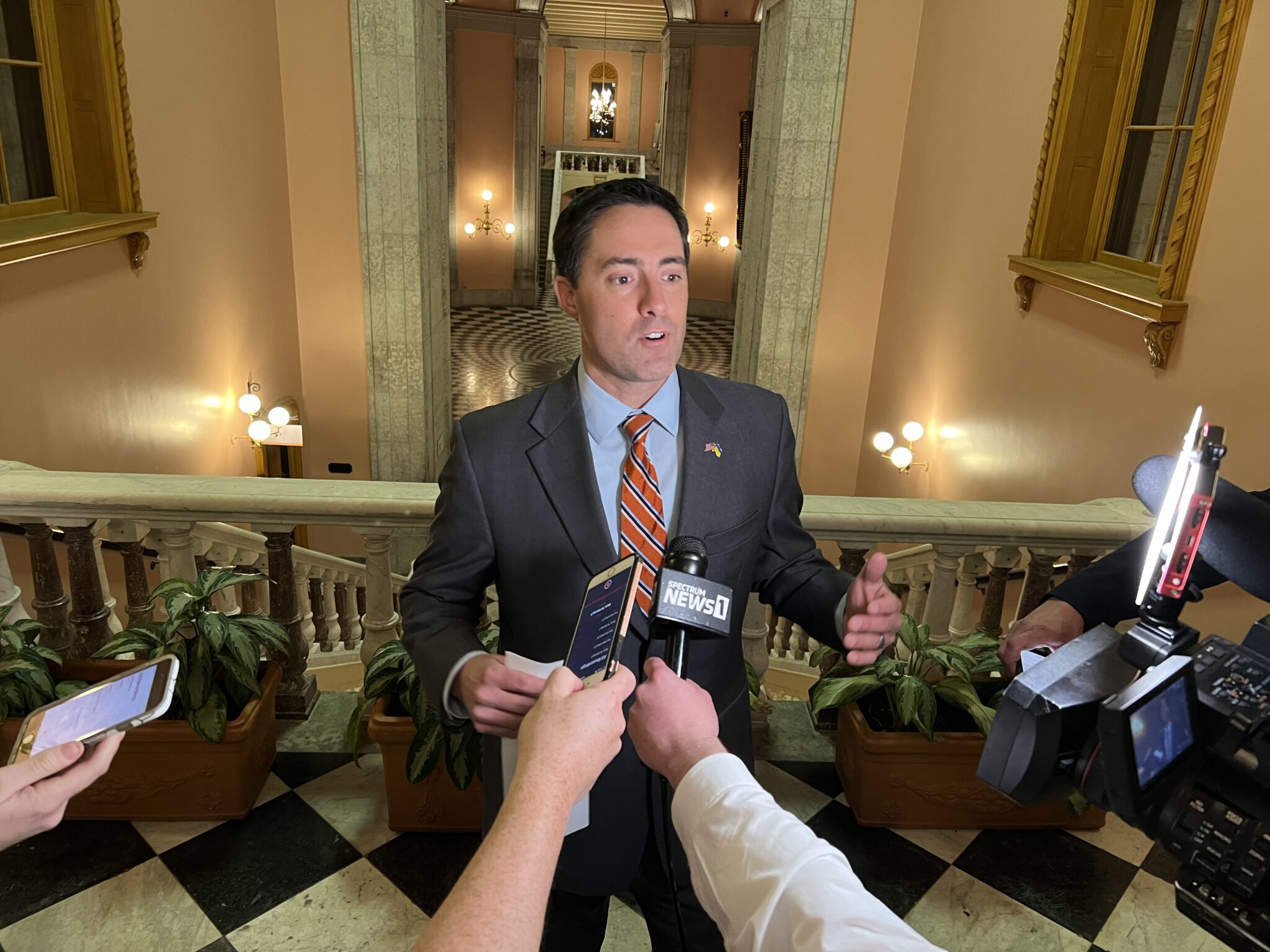
    Ohio Secretary of State Frank LaRose talks to reporters. (Photo by Susan Tebben, OCJ.)

    BY: JAKE ZUCKERMAN – Ohio Capital Journal

    The story of the ballot fight includes a scandal in Ohio University’s Student Senate, a primary election delayed by Ohio’s messy redistricting clash, a Democrat’s resignation after winning an uncontested race, and some of the finer points of election law.

    The result is Jay Edwards, a three-term Republican incumbent, currently running unopposed in one of the more competitive districts in the November General Election.

    Ohio law allows the two major political parties to replace candidates who withdraw after primaries. The Democratic Party chose Tanya Conrath — a southeast Ohio native, attorney and nonprofit leader — to fill a hole left by the victor who dropped out.

    Republicans on the Athens County Board of Elections, however, objected, leaving the matter tied 2-2. Ohio Secretary of State Frank LaRose, a Republican responsible for casting the deciding vote, voted against letting Conrath on the ballot.

    He said because Rhyan Goodman, the Democratic candidate who won an uncontested primary, resigned before officials formally counted the vote and certified his victory, then the law doesn’t guarantee the Democrats the right to replace a candidate.

    “They’re trying to cheat their way into not giving [incumbent GOP Rep. Jay Edwards] an opponent and not giving voters a choice,” Conrath said in an interview.

     Tanya Conrath. Courtesy photo.

    The issue traces back to February when Goodman, as a 19-year-old Ohio University student, filed to run in Ohio’s 94th House District using his dorm as his filing address. In a matter of weeks, however, Goodman met his first brush with political scandal — not via state politics but with the Ohio University Student Senate.

    Goodman faced impeachment for allegations that he lodged false accusations in an anonymous letter against the student treasurer and encouraged other student senators to accuse her of intimidation, according to student publication The New Political. He resigned just before his trial was set to start.

    In the fallout of some “mistakes that might have been made,” Goodman drifted away from the Ohio House race, according to Athens County Democratic Party Chairman Sean Parsons. In the runup to the primary, Goodman had no campaign website, no social media, and did not respond to phone calls from a reporter.

    He won 100% of the 1,174 votes cast in the Aug. 2 primary. Regardless, six days after he won the election but before county officials formally certified the vote, Goodman withdrew his name from contention for the November election. He did not respond to calls or emails.

    Rep. Allison Russo, the ranking House Democrat, defended the lack of failsafe candidates in the race. She said candidate recruitment is difficult in districts that weren’t finalized at the time, some of which were later found to be unconstitutional gerrymanders. What Democrat would step into that uncertainty knowing Republicans control the game?

    She said the party developed “some concerns” about Goodman in the spring, but there was little to be done without a certain election date or district lines to go off. Conrath, Russo said, followed the rules and the Republicans are just afraid of the competition.

    “Not surprisingly, Secretary LaRose once again put partisan interests over running fair elections and couldn’t even cite any case law to support his decision,” she said.

    Deadlines

    Ohio law allows a “party candidate” who withdraws after a primary but before a general election to be replaced by whomever party officials see fit. This must be done by 4 p.m. on the 86th day before a general election — Aug. 15.

    Primary elections are typically held in May. However, the Ohio Supreme Court repeatedly found Republicans’ proposed decennial redistricting maps to be unconstitutional partisan gerrymanders. The court’s majority demanded fairer maps. Republicans refused. The standoff ended with a second primary election in August after a federal court ordered the election to proceed with a map the state Supreme Court found unconstitutional.

    Although the election date changed, some of the relevant administrative deadlines did not. Conrath, who had been contacted by the party and urged to run, had until Aug. 15 to file. The board of elections didn’t certify Goodman’s victory until Aug. 17.

    However, Republicans on the Athens County Board of Elections argued that because Goodman wasn’t certified at the time of Conrath’s filing, the party therefore has no eligible candidate to replace. Larose agreed.

    “As such, Rhyan Goodman was not the official nominee and party candidate at the time of his withdrawal,” he said in casting his tie-breaking vote. “The Athens County Democratic Party … could not replace him prior to the official certification of the Aug. 2, 2022 primary results.”

    Conrath’s lawsuit in the Supreme Court disputes the idea that the lack of certification means Conrath can’t be chosen as a replacement. In court documents, she cites a similar case from 1992 in which a Republican candidate running for county recorder withdrew from the ballot after some primary votes were cast and his name was already printed on the ballot. The secretary of state at the time ordered against certifying the candidacy.

    The Ohio Supreme Court reversed, finding boards of election have a “clear duty” to count ballots cast for a candidate even despite an “untimely withdrawal” from consideration. The court also held that candidacies “retain vitality” for some purposes even after withdrawing.

    LaRose, through a spokesman, did not respond to inquiries. The Supreme Court ordered him to respond in court to Conrath’s lawsuit by Wednesday.

    Edwards, reached via text message, didn’t respond when asked if he thought the court should let Conrath run.

    Parsons tentatively acknowledged that the Democrats should have fielded another candidate for the race. However, he said the chronic uncertainty given redistricting and the mishmash of deadlines weakened the process. And Republicans’ reasoning, he said, doesn’t pass the smell test.

    “They’re not operating in good faith on this issue; It’s an attempt to keep somebody off the ballot,” he said. “It’s always better to have choice. That’s the way representative democracies work.”

    Conrath

    Conrath describes herself as a fifth generation Appalachian. She was born and raised in southeast Ohio and married a fellow native. After graduating Ohio University as an undergrad and Ohio State University for law school, she worked in a law practice in Athens.

    She owns a home appraisals business, works as associate director of the Ohio University Innovation Center, and works at an adult career center as well. She has served on nonprofit boards including My Sister’s Place and Planned Parenthood of Southeast Ohio.

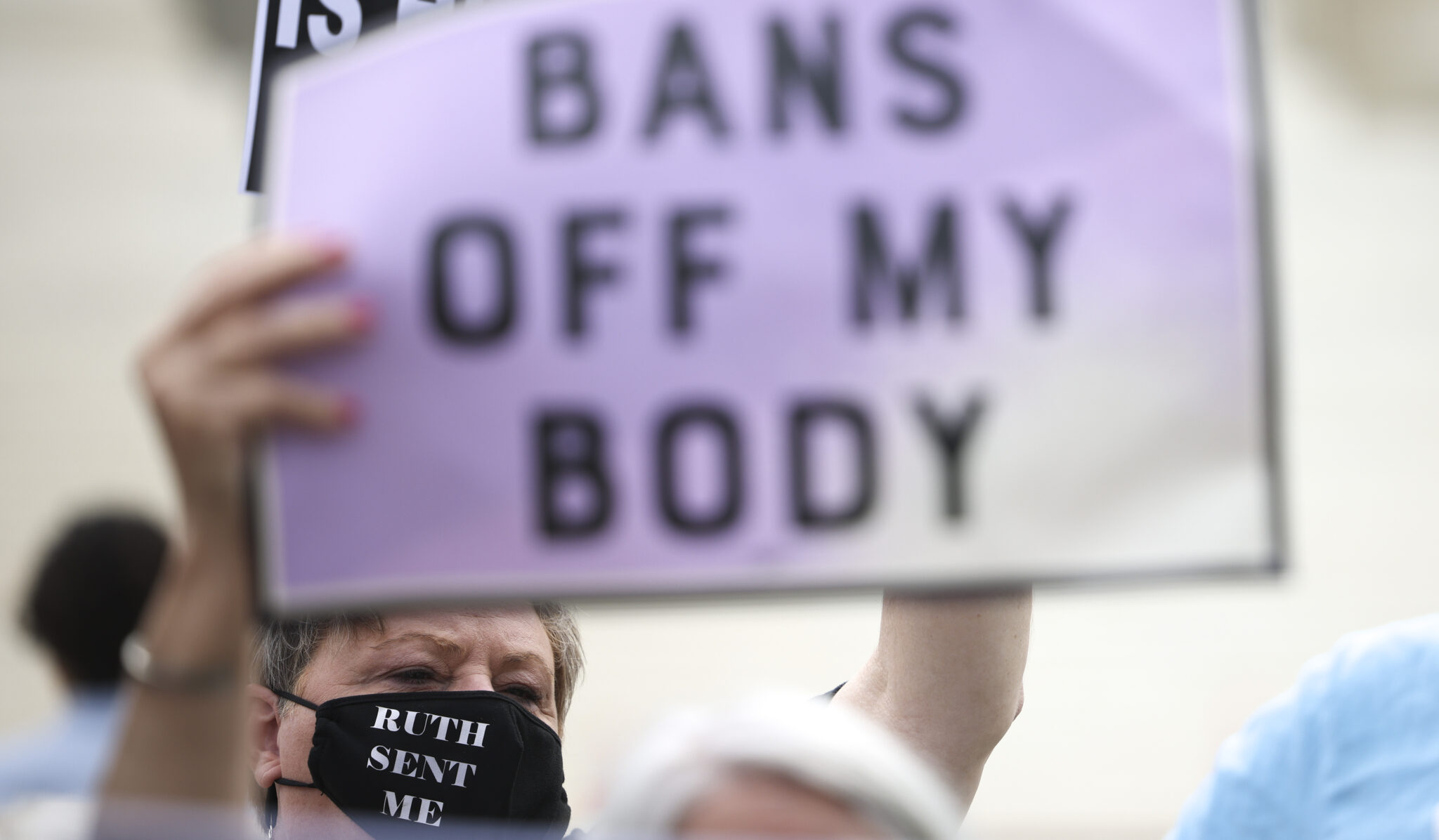
    She said she was invited to run after Goodman’s resignation in August and made the decision and filing in a “whirlwind.” She had previously toyed around with the idea of running, but the U.S. Supreme Court’s decision to overturn its landmark ruling establishing women’s constitutional right to abortion access cemented her decision.

    “The Dobbs decision and watching Ohio put in a six-week abortion ban was the straw that broke the camel’s back,” she said.

    Besides the court’s findings of partisan gerrymandering, the vast majority of statehouse elections are unlikely to produce competitive general elections. Edwards’ district, however, is comparatively tight. Dave’s Redistricting App estimates it gives Republicans a 52%-45% edge. While President Donald Trump won the district in a landslide, Gov. Mike DeWine won it by a narrow 1.5%, according to analysis from the Ohio Manufacturers’ Association.

    Conrath expressed confidence she’d prevail in court. She said voters, not partisan officials, should pick their representatives.

    “This is a political play, and I think everyone knows it,” she said. “And I hope the Supreme Court sees this for what it is.”

  • Feds to provide $50M in food assistance to Ohio

    Feds to provide $50M in food assistance to Ohio

     Shelves of canned foods sit partially empty. Photo by Justin Sullivan/Getty Images.

    BY: MARTY SCHLADEN – Ohio Capital Journal

    Ohio’s foodbanks say they’re desperate as summer is turning to fall. Demand has skyrocketed with increasing food costs at the same time that their resources have evaporated. And with current supply chain disruptions, they need to order food now if they hope to have it when winter comes.

    And even though the state is sitting on unprecedented fund balances of $7.4 billion and another $1.3 billion in unexpended American Rescue Plan Act funds, the administration of Gov. Mike DeWine so far hasn’t answered the foodbanks’ entreaties for $50 million in emergency assistance.

    The U.S. Department of Agriculture partially answered that call on Wednesday when it announced that it would put up nearly $1 billion nationally to purchase food for emergency providers such as foodbanks. Another $500 million will go to emergency food systems so they can buy commodities themselves. And $500 million will go to school lunch and breakfast programs, the USDA announced.

    “Food banks and schools are the backbone of our nutrition safety net, serving tens of millions of children and families,” Stacy Dean, Deputy Under Secretary for Food, Nutrition, and Consumer Services, said in a statement. “The Biden administration understands that supply chain disruptions and high food costs have created uncertainties for these crucial partners, and we are committed to equipping them with the resources they need to keep communities fed, strong, and healthy.”

    In a joint statement, the Ohio’s Foodbanks said that Ohio will get $50 million worth of help starting next year.

    “For many months, our foodbanks have been strained nearly to a breaking point,” the foodbanks said. “Some are operating in deficit budgets, purchasing food just to keep enough balanced products on the shelves for our hunger-relief partner organizations and the people we serve together. We have been buying more privately purchased food than ever before, at record prices. Just like Ohio families, foodbanks have been paying higher rates to keep our coolers on, our day-to-day operations afloat, and our trucks moving.”

    In an email, Ohio Association of Foodbanks Executive Director Lisa Hamler-Fugitt stressed that the federal assistance likely won’t come until January and Ohio foodbanks’ needs are immediate.

    “We need food now to meet the increasing need,” she said. “We have also requested that (Agriculture Secretary Tom) Vilsack send letters to the governors urging them to use ARPA funding to support foodbanks and emergency food assistance programs.”

    In their joint statement, the foodbanks made a similar appeal.

    “We want to be ready to distribute this food to Ohio families and balance the limited menu of USDA commodities with Ohio-grown, raised, and produced foods, and that’s where the state of Ohio can join with us,” it said. “By matching this $50 million investment by USDA with $50 million in the state of Ohio’s ARPA funds, Gov. DeWine and members of the Ohio General Assembly can ensure that the Ohioans hardest hit by the pandemic and ongoing economic uncertainty can count on us for the help they need in the future. 

    “Immediate ARPA funds will prevent a bleak holiday season, as well as help our network reinforce its storage and distribution capacity for the months ahead and support Ohio agriculture. We look forward to working with our state and federal partners to continue to keep our communities’ needs met.”

    Follow Marty Schladen on Twitter.

  • New doctors want abortion training, struggle under regulations

    New doctors want abortion training, struggle under regulations

    BY: SUSAN TEBBEN – Ohio Capital Journal

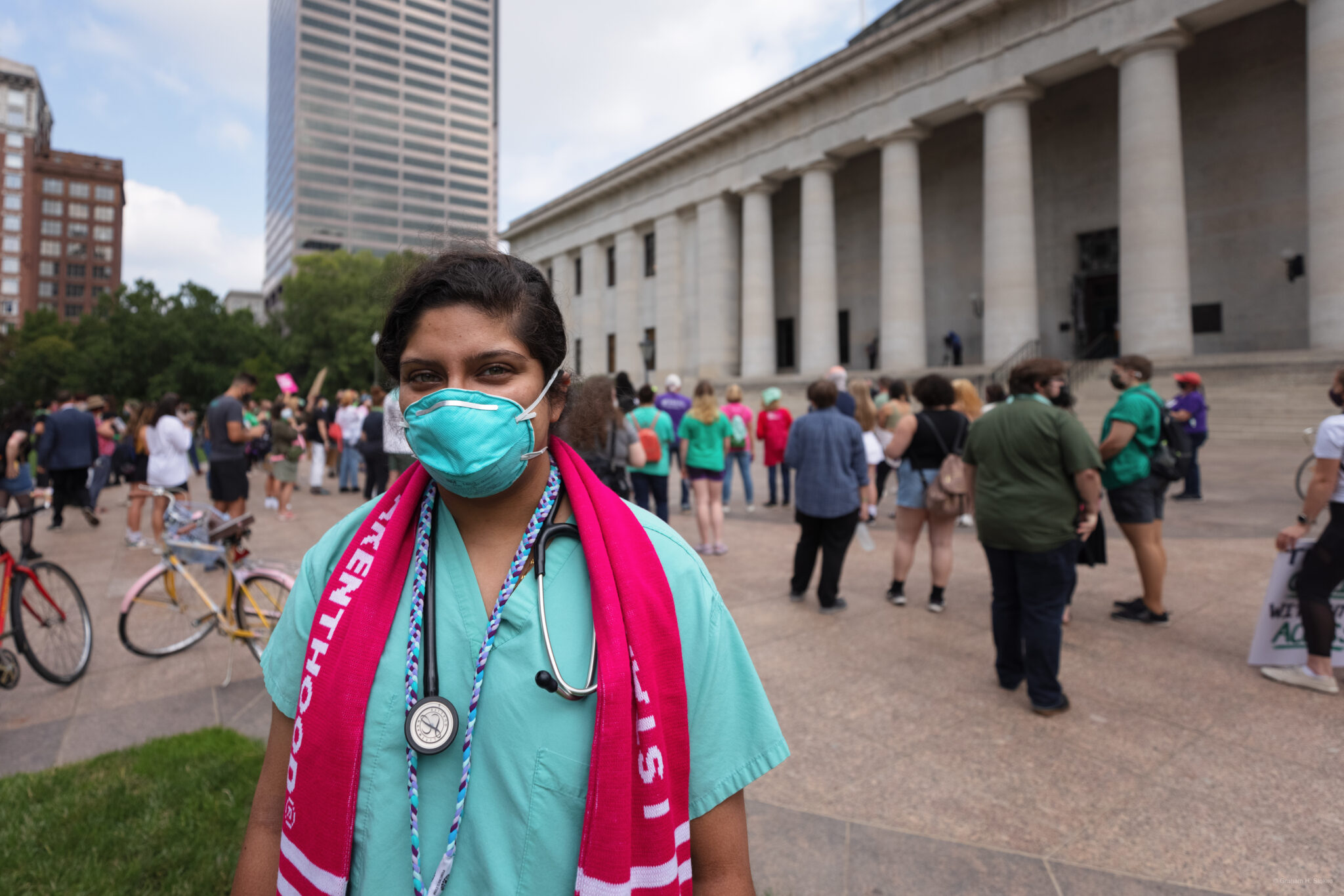
    Students and in-training physicians say they are looking to other states for medical abortion education they need to do their jobs and finish their degrees. Medical schools, meanwhile, are doing what they can to link the students with that training.

    Shreekari Tadepalli began her final year in medical school at Ohio State thinking of how she would specialize, as most medical student do in their last year.

    “I knew I wanted to provide reproductive health care,” Tadepalli said.

    A Michigan native, she came to Ohio State specifically to go to medical school. She plans to stay, because she wants to fight for her patients as an OB/GYN, and advocate for abortion care as a normal part of medical care.

    “To me, medicine is like the ultimate form of advocacy, and I think physicians should be advocates for care,” Tadepalli told the OCJ.

    When the pandemic hit, Tadepalli headed back home to live with her parents, but she looked for ways to help. She heard a private clinic in Detroit needed staff, and she had the skills she needed to be of service there. While helping staff the clinic, she talked to the OB/GYNs about why they chose their profession, helping bolster her desire to become one herself.

    Tadepalli was upset, though unsurprised, when the U.S. Supreme Court overturned Roe v. Wade, sending the issue of abortion legality back to the states. Hours after the decision was made, she watched Ohio move forward with an abortion ban after six-weeks gestation, which had previously been tied up in court for years.

    “I think there was a certain amount of frustration that we’ve allowed ourselves to get to this point, when every poll says a majority of Americans support (legalized abortion),” Tadepalli said.

    A June poll from Suffolk University and the Cincinnati Enquirer showed 53% of Ohio voters supported abortion rights, and the Pew Research Center has consistently shown majorities of Ohioans as supporters of legal abortion.

    In August, the ACLU announced their own survey of Ohio voters, showing an 82% support rate for abortion legality in some form.

    A new set of complications arose for Tadepalli, in that she now had to figure out how to get training in abortion procedures and services after six-weeks, something that’s growing hard to find in a state where one clinic has already announced its closure due to regulations surrounding it.

    “One of the hardest things right now is because so few of these laws are based in medical practice,” Tadepalli said, “it has implications beyond the level of elective abortions.”

     COLUMBUS, OH — AUGUST 31: The Ohio State University College of Medicine Richard L. Meiling Hall, August 31, 2022, on the campus of Ohio State University in Columbus, Ohio. (Photo by Graham Stokes for the Ohio Capital Journal / Republish photo only with original story)

    Ohio State said in a statement to the OCJ that they are working with professional organizations and medical groups as changes to training are reviewed nationwide.

    “We intend to continue offering the full spectrum of training in reproductive care for those residents who do not opt out of the requirement,” Mary Fiorino, spokesperson for the Ohio State University Wexner Medical Center. “In order to ensure we are meeting national accreditation standards on this topic, we are exploring ways for our trainees to do that outside of the state of Ohio.”

    Another of Ohio’s medical schools, Ohio University’s Heritage College of Osteopathic Medicine, also said they are keeping up with recommendations from medical groups and monitoring judicial and legislative changes in the state, but they still plan to train their students.

    “We believe it is important to continue to offer training related to the full spectrum of women’s health care so that students have the knowledge and skills they need to practice medicine and provide the best medical care possible in any community they choose to live and work,” Lisa Forster,  HCOM’s chief communication officer, said in a statement.

    Tadepalli also has residencies to consider, and while she wants to stay in Ohio, she said the questions she’s asking medical schools have changed somewhat.

    “If you’re in a state like Ohio, what is your guarantee that I can be the full physician that I should be?”

    Medical resident Alexandra Stiles is wondering the same thing as she reaches her last year of training before becoming a OB/GYN generalist. 

    A Virginia native who was a first-generation college student, Stiles said she wants to be able to develop medical relationships with her patients, from their first child to any other reproductive needs on down the line.

    That includes abortion care, which she emphasizes means more than just pregnancy termination, but the fetal anomalies that are fatal, or when a pregnant person’s water breaks, meaning the fetus won’t be able to make it to term.

    “People don’t really see that side of things,” Stiles said. “That in putting up that barrier to access, you’re not just preventing a woman from getting an abortion, you’re preventing us from caring for those people.”

    The fact that legislation is being used to regulate medical care, specifically for those that can become pregnant, makes Stiles want to “use my advocacy hat” for her patients, even if it means looking to other states and nonprofits for help.

    She worried recruitment to Ohio’s medical schools will be reduced without the ability to learn certain procedures, which would be a shame because she came to Ohio specifically because of the reputation Ohio State’s medical school had.

    In the future, Stiles hopes those making laws and deciding on the health care landscape in the state defer to the experts, the patients, and the doctors who work with them.

    “I’m not going to NASA and telling them how to fly their astronauts, and NASA wouldn’t come to me and tell me how to perform a hysterectomy,” Stiles said.

    Tadepalli sees politics as a “zero-sum game,” but advocacy for her patients as the way to effect change in their lives.

    “One of the things that helps me stay sane is reminding myself that most Americans are not behind a total ban on all abortions,” Tadepalli said. “I think it reminds me that there is some common ground on such a charged issue.”

    Follow OCJ Reporter Susan Tebben on Twitter.

  • Judge holds off on Ohio abortion ban decision

    Judge holds off on Ohio abortion ban decision

    BY: SUSAN TEBBEN – Ohio Capital Journal

    A Hamilton County judge said he needs more time to decide whether or not to put a pause on a six-week abortion ban in Ohio.

    Judge Christian Jenkins said in a Thursday hearing that he would not issue an opinion because the court still has questions about how the case moves forward.

    “The court would like to investigate the threshold issue of jurisdiction and the effect of the (state) supreme court still not having dismissed the case,” Jenkins said on Thursday.

    Abortion clinics moved the case from the Ohio Supreme Court to the Hamilton County Common Pleas Court because, as they said in court documents, waiting for the state’s highest court to make a decision was allowing “irreparable harm to the clinics and the patients” throughout the state.

    Representatives for the state argued that the jurisdiction remains with the Ohio Supreme Court, since no dismissal order has been issued.

    Temporary restraining orders on laws typically work to stop a law from taking effect, leaving previous standards in place. In this case, the ACLU and Planned Parenthood want to bring back the previous law that banned abortion beyond 22 weeks gestation.

    Attorneys for the state countered the request for a temporary restraining order, saying the six-week abortion ban has been effective law for two months, making it the “status quo” in the state.

    Law challengers are hoping for a quicker resolution in the lower court, starting with Thursday’s hearing on abortion supporters’ request for a temporary restraining order to be put on Senate Bill 23, the 2019 law that banned abortion in Ohio after six weeks gestation.

    “Every day that SB 23 remains in effect, more and more pregnant women are forced either to attempt to travel hundreds of miles out of state to access care, or to continue pregnancies against their will, or to attempt to self-induce abortion outside the medical system, all at risk to the physical, mental and emotional wellbeing,” said Jessie Hill, lead counsel for the ACLU of Ohio, told the judge.

    The clinics are not only challenging the law as a violation of the right to abortion, but also as an equal protection violation, based on the fact that the law only applies to those who can become pregnant.

    The law had been tied up in courts since it was passed by the General Assembly in 2019, and signed by Gov. Mike DeWine. But the U.S. Supreme Court’s ruling in Dobbs v. Jackson this year, overturning the 1970s decision in Roe v. Wade legalizing abortion nationwide, opened the door for the state to implement the law. At the request of state Attorney General Dave Yost, a federal court dissolved the injunction keeping the state law from being enforced just hours after Roe v. Wade was overturned.

    Doctors, medical students, abortion rights advocates, religious leaders and even some of Ohio’s major cities have spoken out about the dangers they say could come from the near-total abortion ban, including unintended consequences that may impact Ohioans in the middle of wanted pregnancies.

    Jenkins said a decision on the temporary restraining order would be released “as quickly as the court is able.”

    Follow OCJ Reporter Susan Tebben on Twitter.

  • Pro-abortion groups seek to bypass supreme court in abortion ban lawsuit

    Pro-abortion groups seek to bypass supreme court in abortion ban lawsuit

    BY: SUSAN TEBBEN – Ohio Capital Journal

    The groups hoping to put a stop to a six-week abortion ban in Ohio say the Ohio Supreme Court’s inaction forced them to move on to a different court.

    In a recent court filing, the ACLU of Ohio and Planned Parenthood asked the state’s highest court to dismiss their case in favor of separate litigation in the Hamilton County Court of Common Pleas.

    The court filing claimed Planned Parenthood has suffered “irreparable harm which has increased to become intolerable” since filing the lawsuit at the end of June, causing a separate lawsuit to request “immediate relief from the ongoing irreparable harm to the clinics and their patients.”

    Jessie Hill, counsel of record representing the ACLU of Ohio and Planned Parenthood, said the move was spurred by not only the overturning of Roe v. Wade by the U.S. Supreme Court, but also the impending closure of Women’s Med Center of Dayton and clinics in surrounding states like Kentucky and Indiana.

    “Ohioans’ access to abortion care is becoming more and more restricted,” Hill told the OCJ. “Since the situation is so dire and the Ohio Supreme Court has not acted, we needed to pursue an alternative path that could lead to quicker relief.”

    The new lawsuit has been filed, with the added support of law firm WilmerHale, challenging the constitutionality of Senate Bill 23, the bill that is called the “Heartbeat Bill” by supporters, because the bill’s ban hinges on the presence of fetal “cardiac activity.”

    Opponents of the law say banning abortion at six weeks could close out options to women before they are aware of the pregnancy and have unintended consequences for other fetal medicine fields, such as in-vitro fertilization and miscarriages. Meanwhile, Ohio doctors are describing scenes of almost unimaginable anguish — and increased risks to women and girls who become pregnant, in the months since the Dobbs decision.

    “Ohioans deserve the information and resources to make the best decisions for themselves and their families,” said Lauren Blauvelt-Copelin, Vice President of Government Affairs and Public Advocacy at Planned Parenthood of Greater Ohio, in a statement announcing the Hamilton County Court case.

    The groups have already asked the court to implement a temporary restraining order, keeping the state from enforcing the law until the court case has been resolved. The Ohio Supreme Court had previously rejected a request to do so in the case in their court.

    The court has not scheduled any hearings on the matter, or made any decisions on the temporary restraining order.

    Follow OCJ Reporter Susan Tebben on Twitter.

  • In top-secret documents case, Portman wants to investigate the investigators

    In top-secret documents case, Portman wants to investigate the investigators

    BY: MARTY SCHLADEN – Ohio Capital Journal

    It now appears that secrets of the most sensitive nature were among the documents former President Donald Trump hung onto after more than a year of entreaties by the government to return them. Having to do with another nation’s nuclear-weapons capabilities, one set of documents in Trump’s possession was so sensitive that only a few senior government officials are allowed to see them and only then on a need-to-know basis, the Washington Post reported Tuesday.

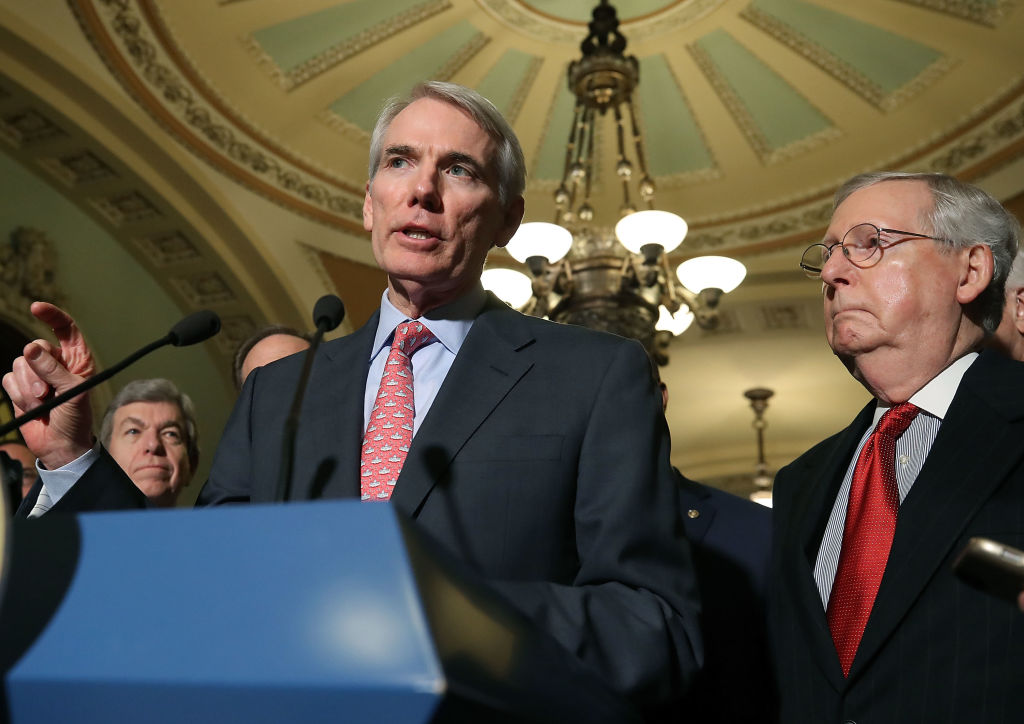
    One might think that the most senior Republican on the Senate Homeland Security and Government Affairs Committee would want to know what Trump was doing with those documents and how much his possession of them might have jeopardized national security. But since the Aug. 8 search of Trump’s South Florida club and residence, it appears that the only statement Sen. Rob Portman, R-Ohio, has made about the matter has been to call for a congressional investigation of the FBI.

    “As the Lead Republican on the Senate Homeland & Governmental Affairs Committee, I call on @SenGaryPeters to utilize the broad jurisdiction of the Cmte, which includes jurisdiction over the National Archives & Records Admin, to perform oversight on this issue & ensure transparency,” Portman tweeted on Aug. 14.

    Portman quickly followed that with, “The Attorney General and the FBI should now demonstrate unprecedented transparency and explain to the American people why they authorized the raid.”

    Many other Republicans — eager to stay in Trump’s good graces — were quick to attack the FBI for conducting the court-sanctioned search. They also attacked the Justice Department for seeking it after trying more voluntary methods to get Trump to return the classified documents.

    “I’ve seen enough,” House Minority Leader Kevin McCarthy said in a tweeted statement. “The Justice Department has reached an intolerable state of weaponized politicization.”

    Republicans on the House Judiciary Committee, led by Ohio Republican Rep. Jim Jordan, in two separate tweets said, “This is what happens in third world countries. Not the United States,” and, “If they can do it to a former President, imagine what they can do to you.”

    And Rep. Marjorie Taylor Greene, R-Ga., simply tweeted “DEFUND THE FBI!”

    But unlike those officials, Portman in January announced that he isn’t seeking reelection. Even so, he apparently hasn’t condemned an attack on the FBI office in his hometown of Cincinnati or a rash of threats to the FBI that are thought to partly be a product of the rhetoric by Trump and his supporters.

    Portman’s staff didn’t respond to questions for this story. And some observers are confused as to why Portman wouldn’t speak out against attacks on federal law enforcement or call on Trump to explain his actions as he has called for the FBI and Justice Department to do.

    “He’s been a real puzzle to me,” Paul Beck, a political science professor emeritus at Ohio State, said last week. “You’d think by the time he decided to retire, he’d kind of freed himself from the clutches of Trump. But for some reason or another, he doesn’t feel that way.”

    With his mild, polite demeanor, Portman is far from the Trumpiest member of the Senate. But he has been enthusiastic about some of the former president’s initiatives — particularly the 2017 tax cut.

    “But that’s done,” Beck said. “The question now is, what more does he want from (Trump)? It may well be that what Portman wants is for Republicans to retake the Senate in 2022 and maybe… stymie the Biden administration for the next two years.”

    Similarly to Portman, former Vice President Mike Pence on Aug. 17 said he was “deeply troubled” by the search of Trump’s club and residence. And he called on Attorney General Merrick Garland to explain more about the Justice Department’s reasons for undertaking the search — which the department has done through subsequent court filings.

    But, the Washington Post reported, Pence also called on his fellow Republicans to tone down their rhetoric.

    “These attacks on the FBI must stop,” the paper reported Pence as saying. “Calls to defund the FBI are just as wrong as calls to defund the police.”

    Pence, whom Trump attacked during the Jan. 6 Capitol riot even as rioters were chanting to hang the vice president, is widely believed to be positioning himself for a presidential run. And he’s taken several other steps to distance himself from the former president. 

    Is it possible that Portman by contrast is considering becoming a lobbyist post-retirement and he doesn’t want to alienate Trumpworld?

    “The question is, where does he want to live?” Beck said. “I don’t know that he’s ready to go back and live in Lebanon, Ohio. Does he want to settle in Washington, D.C. and earn fairly big bucks as a lobbyist? It may well be that to do that he can’t be on the outs with Trump, but he also doesn’t have to be at all aggressive in supporting Trump’s efforts to rescind the results of the 2020 election.” 

    Or Portman could simply be emulating Senate Minority Leader Mitch McConnell, R-Ky., a frequent target of Trump’s ire.

    “You would think that Portman would be distancing himself from Trump,” Beck said. “Maybe he’s doing what Mitch McConnell is doing and that is saying nothing. And McConnell can’t be happy.” 

    Follow Marty Schladen on Twitter.

  • Ohio State employed a serial sex abuser. Its fight with his victims lives on

    Ohio State employed a serial sex abuser. Its fight with his victims lives on

    BY: JAKE ZUCKERMAN – Ohio Capital Journal

    As Ohio State University came to publicly acknowledge that a physician it employed abused hundreds of students over two decades, it also waged several high-stakes legal and political fights against some of his victims to narrow their path to financial damages, an Ohio Capital Journal investigation has found.

    In state and federal courtrooms and behind the scenes of the Statehouse, OSU and the victims have clashed, with millions of dollars on the line. While the university has settled with 296 people who sued the university for more than $60 million, another 236 continue to press on with 10 lawsuits now pending in the 6th Circuit Court of Appeals, according to a university count.

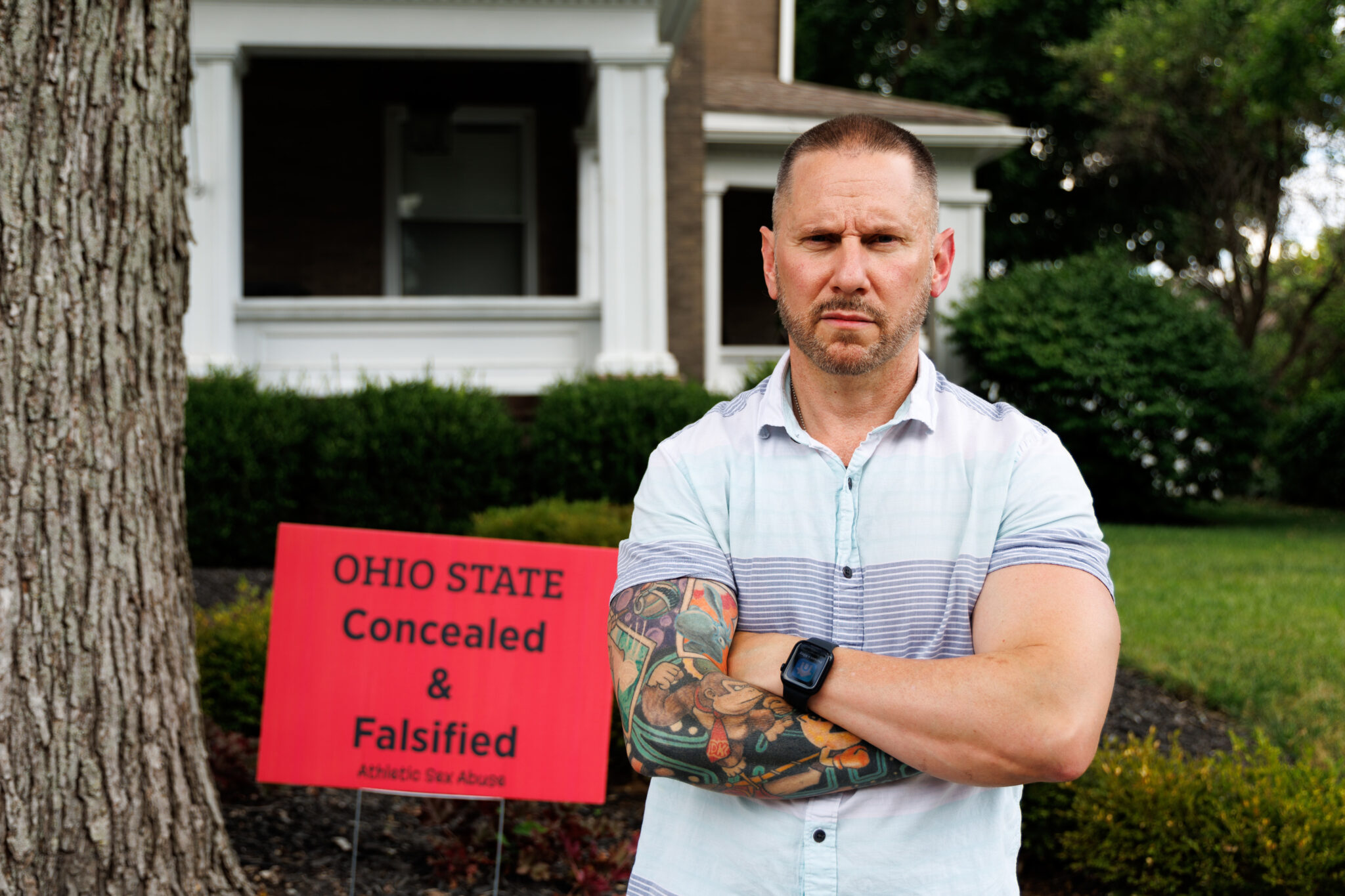
    Dead center in the fray is Stephen Snyder-Hill, one of Dr. Richard Strauss’ final known victims and now a lead plaintiff in one of the surviving lawsuits. Between a near-encyclopedic knowledge of four decades of the Strauss-OSU story and a hard drive’s worth of chronologically organized documents to back him up, he’s perhaps the most dogged crusader pressing to hold Ohio State accountable.

    He says he’s not in it for the money, but he wants to force OSU to come to terms with its role in the story, and to ensure it can never happen again.

    “They only understand money,” he said, relaying advice from his lawyers. “So if you punish them in something they understand, that’s when they’ll make it count that they’re not going to let it happen again.”

    A university-commissioned investigation found that between 1979 and 1996, Strauss sexually abused at least 177 mostly male victims, usually under the guise of medical treatment. This occurred while he worked as a physician for OSU’s Athletics Department and also at the Student Health Center. When Snyder-Hill saw Strauss on Jan. 5, 1995, a visit for a lump on his chest descended into a medically unnecessary testicular and anal examination and Strauss pressing an erection into his side.

    Snyder-Hill filed a written complaint the next day, but Ted Grace, then the head of student health services, indicated that Strauss denied the allegations and the university sided with its doctor. Snyder-Hill agreed to drop his complaint if Grace told him, in writing, that Strauss hadn’t been the subject of any prior complaints of abuse. Grace, a physician, signed a letter to that effect, now some of the clearest evidence of the university’s enabling role.

    The university’s investigation shows not only that Strauss had been abusing students for decades, but another student filed a complaint with the assistant director of student health services just two days before Snyder-Hill’s visit.

    After OSU conducted what investigators later called a “very limited investigation” of Strauss’ complaint history and removed him from his physician roles in 1996, it allowed him to voluntarily retire before opening a men’s clinic off campus where his abuse continued. He maintained “emeritus” status with the university until his death by suicide in 2005.

    The issue was revived in early 2018 and more fully unearthed via the release of the university’s investigation in 2019. But interviews, court records, and documents obtained in public records requests show OSU’s fight with some of the victims of Strauss’ abuse continues, albeit usually out of the public eye. Its frontiers include:

    • OSU has spent $8.5 million on legal fees since 2018 fighting the 37 lawsuits seeking damages for the university’s role in the Strauss scandal and related litigation.
    • The university’s settlement program pays victims pennies on the dollar compared to similar scandals at other universities and forbids victims from disparaging OSU’s post-2018 handling of the matter
    • OSU flouted public records laws and withheld from Snyder-Hill documents detailing his 1995 visit and the aftermath. The university also made deceptive statements to the court in mediation about the whereabouts of those documents.
    • While keeping a neutral public position, OSU quietly lobbied behind the scenes against legislation that would have paved a sturdier legal pathway for Strauss’ victims to win in court against the university.
     On the campus of The Ohio State University, Sept. 2, 2022 in Columbus, Ohio. (Photo by Graham Stokes for the Ohio Capital Journal / Republish photo only with original story)

    Statute of limitations

    Ohio State’s first public acknowledgement about “allegations of sexual misconduct” against Strauss came on April 5, 2018 when it announced it would bring in an outside investigator. The first lawsuits were filed about three months later.

    The lawsuits alleged Title IX violations against OSU for repeatedly mishandling complaints about Strauss’ behavior, which included rape, sexual abuse like fondling students’ genitals during clinical visits, and deviant behavior like taking extended showers with athletes in the locker room. However, this type of legal claim bears a statute of limitations requiring plaintiffs to file any civil suit within two years of the abuse.

    Snyder-Hill sued the university in the summer of 2018, eventually becoming the lead plaintiff of what is now 83 others claiming they’re victims of Strauss’ abuse as enabled by a university that covered up for a predator.

    The gravamen of this and the other arguments appears to be that OSU knows better than a survivor when his interests would best be served by disclosure. OSU is obligated to comply with the requirements of the Public Records Act, and its preference for confidentiality, alone, cannot limit a requester’s access to otherwise public records.

    – Special Master Jeff Clark

    His case was dismissed in district court by a judge who signaled sympathy but said the law is clear that the two-year statute of limitations has passed. Attorneys for Snyder-Hill have since adopted a legal theory of fraudulent concealment — essentially, the clock on the statute of limitations shouldn’t have begun ticking because of the university’s role covering up the scope of Strauss’ behavior. They argue that two-year limitation should have only begun when the university disclosed the full scope of the scandal.

    Otherwise, as plaintiffs’ lawyers argued to the 6th Circuit Court of Appeals, the law would reward Ohio State for its effectiveness in covering up Strauss’ conduct.

    According to university spokesman Ben Johnson, the cost of the independent investigation and “related litigation and mediation” is about $14.7 million. Of the total, approximately $6.2 million was for the independent investigation, conducted by the law firm of Perkins Coie.

    The university’s settlement program states its average payment to survivors is not to exceed about $252,000. This pales in comparison to eerily similar scandals at Michigan State University, University of Southern California, and the University of Michigan. At those schools — large universities whose employees abused hundreds of students under guise of medical care — the victims each received an average settlement of between $467,000 and $1.5 million.

    Johnson emphasized that a majority of plaintiffs have settled, and that all male students who filed lawsuits have been offered the opportunity to settle. He also cited a statement included in a news release announcing some of the settlements.

    “After extensive negotiations, we were able to reach a settlement on behalf of our clients,” said attorney Rick Schulte, lead negotiator for the plaintiffs that took the settlement. “The bravery of our clients is humbling. We are pleased that Ohio State stepped forward and did the right thing. This settlement will help our clients move forward with the healing process.”

    The settlement agreement notes it is not an admission of guilt from Ohio State. It allows the victims to publicly discuss their past experiences with Strauss as “part of the healing process” but forbids them from “any disparagement of Ohio State’s handling of this matter since March 2018.”

     Excerpt from Richard Strauss’ personnel file at Ohio State University. Courtesy of the Cleveland Jewish News.

    Withholding documents

    Building his case, Snyder-Hill wrote a public records request for all communications between himself and the university regarding his visit to Strauss and the aftermath on Dec. 13, 2018.

    Seven days later, Ohio State’s legal department found and possessed the records in question, court records show. Despite a legal duty to turn them over, OSU withheld them for 155 days, claiming it did so to protect Snyder-Hill and other victims from “unnecessary retraumatization.”

    Under Ohio law, any document kept by a public office like a university is a public record, unless it meets one of about 40 exceptions (which do not include “retraumatization”). Those records must be turned over within a reasonable period.

    Snyder-Hill filed a lawsuit in April 2019 in the Ohio Court of Claims, a special venue to handle public records cases.

    During a court mediation that Snyder-Hill secretly recorded, OSU attorney Kirsten Fraser said Perkins Coie, as opposed to OSU, had the documents in question. Plus, she said OSU’s Office of Compliance and Integrity, which fielded the records request, “didn’t even get the documents back from Perkins Coie until close to the time the report was released.”

    Johnson, OSU’s spokesman, declined to comment about the statement because the recording “violates the court’s expectation of confidentiality in mediation.”

    The university eventually released the documents concurrently with its full investigation into Strauss in May 2019. Regardless, the court sided with Snyder-Hill after the fact and found OSU flouted state records laws.

    Special Master Jeff Clark, essentially a judge who oversees public records lawsuits, blasted OSU’s rationale in a ruling.

    “The gravamen of this and the other arguments appears to be that OSU knows better than a survivor when his interests would best be served by disclosure,” Clark wrote.

    “OSU is obligated to comply with the requirements of the Public Records Act, and its preference for confidentiality, alone, cannot limit a requester’s access to otherwise public records.”

    Snyder-Hill won a $25 judgment from the university. The check is still hanging on his wall at home.

    “They knew what they were doing from the start,” Snyder-Hill said in an interview. “I would have had the full story right there.”

    Johnson said the university “had serious concerns that releasing records piecemeal during the investigation would retraumatize survivors and create a chilling effect that would compromise the integrity of the investigation and our ability to publicly uncover Strauss’ abuse and the university’s failure to appropriately respond decades ago.”

    Shadow lobbying

    While Snyder-Hill’s Title IX lawsuit wormed through the court system, state lawmakers drafted and considered legislation that would waive Ohio’s statute of limitations for Strauss’ victims. This wouldn’t guarantee victory in court but would greatly improve their cases’ chance of making it to a trial.

    About 10 of Strauss’ victims came forward publicly at committee hearings in 2019, describing how Strauss abused them. They detailed aftershocks into adulthood manifesting in strained marriages, depression, trust problems, and substance abuse. Several grown men cried before a mostly male panel of lawmakers.

    As the OCJ has previously reported, top House Republicans including then House Speaker Larry Householder and Majority Leader Bill Seitz have admitted they never planned to pass the legislation. They merely used the bill as an instrument to pressure OSU into offering a more generous settlement offer. Strauss’ victims were never told of the strategy. The bill died without ever being voted on.

    OSU said in public it wouldn’t take a position on the legislation, given the ongoing litigation.

    Behind the scenes, it registered two lobbyists on the bill. Records obtained by Snyder-Hill in another request show how OSU relied on a middleman to testify to lawmakers against the bill.

    During legislative hearings, Kevin Shimp, a lobbyist with the Ohio Chamber of Commerce, testified against the legislation on behalf of the Ohio Alliance for Civil Justice. Beforehand, he emailed OSU lobbyist Brian Perera that he understood “OSU is willing to assist me” drafting the testimony and asked if Perera had anything to add.

    “I will have materials for you next week,” Perera said.

    The Lantern, a student publication on campus, first reported on Ohio State’s backstage lobbying efforts. Shimp didn’t respond to an inquiry.

    “The passage of HB 249 would undermine the important goals of statutes of limitation by reviving certain claims that were not filed in civil or criminal court within the timeframe required by statute,” Shimp said to lawmakers. “By reviving the claim, the bill would allow claims that were once barred by the statute of limitation to be brought forward again.”

    Ohio State, its spokesman said, did not want to take a public position on the legislation that would “impede the mediation’s success.”

    Obsessed

    Snyder-Hill attracted national fame and controversy long before he prosecuted public battles with one of the most iconic brands in American collegiate sports.

    He enlisted in the Army in 1988, eventually rising to become a Major. As a gay man, he remained closeted for much of his service, before becoming a national advocate against the U.S. military’s “don’t ask don’t tell” policy that prohibited openly gay people from serving.

    During a 2012 GOP presidential debate, Snyder-Hill, speaking remotely from Iraq while on a deployment, asked the candidates whether they plan to “circumvent” the newfound openness to openly gay soldiers. He was booed — a segment that made national news and was featured in HBO’s series The Newsroom.

    He gave a TEDx Talk about the event in 2015, at Ohio State of all places. The title: “Trust the Power of Your Voice.”

    He talks fast. He figures he has filed at least 30 public records requests with OSU and the Ohio General Assembly about the scandal. He acknowledged his own zeal in a roughly three-hour interview, using self-descriptors including “psychotic” and “obsessed.”

    “I know how I appear when I send an email and it’s like, a tirade of shit,” he said. “It’s a determination to know the truth. It has consumed me.”

    There are plenty of detractors. He said he gets hate mail, calling him a disgrace to veterans or this or that anti-gay slur. He knows he poked the bear of a beloved university and athletics franchise.

    But he wants people to see the world through his eyes: He was wronged in 1995 by Strauss. Ohio State’s top doctor lied to him about it. Now, that same university who’s admitting to everything then is still fighting with him now.

    When asked what victory would look like, he said it’s about truth and accountability.

    “I want them to be held accountable for everything they did,” he said. “And what does that look like? For me, it’s having to admit it. Having to own up to it.”

  • Jewish congregations mount legal challenges to state abortion bans

    Jewish congregations mount legal challenges to state abortion bans

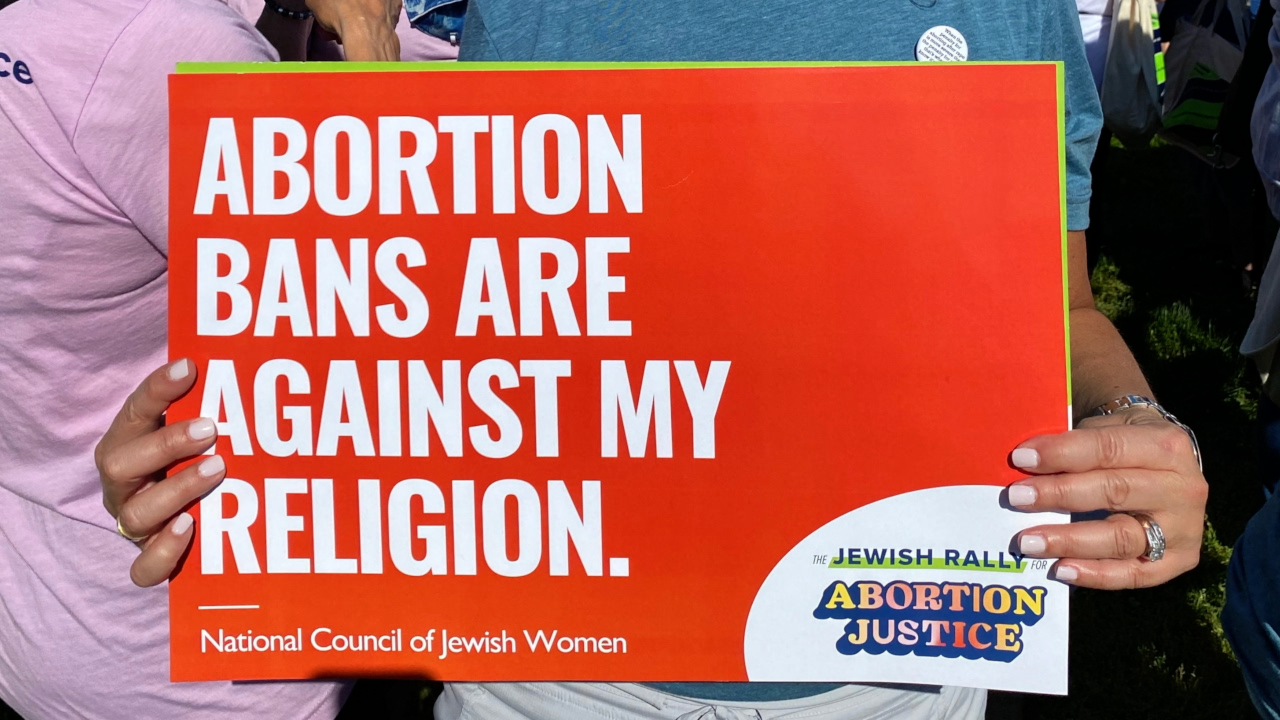
    Members of the Jewish community have spoken out against abortion bans in Ohio, saying it infringes on their religious freedom. Photo by Morgan Trau, WEWS.

    BY: ARIANA FIGUEROA – Ohio Capital Journal

    WASHINGTON — Thousands of years of Jewish scripture make it clear that access to abortion care is a requirement of Jewish law and practice, according to Rabbi Karen Bogard.

    “We preserve life at all costs,” she said in an interview with States Newsroom. “But there is a difference between that which is living, and that which is not yet living.”

    Bogard is a rabbi at Central Reform Congregation in St. Louis, which is in the  progressive tradition of Reform Judaism. She said that whether it’s the Torah — the first five books of the Old Testament in the Hebrew Bible — or the Talmud — the central text of Rabbinic Judaism and the primary source of Jewish religious law and theology — those pieces of Jewish literature “really draw the difference between life and potential life.”

    But with the fall of Roe v. Wade in late June, some members of the Jewish faith as well as other religious groups find their beliefs in deep conflict with state laws that ban or greatly restrict abortion — especially if a pregnant patient’s life is in danger.

    Since the Supreme Court’s Dobbs v. Jackson Women’s Health Organization decision, states now are permitted to craft their own laws regarding abortion, and in Bogard’s home state of Missouri, the procedure is banned.

    “Our congregants are heartbroken,” she said. “It’s really violating to be told what you can and can’t do with your own self.”

    Legal challenges are resulting. The enactment of state laws that ban or restrict access to abortion has already sparked a lawsuit in Florida from a liberal Jewish congregation in the Sunshine State. In Ohio, another liberal Jewish congregation is joining the American Civil Liberties Union in a lawsuit against the state’s six-week abortion ban.

    A coalition of three dozen rabbis also filed a brief on a separate lawsuit in the Buckeye State, where physicians are challenging the new abortion law in the Supreme Court of Ohio.

    Similar lawsuits are anticipated, not only from liberal Jewish congregations, but other religious groups as well.

    There’s currently a lawsuit in the U.S. District Court for the Southern District of Texas Houston Division filed by the Satanic Temple — not to be confused with the Church of Satan — on behalf of a member who argues the state’s abortion ban violates that temple member’s religious beliefs allowing access to an abortion ritual.

    The ritual involves members repeating verses in a mirror to affirm body autonomy and repel any guilt, shame or discomfort that can surface when undergoing an abortion.

    “There’s going to be a wave of religious freedom lawsuits,” Rabbi Daniel Bogard, who’s married to Rabbi Karen Bogard, said. “We’re going to find out if this country really believes in religious freedom, or whether this country believes in the freedom of a small minority to impose its will on the rest of us.”

    But it’s unclear if these religious-based lawsuits challenging state abortion laws can win in court.

    “We’re very much in the wild, wild west of abortion law and religious law,” said Candace Bond-Theriault, the director of racial justice policy and strategy at Columbia Law School’s Center for Gender and Sexuality Law.

    Jewish law

    According to Jewish law, a fetus is not considered a full human being and the biblical foundation for this is found in Exodus 21:22 of the Torah, Rabbi Daniel Bogard said.

    The translation reads: “When men fight, and one of them pushes a pregnant woman and a miscarriage results, but no other damage ensues, the one responsible shall be fined according as the woman’s husband may exact from him, the payment to be based on reckoning. But if other damage ensues, the penalty shall be life for life, eye for eye, tooth for tooth, hand for hand, foot for foot, burn for burn, wound for wound, bruise for bruise.…”

    Rabbi Daniel Bogard said that the Jewish legal interpretation of these passages states that a fetus is not a person, because the miscarriage results in only monetary compensation, rather than the “life for life” punishment.

    There are several other passages in Jewish literature that make the distinction that the life of the person who is pregnant is prioritized.

    “If we’re going to live in a religiously free society, we are each allowed to interpret these verses on our own for our own traditions and a minority in this country can’t impose their conservative white Christian religiosity on the rest of us,” Rabbi Daniel Bogard said.

    The lawsuits challenging abortion laws are predominately filed by congregations that practice Reform Judaism, but Conservative Judaism also supports access to abortion.

    The question of access to abortion gets more restrictive when it comes to Orthodox Judaism, but access to the medical procedure isn’t barred, says Yedida Eisenstat, a fellow at the Center for the Study of Law and Religion at Emory University in Atlanta.

    “Abortion in Judaism absolutely does have a place, and within Jewish law, there absolutely is a place for abortion,” she said. “Judaism is not anti-abortion, like Christianity is, so it absolutely does make sense for Jewish congregations to be saying, ‘Hey, this is a violation of our religious rights.’”

    Eisenstat specializes in Jewish biblical interpretation and also works as an editorial associate at the Posen Library of Jewish Culture and Civilization.

    “Judaism doesn’t have one voice or one opinion or one ruling about everything,” she said, adding that every situation is different and “there’s all this other gray area,” when it comes to theoretical cases in Jewish law pertaining to abortion.

    And interpretations on abortion in Jewish law, or Halacha, vary across American Jewish denominations.

    “We use the theoretical cases to illuminate other cases — just like in American law — so there isn’t one blanket answer for every situation, every situation has its own nuances,” she said. “And again, that’s why this is a decision, a very personal decision, not one that the government should be making.”

    The Rabbinical Assembly, a major institution of Conservative Judaism, condemned the Supreme Court’s ruling in Dobbs.

    “Denying individuals access to the complete spectrum of reproductive healthcare, including contraception, abortion-inducing devices and medications, and abortions, among others, on religious grounds, deprives those who need medical care of their Constitutional right to religious freedom,” the organization said in a statement.

    Orthodox Judaism is typically more aligned with Christian conservative views on religious liberty issues, Eisenstat said, but differs on the belief that life begins at conception.

    Following the Dobbs decision, the Rabbinical Council of America and Agudath Israel, large organizations that represent Orthodox Jewish communities, urged states to consider exceptions to expand abortion access.

    “As the debate over abortion rights enters this new phase, we encourage states to craft policies that will simultaneously express the great value we place on life as well as protecting the rights to abortion when warranted by Jewish law,” the Rabbinical Council of America said in a statement.

    Florida lawsuits

    Rabbi Barry Silver is a self-proclaimed “rabbi-rouser.”

    He’s an attorney, a social activist, a former Democratic legislator in the Florida House of Representative and the leader of the Congregation L’Dor va-Dor, a synagogue practicing progressive Judaism in Palm Beach, Florida.

    Silver, along with three rabbis, a United Church of Christ reverend, a Unitarian Universalist minister, an Episcopal Church priest and a Buddhist lama, each have filed separate lawsuits challenging the state’s 15-week abortion ban that went into effect July 1. Those suits argue that the new abortion law violates Florida’s state constitution, as well as U.S. constitutional protections for freedom of speech and religion.

    The suits also claim the law creates “substantial” burdens on individuals’ ability to practice their faith, and creates a “potential” burden on religious leaders to advise their members. Because of the vagueness of the law, Silver said, rabbis or other religious leaders who counsel their clergy members on abortion could face criminal charges.

    “It criminalizes the practice of Judaism as well as all the other religions that are not aligned with fundamentalist Christianity, which is pretty much everybody,” Silver said of Florida’s new abortion law.

    Silver’s Congregation L’Dor Va-Dor also filed a separate suit in June in state court that argues the 15-week abortion ban violates the right to privacy guaranteed by the Florida state constitution.

    “For Jews, all life is precious and thus the decision to bring new life into the world is not taken lightly or determined by state fiat,” according to the lawsuit. “As such, the act prohibits Jewish women from practicing their faith free of government intrusion and this violates their privacy rights and religious freedom.”

    Silver said he still plans to counsel his congregants who need or are considering abortion care, despite Florida’s new law.

    “We do the right thing and if they want to come after us, they can make our day, we’re not going to stop saying what we need to say. We’re not gonna stop practicing Jewish law,” he said.

    A spokesperson with GOP Gov. Ron DeSantis’ office did not answer questions from States Newsroom about whether the newly passed abortion law prevents Jewish people from practicing their faith.

    “Governor DeSantis is pro-life, and we believe HB 5 will ultimately withstand all legal challenges,” a spokesperson with DeSantis’ office wrote in an email to States Newsroom, referring to the abortion law. “The struggle for life is not over.”

    Congregation L’Dor Va-Dor’s suit claiming Florida’s constitution has an explicit right to privacy is “fairly straightforward, and would generally be unremarkable,” said Caroline Mala Corbin, a law professor at the University of Miami School of Law.

    “Under the existing law, it’s a no-brainer challenge,” Corbin said.

    She added that the Florida Supreme Court has interpreted that language to cover abortion.

    “Except that, like the U.S. Supreme Court, the Florida Supreme Court has taken a sharp turn to the right, so just as you have the U.S. Supreme Court completely remake abortion law, it’s a possibility the Florida Supreme Court will as well,” she said.

    Corbin said the court could rule several ways in the congregation’s case.

    “They might argue, ‘We question your sincerity,’ which would be shocking given how deferential they are to other claims of religious liberty,” she said.

    The court could also rule that the congregation did not prove Florida’s abortion law created a substantial burden, or that even if the law prevents someone from practicing their religion, “the state has a compelling reason for its law, and therefore, the state must prevail,” she said.

    “So the state might respond, even if this does affect your ability to live your religious truth, the state has a compelling interest in saving lives and therefore the state still prevails,” Corbin said.

    Future cases

    Micah Schwartzman, the director of the University of Virginia School of Law’s Karsh Center for Law and Democracy, and the Hardy Cross Dillard professor of law, said lawsuits brought on behalf of a group of people, like the one from Silver’s congregation in Florida, rather than a particular individual, will have more procedural hurdles to prove the group has standing to sue under state and federal law.

    “I’m not terribly confident about these early lawsuits,” Schwartzman said.

    He pointed to the case in Texas, the one by the Satanic Temple, which the religious organization filed in federal court on behalf of one of its members, and said he expects to see similar cases.

    “I think in the future, we’re going to see cases that are brought on behalf of particular individuals who are burdened by abortion restrictions or prohibitions,” he said. “And those types (of cases) will have a stronger chance of surviving the preliminary stages of litigation.”

    Schwartzman said there’s also the question of religious exemptions, particularly in states that have enacted trigger law bans or near total bans on abortion, and whether those laws impose a burden on people trying to practice their religion.

    State abortion laws are going to have some exemptions for abortion, he said, such as in cases of rape and incest and to protect the life and health of the mother.

    “And in those circumstances, courts are going to face the question if these laws have certain secular exceptions, why shouldn’t they also grant exceptions on religious grounds?” he said. “And I think that will be the structure of many challenges that we will see in the future.”

    Elizabeth Sepper, a religious liberty, health law and equality scholar at the University of Texas School of Law, said that over the last couple of decades the Supreme Court has “reduced the establishment clause to rubble,” which under the First Amendment prohibits the government from establishing a religion.

    When Roe v. Wade was initially issued, Congress passed the Hyde Amendment, which prohibits the use of federal funds to cover the cost of abortions, with some limited exceptions.

    Sepper said Congress’ decision to pass a restriction related to abortion in the case of the Hyde Amendment, is an example of “an establishment of religion because when legislators pass abortion bans that say ‘Well, human beings come into life at the moment of conception,’ that’s a doctrine — is a theological stance — that’s rooted in a particular religious faith, and we all know religious faith that is.”

    “I think some large segment of the population on both sides of the abortion issue understands (that) to be the truth, which is that many abortion bans require religious reasoning,” Sepper said.

  • Loveland Schools Launch Transportation Incentive Program

    Loveland Schools Launch Transportation Incentive Program

    Promoted Story

    No Better Time to Become a Bus Driver!

    Loveland, Ohio – The Loveland City School District has launched an incentive program to help hire new bus drivers. The program includes paid training for new drivers and a referral bonus for current district employees who refer new drivers.

    “Our bus drivers literally keep our district moving on a day-to-day basis. They are the first district employees our students see in the morning and the last to say ‘goodbye’ to kids in the afternoon. This program is our effort to add more great people to our team,” Superintendent Mike Broadwater said. 

    New bus drivers will be paid for the time necessary to complete the required training and testing. The sum of $2,000 will be paid in 2 installments during their first year of employment. 

    Additionally, every Loveland City School District employee is eligible for a $500 finder’s fee for recommending a new bus driver for employment. The finder’s fee would be paid six months after the new driver is Board approved as a District employee. 

    “We are also providing a longevity stipend for our current drivers and compensating our bus drivers who train their fellow drivers. We want to send a message that Loveland is a great place to work as a bus driver,” Human Resources Director Garth Carlier said. 

    Districts around the region and across the country are dealing with a shortage of bus drivers. Loveland adjusted school start times for the 2022-23 school year to provide busing with fewer drivers. 

    If you or someone you know is interested in driving a bus for Loveland City School District, call our Transportation Office at 513-683-3103. 

  • Biden to wipe out $10,000 in student loan debt for many borrowers

    Biden to wipe out $10,000 in student loan debt for many borrowers

    BY: ARIANA FIGUEROA – Ohio Capital Journal

    WASHINGTON — President Joe Biden announced Wednesday that he will cancel up to $20,000 in federal student loan debt for Pell Grant borrowers and up to $10,000 for all other borrowers with an income of less than $125,000 for an individual and $250,000 for a household.

    Biden also announced his administration is extending a pause on student loan repayments until Dec. 31. The decision comes one week before the expiration of a pause of student loan repayments put in place at the beginning of the coronavirus pandemic.

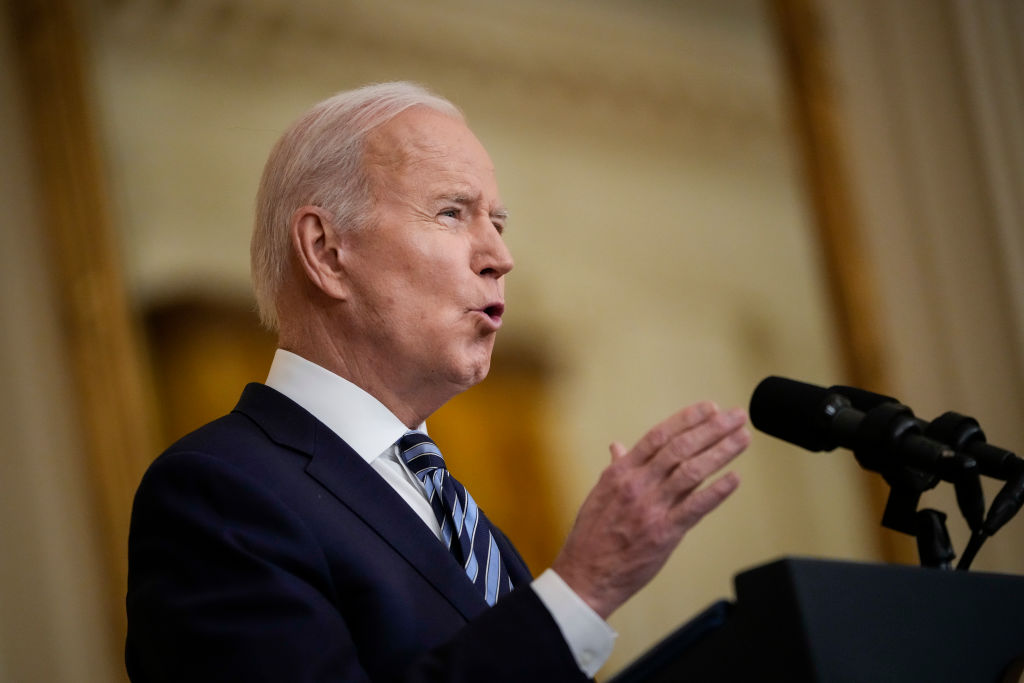
    “Here’s the deal, the cost of education beyond high school has gone up exponentially,” Biden said at the White House.

    Biden stressed that the people who would benefit the most are low-income and middle class families and individuals.

    “No high income household, will benefit from this action, period,” Biden said.

    Biden said that many Americans with student loan debt have put off starting families because of the cost and have been unable to qualify for mortgages to buy a home because of the student loan debt they carry.

    “All this means is an entire generation is now saddled with unsustainable debt,” Biden said.

    Despite numerous reports in recent weeks that Biden would take action on student loans, the White House had remained silent, but on Wednesday the president tweeted out his decision, prior to his remarks.

    “In keeping with my campaign promise, my Administration is announcing a plan to give working and middle class families breathing room as they prepare to resume federal student loan payments in January 2023,” Biden wrote on Twitter.

    Following the announcement, the Department of Education said it will release an application in the weeks ahead that will allow millions of borrowers to claim this new relief.

    “[S]tudent loan debt has hindered their ability to achieve their dreams — including buying a home, starting a business, or providing for their family,” U.S. Secretary of Education Miguel Cardona said in a statement. “Getting an education should set us free; not strap us down!”

    The cancellation of student debt will only apply to current borrowers, not future ones, and income levels for the 2020 and 2021 tax years will be considered, a senior administration official said during a Wednesday call with reporters.

    The Department of Education estimates that about 8 million borrowers will automatically receive relief because the agency already has those borrowers’ income information on file. That means those borrowers do not have to submit applications.

    Borrowers who received Pell Grants, who will benefit from the most relief, are among the students who had the lowest household incomes while in college. They will also be subject to the $125,000 and $250,000 income caps.

    New rule on loans

    The Biden administration is also directing the Department of Education to propose a rule to help current and future borrowers with their loan repayments.

    The rule would eliminate monthly interest  payments on loans, “so that unlike other existing income-driven repayment plans, no borrower’s loan balance will grow as long as they make their monthly payments — even when that monthly payment is $0 because their income is low,” according to the department website.

    The proposed rule would also forgive loan balances “after 10 years of payments, instead of 20 years, for borrowers with loan balances of $12,000 or less.” It would also require “borrowers to pay no more than 5% of their discretionary income monthly on undergraduate loans.”

    “Middle class borrowers struggle with high monthly payments and ballooning balances that make it harder for them to build wealth,” a senior administration official said.

    While many Democrats and progressive advocates were pleased with the announcement, it falls short of the student debt relief campaign platform that Biden ran on.

    In a Medium post during the 2020 presidential election, Biden said under his administration he would “forgive all undergraduate tuition-related federal student debt from two- and four-year public colleges and universities for debt-holders earning up to $125,000, with appropriate phase-outs to avoid a cliff.”

    He also promised he would “immediately cancel a minimum of $10,000 of student debt per person,” but this recent student debt announcement comes two years into his administration and only after continual pressure from congressional Democrats and advocates.

    Some congressional Democrats have urged the White House to cancel up to $50,000 worth of student loans, arguing that because about 92%  of that debt is held by the Department of Education, the administration has the authority to cancel those loans through executive action.

    More than 43 million Americans have student loan debt, and the Federal Reserve estimates that the total U.S. student loan debt is more than $1.75 trillion.

    A Penn Wharton budget model released Tuesday found that a one-time loan forgiveness of $10,000 would mostly benefit borrowers in the four lowest quintiles of incomes.

    Earlier this month, more than 100 Senate and House Democrats urged the Biden administration to extend the pause on repayment of student loans beyond the Aug. 31 deadline. The lawmakers argued that due to inflation and the ongoing coronavirus pandemic, student loan borrowers should get an extension on pausing their loan payments. They did not give another deadline for repayments to begin in their letter to the president.

    Democrats praise Biden

    Democrats did welcome the President’s announcement.

    “By delivering historic targeted student debt relief to millions of borrowers, more working families will be able to meet their kitchen table needs as they continue to recover from the challenges of the pandemic,” House Speaker Nancy Pelosi said in a statement. “Importantly, this action will help those most in need, easing a financial burden disproportionately harming women and people of color.”

    She has previously said that the president does not have the authority to cancel student loans and that the process needs to be done through Congress. She did not mention her previous comments in the statement.

    Biden also had said earlier, while in the White House, that he would only cancel up to $10,000 in student loan debt, and only if Congress passes legislation to do so. Administration officials did not address the shift in policy.

    While the Democrat-controlled House likely could pass legislation canceling some portion of student loan debt, the evenly divided Senate would need all 50 Democrats on board along with an additional 10 Republicans to get a bill to the president’s desk.

    House Education and Labor Committee Chairman Bobby Scott, a Virginia Democrat, said that while the student loan cancellation will provide relief for borrowers, it doesn’t solve the “underlying problems that caused the student debt crisis in the first place,” such as high tuition costs.

    “Without reversing the chronic underinvestment in higher education that has driven up tuition costs, and without fixing our student loan system that has made student loans more expensive to take out and harder to pay off, students will continue to take on more debt and borrowers will continue to face rising debt levels,” Scott said.

    Republicans critical

    GOP lawmakers sharply criticized the cancellation move.

    “At a time of skyrocketing inflation, declining wages, and a national recession, Washington has again turned its back on hardworking Americans in Iowa and across this country,” Iowa Gov. Kim Reynolds, a Republican, said in a statement. “President Biden isn’t canceling student debt, he’s shifting the costs to the taxpayer and to those who worked to pay off their loans in full.”

    Senate Minority Leader Mitch McConnell, a Kentucky Republican, said in a statement the move was a “slap in the face to every family who sacrificed to save for college, every graduate who paid their debt, and every American who chose a certain career path or volunteered to serve in our Armed Forces in order to avoid taking on debt.”

    Overall in Kentucky, there are about 600,000 student loan borrowers who have an average balance for federal and private student loans of $30,794.  

    In March 2020, President Donald Trump issued an emergency pause on student loan repayments, which has now been extended several times by both administrations. The pandemic is still ongoing, and the U.S. has surpassed 1 million COVID-19 deaths.