A year ago Wednesday, the coronavirus pandemic officially started in Ohio when the decision was made to cancel The Arnold sports festival.
On Thursday, Gov. Mike DeWine gave a primetime address to tell Ohioans that a return to normal is in sight — so long as they don’t become complacent.
“No marathoner pulls out on purpose at the 25th mile marker,” DeWine said.
The governor made some news during the speech. He announced that he would lift all remaining health orders once the number of coronavirus cases drops to 50 per 100,000 Ohioans.
That might seem distant, with Wednesday’s rate standing at 179 per 100,000. But DeWine noted that the rate has been falling rapidly, from 445 on Feb. 23 and 731 on Dec. 3.
“Ohio is on the right path to get us to 50,” DeWine said.
However, such drops can’t be counted on to continue. Federal health officials reported this week that daily numbers appear to be hitting a plateau at levels that might seem low after the past several months, but were perceived as quite high last summer.
Also concerning is that at least six worrisome variants of the virus are struggling to gain a foothold. Some are more transmissible, others more lethal and still others less susceptible to the three vaccines that have been approved in the United States.
DeWine’s unusual primetime speech was to mark the one-year anniversary of Ohio’s fight against the disease.
“None of us then fully understood the battle ahead,” he said. “This has been a tough year. Many of you have lost a parent. grandparent, sibling, spouse. Some of you have even lost a child. Some of you have lost your job. Some of you have lost your business.”
It also was to announce the metrics by which he’ll decide to lift remaining health orders.
But it also seemed a repudiation of two other Republican governors’ announcements in recent days that they were lifting all of their orders — including ones requiring mask wearing in indoor public spaces. Texas Gov. Greg Abbott and Mississippi Gov. Tate Reeves both made such announcements on Tuesday, prompting widespread condemnation from public health experts and from President Joe Biden.
Anthony Fauci, the leading communicable disease expert in the country, said the daily number of new cases needs to be one-sixth of what it is now before ending mask mandates should be considered.
DeWine didn’t mention other states, but he made it clear that Ohio’s mask mandate would remain in place for the time being. As he touted the rapidly growing number of vaccines coming into Ohio, he said, “We have one battle-tested tool that has worked so well and that is the mask.”
The governor also appealed to Ohioans’ community spirit — a spirit that critics have said is lacking in Abbott and Reeves’ approach to the pandemic.
“It’s been a difficult year,” DeWine said. “But we did what Ohioans always do. We rallied together. We sacrificed. We showed the world our Ohio grit. Our communities have come together.”
Loveland, Ohio – It’s that time of year again to honor the Loveland High School student-athlete Seniors as we send them on their way to play collegiate sports at the conclusion of this school year!
Although the 2020-2021 season for athletics was a bit more difficult due to the COVID-19 Pandemic, these particular LHS Seniors focused in and made sure to still dedicate all their time and energy into doing what it takes to get the opportunity to play their sport at the collegiate level. Despite all of the 2020 obstacles, the following Tigers are moving forward to play college athletics:
Vallee committed to playing Golf at the University of Findlay and is currently maintaining a 3.6 GPA.
Vallee is a 4-year Varsity athlete. Valee acquired 1st Team All-Conference in 2018, 2019, and 2020. In 2020, Valee was awarded the ECC Player of the Year.
Vallee enjoys playing Recreational Basketball as well.
Zicka committed to playing Baseball at Xavier University. He is currently maintaining a 3.95 GPA.
Zicka earned Perfect Game Underclass All-American and was selected to be on the All-Tournament Team.
Zicka participates in Golf and is also a member of the National Honor Society, and the Student Athletic Leadership Team.
We would like to take the time to congratulate these OUTSTANDING Tiger student-athletes for getting the opportunity to fine-tune their crafts at the collegiate level! It has been a joy watching each and every one of you thrive as students and excel as athletes. We will be cheering all of you on as you take the next step in your athletic and education journey! LONG LIVE THE LOVELAND TIGERS! GOOD LUCK SENIORS!
For more of the Sports 411 with me, Cassie Mattia stay tuned!
Loveland, Ohio – The U.S. Food and Drug Administration issued an emergency use authorization (EUA) for the third vaccine for the prevention of coronavirus disease 2019 (COVID-19), according to the Hamilton County Department of Health. The EUA allows the Janssen (Johnson & Johnson) COVID-19 Vaccine to be distributed in the U.S for use in individuals 18 years of age and older. The vaccine is administered as a single dose, which will allow vaccination for more people while also providing opportunities for vaccination for groups requiring special consideration, such as the homebound.
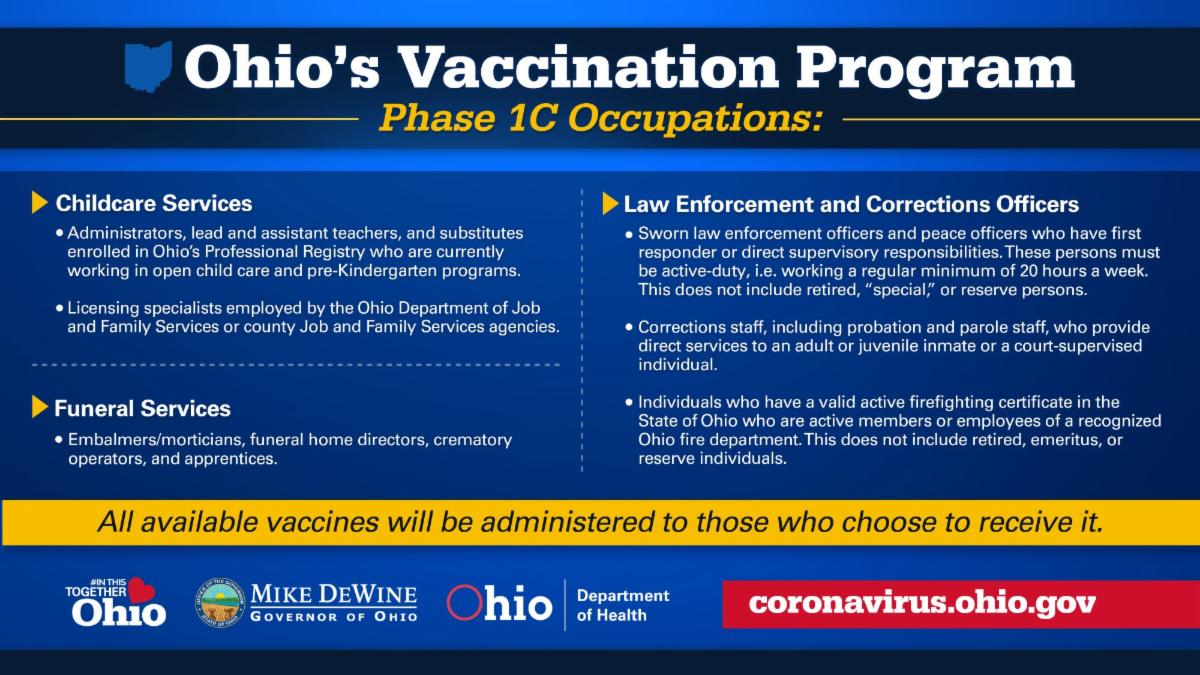
Expanded Vaccine Eligibility In response to this significant increase in the amount of vaccine coming into Ohio, Governor DeWine outlined the individuals who are included in Phase 1C and Phase 2 of Ohio’s vaccination plan which will go into effect on March 4.
Phase 1C: Ohioans with certain occupations and with certain medical conditions not addressed in previous phases.
Medical Groups Eligible in 1C Type 1 diabetes, Pregnant women, Bone marrow transplant recipients, and ALS (Lou Gehrig’s Disease)
Occupations Eligible in 1C (see full description in the graphic below) Childcare Services, Funeral Services, Law Enforcement, and Corrections Officers
Phase 2: Because the risk of more severe reactions and outcomes of COVID-19 increase with age, Phase 2 will open vaccinations based on age, beginning with Ohioans ages 60 and older.
IF YOU ARE NEWLY ELIGIBLE PER THE EXPANDED GUIDELINES ABOVE: The Health Department is asking that you register on their website. They have added these occupations and conditions to the registration that were not previously included.
If you already registered and do not have a newly eligible occupation or condition per the above you DO NOT need to re-register.*
Reduced Restrictions Last week, Governor Mike DeWine announced that sporting and entertainment events will be able to reopen with 25 percent maximum indoor capacity and 30 percent maximum outdoor capacity, provided they follow established precautions such as mandatory mask wearing for employees and customers, spectator pathways that allow for social distancing, and seating in groups in six-foot intervals of no more than six people from the same household.
General admission (lawns, standing room, infields) will be permitted if masks are worn and if six-foot distancing can be marked and maintained. New guidance for proms, banquets, wedding receptions, fairs, festivals, and parades is forthcoming.
*If you are needing a vaccine appointment please do not unsubscribe. Unsubscribing will disable our ability to contact you for appointments.
More than 500,000 Americans have died from COVID-19, but that’s not scaring Catherine Stein.
As the pandemic’s death toll rises and the scientific consensus has crystalized regarding how COVID-19 spreads and how to prevent it, Stein, who teaches infectious disease epidemiology at Case Western Reserve University, remains defiant.
COVID-19, she wrote in January 2021, is “not the scary killer the media and government portray it to be.”
The Centers for Disease Control and Prevention, the World Health Organization, the American Medical Association, state health departments, and the rest have it all wrong, according to Stein.
On blogs, research posts published by anti-vaccine political groups, and in testimony to state lawmakers, Stein insists that COVID-19 simply isn’t that bad.
She claims that the Ohio Department of Health pads its case counts; the Ohio Hospital Association inflates hospitalization numbers it provides to ODH; health officials fear monger via flawed projection models; the death count only looks bad because of the rate of people dying of COVID-19 who have preexisting medical conditions; and other assertions downplaying COVID-19.
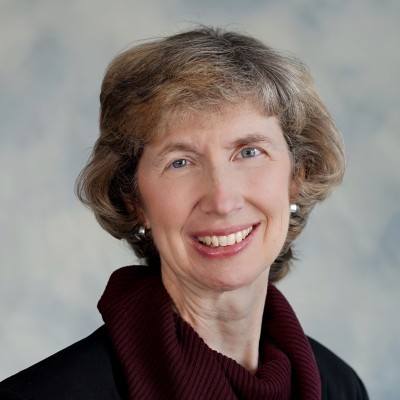
Catherine Stein. Source: Case Western Reserve University
ODH’s COVID-19 dashboard — which provides daily updates on cases, hospitalizations, infections, vaccinations, testing and more — has been “inaccurate, inconsistent, and confusing,” Stein alleged to lawmakers in June.
Stein’s take on COVID-19, among the leading killer of Ohioans since its emergence, is unmistakably at odds with the greater public health community, nearly all of whom oppose various legislative attacks on the health department that Stein lends her expertise to support.
Case Western Reserve University, where Stein has worked since 2004, emphasized she does not speak on behalf of the university. A spokesman declined to provide any professor from the school of medicine or public health to back Stein’s remarks up.
She is currently conducting research funded by the National Institute of Allergy and Infectious Diseases, the National Institute of Health, and the Gates Foundation, according to the university.
She teaches introduction to epidemiology, infectious disease epidemiology, and other courses.
Her role as a COVID-19 skeptic raises key questions: Where does academic freedom end and counter-factualism begin? Who is an expert and who isn’t?
What do you do with health misinformation during a pandemic in a society that cherishes and protects the freedom of speech?
When lawmakers advanced legislation last year to give themselves the ability to strike down health orders, the Ohio State Medical Association, the Ohio Hospital Association, the state chapter of the American Academy of Pediatrics, an association representing Ohio’s health commissioners, and more all testified in opposition to the idea.
They argued it would politicize public health and allow lawmakers — many of whom refuse to wear masks and regularly downplay the severity of the pandemic — to strike down key public health tools like mask mandates or bar and restaurant capacity limits.
Conversely, Stein emailed several lawmakers to submit testimony in support of the bill. She argued that masks don’t work; the “emphasis on case counts is inappropriate;” and that “this continued focus on fear and likely inflated numbers is doing nothing but hurting families;” and cites research from Health Freedom Ohio, an anti-vaccine group that has refocused its advocacy on COVID-19 issues.
“I refuse to live in fear of a virus with a >99% survival rate,” she wrote in an email to lawmakers, obtained via public records request.
“This fear narrative must stop.”
Email from Catherine Stein to lawmakers, obtained via public records request.
The emails are from a personal account, though they list her as an associate professor at Case Western.
Stein broke from the medical experts and testified in support of different versions of legislation written to allow lawmakers to vote down public health orders. She spoke in support of the bills alongside affiliates of HFO and the Ohio Advocates for Medical Freedom, another anti-vaccine group that has similarly refocused on COVID-19.
In a January 2021 blog post published by All In Ohio, an online hotbed of anti-mask and anti-public health activism and organizing, Stein invoked a piece of misinformation that public health officials have combatted since the coronavirus was first detected — that it’s just the flu.
“People get sick, but these statistics very much resemble influenza,” Stein said. “There have been years with even higher influenza hospitalization rates, even exceeding hospital capacity, but those didn’t get media attention or invoke shutdowns of businesses and church closures.”
The comparison between COVID-19 and the flu is baseless. The CDC estimates that between 12,000 and 61,000 Americans die of the flu in a given year. The U.S. is nearing 500,000 COVID-19 deaths since the pandemic began.
Similarly, no statewide public health order closed churches in Ohio, though many churches chose to do so internally.
About 954,000 Ohioans have been diagnosed with COVID-19. Nearly 50,000 have been hospitalized with the disease. Nearly 17,000 have died.
COVID-19 data comes from public and private labs, hospitals, health departments, urgent care centers and governments across the globe. More than 110 million people worldwide have contracted COVID-19, 2.44 million of whom have died, according to data from Johns Hopkins University.
Historically, epidemiological data on pandemics are usually underestimated, not overestimated. Thus, the CDC tracks “excess deaths” — the rate of mortality above an estimated normal rate of death in a population — to gauge pandemics’ death tolls. Undiagnosed cases, provider issues, data submission issues and more can all warp official counts of cases and deaths.
Stein’s outlook on COVID-19 is on the fringe of the public health community, according to Angy El-Khatib, president of the Ohio Society for Public Health Education.
“You can debate methods of dealing with the issue at hand, but to deny there is an issue at hand is just negligence to me,” she said.
Beyond fighting a wily new virus and its emerging mutations, El-Khatib said, health care workers now also must combat a deluge of COVID-19 misinformation as it proliferates online. She said it’s sad to hear a public health professional is worsening things.
“There’s no denying that the misinformation is out there, and it’s affecting and delaying our response to the pandemic,” she said.
Dr. Cathy Slemp, a former state health officer and bureau of infectious disease director in West Virginia, reviewed Stein’s testimony and writings. She said they seem to reflect her political opinions.
Dr. Cathy Slemp (LinkedIn photo)
“I’d be concerned about both many of the data interpretations made and the website materials cited,” she said. “Few have been nor would they stand up to scientific peer review.”
The university distanced itself from Stein’s comments.
“The views Associate Professor Stein expressed regarding Senate Bill 311 neither reflect nor align with those of Case Western Reserve,” said William Lubinger, a Case spokesman, in a written statement.
William Lubinger, a Western Reserve University spokesman (University photo)
He said all university faculty are free to express their personal perspective as individuals.
However, the university requires students on campus to wear masks, while Stein peddles bunk claims that masks could “adversely affect the health of the mask wearer.”
Stein did not respond to multiple interview requests.
When she reached out in May 2020 to Sen. Kristina Roegner, who sponsored Senate Bill 311, Stein was a familiar name. She testified in support of the “heartbeat bill” Roegner sponsored in 2019, which bans abortions six weeks after gestation.
“I’m not sure you realized this, but my actual career is as an infectious disease epidemiologist,” she wrote.
“I believe the response to COVID-19 has been absolutely wrong at the state level and I will happily testify in favor of your bill.”
For people who’ve been without health insurance during the pandemic, relief is in sight.
In January, President Joe Biden signed an executive order to open up the federal health insurance marketplace for three months as of Monday so uninsured people can buy a plan and those who want to change their marketplace coverage can do so.
Consumer advocates applauded the directive. Since 2016, the number of Americans without health insurance has been on the rise, reaching 30 million in 2019. The economic upheaval caused by the novel coronavirus has made a bad situation worse, throwing millions off their insurance plans.
The move is in stark contrast to the Trump administration’s approach. As covid-19 took hold last spring and the economy imploded, health experts pleaded with the Trump administration to open up the federal marketplace so people could buy insurance to protect themselves during the worst public health emergency in a century. The administration declined, noting that people who suddenly found themselves without coverage because they lost their jobs were able to sign up on the marketplace under ordinary rules. They also cited concerns that sick people who had resisted buying insurance before would buy coverage and drive up premiums.
The Biden administration is promising to spend $50 million on outreach and education to get the word out about the new special enrollment period. That’s critical, experts said. Although the number of people signing up for Affordable Care Act plans has generally remained robust, the number of new consumers enrolling in the federal marketplace has dropped every year since 2016, according to KFF, corresponding to funding cuts in marketing and outreach. (KHN is an editorially independent program of KFF.)
“There are a lot of uninsured people who even before covid were eligible for either hefty marketplace subsidies or for Medicaid and not aware of it,” said Sabrina Corlette, a research professor at Georgetown University’s Center on Health Insurance Reforms. A marketing blitz can reach a broad swath of people and hopefully draw them in, regardless of whether they’re uninsured because of covid or not, she said.
Here are answers to questions about the new enrollment option.
Q: When can consumers sign up, and in which states?
States and the District of Columbia that operate their own marketplaces are establishing special enrollment periods similar to the new federal one, though they may have somewhat different time frames or eligibility rules. In Massachusetts, for example, the sign-up window remains open until May 23, while in Connecticut, it closes March 15. Meanwhile, Colorado has reopened enrollment in its marketplace for residents who lack insurance, but anyone already enrolled in one of the state’s marketplace plans won’t be allowed to switch to a different plan based on this special enrollment period.
Q: Can people who lost their jobs and health insurance many months ago sign up during the new enrollment period?
Yes. The enrollment window is open to anyone who is uninsured and would normally be eligible to buy coverage on the exchange (people who are serving prison or jail terms and those who are in the country without legal permission aren’t allowed to enroll).
People with incomes up to 400% of the federal poverty level (about $51,500 for one person or $106,000 for a family of four) are eligible for premium tax credits that may substantially reduce their costs.
Typically, people can buy a marketplace plan only during the annual open enrollment period in the fall or if a major life event gives them another opportunity to sign up, called a special enrollment period. Losing job-based health coverage is one event that creates a special sign-up opportunity; so is getting married or having a baby. But usually people must sign up with the marketplace within 60 days of the event.
With the new special enrollment period, how long someone has been uninsured isn’t relevant, nor do people have to provide documentation that they’ve lost job-based coverage.
“The message is quite simple: Come and apply,” said Sarah Lueck, a senior policy analyst at the Center on Budget and Policy Priorities.
Q: What about people who are already enrolled in a marketplace plan? Can they switch their coverage during this new enrollment period?
Yes, as long as their coverage is through the federal marketplace. If, for example, someone is enrolled in a gold plan now but wants to switch to a cheaper bronze plan with a higher deductible, that’s allowed. As mentioned above, however, some state-operated marketplaces may not make that option available.
Q: Many people have lost significant income during the pandemic. How do they decide whether a marketplace plan with premium subsidies is a better buy for them than Medicaid?
They don’t have to decide. During the application process, the marketplace asks people for income information. If their annual income is below the Medicaid threshold (for many adults in most states, 138% of the federal poverty level, or about $18,000 for an individual), they will be directed to that program for coverage. If people are eligible for Medicaid, they can’t get subsidized coverage on the exchange.
People can sign up for Medicaid anytime; there’s no need to wait for an annual or special enrollment period.
Those already enrolled in a marketplace plan whose income changes should go back into the marketplace and update their income information as soon as possible. They may be eligible for larger premium subsidies for their marketplace plan or, if their income has dropped significantly, for Medicaid. (Likewise, if their income has increased and they don’t adjust their marketplace income estimates, they could be on the hook for overpayments of their subsidies when they file their taxes.)
Q: What about people who signed up under the federal COBRA law to continue their employer coverage after losing their job? Can they drop it and sign up for a marketplace plan?
Yes people in federal marketplace states can take that step, health experts say. Under COBRA, people can be required to pay the full amount of the premium plus a 2% administrative fee. Marketplace coverage is almost certainly cheaper.
Normally, if people have COBRA coverage and they drop it midyear, they can’t sign up for a marketplace plan until the annual fall open enrollment period. But this special enrollment period will give people that option.
Loveland, Ohio – Could Downtown Loveland get any better? One local restaurant has proven that it definitely can and all it took was a little bit of authentic Italian cuisine!
On Friday, February 5th Rodi Italian, located at 115 Karl Brown Way in the Downtown Historic District of Loveland, hosted a “Favorite People” dinner, in which yours truly was invited, where owner and head Chef Rob Peloni, owner Jo Beyersdorfer, and a very upbeat staff served up some outstanding Italian dishes!
A view of Rodi Italian’s beautiful bar area
Peloni and Beyersdorfer thought holding a “soft opening” would give the staff the practice they needed to prepare for the official opening which just recently occurred on Saturday, February 13th.
Peloni decided to call the soft opening a “Favorite People” dinner because he knew these individuals would be understanding if there happened to be a mistake or coaching on the spot!
Rodi Italian held four “Favorite People” dinners, two on February 5th at 5 PM and 7:30 PM and two on February 6th at 5 PM and 7:30 PM. Those invited were able to enjoy a beautifully cooked meal and drink free of charge with up to six guests.
Rodi was sure to abide by COVID-19 regulations during the soft-opening by enforcing masks and built-in plexiglass structures that were strategically placed between each table as well as each separate group of individuals at the bar.
Rodi Italian’s dining area
I attended Rodi Italian’s “Favorite People” dinner on Friday, February 5th at 7:30 PM and decided to bring along my boyfriend, Adam, his Father, Dave, and Step-Mother, Debbie, for what I knew was going to be a fun-filled evening!
When I entered Rodi Italian’s beautifully remodeled restaurant I witnessed the hustle and bustle you would typically see at a restaurant that has the desire to succeed. Owner Jo was there to greet each and every single guest that walked into Rodi with a “smize” (smile with your eyes) as she enthusiastically walked each of us to our table. When we sat down we were thoroughly impressed with the COVID-19 regulations as Rodi had individual plexiglasses hanging from the ceiling dividing each seating area. Not only did this addition make me and my guests feel safe it also made for one special private dining experience!
The Rodi Italian decor was exactly what I imagined it to be; both modern and vintage, with industrial high ceilings, and a specially made liquor/bar glass shelving system that gave off a beautiful purple glow. Those were just a few of the unique Rodi decor finishes that caught my eye! In the heart of Rodi’s state-of-the-art open concept kitchen is a gorgeous ceramic wood fire pizza oven, with “RODI” embedded in the ceramic tiles on the front. Peloni wanted the open kitchen concept with the one-of-a-kind pizza oven at the heart of it all because he thought guests would enjoy watching their delicious homemade Italian dishes and pizzas being prepared by him and his crew!
Of course, the restaurant decor and atmosphere is not the only thing Rodi Italian has to offer; both the service and food are also out of this world!
Rodi Italian’s Wood Fire Pizza Oven
When my guests and I attended the “Favorite People,” we were greeted with the utmost kindness and enthusiasm by our waiter. Not only did he thoroughly explain the menu, which is predominately authentic Italian dishes, he was also able to help us select glasses of wine (Rodi has a great selection of Italian wines) that we ended up loving! I was very impressed that in light of it being a “soft-opening” the staff was more than prepared for both menu and wine questions.
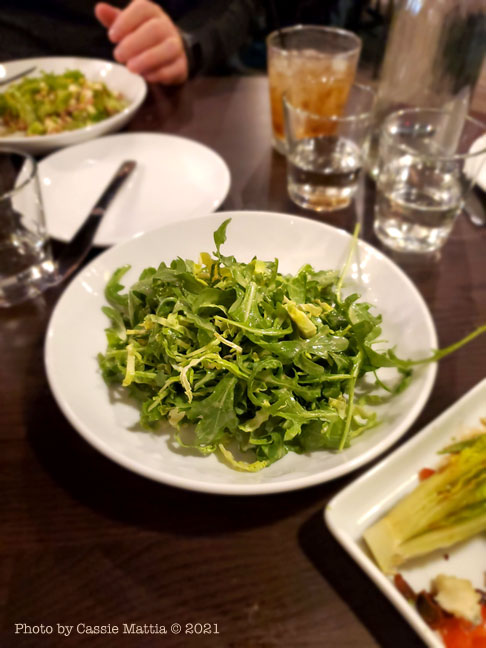
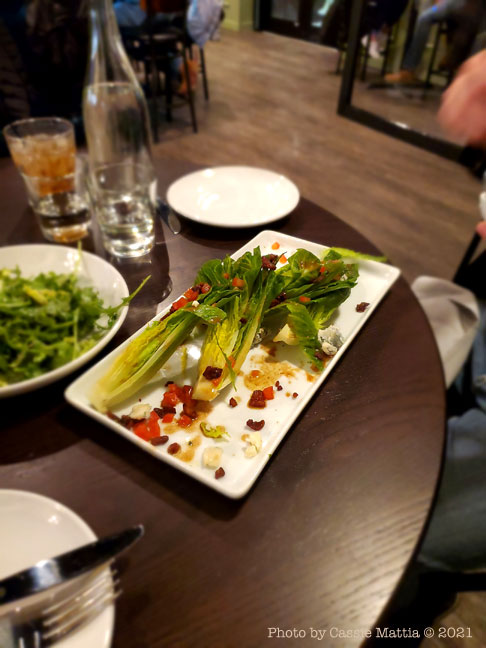
After looking at what was a “soft opening” menu (not the full Rodi menu) my guests and I decided to start our Italian dinner off with the “Brussels,” which included arugula, shaved brussel sprouts, crispy pancetta, shaved ricotta salata, pine nuts, lemon juice, and olive oil, and the “Occhi Blu,” which was prepared using romaine hearts, pancetta, creamy gorgonzola, and balsamic dressing. I am vegan so the kitchen was able to modify the Brussels for me, which I greatly appreciated!
The kitchen quickly prepared our appetizers and wow was the presentation impressive! Check out the photos I took of the Brussels and the Occhi Blu below!
The “Brussels”
After enjoying some wine and appetizers we selected the most important part of our Italian experience; the main course! I went with the “Cacio Pepe,” which included fusilli pasta, pecorino, cracked pepper, and olive oil, as did my boyfriend’s step-mom. My boyfriend ordered the “Emilia-Romagna” pizza, which was made with cream, mozzarella, roasted corn, prosciutto cotto, and sea salt, and his dad selected the “Lasagne,” a traditional lasagne bolognese layered with fontina and prosciutto cotto.
The “Occhi Blu”
My guests and I were more than impressed with the Rodi Italian cuisine! My boyfriend’s step-mom at one point said, “This is the best pasta I have ever had,” and I couldn’t have agreed more. The texture of the pasta, the use of olive oil, and the addition of the cracked pepper just left me begging for more! Like I mentioned previously I am vegan so I did have to get some much-needed commentary on what precisely the Lasagne and pizza tasted like! According to my boyfriend, the pizza expert, the Emilia-Romagna pizza was not only, “perfectly cooked” but also “unique” in that the roasted corn perfectly complimented the prosciutto cotto and mozzarella. Check out the photo I captured below of Rodi Italian’s Emilia-Romagna pizza!
Rodi Italian’s “Emilia-Romagna” Pizza
Although my guests and I had a small amount of leftovers because the dishes were so incredible, I will say the portion sizes for just one dish were more than enough to feed multiple people! My advice is that if you are planning on making a trip to Rodi Italian, which I highly recommend, come with an empty stomach and your English to Italian translation dictionary so you fully understand what meal your selecting. If you forget your dictionary no big deal as the staff is fully equipped to steer you in the right direction!
Rodi Italian officially opened their doors to the general public, Saturday, February 13th. Rodi is closed on Monday’s, open from 4:30 PM to 10 PM Tuesday through Saturday, and open from 4:30 PM to 9:30 PM on Sunday’s.
Carry-out will begin on Wednesday, February 17th. For the time being Rodi Italian will only be open for dinner service, but when the weather begins to warm up Rodi plans on opening its doors for both lunch and weekend brunch. To make reservations you can visit Rodiitalian.com or call 513-774-RODI.
Congratulations to Rob and Jo, owners of Rodi Italian, as well as the staff for hosting such a brilliant soft opening! Here at Loveland Magazine, we know that this authentic Italian restaurant will not only succeed but will quickly become one of the go-to restaurants in Downtown, Loveland! We are excited to see what the future holds for this new Loveland gem!
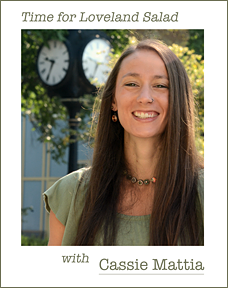
For more of the Loveland Salad With Me, Cassie Mattia stay tuned!
Loveland, Ohio – Due to a sustained decrease in COVID-19 hospitalizations, the Ohio Department of Health has announced the statewide 11 PM – 5 AM curfew is no longer in effect. If hospitalizations begin to rise again, the curfew may be reinstated.
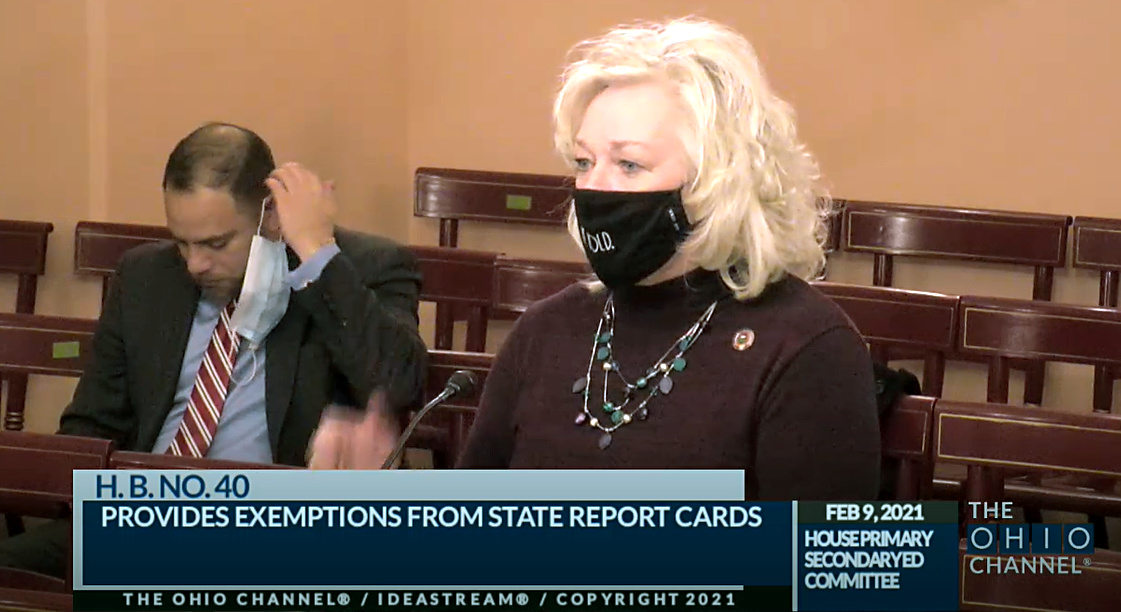
Ohio state Rep. Lisa Sobecki testifies before the House Primary & Secondary Education Committee on Tuesday, on a bill seeking waivers on state and federal testing.
As state officials look for solutions to an education gap caused by the COVID-19 pandemic, two pieces of legislation introduced Tuesday hope to give more leniency on state and federal testing.
Rep. Lisa Sobecki, D-Toledo, is a co-sponsor with Rep. Jeffrey Crossman, D-Parma on House Bill 40, to make exemptions for students in taking state report cards.
The bill would waive state testing for the 2021-2022 school year and direct the Ohio Department of Education to seek a waiver for federal testing, as well as holding school districts harmless on state report cards to determine funding levels and eligibility for EdChoice private school vouchers and academic distress commissions.
“We do need to see where our kids have been left behind, but I don’t need a test that’s going to tell us something after the kids have left,” Sobecki told the House Primary & Secondary Education Committee.
She said the waiver of testing “appears to have broad, bipartisan support” within the legislature.
Bipartisan support for state testing waivers came in the same Tuesday meeting, in the form of a separate bill brought by Republican state reps. Kyle Koehler and Adam Bird, to ask for many of the same things, including state and federal testing exemptions.
“I am not asking to waive test requirements because we don’t need to know how testing will go,” Koehler told the committee. “I think we know it’s not going to go well. Students are going to be behind.”
In further support of testing pressure relief, State Board of Education member Dr. Christina Collins released a proposed resolution directing the ODE limiting the use of state testing, and to “include a district designation of online, hybrid, or in-person on school building and district level report cards.”
In the resolution, Collins writes that COVID-19 “has affected every student in Ohio, disrupting the structure of teaching and learning and emphasizing children’s dependency upon adults for nurture, protection and providing for health and well-being.”
Along with the district designation, the board member asks that a disclaimer on state reports say that data “are for the purpose of understanding how learning was impacted as a result of extreme circumstances.”
Earlier in the day, ODE Superintendent Paolo DeMaria said the test scores coming out of a pandemic’s worth of learning styles emphasize the need for students to get back to in-person instruction.
DeMaria acknowledged a lower participation rate in the state testing, saying the ODE promoted a “safety first” mentality in taking the tests. But from the testing that did occur, the state saw an 8% increase in kindergarten-readiness scores considered “not on track.”
Third-grade English Language Arts proficiency scores were also lower, which was also shown in a study released by the Ohio State University’s John Glenn College of Public Affairs.
This third-grade test is set to occur this year starting from March 22 to April 23, part of why Sobecki said their legislation needs to be quickly moved through the statehouse and set up to be signed by the governor.
“It’s February, folks,” Sobecki said.
DeMaria, and the study itself, noted that the declining scores were even lower in minority and economically disadvantaged groups.
State reports also showed a decrease in enrollment of 3%, particularly in pre-school and kindergarten.
DeMaria spoke during Gov. Mike DeWine’s Tuesday press conference, in which he spent most of the time presenting the progress of vaccinating school teachers and personnel, something that the state started this month. While the state continues to vaccinate those 70 and older, they set aside some of the approximately 100,000 per week the state receives to give to school districts.
Also on Tuesday, DeWine added a new project for school districts across the state, asking them to come up with an individualized plan to help students catch up on last year’s losses.
“We need to be bold in our ideas, and we need to work with the Ohio General Assembly,” DeWine said, adding that a total of $2 billion in federal funding has been made available to schools to help with this problem.
DeWine left the decisions up to the individual districts, but offered examples such as longer school years, longer school days, summer classes, tutoring, or even remote options as ways to fill the education gap.
Districts have until April 1 to make their plans public and accessible to the General Assembly.
With no changes planned for the state education funding formula included in Gov. Mike DeWine’s proposed budget, education advocates and some state legislators are left wanting more.
“The devil is always in the details,” said Scott DiMauro, head of the Ohio Education Association, in a statement after the release of the budget. “Education spending must be a top priority in Ohio to ensure our students, educators and communities receive the resources they need to succeed.”
Scott DiMauro
DeWine’s budget proposal brings funding back to pre-pandemic levels and includes a jump in non-academic wraparound services, but saves the bulk of changes to education funding for the legislature to figure out.
The OEA said they were encouraged by an expansion to broadband access and mental health services as part of the support for schools.
“However, OEA is disheartened to see the same amount of general revenue fund money is going into the state’s foundation formula as in (fiscal year) 18,” the association wrote in their statement.
Another of Ohio’s biggest teachers unions, the Ohio Federation of Teachers, agreed that DeWine “chose to punt” on overhauling the school funding system without acknowledging the Cupp-Patterson plan, some of which went into the capital budget last year, but for the most part stays in limbo as the General Assembly begins anew.
Melissa Cropper
“Additionally, the governor’s budget maintains the disastrous local funding deductions for charter and private schools that have been draining public school budgets,” said OFT President Melissa Cropper in a statement.
The non-profit Ohio Children’s Alliance praised the “key investments for Ohio’s children and families” that the governor carried over from the previous biennial budget, and said they were pleased to see more money go toward student wellness and youth services.
“With the unprecedented challenges COVID-19 has caused to communities and providers, targeting investments in telehealth and the child and family services workforce are critical parts of a comprehensive solution,” said Mark Mecum, CEO of the OCA.
State Sen. Teresa Fedor
State Sen. Teresa Fedor, D-Toledo, called the governor’s proposal “shortsighted” when it comes to education and support for children.
“We should be fixing our unconstitutional funding formula — not continuing to siphon more public school dollars to private education,” Fedor said after the budget proposal was released.
With the school funding now in the legislature’s hands, House Minority Leader Emila Strong Sykes, D-Akron, said it would be a primary issue as the House Democrats begin their work, including “fully and fairly funding our public schools.”
“We look forward to digging into the details of the governor’s proposal to see how it makes sense long-term without one time money and that it delivers on the promise of opportunity for all Ohioans,” Sykes wrote.
Loveland, Ohio – Governor DeWine announced today that the state is purchasing 2 million at-home, rapid COVID-19 tests using telehealth services where the results are delivered in minutes without the need to send the test to a lab for processing. Developed by Abbott, BinaxNOW is an antigen test that detects the virus when people are most infectious.
To facilitate the delivery of the BinaxNOW test to the home and the guided collection and testing process, Abbott has partnered with digital health solutions provider eMed™, who will deliver people their results through Abbott’s complementary NAVICA™app in a matter of minutes. eMed™ will report the rapid test results in the electronic lab reporting system.
“Abbott has been a valued partner throughout this pandemic and this new partnership will help us continue aggressive testing at colleges and universities, and pursue access to rapid testing in every county in Ohio,” said DeWine. “These tests combined with the telehealth solutions provided by eMed™ will provide equitable access to testing for those who may not be able to access traditional testing because of their working hours, have mobility or transportation issues, or have caregiving responsibilities.”
“The partnership with the State of Ohio is proof of our ability to get millions of tests in the hands of people who need them,” said Dr. Patrice Harris, eMed CEO. “We are proud of this joint accomplishment which fortifies our belief that serial testing, when deployed in accordance with public health best practices, CDC and FDA guidance, plays a critical role in mitigating the spread of COVID-19 and getting our society and economy on the right track.”
This partnership will provide at least 2 million of the BinaxNow tests for Ohioans as, Abbot, eMed™, and the Ohio Department of Health pursue innovative efforts to end the COVID-19 pandemic.