Tag: COVID-19

  • DeWine reminds unvaccinated Ohioans to continue wearing masks

    DeWine reminds unvaccinated Ohioans to continue wearing masks

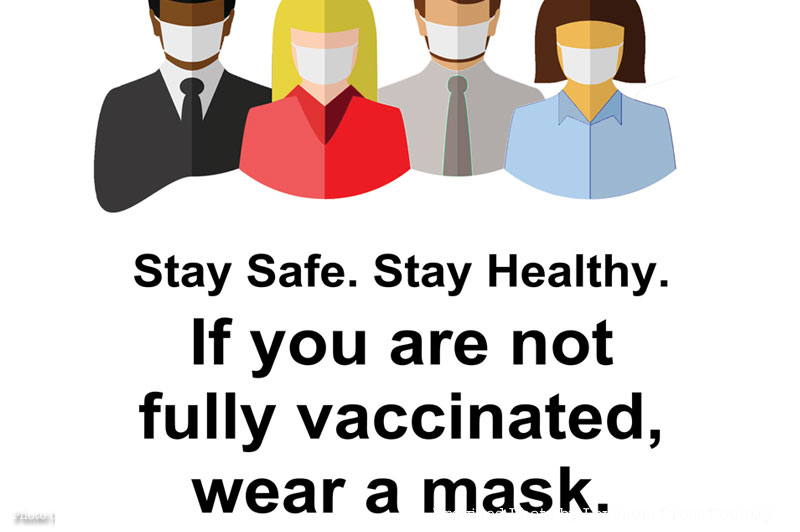
    Columbus and Loveland, Ohio – Ohio Governor Mike DeWine today reminded Ohioans of the importance of getting vaccinated against COVID-19 and for those that are not fully-vaccinated to wear masks indoors, as statewide mask mandates lift tomorrow.

    “Ohioans have done a great job during the pandemic. And, with more than 5 million Ohioans who have received at least the first dose of the COVID-19 vaccine, we are getting back to living the lives we want. However, it is important that we all still remember that there are a significant number of Ohioans who remain unvaccinated and are at-risk, including everyone under the age of 12. It’s important that those not fully vaccinated continue to wear masks indoors and follow other preventative measures to keep themselves as healthy as possible,” said Governor Mike DeWine.

    More than 5.3 million Ohioans have received their first vaccinations and 4.6 million have completed the vaccination series.

    An individual is considered fully vaccinated two weeks after their second dose of Pfizer or Moderna COVID-19 vaccines or two weeks after the single dose of the Johnson & Johnson vaccine.

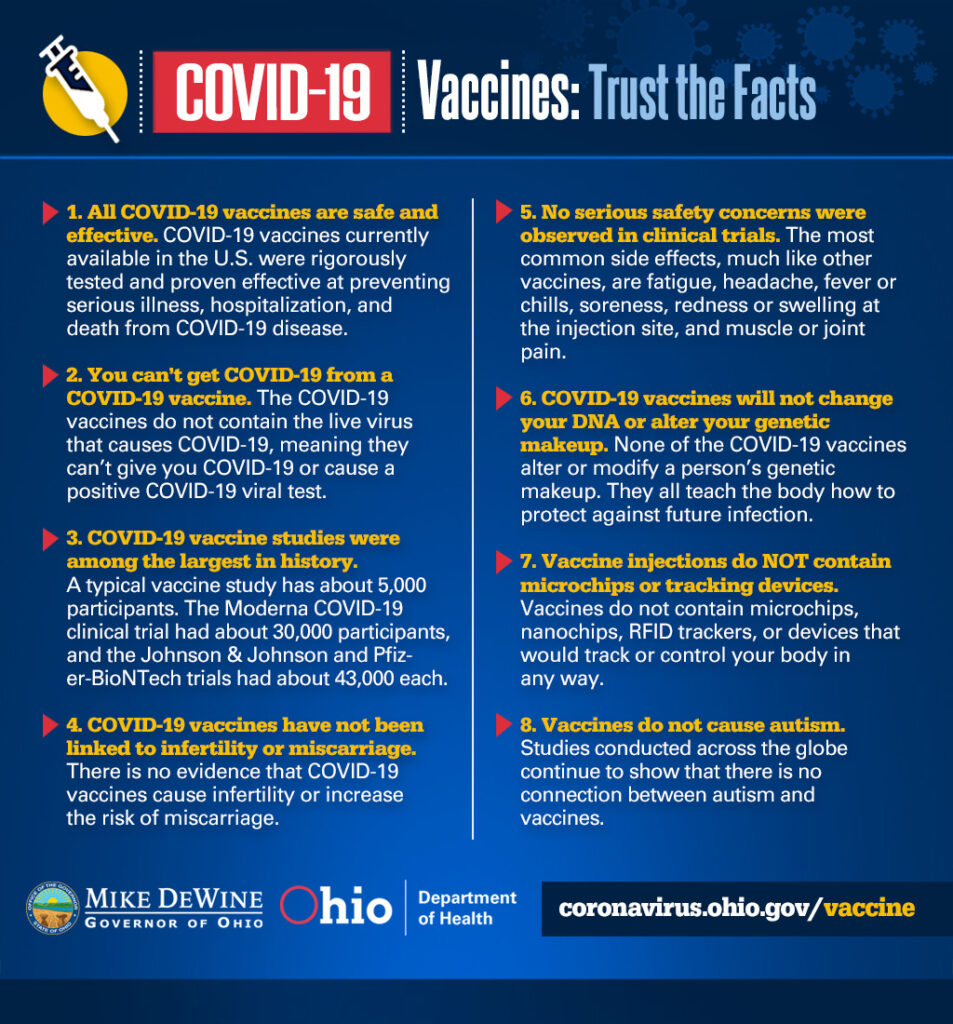
    For businesses and organizations looking to update signage in their facilities, appropriate signs are available at coronavirus.ohio.gov.

    Ohioans can find the vaccination site nearest them at gettheshot.coronavirus.ohio.gov.

    American Flag Over Blue Paper Texture Background
  • Governor’s vaccine lottery rankles state lawmakers

    Governor’s vaccine lottery rankles state lawmakers

    By Jake Zuckerman and Ohio Capital Journal

    Ohio lawmakers from both parties have rebuked Republican Gov. Mike DeWine’s plan to incentivize vaccination against COVID-19 via five $1 million lottery drawings from the pool of vaccinated Ohioans.

    Republicans, who have repeatedly clashed with DeWine on pandemic policy culminating in their override of his veto of an overhaul of public health laws, bristled at the concept of any state-funded incentive for vaccination.

    Democrats, who have offered more tepid support of the governor on COVID-19, criticized the idea as unscientific and a poor allocation of federal funds.

    DeWine announced the proposal Wednesday in conjunction with plans to remove nearly all remaining health orders June 2. He also announced a separate lottery for vaccinated 12- to 18-year-olds, entering them into a drawing for full-ride college scholarships.

    “Getting the COVID-19 vaccine is a personal choice,” said Rep. Haraz Ghanbari, R-Perrysburg, in a statement.

    “Let me be clear; I do not support Gov. Mike DeWine’s decision to offer taxpayer funded incentives in an effort to get more Ohioans vaccinated before he lifts his health orders.”

    The lottery news comes amid an epidemiological and political fever pitch.

    On the pandemic: Ohio’s infection rates have decreased, but so has its vaccine uptake. As of Thursday, about 43% of Ohioans have been vaccinated against COVID-19, but the pace of new vaccinations on a state and national level has nosedived.

    On politics: Come June 23, lawmakers will have new authority to squash public health orders, thanks to their override of DeWine’s veto on Senate Bill 22 in March. Lawmakers have made clear their intent to scrap the orders.

    Related: DeWine’s Removal of Ohio health orders comes amid legislative pressure

    State Rep. Jon Cross, R-Kenton, called the lottery a “gameshow gimmick;” Rep. Mike Loychik, R-Bazetta, mused, “Think of how many homeless veterans could have been helped with the more than $5 million being used as a vaccine lottery.

    Many Ohio Republicans have taken an adversarial position to vaccination writ large. Bills have been introduced in the House and Senate to prohibit employers or colleges from requiring vaccination. Several lawmakers have publicly declared their refusal to take the COVID-19 vaccine.

    Democrats, for their part, scoffed at the idea as well, but generally with different reasoning.

    “Using millions of dollars in relief funds in a drawing is a grave misuse of money that could be going to responding to this ongoing crisis,” said House Minority Leader Emilia Strong Sykes, the ranking Democrat.

    Rep. Allison Russo, an Upper Arlington Democrat and congressional candidate, questioned deploying an “unproven and untested” lottery program in lieu of trusted messengers and a boots-on-the-ground rollout strategy. Rep. Jessica Miranda, D-Forest Park, called the lottery a stunt.

    “Over the past year, Ohio has been overtaken and riddled with extremist, anti-science ideologies that dominate the state legislature. It is no coincidence that we are now facing significant vaccine hesitancy in our communities,” she said. “While I’m supportive of educational scholarships, this is not a solution to our public health or educational shortfalls in Ohio.”

    State Sen. Tina Maharath, D-Columbus, voiced her disapproval with verve.

    “I had no idea I was a contestant on ‘Who Wants to Waste $1M of federal COVID-19 relief dollars,” she said.

    https://twitter.com/TinaMaharath/status/1392611261435846660?ref_src=twsrc%5Etfw%7Ctwcamp%5Etweetembed%7Ctwterm%5E1392611261435846660%7Ctwgr%5E%7Ctwcon%5Es1_&ref_url=https%3A%2F%2Fohiocapitaljournal.com%2F2021%2F05%2F14%2Fgovernors-vaccine-lottery-rankles-state-lawmakers%2F

    It remains to be seen whether lawmakers will mount any sort of legislative or legal challenge to the proposal.

    DeWine said at a press briefing Thursday he told House Speaker Bob Cupp and Senate President Matt Huffman, both Republicans from Lima, about the plan. DeWine said no lawmakers have contacted him with specific criticism.

    “I didn’t go into this and make this decision thinking that everyone was going to say it was a wonderful idea,” he said. “This is one tool we have not used.”

    Spokespeople for both Cupp and Huffman did not respond to inquiries.

  • DeWine’s removal of Ohio health orders comes amid legislative pressure

    DeWine’s removal of Ohio health orders comes amid legislative pressure

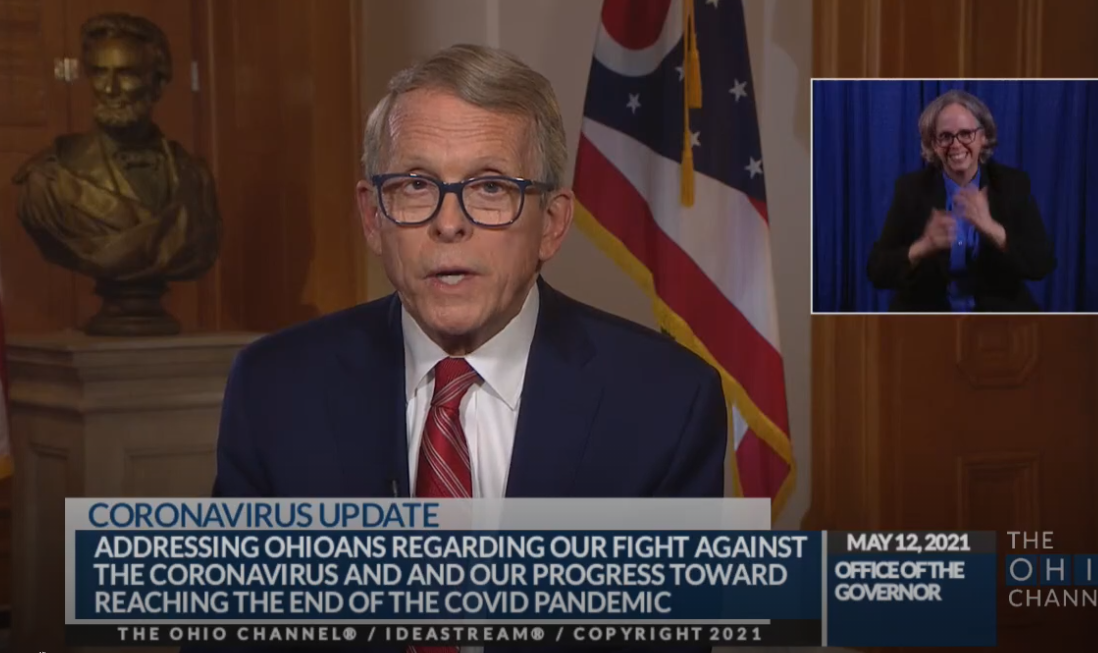
    Gov. Mike DeWine is pictured during a statewide address on the COVID-19 pandemic on Wednesday, May 12. Photo courtesy the Ohio Channel.

    By Tyler Buchanan and Ohio Capital Journal

    Since passing a bill in March to give themselves power to rescind public health orders, Republican lawmakers in Ohio have been counting the days until that power went into effect.

    They may not need to use it.

    In a Wednesday evening address outlining Ohio’s next steps in handling the pandemic, Gov. Mike DeWine announced “it is time” to remove those health orders.

    DeWine said all pandemic orders would be removed on June 2, except for those involving nursing homes and assisted living facilities.

    Republican legislators, who have battled with the DeWine administration since the early months of the pandemic, effectively gave the governor little choice. He had until late June to remove the health orders — or else they would remove them.

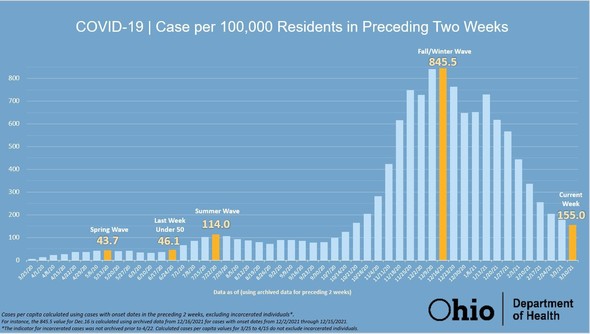
    DeWine had already committed to removing the orders once Ohio reached a low threshold of new cases: an average of 50 cases per 100,000 residents over the course of a two-week time frame. While the state has made progress toward that goal in recent weeks, it’s remained unclear when exactly the target figure would be hit.

    Amid pressure from the legislature, DeWine said the positive impact of the COVID-19 vaccines meant Ohio could remove the health orders even without having reached the target.

    “There comes a time when individual responsibility simply must take over,” he said.

    Senate Bill 22 goes into effect on June 23. It will give lawmakers the ability to rescind health orders and the state of emergency declaration through passing a concurrent resolution.

    Hours before DeWine was set to speak, state Rep. Scott Wiggam, R-Wooster, announced plans to introduce a resolution to remove all of Ohio’s existing COVID-19 health mandates.

    https://twitter.com/Scott_Wiggam/status/1392534091942318083?s=20

    “The issue of removing the health orders is a very important one for our caucus,” House Speaker Bob Cupp, R-Lima, told reporters on Wednesday before the governor’s speech.

    “There’s a strong sentiment that the health orders need to be dissolved,” he added.

    Cupp declined to answer questions as to whether he’s spoken with the governor recently about the health order situation.

    Throughout the pandemic, Republicans have accused the executive branch of overstepping its legal bounds in enforcing various COVID-19 health restrictions. Members have bristled at the governor for not adequately considering the inputs of lawmakers. DeWine has defended his administration’s aggressive stance as being necessary to combat a pandemic that, to date, has led to more than 19,400 deaths across the state.

    The Republican supermajorities within the Ohio General Assembly have repeatedly attempted to curb the authority of the state health department. 

    Only a few of those bills have made it to the governor’s desk, each time leading to a DeWine veto.

    While the GOP caucuses could not muster a veto override in 2020, things looked more favorable for this term when the party gained several seats in last November’s elections.

    The legislature moved quickly to pass SB 22. A day after the governor vetoed it, members met again on March 24 to override that veto. The bill was passed without an emergency clause, meaning it would take 90 days for it to go into effect. Senate President Matt Huffman, R-Lima, telegraphed plans that day to use the powers of SB 22 as early as possible.

  • Covid ‘doesn’t discriminate by age’: Serious cases on the rise in younger adults

    Covid ‘doesn’t discriminate by age’: Serious cases on the rise in younger adults

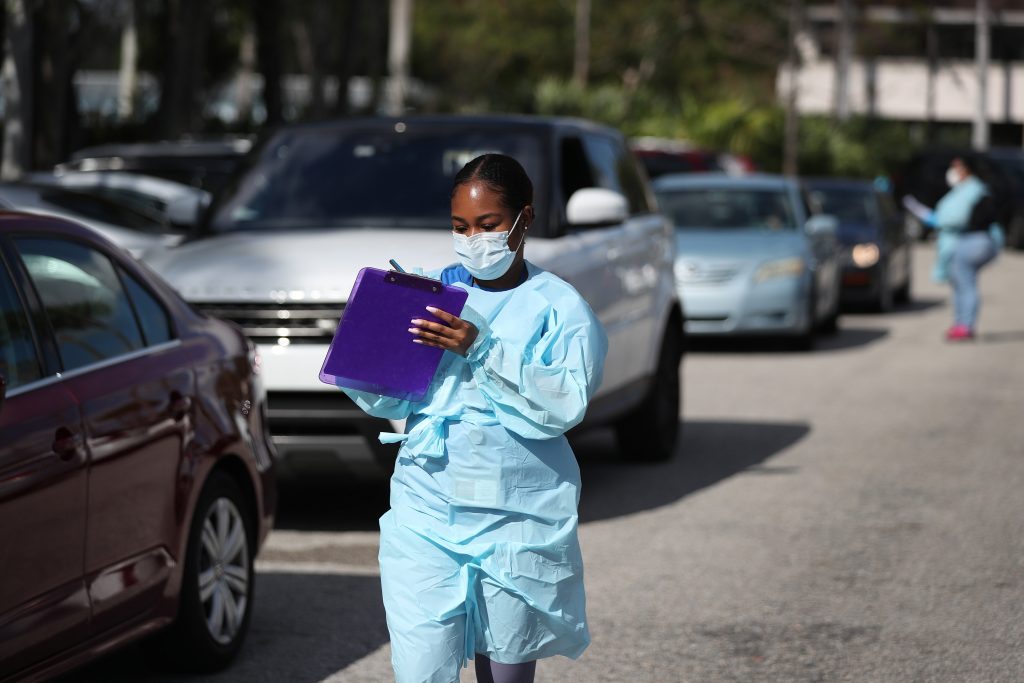
    Photo of drive-through COVID-19 screening by Joe Raedle/Getty Images.

    Guest Column By Will Stone, Kaiser Health News

    After spending much of the past year tending to elderly patients, doctors are seeing a clear demographic shift: young and middle-aged adults make up a growing share of the patients in covid-19 hospital wards.

    It’s both a sign of the country’s success in protecting the elderly through vaccination and an urgent reminder that younger generations will pay a heavy price if the outbreak is allowed to simmer in communities across the country.

    “We’re now seeing people in their 30s, 40s and 50s — young people who are really sick,” said Dr. Vishnu Chundi, a specialist in infectious diseases and chair of the Chicago Medical Society’s covid-19 task force. “Most of them make it, but some do not. … I just lost a 32-year-old with two children, so it’s heartbreaking.”

    Nationally, adults under 50 now account for the most hospitalized covid patients in the country — about 36% of all hospital admissions. Those ages 50 to 64 account for the second-highest number of hospitalizations, or about 31%. Meanwhile, hospitalizations among adults 65 and older have fallen significantly.

    About 32% of the U.S. population is now fully vaccinated, but the vast majority are people older than 65 — a group that was prioritized in the initial phase of the vaccine rollout.

    Although new infections are gradually declining nationwide, some regions have contended with a resurgence of the coronavirus in recent months — what some have called a “fourth wave” — propelled by the B.1.1.7 variant, first identified in the United Kingdom, which is estimated to be somewhere between 40% and 70% more contagious.

    As many states ditch pandemic precautions, this more virulent strain still has ample room to spread among the younger population, which remains broadly susceptible to the disease.

    The emergence of more dangerous strains of the virus in the U.S. — including variants first discovered in South Africa and Brazil — has made the vaccination effort all the more urgent.

    “We are in a whole different ballgame,” said Judith Malmgren, an epidemiologist at the University of Washington.

    Rising infections among young adults create a “reservoir of disease” that eventually “spills over into the rest of society” — one that has yet to reach herd immunity — and portends a broader surge in cases, she said.

    Fortunately, the chance of dying of covid remains very small for people under 50, but this age group can become seriously ill or experience long-term symptoms after the initial infection. People with underlying conditions such as obesity and heart disease are also more likely to become seriously ill.

    “B.1.1.7 doesn’t discriminate by age, and when it comes to young people, our messaging on this is still too soft,” Malmgren said.

    Hospitals Filled With Younger, Sicker People

    Across the country, the influx of younger patients with covid has startled clinicians who describe hospital beds filled with patients, many of whom appear sicker than what was seen during previous waves of the pandemic.

    “A lot of them are requiring ICU care,” said Dr. Michelle Barron, head of infection prevention and control at UCHealth, one of Colorado’s large hospital systems, as compared with earlier in the pandemic.

    The median age of covid patients at UCHealth hospitals has dropped by more than 10 years in the past few weeks, from 59 down to about 48 years old, Barron said.

    “I think we will continue to see that, especially if there’s not a lot of vaccine uptake in these groups,” she said.

    While most hospitals are far from the onslaught of illness seen during the winter, the explosion of cases in Michigan underscores the potential fallout of loosening restrictions when a large share of adults are not yet vaccinated.

    There’s strong evidence that all three vaccines being used in the U.S. provide good protection against the U.K. variant.

    One study suggests that the B.1.1.7 variant doesn’t lead to more severe illness, as was previously thought. However, patients infected with the variant appear more likely to have more of the virus in their bodies than those with the previously dominant strain, which may help explain why it spreads more easily.

    “We think that this may be causing more of these hospitalizations in younger people,” said Dr. Rachael Lee at the University of Alabama-Birmingham hospital.

    Lee’s hospital also has observed an uptick in younger patients. As in other Southern states, Alabama has a low rate of vaccine uptake.

    But even in Washington state, where much of the population is opting to get the vaccine, hospitalizations have been rising steadily since early March, especially among young people. In the Seattle area, more people in their 20s are now being hospitalized for covid than people in their 70s, according to Dr. Jeff Duchin, public health chief officer for Seattle and King County.

    “We don’t yet have enough younger adults vaccinated to counteract the increased ease with which the variants spread,” said Duchin at a recent press briefing.

    Nationwide, about 32% of people in their 40s are fully vaccinated, compared with 27% of people in their 30s. That share drops to about 18% for 18- to 29-year-olds.

    “I’m hopeful that the death curve is not going to rise as fast, but it is putting a strain on the health system,” said Dr. Nathaniel Schlicher, an emergency physician and president of the Washington State Medical Association.

    Schlicher, also in his late 30s, recalls with horror two of his recent patients — close to his age and previously healthy — who were admitted with new-onset heart failure caused by covid.

    “I’ve seen that up close and that’s what scares the hell out of me,” he said.

    “I understand young people feeling invincible, but what I would just tell them is — don’t be afraid of dying, be afraid of heart failure, lung damage and not being able to do the things that you love to do.”

    Will Younger Adults Get Vaccinated?

    Doctors and public health experts hope that the troubling spike in hospitalizations among the younger demographic will be temporary — one that vaccines will soon counteract. It was only on April 19 that all adults became eligible for a covid vaccine, although they were available in some states much sooner.

    But some concerning national polls indicate a sizable portion of teens and adults in their 20s and 30s don’t necessarily have plans to get vaccinated.

    “We just need to make it super easy — not inconvenient in any way,” said Malmgren, the Washington epidemiologist. “We have to put our minds to it and think a little differently.”

    This story is part of a partnership that includes NPR and KHN.

    Subscribe to KHN’s free Morning Briefing.

  • Ohio’s COVID-19 vaccination slows ‘dramatically’

    Ohio’s COVID-19 vaccination slows ‘dramatically’

    Photo from the U.S. Department of Defense.

    By Jake Zuckerman and Ohio Capital Journal– May 4, 2021

    One month ago, nearly 475,000 Ohioans over seven days marched into small pharmacies and mass clinics alike around the state to get vaccinated against COVID-19.

    Each week since, the number of newly “vaccine-started” Ohioans has tumbled. Just 152,000 Ohioans were vaccinated during the week ending April 25, according to data from the Ohio Department of Health.

    As the vaccine rollout pace slows, only about 4.7 million of Ohio’s 11.7 million residents have begun the vaccination process.

    “We clearly have a lot more vaccine than we have demand,” Gov. Mike DeWine said to reporters Monday.

    The week ending April 25, the most recent with complete data, shows vaccine uptake at its lowest rate since mid-February, when a nasty winter storm swept the country and temporarily closed vaccination sites.

    https://datawrapper.dwcdn.net/1jYQd/2/

    Vaccines protect individuals against COVID-19 but, at a certain threshold, can protect those in a population who haven’t yet or cannot receive the vaccine. Experts have estimated this threshold, known as herd immunity, to be somewhere between 70% and 90%.

    While the first four months of the vaccine rollout were defined by scarcity, uptake rates began to plunge nationally in April.

    DeWine, noting the uptake has declined “dramatically,” said herd immunity is more of a gradient than a black-and-white concept. The formula, he said, is simple.

    “The more people that get vaccinated, the harder it is for this virus to spread,” he said. “The more people that get vaccinated, the fewer people that are going to die.”

    All told, more than 19,200 Ohioans have died from COVID-19, and nearly 57,000 have been hospitalized. The Ohio Department of Health reports more than 1 million residents have been infected, though the true count is likely much higher.

    Ohio is in the middle of the pack in terms of states and percentage of the population who have received at least one dose.

    On the low end: Mississippi (31%), Louisiana (32%), Alabama (33%), Wyoming (34%) and Idaho (34%) according to New York Times Vaccine Tracker data.

    On the upper end: New Hampshire (61%), Massachusetts (58%), Vermont (57%), Connecticut (56%) and Maine (55%).

    The U.S. Census Bureau has been surveying Americans’ attitudes about the COVID-19 vaccine. As of March 29, nearly 20% of Ohioans expressed hesitancy toward the vaccine, compared to about 15.6% nationally. The bureau is slated to release fresh data later this week that will give a sense of whether the trend is improving or worsening.

    Similarly, polling data from Kaiser Family Foundation estimates 13% of Americans will “definitely not” get the vaccine and another 7% only will if they’re required to. Other data from Gallup estimates that 26% of Americans are unwilling to take the vaccine, down from about 35% when they were authorized for use in December.

  • We Would Like to Cordially Invite you to the 2021 Loveland Job Fair!

    We Would Like to Cordially Invite you to the 2021 Loveland Job Fair!

    Join us for a Job Fair!
    Your “one stop shop” for finding a great job or employee!
    Sponsored by:
    Oasis Conference Center & Express Employment Professionals


    NOW ACCEPTING VENDOR BOOTH REGISTRATIONS!

    by Cassie Mattia

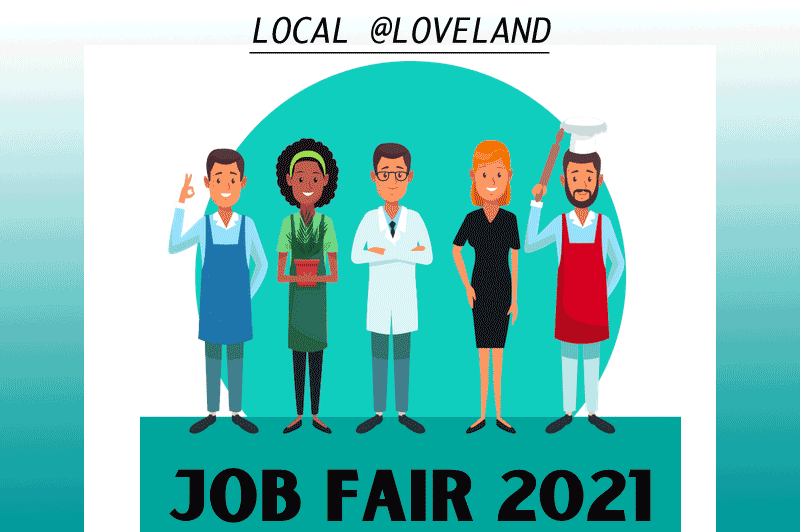
    Loveland, Ohio – Are you one of the many individuals in search of a great job? Or maybe you have or run a business that is in desperate need of expanding your staff…we have got you covered as the Loveland 2021 Job Fair is ready and willing to meet your needs!

    On May 17th from 4 PM to 7 PM at the Oasis Conference Center located at 902 Loveland-Miamiville Road will be hosting the 2021 Job Fair sponsored by the Oasis Conference Center, Express Employment Professionals, and Suzy Cree from Keller Williams. Those that are seeking a profession will be able to learn more about potential sign-on and retention bonuses, trade certifications, unexplored job industries, and shift schedules. Employers who are looking to fill positions will have the opportunity to sign up for a Job Fair Booth that will include a covered table and chairs. The fee for reserving a booth at the 2021 Job Fair will be $40 and will be open for both vendors and employers to rent. If you would like to register for a booth at the Job Fair click here.

    The 2021 Job Fair is completely FREE for the public to attend and completely safe as the event will be adhering to ALL Covid-19 safety guidelines! Below are some of the vendors that will be present this year!

    COMPASS GROUP

    Crown Services Inc

    Express Employment Professionals

    General Electric Credit Union

    Graeters

    Health Quest

    Home Instead

    Jack Rabbit – Loveland

    Magnolia Springs

    Mane, Inc.

    Mike’s Carwash

    Oasis Golf Club & Conference Center

    Shelter Insurance

    SwimSafe Pool Management

    Tano Hospitality Group

    Paxton’s

    For more information on the 2021 Job Fair you can visit the Little Miami Chamber of Alliance’s website or call their office at 513-683-1544.

    For the latest news on all things Loveland stay tuned to the Loveland Salad with Me, Cassie Mattia!

  • Introducing the “Menu” for the 2021 Loveland Food Truck Rally!

    Introducing the “Menu” for the 2021 Loveland Food Truck Rally!

    by Cassie Mattia

    Loveland, Ohio – The 8th Annual Loveland Food Truck Rally, presented by Wolterman Law, is back and better than ever, and now The Little Miami River Chamber Alliance (LMRCA) has shared the Food Truck line up with us!

    On May 8th from 3 PM to 10 PM at Shopper’s Haven Plaza on Loveland-Madeira Road, The Loveland Food Truck Rally will be welcoming 22 Food Trucks that will be serving up everything from Chicken Mac to Funnel Cakes to creamy Loveland Dairy Whip ice cream! Check out the Food Truck line-up below!

    Adeena’s Beef Stroll
    All American Grill
    Best Thing Smokin
    Caveman Café
    Chicken Mac 
    East Coast Eatz
    Funnel Vision
    Graeters
    Jenn’s Hot Tamale
    Just Jerks
    Kona Ice
    Loveland Dairy  Whip
    Mama Bears Mac
    Patriot  Grill
    Philly Pretzel
    Red Sesame
    Rock and Rolls
    Steak it Easy
    Sweet Maize
    Sweets and Meats
    Texas Joe
    The Cheesecakery

    The Loveland Food Truck Rally is of course both family-friendly and free to attend! Guests that attend will have the option to stay and take in the atmosphere by tailgating near their cars with their delicious food or they may take their food and beverages to go. Feel free to bring along your own folding chairs to your tailgating set-up, but please do not bring coolers or outside food and beverages as the Food Truck Rally will have plenty of food for you to enjoy as well as a variety of beer, wine, water, and soda for sale.

    The LMRCA has made COVID-19 safety their top priority so that the community can celebrate the beginning of summer while still feeling safe and at ease! Masks will be required for the event and only may be taken off when seated and consuming food. 

    The Loveland Food Truck Rally will also include spectacular nationally recognized live entertainment by The Dan Varner Band! In between live music, at 6 PM, several City of Loveland officials will be present to address previously submitted questions by the community. Click “Contact” to submit your question to be answered at the Food Truck Rally by the Loveland City Officials.


    At 6’4”, good-humored, warm, and sincere, Dan Varner’s stage presence demands attention. Fans and industry insiders agree.

    Meet Dan Varner

    https://youtube.com/watch?v=pTfMsNYxTXI%3Fversion%3D3%26rel%3D1%26showsearch%3D0%26showinfo%3D1%26iv_load_policy%3D1%26fs%3D1%26hl%3Den-US%26autohide%3D2%26wmode%3Dtransparent
    • Proud member, as an artist, of the CMA, ACM & ICMA
    • #1 ICMA Charting Song “When Mama Prayed” 
    • Multiple Top 5 Charting ICMA songs
    • Opening act for the following country superstars: Blake Shelton, Dan & Shay, Kip Moore, Rodney Atkins, Sara Evans, Easton Corbin, John Michael Montgomery, Tracy Lawrence, Craig Morgan, Little Texas, Confederate Railroad, Randy Houser and many more.
    • Nashville benefit performance with country star Taylor Swift
    • Nashville “In the Round” performance with Music Row’s top hit- makers
    • CEA Finalist For Best Country Band multiple years
    • Voted #1 Original Music, Best Singer and Best Original Band by CincyVibe Magazine readers
    • Voted one of the top three bands in the Ohio tri-state area
    • Multiple, live on-air radio & TV performances within regional markets

    If you are a business that would like to be involved in the Food Truck Rally this year, there will be booths available for rent. Click “Contact” to rent a booth for your business!

    For more 2021 Loveland Food Truck Rally updates stay tuned to the Loveland Salad With Me, Cassie Mattia!

  • After plateau, COVID-19 trickles upward in Ohio

    After plateau, COVID-19 trickles upward in Ohio

    By Jake Zuckerman and Ohio Capital Journal

    Despite an accelerating vaccination effort, COVID-19 is on an upswing in Ohio.

    There are currently 1,140 Ohioans in the hospital with COVID-19, compared to 839 on March 21.

    Similarly, in mid-March, about 1,400 Ohioans were contracting COVID-19 per day on average. By the end of the month, the figure hit 1,700, according to data from the Ohio Department of Health.

    The seven-day average test positivity rate — portion of diagnostic tests on a given day with positive results — reached 4.3% Tuesday compared to 3% in early March.

    None of these indicators are anywhere near their winter peaks. However, their ticking upward comes despite efforts to slow the coronavirus’ spread through three COVID-19 vaccines authorized for use.

    About 3.77 million Ohioans are vaccine-started as of Tuesday, according to ODH data. Roughly 2.2 million of them are fully immunized.

    Variants of the new coronavirus that first emerged in late 2019 are likely fueling the spread.

    All three ‘variants of concern’ monitored by the CDC (B.1.1.7; B.1.351; and P.1) have now been detected in Ohio, according to agency data. Two of the variants are about 50% more transmissible than the original strain, according to the CDC.

    Since March 2020, nearly 19,000 Ohioans have died from COVID-19. More than 1 million have been infected.

  • Health Order Signed Regarding Spring Sports and Extracurricular Activities

    Health Order Signed Regarding Spring Sports and Extracurricular Activities

    Ohio Governor Mike DeWine announced today that Ohio Department of Health Director Stephanie McCloud has issued an addendum that updates quarantine guidance for student-athletes and participants in extracurricular activities who may have been incidentally exposed to COVID-19 in a classroom setting.

    The Addendum to Director’s Second Amended Order that Provides Mandatory Requirements for Youth, Collegiate, Amateur, Club and Professional Sports and Extracurricular Activities is in effect now. For spring sports and extracurricular activities, students will not be required to quarantine because they have an incidental exposure to COVID-19 in a classroom under the school-based exposure guidance unless symptoms develop. Students will now be permitted to participate in organized sporting and extracurricular activities as long as they remain symptom-free and follow applicable safety precautions.

    However, students who are exposed in other settings outside of the classroom will be required to continue following existing CDC quarantine guidance.

  • State COVID-19 Update: Nursing Home Visitation, Statewide Case Rate, Rapid Testing, County Fairs

    State COVID-19 Update: Nursing Home Visitation, Statewide Case Rate, Rapid Testing, County Fairs

    Ohio Governor Mike DeWine and Lt. Governor Jon Husted today provided the following updates on Ohio’s response to the COVID-19 pandemic. 

    NURSING HOME VISITATION

    Governor DeWine today discussed the new federal regulations for nursing home visitation, as well as Ohio’s Vaccine Maintenance Program. The visitation guidelines, issued by the Centers for Medicare and Medicaid Services (CMS) indicate visitation should be happening in nursing homes. There are a few specific exceptions that would limit visitation, such as outbreaks in the facility or an extreme number of cases in the community.  Full information on the federal nursing home visitation guidance is available at cms.gov

    Additionally, Governor DeWine highlighted the progress being made by Ohio’s Vaccine Maintenance Program for nursing homes and assisted living facilities. Ohio’s Vaccine Maintenance Program ensures new nursing home residents and employees, and established residents and employees who previously decided not to receive a vaccine, can still choose to receive one. Governor DeWine emphasized the importance of every nursing home resident receiving a vaccine. 

    Long-term care facility visitation status is available on the dashboard at coronavirus.ohio.gov.

    STATEWIDE CASE RATE

    Governor DeWine announced that, statewide, Ohio is currently at a rate of 155 cases of COVID-19 per 100,000 people during the past two weeks. Last week, statewide data put Ohio at 180 cases per 100,000 people. 

    “In Ohio, we are still at a very elevated level of cases, but today’s health data is certainly trending in the right direction,” said Governor DeWine. 

    In an evening address last week, Governor DeWine announced that when Ohio reached 50 cases per 100,000 people for two weeks, all health orders will be lifted. 

    The Ohio Department of Health will update this data each Thursday.

    March 11

    RAPID TESTING 

    Governor DeWine today detailed four initiatives that are making rapid COVID-19 tests more accessible to Ohioans:

    • Federal Qualified Health Centers
      • The state’s ongoing partnership with federally qualified health centers has led to the availability of over 150,000 rapid tests at community health centers. These centers have professionals on-hand to administer the tests free of charge.
    • Local Health Departments
      • Local health departments have partnered with their communities to make at-home testing available to schools, nonprofit organizations, and first responders.
    • Public Libraries
      • The state has recently partnered with public libraries to make at-home tests available to more Ohio communities. During the first two weeks, Ohio has partnering with 120 libraries.
    • K-12 Schools
      • A new partnership launched today will bring 200,000 at-home tests to Educational Service Centers. To increase confidence and safety in schools, Governor DeWine encourages school districts to take advantage of this resource and develop aggressive testing plans.

    Between libraries and local health departments, at-home testing is accessible in 76 of Ohio’s 88 counties. Some of these areas had disproportionate access to testing earlier in the COVID-19 pandemic.

    GUIDANCE ON FAIRS

    Governor DeWine announced that the Ohio Department of Health issued a revised order that allows for the reopening of all fair activities if certain health conditions are met. The updated order includes compliance with the statewide mask order and social distancing. Additionally, there will be a 25 percent maximum for indoor grandstand capacity and a 30 percent maximum for outdoor grandstand capacity. 

    Additionally, the Ohio Department of Health will issue updated order and guidance regarding festivals, parades, proms, and spring sports. For spring sports, students will not be required to quarantine because they have an incidental exposure to COVID-19 in a classroom unless symptoms develop. 

    These orders and guidance will be forthcoming from the Ohio Department of Health.

    LETTER ADDRESSING PUA FRAUD

    Governor DeWine and Lt. Governor today sent a letter to President Joe Biden urging the development of a national, coordinated response to ongoing, widespread fraud attempts being committed through the unemployment system, specifically the federal Pandemic Unemployment Assistance (PUA) Program.

    See below for an excerpt from the letter:

    “We urge you to immediately develop a national, coordinated response to this ongoing attempt to defraud the American people and our national and state governments. While states are doing everything they can to administer the federal programs while maintaining system integrity, a state-by-stare response is proving inadequate. This is not an Ohio problem — it’s a national problem that requires a national solution.”

    CURRENT CASE DATA

    In total, there are 984,934 confirmed and probable cases of COVID-19 reported in Ohio and 17,825 COVID-19 deaths. A total of 51,323 people have been hospitalized throughout the pandemic, including 7,255 admissions to intensive care units. In-depth data can be accessed by visiting coronavirus.ohio.gov

    Video of today’s full update, including versions with foreign language translation, can be viewed on the Ohio Channel’s YouTube page

    For more information on Ohio’s response to COVID-19, visit coronavirus.ohio.gov or call 1-833-4-ASK-ODH.