Tag: education

  • [Video Interview] Operations Manager buys Whistlestop Clay Works in Historic Downtown

    [Video Interview] Operations Manager buys Whistlestop Clay Works in Historic Downtown

    by David Miller

    David Miller is the Publisher and Editor of Loveland Magazine

    Loveland, Ohio – Whistle Stop Clay Works (WSCW), an intimate pottery studio in Historic Downtown, is excited to announce that Bonnie McNett has purchased the business from co-founders Tim O’Grady and Kay Bolin. The studio, which opened in 2010, will have ownership transferred effective April 1, 2022.  

    “We could not be happier or more excited for the future of Whistle Stop Clay Works, the pottery students, and the Loveland area. Whistle Stop is a vibrant, interactive business and a real asset to this community,” said current co-owner, Kay Bolin.

    The acquisition of WSCW by McNett will allow the studio’s mission of bringing the ceramic arts to Loveland to continue and provide local residents a way to explore their creativity and relax with friends and family. McNett, who has been Operations Manager for five years, brings an energy and vision to WSCW that has helped the business prosper and grow. She has been an instructor at the studio for 8 years and has been involved in the ceramic arts for over 30 years

    O’Grady and Bolin decided it was time for them to try retirement again. Both had previously retired from a textile company, but in 2010 bought the property at 119 Harrison Avenue and converted the building to the WSCW teaching studio and art gallery.

    Whistle Stop Clay Works is a ceramics studio located in historic downtown Loveland, Ohio. The studio offers classes for adults and children, workshops, private parties, team building activities, firing packages for artists with home studios, and an art gallery.  The studio is located at 119 Harrison Avenue and can be reached at (513) 683-2529 or at www.whistlestopclayworks.com.

    Bonnie McNett

    Studio owner & manager

    WSCW@whistlestopclayworks.com

    (513)683-2529 or (513)325-4132

  • Kasie West’s Sunkissed is a Summer Must-Read!

    Kasie West’s Sunkissed is a Summer Must-Read!

    by Mahi Sheth 

    Summer is coming up quickly meaning it’s time to start planning your reading list! For those who enjoy reading a great novel while laying in the sun, I’ve got the perfect Young Adult (YA) romance novel by Kasie West to keep you company. 

    Sunkissed is a contemporary romance novel about a girl named Avery. Avery, who has just started summer vacation, comes across a whole slew of problems unexpectedly! From dealing with a betrayal from a best friend to two months with no wifi to having a crush on a mysterious, frustratingly charming guy named Brooks who happens to be off-limits, Avery’s entire life gets turned upside down. When Brooks offers Avery a chance at finding out what she wants and who she wants to be, she finds that falling in love isn’t so bad after all.  

    In the novel, West manages to capture both the problems teens face and the reaction one would feel after being betrayed by a best friend. Sunkissed is a coming-of-age novel that I would highly recommend to anyone who enjoys reading about young teens finding their place in the world, guys who have a talent for music, and those with a passion for love!

    If you think Sunkissed sounds interesting, here are a few similar novels by Kasie West and other authors:


    The Upside Of Falling by Alex Light

    Seventeen-year-old book-lover, Becca believes in true love and fairytales while Brett, the captain of the football team, just wants to get through high school without a girlfriend distracting him. When Becca gets caught in a lie, Brett helps her out. A fake relationship should be easy, right? That’s until Becca and Brett’s true feelings come into play! (Cover provided by Amazon)


    Maybe This Time by Kasie West


    A small-town girl named Sophie wants to go to the big apple to pursue her dream of being a fashion designer. While Sophie is working hard to earn money in Rockside for college, she meets an arrogant rich boy who happens to be staying in there for an entire year. Fireworks explode when these two are together! Can Sophie and Andrew play nice after attending several Rockside events together?  (Cover provided by Goodreads)


    The Distance Between Us by Kasie West

    Cayman and Xander, who have no inclination of what their future holds, are from different sides of the track. In order to figure out what they want to do, they decide to designate every Saturday as “career day.” As Cayman and Xander become closer, Cayman wonders if they can be together even though they are from different worlds. Will money trump true love? (Cover provided by Goodreads)


    ABOUT THE KASIE WEST

    Kasie West lives in Central California with her husband and four kids. She graduated from Fresno State University with a BA degree in Elementary Education. West has published several YA novels taking home an award for Best Novel for one of her YA novels, Pivot Point, in 2013. 

  • PERMITLESS CARRY, A TOP NRA PRIORITY, ADVANCING ACROSS Ohio and COUNTRY DESPITE WIDESPREAD OPPOSITION

    PERMITLESS CARRY, A TOP NRA PRIORITY, ADVANCING ACROSS Ohio and COUNTRY DESPITE WIDESPREAD OPPOSITION

    If the gun lobby gets its way, more than half the country will have permitless carry laws in place by the end of 2022.

    Just in the past week, Ohio Governor Mike DeWine and Alabama Governor Kay Ivey sided with the gun lobby and signed new permitless carry bills into law, ignoring widespread opposition from law enforcement, community leaders, and their constituents.

    DeWine signs law removing training, background check, permitting requirement to conceal…

    These laws are dangerous, and for obvious reasons. Permitless carry laws allow people to carry concealed handguns in public without a permit, without training, and without a background check. Even far-right extremists and white supremacists.

    Give to Everytown and Help Defeat the Gun Lobby’s Extremism

    Everytown for Gun Safety has a plan to end gun violence and urgently needs your help to stop permitless carry from building momentum before more of these laws are enacted. Donate to help us stop dangerous new gun laws and fuel our fight to end gun violence.

    DONATE
  • U.S. Senate backs shift to permanent daylight saving time

    U.S. Senate backs shift to permanent daylight saving time

    BY: ARIANA FIGUEROA – Ohio Capital Journal

    WASHINGTON — The U.S. Senate with little debate on Tuesday unanimously supported a permanent change to daylight saving time, several days after Americans once again went through the hated “spring forward” ritual of changing their clocks.

    If the bill, the Sunshine Protection Act, clears the House, it would mean most states would stay on daylight saving time throughout the year — giving them an extra hour of sunlight in the evening.

    “Just this past weekend, we all went through that biannual ritual of changing the clock back and forth and the disruption that comes with it,” Florida Sen. Marco Rubio, the Republican who sponsored the bill, said on the Senate floor. “One has to ask themselves, why do we keep doing this?”

    Rubio said that he believed a majority of Americans want to do away with the time switch and would prefer an extra hour of daylight, especially during the winter months. The Senate agreed under a process known as unanimous consent.

    The bill, if signed into law, would not go into effect until 2023, to give airlines and other companies time to adjust. A White House spokesperson did not respond to a question about President Joe Biden’s position on daylight saving time.

    The House held a hearing last week at which a panel of experts debated the health, energy and economic impacts of changing clocks twice a year. While lawmakers on the panel couldn’t decide which time to switch to permanently, they all agreed that the United States should stick to one or the other.

    It turns out daylight saving time is a shared mission among Florida lawmakers. U.S. Rep. Vern Buchanan, a Florida Republican, introduced the House version of the bill, H.R. 69. He wrote on Twitter that he is drafting a letter to House Speaker Nancy Pelosi, asking to bring his bill to the floor for an immediate vote.

    States have moved to pass or enact measures in favor of year-round daylight saving time, but without congressional approval, they can’t adopt those changes.

    Iowa’s state House recently passed a bill that would put the state on daylight saving time, pending federal action.

    Two states have passed measures to stay on standard time — Arizona and Hawaii. Both congressional bills would allow states to stay on standard time if they adopted the time change before the Sunshine Protection Act went into effect.

    Daylight saving time was used as an energy-saving measure during various points in U.S. history, such as World War I and World War II, and has become a permanent fixture since the energy crisis of the 1970s.

    This is not the first time the U.S. has moved to make daylight saving time permanent. On Dec. 14, 1973, Congress voted to put the U.S. on daylight saving time for two years. While 79% of Americans approved of the change in December of that year, within three months, approval fell to 42%, according to the New York Times.

    The biggest concern stemmed from children going to school in the dark, which soon proved to be dangerous as more children were reported to be hit by early-morning drivers.

    Shortly after President Richard Nixon resigned, Congress passed a bill that would restore standard time, which was then signed by President Gerald Ford.

    Daylight saving time this year ends on Nov. 6.

  • Bus Drivers Shown Love by LECC Staff

    Bus Drivers Shown Love by LECC Staff

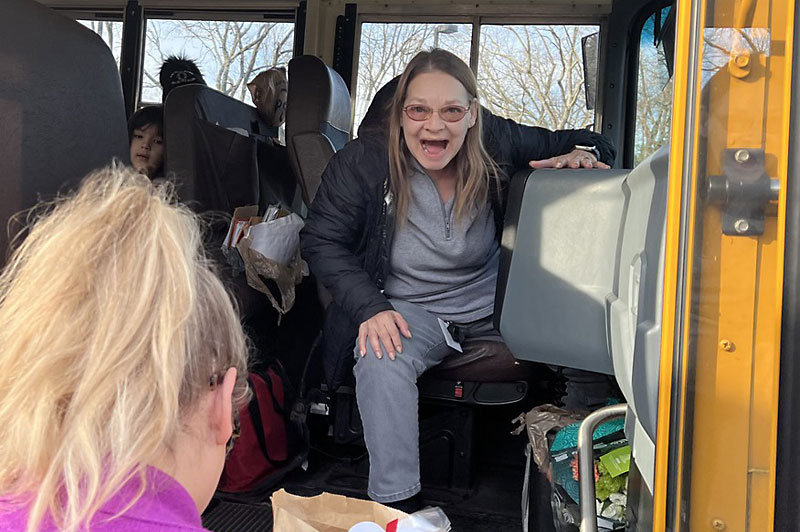
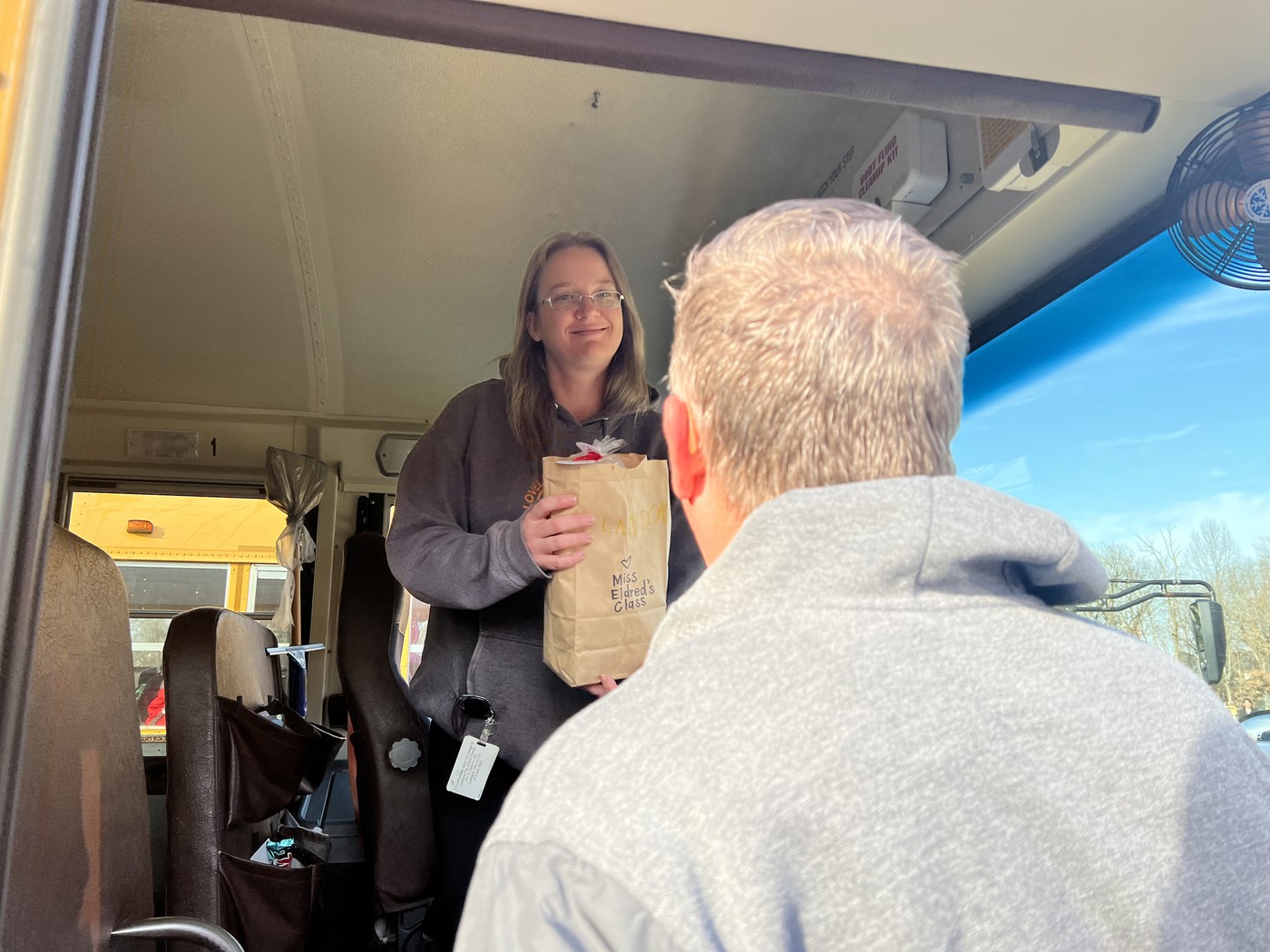
    Loveland, Ohio – Loveland school bus drivers got a nice surprise when they pulled into Loveland Early Childhood Center (LECC) Thursday morning. Staff members were outside with signs and breakfast treats to say thank you.

    “Many of our drivers wrap up their morning routes with our youngest students, and the LECC staff took it upon themselves to give back to our drivers. Thank you to everyone who donated items, packed bags, and even cooked breakfast sandwiches for each of our drivers. This is a great example of our Loveland Tiger team members taking care of each other,” said Superintendent Mike Broadwater in the District newsletter on Friday.

  • Loveland Schools Covid-19 Dashboard no longer “required”

    Loveland Schools Covid-19 Dashboard no longer “required”

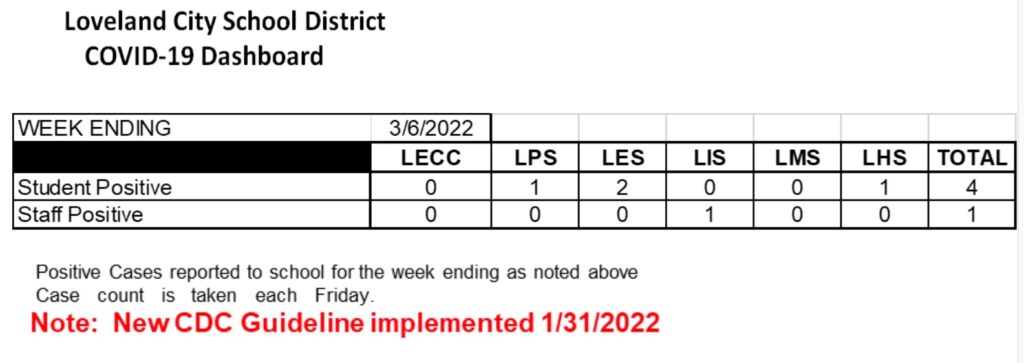
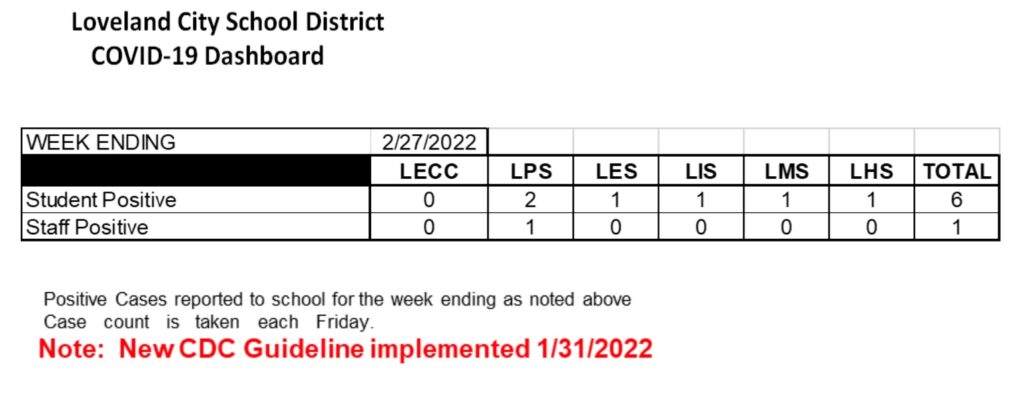
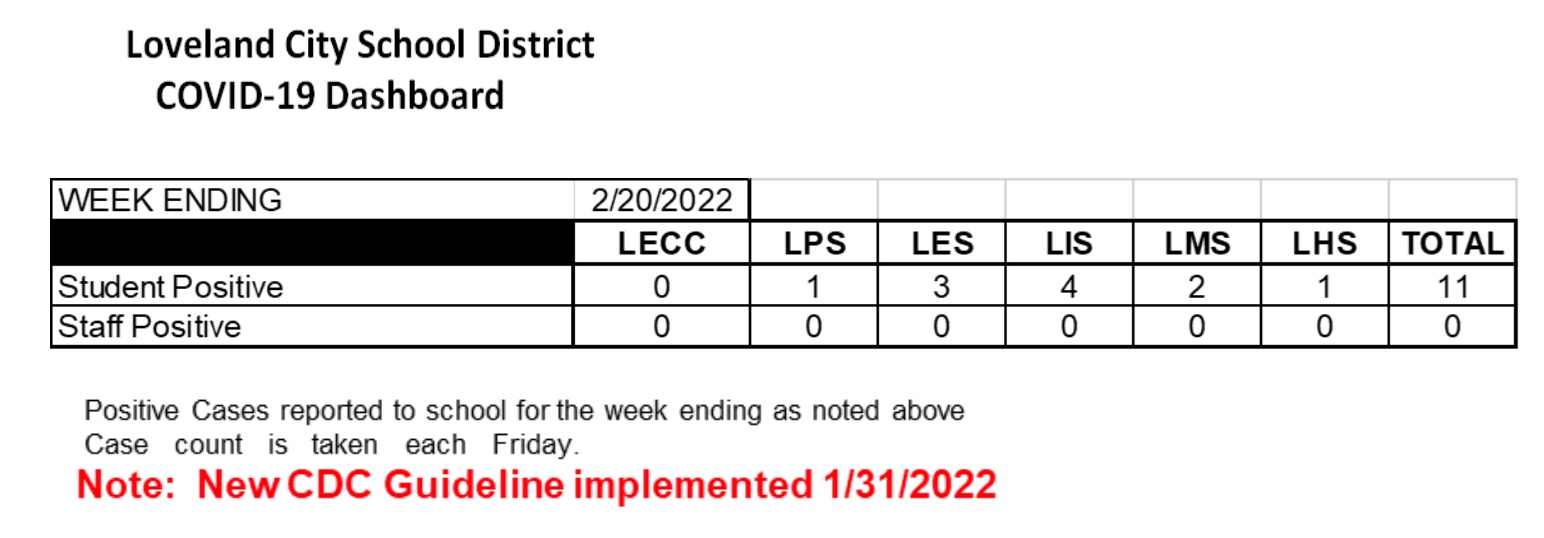
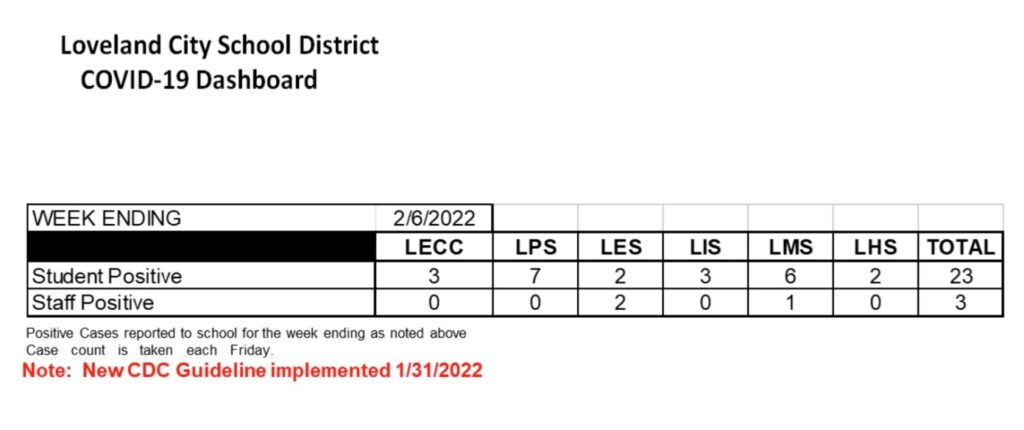
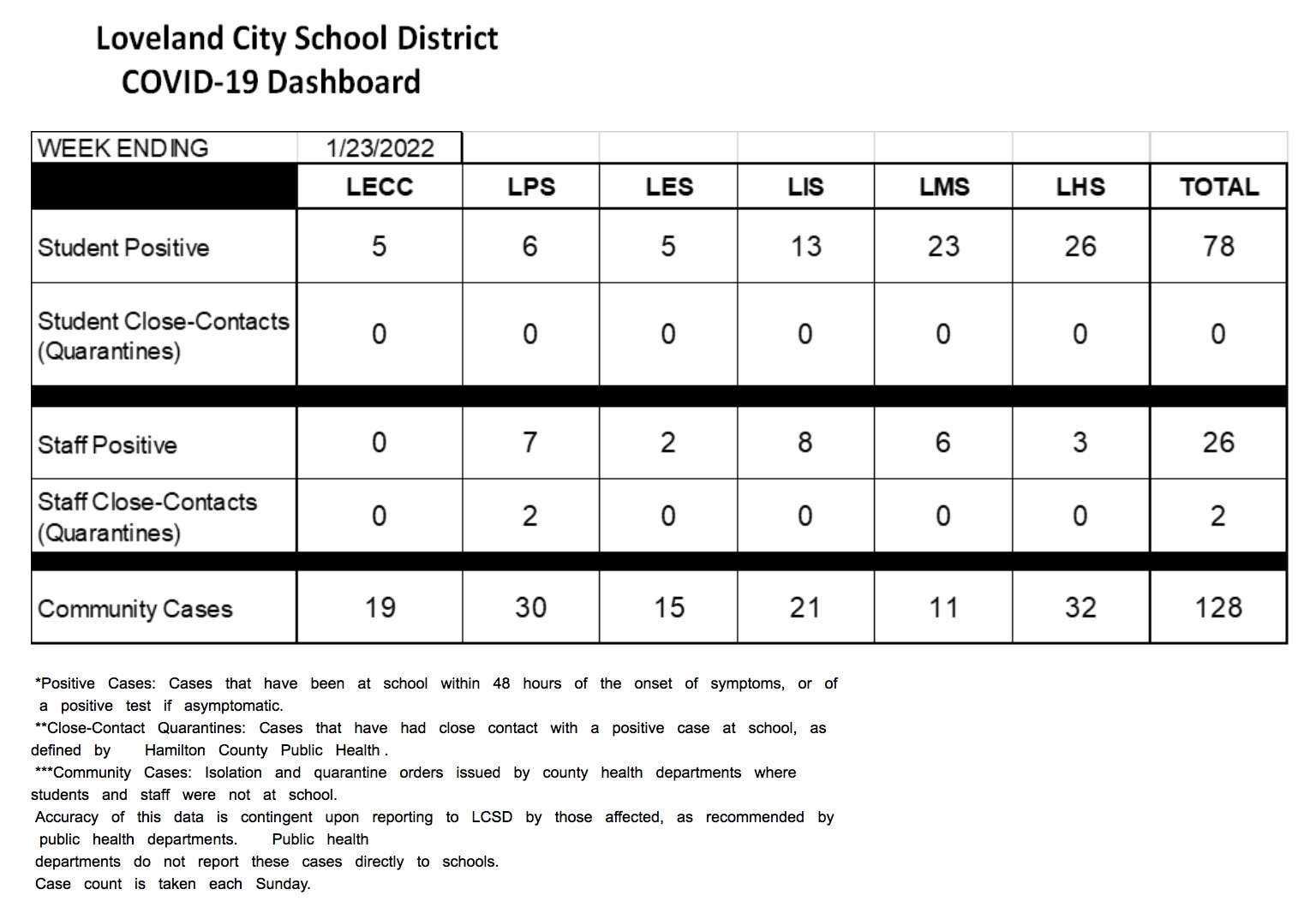
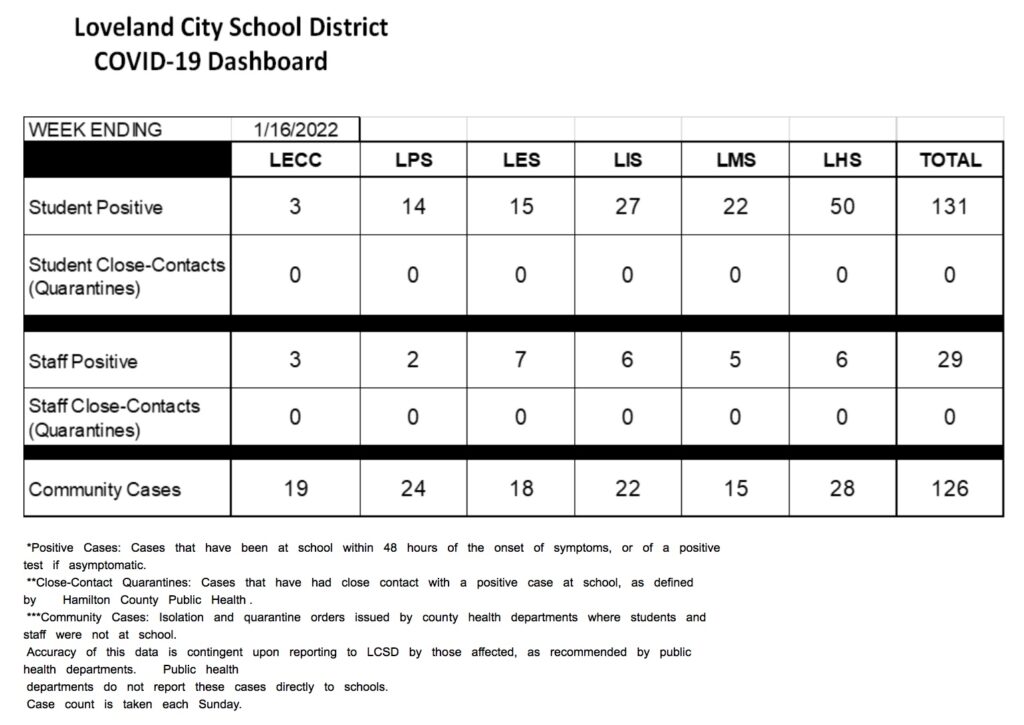
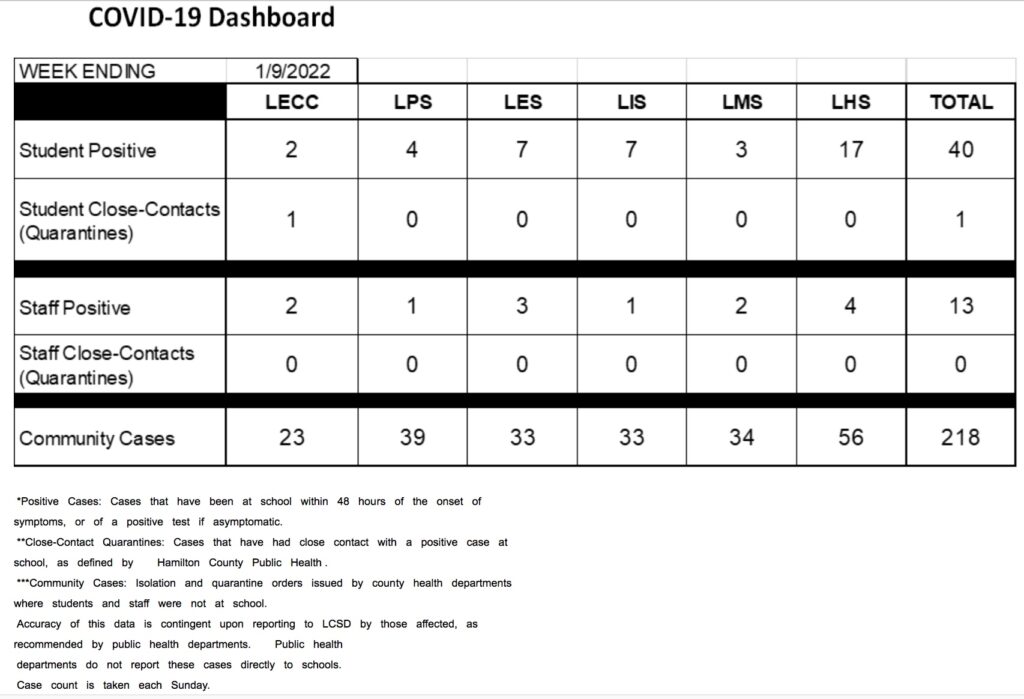
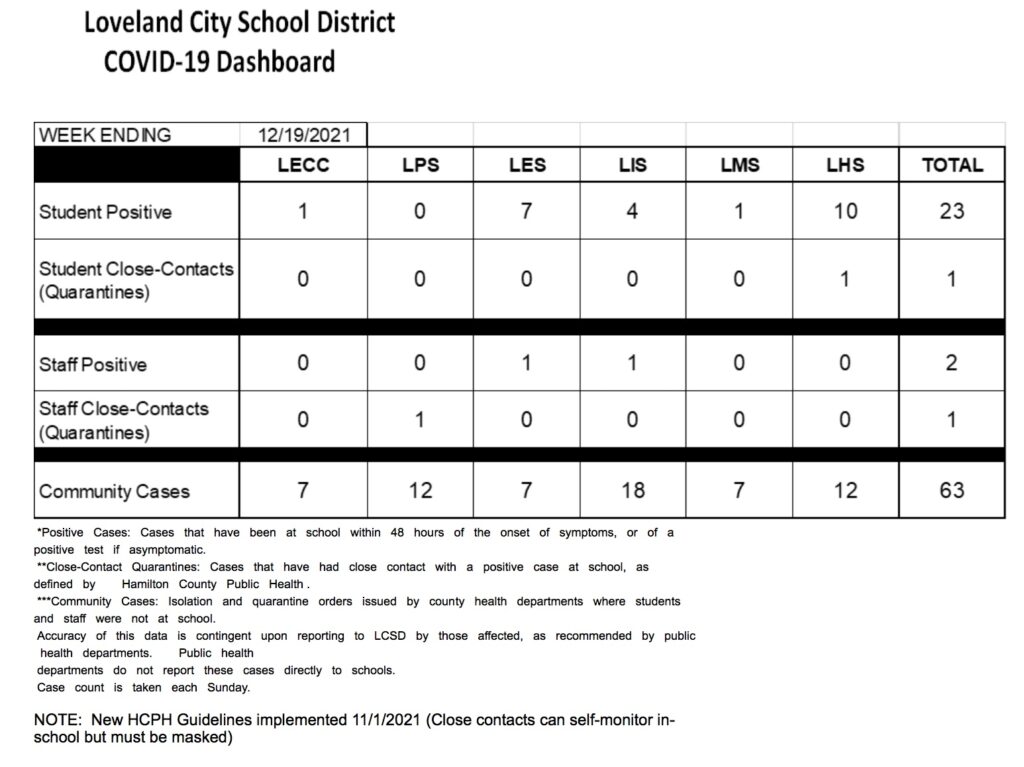
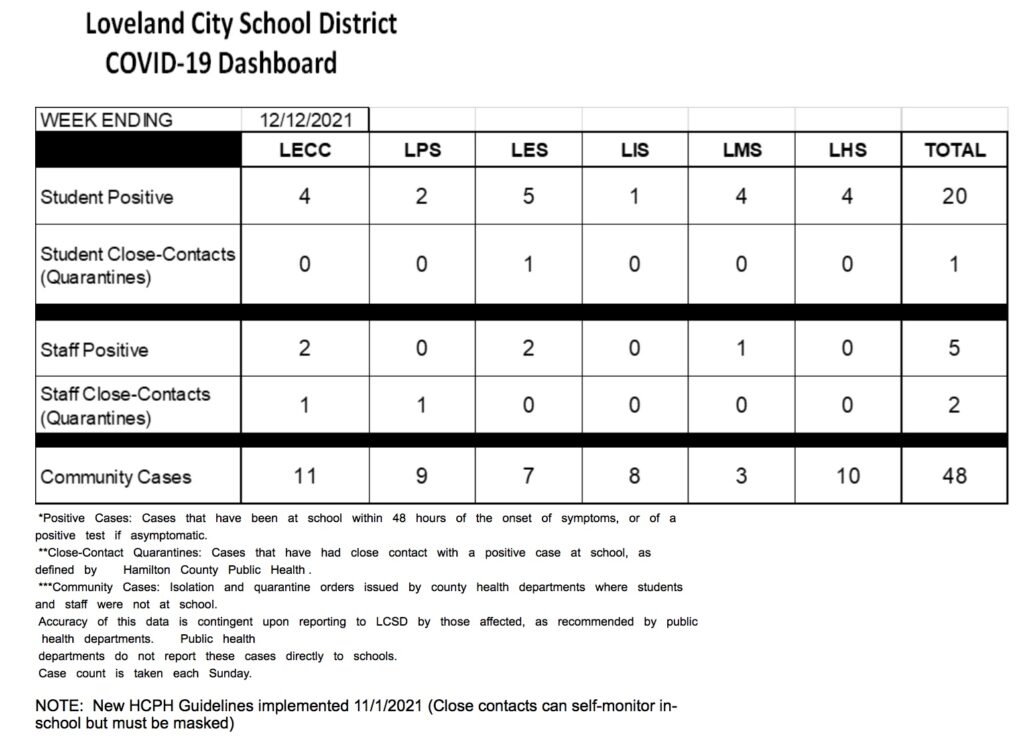
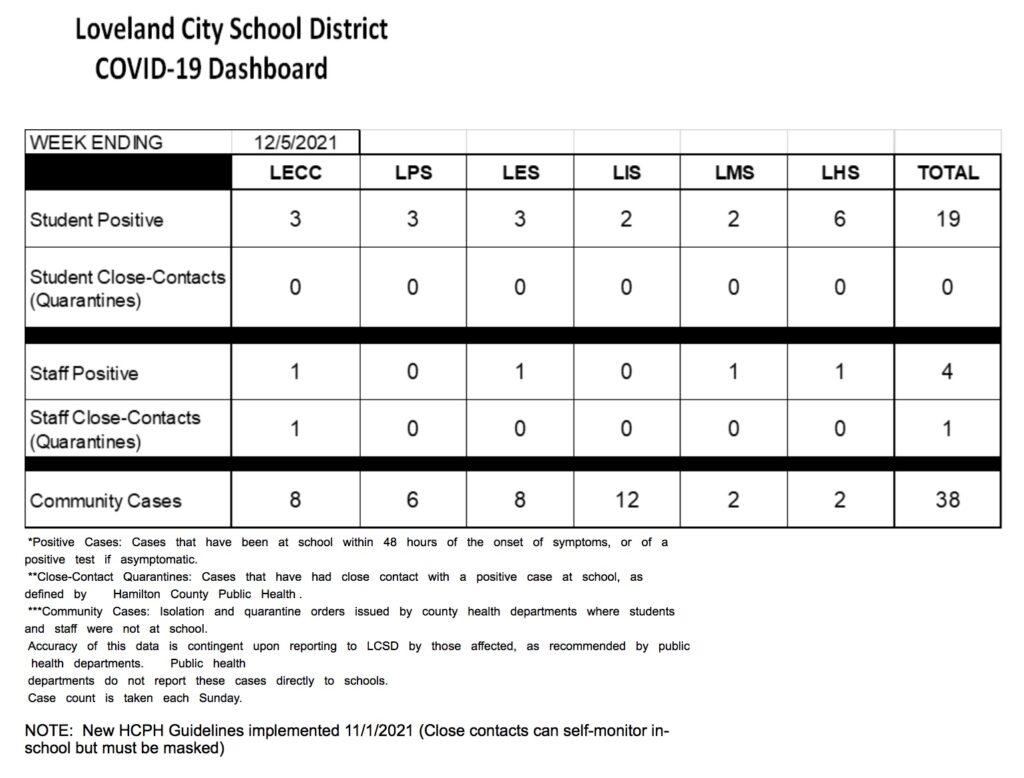
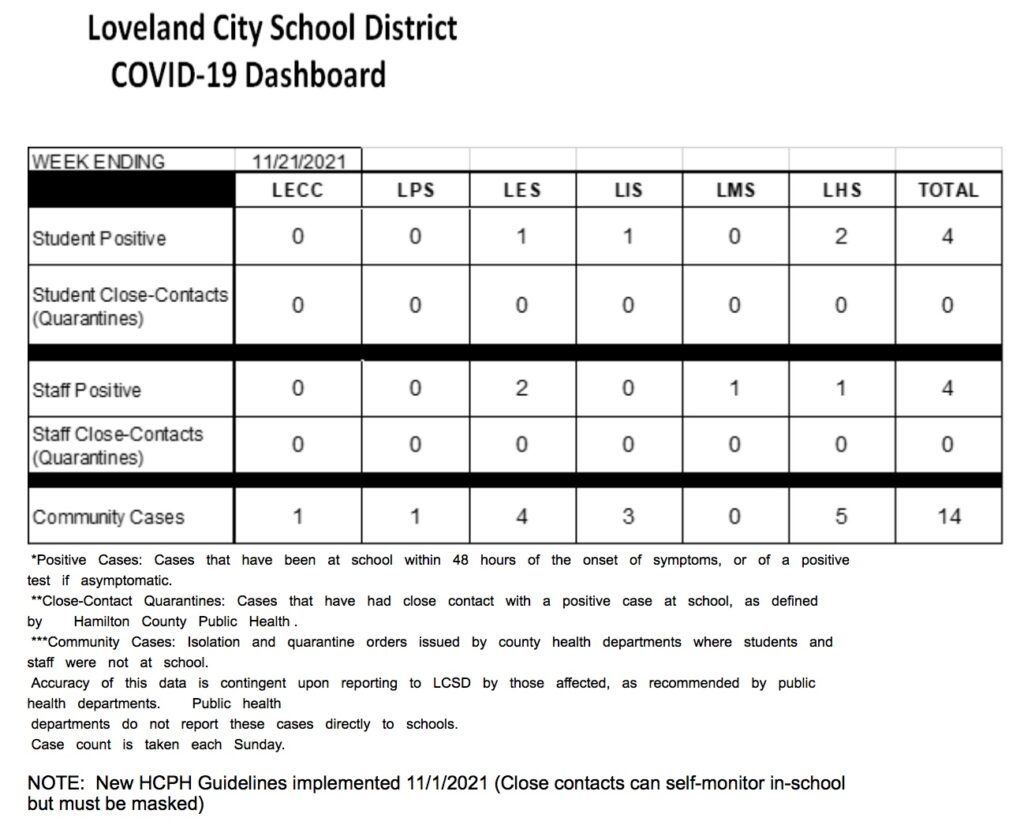
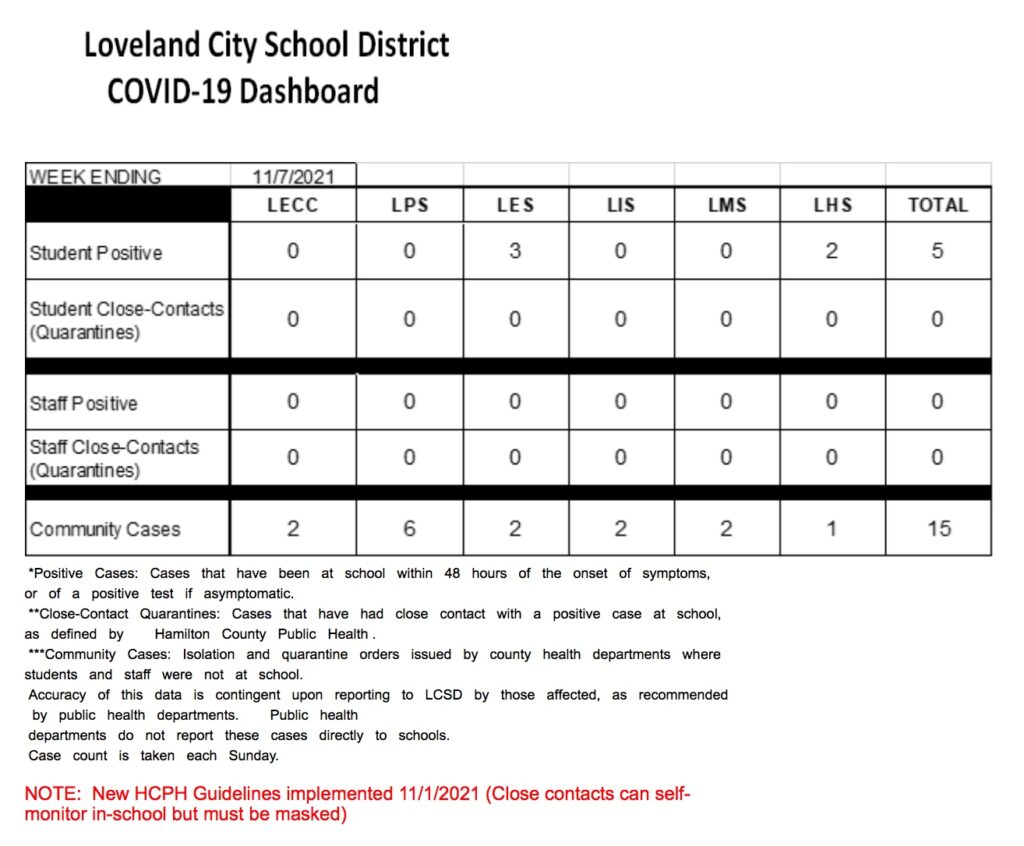
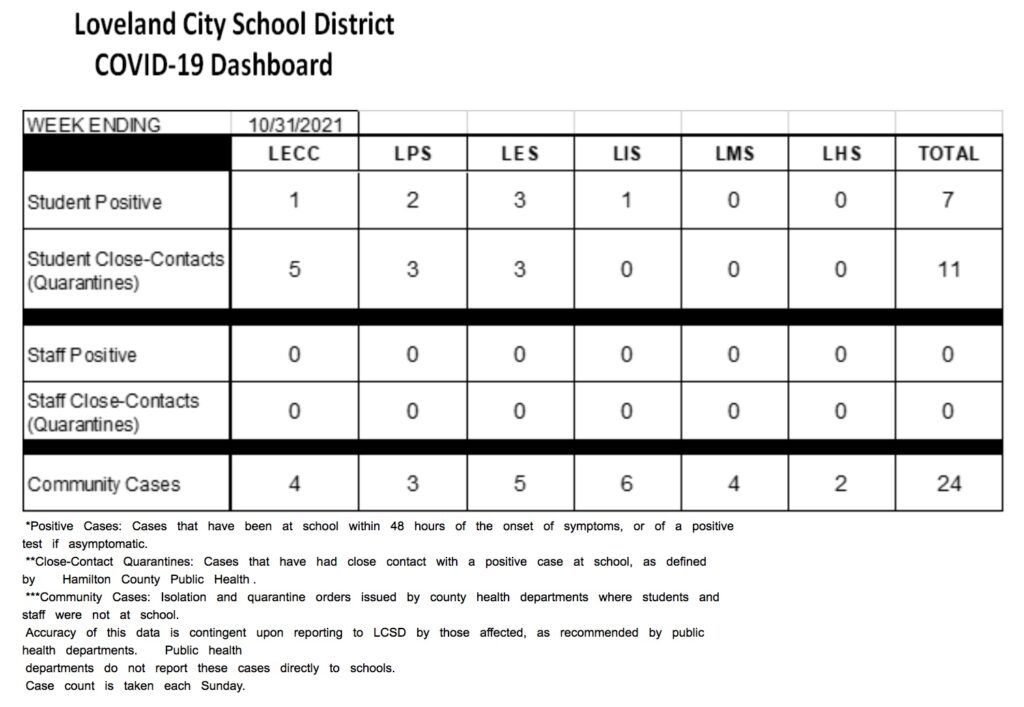
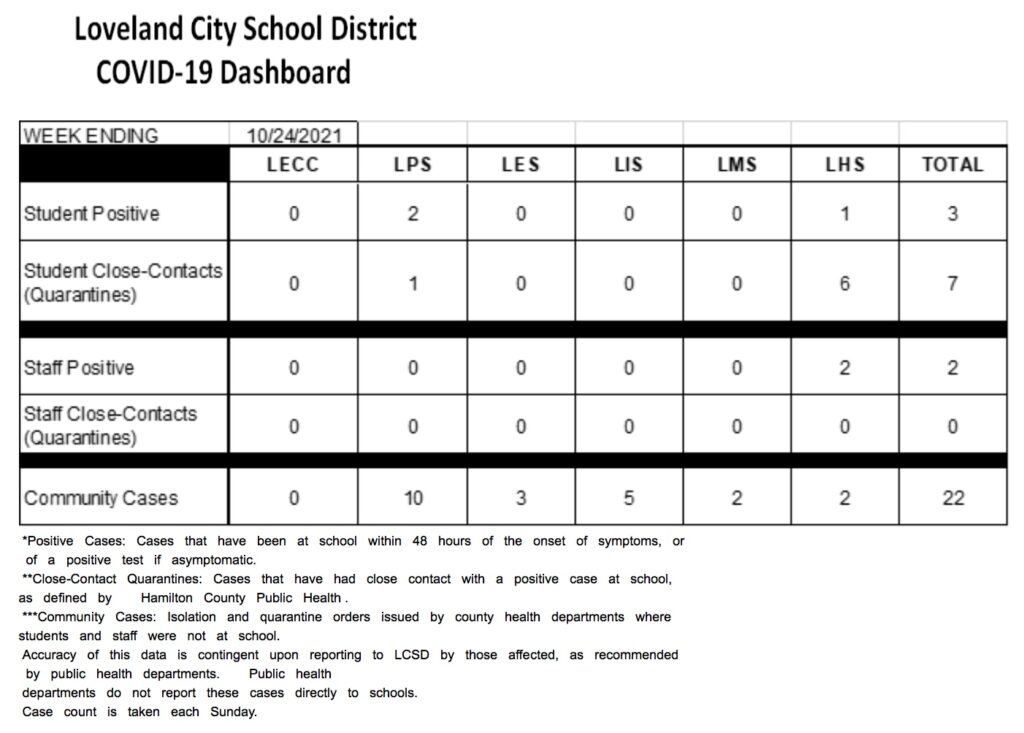
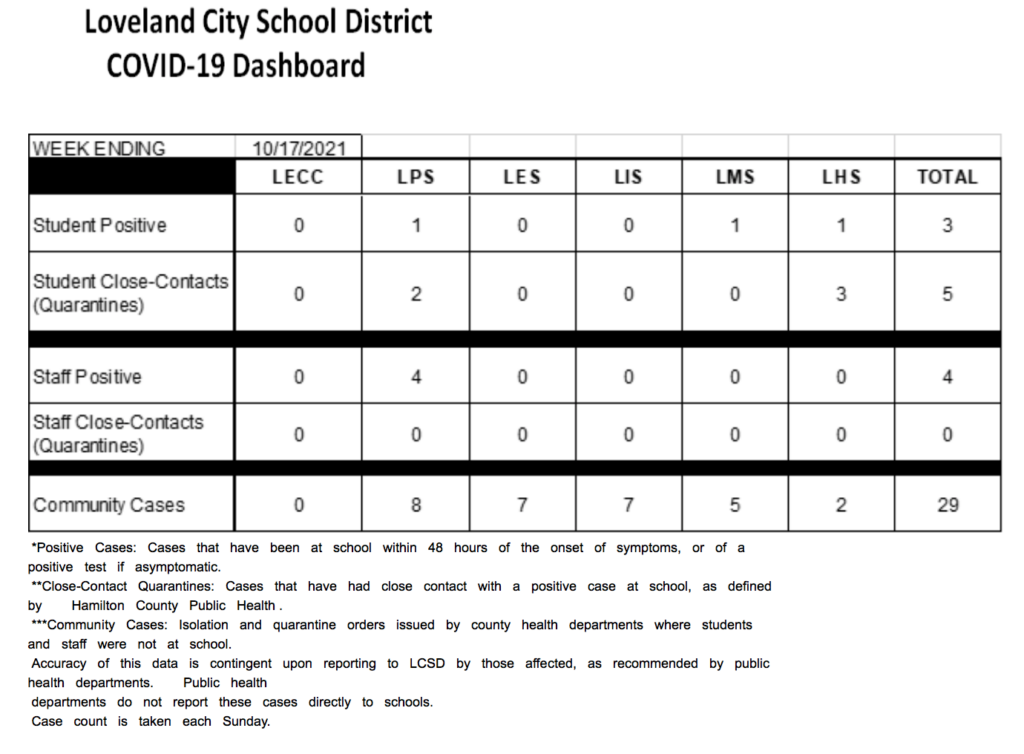
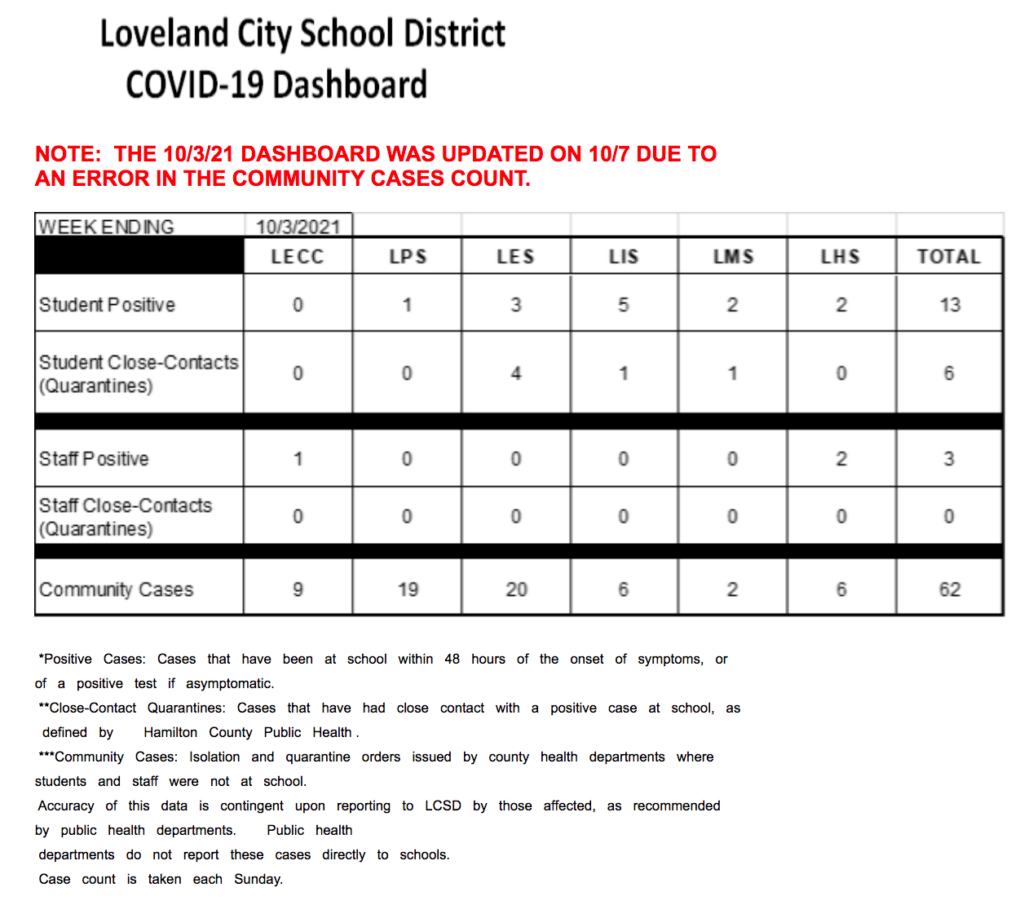
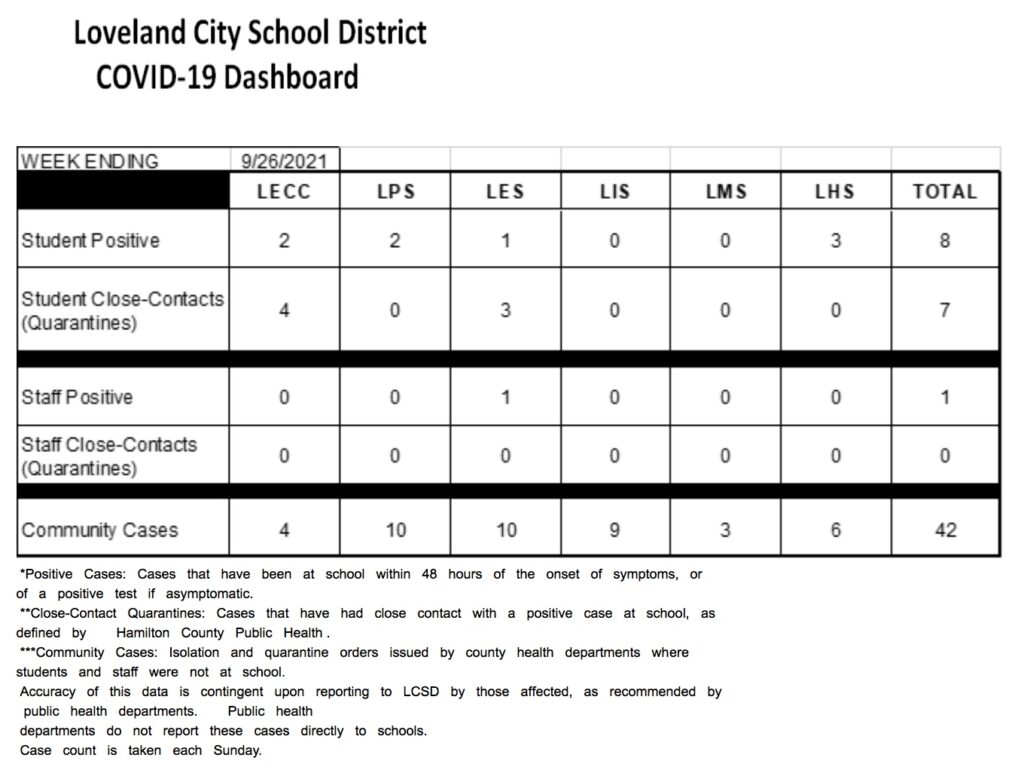
    Loveland, Ohio – At the beginning of each week, the Loveland City School District has been releasing its latest Covid 19 Dashboard.

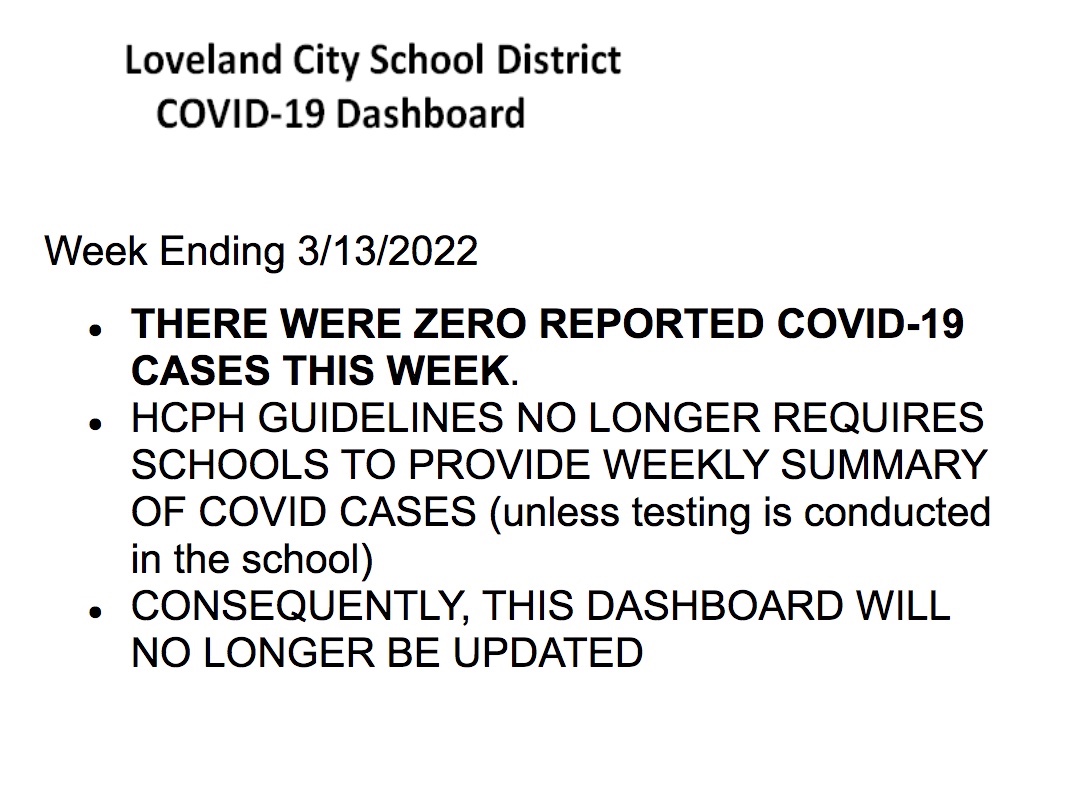
    The Loveland City School District has made a decision to no longer publish a COVID-19 Dashboard unless the school itself conducts the testing and the results are positive

    The District is citing that The Ohio Department of Health updated the state COVID guidance for school districts on March 10 and that the District is no longer “required to report positive COVID cases to the local health department unless the school itself conducts the testing and the results are positive.”

    “K-12 schools will no longer be required to report positive COVID-19 cases to their local health departments, unless the school tests a student for COVID-19 and the result is positive. In addition, the COVID-19 School Reporting dashboard will be archived.” – Ohio Department of Health

    The Ohio Department of Health updated the state COVID guidance for school districts on March 10. There are several changes, which you can read about by following this link. The Ohio Department of Health has also shifted to weekly COVID-19 data reporting.

    Staying up to date on COVID-19 vaccinations, including getting a booster dose when eligible, is the best form of protection against COVID-19. COVID-19 vaccinations are widely available throughout the state at no cost to Ohioans. Many providers offer walk-in appointments, or appointments can be scheduled using gettheshot.coronavirus.ohio.gov. Ohioans who want to learn more about the safety, efficacy, and side effects of COVID-19 vaccines should talk to their doctor, nurse, or pharmacist, or visit coronavirus.ohio.gov/vaccine.

    Below is the message left on the District website where the COVID-19 Dashboard had previously been published.


    Note the correction to the 10/3/ report and that community cases increased from 51 to 62.


  • Commentary by Rob Moore: Making it harder to be a substitute teacher might not do what you think

    Commentary by Rob Moore: Making it harder to be a substitute teacher might not do what you think

    COMMENTARY

    by Rob Moore

    On Monday, Representatives Adam Bird and Don Jones introduced Ohio House Bill 583, legislation to tighten regulations on educator licensing for substitute teachers. The bill increases the educational threshold for substitute teachers from a more broad requirement of a “post-secondary” degree to a more specific “bachelor’s” degree while creating some exceptions to this rule.

    The exceptions the bill puts forth are mainly age-related: allowing people with associate’s degrees and at least 21 years since birth to be a long-term substitute teacher, allowing people who served in the military and who have elapsed 21 years since birth to be a long-term substitute teacher, allowing people with sufficient bachelor’s degree coursework and who have spent 21 years on earth to be a substitute teacher. The bill also allows people who have spent five years as an educational assistant to be a long-term substitute.

    The bill also authorizes the state board of education to create rules for issuing educator licenses for people who do not hold bachelor’s degrees that can be used for a year.

    While the section that allows the state board of education to set rules for temporary licenses could result in a loosening of licensing requirements, overall the bill represents a tightening of licensing requirements for substitute teachers. Rather than just requiring a post-secondary degree, which could include associate’s or other non-bachelor’s degrees, the new bill raises the requirement for substitute teacher licensure to those who hold bachelor’s degrees then carves out specific exceptions for people without bachelor’s degrees.

    Increasing requirements for substitute licensure could have a few different impacts. The central goal is likely to improve quality of education provided by substitute teachers. Presumably, someone with a bachelor’s degree can provide better quality education than someone without one, with obvious exceptions, for example people without bachelor’s degrees who are trained in education compared to people with bachelor’s degrees in other fields. 

    Unfortunately, little evidence exists to confirm to us that degree attainment will lead to better teachers. While there is limited evidence that having a math or science degree may help with math or science teaching, degree attainment overall has not been definitively linked to better outcomes for students. If we can’t find this evidence for teachers, we should be even more dubious about a supposed connection between degree attainment and student outcomes for substitute teachers.

    On top of this, the bill will likely have labor market impacts for educators. Tightening requirements for substitute teachers will decrease the supply of qualified substitute teachers, which will drive up the wage needed to attract them as schools vie for a shrinking pool of substitutes. This effect could be stronger than it would be for teachers since substitutes are often actively considering competing offers from different schools, thus making their options more competitive than teachers.

    On top of this, making it harder to hire substitutes could create perverse incentives for schools. If substitute teachers are more scarce or expensive, it could cause administrators to limit the ability of teachers to take sick days or otherwise take time off.

    While raising the bar for substitute teachers makes intuitive sense, interventions like this need to be based on evidence, and the evidence of the impact of degree attainment on substitute teachers is basically nonexistent. We can hope that if substitute teachers are required to have higher educational attainment than before, that we would at least build in funds to assess the intervention after it is implemented.

  • Loveland High School Wind Ensemble performs Incantation and Dance

    Loveland High School Wind Ensemble performs Incantation and Dance

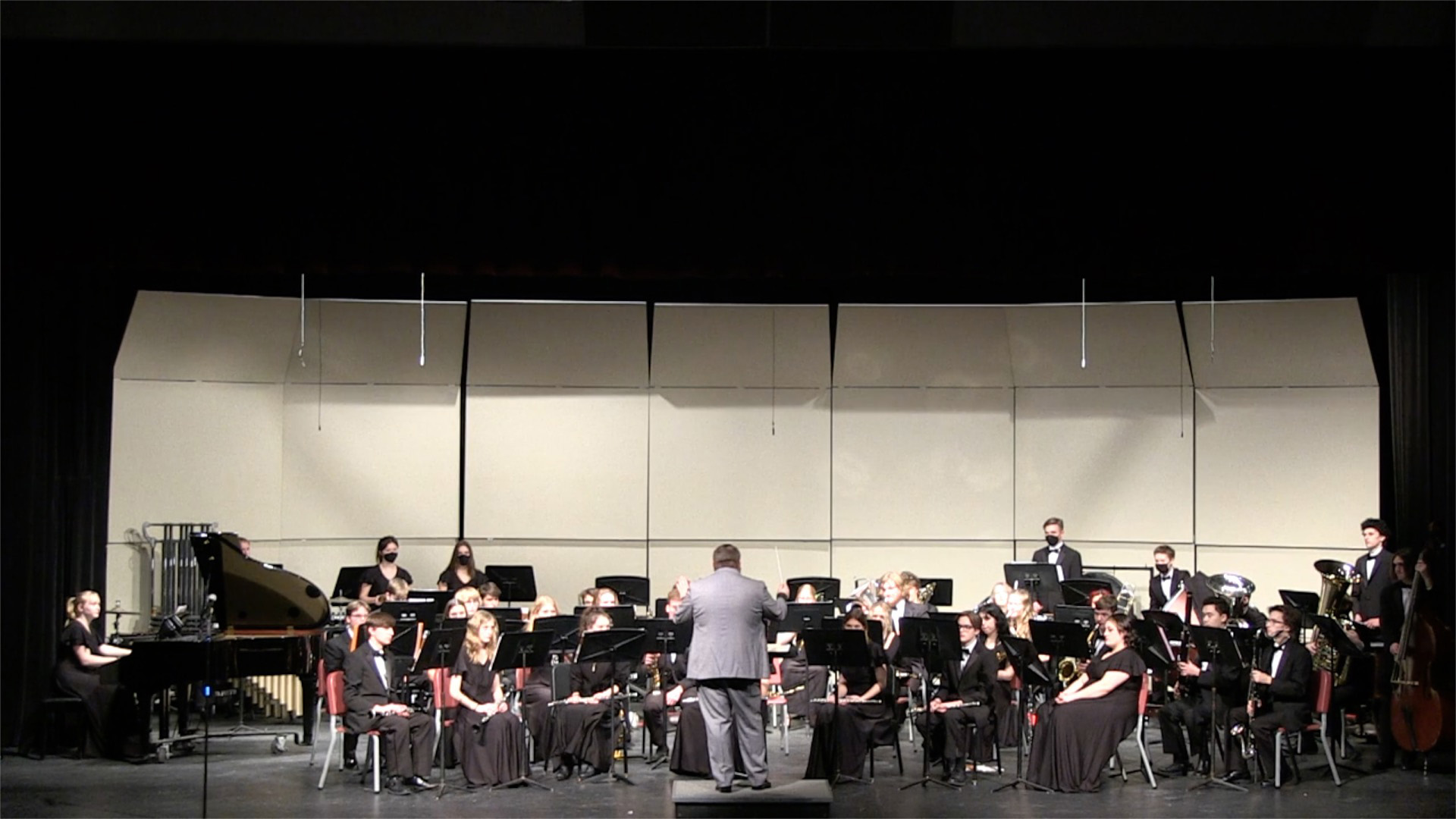
    Loveland, Ohio – On Thursday, February 24 the Loveland High Wind Ensemble performed Incantation and Dance (John Barnes Chance) during their Mid-Winter Concert.

  • Loveland High School Wind Ensemble performs The Children’s March – “Over the hills and far away” 

    Loveland High School Wind Ensemble performs The Children’s March – “Over the hills and far away” 

    Loveland, Ohio – On Thursday, February 24 the Loveland High Wind Ensemble played The Children’s March – “Over the hills and far away” (Percy Grainger) during their Mid-Winter Concert.