The Ohio House will vote, once again, on legislation to remove training and permitting requirements to carry a concealed handgun in the state.
House Speaker Bob Cupp, R-Lima, said the legislation, which a House committee passed out on Tuesday, will be up for a passage vote at a floor session Wednesday afternoon.
Because the House adopted two amendments to the bill, it will need to return to the Senate for approval. Cupp said it will “hopefully” pass over in time for a Senate concurrence vote, meaning the bill could be sent to the governor’s desk come Wednesday afternoon.
However, Senate President Matt Huffman, R-Lima, indicated the Senate would not vote on the bill Wednesday so members could analyze the changes. The Senate passed the legislation in December in a 23-8 vote, with all but one Republican in support. All Democrats opposed the legislation.
Senate Bill 215, sponsored by Republican Sen. Terry Johnson of McDermott, would remove the requirement under current law that gun owners obtain a license to carry a concealed weapon from their local sheriff. The application requires completion of an 8-hour training course and clearing a background check.
Instead, any Ohioan aged 21-and-up who can lawfully possess a gun would be allowed to conceal and carry the weapon.
Between 3,000 and 5,000 concealed carry applications are typically denied per year, according to data from the attorney general’s office. Possible reasons for denial include certain felony and misdemeanor convictions, a previous court finding of mental illness, being the subject of a civil protection order and others.
Looming passage of the bill comes as 2021 has overtaken 2020 as the record-setting year for gun deaths in Ohio, according to data from the state health department. GOP Rep. Shane Wilkin, R-Hillsboro, who leads the committee that passed the legislation Tuesday, said he “doesn’t really understand the question” about how he thinks about passing a gun rights expansion amid a surge in gun violence.
Cupp brushed aside a similar question.
“Guns don’t kill people; people kill people,” he said. “Also it was the deadliest year for the highways, as I understand it. So not sure there’s a connection.”
Several activists with Moms Demand Action, an anti-gun violence organization that formed in the wake of the Sandy Hook School Shooting that left 20 children dead, pleaded with lawmakers Tuesday to drop the bill in something of a last-ditch effort.
At the hearing, Republicans voted down a series of amendments from Democrats generally aimed at reducing gun violence. One would have created an “extreme risk protective order” mechanism, in which families or law enforcement can petition a judge to temporarily seize weapons from a person experiencing a mental health crisis. Another would close a loophole that allows the purchase of firearms in some settings like gun shows without a background check. Another would have required licensed gun sellers to issue a one-page pamphlet to buyers about Ohio’s gun carrying, possession and use laws.
Democrats — citing opposition testimony on the legislation from the Fraternal Order of Police, Hamilton County Sheriff Charmaine McGuffey and others — emphasized law enforcement opposition to the legislation and characterized it as a threat to the general welfare.
“SB 215 is anti-public safety and anti-police,” said Rep. Tavia Galonski, D-Akron. “This legislation puts Ohio law enforcement officials in the line of fire and makes them less safe. We need to be taking steps to make our communities safer, and this dangerous bill does the opposite.”
The Buckeye Firearms Association, a prominent gun lobby group, has declared the bill (informally known as “constitutional carry” or “permitless carry”) to be a major priority issue as primary elections near.
As such, both the House and Senate, under firm Republican control, have passed dueling yet substantively similar versions of the bill. With the Senate legislation as the vehicle of choice, the House must pass the legislation and send it to the Senate. The Senate can either accept the House’s changes (minor in nature) or bring the matter to a conference committee to iron out any differences.
However, Rep. D.J. Swearingen, R-Huron, who offered the amendments, indicated Tuesday that they were introduced with the sponsor’s blessing. The Ohio House passed a different but nearly identical bill in November on a party line, 60-32 vote.
Public health researchers and anti-gun violence researchers draw links between relaxed gun policies and homicide rates and others. For instance, researchers with the American Journal for Public Health found states with permitless carry laws were associated with an 11% increase in handgun homicide rates. The National Bureau of Economic Researchers found states experienced about a 14% higher rate of violent crime after adopting a new concealed carry permitting system similar to Ohio’s current one.
Gun advocates argue that those who plan to illegally carry a weapon or use it for nefarious purposes will already do so, regardless of any permitting requirement. Additionally, they say Ohio laws already allow for the open carry of firearms, so it’s somewhat incongruous that the law doesn’t allow for the concealed carry of firearms.
Some bill supporters, including Senate President Huffman, have argued the legislation is a logical extension of the Second Amendment to the U.S. Constitution. However, the Ohio Supreme Court ruled in 2003 that “there is no constitutional right to bear arms.”
A judge who oversees utility cases was involved in writing a coal and nuclear bailout now at the center of what prosecutors have described as the largest public corruption case in Ohio history, subpoenaed documents show.
That same judge, Greg Price, is presiding over multiple regulatory cases in which a government watchdog agency is trying to investigate that same corruption. His orders, spanning 18 months, have blocked investigations into a utility at the center of the scandal on multiple fronts.
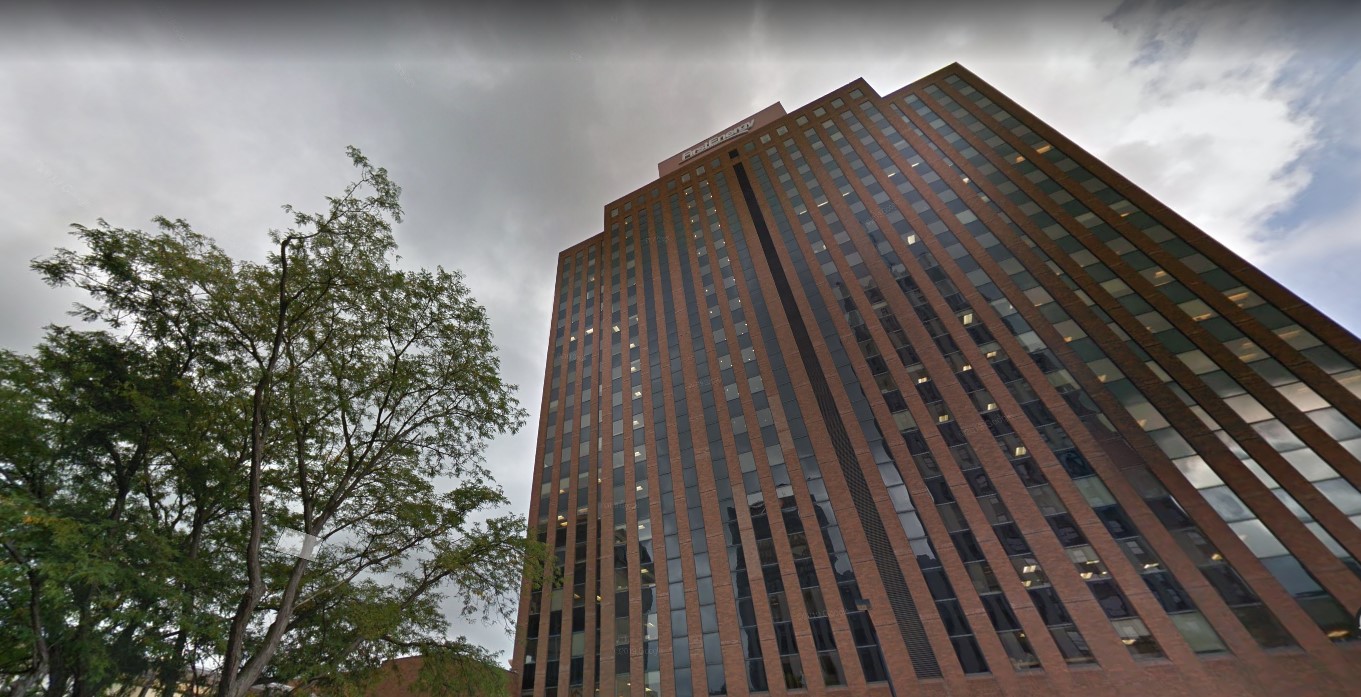
One ruling barred the agency from deposing a witness who worked on a FirstEnergy Corp. audit — an audit that the company’s CEO said in a text message that former PUCO chairman Sam Randazzo helped conceal. Another allowed FirstEnergy to attest to regulators its own innocence, as opposed to hiring an independent auditor to review the company’s practices after it was accused in court documents of participating in a bribery scheme.
As an attorney examiner at the Public Utilities Commission of Ohio, Price hears cases involving disputes between utility companies, residential interests, industrial interests, and others. Examiners — essentially administrative judges — preside over PUCO case hearings, issue procedural orders like what evidence must be turned over between parties in a case, and influence the five-member commission on final orders.
The records show Price helped draft the legislative text, received regular updates about its legislative progress, formally reviewed HB 6 for the PUCO, and was briefed on its status as lawmakers launched efforts to repeal it after the FBI arrested the Ohio House speaker and four alleged co-conspirators.
The legislation, among other provisions, provided $1 billion from ratepayers to bail out two nuclear plants owned at the time by a FirstEnergy subsidiary; subsidized two coal plants jointly owned by several utility companies for an estimated $700 million from ratepayers; and allowed FirstEnergy to “decouple” its revenue from its energy sales, which its CEO said would “recession-proof” the company.
Prosecutors charged former House Speaker Larry Householder in July 2020 with using $60 million secretly provided by FirstEnergy to pass the bill, enriching himself personally and politically. FirstEnergy in 2021 entered into a deferred prosecution agreement with the DOJ, admitting to bribing not only Householder but former PUCO chairman Sam Randazzo. The company says it paid Randazzo $4.3 million for regulatory favors just before he was appointed.
Householder has pleaded not guilty and awaits trial. Randazzo has not been charged with a crime and has maintained his innocence. FirstEnergy paid a $230 million penalty and is cooperating with the investigation in an effort to avert a charge of honest services wire fraud.
Alongside the criminal probes, the PUCO has four open cases regarding FirstEnergy and House Bill 6. These have put Price in charge of answering questions about what kind of evidence FirstEnergy must turn over to outside investigators. Ashley Brown, a former PUCO commissioner and current executive director of the Harvard Electricity Policy Group, said this poses a conflict of interest for Price.
“It’s very, very strange to me that he would be both involved at the policy level and adjudicating those same policy issues later on,” Brown said. “If it were me, I’d recuse myself.”
In a brief phone call, Price declined to answer questions about the subpoenaed records or his role in the passage of HB 6. Matt Schilling, a PUCO spokesman, declined to answer written questions or make officials available for interviews, citing open PUCO cases and pending criminal investigations.
However, he defended Price’s apparent involvement in drafting HB 6.
“It is not unusual for the PUCO or its subject matter experts to be asked to review and share their expertise regarding legislation pertaining to public utility and commercial transportation law,” Schilling said.
Utility law is complex and requires specialized industry and legal knowledge to practice. But an administrative law judge like Price is supposed to be neutral and his actions transparent, said Neil Waggoner, an environmental advocate with the Sierra Club.
“The PUCO, especially under Randazzo’s tenure, showed itself to be neither of those things,” he said. “We need a full accounting of exactly what input and involvement PUCO commissioners and staff had in regard to HB 6 and repeal efforts, as well as an accounting for how that may or may not have impacted ongoing proceedings.”
Then-PUCO Chair Sam Randazzo testifies as an interested party regarding House Bill 6 on May 7, 2019. Source: Ohio Channel.
Requests denied
Householder was arrested July 21, 2020. The PUCO, somewhat inexplicably, didn’t launch any investigation into FirstEnergy until Sept. 15 of that year.
When it finally did, it rejected requests from the Ohio Consumers’ Counsel to hire an independent auditor to determine whether the company broke any laws in the passage of the bill. Instead of bringing in a disinterested investigator, Price ordered a FirstEnergy official to answer to the PUCO whether it did so. The FirstEnergy official denied wrongdoing at the time.
Randazzo resigned as chairman in November 2020 after the FBI raided his condo and FirstEnergy first disclosed the $4.3 million payment to him. The company said it identified the payment via an internal investigation ordered by its board of directors after Householder’s arrest.
In September 2021, Price presided over a hearing over whether FirstEnergy would have to turn over that same internal investigation to the Ohio Consumers’ Counsel, a state-funded watchdog agency that represents residential consumers’ interests before the PUCO. Price ordered the company to give it to the PUCO to review privately, before ruling whether it should be turned over.
“We’ve heard a lot about this internal investigation, but we are in no position to make any rulings as to whether or not it’s privileged sight unseen,” Price said.
After review, the PUCO found the report to be protected by attorney client privilege and ruled it didn’t need to be released.
Around that same time, Price ruled FirstEnergy didn’t need to provide the Ohio Consumers’ Counsel with the documents it gave federal regulators who sought to investigate the HB 6 episode. Price denied the request until the Federal Energy Regulatory Commission issued its audit.
“If and when a public audit is released by FERC, we can revisit this issue at that time,” he ruled in August 2021, according to a hearing transcript.
FERC’s audit, released earlier this month, found FirstEnergy improperly used $71 million to lobby for the passage of HB 6 and ordered the company to develop a plan to refund customers. The Ohio Consumers’ Counsel has since asked Price to honor his word. The matter awaits a ruling.
Larry Householder addresses reporters June 16 after lawmakers voted to expel him from the General Assembly. He has pleaded not guilty to a racketeering charge and awaits trial. Photo by Jake Zuckerman.
‘Burning’ an audit
Before utility companies can add extra fees to users’ bills, they need the PUCO’s permission.
FirstEnergy in 2017 got that permission to apply a “Distribution Modernization Rider” (DMR) fee to its customers. Over the objections of the Consumers’ Counsel, the PUCO denied a request to attach a refund mechanism to the charge. The commissioners called adding a refund mechanism “counterproductive.”
Two years, one lawsuit, and $458 million collected from customers later, the Ohio Supreme Court deemed the charge unlawful and cut it off. The judges found the PUCO allowed the charge without making sure FirstEnergy uses the money to modernize the grid (despite the name). However, state law prohibits the court from demanding refunds unless PUCO explicitly creates such a mechanism.
When the PUCO allowed the charge, it hired Oxford Advisors to serve as a third-party monitor and file a final report auditing the funds. Oxford, through PUCO staff, requested a delay on its deadline to file the report. The commissioners, with Randazzo at the helm one year into his chairmanship, instead determined the audit would be “moot” and dismissed the case on Feb. 26, 2020.
Less than two weeks later, FirstEnergy CEO Chuck Jones sent a text to another company executive (the text was later obtained by the Consumers’ Counsel via records request).
In the text, Jones said Randazzo “will get it done for us but cannot just jettison all process.” He lists several favorable regulatory decisions, including “burning the DMR final report has a lot of talk going on in the halls of PUCO about does he work there or for us?”
In December 2020 and under heavy public scrutiny, the PUCO ordered a different firm, Daymark Energy Advisors, to resurrect the audit and determine how FirstEnergy used the money.
Citing the text as an impetus, the Ohio Consumers’ Counsel asked the PUCO to issue a subpoena for any draft version of the final Oxford audit, and to compel an Oxford employee to testify about it.
Price, in a ruling earlier this month, denied the requests relating to that final audit. He said the Counsel’s reliance on the text message shows its “obvious interest in investigating potential wrongdoing” admitted to by FirstEnergy “rather than investigating what the Commission actually has jurisdiction over investigating, which is whether [FirstEnergy] improperly used DMR funds.”
He ordered the auditor to testify at a PUCO hearing, but only about an earlier filing — not the report that was allegedly covered up.
Daymark’s final audit, released in January, could not trace the outcome of the DMR money because FirstEnergy commingled it with revenue from all 11 of its utilities. The auditors said they were unable to determine both whether the money was spent on modernizing the grid and whether it was spent on HB 6 lobbying.
However, Price, defending the decision to reject the Ohio Consumers’ Counsel’s subpoena, said the second audit “appears to fully address whether [FirstEnergy] properly expended the DMR funds.”
The Consumers’ Counsel has since appealed the case to the five commissioners on the PUCO, emphasizing the “extraordinary” nature of the case. The Counsel asked the PUCO’s legal director — not Price — to certify the appeal and sent to the full commission to overrule Price.
“To paint issues pertaining to the use of DMR funds as outside the PUCO jurisdiction is just plain wrong,” the Ohio Consumers’ Counsel wrote.
‘Nicely done Greg’
The most explicit reference in the subpoenaed records of Price working on HB 6 comes in the window between when law enforcement arrested Householder and when they raided Randazzo’s condo.
After the arrests, a state legislative committee considered a repeal of the bill. A state representative asked in writing whether Randazzo helped write or review the decoupling language in HB 6.
“We did make suggestions to mitigate some of the more objectionable language that, as I recall, would have given the PUCO limited/no discretion,” Randazzo said in an email to Scott Elisar, his former law partner who he hired as PUCO’s policy director.
“Tammy and Greg Price were involved I think. I do recall saying that it should be removed because it was going to be confusing when blended with other issues as well as the difficulties people were having distinguishing between [FirstEnergy] and [FirstEnergy Solutions].”
Most of the records are less clear as to Price’s involvement. They show that starting on April 12, 2019, the day HB 6 was introduced, Price was regularly updated on the bill’s developments. When Randazzo sought help with his testimony before lawmakers in May 2019, PUCO’s legal director Angela Hawkins added Price to an email thread.
“Will make him available to assist if necessary on the below issue,” she saidon May 6, 2019.
On May 20, 2019, Randazzo thanked the head of the Ohio Air Quality Development Authority, Christina O’Keeffe, for a visit to discuss HB 6. Price and other staff are copied onto the email chain, though it’s not clear who attended.
When the bill passed the House on May 29, 2019, a legislative report from the governor’s office listed Price, Elisar and the PUCO’s Statehouse liaison as legislative and legal reviewers for the agency on the bill. A similar reportfrom when the bill passed the Senate listed the designation as well. Price was listed as a “required attendee” for the PUCO on a July 15, 2019 hearing and received a briefing on it afterward.
In late September 2020, another PUCO lawyer wrote a formal legal memoanalyzing legislation to repeal HB 6. The memo is addressed to Price and Randazzo.
An administrative judge blocked a watchdog’s attempt to obtain an audit that the Ohio utility regulatory agency’s former chairman, who has been accused of taking a $4.3 million bribe, allegedly tried to squash before publication.
The ruling, released Friday evening, is a setback for the Ohio Consumers’ Counsel, a state funded agency representing residential ratepayers in utility cases. The OCC has pushed for investigations of FirstEnergy, especially since the company admitted to playing a central role in a massive public corruption scandal.
The OCC asked the Public Utilities Commission of Ohio to grant it a subpoena to obtain a copy of any draft audit into a $458 million charge from FirstEnergy that started in 2017 collected called the “Distribution Modernization Rider.” The OCC also sought to depose an auditor who worked on report.
The Ohio Supreme Court blocked FirstEnergy from continuing to charge customers for the DMR, two years after it was first applied on monthly bills. The court said the PUCO unlawfully failed to ensure the money is actually spent on modernizing the grid. A subsequent PUCO investigation was inconclusive as to whether the DMR monies were used to fund the bribery operations.
The Supreme Court’s order questioned the value of leaving intact the audit when it overturned the rider, finding the reviews fail to properly protect ratepayers from the “possible misuse of DMR funds.” Additionally, the justices reasoned that any findings of misuse of the funds would be moot given the court had already blocked the charge and a state law blocked the court from ordering refunds unless PUCO explicitly allows for them, which it did not. The PUCO later nixed the audit, citing the court’s thinking.
The OCC has previously obtained a text message from FirstEnergy’s CEO referencing former PUCO Chairman Sam Randazzo “burning the DMR final report.”
The text partially came to light when FirstEnergy entered into a deferred prosecution agreement with the U.S. Department of Justice to possibly avert a charge of wire fraud. The company agreed to pay a $230 million penalty. It also admitted to paying Randazzo $22 million over nine years, including $4.3 million just before he started as PUCO chairman. The company also admitted to a separate $60 million bribery scheme ran through the state Legislature to pass House Bill 6 in 2019.
Randazzo has not been charged with a crime and has maintained his innocence. The PUCO has received two subpoenas in connection with the investigation.
PUCO Attorney Examiner Gregory Price denied both the OCC’s requests. He said the facts are clear that no such draft report exists in any form. Additionally, the question of FirstEnergy’s political spending is being “thoroughly addressed” in other PUCO cases.
Price ruled OCC’s reliance on the Randazzo text shows its “obvious interest in investigating potential wrongdoing” as opposed to matters it “actually has jurisdiction over.”
In December 2020, about two months after federal agents raided Randazzo’s home, the PUCO opted to resume the audit into the DMR. However, this time it hired Daymark Energy Advisors. That audit, released earlier this year, was inconclusive as to whether the DMR funds were used to fund the HB 6 campaign. FirstEnergy, the auditors said, pooled funds from all its 11 utilities in one pot, creating an “inability” for the auditors to track the funds.
Price, however, said the final report “appears to fully address whether [FirstEnergy] properly expended the DMR funds.”
In records the PUCO provided to federal prosecutors, Price is copied onto email threads regarding policy meetings before and after the passage of House Bill 6. As was first reported by Cleveland.com, one email shows Price was invited to one such meeting days before the House passed the bill.
Other investigations into FirstEnergy, Randazzo and other alleged conspirators continue. Former House Speaker Larry Householder is expected to stand trial on a racketeering charge in connection with the scandal this fall. He recently asked a court to dismiss the charge against him. That motion has not yet received a ruling.
Meanwhile, FirstEnergy shareholders have filed a class action lawsuit against the company as well.
Nearly two in three Ohio Republicans likely to vote in the upcoming primary election believe the election was “stolen” from President Donald Trump, according to polling conducted late last month.
Of 800 “likely” voters sampled in late January, 62% said they believed the election was stolen and 29% believed there was “some fraud” but President Joe Biden won. Only 8% indicated Biden won with “no fraud.”
Top issues from voters in the poll, conducted by the firm Fabrizio Lee on behalf of a PAC supporting U.S. Senate Candidate J.D. Vance, included “border security and immigration” (16%), followed by “election and voting security” (13%) and several economic areas like inflation, taxes, government spending and jobs (all around 11%).
“While every single message tests well, the best of the bunch are cutting federal aid to localities that allow non-citizens to vote, requiring proof of citizenship to get public assistance, and allowing border states to complete the border wall with Mexico,” the polling states, in advice to Vance.
There’s no evidence to suggest the election was stolen. Trump’s administration officials have said there was no fraud at enough scale to sway the election, as have state audits and media investigations. However, Trump and his allies in politics and media have insisted the 2020 election was fraudulent regardless.
In the U.S. Senate GOP primary for the open seat to be abdicated by incumbent Sen. Rob Portman, nearly all the leading candidates — Josh Mandel, Vance, Mike Gibbons, and Jane Timken — have embraced Trump’s claim that the election was stolen.
Only Sen. Matt Dolan, R-Chagrin Falls, has unequivocally rejected the election fraud theory and called out leaders who “perpetuated lies.” The recent polling shows 15% of his likely voters believe the election was stolen.
“Dolan voters differ greatly from the rest of the electorate, but they are only 3% of the vote,” the polling states.
Education and construction unions, natural gas utilities, the beer and wine industry, optometrists, car dealers, telecommunications firms, nursing home operators, doctors’ associations and others dumped money into lawmakers’ accounts in 2021.
These funds set the stage for the maiden elections on yet-to-be finalized maps setting the district lines. (The Ohio Supreme Court overturned the GOP-passed maps last month, determining them to be an unlawful gerrymander. The court is currently reviewing a revised proposal).
Republicans trounced Democrats in terms of fundraising by just about any measurement.
The largest donors contribute disproportionately to Republicans. The largest fundraisers in the General Assembly are all Republicans. And bank accounts controlled by the party itself tower over their Democratic counterparts.
Political campaigns cost money. Sometimes, a lot of money. Here’s who’s providing it.
Largest PAC contributors
These are some of the largest, non-individual donors to Ohio lawmakers through 2021. This list doesn’t include accounts affiliated with the state Democratic and Republican parties.
Political Education Patterns, an arm of the International Union of Operating Engineers, is typically one of the most prominent Ohio donors but has not yet filed a full 2021 report. Using data reported by candidates (instead of the PAC itself), the organization contributed about $564,000.
Affiliated Construction Trades, comprised of several different unions, contributed about $561,000.
The Ohio State Association of Plumbers and Pipefitters gave $338,625.
The Wholesale Beer & Wine Association, through its PAC, gave $280,000.
The Ohio Credit Union Legislative Action Committee gave $203,718
NiSource PAC, whose namesake is the parent company of Columbia Gas, gave $144,225
The Ohio Bank PAC gave $121,000
The Ohio Optometry PAC gave $109,000.
Biggest fundraisers
These are the largest fundraisers in the House and Senate in 2021. They are all Republican, part of a pattern of the party significantly outraising Democrats by almost any measure.
The filings can give an indication of who may be jockeying for influence or a leadership position within their caucuses.
For instance, the Ronald Wilheim, CEO of the Communicare nursing home chain, and his wife contributed $92,000 to six Republicans through the year. Brian Colleran, CEO of Foundations Health Solutions chain of nursing homes, and his wife contributed $80,400. Colleran’s business partner Daniel Parker contributed nearly $27,000. (These donations come atop contributions from three separate PACS representing the industry.)
Other notable, large donors to legislative and statewide candidates include:
Members of the Haslam family, some of whom own the Cleveland Browns, contributed more than $58,000 to various Republicans. James Johnson, another Browns owner, contributed another $13,000 as well.
The namesake family of The George Group (real estate) gave $42,000 to Republicans — $40,000 of which went to Rep. Jay Edwards
Virginia “Ginny” Ragan, one of the most prolific GOP donors in Ohio politics, gave $65,000, all to Republicans.
Regina Mitchell, of Warren Fabrication, gave $43,000 to three Republicans
Albert Ratner, of RMS Investment Group, and his wife gave nearly $59,000, almost exclusively to Republicans
Abigail and Leslie Wexner, who gave $54,000 to Republicans
Republicans clobber Democrats
Whichever way you cut it, Republicans wield a powerful cash advantage over Democrats.
The filing period captures the year leading up to redistricting but before the Ohio Supreme Court overturned a map proposal that would have likely expanded and cemented in a Republican supermajority.
In the gubernatorial race, incumbent Gov. Mike DeWine raised about $7 million compared to his primary challengers: about $1.2 million from Renacci (roughly $1 million of which came from personal funds) and $624,000 from Joe Blystone. On the Democratic side, former Dayton Mayor Nan Whaley raised $2.4 million, compared to former Cincinnati Mayor John Cranley, who raised about $1.9 million.
In the race for chief justice of the Ohio Supreme Court, Justice Sharon Kennedy raised about $332,000 compared to about $164,000 for Justice Jennifer Brunner.
Columbus, Ohio – The ranking Democrat in the Ohio House said Attorney General Dave Yost has blocked her from legal representation as the Ohio Supreme Court reviews the latest redistricting proposal from state lawmakers.
The Ohio Redistricting Commission voted 5-2 along party lines Saturday to send over a revised map after the court overturned its first effort, determining it to be an unconstitutional gerrymander.
Democrats on the commission have previously been represented by their own counsel and submitted their own arguments — distinct from Republicans on the committee. House Minority Leader Allison Russo, D-Columbus, said in a statement Wednesday however that Yost has since blocked them from their legal representation. This comes as a deadline looms for the state officials to respond to objections to the GOP-approved map submitted for the court’s review.
Through spokeswoman Maya Majikas, Russo said Yost is “denying” her “the ability to consult with her legal counsel,” two attorneys with the Ice Miller law firm in Columbus retained through the attorney general’s office.
“Leader Russo is being denied her outside counsel representation at this stage of the litigation period,” Majikas said. “Ice Miller is not permitted by the AG to provide Democrats counsel/bills for any service to us.”
Yost seemed to confirm Russo’s central claim through spokeswoman Bethany McCorkle on Wednesday evening.
“The Ohio Supreme Court ordered the Commission to draw a new map, which is why one counsel will respond to the court on behalf of the entire commission,” McCorkle said. “None of the individual members will respond separately.”
Democratic members of the commission are technically named as defendants in the lawsuit. However, their interests largely align with the plaintiffs — a spread of special interest and voting rights organizations — and against Republicans on the commission who defended the maps.
“The Republican Legislative Commissioners prepared maps so lopsided that Republicans are essentially guaranteed veto-proof majorities in the General Assembly no matter how many votes Democrats earn,” the Democrats’ lawyers wrote in court filings.
The Supreme Court, overturning the legislative maps, found they likely guaranteed Republicans a supermajority in defiance of voter’s preferences, as required by the constitution. They ordered the commission to draw a map as close as possible to the state’s 54% Republican to 46% Democratic partisan tilt.
The newest proposal would create a projected 57-42 split in the House and 20-13 split in the Senate, far more advantageous for Democrats than the original. However, the Democrats’ margins are much tighter. For instance, in the House, 12 of the “Democratic leaning” seats in the latest map could also be considered tossups, with a Democratic edge of only 50-51%. All of the GOP-leaning seats favor Republicans by more than 52%.
The Ohio Redistricting Commission — comprised of four, bipartisan legislative appointees along with the governor, state auditor and secretary of state — was ordered to respond to the objections by Friday.
The commission itself is represented by two lawyers. The statewide officeholders and Republicans on the commission have their own lawyers as well. Even if, as Yost said, the commission’s members don’t respond individually, it’s likely that Republicans who control it will likely shape its arguments.
Sen. Vernon Sykes, D-Akron, the other Democrat on the committee, did not respond to an inquiry to his office.
Electric customers across Ohio collectively spent an estimated $211 million via add-on bill charges over the last two years to cover for losses from two coal-fired power plants that continue to bleed millions annually, according to new data from state regulators.
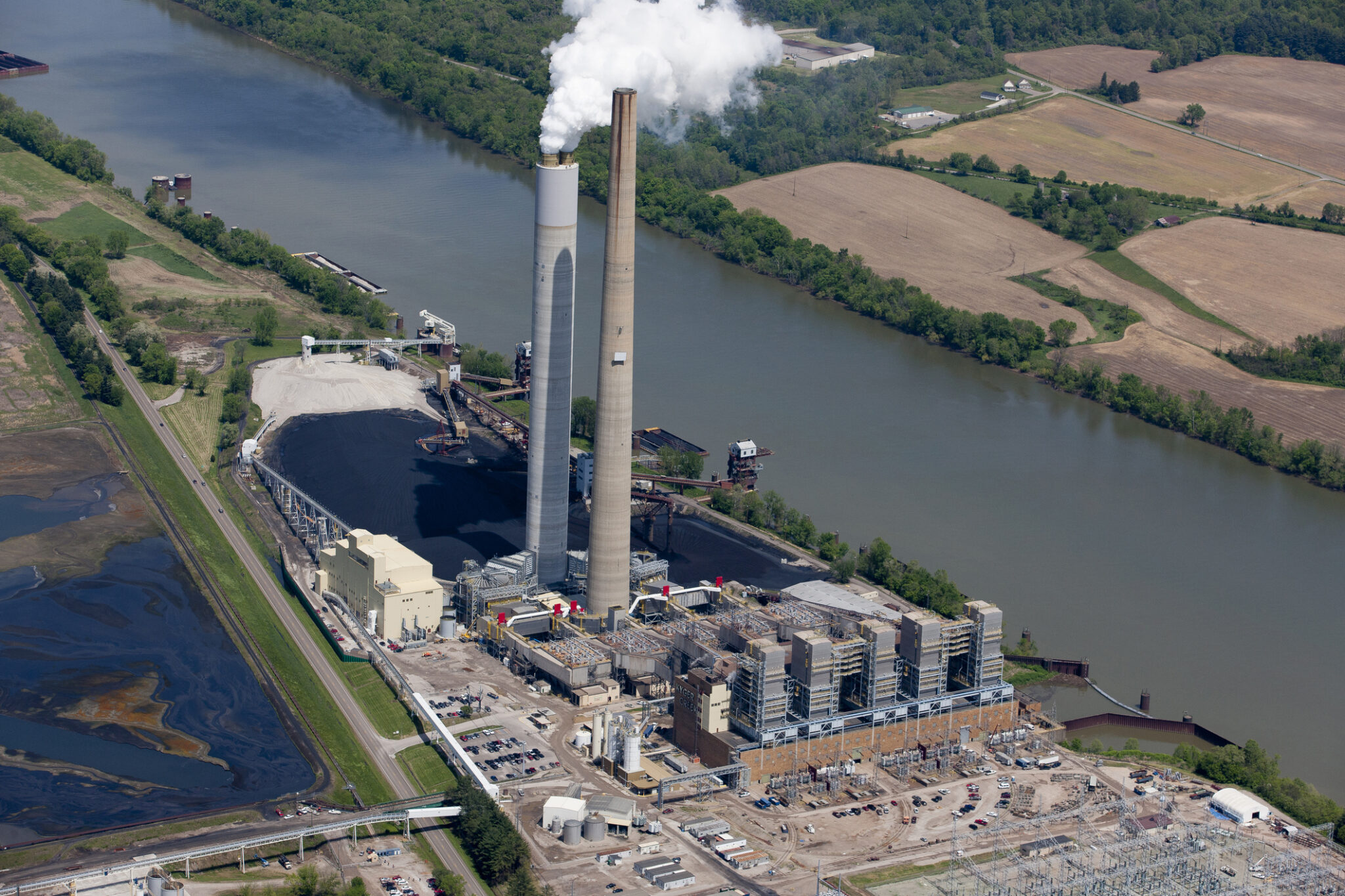
The money to the Ohio Valley Electric Corp. (OVEC) — an entity comprised of several investor-owned utilities from multiple states that operates the plants — flows thanks to a 2019 state law now at the center of a criminal bribery prosecution.
The Public Utilities Commission of Ohio began to allow three of the utilities that own and are contractually obligated to buy power from OVEC — American Electric Power (43% equity stake), Duke Energy (9%), and AES Ohio (4.9%) — to pass on their losses on OVEC to their customers, starting in the mid-2010s. The payments were originally only allowed through 2024. Through 2019, the three utilities’ customers were charged an estimated $159 million on OVEC.
House Bill 6, a law passed in 2019 that’s now the focal point of what prosecutors have said is the largest political corruption investigation in state history, extended the subsidies through 2030 and spread the three utilities’ (AEP, Duke and AES) losses to electric customers of all Ohio utilities (not just those that own OVEC).
In 2020, Ohio electric customers statewide paid $115 million to OVEC’s owners to cover their losses on the deal, according to data provided by a PUCO spokesman. In 2021, they paid about $97 million (July through December 2021 costs are estimates). Under the law, residential customers pay a maximum $1.50 per month to utilities to cover their OVEC losses. Industrial customers pay a maximum of $1,500.
OVEC operates two 1950s-era coal plants in Cheshire, Ohio and Madison, Indiana, originally built to power the federal government’s uranium enrichment facilities near Portsmouth. That agreement ended in 2003. The utility companies that own OVEC last renegotiated their contract in 2011 extending its life through 2040.
Technically, the OVEC plants could save utility customers money if OVEC could generate and sell electricity at below-market costs. However, a mix of market forces, environmental regulations and recently spending more than $1 billion on a “scrubber” system designed to limit emissions have left the plants selling electricity at costs well above those of PJM, an energy marketplace serving utilities in 13 states including Ohio.
“[Our] analysis shows that at this time, the OVEC plants cost customers more than the cost of energy and capacity that could be bought on the PJM wholesale markets,” wrote London Economics International, a firm the PUCO commissioned to audit the subsidies, in December.
A draft version of a 2020 PUCO-commissioned audit by the same firm found that “keeping the plants running does not seem to be in the best interests of the ratepayers.” The line was removed from the final version at the request of a PUCO staffer who asked the auditors to use a “milder tone and intensity of language,” according to emails obtained by the Ohio Consumers’ Counsel (OCC), which represents ratepayers in PUCO cases and has advocated ending the OVEC subsidies.
Along with the raw finances, Ohio consumers are subsidizing plants that have belched nearly 21 million tons of carbon dioxide, 21,000 tons of nitrogen oxide, and 12,000 tons of sulfur dioxide into the atmosphere since January 2020, plus smaller discharges of arsenic, lead, and mercury, according to data from the U.S. Environmental Protection Agency provided by the OCC.
“Why the hell is this still in place?” said Neil Waggoner, an advocate with the Sierra Club’s Beyond Coal campaign. “I think that this is utility capture in practice. This is the utilities in this state having a death grip on the regulators and people in power to the point that they’re getting exactly what they want.”
The Clifty Creek Power Plant, in Madison, Indiana, which is operated by OVEC. Photo taken by Rep. Casey Weinstein, D-Hudson, who visited the plant and has called for a repeal of state law forcing Ohio ratepayers to subsidize it.
A sticky bailout
FirstEnergy Corp. admitted in July to paying more than $60 million to an account controlled by the former House Speaker and his allies to ensure passage of HB 6. The prosecutors’ allegations have focused in court documents on an estimated $1.3 billion nuclear bailout and other non-coal related provisions of the sweeping bill that are favorable FirstEnergy. Former speaker Larry Householder, accused of using the money to engineer passage of the bill and shore up his own political aims, has pleaded not guilty. Two Householder allies involved in the alleged scheme have pleaded guilty to racketeering.
State lawmakers in early 2021 passed legislation repealing the nuclear bailout and “decoupling” provision (a ratepayer-backed revenue guarantee for FirstEnergy). However, the OVEC bailout was left intact.
There are bipartisan efforts in the House and Senate to repeal the OVEC bailout from state law, and the narrower PUCO-approved bailout that preceded them. Neither has come up for a vote and the sponsors are pessimistic on their chances.
Sen. Mark Romanchuk, R-Ontario, perhaps the plants’ most prominent critic and co-sponsor of the Senate legislation, said he is in negotiations with the utilities that own the plants and is not giving up. He declined an interview.
“Not sure where things will go but we’re not giving up,” Romanchuk said.
House Democrats have called for a repeal of the OVEC subsidies, though they only control 34 of 99 seats in the chamber. Rep. Jeff Crossman, a Parma Democrat who recently announced plans to run for attorney general, said the OVEC charges should be repealed but as much is unlikely.
“There’s probably not a will to undo the OVEC charges,” he said. “They donate gobs of cash to the right folks. There’s just no other reason to support these plants.”
House Speaker Bob Cupp, R-Lima, said in October he doesn’t believe there’s support in the House Republican caucus to repeal the coal bailout.
House Majority Leader Bill Seitz, R-Green Twp., has told several state media outlets the bailouts aren’t going anywhere. He did not respond to written questions about the uneconomic nature of the plants, or why ratepayers should cover their owners’ losses on them.
“We’ve beat this [OVEC] horse to death. It’s not going to change,” Seitz said to Cleveland.com in October. “They’ve introduced God knows how many bills — none of them are going anywhere, in my humble opinion.”
Michigan takes action
AEP is by far OVEC’s largest shareholder, with a roughly 43% equity stake in the company, and the two share several executives.
While repeal efforts in Ohio are at a lull, other states have signaled resistance to allowing utilities to continue to pass OVEC’s owners’ losses to customers.
The Michigan Public Service Commission in a November order noted that OVEC’s costs exceed the market price of electricity by tens of millions. It warned that AEP’s local utility may not be able to pass on all its OVEC losses to customers that are “incurred because of imprudent” decisions.
“The order today put I&M [an AEP unit] on notice that the Michigan share of these excess costs are unlikely to be permitted without additional evidence that continuing to purchase power from the units was in the best interest of its customers,” the Michigan regulators said in a news release.
AEP spokesman Scott Blake said in an email the OVEC plants are “critical resources that help ensure the reliability of the grid and offer protection from increases in the costs of other fuels.” He said AEP Ohio customers for decades benefitted from OVEC’s power via affordable electricity and good jobs. OVEC, he argued, insulates customers from cost spikes caused by things like a surge in natural gas prices or a shortfall of renewable energy supply.
“AEP Ohio customers benefited for decades from the power provided by OVEC in the form of affordable electricity and good jobs,” he said. “While there may be years where power from OVEC is more expensive than the market, as generation from natural gas and other sources becomes more expensive, customers could see refunds from OVEC in the future.”
Fitch Ratings determined OVEC’s outlook is “stable” in February — just one step above “speculative.” However, its analysts found that repealing HB 6 wouldn’t necessarily harm OVEC’s prospects. The analysts reasoned that for one, in the event of a repeal, AEP, Duke and AES would still be able to pass on their OVEC losses to customers. For two, the “sponsoring” utilities have already contractually agreed to purchase the power OVEC generates, regardless of who eats the losses.
Meanwhile, in a Virginia appeal of a public service commission rate case, Virginia Attorney General Mark Herring accused OVEC of charging an AEP utility in Virginia well beyond market costs for electricity. The case is ongoing.
In the big picture of the insurrection, the criminal charges against Alexander Sheppard are unremarkable.
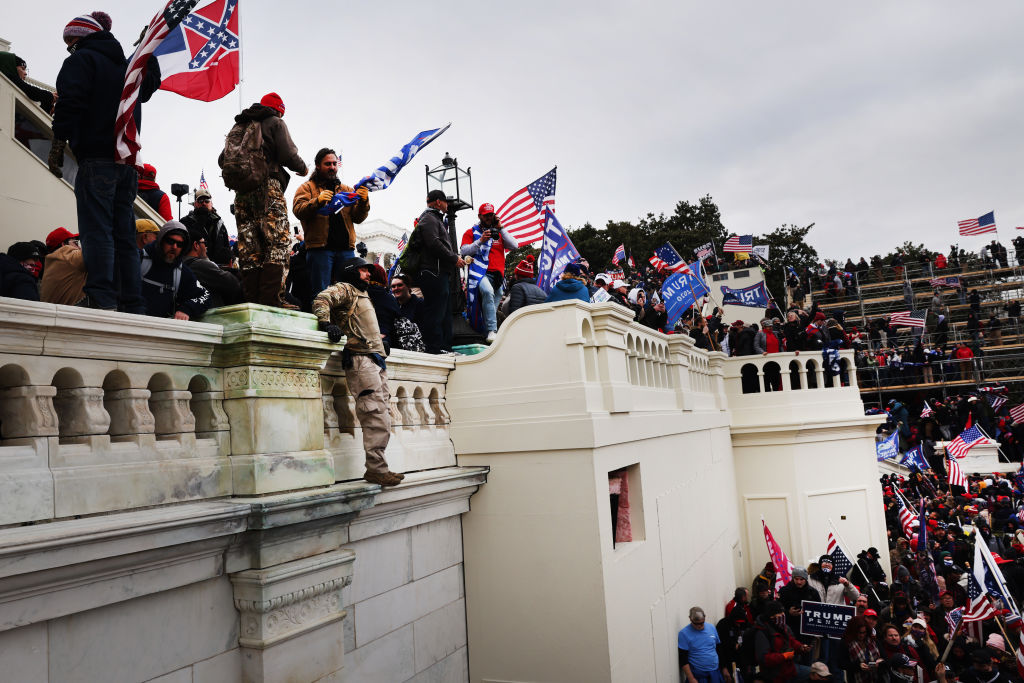
Federal prosecutors say Sheppard arrived in Washington D.C. from Powell, Ohio after posting on Facebook that the election was “RIGGED.” He faces five charges, including disorderly conduct in a Capitol building. He wasn’t accused of violence or destruction, but of joining the throngs of about 2,000 people who comprised a mob that stormed the Capitol in an attempt to forcefully block the U.S. Congress from certifying President Joe Biden’s 2020 electoral win.
Then-President Donald Trump and his allies hosted the Jan. 6, 2021 event, based on the central lie the election was fraudulently stolen from the incumbent. Trump said in a speech that day the attendees should “stop the steal” and “fight like hell” because they’re “not going to have a country anymore” if they don’t.
Sheppard, 21 at the time, was spotted in footage outside the House Speaker’s lobby just before a Capitol Police officer shot and killed Ashli Babbitt as she tried to climb through a transom window toward members of Congress.
In charging documents, prosecutors included a still photo from raw footage from a man named John Sullivan, who also breached the Capitol that day. About 80 seconds after the camera shows the included still frame of Sheppard — wearing a Trump red “Keep America Great” hat and navy blue hoodie, yelling at police officers blocking the door — Babbitt gets shot some 10 feet away.
Alexander Sheppard, pictured on right. Source: DOJ
A public defender representing Sheppard, who has pleaded not guilty, did not respond to inquiries, including whether Sheppard witnessed Babbitt’s shooting. A spokesman for the U.S. Attorney’s Office for the District of Columbia declined comment.
The episode is a reminder of the way Ohioans pockmarked events around the Capitol on an infamously seditious, chaotic and politically violent day of American history. At least 38 Ohioans were accused of crimes in connection with the riots. Six have pleaded guilty, mostly for comparatively minor offenses.
The Ohio cohort’s alleged conduct ranges from conspiring to plan the event with the Oath Keepers (a paramilitary group), to waging hand-to-hand combat with police officers and wrestling down barricades outside, to smoking joints and carrying a bottle of bourbon around the seat of government.
Many of the suspects filmed and photographed themselves throughout the day, which prosecutors relied on heavily in bringing charges against the defendants. Several signaled allegiances to QAnon, a sprawling, online conspiracy theory whose believers essentially say the Democratic Party runs a massive, Satan-worshipping child sex trafficking ring that only Trump can thwart.
A review of court documents, raw footage and news coverage shows the range of conduct Ohioans took part in that day.
Oath Keepers and the ‘stack’
A still from footage of the riots in Washington D.C. captures Jessica Watkins, 38, seen with several people in Oath Keepers regalia, heading up the Capitol stairs. Screenshot from YouTube, credit Ford Fischer / News2Share.
Some of the most serious charges of the day accuse several Ohioans who are Oath Keepers of conspiring to plan the events of Jan. 6. The Oath Keepers are a right-wing, anti-government extremist group within the militia movement comprised mostly of former law enforcement and military members. Twenty one members from multiple states were charged with various offenses.
They were seen in matching combat gear in a “stack” formation (hands on the shoulders of the person in front of them) moving up the stairs toward the east side entrance of the Capitol. Prosecutors have accused them of conspiring to plan a Capitol raid as far back as November 2020. On Jan. 6, they wore matching combat fatigues and ballistic helmets. They were unarmed, but prosecutors have alleged they had a “quick reaction force” at the ready to deliver guns if needed. A lawyer representing one defendant, however, said in court filings the ‘force’ was one overweight, old man and called the government’s claim a gross overstatement.
Jessica Watkins, a Champaign County bartender, ran a small group she called the “Ohio State Regular Militia” — a subset of the Oath Keepers that folded in with the larger unit that day.
“To me, it was the most beautiful thing I ever saw until we started hearing glass smash,” she said of the raid in a January 2021 interview with the Ohio Capital Journal “That’s when we knew things had gotten really bad.”’
Watkins characterized her participation as non-violent. Footage has since emerged, identified by amateur internet sleuths “Capitol Terrorists Exposers” and later published by The New York Times, showing her and other Oath Keepers in a crowd trying to push past the Capitol Police into the U.S. Senate.
“Get in there! They can’t hold us!” Watkins yells in the footage.
Jessica Watkins was charged with conspiracy for her role in the Capitol attack, alongside other Oath Keepers in military-style garb. New footage shows Watkins (and others linked to the group) pushing against riot police on Jan. 6, contradicting claims by her defense counsel. pic.twitter.com/blfDeeYaP2
Also in the clash were Ohioans Donovan Crowl and Sandra Parker, according to prosecutors. Bennie Parker, Sandra’s husband, stayed in communication from outside the building. All have pleaded not guilty.
“So can I bring my gun?” Bennie Parker allegedly texted Watkins before the riot, charging documents state.
‘Kill the tyrannical government’
Douglas Wright, of Canton, in a photo prosecutors say they obtained from his Facebook page. Source: DOJ
David Mehaffie, of Kettering, Ohio, acted as a quasi-commander during one of the most brutal clashes between rioters and police during the siege, according to federal prosecutors. Police had formed a human barricade against a door at an exterior terrace at the Capitol complex.
According to prosecutors, he left the scrum and spent 26 minutes above the fray “to coordinate the mob’s actions” by directing efforts and passing weapons around like stolen police shields.
“If you are going in, get on this side,” he yelled to rioters, according to footage obtained by prosecutors. “Push! Push!”
Capitol Police Officer Michael Fanone would later say he was electroshocked in the fracas involving Mehaffie. A woman named Rosanne Boyland, a pro-Trump member of the mob, died after she was trampled amid the chaos, according to the Huffington Post.
Mehaffie pleaded not guilty and awaits trial. His lawyer did not respond to inquiries. Other Ohioans were accused of violence elsewhere on the Capitol grounds.
Cliff Mackrell pushed, shoved, struck at, and peeled a gas mask from the face of a Capitol Police officer outside the building to expose him to various chemical irritants like tear gas in the air, according to footage obtained by prosecutors.
“Whatever it takes take for my country,” he said in the footage, per the DOJ. He posted on Facebook later that day that it’s our “literal jobs as Americans to kill the tyrannical government.”
Facebook messages later obtained by law enforcement quote Mackrell, a Wellington, Ohio man, as saying his head hurts because he was hit 10 to 15 times with a baton.
Mackrell has pleaded not guilty and awaits trial. His lawyer did not respond to an email.
“Yesterday wasn’t the end,” he said to the newspaper. “Yesterday was the first battle of the war. I promise you.”
In charging documents, prosecutors included a photo of him and other rioters with their hands on a metal barricade, seeking to overpower Capitol Police officers on the other side. In Facebook posts prosecutors say they obtained, Wright seemed to have foreseen clashes with law enforcement.
“WE ARE GOING TO HAVE TO FIGHT THE BLUE TOMORROW,” one message states (capitalization in the original).
“FROM WHAT I SEEN TONIGHT THE TEMPERS WILL BE UP TOMORROW AND POLICE LINES WILL BE BREACHED,” reads another.
Wright pleaded not guilty. His attorney did not respond to an inquiry.
Jared Hunter Adams, a Plain City, Ohio man, was accused of entering the building. Prosecutors say he brought two hunting knives to Washington D.C., but did not bring them with him into the building. They cited alleged comments from Hunter captured in footage as evidence to successfully quash a motion from Hunter to allow him to possess firearms while he awaits trial.
“Next time we won’t leave our guns at home,” he said on Jan. 6, per court documents.
Adams has pleaded not guilty. His lawyer, Joseph Roll Conte, declined to comment.
QAnon: Where we go one, we go all
Ohio woman Christine Priola, right, roamed the floor of the U.S. Senate during the Jan. 6, 2021 insurrection. She currently faces several criminal charges stemming from the event. She has pleaded not guilty. (Photo by Win McNamee/Getty Images)
Some Ohioans publicly signaled their adherence to QAnon, the online conspiracy theory that exploded in popularity during the pandemic
A Piqua, Ohio woman named Therese Borgerding was photographed holding a large “Q” (in the theory, Q is a high ranking anonymous government official who leaves cryptic messages for followers about Trump’s looming purge of detractors from the federal government) sign. She has pleaded not guilty. Her lawyer did not respond to an inquiry.
Timothy Allen Hart, a Dayton man, was photographed wearing a “Q” sweatshirt inside the building. Another, Ethan Seitz, saw a “militia” that “wants to storm the Capitol and take the building after Trump’s speech,” according to Facebook messages obtained by law enforcement included in charging documents. Along with posts stating that the people “will not allow our country to be stolen! #stopthesteal,” he posted a photo of himself the night before the riot from his hotel room.
The post states he’s in Washington D.C. and ends with QAnon’s unofficial mantra: “Where we go one, we go all.”
Another woman named Chrstine Priola was one of a smaller group of rioters who allegedly made it onto the floor of the U.S. Senate. Prosecutors say she wielded a sign reading “THE CHILDREN CRY OUT FOR JUSTICE” — QAnon followers often use vague references to protecting children as a coded means of attracting new followers. Shortly after the riot, Priola resigned from her role as a school therapist for the Cleveland Metropolitan School District, according to Cleveland.com. She resigned in a QAnon-tinged letter stating she was “switching paths to expose the global evil of human trafficking and pedophilia, including in our government agencies and children’s services agencies.”
Priola has pleaded not guilty. Her attorney, Charles Langmack, noted that discovery (the trading of evidence between the defense and prosecution) is ongoing and declined further comment.
The partiers
James Matthew Horning smoking what prosecutors say is a marijuana cigarette. He was also photographed inside the Capitol. Source: DOJ.
The Jan. 6 mob contained violent extremists, Trump zealots, an Olympic swimmer, men in costume, and a number of people who seemingly flowed into the building with a crowd.
However, there’s some evidence that people used the mayhem simply to catch a buzz in a government building.
“F**k it, smoking a joint on the Capitol steps right now,” wrote James Matthew Horning, who attended the protests with his daughter, according to prosecutors.
In a Facebook comment thread provided by a tipster to the FBI, a person asked Horning why he attended the protests. Horning listed three reasons.
“To participate in anarchy, to smoke weed in government buildings, [but] the real reason was to intimidate congress,” he wrote in a post detailed in the documents. “They have a 9% approval rating. We accomplished that. Maybe they will work on that because they know we could have got them and have mercy”
Columbus men Robert Anthony Lyon and Dustin Thompson attended the event, the latter of whom was accused of trying to steal a coat rack on his way out the door. Thompson bailed on the coat rack and fled when confronted by police, according to prosecutors.
Lyon was allegedly found to have marijuana, pipes, and bourbon in his bag — he was charged with crimes related to the insurrection, not the substances.
In another case, prosecutors alleged an Instagram video from an account called “brotunda” that appeared to show Hart smoking marijuana in the rotunda of the Capitol building.
“It can be inferred that Hart was smoking marijuana in the video due to the fact that the induvial who was taking the video was counting how many ‘joints’ were in the video and asked another individual if he smoked weed,” an FBI agent wrote in an affidavit.
Dr. Sherri Tenpenny testifies before the Ohio House Health Committee on June 8, 2021. During her presentation, she said vaccines are magnetizing to their recipients and “interface” with 5G cell towers. (Photo source: The Ohio Channel)
In June, Sherri Tenpenny, a state-licensed doctor of osteopathic medicine and notorious COVID-19 disinformer, baselessly claimed in a televised, government meeting that COVID-19 vaccines “magnetize” recipients and “interface” with cell towers.
The comment wasn’t an aberration from Tenpenny, who has in the past described vaccines as a tool of “depopulation.” The Ohio State Medical Board, an agency tasked with overseeing discipline and complaints of state physicians, still renewed her license in September as part what it called an “automatic” process of handling renewals.
Her renewal points to a bigger problem at the intersection of politics, mass media and public health: a loud, super minority of physicians has found ways to monetize lies about COVID-19 and vaccines that prevent it, and state medical boards are ill equipped to handle the problem, according to a report released earlier this month by the de Beaumont Foundation.
“During this ongoing public health emergency that has claimed more than 5 million lives globally, a small minority of physicians have exploited the credibility that comes with their medical licenses to disseminate disinformation to the public,” the report states. “Their lies, distortions, and baseless conspiracy theories have caused unnecessary suffering and death that are prolonging the pandemic.”
“Their lies, distortions, and baseless conspiracy theories have caused unnecessary suffering and death that are prolonging the pandemic.”
– de Beaumont Foundation
Only about 21% of state medical boards have taken any disciplinary action against a licensee for disseminating false or misleading health information, according to a survey conducted by the Federation of State Medical Boards. About 2 in 3 boards said they’ve noticed an increase in complaints on the issue.
Ohio’s medical board’s stated mission is to “protect and enhance the health and safety of the public through effective medical regulation.” Spokeswoman Jerica Stewart said state law allows the board to discipline doctors for making a “false, fraudulent, deceptive, or misleading statement in relation to the practice of medicine and surgery.” However, there’s a high standard of proof to meet. Tenpenny’s license, Stewart said, was automatically renewed, part of an automated process to keep up with the 92,000 licensees in Ohio. Tenpenny did not respond to an email.
“Ohio law prohibits the Medical Board from sharing details about received complaints and investigations even if a licensee chooses to publicly comment on their interactions with the board,” she said. “I’d also like to reiterate, a recent renewal does not prevent the board from taking future disciplinary action and does not mean that there isn’t an open investigation.”
The de Beaumont report criticizes boards that have “rubber stamped renewals for doctors who are in clear violation of medical standards, which allows them to do more harm with no questions asked.”
Medical boards have structural problems stopping them from disciplining disinformers, per the report. Their work is shrouded in secrecy, the problem is somewhat new and fast-evolving, and investigations are time consuming.
These claims fly in the face of real-world evidence showing vaccines are incredibly powerful protectors against serious health outcomes from COVID-19 like hospitalization or death. Likewise, researchers have found there’s no increase in mortality in vaccine recipients, and that recipients had lower rates of non-COVID-19 mortality after adjusting for age and other characteristics.
The de Beaumont Foundation, a public health advocacy group, commissioned polling on the issue from Morning Consult. Of 2,200 adult respondents, about 9 in 10 said physicians don’t have the right to “intentionally spread misinformation or false health information.” About 8 in 10 said they should be disciplined for doing so.
The coronavirus continued a five-week surge in Ohio on Thursday, with state data showing worsening infection and hospitalization rates.
While time lag and a Thanksgiving holiday cloud the latest data, an average of about 5,000 Ohioans per day contracted COVID-19 at the end of November, compared to about 3,600 daily at the beginning of the month, according to an analysis of state health department data.
Of any 100 tests taken over the last week, more than 15 on average are coming back positive — a nearly peak level of test positivity.
Hospitalization data reflects the case increase. About 190 Ohioans were hospitalized per day in late November, compared to about 145 at the beginning of the month. More than 3,900 state residents are currently hospitalized with COVID-19, according to data from the Ohio Hospital Association, the highest rate since early January.
Hospitalization rates are up for every age cohort besides those 0-19 years old.
Speaking to reporters Thursday, Ohio Department of Health Director Dr. Bruce Vanderhoff emphasized the best way to ease the hospital burden is to seek vaccination — vaccinated people comprise less than 6% of those hospitalized with COVID-19. Short staffed and fatigued hospital systems, he said, need the support.
“The problem right now isn’t necessarily physical beds and physical capacity, but staff,” he said.
In terms of vaccination, Ohio continues to fare poorly. The state is the 10thleast vaccinated in the nation, according to data from the New York Times. About 58% of Ohioans are at least partially vaccinated against COVID-19, compared to 71% of Americans.
Death data tends to lag behind infection data by several weeks, and there’s no clear picture of how many deaths resulted from the ongoing case surge. However, a previous case surge peaked in mid-September. By October, roughly 80 Ohioans per day on average died of COVID-19, despite widespread availability of safe and effective vaccines. Less than 5% of those who died of COVID-19 were vaccinated, per state data.
Ohio has yet to detect any cases of the Omicron variant, though it could be silently spreading. State health officials in Minnesota said Thursday they detected the new variant in a local man who recently traveled to New York City. The CDC announced Wednesday that health officials in San Francisco detected the variant in a person who had recently traveled to South Africa, where the mutation is believed to have originated.