Tag: MEGAN HENRY

  • For some religious Ohioans, Issue 1 about autonomy more than beliefs

    For some religious Ohioans, Issue 1 about autonomy more than beliefs

    Members of the Jewish community have spoken out against abortion bans in Ohio, saying it infringes on their religious freedom. Photo by Morgan Trau, WEWS.

    BY:  AND Ohio Capital Journal

    Religious variations abound in the state of Ohio, and some members of different churches are taking what they’ve learned in their lives and through decades of experience into the ballot box as they vote on Issue 1, the reproductive rights constitutional amendment.

    For Catholics like Alexandra Belcher and Jennifer Perry, Issue 1 is a choice between the opinions of their religious leaders and their experiences with bodily autonomy.

    For Perry, a physician assistant from Tiffin, growing up Catholic meant she believed in pro-life messages up until she voted in her first election.

    “I voted Republican because that’s what the religious leaders said supported pro-life values,” Perry said.

    Now that she works in medicine and has gone through multiple complicated pregnancies, Perry developed a perspective built on her experiences and not the values of far-away leaders.

    “My view of what defines pro-life and what defines pro-choice has become just so much broader, and it’s not a black and white issue at all,” Perry told the OCJ.

    With the “narrow” view that life begins at conception, Perry said she felt her belief system did “a disservice” to her in preparing for the future.

    “We weren’t given both sides of the coin,” she said. “We weren’t given both perspectives.”

    Struggling with infertility, and losing a “desperately wanted” child in a second-trimester miscarriage brought her new light on the struggles even individuals who want to become parents must go through.

    “I desperately wanted that child, my husband desperately wanted that child, and I had to go through labor and delivery knowing that child wasn’t going to be ours,” Perry said. “To think that a mother … would have to go through that out-of-state, not with her family and friends or her chosen doctor, that’s just excruciating to me.”

    Perry is still a practicing Catholic, and feels strongly that she and those like her should stay in the church and help bring those perspectives to fellow parishioners, in hopes of bringing change to the opinions of the religion.

    The Catholic Conference of Ohio, which calls itself “the official voice of the Catholic Church in Ohio on matters of public policy,” has taken a strong opposing stance on Issue 1. The conference produced a letter signed by nine leaders in Ohio dioceses including Cincinnati, Cleveland, Toledo, Steubenville, Columbus, Youngstown, Canton and Parma.

    “The Church must not be silent and cannot remain on the sidelines when confronted with such a clear threat to human life,” the letter from Feb. 28 stated.

     COLUMBUS, OH — MAY 14, 2022: Hundreds gather at a rally to support abortion rights less than two weeks after a leaked Supreme Court draft opinion showed a likely reversal of Roe v. Wade, May 14, 2022, at the Ohio Statehouse, Columbus, Ohio. (Photo by Graham Stokes for the Ohio Capital Journal. Republish photo only with original article.) 

    For Cleveland-area pharmacist Alexandra Belcher, she has no problem ignoring the opinions the church has on abortion, but remains open to talking with her friends and fellow parishioners about the nuances of reproductive health.

    “The more I grew up, the more I realized this can not be up to somebody else,” Belcher told the OCJ.

    Belcher went to Catholic school for 12 years, and is still a practicing Catholic, but nothing could have prepared her for her ectopic pregnancy, an unviable pregnancy that can be life-threatening for the pregnant person.

    “In my medical chart, the resolution is coded as an abortion,” she said.

    But that resolution involved medication that was administered in a hospital, so Belcher could be monitored by a doctor.

    “The awful thing about those drugs is that they take you into labor and delivery,” she said. “So all you can hear is crying babies, the song they play (when a baby is born), and I sat there for hours while they made sure everything was going well with my medication.”

    Even after leaving the hospital, Belcher suffered “excruciating” pain, so much so that when she went into labor in her next pregnancy, she was surprised to find how much less severe the pain of childbirth was for her.

    “Nobody is going into a decision to have an abortion joyfully, whatever has happened to get them to the point of an abortion,” Belcher said. “It’s still not a joyful decision.”

    Members of other religions, including faith leaders, are thinking about Issue 1 with a focus on the freedom to decide rather than the wrath of a higher power.

    Rev. Timothy Ahrens showed his support for Issue 1 in an ad by Ohioans United For Reproductive Rights.

    “As a pastor I’ve counseled families on the most important personal decisions, even abortion,” he said in the 30-second ad. “Abortion is a private family decision. Government needs to stay out of family decision making.”

    Ahrens is the senior minister of the First Congregational Church of the United Church of Christ in downtown Columbus, a role he has served in since 2000. He has been a pastor for nearly 40 years.

    The United Church of Christ supports reproductive issues and a woman’s right to have an abortion, according to the denomination’s general synod and statements regarding freedom of choice.

    “The laws of Ohio right now hurt my mother, my sister, my sister-in-law, my wife, my daughters, my daughter-in-laws and my granddaughters,” Ahrens said. “I feel very strongly that the government needs to get out of trying to manage people’s lives in relation to reproductive freedom.”

    Ahrens acknowledged that other Christians denominations disagree with his stance on abortion.

    “Those who stand against abortion do so based on biblical, foundational thoughts,” Ahrens. “I don’t look at what they’re saying as groundless.”

    He mentioned Psalm 139 as a passage that mentions God “knit me together in my mother’s womb.”

    “It never says I knew you at the moment of conception,” Ahrens said. “This has a range of perspectives, if we really sat down and boiled it down to the moment of conception.”

    While it’s clear what most religious denominations think abortion, it’s ultimately up to the individual members of a congregation to cast their ballot on Issue 1.

    “It comes down to how closely people who are part of religious congregations are listening to the cues that they are being given,” said Kim Conger, University of Cincinnati’s director of the masters of public administration, who studies how religious advocacy groups impact politics.

    “There seems to be more variation across different parishes about how strongly a priest is pushing on the idea of not just that abortion is a sin, but voting for issue 1 would be a sin,” Conger said.

    The idea of one religion stepping up to tell individuals what they should believe about reproductive health doesn’t sit well with Belcher or Perry, and as medical professionals, they don’t agree with the state getting involved either.

    “The reasoning is not because it’s in the best interest, or because there is evidence-based medicine, the reasoning is this magical belief that this group of cells is a person who has rights,” Belcher said.

    For Perry, the reproductive debate comes down to American roots in religious freedom and the necessity for separation of church and state.

    “Because we allow for so many different expressions of religion, or at least we’re supposed to, if that starts to crumble, I feel like the fabric or the foundation of what America was build on starts to crumble,” Perry said.

    Watching battles with insurance companies and socio-economic issues for patients having necessary medical treatment, Perry also sees much bigger issues the state could be addressing instead.

    “It’s very hard to be in health care right now, and this is another huge burden you’re placing on these providers,” she said.

    Having faced these moral and professional questions, Perry and Belcher both hope for a future for their children where medical decisions are made between a patient and a medical provider, without the intervention of either the government or their chosen religion.

    “I think that when it comes down to it, if I’m ever faced with the pearly gates, the God that I believe in will understand,” Belcher said.


    Megan Henry
    MEGAN HENRY

    Megan Henry is a reporter for the Ohio Capital Journal and has spent the past five years reporting in Ohio on various topics including education, healthcare, business and crime. She previously worked at The Columbus Dispatch, part of the USA Today Network.

    MORE FROM AUTHOR

    Susan Tebben
    SUSAN TEBBEN

    Susan Tebben is an award-winning journalist with a decade of experience covering Ohio news, including courts and crime, Appalachian social issues, government, education, diversity and culture. She has worked for The Newark Advocate, The Glasgow (KY) Daily Times, The Athens Messenger, and WOUB Public Media. She has also had work featured on National Public Radio.

    MORE FROM AUTHOR

  • Judge rules overhaul of Ohio K-12 education can begin

    Judge rules overhaul of Ohio K-12 education can begin

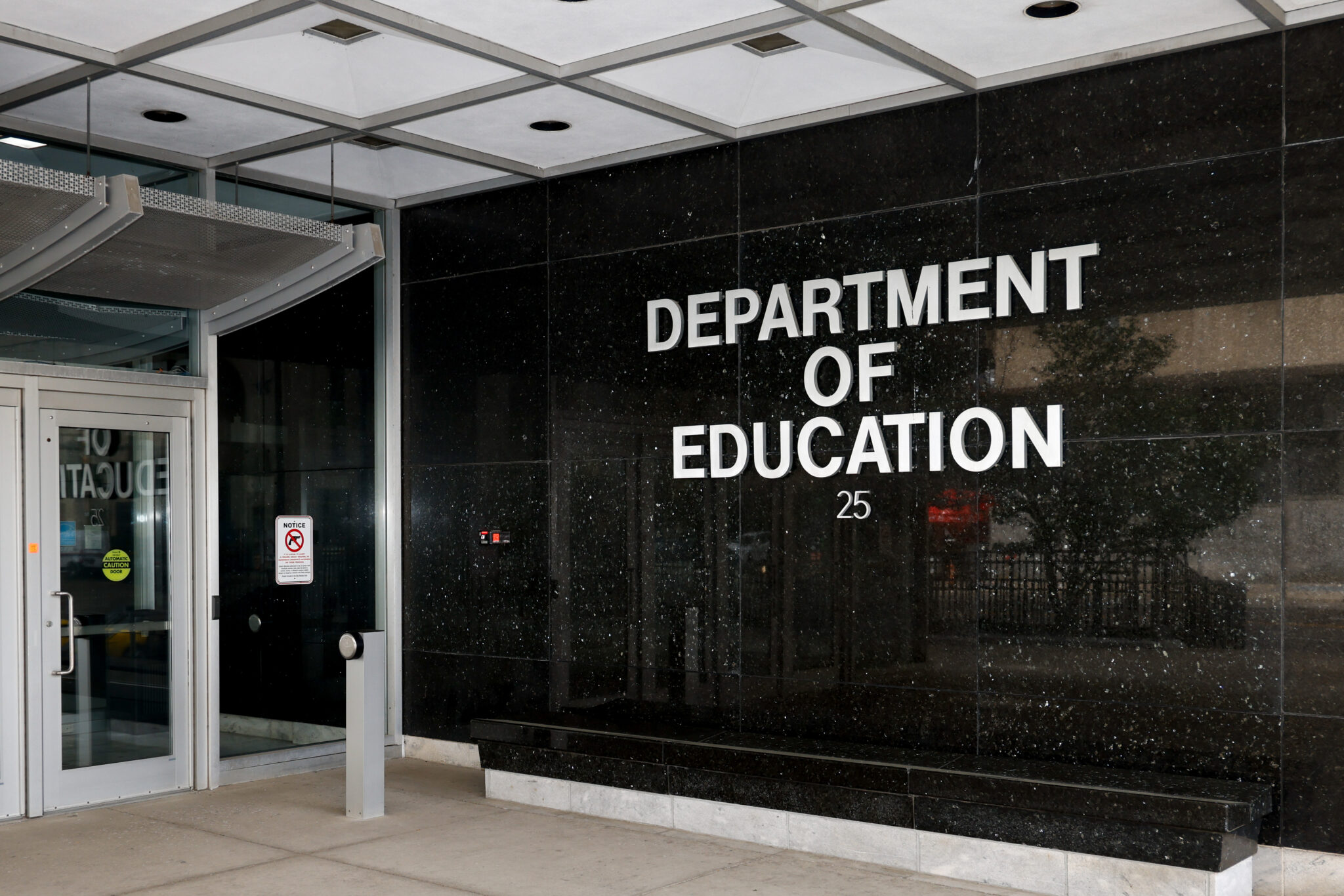
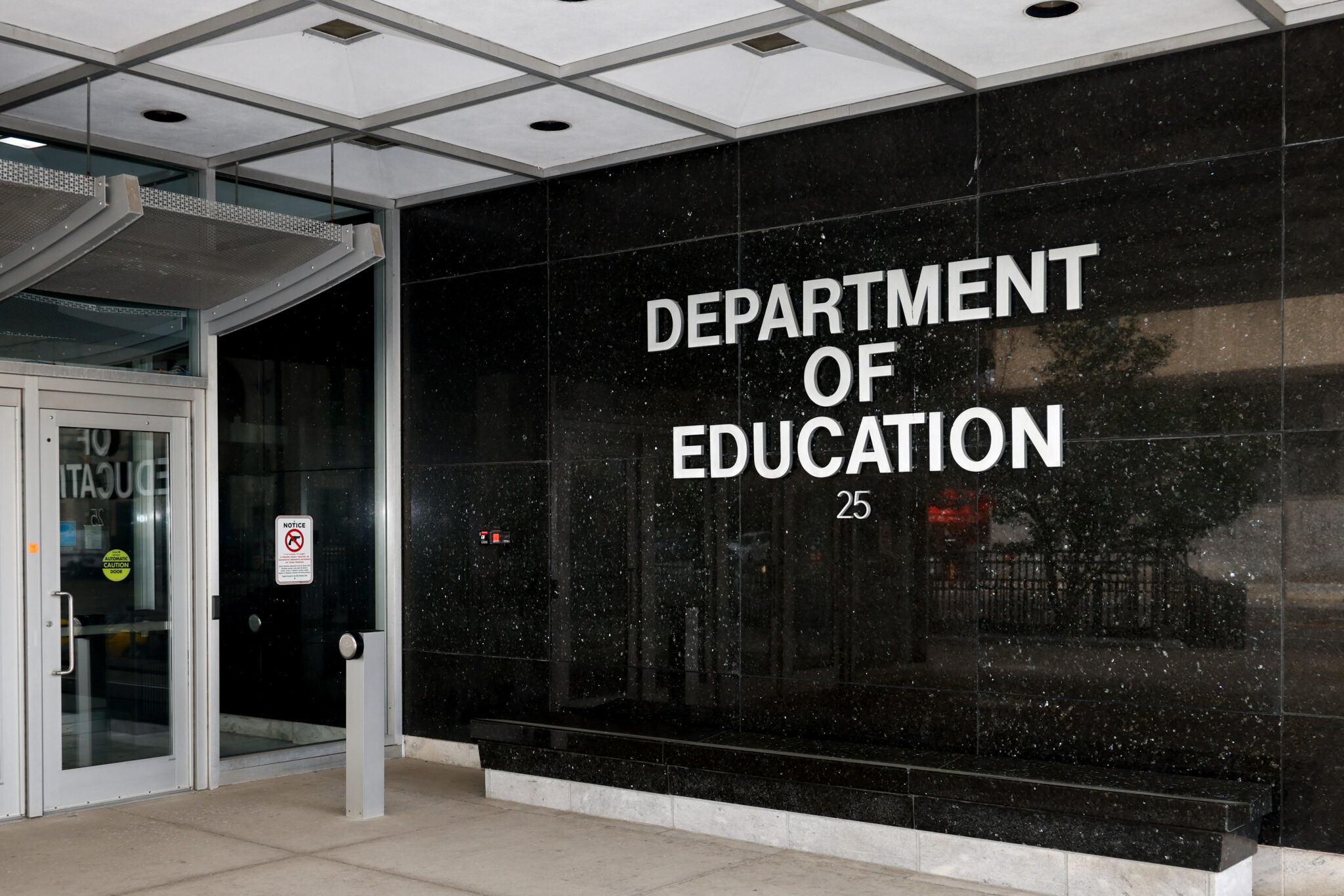
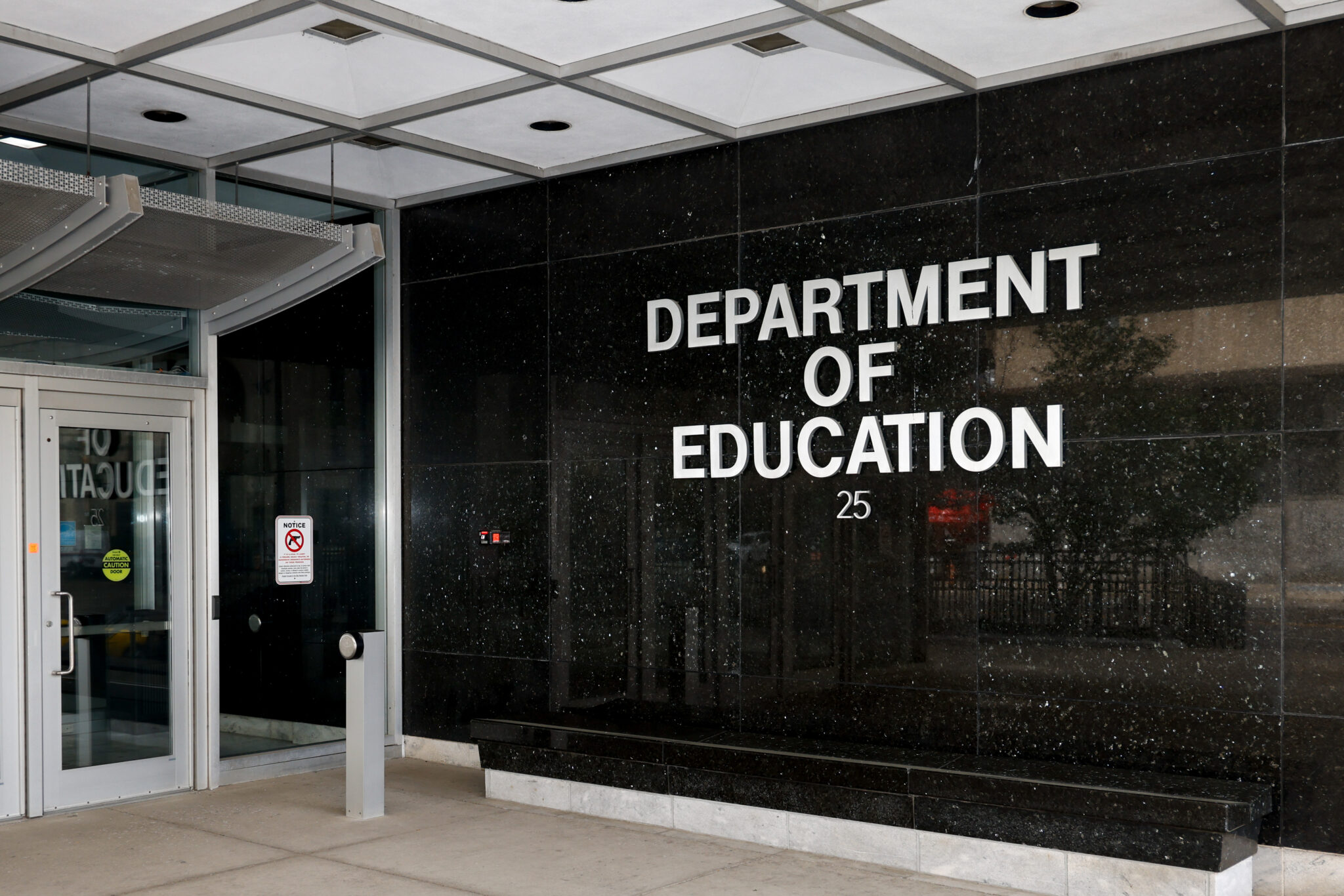
    The Ohio Department of Education becomes the Ohio Department of Education and Workforce, which creates a cabinet-level director position and puts the department under the governor’s office.

    BY:  Ohio Capital Journal

    Control over Ohio K-12 education can officially start to transfer to Gov. Mike DeWine’s administration after a month-long battle in court.

    Retired Franklin County Common Pleas Court Judge Richard Frye denied a preliminary injunction request to stop the transfer of power of K-12 education from the state school board to the governor’s office on Friday, the last day the temporary restraining order was in effect.

    “I am thrilled that the restraining order has been dissolved and we can focus on the important work of moving forward to help our kids be better prepared for life after high school, whether choosing additional training, beginning a career, or heading to college,” DeWine said in a statement Friday.

    Under the state’s two-year budget, the Ohio Department of Education becomes the Ohio Department of Education and Workforce, which creates a cabinet-level director position and puts the department under the governor’s office.

    Jessica Voltolini will be the interim director of the Department of Education and Workforce starting Monday, DeWine said.

    “She will lead the department as we resume our search for the director and deputy director positions,” he said.

    Voltolini most recently served as the Ohio Department of Education’s chief of staff and she was one of two candidates former interim superintendent of public instruction Dr. Stephanie Siddens recommended to fill her role when she left the department earlier this year. The state board of education picked Chris Woolard as the interim state superintendent.

    The new law also reduces the State Board of Education’s power to teacher disciplinary and licensure cases and territory disputes. The state board of education no longer has various administrative powers or control over curriculum standards.

    Seven members of the Ohio State Board of Education originally filed a lawsuit against Ohio Gov. Mike DeWine on Sept. 19 in an attempt to block these changes from taking place. Judge Karen Held Phipps issued the temporary restraining order Sept. 21, which was eventually extended until Oct. 20.

    “The temporary order we won to stop Gov. DeWine’s education takeover from going into effect was dissolved and an interim order was issued,” Democracy Forward, the plaintiff’s legal counsel, said Friday afternoon in a statement. “We await a final decision on our request to block the law while the case proceeds, and we are confident that democracy and the Ohio Constitution will ultimately prevail.”

    Lawsuit

    On Oct. 1, the lawsuit was amended and State Board of Education members Christina Collins and Michelle Newman, former Toledo Public School Board President Stephanie Eichenberg and the Toledo Public School Board were named the plaintiffs in the case.

    Collins, Newman and Eichenberg all have children attending Ohio public schools. The plaintiffs were represented by Democracy Forward and Ulmer & Berne LLP.

    Franklin County Magistrate Jennifer Hunt held an all-day preliminary injunction hearing on Oct. 2 and the judge’s temporary restraining order continued, but DeWine held a press conference later that day saying he was going to continue with the changes anyway.

    The plaintiffs asked the judge for clarification of the restraining order and the temporary restraining order was extended until Oct. 20.

    Chief Counsel and Ethics Officer for the Ohio Attorney General Bridget Coontz, who was representing the original state school board members, was disqualified from being involved in the lawsuit after she sent an Oct. 3 email with legal advice to the counsel for defendants, Julie Pfeiffer, the section chief at the Ohio Attorney General’s Office.

    Ohio State Board of Education

    Since Ohio voters passed a constitutional amendment in 1953 to create the State Board of Education, the plaintiffs argued these changes in the state budget were unconstitutional.

    Hunt, however, disagreed.

    “The Legislature has complete authority to grant, or remove, the respective powers and duties of the State Board and the Superintendent, and the State Board has no constitutional right to retain all the powers transferred under the Challenged Provisions,” she wrote in her decision.

    The Ohio State Board of Education is currently made up of 19 members — 11 elected and eight appointed by DeWine.

    State Superintendent Search

    The search firm tasked with identifying superintendent candidates paused their search because of “the recent lawsuit and other events that surround the Board’s current situation,” President of Ray & Associates Michael Collins wrote in an Oct. 9 letter obtained by the Ohio Capital Journal.

    “Plaintiffs failed to prove by clear and convincing evidence that they will suffer any of their claimed injuries if injunctive relief is denied,” Hunt wrote in her decision. “Defendants argue that an injunction will cause confusion, unrest and chaos for Ohio’s educational system.”

    Follow OCJ Reporter Megan Henry on Twitter.


    Megan Henry
    MEGAN HENRY

    Megan Henry is a reporter for the Ohio Capital Journal and has spent the past five years reporting in Ohio on various topics including education, healthcare, business and crime. She previously worked at The Columbus Dispatch, part of the USA Today Network.

    MORE FROM AUTHOR

  • Governor begins Ohio’s K-12 education overhaul despite judge extending temporary restraining order

    Governor begins Ohio’s K-12 education overhaul despite judge extending temporary restraining order

    BY:  Ohio Capital Journal

    Ohio Gov. Mike DeWine is moving forward with an overhaul of Ohio’s education department and state board of education despite a Franklin County judge extending a temporary restraining order to prevent that from happening.

    After an all-day preliminary injunction hearing on Monday, Franklin County Magistrate Jennifer Hunt ruled that the temporary restraining order blocking lawmakers’ attempts to overhaul Ohio’s K-12 education system remains in effect until the court makes a decision on the case, which must happen by Wednesday at noon.

    “There is certainly a potential for chaos,” DeWine said during what he called a “very unusual press conference” Monday night. “Questions such as who will send out the checks that go to our public schools across the state of Ohio, who will make the determination about eligibility for school choice. I can not let this situation fester.”

    Even though the temporary restraining order is still in effect, the education department changes are still going forward because Tuesday marks 90 days since DeWine signed the state’s operating budget into law which included these changes, DeWine said.

    As of Tuesday, he said, the Ohio Department of Education ceases to exist and is now the Ohio Department of Education and Workforce, as set forth in the budget DeWine signed into law in July. Interim Superintendent Chris Woolard is in charge of the department.

    But it’s more than just a name change. This creates a cabinet-level director position, puts the department under the governor’s office, and limits the State Board of Education’s power to teacher disciplinary and licensure cases and territory disputes.

    “We believe, based upon what our lawyers tell us, that the new department can in fact function,” DeWine said.

    He said they will follow the court order and not name the new cabinet-level director, even though “we were actively in the process of finding” candidates before the temporary restraining order was put in place.

    “We will not take an active part in any way as governor in the creation of the Department of Education and Workforce,” DeWine said. “The new department has money going into that department by reason of the budget that was passed by the General Assembly.”

    Lawsuit

    Seven members of the Ohio State Board of Education filed a lawsuit against DeWine on Sept. 19 in an effort to block the education department changes in the state budget bill. The lawsuit was filed in the Franklin County Court of Common Pleas.

    The original plaintiffs were Christina Collins, Teresa Fedor, Kathleen Hofmann, Tom Jackson, Meryl Johnson, Antoinette Miranda, and Michelle Newman. Franklin County Judge Karen Held Phipps issued the temporary restraining order Sept. 21.

    The lawsuit complaint was amended on Sunday and now Collins, Newman, Stephanie Eichenberg and the Toledo Public School Board are the plaintiffs in the case. Eichenberg is a former Toledo Public School Board president. They are being represented by Democracy Forward and Ulmer & Berne LLP.

    “The Court already ruled that the DeWine Administration’s takeover of the State Board of Education in Ohio must be halted until it has an opportunity to issue a decision,” Skye Perryman, President and CEO of Democracy Forward, said in Monday night in a statement. “If the Governor is suggesting the state will not comply with the Court’s order, then he would be in contempt of the Court.”

    Collins, Eichenberg and Toledo Public School Board President Shenna Barnes testified as plaintiffs, and ODE’s Chief of Staff Jessica Voltolini testified for the defense on Monday.

    Collins said during Monday’s hearing that she filed the lawsuit as a concerned parent, not as a state board of education member.

    “The public and transparent nature that I have enjoyed for my entire career and my entire time being a parent is gone,” she said. “There is no public debate. There is nothing that I as a parent can follow to understand why things are being done and how those things will my effect my children.”

    She is the mother of six children, with four currently attending public schools. She said she has reached out to her state board of education representative over the years about questions and concerns over implementing the state’s dyslexia policy, standardize testing and the Third Grade Reading Guarantee.

    Collins, who was elected to the state board of education in 2021, said she started looking into how to file a lawsuit on July 5, a day after DeWine signed the budget into law.

    “I felt like this looked like it was similar to the agenda of our human resources committee on a local education board,” Stephanie Eichenberg said during Monday’s hearing when she was asked what she thought of the new responsibilities of the state board of education.

    Barnes said her working relationship with the state school board “is very vital” and explained how she has worked with state board of education members to put in legislative changes in place at the local level.

    “We need someone who can give us real-time information, that gives us factual information but also responds to us when we ask questions,” Barnes said.

    Ohio voters passed a constitutional amendment in 1953 that created a State Board of Education with the power to appoint a Superintendent of Public Instruction. The Ohio State Board of Education is currently made up of 19 members — 11 elected, and eight appointed by Gov. DeWine.

    Senate Bill 1

    These changes to the Ohio Department of Education and State Board of Education started out as Senate Bill 1, which Sen. Bill Reineke, R-Tiffin, introduced in January.

    The Ohio Senate voted along party lines to pass SB 1 in March — which sent it to the Ohio House, but it stayed in committee. The Senate added SB 1 to the state budget in June, which DeWine signed into law in July.

    The seven board members who originally filed the lawsuit previously wrote a letter to DeWine the day he received the budget and asked him to veto the “power grab” of changing the state board’s roles.

    Follow OCJ Reporter Megan Henry on Twitter.


    Megan Henry
    MEGAN HENRY

    Megan Henry is a reporter for the Ohio Capital Journal and has spent the past five years reporting in Ohio on various topics including education, healthcare, business and crime. She previously worked at The Columbus Dispatch, part of the USA Today Network.

    MORE FROM AUTHOR

  • Ohio bill to raise minimum wage to $15, eliminate tipped worker distinction has sponsor testimony

    Ohio bill to raise minimum wage to $15, eliminate tipped worker distinction has sponsor testimony

    Democratic Ohio Sens. Kent Smith and Hearcel Craig introduce measure to gradually increase state’s minimum wage in $1 increments

    BY:  Ohio Capital Journal

    A bill that would raise Ohio’s minimum wage was rolled out for the first time to the Senate Workforce and Higher Education Committee Wednesday afternoon during sponsor testimony.

    Ohio Sens. Kent Smith, D-Euclid, and Hearcel Craig, D-Columbus, introduced Senate Bill 146, which would gradually increase the state’s minimum wage $1 each year until it was up to $15. Under the bill, minimum wage would increase to $12 an hour starting in 2024; $13 starting in 2025; $14 starting 2026; and $15 in 2027.

    “From that point forward, the minimum wage would annually adjust based upon the inflation rate,” Smith said in his testimony.

    With only Democratic co-sponsors in the Republican supermajority chamber and Statehouse, prospects for the bill are slim. Ohio’s current minimum wage is $10.10 per hour for non-tipped workers and tipped employees earn half the state’s minimum wage, plus tips. This bill would eliminate the tipped worker distinction, automatically increasing their pay to minimum wage.

    Eight states have nixed the tipped minimum wage, Smith said.

    “Ending the tipped working penalty and creating an economy where workers do not have to work 76 hours a week to cover basic expenses is good for Ohio families,” he said in his testimony.

    An Ohioan without children must earn $15.33 an hour to have a living wage in Ohio, according to the MIT Living Wage Calculator.

    For housing, full-time workers need to make at least $19.09 an hour to afford a 2-bedroom apartment in Ohio — a $2.04 increase from last year, according to a joint report from the Coalition on Homelessness and Housing in Ohio (COHHIO) and the National Low Income Housing Coalition (NLIHC).

    “An artificially low minimum wage has kept too many Ohioans trapped in a cycle of poverty: taking on another minimum wage job, unable to move up, while losing buying power,” Craig said in his testimony. “Raising the minimum wage to $15 by 2027 would give over a million Ohioans a raise that is long overdue while allowing people to lift themselves out of poverty.”

    Tipped workers

    Committee Chair Sen. Jerry Cirino, R-Kirtland, questioned the need to get rid of the tipped worker distinction.

    “We all know that the reason we have that difference is because they are getting tips, presumably if their service is good and people are feeling generous,” he said.

    He explained how his grandchildren who work in restaurants while going to college earn good tips.

    “It has to do with service levels and performance,” Cirino said. “If you are a good wait server, you are going to get good tips.”

    Smith responded by saying that while tipped workers are disproportionately young, one in four are over the age of 40.

    “Tipped workers are nearly twice as likely to live in poverty as non-tipped workers,” he said.

    Benefits cliff

    Cirino and Sen. Michael Rulli, R-Salem, questioned if raising the minimum wage would cause a benefits cliff, meaning a decrease in public benefits that can happen with a small increase in earnings.

    Rulli told a brief story about how he had used to have an assistant deli manager who was a single mom with three kids at home who was a hard worker, so he rewarded her with raises. Eventually, she resigned.

    “She started making so much money with me that the state took all her benefits away and she was behind the eight ball,” he said.

    Craig said he would look into that issue.

    “We’ve got to work on that,” he said.


    Follow OCJ Reporter Megan Henry on Twitter.

    Megan Henry
    MEGAN HENRY

    Megan Henry is a reporter for the Ohio Capital Journal and has spent the past five years reporting in Ohio on various topics including education, healthcare, business and crime. She previously worked at The Columbus Dispatch, part of the USA Today Network.

    MORE FROM AUTHOR

  • Franklin County judge orders temporary restraining order to stop overhaul of Ohio K-12 education

    Franklin County judge orders temporary restraining order to stop overhaul of Ohio K-12 education

    Seven members of the Ohio State Board of Education filed a lawsuit to stop the transfer of power from the Board to the governor’s office.

    BY:  Ohio Capital Journal

    A Franklin County judge has issued a temporary restraining order to block lawmakers’ attempts to overhaul Ohio’s K-12 education system.

    Seven members of the Ohio State Board of Education filed a lawsuit against Ohio Gov. Mike DeWine Tuesday in the Franklin County Court of Common Pleas to stop the transfer of power from the Board to the governor’s office.

    Christina Collins, Teresa Fedor, Kathleen Hofmann, Tom Jackson, Meryl Johnson, Antoinette Miranda, and Michelle Newman filed the lawsuit. They are being represented by Democracy Forward and Ulmer & Berne LLP.

    Franklin County Judge Karen Held Phipps issued the temporary restraining order Thursday and will now go to a preliminary injunction hearing on Oct. 2, a day before the changes are scheduled to take effect.

    “Creating a new cabinet-level agency is not a silver bullet and does not magically solve problems,” House Minority Leader Allison Russo, D-Upper Arlington, said in a statement. “Board members are elected on a non-partisan basis and because of that, expertise and experience in education is a big factor of who gets elected. With a governor appointee, there’s little doubt we’ll see an increase in partisan decision-making.” 

    What’s in the lawsuit?

    The state’s operating budget, signed into law by DeWine, would rename the Ohio Department of Education to the Ohio Department of Education and Workforce. It would create a cabinet-level director position, put the department under the governor’s office and limit the State Board of Education’s power to teacher disciplinary and licensure cases and territory disputes.

    “If unchecked by this Court, the system Ohio’s citizens mandated for governing education in Ohio will be rendered virtually powerless,” the lawsuit reads. “The bill strips the Board’s democratically elected members of their core and constitutionally intended duties and responsibilities for the oversight and governance of Ohio’s public education system.”

    The plaintiffs are asking the court to grant a temporary, preliminary and permanent relief to stop the changes from going into effect, remove this piece of legislation from the state budget and strike it void.

    The Ohio State Board of Education is currently made up of 19 members — 11 elected and eight appointed by Gov. DeWine.

    Under the changes, the plaintiffs fear parents and students won’t be able to voice “their support for or opposition to developments in education policy.”

    Democratic Senators Nickie J. Antonio, Catherine Ingram, Vernon Sykes, and Paula Hicks-Hudson all support the lawsuit.

    “This lawsuit is an opportunity to restore the voice of all Ohioans through protecting the duties and powers of their state board of education members,” Antonio said in a statement.

    Senate Bill 1

    These changes to the Ohio Department of Education and State Board of Education started out as Senate Bill 1, which Sen. Bill Reineke, R-Tiffin, introduced in January.

    The Ohio Senate voted along party lines to pass SB 1 in March — which sent it to the Ohio House, but it stayed in committee. The Senate added SB 1 to the state budget in June, which DeWine signed into law in July.

    “In fear that the Senate Bill 1 power grab would not pass on its own merits, the Majority chose to circumvent the process by including it in the biannual budget, violating the single subject rule,” Hicks-Hudson said in a statement. “In doing so, they also chose to disenfranchise duly elected representatives to the Board of Education.”

    These seven board members previously wrote a letter to DeWine the day he received the budget and asked him to veto the “power grab” of changing the the state board’s roles.

    Constitutional violations

    The plaintiffs in the lawsuit argue these changes to the State Board of Education and ODE violate the state constitution.

    “When SB 1 could not pass as standalone legislation, the Education Takeover Rider was attached to HB 33 at the eleventh hour to ensure that the rider became law nonetheless,” the lawsuit reads. “This practice — known as logrolling — is prohibited by … the Ohio Constitution.”

    Phipps said “the Court finds it necessary to address only” the logrolling argument, according to court documents.

    Ohio voters passed a constitutional amendment in 1953 that created a State Board of Education with the power to appoint a Superintendent of Public Instruction.

    The Ohio Constitution also has the three-reading rule, which means a bill should be considered by each house on three different days.

    “The Education Takeover Rider was not considered by each house of Ohio’s General Assembly on three different days,” the lawsuit says.

    Follow OCJ Reporter Megan Henry on Twitter.


    Megan Henry
    MEGAN HENRY

    Megan Henry is a reporter for the Ohio Capital Journal and has spent the past five years reporting in Ohio on various topics including education, healthcare, business and crime. She previously worked at The Columbus Dispatch, part of the USA Today Network.

    MORE FROM AUTHOR

  • What’s different about this year’s effort to legalize marijuana in Ohio?

    What’s different about this year’s effort to legalize marijuana in Ohio?

    A proposed constitutional amendment in 2015 would have granted “exclusive rights” for commercial marijuana growth, cultivation and extraction to 10 predetermined parcels of land. It was defeated 64% to 36%.

    BY:  Ohio Capital Journal

    https://collaborativejournalism.org/democracyday/about/

    Ohio voters will once again have the chance to legalize marijuana on Nov. 7 — eight years after Ohioans overwhelmingly rejected a proposed constitutional amendment that would have made cannabis legal.

    But there are some key differences between the two.

    Issue 3 in 2015 was a proposed constitutional amendment and today’s Issue 2 is a citizen-initiated statue, or law.

    “Because of that, it does allow the legislature significantly more leeway to be able to change the details of the law with further legislation,” said Morgan Fox, political director for National Organization for the Reform of Marijuana Laws.

    Political action committee ResponsibleOhio spent $21.5 million on the 2015 Issue 3 campaign, which was soundly defeated 64% to 36%.

    For this year’s election, Issue 2 would legalize and regulate the cultivation, manufacturing, testing and the sale of marijuana to Ohioans 21 and up. It would also legalize home grow for Ohioans 21 and up with a limit of six plants per person and 12 plants per residence, and impose a 10% tax at the point of sale for each transaction.

    The Coalition to Regulate Marijuana like Alcohol is behind this year’s ballot initiative.

    The oligopoly of Issue 3

    Another major difference between the two is the oligopoly — essentially a marijuana monopoly — that the defeated Issue 3 would have created. It would have granted “exclusive rights” for commercial marijuana growth, cultivation and extraction to ten predetermined parcels of land.

    BUCKEYE LAKE, Ohio — AUGUST 17: Roger Davis of Grove City works to remove fan leaves from around the flowers before the marijuana plants are dried, August 17, 2023, at PharmaCann, Inc.’s cultivation and processing facility in Buckeye Lake, Ohio. (Photo by Graham Stokes for Ohio Capital Journal)
     BUCKEYE LAKE, Ohio — AUGUST 17: Roger Davis of Grove City works to remove fan leaves from around the flowers before the marijuana plants are dried, August 17, 2023, at PharmaCann, Inc.’s cultivation and processing facility in Buckeye Lake, Ohio. (Photo by Graham Stokes for Ohio Capital Journal. Republish photo only with original story.) 

    “That absolutely rubbed people the wrong way, even supporters of legalization,” Fox said.

    Don Wirtshafter, an Athens attorney who curates the Cannabis Museum in Ohio and supports marijuana legalization, calls himself one of the most vocal opponents of the failed Issue 3.

    “2015 was a power play by basically one group of financiers who created 10 number corporations and the initiative would have given those anonymous corporations being powered by anonymous money the monopoly on growing and selling cannabis in Ohio,” he said.

    Wirtshafter plans on voting yes on this year’s effort to legalize marijuana, going “from being a vocal naysayer to an enthusiastic yes voter.”

    While marijuana legalization failed in 2015, Ohioans passed a constitutional amendment during the same election that prohibits the establishment of a “monopoly, oligopoly or cartel” in the state’s constitution.

    “We couldn’t be more different than the 2015 constitutional amendment,” said Tom Haren, a spokesperson for the Coalition to Regulate Marijuana like Alcohol. “We are not a monopoly-type framework. We are building off an existing medical marijuana infrastructure that already has hundreds of licenses.”

    Existing medical marijuana cultivators and dispensaries would have the ability to obtain an adult-use license if voters approve legalization.

    Mascots

    2015’s effort to legalize marijuana included Buddie the mascot, who looked like a superhero and had a marijuana bud for a head.

    Buddie was supposed to drum up support from college students, but instead drew criticism from child advocates who worried the marketing was targeting kids.

    “We’re not going to have any mascots,” Haren said.

    What’s changed since 2015?

    A lot has happened in the marijuana landscape since 2015.

    BUCKEYE LAKE, Ohio — AUGUST 17: Marijuana plants in a flowering room where the artificial sunlight is adjusted to stimulate growth of the flowers, August 17, 2023, at PharmaCann, Inc.’s cultivation and processing facility in Buckeye Lake, Ohio. (Photo by Graham Stokes for Ohio Capital Journal)
     BUCKEYE LAKE, Ohio — AUGUST 17: Marijuana plants in a flowering room where the artificial sunlight is adjusted to stimulate growth of the flowers, August 17, 2023, at PharmaCann, Inc.’s cultivation and processing facility in Buckeye Lake, Ohio. (Photo by Graham Stokes for Ohio Capital Journal. Republish photo only with original story.) 

    Only four states had legalized recreational marijuana at the time — Alaska, Colorado, Oregon, and Washington. Today, 23 states and Washington D.C. have legalized the recreational use and sale of cannabis.

    Ohio legalized medical marijuana in 2016 and the first dispensary opened in 2019. 101 dispensaries have received certificates of operation and 34 have active provisional dispensary licenses as of Aug. 24, according to the Ohio Medical Marijuana Control Program.

    “2015 was a lifetime ago in cannabis policy and since then we have seen states do it successfully, some better than others, but we’ve seen that our medical marijuana program has been successful,” Haren said.

    Twenty-three cultivators in Ohio have received Level I provisional licenses and 21 have received certificates of operation. Fourteen have received Level II provisional licenses and 13 have received certificates of operation.

    There have been 800,682 medical marijuana patient recommendations (a patient can have more than one recommendation), 384,705 patients have registered and 178,709 patients have both an active registration and an active recommendation, as of July 31.

    Marijuana polling

    A July Suffolk University/USA Today poll shows 59% of Ohio voters support Ohioans 21 and older buying and possessing marijuana. It showed 77% of Democrats, 63% of independents and 40% of Republicans support the issue.

    The Suffolk University/USA Today poll surveyed 500 registered Ohio voters over the phone. Their margin of error is +/- 4.4 percentage points.

    “The biggest contrast is that we are going to pass on the ballot in November,” Haren said.

    Follow OCJ Reporter Megan Henry on Twitter.

    ________________

    Megan Henry
    MEGAN HENRY

    Megan Henry is a reporter for the Ohio Capital Journal and has spent the past five years reporting in Ohio on various topics including education, healthcare, business and crime. She previously worked at The Columbus Dispatch, part of the USA Today Network.

    MORE FROM AUTHOR

    _______________

    The Ohio Capital Journal is an independent, nonprofit news organization dedicated to connecting Ohioans to their state government and its impact on their lives. The Capital Journal combines Ohio state government coverage with incisive investigative journalism, reporting on the consequences of policy, political insight and principled commentary.

  • Ohio Ballot Board sets language for proposed recreational marijuana law

    Ohio Ballot Board sets language for proposed recreational marijuana law

    BY:  Ohio Capital Journal

    The Ohio Ballot Board unanimously voted Thursday to solidify the language voters will see for the proposed recreational marijuana law in the November election.

    The Coalition to Regulate Marijuana like Alcohol is backing the ballot proposal which would legalize and regulate cultivation, manufacturing, testing and the sale of marijuana to Ohioans 21 and up. It would also legalize home grow for Ohioans 21 and up with a limit of six plants per person and 12 plants per residence, and impose a 10% tax at the point of sale for each transaction.

    “Unanimous approval by the bipartisan ballot board should assure voters that ‘What they see is what they’ll get’,” Coalition to Regulate Marijuana like Alcohol spokesperson Tom Haren said in a statement. “That means: hundreds of millions of dollars in new revenue and stringent regulation like we already have in our existing medical marijuana market. We are looking forward to putting the illicit market out of business this November.”

    The proposal will be State Issue 2 on the Nov. 7 election.

    No one spoke during the public comment portion of Thursday’s meeting in regards to Issue 2 nor was there discussion about it among the five-person Ballot Board, chaired by Ohio Secretary of State Frank LaRose. State Rep. Elliot Forhan, D-South Euclid, citizen William N. Morgan, Sens. Theresa Gavarone, R-Bowling Green and Paula Hicks-Hudson, D-Toledo are also on the board.

    The Ballot Board determines what language voters will see on ballot.

    After originally not getting enough valid signatures, CRMA ended up collecting more than enough after the 10-day cure period, winding up with 127,772 valid signatures — 3,000 more than needed to get on the ballot.

    The ballot language

     COLUMBUS, Ohio — AUGUST 24: The Ohio Ballot Board meeting to certify the language for Issue 1, the proposed constitutional amendment entitled “The Right to Reproductive Freedom with Protections for Health and Safety” and Issue 2 entitled “An Act to Control and Regulate Adult Use Cannabis,” August 24, 2023, at the Ohio Statehouse in Columbus, Ohio. (Photo by Graham Stokes for Ohio Capital Journal) 

    The proposed law would establish the Division of Cannabis Control within the Department of Commerce which would “regulate, investigate, and penalize adult use cannabis operators, adult use testing laboratories and individuals required to be licensed.”

    It would create five funds in the state treasury: the adult use tax fund, the cannabis social equity and jobs fund; the host community cannabis fund; the substance abuse and addiction fund, and the division of cannabis control and tax commissioner fund.

    Landlords or an employer would have the authority “to prohibit the adult use of cannabis in certain circumstances, and prohibit the operation of a motor vehicle while using or under the influence of adult use cannabis and from using any other combustible adult use cannabis while a passenger in a motor vehicle.”

    The proposed law would require the Division of Cannabis Control to enter into an agreement with the Department of Mental Health and Addiction Services to establish a program for cannabis addiction services.

    Follow OCJ Reporter Megan Henry on Twitter.


    Megan Henry
    MEGAN HENRY

    Megan Henry is a reporter for the Ohio Capital Journal and has spent the past five years reporting in Ohio on various topics including education, healthcare, business and crime. She previously worked at The Columbus Dispatch, part of the USA Today Network.

    MORE FROM AUTHOR

  • Proposed recreational marijuana law is headed to the November ballot in Ohio

    Proposed recreational marijuana law is headed to the November ballot in Ohio

    BY:  Ohio Capital Journal

    A proposed recreational marijuana law will be on Ohio’s November ballot after all.

    The Secretary of State’s office verified 4,405 additional valid petition signatures — bringing the grand total to 127,772, Secretary of State Frank LaRose said Wednesday in a letter to the campaign. 124,046 signatures were needed.

    The Coalition to Regulate Marijuana like Alcohol’s statute initiative would legalize and regulate cultivation, manufacturing, testing and sale of marijuana to Ohioans 21 and up. It would also legalize home grow for Ohioans 21 and up with a limit of six plants per person and 12 plants per residence, and impose a 10% tax at the point of sale for each transaction.

    “We are grateful to the thousands of Ohioans who helped us get to this point and are excited to bring our proposal to regulate marijuana like alcohol before Ohio voters this coming Election Day,” spokesperson Tom Haren said.

    This comes after the coalition initially came up just short of collecting enough valid signatures. The coalition submitted 223,176 signatures in July, but only 123,367 were found to be valid signatures. They recently submitted 6,545 additional signatures after the 10-day cure period.

    Hamilton County submitted the most valid signatures with 1,914. Next was Franklin County with 711 and Montgomery County with 626.

    Twenty-three states and Washington D.C. have legalized the recreational use and sale of cannabis.

    The proposed marijuana statute will be on Nov. 7’s ballot alongside the reproductive rights amendment.

    Follow OCJ Reporter Megan Henry on Twitter.


    Megan Henry
    MEGAN HENRY

    Megan Henry is a reporter for the Ohio Capital Journal and has spent the past five years reporting in Ohio on various topics including education, healthcare, business and crime. She previously worked at The Columbus Dispatch, part of the USA Today Network.

    MORE FROM AUTHOR

  • Gov. DeWine highlights science of reading provisions in the new state budget

    Gov. DeWine highlights science of reading provisions in the new state budget

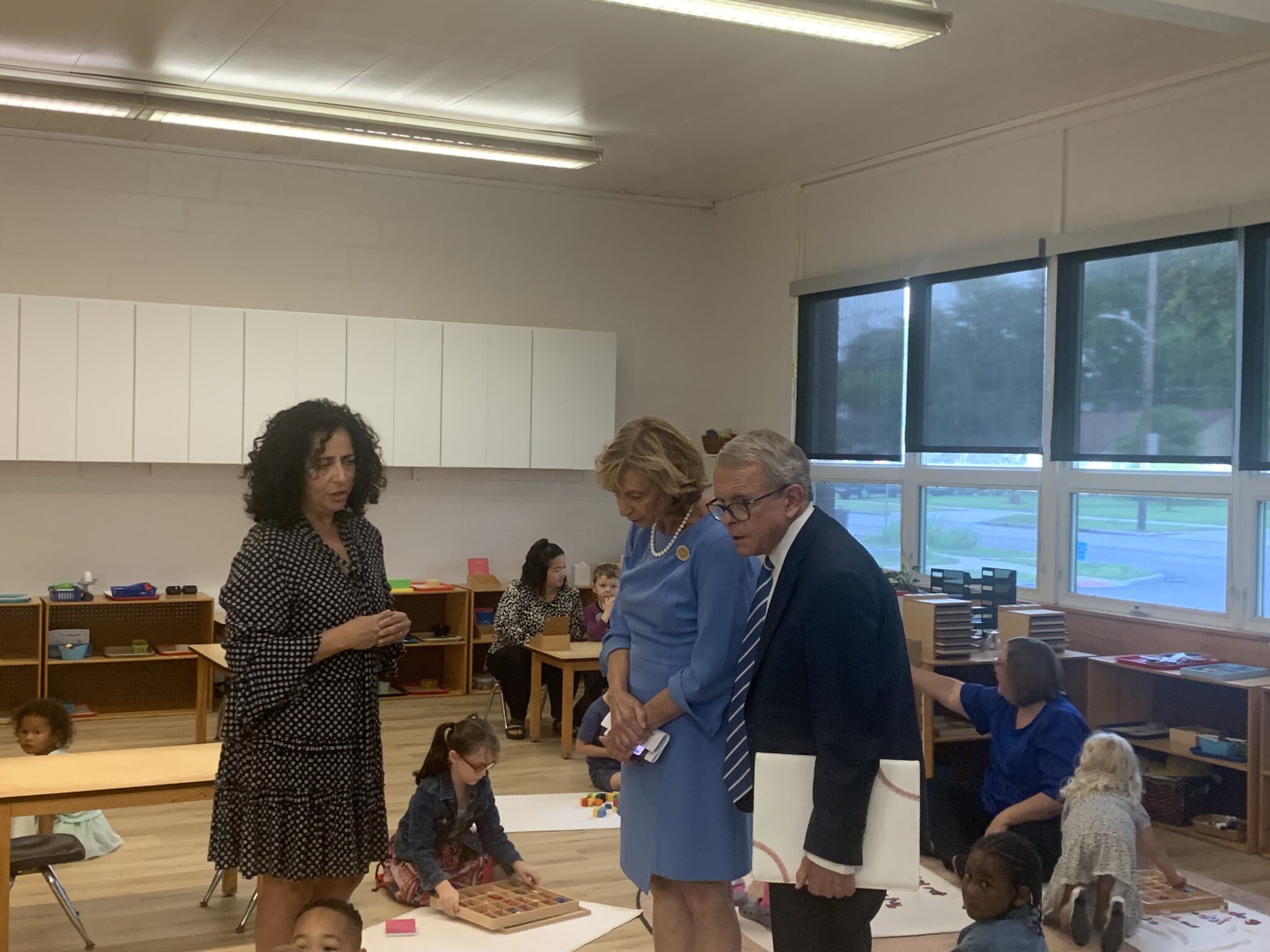
    Rekha Kohli, director of student and family services at Columbus Montessori Education Center, talks with Ohio Gov. Mike DeWine and First Lady Fran DeWine during a classroom visit about the science of reading on Aug. 10. (Photo by Megan Henry, Ohio Capital Journal.)

    A chunk of Ohio’s two-year operating budget is going toward implementing the science of reading — $86 million for educator professional development, $64 million for curriculum and instructional materials, and $18 million for literacy coaches.

    BY:  Ohio Capital Journal

    Students arranged red and blue letters to spell various words such as “lip,” “twin,” and “keys.”

    Ohio Gov. Mike DeWine and first lady Fran DeWine observed about two dozen children, ages 3-6, spelling words at Columbus Montessori Education Center Thursday morning.

    The schools aligns with the science of reading, which is based on decades of research that shows how the human brain learns to read and incorporates phonemic awareness, phonics, fluency, vocabulary, and comprehension.

    Soon all Ohio schools will align with the science of reading as a chunk of Ohio’s two-year operating budget goes towards implementation — $86 million for educator professional development, $64 million for curriculum and instructional materials, and $18 million for literacy coaches.

    “There are many instructional methods out there, but the proven best way to teach reading is through the science of reading instruction,” DeWine said. “Reading is certainly the key that unlocks the door to so many, many things.”

    DeWine said Ohio has committed $26 million in federal COVID related funding to pay for various materials and literacy coaches for non-public schools to align with the science of reading.

    “Every student in the state should have the ability to follow the science of reading,” he said. “We want to make sure that no matter where a student goes to school, they have the best opportunity to learn to read.”

    Next steps of implementation

     Photo by Megan Henry, Ohio Capital Journal. 

    It’s not clear what each Ohio school district currently uses for their reading curriculum, so the Ohio Department of Education will soon be sending out a survey to school districts to gather information that information, said Chris Woolard, interim superintendent of public instruction.

    “Any Ohio school that is not already using a curriculum that is aligned with this proven method will begin aligning to it this school year,” DeWine said.

    ODE will also come up with a list of curriculum and instructional materials that line up with the science of reading. Under the budget, Ohio schools have to start using those learning materials by the 2024-25 school year.

    The budget funds 100 literacy coaches who will help public schools with the lowest level of proficiency in literacy based on their performance in the state’s English language arts assessment. While the coaches are going to be under the direction of ODE, they won’t be employed by the department.

    “I don’t know that 100 is enough, candidly,” DeWine said. “From what we’ve seen as we’ve traveled around the state, coaches are just vitally important in the area of literacy.”

    Teacher prep programs

    The science of reading budget goes beyond K-12 schools. It also requires the Ohio Department of Higher Education Chancellor to create an audit process that documents how every educator training program aligns with teaching the science of reading instruction. The audit must be completed with summaries publicly released by March 31.

    The Chancellor will also be able to rescind the approval of educator training programs that don’t align with teaching the science of reading instruction a year after the initial audit, and programs would be evaluated every four years.

    “The challenge is many teachers were not taught this way through no fault of their own they were not taught that way. This is a big chance for many teachers, classrooms and schools. It’s not going to be done overnight,” DeWine said.

    Statewide tour

    DeWine visited about a dozen Ohio schools in the spring that align with the science of reading and often touted these statistics during the budget process — 40% of Ohio’s third-graders are not proficient in reading and 33% of third graders were not proficient in reading before COVID-19.

     COLUMBUS, Ohio — APRIL 06: Second grade teacher Bernadette Monroe talks to her students during a visit by Ohio Governor Mike DeWine, Principal Miracle Reynolds (left), and Interim Superintendent/CEO of Columbus City Schools, Dr. Angela Chapman, to observe the implementation of the Science of Reading program, April 6, 2023, at Southwood Elementary School in Columbus, Ohio. (Photo by Graham Stokes for Ohio Capital Journal. Republish photo only with original article.) 

    During those tours, a conversation with a particular high school student stood out to him the most.

    “The student basically said, ‘They gave up on me. I didn’t think I could ever read, but the interventional specialist started working with me and started using the science of reading and I can now read’,” DeWine said.

    An 8-minute video on ODE’s website shows highlights from DeWine’s tour.

    “It’s proven that (the science of reading) works and that it produces better readers. It’s literally like a road map to reading,” Arnita Washington, a kindergarten teacher at Warrensville Heights Elementary in Cuyahoga County said in the video.

    Students said during the video they feel confident to break down new words.

    “Your brain is putting this into your working memory, so you can apply this later when you come to words that you don’t know,” Ohio Department of Education Literacy Chief Melissa Weber-Mayrer said during the video.

    Follow OCJ Reporter Megan Henry on Twitter.


    Megan Henry
    MEGAN HENRY

    Megan Henry is a reporter for the Ohio Capital Journal and has spent the past five years reporting in Ohio on various topics including education, healthcare, business and crime. She previously worked at The Columbus Dispatch, part of the USA Today Network.

    MORE FROM AUTHOR

  • Clermont and Warren County don’t have enough poll workers for Tuesday’s Special Election

    Clermont and Warren County don’t have enough poll workers for Tuesday’s Special Election

    Photo by the New Jersey Monitor/States Newsroom

    Butler and Hamilton have also not met their “Goal”

    BY:  Ohio Capital Journal

    Twenty-three Ohio counties don’t have the minimum number of poll workers needed for Tuesday’s special election.

    These counties don’t have enough poll workers as of Thursday morning: Ashtabula, Clermont, Columbiana, Coshocton, Defiance, Fulton, Greene, Harrison, Highland, Huron, Jefferson, Knox, Licking, Madison, Mahoning, Marion, Montgomery, Shelby, Stark, Trumbull, Van Wert, Warren, and Washington.

    Currently, 32,310 poll workers have signed up to help, according to the Ohio Secretary of State’s Poll Worker Tracker. That surpasses the statewide needed minimum, but some counties haven’t met their local goal.

    “While many Ohio counties have passed the minimum number of poll workers needed to conduct the election, Ohio Secretary of State Frank LaRose set a goal of 115% of the minimum needed to ensure a sufficient number of poll workers is available in every county in case of an unforeseen circumstances,” the secretary of state said in a news release.

    Fifty counties have not met their goal for poll workers as of Thursday morning: Ashtabula, Athens, Auglaize, Butler, Clark, Clermont, Clinton, Columbiana, Coshocton, Darke, Defiance, Delaware, Erie, Fayette, Fulton, Greene, Hamilton, Hancock, Harrison, Highland, Huron, Jackson, Jefferson, Knox, Lake, Licking, Lorain, Madison, Mahoning, Marion, Meigs, Montgomery, Noble, Paulding, Pike, Ross, Sandusky, Scioto, Seneca, Shelby, Stark, Summit, Trumbull, Van Wert, Vinton, Warren, Washington, Wayne, Williams, and Wood.

    Of those 50 counties, 27 have met the minimum requirements of poll workers needed.

    Poll workers are paid for their work on Election Day and Ohioans can sign up at VoteOhio.gov/DefendDemocracy.

    Polls are open on Election Day from 6:30 a.m. through 7:30 p.m.

    Follow OCJ Reporter Megan Henry on Twitter.


    Megan Henry
    MEGAN HENRY

    Megan Henry is a reporter for the Ohio Capital Journal and has spent the past five years reporting in Ohio on various topics including education, healthcare, business and crime. She previously worked at The Columbus Dispatch, part of the USA Today Network.

    MORE FROM AUTHOR