Tag: MEGAN HENRY

  • Ohio lawmakers insist Biden will be on November’s ballot, but they’re fuzzy on details

    Ohio lawmakers insist Biden will be on November’s ballot, but they’re fuzzy on details

    BY:  AND Ohio Capital Journal

    In a surprise move, the Ohio House decided not to take up legislation to ensure President Joe Biden appears on the November ballot in Ohio.

    But elected leaders from both parties insist Biden will appear on voters’ ballots. They have said so many times. But the thing is, they’re not exactly sure how, and an obscure provision in state law gives them a deadline they may not be able to meet.

    Ohio law provides that political parties must certify their candidates with the Secretary of State “on or before” the 90th day prior to an election. The Democratic National Convention, the meeting at which the party will officially nominate Biden, won’t happen until August 22 — 75 days prior to the election.

    This week, lawmakers hammered out two competing proposals, one in the House and one in the Senate, that would push that deadline to 74 days instead.

    But because laws passed without an emergency clause don’t take effect for 90 days, lawmakers inadvertently gave themselves a deadline of May 9 to get the measure signed, sealed and delivered.

    At the eleventh hour, the House and Senate were still wrangling over which bill should serve as the vehicle for passage. The Senate approved its bill and adjourned, but unrelated amendments soured some House members – mostly Democrats – on the proposal.

    Rather than put the Senate bill to a vote, House Speaker Jason Stephens adjourned, over howls of protest from conservative members. They jeered “shame” at Stephens, and “Russo wins again” in reference to the House Minority Leader, Allison Russo, after the motion to adjourn passed.

    “I think there’s a lot of different options in order to get him on the ballot,” Stephens told reporters after the session concluded. “You guys have probably went through a lot of the different possibilities. So you know, I’m not concerned about that happening.”

     COLUMBUS, Ohio — MAY 31: Senate President Matt Huffman, R-Lima (left), talks to Senate Majority Floor Leader Rob McColley, R-Napoleon, after the Ohio Senate session, May 31, 2023, at the Statehouse in Columbus, Ohio. (Photo by Graham Stokes for Ohio Capital Journal. Republish photo only with original story.) 

    The Senate approach

    The Ohio Senate significantly changed and ultimately passed House Bill 114, a campaign child care bill, by adding amendments to put Biden on Ohio’s ballot for November’s presidential election and ban foreign nationals from contributing to political campaigns.

    HB 114 passed in the Senate on Wednesday afternoon with a vote of 24-7, with Democrats voting against it.

    The bill moves the date Biden would need to be certified as the Democratic candidate from Aug. 7 to Aug. 23 in order to get him on Ohio’s ballot.

    “That should allow for the Democratic National Committee to provide the nominee so we’ll have that choice on the ballot when they go to vote,” Sen. Rob McColley, R-Napoleon, said on the Senate floor.

    This bill is a temporary change and it doesn’t change the deadline for future presidential elections.

    “My personal opinion is that this should not be a permanent law change, given how quickly we’ve had to go through and deal with this issue,” McColley said. “If we are going to deal with a permanent fix, that wouldn’t even be necessary, in theory, until at least four years from now, hopefully longer. We should take our time and try to get it right. But I understand under the circumstances that we got to act quickly regarding this upcoming election. … We shouldn’t be using state law as a weapon to keep somebody off the ballot.”

    The substitute bill would also ban foreign nationals from providing contributions for campaigns, similar to the language of Senate Bill 215 that passed the Senate earlier this year.

    “Our intention will be to ensure that we don’t have foreign election interference in the state of Ohio, via the campaign contributions by foreigners and foreign nationals,” said McColley, who is also a sponsor of SB 215.

    McColley said organizations linked to foreign nationals contributed almost $14 million in the state last year, “related to the elections that occurred in August and November.”

    Senate President Matt Huffman, R-Lima, said weaving SB 215 into HB 114 was the only option.

    “Republicans in both the House and the Senate aren’t going to vote for a standalone Biden bill,” he said. “There’s not enough support for it. … There’s a little bit of things in this bill for both sides to like and dislike, and I think this puts the Biden issue to rest,” he said.

    Republican Senators added a substitute bill to HB 114 on Wednesday morning during the Senate General Government Committee.

    State Reps. Latyna Humphrey, D-Columbus, and Bill Seitz, R-Cincinnati, introduced HB 114 last year to allow political candidates to use their campaign funds to pay for child care. The bill passed in the House over the summer, and would bring Ohio campaign finance regulations in line with federal campaign finance regulations.

    Senate Democrats spoke out against the amendments made to HB 114.

    “This was not a compromise bill,” said Ohio Senate Minority Leader Nickie Antonio, D-Lakewood. “That’s why the Democrats all voted no.”

    State Sen. Bill DeMora, D-Columbus, called the move the worst kind of partisan politics.

    “Senate Republicans held us hostage by slapping completely irrelevant partisan nonsense onto this bill because they know it needs to pass,” DeMora said.

    Antonio is confident Biden will get on Ohio’s ballot one way or another — whether it be through the legislature, through the courts or through another avenue. Biden won the Democratic nomination in Ohio during the March primary with 87% of the vote.

    “There are different paths to get to the end result that Biden’s on the ballot,” she said. “I’m confident he will be on the ballot. It benefits everyone that he is on the ballot.”

    The House approach

    Early this week, the House amended the new nomination timeline onto a different bill, and they chose an interesting proposal for the task. In the run up to last year’s August election, state senators fast-tracked a bill allowing them to hold an August election in the first place. Lawmakers had prohibited them just a few months prior.

    But that Senate bill, SB 92, stalled out in committee. The election wound up going forward anyway because the courts decided to allow lawmakers to set the date in the resolution itself – without altering the underlying law.

    But with an election crisis looming, SB 92 had one thing going for it – it had already passed the Senate.

     COLUMBUS, OH — MAY 08: House Minority Leader Allison Russo, D-Upper Arlington, during the Ohio House session, May 8, 2024, at the Statehouse in Columbus, Ohio. (Photo by Graham Stokes for Ohio Capital Journal) 

    So the House gutted it, removing everything to do with special elections, and then plugged in the presidential nomination language. The result was a clean bill, importantly, in all but name.

    “You know, sometimes it’s about knowing the process and procedures around here,” Minority Leader Allison Russo said, “and you (can) turn a lemon into lemonade.”

    The House committee took up and passed the amended bill with little fanfare. Afterward the chairman, state Rep. Bob Peterson, R-Selina, downplayed the last minute wrangling.

    “I think it’s just kind of common sense,” he said. “Consistently, people have said, of both parties, Joe Biden is gonna be on the ballot in Ohio, and he should be on the ballot in Ohio.”

    In addition to pushing the date for parties to certify their nominee in the current election, the House proposal would’ve given them greater flexibility for future elections as well. Notably, since setting the 90-day deadline in state law, Ohio has been forced to pass legislative fixes – twice – to clear a presidential nominee for the ballot.


    But that clean bill approach rankled some Republicans in the House, such as state Rep. Brian Stewart, R-Ashville, who tweeted about the issue. Why, if Republicans are voting for legislation to help a Democratic presidential candidate, wouldn’t they at least try to extract concessions?

    At the same time, the Senate’s inclusion of language prohibiting campaign funding from foreign nationals was a non-starter for Democrats.

    “Foreign money is already illegal for federal campaign finance laws and state finance laws,” Minority Leader Allison Russo argued. “What they are actually doing is undermining ballot initiatives and silencing the peoples’ voices.”

    “But you know, listen,” she said, “Biden will be on the ballot. We’ve always known that the legislative fix was not the only route.”

    Although she didn’t close the door on addressing the matter with legislation, she acknowledged the timeline isn’t working in their favor. Lawmakers can always pass a bill with an emergency clause to ensure it takes effect immediately, but that raises the bar for passage – two-thirds of the members have to agree. Other options on the table include going to court or holding a kind of virtual convention to declare Biden’s nomination early.

    The problem with the Democratic National Convention’s timing was first brought to light by Republican Secretary of State Frank LaRose. He’s thrown up his hands, claiming he’s powerless to do anything, but he took a different tack when it comes to ballot access for his own party’s candidate.

    The secretary went so far as to travel to Washington, D.C., for oral arguments in a U.S. Supreme Court case considering whether states could keep former President Donald Trump off the ballot. A Colorado court determined Trump’s attempt to overturn the 2020 election on January 6, amounted to an insurrection under the 14th Amendment.

    “I owe a duty to the people of Ohio,” he said in a video outside the court building, “eight million registered voters, to make sure that they have the opportunity to cast their vote, and that that vote will result in them being able to choose their party’s nominee for president and eventually their president.”

    “I think that the court should send down a very clear decision that the voters – not a judge, not a secretary of state – gets to decide,” he added.

    In a unanimous decision, the justices said only Congress can make a determination about insurrection. But with the tables turned, and Democrats’ “opportunity to cast their vote” in the balance, his response has been different.

    In a Wednesday statement, he insisted “the easiest way” to get Biden on the ballot, “is to pass temporary legislation that adjusts the deadline by which they can certify their nominee to my office.”

    He laid the blame for inaction at the feet of the minority party, rather than the Republican leaders who control both chambers of the legislature.

     COLUMBUS, OH — MAY 08: State Rep. Ron Ferguson, R-Wintersville, tries to get the attention of Speaker Jason Stephens, R-Kitts Hill, during the Ohio House session, May 8, 2024, at the Statehouse in Columbus, Ohio. (Photo by Graham Stokes for Ohio Capital Journal) 

    The neverending Speaker’s race

    Speaker Stephens has faced dissension within his party’s ranks since winning the gavel, because he built that majority with the help of Democrats. At the very outset of Wednesday’s session, half a dozen hard-right members stood and shouted out motions to vacate his speakership. Stephens didn’t entertain those motions. At least one of those members packed up his things and left the chamber.

    His decision to adjourn without taking up the Senate proposal shocked many Republican members.

    “What about 114?” Rep. Scott Lipps, R-Franklin, shouted.

    Rep. Rodney Creech, R-West Alexandria, who had shouted out a motion to vacate earlier, mad the comment “you’re consistent – you take care of the 32,” in reference to the chamber’s Democratic members.

    Speaking after the session, Stephens bristled somewhat at the focus on the presidential ballot changes.

    “We did pass a lot of really good bills today, which I think is important,” he said. “I think that you know President Biden will end up on the Ohio ballot as we go forward.”

    Remarkably, the House’s legislative fix, SB 92, still isn’t dead. Lawmakers “informally passed” the bill which leaves it in a kind of limbo. It’s still on the legislative calendar, and the Speaker can call it up for a vote whenever he likes. But taking that route would require an emergency clause.

    “I mean, it’s a technical issue, so it should be able to be done,” Stephens said about the possibility of approving emergency legislation.

    “But if we can’t, we can’t.”

    Follow OCJ Reporter Nick Evans on Twitter.

    Follow OCJ Reporter Megan Henry on Twitter.


    Nick Evans
    NICK EVANS

    Nick Evans has spent the past seven years reporting for NPR member stations in Florida and Ohio. He got his start in Tallahassee, covering issues like redistricting, same sex marriage and medical marijuana. Since arriving in Columbus in 2018, he has covered everything from city council to football. His work on Ohio politics and local policing have been featured numerous times on NPR.

    Ohio Capital Journal is part of States Newsroom, the nation’s largest state-focused nonprofit news organization.

    MORE FROM AUTHOR

    Megan Henry
    MEGAN HENRY

    Megan Henry is a reporter for the Ohio Capital Journal and has spent the past five years reporting in Ohio on various topics including education, healthcare, business and crime. She previously worked at The Columbus Dispatch, part of the USA Today Network.

    Ohio Capital Journal is part of States Newsroom, the nation’s largest state-focused nonprofit news organization.

    MORE FROM AUTHOR

  • Hundreds of Ohio college students protest Israel-Hamas war

    Hundreds of Ohio college students protest Israel-Hamas war

     Hundreds of Ohio State University students, faculty and community members protested the ongoing Israel-Hamas war in Gaza on May 1, 2024. (Photo by Megan Henry, Ohio Capital Journal.)

    Ohio State University, Case Western Reserve University, Oberlin College, Ohio University, Miami University and Denison University have all had campus protests the past couple of weeks.

    BY:  Ohio Capital Journal

    Ohio colleges and universities have been the site of recent protests over the Israel-Hamas war in Gaza.

    Ohio State University, Case Western Reserve University, Oberlin College, Ohio University, Miami University and Denison University have all had campus protests the past couple of weeks as the semester winds downs.

    Kent State University has a protest planned for Saturday — which also happens to be the 54th anniversary of when the Ohio National Guard shot and killed four students on campus who were protesting the Vietnam War.

    Protesters are calling for universities to divest their finances from companies and institutions with connections to Israel, transparency over their financial investments and an immediate ceasefire in Palestine.

    However, Ohio law stands in the way of some of their demands. Ohio Revised Code Section 9.76 prohibits state agencies like universities from contracting with companies that are boycotting or disinvesting from Israel.

    Former Ohio lawmaker Kirk Schuring introduced the bill in 2016 and then-Gov. John Kasich signed it into law later that year. The law was then amended in 2022.

    Protests at colleges and universities have ramped up across the nation after more than a hundred protesters at Columbia University were arrested after setting up an encampment on April 18. The University of Southern California canceled its commencement ceremony over safety concerns due to recent protests.

    More than 34,000 people have been killed and more than 77,000 have been injured in Gaza since the Israeli invasion after a Hamas-led attack in October that killed nearly 1,200 people in Israel, according to Al Jazeera. Women and children make up nearly three-fourths of those who have been killed in Gaza, according to an update by Gaza’s Government Media Office.

    President Joe Biden said he respects the rights of people to express their opinions during the campus protests, but said it must be done without violence or destruction.

    “Violent protest is not protected,” he said in a speech Thursday morning. “Peaceful protest is. It’s against the law when violence occurs. Destroying property is not a peaceful protest. It’s against the law. Vandalism, trespassing, breaking windows, shutting down campus, forcing the cancellation of classes and graduation. None of this is a peaceful protest. … To dissent is essential to democracy. But dissent must never lead to disorder, or to denying the rights of others so students can finish a semester and their college education.”

    Ohio State University

    Hundreds of Ohio State students and faculty as well as community members peacefully protested Wednesday night on the South Oval.

    A chorus of chants rang out throughout the protest:

    “From the river, to the sea, Palestine will be free.” 

    “From the river, to the sea, Palestine will live forever.” 

    “Ohio wants divestment now.” 

    “Divestment is our demand. No more bloodshed on our hands.” 

    “Disclose. Divest. We will not stop, we will not rest.”

    There were no encampments erected on the South Oval. Ohio State University Police were present as well as Ohio State Highway Patrol cars. An electronic sign near the South Oval read “no overnight events permitted … to include encampments.”

    Protesters voluntarily dispersed after a few hours and no arrests were made — a stark contrast to last week when 41 people were arrested at various campus protests. Nineteen of those arrested were Ohio State students, one was an Ohio State staff member and the rest were not affiliated with the university.

    Tent camping is not permitted on the lawn of the Oval without prior approval, according to Ohio State’s space rules.

    “Encampments are not allowed on campus regardless of the reason for them,” Ohio State University President Ted Carter wrote in a campus-wide letter after last week’s protests. “They create the need for around-the-clock safety and security resources, which takes these resources away from the rest of our community.”

    “As a public university, demonstrations, protests and disagreement regularly occur on our campus — so much so that we have trained staff and public safety professionals on-site for student demonstrations for safety and to support everyone’s right to engage in these activities,” Carter went on to write in his letter. “Sadly, in recent days, I have watched significant safety issues be created by encampments on other campuses across our nation. These situations have caused in-person learning and commencement ceremonies to be canceled. Ohio State’s campus will not be overtaken in this manner.”

    Ohio House Speaker Jason Stephens, R-Kitts Hill, said he supports Carter’s actions.

    “There’s always a challenge whenever you have protests and whatnot,” Stephens said when asked about last week’s arrests at Ohio State. “But, again, I think it’s important for the safety of everyone at a campus that the rules be followed.”

    Case Western Reserve University

    There have been no arrests so far at any protests at Case Western Reserve University in Cleveland, but about 20 protesters were detained and released from police custody Monday morning, a university spokesperson said.

    The private university originally put a 8 p.m. curfew in place, but has allowed students to camp on the university’s Kelvin Smith Library Oval Monday, Tuesday and Wednesday nights, a university spokesperson said.

    Oberlin College

    More than 100 students at Oberlin College in Lorain County protested Monday night and no arrests were made.

    “Oberlin supports the right of our students to gather and demonstrate peacefully,” the university said in a statement. “Oberlin expects all who participate to conduct themselves in ways that are respectful of others, that do not disrupt the day-to-day activities of the school and that uphold our shared values: respect for each other and our community.”

    Miami University

    Miami University Students for Justice in Palestine organized a walkout on April 19 to support the protesters who were arrested at Columbia University and a march is planned for Thursday night.

    Denison University

    No arrests were made when about 100 students and faculty members protested Tuesday at Denison University in Granville.

    Ohio University

    About 100-125 people attended a protest at Ohio University Wednesday night where people chanted up and down the escalators at Baker Center. No one was arrested.

    Ohio State University protest photo gallery

    Follow OCJ Reporter Megan Henry on Twitter.


    Megan Henry
    MEGAN HENRY

    Megan Henry is a reporter for the Ohio Capital Journal and has spent the past five years reporting in Ohio on various topics including education, healthcare, business and crime. She previously worked at The Columbus Dispatch, part of the USA Today Network.

    Ohio Capital Journal is part of States Newsroom, the nation’s largest state-focused nonprofit news organization.

    MORE FROM AUTHOR

  • 12 race-based scholarships worth $46,000 weren’t awarded to Ohio University journalism students

    12 race-based scholarships worth $46,000 weren’t awarded to Ohio University journalism students

    That’s only a fraction of $450,000 worth of scholarship money at OU that’s under review after advice from Ohio Attorney General Dave Yost.

    BY:  Ohio Capital Journal

    Twelve race-based scholarships totaling $46,000 weren’t given out at Ohio University’s E.W. Scripps School of Journalism’s awards banquet this week, said Journalism School Director Eddith Dashiell.

    And that’s only a fraction of the 130 gift agreements that represent $450,000 worth of scholarship money under review by the university after comments Ohio Attorney General Dave Yost made about race-based scholarships after the U.S. Supreme Court ruled against race-conscious admissions.

    “I’m disappointed that the university chose this route,” Dashiell said to the Ohio Capital Journal. “It would have been a clear, very easy way to demonstrate their true commitment to diversity and by cowardly cowering to one person’s opinion about how to interpret the U.S. Supreme Court’s decision has resulted in at least 12 of our students not getting scholarships they need.”

    Ohio University’s scholarship review is ongoing, university spokesperson Dan Pittman said in an email.

    “It would be premature for us to speculate on any potential outcomes, including the scope of impacted scholarships and/or gift agreements,” Pittman said.

    Dashiell said it’s misleading for a university to say the scholarships are still under review at the tail end of spring semester.

    “To me, when the university says their official position is the scholarships are still under review, that is code for they haven’t been given out,” she said. “Scholarship season is over. … The decision has already been made.”

    The Capital Journal reported in March that at least seven Ohio public universities — including OU — are reviewing scholarships. The other universities include Cleveland State University, Kent State University, the University of Akron, the University of Toledo, Youngstown State University and Ohio State University. Bowling Green State University is also reviewing race-based scholarships.

    Cleveland State University said the scholarships in questions remain under review and Bowling Green said it “continues to evaluate next steps.” The rest of the universities did not respond by the Capital Journal’s deadline.

    Dave Yost’s remarks

     Ohio Attorney General Dave Yost. (Photo by Morgan Trau, WEWS.) 

    The day after the Supreme Court decision, Yost sent a letter to Ohio colleges and universities saying his office won’t legally protect someone at a college or university who uses race as a factor.

    Race-based scholarships came up on a January call Yost had with universities — even though scholarships were not mentioned in the Supreme Court decision.

    “What was said in response to a question was after the recent Supreme Court decision, scholarships will need to be looked at to ensure compliance with the law,” Yost’s spokesperson Bethany McCorkle said in a Febuary email. “… Race-based scholarships discriminate on the basis of race in awarding benefits. Therefore, it would follow that such programs are unconstitutional.”

    Not long after that phone call, university faculty and staff across the state got wind that diversity scholarships were under review.

    “A public institution of higher education is … supposed to follow the law,” Dashiell said. “(OU is) following one man’s opinion of what the law is.”

    12 missing scholarships

    Dashiell compared this year’s list of journalism scholarships to last year’s list and noticed 12 scholarships were missing.

    “They aren’t there,” she said. “That’s more than under review. They made a decision. They deleted them.”

    OU’s journalism school is made up of 84% white students, Dashiell said.

    “The diversity scholarships weren’t created to keep white students from getting any money,” she said. “They were designed to help encourage African American students to come to a little bitty town called Athens, Ohio. … To say that these 12 scholarships somehow according to the Ohio Attorney General’s Office, somehow that these scholarships discriminate against whites, is so blatantly racist, I don’t even know how to explain that.”

    Dashiell apologized to the donors whose scholarships weren’t awarded in her speech during Tuesday’s awards banquet.

    “On behalf of the E. W. Scripps School of Journalism: To our donors, please accept our deepest apology for our inability to share your generosity with our students for next academic year,” she said.

    Some of the donors whose scholarships weren’t awarded include Pulitzer Prize winning journalist and columnist Clarence Page and former Washington Post ombudsman Andrew Alexander.

    Dashiell is worried how else the Supreme Court decision is going to be interpreted.

    “If it’s diversity scholarships this year, what are they going to pause next year?” she asked. How are they going to stretch the U.S. Supreme Court decision again?”

    Follow OCJ Reporter Megan Henry on X.


    Megan Henry
    MEGAN HENRY

    Megan Henry is a reporter for the Ohio Capital Journal and has spent the past five years reporting in Ohio on various topics including education, healthcare, business and crime. She previously worked at The Columbus Dispatch, part of the USA Today Network.

    Ohio Capital Journal is part of States Newsroom, the nation’s largest state-focused nonprofit news organization.

    MORE FROM AUTHOR

  • “Who’s gonna want to move here?” How fracking around Ohio’s Salt Fork State Park is changing area

    “Who’s gonna want to move here?” How fracking around Ohio’s Salt Fork State Park is changing area

    BY:  Ohio Capital Journal

    Terri Sabo has a breathtaking view of Salt Fork State Park from her dining room window in Guernsey County.

    She and her husband Rick Sabo have lived in their ranch home since 1983 — three years after they moved to Cambridge from Canton.

    Terri loves the dark night skies the park provides, but more recently she sees the occasion flare from a fracking injection well about 14 miles away while standing on her front porch.

    “We thought we would always have beauty, but Cambridge is so different than the ’80s,” Sabo said. “I mean, it’s so industrialized now and every, every other pickup truck has an Oklahoma or Texas plate. And it’s, it’s very, very different than it used to be.”

    The presence of the oil and gas industry around Salt Fork and ongoing fracking have turned the Sabos into advocates trying to protect the land around Ohio’s largest state park. Well pads, injection wells and a couple of drilling rigs dot the area around Salt Fork and its winding roads.

    “I’m past the sadness,” Sabo said, as she drove around Salt Fork on a recent Friday morning. “I’m into acceptance now. And it’s gonna happen.”

    Fracking in Ohio

    Fracking is the process of injecting liquid into the ground at a high pressure to extract oil or gas. It has been documented in over 30 states, according to the Center for Biological Diversity.

    Former Ohio Gov. John Kasich signed a law allowing drilling companies to frack in state parks back in 2011. Under the law, potential drillers had to get permission from the newly created Oil and Gas Commission, but Kasich never appointed members to the commissions — effectively preventing anyone from drilling in parks.

    Then in 2022, an amendment to speed up the process for oil and gas companies to get a fracking lease in state parks was added to House Bill 507, which was originally written to reduce the number of poultry chicks that can be sold in lots from six to three.

    The bill (dubbed the “chicken bill”) made it to Ohio Gov. Mike DeWine’s desk and he signed the bill into law in January 2023. The law — which requires the Ohio Department of Natural Resources to allow fracking for natural gas in Ohio’s public lands and state parks — went into effect in April 2023.

    Within the same week DeWine signed the bill into law, the Sabos got a letter from Texas-based company Encino Energy asking to buy their mineral rights — which they still haven’t done.

    “You work all your life to build something and then they frack it,” Sabo said.

    Encino Energy, the largest oil producer and second-largest producer of gas in Ohio, did not respond to questions sent by the Ohio Capital Journal.

     COLUMBUS, OH — FEBRUARY 26: Terri Sabo (center) who can see Salt Fork State Park from her home, weeps and calls out after the Ohio Oil and Gas Land Management Commission voted to approve a bid to drill under the park and two wildlife areas, February 26, 2024, at the Ohio Dept. of Public Safety, Charles D. Shipley Building Atrium in Columbus, Ohio. (Photo by Graham Stokes for Ohio Capital Journal. Republish photo only with original article.) 

    Recently, the Ohio Oil and Gas Land Management Commission selected the “highest and best” bidders to lease part of Salt Fork State Park, Valley Run Wildlife Area, and Zepernick Wildlife Area. This gives the green light for ODNR to lease parcels to these companies.

    West Virginia-based Infinity Natural Resources had the winning bid to drill at least two parcels at Salt Fork for $58.4 million.

    Encino leased three different parcels at Valley Run Wildlife Area in Carroll County for $1.05 million and leased one parcel at Zepernick Wildlife Area in Columbiana County for $231,692.

    Sabo cried at the OGLMC meeting were the winning bids were announced.

    “It’s just a very sad day,” she said after the Feb. 26 meeting. “My biggest immediate concern, obviously, is the loss of the park to (reindustrialization). I’ve really seen it grow and come back.”

    Fracking incidents in Ohio

    There were more than 1,400 fracking incidents associated with oil and gas wells in Ohio between 2018 and September 2023, according to FracTracker Alliance — a nonprofit that collects data on fracking pipelines. About 10% of those incidents were reported as fires or explosions.

    During that same time period, there were 56 total incidents in Guernsey County (where Salt Fork is located), according to FracTracker.

    “When the activities first started moving into the town, we were concerned with explosions and exposures,” Sabo said.

    Encino Energy had five incidents during that time frame, and Washington County was the county with the most incidents in the state with 73, according to FracTracker.

    Changes to the area

    The Sabos first started coming to Salt Fork in the late 1960s and early 1970s, before they lived in Cambridge. They enjoy kayaking and biking at the park and have hiked almost every navigable trail in Salt Fork.

    “We really are outdoorsy people,” Sabo said. “The hiking trails are great. And they’re beautiful.”

    Fracking in the area has brought increased truck traffic, new power lines, and additional cell towers. In particular, it has brought brine trucks and Halliburton trucks that haul fracking sand.

    “Who’s gonna want to move here?” Sabo said. “I mean, who’s gonna want to raise their kids here?”

    They have two adult children and grandchildren, but none of them live in Guernsey County.

    Sabo has learned to pick up on various clues — trees being trimmed and power lines going up — to learn where a new well pad is going to be built.

    “You get suspicious of truck driving activity,” Sabo said. “And you will also see the infrastructure that starts getting built up for people to move in. Like they’ll put in new power lines and towers.”

    She usually sees something new being built when she drives around the Salt Fork area.

    “I wonder what they are doing?” she asked as she drove past new construction.

    She was recently taken aback when she spotted new pipeline being put down next to the Bears Den Steakhouse in Cambridge.

    “This is new since last time I went down this road, and we’re only talking pipeline right now,” Sabo said, visibly distraught. “Seriously, this was not here a week ago. Wow. … Forgive me if I’m shocked.”

    What’s next for the Sabos?

    The Sabos have turned their home into their own personal oasis by adding on to it throughout the years and their next addition will be a hot tub in the backyard.

    They seriously considered moving a couple of years ago, but after much thought they have decided to stay — despite what’s happening to the land around them with fracking.

    “It is beautiful here,” she said.

    Follow OCJ Reporter Megan Henry on X.


    Megan Henry
    MEGAN HENRY

    Megan Henry is a reporter for the Ohio Capital Journal and has spent the past five years reporting in Ohio on various topics including education, healthcare, business and crime. She previously worked at The Columbus Dispatch, part of the USA Today Network.

    Ohio Capital Journal is part of States Newsroom, the nation’s largest state-focused nonprofit news organization.

    MORE FROM AUTHOR

  • Transgender student bathroom ban bill passes out of Ohio House Higher Education Committee

    Transgender student bathroom ban bill passes out of Ohio House Higher Education Committee

    Getty Image

    House Bill 183 would require Ohio K-12 schools and colleges to mandate that students could only use the bathroom or locker room that matches their sex assigned at birth.

    Local Cosponsors are:

    Jean Schmidt, District 62 (R)
    Jennifer Gross, District 45 (R)
    Thomas Hall, District 46 (R)
    Bill Seitz, District, 30 (R)
    BY:  Ohio Capital Journal

    A bill that would ban transgender students from using the bathroom and locker room that matches up with their gender identity passed out of the Ohio House Higher Education Committee Wednesday by a 10-5 party line vote.

    State Reps. Beth Lear, R-Galena, and Adam Bird, R-New Richmond, introduced House Bill 183 which would require Ohio K-12 schools and colleges to mandate that students could only use the bathroom or locker room that matches their sex assigned at birth. It would also prohibit schools from allowing students to share overnight accommodations with the opposite sex.

    HB 183 now awaits further consideration in the House, which is next scheduled to be in session April 24.

    Parents, grandparents, and school superintendents asked Bird for this bill, he said.

    The American Medical Association officially opposes policies preventing transgender individuals from accessing basic human services and public facilities consistent with gender identity.

    HB 183 would not prohibit a school from having single-occupancy facilities and it would not apply to someone helping a person with a disability or a child younger than 10 years old being assisted by a parent, guardian, or family member.

    State Rep. Gayle Manning, R- North Ridgeville, thought about bringing an amendment to the committee that would have carved colleges and universities out of the bill, but she decided against it.

    “I’m hopeful we will continue to have these discussions on the removal of higher ed,” she said. “The reason being, we’re talking about adults. Universities are similar to a city with the number of students that they have. Frivolous lawsuits that will increase the cost of tuition eventually and the cost of our families.”

    Manning voted in favor of the bill even though she hopes lawmakers can continue conversations to “find a better solution.”

    Bird opposes taking the higher education component out of the bill.

    “The reason I oppose that is because we have college credit plus in Ohio,” he said. “We seventh graders going to college, kids in high school going to colleges and in that college environment, we got to make sure they are protected.”

    State Rep. Joe Miller, D-Amherst, vocalized his disdain for the bill before the committee voted.

    “Here we are again … taking away school districts and colleges’ ability and their leadership to make decisions that are best for providing safe, equitable access for all Ohio students,” Miller said. “I hope that this doesn’t see the floor and doesn’t see the governor’s desk.”

    More than 100 people submitted opponent testimony on HB 183 and more than 30 people submitted proponent testimony.

    “We do love and care about all kids,” Bird said when asked about all the backlash the bill has received. “Me and my Republican colleagues have heard from constituents all across the state. They may not have been loud. They may not have been vocal. They may not have come with a sign to the Statehouse, but we are here representing the vast majority of Ohioans who want protections.”

    Trans advocates speak out against HB 183

    Transgender advocates hosted a press conference following the House Higher Education Committee to voice their opposition to HB 183.

    Trans Ohio Board Member Carson Hartlage said HB 183 is harmful to all students, including cisgender students.

    “Most trans non binary and gender non conforming students only begin using restrooms that align with their gender identities after they’ve experienced some form of trauma when using a restroom that aligns with their sex assigned at birth,” Hartlage said.

    Thirty percent of LGBTQ+ students said they were prevented from using the bathroom that aligned with their gender, and 26% were stopped from using the locker room that aligned with their gender, according to Ohio’s 2021 state snapshot by GLSEN, which examines the school experiences of LGBTQ middle and high school students.

    When looking specifically at transgender and nonbinary students, 42% were prevented from using the bathroom that aligned with their gender and 36% couldn’t use the locker room that aligned with their gender, according to the Ohio GLSEN report.

    Ohio’s first openly transgender public official and member of the Gahanna-Jefferson Public Schools’ Board of Education Dion Manley shared his concerns.

    “As a trans man is I’ve been going into men’s restrooms for 25 years without incident,” Manley said. “I go visit the schools on a regular basis. So these legislators want me to go into a girls restroom in the elementary school, middle school, and high school.”

    Mallory Golski, civic engagement and advocacy manager at Kaleidoscope Youth Center, said how Ohio was recently at the center of history in a positive way with Monday’s eclipse.

    “We’re here reflecting on how we’re at the epicenter of another piece of history,” she said. “And unfortunately, we’re at the wrong place at the wrong time. Unlike the fleeting blackout of the total solar eclipse, the history I’m talking about here today at the statehouse leaves transgender youth in the dark.”

    Jeanne Ogden’s daughter would be directly impacted by this bill. Her daughter’s college classroom building does not have single-use restrooms in the building, forcing her daughter to go across the street to use the restroom.

    “These kids getting bullied and yes, their mental health is suffering,” said Ogden, the executive director of Trans Allies of Ohio. “Trans people are tired. Parents are exhausted.”

    Follow OCJ Reporter Megan Henry on Twitter.

    _______________

    Megan Henry
    MEGAN HENRY

    Megan Henry is a reporter for the Ohio Capital Journal and has spent the past five years reporting in Ohio on various topics including education, healthcare, business and crime. She previously worked at The Columbus Dispatch, part of the USA Today Network.

    Ohio Capital Journal is part of States Newsroom, the nation’s largest state-focused nonprofit news organization.

    MORE FROM AUTHOR

  • Raise the Wage Ohio is trying to get a minimum wage constitutional amendment on the ballot

    Raise the Wage Ohio is trying to get a minimum wage constitutional amendment on the ballot

    Protestors rally against subminimum wages. (Photo by Noam Galai/Getty Images for One Fair Wage)

    BY:  Ohio Capital Journal

    Ohioans could have a chance vote to raise the minimum wage to $15 an hour by 2026.

    Raise the Wage Ohio is collecting signatures to put a proposed constitutional amendment on this year’s ballot that would raise the minimum wage to $12.75 an hour starting Jan. 1, 2025, and then it would go up to $15 an hour starting on Jan. 1, 2026. It would also get rid of Ohio’s tipped wage.

    Ohio’s current minimum wage is $10.45 an hour for non-tipped employees and $5.25 for tipped employees.

    “We’re going to be raising wages for 1.4 million Ohioans immediately,” said Mariah Ross, the executive director of One Fair Wage. “Minimum wage will give everyone a bump. It will make it a livable wage.”

    They need to collect more than 413,000 signatures by July and they currently have more then 350,000 signatures, she said.

    “The basic necessities that will be covered by $15 an hour minimum wage just include very basic things like food, housing, transportation, … child care, health care,” she said. “It’s very basic things.”

    Full-workers in Ohio need to earn $19.09 per hour to afford a 2-bedroom apartment, according to the National Low Income Housing Coalition (NLIHC) and the Coalition on Homelessness and Housing in Ohio (COHHIO).

    But Ohio’s restaurant industry opposes raising the minimum wage — arguing it would hurt tipped workers.

    “(Servers and bartenders) are very concerned that their income would go down as a result of all this,” said John Barker, President & CEO of the Ohio Restaurant & Hospitality Alliance.

    Ross disagrees, saying raising the minimum wage will only help tipped workers.

    “They’d make more money,” she said. “We’re not trying to take away tips.”

    Under the ballot initiative, Ross said restaurants would have until 2029 to pay all their employees the state minimum wage to give them more time to accommodate the change.

    “They have approximately four years to adjust their plans and do incremental increases to get whatever the minimum wage will be in 2029,” Ross said. “This is a time to adjust because we’re not here to hurt small businesses. We’re here to help small businesses. … For a restaurant to say that I can’t afford to pay my workers that, that is just unacceptable.”

    Many restaurant servers who rely on tips have been harassed, she said.

    “When you have to rely on your customers or consumers for your livelihood, you can’t really speak out against this harassment or these injustices,” she said.“Without the workers there would not be a business, so we have both a moral obligation but also an obligation as Ohioans to support our economy and for the long term for the restaurant industry. It’s better to pay livable wages.”

    More than 90% of the servers and bartenders the Ohio Restaurant & Hospitality Alliance have talked don’t support raising the minimum wage, Barker said.

    An employer in Ohio can pay tipped employees half the starting wage, so tipped employees are guaranteed to receive the full minimum wage, but most earn a lot more through tipping.

    The national median income for tipped servers is $27 an hour and Ohio’s income for tipped servers typically ranges from $19 an hour all the way up to $41 an hour, Barker said.

    “They’re very concerned about what this would do to them because it defies logic that if all these wages that the restaurants have to pay go up so significantly, the restaurants have to bear that and that has to get passed on to consumers,” he said.

    That means consumers would likely see one of two things — higher menu prices or a service charge on their bill that goes back to the restaurant, Barker said.

    “We just don’t believe that people are going to tip generously on top of all that because we’ve already seen massive inflation in food,” he said. “It’s going to be difficult to continue to raise prices.”

    Food costs have gone up by 25% in the past couple of years while the restaurant industry continues to recover from the pandemic, Barker said.

    “It’s such a very difficult time for the industry,” he said.

    If this passed, restaurant operators could cut their workforce and reduce employee benefits, according to Ohio Restaurant & Hospitality Alliance.

    2006 constitutional amendment

    Ohioans passed a citizen initiated constitutional amendment in 2006 that raised the state minimum wage to $6.85 per hour. It has raised the minimum wage each year after that based on the consumer price index.

    Ross said this year’s ballot initiative would update the 2006 constitutional amendment.

    “The cost of living has outpaced that incremental increase that we got in 2006,” she said.

    Ohio’s minimum wage for non-tipped employees went up 35 cents and 20 cents for tipped workers this year.

    “Even with these incremental increases, it hasn’t been enough because of the rapid cost of living increases that have been exacerbated by COVID-19, so we need a bump,” Ross said.

    Minimum wage in other states

    California’s mandatory $20 an hour minimum wage for fast-food workers recently took effect.

    Washington D.C. overwhelmingly voted to gradually get rid of the special minimum wage for tipped employees in the 2022 election and it went into effect on Feb. 23, 2023. The tipped wage will be eliminated in D.C. by July 2027.

    But full service D.C. restaurants cut 3,700 jobs from May 2023 to January 2024, and a poll of nearly 1,000 D.C.-area adults showed more than half were dining out less because of higher prices and were more reluctant to tip, according to the National Restaurant Association.

    Follow OCJ Reporter Megan Henry on X.


    Megan Henry
    MEGAN HENRY

    Megan Henry is a reporter for the Ohio Capital Journal and has spent the past five years reporting in Ohio on various topics including education, healthcare, business and crime. She previously worked at The Columbus Dispatch, part of the USA Today Network.

    Ohio Capital Journal is part of States Newsroom, the nation’s largest state-focused nonprofit news organization.

    MORE FROM AUTHOR

  • Ohio Controlling Board approves purchase of modular shoot houses to train armed school districts

    Ohio Controlling Board approves purchase of modular shoot houses to train armed school districts

    BY:  Ohio Capital Journal

    The Ohio Controlling Board has approved a $78,028 purchase to buy two mobile modular shoot houses to help train school districts with armed staff.

    The Ohio Department of Public Safety made the request to the Controlling Board, which was approved during Monday’s meeting.

    The mobile modular shoot houses are from North Carolina-based Kontek Industries will “provide live fire and scenario-based training,” according to the Controlling Board agenda.

    The modular homes can be moved anywhere and feature “realistic-based training, rapid deployment, reconfigurable rooms, hallways and doors, weatherproof design and can build exact replicas of buildings,” according to the agenda.

    Ohio has 67 schools and school districts in 36 Ohio counties that have armed staff members. The law allowing local boards of education to decide whether to allow teachers and school staff went into effect in September 2022.

    The Capital Journal talked to four school districts with armed staff last year and they all said police response time to rural schools factored into their decision to arm staff.

    Ohio school staff were armed before the 2022 law went into effect, but an Ohio Supreme Court ruling in 2021 required school employees to undergo 700 hours of training to be armed at school. The 2022 law lowered the required training hours for armed personnel from 700 hours to at least 24. School boards have the authority to require more hours.

    This created the Ohio School Safety Center within the Ohio Department of Public Safety and school districts who want their staff to be armed are required to send their training plans for approval once their school board has approved the request to arm their staff.

    Follow OCJ Reporter Megan Henry on X.


    Megan Henry
    MEGAN HENRY

    Megan Henry is a reporter for the Ohio Capital Journal and has spent the past five years reporting in Ohio on various topics including education, healthcare, business and crime. She previously worked at The Columbus Dispatch, part of the USA Today Network.

    Ohio Capital Journal is part of States Newsroom, the nation’s largest state-focused nonprofit news organization.

    MORE FROM AUTHOR

  • Ohio Minority Leaders Nickie Antonio and Allison Russo are navigating a Republican supermajority

    Ohio Minority Leaders Nickie Antonio and Allison Russo are navigating a Republican supermajority

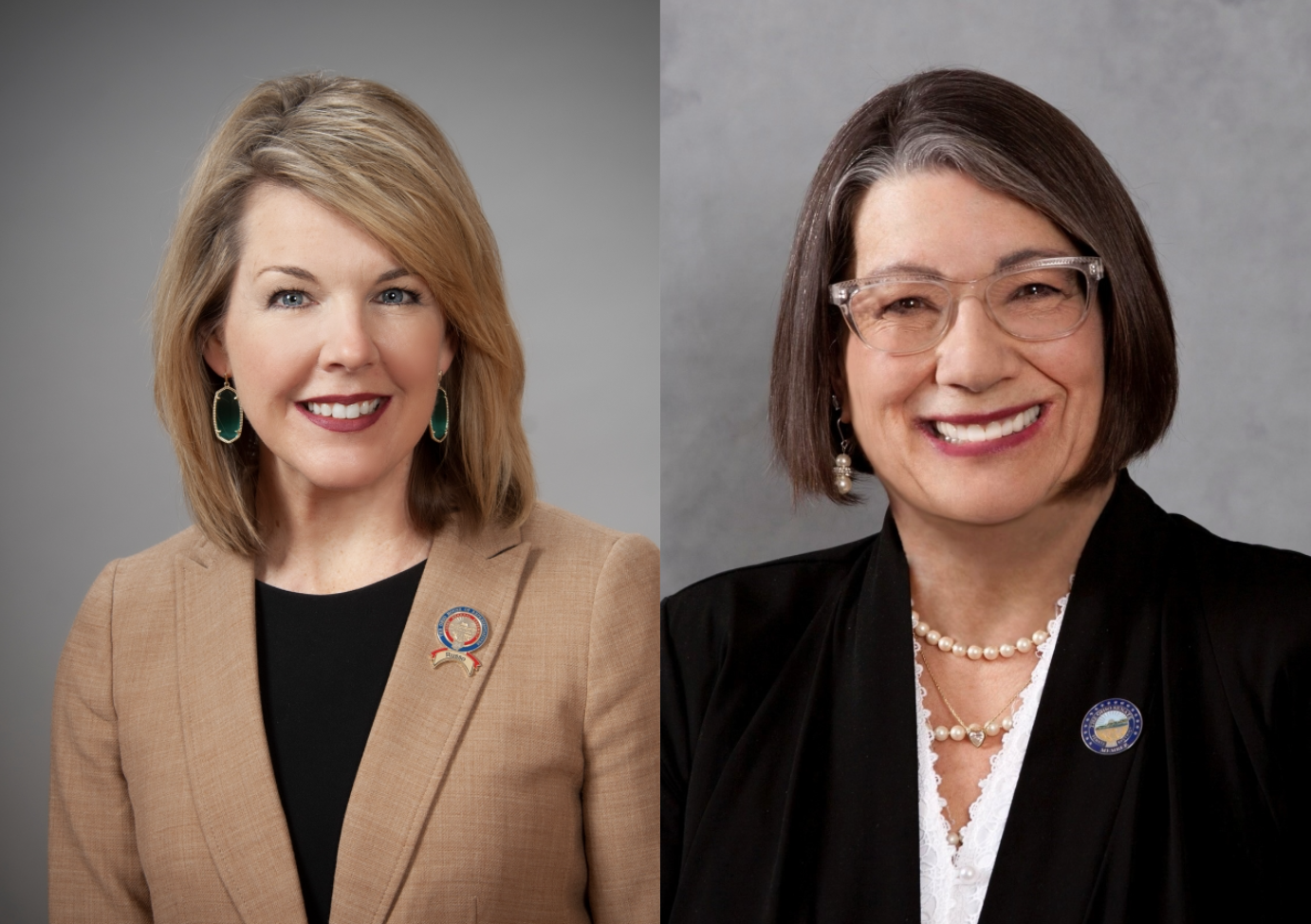
    Ohio House Democratic Leader Allison Russo, left, and Ohio Senate Democratic Leader Nickie Antonio, right. (Official photos from the Ohio Statehouse website.)

    Ohio Senate Minority Leader Nickie Antonio became leader in 2023 and Ohio House Minority Leader Allison Russo became leader in 2022.

    BY:  Ohio Capital Journal

    For the first time since 2008, two women are serving as the minority leaders of their caucuses in the Ohio Statehouse.

    Ohio Senate Minority Leader Nickie Antonio, D-Lakewood, became leader in 2023 and Ohio House Minority Leader Allison Russo, D-Upper Arlington, became leader in 2022.

    “I couldn’t be more proud to have two women leading the caucuses, but more importantly, beyond their gender, they’re just both really talented legislators and leaders,” said Ohio Democratic Chair Liz Walters. “They have different, but I think equally effective leadership styles that allow them to keep their caucuses together, and make sure the needs of all their members are met.”

    The last time two women served as minority leaders was during the 127th General Assembly (2007-2008) when then-state Representative Joyce Beatty and state Senator Teresa Fedor were the minority leaders.

    Antonio and Russo are navigating a Republican supermajority.

    “I think they really work well and balance each other, which goes a long way towards making the Democrats as a whole very effective,” Walters said. “When they work together, right across chambers, it helps overcome a lot more of the obstacles and make them a more formidable force.”

    But neither of them initially had political aspirations.

    Antonio’s path to Senate Minority Leader

    Antonio, 68, first got involved in politics at the local level when she advocated for a skatepark in Lakewood for her daughter. She went to city council, but was disappointed the council members didn’t seem to be paying attention to her.

    “I could do that job,” she remembered saying when she got home that night.

     COLUMBUS, Ohio — MAY 31: Senate Minority Leader Nickie Antonio, D-Lakewood, talks to reporters after the Ohio Senate session, May 31, 2023, at the Statehouse in Columbus, Ohio. (Photo by Graham Stokes for Ohio Capital Journal) 

    But she ultimately decided to run for office in 2004 after Ohio passed a constitutional amendment defining marriage as between a man and a woman.

    That caused many of their friends to move out of state, but Antonio and her now wife Jean committed to staying in Ohio to make it better.

    “We felt like LGBT folks were being attacked,” she said. “Certainly we were being marginalized and told that we were less than.”

    There was an opening on Lakewood City Council in 2005, so she ran and ended up serving two terms. Then the House seat for her district opened up in 2010 so she ran and got elected — making her the first openly gay person to be elected to the Ohio General Assembly.

    “A lot of people didn’t really know how to talk about it,” she recalled when she was elected in 2010.

    She married her long-time partner Jean in 2015 after the Supreme Court legalized same-sex marriage.

    Antonio served for eight years in the Ohio House of Representatives before being elected to the Ohio Senate in 2018, where she once again made history by being the first openly gay person to be elected Senate Minority Leader.

    “One of the things I appreciate most is her tenure as a public servant,” Walters said.

    People will often pull Antonio aside and tell her about a family member who is part of the LGBTQ community.

    “I’m happy that I’m able to have those conversations with folks because I think every conversation that’s had opens the door for some understanding and … I really do believe it makes a change in the long run,” she said.

    Ohio GOP lawmakers have introduced a slew of anti-LGBTQ legislation this General Assembly and Antonio will often speak up against those bills on the Senate floor. Notable among them is House Bill 68, which bans transgender minors from receiving gender-affirming medical care. Ohio Gov. Mike DeWine vetoed the bill, but the House and the Senate overturned it. The law is set to take effect on April 23, but the ACLU of Ohio will file a lawsuit in an attempt to stop the ban on gender-affirming care.

    “I’m definitely where I am supposed to be and doing what I’m supposed to be doing,” she said. “It’s really important to me in the room where it happens. And as the minority leader, I am in the room where it happens.”

    Some highlights of her career so far include working on bills that helped closed the loophole for people who are adopted to get original information, cut down on the response time for people experiencing a stroke and allowing pharmacies to give vaccines.

    Before launching her political career, she taught students with behavioral problems and learning disorders for 10 years in Cleveland.

    “I loved those kids and I always tell people that I learned everything I needed to know about the legislature and dealing with my colleagues in the legislature from troubled youth because you have to have a sense of humor, never show fear, really like people and make it part of your mission to find some kernel of commonality to start with to be able to communicate with them,” she said.

    Russo’s path to House Minority Leader

    Russo, 47, never intended to be in politics. She grew up in Mississippi and moved around quite a bit with her husband who was active duty military before deciding to put roots down in Ohio to be close to her in-laws.

    She worked in health policy for more than twenty years, but a couple key moments lead to her to run for office.

     COLUMBUS, Ohio — SEPTEMBER 20: House Minority Leader Allison Russo, D-Upper Arlington, speaks at the Ohio Redistricting Commission meeting, September 20, 2023, in the Lobby Hearing Room at the James A. Rhodes Office Tower in Columbus, Ohio. (Photo by Graham Stokes for Ohio Capital Journal) 

    The first was the 2016 Presidential Election where Donald Trump defeated Hillary Clinton.

    “2016 got those of us who had always been very active voters off the sidelines and into the arena in a way that probably no other election has,” she said.

    The following year, there were efforts to repeal the Affordable Care Act and freeze Medicaid expansion enrollments in Ohio, so she worked with folks doing advocacy work at the state and federal level. People encouraged her to pursue politics, but she brushed that aside since she was enjoying her career and her youngest child was less than a year old.

    But she ultimately decided to throw her hat in the ring when the House seat in her district opened for the 2018 election.

    “I thought, well, it’s now or never,” she said. “I knew absolutely nothing about running a campaign.”

    Russo, a mother of three, often had her children with her when she was campaigning and knocking on doors. She ended up not only winning the election, but flipping the district seat blue.

    She ran for Congress in 2021, but lost to U.S. Rep. Mike Carey 58% to 42%. The next year, she was elected House Minority Leader.

    Walters said Russo has “an aptitude and innate ability to lead her caucus and maneuver, playing chess every day rather than checkers.”

    As minority leader, Russo tells the members of her caucus they need to cultivate relationships and find common ground in order to be successful.

    “In a super minority, you are constantly having to figure out how to navigate this place, so that you can be effective and it’s not always in big ways, like you pass a big massive piece of legislation,” Russo said. “It can be in little ways— you get part of your legislation into a bill, you make bills better, you get things into the budget, you have wins there.”

    But sometimes finding common ground can be tricky.

    “You also don’t want to sacrifice your values,” she said. “You also want to be fearless in calling (things) out when needed. Don’t pull your punches.”

    Russo feels fortunate to live about 15 minutes away from the Statehouse, so she can run home to take one of her kids (ages 17, 14 and 7) to practice and then come back, if needed, for an event at the Statehouse later that night.

    “I realize that’s a luxury,” she said. “In some ways, it’s my proximity to the Statehouse that allows me to do this job with three kids at home and I know that that’s not normal for most people who are in these roles.”

    Advice for future women politicians

    Russo’s advice for women looking to get into politics is to not wait around for approval to run for office.

    “As women, we’re looking for someone to give us permission to take on these leadership roles or to run for office or whatever — you do not need that,” she said.

    Antonio’s suggestion to women who are in politics or who want to go into politics is to not take anything personal.

    “There are definitely things that make you feel like you get a gut punch some days,” she said.

    Something that can turn women away from politics is the lack of privacy, Russo said

    “Politics is an industry that’s tough for anyone, but it can be especially tough for women,” Walters said. “It’s a field that’s traditionally dominated by men with lots of strong opinions and feelings. … Leaders Russo and Antonio work twice as hard as their counterparts while overcoming unique obstacles. Even though they shouldn’t have to.”

    What’s next for Antonio and Russo?

    Antonio is term-limited and she’s not sure what she’ll do after her time in the Statehouse is up.

    “What I do know is I do not intend to go back to the House,” she said.

    Russo will be up for re-election for a fourth term this November. If she wins, she’ll be term-limited in the House. So what’s next after her time in the House is up?

    “To be determined,” she said. “There’s a lot of this that’s out of my control. And then a lot of this is about timing, and often many unknown factors.”

    And as for a potential run for Ohio Governor in 2026?

    “I know there’s been a lot of chatter in that space,” she said. “Let’s get through 2024 first and we’ll see what happens.”

    Follow OCJ Reporter Megan Henry on X.


    Megan Henry
    MEGAN HENRY

    Megan Henry is a reporter for the Ohio Capital Journal and has spent the past five years reporting in Ohio on various topics including education, healthcare, business and crime. She previously worked at The Columbus Dispatch, part of the USA Today Network.

    Ohio Capital Journal is part of States Newsroom, the nation’s largest state-focused nonprofit news organization.

    MORE FROM AUTHOR

  • More than 91,000 have applied for Ohio private school voucher expansion

    More than 91,000 have applied for Ohio private school voucher expansion

    Getty Images.

    87,312 scholarships have been awarded as of March 18 — amounting to $394 million in allocated funding, according to the Ohio Department of Education and Workforce.

    BY:  Ohio Capital Journal

    There have been more than 91,100 applications for Ohio’s private school voucher expansion program so far this school year — a dramatic increase compared to previous years.

    Out of 91,157 voucher expansion applications, 87,312 scholarships have been awarded as of March 18 — amounting to $394,015,641 in allocated funding, according to the Ohio Department of Education and Workforce. Applications are continuing to be accepted through the end of the fiscal year.

    There were 26,390 voucher expansion applications submitted in 2023 with 24,323 scholarships awarded, and 25,011 applications submitted and 21,873 scholarships awarded in 2022.

    Ohio lawmakers expanded private school voucher eligibility to 450% of the poverty line — or a household income of $135,000 or less for a family of four — in the state budget that was signed into law last summer. Families above the $135,000 threshold can still be eligible for at least 10% of the maximum scholarship.

    K-8 students can receive a $6,165 scholarship and high schoolers can receive a $8,407 scholarship in state funding under the expansion. 63,798 K-8 students were awarded a voucher scholarship and 20,495 high school students were awarded a scholarship, according to ODEW.

    When it comes to traditional EdChoice private school vouchers for this year, 43,330 families submitted applications and 42,477 were awarded scholarships — $270,987,877 in allocated funding, as of March 18, according to ODEW. 40,629 students were awarded traditional voucher scholarships in 2023 and 38,543 received traditional voucher scholarships in 2022.

    Ohioans are divided on this issue. Private school families who use the vouchers are obviously fans, but public school advocates oppose it.

    “Our number one concern about the expansion of school vouchers is that it means significant resources are going to private schools at the expense of the nearly 90% of Ohio kids who are attending our public schools,” said Ohio Education Association President Scott DiMauro.

    Ohio Lt. Gov. Jon Husted, who was the Ohio House speaker when the private school voucher program called EdChoice passed in 2005, recently visited St. Mary’s School in the Catholic Diocese of Columbus as part of a statewide tour of private schools.

    “It’s fantastic because more kids are getting the opportunity to get a great education and a school of their choice,” Husted said during his stop.

    St Mary’s School

    Eighth grader Sorcha Sweeney has attended St. Mary’s in Columbus’ German Village neighborhood since she was in preschool and is on an EdChoice scholarship.

    “I’ve never really been interested in going anywhere else,” she said during a recent roundtable discussion during Husted’s visit to the school.

    She will receive a full scholarship to attend Bishop Hartley High School next school year.

    “I wouldn’t have ever been able to afford (St. Mary’s),” Sorcha mom’s Megan Sweeney said. “Without a scholarship, it just wouldn’t be possible. … Without a private education, she wouldn’t be anywhere close to where she is.”

    St. Mary’s tuition for preschool through eighth grade costs $7,750 and 97% of St. Mary’s families use EdChoice Scholarships, said principal Gina Stull. Between 60-70% of students couldn’t afford the tuition without the scholarships, she said.

    The school currently enrolls about 400 students and expects to have 500 students next year and a waitlist, Stull said.

    “Through those initiatives, EdChoice has been a conduit for the big word of evangelization — trying to spread God’s love,” said St. Mary’s Pastor Vince Nguyen. “… With the EdChoice voucher program we have tried to love every single kid, catholic or not catholic, that comes through our doors here at St. Mary’s School.”

    Despite the explosion of private school vouchers in Ohio, DiMauro said there has been little impact on Ohio’s public school enrollment.

    “The evidence is very clear that the vast majority of those vouchers are going to students who are already attending private schools,” DiMauro said. “… It is about subsidizing private schools.”

    Husted said the vouchers have “accountability and oversight” safeguards in place so something like the Electronic Classroom of Tomorrow online charter school scandal from 2018 will never happen again.

    ECOT was forced to shut down after the Ohio Department of Education said Ohio’s first online charter school needed to repay much of its state aid for the 2015-16 and 2016-17 school years after the school inflated enrollment numbers. ECOT still owed the state $117 million in 2022.

    “I actually just spoke with (Ohio Department of Education and Workforce) Director (Steve) Dackin about this the other day, and I asked him whether he felt the safeguards are in place to make sure something like that didn’t happen again and he reassured me he thought there were,” Husted said.

    Follow OCJ Reporter Megan Henry on X.


    Megan Henry
    MEGAN HENRY

    Megan Henry is a reporter for the Ohio Capital Journal and has spent the past five years reporting in Ohio on various topics including education, healthcare, business and crime. She previously worked at The Columbus Dispatch, part of the USA Today Network.

    Ohio Capital Journal is part of States Newsroom, the nation’s largest state-focused nonprofit news organization.

    MORE FROM AUTHOR

  • At least seven Ohio universities are reviewing race-based scholarships after Supreme Court ruling

    At least seven Ohio universities are reviewing race-based scholarships after Supreme Court ruling

    College students walk on campus. (Klaus Vedfelt/Getty Images)

    The University of Akron, the University of Toledo, Cleveland State University, Kent State University, Ohio University, Ohio State University and Youngstown State University all said they are in the process of reviewing their scholarships.

    BY:  – Ohio Capital Journal

    At least seven Ohio public universities are reviewing scholarships in the wake of comments Ohio Attorney General Dave Yost made about race-based scholarships after the U.S. Supreme Court ruled against race-conscious admissions.

    Cleveland State University, Kent State University, the University of Akron, the University of Toledo and Youngstown State University all said they are in the process of reviewing their scholarships. This is in addition to Ohio University and Ohio State University, as previously reported by the Capital Journal.

    “The University of Toledo has paused the distribution of scholarships that consider race as a part of their award criteria following the U.S. Supreme Court ruling on the use of affirmative action in higher education admissions,” university spokesperson Tyrel Linkhorn said in email.

    This affects 6% of Toledo’s nearly 1,200 donor-supported scholarships, which is worth $500,000, he said in an email.

    “The University and The University of Toledo Foundation are actively working with donors to explore potential revisions to scholarship agreements so we can continue to support our donors’ goals in a way that fully complies with the Supreme Court decision,” Linkhorn said in an email.

    Kent State and Youngstown State mentioned the Supreme Court case and “guidance from the state of Ohio” as reasons for their review. Cleveland State just mentioned the Supreme Court case and Akron didn’t give a specific reason.

    The Capital Journal previously reported that Ohio University is “temporarily pausing” awarding race-based diversity scholarships and that Ohio State University is in the “process of updating scholarship criteria to ensure compliance with the law,” according to the university’s website.

    Ohio University has 130 gift agreements that are currently under review that represent $450,000 in potential scholarship awards, university spokesperson Dan Pittman said in an email.

    “The review is to ensure language in the gift agreements remains lawful,” Pittman said. “If deemed necessary, the University will work with donors to make revisions to language in the agreements.”

    Ohio State University expects to give away approximately $448 million dollars in financial aid this fiscal year, university spokesperson Ben Johnson said in an email.

    Bowling Green State University, Miami University, Northeast Ohio Medical Center, Shawnee State University, the University of Cincinnati and Wright State University did not answer questions about the status of their race-based scholarships.

    A university spokesperson for Central State University, Ohio’s only public historically Black university, said in email they don’t have race based scholarships.

    Supreme Court decision

    The U.S. Supreme Court. (Al Drago/Getty Images)
     The U.S. Supreme Court. (Al Drago/Getty Images) 

    Last summer, the U.S. Supreme Court ruled Harvard and the University of North Carolina violated the equal protections clause of the 14th Amendment by using race as a factor in applications.

    The next day, Yost sent a letter to Ohio colleges and universities saying “employees must immediately cease considering race when making admissions decisions,” according to the letter. It also said his office won’t legally protect someone at a college or university who uses race as a factor.

    The topic of race-based scholarships came up on a Jan. 26 call with universities, said Yost’s spokesperson Bethany McCorkle.

    “What was said in response to a question was after the recent Supreme Court decision, scholarships will need to be looked at to ensure compliance with the law,” McCorkle said in an email. “Although the Court did not expressly prohibit race-based scholarships, it indicated that ‘eliminating racial discrimination means eliminating all of it.’ Race-based scholarships discriminate on the basis of race in awarding benefits. Therefore, it would follow that such programs are unconstitutional.”

    The Harvard Supreme Court decision is being “weaponized to intimidate and create fear,” said Sara Kilpatrick, executive director of the Ohio Conference of the American Association of University Professors.

    “We obviously disagree with the Harvard decision, and we also disagree with how the Attorney General is trying to extrapolate it to apply to virtually anything that touches race,” she said. “We hope that institutions are not being pushed into a direction that ultimately will harm students.”

    If race-based scholarships are removed from universities, Kilpatrick said it could prevent Ohio students from earning degrees.

    “This is a dangerous slippery slope, and they should be cautious about how far they’re trying to push this,” she said. “This will undoubtedly dry up desperately needed revenue streams for institutions.”

    Follow OCJ Reporter Megan Henry on X.


    Megan Henry
    MEGAN HENRY

    Megan Henry is a reporter for the Ohio Capital Journal and has spent the past five years reporting in Ohio on various topics including education, healthcare, business and crime. She previously worked at The Columbus Dispatch, part of the USA Today Network.

    MORE FROM AUTHOR