Tag: MEGAN HENRY

  • “This care is medically necessary.” Advocates react to Ohio Senate overriding House Bill 68 veto

    “This care is medically necessary.” Advocates react to Ohio Senate overriding House Bill 68 veto

    A transgender Pride flag is covered with the words “Hands Off Trans Youth.” (Photo by Greg LaRose/Louisiana Illuminator/States Newsroom)

    Ohio transgender youth who aren’t already on a treatment plan won’t be able to access gender-affirming care after House Bill 68 takes effect on April 23.

    BY:  Ohio Capital Journal

    Ohioans have seen firsthand how valuable gender-affirming care is for their children.

    “My son would not be here if he hadn’t found (gender-affirming care) here in Ohio,” Rick Colby said, talking about his 31-year-old transgender son Ashton.

    “You can’t put a price on (gender-affirming care),” Nick Zingarelli said, referring to his 14-year-old transgender daughter.

    But now those dads fear for Ohio transgender youth. Those not already receiving it won’t be able to access gender-affirming care after the House and the Senate voted to override Gov. Mike DeWine’s veto of House Bill 68 — banning doctors from providing gender-affirming care to trans youth. The bill is set to take effect on April 23.

    “They need this care,” said Dr. Carl Streed, President of the U.S. Professional Association for Transgender Health.

    “This care is medically necessary,” Streed said. “It’s critical for their well being. It’s critical for their mental wellbeing long-term.”

    Ohio families can apply for the Southern Trans Youth Emergency Project (STYEP), a regional project of the Campaign for Southern Equality. This is in partnership with Equality Ohio, TransOhio and the Kaleidoscope Youth Center.

    STYEP can help families find out-of-state gender-affirming care providers and offer emergency grants of $500 for things such as travel and medication.

    Gender-affirming care can “include any single or combination of a number of social, psychological, behavioral or medical interventions designed to support and affirm an individual’s gender identity,” according to the World Health Organization.

    A 2022 study published in JAMA Network Open found access to hormones and puberty blockers for young people ages 13-20 was associated with a 60% lower odds of moderate to severe depression and a 73% lower odds of self-harm or suicidal thoughts compared to youths who didn’t get these medications.

    “You’re going to have kids that suffer from higher rates of depression,” Zingarelli said. “You’re going to have kids that are looking to get out of Ohio as soon as they possibly can either together with their parents now or as soon as they turn 18.”

    Gender-affirming care is supported by every major medical organization in the United States and Streed said it boggles his mind when politicians don’t listen to health care professionals.

    “Lawmakers who don’t listen to the best medical practice are causing harm to their constituents,” he said. “The reason that legislators are focused on this is, that for them, they see it as a winning topic to distract from the fact that they don’t know how to govern on any other issue.”

    State Sen. Nathan Manning of North Ridgeville was the only Republican to vote against overriding DeWine’s veto on the gender-affirming care ban. But for Colby, this transcends political party affiliation.

    “I’m a parent before I’m a Republican, first and foremost,” Colby said. “My son has been on an incredible journey. But we’ve done this together, he wasn’t alone. … The unconditional love that I have for him, that all the other parents have for their children, is what guides us and fortifies us in this journey.”

    The Zingarellis consider themselves lucky. Their daughter is already receiving gender-affirming at Cincinnati Children’s Hospital Medical Center, so she’ll be able to continue to receive care under HB 68’s grandfather clause that allows doctors who have already started treatment on patients to continue.

    “We’re grateful for that,” he said. “But that in no way makes it OK that she was lucky enough to have been born in the year that she was born in. … There’s too many out there that are going to be incredibly unlucky and all those that came after her in Ohio if this bill stands up to legal challenge.”

    Families will move out of Ohio in search of better healthcare, said Siobhan Boyd-Nelson, Equality Ohio’s co–interim executive director.

    “We know that many families have been planning for this day, and that right now, families are making some very difficult decisions,” Boyd-Nelson said.

    HB 68 becoming law in Ohio will continue to have ripple effects felt throughout the state.

    “It’s going to impact the way that physicians and other medical providers do their work here in Ohio,” Boyd-Nelson said. “It’s already raised a number of difficult questions for providers in a number of areas because they are now faced with ethical conundrums that I don’t even think you’d want to face on a law school exam.”

    Follow OCJ Reporter Megan Henry on X.

    _______________

    Megan Henry
    MEGAN HENRY

    Megan Henry is a reporter for the Ohio Capital Journal and has spent the past five years reporting in Ohio on various topics including education, healthcare, business and crime. She previously worked at The Columbus Dispatch, part of the USA Today Network.

    MORE FROM AUTHOR

  • Ohio launching $20 million, decade-long study to improve behavioral health outcomes

    Ohio launching $20 million, decade-long study to improve behavioral health outcomes

    Getty Images illustration of therapy session.

    The study seeks to better understand the root causes of mental illness, substance use disorders, and suicide.

    BY:  Ohio Capital Journal

    This story is about suicide. If you or someone you know needs support now, call or text 988 or chat 988lifeline.org.

    The state of Ohio is embarking on a decade-long study to better understand the root causes of mental illness, substance use disorders, and suicide.

    The Ohio Department of Mental Health and Addiction Services is providing a $20 million grant to fund the State of Ohio Action for the Resiliency (SOAR) study, Ohio Gov. Mike DeWine announced during a press conference Friday.

    “Currently, there’s a lot that we don’t know and the SOAR study is a huge step forward in advancing our understanding of mental health and substance use disorders,” said Ohio State University President Ted Carter. “This study will provide key data that will shape the future of mental health across Ohio and beyond.”

    “There’s nobody that is not affected by this,” Carter said. “There’s somebody that you know in your family, your community, your neighborhood that is affected by this.”

    The study will go for at least a decade with the hope it will continue for decades to come and will look at generations of families from all across Ohio who are affected by mental illness and substance abuse disorders, DeWine said. Funding for the SOAR study comes from the state’s two-year operating budget.

    “We know mental illness and substance use disorders are preventable, treatable, and people can and do recover,” said Ohio Department of Mental Health and Addiction Services Director LeeAnne Cornyn.

    The SOAR study has two main projects — the SOAR Wellness Discovery Survey and the SOAR Brain Health Study.

    The wellness study will study as many as 15,000 people across Ohio’s 88 counties to learn how skills may help overcoming adversity. The brain health study will look at 3,600 Ohioan in families to help look at the biological, psychological, and social factors that help people handle adversity.

    “There’s still an awful lot to know about mental health,” DeWine said. “And candidly, the research in this field has not been as robust as it has been in other areas. … It will give us a complete picture of each participant to uncover why, for example, two people in similar circumstances or with similar health have very, very different outcomes.”

    Ohio State University will lead the study and is partnering with hospitals and universities around the state: Bowling Green State University, Central State University, Kent State University, Nationwide Children’s Hospital, Northeast Ohio Medical University, Case Western Reserve University, University Hospital in Cleveland, Ohio University, the University of Cincinnati, Cincinnati Children’s Hospital, University of Toledo and Wright State University.

    The SOAR study will be led by Dr. Luan Phan, chair of the Department of Psychiatry and Behavioral Health at the Ohio State University College of Medicine.

    “Our approach … is to identify the factors that can be modified to reduce risk and build resilience in the face of stress, trauma and adversity,” Phan said. “It’s important to identify what we don’t know — the root causes, the risks, the preventive factors of mental illness, to explain what, I feel, are fairly simple, but fundamental questions: who gets ill? Why did they get ill? How do they get ill? And when do they get ill?”

    Researchers hope this study will do for mental health what the Framingham Heart Study has done for heart disease.

    The Framingham Heart Study was initiated by the United State Public Health Service in 1948 to investigate the risk factors for cardiovascular disease. It has enrolled more than 15,000 study participants.

    “Ohio represents a microcosm of our country,” Phan said. “What we learn here can be disseminated and scaled broadly. Other states will not only copy and adopt what we have done, they will be compelled to do so.”

    Suicide and opioid overdose deaths

    Nineteen Ohioans die prematurely every day from unintentional overdose and suicide, Phan said.

    Opioid overdose deaths increased by more than 300% since 2010 in Ohio, said Dr. John Warner, CEO of Ohio State University Wexner Medical Center.

    Suicide deaths in Ohio increased 8% to 1,766 deaths from 2020 to 2021 — meaning five Ohioans die by suicide every day, according to Ohio Department of Health’s Suicide Demographics and Trends 2021 report.

    The 988 Suicide & Crisis Lifeline received 8,793 calls from Ohio area codes from July 2022 to May 2023, according to the Ohio Department of Mental Health and Addiction Services.

    During that same time, there was an average of 2,014 texts and 2,007 chats per month to 988 from Ohio area codes.

    Follow OCJ Reporter Megan Henry on X.


    Megan Henry
    MEGAN HENRY

    Megan Henry is a reporter for the Ohio Capital Journal and has spent the past five years reporting in Ohio on various topics including education, healthcare, business and crime. She previously worked at The Columbus Dispatch, part of the USA Today Network.

    MORE FROM AUTHOR

  • Ohio transgender adults speak against proposed administrative rules that would change health care

    Ohio transgender adults speak against proposed administrative rules that would change health care

     Getty Images

    The rules would collect data on transgender medical care and modify the treatment of those with gender dysphoria, requiring medical consent from a psychiatrist, an endocrinologist and a bioethicist before moving forward with treatment.

    BY:  –  

    Ohio transgender adults are deeply concerned Gov. Mike DeWine’s proposed administrative rules would make it harder for them to access gender-affirming care.

    DeWine announced two proposed rules earlier this month that would collect data on transgender medical care and modify the treatment of those with gender dysphoria, including requiring patients under 21 undergo six months of counseling before receiving more treatment.

    “Anytime the government is telling its citizens what they can and cannot do with their own bodies, it sets a very, very, very dangerous precedent,” said Vincent-Natasha Gay, a transgender adult who lives in central Ohio.

    The rules are just proposals at this point and have not gone into effect. Ohioans still have time to submit comments regarding the proposed rules.

    “They need to not be implemented,” said Lis Regula, a transgender man living in Columbus. “It would make us the worst state in the entire nation for adults and children who want to obtain gender-affirming care.”

    A major issue Terry Brown has with the administrative rules is that they deal with adults.

    “You’re talking about restricting people who are classified as adults in the eyes of the law,” Brown, a trans man, said.

    The Ohio Senate Democratic Caucus recently sent a letter to DeWine expressing their concerns about how the proposed rules could get in the way of adults accessing gender-affirming care.

    “While these rules may have been drafted with the intention of taking a more pragmatic approach than the legislature, in reality, this proposal could make it more difficult for trans Ohioans to receive the life-saving medical care that they need,” the letter said. “The proposed rules go even further than House Bill 68 by interfering with the lives and medical care of both trans children and trans adults.”

    House Bill 68 would ban gender-affirming care for trans youth. DeWine vetoed HB 68, but the House voted to override his veto last week. The Senate will vote to override the veto on Wednesday next week.

    One of the proposed administrative rules would require obtaining medical consent from a psychiatrist, an endocrinologist, and a bioethicist before moving forward with treatment.

    DeWine’s spokesperson Dan Tierney said this rule would only apply to people who start receiving treatment after the rule takes effect.

    “It’s the Department of Health’s intention that it applies to treatment that starts moving forward after the enactment of the rule,” Tierney said. “That’s the way House Bill 68 was written. We intend this to be consistent with that.”

    Lawmakers added a grandfather clause to HB 86 that would allow doctors who already started treatment on patients to continue.

    But transgender adults argue the language of the proposed rules is vague and ambiguous.

    Silhouette of doctor in white coat with stethoscope and LGBT badge on pocket
     Getty Images. 

    “I feel like that was not very clear at all,” Brown said. “Because of that vagueness, we really still don’t know how it’s going to be applied.”

    This just leaves Regula with more questions about continuing care.

    “That doesn’t address if someone has to put a pause on things for some reason if they’re going to be able to get back to their treatment,” Regula said.

    Vincent-Natasha Gay is currently receiving gender-affirming care and would be considered grandfathered in under the proposed administrative rules.

    “But that shouldn’t matter,” Gay said. “There are so many people out there who are trans and just don’t know they’re trans yet, or are in the closet and hiding because they’re afraid for their life. And my goodness, with these proposed rule changes, that’s just going to make that even worse.”

    Health experts say it would be harmful if someone who’s already receiving treatment abruptly stopped, Tierney said.

    “That could have some negative health consequences,” he said. “That’s certainly not the intent for anything along those lines.”

    Instead, Tierney said these rules are meant to prohibit health care providers from giving treatment without consultation.

    “Most of the providers are doing this in the comprehensive, multidisciplinary way, anyways, so they would likely be in compliance with the rule,” he said.

    The proposed rule doesn’t mean people have to sit down with a psychiatrist, an endocrinologist, and a bioethicist, Tierney said

    “The bioethicist helps develop how each facility is going to deal with cases of how the treatments occur at that particular facility,” he said. “At the very least, mental health care is generally provided by the psychiatrist, not the endocrinologist, and endocrinology is generally provided by the endocrinologist, not by the psychiatrist.”

    But Ares Page is concerned about adding people to the medical team that might not have proper training in treating transgender patients.

    “I don’t see where that’s going to be safe, and where that’s going to help us improve our safety,” said Page, a transgender adult living in Akron.

    Page is also worried how much extra it will cost to add these specialists to a person’s medical team.

    “Some people’s insurance companies may not allow them, or approve them for these specialists,” Page said.

    Ohioans have until 5 p.m. Friday to give feedback on the proposed transition care rule by emailing out to MH-SOT-rules@mha.ohio.gov with the subject line, “Comments on Gender Transition Care Rules.”

    Data Collection

    The second proposed administrative rule would require data collection around gender-affirming care, including requiring a health care provider to report non-identifying treatment for “gender-reassignment surgery, gender-transition services, genital gender reassignment surgery,” according to the proposed administrative rules.

    Under the proposed administrative rules, the Ohio Department of Health would share the aggregate data collected with Ohio lawmakers starting Jan. 31, 2025.

    But many transgender adults question why the data collection is necessary.

    “You can assign a code …  But there always has to be a place where my name goes back to the code,” Brown said.  “That is a problem.”

    Having a common data set on medical treatment will help people make an informed decision, Tierney said, who explained ODH collects data on things like pediatric flu deaths, food poisoning and abortion.

    “It’s all de-identified, it’s all aggregate,” Tierney said. “There’s really no way you could identify any patient from the data.”

    But people are concerned it would be hard to have the data be completely anonymous, especially for folks who live in a small community.

    “If it’s a matter of three (trans) people in a community and a doctor’s office or hospital system is treating all three of those people, how do you really anonymize three folks?” Regula said.

    Feedback for the data collection proposal must be sent to ODHrules@odh.ohio.gov by Feb. 5.

    Despite these proposed rules and ongoing legislation targeting trans youth, most people interviewed for this story say they would like to stay in Ohio if they can.

    “This is my home,” Regula said. “I’m an Ohio boy born and bred. I was raised here, my family is here. … I can’t imagine leaving home …  I also want to be able to make sure that my daughter and I have the medical care that we need.”

    But Page has contemplated leaving the country altogether.

    “(The government) has no right to tell me what to do with my body,” Page said.

    Follow OCJ Reporter Megan Henry on X.


    Megan Henry
    MEGAN HENRY

    Megan Henry is a reporter for the Ohio Capital Journal and has spent the past five years reporting in Ohio on various topics including education, healthcare, business and crime. She previously worked at The Columbus Dispatch, part of the USA Today Network.

    MORE FROM AUTHOR

  • Ohio families with transgender children relieved DeWine vetoed HB 68, worry about potential override

    Ohio families with transgender children relieved DeWine vetoed HB 68, worry about potential override

    A transgender Pride flag is covered with the words “Hands Off Trans Youth.” (Photo by Greg LaRose/Louisiana Illuminator/States Newsroom)

    The Ohio House will be in session next Wednesday and the Senate’s next scheduled session is Jan. 24.

    BY:  Ohio Capital Journal

    The Burkle family huddled together to watch last week’s press conference where Ohio Gov. Mike DeWine vetoed a controversial bill that would have banned gender-affirming care for transgender youth.

    “It was a brief sigh of relief,” mom Alicia Burkle said. “We were crying and hugging.”

    Their 10-year-old daughter Astrid has socially transitioned, but has not yet started puberty blockers.

    Ohio House Bill 68 would prevent transgender athletes from playing women’s sports and would ban transgender youth from accessing gender-affirming care, including puberty blockers and hormone therapy. DeWine said during last week’s press conference his focus was on the health care component of the bill.

    The Burkles figured they had a couple of weeks before the lawmakers returned from winter break, but the Ohio House announced they will have session next Wednesday, Jan. 10. The Ohio Senate’s next schedule session is Jan. 24.

    “It’s just so hurtful and it’s exhausting,” Burkle said.

    The Ohio Capital Journal talked to three families with transgender children who were relieved DeWine vetoed HB 68, but are now concerned the legislature could override his veto.

    “We do know that this was a math problem also and that the veto was not necessarily the end,” said Nick Zingarelli, the father of a transgender teenager.

    A three-fifths vote of the members of the House and Senate is necessary to override the governor’s veto — meaning 60 representatives and 20 senators.

    HB 68 passed in December with 24 votes in the Senate and 62 votes in the House. State Sen. Nathan Manning was the lone Republican senator to vote against the bill in December. Republican state Reps. Jamie Callender and Brett Hillyer voted against the bill when it originally passed the House with 64 votes in June.

    Ohio House Speaker Jason Stephens, R-Kitts Hill, said last week he was disappointed in DeWine’s veto.

    “We will certainly discuss as a caucus and take the appropriate next steps,” Stephens said in a statement.

    Burkle family

    When the Ohio House and Senate passed HB 68 on Dec. 13, the Burkles launched into action mode by asking their doctor what next steps they can take as well as emailing and calling DeWine. Astrid even sent DeWine some handwritten letters.

    “We really didn’t get to truly enjoy the holiday because we were just so anxious about what was going to happen,” Alicia Burkle said.

    Astrid is not currently on puberty blockers and wouldn’t be covered under the grandfather clause that would allow doctors who already started treatment on patients to continue.

    “We don’t know that she would be (on puberty blockers) before the bill were to take effect, if it were to pass,” Alicia Burkle said.

    DeWine said he would pursue administrative rules banning gender-affirming surgery on minors, collecting data, and combating clinics that might pop up to try to perform ideologically-driven care. No Ohio children’s hospital currently performs gender-affirming surgery on those under 18.

    “Those are all really reasonable concessions,” Burkle said.

    The Cleveland-area family doesn’t want to move out-of-state, and hopes it doesn’t get to that point.

    “It’s certainly one of the options that we’re keeping open if that’s what we’re forced to do,” Burkle said.

    The Scagliones

    While Kat Scaglione was impressed with DeWine’s veto, she said it feels like sitting in limbo waiting to see what happens next.

    “What if this override happens?” she asked. “It feels like we’ve almost backpedaled and we’re back to where we started.”

    She has a 14-year-old transgender daughter, a 13-year-old cisgender son, and a 10-year-old transgender daughter.

    Amity, 14, is past the point of being able to get puberty blockers and is waiting on hormone treatment.

    “I am supposed to be worrying about the next test I have to study for,” Amity said. “Not whether my rights are going to disappear. …  It’s very scary to have that thought looming over your head, like all the time.”

    Kat said waiting on the governor’s decision overshadowed the holiday season.

    “My kids were sitting there writing Christmas lists and writing letters to send to the governor and to the representatives,” she said. “It didn’t feel like much of a holiday this year.”

    Zingarelli family

    The Zingarelli family celebrated DeWine’s veto.

    “It was we’re going to take the next few days just to savor this victory, because it was a huge victory,” father Nick Zingarelli said.

    His 14-year-old daughter is treated by Cincinnati Children’s Hospital Medical Center, so she would be able to continue receiving care under the grandfather clause but he wants to make sure all Ohio kids would have access to this kind of care.

    He hopes DeWine’s veto will give other Republican lawmakers pause.

    “I would hope that they would listen to the elected leader from their own party, and then consider that and say, ‘Am I on the wrong side of this issue?’ … We’re not gonna roll over on this battle. If they win in the legislature, we will see them in court,” he said.

    Follow OCJ Reporter Megan Henry on X.

    ___________

    Megan Henry
    MEGAN HENRY

    Megan Henry is a reporter for the Ohio Capital Journal and has spent the past five years reporting in Ohio on various topics including education, healthcare, business and crime. She previously worked at The Columbus Dispatch, part of the USA Today Network.

    MORE FROM AUTHOR

  • Paul Craft will be Ohio’s next State Superintendent of Public Instruction

    Paul Craft will be Ohio’s next State Superintendent of Public Instruction

    The Ohio Department of Education in Columbus, Ohio. (Photo by Graham Stokes for Ohio Capital Journal. Republish photo only with original story.)

    BY:  Ohio Capital Journal

    The Ohio State Board of Education appointed Paul Craft to be the next State Superintendent of Public Instruction during Tuesday’s monthly meeting.

    Paul Craft (Buckeye Valley Local Schools Photo)

    Craft’s first day as superintendent will be Jan. 1 and his annual salary will be $190,000, according to the state board resolution.

    “Ohio is home to outstanding educators and school personnel, and I’m excited to lead the work to ensure we have an excellent education workforce ready to make a difference for students,” Craft said in a statement.

    He is currently the superintendent of Buckeye Valley Local Schools, a role he has served in since August 2022. He was also the superintendent of Delaware City Schools for nine years and previously worked in Upper Arlington City Schools, according to his LinkedIn profile.

    He was also the CEO of Metropolitan Educational Technology Association (META) Solutions for three years and previously served in the Ohio Army National Guard for over 30 years, according to his LinkedIn.

    Craft received his undergraduate degree in secondary education and leadership from the University of Montana and his masters in educational leadership from Ohio State University.

    “We want to make sure Ohio is a national leader when it comes to our teaching workforce, and Paul Craft will position us to advance the work focused on having excellent educators in our classrooms,” Paul LaRue, president of the State Board of Education of Ohio, said in a statement.

    The other finalists for state superintendent were Jeffrey Greenley, the superintendent of Belpre City Schools, and Julia Simmerer, the Ohio Department of Education and Workforce Senior Executive Director for the Center for Teaching, Leading, and Learning.

    The vote came down to Craft and Greenley. Fifteen members voted for Craft while board members Michelle Newman and Christina Collins voted for Greenley after coming out of executive session.

    “We received a lot of wonderful letters in support of Mr. Greenley and his qualifications, so I really wanted to proudly put his name forward, but I will proudly vote in support of this resolution,” Newman said before voting to appoint Craft.

    All board members voted in favor of the resolution to appoint Craft as superintendent.

    Chris Woolard is currently the interim state Superintendent of Public Instruction and search firm Ray & Associates helped the board find superintendent candidates.

    Follow OCJ Reporter Megan Henry on Twitter.


    Megan Henry
    MEGAN HENRY

    Megan Henry is a reporter for the Ohio Capital Journal and has spent the past five years reporting in Ohio on various topics including education, healthcare, business and crime. She previously worked at The Columbus Dispatch, part of the USA Today Network.

    MORE FROM AUTHOR

  • More than 342,000 Ohioans have lost their Medicaid coverage since April

    More than 342,000 Ohioans have lost their Medicaid coverage since April

     File photo by Justin Sullivan/Getty Images.

    Ohioans can lose their Medicaid coverage before they are no longer eligible or they can be unenrolled for procedural reasons

    BY:  Ohio Capital Journal

    More than 342,000 Ohioans have lost their Medicaid coverage so far since the COVID-19 pandemic protections ended April 1, according to the Ohio Department of Medicaid.

    Ohioans can lose their Medicaid coverage before they are no longer eligible or they can be unenrolled for procedural reasons — meaning “they don’t respond to the multiple requests for information needed to process a renewal,” Lisa Lawless, the spokesperson for the Ohio Department of Medicaid, said in an email.

    Ohioans who lost their Medicaid coverage because of procedural reasons, according to the Ohio Department of Medicaid.

    • October — 52,782
    • September — 57,292
    • August — 59,378
    • July — 61,123
    • June — 55,666
    • May — 49,367
    • April — 46,707

    Ohioans who lost their Medicaid coverage because they were ineligible for renewal, according to the Ohio Department of Medicaid.

    • October — 18,585
    • September —  16,297
    • August — 16,972
    • July — 17,383
    • June — 18,990
    • May — 23,064
    • April — 21,284

    Losing Medicaid coverage can really disrupt someone’s life and be traumatic for people, said Kathryn Poe, a budget and health researcher at Policy Matters Ohio.

    “You’re seeing families all of a sudden learn when they go to CVS or when they go to the doctor that they’re no longer covered by Medicaid,” Poe said. “A lot of folks didn’t realize that they had to re-enroll. … It’s perhaps coming as a little bit of a shock.”

    More than 2.5 million in the United States have lost their Medicaid coverage since April 1 and  71% of those people were unenrolled because of procedural reasons, said Jennifer Tolbert, KFF’s director of the State Health Reform and Data Program and an associate director of its Program on Medicaid and the Uninsured.

    “The consequences of losing Medicaid, even for a short period of time can be very disruptive, and in some cases devastating for people,” she said. “Many people enrolled in Medicaid have either significant physical health or mental health challenges or conditions that they are dealing with.”

    Anecdotally, Tolbert has heard stories of people who either forgo their medication and suffer the consequences or pay thousands of dollars out-of-pocket after losing their Medicaid coverage, which is the government’s insurance program for low-income and disabled people.

    “People in poverty are the people on Medicaid,” Poe said. “It’s affecting people that have probably the least amount of power in our society.”

    States unwinding Medicaid

    Congress passed the Families First Coronavirus Response Act in March 2020 which gave states enhanced federal matching dollars for their Medicaid programs. Because of this, states were barred from disenrolling people from Medicaid, even if they were ineligible.

    But now that COVID is no longer a public health emergency in the United States, states are going through Medicaid unwinding — dropping people who are either no longer eligible or didn’t turn in their paperwork.

    Ohio’s disenrollment process

    Ohioans may be contacted up to eight times — through the mail, text messages and phone calls — before being unenrolled from Medicaid, Lawless said.

    But if someone has moved, changed their number or doesn’t have internet access they might not have been notified about potentially losing their coverage.

    “If they can’t get a hold of you after a few times you can just get kicked off,” Poe said. “People are just getting kicked off of their health care coverage, because Medicaid can’t find them. And that feels really rather unacceptable to me.”

    More than 3 million Ohioans are enrolled in Medicaid and the Medicaid renewal process starts 60 days before their annual renewal date. Ohioans receive a final notice of disenrollment before losing their coverage, Lawless said.

    Ohioans can renew their Medicaid coverage by returning a completed renewal packet to their county Jobs and Families Services office, by calling 1-844-640-6466 or online through the Ohio Benefits eligibility portal.

    Follow OCJ Reporter Megan Henry on Twitter.


    Megan Henry
    MEGAN HENRY

    Megan Henry is a reporter for the Ohio Capital Journal and has spent the past five years reporting in Ohio on various topics including education, healthcare, business and crime. She previously worked at The Columbus Dispatch, part of the USA Today Network.

    MORE FROM AUTHOR

  • Gov. DeWine calls on legislators to modify recreational marijuana law before it goes into effect

    Gov. DeWine calls on legislators to modify recreational marijuana law before it goes into effect

    BY:  Ohio Capital Journal

    Ohio Gov. Mike DeWine says he accepts that Ohioans have voted to legalize recreational marijuana, but is calling on legislators to make changes to the law before it goes into effect on Dec. 7.

    “My recommendation to the General Assembly is that they take action to make sure that both rights are protected,” DeWine said Thursday morning to a group of reporters during his first remarks about Tuesday’s election.

    “People have a right to smoke it. People have a right to consume it. But also that everybody else’s who doesn’t choose to do so is also protected with their rights as well.”

    Leading up to the election, DeWine was a vocal critic of Issue 2, which legalizes and regulates the cultivation, manufacturing, testing and the sale of marijuana to Ohioans 21 and up.

    “We respect what the people have done,” DeWine said. “What the people have clearly told us is they want legal marijuana in Ohio. We are going to see that they have that. We’re also going to live up to our responsibility to all the people in the state of Ohio, whether they voted for it or voted against it.”

    In doing so, he wants to make sure various protections are in place, starting with Ohio’s children.

    “One goal will be to make sure that they are protected from advertising in regard to marijuana,” DeWine said. “We want to do everything within our power to reduce the number of inadvertent consumption of gummy bears, cookies and other products that have marijuana.”

    Last year, a 10-year-old Upper Arlington elementary student mistakenly brought her dad’s edible marijuana gummies to school and shared with them other students during lunch, thinking they were leftover Easter candy. After eating the gummies, the students became nauseous, experienced hallucinations and had elevated heart rates, so they were all taken to a local hospital for treatment.

    “We have every responsibility to do everything we can to keep those (emergency room visits) numbers down as much as we can,” DeWine said.

    BUCKEYE LAKE, Ohio — AUGUST 17: A worker holds a tray of green apple marijuana edibles that will be packaged for medical sale, August 17, 2023, at the PharmaCann, Inc.’s cultivation and processing facility in Buckeye Lake, Ohio. (Photo by Graham Stokes for Ohio Capital Journal)
     BUCKEYE LAKE, Ohio — AUGUST 17: A worker holds a tray of green apple marijuana edibles that will be packaged for medical sale, August 17, 2023, at the PharmaCann, Inc.’s cultivation and processing facility in Buckeye Lake, Ohio. (Photo by Graham Stokes for Ohio Capital Journal. Republish photo only with original story.) 

    He said he also feels obligated to protect adults who don’t want to inhale or smell marijuana when they are walking around.

    “They make a choice not to use marijuana, they should be protected from being in a place where they have to deal with that,” he said.

    DeWine also wants to reduce the number of drivers under the influence of marijuana. This was an issue the opposition group Protect Ohio Workers and Families harped on throughout election season — predicting Ohio would see an additional 48 fatal vehicle crashes and 2,298 more injury crashes if Issue 2 passed.

    Issue 2 is a citizen initiative, meaning Ohio lawmakers can make changes to the law — something DeWine hopes can happen by Dec. 7.

    “I would hope … that when Dec. 7 comes and goes that we will be able to inform the people of the state exactly how this program will roll out,” he said. “I think it would be good if that was all done by the 7th so that we’re not in a situation of taking something away from people.”

    DeWine said he has a Monday morning meeting scheduled with Ohio House Speaker Jason Stephens, R-Kitts Hill, and Ohio Senate President Matt Huffman — two republicans who were quick to hint at making changes to Issue 2 after the race was called.

    “Now is the time for the legislature to lead on how best to allocate tax revenues while responsibly regulating the industry,” Stephens said in a statement.

    Huffman said lawmakers may clarify language “regarding  limits for THC and tax rates as well as other parts of the statute.”

    Follow OCJ Reporter Megan Henry on Twitter.

    Reporter Nick Evans contributed to this story. 


    Megan Henry
    MEGAN HENRY

    Megan Henry is a reporter for the Ohio Capital Journal and has spent the past five years reporting in Ohio on various topics including education, healthcare, business and crime. She previously worked at The Columbus Dispatch, part of the USA Today Network.

    MORE FROM AUTHOR


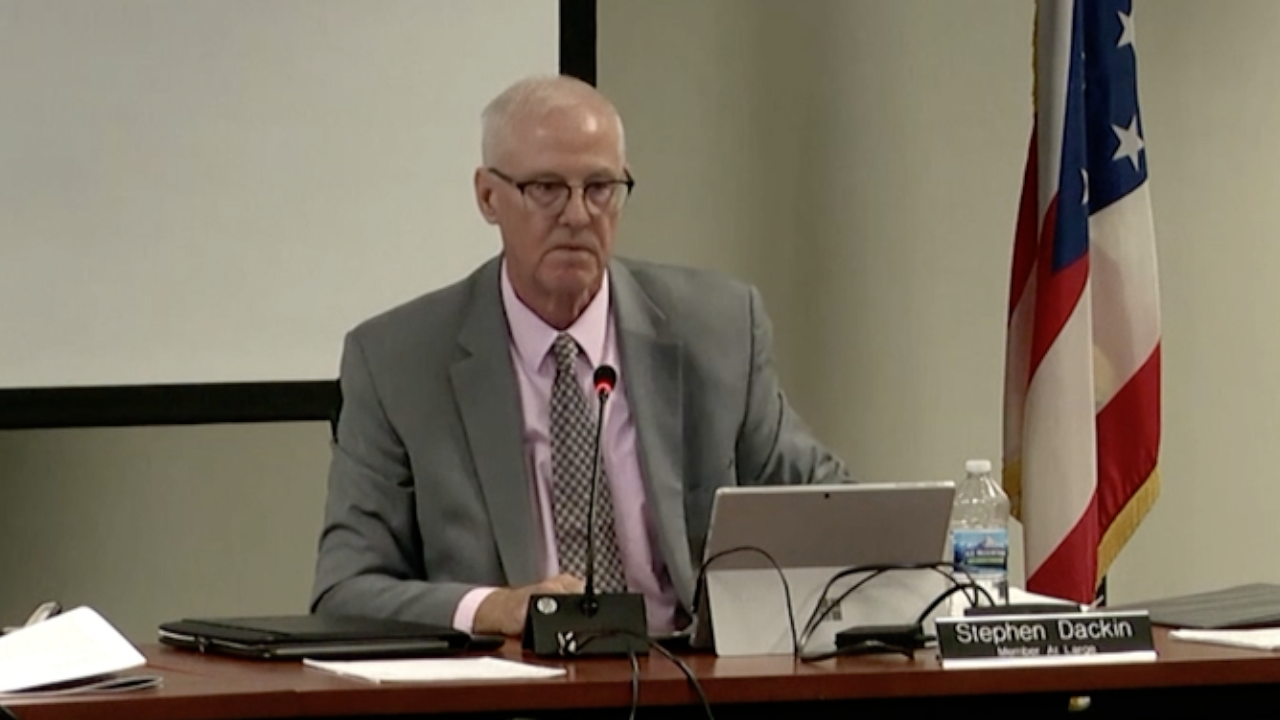
  • Gov. DeWine taps Steve Dackin as head of Ohio K-12 education, despite previous ethics investigation

    Gov. DeWine taps Steve Dackin as head of Ohio K-12 education, despite previous ethics investigation

    Steve Dackin. Photo from The Ohio Channel.

    BY:  Ohio Capital Journal

    Ohio Gov. Mike DeWine nominated Steve Dackin to lead the new Department of Education and Workforce — despite Dackin’s previous ethics investigation during his less than two-week stint as state superintendent.

    Dackin previously served as the vice president of the Ohio State Board of Education and had access to the job applications for the state superintendent position in 2022 after Paolo DeMaria retired in 2021.

    In February 2022, Dackin resigned from the Ohio State Board of Education days before the application deadline and applied for the state superintendent position.

    The State Board of Education voted Dackin for state superintendent on May 10, 2022, and he assumed office on May 23, 2022. In between those 13 days, the Ohio Ethics Commission opened an investigation into Dackin.

    He resigned 11 days later on June 3, 2022, and signed a settlement with the Ohio Ethics Commission to avoid criminal prosecution in October 2022. Dackin did not take any compensation for the 11 days he was in charge of the Ohio Department of Education.

    “Dackin has a broad base of experience that will benefit Ohio’s continued efforts to create a transformative education system that provides the resources and support for students and serves as a pipeline of talented young people to Ohio employers, colleges, universities, and career and technical education centers, helping every Ohioan live up to their God-given potential,” DeWine said in a statement Thursday afternoon announcing his pick.

    The Director of the Department of Education and Workforce must be confirmed by the Ohio Senate.

    DeWine’s appointment comes weeks after a Franklin County Common Pleas Court Judge denied a preliminary injunction request to stop the transfer of power of K-12 education from the state school board to the governor’s office, which allowed the Ohio Department of Education to became the Ohio Department of Education and Workforce.

    This created a cabinet-level director position and puts the department under the governor’s office.

    The conservative think tank Fordham Institute’s Vice President for Ohio Policy and Advocacy Chad Aldis praised DeWine’s appointment of Dackin.

    “Steve Dackin is a widely respected leader and educator who has served Ohio students for decades in a wide variety of roles including as a teacher, principal, and superintendent,” Aldis said in a statement.

    The business coaltion Ohio Excels also celebrated DeWine’s appointment.

    “We were proud to support him before and praise the governor for picking this talented, committed education leader to guide this new department at this critical time,” Lisa Gray, president of Ohio Excels, said in a statment.

    Dackin was superintendent of Reynoldsburg City Schools from 2007-2014 and then worked as the superintendent of school and community partnerships for Columbus State Community College until December 2021.

    He earned his undergraduate degree in history from Ohio Northern University and his master’s in educational administration from the University of Dayton.

    Follow OCJ Reporter Megan Henry on Twitter.


    Megan Henry
    MEGAN HENRY

    Megan Henry is a reporter for the Ohio Capital Journal and has spent the past five years reporting in Ohio on various topics including education, healthcare, business and crime. She previously worked at The Columbus Dispatch, part of the USA Today Network.

    MORE FROM AUTHOR

  • Ohio lawmakers want to make daylight saving time permanent

    Ohio lawmakers want to make daylight saving time permanent

    Getty Image

    The Ohio House State and Local Government Committee passed a resolution Tuesday that urges Congress to enact the Sunshine Uniformity Act of 2023, which would permanently switch Ohio to Daylight Saving Time.

    BY:  Ohio Capital Journal

    The clocks will fall back this weekend, but Ohio lawmakers are urging Congress to get rid of the time change and make daylight saving time permanent.

    The Ohio House State and Local Government Committee passed a resolution Tuesday that urges Congress to enact the Sunshine Uniformity Act of 2023, which would permanently switch Ohio to daylight saving time.

    House Concurrent Resolution 7, which now goes to the House floor, would not immediately change Ohio clocks. Only federal law could make that change. State Reps. Rodney Creech, R-West Alexandria, and Bob Peterson, R-Sabina introduced the resolution in May.

    “We simply no longer need the biannual tradition of changing our clocks,”  Creech said in his testimony.

    State Reps. Latyna Humprhey, D-Columbus, and Daniel Troy, D-Willowick, voted against the resolution.

    Clocks are set for daylight saving time from March to November. Permanent daylight savings would bump the sunrise and sunset back an hour, leading to darker mornings and lighter nights. The proposed resolution would push the sunrise back until almost 9 a.m. and the sunset until after 6 p.m. on the shortest day of the year.

    Ohioans simply don’t want to change their clocks, he said when speaking to the Ohio House State and Local Government Committee in May.

    “Switching to daylight saving time would increase the hours of sunlight in the evenings year round and could help combat some mental health issues from the darker winter evenings we currently have on standard time,” Creech said. “…When you’ve been at work all day, the last thing you want to do is open that door to go outside and it’s dark out,” Creech said. “It gives a little more daylight at the end of the day.”

    Young students walking to school or waiting for the bus in the morning in the dark is a concern with making daylight saving time permanent. But Peterson addressed that issue in his sponsor testimony and suggested school districts adjust their start times during the winter months.

    Rep. Marilyn John, R-Richland County, said she was one of the first students on the school bus in the morning.

    “It was dark every morning I got on the school bus, so from a safety standpoint I made it all the way through school and we had no issues,” she said.

    Standard Time

    President of Save Standard Time Jay Pea wants to make standard time permanent, what he refers to as God’s time.

    He argues standard time would not improve people’s health and safety, but it would also benefit schoolchildren, farmers and commuters.

    “(Daylight saving time) would deprive morning light needed by farmers, construction workers, and other outdoor laborers,” Pea wrote in his testimony. “It would disrupt worship for those who pray daily at sunrise. It would increase the need for morning heat and evening air conditioning in homes.”

    History of daylight savings

    Daylight saving time started in the United States as a way to save fuel during World War I and a year-round Daylight Saving Time policy was adopted during World War II.

    The Uniform Time Act in 1966 requires the country use daylight saving time, but gives states the option to opt out and remain on standard time year-round. Arizona, Hawaii and five U.S. territories have already adopted permanent standard time.

    The United States previously tried year-round daylight saving time in 1974 as a way to reduce the country’s energy consumption during the energy crisis, but the switch only lasted eight months before going back to standard time in the fall.

    Follow OCJ Reporter Megan Henry on Twitter.


    Megan Henry
    MEGAN HENRY

    Megan Henry is a reporter for the Ohio Capital Journal and has spent the past five years reporting in Ohio on various topics including education, healthcare, business and crime. She previously worked at The Columbus Dispatch, part of the USA Today Network.

    MORE FROM AUTHOR