Tag: Ohio Capital Journal

  • Before leaving Washington, Ohio Sen. Sherrod Brown restores retirement benefits for public workers

    Before leaving Washington, Ohio Sen. Sherrod Brown restores retirement benefits for public workers

    By:  Ohio Capital Journal

    On his way out of town, Ohio Democratic U.S. Sen. Sherrod Brown was able to notch one final long-sought legislative victory that will benefit public sector workers in Ohio and around the country. The Social Security Fairness Act ensures former government workers like police, firefighters and teachers can collect their full retirement benefits by repealing two provisions that reduce social security payouts.

    Many public sector workers aren’t covered by Social Security because their employer runs a pension program for their retirement. But eventually, a lot of those workers move on to other jobs that do pay into the Social Security system. Even though many of them end up working the requisite 40 quarters to be fully eligible for Social Security benefits, the program reduces their payouts because they’re also collecting retirement benefits from their other pension program.

    GET THE MORNING HEADLINES.


    William Johnson, who heads up the National Association of Police Organizations explained, “Most police officers must retire after specific time served, usually in their early to mid-fifties, (but) many look for new opportunities to serve their community.”

    Those workers are penalized by what’s known as the Windfall Elimination Provision, he explained.

    “Instead of receiving full support from their rightfully earned Social Security retirement benefit, their pension heavily offsets it, thus vastly reducing the amount they receive,” Johnson said.

    Surviving spouses can come off even worse though. The Government Pension Offset requires reductions in Social Security dependent benefits if one spouse receives benefits from a public pension. Johnson argued that offset often results in “eliminating most or all of the payment.”

    Those provision were approved by lawmakers in the 1970s and 80s in a bid to keep the program solvent.

    In all, Brown’s office said, the reductions affect 3 million Americans including almost a quarter million Ohioans.

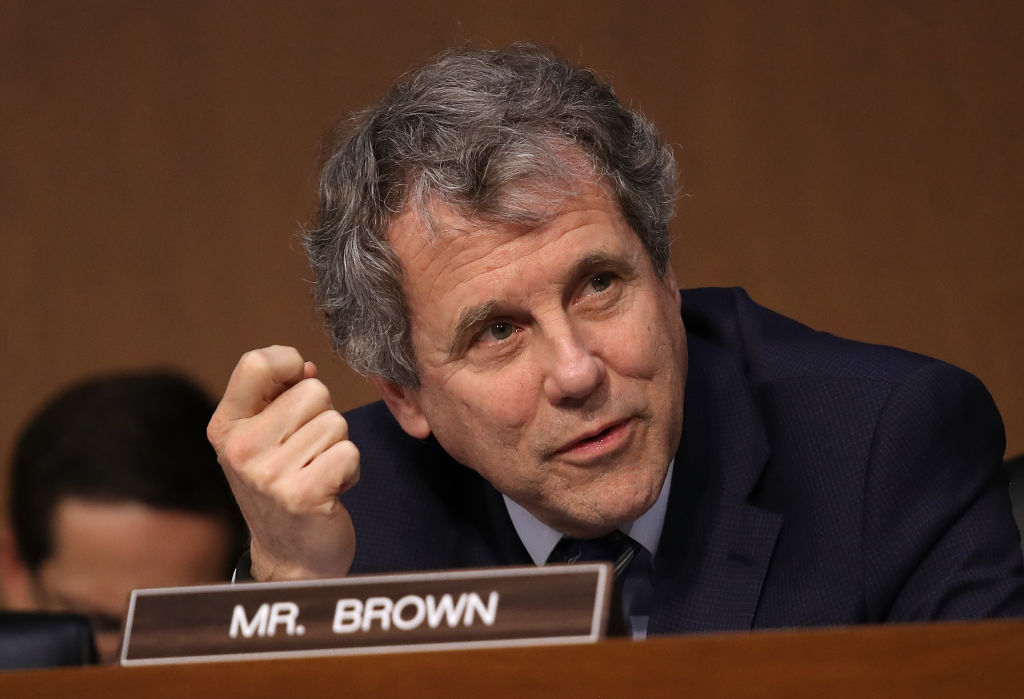
     U.S. Sen. Sherrod Brown, D-OH, leading a panel discussion on public workers’ Social Security benefits. (Photo by Nick Evans for Ohio Capital Journal.) 

    How we got here

    Following an election in which Republicans criticized Brown’s long service in Washington, passage of the Social Security Fairness Act offers one data point in favor of experience. Brown held a field hearing in Columbus discussing the proposal earlier this year and he’s been working to pass it since serving in the U.S. House of Representatives.

    He last served in that chamber 17 years ago.

    In a press release following the vote Brown described working for years to eventually cobble together more than 60 cosponsors.

    “We have spent decades working to pass this legislation and tonight is a victory for all the public servants who will finally get the Social Security they have earned,” he said. “Tonight, Congress ensured that police officers, firefighters, teachers, and public servants across Ohio will be able to retire with the Social Security they spent their lives paying into.”

    Brown’s effort has also been the beneficiary of shifting attitudes in the Republican Party. For many, many years, a core tenet of Republican politics was searching for a way to get Social Security spending under control. Former House Speaker Paul Ryan’s chief legislative goal was privatizing the program. More recently U.S. Sen. Rick Scott, R-FL, proposed a Rescue America Plan in 2023 that would sunset Social Security and Medicare.

    But since the emergence of Donald Trump as the leader of the Republican Party, efforts to overhaul the retirement program have largely taken a back seat. Within weeks of introducing his plan, for instance, Scott backtracked on sunsetting Social Security and Medicare. Last week, he even voted in favor of the Social Security Fairness Act.

    It’s not hard to see why. With Trump leading the party there’s no longer a top-down rhetorical push for cutting spending on a popular program. At the same time, traditionally Republican-leaning constituencies like police have a strong case that it’s unfair to limit Social Security benefits they earned simply because they earned other benefits from a different career.

    All the same, the measure does nothing to improve the long-term balance sheet for Social Security. The most recent report on the Social Security Trust Fund puts its depletion date at 2033. Meanwhile, although Trump has not proposed cutting retirement benefits he has proposed cutting the taxes that pay for that trust fund—potentially burning through its reserves more quickly.

    Reactions

    In the moment however, passage of the bill was met with praise from organizations representing public sector workers. National Fraternal Order of Police President Patrick Yoes argued the WEP and GPO are “inherently unfair provisions that unjustly penalize our nation’s public employees.”

    “No one, even those who did not vote for our bill today, argued that the provisions treated workers fairly,” he went on. “If this scheme were being run by a pension board or private money management group, instead of the social security administration, they would not call it an elimination of a windfall or an offset — it would be considered embezzlement.”

    International Association of Fire Fighters General President Edward Kelly chimed in that “for over 40 years,” firefighters and other public workers have had retirement benefits “stolen” by Congress.

    “But today,” he said, “the United States Senate, in a rarely seen bipartisan effort, stood up to say, ‘No more,’ voting to ensure retirees finally get the benefits they paid into and earned.”

    Ohio Education Association President Scott DiMauro said, “for too long, the federal government has failed to provide the full Social Security benefits many public school educators earned.”

    “For too long,” he added, “potentially great educators have chosen not to enter this profession because they would lose much of the Social Security benefits they had previously earned if they entered a life of public service. That changes now.”

    Follow OCJ Reporter Nick Evans on Twitter.

    YOU MAKE OUR WORK POSSIBLE.

    ______________
    Nick Evans
    Nick Evans

    Nick Evans has spent the past seven years reporting for NPR member stations in Florida and Ohio. He got his start in Tallahassee, covering issues like redistricting, same sex marriage and medical marijuana. Since arriving in Columbus in 2018, he has covered everything from city council to football. His work on Ohio politics and local policing have been featured numerous times on NPR.

    Ohio Capital Journal is part of States Newsroom, the nation’s largest state-focused nonprofit news organization.

    MORE FROM AUTHOR

  • Ohio law aims to reduce license suspensions

    Ohio law aims to reduce license suspensions

    By:  Ohio Capital Journal

    The Ohio Poverty Law Center is praising a bill passed in the lame-duck session of the Ohio General Assembly that is intended to reduce the huge number of Ohioans whose driver’s licenses are suspended because of unpaid debts or drug offenses. The bill awaits Gov. Mike DeWine’s signature.

    In a state so poor that a fourth of Ohioans are on Medicaid, 1 million have suspended licenses because of debts from things such as a lack of insurance, unpaid fines and court costs, according to a 2022 analysis by the Legal Aid Society of Cleveland.

    “Debt-related suspensions trap drivers with limited resources in a vicious cycle,” the report said. “Fines and fees related to seemingly minor traffic stops can easily spiral into thousands of dollars owed to the state. Drivers unable to pay these debts cannot get their licenses back, which for most Ohioans means they cannot drive to work to earn the money needed to pay down the debt, without risking even more driving restrictions, fines, fees, or even jail.”

    The suspensions are concentrated most heavily in impoverished urban communities of color, the analysis found. Not only is that bad news for poor people needing to get to work and businesses in need of employees, it risks disenfranchising thousands under Ohio’s strict voter ID law.

    But new legislation, House Bill 29, prevents many debt and drug-related license suspensions. The bill, sponsored by Reps. Latyna Humphrey, D-Columbus, and Darnell T. Brewer, D-Cleveland, mandates several measures aimed at reducing license suspensions:

    • It eliminates suspensions for failure to pay court fines or fees both retroactively and automatically, without reinstatement fees.
    • It ends suspensions for drug-abuse offenses, unless they involve manufacture or trafficking with the offender using a vehicle in the commission of the offense.
    • It reduces the lookback period for driving without insurance offenses. Where previously drivers could be charged as repeat offenders if caught driving without insurance twice in five years, they would have to be caught twice in 12 months to be charged as repeat offender under the bill just passed.
    • It eliminates school truancy as a reason to deny licenses or to suspend them.
    • It allows people whose licenses are suspended for failure to pay child support to ask a judge to allow limited driving privileges in all circumstances, not just when the motion is made during contempt proceedings.

    In a statement, the Ohio Poverty Law Center said provisions from a separate Senate bill were amended into H.B. 29, making it much stronger.

    “In Ohio, 1 million drivers currently have suspended driver’s licenses. Approximately 60% of these suspensions are the result of debt-related and issues other than dangerous driving,” it said. “With the inclusion of the provisions from Senate Bill 37, House Bill 29 goes a long way toward ensuring that a person’s ability to pay a fine or fee should not determine whether they are free to drive. In fact, the bill will help hundreds of thousands of Ohioans get their licenses back immediately and dramatically reduce the number of suspensions in the future.”

    The statement added, “We thank Senate Bill 37’s co-sponsors, Sen. Louis Blessing III (R-Colerain Township) and Senator Catherine Ingram (D-Cincinnati) for their dedication to eliminating debt-related driver’s license suspensions. We also thank Senate Judiciary Committee Chairman Nathan Manning (R-North Ridgeville) for his efforts to advance the legislation through the amendment process. They all have continually demonstrated their understanding that eliminating debt-related suspensions will put Ohioans back on track to a more productive future.”

    GET THE MORNING HEADLINES.

    YOU MAKE OUR WORK POSSIBLE.

    _____________
    Marty Schladen
    Marty Schladen

    Marty Schladen has been a reporter for decades, working in Indiana, Texas and other places before returning to his native Ohio to work at The Columbus Dispatch in 2017. He’s won state and national journalism awards for investigations into utility regulation, public corruption, the environment, prescription drug spending and other matters.

    Ohio Capital Journal is part of States Newsroom, the nation’s largest state-focused nonprofit news organization.

    MORE FROM AUTHOR

  • Justice Department sues CVS over opioid practices, including some in Ohio

    Justice Department sues CVS over opioid practices, including some in Ohio

    A CVS store. (Photo by Lynne Terry, Oregon Capital Chronicle, States Newsroom.)

    By:  Ohio Capital Journal

    The U.S. Justice Department is suing pharmacy giant CVS, accusing it of putting profits over patient safety and thus fueling the opioid crisis. The accusations bear similarities to violations for which the Ohio Board of Pharmacy last year fined the company, and the DOJ complaint cites some of board’s findings in its suit.

    The complaint was unsealed last week in Providence, R.I.

    In essence, it accuses CVS of understaffing its pharmacies to such an extent that pharmacists and technicians could not ensure they were filling opioid prescriptions properly. Additionally, it accuses CVS of even graver conduct.

    “CVS also allegedly filled large quantities of prescriptions for controlled substances written by prescribers it knew to be engaged in ‘pill mill practices’ — that is, prescribers who issue large numbers of controlled substance prescriptions without any medical purpose,” a statement announcing the lawsuit said. “According to the complaint, CVS ignored substantial evidence from multiple sources, including its own pharmacists and internal data, indicating that its stores were dispensing unlawful prescriptions.”

    Particularly notorious pill mills were located in and around Portsmouth, Ohio, in a region that was particularly hard hit by the opioid epidemic.

    In a statement, CVS said it has already worked law enforcement on opioids.

    “We have cooperated with the DOJ’s investigation for more than four years, and we strongly disagree with the allegations and false narrative within this complaint,” it said. “We will defend ourselves vigorously against this misguided federal lawsuit, which follows on the heels of years of litigation over these issues by state and local governments—claims that already have been largely resolved by a global agreement with the participating state Attorneys General.”

    CVS added that it has taken extensive action to stop overprescription of opioids.

    “CVS Health has been an industry leader in developing innovative programs to fight opioid misuse,” the statement said. “As one example, 12 years ago CVS Pharmacy pioneered a first-of-its-kind program to block controlled-substance prescriptions written by doctors of potential concern. To date, we have blocked more than 1,250 practitioners, including nearly 600 prescribers who the government continues to license. This program is not required by any statute or regulation, and CVS Health repeatedly has defended lawsuits from those alleging we go too far in blocking opioid prescribers. “

    However, the Justice Department is accusing CVS of not wanting to spend enough money to staff its pharmacies adequately to operate safely. The Ohio Board of Pharmacy concluded the same thing in February, when it fined the company $250,000, placed a CVS store in Canton on indefinite probation and imposed sweeping new rules in an attempt to ensure adequate staffing. CVS later paid $1.25 million in fines to settle violations the Board of Pharmacy said it found at 22 Ohio CVS stores.

    Inspection reports from those stores described waits as long as a month to fill prescriptions, expired and adulterated drugs on shelves and a lack of controls as hundreds of doses of opioids such as oxycodone and hydromorphone went missing. Current and former CVS employees told the Capital Journal that upper management didn’t listen when pharmacy workers pleaded for extra help. They added that the problems weren’t limited to CVS’s Ohio stores.

    The Justice Department suit cited the Ohio findings and leveled similar charges.

    “The complaint alleges that CVS’ violations resulted from corporate-mandated performance metrics, incentive compensation, and staffing policies that prioritized corporate profits over patient safety,” it said in the statement announcing the suit. “CVS set staffing levels far too low for pharmacists to both meet their performance metrics and comply with their legal obligations. CVS also allegedly deprived its pharmacists of crucial information (including, for example, by preventing pharmacists from warning one another about certain prescribers) that could have reduced the number of unlawful prescriptions filled. The complaint alleges that CVS’ actions helped to fuel the opioid crisis and that, in some particularly tragic instances, patients died after overdosing on opioids shortly after filling unlawful prescriptions at CVS.”

    The suit was brought as a result of a whistleblower complaint by a former employee. Under federal law, whistleblowers are entitled to a share of the money recovered in such suits.

    Among its demands, the Justice Department suit asks for triple damages, other financial penalties and a permanent injunction requiring it to dispense opioids in accordance with its legal obligations.


    Marty Schladen
    Marty Schladen

    Marty Schladen has been a reporter for decades, working in Indiana, Texas and other places before returning to his native Ohio to work at The Columbus Dispatch in 2017. He’s won state and national journalism awards for investigations into utility regulation, public corruption, the environment, prescription drug spending and other matters.

    Ohio Capital Journal is part of States Newsroom, the nation’s largest state-focused nonprofit news organization.

    MORE FROM AUTHOR

  • Bill to address issues from Ohio’s infant mortality to early childhood education passes legislature

    Bill to address issues from Ohio’s infant mortality to early childhood education passes legislature

    Getty Image

    By:  Ohio Capital Journal

    Legislation to make improvements to systems ranging from infant care to early childhood education throughout the state of Ohio was passed by the Ohio General Assembly on Wednesday.

    House Bill 7 made it through the lame duck session with passage the day after the measure was favorably passed in the Senate Finance Committee with amendments to remove funding provisions within the bill.

    “We raised awareness, and we are asking to up our game next year,” said co-sponsor state Rep. Andrea White, R-Kettering, when the House concurred in Senate amendments late on Wednesday night.

    Co-sponsor state Rep. Latyna Humphrey, D-Columbus, called it “a good step in the right direction,” and said supporters would be pushing for the funding in the budget.

    “We want people to know that we’re not done,” Humphrey said.

    Other amendments to the bill eliminated doula services for the Ohio Department of Rehabilitation and Corrections, and though advocates were disappointed to see funding removed, they expressed hope that next year’s budget would include items to help move forward with improvements to infant and maternal mortality and community resource engagement to bring about better child outcomes in the state.

    The bill still contains a directive for an Ohio Department of Medicaid-led study regarding “reimbursement of evidence-based peer-to-peer programming that supports infant vitality,” and a requirement that the Ohio Department of Children & Youth streamline it’s processes, including central intake and referral to focus on home visiting programs and “encourage early prenatal and well-baby care” as well as parenting education.

    The ODCY will also be required to “rate” licensed child daycare centers and family daycare home operations for Head Start or Early Head Start in the same rating system as Step Up to Quality.

    The bill had bipartisan co-sponsors, unlike other child care bills that seem doomed as the lame duck session comes to an end, including a Democrat-led bill that would have created a tax credit similar to the federal tax credit seen during the COVID pandemic, and a Republican proposal to split costs for child care in Ohio between employers, employees and the state.

    The child care system in Ohio has been criticized as highly flawed, unaffordable and inaccessible to many Ohioans who need the ability to place their children in quality facilities in order to contribute to the workforce.

    YOU MAKE OUR WORK POSSIBLE.

    _____________
    Susan Tebben
    Susan Tebben

    Susan Tebben is an award-winning journalist with a decade of experience covering Ohio news, including courts and crime, Appalachian social issues, government, education, diversity and culture. She has worked for The Newark Advocate, The Glasgow (KY) Daily Times, The Athens Messenger, and WOUB Public Media. She has also had work featured on National Public Radio.

    Ohio Capital Journal is part of States Newsroom, the nation’s largest state-focused nonprofit news organization.

    MORE FROM AUTHOR

  • Ohio Senate committee approves child welfare bill, leaves out money to fund it

    Ohio Senate committee approves child welfare bill, leaves out money to fund it

    Getty Images

    By:  Ohio Capital Journal

    The Ohio Senate Finance Committee approved long-awaited changes to child welfare processes and agencies in the state, but the bill no longer includes appropriations to fund provisions in the measure.

    Ohio House Bill 7 moved on from the committee on Tuesday, and may see a full Ohio Senate vote on Wednesday. The session on Wednesday could be one of the last of the year, meaning if the bill didn’t see passage, it would need to be reintroduced as new legislation in the new year.

    The bill would also need renewed approval from the Ohio House before the end of the year, since the Senate committee made changes to the original bill. Committee members and advocates are hoping some of the funding no longer included in the bill as it is now may end up in next year’s state operating budget.

    H.B. 7, a bipartisan-sponsored bill, aims to address child welfare from pregnancy to early childhood education. The bill contains a host of goals, including aims to modernize the state’s use of the Women, Infants and Children (WIC) nutrition assistance program, a pilot grant program “to assist in the development of comprehensive child care programs like Early Head Start,” the increased use of home visits to boost infant outcomes and bring more resources to address poor infant and maternal mortality rates statewide. The bill even touches on issues like mental health and child homelessness.

    According to Danielle Firsich, director of public policy for Planned Parenthood Advocates of Ohio and Planned Parenthood of Greater Ohio, 13 Ohio counties are classified as “maternal health care deserts,” though the maternal and infant mortality rates are “entirely preventable with affordable, widespread and comprehensive public health services.”

    “The most common pregnancy-related deaths include delay or lack of diagnosis, failure to screen, inadequate assessment for risk and inadequately trained/unavailable personnel,” Firsich wrote in testimony to the committee, citing Ohio Department of Health data.

    The original bill asked for an appropriation of $34 million over two fiscal years, but appropriations were left out of the bill when it was passed by the finance committee. Committee Chair Sen. Matt Dolan, R-Chagrin Falls, said discussions about funding are “better left” to discussions next year, when the overall state operating budget will see its biannual approval.

    Dolan said there were “no subjective decisions made” on the programs in the bill, just a re-tailoring that he said will make it clear that agencies who provide new strategies or corrections related to child care and health will need to approach the legislature with cost proposals, instead of the funding coming ahead of time.

    “There’s no mandate that we are going to be responsible for paying in this bill,” Dolan said.

    Sen. Paula Hicks-Hudson, D-Toledo, also said a provision that would have established a program with the state Department of Rehabilitation and Corrections to provide doula services to inmates in a prison nursery program was also removed. Hicks-Hudson said that was a step back from an opportunity “to move the needle” on progress when it comes to infant and maternal outcomes.

    GET THE MORNING HEADLINES.


    Amendments made to the bill during Tuesday’s committee hearing also removed the ability for tele-health home visits for those participating in the Help Me Grow program, a program through the Ohio Department of Children & Youth that provides services like home visits, developmental screenings and resource connections.

    In the program’s 2024 annual report, the ODCY reported more than 51,000 system referrals for home visits in the that fiscal year, and more than 45,000 system referrals for early intervention to meet developmental milestones through the Help Me Grow program. Home visit referrals were up 2.5% from the previous year, with 51% of those receiving home referrals identifying as Black/African American, according to the annual report.

    Referrals for early intervention saw increases, particular in referrals from early care or child care programs (up 21%) and from WIC (up 17%).

    But Dolan said there are “concerns” that the Help Me Grow program is not working, something the legislature may look into improving in the new year.

    Despite the lack of appropriations, proponents of the bill who testified on Tuesday said the measure still represents a step forward in filling gaps and responding to the needs of Ohio’s children and families.

    Danielle Tong, executive director of CelebrateOne, a Columbus initiative to reduce infant mortality and improve conditions for families, said she knows all too well the costs around stays in the neonatal ICU, and the educational delays that can impact a child, as the mother of a child born premature eight years ago.

    “I’m going through that right now with my own son, and I have resources to support that, but what about the Ohioans who don’t,” she asked the committee.

    She and CelebrateOne see H.B. 7 as a “crucial” bill for “supporting and elevating the health of the families that look to us and our partners for health.”

    The collaborative aspect of the bill is a progressive one, according to Caitlin Feldman, policy director for the child welfare advocacy group Groundwork Ohio.

    “By encouraging agencies to work together more effectively, this bill strengthens the connections between comprehensive screening and service referrals, reducing the risk of families falling through the cracks,” Feldman said.

    The bill has the potential to address challenges, despite the fact that the approach of the budget year means “many of the transformative investments included in the original bill are not possible at this time.”

    Feldman and others like the Ohio Psychological Association praised the provisions that direct the Ohio Department of Medicaid to “explore and establish reimbursement pathways” for mental health needs in Ohio’s youngest children.

    “This represents a critical step toward addressing a long-standing gap in how our systems recognize and respond to the mental health needs of infants, toddlers and their families,” Feldman said.

    YOU MAKE OUR WORK POSSIBLE.


    Susan Tebben
    Susan Tebben

    Susan Tebben is an award-winning journalist with a decade of experience covering Ohio news, including courts and crime, Appalachian social issues, government, education, diversity and culture. She has worked for The Newark Advocate, The Glasgow (KY) Daily Times, The Athens Messenger, and WOUB Public Media. She has also had work featured on National Public Radio.

    Ohio Capital Journal is part of States Newsroom, the nation’s largest state-focused nonprofit news organization.

    MORE FROM AUTHOR

  • Bill that would expand fracking leases on state property is going to Ohio Gov. Mike DeWine

    Bill that would expand fracking leases on state property is going to Ohio Gov. Mike DeWine

    By:  Ohio Capital Journal

    A bill that would expand fracking leases in state public lands, parks, and wildlife areas from three years to five is going to Ohio Gov. Mike DeWine’s desk for his signature.

    Once he receives the bill, DeWine will have 10 days to sign the bill into law or veto it.

    State Reps. Dick Stein, R-Norwalk, and Patrick Brennan, D-Parma, introduced House Bill 308 last year and it originally defines nuclear energy as green energy in Ohio.

    Ohio has two nuclear reactors — Davis–Besse Nuclear Power Station in Northwest Ohio and the Perry Nuclear Power Plant in Northeast Ohio.

    The bill passed the Ohio House this summer, with ten Democrats voting against it.

    The Ohio Senate added a few amendments to the bill — including one that increases a standard lease for fracking under state parks to five years. The current law is three years.

    “We need to continue to frack, and allowing the extension of that is also important,” Sen. Andrew Brenner, R-Delaware, said during last week’s Senate session.

    State Sen. Kent Smith, D-Euclid, had many issues with the bill.

    “This is perhaps the least popular thing that we will do in the entire General Assembly,” Smith said. “Why are we extending the lease in this amendment again without public consideration?”

    The U.S. Department of Energy defines renewable energy as coming from “unlimited, naturally replenished resources, such as the sun, tides, and wind.”

    “This bill would designate nuclear energy as green energy, which is kind of mystifying to me, because it’s clearly not,” Smith said. “It has so much radioactive waste, it’s clearly not clean. It’s certainly not renewable.”

    H.B. 308 passed last week in the Ohio Senate with a 24-6 vote. Sen. Catherine Ingram was the only Democrat to vote for the bill.

    House concurrence

    The Ohio House voted 65-26 to concur with the changes made to the bill later that same day. Brennan voted against concurrence on his own bill, saying he hoped it would play out in conference committee.

    “I remain steadfast in favor of nuclear expansion in the state of Ohio,” he said. “… I am not anti-fracking, but I believe our state parks are sacrosanct,” he said. “I think when we created our state parks, we created a contract with the people that we would leave our state parks alone. I’m just a purist when it comes to our state parks.”

    Only three Democrats voted for concurrence — state Reps. Richard Dell’Aquila, Joe Miller, and Elgin Rogers, Jr.

    GET THE MORNING HEADLINES.


    State Rep. Don Jones, R-Freeport, lives where fracking takes place in eastern Ohio and said the fracking process has been refined over the years.

    “You will never know where fracking has occurred,” he said. “We’re not going to damage our state parks. We’re not going to hurt our state parks.”

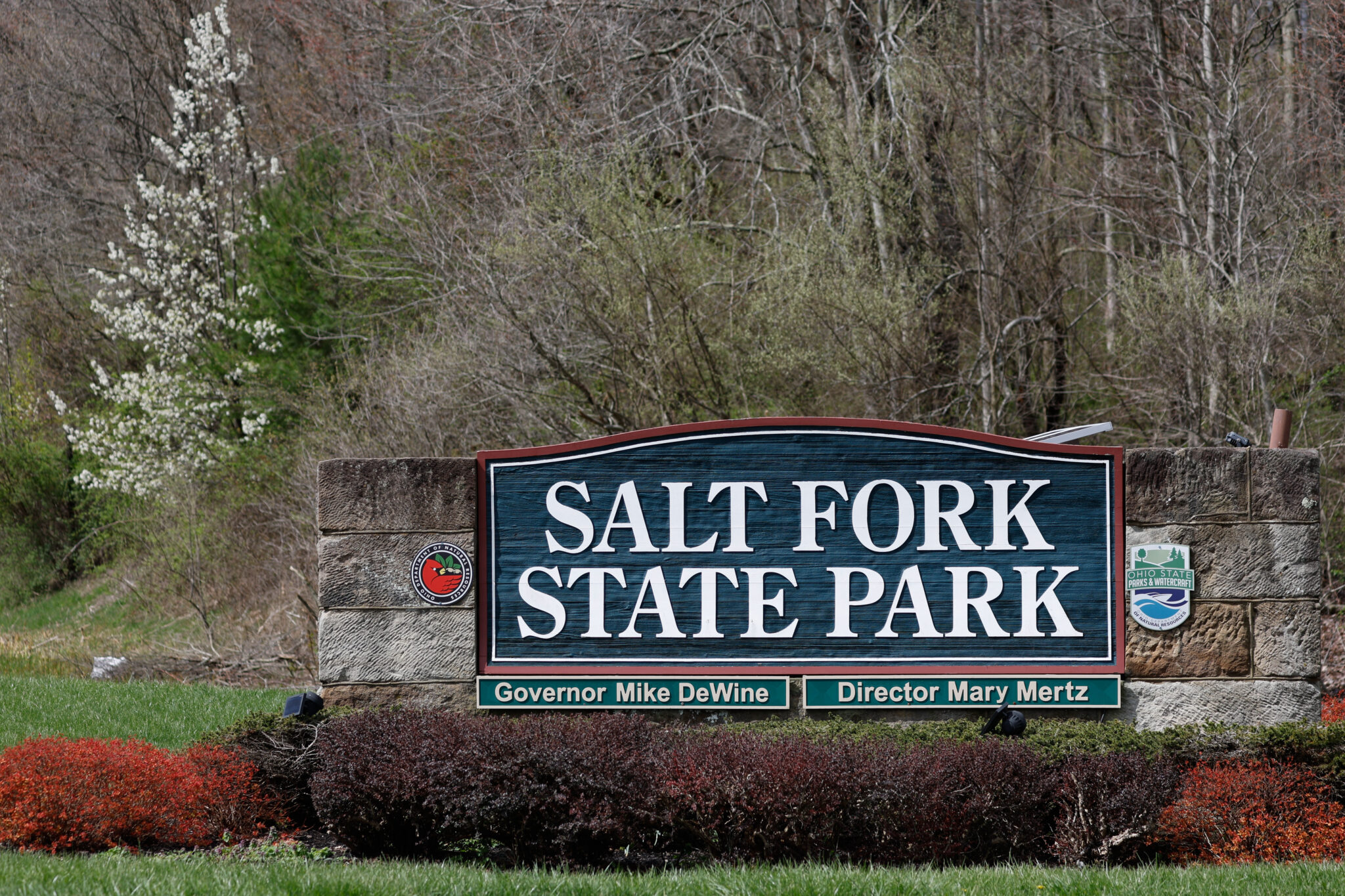
    The Ohio Oil and Gas Land Management Commission has selected various bidders to frack Salt Fork State Park, Valley Run Wildlife Area and Zepernick Wildlife Area. The vote on this bill comes days after OGLMC selected an Oklahoma-based company to lease about 30 acres of land in Egypt Valley in Belmont County for fracking.

    “This expansion of fracking is going to industrialize our beautiful parks and transform them into places people avoid, not enjoy,” Cathy Cowan Becker, steering committee member of Save Ohio Parks, said about H.B. 308.

    Former Ohio Gov. John Kasich signed a law allowing drilling companies to frack in state parks in 2011. Potential drillers need to get permission from the Oil and Gas Commission, but Kasich never appointed anyone to the committee.

    A fracking amendment was added to a bill during the last lame duck two years that passed and Gov. Mike DeWine signed it into law in January 2023. The law requires the Ohio Department of Natural Resources to allow fracking for natural gas in Ohio’s public land and state parks.

    “Ohio legislators have once again sold out our state parks and public lands to the oil and gas industry through an amendment to an unrelated bill during the lame duck session, with no notice or chance for public testimony,” Becker said.

    Follow OCJ Reporter Megan Henry on Bluesky.


    Megan Henry
    Megan Henry

    Megan Henry is a reporter for the Ohio Capital Journal and has spent the past five years reporting in Ohio on various topics including education, healthcare, business and crime. She previously worked at The Columbus Dispatch, part of the USA Today Network.

    Ohio Capital Journal is part of States Newsroom, the nation’s largest state-focused nonprofit news organization.

    MORE FROM AUTHOR

  • Biden commutes sentences of nearly 1,500 people, pardons 39 in historic clemency action

    Biden commutes sentences of nearly 1,500 people, pardons 39 in historic clemency action

    By:  Ohio Capital Journal

    WASHINGTON — President Joe Biden Thursday commuted the sentences of roughly 1,500 people who were placed in home confinement during the coronavirus pandemic, and granted pardons for 39 individuals with convictions for nonviolent crimes.

    “America was built on the promise of possibility and second chances,” Biden said in a statement. He noted many of the 1,500 were serving long sentences that would be shorter under current laws, policies and practices.

    As the Biden administration winds down, it’s the largest single-day grant of clemency in modern day history.

    The president added that his administration will continue to review clemency petitions before his term ends on Jan. 20. There are more than 9,400 petitions for clemency that were submitted to the White House, according to recent Department of Justice clemency statistics. 

    “As President, I have the great privilege of extending mercy to people who have demonstrated remorse and rehabilitation, restoring opportunity for Americans to participate in daily life and contribute to their communities, and taking steps to remove sentencing disparities for non-violent offenders, especially those convicted of drug offenses,” Biden said.

    Those 39 people who received pardons included 67-year-old Michael Gary Pelletier of Augusta, Maine, who pleaded guilty to a nonviolent offense, according to the White House, which provided brief biographies of the pardoned individuals.

    After his conviction, Pelletier worked for 20 years at a water treatment facility and volunteered for the HAZMAT team, assisting in hazardous spills and natural disasters. He now grows vegetables for a local soup kitchen and volunteers to support wounded veterans.

    Another pardon was granted to Nina Simona Allen of Harvest, Alabama.

    Allen, 49, was convicted of a nonviolent offense in her 20s, the White House said. After her conviction, she earned a post-baccalaureate degree and two master’s degrees and now works in the field of education. Additionally, she volunteers at a local soup kitchen and nursing home.

    Hunter Biden pardon

    The clemency action came after the president gave a full pardon for his son, Hunter Biden, on gun and tax charges and any other offenses, from 2014 until December. The president previously stated he would not pardon his son, but changed his mind because he said his son was constantly targeted by Republicans.

    Other clemency actions Biden has taken include commuting sentences of those serving sentences for simple possession and use of marijuana under federal and District of Columbia law and a pardon of former U.S. service members who were convicted under military law of having consensual sex with same-sex partners — a law that is now repealed.

    Additionally, advocates and Democrats have pressed Biden to exert his clemency powers on behalf of the 40 men on federal death row before President-elect Donald Trump returns to the White House. Democrats have pushed for this because Trump expedited 13 executions of people on federal death row in the last six months of his first term.

    The co-executive directors of Popular Democracy in Action, a progressive advocacy group, Analilia Mejia and DaMareo Cooper, said in a joint statement that Biden should “not stop now.”

    “Thousands more of our people who have been wronged by an unjust system are still waiting for freedom and compassion,” they said.

    Those with nonviolent offenses who were pardoned by the president, according to the White House:

    Alabama

    Nina Simona Allen

    California

    Gregory S. Ekman

    Colorado

    Johnnie Earl Williams

    Connecticut

    Sherranda Janell Harris

    Delaware

    Patrice Chante Sellers

    District of Columbia

    Norman O’Neal Brown

    Florida

    Jose Antonio Rodriguez

    Illinois

    Diana Bazan Villanueva

    Indiana

    Emily Good Nelson

    Kentucky

    Edwin Allen Jones

    Louisiana

    Trynitha Fulton

    Maine

    Michael Gary Pelletier

    Maryland

    Arthur Lawrence Byrd

    Minnesota

    Kelsie Lynn Becklin

    Sarah Jean Carlson

    Lashawn Marrvinia Walker

    Nevada

    Lora Nicole Wood

    New Mexico

    Paul John Garcia

    New York

    Kimberly Jo Warner

    Ohio

    Duran Arthur Brown

    Kim Douglas Haman

    Jamal Lee King

    James Russell Stidd

    Oklahoma

    Shannan Rae Faulkner

    Oregon

    Gary Michael Robinson

    South Carolina

    Denita Nicole Parker

    Shawnte Dorothea Williams

    Tennessee

    James Edgar Yarbrough

    Texas

    Nathaniel David Reed III

    Mireya Aimee Walmsley

    Lashundra Tenneal Wilson

    Utah

    Stevoni Wells Doyle

    Virginia

    Brandon Sergio Castroflay

    Washington

    Rosetta Jean Davis

    Terence Anthony Jackson

    Russell Thomas Portner

    Wisconsin

    Jerry Donald Manning

    Audrey Diane Simone

    Wyoming

    Honi Lori Moore

    Last updated 1:50 p.m., Dec. 12, 2024


    Ariana Figueroa
    Ariana Figueroa

    Ariana covers the nation’s capital for States Newsroom. Her areas of coverage include politics and policy, lobbying, elections and campaign finance.

    Ohio Capital Journal is part of States Newsroom, the nation’s largest state-focused nonprofit news organization.

    MORE FROM AUTHOR

  • Ohio Board of Pharmacy launches tool to help those living with disabilities

    Ohio Board of Pharmacy launches tool to help those living with disabilities

    By:  Ohio Capital Journal

    The Ohio Board of Pharmacy on Monday launched a tool to help people with low vision, hearing loss, or who face language barriers find pharmacies that can serve them.

    For many, the pharmacy is the most frequent point of contact with the healthcare system. Pharmacists can consult about their medications and help them manage chronic conditions such as hypertension and diabetes.

    The new website will help people with accessibility challenges find pharmacies that can serve their specific needs.

    For example, for patients with low vision can find pharmacies that provide oversize-font labels, prescription readers and braille labels.

    It can point those with hearing loss to pharmacies that have video-relay services and teletypewriters. And it can tell non-English speakers where to find pharmacies with translation services for Spanish, Chinese, Nepali, Somali, and other languages.

    GET THE MORNING HEADLINES.


    In a statement, Board of Pharmacy Executive Director Steven W. Schierholt said the new webpage is an attempt to make pharmacy services more widely accessibility.

    “The launch of this convenient online search tool highlights the Board’s ongoing commitment to ensure pharmacy services are accessible to all Ohioans,” he said. “The Board is hopeful that this new webpage will help patients and their loved ones quickly identify pharmacies offering services they need to keep them healthy and safe.”

    However, working against accessibility is a wave of pharmacy closures. For the better part of a decade, independent and small-chain pharmacies have said that huge prescription middlemen — CVS Caremark, OptumRx and and Express Scripts — have been driving them from the field with low reimbursements, fees and clawbacks.

    More recently, large chain pharmacies have been closing in droves.

    CVS is at the end of a three-year process in which it closed 900 pharmacies across the country. Walmart last year asked 16,000 of its pharmacists to cut their hours.

    Bankrupt Rite Aid this year announced the closures of hundreds of stores in Ohio and Michigan. And Walgreens this year said it would close “a significant portion” of 2,000 underperforming stores. That prompted Dave Burke, executive director of the Ohio Pharmacists Association, to say he was worried that pharmacy is becoming an untenable business.

    “If Walgreens can’t make a go of this in 25% of their locations, my fear is that this becomes a much larger problem where other people who provide pharmacy services exit the market in whole or in  part,” he said in September.

    The Federal Trade Commission is investigating whether the giant health conglomerates that own the three big pharmacy middlemen are engaged in anticompetitive practices.

    YOU MAKE OUR WORK POSSIBLE.

    ___________
    Marty Schladen
    Marty Schladen

    Marty Schladen has been a reporter for decades, working in Indiana, Texas and other places before returning to his native Ohio to work at The Columbus Dispatch in 2017. He’s won state and national journalism awards for investigations into utility regulation, public corruption, the environment, prescription drug spending and other matters.

    Ohio Capital Journal is part of States Newsroom, the nation’s largest state-focused nonprofit news organization.

    MORE FROM AUTHOR

  • New polling shows people of all stripes want immigrants treated with dignity

    New polling shows people of all stripes want immigrants treated with dignity

    By:  Ohio Capital Journal

    A poll conducted last week indicates that large majorities of Americans don’t hold views of immigrants that are as harsh of those of President-elect Donald Trump. They include many who voted for him.

    The poll found that Americans overwhelmingly think that deportations should focus on immigrants who commit violent crime, that the persecuted should be protected, and that families should be kept intact.

    The survey of 1,200 adults was conducted between Dec. 3 and Dec. 7 by the National Immigration Forum, which works with the business community, police, and the clergy as it advocates for immigrants.

    There are an estimated 11 million undocumented immigrants in the United States. Trump has vowed to deport millions and his allies say he’ll “seal the border.”

    Respondents were asked whether they believe deportation efforts should focus on “violent criminals and those with final orders of removal,” or “all individuals without legal status, including those who have otherwise followed laws and have U.S. citizen family.”

    Two-thirds, 66%, said violent criminals and those with deportation orders should be the focus, while 34% said efforts should target all undocumented immigrants.

    Those sentiments were remarkably consistent across political ideologies. Of self-described liberals, 69% said deportations should target violent criminals and those with final removal orders. So did 66% of moderates and 65% of self-identified conservatives.

    YOU MAKE OUR WORK POSSIBLE.


    However, deportations of those with criminal convictions or final removal orders are nothing new, with the number this century peaking under the Obama administration and then falling off under Trump and Biden. When it comes to criminal deportations, those numbers peaked under Obama as well.

    Many immigrants come seeking economic opportunity. But many of their impoverished countries are also torn by dysfunctional, oppressive governmentscorruption and gang violence. Two leaders of Springfield’s Haitian community last month said that if one has a good job there, that fact alone is reason for criminal gangs to target them.

    The National Immigration Forum survey conducted last week tried to get a sense of whether Americans think people who fled such circumstances should be deported. They were asked if they agreed that “In accordance with American values, family unity, respect for human dignity, and protection for the persecuted must remain key priorities as the government increases border security and border enforcement.”

    Of all those surveyed, 73% either somewhat or strongly agreed.

    And again, there was little divergence along ideological lines. Of self-identified liberals, 78% agreed. Of moderates, 72% agreed. That was identical to the rate at which conservatives agreed.

    Trump should take note, said Jennie Murray, president and CEO of the National Immigration Forum.

    “Key Trump constituencies want his administration to preserve American values and set enforcement priorities,” she said in an email. “The president-elect should respond accordingly and work with Congress on immigration solutions that boost our security, honor human dignity and preserve family unity. The administration should not take Americans’ immigration concerns to mean they support mass deportations for people who are here and contributing.”

    The findings might seem at odds with the findings of a separate survey conducted in October — or at least show cognitive dissonance about immigrants among some Americans.

    That survey, conducted by the Public Religion Research Institute, asked “Do you agree or disagree that immigrants who are entering the country today are poisoning the blood of our country?”

    A full 61% of Republicans agreed with the statement. That stands in stark contrast to 33% of independents, and just 13% of Democrats.

    The same survey found a 50-point gap between Republicans and Democrats over how pressing an issue immigration is for the country.

    GET THE MORNING HEADLINES.

    ________________
    Marty Schladen
    Marty Schladen

    Marty Schladen has been a reporter for decades, working in Indiana, Texas and other places before returning to his native Ohio to work at The Columbus Dispatch in 2017. He’s won state and national journalism awards for investigations into utility regulation, public corruption, the environment, prescription drug spending and other matters.

    Ohio Capital Journal is part of States Newsroom, the nation’s largest state-focused nonprofit news organization.

    MORE FROM AUTHOR

  • Death penalty opponents push for elimination in Ohio

    Death penalty opponents push for elimination in Ohio

    By:  Ohio Capital Journal

    Opponents of the death penalty are once again urging the Ohio legislature to eliminate the practice in the state.

    In a hearing with the Senate Judiciary Committee, advocacy groups and family members of murder victims alike came together to ask for passage of a bill that would abolish the death penalty.

    “This is a question of overall public policy; it’s a question of is the system applying the death penalty consistently across a wide range of cases,” said Robert Dunham, director of the Death Penalty Policy Project.

    Senate Bill 101 would ban the death penalty, a practice that in Ohio has been few and far between in recent years, and has essentially stopped during the DeWine administration as the state has been unable to obtain lethal injection drugs from pharmaceutical companies. With Republicans controlling supermajorities in both chambers of the Ohio General Assembly, the effort faces an uphill battle even with some bipartisan support.

    The Death Penalty Policy Project did an analysis of more than three decades of FBI homicide data and law enforcement officers killed in the line of duty, and found that after 50 years and 1,600 executions nationwide, “the public and police are actually safer in states that don’t have the death penalty, or have recently abolished the death penalty, than they are in states that have the death penalty.”

    “Moreover, the states that are now most actively carrying out executions are among the least safe for the public and the most dangerous for police,” Dunham told the committee. “They have failed to execute their way into violence prevention.”

    Jonathan Mann has the unique perspective of going through the murder of his father in 2017, and asking the state not to use the death penalty to punish his father’s killer. He said he believed in the death penalty before his father’s death, but as his experience continued, he found the process “does not represent family members of murder victims.”

    “You are not representing family members of victims adequately, whether they believe in the death penalty or not,” Mann said. “The death penalty is not working. It is not working; you can not say it’s working.”

    Bryan Corbett saw one of his family members wrongfully accused of murder, and the reputation and potential of this member of his family was damaged after spending more than six years on death row before being exonerated. Corbett said the conviction was lifted after it was found “junk science,” “hypnotized witnesses,” and other evidence deemed inadmissible was used in the case. That, and two men confessed to the crime after more than a decade.

    GET THE MORNING HEADLINES.


    As a Christian pastor and a man who has witnessed the flaws in the justice system, Corbett said the state can’t continue to use the death penalty as an option.

    “I would simply ask: who among us is qualified to cast that stone,” Corbett said to the committee. “Who among us is qualified to flip that switch and end a life?”

    State Rep. Matt Dolan, R-Chagrin Falls, pondered whether it was up to the legislature to decide whether or not the death penalty should be an option, when the state leaves those decisions up to a jury of peers.

    “Should this legislature take that away from the individuals or should we look to whether this should be a statewide issue and let Ohioans … make that decision,” Dolan asked Dunham.

    Dunham pushed back, saying juries are only deciding cases based on the information at hand, and can’t consider the factors of, for example, withheld evidence or evidence that “the defense had failed to investigate because of poor representation.”

    “(Legislators) are the ones who set public policy, so when we look at the death penalty as a policy, I think you are the people who should be making that determination,” Dunham said.

    The measure is one of many similar bills that have been introduced in the state over the years, but while the measure has been the subject of much testimony in support of death penalty elimination, the legislature has not shown much support for the issue.

    One group stood in opposition to the current bill in last week’s committee hearing. The Ohio Prosecuting Attorneys Association submitted written testimony saying the association “continues to believe that this topic is important enough that the public should be given the opportunity to decide whether or not Ohio continues to have capital punishment.”

    Louis Tobin, executive director of the Ohio Prosecuting Attorneys Association cited a study by Claremont McKenna College in response to Gallup and Pew Research Center polls showing support for the repeal of the death penalty and diminishing support for the practice in the United States.

    In the Claremont McKenna poll, survey-takers were asked if they supported the death penalty when considering specific crimes, rather than general opposition or support for the death penalty.

    “What they found was that support for the death penalty is much more widespread than either Gallup or Pew have reported,” Tobin wrote.

    Statistics from the poll cited by Tobin show 10 of the 15 murder types selected as part of the survey — including raping and murdering a child and being a part of a terrorist attack — “garnered at least 60% support.”

    The only true measure of support is “a vote of the people,” Tobin concluded.

    “If the proponents of Senate Bill 101 believe their own polling and their own argument that there is not majority support for the death penalty, then they should have no problem agreeing to allow the public to vote and to decide on the future of the death penalty in Ohio,” Tobin wrote.

    The OPAA executive director has expressed support for a bill that would change the way capital punishment is done in Ohio, which would add nitrogen hypoxia to the list of protocols that can be used. The method asphyxiates a condemned person by replacing the air they breathe, a mixture of mostly nitrogen and oxygen, with pure nitrogen.

    With the current General Assembly term expiring at the end of the month, the bill may not have much chance of getting by this time around without a last-minute burst of legislative support. Along with its bipartisan sponsors, Senate Minority Leader Nickie Antonio, D-Lakewood, and state Sen. Steve Huffman, R-Tipp City, the bill only has 10 cosponsors signed on in support.

    Any bills that aren’t approved by the end of the month will need to be reintroduced and restart the legislative process in the new year.

    YOU MAKE OUR WORK POSSIBLE.

    ___________
    Susan Tebben
    Susan Tebben

    Susan Tebben is an award-winning journalist with a decade of experience covering Ohio news, including courts and crime, Appalachian social issues, government, education, diversity and culture. She has worked for The Newark Advocate, The Glasgow (KY) Daily Times, The Athens Messenger, and WOUB Public Media. She has also had work featured on National Public Radio.

    Ohio Capital Journal is part of States Newsroom, the nation’s largest state-focused nonprofit news organization.

    MORE FROM AUTHOR