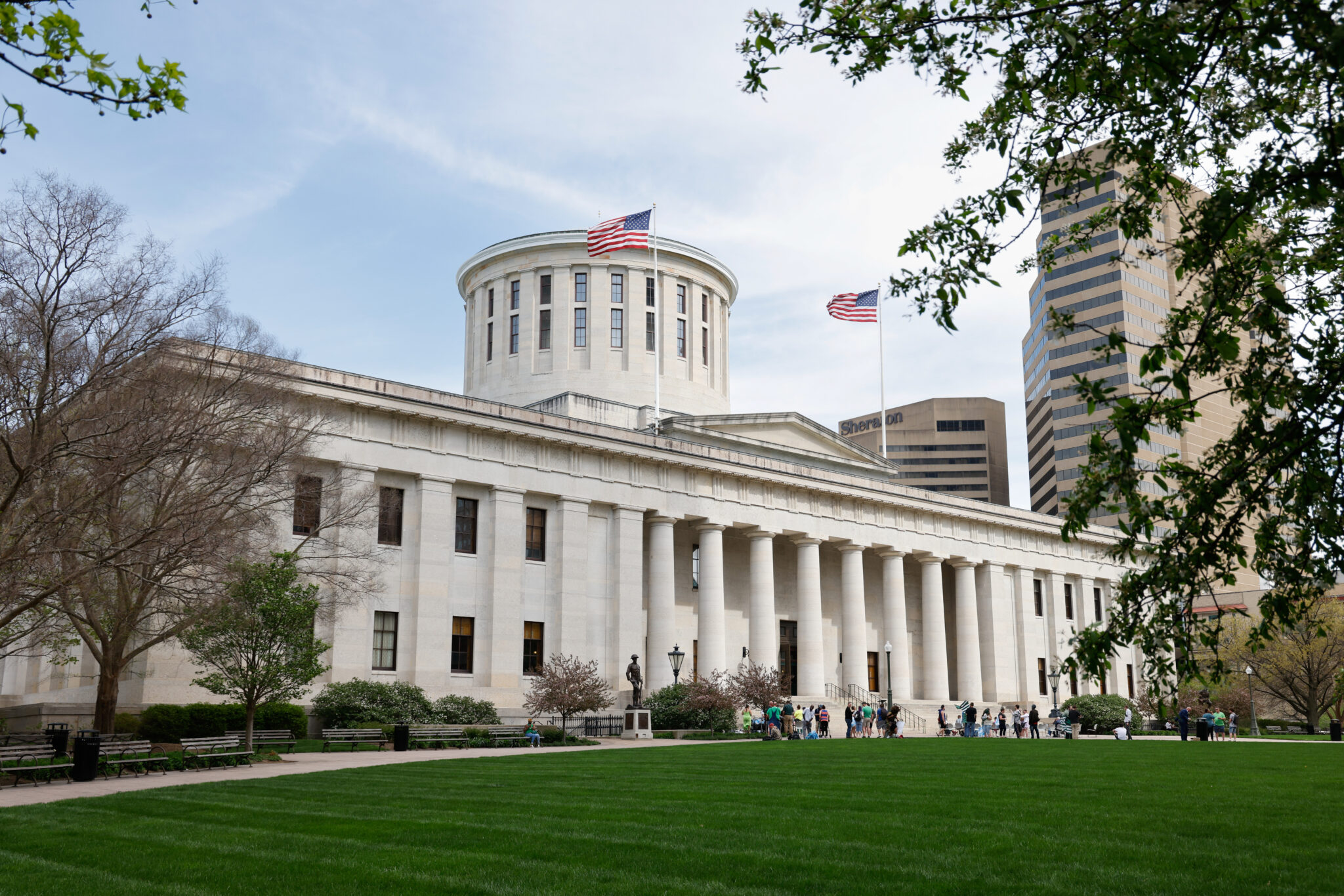
A bipartisan bill that would modernize Ohio’s adoption process unanimously passed the Ohio Senate last week.
House Bill 5 heads back to the Ohio House for concurrence. The House unanimously passed the bill last year and would head to Gov. Mike DeWine’s desk for his signature if the chamber concurs with the changes. The Ohio House’s next scheduled session is Dec. 4.
State Reps. Sharon Ray, R-Wadsworth, and Rachel Baker, D-Cincinnati, introduced the bill last year at the start of the General Assembly and this piece of legislation is personal to both of them. Ray was adopted as a child and Baker has three adopted children.
Ray and Baker worked with probate judges to come up with the bill. The state’s probate judges go through the Ohio Revised Code every few years to try to update various sections, including the adoption laws.
“Most of the changes are fairly minor, but it really will streamline the process for the adoption process in Ohio,” State Sen. Nathan Manning, R-North Ridgeville, said during last week’s Senate session. “It really will help those practitioners and those judges and those families that are going through this process.”
GET THE MORNING HEADLINES.
State Sen. Paula Hicks-Hudson, D-Toledo, said H.B. 5 is vital legislation that is long overdue.
“It is a good bill, and it does, what I think, will really shave off some of the anxiety, some of the problems that folks who are trying to go through that process, and also for children who are not sure about being in limbo for as long as the current processes,” she said.
More than 3,300 Ohio children are waiting to be adopted, according to AdoptUSKids, a national nonprofit that connects foster care children to families.
What’s in the bill?
In addition to modernizing the state’s adoption process, H.B. 5 would offer more consistency from county to county.
For foster-to-adopt situations, Ohio law requires a six month waiting period before an adoption can take place and says time spent in the foster home can be counted towards the waiting period. H.B. 5 would include kinship caregivers in that provision in an effort to speed up the adoption process.
H.B. 5 would allow an adult with a developmental disability to be adopted. Ohio’s law current only allows adults with an intellectual disability to be adopted.
The bill would double financial support for pregnant mothers to cover living expenses, increasing it from $3,000 to $6,000.
Under the bill, a court could reconsider an adoption decree if there is evidence the child is a victim of trafficking.
The bill also touches on foreign adoptions. Ohio law currently permits parents to petition the court to finalize a foreign adoption. H.B. 5 would allow foreign adoption decrees to be automatically finalized if either parent is an Ohio resident and an IR-3 or IH-3 visa has been issued to the child by the U.S. Citizenship and Immigration Services of the U.S. Department of Homeland Security.
Megan Henry is a reporter for the Ohio Capital Journal and has spent the past five years reporting in Ohio on various topics including education, healthcare, business and crime. She previously worked at The Columbus Dispatch, part of the USA Today Network.
Ohio Capital Journal is part of States Newsroom, the nation’s largest state-focused nonprofit news organization.
The Biden administration is proposing to cover drugs like Ozempic, which is used to treat heart disease, diabetes and obesity, under Medicare and Medicaid. (Photo illustration by Mario Tama/Getty Images)
WASHINGTON — The Biden administration announced Tuesday it’s reinterpreting federal law to allow Medicare and Medicaid patients access to anti-obesity medications to reduce their weight over the long term.
The Centers for Medicare and Medicaid’s proposed rule, which the Trump administration would need to finalize before it would take effect, is expected to cost $25 billion for Medicare combined with $11 billion in federal spending and $3.8 billion in state spending for Medicaid coverage throughout the next decade.
CMS is encouraging states to submit comments to the proposed rule explaining when they could implement the Medicaid provision, since that health care program includes cost sharing between federal and state governments.
Medicare is the federal health insurance program for people 65 and older and some younger people with certain disabilities or conditions. Medicaid provides health care to some low-income individuals.
“People with obesity deserve to have affordable access to medical treatment and support, including anti-obesity medications for this disease; just as a person with type two diabetes can access these medications to get healthy,” CMS Administrator Chiquita Brooks-LaSure said on a call with reporters. “That’s why we’re proposing to revise our interpretation of the law and provide coverage of anti-obesity medications for the treatment of obesity.”
Brooks-LaSure said CMS was reinterpreting the law to view obesity as a chronic condition, which the agency believes provides a pathway for Medicare and Medicaid to cover anti-obesity medications.
“The medical community today agrees that obesity is a chronic disease,” Brooks-LaSure said. “It is a serious condition that increases the risk of premature death and can lead to other serious health issues, such as heart disease, stroke and diabetes.”
More than 40% of Americans have obesity and CMS data shows 22% of Medicare recipients were diagnosed with obesity during 2022, double the number from 10 years ago, she said.
CMS wrote in a fact sheet about the proposed rule that since creation of the Medicare Part D program, which provides prescription drug coverage, the agency has “interpreted the statutory exclusion of ‘agents when used for weight loss’ to mean that a drug, when used for weight loss, is excluded from the definition of a covered Part D drug.”
Kennedy was skeptical of studies showing the benefits of weight loss drugs during an appearance on Fox News last month, arguing the federal government would spend less money if it provided healthy meals to all Americans instead of coverage for weight loss drugs.
“If we spent about one-fifth of that giving good food, three meals a day, to every man, woman and child in our country, we could solve the obesity and diabetes epidemic overnight,” Kennedy said.
CMS expects that about 3.4 million people in the Medicare program would become eligible for anti-obesity medication coverage under the proposed rule that would take effect in 2026 if Trump decides to finalize it.
Dan Tsai, CMS deputy administrator and director for the Center for Medicaid and CHIP Services, said during the call the agency hopes states submit comments in the weeks and months ahead detailing “when states would be required to implement this provision.”
“We note in the rule that the rule reinterprets the Medicaid statute, which means this would govern all Medicaid programs,” Tsai said. “But we specifically invite comment on a range of implications and timing for states.”
Cost differs in CBO report
The total cost of the program during the next decade that CMS provided on the call for Medicare was somewhat different from a cost estimate the Congressional Budget Office released last month. CBO is a government agency that provides nonpartisan budget information to Congress.
CBO projected it would cost the federal government $35 billion between 2026 and 2034 to cover anti-obesity medications for Medicare patients.
“Relative to the direct costs of the medications, total savings from beneficiaries’ improved health would be small—less than $50 million in 2026 and rising to $1.0 billion in 2034,” CBO wrote in the analysis.
The report explained that Medicare currently covers “some obesity-related services, including screening, behavioral counseling, and bariatric surgery (a procedure performed on the stomach or intestines to induce weight loss).”
While Medicare does cover anti-obesity medications for recipients with diabetes or cardiovascular disease, CBO wrote, Medicare “is prohibited by law from covering medications for weight management as part of the standard prescription drug benefit.”
The CBO report didn’t include a cost estimate for Medicaid, but noted that weight management drug coverage within that program is optional.
“According to one study, of the 47 states with publicly available lists of preferred drugs, nine had Medicaid programs that covered Wegovy in the first quarter of 2023.”
The National Governors Association and National Conference of State Legislatures both declined to comment on the proposed rule and its effect on state Medicaid programs.
________
Jennifer Shutt
Jennifer covers the nation’s capital as a senior reporter for States Newsroom. Her coverage areas include congressional policy, politics and legal challenges with a focus on health care, unemployment, housing and aid to families.
Ohio Capital Journal is part of States Newsroom, the nation’s largest state-focused nonprofit news organization.
WASHINGTON, D.C. — With Congress failing to pass any meaningful immigration reforms, state legislatures are increasingly taking up the issue. But some police officials and immigrant-rights advocates say the harshest of those laws will further overstretch police and drive many immigrants further into the shadows.
Speaking last week at the National Immigration Forum’s annual Leading the Way conference, the leaders said that while it might sound like common sense to task local law enforcement with determining who might be here without authorization, the reality is a lot more complicated.
According to the Immigrant Legal Resource Center, Florida, Georgia, Iowa, Texas and West Virginia already have laws on the books forcing local law enforcement to participate in deporting noncitizens. It adds that legislators in many others are seeking to join them. The federal courts have sharply limited enforcement of those laws after Texas last year passed Senate Bill 4, which challenges a 2012 U.S. Supreme Court ruling that overturned much of an Arizona law that sought to put immigration enforcement into the hands of state authorities.
Limited personnel, resources
In April, Iowa Gov. Kim Reynolds, a Republican, signed Senate File 2340, which would make unauthorized immigration a crime under state law, give local law enforcement the power to enforce it, and allow state judges to order deportation or incarceration of the undocumented. As with Texas’s SB 4, that law has been stayed by the federal courts.
Speaking at the National Immigration Forum conference, Marshalltown, Iowa, Police Chief Michael Tupper cited a number of reasons why the law is bad for local police and their communities. One is a simple lack of resources.
GET THE MORNING HEADLINES.
“Every police department and sheriff’s office in the United States right now is hiring,” he said. “For the last five years it’s been a constant battle to try to maintain staffing.”
Tupper said he needs 50 officers, the city of 27,000 budgeted for 42, and he can’t even keep those filled as the department scrambles to respond to more than 750 service calls each week.
SF 2340 “would put local law enforcement on the front lines enforcing immigration law in Iowa and we’re a long ways from the border if you looked at a map lately,” Tupper said. “We just don’t have the time to do that and we don’t have the resources to do that. We all have concerns about just what this legislation will do and the unfunded mandates it will place on local governments.”
Alexandria, Va., Sheriff Sean Casey agreed that law enforcement agencies across the country are understaffed, and he said it wasn’t helpful when Gov. Glenn Youngkin, a Republican, vetoed bills that would have allowed police chiefs and sheriffs the authority to hire noncitizens such as lawful permanent residents and those in the Deferred Action for Childhood Arrivals — or DACA — program.
“Why wouldn’t you trust your local chiefs and sheriffs to make their own hiring decisions?” Casey asked. “I thought we did a really good job crafting some pretty good legislation, but unfortunately, politics got in the way. I heard, ‘How can a noncitizen tell a citizen what to do?’ I really found that to be unproductive, and I don’t think it’s in the best interest of public safety, to be honest.”
Living in the shadows
Perhaps even more harmful to public safety than stretching scarce law enforcement resources would be to scare large swaths of the community from interacting with cops for fear of deportation, the officials said.
Iowa might sound to outsiders like a lily-white state, but Tupper said his city was officially 25% Hispanic — and he thought the group made up closer to 40% of the city’s population. On top of that, refugees from Southeast Asia are making up growing share of the populace, and the chief added that 50 languages are spoken in Marshalltown’s public schools.
To have any part of that community afraid to approach the police makes the entire public less safe, Tupper said.
Criminals are exploiting those fears, for example with domestic abusers telling their victims, “‘You can’t call the police because if you do, they’re going to deport you,’” Tupper said. “We cannot put local law enforcement in the shoes of federal immigration enforcement if we expect to keep our communities safe, because it actually does the opposite.”
Reyna Montoya is herself a DACA recipient, with her family fleeing from Tijuana, Mexico to Arizona after Mexican police kidnapped her father in 2003. She founded and runs Aliento, which supports and advocates for the undocumented and mixed-status families.
She said that when former Maricopa County Sheriff Joe Arpaio was racially profiling residents in an improper attempt to enforce immigration law, immigrants would text each other reports of where police were so people could avoid them.
“It meant for me and my mother deciding not to go to the grocery store,” Montoya said. “If it was on a Sunday, it meant not going to church. We weren’t going to risk getting a deportation proceeding. Typically, that’s what would happen in our first face-to-face interaction with law enforcement.”
She said she knew many who didn’t report crimes against them for fear that police would initiate deportation proceedings.
“The reality is that the trust has been completely broken,” Montoya said. “There’s been so many undocumented immigrants that didn’t report crimes that they were impacted by because of the fear that they would get deported.”
Legal quandary
Tupper and Casey, the law enforcement officials, said they feared that if required to enforce immigration law, they didn’t know how to keep their officers or deputies from engaging in noxious practices like racial profiling.
“We do not know and we have not received any direction from the state of Iowa about how this law should be enforced,” Tupper said.
Then there’s the prospect of a patchwork of inconsistent immigration laws across the states.
“I also worry that we could end up having 50 different ways of dealing with immigration in the United States. Every state will do it a little bit differently,” Tupper said. “Do I, as the police chief of Marshalltown, Iowa, have to establish relationships with governments in Mexico and Central America because — if we’re forced to take people into custody — are we also going to be forced to get them back to their country of origin? Are local taxpayers going to be responsible for all of that?”
SF 2030, might not be in effect, but its passage has already done serious damage, the chief said. It’s scared immigrants into the shadows, and it’s created the impression among much of the public that Iowa cops are now de facto Border Patrol agents, Tupper said.
“Even if the federal courts strike down the Iowa law, people in my community already think it exists and those kinds of conversations are going to continue,” he said. “I’m not a politician. I was not involved in the writing of this law, but my belief is that the Iowa legislature and Gov. Kim Reynolds never expected that this law would actually take effect. I think it was presidential campaign-year politics and it was designed to rile up the base.”
YOU MAKE OUR WORK POSSIBLE.
___________
Marty Schladen
Marty Schladen has been a reporter for decades, working in Indiana, Texas and other places before returning to his native Ohio to work at The Columbus Dispatch in 2017. He’s won state and national journalism awards for investigations into utility regulation, public corruption, the environment, prescription drug spending and other matters.
Ohio Capital Journal is part of States Newsroom, the nation’s largest state-focused nonprofit news organization.
A Republican bill to provide more accountability for Ohio private schools had several provisions removed in a substitute version passed by committee, including the elimination of funding transparency and standardized testing requirements.
State Reps. Gayle Manning, R-North Ridgeville, and Bill Seitz, R-Cincinnati, introduced House Bill 407 earlier this year and Rep. Sarah Fowler Arthur, R-Ashtabula, introduced a substitute bill with the changes that was adopted during last week’s Ohio House Primary and Secondary Education Committee Meeting.
Eliminated from the bill was a provision that would have required private schools to submit an annual report to the Ohio Department of Education and Workforce showing how state funds received from voucher scholarship programs are being used. The bill would also have required DEW to post the reports on its website.
The substitute bill also removed a provision that would have required private schools to annually report the family income of each EdChoice voucher scholarship student who also got tuition help from scholarship granting organizations to DEW.
The changes nixed a requirement that voucher scholarship students take the same standardized tests public school students take, which would leave the law unchanged. Private schools are required to test voucher students through either the standardized test or the alternative assessments.
GET THE MORNING HEADLINES.
The substitute bill kept a provision that requires DEW to issue state report cards for private schools that enroll scholarship students.
Ohio spent nearly a billion dollars on private school scholarship programs for the 2024 fiscal year, the first full year with near-universal school vouchers. During this time, nonpublic school enrollment increased 2% and public school enrollment declined slightly.
“The danger of taking public dollars is that over time there’s going to be more and more demands from the public, from the schools that are accepting those dollars,” said state Rep. Sean Patrick Brennan, D-Parma. “They’re demanding accountability for those dollars, and rightfully so.”
Manning said she introduced the bill because her and Seitz are “fiscal conservatives,” saying no organization asked them to introduce the bill.
“If we have a superintendent that is being paid $500,000 in Upper Arlington schools, everybody knows about it, and we should,” Manning said. “If we have one that’s being paid $500,000 in a school that’s receiving vouchers, they have every right to do, but if we don’t know about that, and parents don’t have that knowledge, to me, that’s what this is all about. We need the knowledge of where the money is going.”
She said the purpose of the bill is answer questions about where the money goes — whether it’s going to students, classrooms, or people on the school board.
Most parents had already decided where they were going to send their child to school by the time the state budget passed last summer that allowed the near-universal vouchers, Vice President for Ohio Policy at the Fordham Institute Chad Aldis said when asked if the students who are receiving vouchers were already attending private schools.
“I think this year, seeing the number of new students who enter, will be a better indication of who is entering (private schools),” he said.
After reviewing the bill’s changes, Executive Director of the Ohio Christian Education Network Troy McIntosh went from opposing the bill to being an interested party.
“We firmly believe that EdChoice serves students best when the state does not over-regulate providers,”he said. “In particular, the bill’s requirement that DEW create a report card for EdChoice providers is concerning, without knowing what the form of that would look like.”
Despite the changes to the bill, Executive Director for the Ohio Alliance of Independent Schools Dan Dodd, said it would still cause an administrative burden to schools.
“We would like to focus more of our attention and resources on educating children and less time on paperwork that gets submitted to DEW,” he said. “We don’t think that the education that you receive at a public school district is the same that you receive at a private school. We would reject the idea that apples to apples comparisons on a state website, using test data or some other type of metric is not the best way to determine whether or not a certain type of school or a certain type of education is best for your child.”
About half of the Ohio Alliance of Independent Schools’ 46 member schools participate in the state’s school voucher program — up from about a third a couple years ago, Dodd said.
Tuition for member schools of Ohio Alliance of Independent Schools range from between $12,000-$17,000 for elementary school to upwards of $20,000 for high schools he said.
“Our schools largely don’t make (EdChoice) mandatory, that I’m aware of, for every family to sign up, and those families at the higher income levels that receive less money through the voucher are probably more inclined to not participate,” Dodd said.
Megan Henry is a reporter for the Ohio Capital Journal and has spent the past five years reporting in Ohio on various topics including education, healthcare, business and crime. She previously worked at The Columbus Dispatch, part of the USA Today Network.
Ohio Capital Journal is part of States Newsroom, the nation’s largest state-focused nonprofit news organization.
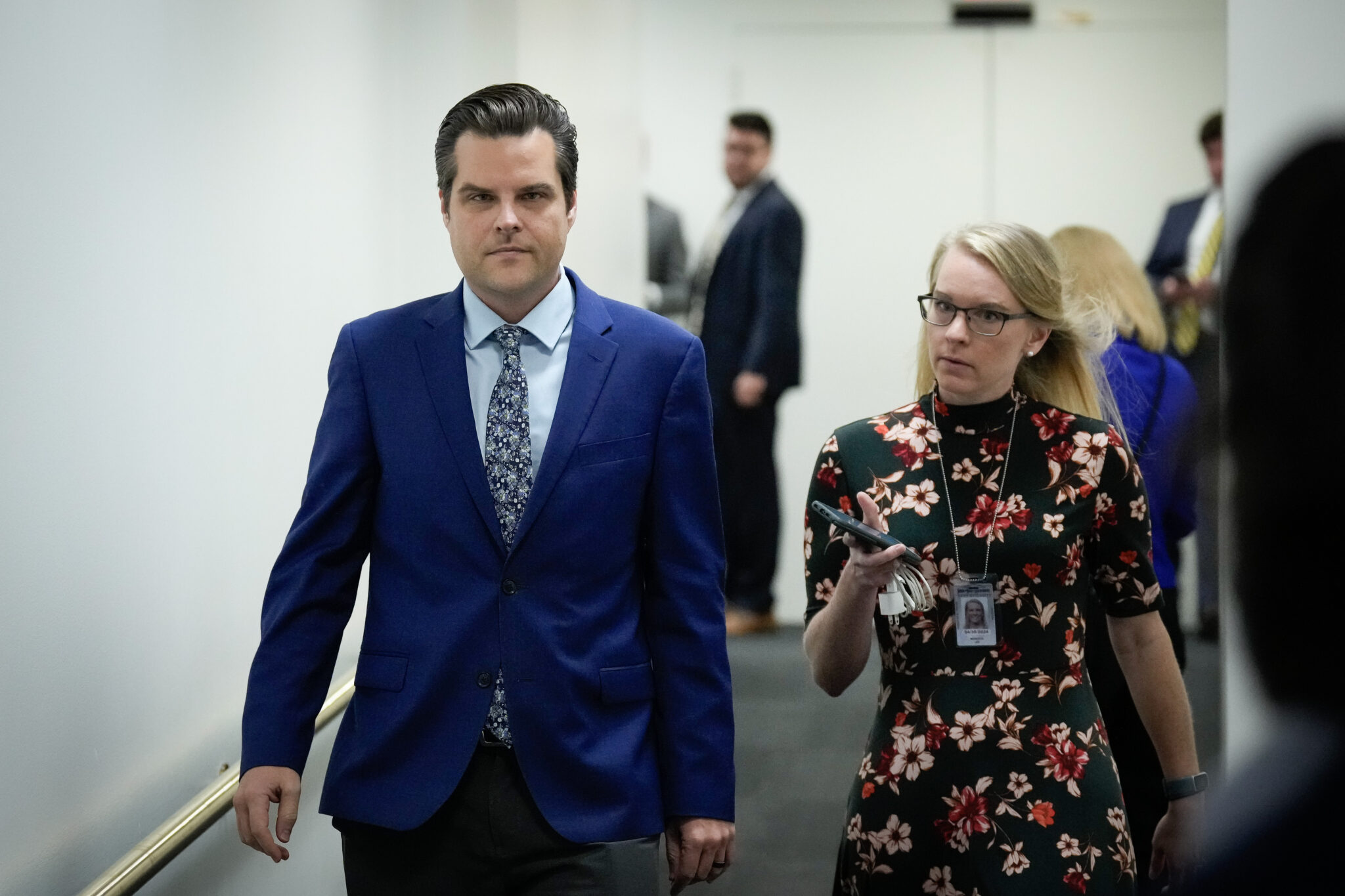
Former U.S. Rep. Matt Gaetz leaves a House Republican Conference meeting at the U.S. Capitol on Oct. 3, 2023 in Washington, D.C. (Photo by Drew Angerer/Getty Images)
WASHINGTON — Former Florida Congressman Matt Gaetz announced Thursday he’s withdrawing as President-elect Donald Trump’s planned nominee for attorney general days after securing the appointment.
Gaetz’s path to Senate confirmation was highly unlikely following years of investigations about alleged drug usage and payments for sex, including with an underage girl. He submitted his resignation to Congress last week.
“While the momentum was strong, it is clear that my confirmation was unfairly becoming a distraction to the critical work of the Trump/Vance Transition,” Gaetz wrote in a social media post. “There is no time to waste on a needlessly protracted Washington scuffle, thus I’ll be withdrawing my name from consideration to serve as Attorney General. Trump’s DOJ must be in place and ready on Day 1.”
Trump posted on social media afterward that he “greatly” appreciated “the recent efforts of Matt Gaetz in seeking approval to be Attorney General.”
“He was doing very well but, at the same time, did not want to be a distraction for the Administration, for which he has much respect,” Trump wrote. “Matt has a wonderful future, and I look forward to watching all of the great things he will do!”
When asked if the Trump-Vance transition team had another nominee choice lined up, and whether they viewed the Gaetz withdrawal as a setback, spokesperson Karoline Leavitt did not provide details.
“President Trump remains committed to choosing a leader for the Department of Justice who will strongly defend the Constitution and end the weaponization of our justice system. President Trump will announce his new decision when it is made,” Leavitt told States Newsroom in an emailed statement.
The House Ethics Committee voted along party lines Wednesday not to release its report on Gaetz, following more than three years of investigation. Gaetz has repeatedly denied any wrongdoing, including the allegations that he had sex with a minor.
Meetings with senators
Trump’s running mate, Ohio Sen. J.D. Vance, spent Wednesday shuffling Gaetz between meetings with Republicans on the Senate Judiciary Committee, which would have held his confirmation hearing. Republicans will control the Senate in the new session of Congress beginning in January.
South Carolina Sen. Lindsey Graham, the top Republican on the Judiciary Committee, wrote on social media that he respected Gaetz’s decision to withdraw his name from consideration as AG.
“I look forward to working with President Trump regarding future nominees to get this important job up and running,” Graham said.
GOP Sen. Chuck Grassley, incoming Judiciary Committee chair, posted the following on X: “I respect Gaetz decision &look fwd 2helping PresTrump confirm qualified noms 2reform Dept of Justice &bring TRANSPARENCY/ACCOUNTABILITY Trump’s mission = DRAIN THE SWAMP& I would add get some1 who will answer my hundreds of outstanding oversight letters sitting at Biden DOJ/FBI.”
Grassley’s staff referred States Newsroom to the social media post when the outlet reached out for comment.
The offices of Sens. John Kennedy of Louisiana and Tom Cotton of Arkansas, fellow Senate Judiciary Committee Republicans, declined to comment.
Gaetz’s future is unclear, given that he resigned from the U.S. House last week and notified the chamber he didn’t plan to take the oath of office for the upcoming 119th Congress.
He first joined the House in January 2017 and led efforts to remove former House Speaker Kevin McCarthy from that role last year, setting off a month-long stalemate within the House Republican Conference over who should lead the party.
The race to fill his empty seat in a special election has already attracted six candidates, mostly Republicans in a heavily conservative-leaning district.
Gaetz could jump into the race for his old seat, possibly winning a place back in the House of Representative next year following the special election.
He could also try to take the oath of office when the next session of Congress begins on Jan. 3, since he wrote in his resignation letter that he did “not intend to take the oath of office for the same office in the 119th Congress, to pursue the position of Attorney General in the Trump Administration.”
That would give the House Ethics Committee jurisdiction to complete its report on Gaetz and release it publicly.
AG oversees Department of Justice
The attorney general is responsible for overseeing the Department of Justice, which includes the federal government’s top law enforcement agencies as well as prosecutors.
The Bureau of Alcohol, Tobacco, Firearms and Explosives, or ATF, Drug Enforcement Administration, Federal Bureau of Investigation, Federal Bureau of Prisons, Office for Victims of Crime, Office on Violence Against Women and U.S. Attorneys’ offices are among the 40 entities within the DOJ and its 115,000-person workforce.
Congress approved $37.52 billion for the Department of Justice in the most recent full-year spending bill.
Trump had two attorneys general during his first term as president. He first nominated former Alabama Sen. Jeff Sessions, whom Trump later fired amid disputes, and then Bill Barr.
Ashley Murray contributed to this story.
Last updated 3:03 p.m., Nov. 21, 2024
Jennifer Shutt
Jennifer covers the nation’s capital as a senior reporter for States Newsroom. Her coverage areas include congressional policy, politics and legal challenges with a focus on health care, unemployment, housing and aid to families.
Ohio Capital Journal is part of States Newsroom, the nation’s largest state-focused nonprofit news organization.
Chris Lindsey, director of state advocacy and public policy for the American Trade Association for Cannabis and Hemp, holds up a bag of Delta-9 THC smashers as part of proponent testimony for Senate Bill 326 during the Senate General Government Committee on Nov. 19, 2024. (Screenshot courtesy of The Ohio Channel).
Ohio Gov. Mike DeWine called on lawmakers earlier this year to regulate or prohibit delta-8 THC products.
Health care workers and some folks in the hemp and cannabis industry spoke at the Statehouse in favor of a bill that would ban intoxicating hemp products in Ohio.
“Currently in Ohio, delta-8 and other intoxicating hemp products are frequently sold in places where young people have easy access such as convenience stores, gas stations, and online marketplaces without any age limits,” said Maggie Lutterus, the advocacy and public policy coordinator of Prevention Action Alliance. “These products are often in the form of gummies, cookies, vapor products, even breakfast cereals, and other consumables that are particularly appealing to younger individuals.”
SB 326 is necessary for the health and safety of consumers, she said.
“Unlike traditional cannabis, hemp products— often marketed as “natural” or “wellness” products, are not manufactured or packaged consistently,” Lutterus said.
Eleven percent of high school seniors nationwide and 15% of high school seniors from the Midwest reported using delta-8 products in the last year, according to a study published earlier this year by the Keck School of Medicine of the University of Southern California.
GET THE MORNING HEADLINES.
The bill defines intoxicating hemp products as containing more than 0.5 of a milligram of delta-9 THC per serving, two milligrams of delta-9 THC per package, or 0.5 of a milligram of total non-delta-9 THC per package, according to the bill’s language. Marijuana is not considered an intoxicating hemp product and is legal in Ohio.
The 2018 Farm Bill says hemp can be grown legally if it contains less than 0.3% THC.
“The problem is that the Farm Bill was never intended to set up a system for consumer products,” said Chris Lindsey, director of state advocacy and public policy for the American Trade Association for Cannabis and Hemp.
An adult serving of marijuana is generally considered to be about 10 milligrams of delta-9 THC, he said.
“You buy a gummy in a licensed dispensary in Ohio, and there’s a limit to how potent that gummy can be,” Lindsey said. “That’s to protect consumers so they don’t consume too much.”
He went to a Columbus convenience store before the committee meeting and bought some intoxicating hemp products, including a bag of Delta-9 smashers that says it has 500 milligrams of THC per piece of candy and 10,000 milligrams in one package.
“This would cause an overdose in any adult,” he said, holding up the product. “How you can get a product like this out to the market, I don’t understand. The good news is this is almost certainly not accurate, that’s the best version of this, this is simply lying.”
Not having clear labeling leaves customers in the dark about what they are buying and the potential dangers involved, Lutterus said.
“If we are to allow them to continue selling THC, they would need the same oversight as our adult-use marijuana facilities,” said Mike Getlin, director of licensing & public Affairs, of Nectar Markets of Ohio. “We must have extensive camera coverage of every square foot of every gas station, convenience store, and vape shop in the state. … There must be state sanctioned and regulated labs testing all products throughout the supply chain and product tracking systems capable of tracing back to origin sources.”
Accidental poisonings reported to the Ohio Poison Center have increased 280% since 2021, around the time when hemp products containing delta-8 THC became more accessible, said Dr. Hannah Hays, medical director of the Central Ohio Poison Center and Chief of Toxicology at Nationwide Children’s Hospital.
“When children access these products, they can experience severe symptoms including hallucinations, confusion, loss of consciousness, and respiratory failure,” she said. “We currently receive several calls each day for exposures to cannabinoids, including intoxicating hemp products, in children under 6 years. A quarter of children who consume intoxicating hemp products require admission to the hospital, and more than a third of those admitted require ICU level care.”
Megan Henry is a reporter for the Ohio Capital Journal and has spent the past five years reporting in Ohio on various topics including education, healthcare, business and crime. She previously worked at The Columbus Dispatch, part of the USA Today Network.
Ohio Capital Journal is part of States Newsroom, the nation’s largest state-focused nonprofit news organization.
The dust has settled on the 2024 presidential election and we now know that Donald Trump will once again be President of the United States.
Trump has promised many things for his second term in office: deregulation, tax cuts, an end to Russia’s war with Ukraine, tariffs on all goods from other countries. The step he could take that could have the most immediate impact on both human rights and Ohio’s economy, however, would be on immigration.
Trump has promised to conduct mass deportations of unauthorized migrants, rounding up immigrants in workplaces, schools, homes, and places of worship to send them back to their countries of origin. Local law enforcement will be a key player in determining how “mass deportations” will be carried out in the state of Ohio.
Municipal police departments, county sheriffs offices, and the state highway patrol will have to decide how much to defer their work from policing violent crimes and property crimes to carry out federal immigration policy. What decisions local law enforcement make around prioritization could have a significant impact on Ohio’s economy.
Earlier this week, Ohio Capital Journal Reporter Marty Schladen wrote about the important role immigrants play in Ohio’s economy. Immigrants in Ohio are taxpayers, consumers, business owners, doctors, software developers, professors, cooks, health care workers, and college students.
GET THE MORNING HEADLINES.
An analysis done by researchers at the American Enterprise Institute, Brookings Institution, and Niskanen Center released before the election shines some light on what the new administration’s immigration policy could do to immigration. Trump’s immigration plan is estimated to reduce both authorized and unauthorized immigration, increase removals from the interior, increase adjudication of current cases leading to more removals, and encourage others to leave on their own.
These researchers estimate this would mean as many as 740,000 fewer immigrants in the United States in the first year of Trump’s presidency. Weighted for Ohio’s foreign-born population as reported in the American Community Survey, that could mean as many as 9,700 fewer immigrants in Ohio in about a year.
The AEI/Brookings/Niskanen study reports this massive reduction in the number of immigrants in the United States would cost the country 0.1 to 0.4 percentage points in GDP in 2025. In Ohio, weighted for Ohio’s foreign-born population, that would mean somewhere between $330 million and $1.3 billion in lost gross state product.
For comparison, the Ohio Department of Development estimates 21 counties in Ohio have a gross domestic product of $1.3 billion or less. So if these policies are carried out as planned, Ohio could lose a small county’s worth of its economy in fewer consumers, business owners, and workers. On a per capita basis, this means a cost of $28 to $110 per person in the state. So you can consider this a head tax of $28 to $110 per person to pay for having fewer immigrants living in this state.
Just because something shrinks the economy doesn’t mean it is bad. We might decide it appropriate to institute policies that trade off economic growth for reductions in poverty and inequality, improvements in environmental quality, or more time for people to spend with their children or elderly parents. But what exactly are we buying for this immigration crackdown? After all the national conversation on this topic, I still don’t have an answer to this question.
YOU MAKE OUR WORK POSSIBLE.
___________
Rob Moore
Rob Moore is the principal for Scioto Analysis, a public policy analysis firm based in Columbus. Moore has worked as an analyst in the public and nonprofit sectors and has analyzed diverse issue areas such as economic development, environment, education, and public health. He holds a Master of Public Policy from the University of California Berkeley’s Goldman School of Public Policy and a Bachelor of Arts in Philosophy from Denison University.
Two-thirds of Ohioans support a universal free school breakfast and lunch program for all public school children, according to a Republican research firm.
“This is extremely rare in a time where voters are really reluctant to support further spending, either at the state or federal level,” Alexi Donovan, vice president of Tarrance Group Polling, said Monday during the Ohio Legislative Children’s Caucus monthly meeting.
This month’s meeting heard testimony on the importance of universal school meals and Tarrance Group Polling surveyed 600 Ohio voters about this topic in May.
“It is clear from the research and the data over the years, universal school meals help students thrive, physically, mentally, socially and educationally,” said John Stanford, director of Children’s Defense Fund–Ohio.
In Ohio, 1 in 6 children, or about 413,000 kids, live in a household that experiences hunger. Despite that, more than 1 in 3 children who live in a food insecure household do not qualify for school meals, according to a 2023 report from Children’s Defense Fund-Ohio.
“We believe that in a country as wealthy as we are, we should not have hungry children,” said Lisa Quigley, director of Solving Hunger.
Exposing students to various fruits and vegetables through school meals helps them get a taste for “food that’s far more nutritious than what a lot of them are bringing to school,” she said.
“What we’re finding in the schools that are doing universal school meals, the food is getting better,” Quigley said.
National security
Children’s hunger is a national security issue, said Cynthia Rees, Ohio’s director for the Council for a Strong America.
The U.S. Department of Defense conducted a study in 2020 that found 77% of young people between the ages of 17 and 24 are ineligible for military service without a waiver. The most prevalent disqualification rate was for being overweight at 11%, above drug and alcohol abuse (8%) and medical/physical health (7%).
“It is critical to recognize that overweight and obesity can often be manifestations of malnutrition, food insecurity or the lack of access to affordable healthy foods often result in consuming cheaper and more accessible food, which often lack nutritional value,” Rees said.
GET THE MORNING HEADLINES.
The food insecurity rate for Ohio children is 15%, with some counties having rates up to 24%, Rees said.
“Increasing children’s access to fresh and nutritious food now, including through free school meals for all students, could help America recover from the present challenges and bolster national security in the future,” she said. “The military has a long standing interest in the health and nutrition of our nation’s youth.”
Universal school meals would eliminate the stigma of categorizing students who receive free and reduced meals and those that don’t, Rees said.
“Instead, all students can just have a meal together,” she said. “When we make school meals accessible to all, we remove that stigma.”
Ohio legislation
Last year’s budget bill allowed any student who qualified for free or reduced school breakfast or lunch got those meals for free during the 2023-24 school year.
Currently in Ohio, children are eligible for free or reduced school meals if their household income is up to 185% of the federal poverty line, which is $57,720 for a family of four, according to the United States Department of Health and Human Services.
State Reps. Darnell Brewer, D-Cleveland, and Ismail Mohamed, D-Columbus, introduced a bill earlier this year that would require public schools to provide a meal to any student that asks.
House Bill 408 would also ban a district from throwing away a meal after it was served “because of a student’s inability to pay for the meal or because money is owed for previously provided meals.” The has only had sponsor testimony so far in the House Primary and Secondary Education Committee.
Megan Henry is a reporter for the Ohio Capital Journal and has spent the past five years reporting in Ohio on various topics including education, healthcare, business and crime. She previously worked at The Columbus Dispatch, part of the USA Today Network.
Ohio Capital Journal is part of States Newsroom, the nation’s largest state-focused nonprofit news organization.
Private equity firms — high-dollar investors known for aggressively seeking profit — and publicly traded health conglomerates have been buying up businesses that provide hospice care. But when it comes to caring for patients facing the end of their lives, those businesses perform worst, according to a research letter published Monday in the Journal of the American Medical Association.
Since private equity firms and publicly traded companies thirst for short-term profit, the researchers wanted to see if they sacrificed quality to get it.
Publicly traded behemoths such as UnitedHealth Group and CVS Health are already the subject of investigations and lawsuits by federal and state government over allegedly anticompetitive actions as drug middlemen. At the same time, both provide hospice care.
Meanwhile, the business practices of private equity groups have been coming under increasing scrutiny over the past decade. They often buy businesses in deals structured so they can quickly recoup their investment, identify the most profitable assets, sell them and then sell the resulting business or declare bankruptcy. Indeed, private equity funds were behind 65% of billion-dollar bankruptcies in the first half of 2024, the Private Equity Stakeholder Project reported in September.
GET THE MORNING HEADLINES.
The firms also have been accused of being predatory toward consumers.
In the case of hospice care, researchers at Emory, Vanderbilt, and Cornell universities, plus the Department of Veterans Affairs, looked at four different ownership models for hospice providers and evaluated the quality of care provided by each. It classified providers as for-profit private equity, publicly traded for-profit companies, for-profit companies that are neither publicly traded or private equity, and nonprofit.
To evaluate quality, they looked at datasets of eight indices — “communication, timely care, treating family member with respect, emotional and religious support, help for symptoms, hospice care training, hospice rating, and willingness to recommend.”
When they ran the numbers, the researchers’ suspicions were confirmed.
“Across all… measures, (private equity and publicly traded company) owned hospices demonstrated the lowest performance and not-for-profit hospices the highest performance,” the research letter said.
Placed on a scale of one to 100, private equity and publicly traded company-owned hospice providers scored 79.8 points, other for-profit companies scored 81.2 points, and nonprofits scored 83.1 points.
“Although prior research has highlighted poorer user experiences in for-profit vs not-for-profit hospices, this study found that (private equity or publicly traded company) ownership was an especially problematic category of for-profit hospice,” the report said.
Another issue that critics of private equity have been raising is that some of its biggest investors — pension funds — represent people private equity is hurting. For example, the Ohio State Teachers Retirement System has plowed $1.3 billion into private equity groups that are heavily invested in big fossil fuel producers and users.
YOU MAKE OUR WORK POSSIBLE.
____________
Marty Schladen
Marty Schladen has been a reporter for decades, working in Indiana, Texas and other places before returning to his native Ohio to work at The Columbus Dispatch in 2017. He’s won state and national journalism awards for investigations into utility regulation, public corruption, the environment, prescription drug spending and other matters.
Ohio Capital Journal is part of States Newsroom, the nation’s largest state-focused nonprofit news organization.
President-elect Donald Trump on Tuesday announced his intent to nominate Dr. Mehmet Oz as administrator of the Centers for Medicare and Medicaid Services. In this photo, Oz speaks at a March 15, 2022 press conference in Harrisburg, Pennsylvania. (Photo by Pennsylvania Capital-Star).
WASHINGTON — Former TV personality and onetime U.S. Senate candidate Mehmet Oz could become the next administrator for the Centers for Medicare and Medicaid Services, an expansive government agency that is responsible for large swaths of the country’s health care.
President-elect Donald Trump announced his intent to nominate Oz on Tuesday, writing in a statement “there may be no Physician more qualified and capable than Dr. Oz to Make America Healthy Again.”
Oz won the Republican primary in the 2022 Pennsylvania U.S. Senate race but was defeated during the general election by Democratic Sen. John Fetterman.
Trump wrote that Oz would “work closely” with Robert F. Kennedy Jr., who will be nominated for Health and Human Services secretary, “to take on the illness industrial complex, and all the horrible chronic diseases left in its wake.”
“He will also cut waste and fraud within our Country’s most expensive Government Agency, which is a third of our Nation’s Healthcare spend, and a quarter of our entire National Budget,” Trump wrote in the announcement.
The Center for Medicare and Medicaid Services manages the country’s largest health care programs, including Medicare, Medicaid, the Children’s Health Insurance Program, or CHIP, and the health insurance marketplaces created by the Affordable Care Act, or Obamacare.
There are 67.7 million people enrolled in Medicare, with nearly 90% of those enrollees over the age of 65. The program also provides health care coverage for younger people with severe illnesses or disabilities.
Medicaid, a state-federal program that provides health coverage for low-income people, has about 72.4 million enrollees.
There are 7.1 million CHIP program participants.
And 21.3 million people purchased health insurance through the ACA marketplace during the 2024 open enrollment period.
When added together, the Center for Medicare and Medicaid Services provides health care coverage to 1 in 4 Americans, according to its latest financial report.
The agency spent about $1.516 trillion during the last fiscal year and has more than 6,700 federal employees as well as contractors to handle the workload.
“CMS and its contractors process over one billion Medicare claims annually, monitor quality of care, provide the states with matching funds for Medicaid benefits, and develop policies and procedures designed to give the best possible service to beneficiaries,” according to the report.
“CMS also assures the safety and quality of medical facilities, provides
health insurance protection to workers changing jobs, and maintains
the largest collection of healthcare data in the United States.”
Oz received his undergraduate degree from Harvard University before earning a joint M.D. and MBA from the University of Pennsylvania School of Medicine and Wharton Business School.
He starred in the daytime show “Dr. Oz,” which ran from 2009 until 2022.
Oz’s nomination is subject to Senate confirmation and is under the jurisdiction of the Finance Committee, currently led by Oregon Democratic Sen. Ron Wyden and Idaho Republican Sen. Mike Crapo.
Oz’s confirmation hearing won’t be the first time he’s testified before a Senate committee. More than 10 years ago, he testified in front of a Senate panel that his comments on his TV show about certain weight loss supplements were “flowery.”
Last updated 5:50 p.m., Nov. 19, 2024
Jennifer Shutt
Jennifer covers the nation’s capital as a senior reporter for States Newsroom. Her coverage areas include congressional policy, politics and legal challenges with a focus on health care, unemployment, housing and aid to families.
Ohio Capital Journal is part of States Newsroom, the nation’s largest state-focused nonprofit news organization.