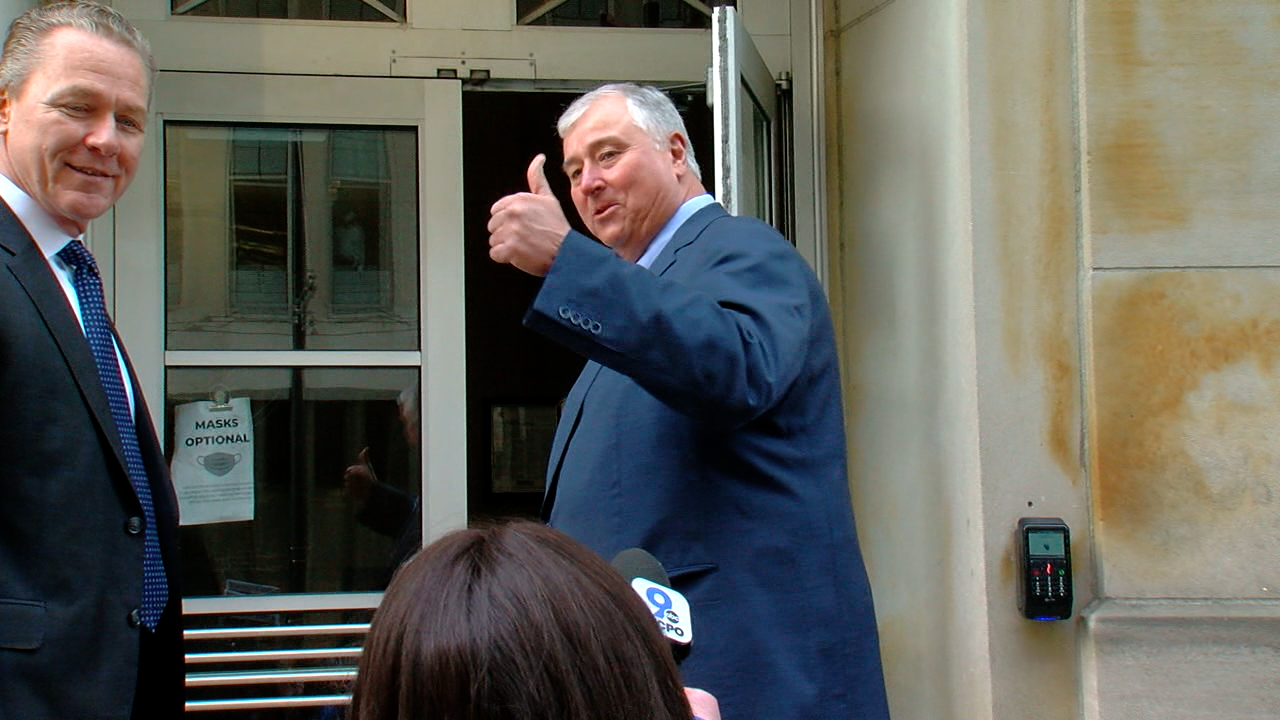
The attorney for former Ohio House Speaker Larry Householder said that his team is using the convicted felon’s power — and his connections to President-elect Donald Trump — to get out of prison.
The jury foreman from the speaker’s case is furious, arguing that this is the exact kind of corruption for which Householder was convicted.
Back in 2019, Householder took a $61 million bribe in exchange for legislation to give FirstEnergy a $1 billion bailout, named H.B. 6, all at the expense of the taxpayers.
In March 2023, a jury found that Householder and former GOP leader Matt Borges participated in the racketeering scheme that left four men guilty and another dead by suicide.
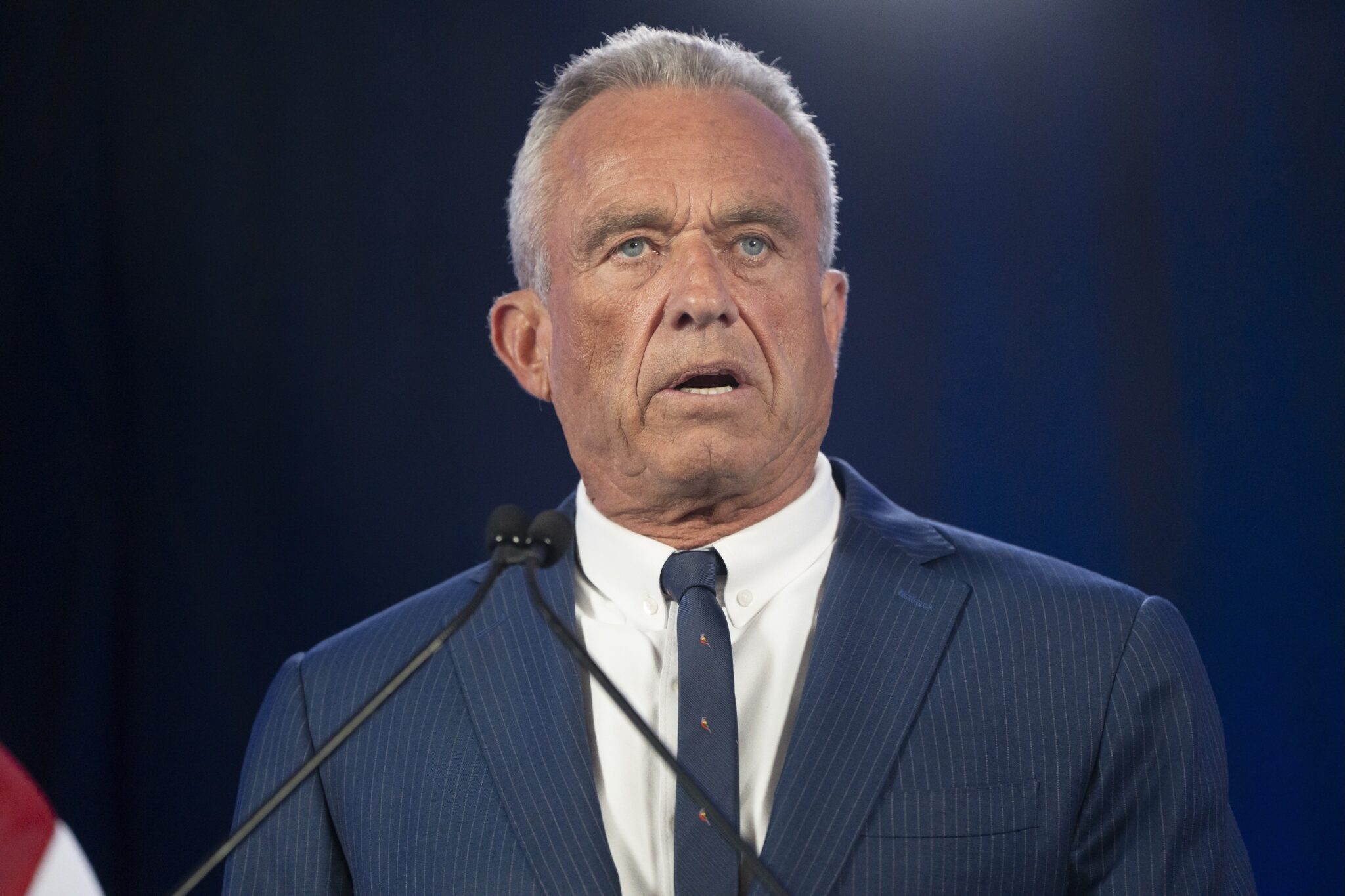
Robert F. Kennedy Jr. gives remarks at the Renaissance Phoenix Downtown Hotel on Aug. 23, 2024 in Phoenix, Arizona. (Photo by Rebecca Noble/Getty Images)
WASHINGTON — President-elect Donald Trump announced Thursday he plans to nominate Robert F. Kennedy Jr. to head the Department of Health and Human Services, another controversial candidate who could face a challenging confirmation process in the U.S. Senate given his non-scientific beliefs about public health, including his anti-vaccine stance.
“I am thrilled to announce Robert F. Kennedy Jr. as The United States Secretary of Health and Human Services (HHS),” Trump posted on social media. “For too long, Americans have been crushed by the industrial food complex and drug companies who have engaged in deception, misinformation, and disinformation when it comes to Public Health.
“The Safety and Health of all Americans is the most important role of any Administration, and HHS will play a big role in helping ensure that everybody will be protected from harmful chemicals, pollutants, pesticides, pharmaceutical products, and food additives that have contributed to the overwhelming Health Crisis in this Country.”
HHS receives about $116.8 billion in discretionary federal funds and about $1.7 trillion in mandatory spending each year and houses several big-name public health agencies, including the Administration for Strategic Preparedness and Response or ASPR, the Centers for Disease Control and Prevention, the Centers for Medicare & Medicaid Services, the Food and Drug Administration, the National Institutes of Health and the Substance Abuse and Mental Health Services Administration.
Kennedy ran in this year’s presidential election as an independent candidate, often repeating inaccurate information about vaccines and spreading other conspiracy theories about public health.
He has no background in science, research, or medicine. He graduated from Harvard University before going on to receive a law degree from the University of Virginia Law School.
He pleaded guilty to felony heroin possession in Rapid City, S.D., in February 1984, before receiving two years of probation, which ended a year early. He volunteered with the Natural Resources Defense Council as part of that probation.
Kennedy spent much of his career as an environmental lawyer and published several books.
After ending his own presidential bid this year, Kennedy endorsed Trump and campaigned frequently for him.
Criticism of the nomination began quickly after news broke Thursday, though far-right Republicans are expected to celebrate the nomination.
Lisa Gilbert, co-president of the watchdog nonprofit organization Public Citizen, released a written statement saying, “Kennedy is a science-denying, morally-bankrupt conspiracy theorist who will endanger people’s lives if placed in a position of authority over health. The U.S. Senate should unanimously reject this nomination.”
Louisiana Republican Sen. Bill Cassidy, ranking member on the Health, Education, Labor, and Pensions Committee, released a written statement that he’s interested in learning more about Kennedy during the confirmation process.
“RFK Jr. has championed issues like healthy foods and the need for greater transparency in our public health infrastructure,” Cassidy wrote. “I look forward to learning more about his other policy positions and how they will support a conservative, pro-American agenda.”
Washington state Democratic Sen. Patty Murray, a senior member of the HELP panel that will hold the confirmation hearing, wrote in a statement that Kennedy “could not be more dangerous — this is cause for deep concern for every American.”
“There is no telling how far a fringe conspiracy theorist like RFK Jr. could set back America in terms of public health, reproductive rights, research and innovation, and so much else,” Murray wrote. “The consequences here are not theoretical or superficial — health care access, coverage, research, and public health are life or death issues for people — and the COVID pandemic was an all too recent, all too painful reminder.”
Kentucky Republican Sen. Rand Paul congratulated Kennedy on social media, writing “Congratulations to @RobertKennedyJr on his nomination as Secretary of Health and Human Services. Finally, someone to detox the place after the Fauci era. Get ready for health care freedom and MAHA!”
Colorado’s Democratic Gov. Jared Polis, a former member of Congress who previously criticized Kennedy’s anti-vaccine stance as a way to bring back polio and measles, cheered his nomination in a lengthy social media post.
“I hope he leans into personal choice on vaccines rather than bans (which I think are terrible, just like mandates) but what I’m most optimistic about is taking on big pharma and the corporate ag oligopoly to improve our health.”
Polis added another post about an hour later, writing that science “must remain THE cornerstone of our nation’s health policy and the science-backed decision to get vaccinated improves public health and safety.”
“But if as a country we follow the science we would also be far more concerned about the impact of pesticides on public health, ag policy on nutrition, and the lack of access to prescription drugs due to drug high prices,” Polis added. “This is why I am for a major shake-up in institutions like the FDA that have been barriers to lowering drug costs and promoting healthy food choices. Lest there by any doubt, I am vaccinated as is my family. I will hold any HHS Secretary to the same high standard of protecting and improving public health.”
_______
Jennifer Shutt
Jennifer covers the nation’s capital as a senior reporter for States Newsroom. Her coverage areas include congressional policy, politics and legal challenges with a focus on health care, unemployment, housing and aid to families.
Ohio Capital Journal is part of States Newsroom, the nation’s largest state-focused nonprofit news organization.
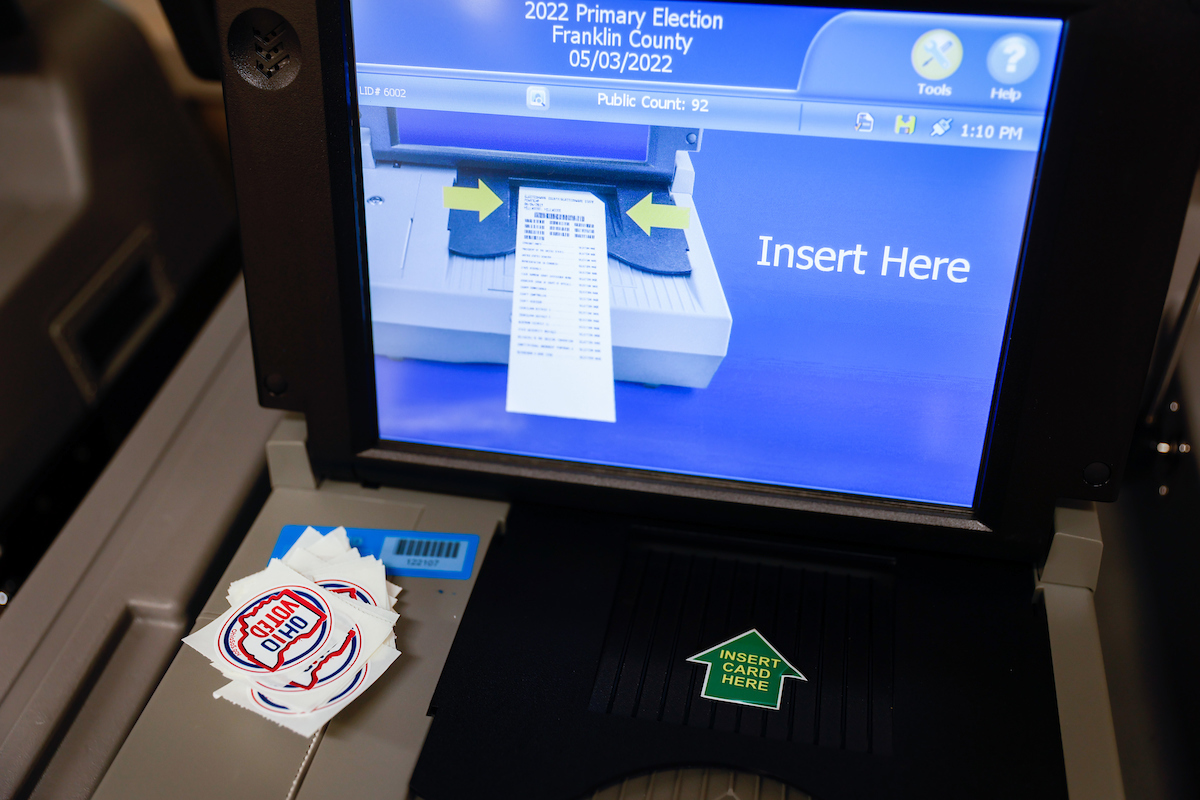
Another election has come and gone in Ohio with no reports of widespread fraud. That hasn’t stopped a handful of Republican state senators from advancing legislation to place new restrictions on how Ohioans cast their ballots.
State Sen. Niraj Antani, R-Miamisburg, has put forward a bill requiring Ohioans show proof of citizenship to register to vote or update their existing registration. Sens. Theresa Gavarone, R-Bowling Green, and Andrew Brenner, R-Delaware, filed another bill imposing proof of citizenship requirements, and the elimination of ballot drop boxes.
COLUMBUS, OH — FEBRUARY 22: State Sen. Niraj Antani, R-Miamisburg. (Photo by Graham Stokes for Ohio Capital Journal)
That state legislation takes its cue from efforts at the federal level backed by U.S. House Speaker Mike Johnson. That proposal, known as the SAVE Act, had little chance of passage with Democrats in control of the U.S. Senate. Now, with a Republicans in control of all three branches of government, it stands a better chance of passing.
It’s already illegal to register or vote as a non-citizen at the state and federal level. Despite that threat of criminal prosecution, backers still worry current law allows voters to register with little more than a promise.
It appears that approach has worked exceptionally well, though. Actual reviews of the voter rolls have found cases of actual fraud are vanishingly rare and nowhere close to enough to affect the outcome of races.
What’s more, the effort to protect voting by demanding citizenship documentation, risks disenfranchising eligible citizens. One University of Maryland study estimated 21 million Americans don’t have ready access to the required documents. After Kansas imposed similar requirements about a decade ago, more than 30,000 voters had their registration suspended or canceled.
GET THE MORNING HEADLINES.
Proof of citizenship
Both measures lay out the same list of documents for verifying citizenship. A U.S. Passport, birth certificate or naturalization certificate will all work, but they lean heavily on existing records held by the Bureau of Motor Vehicles. Lawmakers seem to envision a system in which most initial registrations or updates get verified behind the scenes, with county boards checking with the BMV that it received citizenship documents when a voter got their license.
COLUMBUS, Ohio — JUNE 07: State Sen. Andrew Brenner, R-Delaware. (Photo by Graham Stokes for Ohio Capital Journal)
For people whose information doesn’t match, for instance due to a name change, marriage or divorce, they’ll need to provide a court order or marriage certificate.
In a press release, Brenner framed their proposal as strengthening laws and adding protections “so that Ohioans continue to know there is a reliable system in place when they cast their vote.”
Gavarone insisted Ohio remains the “gold standard” for election integrity, but that her bill “addresses areas of the election law we can improve, including an extra layer of protection to enforce our state constitution’s citizenship requirement.”
“This is a simple fix that strengthens trust and integrity in our institutions,” she added.
But the proposals could actually see Ohio sacrificing simplicity in the name of security. Federal law does not require proof of citizenship to vote, and so even if lawmakers approve some version of the requirement, they can only really apply it to state forms and state elections. As in Arizona, Ohio voters would still be able to register with federal forms, but they would only be able to vote in federal elections, and ineligible to sign initiative petitions.
Dropboxes
While Antani’s proposal sticks to the citizenship requirements, Brenner and Gavarone go a step further and outlaw the use of ballot drop boxes. Although there have been no credible allegations of voter fraud tied to drop boxes, they have been a persistent bugaboo for skeptics.
COLUMBUS, Ohio — MAY 31: State Sen. Theresa Gavarone, R-Bowling Green. (Photo by Graham Stokes for Ohio Capital Journal)
In the most recent election, Ohio Secretary of State Frank LaRose imposed rules effectively limiting their use to individual voters dropping off their own ballot. In an August letter, he urged state lawmakers to consider removing drop boxes altogether.
Apparently Brenner and Gavarone were listening.
Their legislation restricts ballot drop-offs to hand delivery — explicitly prohibiting board from accepting ballots “returned by personal delivery to an unattended receptacle.”
According to the Secretary of State’s early vote dashboard, voters aiming to get their ballot in early were far more likely to vote early in person or mail in their absentee ballot. The roughly 181,000 ballots returned by drop box represented less than 7% of the total. Mail ballots and early in person ballots accounted for 31% and 59% respectively.
Gavarone justified the drop box rollback with reference to incidents in Oregon and Washington where incendiary devices were placed in drop boxes.
Nick Evans has spent the past seven years reporting for NPR member stations in Florida and Ohio. He got his start in Tallahassee, covering issues like redistricting, same sex marriage and medical marijuana. Since arriving in Columbus in 2018, he has covered everything from city council to football. His work on Ohio politics and local policing have been featured numerous times on NPR.
Ohio Capital Journal is part of States Newsroom, the nation’s largest state-focused nonprofit news organization.
DeWine will have 10 days to sign the bill into law or veto it once he receives it, but he has previously indicated he would sign the bill.
If the bill is signed into law, it would require Ohio K-12 schools and colleges to mandate people use the bathroom or locker room that aligns with their gender assigned at birth. It would also prevent students from sharing overnight accommodations with people of the opposite sex from their sex assigned at birth for K-12 schools.
“Trans students are just like students everywhere,” Equality Ohio Executive Director Dwayne Steward said in a statement. “They just want to feel safe and secure in their schools. S.B. 104 is a dangerous bill that puts vulnerable trans youth at risk for abuse and harassment.”
Anne Anderson, the mom of a transgender high school student, said her family plans on moving out of Ohio because of the anti-transgender legislation.
“I’m not going to let my daughter suffer through their bigotry,” she said. “My daughter is the shell of a person she once was because of all of this.”
Anderson said her daughter did not want to go to school the morning after the Senate passed S.B. 104.
“She will not be going in the boys bathroom,” Anderson said. “It’s just not happening.”
The American Medical Association officially opposes policies preventing transgender individuals from accessing basic human services and public facilities consistent with gender identity.
GET THE MORNING HEADLINES.
“This bill ignores the material reality that transgender people endure higher rates of sexual violence and assaults, particularly while using public restrooms, than people who are not transgender,” Jocelyn Rosnick, policy director for the American Civil Liberties Union of Ohio, said in a statement. “All Ohioans deserve to access the facilities they need, in alignment with their gender identity, without fear of harassment or bullying.”
Slightly more than half of transgender and nonbinary youth in Ohio considered suicide in 2022, according to the Trevor Project.
Several organizations are encouraging people to contact DeWine and ask him to veto S.B. 104.
“Governor DeWine can veto this anti-trans bathroom bill,” Christina Collins, executive director of Honesty for Ohio Education, said in a statement. “It is necessary now more than ever to show our trans community that this is not the will of the people but rather the disposition of extremists in our state legislature that do not represent our communities.”
Mallory Golski with Kaleidoscope Youth Center said she is hearing people wonder if they will need to start carrying around their birth certificates.
“It leaves it up to individual school districts to create their own policy, so there’s a lot of uncertainty of what if one school district does it one way and one does it another,” she said. “Will I be penalized for using the bathroom that is allegedly the wrong bathroom?”
Another question she is hearing is who would enforce the policy?
“Is it that local community’s law enforcement?” Golski asked. “Is it the principal?”
People have told her DeWine’s voicemail has been full a couple of times since S.B. 104 passed.
“It’s clear that Ohioans are overwhelmingly contacting the governor and urging him to veto this legislation,” Golski said.
Transgender people will always be part of Ohio, said TransOhio Executive Director Dara Adkison.
“Ohio is a state that held over a hundred prides this year, with thousands and thousands in attendance, that is Ohio,” Adkison said in a statement. “To trans Ohioans and our allies remember that this is our state too, do not seed its story to a bigoted minority.”
Ohio Federation of Teachers President Melissa Cropper said there are real safety issues that need to be addressed.
“There is no epidemic of student assaults in bathrooms and locker rooms,” Cropper said in a statement. “There is however an epidemic of gun violence in our schools and communities; firearms are the leading cause of death for American children and teens.”
State Sen. Jerry Cirino, R-Kirtland, originally introduced S.B. 104 to revise the College Credit Plus Program. Sen. Andrew Brenner, R-Delaware, is also a sponsor of the bill. State Reps. Beth Lear, R-Galena, and Adam Bird, R-New Richmond, introduced the bathroom bill last year.
Megan Henry is a reporter for the Ohio Capital Journal and has spent the past five years reporting in Ohio on various topics including education, healthcare, business and crime. She previously worked at The Columbus Dispatch, part of the USA Today Network.
Ohio Capital Journal is part of States Newsroom, the nation’s largest state-focused nonprofit news organization.
State lawmakers in Ohio want to prohibit local governments from using public dollars in support of abortion. They’re casting a wide net.
Legislation sponsored by state Rep. Josh Williams, R-Sylvania, bars public funds from being given directly or indirectly to an organization that provides abortions that aren’t necessary to protect the life of the mother.
In addition, the bill prohibits funding going to any group providing services for people seeking such abortions like transportation, housing or wage reimbursement. Williams’ measure also takes an apparent swing at public employees by explicitly including paid time off as a prohibited expenditure.
The bill uses a claw back provision as its enforcement mechanism. If a municipality expends funds in violation of the act, the state would reduce its share of the local government fund appropriation. Dollars withheld under the law would then be directed to a new fund supporting crisis pregnancy centers.
Williams’ bill requires local governments to report relevant spending on a monthly basis. If they don’t report — or don’t report accurately — they risk losing their entire local government fund appropriation.
GET THE MORNING HEADLINES.
Proponents
In the House Government Oversight committee, the usual representatives of the anti-abortion movement showed up to testify in favor of Williams’ bill.
Will Kuehnle from the Catholic Conference of Ohio argued, “In no circumstance should state dollars, even by subsidy, bring about the termination of a human life.”
He highlighted programs like one in Columbus granting half a million dollars to support women seeking abortions by reimbursing travel and childcare costs rather than the procedure itself. The appropriation was made with federal dollars from the American Rescue Plan, and it was approved by Columbus City Council shortly after the U.S. Supreme Court overturned Roe v. Wade triggering Ohio’s earlier 6-week abortion ban to snap into effect.
In his sponsor testimony, Williams cited initiatives in other cities as well — all backed by federal rather than state dollars, and none of which paid for medical procedures.
Kuehnle insisted if the city wants to offer assistance like paying for travel it should be spending that money supporting mothers rather than people seeking abortions. He argued in many circumstances, people seek an abortion because they’re not receiving some critical service from their community.
“What this bill seeks to do is to take every dollar that we can give to a woman in need and make sure that’s where it’s going,” he said.
Notably, while the measure punishes cities for supporting services connected to some abortions, it doesn’t actually provide services to pregnant people or young parents. Although some crisis pregnancy centers provide things like diapers, their primary mission is to discourage abortion.
Emma Martinez from Ohio Right to Life criticized the same Columbus grant and cast her organization’s support for Williams’ bill in moral terms.
“This legislature has drafted numerous laws that not only protect taxpayers from paying for abortions, but also that protect taxpayers’ conscience rights,” she argued.
And Nilani Jawahar from the Center for Christian Virtue emphasized the legislation’s punitive approach to local governments.
“This legislation is simple,” she said. “Counties and municipalities may spend their money as they please, but if they receive state funds for a specific purpose and they choose to spend it funding elective procedures, they are demonstrating to the state that they do not need that money, and therefore the state has a right to withhold it and direct it to where it may be put to better use.”
Skeptical Democrats
The measure’s proponents were met with pushback from the committee’s Democratic members.
State Rep. Latyna Humphrey, D-Columbus, emphasized unintended consequences. Cutting off funds to entities that provide elective abortions risks cutting off access to other healthcare services those organizations provide, like screening for sexually transmitted infections.
“You all understand that health care is a necessity, specifically in communities where there are health care deserts.” Humphrey pressed Kuehnle. “So I understand you all don’t believe in abortions, but entities like Planned Parenthood and others do provide health care services outside of that.”
Meanwhile, Rep. Dani Isaacsohn, D-Cincinnati, asked Jawahar how lawmakers could square the bill’s approach with Ohio voters’ support for protecting reproductive rights in the vote for Issue 1.
“What I’m asking is, how would you summarize the will of the voters as expressed in Issue 1 last year?” he said. “What did the voters express with Issue 1’s passage last year?”
After a bit of back-and-forth Jawahar replied, “I’m not here to talk about the will of the voters, I’m here to talk about this bill and why we support it.”
Nick Evans has spent the past seven years reporting for NPR member stations in Florida and Ohio. He got his start in Tallahassee, covering issues like redistricting, same sex marriage and medical marijuana. Since arriving in Columbus in 2018, he has covered everything from city council to football. His work on Ohio politics and local policing have been featured numerous times on NPR.
Ohio Capital Journal is part of States Newsroom, the nation’s largest state-focused nonprofit news organization.
Last week, Ohio Attorney General Dave Yost allowed a state constitutional amendment to go forward after previously rejecting it.
His approval was a formality — the Ohio Supreme Court recently ruled he could not reject the Ohio Voters Bill of Rights simply because of its title — but it could open to door to another amendment Yost has repeatedly blocked.
In Ohio’s ballot initiative process the Attorney General plays a crucial gatekeeping role. After a committee has drafted its amendment and collected an initial 1,000 signatures, the AG gets to decide if what they’ve got down on paper represents a “fair and truthful” statement of what their proposal would actually do.
It gives the AG significant power over whether a petition eventually winds up on the ballot.
His approval, under court order, of the Ohio Voters Bill of Rights came after two previous rejections. A different measure to end qualified immunity received rejection letters seven times. But following the recent decision, the AG and the committee pushing to restrict legal protections for public employees like police officers are asking the state Supreme Court how its ruling impacts their proposal.
The Ohio Voters Bill of Rights
The amendment covers all the basics — voting is a fundamental right for anyone 18 years and older who is citizen of the U.S. and Ohio — and enshrines them in the state constitution. By establishing those rights in the state charter, procedures like early voting or absentee voting couldn’t be rolled back by a simple act of the General Assembly; those rights would become the floor rather than the ceiling.
GET THE MORNING HEADLINES.
However, the bill of rights goes a few steps further to make voter registration and casting a ballot far easier. The amendment would establish an automatic voter registration process which would update or register eligible voters anytime they interact with the Ohio Bureau of Motor Vehicles. In addition, the proposal would establish same-day voter registration and grant counties the ability to open up additional ballot drop boxes or early voting sites.
“Let me be clear: there will be nothing secure and fair about the way we vote in this state if this amendment is passed,” he said in a press release. “It’s a direct assault on the integrity of our voting process and the safeguards we’ve put in place to hold that process accountable.”
Yost objected to the use of “bill of rights” to describe a series of provisions related to voting administration rather than “an articulation of specific, discrete rights that may be enforced by individuals against the government.” The Supreme Court wasn’t buying it, and noted in 2014 then-AG Mike DeWine advanced a proposal with the exact same name.
But Yost didn’t give his approval without a parting shot. In his letter to the committee, he insisted, “the fact that the recent decision of the Supreme Court of Ohio concludes the relevant statute does not grant me authority to review the title does not change my determination that it is misleading.”
“The Court did not reach a decision on the merits of that determination,” he went on. “I stand by it. I urge you to consider a more accurate and less misleading title.”
The amendment formerly known as…
Qualified immunity is a judicial doctrine holding that public officials should have protection from personal liability for their official conduct. Essentially, if an official is operating in good faith in murky legal waters they should be given the benefit of the doubt. The idea has been around since the late-1960s, but in recent years it has been used to shield police officers in excessive force cases.
The Ohio Coalition to End Qualified Immunity has been working to get an amendment on the ballot, and in the last two years the state attorney general has rejected seven iterations of their amendment. The most recent proposal, submitted last July, has no title at all after Yost criticized the “Protecting Ohioans’ Constitutional Rights” name they’d given the earlier proposal.
Yost rejected the untitled amendment, too — insisting the title “is an indispensable piece to determining whether the summary of it is fair and truthful.”
But following the Ohio Supreme Court ruling that Yost couldn’t reject the Ohio Voters Bill of Rights based solely on the title, the AG and the committee backing the qualified immunity rollback are asking the court how the decision impacts their case.
Last week both parties filed a joint motion with court to set aside the existing fight over the title and order the attorney general to go forward with his “fair and truthful” review of the underlying amendment summary.
Last Wednesday, the court put briefing on hold for that underlying case, while it decides whether to order Yost go forward with his review.
Nick Evans has spent the past seven years reporting for NPR member stations in Florida and Ohio. He got his start in Tallahassee, covering issues like redistricting, same sex marriage and medical marijuana. Since arriving in Columbus in 2018, he has covered everything from city council to football. His work on Ohio politics and local policing have been featured numerous times on NPR.
Ohio Capital Journal is part of States Newsroom, the nation’s largest state-focused nonprofit news organization.
Senator-elect Bernie Moreno and former presidential candidate Vivek Ramaswamy are touting the Trump’s policy proposals in softer tones
At an Ohio Chamber of Commerce conference last week Trump allies struck a conciliatory tone at odds with the increasingly hostile rhetoric of the president-elect. Donald Trump has promised sweeping deportations, to mobilize police or even military force against a perceived “enemy within,” and to serve as a kind of avatar of “retribution” on behalf of his supporters.
But to hear Senator-elect Bernie Moreno and former presidential candidate Vivek Ramaswamy tell it, the incoming Trump administration will be an open hand rather than a closed fist. Their message? “Give him a chance,” instead of woe to the vanquished.
“I’m confident that he is eager to harness the learnings of that first term to go even further in this second term than anybody imagined even in uniting the nation,” Ramaswamy said of Trump.
In the very next breath he added the caveat, “Maybe not through words, through cheap verbiage — that doesn’t really unite people. But action does. Success is unified.”
Moreno offered a similar ‘tired of winning’ message, and committed to establishing a presence for his office in places that didn’t vote for him.
But even if both men struck a softer tone, that shift in tenor appears to be extent of the changes they expect. There was little to suggest they believe Trump will moderate on his stated policy priorities.
GET THE MORNING HEADLINES.
A mandate
After ousting three-term Democratic Sen. Sherrod Brown, and in light of Republican gains across the country, Moreno argued his party has “a mandate to lead.” But he was also circumspect.
“Look, I did not win the vote in Franklin County,” he said. “I did not win the vote in Cuyahoga County, Hamilton, Lucas, Summit, Athens or Montgomery — not that I’m keeping track.”
“But that means that’s my fault,” Moreno added. “I look at that as my failure. I failed to explain to the people in those counties why I would best represent them, and I will fix that over the next six years.”
He argued you won’t find a more pro-immigration Republican than him, “but I’m not pro-invasion.” Moreno said he wants to see a system that prioritizes people who add to the economy and don’t bring down wages, and suggested the country could even expand the number of visas and temporary work permits. But he said there should be “zero tolerance” for illegal immigrants.
Moreno said he’d work to “drive down the cost of everything.” The recipe, he argued, is to “massively cut” federal spending and to expand energy production.
“For those of you who care about the planet, like I do, us building coal mines here, and coal fired plants and natural gas is better for the planet because we do it safer, cleaner and much more efficiently than any other place on earth,” Moreno argued. He added that although there’s room for solar and wind, without subsidies they wouldn’t be viable sources.
The U.S. is already the world’s largest producer of oil and natural gas, and the fourth largest producer of coal — all of which benefit from federal subsidies.
Moreno argued we need a “renaissance of automobile manufacturing” in the United States, and that the way to do it is eliminating subsides for purchasing electric vehicles or mandates on EV production or fuel efficiency.
But while he expressed skepticism toward government intervention in energy production or automobile manufacturing, one place he doesn’t want to see federal officials step back is the Intel project in Licking County. Trump has criticized the CHIPS Act legislation that helped spur the project along, and Moreno acknowledged “maybe I don’t love the exact way the bill is structured.” He’d be more comfortable with tax incentives than grants, Moreno explained.
All the same, he argued, “the federal government made promises to Intel (that) they’ve not kept. The federal government said they’d give them billions of dollars in exchange for an investment. Not one cent of federal money has flowed into Intel.”
“We cannot lose that project,” Moreno said, adding “too many businesses in central Ohio are relying on that project to go forward.”
He emphasized the national security implications of bringing semiconductor production on shore and said he’d press the commerce secretary personally if necessary to get money flowing.
Republican presidential candidate Vivek Ramaswamy delivers remarks at the Faith and Freedom Road to Majority conference at the Washington Hilton on June 23, 2023 in Washington, DC. (Photo by Drew Angerer/Getty Images)
Rooting for them
Ramaswamy founded a biotech startup before gaining prominence in conservative circles as an author criticizing “woke” politics. He launched a longshot presidential campaign that saw his star rise even further, and he’s now seen as a possible Trump administration appointee or a future candidate for statewide office in Ohio.
He told the crowd he’s “rooting” for Democrats to step away from the cultural issues he’s railed against and argued the country would be stronger for it with both parties “pushing the other to be the best version of itself.” He argued for restoring a political discourse where “we can disagree like hell as Americans and still get together at the dinner table.”
“And if you give them a chance,” he said, “even if you’re on the left, I’m confident that that is the America that Donald Trump and our fellow Ohioan and good friend J.D. Vance, I think, are going to work hard to revive from the top and set an example for this country.”
But if Democrats don’t, he warned, they could be headed for “the dustbin of history.”
Ramaswamy readily defended one of Trump’s biggest policy promises.
“If we had the largest influx of illegals into this country in American history, it stands to reason that we ought to have the largest mass deportation in American history,” he insisted. “That’s not xenophobic, that’s not racist. That’s what it means to stand for the rule of law in the United States of America.”
He criticized independent federal agencies as a “fourth branch of government.” In truth, agencies generally are part of the executive branch of government, with top staff selected by the president. Their authority in a particular field like employment (National Labor Relations Board), trade (Federal Trade Commission) or communications (Federal Communications Commission) is delegated to them by an act of Congress.
But Ramaswamy argued a pair of recent Supreme Court rulings offer “a one-two punch” that could severely restrict their ability to act.
“It is a century-long sin in the United States of America,” he said, “that we now have a historic and generational opportunity to correct.”
Nick Evans has spent the past seven years reporting for NPR member stations in Florida and Ohio. He got his start in Tallahassee, covering issues like redistricting, same sex marriage and medical marijuana. Since arriving in Columbus in 2018, he has covered everything from city council to football. His work on Ohio politics and local policing have been featured numerous times on NPR.
Ohio Capital Journal is part of States Newsroom, the nation’s largest state-focused nonprofit news organization.
Following an election which brought two more Democrats to the Ohio Senate and Ohio House each, but struck down redistricting reforms and maintained Republican supermajorities, lawmakers are planning their next moves when it comes to policy.
The Ohio General Assembly has two more months of its current term before the year begins with a state operating budget to be developed and approved, and other policy priorities to address without federal COVID funding boosts the GA had in previous years.
Four members of the legislature met at a Thursday post-election event hosted by the Ohio Chamber of Commerce to discuss the way forward in addressing topics like education and property taxes, while balancing a need for economic goals alongside social issues.
Lame duck
The Ohio Chamber of Commerce’s Rick Carfagna, far left, speaks with state Sen. Bill DeMora, state Rep. Scott Oelslager, state Rep. Dani Isaacsohn and state Sen. Rob McColley during a Thursday panel on the future term of the Ohio General Assembly. (Photo by Susan Tebben/Ohio CapitalJournal)
State Sen. Rob McColley, R-Napoleon, sat alongside fellow Sen. Bill DeMora, D-Columbus, and state Reps. Dani Isaacsohn, D-Cincinnati, and Scott Oelslager, R-North Canton, at the panel discussion.
All the men said bipartisanship should be an aim for the legislature, despite the Republican supermajority, and they all anticipated the usual late nights as the upcoming lame duck legislative session ties up loose ends by the end of the year.
“I can tell you, it won’t be fun,” McColley told his colleagues. “Don’t fall asleep at your desk.”
The Ohio House has four sessions scheduled between now and the end of December, with another three “if needed” sessions set aside, just in case. The Ohio Senate has scheduled five sessions for the rest of 2024.
“I’m actually hopeful we don’t have any sessions, so we can’t screw the state over like we normally do with lame duck every two years,” DeMora said at Thursday’s chamber event.
But DeMora and others do have some bipartisan-sponsored bills to push before they must be reintroduced at the beginning of the new GA.
Specifically for DeMora, he hopes to see passage of a bill mandating insurance coverage for children’s hearing aids, along with an election worker protection bill.
Isaacsohn said he wants to see relief in the area of property taxes, calling it “outrageous” that there hasn’t been legislative movement to stem the “skyrocketing” taxes without impacting local schools who rely on those taxes.
“It’s what our constituents are calling our offices about, it’s what people are feeling,” Isaacsohn said. “And it should not come at the expense of our public schools.”
McColley agreed that property taxes are something the legislature “needs to take a serious look at.”
“I do think Ohioans who are looking at it would be fine if it was just simply more predictable and easy to understand as to how these property tax rates are calculated, and maybe even if there was a cap on the level of increase that can happen going forward,” McColley said.
Redistricting and the general election
The results of Tuesday’s election did not go unspoken by the four legislators. Isaacsohn said it was worth mentioning that the Democrats picked up two more seats in an Ohio Senate that is still strongly held by a Republican majority, and McColley used the fact that Democrats made gains in an otherwise GOP-dominated election as an argument for the current redistricting system in Ohio.
“That is, in my opinion, largely as a result of – not only were there candidates and good races won – but primarily the redistricting bipartisan unanimous map that we came up with in the last cycle,” McColley said.
Tuesday’s elections results mean Republican supermajorities go from 67-32 in the Ohio House to 65-34, and from 26-7 in the Ohio Senate to 24-9.
In unofficial results as they stand now from Tuesday night, President-elect Donald Trump won Ohio 55-44. In an average of the results for the statewide races for President, U.S. Senate, and the three Ohio Supreme Court races, Republican candidates earned 54.22% of Ohioans’ votes, while Democrats earned 44.76%.
Senate Majority Floor Leader Rob McColley, R-Napoleon, speaks at the Ohio Redistricting Commission meeting, September 20, 2023. (Photo by Graham Stokes for Ohio Capital Journal)
McColley was on the Ohio Redistricting Commission when the most recent Statehouse map was adopted – the sixth revision made by the commission in two years – and he said the creation of that map with bipartisan support was proof that a map could be drawn that was “something that may have been intended when the initial amendments were passed in 2015 and 2018.”
Oelslager agreed with McColley, saying Ohioans’ the defeat of Issue 1 on Tuesday with 54% of the vote “sent a clear message that they did not want to change the process.”
Isaacsohn pushed back, saying the fact that every single incumbent who ran was reelected in the House and the Senate shows “something is off there.”
“Every incumbent should not win in any year for any party. That’s not a healthy democracy,” Isaacsohn said. “There is no way that 132 of them are doing a good enough job and that voters don’t want a change there.”
He added that even with the “red wave year all over the country, including in Ohio,” the voter trends still didn’t match the partisan makeup drawn into the Statehouse maps by the ORC.
“We should continue to at least be honest with ourselves about how disproportionate and imbalanced the partisan makeup of the legislature is,” Isaacsohn said.
DeMora mirrored arguments made by Citizens Not Politicians and other supporters after Issue 1 was defeated, saying some of the Ohioans who voted against the measure were “confused” by summary ballot language approved by the Ohio Ballot Board, and actually supported the measure itself.
Moving forward, McColley and Oelslager said conversations could begin within the legislature as to what changes could be made to the state’s redistricting process, including if Gov. Mike DeWine’s preference that the state look to something like the process Iowa has could go forward.
Iowa’s process relies on legislative and gubernatorial approval of maps drawn by a nonpartisan governmental group, in Ohio’s case, possibly the Ohio Legislative Service Commission.
“I do think there will probably be discussions about whether we can improve upon our existing process, and that may very well involve discussions around who sits on the commission,” McColley said.
Funding the state
As for policy decisions in the new year, legislators are hopeful to put forth a budget that addresses the basic needs of Ohioans, even if they disagree on what those basic needs are.
“From a general standpoint, (the Republican caucus) will continue our philosophy of doing all we can to make Ohio a good place to raise a family, begin a business, have a culture where people take a look at our great place and say ‘I want to come there,” Oelslager said.
Those priorities for Oelslager include the three biggest budget items they see for the state: health care, education and the state’s prisons system.
As far as education, Oelslager said implementing the Fair School Funding Plan is “again part of the discussion for renewal,” but so, too, is the EdChoice private school voucher program, “and I’m sure that’ll be part of the K-12 education proposal,” he said.
Priorities may remain largely the same as in other years for the GOP, but the revenues with which to pay for those policies will be impacted by the fading-out of federal funding from the COVID-19 pandemic.
“This could be a different budget cycle depending on how a lot of this plays out,” McColley said. “Obviously, the economy’s in a little bit different shape now than it was two years ago, four years ago, six years ago.”
Policy priorities in the new year
McColley said the Senate still plans to work on reducing tax burdens, de-regulation “across the board” and expansion of “education options” for Ohioans.
DeMora had what he saw as an easy fix for the money problems that could show up in the state over the next few years.
“I can find a billion dollars in the budget if we get rid of vouchers,” DeMora said. “We’ll have a billion dollars more to spend in the budget right there.”
Other money sources could come from recreational marijuana sales and the expansion of gaming, DeMora said, if the governor was willing to support it.
“We’re going to see if the governor is more into fiscal responsibility or if his opposition to both gaming and marijuana is going to not have him look at those two sources of funding for the state when all this federal money is no longer here,” DeMora said.
Isaacsohn said it wasn’t a bad idea to grab the revenue possible from those sources, but when taxes could be raised on the richest Ohioans instead, he didn’t see the logic.
Ohio State Rep. Dani Isaacsohn (D-Cincinnati) speaking at a press conference. (Photo by Morgan Trau, WEWS.)
“Instead of taxing the wealthiest people, we are going to try and raise revenue by hoping people gamble more or do more substances,” Isaacsohn said. “That’s an odd choice, I think, for policymakers to make.”
One thing that will arise despite discussions about the need for more economic goals in the legislature is “cultural issues,” which McColley and Oelslager defended as issues that are important to their constituents.
The Ohio Chamber’s Senior Vice President of Government Affairs, Rick Carfagna, moderated the Thursday panel, and said there’s been “this opportunity cost of time, energy and resources that seems to have been spent on divisive social issues at the expense of economic policies.”
He asked legislators if there was a path to refocus on those issues. McColley said it’s possible to do both.
“Frankly, some of these social issues, people look to us and say what other avenue or what other remedy do I have if my state government is not willing to step in and take care of these things,” McColley said.
Ballots in some districts are still being tallied, but the broad strokes of the 2024 election are clear, and the results mean Ohio Gov. Mike DeWine has a big decision to make. J.D. Vance is jumping from U.S. Senator to Vice President-elect leaving a vacancy DeWine needs to fill.
Whoever he chooses will serve for the next two years, with the opportunity to defend the seat in the next federal election in 2026. And since Vance was elected in 2022, his replacement would have to turn around and do it all over again in 2028.
“It’s got to be someone who wants to spend the next four years not just doing the job, but running for office,” DeWine explained at post-election conference hosted by the Ohio Chamber of Commerce.
On the other hand, incumbency means DeWine’s appointee could enter the race with a bit of wind in their sails.
And DeWine has important strategic factors to consider. The Republican party currently controls each state office in Ohio. But in each case — Governor, Lt. Governor, Attorney General, Secretary of State, Auditor and Treasurer — the politicians occupying those offices are term-limited. That means a broad array of open seats, and several experienced candidates who can make a case reasonable for their nomination to a new post.
That game of musical chairs could easily tip into an intraparty knife fight. DeWine’s pick for the U.S. Senate could help keep it from getting out of hand.
But it’s not clear if that will work. One potential recipient, Attorney General Dave Yost, has already said he’d turn down the nomination. Yost is eyeing a run for governor, as is Lt. Gov. Jon Husted.
With DeWine’s political career likely nearing an end, it’s also one of his last opportunities to put his stamp on Ohio politics. In the most recent U.S. Senate primary, the governor endorsed state Sen. Matt Dolan, R-Chagrin Falls, instead of the eventual victor, U.S. Senator-elect Bernie Moreno.
At the Ohio Chamber conference, DeWine refused to discuss names but laid out the considerations that will drive his decision making. He noted with 12 years’ experience in the U.S. Senate himself, he wants to appoint someone “who actually does get things done.”
GET THE MORNING HEADLINES.
DeWine also said he’s not interested in a placeholder.
“I want someone who will hold that seat — I hope for a long time,” DeWine said. “I think it’s in the interest of the state for them to do that.”
And in addition to someone willing to mount back-to-back statewide campaigns, he’s concerned with finding someone who’s capable of actually winning those races.
“Someone who can win a primary,” DeWine described, “because they will be faced with a primary in two years. They’re going to be in the primary election in less than that, and also someone who can win the general election.”
After two contentious Republican U.S. Senate primaries it may be difficult to balance all of those priorities. But even if the final decision is challenging, DeWine said he won’t suffer from a lack of viable choices.
“Well, yesterday I got a lot of calls,” DeWine said with smile. “Look, we have great people in the state of Ohio who could serve very well in the United States Senate. So, we’re just going through the process of starting to think about this and see who would be the best person.”
As far as who he’s sounding out for opinions, DeWine said “certainly” Vance’s opinion about who should replace him matters.
“Frankly I’m reaching out to a lot of people, I’m not going to talk about names, again,” DeWine said, “But I’m consulting a lot of people who I know are not interested, but who might have ideas about who should be.”
Although Yost has publicly said he’s not interested, that news may not have reached the governor. Asked whether anyone has taken their name out of the running he said, “well, I don’t know about that.”
“But I wouldn’t tell you anyway,” he quipped.
Ohio U.S. Senator-elect Bernie Moreno addressing an Ohio Chamber of Commerce crowd. (Photo by Nick Evans, Ohio Capital Journal.)
What Moreno wants in a colleague
A few hours after DeWine spoke, Senator-elect Bernie Moreno took the stage, and described how he wants to promote Ohio businesses in the Senate and earn the trust of voters who didn’t support him. He’s hoping whoever DeWine selects will be a partner in that effort.
Like DeWine, Moreno said he has thoughts on who’d be a good pick but declined to go into specifics. He also stressed that the decision is ultimately the governor’s to make and that he and DeWine are “100% on the same page” about the kind of person who should get the nod.
After what he described as “a grueling two years,” Moreno said finding an effective campaigner is very important.
“It’s got to be somebody who has a proven record of actually doing the work,” he said. “Because if you are too lazy to campaign, you’re probably going to be too lazy to be an effective senator.”
He added it’s important that the appointee really believes in Trump’s agenda rather than someone who would say you agree with it “and then stab us in the back in Washington, D.C.”
Moreno said he wants to work alongside someone who’s decent and works well with others — he mentioned the job isn’t an executive role and will require a collaborative approach. And lastly Moreno hopes the governor avoids “publicity seeker(s).”
“Because you have to be able to trust each other,” he said, “and you can’t be somebody who’s just constantly trying to make a name, out for themselves, and is looking at the next steppingstone.”
“It’s a weighty job,” Moreno added. “I mean, 11, 12 million people look to you and say, hey, I want you to represent me properly.”
Nick Evans has spent the past seven years reporting for NPR member stations in Florida and Ohio. He got his start in Tallahassee, covering issues like redistricting, same sex marriage and medical marijuana. Since arriving in Columbus in 2018, he has covered everything from city council to football. His work on Ohio politics and local policing have been featured numerous times on NPR.
Ohio Capital Journal is part of States Newsroom, the nation’s largest state-focused nonprofit news organization.
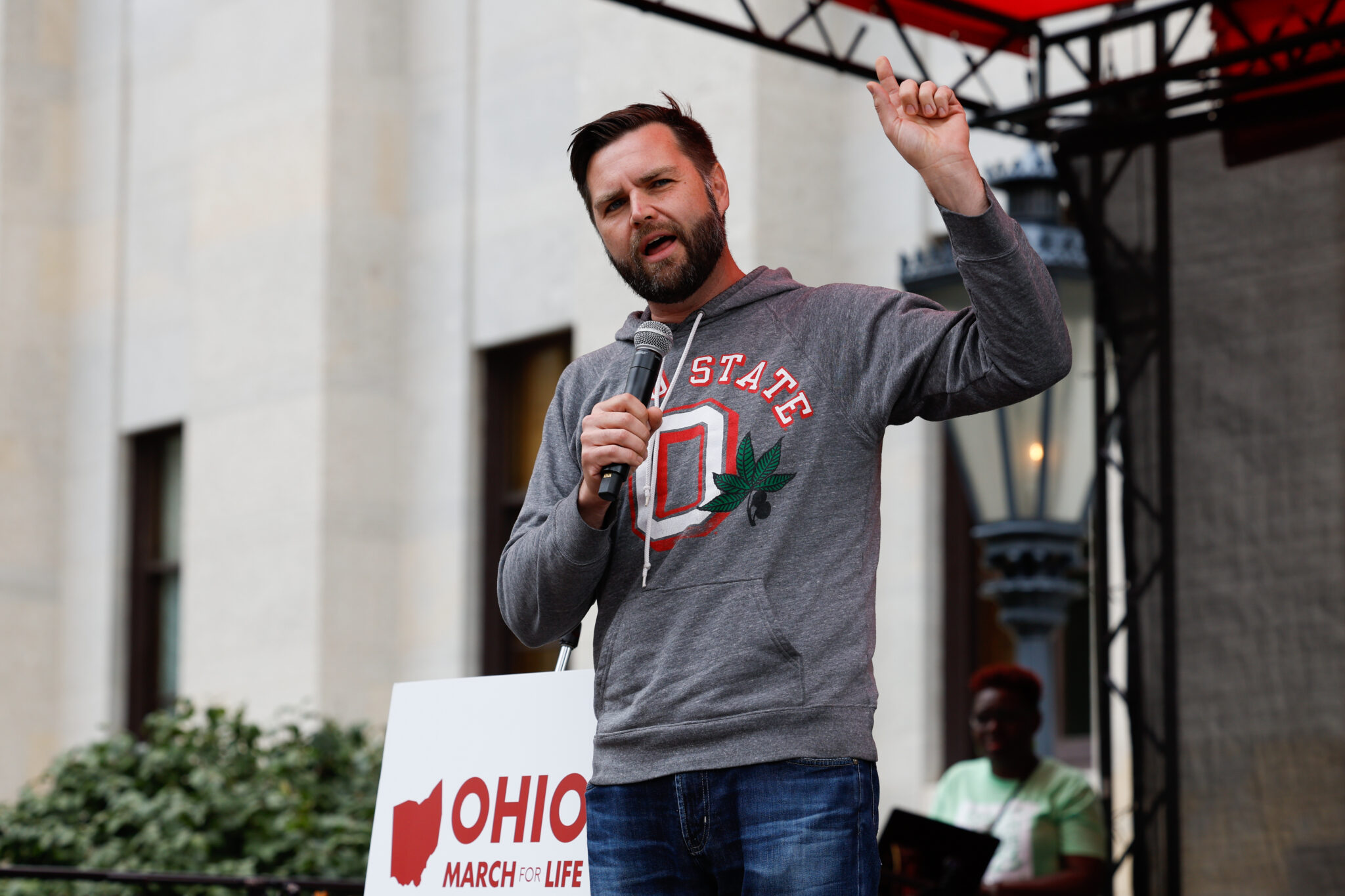
COLUMBUS, Ohio — OCTOBER 06: Republican Ohio U.S. Sen. J.D. Vance speaks during the Ohio March for Life rally against November’s Issue 1 reproductive rights amendment, October 6, 2023, outside the Statehouse in Columbus, Ohio. (Photo by Graham Stokes for Ohio Capital Journal. Republish photo only with original article.)
Ohio U.S. Sen. J.D. Vance will become the next vice president, thus creating a vacancy in the U.S. Senate.
Former President Donald Trump and his running mate Vance defeated Vice President Kamala Harris and Minnesota Gov. Tim Walz in the presidential election that was called Wednesday morning by the Associated Press. Vance will have to resign from his Senate seat before being sworn in as vice president during Inauguration Day on Jan. 20.
It is now up to Ohio Gov. Mike DeWine to pick a Republican to fill Vance’s open Senate seat until a special election is held in 2026. Whoever DeWine appoints must run in the 2026 special election if they want to keep their seat.
Vance is currently serving his first term in the U.S. Senate after being elected over Democratic Rep. Tim Ryan in 2022. Whoever wins the 2026 special election will serve the remainder of Vance’s term, which expires in 2028.
DeWine has yet to give any indication as to who he is considering as a replacement to fill Vance’s Senate seat, but there are several potential names that have been circulating including state Sen. Matt Dolan, Lt. Gov. Jon Husted, Republican National Committee Committeewoman for Ohio Jane Timken, former Republican presidential candidate Vivek Ramaswamy, and Ohio Sec. of State Frank LaRose, among others.
Republican Bernie Moreno defeated incumbent Democratic U.S. Sen. Sherrod Brown in a hotly contested Senate race on Tuesday. Some have speculated whether Brown might seek the Ohio U.S. Senate seat in 2026.
Megan Henry is a reporter for the Ohio Capital Journal and has spent the past five years reporting in Ohio on various topics including education, healthcare, business and crime. She previously worked at The Columbus Dispatch, part of the USA Today Network.
Ohio Capital Journal is part of States Newsroom, the nation’s largest state-focused nonprofit news organization.