Tag: Ohio Capital Journal

  • Ohio voters face critical choices in 2024. No one is coming to the rescue. It’s up to us.

    Ohio voters face critical choices in 2024. No one is coming to the rescue. It’s up to us.

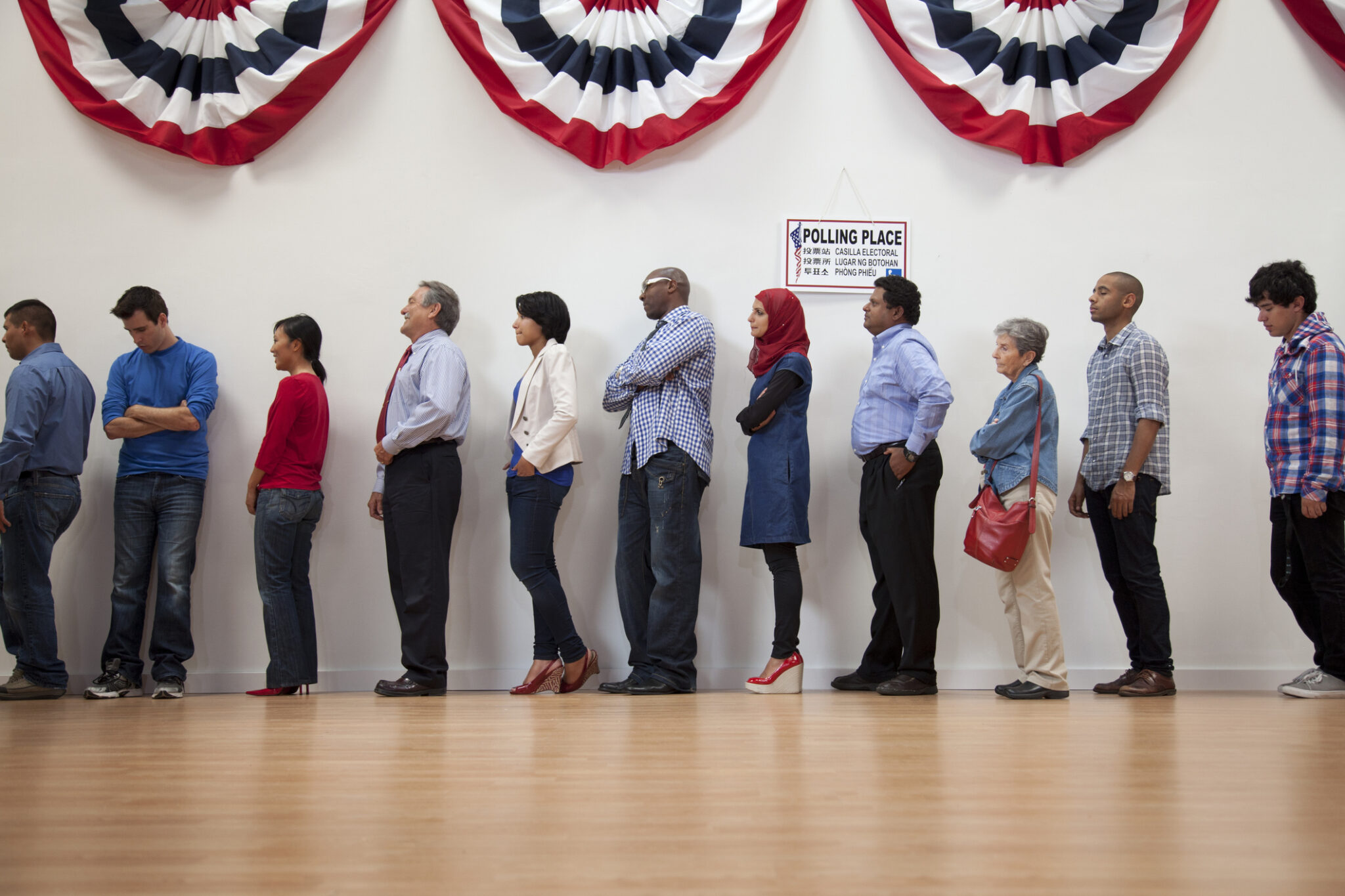
    Getty Image

    Commentary

    Verify that you are a registered voter in Ohio before you go to the polls on Vote.gov.

    by Marilou Johanek – Ohio Capital Journal

    And so, it begins. In-person early voting and absentee voting by mail — from Tuesday, Oct. 8 through Sunday, Nov. 3 — is now officially underway in Ohio. Even before closing arguments are made in the 2024 election, registered Ohio voters (roughly 8 million) can start casting their ballots at their county board of elections before Election Day. Check location and times for your county board of elections.

    If you haven’t voted since the last presidential election in 2020, you could be in for a rude awakening when you get to the polls. Many Ohioans (not obsessively preoccupied with politics, like yours truly) are unaware that Republican lawmakers in Columbus enacted one of the strictest voter ID laws in the country in 2023 — despite no evidence of significant voter fraud, by impersonation or otherwise.

    Voting restrictions (in GOP-controlled legislatures) to address nonexistent problems of pervasive voting fraud were turbocharged in the wake of Donald Trump’s fraudulent efforts to overturn the results of the 2020 election. (This is usually when I have to breathe deeply). Since then, some 28 states, including Ohio, have passed new laws making it harder to vote in order to “combat concerns” generated by false Republican claims about widespread voting scams.

    Ohio Republicans dove into more voter suppression at the front-end last year with legislated hurdles to ballot access that caught surprised voters off guard. Thousands who had voted uneventfully for years with previously acceptable IDs (i.e., utility bills, bank statements) were suddenly prevented from voting under new, stringent rules rolled out right before the May 2023 primary.

    Those who showed up without the proper, government-issued photo ID could fill out a provisional ballot and double-back to their board of elections with the right credentials in a fast clip (four days, reduced from 10) to hopefully have their vote counted. Tough luck if voters lacked the resources or transportation to obtain the newly prescribed documentation in time.

    The number of provisional ballots thrown out for failure to produce the right paperwork rose tenfold after the Republican law went into effect, according to one report that raised the specter of historic levels of rejected ballots in Ohio’s 2024 presidential election. The Madison Township Republican who sponsored the bill that erected the additional obstacles to voting, state Rep. Thomas Hall, told cleveland.com (ludicrously) that disenfranchising so many voters, particularly the Democratic-leaning kind, was never his intention.

    He could have followed up with, “If you believe that, I have a bridge to sell you.” Don’t hold your breath waiting for any ubiquitous outreach by state Republicans to broadly educate the voting public on all the legal changes and requirements (impediments?) that could affect how and whether Ohioans have a voice in the upcoming election. So, do your homework. Share what you know with other would-be voters in your life.

    Verify that you are a registered voter in Ohio before you go to the polls on Vote.gov. Be sure you have not been wrongly purged by Ohio’s desperately partisan and mistake-prone Secretary of State Frank LaRose — who has notoriously swept eligible voters off the rolls in removal practices deemed among the worst in the nation.

    Make a plan to vote. I know that sounds almost cliché, but when you plan to vote you actually have to think through the how, when and where of getting it done. That’s important. So is the choice you make between now and Nov. 5 to either engage in your most fundamental voting right (upon which all our civil liberties rest) or to live with the consequences of not voting.

    But understand that real decisions are going to be made by the next president, by the next U.S. senator from Ohio, by the next justices who control the state supreme court, by the next state senator and state representative on your 2024 Ohio general election ballot. What do you want next and who do you believe, based on incontrovertible fact, will deliver on that? Are you willing to show up and be a part of making it happen?

    The outcome of this particular election on the state and federal level will profoundly affect whether and to what degree we ultimately endure as a nation “conceived in liberty and dedicated to the proposition that all men are created equal.” It is a referendum on the value we place on freedoms once considered inalienable from the freedom of voting and representational equality to the freedom of women to determine their own destiny and the freedom of all Americans to not live in fear of another mass shooting.

    This election in Ohio and nationwide is a referendum on our republic itself and whether, as Benjamin Franklin mused with prescience, we “can keep it.” What’s it worth to you to navigate the exhausting barriers to participate in self-governance, to exercise your birthright franchise defiantly despite massive voter purges and extreme voting laws?

    Think about it. No one is coming to the rescue. It’s up to us. Always has been.


    Marilou Johanek
    Marilou Johanek

    Marilou Johanek is a veteran Ohio print and broadcast journalist who has covered state and national politics as a longtime newspaper editorial writer and columnist.

    MORE FROM AUTHOR

  • How the Ohio Supreme Court races intersect with Issue 1 and redistricting

    How the Ohio Supreme Court races intersect with Issue 1 and redistricting

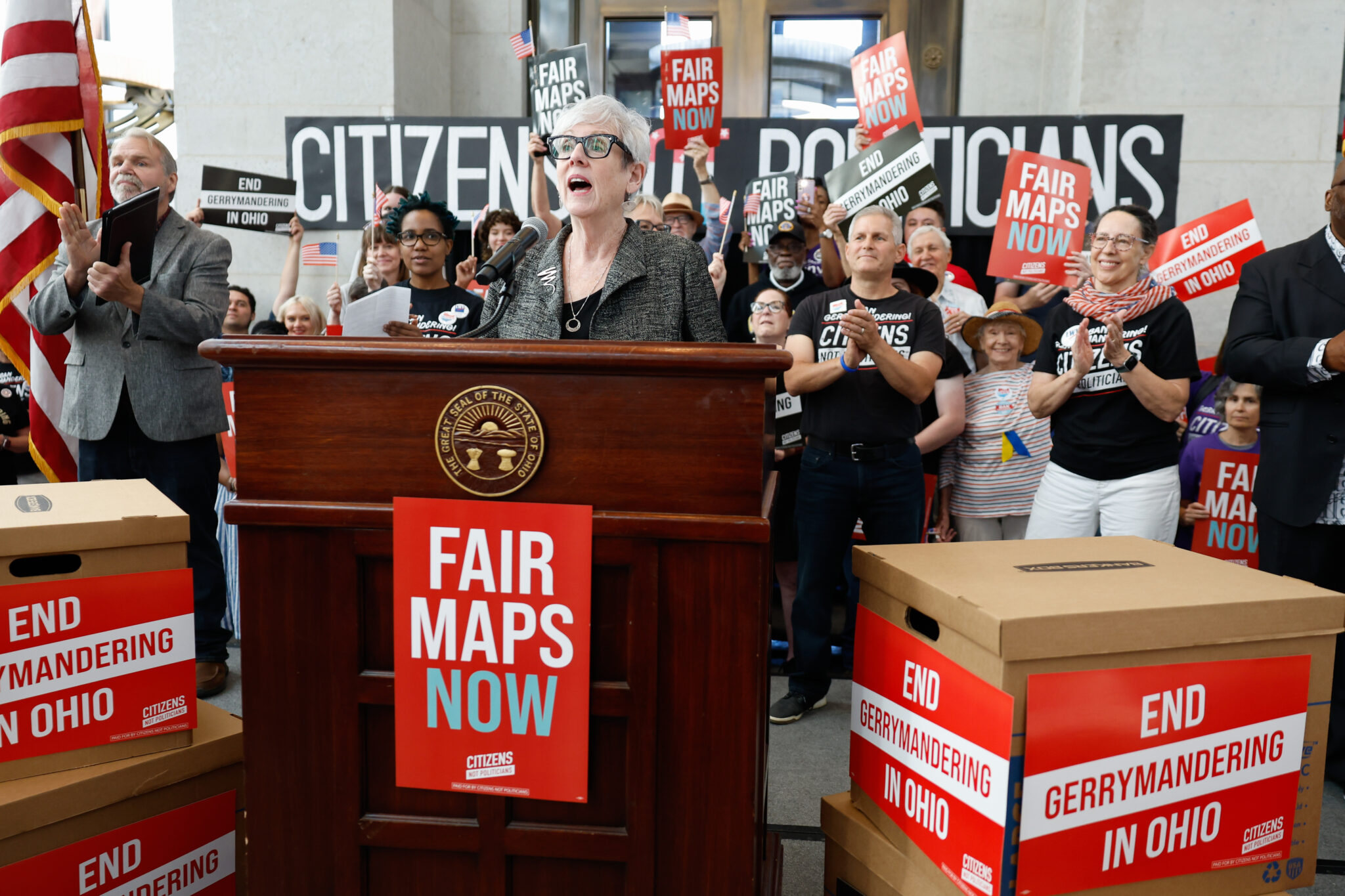
    Retired Ohio Supreme Court Chief Justice Maureen O’Connor speaks to supporters at the Citizens Not Politicians rally, July 1, 2024, at the Statehouse in Columbus, Ohio. (Photo by Graham Stokes for Ohio Capital Journal. Republish only with original story.)

    Even though Ohioans will be voting on Issue 1, which would remove politicians from the redistricting if approved, it’s possible redistricting will go before the state’s high court again.

    By:  Ohio Capital Journal

    The justices elected to the Ohio Supreme Court in 2024 will be the ones deciding on any challenges to new maps if Ohio voters pass the proposed Issue 1 anti-gerrymandering amendment this November.

    Even though Ohioans will be voting on Issue 1, which would remove politicians from redistricting if approved, it’s possible redistricting will go before the state’s high court again.

    “Maps, no matter who draws them, are certainly subject to challenge, and they’re subject to challenge for violating the provisions of the Ohio Constitution,”said University of Cincinnati Political Science Professor David Niven. “So we’re not done no matter what happens with Issue One. … There are still unhappy political actors who will go to the courts in some cases, questioning the process.”

    Redistricting and past Supreme Court rulings

    Redistricting is currently done through the Ohio Redistricting Commission — which includes the governor, the secretary of state, the state auditor and four legislative leaders (two from each party). In 2015, 71% of Ohioans voted in favor of a constitutional amendment to create a bipartisan redistricting commission to draw legislative districts in 2021.

    Six different Statehouse district maps and two congressional maps have gone through the current redistricting process. The Ohio Supreme Court ruled five of the Statehouse maps unconstitutionally gerrymandered and both congressional maps were rejected as unconstitutional.

    A federal court ordered Ohio voters to use the last of the gerrymandered Statehouse maps in 2022 since the commission ran out of time to come up with a constitutionally approved map. State lawmakers are currently occupying those districts.

    Republican former Ohio Supreme Court Chief Justice Maureen O’Connor, who served on the state’s high court from 2003 to 2022, talked about this in an ad for Issue 1.

    “Seven times career politicians have so blatantly gerrymandered our voting district maps that the Ohio Supreme Court ruled the maps unconstitutional. Seven times,” she said in the ad. “Issue One bans politicians from drawing voting maps. It will restore power to where it belongs, with citizens not politicians.”

    Citizens Not Politicians, a nonpartisan coalition, is behind the proposed constitutional amendment. Issue 1 would create a 15-member Ohio Citizens Redistricting Commission made up of Republicans, Democratic and independent citizens. It would prohibit current or former politicians, political party officials, lobbyists and large political donors from being on the commission.

    Ohio Supreme Court races

    Republicans currently have a 4-3 majority on the Ohio Supreme Court. Depending on the outcome of the election, the Democrats could flip the court or the Republicans could tighten their grip.

    “The makeup of the court makes a tremendous difference,” Executive Director of Common Cause Ohio Catherine Turcer said. “Are these folks that are going to serve on the court going to look at new voting districts with an eye to what’s in the Ohio Constitution and to what is actually good for Ohio voters, or are they going to be swayed by partisan interests?”

    Ohio Republican lawmakers added party labels to the previously nonpartisan Ohio Supreme Court races starting in 2022.

    Incumbent Democratic Justice Michael P. Donnelly is being challenged by Republican Hamilton County Court of Common Pleas Judge Megan Shanahan.

    Incumbent Democratic Justice Melody Stewart is being challenged by incumbent Republican Justice Joseph Deters, who decided not to run for his current seat and instead chose to go up against Stewart.

    Democratic candidate Lisa Forbes, of the Eighth District Court of Appeals, and Republican candidate Dan Hawkins, of the Franklin County Court of Common Pleas, are fighting for Deters’ open seat.

    Deters recently talked briefly about redistricting on a right-wing Cleveland radio show.

    “I think it’s kind of humorous to watch when the other side can’t win, they want to change the rules whether it’s hacking the U.S. Supreme Court because they don’t have the justices they like, or getting rid of the Electoral College because they don’t have a clear advantage in the Electoral College like they do, and it’s just a flat popular vote. And now redistricting,” he said on Strictly Speaking with Bob Frantz.

    Follow OCJ Reporter Megan Henry on X.


    Megan Henry
    Megan Henry

    Megan Henry is a reporter for the Ohio Capital Journal and has spent the past five years reporting in Ohio on various topics including education, healthcare, business and crime. She previously worked at The Columbus Dispatch, part of the USA Today Network.

    Ohio Capital Journal is part of States Newsroom, the nation’s largest state-focused nonprofit news organization.

    MORE FROM AUTHOR


  • Springfield’s Haitian community ready for attention to move elsewhere

    Springfield’s Haitian community ready for attention to move elsewhere

    Philomene Philostin in her recording studio at Creations Market in Springfield, Ohio. (Photo by Nick Evans, Ohio Capital Journal.)

    By:  Ohio Capital Journal

    Resources are flowing into Springfield, Ohio, after weeks of negative attention fueled by Donald Trump’s presidential campaign and right-wing social media influencers.

    Ohio state troopers are posted at schools, state health officials are opening clinics to assist over-stretched local providers, and civic organizations are raising money.

    Springfield’s Haitian community, the subject of repeated smears, is exhausted and ready for the country’s attention to move somewhere else. But while they’re frustrated, they say they see the furor for what it is — manufactured, fanciful, political.

    Community reaction

    At the Haitian restaurant Rose Goute Creole, the line was long and the tables were packed. Many of the customers had made the trip from outlying cities like Columbus, looking to show support for the community in whatever small way they could.

    Over a plate of spaghetti with chicken and hard-boiled eggs, Daniel Geffrard spoke with pride about his heritage.

    “We know who we are. Haiti is the first Black republic. It is the second independent country (in the Americas) after USA,” he said. “We know that we are a great people, and the world knows who we are.”

     Customers picking up food at Rose Goute Creole in Springfield, OH. (Photo by Nick Evans, Ohio Capital Journal) 

    Geffrard has been living in Springfield for three years. He works with Amazon and drives for Lyft as well. Geffrard stressed that he and others like him aren’t there to be a burden — they just want to work.

    “We know,” he said again, jamming a finger into his chest for emphasis, “We know who we are, and we know why they say what they say.”

    A couple miles away on the north side of town Philomene Philostin runs Creations Market. The shelves are packed with big sacks of rice and beans, dried jute leaves called lalo and bottled fruit juice or malt drinks.

    “I heard a lot of people said they’re gonna leave,” she said.

    Philostin described one customer whose husband has been living in the city since 2017.

    “She have all those memories,” Philostin said, but their place in town suddenly feels tenuous.

    “She have kids in school here, she have a newborn gonna be coming soon, and she want to leave Springfield,” she said.

    If people feel threatened or endangered enough to want to leave, Philostin said she can’t blame them.

    But she was clear-eyed about the purpose of the rhetoric and argued it will disappear once the election has passed. Donald Trump recently floated the idea of holding a rally in Springfield — Philostin said go ahead.

    “He’s a former president,” she said, “He have right to come in whatever he want to come, whatever state he want to visit, because he have his people here. Who knows, I may be his people, too.”

    Rinaldi Dessalines speaks four languages and works in Springfield as a translator.

    “It’s because I’ve been in different places,” he explained.

    Growing up in Haiti, he spoke French and Haitian Creole. He picked up Spanish after living in the Dominican Republic, and English here in the United States.

    He said life was pretty nice in Springfield before it became the subject of baseless rumors.

    “Everything was okay for me,” he said. “I can say my experience was amazing.”

    But since then, “it’s like an earthquake, not only for the Haitian community, it’s for everybody.”

    The experience has been rattling, and now residents are second-guessing the world around them as if questioning the ground beneath their feet. Dessalines said he’s frustrated at having his culture tarred for political gain.

    “When you attack a culture of someone, it’s normal you’re gonna feel this kind of thing, you know, frustration when someone accused of something that you don’t do in your culture,” he said. “It’s not only about Haitian. It’s about everybody.”

    Dessalines hasn’t been personally targeted, but he’s spoken to others who feel scared. He described how being forced into the national spotlight is strange and a bit eerie. Between bomb threats and reporters crawling all over the place, there’s a kind of nebulous threat hanging in the air.

    “So when, in the atmosphere, even (if) the person doesn’t feel attacked or striked or targeted, it’s like this is a sign something not good is going on in your environment,” he said.


    State support

    Ohio Gov. Mike DeWine has forcefully rejected former President Trump and U.S. Sen. J.D. Vance’s false assertions about Haitian migrants eating domestic animals. He has dismissed the claims as “garbage,” and in a New York Times op-ed he insisted that rhetoric “hurts the city and its people.”

    At the same time, DeWine finds himself walking a familiar tightrope — for all his frustration with what the former president says, he’s been reticent to make a break with the candidate himself.

    Even as he criticized Trump and Vance’s repeated, baseless claims, DeWine’s op-ed reiterated his support for the GOP presidential ticket. He argued frustration with the Biden administration’s immigration policy is justified, but that anger is misplaced when it’s directed at the Haitian community.

    While the governor attempts to thread the needle politically, he’s been far more direct when it comes to support.

    Following more than 30 bomb threats that shuttered schools, hospitals and city hall, the governor dispatched the Ohio Highway Patrol. DeWine said they’d be present and visible for as long as necessary. Friday, a trooper was posted in the shade out front of Perrin Woods Elementary on Springfield’s south side.

    As claims about eating pets have been debunked, Vance has reached for other negative impacts including rising rates of HIV and tuberculosis.

    According to the Clark County Health Department, cases have gone up — but the numbers aren’t dramatic. In 2018, there were 10 new HIV diagnoses, in 2022, there were 13. Clark County has more recent data for tuberculosis. Between 2013 and 2019, the county reported one case or none each year. In 2023, there were four cases.


    Still, the local health system is struggling to manage an increasing population, and to help meet those needs, state and county officials are setting up a mobile clinic this week.

    In a press release, DeWine explained, “Our goal is to reduce wait times and to be able to provide the necessary health care services for everyone – whether you’ve lived in this community your whole life or you’ve just come into the community recently.”

    The plan is to eventually transition that mobile clinic to a permanent site, but the location and timeline for that effort is still up in the air. According to the governor, the clinic will deliver primary care, vaccinations, lab testing and maternal and infant health services. DeWine’s administration has also committed to direct $2.5 million to expand access to primary healthcare in the city.

    State Rep. Bernie Willis, R-Springfield, pinned the blame for stretched local resources on the Biden administration.

    “There was no communication from the federal government that they were going to start sending migrants to Springfield and there also has been no support,” he said in a statement. “Springfield has been left on its own to figure out these problems.”

    The federal government has not “sent” migrants to Springfield. By and large, the Haitian people living in Springfield have what’s known as Temporary Protected Status, or TPS. The program gives people whose home country is facing armed conflict or a natural disaster the right to remain in the U.S. and work temporarily. With that status they are free to find a home in the country where they like.

    Willis added the greatest challenge presented by the arrival of Haitian residents is the language barrier.

    “This is creating challenges for educators, law enforcement, health care professionals, and other service providers,” he said. “Translators are needed at public service departments and these additional costs are straining already stretched resources.”

    The DeWine administration is working with federal officials to secure additional support. A spokesman noted part of the problem is federal resources follow people with different immigration statuses, like refugees, but not those on TPS.

    Meanwhile the United Way of Clark, Champaign and Madison Counties has set up a fund for people who want to support the community.

    “The Springfield Unity Fund will allow people across the nation to quickly and effectively provide targeted support to our Haitian families as we work together to ensure our neighbors feel welcomed, supported, and empowered to thrive,” executive director Kerry Lee Pedraza said.

    The organization is putting donations toward services like early childhood education, English courses and driving instruction as well as employment and health care assistance.

    Follow Ohio Capital Journal Reporter Nick Evans on Twitter.


    Nick Evans
    Nick Evans

    Nick Evans has spent the past seven years reporting for NPR member stations in Florida and Ohio. He got his start in Tallahassee, covering issues like redistricting, same sex marriage and medical marijuana. Since arriving in Columbus in 2018, he has covered everything from city council to football. His work on Ohio politics and local policing have been featured numerous times on NPR.

    Ohio Capital Journal is part of States Newsroom, the nation’s largest state-focused nonprofit news organization.

    MORE FROM AUTHOR

  • Ohio teachers connect presidential election to classroom curriculum

    Ohio teachers connect presidential election to classroom curriculum

     A student concentrating and taking notes while working in a classroom with her classmates. (Getty Images)

    By:  Ohio Capital Journal

    As the presidential election inches closer, Ohio social studies and government teachers are using this as an opportunity to engage their students in civics education.

    The Ohio Capital Journal talked to three current teachers — elementary, middle and high school — about how they are incorporating the presidential election into their curriculum.

    “This is just another opportunity that only comes around once every four years,” Westerville South High School Government Teacher Kelley Stocker said. “The most rewarding part is knowing that I am helping to create a citizenry that understands how our country works.”

    She typically tries to find current events that tie into what they are learning about in her class to help give real life examples to her students at the suburban high school just north of Columbus.

    “You have to help them understand how government touches their lives and the real world applications,” said Stocker, who is in her 11th year teaching. “I just want them to start to understand why this stuff matters. I always tell them, you know, you can be anything you want to be in (her classroom), except apathetic or ignorant.”

    Stocker rearranged her curriculum this semester to cover elections, campaigns, political parties and the First Amendment in a unit called “the role of the people.” Before she starts the unit, she sends letters home to the families to let them know she plans on covering the election in class and encourages parents to reach out if they have any questions.

    One activity she has her students do is make a prediction map on 270 to Win.

    “It’s like doing the (March Madness) brackets,” she said.

    When talking politics in the classroom, Stocker has one boundary with her students — they can talk about issues, not people.

    “You can say, I don’t agree with this position, not I don’t like these people,” she said. “I try to separate issues from people.”

    Government is a high school graduation requirement in Ohio and Cleveland Teachers Union President Shari Obrenski previously taught high school government and history for more than 20 years.

    “I always enjoyed seeing students at the beginning of an election cycle who have absolutely no interest in what’s going on that by the time we get to the presidential election, or a big election of some sort, be able to talk about platforms, be able to analyze commercials, be excited about the process and interested in how it was going to turn out,” she said.

    Obrenski fondly looks back on her time in the classroom teaching the political process.

    “We would talk about campaign commercials and the techniques that are used in campaign advertising, and having them take a look at different platforms from different political parties, having them analyze their own viewpoints, to see kind of where they line up ideologically with different political parties,” she said.

    Some of Obrenski’s former students have reached back out to her and said they vote because of what they learned in her class.

    “It reinforces that the work is important and reinforces that civic education is important,” Obrenski said.

    James Lautzenheiser, an eighth grade history teacher at Crestview Middle School in Van Wert County in Northwest Ohio, said he views teaching how government works as an introduction to citizenship for his middle schoolers.

    “I really like helping kids distinguish between what they think history and government is, and helping them kind of figure out some things for themselves,” Lautzenheiser, who has been a teacher for 15 years, said.

    Even though Angel Dyer Sanchez’s fifth grade students aren’t old enough to vote, she hopes what they talk about in class will lead to conversations about voting at the dinner table. The elementary school teacher in Columbus City Schools encourages her students to think for themselves when it comes to which candidate they want to win.

    “Don’t just vote because it’s who your parents or grandparents are voting for,” she said. “You should have your own opinion. … You should know who you’re voting for and what they stand for.”

    Voting

    Stocker keeps voter registration forms, stamps and envelopes in her classroom, so students can come to her if they are ready to register to vote.

    “The only thing they have to do by themselves is we have a mail drop box across the street, and they just have to walk it over,” Stocker said.

     Voting location. (Photo by the New Jersey Monitor/States Newsroom.) 

    In a similar vein, Obrenski helped eligible students register to vote and would teach a unit on voting and the country’s evolution of voting rights.

    “Students are often really surprised to know that it’s only been 100 years since women have had the right to vote,” she said. “It’s inconceivable to them that that’s possible.”

    Sanchez, who is her 20th year of teaching, gives lessons about voting and the three branches of government while encouraging her students to go to the voting polls with their parents.

    “I just want to instill in them early that it is a right, and they need to make sure they take advantage of that right,” Sanchez said.

    Lautzenheiser’s students are excited about the idea of voting.  

    “A lot of them have already expressed that it’s frustrating that their parents don’t always vote,” he said.

    Only 32% of Ohio’s 18-year-olds are registered to vote as of May, according to the Civics Center, a nonpartisan organization trying to increase voter registration.

    “When you look at the types of issues that are on the ballot with the candidates that we have on the ballot, young people are often more impacted by these decisions than other age groups, so it’s so important for them to see value in the process and to try to get them to go to the polls,” Obrenski said.

    Teaching about the election doesn’t end once the votes are counted. Stocker plans on analyzing the outcome with her class to see how accurate the polls were.

    “If they weren’t accurate how can we maybe explain that?” she said.

    Teaching students media literacy goes hand-in-hand with teaching about the election.

    “One of my personal goals is that I want them to be able to read the news and understand it,” Stocker said. “I’m teaching them all of the things that they need and the tools that they need to be able to think critically about the news, what they read, what they hear, and to be able to understand it.”

    Sanchez said she teaches her fifth graders how to identify if a news outlet is a trustworthy site.

    “Half the battle is, are you sure you’re getting truthful information?” she said.

    Follow OCJ Reporter Megan Henry on X.


    Megan Henry
    Megan Henry

    Megan Henry is a reporter for the Ohio Capital Journal and has spent the past five years reporting in Ohio on various topics including education, healthcare, business and crime. She previously worked at The Columbus Dispatch, part of the USA Today Network.

    Ohio Capital Journal is part of States Newsroom, the nation’s largest state-focused nonprofit news organization.

    MORE FROM AUTHOR

  • Amid ongoing threats, Ohio GOP US Senate candidate calls for deporting Springfield legal immigrants

    Amid ongoing threats, Ohio GOP US Senate candidate calls for deporting Springfield legal immigrants

     U.S. Senator J.D. Vance (R-OH) and Ohio Republican candidate for US Senate Bernie Moreno listen as Republican presidential candidate former President Donald Trump speaks during a rally at the Dayton International Airport on March 16, 2024 in Vandalia, Ohio. (Photo by Scott Olson/Getty Images.)

    By:  Ohio Capital Journal

    Terroristic threats continued against Springfield officials and public buildings over the weekend and into Monday. In the midst of them, Republican U.S. Senate candidate Bernie Moreno called for the protected status of legal Haitian migrants in Springfield to be revoked and for them to be deported back to their violence-riven country.

     The Republican presidential nominee, former President Donald Trump, debates the Democratic presidential nominee, Vice President Kamala Harris, for the first time during the presidential election campaign at The National Constitution Center on Sept. 10, 2024 in Philadelphia, Pennsylvania. (Photo by Win McNamee/Getty Images) 

    The city in southwestern Ohio has been the center of a national political firestorm after former president Donald Trump in last Tuesday’s debate repeated a debunked claim that Haitian immigrants who have flocked to the community over the past five years were stealing neighbors’ pets and eating them.

    The claim has been debunked by public safety officials, Gov. Mike DeWine, and even one of the first people to post it on Facebook. She said she misunderstood what a neighbor told her about “an acquaintance of a friend” whose cat was missing.

    Other GOP officials, including Ohio Attorney General Dave Yost, have amplified rumors that Black immigrants to Springfield have been killing and eating geese. Officials said there was no evidence to support that claim, either.

    Springfield’s health and education infrastructure has been strained as 12,000 to 15,000 Haitians fleeing chaos in their country have moved over the past five years to what had been a shrinking community. A big reason was the availability of warehouse and manufacturing jobs.

    The strains and the influx of immigrants of color has sparked a wave of hatred. An armed neo-Nazi group marched through the city last month, and over the weekend, Ku Klux Klan fliers appeared in Springfield neighborhoods, saying, “Foreigners and Haitians Out.”

    Schools, City Hall and other public buildings were evacuated and closed every day since Thursday due to bomb threats, some explicitly tied to the Haitian immigrants. Most recently, two elementary schools were evacuated on Monday after receiving bomb threats, WKEF reported. DeWine said Monday that “at least 33” bomb threats have been made.

    Public officials have received death threats, and Mayor Rob Rue, Republican, on Friday blamed Trump and his running mate, Ohio U.S. Sen. J.D. Vance for the strife.

    “All these federal politicians that have negatively spun our city, they need to know they’re hurting our city, and it was their words that did it,” Rue told Columbus TV station WSYX.

    Despite Rue’s plea, Trump on Friday falsely claimed Springfield had been destroyed by the immigrants, who are in the United States legally, and promised to deport them.

    On Sunday, Vance appeared on CNN and defended his false statements about Springfield.

    If I have to create stories so that the American media actually pays attention to the suffering of the American people, then that’s what I’m going to do,” he said, then adding that he was “creating the American media focusing on it.”

    Moreno, a Cleveland car dealer who is challenging Democratic Ohio U.S. Sen. Sherrod Brown, went to Springfield on Saturday and called for the legal immigrants’ deportation.

    “What’s happened is that Sherrod Brown and Kamala Harris have waved the magic wand, corrupted our immigration system and shielded them through Temporary Protected Status and asylum — two loopholes in our immigration system that were corrupted by corrupt politicians,” Moreno said, according to the Springfield News-Sun.

    Asked on Monday if Moreno was concerned that such comments would encourage more hate and further threats, his spokeswoman took umbrage at the suggestion. Despite the Republican mayor’s admonishment, she attacked the press and linked the matter to an apparent assassination attempt Sunday against Trump at one of his South Florida golf courses.

    “It is vile that the liberal media is blaming Republicans for these threats in Springfield — with no evidence — when a leftwing lunatic who echoed talking points from Joe Biden and Kamala Harris attempted to assassinate President Trump just yesterday,” the spokeswoman, Reagan McCarthy, said in an email.

    The man who allegedly wanted to shoot Trump, Ryan Wesley Routh, wrote that he voted for Trump, soured on him and then encouraged the Iranian government to assassinate the former president, the Associated Press reported.

    Meanwhile, the situation in Springfield continues to be tense.

    In addition to bomb threats leveled at schools, government buildings and health care facilities, Rue, city commissioners and staffers have received multiple death threats, WSYX reporter Darrel Rowland posted on X.

    In midst of the tension, Rue discouraged a possible visit from Trump, which he is reportedly considering, and one from Vice President Kamala Harris, which hasn’t been mentioned, Rowland also posted.

    Spectrum News’s Taylor Popielarz posted a list of public buildings that had been “placed on lockdown, evacuated, closed, or searched at some point over the last week due to threats.” There were 21 facilities, including eight educational institutions, four county buildings, three related to car and driver licensing, two health facilities, and two municipal government buildings.

    For his part, Moreno, the Senate candidate, blames problems in Springfield not on false claims by Trump, Vance or himself, but on their political opponents.

    “Kamala Harris and Sherrod Brown wreaked havoc on Springfield with their reckless decision to extend (temporary protected status) and allow thousands of unvetted migrants to resettle in Springfield, with no regard for the devastating effects it would have on the citizens of that community,” McCarthy, Moreno’s spokeswoman, said.

    Brown isn’t part of the executive branch and the Department of Homeland Security determines whom to grant temporary protected status. So Brown wasn’t involved in that determination for the Haitians in Springfield.

    It’s also false that the migrants there are unvetted. The U.S. Citizenship and Immigration Services last month posted a document entitled “Processes for Cubans, Haitians, Nicaraguans, and Venezuelans.” It says that people from those counties receiving temporary protected status must “Undergo and clear robust security vetting.”

    For his part, Brown, the senator whom Moreno is challenging, said it’s time to stop politicizing what’s happening in Springfield.

    “Springfield reminds me of Mansfield, my hometown,” he said in a Monday post on X. “It’s a proud city with a rich manufacturing history. This community deserves better than to be used as a political pawn. We must work together to keep everyone safe & address the city’s challenges. That’s what I’ll keep doing.”

    Moreno is himself an immigrant, moving with his family from Colombia to South Florida in the early 1970s. His father was a politically connected surgeon. Unlike the often-impoverished undocumented, Moreno says, his family came to the United States the right way.

    McCarthy didn’t respond to a question asking whether, now that Moreno wants to deport refugees who are here legally, he believes only the wealthy and well-connected should be the only ones eligible to immigrate.

    Moreno has claimed that immigrants have “destroyed” Ohio cities. Such rhetoric, along with claims of an immigrant “invasion” and the “great replacement theory” have helped motivate racist massacres over the past six years in El PasoBuffalo, and Pittsburgh.

    Lynn Tramonte, director of the Ohio Immigrant Alliance, urged public figures to think about the consequences their rhetoric might have.

    “I don’t know how the people peddling lies about immigrants can live with themselves,” she said. “Most Ohioans are horrified at their behavior and its consequences. We choose love, not hate.”


    Marty Schladen
    Marty Schladen

    Marty Schladen has been a reporter for decades, working in Indiana, Texas and other places before returning to his native Ohio to work at The Columbus Dispatch in 2017. He’s won state and national journalism awards for investigations into utility regulation, public corruption, the environment, prescription drug spending and other matters.

    Ohio Capital Journal is part of States Newsroom, the nation’s largest state-focused nonprofit news organization.

    MORE FROM AUTHOR

  • Ohio Capital Journal 2024 Voter Guide

    Ohio Capital Journal 2024 Voter Guide


    What You Need to Know

    Ohio voters have some big decisions ahead of them in November 2024. In addition to voting for president, Ohio voters will be asked to decide on a proposed constitutional amendment on redistricting that would replace the politicians on the Ohio Redistricting Commission with a citizen commission.

    Ohio Democratic U.S. Sen. Sherrod Brown is also facing a reelection challenge from Republican businessman Bernie Moreno, and three Ohio Supreme Court races will decide control over Ohio’s judicial branch of government.

    You can use the following voter guide, powered by guides.vote, to help decide who should represent you in elected office.

    Races

    Ohio Democratic U.S. Sen. Sherrod Brown is facing a reelection challenge from Republican businessman Bernie Moreno, and three Ohio Supreme Court races will decide control over Ohio’s judicial branch of government.

    Ballot Measures

    Ohio voters will be asked to decide on a proposed constitutional amendment on redistricting that would replace the politicians on the Ohio Redistricting Commission with a citizen commission.

    Issue 1

    Ohio Issue 1, Establish the Ohio Citizens Redistricting Commission


    Reporting For The People

    © Ohio Capital Journal, 2024

    ABOUT US

    The Ohio Capital Journal is an independent, nonprofit news organization dedicated to connecting Ohioans to their state government and its impact on their lives. The Capital Journal combines Ohio state government coverage with incisive investigative journalism, reporting on the consequences of policy, political insight and principled commentary.

    We’re part of States Newsroom, the nation’s largest state-focused nonprofit news organization.

  • Ohio Supreme Court approves redistricting summary with only two small revisions

    Ohio Supreme Court approves redistricting summary with only two small revisions

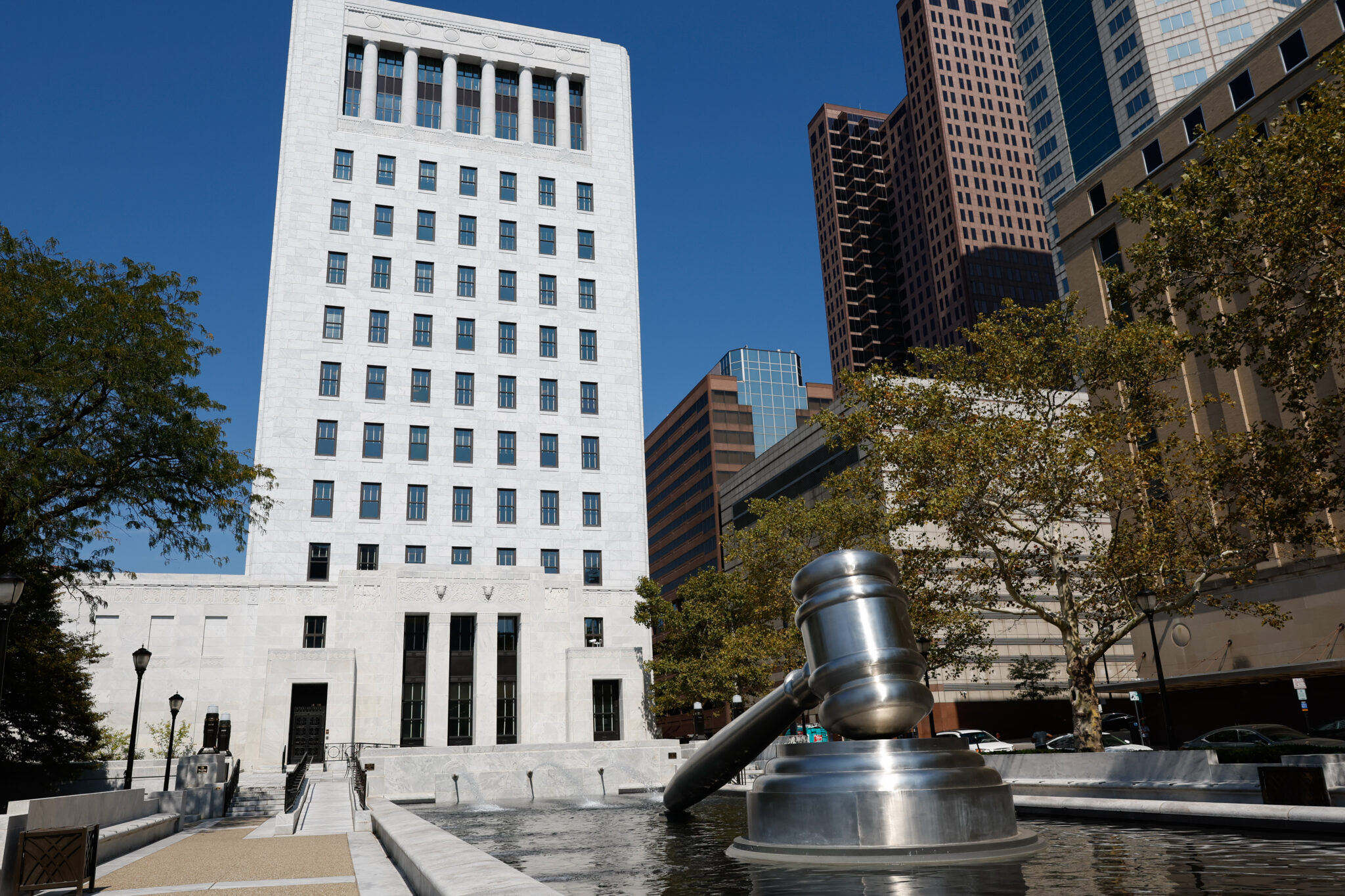
    The Gavel outside the Supreme Court of the State of Ohio, September 20, 2023, at 65 S. Front Street, Columbus, Ohio. (Photo by Graham Stokes for Ohio Capital Journal. Republish photo only with original article.)

    Republican majority rejects 6 of 8 changes requested by anti-gerrymandering advocates proposing the amendment

    By:  Ohio Capital Journal

    The Ohio Supreme Court largely approved ballot summary language for November’s Issue 1 anti-gerrymandering amendment on Monday, sending the language back to the Ohio Ballot Board for two revisions.

    A 4-3 Republican majority rejected 6 of 8 revisions requested by anti-gerrymandering advocates, while Democratic justices on the court said that was inadequate and that the summary needed “a nearly complete redrafting.”

    The summary was written by Ohio Secretary of State Frank LaRose, who opposes the amendment, and approved 3-2 by the Ohio Ballot Board, which is chaired by LaRose. LaRose is also a member of the current Ohio Redistricting Commission that the amendment proposes to replace with citizen commissioners.

    While the court allowed most of the summary language in a decision released Monday night, it ordered the board to include in the summary “language that accurately conveys” that “the public would have the right to express itself to the new redistricting commission” under the terms of the amendment, written by anti-gerrymandering coalition Citizens Not Politicians.

    “Distilled, the proposed amendment would provide the rights of public participation in the redistricting process through meetings, hearings and an online public portal, and would forbid communication with the commission members and staff outside the public-meeting and portal context,” the court wrote.

    The other change ordered by the court compels the ballot board to make it clear that judicial review of the amendment is not limited to a “proportionality standard.”

    The current seven-member Ohio Redistricting Commission includes the Ohio House Speaker and Ohio Senate President, along with the governor, secretary of state, auditor of state, and two minority party legislative leaders.

    If approved by the voters, the amendment would replace the politician commission with the Ohio Citizens Redistricting Commission, which would have 15 members made up of five Republican citizens, five Democratic citizens, and five independents.

    The summary language does not change the text of the proposed redistricting reform or what the amendment would actually do; it’s just the summary language used to describe the amendment on voter ballots.

    An average of Ohio voter preferences over the last 10 years including 2022 show a 56-43 Republican-to-Democratic preference of Ohio voters, but Republicans control supermajorities of 67 out of 99 Ohio House seats and 26 out of 33 Ohio Senate seats. Ohio voters were forced to vote under unconstitutionally gerrymandered districts in 2022 after Republicans on the Ohio Redistricting Commission ran out of time to produce constitutional maps and a split federal court ruled the maps that were declared gerrymandered by a bipartisan majority on the then-Ohio Supreme Court had to be used.

    Republican politicians on the Ohio Redistricting Commission battled with the bipartisan court majority for nearly two years over the maps in 2021 and 2022, with five Statehouse maps and two U.S. Congressional district maps being rejected as unconstitutionally gerrymandered. The swing vote in those cases, Republican Supreme Court Justice Maureen O’Connor, was forced to retire due to age. She is now leading the Citizens Not Politicians amendment effort.

    One provision challenged by Citizens Not Politicians but allowed by the court states the amendment would “repeal constitutional protections against gerrymandering approved by nearly three-quarters of Ohio electors participating in the statewide elections of 2015 and 2018, and eliminate the longstanding ability of Ohio citizens to hold their representatives accountable for establishing fair state and legislative and congressional districts.”

    Citizens Not Politicians attorneys argued mention of the vote margin and method were not necessary, and the court said challengers laid out arguments that the language was “tantamount to an argument against adopting the proposed amendment.”

    But the court majority found that “at worst” including the vote margin and method could be “questioned on relevance grounds” not on “accuracy grounds.”

    “This information is factually accurate, and relators have not shown that the information would ‘mislead, deceive or defraud the voters,’” the court majority stated in their decision.

    The court also allowed language added by state Sen. Theresa Gavarone during the Aug. 16 board meeting, which states the amendment would “establish a new taxpayer-funded commission of appointees required to gerrymander the boundaries of state legislative and congressional districts to favor the two largest political parties in the state of Ohio.”

    Justices dismissed Citizens Not Politicians arguments that the language leads voters to believe the amendment would “require gerrymandering,” despite the fact that the amendment states it would ban partisan gerrymandering.

    The court said “the fact that the proposed amendment announces that it would ‘ban partisan gerrymandering,’ … is of little assistance in ascertaining whether the ballot language’s use of the word ‘gerrymander’ is improper.”

    The court explored various definitions of “gerrymandering” in coming to its decision, finding that the requirement the amendment uses to dictate the drawing of Statehouse and congressional maps “falls within the meaning of ‘gerrymander.’”

    “Because the board’s use of the term ‘gerrymander’ is consistent with dictionary definitions and how the United States Supreme Court has used the term, it does not mislead, deceive or defraud voters,” the decision stated.

    The court did not order any changes to the ballot title, though that was included in the changes requested by Citizens Not Politicians.

    “We conclude that the secretary did not err in crafting the ballot title,” the court wrote.

    While all the justices agreed to the changes, they were split on how many changes needed to be made.

    In his concurrence, Justice Patrick Fischer claimed “gerrymandering, though in a bipartisan manner, is absolutely ‘required under the proposed amendment,” and that the state constitution “would dictate” that independent and third-party voters would have their voice “removed from Ohio’s political world.”

    Justice Michael Donnelly agreed to the decision that ordered changes to the ballot language, but “vehemently” disagreed “that those corrections are even remotely adequate to prevent the ballot language as a whole from being misleading.”

    He and Justice Melody Stewart joined Justice Jennifer Brunner in an opinion that agreed to the changes, but said the majority opinion “reflects an abject failure of this court to perform an honest constitutional check on the ballot board’s work.”

    “We should be requiring a nearly complete redrafting of what is perhaps the most stunningly stilted ballot language that Ohio voters have ever seen,” Brunner wrote.

    She went on to say the ballot board language “is tantamount to performing a virtual chewing of food before the voters can taste it for themselves to decide whether they like it or not.”

    While the summary language will appear on ballots in the November general election, the actual language of the proposed amendment will be posted in polling places.

    The Ohio Secretary of State’s office said the ballot board will meet to make the revisions on Wednesday morning.

    Reactions

    Citizens Not Politicians released a statement saying they disagreed with “much of the decision” but agreed with the court’s “repudiation of the politicians on the ballot board for violating the Ohio Constitution.”

    Ballot Board chair Frank LaRose released his own statement, calling the court’s decision “a huge win for Ohio voters, who deserve an honest explanation of what they’re being asked to decide.”

    Former Ohio Redistricting Commission co-chair and Auditor of State Keith Faber said the court was “thoughtful in its approach and they got it right.”

    Senate President Matt Huffman and Gov. Mike DeWine have both spoken against the measure publicly.

    Faber’s fellow co-chair Senate Minority Leader Nickie Antonio said while the decision “enables Ohioans to make a more informed choice by addressing some of the most deceptive language, other misleading and argumentative language still remains.”


    Susan Tebben
    Susan Tebben

    Susan Tebben is an award-winning journalist with a decade of experience covering Ohio news, including courts and crime, Appalachian social issues, government, education, diversity and culture. She has worked for The Newark Advocate, The Glasgow (KY) Daily Times, The Athens Messenger, and WOUB Public Media. She has also had work featured on National Public Radio.

    Ohio Capital Journal is part of States Newsroom, the nation’s largest state-focused nonprofit news organization.

    MORE FROM AUTHOR

  • Outcome of Ohio Supreme Court races will affect private school vouchers

    Outcome of Ohio Supreme Court races will affect private school vouchers

    By:  Ohio Capital Journal

    A school voucher lawsuit currently in the Franklin County Court of Common Pleas will likely make its way before the Ohio Supreme Court eventually — meaning whichever candidates are elected to the state’s high court this fall could end up ruling on this pivotal school funding case.

    Six candidates are running for three seats on the Ohio Supreme Court. Republicans currently hold a 4-3 majority. If Democrats win all three races, the court would flip 4-3 Democratic. However, if Republicans win all three races, it would become a 6-1 Republican court.

    Incumbent Democratic Justice Michael P. Donnelly is being challenged by Republican Hamilton County Court of Common Pleas Judge Megan Shanahan.

    Incumbent Democratic Justice Melody Stewart is being challenged by incumbent Republican Justice Joseph Deters, who decided not to run for his current seat and instead chose to go up against Stewart.

    Democratic candidate Lisa Forbes, of the Eighth District Court of Appeals, and Republican candidate Dan Hawkins, of the Franklin County Court of Common Pleas, are fighting for Deters’ open seat.

    Vouchers Hurt Ohio lawsuit

    Vouchers Hurt Ohio filed a lawsuit in 2022 targeting the EdChoice private school voucher program, arguing the program has grown disproportionately while resources for public school districts have dwindled. The lawsuit has gone on to gain support from more than 200 Ohio school districts. Since filing the lawsuit, Ohio enacted universal school vouchers through last year’s state budget.

    “Everybody has an interest in the school voucher case,” Ohio Education Association President Scott DiMauro said. “I’m sure, regardless of who prevails in the lower courts, that case is going to make its way to the Supreme Court, and so composition on the court that’s going to be open to looking at that issue fairly, and looking at what the constitution says is really important for the future of public education in Ohio.”

    The lawsuit has a Nov. 4 court date, the day before the election.

    “Having a court that will heed the words of our State Constitution that calls for a thorough and efficient system of common schools across the state is really important to us in a court that’s going to be balanced, that’s going to be fair, that is going to exercise good judgment and not act in the way that suggests that it’s in the pocket of interest,” DiMauro said.

    The Ohio Supreme Court has been under Republican control since 1986. Partisan labels were added to the previously-nonpartisan races by the state legislature in 2021.

    “When you have a court now that is unbalanced, and that is partisan, I think you’re less likely to have that kind of outcome that is really looking at the text of the constitution, and fundamentally is going to act in a way that’s in the best interest of all students across the state, including the close to 90% of kids who attend our public schools,” DiMauro said.

    The Buckeye Institute, a public policy think tank, supports private school vouchers.

    “We think vouchers are clearly constitutional from the national standpoint as it relates to the Federal Constitution,” said Buckeye Institute Research Fellow Greg Lawson. “I think the makeup of the (Ohio Supreme) Court would have potentially some impact on what the outcome of that case could be. But again, it’s highly questioned. We don’t know how the election is going to turn out, so it’s hard to read the tea leaves until after the dust settles.”

    It’s vital the Ohio Supreme Court remains independent, DiMauro said.

    “I think what this Republican legislature has done over the past years … is that they want a court that’s going to be an extension of their political power,” DiMauro said.  “They’ve very deliberately tried to make this a partisan court, and we need a court that will be above partisan politics in order to serve as a check and balance on the legislature and a check and balance on the governor.”

    Follow OCJ Reporter Megan Henry on X.


    Megan Henry
    Megan Henry

    Megan Henry is a reporter for the Ohio Capital Journal and has spent the past five years reporting in Ohio on various topics including education, healthcare, business and crime. She previously worked at The Columbus Dispatch, part of the USA Today Network.

    Ohio Capital Journal is part of States Newsroom, the nation’s largest state-focused nonprofit news organization.

    MORE FROM AUTHOR

  • Ohio US Senate candidate Bernie Moreno doesn’t hold an MBA, but bio and application claimed he does

    Ohio US Senate candidate Bernie Moreno doesn’t hold an MBA, but bio and application claimed he does

    U.S. Senate candidate Bernie Moreno (R-OH) speaks to guests during a campaign rally with Republican vice presidential nominee Sen. JD Vance (R-OH) at Middletown High School on July 22, 2024 in Middletown, Ohio. (Photo by Scott Olson/Getty Images)

    By:  Ohio Capital Journal

    The claim that car dealer and Republican U.S. Senate candidate Bernie Moreno held an MBA from the University of Michigan has appeared in both a car dealership application and in a short biography of Moreno when he joined the board of the Cleveland Foundation. However, a spokeswoman for the university on Monday said all Moreno has is a bachelor’s degree in business that was awarded in 1989.

    Moreno’s campaign on Tuesday afternoon blamed the first instance on “a staffer who made a mistake.” It said it didn’t know how the claimed credential made its way into the Cleveland Foundation bio.

    Moreno is in the middle of what is expected to be a close race against incumbent Democrat Sherrod Brown for a pivotal U.S. Senate seat.

    The first appearance of the claim Moreno held an MBA from Michigan came as part of a Nov. 25, 2011 application to open an Infiniti car dealership in Coral Gables, Florida. The document was entered into evidence as part of a Florida lawsuit and provided to the Capital Journal.

    It lists the now-57-year-old Moreno’s birthdate, his Westlake, Ohio address, his Social Security and driver’s license numbers, and it lists his academic credentials. It says that in 1985 he graduated from Pinecrest Academy in Florida, and that he received a bachelor’s degree in business from the University of Michigan in 1988.

    Then it says, “Graduate Degree, 88-91, Univ. of Michigan, MBA, Business.”

    However, when asked what credentials Moreno had earned from the school, the University of Michigan Office of Public Affairs on Monday said Moreno held only a bachelor’s degree in business that was awarded with “High Distinction” on April 28, 1989.

    Moreno’s campaign responded by pointing to a separate document filed on April 23, 2010. It didn’t list a post-graduate degree and Moreno’s campaign said, “The first (2010) application to Infiniti was produced by Bernie.”

    But the claimed credential did appear on the document filed more than a year later that the Moreno campaign says was “prepared by a staffer who made a mistake.”

    The campaign provided a quote from Rob Kistler, whom it said was Moreno’s chief financial officer at the time.

    “This was a clerical mistake on the subsequent form not made by Bernie,” it said.

    In another instance, the Moreno campaign said it didn’t know how a University of Michigan MBA was attributed to Moreno in 2014, when he joined the Cleveland Foundation Board of Directors. His bio said, “Moreno launched his career in the automotive industry after earning his Master of Business Administration from the University of Michigan.”

     Screenshot from the Cleveland Foundation Fall/Winter 2024 “Gift of Giving” donors magazine. 

    Moreno “never told the foundation that he held an MBA. I’m not sure why they listed that, you’d have to ask them,” campaign spokeswoman Reagan McCarthy said in an email.

    She didn’t respond to a question asking whether Moreno took any steps to correct the claim.

    A 2018 biography of Moreno while he chaired the Cleveland State University Board of Trustees said he held multiple degrees from Michigan. His bio at the time said, “Mr. Moreno holds a business degree and a liberal arts degree from the University of Michigan.”

    That bio is no longer on the university’s website. What remains is one describing Moreno as founder of Cleveland State’s Center for Sales Excellence. That bio doesn’t claim multiple degrees from the University of Michigan.

    “After graduating from the University of Michigan with a bachelor’s degree in Business Administration, (Moreno) began his career in the automotive industry with the Saturn Corporation,” it says.

    Cleveland State on Tuesday said it removed Moreno’s earlier bio when he left the board of trustees in 2018.

    Moreno also appears to have claimed multiple degrees from the University of Michigan in an archived bio that appeared on the website of Mercedes Benz of North Olmstead.

    His campaign said, however, that when Moreno was an undergraduate, U of M business students first spent two years earning an associate’s degree in liberal arts before spending the next two getting a bachelor’s in business.

    “There is not a single example you can point to in which Bernie himself claims to have an MBA,” McCarthy said, notwithstanding the fact that the Infiniti dealership application making the claim went out over his signature. “Any example you cited is from another individual or entity.”


    Marty Schladen
    Marty Schladen

    Marty Schladen has been a reporter for decades, working in Indiana, Texas and other places before returning to his native Ohio to work at The Columbus Dispatch in 2017. He’s won state and national journalism awards for investigations into utility regulation, public corruption, the environment, prescription drug spending and other matters.

    Ohio Capital Journal is part of States Newsroom, the nation’s largest state-focused nonprofit news organization.

  • Citizens Not Politicians: Ohio Supreme Court should tell ballot board to ‘start over’

    Citizens Not Politicians: Ohio Supreme Court should tell ballot board to ‘start over’

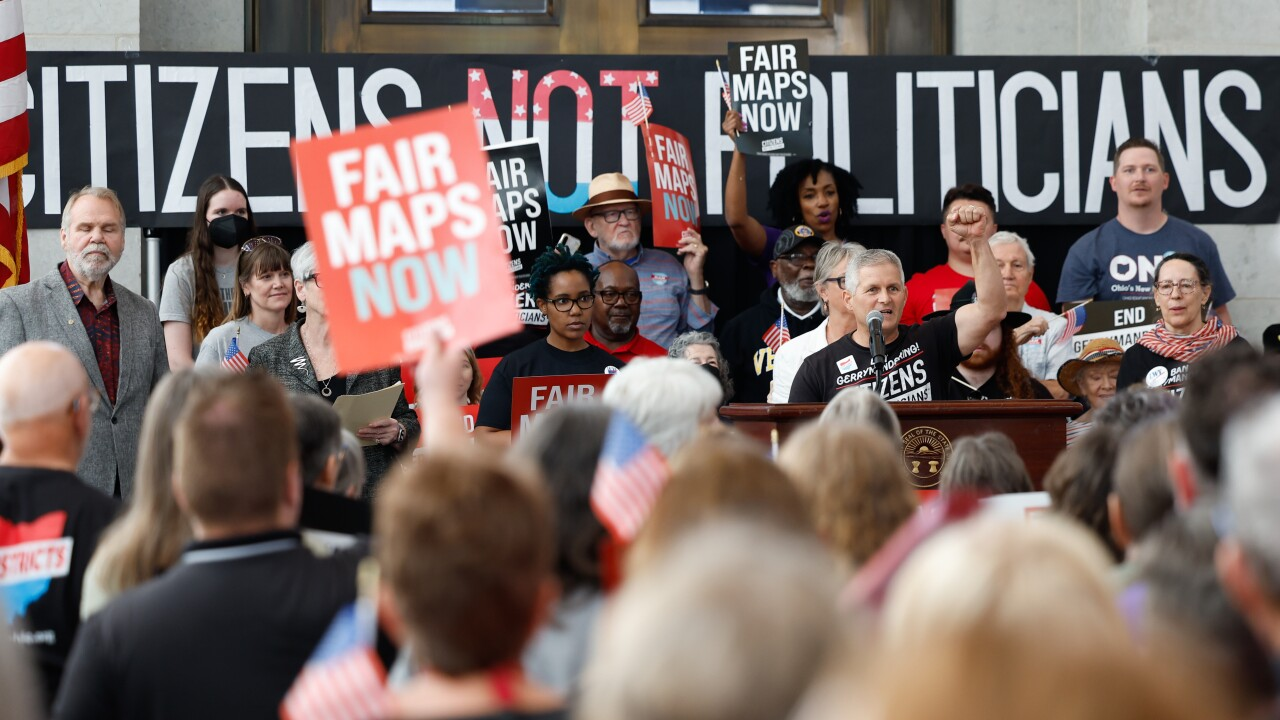
    A July 1 rally of Citizens Not Politicians at the Ohio Statehouse. (Photo by Graham Stokes for Ohio Capital Journal. Only republish photo with original story.)

    By  Ohio Capital Journal

    Advocates pushing an anti-gerrymandering amendment in Ohio to remove politicians from mapmaking in favor of a citizen commission said the state’s ballot board should be forced to start over on summary language for the November proposal.

    Attorneys said the proposed amendment would ban partisan gerrymandering “by setting forth robust redistricting criteria to ensure fair maps, selection standards to ensure the new commission’s impartiality and accountability, and transparency measures to ensure public information and participation,” according to a merit brief filed Thursday.

    But they say the summary language written by Ohio Secretary of State Frank LaRose and adopted by a majority of the Ohio Ballot Board on Aug. 16 “would have voters believe exactly the opposite.”

    The Ohio Ballot Board decides what language voters will see on their ballots when they go to vote, but that summary language does not change what the proposed amendment would actually do. In a 3-2 vote, the Ohio Ballot Board approved summary language that supporters of the anti-gerrymandering amendment say is intentionally misleading and biased against the amendment. They have filed a lawsuit with the Ohio Supreme Court opposing the summary language.

    The merit brief is part of that lawsuit filed by Citizens Not Politicians, the group who has led the charge for the anti-gerrymandering amendment. The lawsuit asks the state’s highest court to order changes to the summary language made by the ballot board, chaired by Ohio Sec. of State LaRose.

    The proposed amendment signed by more than 535,000 verified Ohio voters would replace the current Ohio Redistricting Commission made up of seven politicians, including LaRose, with a 15-member citizens commission made up of Republicans, Democrats, and independents.

    Citizens Not Politicians Attorney Don McTigue pointed to a change made by state Sen. Theresa Gavarone, R-Bowling Green, during the ballot board’s meeting, in which she changed the word “manipulate” to “gerrymander” when describing the methods of redrawing congressional and statehouse district lines within the amendment.

    “Earlier this year, Attorney General Dave Yost certified that the Amendment’s summary was ‘fair and truthful,’” McTigue wrote. “That summary states, consistent with the amendment’s plain text, that the amendment would ‘ban partisan gerrymandering.’”

    The brief emphasizes what the original complaint filed on Aug. 19 asserted, which is that the opinion of whether or not the proposed amendment “offers better policy than the existing system” should be left up to the voters in November.

    “The Ballot Board’s job is to provide ballot language that gives voters the facts so that they can make up their own minds,” the brief states.

    That language should follow constitutional rules dictating the language and the title, something the LaRose language doesn’t do, according to Citizens Not Politicians.

    The Ohio Constitution states ballot language “shall properly identify the substance of the proposal to be voted upon,” and the language “shall not be held invalid unless it is such as to mislead, deceive or defraud the voters.”

    The Ohio Revised Code says the secretary of state or the ballot board is required to “give a true and impartial statement of the measures in such language that the ballot title shall not be likely to create prejudice for or against the measure.”

    The title of the redistricting amendment, as approved by the board majority, is “to create an appointed redistricting commission not elected by or subject to removal by the voters of the state.”

    “The Ballot Board’s attempt to put a thumb on the scale against the amendment is a thumb in the eye of Ohioans who expect their representatives on the Board to carry out their mandatory duties impartially,” McTigue wrote.

    The Ohio Attorney General has filed an answer to the complaint, but the filing has already received criticism from the Democratic members of the ballot board, who say they were not consulted on the legal document, nor have they been given outside counsel to speak on their behalf, despite the fact that the the two Democrats, state Sen. Paula Hicks-Hudson and state Rep. Terrence Upchurch, voted against the ballot board language.

    Hicks-Hudson and Upchurch ended up filing a brief themselves on Wednesday night, in which they did not fight arguments that the ballot board “as a whole violated its constitutional duty,” and said the “chosen ballot title is inaccurate, biased, argumentative and misrepresents the proposed amendment’s procedures for removing commissioners who fail to comply with their duties.”

    McTigue said the court “has never hesitated to strictly enforce the legal requirements for the text that appears on the ballot, in recognition of Ohioans’ century-old right to amend their constitution and laws through direct democracy.”

    “The court should do the same here, by directing (the ballot board) to start over and adopt ballot language and a ballot title that are consistent with their clear legal duties.”

    The Ohio Supreme Court was asked just last year to make changes to a ballot board-approved summary, in that case for the reproductive rights constitutional amendment that would eventually pass with 57% of the vote.

    The coalition that sued took issue with ballot language that used the phrases “unborn child” and “reproductive medical treatment,” along with using the phrase “the citizens of the State of Ohio” rather than just “the State of Ohio” when speaking of the prohibitions against “indirectly burdening, penalizing or prohibiting abortion.”

    In a similar way to the redistricting amendment author’s arguments that the LaRose language could mislead voters as to the intentions of the proposed amendment, the lawsuit against the reproductive rights amendment summary said it could mislead voters about the rights the amendment created, the restrictions in the amendment, discretion when it comes to fetal viability and state regulation of the amendment.

    The Ohio Supreme Court said they agreed “that the ballot language approved by the ballot board misleads the average voter about whose actions the amendment restricts.”

    “But the ballot language is not defective in any other respect,” the court wrote.

    The court asked the ballot board only to change the phrase “citizens of the State of Ohio” to “State of Ohio,” and approved the rest.

    Justice Michael O’Donnelly wrote in his concurring opinion that it was “unfortunate that advocacy seems to have infiltrated a process that is meant to be objective and neutral.”


    Susan Tebben
    Susan Tebben

    Susan Tebben is an award-winning journalist with a decade of experience covering Ohio news, including courts and crime, Appalachian social issues, government, education, diversity and culture. She has worked for The Newark Advocate, The Glasgow (KY) Daily Times, The Athens Messenger, and WOUB Public Media. She has also had work featured on National Public Radio.

    Ohio Capital Journal is part of States Newsroom, the nation’s largest state-focused nonprofit news organization.

    MORE FROM AUTHOR