Tag: Ohio Capital Journal

  • Three Ohio Supreme Court races on the November ballot will have a huge impact in the coming years

    Three Ohio Supreme Court races on the November ballot will have a huge impact in the coming years

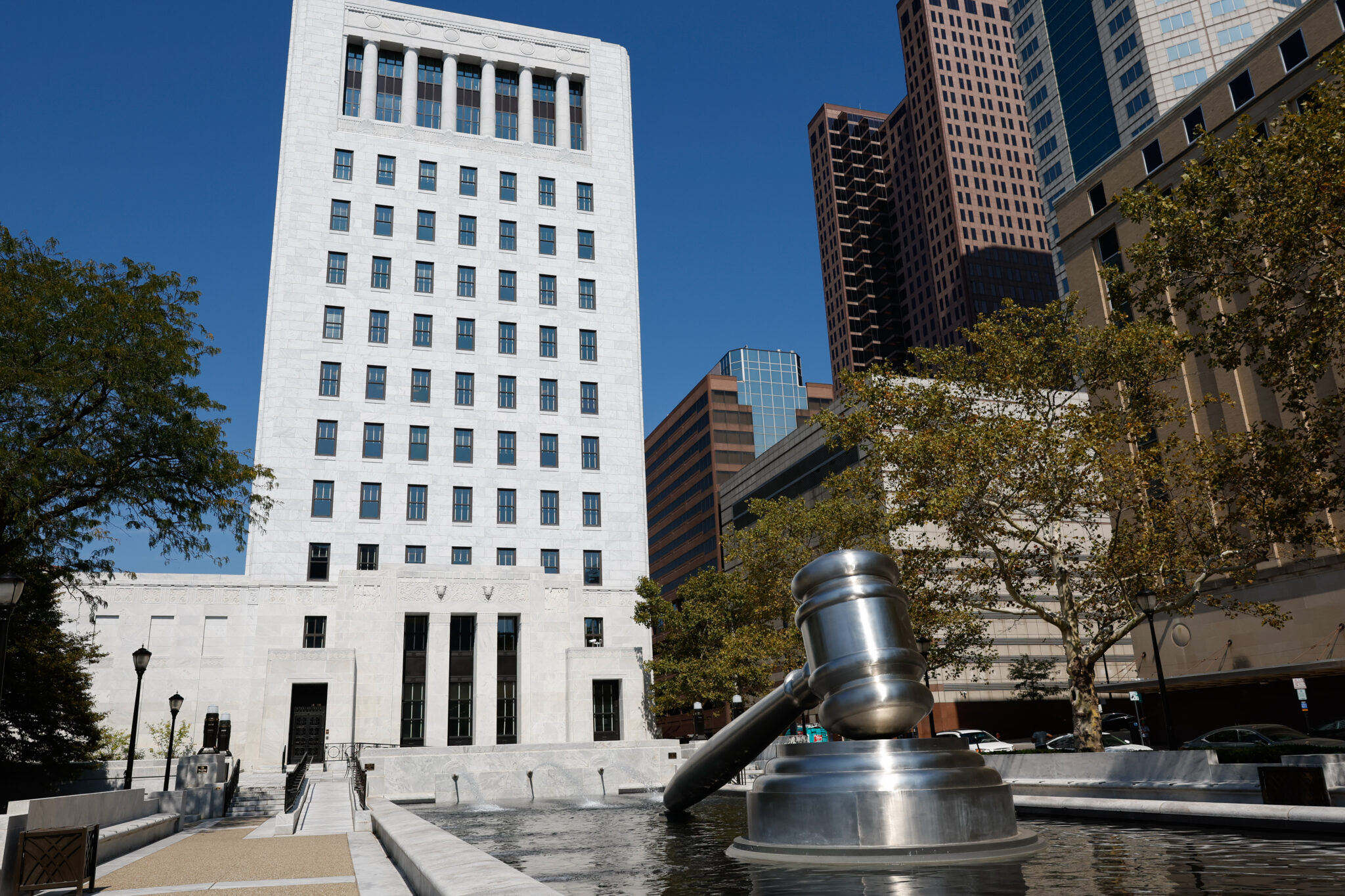
    The Gavel outside the Supreme Court of the State of Ohio, September 20, 2023, at 65 S. Front Street, Columbus, Ohio. (Photo by Graham Stokes for Ohio Capital Journal. Republish photo only with original article.)

    Ohio’s highest court currently has a 4-3 Republican majority

    By:  Ohio Capital Journal

    Three Ohio Supreme Court seats will be up for grabs during the November election. The outcomes will decide the balance of the court and have major impacts on a wide variety of issues that affect the lives of Ohioans, from education and environmental issues to gerrymandering and elections to civil and reproductive rights.

    Partisan labels were added to the previously-nonpartisan races by the state legislature in 2021.

    This year, incumbent Democratic Justice Michael P. Donnelly is being challenged by Republican Hamilton County Court of Common Pleas Judge Megan Shanahan.

    Incumbent Democrat Justice Melody Stewart is being challenged by incumbent Republican Justice Joseph Deters, who opted not to run for his current seat and decided to go up against Stewart.

    Vying for Deters’ open seat is Democratic candidate Lisa Forbes, of the Eighth District Court of Appeals, and Republican candidate Dan Hawkins, of the Franklin County Court of Common Pleas.

    Deters decided to run for a full-term seat by challenging Stewart, rather than a partial term for the seat Ohio Gov. Mike DeWine appointed him to on Jan. 7, 2023. Because of this, whichever candidate wins Deters’ current seat will have to run again in 2026 for a full six-year term.

    Ohio’s highest court currently has a 4-3 Republican majority. If all three Republicans are elected, the Republicans would hold all but one seat on the bench, for a 6-1 majority. On the flip side, if all three Democrats win their elections, the Democrats would hold a 4-3 majority. The Ohio Supreme Court has been under Republican control since 1986.

    Democratic Justice Jennifer Brunner’s seat will be up in 2026. Republican Chief Justice Sharon Kennedy, Republican Justice Pat DeWine and Republican Justice Pat Fischer’s seats will be up in 2028.

    The Ohio Supreme Court could make decisions on a plethora of critical issues: reproductive rights, gerrymandering, school vouchers, home rule, and environmental issues, among others.

    “If there’s a law around it, it could end up in the Supreme Court and have a real, tangible impact on each of our lives,” said Elisabeth Warner, spokesperson for the League of Women Voters of Ohio.

    Even though 57% of Ohio voters approved an amendment last year to enshrine reproductive rights in the state’s constitution, the court will inevitably rule on abortion access.

    “There are still a lot of anti-abortion laws on the books, so that’s something that the Supreme Court is going to be ruling on,” Warner said.

    Ohio’s anti-abortion laws were not automatically nullified when last year’s amendment passed, so abortion advocates are working to undo those laws.

    Franklin County Court of Common Pleas recently issued a temporary pause on Ohio’s 24-hour waiting period and the minimum two in-person visits required before an abortion.

    Another lawsuit is currently pending in Hamilton County Court of Common Pleas over whether Ohio’s six-week abortion ban is unconstitutional after voters passed last year’s amendment.

    Those lawsuits will likely make their way to the Ohio Supreme Court — meaning the seven justices will end up deciding to what extent reproductive rights are protected.

    “At the end of the day, the Ohio Supreme Court will determine whatever’s in the Ohio Constitution that voters put into the Ohio Constitution,” said Catherine Turcer, Common Cause Ohio’s executive director. “It is interpreted by the Ohio Supreme Court.”

    The Ohio Supreme Court has made many rulings on redistricting before and it will likely come before the court again — especially with the amendment on this year’s ballot to create a citizen commission to redraw districts.

    A lawsuit against school vouchers is making its way through the court system and will likely go before the state’s high court.

    Even boneless chicken wings wound up in front of Ohio’s seven justices. The court recently made national headlines with their 4-3 ruling that boneless chicken wings can have bones in them — appearing in a bit on “The Late Show with Stephen Colbert.”

    Turcer and Warner both criticized the 2021 law that requires party affiliation listed on the ballot for Ohio Supreme Court candidates. More than 1 million Ohio voters left the two Supreme Court races blank during the 2020 election.

    “We shouldn’t actually be thinking Democrats and Republicans because at the end of the day, what you want is a referee who’s independent and impartial,” Turcer said.

    Follow OCJ Reporter Megan Henry on X.


    Megan Henry
    Megan Henry

    Megan Henry is a reporter for the Ohio Capital Journal and has spent the past five years reporting in Ohio on various topics including education, healthcare, business and crime. She previously worked at The Columbus Dispatch, part of the USA Today Network.

    Ohio Capital Journal is part of States Newsroom, the nation’s largest state-focused nonprofit news organization.

    MORE FROM AUTHOR

  • State Board of Education of Ohio gets emergency funding, avoids upping teacher license fees

    State Board of Education of Ohio gets emergency funding, avoids upping teacher license fees

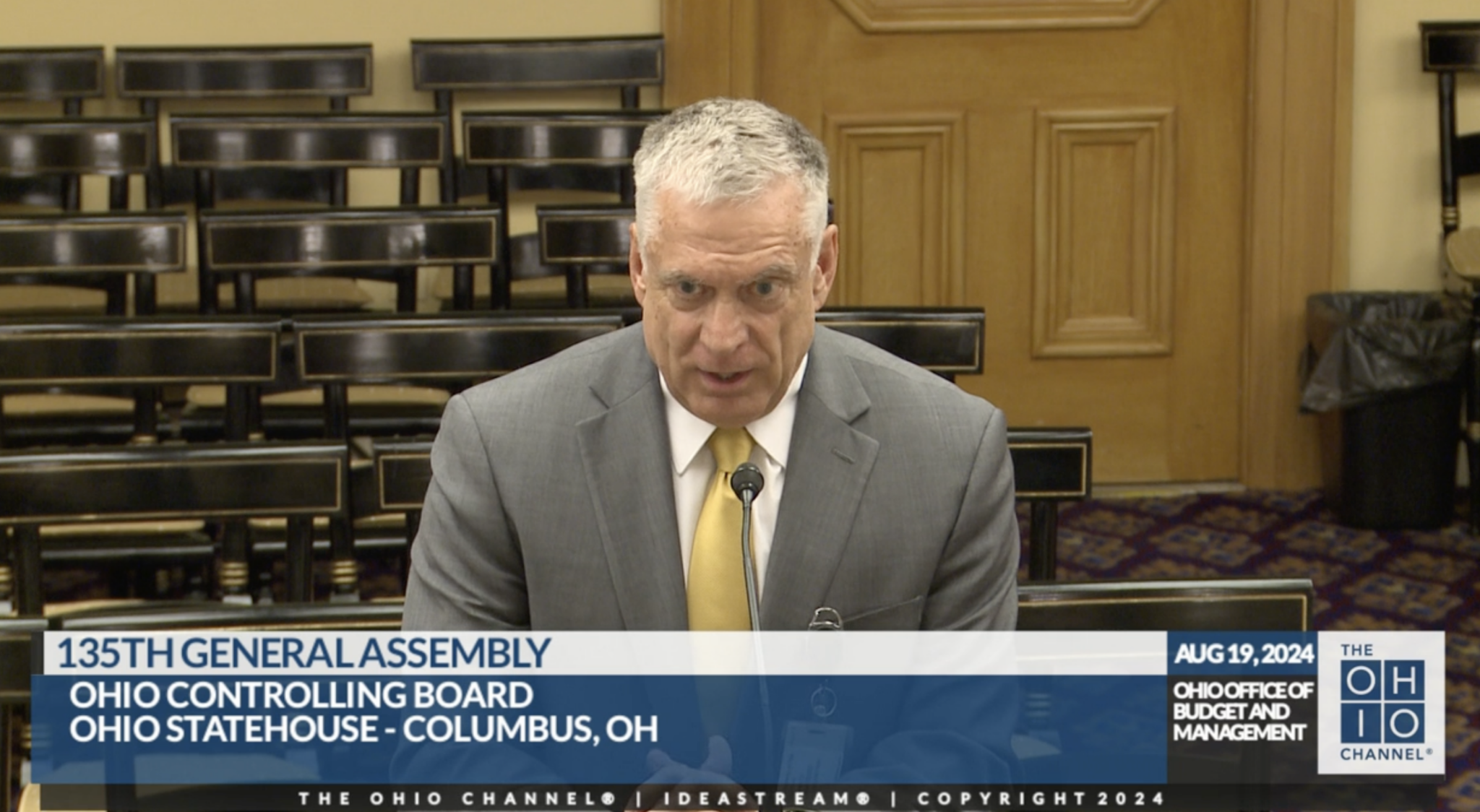
    Ohio Superintendent of Public Instruction Paul Craft speaks before the Ohio Controlling Board on Aug. 19. Screenshot via The Ohio Channel/Ideastream

    By:  Ohio Capital Journal

    Ohio’s State Board of Education will still be living lean on a bare-bones budget, but an influx of cash from the state will keep it going through the fiscal year.

    The Ohio Controlling Board, which directs appropriations and funding to state agencies, approved a $4.66 million emergency funding request last week for the board of education, to avoid having to raise teacher licensure fees and to cover a $3 million shortfall that may have impacted school staff background checks.

    “4.66 (million) is a number that gets us through this fiscal year,” State Superintendent of Public Instruction Paul Craft told the Capital Journal. “We’re still going to have some tough times.”

    The controlling board approval was amended from the original request made by the state’s Office of Budget and Management, which asked for only $1.85 million after working with the board of education on service sharing and funding cuts to get them through the year.

    “We completely were supportive of what OBM was doing,” Craft said. “That certainly keeps us where we are right now, which is extremely tight.”

    The SBOE has been warning of increasing and imminent shortfalls in their funding since they were separated from the Ohio Department of Education and Workforce, and left with only the teacher licensure fund to pay for all operating expenses.

    The funding they receive from the licensure fund isn’t year-round revenue, causing blocks of time during the year when the board has to sustain itself on very little incoming funds.

    “While we continue to strive for operational savings, because the majority of the revenue for this fund is received in the spring, the fund is projected to run a deficit starting this fall and continue until spring, when it will be back in a positive position,” the request to the controlling board stated.

    The split from the ODEW caused the board to reduce staffing by almost 20%, which included payroll and budget personnel, Craft told the Controlling Board at their Aug. 19 meeting to consider the emergency funds.

    “(Payroll and budget) are now being done as shared services through the Office of Budget and Management,” Craft said. “None of the money we requested brings back any of those staff.”

    The SBOE has also reduced board meetings to one day, instituted freezes on travel expenses and out-of-state conference costs. But the emergency funding is still needed to make sure teacher licensure fees can stay at their current rates, and the contract for Retained Applicant Fingerprint Database (RAPBACK) background checks can be paid.

    “I’ll tell you, I’ve never seen an agency in my 35 years in state government and military that’s running as lean as we are,” Craft said. “I’m so proud of what our staff has done in terms of making sure that Ohio’s 1.6 million kids interact with educators every day who are well-qualified and who show good moral character and judgment.”

    Some legislators on the controlling board expressed hesitation in using the funds from the controlling board’s “emergency purpose fund,” with state Sen. Shane Wilkins, R-Hillsboro, worrying that approving the emergency funds could cause the agency to come back next year for a request of the same amount.

    “For me, I would feel better if I knew, ‘hey, we really gave this a shot, the $1.8 (million original request) is not going to cut it,’” he said at the controlling board meeting.

    State Sen. Bob Hackett, R-London, questioned the need to push the funds specifically for the background checks, when Craft said the background checks would continue with or without the funding, and with the SBOE in contact with the Ohio Attorney General to find a solution to the funding shortage impacting the background check service.

    “It doesn’t really change our day-to-day at all,” Craft told Hackett and the controlling board. “On the other hand, I’ve signed (memorandums of understanding) with these agencies, and it would make me sleep better at night knowing that I agreed to these and they’re being made whole.”

    In offering the amendment that raised the funding provided for the SBOE to $4.66 million, state Rep. Jay Edwards, R-Nelsonville, said discussions have been going on for months about a solution to the SBOE funding issues. With the work the SBOE has already done to make cuts, the proposed funding number went from $10 million down to the $4.66 million that was eventually approved. He said it was incumbent upon state leaders make sure the funds were there to hold teacher licensure fees at current levels and maintain background checks.

    “The people that have been part of the discussion have heard that we will figure out how to pay for the background checks later,” Edwards said. “I don’t think it’s responsible of the people who hold the purse strings to allow the background checks to be figured out later.”

    He said the “mistake that was done during the budget … of the transfer to the Department of Education and Workforce,” should be corrected, not to mention he didn’t want “to be hearing from angry school teachers” if licensure fees increased.

    “We’re a conservative legislature that is constantly trying to cut taxes and cut fees and cut regulations for people out there,” Edwards said. “I don’t think teachers are getting rich in our state, I don’t want to see us raising teacher licensure fees.”

    Ohio House Democrats, including controlling board member state Rep. Beryl Brown Piccolantonio, D-Gahanna, said the funding “is a crucial lifeline that staves off a potential 75% increase in mandatory licensure fees.”

    “I look forward to addressing the remaining SBOE budget uncertainty on a more permanent basis in the next budget,” Piccolantonio said in a statement.

    Craft said the funding approval now allows the SBOE and the OBM to work together over the course of the fall to put together a plan for next year, as they await the governor’s executive budget plan and the state operating budget numbers.

    “It’s pretty early in the process and we’re looking at some other approaches, but this should get us through,” Craft told the Capital Journal.


    Susan Tebben
    Susan Tebben

    Susan Tebben is an award-winning journalist with a decade of experience covering Ohio news, including courts and crime, Appalachian social issues, government, education, diversity and culture. She has worked for The Newark Advocate, The Glasgow (KY) Daily Times, The Athens Messenger, and WOUB Public Media. She has also had work featured on National Public Radio.

    Ohio Capital Journal is part of States Newsroom, the nation’s largest state-focused nonprofit news organization.

    MORE FROM AUTHOR

  • Ohio’s 24-hour waiting period abortion law paused by judge

    Ohio’s 24-hour waiting period abortion law paused by judge

    (Getty Images)

    By:  Ohio Capital Journal

    An Ohio law requiring a 24-hour waiting period before abortion services will not be enforced as a lawsuit seeking to eliminate the law entirely sees its way through court, a judge ruled on Friday.

    Franklin County Court of Common Pleas Judge David C. Young not only put a temporary pause on the 24-hour waiting period, but also a minimum of two in-person visits and certain information about abortion that the state required doctors to provide before an abortion.

    That information includes the “probable gestational age of the zygote, blastocyte, embryo or fetus” and “nature and purpose of the particular abortion procedure to be used,” according to state law.

    Young cited the newest amendment to the state constitution as reason to rule in favor of the clinics and physicians.

    “The plain language of the amendment clearly sets forth the applicable legal standard,” Young wrote. “This language is easily understood and clear.”

    The decision comes following an oral argument hearing last week, in which Young heard from the Ohio Attorney General’s Office representing the state, and an attorney for abortion clinics and a physician party in the case.

    The state said by legal definition, the “status quo” should be maintained in a preliminary injunction, and according to the AG’s office’s arguments, that would leave state law as it is and the regulations in place. The office of Ohio Attorney General Dave Yost issues a release Friday saying they plan to appeal the ruling and that they disagree with the judge that the waiting period and extra appointments constitute a burden.

    According to Jessie Hill, attorney for the parties attempting to eliminate the laws, the status quo is now the constitutional amendment that placed reproductive rights including abortion into the Ohio Constitution after being passed by 57% of Ohio voters last November.

    The amendment bars any state laws that “burden, penalize, prohibit, interfere with or discriminate” against abortion care and abortion providers.

    The state also argued that the Dr. Catharine Romanos didn’t have standing to sue because there were no specific patients under Romanos’ care connected to the lawsuit.

    Young ruled that the new reproductive rights amendment “confers rights” to Romanos “because she is a person assisting individuals exercising their reproductive rights.”

    “The challenged statutes interfere with Dr. Romanos’s ability to provide high quality, trauma informed abortion care, they negatively impact Dr. Romanos’s relationship with pregnant patients and cause emotional distress,” the ruling wrote.

    The judge also cited Attorney General Dave Yost’s legal analysis of the amendment, written before the measure’s passage as an effort to explain the impact of the amendment on abortion regulation in the state.

    “Prior to the amendment passing, Attorney Yost agreed with Plaintiffs’ argument as to the applicable legal standard,” Young wrote. “Now, instead of following the plain language of the amendment, defendants argue that the pre-Dobbs legal standard applies.”

    But Young said the “pre-Dobbs standard” – referring to abortion standards prior to the U.S. Supreme Court’s decision to undo national abortion legalization and return the decision to the states – is “unpersuasive.”

    “Defendants attempt to create ambiguity where it does not exist,” the judge wrote. “The people of Ohio voted to enshrine their reproductive freedom in the constitution through the clear language of the amendment. Doing so followed the path set forth by the (U.S.) Supreme Court in Dobbs.

    Hill called the Franklin County decision “an historic victory for abortion patients and for all Ohio voters who voiced support for the constitutional amendment to protect reproductive freedom and bodily autonomy.”

    “This decision is the first step in removing unnecessary barriers to care,” Hill wrote in a statement with the ACLU of Ohio.


    Susan Tebben
    Susan Tebben

    Susan Tebben is an award-winning journalist with a decade of experience covering Ohio news, including courts and crime, Appalachian social issues, government, education, diversity and culture. She has worked for The Newark Advocate, The Glasgow (KY) Daily Times, The Athens Messenger, and WOUB Public Media. She has also had work featured on National Public Radio.

    Ohio Capital Journal is part of States Newsroom, the nation’s largest state-focused nonprofit news organization.

    MORE FROM AUTHOR

  • Ohio Gov. Mike DeWine tests positive for COVID as cases rise

    Ohio Gov. Mike DeWine tests positive for COVID as cases rise

    By:  Ohio Capital Journal

    Ohio Gov. Mike DeWine announced he was positive for COVID-19 on Tuesday, noting the rising levels of the virus throughout the state.

    DeWine’s office announced the governor had tested positive Tuesday morning, after experiencing “mild, cold-like symptoms … including sneezing and a runny nose.”

    Under the advice of his doctor, DeWine’s office said he has started a round of Paxlovid, an anti-retroviral used to treat COVID-19.

    The press release from the governor said the predominant COVID-19 variant going around in the country is KP.3.1.1., in the omicron family of the virus, and cases have been increasing for months, DeWine’s office stated.

    “COVID-19 cases and wastewater detections of COVID-19 have been on the rise in Ohio since late June,” DeWine’s office stated in the release. “Though hospitalizations, which are a good indicator of disease severity, have risen modestly in much of the United States, they are not currently rising in Ohio.”

    The CDC estimated the KP.3.1.1. variant represented 36.8% of all cases in the U.S. in the two weeks ending Aug. 17.

    State data shows a rise in hospitalizations due to COVID, with 238 reports in the last week, and a three-week average of 190. In the last three weeks, hospitalizations have gone from 141 to 192, up to the most recent report of 238.

    The Ohio Department of Health said case levels “have not approached those of earlier this year,” for example in January when there were 41,344 cases reported, and “certainly not anywhere near the levels seen during the last major surge” of January 2022, according to a spokesperson for the department.

    While the omicron variants are attributed to the recent rise, press secretary Ken Gordon said “there is no evidence that these variants are causing more severe levels of disease.”

    “That said, COVID remains a very real health threat, and any increase in cases reaffirms the importance of staying up to date with vaccination,” Gordon wrote in a statement.

    When DeWine announced he had tested positive (and then negative) back in August 2020, right before he was set to accompany then-President Donald Trump in Cleveland, reported cases were at a 21-day average of 1,280. DeWine also tested positive for COVID in April 2022 and in September 2023.

    According to the most recent reports from the ODH, which releases COVID data once a week, reported cases in the last week were up to 7,347, a number that has steady risen to a three-week average of 6,656 cases.

    In November of 2020, months after shutdowns began in the country and DeWine had implemented closures of restaurants and bars but before vaccines were available, the governor had announced additional mask order enforcement and was again debating closing restaurants and other public facilities. On the day he announced further mask enforcement measures, the state saw a new record for COVID cases: 7,101.

    Nationally, the CDC reported 18.1% COVID-19 test positivity for the week ending Aug. 10, up from 17.9% the previous week. As of that same week, 1.9% of all deaths in the United States were due to COVID-19, up from 1.6% the week before.

    The governor’s office encouraged Ohioans to update their COVID vaccines when they are available this fall, and for those who haven’t been vaccinated or have not received the most recent booster dose to “talk to their health care provider about the current vaccine.”

    As of August. 15, less than 12% of Ohioans had updated their COVID-19 vaccine. The CDC recommends everyone six months or older to receive an updated vaccine “to protect against the potentially serious outcomes of COVID-19 this fall and winter whether or not they have ever previously been vaccinated with a COVID-19 vaccine.”

    “To date, hundreds of millions of people have safely received a COVID-19 vaccine under the most intense vaccine safety monitoring in United States history,” the CDC said in a release.

    According to the ODH, the U.S. Food and Drug Administration could approve an updated vaccine “as soon as this week,” after which the CDC will give specific recommendations.

    “It’s reasonable to anticipate the new vaccine may start to be available to the public in September,” the ODH stated.


    Susan Tebben
    Susan Tebben

    Susan Tebben is an award-winning journalist with a decade of experience covering Ohio news, including courts and crime, Appalachian social issues, government, education, diversity and culture. She has worked for The Newark Advocate, The Glasgow (KY) Daily Times, The Athens Messenger, and WOUB Public Media. She has also had work featured on National Public Radio.

    Ohio Capital Journal is part of States Newsroom, the nation’s largest state-focused nonprofit news organization.

    MORE FROM AUTHOR

  • Attorneys argue for and against Ohio 24-hour abortion care waiting period pause

    Attorneys argue for and against Ohio 24-hour abortion care waiting period pause

    Getty Images

    By:  Ohio Capital Journal

    Attorneys challenging Ohio’s 24-hour abortion waiting period and minimum in-person visit regulations made their arguments last Friday as to why enforcement of the laws should be paused as they fight to get them eliminated entirely.

    Jessie Hill represented the ACLU of Ohio, the Planned Parenthood Federation of America, abortion clinics, and a physician in the Franklin County case, and said the constitutional amendment passed last November that legalized reproductive rights statewide “is expansive and clear,” protecting the rights that she says the state laws hinder.

    “Being prevented from doing something that you want to do and have a legal entitlement to do is injury, if prevented by a law that provides sanctions,” Hill told Judge David Young during a preliminary injunction hearing.

    Based on arguments heard at Friday’s hearing, the judge will decide whether a 24-hour waiting period and a minimum of two in-person visits will continue to be required before abortion services can be provided as the lawsuit continues.

    The law challengers are entitled to a preliminary injunction “because the challenged requirements facially discriminate against abortion patients and providers,” Hill said.

    Hill claimed that the state does not disagree that the courts must apply the amendment to “test” other laws in place regarding abortion. She went on to cite the legal analysis Ohio Attorney General Dave Yost released prior to the November election, in which he explained the impact the amendment would have on abortion services throughout the state.

    In that analysis, which Yost wrote was “designed only to describe what the legal effects of Issue 1 will be on our state,” he listed several laws that “I expect will most certainly be challenged at some point,” and said the amendment “would create a new standard  … and will make it harder for Ohio to maintain the kinds of law already upheld as valid prior to (2022’s) decision in Dobbs.”

    “In other words, the amendment would give greater protection to abortion to be free from regulation than at any time in Ohio’s history,” Yost wrote.

    The 24-hour waiting period was one law listed in his legal analysis and potentially impacted by the amendment, along with “informed consent” laws.

    “It is possible to foresee a court decision that said a waiting period was a ‘burden,’ but that informed consent is not,” Yost wrote. “If so, neither provision would be likely to survive the ‘exclusive scrutiny’ test.”

    Yost also notes that the state “can regulate only for the purpose of” advancing a pregnant individual’s health.

    “That means that the state cannot regulate for any other purpose or interest at all, no matter how mild the regulation,” Yost wrote. “So the long-recognized interests in fetal life or in medical ethics cannot be protected, making the laws previously upheld on those grounds no longer valid, even if the interests rise to the level of ‘compelling.’”

    The attorney general has since changed his tune, fighting against lawsuits that seek to undo the laws, and saying abortion clinics can’t challenge laws like the 24-hour waiting period regulation.

    The Attorney General’s Office argued Friday that taking away enforcement of the laws would be the opposite of the goal of a preliminary injunction, which is to keep the “status quo,” according to Amanda Narog, senior legal counsel for the AG’s office.

    “We’re talking about upwards of three decades of law that has regulated the conduct of abortions in this state,” Narog told the judge.

    But Hill pushed back, saying the status quo had changed when voters approved the reproductive rights constitutional amendment and it went into effect in December 2023. Therefore, of course the laws they consider in violation of the amendment would be challenged.

    “That was the whole purpose of the amendment,” Hill said.

    The state “can regulate the practice of medicine in Ohio,” Narog argued, and pointed to Hill’s arguments that physicians provide informed consent (in abortion care and in any other sector of medicine) because of their medical training, and will continue to do so no matter what the law states.

    The attorney general’s office didn’t fight back against the language of the amendment and its weight in the state, even as Narog argued that the 24-hour waiting period and the in-person requirements should stay in place.

    “It is well known that women have a right to a pre-viability abortion under the Ohio Constitution,” Narog said. “There’s no reason to think that women can’t do it.”

    Young did not give a timeline on when he might render his decision on the preliminary injunction or a motion to dismiss that the state filed.


    Susan Tebben
    Susan Tebben

    Susan Tebben is an award-winning journalist with a decade of experience covering Ohio news, including courts and crime, Appalachian social issues, government, education, diversity and culture. She has worked for The Newark Advocate, The Glasgow (KY) Daily Times, The Athens Messenger, and WOUB Public Media. She has also had work featured on National Public Radio.

    Ohio Capital Journal is part of States Newsroom, the nation’s largest state-focused nonprofit news organization.

    MORE FROM AUTHOR

  • Ohio Ballot Board approves controversial language to describe anti-gerrymandering amendment

    Ohio Ballot Board approves controversial language to describe anti-gerrymandering amendment

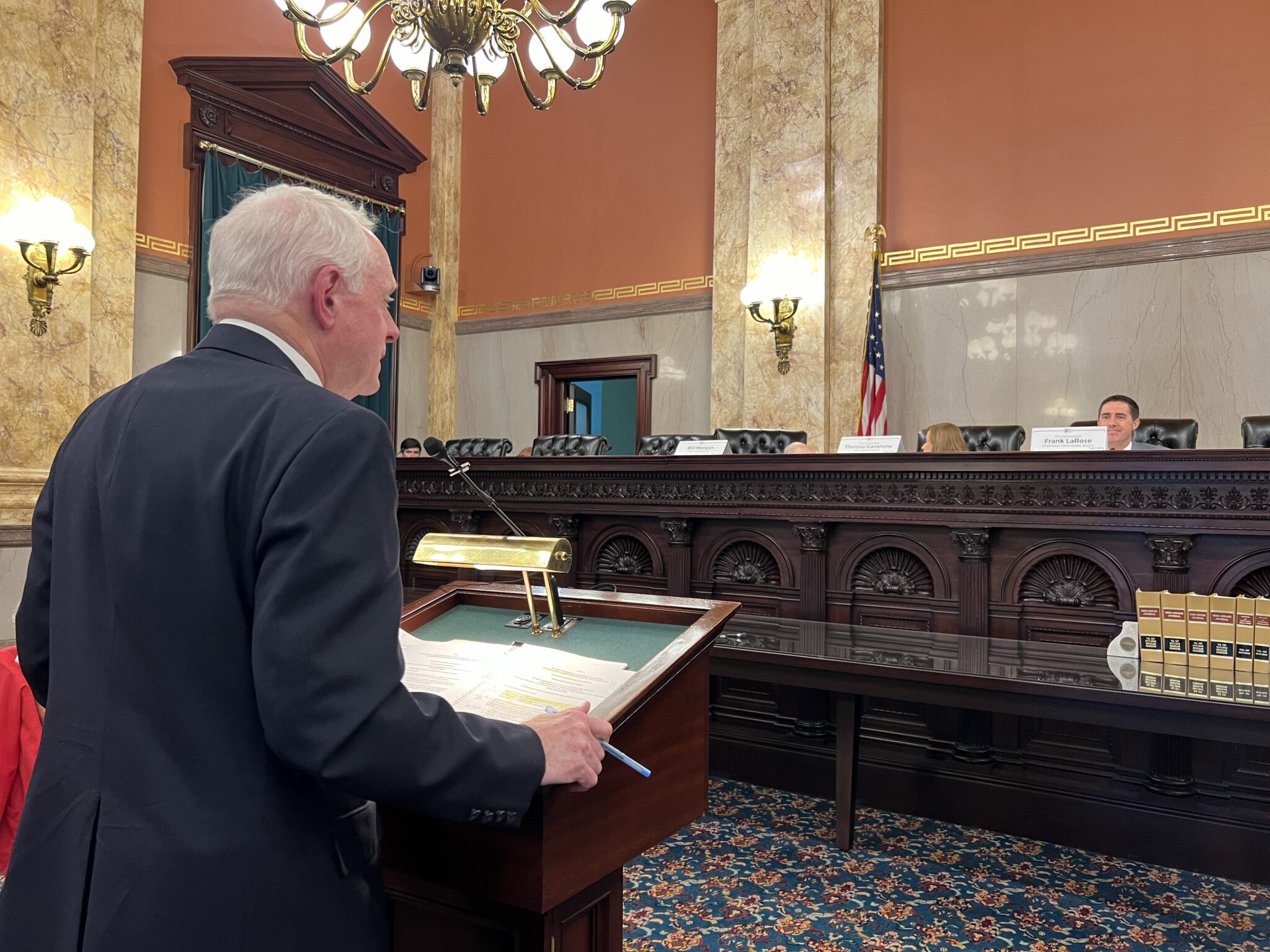
    Attorney Don McTigue speaks before the Ohio Ballot Board on Friday, Aug. 16, to discuss summary language that will appear before voters in November on the redistricting reform amendment. (Photo by Susan Tebben, Ohio Capital Journal.)

    By:  Ohio Capital Journal

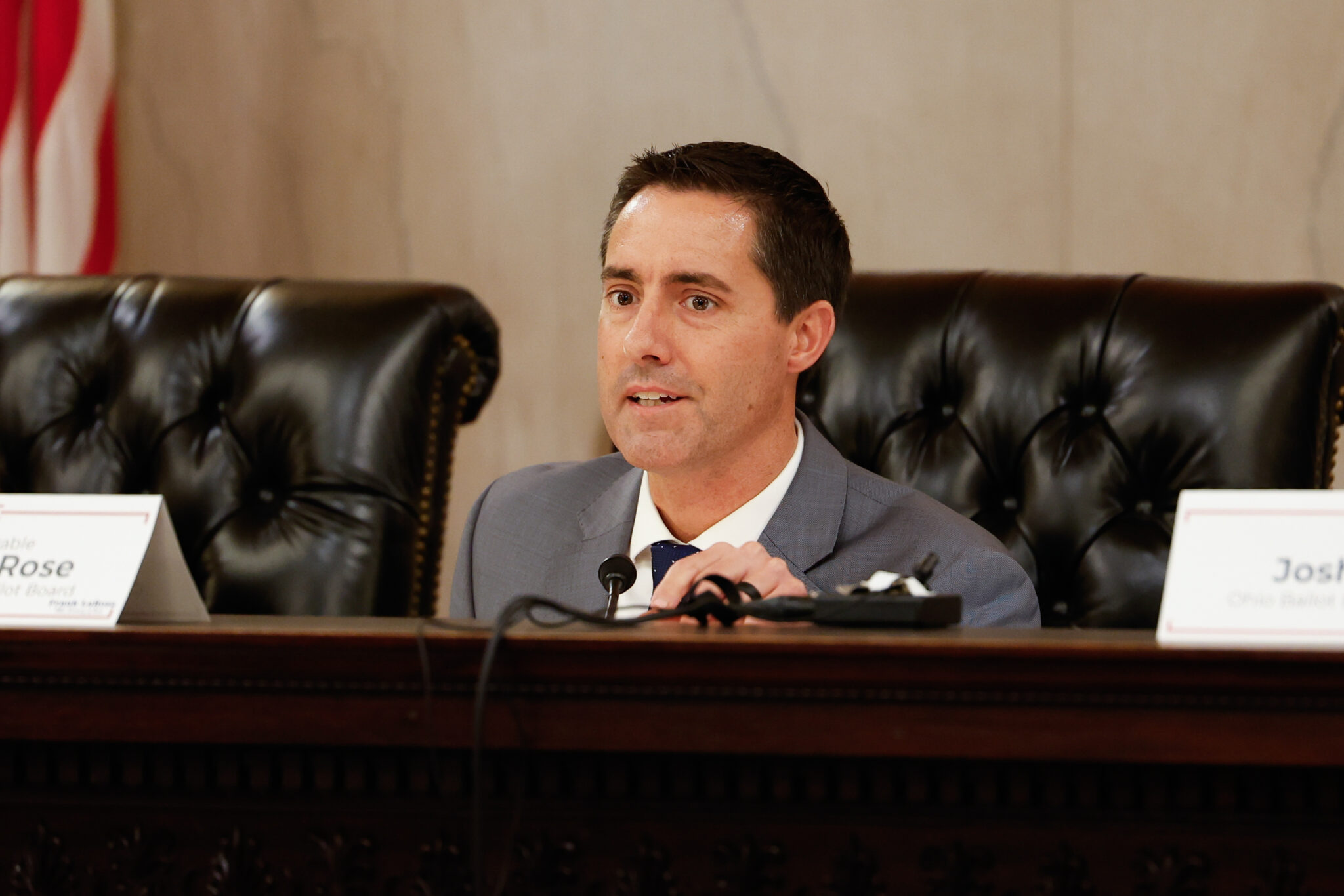
    The Ohio Ballot Board passed controversial language written by Secretary of State Frank LaRose on Friday as the ballot summary that will explain to voters November’s anti-gerrymandering amendment. Supporters of the amendment have called the language deceptive and unconstitutional and have said they would challenge it in court.

    The board met on Friday morning to determine the summary that will appear on individual ballots, the final words Ohioans will see before they choose to accept or deny the measure.

    The proposed amendment would remove Ohio politicians from the process of drawing Statehouse and congressional district maps, and instead create a citizen commission to draw maps made up of Republicans, Democrats, and independents.

    The board was led by LaRose in passing his preferred ballot language for the amendment 3 to 2, with both Democratic members of the board, state Sen. Paula Hicks-Hudson and state Rep. Terrence Upchurch, voting against the approval. LaRose is one of the politicians who sits on the current Ohio Redistricting Commission, and one of the Republican members who repeatedly voted for maps that were declared to be unconstitutionally gerrymandered by a bipartisan majority on the Ohio Supreme Court before they were nevertheless forced on voters by a federal court in 2022 after time to draw constitutional maps had run out.

    One amendment was made to the LaRose language Friday, brought by board member and Republican state Rep. Theresa Gavarone. That change takes a paragraph that says the commission will be “required to manipulate the boundaries of state legislative and congressional districts…” and changes it to say the commission will be “required to gerrymander” those districts, a change that elicited shocked scoffs from the crowd gathered at the board meeting.

    The ballot measure seeks to create a 15-citizen redistricting commission to decide Statehouse and congressional voting districts throughout the state, which authors of the proposed amendment from the group Citizens Not Politicians say will be done in public meetings and include opportunities for public input as the process goes on.

    Citizens Not Politicians submitted its own proposed summary for ballot board consideration, and it said commission members would be non-elected citizens who “who have demonstrated the absence of any disqualifying conflicts of interest and who have shown an ability to conduct the redistricting process with impartiality, integrity and fairness.”

    Democrats attempted to approve the language provided by Citizens Not Politicians, but the motion was voted down 3 to 2, supported only by the Democratic members of the board.

    Hicks-Hudson also tried to amend the LaRose-written language to replace it with the Citizens Not Politicians language, but that motion was also struck down.

    “This is a dangerous proposal that threatens the integrity of the vote on Issue 1,” Hicks-Hudson said of the Secretary of State language.

    With the title that says the amendment would “create an appointed redistricting commission not elected by or subject to removal by the voters of the state,” the language approved by the board speaks of the elimination of “the longstanding ability of Ohio citizens to hold their representatives accountable for establishing fair state legislative and congressional districts,” and the purpose to “repeal constitutional protections against gerrymandering approved by nearly three-quarters of Ohio electors participating in the statewide elections of 2015 and 2018.”

    Attorney Don McTigue made the point that it’s impossible for citizens to hold their elected lawmakers responsible by voting in gerrymandered districts — which are by definition guaranteed to ensure the gerrymandered lawmakers’ victory.

    “The problem is that the whole accountability argument only works when you have fair districts, not when you have the severely gerrymandered districts that you have in this state,” McTigue said during the public comment portion of the board meeting.

    McTigue, who represents the creators and supporters of the ballot initiative, requested the use of the language Citizens Not Politicians submitted rather than the Secretary of State language, citing Ohio law dictating ballot language and title.

    “The (SOS) language is stunning in it being false and misleading, and it is unabashed in terms of its prejudicial language,” McTigue said. “There’s no reasonable person who … after reading that language could conclude that it is an honest attempt to provide fair ballot language that allows voters to make an independent decision about the issue.”

    He cited the 2015 and 2018 redistricting measures, in which the ballot board “distilled the most important aspects of the proposed redistricting changes to the Ohio Constitution.”

    The language, which LaRose said in the ballot board meeting was written by him “with the input of my team,” was harshly criticized by the measure’s leaders and supporters leading up to the meeting as misleading and biased language that violated constitutional rules.

    LaRose defended the language in his summary that said the amendment would “limit the right of Ohio citizens to freely express their opinions to members of the commission or to commission staff regarding the redistricting process or proposed redistricting plans,” saying the language might unduly shield members of the new commission from public scrutiny.

    McTigue pushed back, saying context is important in reading the summary, which is why he didn’t support the Secretary of State language.

    “I think that something can be misleading or deceptive if you don’t have the full context,” McTigue said.

    The Secretary of State’s language was released Thursday, giving board members and McTigue little time to read through it, something that was discussed in the meeting.

    “I think the record should be really clear that 24 hours isn’t necessarily a lot of time to deal with 900-some words that really, I’m not sure fit in to the confines of what the law requires and … making a really thoughtful evaluation of the language,” said Hicks-Hudson.

    Gavarone said the 900 words in the LaRose language “accurately explain what this is,” and noted the details on the process of redistricting were not included in the Citizens Not Politicians proposed summary language.

    LaRose also touched on the selection process for commission members in the amendment, saying the longest part of his summary language was explaining that process.

    “The way that you end up on the current commission (the Ohio Redistricting Commission) is pretty straightforward,” LaRose said. “(The proposed process) is a bit of a Rube Goldberg device that involves a lot of twists and turns … it’s a complex process.”

    He called the five-bullet summary proposed by the CNP “wholly inadequate” and said it could not “identify the substance” of the lengthy amendment.

    Noted opponents of the ballot measure include Senate President Matt Huffman and Ohio Gov. Mike DeWine, both of whom made public cases against the measure. Huffman said the effort would bring about an onslaught of legal trouble for the state, and DeWine said the focus on proportionality in the rules of the redistricting process would cause more problems than supporters claim it would fix, and “Ohio would actually end up with a system that mandates, that compels map-drawers to produce gerrymandered districts,” he said at a recent press conference.

    Supporters of the amendment have said they will appeal the decision of the Ohio Ballot Board in court, just as the supporters of the ballot measure on reproductive rights did to the Ohio Supreme Court after ballot board approval.

    Indeed, immediately after the board meeting adjourned, Citizens Not Politicians pledged to “seek remedy” from the Ohio Supreme Court by filing a brief next week on the language, according to Jen Miller of the League of Women Voters of Ohio.

    LaRose did not speak to reporters after the meeting.


    Susan Tebben
    Susan Tebben

    Susan Tebben is an award-winning journalist with a decade of experience covering Ohio news, including courts and crime, Appalachian social issues, government, education, diversity and culture. She has worked for The Newark Advocate, The Glasgow (KY) Daily Times, The Athens Messenger, and WOUB Public Media. She has also had work featured on National Public Radio.

    Ohio Capital Journal is part of States Newsroom, the nation’s largest state-focused nonprofit news organization.

    MORE FROM AUTHOR

  • Ohio anti-gerrymandering leaders say LaRose’s draft ballot text is deceptive and unconstitutional

    Ohio anti-gerrymandering leaders say LaRose’s draft ballot text is deceptive and unconstitutional

    By:  Ohio Capital Journal

    The office of Ohio Secretary of State Frank LaRose has drafted ballot language for the Ohio Ballot Board to consider Friday that supporters of an anti-gerrymandering amendment say is deceptive and unconstitutional. The Ballot Board decides the text of proposed amendments that voters actually see on their ballots when they vote.

    The anti-gerrymandering amendment before Ohio voters in November, according to the language drafted by LaRose’s office, would “eliminate the longstanding ability of Ohio citizens to hold their representatives accountable for establishing fair state legislative and congressional districts.”

    The Citizens Not Politicians group that authored the ballot initiative and collected more than 535,000 necessary signatures from Ohio voters to get the measure on the ballot, has proposed their own language for the ballot as well, saying it would remove politicians from the redistricting process in favor of a citizen board.

    The group is proposing a redistricting amendment that would replace Ohio’s politician-led redistricting commission with a citizen-led commission made up of Republicans, Democrats and independents. Currently, the Ohio Secretary of State is one of the politicians sitting on Ohio’s redistricting commission, along with the governor, the Ohio Auditor, two lawmakers from the majority party and two lawmakers from the minority party.

    The language drafted by the Secretary of State’s Office claims in its proposed title that the amendment’s purpose is, “To create an appointed redistricting commission not elected by or subject to removal by the voters of the state.”

    Moreover, the draft language says its purpose is to “repeal constitutional protections against gerrymandering approved by nearly three-quarters of Ohio electors participating in the statewide elections of 2015 and 2018.”

    Backers say the amendment is actually intended to protect voters against gerrymandering by removing politicians who stand to benefit from the process, and to not allow them to continue drawing gerrymandered district maps.

    After the 2015 and 2018 reforms were.passed by voters, Republican politicians on the Ohio Redistricting Commission including Ohio Secretary of State LaRose repeatedly voted for Statehouse and U.S. Congressional district maps that were declared unconstitutional gerrymanders by a bipartisan majority on the Ohio Supreme Court. Nevertheless, Ohio voters were forced to use the maps as the politicians refused to produce a maps that reflected voting preferences of Ohioans.

    The Ohio Secretary of State’s Office further claims in its proposed language that the new amendment would also “limit the right of Ohio citizens to freely express their opinions to members of the commission or to commission staff regarding the redistricting process or proposed redistricting plans.”

    It claims the amendment would “prohibit any citizen from filing a lawsuit challenging a redistricting plan in any court, except if the lawsuit challenges the proportionality standard applied by the commission, and then only before the Ohio Supreme Court,” and that new “taxpayer-funded costs” would be imposed by the amendment, with “an unlimited amount for legal expenses incurred by the commission in any related litigation.”

    Ohio Gov. Mike DeWine recently publicly opposed the ballot measure because of its emphasis on proportionality, alleging there was no way the measure could work as written. In opposing the measure, he said whether or not it passes in November, he’s considering going to the legislature to adapt Iowa’s redistricting process for Ohio. Iowa’s process leaves lawmakers with final say over maps.

    The proposed constitutional amendment penned by Citizens Not Politicians calls for a 15-person redistricting commission made up of citizens, rather than the Ohio Redistricting Commission that is currently made up entirely of elected officials.

    The language proposed by Citizens Not Politicians to the ballot board states the proposed amendment would “require that the commission consist of 15 members who have demonstrated the absence of any disqualifying conflicts of interest and who have shown an ability to conduct the redistricting process with impartiality, integrity and fairness.”

    The amendment would “provide that each redistricting plan shall contain single-member districts that are geographically contiguous, comply with federal law, closely correspond to statewide partisan preferences of Ohio voters and preserve communities,” according to the Citizens Not Politicians proposed language.

    The current Ohio Redistricting Commission made up of politicians produced six different Statehouse maps and two congressional maps over the two years it did its work. Five of the Statehouse maps were ruled unconstitutional by the Ohio Supreme Court and neither of the congressional maps passed constitutional muster, according to the state’s highest court. The second of the congressional maps remains the state’s congressional district map, despite being found to be unduly partisan by the state supreme court.

    The redistricting commission was criticized for disregarding hours of testimony from hundreds of Ohio citizens, and numerous citizen and group-proposed maps in favor of maps written by legislative staffers, and disregarding the authority of the Ohio Supreme Court when they were ordered to redraw maps within deadlines and utilize paid independent mapmakers coordinated by the court.

     Retired Republican Chief Justice of the Supreme Court of Ohio, Maureen O’Connor. (Poto by Graham Stokes for Ohio Capital Journal. Republish photo only with original article.) 

    Former Ohio Supreme Court Chief Justice Maureen O’Connor, a leader for Citizens Not Politicians, who has called for reforms to redistricting since she left the bench, said the Secretary of State’s proposed language violates the Ohio Constitution.

    “The self-dealing politicians who have rigged the legislative maps now want to rig the Nov. 5 election by illegally manipulating the ballot language,” O’Connor said in a statement. “We will make our case for fair and accurate language before the Ballot Board and if necessary take it to court.”

    O’Connor’s statement claims the language proposed by the Secretary of State’s Office violates an article of the Ohio Constitution that prohibits ballot language that “is such as to mislead, deceive, or defraud voters,” according to the law.

    Ohio law also states ballot titles “shall give a true and impartial statement of the measures in such language that the ballot title shall not be likely to create prejudice for or against the measure.”

    It’s not the first time even in the last year that ballot language has been criticized as a misleading representation of the proposed initiative. Last year’s reproductive rights ballot measure went through the same process, with language written by Ohio Secretary of State staff approved as the language to appear on the ballots.

    The creators of the ballot measure sued, with the Ohio Supreme Court approving the ballot language, but sending it back to the board for small changes.

    Despite the language, which critics said intentionally misrepresented the reproductive rights amendment, the measure passed with 57% of the vote last November.

    State Secretary of State LaRose is the head of the Ohio Ballot Board that will consider the language on Friday. The board is also made up of Republican state Sen. Theresa Gavarone, Democratic state Sen. Paula Hicks-Hudson, Democratic state Rep. Terrence Upchurch and citizen-member William Morgan.

    A spokesperson for the Secretary of State’s Office did not respond to request for comment on the language Thursday afternoon.


    Susan Tebben
    Susan Tebben

    Susan Tebben is an award-winning journalist with a decade of experience covering Ohio news, including courts and crime, Appalachian social issues, government, education, diversity and culture. She has worked for The Newark Advocate, The Glasgow (KY) Daily Times, The Athens Messenger, and WOUB Public Media. She has also had work featured on National Public Radio.

    Ohio Capital Journal is part of States Newsroom, the nation’s largest state-focused nonprofit news organization.

    MORE FROM AUTHOR

  • Ohio Attorney General Dave Yost settles with FirstEnergy for $20 million

    Ohio Attorney General Dave Yost settles with FirstEnergy for $20 million

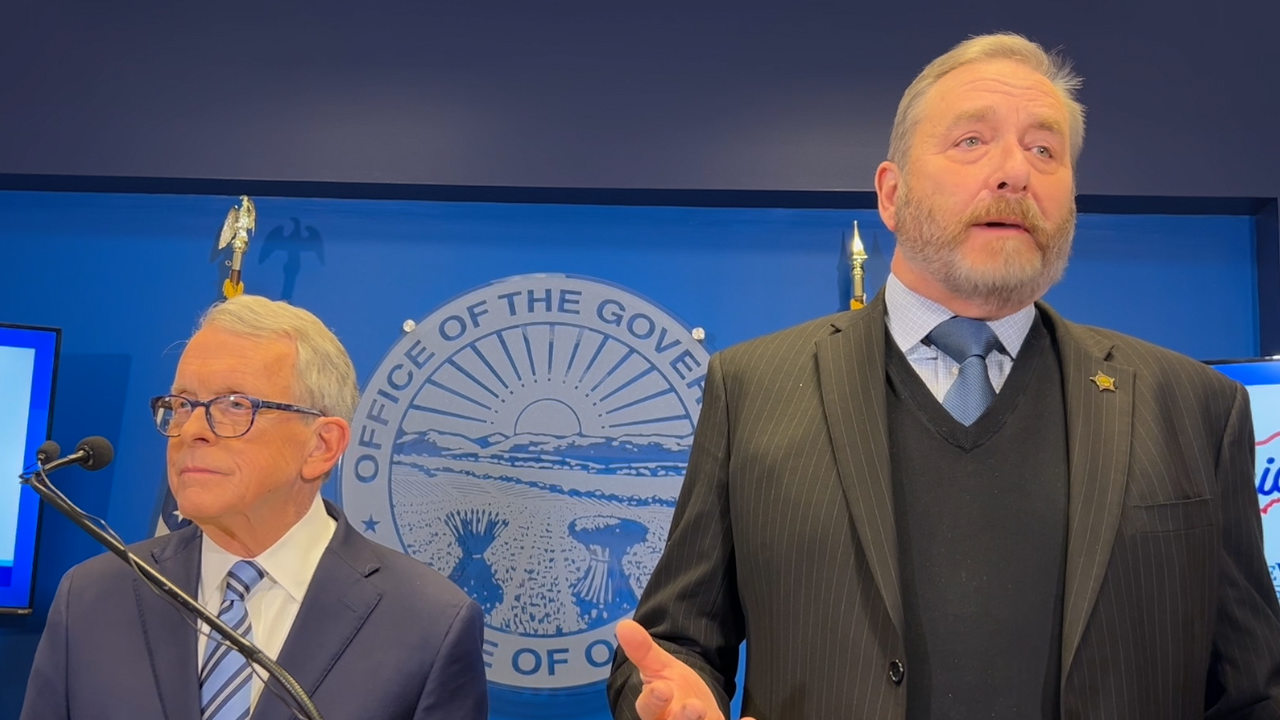
    Ohio Governor Mike DeWine (left) and Ohio Attorney General Dave Yost (right) answer questions during a press conference. (Photo by WEWS).

    Unannounced amount dwarfed by scale of epic utility ripoff that featured more than $61 million in bribes and a $1.3 billion bailout

    By:  Ohio Capital Journal

    Ohio Attorney General Dave Yost has agreed to settle the largest bribery and money laundering scandal in state history with the massive utility that funded it.

    At just $20 million, the settlement amounts only to less than a third of the bribes Akron-based FirstEnergy paid and it is dwarfed by the benefits Ohio utilities have received from ratepayers as a consequence of the corrupt legislation those bribes paid for.

    Yost’s office sends out frequent press releases, but not one regarding Monday’s settlement, which was first reported by the Cincinnati Enquirer, citing an SEC filing by FirstEnergy.

    In response to questions, his office said Yost had “voluntarily walled himself off from the case months ago to avoid any suggestion that the case was politically driven or any outcome was influenced by politics or political decision making.” But it didn’t explain how.

    The statement comes after more than a year of questions about the attorney general’s own involvement in the fight to pass and protect the $1.3 billion ratepayer bailout that mostly went to FirstEnergy.

    Yost’s office added that the company was cooperating in state prosecutions of two former executives, and that the company had reformed in the years since the scandal.

    “The non-prosecution agreement signed between FirstEnergy, the Ohio Attorney General’s Office and the Office of the Summit County Prosecuting Attorney requires FirstEnergy to provide evidence, access to witnesses and testimony in the ongoing criminal cases against (former CEO) Chuck Jones and (former Vice President) Michael Dowling, as well as in civil proceeding relating to the passage of” the corrupt bailout bill, spokesman Steve Irwin said in an email.

    By agreeing to the pact, FirstEnergy won’t be charged criminally. The company paid the federal government $230 million in 2021 to get criminal charges dropped in that instance.

    In dropping the charges, the state and federal governments allowed FirstEnergy to dodge a big financial hit. Consultants told the company it could face nearly $4 billion in fines if indicted, the Cleveland Plain Dealer reported Tuesday.

    According to weeks of testimony in federal court in Cincinnati last year, FirstEnergy executives began wooing Larry Householder and other state leaders in late 2016. The executives had bet heavily on coal and nuclear generation that was losing money because they failed to anticipate that the fracking boom would make gas-fired electricity generation cheaper.

    So the executives — CEO Jones and Vice President Dowling — undertook a frantic search for a bailout.

    They flooded $61 million in corporate money into 501(c)(4) dark money groups. From there, the money went to elect friendly Republicans who would vote to make Householder speaker of the Ohio House at the start of 2019.

    From that perch, Householder shepherded the corrupt bailout, House Bill 6.

    Sam Randazzo, Gov. Mike DeWine’s pick to chair the Public Utilities Commission, helped write and lobby for the bailout even though he was supposed to be a neutral regulator. FirstEnergy later said it paid a $4.3 million bribe to Randazzo, who died by suicide in April.

    DeWine, whose administration had several senior officials connected to FirstEnergy, signed the bill the same day that it passed. But it ran into instant opposition in the form of a fierce campaign to repeal the bailout.

    The FirstEnergy executives — who are now under state indictment — were so alarmed at the repeal effort that they put up $36 million to stop it. The resulting campaign included false, xenophobic TV commercials, bullying people gathering signatures to put a repeal on the ballot and even allegations of assault.

    Yost gave HB 6 supporters a big assist in the heat of the repeal fight.

    Before a repeal could go on the ballot, supporters had to gather 1,000 valid signatures from registered voters and submit a ballot summary to the attorney general. Yost had to approve that before repeal advocates could start gathering the necessary 265,000 additional voter signatures. And they had just 90 days after DeWine signed the corrupt bailout on July 23, 2019 to do it.

    The summary and 1,000 signatures were submitted within 10 days. But then Yost rejected the ballot language on the first go-round. By the time they had submitted different language and more signatures — and Yost approved it — their time to gather more than a quarter-million signatures had been cut by 40% and the repeal failed.

    While Yost — a hopeful to become governor in 2026 — hasn’t commented on his conduct during this period, some of the conspirators did.

    During last year’s trial, federal prosecutors presented messages between former Ohio GOP Chairman Matt Borges, who is serving a five-year prison sentence for his involvement, to Juan Cespedes, who has pleaded guilty to his.

    In one, Borges said the attorney general told him that he thought the bailout was a bad law, but he wasn’t speaking publicly as a favor to Borges and FirstEnergy. Yost “‘would be out front (in opposition) if not for (FirstEnergy) support and your involvement,’” Borges quoted Yost as supposedly saying.

    In another, Borges — who had run some of Yost’s past campaigns — said of the repeal summary, “If there’s any way the law will allow him to reject the language, he will do it.”

    Irwin, Yost’s spokesman, justified the settlement by saying FirstEnergy had reformed.

    “FirstEnergy today is not the company it was five years ago – the corporation has undertaken, and continues to undergo, reforms to strengthen its internal ethics programs, to increase transparency, and promote reporting of questionable conduct by its employees and leadership,” Irwin said. “It has also restructured its board and leadership to remove the individuals responsible for the conduct that gave rise to the House Bill 6 scandal. This is an important step in bringing the disgraced corporate leaders who used their positions of power to betray FirstEnergy’s ratepayers and employees and the people of Ohio to account for their crimes.”

    However, institutional investors are in court arguing that FirstEnergy is trying to limit the blast radius of the scandal. They accuse the company of trying to protect other executives and board members who might have been culpable — or at least might have known of the scheme.

    Indeed, the company is battling furiously not to turn over an internal investigation it commissioned in the wake of the scandal. After being denied an attempt to appeal an order to turn it over, the company filed a risky petition for a writ of mandamus on July 30.

    After the HB 6 scandal broke in 2020, Yost donated $24,000 in contributions from FirstEnergy and Cespedes to charity. It’s an open question when he’ll explain what he knew and did in a scandal that imprisoned Householder for 20 years and led to two suicides — including that of indicted lobbyist Neil Clark.

    Meanwhile, ratepayers are still paying big money as a consequence of HB 6. Its provisions solely benefitting FirstEnergy were repealed after the scandal broke. But the state’s leadership has refused to repeal the rest of the bill.

    It includes a measure that has so far paid $343,000,000 to subsidize two aging coal plants owned by a group of Ohio utilities. One’s not even in Ohio.


    Marty Schladen
    Marty Schladen

    Marty Schladen has been a reporter for decades, working in Indiana, Texas and other places before returning to his native Ohio to work at The Columbus Dispatch in 2017. He’s won state and national journalism awards for investigations into utility regulation, public corruption, the environment, prescription drug spending and other matters.

    Ohio Capital Journal is part of States Newsroom, the nation’s largest state-focused nonprofit news organization.

    MORE FROM AUTHOR

  • The race for Ohio’s 2nd U.S. Congressional District features two political newcomers

    The race for Ohio’s 2nd U.S. Congressional District features two political newcomers

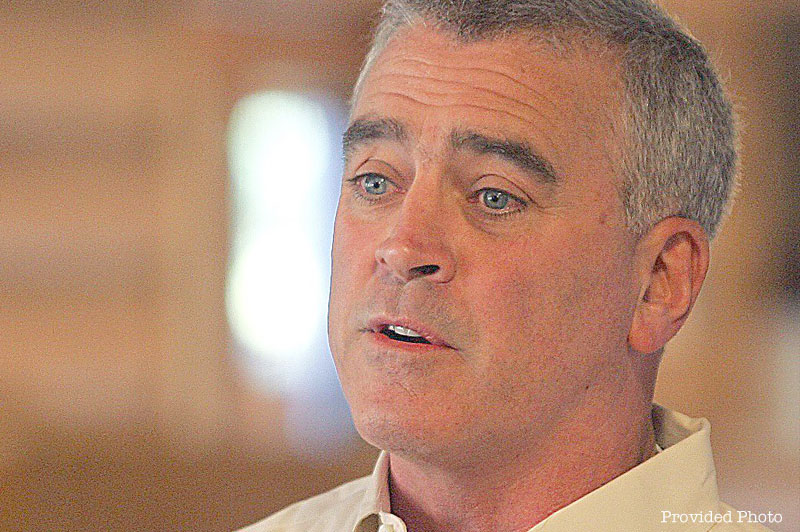
    Republican Rep. Brad Wenstrup currently represents the 2nd Congressional District, but he announced that he would not seek reelection in 2024

    Democrat Samantha Meadows is going up against Republican David Taylor and neither candidate has held office before.

    By: Ohio Capital Journal

    A political newcomer will represent Ohio’s 2nd U.S. Congressional District starting in 2025.

    Democrat Samantha Meadows is going up against Republican David Taylor and neither candidate has held office before.

    Republican Rep. Brad Wenstrup

    Republican Rep. Brad Wenstrup currently represents the 2nd Congressional District, but he announced at the end of last year that he would not seek reelection in 2024 after serving six terms.

    The 2nd Congressional District covers 15 southern Ohio counties: Clermont, Clinton, Pike, Adams, Brown, Highland, Ross, Scioto, Pickaway, Hocking, Vinton, Jackson, Lawrence, Gallia, and Meigs counties, and part of Fayette County.

    The 2nd Congressional District historically leans Republican and President Donald Trump won in all of those counties during the 2020 election.

    Meadows

    This is Meadows’ second time running for the 2nd congressional district. She lost against Wenstrup in 2022 — receiving only 25% of the vote — but she thinks her odds of winning have increased since Wenstrup is retiring.

    “I am beating down doors …  I’m doing everything that I can to let people know that I, personally, as a candidate, care about them,” she said.

    Meadows doesn’t feel intimidated running as a Democrat in Republican-dominated counties.

     Democrat Samantha Meadows is running for Ohio’s second congressional district. (Headshot provided.) 

    “I know that a lot of folks down here are Republicans by anger rather than policy,” she said. “I have faith in our region that, no, this isn’t about Republican or Democrat. This is actually about a person that’s going to help us.”

    She grew up in McDermott in Scioto County, attended Shawnee State University and Ohio Christian University and went on to work as an EMT.

    “I’ve always felt compelled to be of service to my community,” she said. “… I always felt compelled to help others.”

    Through her work as an EMT, Meadows has seen firsthand the devastation of the opioid epidemic and she remembers the first Oxycontin overdose patient she helped treat. They administered Narcan and were able to revive the patient.

    “At that time, this was new to us,” she said.

    That same patient overdosed again a couple weeks later, but didn’t make it this time.

    “Addiction was one of the catalysts that made me run for office,” she said.  “Everybody knows somebody that’s either addicted or a family that’s going through those things.”

    Meadows said she never had any aspirations to be in politics, but decided she had to do something when she saw drug overdoses increase during COVID-19.

    “I had a moment where I literally looked at the TV and said, somebody’s got to do something about this. And so I was like, I’ll do it,” she said.

    Taylor

    Wenstrup retiring, how most of the 2nd District is Appalachian and “the laundry list of national crises we have going on both inside and outside our borders” is what led to Taylor to run for office.

    “The needs of the Appalachian community has been something that’s been in the front of my mind my whole life,” he said. “The opportunity to see this overlooked, underserved community that is the 2nd District of Ohio get the attention it deserves is what compelled me to get into politics.”

    Taylor had to endure a competitive primary against ten other Republicans — including state Sens. Shane Wilkin and Niraj Antani — to get on the November ballot. Taylor came out on top with 25% of the vote.

     Republican David Taylor is running for Ohio’s second congressional district. (Photo provided by Taylor’s campaign.) 

    “People don’t want career politicians right now,” he said. “They want somebody from the outside. I think actually, for the voters in the 2nd District, not being a person with a political background was actually a plus.”

    Even though the second district leans Republican, Taylor said he is treating the race as if the district was split 50-50 and has been traveling the district to meet people.

    “We’re running the tires off my pickup truck and going to all corners of the district,” he said.

    Taylor has lived a majority of his life in Clermont County, graduated from Miami University and the University of Dayton School of Law and worked for a prosecutor’s office.

    “In criminal law, you’re getting to the nitty gritty on every word in the law, because sometimes somebody’s freedom is at stake,” Taylor said. “So that will serve well in dealing with the legislation that’s written and passed or repealed.”

    He now owns his own concrete business Sardinia Ready Mix and said his experience of operating within a budget could help him in D.C.

    “Those are things that the government could use a large dose of so more people with that mindset, I think, would lead to better outcomes in Washington, D.C. and those returns come here to Ohio, specifically the second district,” he said.

    On the issues

    Taylor wants to defund and dismantle the U.S. Department of Education.

    “It’s another federal agency that overreaches the federal government’s mandate under the Tenth Amendment,” he said. “We have so many federal bureaucracies that are overstepping the mandate of the Constitution.”

    Meadows wants to better fund public schools.

    “We don’t have enough private schools in our district to take on an influx of public school kids,” Meadows said, referring to the voucher program.

    Meadows wants to protect reproductive rights.

    “The ability to have body autonomy and make our own decisions, that is absolutely terrifying that we don’t have that type of freedom, or that we’re trying to be denied that kind of freedom,” she said.

    Taylor is anti-abortion, but doesn’t support a total ban on abortion.

    “The issue is going to be a state issue from state to state, and that’s where it needs to stay,” he said.

    Both candidates support the Second Amendment.

    “But I also believe at the very least, we need to have a moratorium on the sale of assault rifles,” Meadows said. “I do believe that they are not necessary in the hands of an average American. They belong on the battlefield.”

    Taylor said he would fight against infringements on the Second Amendment.

    “Every time you have one of these incidents that causes (people) to call for gun control, multiple laws have been broken, so I’m not sure what law they think can be written that’s going to stop that,” Taylor said.

    Follow OCJ Reporter Megan Henry on Twitter.


    Megan Henry
    Megan Henry

    Megan Henry is a reporter for the Ohio Capital Journal and has spent the past five years reporting in Ohio on various topics including education, healthcare, business and crime. She previously worked at The Columbus Dispatch, part of the USA Today Network.

    Ohio Capital Journal is part of States Newsroom, the nation’s largest state-focused nonprofit news organization.

    MORE FROM AUTHOR

  • Ohio begins offering mobile ID with Apple, but it can’t be used to vote or during traffic stops

    Ohio begins offering mobile ID with Apple, but it can’t be used to vote or during traffic stops

    (Getty Images)

    Don’t get rid of your physical ID

    By:  Ohio Capital Journal

    Last month, Ohio joined a handful of other states allowing residents to load their Driver’s License or ID card onto an Apple iPhone. It’s a nifty little feature not unlike the phone’s tap-to-pay service, but while the virtual card is handy for getting through TSA checkpoints, in many other circumstances — like voting or a traffic stop — it just won’t cut it.

    Where it does (and doesn’t) work

    In a press release announcing the program, Gov. Mike DeWine bragged “Ohio has always been a leader in innovation, and now we are the fifth state in the country that gives residents the option to securely add their driver’s license to Apple Wallet.”

    “This is another example of how Ohio is using technology to better serve its customers and residents,” he added.

    The Apple wallet version of your ID may have all your information, but it’s not like a photocopy of the card. Instead, the phone shares your information digitally, which means whoever is reading that information will need a specific card reader.

    In an emailed statement, DeWine’s spokesman Dan Tierney explained that’s part of the reason the TSA can move quickly to accept mobile ID while local law enforcement or boards of elections simply can’t.

    “The reason that you are seeing TSA checkpoints announced before other transaction points is the sheer number of terminals involved,” he explained. “An airport will only need a dozen or so, while implementation with polling locations and law enforcement patrols will require the purchase of tens of thousands of terminals or other devices that contain the required hardware and software.”

    In Ohio, TSA checkpoints at Columbus’ John Glenn International Airport and Cincinnati/Northern Kentucky International Airport are ready to accept mobile ID. So far four other states, Arizona, Colorado, Georgia and Maryland, have joined the program. Major airports in Phoenix, Denver, Atlanta and Baltimore are equipped for mobile ID.

    But for the time being, using your mobile ID for something as mundane as picking up a six pack will depend on whether the store you’re visiting has the required reader. To help facilitate that process, Ohio has launched an app that businesses can use to read mobile IDs.

    “I expect that with any technology,” Tierney said, “we will see these tap terminals and reading devices become much less expensive over time, which would allow for wider implementation in much larger systems.”

    Potential confusion?

    In several places on the BMV website the agency warns a mobile ID does not replace your physical card. In a frequently asked questions menu, the BMV insists “you must continue to carry your physical card,” and describes the mobile ID as “a convenient, secure companion” to your traditional card.

    On the other hand, “the fine print” is an expression because people so often don’t read it.

    And that’s a bit concerning for Mia Lewis of Common Cause Ohio.

    “So, I’m just envisioning people uploading it onto their phone and then saying great and leaving their ID at home and then going to vote and finding out that actually that isn’t good enough for voting,” she described.

    She argued just a few years ago Ohioans could vote with a bank statement or a utility bill. Since then, the requirements have tightened substantially, restricting voter identification to an unexpired photo ID. In response, Ohio election officials have seen a sharp uptick in the number of provisional ballots.

    “(Mobile ID) is good enough for the TSA, you can get on a flight, good enough for getting into a bar, but for some reason it’s not good enough for voting,” Lewis said. “But that hasn’t been clearly articulated to people, and I’m just envisioning more and more provisional ballots where people have gone to vote, and they haven’t been able to.”

    The promotional materials from Apple are careful not to overstate its utility. The webpage says “presenting your ID just got much easier” because “there’s no need to reach for your your physical ID.” And while the company emphasizes the convenience of the feature, there’s no bald-faced ‘leave your card at home’ messaging.

    Still, there’s no warning to keep your card handy.

    “You know, it’s promoted as like so convenient,” Lewis said. “Well, if it doesn’t work in all instances, I don’t really see how that’s convenient, because you still have to carry your license for the times that it doesn’t work, and I feel like voting is such an important one.”

    Follow OCJ Reporter Nick Evans on Twitter.


    Nick Evans
    Nick Evans

    Nick Evans has spent the past seven years reporting for NPR member stations in Florida and Ohio. He got his start in Tallahassee, covering issues like redistricting, same sex marriage and medical marijuana. Since arriving in Columbus in 2018, he has covered everything from city council to football. His work on Ohio politics and local policing have been featured numerous times on NPR.

    Ohio Capital Journal is part of States Newsroom, the nation’s largest state-focused nonprofit news organization.

    MORE FROM AUTHOR