Tag: Ohio Capital Journal

  • Hemp industry workers testify against bill that would ban intoxicating hemp products

    Hemp industry workers testify against bill that would ban intoxicating hemp products

    People who spoke out against Senate Bill 326 bill called for regulations, not a ban on sales — arguing that would cause the illicit market to flourish.

    By:  Ohio Capital Journal

    Workers in the hemp industry spoke out against a bill that would ban intoxicating hemp products in Ohio, effectively putting them out of business. These are known as delta-8 THC products that are often sold at smoke shops and corner stores.

    Those who spoke out against Senate Bill 326 during last week’s Senate Government Committee Meeting called for regulations, not a ban on sales — arguing that would cause the black market to flourish.

    “Strict bans will only support illicit sales of these products, with no enforceable safety or age requirements, which does nothing to address the issues legislators have cited as the need for new hemp legislation,” said Jonathan Miller, general counsel for the U.S. Hemp Roundtable.

    Ohio Gov. Mike DeWine has been asking lawmakers to regulate or ban delta-8 THC products and State Sen. Steve Huffman, R-Tipp City, introduced S.B. 326 last month.

    Twenty-five people submitted opponent testimony on S.B. 326 last week and nearly 20 people submitted proponent testimony on the bill last month.

    Marijuana is legal in Ohio and is not considered an intoxicating hemp product. The 2018 Farm Bill says hemp can be grown legally if it contains less than 0.3% THC.

    “Senate Bill 326 aims to make illegal an industry made up of thousands of small businesses but in fact it will simply strengthen the black market,” said JD McCormick, president of the American Healthy Alternatives Association.

    Several Ohioans have turned to hemp as an alternative to opioid pain prescriptions, he said.

    “A 2023 economic impact report on the United States cannabinoid industry indicates that Ohio’s hemp-derived cannabinoid market is responsible for $704,782,000.00 in revenue,” he said. “It also estimates the hemp-derived product industry provides 8,157 jobs with $327,448,000.00 in wages for the employees of the industry, and approximately $40,524,970.00 in annual sales tax receipts.”

    GET THE MORNING HEADLINES.


    Mo Dayem owns six smoke shops across the state that sells hemp products.

    “S.B. 326 bill would jeopardize my business and my employees,” he said. “I assure you that the industry is in support of reasonable regulations. We want the responsible businesses to continue to operate and ensure there are not bad actors, and unsafe products, in the market.”

    The hemp industry supports banning sales to people under 21, testing products, labeling requirements, and restrictions, Dayem said.

    “Some products that have garnered media attention are packaged like known children’s candy brands,” he said. “This should be prohibited, and the industry agrees they should be off the market.”

     Delta-8 products purchased from a gas station. (Photo by Megan Henry, Ohio Capital Journal). 

    Doug Strahm owns two CBD stores — Happy Harvest Delaware and Happy Harvest Marion — and he said this bill would destroy his business.

    “My family’s financial stability and well-being, as well as the jobs of our employees, are all tied to this industry,” he said.

    About 80% of their sales come from delta products, which they only sell to customers 21 and older.

    “The median age of our customers is actually around 45 years old,” Strahm said.

    Jaimee Courtney owns a CBD store in Bellefontaine where most of their customers are over 55.

    “These are responsible adults seeking relief and wellness without the intoxicating effects of marijuana,” she said.

    Courtney shared the story of a 90-year-old customer who says taking CBD gummies has helped her stop having seizures.

    “I think this ban would hurt people more than it would actually help,” she said.

    Lawmakers are trying to get their bills passed before the current General Assembly comes to a close at the end of the month, meaning any bills that don’t pass will die and would have to be reintroduced in the next General Assembly, which starts in January.

    Follow OCJ Reporter Megan Henry on X.


    Megan Henry
    Megan Henry

    Megan Henry is a reporter for the Ohio Capital Journal and has spent the past five years reporting in Ohio on various topics including education, healthcare, business and crime. She previously worked at The Columbus Dispatch, part of the USA Today Network.

    Ohio Capital Journal is part of States Newsroom, the nation’s largest state-focused nonprofit news organization.

    MORE FROM AUTHOR

  • Ohio House passes bill that could cause expelled students to undergo a psychiatric assessment

    Ohio House passes bill that could cause expelled students to undergo a psychiatric assessment

    By:  Ohio Capital Journal

    The Ohio House passed a bill that would allow school districts to create a policy to expel a student that poses an “imminent and severe endangerment” to the safety of other students or school staff for 180 school days, and possibly longer.

    House Bill 206 passed with a 65-15 vote during Wednesday’s session. The bill now heads to the Ohio Senate for consideration. Any bill that does not pass by the end of the year will die and would have to be reintroduced next General Assembly.

    State Reps. Gary Click, R-Vickery, and Monica Robb Blasdel, R-Columbiana, introduced H.B. 206 last summer, which passed in the Ohio House Primary and Secondary Committee a little over a year ago.

    “House Bill 206 will grant greater flexibility to schools when expelling dangerous individuals, while also producing a re-entry plan designed to promote the safety and protection of all students and staff,” Robb Blasdel said.

    She said the bill will give more control to school administrators, parents and mental health professionals “when dealing with the most difficult and stressful cases they encounter, understanding that these decisions are best made at the local level.”

    H.B. 206 defines “imminent and severe endangerment” as bringing a firearm or a knife “capable of causing serious bodily injury” to school, making a bomb threat to a school building, causing serious physical harm to someone at school or making an “articulated or verbalized threat, including a hit list, threatening manifesto, or social media post, that would lead a reasonable person to conclude that the pupil poses a serious threat,” according to the bill’s language.

    The bill would allow a district school board to create a policy that would authorize the superintendent to create conditions for an expelled student to meet before being reinstated — including an assessment by a psychiatrist, licensed psychologist, or licensed school psychologist to evaluate if the student poses a danger.

    GET THE MORNING HEADLINES.

    After the assessment, the expelled student can be reinstated “if the superintendent determines that the pupil has shown sufficient rehabilitation,” according to the bill.

    A student’s expulsion can be extended 90 days at a time and there is no limit on how many times a student’s expulsion may be extended, according to the bill.

    “Our current law says that you can only be expelled for 180 days, and then you must be permitted to return to school, readmitted unconditionally,” Click said. “And while we do believe in rehabilitation, we also think that there ought to be safety first. We ought to consider the safety of our students, safety of our teachers, the safety of the faculty and everyone that’s on that property. This just allows flexibility for schools to make sure that the student has been rehabilitated and that the students and the teachers are safe when the student returns to school.”

    There are about 180 school days in an average school year and the bill would require the superintendent to come up with a list of alternative educational options for the expelled student.

    While all of the votes against the bill came from Democrats, 10 Democrats voted for the bill. Ohio House Minority Leader Allison Russo, D-Upper Arlington, was one of the 15 Democrats who voted against the bill.

    “For me, it was the disproportionate impact that expulsions have on children of color,” Russo said on why she voted against the bill. “I don’t think that there are enough safeguards in that bill to protect and provide necessary mental health and behavioral health support for children who are in … crisis. I think there’s a more thoughtful way to do that.”

    Children’s Defense Fund Ohio released a report earlier this year that found that Black male students were 4.3 times more likely to be suspended or expelled than their white peers.

    The report discovered that Black students represented 39.7 per 100 students with “discipline occurrences.” Disabled students who were suspended or expelled accounted for 22.2 of every 100 students and students considered economically disadvantaged saw 21.5 discipline occurrences per 100 students.

    The Ohio Poverty Law Center said the bill is well-intentioned, but needs work.

    “HB 206 … still places far too much discretion in the hands of school officials to expel a student indefinitely,” Ohio Poverty Law said in a statement. “One of the greatest predictors of academic success is being present in the classroom, and we must exercise extreme caution when giving schools the power to remove students from school for extended periods.”

    Follow OCJ Reporter Megan Henry on X.

    YOU MAKE OUR WORK POSSIBLE.

    ______________
    Megan Henry
    Megan Henry

    Megan Henry is a reporter for the Ohio Capital Journal and has spent the past five years reporting in Ohio on various topics including education, healthcare, business and crime. She previously worked at The Columbus Dispatch, part of the USA Today Network.

    Ohio Capital Journal is part of States Newsroom, the nation’s largest state-focused nonprofit news organization.

    MORE FROM AUTHOR

  • Jewish groups, Ohio Attorney General, support bill to define anti-semitism

    Jewish groups, Ohio Attorney General, support bill to define anti-semitism

    The Ohio Holocaust and Liberators Monument is seen on the Statehouse grounds. (Photo courtesy of the official Ohio Statehouse website.)

    By:  Ohio Capital Journal

    Religious groups and advocates across the state signaled their support for a bill that would cement a definition of anti-semitism into Ohio law.

    In a recent meeting of the Ohio Senate Judiciary Committee, state-level and national groups praised Senate Bill 297, a GOP-led bill that was introduced in June.

    S.B. 297 seeks to insert a definition of anti-semitism into the Ohio Revised Code, one that was adopted by the International Holocaust Remembrance Alliance in 2016.

    “Antisemitism is a certain perception of Jews, which may be expressed as hatred toward Jews,” the definition states. “Rhetorical and physical manifestations of antisemitism are directed toward Jewish or non-Jewish individuals and/or their property, toward Jewish community institutions and religious facilities.”

    The definition is already in use by Ohio’s state agencies, along with departments, boards and commissions, including public colleges and universities, after Gov. Mike DeWine released an executive order in 2022 encouraging its use.

    GET THE MORNING HEADLINES.


    What the legislation would add is “contemporary examples” identified by the IHRA to support the anti-semitism definition.

    “The scope and utility of the IHRA definition lie in the examples it provides, which capture not only traditional anti-Jewish hatred and Holocaust denial but also modern antisemitism that targets the State of Israel based on its Jewish foundations and character,” said William Daroff, the CEO of the Conference of Presidents of Major American Jewish Organizations, during the Senate Judiciary Committee meeting.

    In support of the bill, Daroff cited Anti-Defamation League data, which showed an increase in “antisemitism incidents” of more than 300% since Oct. 7, 2023, when the militant group Hamas attacked Israel, causing the deaths of 1,200 people, including 46 Americans, according to the U.S. Department of State.

    “Time and again, time and again, and time and again, especially since October 7, those with responsibility, those with authority to act on incidents, have said ‘I don’t know if this rises to the level of actual antisemitism,’” said Howie Beigelman, president and CEO of Ohio Jewish Communities. “This definition provides that for them.”

    GET THE MORNING HEADLINES.


    The bill would also expand the criminal offense of “ethnic intimidation” to add “riot and aggravated riot committed by reason of the race, color, religion or national origin of another person or group of persons,” according to an analysis by the Ohio Legislative Service Commission.

    Ohio law considers a riot five or more people participating “in a course of disorderly conduct” with certain purposes, such as committing a misdemeanor offense, intimidation of a public official or employee or “to hinder, impede or obstruct the orderly process of administration or instruction at an educational institution.”

    A riot rises to the level of “aggravated riot” when a group of five or more people commit or help in the commission of a felony or violent offense, or when a deadly weapon is used.

    The state’s chief law officer agreed with those wanting to see the bill passed. Ohio Attorney General Dave Yost submitted written testimony in favor of the measure, saying it is “astonishing that such legislation is necessary in America today, but, sadly, such a definition is needed.”

    “The targeting of Jews has consistently been reported as the most likely of all religious groups to be victimized, and the rates of these despicable acts are on the rise,” Yost wrote.

    He said the IHRA definition “has become the authoritative definition for use by governments and international organizations across the globe.”

    Supporters of the bill also expressed confidence that while the bill would ensure antisemitism is identified in the state, First Amendment rights would still be assured.

    “However, when that hatred morphs into a crime or other action covered by a school or work policy, only then can penalties be assessed,” Beigelman said in his testimony to the committee.

    In order for the measure to become law, it will need to be passed by the committee, then sent to the floor for approval before the end of the month, which also marks the end of the current General Assembly.

    Should the bill not go through before then, it will need to be reintroduced in the new year, and go through the committee process once again.

    YOU MAKE OUR WORK POSSIBLE.

    __________
    Susan Tebben
    Susan Tebben

    Susan Tebben is an award-winning journalist with a decade of experience covering Ohio news, including courts and crime, Appalachian social issues, government, education, diversity and culture. She has worked for The Newark Advocate, The Glasgow (KY) Daily Times, The Athens Messenger, and WOUB Public Media. She has also had work featured on National Public Radio.

    Ohio Capital Journal is part of States Newsroom, the nation’s largest state-focused nonprofit news organization.

    MORE FROM AUTHOR

  • Ohio Dems try to repeal laws conflicting with reproductive rights amendment during lame duck

    Ohio Dems try to repeal laws conflicting with reproductive rights amendment during lame duck

    By:  Ohio Capital Journal

    Ohio Democratic lawmakers are asking the state legislature to undo laws on the books that they say conflict with the reproductive rights amendment passed by voters in 2023 that’s now part of the Ohio Constitution.

    Several of those laws have been struck down by judges, either temporarily as a lawsuit continues or in official court rulings, but the laws remain part of the Ohio Revised Code.

    Sponsors of the bills say the constitutional amendment passed last year negates these laws, therefore necessitating the repeal of regulations that require 24-hour waiting periods for abortions and transfer agreements of certain distances for physicians and hospitals who work with abortion clinics, for example.

    “We, the legislature, should not be making choices for all women in the state,” said state Rep. Beth Liston, D-Dublin. “The people of Ohio have said they want these decisions for themselves.”

    Republicans hold a 67-32 majority in the Ohio House and a 25-7 majority in the Ohio Senate, and state Republican leaders opposed the amendment.

     State Rep. Beth Liston, D-Dublin, speaks at a rally to protect abortion rights. (Photo from General Assembly website.) 

    Liston and fellow state Rep. Anita Somani, D-Dublin, both of whom are physicians, brought House Bill 343 to the House Public Health Policy Committee in hopes of “simply ensuring that all of our state laws are now in agreement with that amendment.”

    “Removing these barriers to care will reduce delays in care and actually allow health care providers to serve their patients properly,” Somani told the committee on Wednesday. “We have a health care access problem in Ohio and restrictive laws like these are part of the problem.”

    H.B. 343 wasn’t the only bill Somani presented to the Public Health Policy Committee in an effort to protect reproductive rights.

    House Bill 502, which also saw its first hearing in the committee on Wednesday, would protect access to “assistive reproductive technology,” which includes in-vitro fertilization. Fertility treatments were also listed as one of the rights covered by the constitutional amendment approved by 57% of Ohio voters last year.

    But an Alabama Supreme Court case from this year has caused nationwide concerns about the future of IVF and embryos saved by individuals going through fertility treatments. State supreme court justices in that case ruled that frozen embryos could still be considered children, an issue that has come to be known as “personhood” as federal and state-level entities debate fetal viability and regulation as a whole.

    The “personhood” issue is not foreign to Ohio, which saw a 2022 bill in which state Rep. Gary Click, R-Vickery, said “the unborn” is a “class of people” who have “erroneously been denied their constitutional rights.”

    Click said his legislation would consider a “zygote, embryo or whichever depersonalizing term you choose” a “human with potential” from the moment of fertilization.

    That bill died in the previous General Assembly, though Click has not ruled out bringing the idea back in a future GA.

    Back in March, after the Alabama decision came about, Senate President Matt Huffman, who will soon become Ohio’s House Speaker, said there hadn’t been “any discussion by any member of my caucus or anybody else as far as in the state of Ohio as far as I know” regarding “personhood” or IVF regulations.

    GET THE MORNING HEADLINES.


    But Somani said protection of the technology around IVF “should be explicitly stated in state law so that there is no confusion about the legality of the practice.”

    “We don’t want to make the same mistakes as other states,” she told the committee on Wednesday. “Equating embryos with people confuses those who practice evidence-based medicine and the reproductive care that they can provide.”

    The sponsors cited CDC statistics which showed 2,226 births in Ohio in which IVF was used in 2021. In that same year, more than 86,000 births nationally were attributed to IVF, with 42% of adults saying they have used fertility treatments or know someone who has, according to the CDC.

    “Experiencing infertility can be a mentally, emotionally and physically exhausting journey and we as lawmakers should not be doing anything to increase that stress,” Somani said.

    H.B. 502 would also prevent health care providers from “being compelled to release patient records to third parties, including out-of-state entities or law enforcement,’ and allow lawsuits from individuals who feel their privacy rights are violate with regard to medical information.

    The bill’s co-sponsor, state Rep. Beryl Brown Piccolantonio, D-Gahanna, acknowledged the tight timeline the bill is now under with less than a month before the current General Assembly ends, and all unapproved bills must be reintroduced in the new year. But, she said she hoped the committee would allow supporters of the bill to speak on IVF’s importance, especially with the possible impact of the Alabama Supreme Court ruling.

    “This decision has significant implications for reproductive rights and the legal status of embryos, influencing legislation and public policy across multiple states, including Ohio,” Piccolantonio said.

    YOU MAKE OUR WORK POSSIBLE.

    ____________
    Susan Tebben
    Susan Tebben

    Susan Tebben is an award-winning journalist with a decade of experience covering Ohio news, including courts and crime, Appalachian social issues, government, education, diversity and culture. She has worked for The Newark Advocate, The Glasgow (KY) Daily Times, The Athens Messenger, and WOUB Public Media. She has also had work featured on National Public Radio.

    Ohio Capital Journal is part of States Newsroom, the nation’s largest state-focused nonprofit news organization.

    MORE FROM AUTHOR

  • Republican bill would require Ohio school districts post their Pledge of Allegiance policy

    Republican bill would require Ohio school districts post their Pledge of Allegiance policy

    Getty Image

    By:  Ohio Capital Journal

    Republican lawmakers want to require Ohio school districts to make their Pledge of Allegiance policy publicly available.

    State Reps. Gail Pavliga, R-Portage County, and Tracy Richardson, R-Marysville, introduced House Bill 657 over the summer and testified in support of their bill Tuesday during the Ohio House Primary and Secondary Committee Meeting, calling it a transparency bill.

    “Many of you grew up reciting the Pledge of Allegiance in school and may be surprised to discover that not all schools and classrooms in Ohio are currently learning or reciting the Pledge,” Richardson said. “Some parents too are unaware that their children are not being taught this important practice. Parents have a right to know.”

    The bill would not require students to recite the Pledge of Allegiance, it would just require school districts to post the policy on their website.

    “Very little would need to be done by each school district, the policy already exists, and most schools already have a website,” Pavliga said.

    The United States Supreme Court ruled in 1943 that students are not required to recite the Pledge of Allegiance at public schools if it goes against their religious beliefs. This case came after Jehovah’s Witnesses students were expelled from their West Virginia school for not reciting the Pledge of Allegiance. At the time, West Virginia Board of Education required public school students to salute the flag and Jehovah’s Witnesses do not say the Pledge of Allegiance because it conflicts with their Bible teachings around worshipping God.

    Learning the Pledge of Allegiance teaches students to respect the flag, Richardson said.

    “Reciting it builds unity and nationalism by affirming our commitment to our values,” she said. “At a time when many seem polarized, it is a meaningful tradition that brings all Americans together.”

    GET THE MORNING HEADLINES.


    As a former teacher, State Rep. Sean Patrick Brennan, D-Parma, said it broke his heart when students would not take part in the Pledge of Allegiance.

    “I don’t think it was because of a religious exemption,” he said. “I think it was simply apathy.”

    He asked Pavliga and Richardson how school districts and parents can motivate students to want to recite the Pledge of Allegiance.

    “I think that, as we bring more awareness to this issue, that I think that you will see more parents being more vocal with their children and with the school district,” Pavliga said. “And I think it will start and spark some discussions.”

    State Reps. Jodi Whitted, D-Madeira, asked the bill’s sponsors if they have received questions from parents who were unable to find their school district’s policy on the Pledge.

    “No, it was something that we had talked about, and just felt that the time was right to be able to have it out there,” Pavliga said. “And we’re kind of a bit shocked by the fact that the school system might have a policy in place, but they weren’t required to publish it.”

    If the bill were to become law, a school district that already has their Pledge of Allegiance policy posted on their website would already be in compliance, Pavliga said.

    The current General Assembly will finish at the end of the month, meaning any bills that don’t pass will die and would have to be re-introduced next General Assembly.

    Follow OCJ Reporter Megan Henry on X.

    YOU MAKE OUR WORK POSSIBLE.

    ______________
    Megan Henry
    Megan Henry

    Megan Henry is a reporter for the Ohio Capital Journal and has spent the past five years reporting in Ohio on various topics including education, healthcare, business and crime. She previously worked at The Columbus Dispatch, part of the USA Today Network.

    Ohio Capital Journal is part of States Newsroom, the nation’s largest state-focused nonprofit news organization.

    MORE FROM AUTHOR

  • Ohio legislators, medical leader fear vaccine hesitancy, health care impacts if RFK Jr. confirmed

    Ohio legislators, medical leader fear vaccine hesitancy, health care impacts if RFK Jr. confirmed

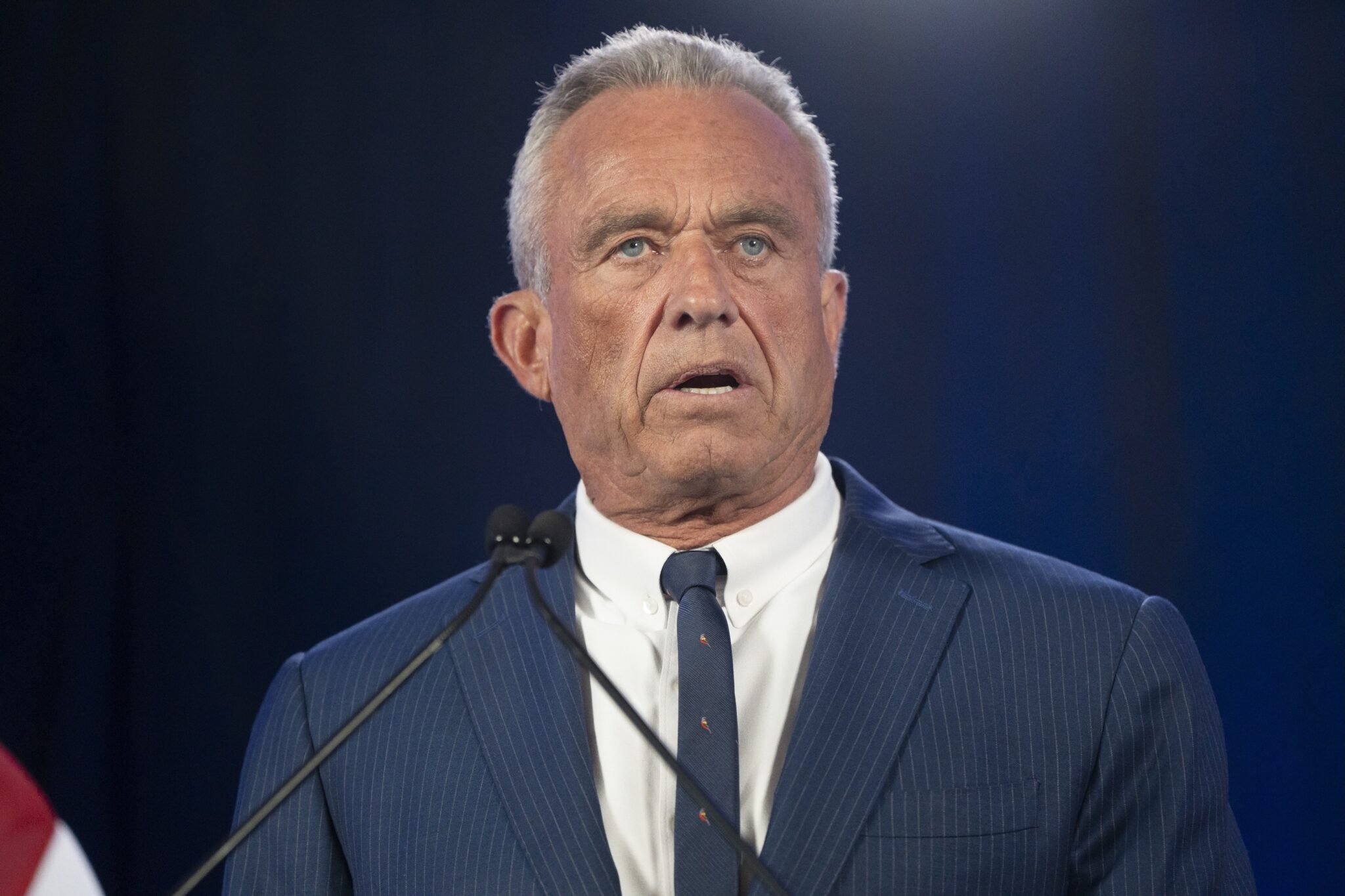
     Robert F. Kennedy Jr. (Photo by Rebecca Noble/Getty Images)

    By:  Ohio Capital Journal

    State legislators and medical experts in Ohio are decrying the nomination of Robert F. Kennedy, Jr., to the U.S. Department of Health and Human Services.

    Democratic lawmakers and a leader at the Toledo Lucas County Health Department expressed particular concern over access to health care and the future of vaccination requirements and information.

    “I think the question is are you going to trust somebody to run our entire health enterprise in this country who has no scientific background to understand why doctors, nurses, dentists are recommending that we actually do these things,” said Dr. Jonathan Ross, board president for the TLCHD.

    State Rep. Michele Grim, D-Toledo, who holds a master’s in public health, said the comments Kennedy, Jr., has made about vaccines in the past makes her nervous about his leadership of a federal medical agency with a multi-billion-dollar budget.

    “I know that vaccines save lives,” Grim said during a press conference hosted by Protect Our Care. “We eradicated small pox with vaccines, we almost eradicated polio, but now that is coming back because of the vaccine hesitancy.”

    Grim also takes issue with Kennedy’s “arcane” views on HIV/AIDS, something she focused on as part of her public health education. She said the views he’s expressed, are “very problematic in that space.”

    Ross, Grim and her fellow state Reps. Terrence Upchurch and Elgin Rogers said they hope the Trump administration will reconsider Kennedy, Jr.’s appointment, but failing that, they urged the U.S. Senate to conduct thorough questioning of the nominee, ultimately stopping the appointment.

    “I think that this appointment is probably the most dangerous, because it has a great impact on the public health, not just of the people of Ohio, but everyone in this country,” Upchurch, D-Cleveland said.

    GET THE MORNING HEADLINES.


    Ross and the legislators are concerned about the state of the overall national health care system with the appointment of Kennedy, Jr., but they see potential problems at the state level as well.

    “I think what impacts we’ll see is there could be less funding for our health departments, there could be some vaccine hesitancy, and I think we’ve seen that on the local level and also on the state level,” Grim said.

    Ross pointed to the possible reversal of insurance protections for Americans up to age 26 and undoing of Medicaid expansion as issues that could lead to increased health issues, and increased economic issues on top of everything else.

    With a loss of coverage in the Medicaid space, and if threats the Trump administration has made previously about repealing the Affordable Care Act come to fruition, crippling medical debt could fall on more and more Americans, leading to bankruptcies, along with unnecessary hospitalizations because of a lack of health coverage.

    “Being poor is also very bad for your health,” Ross said.

    Rogers, D-Toledo, said the disparities that already exist in health care for communities of color could also get worse with leaders lacking the information they need to make positive change.

    “If you have leaders who don’t understand the science, who are willing to ignore the science, they’re going to ignore other factors across the state of Ohio and that impact the people of Ohio who come from the most trying conditions,” Rogers said.

    A way forward could include state-level legislative action to protect certain aspects of the health care system that may be impacted by the new administration, and the new appointment. Ross said Medicaid work requirements that were considered in Ohio and federally would not be the way forward, and keeping an eye on efforts to require work as part of the Medicaid eligibility would help preserve the health care landscape.

    “People are more likely to be able to work if they have health care coverage, so precluding health care coverage for people who are not working is the opposite of what you want to do,” according to Ross.

    The legislators pledged to keep public health at the forefront of the minority caucuses priorities, though they face a tough slog leading a charge in a Statehouse with GOP supermajorities in both chambers.

    “I can see a world where there is another effort to attack vaccinations (on the state level),” Upchurch said.

    For Grim, whether Kennedy, Jr., is confirmed or not, it’s up to legislators to make sure the public and their fellow legislators know that a loss of Medicaid benefits or any hits to public health would negatively impact all Ohioans, not just a small minority.

    “We need to make sure that our caucus is a voice for public health and the benefits of vaccines,” Grim said.

    YOU MAKE OUR WORK POSSIBLE.

    _______________
    Susan Tebben
    Susan Tebben

    Susan Tebben is an award-winning journalist with a decade of experience covering Ohio news, including courts and crime, Appalachian social issues, government, education, diversity and culture. She has worked for The Newark Advocate, The Glasgow (KY) Daily Times, The Athens Messenger, and WOUB Public Media. She has also had work featured on National Public Radio.

    Ohio Capital Journal is part of States Newsroom, the nation’s largest state-focused nonprofit news organization.

    MORE FROM AUTHOR

  • Biden’s pardon of his son draws blowback from Republicans, a few Democrats

    Biden’s pardon of his son draws blowback from Republicans, a few Democrats

    President Joe Biden delivers remarks on the results of the 2024 election in the Rose Garden at the White House on Nov. 7, 2024 in Washington, D.C. (Photo by Andrew Harnik/Getty Images)

    By:  Ohio Capital Journal

    WASHINGTON — President Joe Biden’s decision to pardon his son from federal gun and tax crimes —and any other offenses over a nearly 11-year period — has drawn outrage from Republicans, while only a few Democrats have criticized the outgoing president.

    In a lengthy Sunday night statement, Biden laid out his reasoning for reversing his long-stated position that he would not give his son a pardon. He argued that Hunter Biden was unfairly targeted by Republicans and noted that investigations began in December 2020, shortly after Biden won the presidential election.

    The pardon would cover offenses which Hunter Biden “has committed or may have committed or taken part in during the period from January 1, 2014 through December 1, 2024,” the executive grant of clemency signed by Biden said.

    “No reasonable person who looks at the facts of Hunter’s cases can reach any other conclusion than Hunter was singled out only because he is my son — and that is wrong,” Biden said.

    Trump and Jan. 6

    President-elect Donald Trump took to his social media site, TruthSocial, where he called the move  “an abuse and miscarriage of Justice!”

    Trump questioned whether Biden’s pardon would include the 29 inmates held in the District of Columbia jail for offenses related to the Jan. 6, 2021 attack on the U.S. Capitol. Of those, 27 are charged with assaulting law enforcement after Trump riled up his supporters to overturn the presidential election he lost.

    “Does the Pardon given by Joe to Hunter include the J-6 Hostages, who have now been imprisoned for years?” Trump wrote.

    With the move, Biden joined Trump and former President Bill Clinton in pardoning family members.

    Biden has one of the lowest clemency rates compared to prior presidents. There are currently more than 10,500 petitions for clemency that were submitted to the White House, according to recent Department of Justice clemency statistics.  

    Trump granted 143 pardons during his first term and so far Biden has granted 26 pardons, including his son’s. Former President Barack Obama granted 212 pardons.

    Advocates and Democrats have pressed Biden to exert his clemency powers on behalf of the 40 men on federal death row before his term expires in January. The push comes as Trump is set to return to the White House. The former president expedited 13 executions of people on federal death row in the last six months of his first term.

    The co-executive directors of Popular Democracy in Action, a progressive advocacy group, Analilia Mejia and DaMareo Cooper, said in a joint statement that Biden should “provide the same compassion he gave his son and pardon the 10,000 clemency petitions on his desk.”

    “The President has the power to provide clemency to thousands of people who have been wronged by the laws governing the judicial system and the political considerations that engendered them,” they said.

    Hunter Biden’s federal charges stem from a 2018 gun purchase. He lied on a form by checking a box that affirmed he was not using illegal drugs, but he did then use drugs while owning the firearm.

    A federal jury convicted him in June and the gun charges carried a possible prison sentence.

    Hunter Biden also pleaded guilty to separate federal tax charges in California.

    Target for Republicans

    Over the course of Biden’s presidency, House Republicans have held hearings and inquiries into the finances of the Biden family, focusing on Hunter Biden in an attempt to broadly stick corruption charges to the president. No evidence has shown any wrongdoing by the president.

    But the pardon gave fresh ammunition to Biden critics, who noted it contradicted what the president had long promised.

    House Committee on Oversight and Accountability Chair James Comer, Republican of Kentucky, in a statement said Sunday that Biden “has lied from start to finish about his family’s corrupt influence peddling activities.”

    “The charges Hunter faced were just the tip of the iceberg in the blatant corruption that President Biden and the Biden Crime Family have lied about to the American people,” Comer said. “It’s unfortunate that, rather than come clean about their decades of wrongdoing, President Biden and his family continue to do everything they can to avoid accountability.”

    Many Republicans criticized Biden for reversing his long-standing stance that he would not pardon his son.

    “President Biden insisted many times he would never pardon his own son for his serious crimes,” House Speaker Mike Johnson, Republican of Louisiana, said on social media. “But last night he suddenly granted a ‘Full and Unconditional Pardon’ for any and all offenses that Hunter committed for more than a decade! Trust in our justice system has been almost irreparably damaged by the Bidens and their use and abuse of it.”

    Selective Democrats object

    Democrats in Congress have largely remained silent about the pardon, but some, including Ohio’s Greg Landsman and Arizona’s Greg Stanton, criticized the move.

    “As a father, I get it,” Landsman wrote on social media. “But as someone who wants people to believe in public service again, it’s a setback.”

    Stanton in a social media post wrote that while he respected Biden, “I think he got this one wrong.”

    “This wasn’t a politically-motivated prosecution,” he said. “Hunter committed felonies, and was convicted by a jury of his peers.”

    Colorado U.S. Sen. Michael Bennet wrote on social media that “President Biden’s decision put personal interest ahead of duty and further erodes Americans’ faith that the justice system is fair and equal for all.”

    Michigan U.S. Sen. Gary Peters, chair of the Senate Homeland Security & Governmental Affairs Committee, wrote on social media that the president’s decision to pardon his son was wrong.

    “A president’s family and allies shouldn’t get special treatment,” Peters said. “This was an improper use of power, it erodes trust in our government, and it emboldens others to bend justice to suit their interests.”

    On CNN, Maryland U.S. Rep. Glenn Ivey said that he had “mixed views” about the pardoning.

    “I know that there was a real strong sentiment in, you know, wanting to protect Hunter Biden from unfair prosecution,” he said. “But this is going to be used against us when we’re fighting the misuses that are coming from the Trump administration.”

    Trump pardons

    Trump himself granted controversial pardons, including of Paul Manafort, a former campaign official who was convicted of tax and bank fraud and alleged interference by Russia in the 2016 presidential election.

    He also pardoned Roger Stone, who was convicted on charges of lying to Congress about his knowledge of Russian efforts to discredit former first lady and 2016 Democratic nominee Hillary Clinton during the 2016 presidential race.

    Trump also pardoned his son-in-law’s father, Charles Kushner, who was charged with tax evasion and retaliating against a federal witness, who was the elder Kushner’s brother-in-law. Trump on Saturday announced his intent to appoint Kushner as the next U.S. ambassador to France.

    GET THE MORNING HEADLINES.

    _____________
    Ariana Figueroa
    Ariana Figueroa

    Ariana covers the nation’s capital for States Newsroom. Her areas of coverage include politics and policy, lobbying, elections and campaign finance.

    Ohio Capital Journal is part of States Newsroom, the nation’s largest state-focused nonprofit news organization.

    MORE FROM AUTHOR

  • Ohio Republican lawmaker says giving preferred pronouns on application indicates political leaning

    Ohio Republican lawmaker says giving preferred pronouns on application indicates political leaning

    By:  Ohio Capital Journal

    A Republican lawmaker said she wants to ban Ohio public universities from asking for prospective students’ preferred pronouns on college applications because, she claims, that could indicate their political ideology and possibly affect their admission.

    State Rep. Gail Pavliga, R-Portage County, recently introduced House Bill 686, which would also prohibit a public university from asking a job candidate their preferred pronoun on an employee application. Ohio has 14 public universities.

    “There is no need for a university to require this information, it is clearly not a sufficient indicator of someone’s college readiness,” Pavliga said in her sponsor testimony at a recent Ohio House Higher Education Committee meeting. “So why should it be included in our applications? Providing an optional field for pronoun usage outrightly distinguishes groups based on their political ideology.”

    Anecdotally, she said she has talked to many young Republicans who said they don’t fill out pronoun questions on applications.

    “Those who do not respond to the pronoun prompt are much more likely to lean right on a political spectrum and those who do answer the prompt are much more likely to lean left on a political spectrum,” Pavliga said. “Applicants should not be declined admission based on their political ideology, yet without this bill that is a strong reality.”

    H.B. 686 addresses bias in higher education, she said.

    GET THE MORNING HEADLINES.


    “We are trying to assess the readiness of an individual, whether it be for employment at the university or for admission as a student,” Pavliga said. “The usage of a pronoun really provides no indication of that readiness or that qualification.”

    State Rep. Beryl Brown Piccolantonio, D-Gahanna, said people generally prefer to be addressed in the way they identify and said there is sometimes confusion around her name, causing her to sometimes receive correspondence addressed to her as Mr. Piccolantonio.

    “Beyond the issue of bias, do you think that there is any purpose to making sure that when we address people, that we’re addressing them in the way that they actually live in the world?” she asked.

    Pavliga responded by saying although a person’s preferred pronoun wouldn’t be asked on the application, she said nothing in H.B. 686 would prohibit a question from being asked about a person’s preferred pronouns at any other time.

    The Common App, an online portal many students use to apply to several colleges and universities, has an optional pronoun question. More than 1,000 colleges and universities nationwide use the Common App as part of the application process — including 13 of Ohio’s public universities. Northeast Ohio Medical University does not use the Common App.

    “I am sure if some of the biggest colleges in the country request for the field to be deactivated for their institution, that wouldn’t be a problem,” Pavliga said.

    Even though the bill is introduced by a Republican, Higher Education Committee Chair Rep. Tom Young, R-Washington Twp., said H.B. 686 isn’t a Democrat or Republican bill.

    “It’s a matter of choice and options on the applications,” he said.

    Nearly two-thirds of LGBTQ young people said it would be helpful for the people in their lives to know about more pronouns, according to the Trevor Project’s 2023 survey of mental health. 

    Follow OCJ Reporter Megan Henry on X.


    Megan Henry
    Megan Henry

    Megan Henry is a reporter for the Ohio Capital Journal and has spent the past five years reporting in Ohio on various topics including education, healthcare, business and crime. She previously worked at The Columbus Dispatch, part of the USA Today Network.

    Ohio Capital Journal is part of States Newsroom, the nation’s largest state-focused nonprofit news organization.

    MORE FROM AUTHOR

  • Ohio lawmakers working to advance local infrastructure bond issue during lame duck session

    Ohio lawmakers working to advance local infrastructure bond issue during lame duck session

    By:  Ohio Capital Journal

    If all goes to plan, lawmakers will be asking Ohio voters next May to renew a multibillion-dollar fund that helps get shovels in the ground for local public works projects like roads and sewers. The State Capital Improvement Program has been around since the late 1980s and offers competitive grants and loans for local governments’ capital projects; money for the program comes from bonds backed by the general revenue fund.

    The proposal would extend the State Capital Improvement Program for another 10 years by issuing $2.5 billion in new bonds. Voters have renewed the program three times previously in 1995, 2005, and 2014.

    The Senate has already passed its version of the joint resolution to place the measure on the ballot. The House Finance Committee held its first hearing for a companion measure this week.

    GET THE MORNING HEADLINES.

    What the program funds


    To get a sense of scale, Ohio Public Works Commission director Linda Bailiff laid out the scope of physical infrastructure the program helps maintain.

    “I think it’s over 212,000 lane miles that counties townships and municipalities are responsible for,” she said. “There’s 29,000 bridges, there’s 4,400 public water systems, and 1,000 wastewater systems.”

    “And so all of those need attention,” she explained. “Our funds pay for repair, replacement, reconstruction, rehabilitation as well as new (builds) and expansion.”

    Since its inception the State Capital Improvement Program has funded 18,860 projects around Ohio.

    In the Public Works Commission’s latest report, the agency highlights some of the projects. They range from overhauling a major thoroughfare in Columbus or replacing a bridge in Lorain County to improving sidewalks and curb ramps in the village of Willard.

    The Commission also shares a spreadsheet of the 4,000-plus projects the program has supported since 2017. Over that stretch, the program has provided $2.3 billion — $1.5 billion of which came in the form of grants — in support of $5.2 billion-worth of infrastructure improvements around Ohio.

    Mahoning County Engineer, and president of the County Engineers Association of Ohio, Patrick Ginnetti was unequivocal in his praise of the program.

    “I will say, in my opinion, this is the most successful program the state of Ohio has,” he said.

    How it works

    Under the program, Ohio is split up by county into 19 districts. The most populous counties are their own districts, and in more sparsely populated regions several counties are lumped together. To get funding, local governments submit proposals within their district which are then scored based on a district-specific set of categories.

    “Namely health and safety, the priority needs of that particular district, financial considerations, readiness to proceed, the age and condition of the infrastructure,” Bailiff offered as examples.

    Every year district level officials rank their proposals and submit funding recommendations to the Ohio Public Works Commission.

    “As long as everything complies with statute,” Bailiff said, “we go ahead and prepare funding agreements that are released about July 1 each year.”

    Grant applications can get up to 90% of the project cost covered, so local entities still need to pony up a share of funding. Loans can cover the full project cost, and they’re offered interest free.

    Bailiff adds that they’ve got a couple of state-level set aside programs, too. One earmarks $20 million annually for rural villages and townships with a population of less than 5,000. After districts have doled out their award recommendations, they go back through the projects that didn’t get the nod.

    “They select up to five projects that did not get funded at the district, that fit that definition of the village or the rural township,” she explained. “And they submit them to the small government administrator to compete on a statewide basis, so they have a second shot at funding.”

    The Public Works Commission also has a first come first serve program for emergency work.

    How it’s working out

    Ginnetti explained his office, like the offices of county engineers around the state, gets its funding from gas taxes.

    “With the inception of electric cars, hybrids, CNG vehicles, gas tax has been relatively stagnant,” he said, “so our budgets have been stagnant,”

    Ginnetti described the State Capital Improvement Program as a way to “stretch” that budget, and he pointed to his county’s sewer system as an example.

    “We’ll utilize the grant funding and also the revolving loan fund to do what is known as sewer re-lining,” he said. “It’s a nondestructive way to give us additional useful life out of our existing gravity sewer.”

    “Again, where costs are a certain dollar amount,” he explained, “it helps minimize the impact to our operating budget.”

    In the last two years, he said, they’ve paved 25 miles of road, replaced five box culverts and relined 15,000 linear feet of sanitary sewer pipes.

    “And it’s a competitive program,” he stressed, “so it’s not like communities are just given a blank check and they say go do what you want.”

    Put simply, he described, “good projects get funded; projects that may not be as urgent or as critical do not.”

    Ginnetti said his county also got assistance from the emergency funding program after a road subsidence.

    “Had the emergency program not been there,” he said, “that would’ve resulted in a road closure — a lengthy road closure — and we probably would’ve had to sacrifice a paving program or several bridges or box culverts to get the road fixed.”

    “It’s basically life support,” he added, “for all of the municipalities, townships, county government in Ohio to get work done that we wouldn’t be able to do solely on our operating budget.”

    Follow OCJ Reporter Nick Evans on Twitter.

    YOU MAKE OUR WORK POSSIBLE.

    ______________
    Nick Evans
    Nick Evans

    Nick Evans has spent the past seven years reporting for NPR member stations in Florida and Ohio. He got his start in Tallahassee, covering issues like redistricting, same sex marriage and medical marijuana. Since arriving in Columbus in 2018, he has covered everything from city council to football. His work on Ohio politics and local policing have been featured numerous times on NPR.

    Ohio Capital Journal is part of States Newsroom, the nation’s largest state-focused nonprofit news organization.

    MORE FROM AUTHOR

  • Ohio Gov. Mike DeWine signs transgender bathroom ban bill into law

    Ohio Gov. Mike DeWine signs transgender bathroom ban bill into law

    Getty Images.

    By:  Ohio Capital Journal

    Ohio Gov. Mike DeWine has signed a bill into law banning transgender students from using school bathrooms and locker rooms that match up with their gender identity.

    The law requires people at Ohio K-12 schools and universities use the restroom that aligns with their gender assigned at birth. It also bans students from sharing overnight accommodations with people of the opposite sex from their assigned sex at birth at K-12 schools.

    This does not prevent a school from having single-occupancy facilities and does not apply to someone helping a person with a disability or a child younger than 10 years old being assisted by a parent, guardian or family member.

    The law will take effect 90 days after DeWine signed the bill.

    A lawsuit is expected to be filed against this. The Ohio Capital Journal interviewed a Cleveland attorney over the summer about potential legal challenges with the bill, such as who would police such a policy?

    Several transgender Ohioans, allies and educators called on DeWine to veto the bill. The Ohio Capital Journal recently talked to a family who plans on moving out of Ohio because of anti-transgender legislation at the Statehouse.

    The bathroom ban (House Bill 183) was added to a bill that revises College Credit Plus (Senate Bill 104) in the eleventh hour of a House Session at the end of June before the lawmakers went on an extended break.

    GET THE MORNING HEADLINES.

    The Ohio Senate concurred with the changes made to S.B. 104 during their first session back from break.


    State Reps. Beth Lear, R-Galena, and Adam Bird, R-New Richmond, introduced H.B. 183. State Sen. Jerry Cirino, R-Kirtland, introduced S.B. 104.

    About 3% of high school students identify as transgender, according to recent data from the Centers for Disease Control and Prevention.

    The American Medical Association officially opposes policies preventing transgender individuals from accessing basic human services and public facilities consistent with gender identity.

    Slightly more than half of transgender and nonbinary youth in Ohio considered suicide in 2022, according to the Trevor Project.

    About a third of LGBTQ+ students were prevented from using the bathroom that aligned with their gender and slightly more than a quarter were stopped from using the locker room that aligned with their gender, according to Ohio’s 2021 state snapshot by GLSEN, which examines the school experiences of LGBTQ middle and high school students.

     Ohio Gov. Mike DeWine gives his 2024 State of the State address in the Ohio House chambers at the Ohio Statehouse on Wednesday afternoon. (Pool photo by Barbara J. Perenic, Columbus Dispatch.) 

    Forty-two percent of transgender and nonbinary students were unable to use the bathroom that aligned with their gender and 36% couldn’t use the locker room that aligned with their gender, according to the Ohio GLSEN report.

    Transgender youth who can’t use the bathroom that aligns with their gender are at a greater risk of sexual violence, according to a 2019 study published in the journal Pediatrics.

    Other states with transgender bathroom bans

    Arkansas, Idaho, IowaKentuckyOklahoma, Tennessee, AlabamaLouisianaMississippiNorth Dakota, Florida, and Utah have laws that ban transgender people from using the bathroom that matches their gender identity in schools.

    Florida, Oklahoma, Idaho, and Tennessee’s laws have all been challenged. The U.S. Court of Appeals for the 9th Circuit blocked Idaho’s law last year.

    North Carolina made history in 2016 by becoming the first state to ban bathroom access to transgender people. The law was quickly appealed in 2017 and settled in federal court in 2019, but the state ended up losing hundreds of millions of dollars as the NBA All-Star Game and NCAA events were moved out of state.

    Follow OCJ Reporter Megan Henry on X.


    Megan Henry
    Megan Henry

    Megan Henry is a reporter for the Ohio Capital Journal and has spent the past five years reporting in Ohio on various topics including education, healthcare, business and crime. She previously worked at The Columbus Dispatch, part of the USA Today Network.

    Ohio Capital Journal is part of States Newsroom, the nation’s largest state-focused nonprofit news organization.

    MORE FROM AUTHOR