Tag: Ohio Capital Journal

  • Former President Trump taps Ohio U.S. Sen. J.D. Vance as running mate in 2024

    Former President Trump taps Ohio U.S. Sen. J.D. Vance as running mate in 2024

    BY:  Ohio Capital Journal

    A little more than three years ago, J.D. Vance was just an author and conservative commentator. Now he might be next in line for the White House. It’s a dizzying political ascent for the 39-year-old man from Middletown, Ohio.

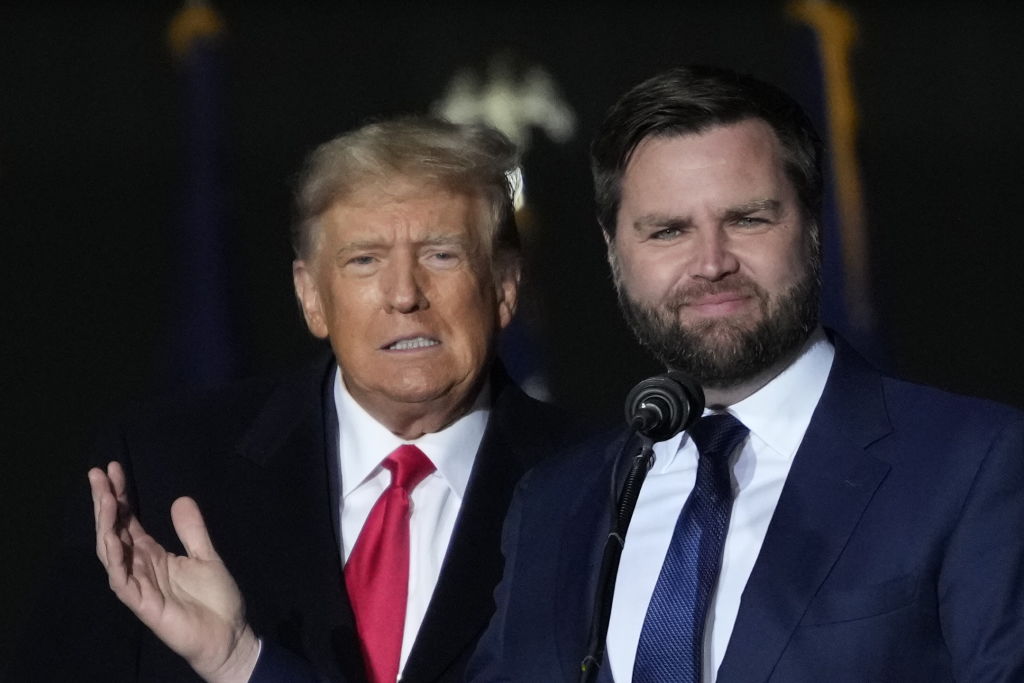
    Presumptive Republican Party presidential nominee Donald Trump announced Monday during the first day of the Republican National Convention that he has chosen Vance as his running mate in the 2024 Election.

    His 2016 memoir Hillbilly Elegy put him on the national stage as many were searching for an explanation to the rise of Donald Trump. At the time, Vance himself was extremely critical of the incoming president, but by the time he was running for office in 2022, Vance had reversed his thinking. Instead of “cultural heroin,” he argued Trump was the “greatest president in my lifetime.”

    Vance’s embrace of Trump helped him secure the former president’s endorsement in his U.S. Senate race, and since taking office, Vance has been one of Trump’s most consistent defenders. On cable news and Sunday talk shows, the Yale law grad has shown a knack for smoothing the sharp edges off of Trump’s latest pronouncements without walking back his point. As the Trump campaign works to extend beyond its conservative base, Vance’s skills as a communicator and translator — presenting a more palatable version of the nominee’s message — could help appeal to undecided voters.

    Still, there’s plenty in Vance’s own messaging that could turn some voters off. As a U.S. Senate candidate he leaned heavily into anti-immigrant rhetoric. On the campaign trail and in office, he has stridently opposed ongoing support for Ukraine. That stance is particularly notable given Ohio’s substantial Ukrainian community and Vance’s predecessor, U.S. Sen. Rob Portman co-founded and chaired the Senate Ukraine caucus. Critics argue Vance’s statements about the war mirror rhetoric coming out of the Kremlin.

    On the other hand, Vance has signed on to several bipartisan pieces of legislation. In addition to co-sponsoring rail safety and unfair trade legislation with U.S. Sen. Sherrod Brown, D-OH, Vance has backed U.S. Sen. Elizabeth Warren’s, D-MA, bill to claw back bonuses from executives at failed banks, and U.S. Sen. Sheldon Whitehouse’s, D-RI, bill that would eliminate a lucrative tax exemption for larger mergers.

    Vance has also praised FTC Chairwoman Lina Khan for taking a more critical view of business consolidation. That more aggressive posture has earned Khan the ire of traditional GOP allies like the U.S. Chamber of Commerce.

    What does he bring to the ticket?

    When a presidential nominee selects a running mate, they often attempt to answer a perceived shortcoming. The vice-presidential pick might come from an important state or region. Maybe they have strong connections with a particular interest group or represent a wing of the party. Perhaps they bring greater governing experience to the table.

    Ohio State political science professor emeritus Paul Beck argued Vance’s appeal for the ticket certainly isn’t geographic.

    “Well, I think one thing Vance doesn’t bring is votes in Ohio that Trump would need,” Beck said. “He doesn’t need them.”

    In 2016 and 2020, Trump won Ohio handily. In 2022, as Republicans nationwide underperformed, Vance and every other statewide Republican candidate won their races in Ohio.

    Beck contrasted Vance with former Vice President Mike Pence, who helped bring Christian evangelicals into the fold. Vance doesn’t have a similar affinity group to add, but Beck suggested he might help solidify support among one of Trump’s strongest groups of supporters — white working-class voters. Vance speaks their language, Beck argued, when it comes to trade and offshoring.

    “It could well be that he brings that group or at least solidifies that group in the Trump coalition,” Beck said, but allowed, “I don’t think Trump needs, necessarily, somebody who is going to strongly appeal to that particular part of his base. On the other hand he doesn’t want someone on his ticket, I would think, who would be opposed.”

    Instead, Beck emphasized Vance’s ability as a communicator. “He certainly has emerged as one of the most forceful and articulate defenders of a lot of conservative policy,” Beck argued. And as part of the ticket, he added, Vance could be an asset “downplay(ing) some of the major Democratic criticisms of Trump and deflect(ing) them in a way that is plausible.”

    Personal perspective

    Dan Driscoll first met Vance as part of a veteran’s group at Yale and described him a reassuring voice for a “scared, humbled, self-conscious” first year law student. In an interview Driscoll said he’s “thrilled for a friend I have a ton of respect for and our country to get an amazing leader.”

    Since graduating, Driscoll has settled in North Carolina. In 2020 he ran for the Republican nomination for the congressional seat vacated by former Trump chief of staff Mark Meadows. He lost in a crowded primary to the eventual winner, former Rep. Madison Cawthorn.

    Driscoll argued Vance’s run of success from a book, to a movie, to a venture capital fund — “most people, one of those would be an amazing lifetime achievement” — is no accident. He described the senator as “one of the single hardest workers” he’s ever met.

    And like Beck, he pointed to Vance’s communication skills as a kind of a “superpower,” but insisted it works because he’s saying what he believes.

    “My true genuine perspective is that he just wants to make a difference for a set of the population that seems to have been pretty overlooked since the 80’s or 90’s,” Driscoll said.

    He argued Vance is skeptical of elite political consensus on issues like trade because it has contributed the hollowing out of working-class communities like Middletown where he grew up. It was a familiar part of Vance’s stump speech throughout his U.S. Senate campaign. Driscoll brought up examples of Vance working with some of the most liberal lawmakers in the Senate, and argued he wouldn’t do so unless they shared concerns about policies impact those communities.

    “Even if what he’s saying doesn’t fit in these clean boxes of the left or the right, if he believes it, he will say it,” Driscoll argued. “And that’s really compelling to a lot of people, I think.”

    Ohio Republicans applaud

    Shortly after President Trump’s announcement came a wave of positive reaction from Ohio politicos.

    Gov. Mike DeWine, who will be tasked with finding a replacement if Republicans retake the White House, congratulated Vance and praised his “unique life story (which) will resonate with Republicans and Independent voters across the country.”

    DeWine has no shortage of options to fill the vacancy created by a Vance Vice Presidency, but whomever he settles on would face an election in 2026 to complete the remainder of Vance’s unexpired term.

    DeWine added that “J.D. will also bring a new generational perspective to the ticket,” and that his experience growing up poor in Middletown, Ohio will help him relate “to the many Americans who are struggling right now to make ends meet.”

    Republican U.S. Senate nominee Bernie Moreno has been an enthusiastic supporter of Vance, and the feeling is mutual. Vance endorsed Moreno for the U.S. Senate more than a year ago in hopes of avoiding a messy primary, and last November, he campaigned with Moreno outside Columbus — urging the crowd to “send me reinforcements.

    “President Trump made a brilliant selection in Senator J.D. Vance,” Moreno said in a statement.


    Moreno described Vance as a “dynamic, visionary leader” and the “perfect messenger” for Trump’s agenda.

    “He will fight with President Trump for our middle class, secure our border, and unleash American energy,” Moreno continued. I am proud to call J.D. a friend and I look forward to working with him to fire Joe Biden, Kamala Harris, and Sherrod Brown.”

    Several of the Ohio politicians who could be in the running if Vance’s seat opens up poured praise on the selection as well. On social media, State Treasurer Robert Sprague said “once again, President Trump hits it out of the park.” In a press release Attorney General Dave Yost called Vance a “perfect pick.”


    “Tough, smart and high-energy,” Yost went on. “He knows what it’s like to have to fight, what it’s like to win, and what it’s like to serve.”

    Both men are eyeing the governor’s mansion in 2026, and speculation has begun that DeWine might name a gubernatorial contender as way to create a less volatile GOP primary. Lt. Gov. Jon Husted is laying the groundwork to run for governor as well.

    Two recent U.S. Senate hopefuls congratulated Vance on his selection as well. State Sen. Matt Dolan, who DeWine endorsed in this year’s GOP primary, described the pick as “great news for Ohio and America. We are in need of new, results-driven leadership in Washington, DC.”

    Secretary of State Frank LaRose praised Vance as “an excellent choice,” who will “serve honorably.”

    “J.D. Vance is a patriot, a thought leader, and a fighter for America’s forgotten working class,” LaRose said.

    Ohio Democrats criticize Vance’s ‘political shapeshifting’

    In a nod to Vance’s previous comments against Trump, Ohio Democratic Party Chair Elizabeth Walters released a statement after the selection pointing to his “political shapeshifting.”

    “J.D. Vance is an out-of-touch millionaire who launched his political career by taking advantage of Ohio’s opioid crisis and has spent his time in the Senate humiliating himself in the service of a convicted felon instead of working to improve the quality of life for Ohioans,” Walters said. “His support for a national abortion ban and his twisted belief that women should stay in violent marriages for the benefit of their children exemplifies his dangerous extremism. He’s not just wrong for Ohio, he’s wrong for the country.”

    Follow OCJ Reporter Nick Evans on Twitter.


    Nick Evans
    NICK EVANS

    Nick Evans has spent the past seven years reporting for NPR member stations in Florida and Ohio. He got his start in Tallahassee, covering issues like redistricting, same sex marriage and medical marijuana. Since arriving in Columbus in 2018, he has covered everything from city council to football. His work on Ohio politics and local policing have been featured numerous times on NPR.

    Ohio Capital Journal is part of States Newsroom, the nation’s largest state-focused nonprofit news organization.

    MORE FROM AUTHOR

  • BREAKING: Trump picks Ohio U.S. Sen. J.D. Vance as his running mate

    BREAKING: Trump picks Ohio U.S. Sen. J.D. Vance as his running mate

    BY:  AND  Ohio Capital Journal

    MILWAUKEE, Wis. — Donald Trump announced Ohio U.S. Sen. J.D. Vance as his running mate Monday during the first day of the Republican National Convention, capping off months of speculation about who would get the nod as his vice presidential pick.

    Vance has not been a member of Congress long, having less than two years experience as a senator and having voted against major bipartisan bills throughout his tenure in the upper chamber.

    Before becoming a U.S. lawmaker, Vance served in the Marine Corps during the Iraq war, worked as a venture capitalist and wrote a book about growing up in Middletown, Ohio. He holds a law degree from Yale.

    “After lengthy deliberation and thought, and considering the tremendous talents of many others, I have decided that the person best suited to assume the position of Vice President of the United States is Senator J.D. Vance of the Great State of Ohio,” Trump, who will be nominated as the 2024 Republican presidential candidate on Thursday night, posted on social media.

    “J.D. has had a very successful business career in Technology and Finance, and now, during the Campaign, will be strongly focused on the people he fought so brilliantly for, the American Workers and Farmers in Pennsylvania, Michigan, Wisconsin, Ohio, Minnesota, and far beyond….,” Trump added.

    Kevin Roberts, president of the conservative Heritage Foundation, received the news while he was speaking to reporters at the foundation’s all-day policy fest in downtown Milwaukee.

    “You will see a broad smile on my face,” Roberts said, adding that he and Vance are “good friends” and that he “personifies” Heritage’s values.

    “He listens. He’s thoughtful. He’s funny. He and I had a similar upbringing, challenging childhood, so we hit it off like that when we met. He’s obviously going to be his own man. He’s got to work with our conservative standard bearer,” Roberts said. “The second thing is in terms of policy, he understands the moment we’re in in this country, which is that we have a limited amount of time to implement great policy on behalf of forgotten Americans.”

    Trump’s former Vice President Mike Pence has distanced himself from Trump since the Jan. 6, 2021, attack on the U.S. Capitol building — requiring Trump to find a different person to join him on the ticket this year.

    Pence was in the Capitol that day, when a pro-Trump mob attacked police officers, broke into building and disrupted Congress’ certification of the electoral college votes for President Joe Biden.

    Pence has been critical of how the Republican Party has changed under Trump’s leadership, including rejecting how the platform evolved on abortion this year.

    The Biden-Harris campaign immediately slammed the selection of Vance.

    “Donald Trump picked J.D. Vance as his running mate because Vance will do what Mike Pence wouldn’t on January 6: bend over backwards to enable Trump and his extreme MAGA agenda, even if it means breaking the law and no matter the harm to the American people,” said Biden-Harris 2024 Chair Jen O’Malley Dillon.

    “Over the next three and a half months, we will spend every single day making the case between the two starkly contrasting visions Americans will choose between at the ballot box this November: the Biden-Harris ticket who’s focused on uniting the country, creating opportunity for everyone, and lowering costs; or Trump-Vance – whose harmful agenda will take away Americans’ rights, hurt the middle class, and make life more expensive  – all while benefiting the ultra-rich and greedy corporations.”

    Vance background

    Vance was born in Middletown, Ohio in August 1984. After graduating from high school in 2003 he enlisted in the Marine Corps, later deploying to the Iraq War.

    He attended Ohio State University, where he received a bachelor’s degree in political science and philosophy in 2009. Vance went on to attend Yale Law School, graduating in 2013 before working for the law firm Sidley Austin LLP.

    Vance gained national attention with his 2016 memoir, “Hillbilly Elegy: A Memoir of a Family and Culture in Crisis,” which tells the story of him growing up in poverty in the Rust Belt. However, the book faced backlash from many historians and journalists over his depictions of Appalachia and the people who live there.

    The 39-year-old worked in San Francisco in the tech industry as a venture capitalist. He served as a principal at one of the firms of Peter Thiel, the co-founder of PayPal.

    Vance later moved back to Ohio and raised more than $90 million to co-found a venture capital firm in Cincinnati, Narya Capital, which received financial backing from Thiel.

    Vance ran his first campaign for U.S. Senate in 2022, defeating Democratic candidate and former U.S. House Rep. Tim Ryan with 53% of the vote.

    Since being sworn into office in January 2023, Vance has voted against several big-ticket legislative items, including the law that raised the debt limit, the national defense policy bill and two must-pass government funding packages.

    Aid to Ukraine, Israel, Taiwan

    Vance also voted against legislation that held $95 billion in military and humanitarian assistance for Ukraine, Israel and Taiwan as well as a ban on TikTok within the United States unless the social media app’s Chinese parent company sold it.

    Vance was among the 18 senators who voted against that emergency spending bill heading to President Joe Biden’s desk. Another 79 senators voted to approve the legislation.

    During floor debate on the supplemental spending package, Vance spoke out against sending more aid and arms to Ukraine, arguing that there were parallels between its fight to eject Russia from its borders and the U.S. war in Iraq.

    “And the same exact arguments are being applied today, that you are a fan of Vladimir Putin if you don’t like our Ukraine policy, or you are a fan of some terrible tyrannical idea because you think maybe America should be more focused on the border of its own country than on someone else’s,” Vance said.

    “This war fever, this inability for us to actually process what is going on in our world to make rational decisions is the scariest part of this entire debate,” he added.

    Bipartisan efforts

    Vance has also worked across the aisle on bipartisan legislation during his somewhat brief tenure in the U.S. Senate.

    He sponsored a bill alongside Ohio Sen. Sherrod Brown, Pennsylvania Sens. Bob Casey and John Fetterman, all three of whom are Democrats, to address rail safety in the aftermath of the Norfolk Southern train derailment in East Palestine.

    Vance wrote in a statement released when the bill was unveiled in March 2023 that with the legislation “Congress has a real opportunity to ensure that what happened in East Palestine will never happen again.”

    “We owe every American the peace of mind that their community is protected from a catastrophe of this kind,” Vance wrote. “Action to prevent future disasters is critical, but we must never lose sight of the needs of the Ohioans living in East Palestine and surrounding communities.”

    The bipartisan legislation has yet to advance in the Senate to either a committee markup or a floor vote.

    Ashley Murray contributed to this report.


    Jennifer Shutt
    JENNIFER SHUTT

    Jennifer covers the nation’s capital as a senior reporter for States Newsroom. Her coverage areas include congressional policy, politics and legal challenges with a focus on health care, unemployment, housing and aid to families.

    Ohio Capital Journal is part of States Newsroom, the nation’s largest state-focused nonprofit news organization.

    MORE FROM AUTHOR

    Ariana Figueroa
    ARIANA FIGUEROA

    Ariana covers the nation’s capital for States Newsroom. Her areas of coverage include politics and policy, lobbying, elections and campaign finance.

    Ohio Capital Journal is part of States Newsroom, the nation’s largest state-focused nonprofit news organization.

    MORE FROM AUTHOR

  • U.S. House Speaker cites unproven Ohio evidence in support of new proof-of-citizenship voting bill

    U.S. House Speaker cites unproven Ohio evidence in support of new proof-of-citizenship voting bill

    BY:  Ohio Capital Journal

    The so-called SAVE Act would require documents like a passport or birth certificate to register to vote and echoes a Kansas law that disenfranchised more than 30,000 voters

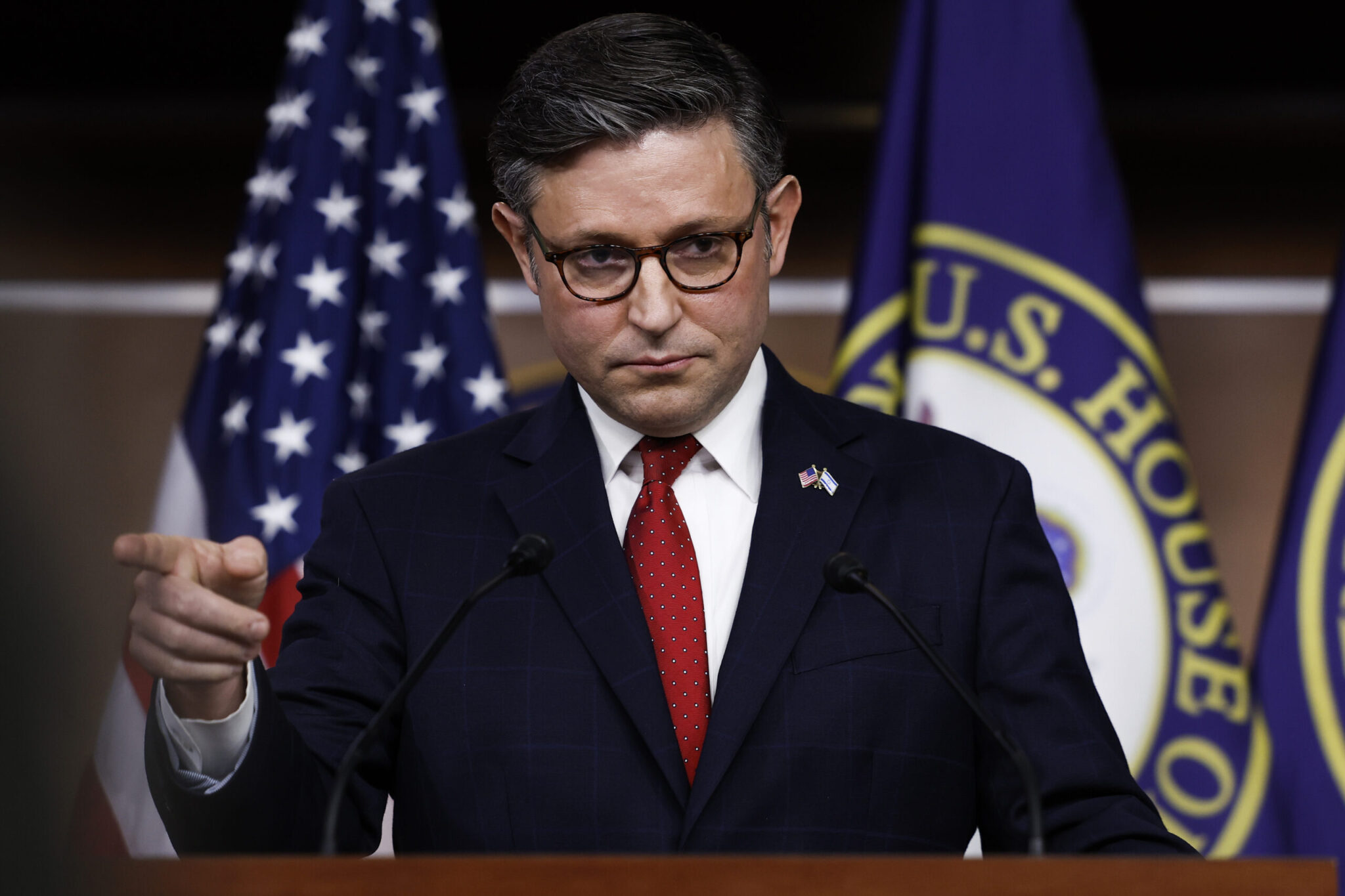
    This week the U.S. House approved the Safeguard American Voter Eligibility, or SAVE, Act, which contemplates dramatic changes to the way Americans register to vote and cast their ballots. The measure is a priority for House Speaker Mike Johnson, and he invoked dubious reports of noncitizens on Ohio’s voter rolls in a white paper backing the bill.

    The proposal demands documentary proof of citizenship to vote, and the list of acceptable documents is narrow. In Ohio, most voters would probably need to present a passport or a birth certificate and photo ID to register.

    More than 21 million eligible voters don’t have those documents at the ready, according to a recent study conducted by the University of Maryland Center for Democracy and Civic Engagement.

    Realistically, the SAVE Act is likely dead-on-arrival in a Democratically controlled U.S. Senate. President Biden has committed to veto it if it made it to his desk. But critics warn that’s not the point. Instead, they argue the bill could lay the groundwork for spurious allegations of voter fraud following the election this fall.


    “This is the first act,” America’s Voice senior research director Zachary Mueller said during a press conference ahead of the vote. The organization works to advance immigration reform that would create a pathway to citizenship for undocumented people.

    Already, Johnson and other Republicans are framing Democratic opposition as trying to allow noncitizens to vote. And if Republicans lose elections in November, Mueller went on, the SAVE Act’s failure offers an antecedent for the GOP to argue “the reason why we didn’t win is because immigrants looted the ballot box and stole this election with the support of Democratic elites. And that lie is extremely, extremely dangerous.”

    Ohio connections

    To drum up support, Speaker Johnson’s office sent around a white paper insisting there is “irrefutable evidence” of noncitizens illegally registering and voting in U.S. elections. Among his examples was Ohio Secretary of State Frank LaRose’s recent report of 137 suspected noncitizens on Ohio’s voter rolls.

    Although it’s possible some of those individuals have committed fraud, LaRose hasn’t proven it. And in an interview with conservative talk radio host Bob Frantz, he acknowledged those registrations could be “the result of an honest mistake.”

    Under federal law, the BMV and other state agencies have to offer people seeking services voter registration forms. That’s part of the so-called Motor Voter law that has been on the books since the mid-1990s. In some cases, ineligible people fill out the forms, and even identify themselves as ineligible, but their registration is processed anyway.

    Another potential explanation for those 137 flagged registrations may be for people who were recently naturalized. While a new citizen is an eligible voter as soon as they take the oath, until they visit the BMV, they might still look like a noncitizen in state records.

    Of the 500-plus cases LaRose flagged before this latest batch, an Ohio Capital Journal investigation showed just one resulted in charges.

    Although Republican officials regularly invoke the threat of noncitizens voting, they’ve yet to produce evidence of any widespread fraud. Brennan Center for Justice voting rights director Sean Morales-Doyle argued that’s because the consequences are severe and there’s no discernible benefit for the fraudulent voter.

    “It’s a fairly unique crime,” he said, “in which the way you commit the crime is by putting down on paper, in a government record, your information, and the proof that you are committing the crime.”

    He described it as an “infinitesimally rare phenomenon” for a noncitizen to vote illegally.

    “And frankly, most of the time it turns out it was an accident,” he said. “It’s someone who misunderstood or often was misled about their eligibility, because someone who’s going in fully informed just isn’t going to take this kind of risk.”

    Still, without evidence, Speaker Johnson claimed, “it is highly likely many more noncitizens remain registered to vote in Ohio.”

    The speaker pointed to Ohio’s list maintenance program and argued it’s too cumbersome a process for identifying and removing alleged noncitizens.

    But Ohio’s process for removing active voters reflects requirements laid out in the Motor Voter Act. In 2018, the U.S. Supreme Court upheld the process. Writing for the majority, Justice Samuel Alito described how Ohio’s system follows federal requirements “to the letter.”

    The SAVE Act does nothing to alter those restrictions.

    Acceptable documents

    Under the SAVE Act, voters would need to establish they are who they claim to be and that they’re a citizen of the country. That might seem simple, but it gets complicated quickly.

    A driver’s license alone doesn’t work, unless it indicates citizenship. A handful of states offer that feature, including for instance, some along the border with Canada. But many states like Ohio do not.

    A Social Security number won’t help either. Johnson’s white paper argues asylees, parolees waiting for a court date and people who have overstayed their visa could have gotten one for work authorization or benefits. Notably, there are three different kinds of social security cards, and those groups get restricted versions. Rather than taking steps to wall off those Social Security numbers from voter rolls — or to develop an alternative system for work and benefit access — the SAVE Act eliminates social security numbers as a form of verification altogether.

    In terms of singular documents, the bill allows for any “valid government-issued photo identification card issued by a Federal, State or Tribal government showing that the applicant’s place of birth was in the United States.” But in practice, the only option in many states and situations would be a valid passport. That means most voters would have to provide a photo ID and a document related to their birth, adoption or naturalization.

    Morales-Doyle argued there would be “devastating” consequences for voter eligibility if those restrictions were allowed to take effect.

    “Nine percent of adult American citizens don’t have documentary proof of citizenship handy,” he said, referencing the University of Maryland study.

    “When you think about it, whether you have an up-to-date and accurate, with-your-current-name-on-it passport or birth certificate that you can grab when you go to register to vote, literally (21.3) million adult American citizens don’t have that.”

    Contingency plans

    Even if a prospective voter has or can get the necessary documents, they could face further hurdles if their name doesn’t match up — say because of marriage or a divorce.

    The legislation doesn’t explicitly lay out how to account for those discrepancies. Instead, it directs the federal Election Assistance Commission and each state to develop guidance on what additional documentation a citizen needs to provide.

    For Americans who simply don’t have documentary proof of citizenship, the bill offers a similar catch-all process. The voter would have to bring whatever evidence they have and sign an “attestation under penalty of perjury” that they’re an eligible citizen. The election official would also have to sign an affidavit approving their application and explaining why their documents were sufficient.

    Mueller from America’s Voice dismissed that provision as a “fig leaf,” and Morales-Doyle noted the bill also threatens election workers with fines and jail time if they wind up registering a noncitizen.

    Morales-Doyle added one state in particular already tried the same idea. Former Kansas Secretary of State Kris Kobach led the charge on legislation requiring voters there to show proof of citizenship to register. The law had its own “alternative route,” Morales Doyle explained, where voters could provide other documents to demonstrate their citizenship.

    But in practice it led to more than 30,000 voters having their registration suspended or canceled. A federal judge struck down the law in 2018 and an appeals court upheld that ruling in 2020. The judges wrote that in 19 years, “at most, 67 noncitizens registered or attempted to register to vote.”

    More to the point, Morales-Doyle argued, if the measure’s backstop amounts to swearing an oath and signing a document, it threatens havoc for election administrators around the country only to recreate the current system where voters affirm their citizenship on a voter registration form.

    “If all it is doing is saying that well, actually, if you don’t have documentary proof of citizenship, you can just swear you’re a citizen, then it’s just leaving us exactly where we stand now anyway,” he said. “Which goes to show that this is not really a solution of any kind.”

    Follow OCJ Reporter Nick Evans on Twitter.

    Nick Evans
    NICK EVANS

    Nick Evans has spent the past seven years reporting for NPR member stations in Florida and Ohio. He got his start in Tallahassee, covering issues like redistricting, same sex marriage and medical marijuana. Since arriving in Columbus in 2018, he has covered everything from city council to football. His work on Ohio politics and local policing have been featured numerous times on NPR.

    Ohio Capital Journal is part of States Newsroom, the nation’s largest state-focused nonprofit news organization.

    MORE FROM AUTHOR

  • Ohio Secretary of State office move cost $147K more than promised, watchdog says

    Ohio Secretary of State office move cost $147K more than promised, watchdog says

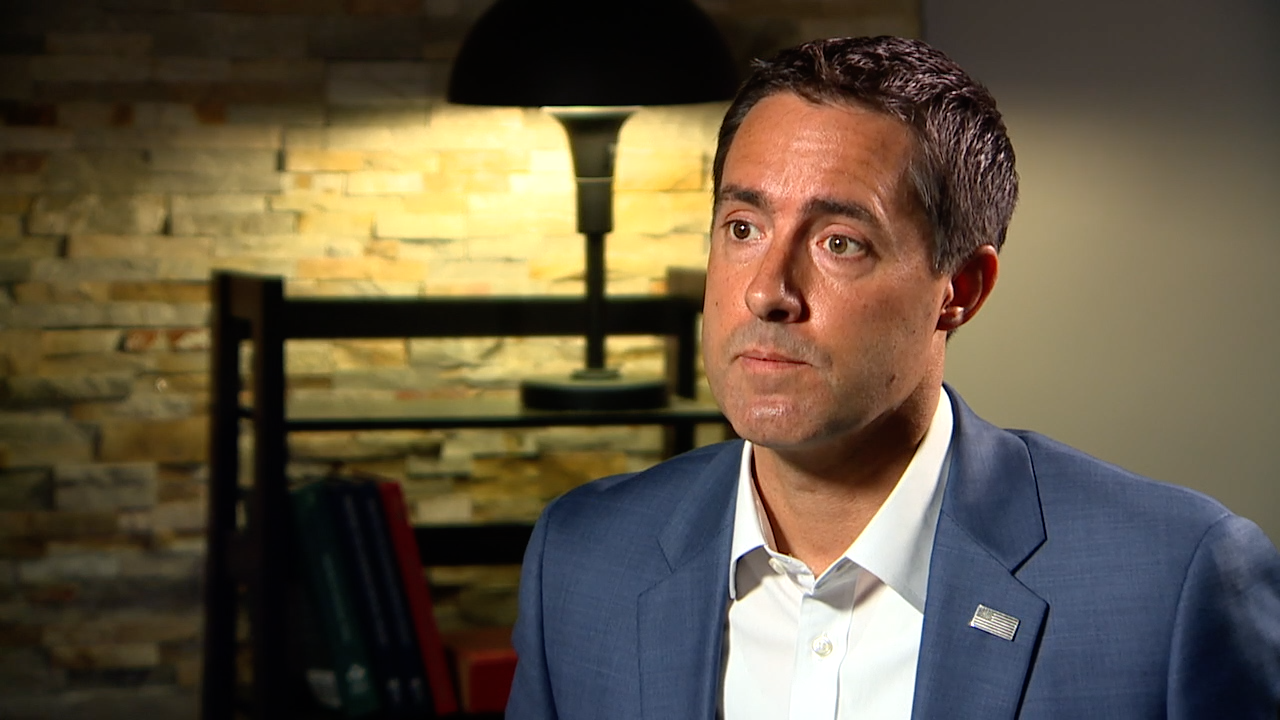
     Ohio Secretary of State Frank LaRose. (Photo by WEWS.)

    Sec. of State Frank LaRose moved his office to the same building where his campaign address was registered

    BY:  Ohio Capital Journal

    It was already controversial last fall when Ohio Secretary of State Frank LaRose acknowledged that he was moving his office to new digs and abandoning its home of 20 years.

    An analysis by a watchdog group now indicates that the move was substantially more expensive than LaRose claimed. And it all but demolishes one of the main reasons he gave for making the move — that it would save taxpayer money.

    The analysis, by the progressive group American Oversight, is based on documents obtained through an open-records request. It found that the cost to move the state office in charge of elections and business filings came in almost 25% more than the estimate LaRose gave the public.

    Last September, as he was beginning his unsuccessful bid for the Republican nomination for the U.S. Senate, local media learned that LaRose was moving his state office from 180 E. Broad St. to a swankier location along the Scioto Mile at 200 Civic Center Drive. The new location would be farther from the state Capitol, state office buildings and the heart of downtown than the three others under consideration, WCMH Channel 4 reported.

    More controversially, the new offices are also in the same building as the law offices of BakerHostetler, LaRose’s campaign attorneys — whose address LaRose used in registering his campaign with the Federal Elections Commission. That raised concerns among ethics experts that LaRose might use taxpayer-funded facilities intended to administer elections to also run for one of them.

    Suspicions were raised even further when LaRose claimed to not have a campaign headquarters as he ran for a top office in a major state. Political observers said such a large, complex campaign needed a headquarters, and there were concerns that LaRose would be using space somewhere in the new building as a de facto HQ. There were just too many temptations for abuse, they said.

    But in October, he recorded a campaign interview with a now-imprisoned Steve Bannon in what was almost certainly the building that now houses the secretary of state’s office. Asked in person after the interview if he had used the building at 200 Civic Center Drive for campaign purposes or would in the future, LaRose stalked off without answering.

    LaRose’s office refused to answer questions from the Capital Journal about those matters, or for this story.

    But in October, he recorded a campaign interview with a now-imprisoned Steve Bannon in what was almost certainly the building that now houses the secretary of state’s office. Asked in person after the interview if he had used the building at 200 Civic Center Drive for campaign purposes or would in the future, LaRose stalked off without answering.

    Then in December, LaRose’s spokeswoman conceded that he had campaigned out of the offices of BakerHostetler, but said he would not in the future.

    A major justification LaRose used for making the move was that it would save money. But even the numbers he initially employed made the assertion highly questionable.

    The move would save a little more than $11,000 a year on rent, but the relocation was estimated to cost $600,000. So it would be 2077 before the savings on rent would have covered the estimated cost of the move.

    If the estimate was accurate, that is.

    American Oversight requested “all expense reports, invoices, charge card or credit card statements, and receipts reflecting the total cost of the move of the Office of the Ohio Secretary of State to its new office location.”

    The state’s response included $183,000 in invoices from the movers themselves. But it also included $314,000 for “building maintenance” and another $139,000 paid to King Business Interiors in November, as well as other expenses.

    Taken together, they total $747,000 — $147,000 more than LaRose said the move would cost.

    That disproves his claim that the move was a good deal for taxpayers — or at least for the vast majority of those now living. If that’s what the move cost, it’ll be 68 years — or nearly the next millennium — before the rent reduction pays what it cost to move the state elections office into the building where LaRose’s U.S. Senate campaign was officially registered.


    Marty Schladen
    MARTY SCHLADEN

    Marty Schladen has been a reporter for decades, working in Indiana, Texas and other places before returning to his native Ohio to work at The Columbus Dispatch in 2017. He’s won state and national journalism awards for investigations into utility regulation, public corruption, the environment, prescription drug spending and other matters.

    Ohio Capital Journal is part of States Newsroom, the nation’s largest state-focused nonprofit news organization.

    MORE FROM AUTHOR

  • Ohio Capital Journal wins seven more Society of Professional Journalists awards

    Ohio Capital Journal wins seven more Society of Professional Journalists awards

    EDITORIAL

    David Miller is the Managing Editor of Loveland Magazine

    David Miller

    Loveland, Ohio – Because the Ohio Capital Journal is such a vital part of our reporting to the Greater Loveland Area, we are thrilled that we can share that in the “Ohio’s Best Journalism Contest” from the Society of Professional Journalists, the Ohio Capital Journal won seven awards last week, including three first place finishes and four in second place. The contest covered stories and editorial from 2023.

    Because of the Journal, Loveland Magazine equals any news outlet in the Greater Cincinnati Area in the number of reports from the Ohio Statehouse; and certainly the quality of the stories we are so fortunate to be able to publish is second to none.

    Ohio Capital Journal Editor-in-Chief and Opinion Columnist David DeWitt

    In announcing the awards, Ohio Capital Journal Editor-in-Chief and Opinion Columnist David DeWitt said, “We are incredibly honored and grateful for this recognition from our fellow journalists. We are also humbled by and grateful for all of the support we receive from our readers and Ohioans across the state.”

    That includes you, our Loveland Magazine faithful readers.

    Congratulations Journal! We are certainly very grateful for your devoted work and dedication.

    ________________

    The Ohio Capital Journal is an independent, nonprofit news organization dedicated to connecting Ohioans to their state government and its impact on their lives. The Capital Journal combines Ohio state government coverage with incisive investigative journalism, reporting on the consequences of policy, political insight and principled commentary. They are part of States Newsroom, the nation’s largest state-focused nonprofit news organization.

    ________________

    The latest awards come after the Ohio Capital Journal won seven SPJ awards last year, and five the year before. Overall, the Ohio Capital Journal has won 19 Ohio Society of Professional Journalists awards in the last three years.

    In digital media categories, Capital Journal Senior Reporter Marty Schladen won first place for best government/political reporting; reporter Megan Henry won first place for best education reporting; and Editor/Columnist David DeWitt and Columnist Marilou Johanek won first place for best overall commentary/opinion blog section.

    Reporter Susan Tebben won second place for best education reporting; OCJ/WEWS reporter Morgan Trau won second place for best government/political reporting; reporter Susan Tebben won second place for best medical/science/health care reporting, and the Ohio Capital Journal won second place for best general news site.

    Below we are sharing the award-winning entries.

    Marty Schladen

    Best Government/Political Reporting — First Place — Marty Schladen

    Ohio utility regulator front and center in massive bailout scandal

    Analysis: Bribery scandal shows how Ohio politics is polluted with dark money

    Money paid, favors done. Messages detail relationship between Ohio regulator and energy executives

    Megan Henry

    Best Education Issues Reporting — First Place — Megan Henry

    A look inside classes at an Ohio prison

    “Reading is a basic right.” Ohio parents of dyslexic students see benefits of science of reading

    22 Ohio school districts have staff members authorized to carry weapons on school grounds

    David DeWitt and Marilou Johanek

    Best Overall Commentary/Opinion blog section — First Place — David DeWitt and Marilou Johanek

    The shame of Ohio: Corrupt, gerrymandered Statehouse Republicans assault voters, again

    Gerrymandered Ohio GOP lawmakers launch tyrannical assault on 170 years of majority voter authority

    Ohio Issue 1 isn’t about any one issue — It’s about every issue and the power Ohio voters have

    Morgan Trau

    Best Government/Political Reporting — Second Place — Morgan Trau

    Ohio Sec. of State LaRose admits making constitution harder to amend is ‘100% about… abortion’

    Six transgender girls play sports in Ohio, but GOP wants them out

    How Ohio’s Issue 1 could affect the rest of the country

    Former Ohio House Speaker Householder sentenced to 20 years for state’s largest bribery scheme

    Statehouse ‘coup’ — Ohio GOP bitterly divided by deal with Democrats to elect House Speaker

    Susan Tebben

    Best Education Issues Reporting — Second Place — Susan Tebben

    Ohio homeschooling group head: Nazi curriculum ‘a sick parenting issue’ 

    Schools districts plead for universal lunch amid budget talks

    Student hunger is pervasive in Ohio

    Susan Tebben

    Best Medical/Science/Health Care Reporting — Second Place — Susan Tebben

    Ohio Issue 1’s reproductive rights amendment and protection of access to contraception

    Access to expensive fertility treatment in Ohio varies but the Issue 1 amendment seeks to protect it

    Ohio IVF patients feel attacked by abortion ban law, fear more pain coming for their families

    Best General News Site — Second Place — Ohio Capital Journal


    If you’d like to support the Journal’s work, please follow the Journal on Facebook and X, subscribe and share their free newsletter subscription with family and friends, and please consider making a tax-deductible donation.

  • Increasing the minimum wage will save 4,000 Ohio lives, study says

    Increasing the minimum wage will save 4,000 Ohio lives, study says

    BY:  Ohio Capital Journal

    There may be some drawbacks, but increasing Ohio’s minimum wage to $15 an hour would save 4,000 lives and create a $25 billion benefit to the state economy by 2036, according to a study released last month by Scioto Analysis.

    A group proposing to increase the minimum wage from the current $10.45 an hour to $12.45 and then to $15 did not submit petitions last week for the November ballot, and is now looking to bring the proposal to voters in 2025. The cost-benefit analysis by Scioto found that such an increase would reduce suicides, homicides, infant mortality and low-birthweight babies — phenomena that are associated with economic stress.

    The analysis identified two downsides to the proposed increase in Ohio.

    It would cost an estimated 73,000 jobs from employers who are likely to calculate that they can’t afford to pay the extra money. It also found that 89,000 fewer Ohioans would get associates and bachelors degrees, if national estimates are correct that increases in the minimum wage correlate to a 4% decrease in college enrollment.

    However, the analysis said those costs are far outweighed by the benefits of increasing the minimum wage.

    “We find increasing Ohio’s minimum wage to $15 per hour will result in a net benefit to society between $5 and $45 billion over the next ten years, with an average expected net benefit of $25 billion” it said. “The benefit will be driven by saved lives, with the minimum wage leading to an estimated total of 4,000 suicides, firearm homicides, and infant deaths avoided from 2027 to 2036.”

    The reasoning behind some the analysis’ estimated benefits:

    • Suicides — They relied on a 2020 study that said every $1 increase in the minimum wage corresponded to a 3.4% to 5.9% decrease in the suicide rate among adults with a high school education or less. Coupling that with the $9 million in value to the economy that the Federal Emergency Management Agency assigns to a single life, they found that suicides prevented would be worth $14 billion over 10 years in Ohio.

    • Gun violence — Economic insecurity is associated with homicide, and a Johns Hopkins University study this year found that every 1% increase in the state minimum wage relative to the state median income corresponded to a 1.3% decrease in firearm homicide rates. Given that roughly 820 Ohioans are killed by homicide each year, the state’s proposed minimum wage increase can be expected to save roughly 1,500 lives over the coming decade, creating a $13 billion benefit over 10 years under Ohio’s proposed increase.

    • Infant mortality — A study published last year in the Journal of the American Medical Association found that every $1 increase in the minimum wage is associated with a 4% decrease in infant mortality. With nearly 600 Ohio children between 28 and 364 days old dying in 2021, just over 1,000 infant lives would be saved over the next decade, creating a $9.1 billion benefit, the analysis said.


    Marty Schladen
    MARTY SCHLADEN

    Marty Schladen has been a reporter for decades, working in Indiana, Texas and other places before returning to his native Ohio to work at The Columbus Dispatch in 2017. He’s won state and national journalism awards for investigations into utility regulation, public corruption, the environment, prescription drug spending and other matters.

    Ohio Capital Journal is part of States Newsroom, the nation’s largest state-focused nonprofit news organization.

    MORE FROM AUTHOR

  • New report looks at underlying causes of Ohio’s violent crimes

    New report looks at underlying causes of Ohio’s violent crimes

    Photo by Brandon Bell/Getty Images

    More than 30,000 violent crimes — including homicide, rape, robbery and aggravated assault — were reported in Ohio in 2023.

    BY:  Ohio Capital Journal

    Many societal structures and systems can be drivers of violent crimes, according to a new report by the Health Policy Institute of Ohio.

    More than 30,000 violent crimes — including homicide, rape, robbery and aggravated assault — were reported in Ohio in 2023.

    “Even with laws and penalties such as arrest and incarceration in place, violent crime persists and causes significant harm to victims and communities,” the report states. “Community conditions and societal structures can support or prevent violent crime. Since the research evidence is clear that arrests and incarceration are detrimental to the health of individuals, families and communities, it is important to take an upstream approach for violence prevention.”

    There’s lots of opportunities as a state to mitigate violence, said Tonni Oberly, one of the authors of the report, titled Criminal Justice and Health: Social Drivers of Violent Crime.

    “We can then also be preventative and treat it as a public health issue by addressing those underlying root causes of violence,” she said.

    Violent crimes in Ohio

    Ohio ranks 34th in the nation in homicides and 80% were gun-related in 2022, according to the report.

    Homicides peaked in Ohio during the COVID-19 pandemic, but have not returned to pre-pandemic rates, according to the report. Two of Columbus’ deadliest years on records were 2021 with 204 homicides and 2020 with 175 homicides. Cleveland had 192 homicides in 2020 and 165 in 2021.

    Columbus and Dayton both recently had mass shootings in the same weekend.

    There were 18,742 incoming domestic violence cases in Ohio in 2014 — a number that has increased almost every year since with the exception of 2020 — and there were 24,534 cases in 2023.

    Societal Structures and Systems

    Racism, income inequality, zoning and neighborhood planning, gender-related social norms, education, employment, healthcare, housing and criminal justice are all structures and systems that can contribute to violent crime, according to the report.

    “All of these structures and systems are also interconnected and interrelated, whether we have typical and current ongoing racist policies that have shaped the way communities are structured and the resources that people have access to,” Oberly said. “All of that aligns with income inequality, with how neighborhoods are shaped, and funding that goes into them, and that, of course, ties into the systems that drives violent crime as well.”

    Redlining and the building the Interstate Highway System through communities of color in the 1950s are two examples of historical policies and practices.

    “These … resulted in poor community stability, lower home valuations, increased foreclosures and limited economic mobility in majority-Black, Hispanic and Asian neighborhoods,” the report said. “As a result, many of these communities experienced concentrated disadvantage, which includes limited educational and employment opportunities and higher rates of poverty, unemployment and food insecurity that continue today.”

    Ohio ranks 30th when it comes to income inequality, which puts people at risk for a shortened life span, poor health and increased neighborhood and interpersonal violence.

    The report illustrates that increases in income supports — such as increased minimum wage, Earned Income Tax Credits and the Supplemental Nutrition Assistance Program — have been shown to lower violence and result in less firearm homicides.

    Zoning and neighborhood planning can also play a role in the amount of violence in a particular area.

    The report explained the relationship between alcohol outlet density and violent crime in a neighborhood. Off-premise outlets such as liquor and convenience stores are associated with higher rates of violent crime compared to on-premise outlets such as bars and restaurants.

    “Alcohol outlet density is a prime example of how zoning impacts violence,” according to the report. “Due to inequitable zoning codes and weakened political power, communities of color and low-income neighborhoods are more likely to have a high density of alcohol outlets.”

    Ohio’s liquor sales have increased 98% in the past two decades while the state’s adult population has gone up 8%. Ohio ranks 34th in the nation for excessive drinking.

    Legislative actions

    There have been legislative attempts to curb violent crimes.

    The DeWine administration gave $20 million in grants to support more than three dozen community-based intervention programs to reduce violence and help victims of crime as part of the Community Violence Prevention Grant Program, according to the report.

    An Ohio law will go into effect in August that bans all forms of spousal rape.

    DeWine recently signed a bill into law that will go into effect in September that aims to help formerly incarcerated people find stable housing.

    House Bill 420 would create the Office of Firearm Violence Prevention within the Ohio Department of Children and Youth which would administer grant programs to reduce firearm violence. Reps. Darnell T. Brewer, D-Cleveland, and Munira Abdullahi, D-Columbus introduced the bill earlier this year, which is in the House Finance Committee.

    The report recommends implementing evidence-based firearm safety policies that includes child access prevention laws and firearm licensing laws.

    Ohio is not one of the 30 states with child-access prevention laws nor is Ohio one of the 14 states that require checks at the point of transfer for all firearms.

    The report also recommends increasing housing affordability, alcohol policies, including density zoning and pricing; and education, employment and criminal justice reform.

    Follow OCJ Reporter Megan Henry on Twitter.


    Megan Henry
    MEGAN HENRY

    Megan Henry is a reporter for the Ohio Capital Journal and has spent the past five years reporting in Ohio on various topics including education, healthcare, business and crime. She previously worked at The Columbus Dispatch, part of the USA Today Network.

    Ohio Capital Journal is part of States Newsroom, the nation’s largest state-focused nonprofit news organization.

    MORE FROM AUTHOR

  • Child care still unaffordable, inaccessible for many in Ohio

    Child care still unaffordable, inaccessible for many in Ohio

    Getty Images

    BY:  Ohio Capital Journal

    Ohio parents are working hard, sometimes at multiple jobs, but most still can’t afford child care, that is if there are child care options at all where they live.

    A new report from child care advocacy group Groundwork Ohio showed the scarcity of child care and the struggles parents had even when they could obtain child care, because the cost of that care can be prohibitive.

    The Family Voices Project Report surveyed 755 parents and caregivers between April and May of this year, all of whom had at least one child under the age of six. The 755 parents and caregivers represented 932 Ohio children.

    Demographics in the study included 75% women, with a majority of families surveyed (66%) identifying as white. In terms of family structure, 75% of those taking the study were two-parent households, and the biggest poverty level represented (43%) lived at less than 200% of the federal poverty line.

    Surveying the parents, the study focused on policy pillars of early learning and child care; health care access and quality; early childhood trauma prevention; and economic stability.

    The study found that child care subsidies “are a critical support for working families, but access is limited.”

    One in three Ohioans surveyed reported “difficulty finding child care,” and almost 60% said their current child care situation wasn’t affordable.

    “Over half of the respondents whose children were not enrolled in child care cited the expense of child care as the reason,” according to the study.

    While almost the same amount said they were reliant on the state’s Publicly Funded Child Care assistance, 40% of those struggled to find a facility that accepted it.

    The study further showed problems with the PFCC program, even for those who have already applied and been deemed eligible. A quarter of the survey participants who receive a child care subsidy “reported that their copayment was not affordable.”

    That’s when you even get the subsidies: 24% of survey-takers who applied for the program said it took more than three months to start receiving PFCC funding after applying.

    Many of those surveyed have had to change work schedules or cut back hours because of struggles to arrange child care.

    And while nearly all parents reported having a support system like partners, friends or parents, one in three parents had “high levels of stress” and 65% said they “could benefit from additional resources and support for parenting.”

    Public assistance programs were part of the parenting process for those in the study, with 27% enrolled in Medicaid, 16% a part of the Supplemental Nutrition Assistance Program (SNAP) and 13% in the Special Supplemental Nutrition Program for Women, Infants and Children (WIC).

    The biggest group of study participants (26%) were from central Ohio, followed by Northeast Ohio (20%), Appalachia (18%), Southwest Ohio (15%) and Northwest Ohio (8%).

    While the majority of participants in the study were two-parent households, those in single-parent households were represented, and reported working more than one job to make ends meet, 10% more than two-parent households.

    Working multiple jobs and struggling to find (and keep) child care has its ripple effects on child health, as shown in the study.

    Children in households with incomes between 200% and 400% of the federal poverty line were “least likely to have a regular source” of health care, according to the study, and children sometimes can’t make it to well-child visits even when they have regular care, due to a parent’s work schedule or the cost of care.

    “Parents with higher incomes (above 400% FPL) had fewer access issues; however, 15% reported not being able to access timely care for a sick child and 18% reported challenges with timely access to a specialist,” the study found.

    The legislature seems to have taken notice as advocates sounded the alarm on a “crisis” regarding child care costs, availability, and workforce for the field. Several bills, many sponsored by GOP lawmakers have been handed to committees during the current General Assembly. Though the bills won’t see further action until November since lawmakers are on summer break, Republican-led bills will have an easier chance in the GOP supermajority legislature.


    Susan Tebben
    SUSAN TEBBEN

    Susan Tebben is an award-winning journalist with a decade of experience covering Ohio news, including courts and crime, Appalachian social issues, government, education, diversity and culture. She has worked for The Newark Advocate, The Glasgow (KY) Daily Times, The Athens Messenger, and WOUB Public Media. She has also had work featured on National Public Radio.

    Ohio Capital Journal is part of States Newsroom, the nation’s largest state-focused nonprofit news organization.

    MORE FROM AUTHOR

  • Ohio traffic deaths up compared to ten years ago despite recent declines

    Ohio traffic deaths up compared to ten years ago despite recent declines

    Photo by Chip Somodevilla/Getty Images

    The pattern tracks with a national trend of fatalities declining from COVID-19 peak amid a broader upward trajectory

    BY:  Ohio Capital Journal

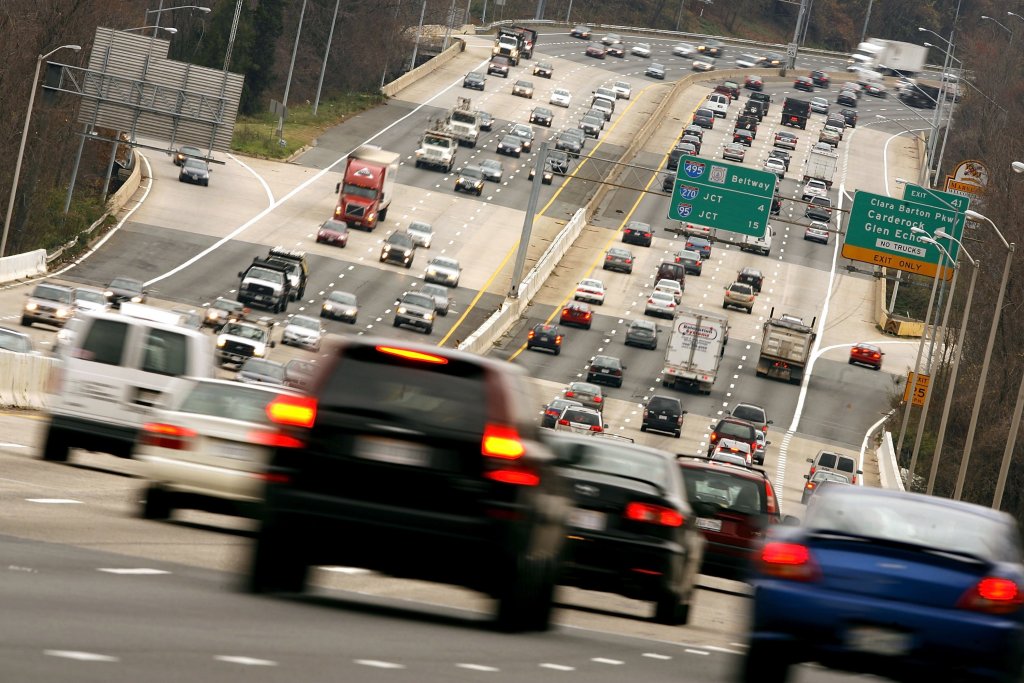
    The July 4 weekend means Ohio’s roads will be packed with holiday travelers. AAA projects almost 61 million will hit the road and another 10 million have other travel plans. A recent report digging through a decade of traffic fatality data offers a reminder to be patient behind the wheel.

    The Roadway Information Program, or TRIP, study has some good news and some bad. The transportation research nonprofit found that in the 10 years between 2013 and 2023, traffic fatalities have jumped substantially nationwide. But zeroing in on the past three, deaths have begun to decline from their peak during the COVID-19 pandemic.

    In a press release, TRIP executive director Dave Kearby argued, “While it is good news that the number of traffic fatalities is trending downward in recent years, the sharp increase in traffic fatalities over the past decade must be addressed.”

    In Ohio specifically, the number of fatalities has increased by 26% over the past decade, rising from 989 in 2013 to 1,242 in 2023. Those 2023 figures are 8% lower than the state’s peak in 2021. Applying the raw numbers to travel patterns, Ohio’s fatality rate per 100 million vehicle miles of travel amounts to an increase of 23% over the past ten years and a decline of 10% over the past three years.

    Causes

    TRIP’s report is based on data from the National Highway Traffic Safety Administration, and researchers highlighted a handful of behaviors driving traffic deaths.

    Over the past five years, speeding related crashes rose by 21% around the U.S. and accounted for more than a quarter of traffic deaths in 2023. Between 2018 and 2022, alcohol-involved crashes rose by 29%, and fatalities from distracted driving increased by 16%. The study’s authors are quick to note while cellphone use is often cited as an example of distracted driving, it’s not the only culprit — eating, talking, and adjusting controls can all take attention away from the road.

    The study’s authors note in 2023, pedestrian and bicyclist fatalities in the U.S. made up about a fifth of the total. Motorcyclists, which account for less than 1% of annual travel in the country, represent 16% of its traffic fatalities. Motorcycle deaths have also seen a marked increase recently as the share of those riding without helmets has climbed.

    All of those data points relate to national trends, but one area where researchers provided state level data is work zone fatalities. Ohio ranks tenth among states, with 106 fatalities over the past five years.

    Jake Nelson, who heads up AAA’s traffic safety advocacy, argued, “Despite a drop in U.S. crash fatalities, we know that drivers continue to engage in dangerous behaviors like speeding or driving under the influence.”

    “The funds to improve our nation’s transportation system are available, which means there is no excuse not to improve the safety of our roadways,” Nelson continued. “We must also push for real change in communities where deaths are the highest and ensure that funds are directed to those areas where they are most needed.”

    Dollars and cents

    The study also applies NHTSA’s traffic cost methodology to determine how much major crashes and fatalities cost us.  NHTSA splits costs into two buckets. Tangible economic costs cover expenses like medical care, property damage and emergency services. Quality of life costs have to do with longer term impacts like ongoing physical impairments, chronic pain and loss of lifespan.

    At the national level, TRIP estimates 2023 crashes tallied $460 billion in tangible economic costs, and almost 1.4 trillion more in quality-of-life costs. In Ohio, researchers put the figures at $15.5 billion and $47.1 billion respectively.

    Meanwhile, TRIP applauds U.S. Department of Transportation investments in safety through legislation like the 2021 Infrastructure Investment and Jobs Act. That measure put $454 billion toward highway and transit improvements over a five-year period.

    TRIP executive director Kearby argued, “making a commitment to eliminating fatal and serious injuries on the nation’s roadways will require robust investment and coordinated activities by transportation and safety-related agencies in providing the needed layers of protection for the nation’s motorists, pedestrians and bicyclists, including safe road users, safe roads, safe vehicles, safe speeds and high-quality post-crash care.”

    Tuesday, Gov. Mike DeWine announced several projects receiving funding through the Ohio Department of Transportation’s Safe Routes to School program. In all, those infrastructure improvements will cost about $8 million. Two of the projects also qualified for funding through a program included in the federal infrastructure bill.

    “Creating the opportunity for children to walk and bike to school is so important, and this funding will help communities ensure that these routes are as safe as possible,” DeWine said in a press release. “Motorists should also do their part by paying attention, especially in and around schools.”

    Improvements to sidewalks, crosswalk and signage in Fostoria and Akron will receive $425,000 from the federal legislation.


    Nick Evans
    NICK EVANS

    Nick Evans has spent the past seven years reporting for NPR member stations in Florida and Ohio. He got his start in Tallahassee, covering issues like redistricting, same sex marriage and medical marijuana. Since arriving in Columbus in 2018, he has covered everything from city council to football. His work on Ohio politics and local policing have been featured numerous times on NPR.

    Ohio Capital Journal is part of States Newsroom, the nation’s largest state-focused nonprofit news organization.

    MORE FROM AUTHOR

  • Economic benefits of eliminating Ohio income tax questioned

    Economic benefits of eliminating Ohio income tax questioned

    State Rep. Adam Mathews, R-Lebanon, speaks during an Ohio House session at the Statehouse in Columbus, Ohio. (Photo by Graham Stokes for Ohio Capital Journal. Republish photo only with original article.)

    BY:  Ohio Capital Journal

    Some Ohio lawmakers have proposed eliminating the state income tax, saying it would strengthen the economy. But a majority of economists surveyed on the matter disagree.

    Republican lawmakers in both houses of the General Assembly filed a bill that would eliminate the income tax and the commercial activities tax by 2030 on the rationale that it would stimulate the economy.

    “Ohio is ready to reclaim our role as the economic engine of the Midwest,” state Rep. Adam Mathews of Lebanon said in a January statement. “This step ensures Ohio is a destination for businesses to grow and attract people who want to work and live here, raise a family, and truly thrive.”

    Politicians — particularly those on the right — have long claimed that tax cuts have a stimulative effect on the economy.

    But some economists have said it’s not that simple. The structure of the cuts is critical, and they have to be paid for with accompanying spending cuts, they say.

    In addition, income tax cuts tend to be regressive, meaning they most benefit the wealthy in ways that don’t trickle down effectively to lower-income families. The 2017 Trump tax cuts blew up the deficit while primarily benefiting the richest Americans, according to many analyses.

    In Ohio, the state is already foregoing $1 billion a year in taxes on limited liability companies in a way that mostly benefits the wealthy. It was sold on promises that the cut would stimulate economic growth.

    However, the LLC tax cut has been in place for a decade and the Federal Reserve Bank of Cleveland in March reported that Ohio’s economic growth between the fourth quarter of 2021 and the third quarter of 2023 was the fifth-worst of any state.

    In a survey released this week, a panel of 19 Ohio economists was mostly dubious that eliminating the Ohio income tax would help the state economy. Asked if they agreed that such elimination would stimulate growth, 11 disagreed, three agreed and four said they were uncertain. And all but one said eliminating the Ohio income tax would make it difficult to balance the state budget.

    In the comment section of the survey, Jonathan Andreas of Bluffton University said that eliminating the income tax would cut down on bureaucracy.

    “Although the federal income tax is a pretty efficient and very progressive way to generate revenues, state income taxes like Ohio’s are relatively regressive and Ohio’s is particularly burdensome relative to the smaller amount of revenue given that Ohio has three income tax authorities: state, school district, and local!” he wrote. “That is an absurd amount of bureaucracy for a much smaller amount of tax revenues than the feds get. I’d prefer that we just pay one income tax to the feds and have states generate revenues primarily through higher land taxes which are more efficient and about as progressive.”

    But another economist, Will Georgic of Ohio Wesleyan University, said the Ohio proposal smacks of one tried in 2012 and 2013 in Kansas by former Gov. Sam Brownback. It failed to deliver the promised growth and it nearly bankrupted the state.

    “I think that Ohio is more like Kansas than its lawmakers want to admit (and certainly more like Kansas than we are like Florida, Washington, Nevada, or Texas),” Georgic wrote, referring to states without income taxes. “This experiment did not go well for Kansas.”


    Marty Schladen
    MARTY SCHLADEN

    Marty Schladen has been a reporter for decades, working in Indiana, Texas and other places before returning to his native Ohio to work at The Columbus Dispatch in 2017. He’s won state and national journalism awards for investigations into utility regulation, public corruption, the environment, prescription drug spending and other matters.

    Ohio Capital Journal is part of States Newsroom, the nation’s largest state-focused nonprofit news organization.

    MORE FROM AUTHOR