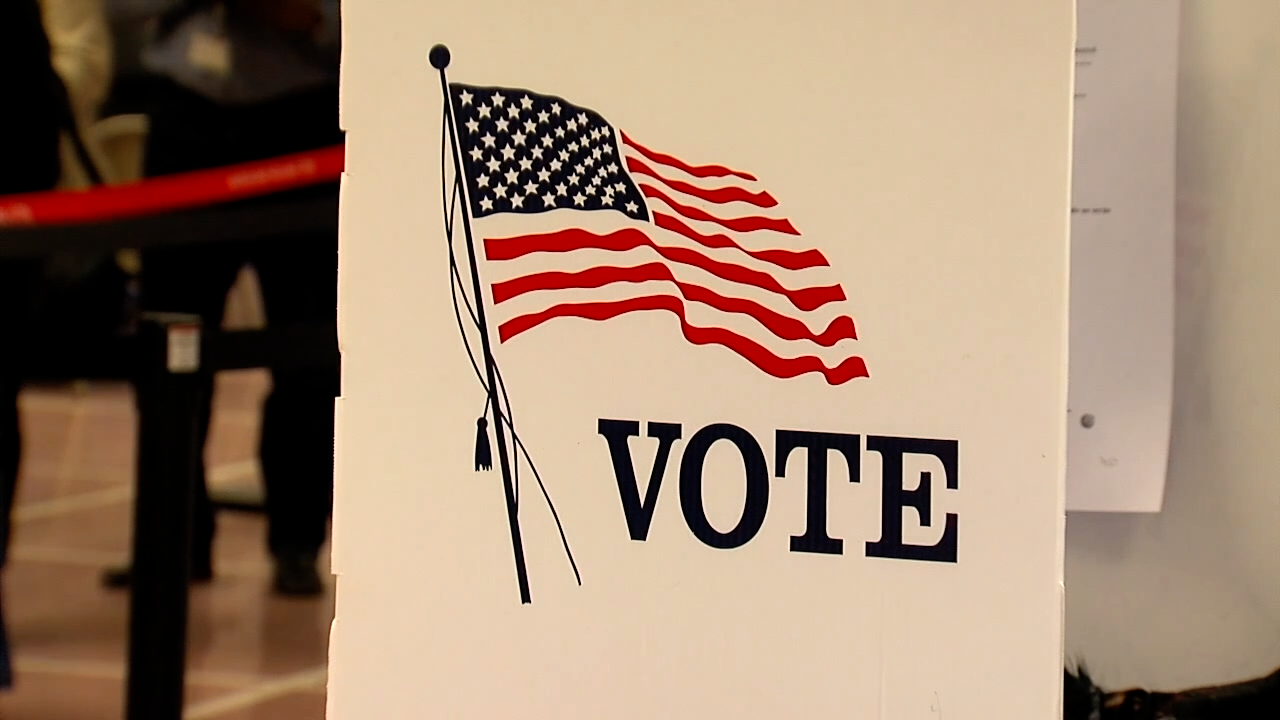
More than 150,000 Ohio voters could potentially not be eligible to vote in the upcoming Presidential election.
Ohio Secretary of State Frank LaRose recently published a list of 158,857 inactive voter registrations who are eligible to be removed from the Statewide Voter Registration Database — meaning they would be purged from voter rolls.
“These registrations are eligible for removal under the law because records show they’re no longer residing or active at the registered address for at least the last four consecutive years,” LaRose said in a statement.
Why are voters inactive?
A registered voter could be on the list if they filled out a change-of-address form with the U.S. Postal Service signaling they have moved or they have not voted at their registered address in the past four years after being marked for removal by a county’s voter registration system.
All 88 county boards of elections were required to collect and submit this data to LaRose’s office earlier this year. The voter purge is part of Ohio’s process of updating its rolls and removing voters who have moved out-of-state or died.
County boards of elections must complete their voter purge by July 22, so people on the inactive voter list have until then to take action.
What can inactive voters do to get off the list?
In order to not be removed from the rolls and still be able to vote in the November election, an inactive voter can —
Confirm or update their voter registration at VoteOhio.gov, by mail or in-person at their local county board of elections.
Update or confirm their address with their county board of elections.
Submit an absentee ballot application.
Sign a candidate or issue petition that is verified by a board of elections.
The deadline to register to vote in the Nov. 5 election is Oct. 7.
A voter whose registration has been purged can regain their ability to vote by reregistering on the Secretary’s registration website or by visiting their county board of elections.
Megan Henry is a reporter for the Ohio Capital Journal and has spent the past five years reporting in Ohio on various topics including education, healthcare, business and crime. She previously worked at The Columbus Dispatch, part of the USA Today Network.
Ohio Capital Journal is part of States Newsroom, the nation’s largest state-focused nonprofit news organization.
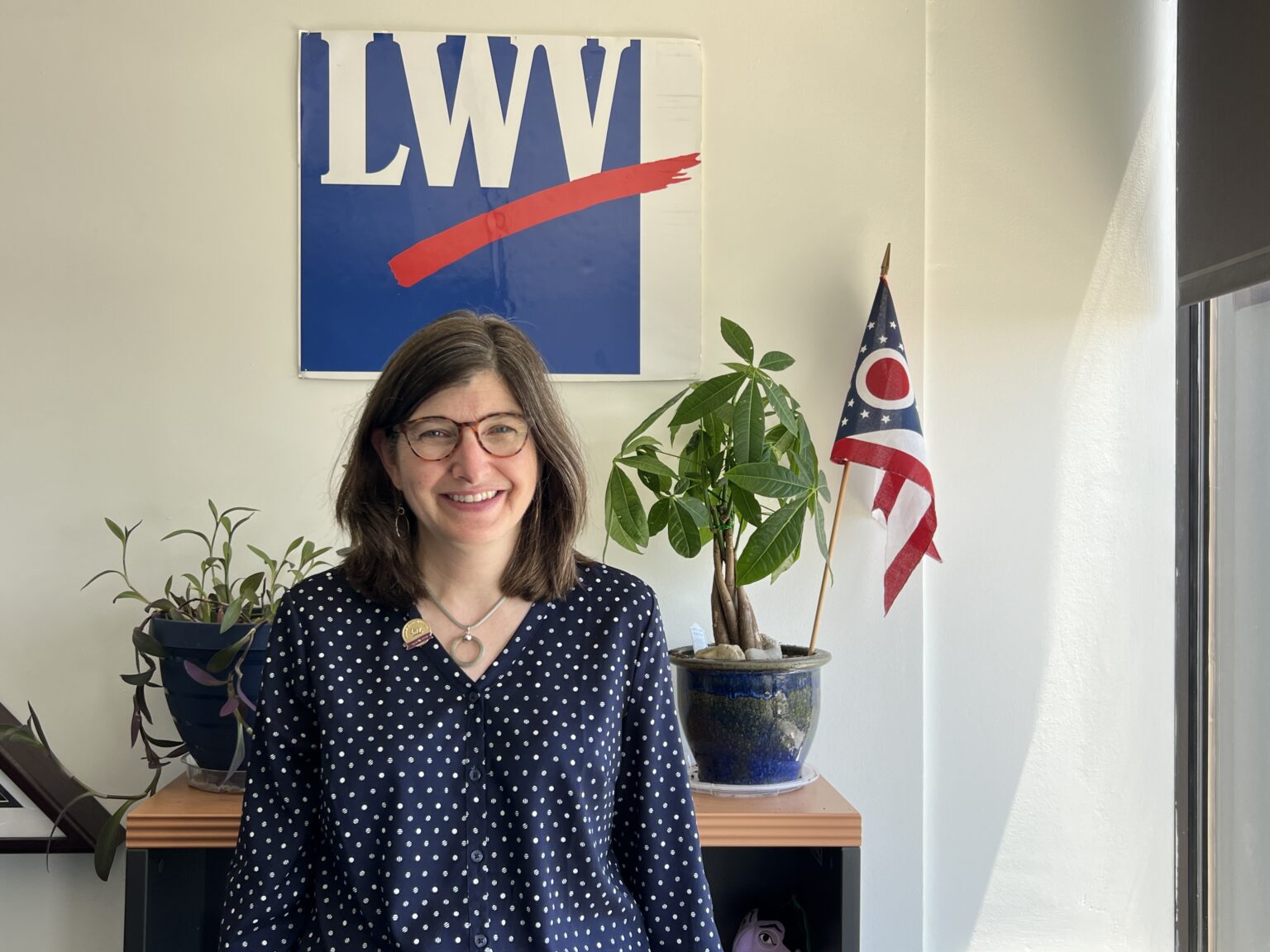
Kelly McFarland Stratman, interim co-CEO and chief of staff for the League of Women Voters of the U.S., pictured in the offices of the LWV of Ohio. (Photo by Susan Tebben / Ohio Capital Journal)
Twenty years ago, Kelly McFarland Stratman was among the Ohioans working on reform to the state’s redistricting process as a member of the League of Women Voters. Now she’s the co-CEO of the national group.
In a way, things haven’t changed for her.
Since leaving her kindergarten teaching job, McFarland Stratman has stood as executive director of the Ohio chapter and made her way up to chain to her current role: chief of staff and interim co-CEO of the League of Women Voters of the United States.
The 104-year-old organization has held a reputation of non-partisanship and focus on voter education that appealed to McFarland Stratman then, and continues to be at the center of her drive with the organization.
“The mission of the league could not be more critical or more needed,” she told the Capital Journal in an interview amid a return visit to the state that started it all for her. “Our democracy is a gift and it is something that is fragile, and it requires care and attention.”
McFarland Stratman was in Ohio to update local chapters on the work of the national group. While she heads the national arm of the organization, the co-leader recognizes that the storied history of the advocacy group wouldn’t be present without the state-level and community-level factions.
“We are really run by our volunteers, who are giving their time and their talent and their energy and their passion to the important work that has to be done,” she said.
The divisiveness that is present in the country may seem to make it difficult to hold fast to the nonpartisanship the league strives for, but working with every league chapter and encouraging comprehensive conversations among all the groups before the national organization makes a “measured opinion” is one of the guardrails McFarland Stratman says keeps the LWV out of the depths of divisiveness.
“I feel like I learn everyday from our leaders across the country,” she said.
The idea that the league was borne out of the women’s suffrage movement means the vitality of women in the democratic process certainly drives the organization as well.
“We believe in the power of women to create a more perfect democracy,” McFarland Stratman said. “The way that women work, having their voice at the table is just critically important; it is not at enough tables, not enough voices certainly when they are at the table.”
Ohio’s chapters of the League of Women Voters have been active in voting rights campaigns, in election protection at polling locations on election day and, of course, in keeping tabs on the redistricting process that overtook the last two years in the state.
During that process, the LWV of Ohio participated in lawsuits along with public hearings and outcry against the process that was then led by elected officials as part of the Ohio Redistricting Commission.
Issues like redistricting, whether or not voters should be required to bring IDs to polling locations and votes on ballot initiatives are all watched by the LWV, and McFarland Stratman said the changing democratic landscape involves adaptation.
“Each state has to fight their own fight in terms of preserving those really foundational rights,” the co-CEO said. “It means we are fighting 50 battles, or, I’ll say 51, because we are still fighting for D.C. statehood.”
But the fact that the LWV is still, after 80 years, counting Washington, D.C., statehood as one of their fervent goals, shows McFarland Stratman that holding firm to original values and having faith in the motivations that keep the league going can only help them, and the country, ride out the wave of unpredictability that is American politics.
“Whole generations have been impacted by (a lack of statehood in D.C.), but we have to keep fighting because it is the right thing to do,” she said.
In an organization with more than a century of existence, fighting for longterm goals isn’t unfamiliar to the LWV. The current political environment, where McFarland Stratman said “some of the things that we have … come to expect or assume, maybe are things we can’t expect or assume anymore,” means pushing forward with things like voter education and engagement seems all the more important.
Reassuring voters about the power of the vote remains a big issue, and McFarland Stratman said voting is “the baseline for folks to enter into the process,” but shouldn’t be the end of the line.
“This should not be that people go off to office and that’s the end of the story, we have to stay engaged in the process even after the election,” she said.
For the LWV, that involves not only creating resources to help voters know where to vote and how to vote, but also encouraging voters to pay attention to those issues and races that may not be at the top of the headlines.
“We tend to put all of the attention at the top of the ticket, but the lower-ticket races or some of the lower-ticket issues even – the school bonds and other things – those are things that affect people’s lives daily, maybe even more so than some of the other issues,” McFarland Stratman said.
And while redistricting in Ohio may have disenfranchised voters to the idea of representation in elections, the potential of a citizen-led process should be encouraging and galvanizing for residents, according to McFarland Stratman.
“Whoever’s in power, we want to make sure that citizens are at the table to make sure the redistricting process happens,” she said.
The U.S. Census Bureau is once again starting the process of collecting data for 2030, when the redistricting process will begin anew across the country, which means the league has eyes toward 2030, and every legal case on redistricting that comes in the meantime.
Creating a new system to bring the power further into voters’ hands is a big part of the league’s plans, as they recently launched a digital campaign to abolish the Electoral College.
“We know that’s a longterm goal, but again, that’s a systemic problem that’s got to be addressed so that we can really get to the democracy we want to have for everyone,” McFarland Stratman said.
As another election approaches, Ohio residents can focus on shorter-term goals, like researching candidates, considering being a poll worker on Election Day, and teaching a new generation about the right to vote by bringing them to the polls.
“I think it is critically important that people do use their power, use their voice and vote,” McFarland Stratman said. “The fight continues.”
SUSAN TEBBEN
Susan Tebben is an award-winning journalist with a decade of experience covering Ohio news, including courts and crime, Appalachian social issues, government, education, diversity and culture. She has worked for The Newark Advocate, The Glasgow (KY) Daily Times, The Athens Messenger, and WOUB Public Media. She has also had work featured on National Public Radio.
Ohio Capital Journal is part of States Newsroom, the nation’s largest state-focused nonprofit news organization.
And, ever so shamefully, we see it here in America, under the obnoxious guise of Making America Great Again, setting out to systematically destroy all those qualities that ever made her great in the first place: A self-governing constitutional republic of checks and balances cemented in the rule of law and the rights and liberty of the people — by the people, for the people.
by David DeWitt
Eighty years ago today, in the early morning hours of June 6, 1944, the largest invasion fleet in human history crossed the English Channel and launched an unprecedented, world-turning assault on Nazi-occupied France. Remembering the enormity of that moment is as critical for America now as it has ever been.
German Gen. Erwin Rommell inspects his “Atlantic Wall” beach obstacle fortifications. (Creative Commons).
The Ohio combat engineers were assigned to Omaha Beach to clear mine-laden log posts and ramps, seven-foot steel frames known as Belgian gates, five-foot tall, triple crossbeam steel hedgehogs, and large coils of concertina razor wire that can cut so deep into the flesh it can make you bleed out.
This was 500 yards of absolute hell on Earth, under heavy bombardment from 85 German machine gun sites, 45 rocket launchers, 35 blockhouse pillboxes, 18 anti-tank guns, eight artillery bunkers and four open artillery pieces raining down shells of death and destruction.
Two years after the failed Dieppe raid to test the German “Atlantic Wall” defenses, which ended in disaster, British Prime Minister Winston Churchill was reluctant at first to agree to American and Russian calls to open up the new front in the war: The Russians to take pressure off them in the east, the Americans to confront the Germans head-on instead of continuing to spin wheels in Africa and Italy. And to foreclose the possibility of Stalin’s Russia from taking Germany alone and having such an upper hand in deciding the post-war fate of the world.
With the Italian front at stalemate in 1943, Churchill acceded and Operation Overlord was born. U.S. Gen. Dwight D. Eisenhower was made Supreme Allied Commander over the operation, overseeing all Allied army, naval and air forces.
General Dwight D. Eisenhower gives the order of the day, “Full victory–nothing else” to paratroopers somewhere in England, just before they board their airplanes to participate in the first assault in the invasion of the continent of Europe. (Photo from the U.S. Library of Congress.)
As Hitler faced heavy losses to the Russians on the Eastern Front, he began to suspect a pending invasion in France and reassigned his top general Erwin Rommel to the defense of the Nazis’ Atlantic Wall. It was Rommel who ordered all of the mines and land obstacles along the Atlantic Wall that the Ohio combat engineers would soon be clearing for Allied troops and tanks to get a foothold.
The engineering feats to make the Allied invasion a success astonish. A secret oil pipeline was laid beneath the English Channel to fuel and refuel Allied invasion vehicles. Tanks were built with flailing chains in front to detonate mines. Other tanks were built to crash into the sea wall and act as ramps for yet other tanks to get hold on the beach. Gigantic floating ports were hauled across the channel to offload supplies once the beaches were taken.
On the intelligence side, the Allies played a masterful game. All of the German spies in Britain had been turned into double agents. Everybody knew the French tides would be at their lowest on June 5, so the location of the invasion, not the timing, was key. The natural location for such a large-scale attack would be Pas-de-Calais, France, across the straits of Dover from Southeast England — the shortest distance between Great Britain and France.
A dummy, inflatable Sherman tank, used to deceive German intelligence during World War 2. (Public domain photo.)
Knowing the Germans were eyeing an invasion in Calais from Dover, fake, blow-up, dummy tanks, aircraft, jeeps, and even barracks were amassed in Dover, England as a deception for German reconnaissance. Propaganda was put out that the much-feared American Gen. George Patton was amassing forces there.
The Luftwaffe were kept clear by the then-dominant Royal Air Force from the actual amassing of troops further west on the southern coast of England, across from Normandy. The Allies also transmitted fake radio calls duping the Germans into believing the attack would indeed come at Calais. Even the Allied troops thought they were going to Calais, until they didn’t.
Meanwhile, Allied bombers attacked German radar stations along the coast, and supply railways, routes, bridges, canals, and oil storage inland. It was Eisenhower who insisted on bombing transportation infrastructure, to stop Germans from shoring up defenses to the actual location of attack, despite the heavy civilian casualties.
Delayed by bad weather on June 5, the Allied invasion of Normandy was postponed one day, to June 6, and almost immediately everything went wrong. The bad weather continued. An air force raid of 13,000 bombs on German beach defenses almost all missed their targets, landing behind the German lines. Paratroopers dropped behind the German defense lines missed designated landing sites due to heavy cloud cover and were bogged down by flooded fields. Gliders bringing artillery to support the paratroopers suffered 33% casualties, but still managed to capture key bridges to stymie German reinforcements.
American soldiers landing in Normandy, France, on the morning of June 6, 1944, the beginning of the long-awaited invasion to liberate continental Europe from the grip of Nazi Germany. (Photo from the Library of Congress.)
Another fortune for the Allies was that Hitler stayed up late the night of June 5, and slept in on June 6. Rommel was back in Germany celebrating his wife’s birthday. This critically delayed German decision-making as the invasion took place.
At dawn on June 6, the weather opened up, giving the Allies the opportunity to strike around 6:30 a.m.
American forces were assigned to take Utah and Omaha beaches to secure the critical port of Cherbourg on the western side of Normandy. At Utah beach, the sea was calm and German defenses thinner, but 1,000 German soldiers awaited the Americans at Omaha. Many tanks at Omaha were launched too early and sank into the sea. Thousands of American soldiers became trapped on the beaches under German machine gun and artillery fire. America suffered 3,000 casualties on Omaha Beach alone that first day.
It wasn’t until after 9 a.m. that Hitler woke up for the day and took stock of the news, but another British deception snagged him: After the Royal Air Force dropped tin foil over the English Channel between Dover and Calais, German radar intelligence was deceived into thinking it was a fleet moving on Calais, and that Normandy was just an elaborate deception.
Eventually the sheer scale and weight of the Allied invasion of Normandy overwhelmed German defenses on the beaches and, after 10,000 casualties, a beachhead was established. The Allied troops then began to move toward their targets inland.
By the afternoon, Hitler realized how thoroughly he’d been deceived and he finally released his Hitler Youth-run Panzer tank divisions to intercept British forces taking the city of Caen. The German 88mm was able to destroy Allied tanks before they got into firing distance. The battle for Caen was supposed to last one day. It took seven weeks for Allied forces to prevail, often in house-to-house fighting through the city.
Meanwhile the other Allied troops swept their way over Normandy that summer, eventually surrounding German forces in an envelope called the Falaise pocket — the decisive final engagement in the Battle for Normandy, cinching Operation Overlord’s ultimate success. It was only days later that, on Aug. 25, Paris was liberated by the Allies after four years of Nazi occupation.
Allied forces suffered 226,386 casualties in total during the Battle of Normandy that summer. America suffered 124,394 casualties with 20,668 killed. An estimated 25,000 to 39,000 civilians were killed.
The significance
A member of the 3rd U.S. Infantry Regiment places flags at the headstones of U.S. military personnel buried at Arlington National Cemetery. (Getty Images.)
D-Day stands as one of the greatest turning points for humankind in world history. It wrote the note of doom for the fascists who had overrun Europe in the second quarter of the 20th Century, abusing the law and using goon squads to seize power, manifesting fear and terror to maintain it, and visiting the most horrifying atrocities on all “others” they deemed sub-human.
The autocrats of the mid-20th Century, whether the fascists in Germany, Spain, and Italy, or the imperialists in Japan, or the Stalinists in Russia, or the Maoists in China, all in their own ways sought to fasten the planet to the same kind of strong-arm authoritarianism that has defined most of known human civilization, through empires, feudalist oligarchies, monarchies, theocracies and dictatorships.
Standing against the forces of fascism at D-Day were the forces of the Enlightenment, and Western Civilization, and Representative Democracy, embodied in the bold heroism of the Allied troops, and the decisive planting of America’s stake as a leader on the world stage.
Today across the world we see strong-arm authoritarianism emboldened again, in Russia and North Korea, in the theocracies in the Middle East, in the autocratic rule of communist China and the corrupt, petty dictatorships strewn about Asia and Africa, and in extremist right-wing reactionary political movements in South America and in Hungary and throughout Europe.
And, ever so shamefully, we see it here in America, under the obnoxious guise of Making America Great Again, setting out to systematically destroy all those qualities that ever made her great in the first place: A self-governing constitutional republic of checks and balances cemented in the rule of law and the rights and liberty of the people — by the people, for the people.
These forces would wish all humanity return to the nationalistic isolationism of the past, to undo the post-World War II alignment of Western Civilization, to allow strong-arm authoritarians to seize power and dismantle institutions so that they no longer serve the people and the rule of law, but serve one man and one political party.
Their aims would roll back global cooperation and commitments, to instead perpetuate a crude dog-eat-dog world of autocrats jockeying for land and resources and using civilian lives as chattel and cannon fodder.
They’re playing a high stakes game of raw power that can be found throughout all of history. But what makes their movement here so un-American — this attempt to place one man above the rule of law, above the constitution, above the people, and above any and all obligations beyond himself — is that they are attempting to regress America to a mean that our foundation, history, and national identity has been one long existential exercise in defying.
In 2024, we face another historic inflection point. The eyes of the world are again upon us.
Those American soldiers who stormed the shores of Utah and Omaha beaches in the prime of their youth, they faced absolute terror; a violent, explosive maelstrom of brutal chaos, bloodshed and destruction that would traumatize any one of us for life, were we lucky enough to survive. Many did not.
Many sacrificed their lives that summer in service to an ideal — the ideal of American representative democracy forever as a bulwark against the forces of tyranny and totalitarianism.
We must always treasure their sacrifice, and never insult it by abandoning that ideal, for which they gave everything, for which those young men laid down their lives and gave their very existence.
DAVID DEWITT
Ohio Capital Journal Editor-in-Chief and Opinion Columnist David DeWitt has been covering government, politics, and policy in Ohio since 2007, including education, health care, crime and the courts, poverty, state and local government, business, labor, energy, the environment, and social issues. He has worked for the National Journal, The New York Observer, and The Athens NEWS. He holds a bachelor’s degree from Ohio University’s E.W. Scripps School of Journalism and is a board member of the E.W. Scripps Society of Alumni and Friends. He can be found on X @DC_DeWitt
Ohio Capital Journal is part of States Newsroom, the nation’s largest state-focused nonprofit news organization.
WASHINGTON — Taxpayers across the United States could be guaranteed a free public option to file federal tax returns online as the Internal Revenue Service announced plans Thursday to make its Direct File program permanent.
The pilot program offered in 12 states from March to April drew roughly 140,000 accepted returns this filing season and saved participants $5.6 million in tax preparation costs and helped filers receive $90 million in refunds, according to the IRS.
The states involved in this year’s pilot included Arizona, California, Florida, Massachusetts, Nevada, New Hampshire, New York, South Dakota, Tennessee, Texas, Washington and Wyoming.
The agency is now inviting all 50 states to participate and will accommodate however many sign on, Treasury Secretary Janet Yellen and IRS Commissioner Danny Werfel told reporters on a call Thursday morning.
“We heard directly from hundreds of organizations across the country, more than 100 members of Congress, individual direct file users and those that are interested in using direct file. The clear message is that many taxpayers across the nation want the IRS to provide options for filing electronically at no cost,” Werfel said.
Yellen touted results of a user survey that showed 90% of participants rate their experience as excellent or above average.
“They appreciated that it allowed them to quickly fix mistakes and there were no fees or upsells. The success of the Direct File pilot means there’s now strong demand for direct file from taxpayers across the country,” Yellen said.
The average American spends $270 and 13 hours filing their taxes, according to the agency’s Taxpayer Burden Survey.
The program ‘delivered’
The left-leaning Economic Security Project, which advocates for tax credits for low-income and middle class households, praised the IRS decision to make permanent the program that “delivered on the promise of free and simplified tax filing for taxpayers.”
“It was evident that taxpayers saw the value of Direct File, both in making their lives easier and demonstrating what great government customer service looks like,” Adam Ruben, the organization’s vice president of campaigns and political strategy, said in a statement Thursday.
“We are already working with our partners in states across the nation to support the expansion of Direct File next year so more taxpayers can take advantage of free and simplified tax filing in the next tax season,” he said.
Democratic Sen. Ron Wyden of Oregon, the top tax writer of the upper chamber, praised the IRS announcement in a statement Thursday as “tremendous news for taxpayers all over the country who are tired of getting ripped off by the big tax prep companies that routinely upcharge for unnecessary services, oversell the quality of their products and offer crummy customer service.”
Werfel said the IRS cannot provide an estimated cost of expanding the program because the agency has yet to learn how many states will jump on board.
The cost to run the program this year totaled $31.8 million, breaking down to $24.6 million in IRS costs, and $7.2 million in U.S. Digital Service costs to create the online platform, Werfel said.
Among the tens of billions of dollars Congress authorized for the IRS in its 2022 budget reconciliation law, otherwise known as the Inflation Reduction Act, $15 million was earmarked for exploring a way for the public to electronically file federal returns for free directly to the government, rather than through a third party.
This year’s pilot program was only available to taxpayers with basic tax situations, including W-2 income or simple credits and deductions, like the child tax credit or student loan interest.
“Our goal is to gradually expand the scope of Direct File to support most common tax situations, focusing in particular on tax situations that impact working families,” Werfel said.
When asked on the call whether the success of the program depends on who is in the Oval Office next year, Werfel responded, “I truly believe that the vision that the IRS has for the future tax administration is a nonpartisan one.”
Opposition from GOP
The free public program was met with fierce opposition from congressional Republicans and GOP state officials who criticized it as redundant, “unconstitutional” and a threat to state tax revenue.
Many cited the already established IRS Free File program, a regularly evolving partnership between the federal agency and private tax prep software companies that provide a free federal return filing option.
That 22-year-old program has been riddled with issues, including low participation and “confusion and complexity” that led millions of eligible taxpayers to actually pay the commercial partners who were supposed to offer the free service, according to a 2019 Treasury Inspector General for Tax Administration report.
A 2019 ProPublica investigation revealed deliberate tactics by Free File participant Intuit, maker of TurboTax, to cloud access to the free option.
Nearly two dozen state auditors, comptrollers and treasurers from 18 states urged the IRS to “shut down” the new Direct File pilot program because users could be confused about having to file a state return separately, therefore resulting in a loss in state revenue.
This argument is based on the fact that many commercial tax prep software companies and private tax preparers automatically prompt taxpayers to complete their state returns after filing the federal one.
The state officials who signed on to the March 25 letter to the IRS hailed from Alaska, Florida, Idaho, Indiana, Iowa, Kansas, Kentucky, Louisiana, Mississippi, Nebraska, North Carolina, Ohio, Oklahoma, South Carolina, South Dakota, Utah, West Virginia and Wyoming.
Two of the Direct File pilot program states — Arizona and New York — worked with the nonprofit Code for America to integrate a free state tax return filing option in concert with Direct File. The nonprofit reported that of the state returns filed through its tool, 98% were accepted.
Several state governments already offer free public electronic filing for state income tax returns that users must access separately through dedicated state websites, including Alabama, Kansas, Kentucky and Pennsylvania, which offer the service regardless of income level. Some states, like California and Iowa, have income thresholds for free filing.
ASHLEY MURRAY
Ashley Murray covers the nation’s capital as a senior reporter for States Newsroom. Her coverage areas include domestic policy and appropriations.
Ohio Capital Journal is part of States Newsroom, the nation’s largest state-focused nonprofit news organization.
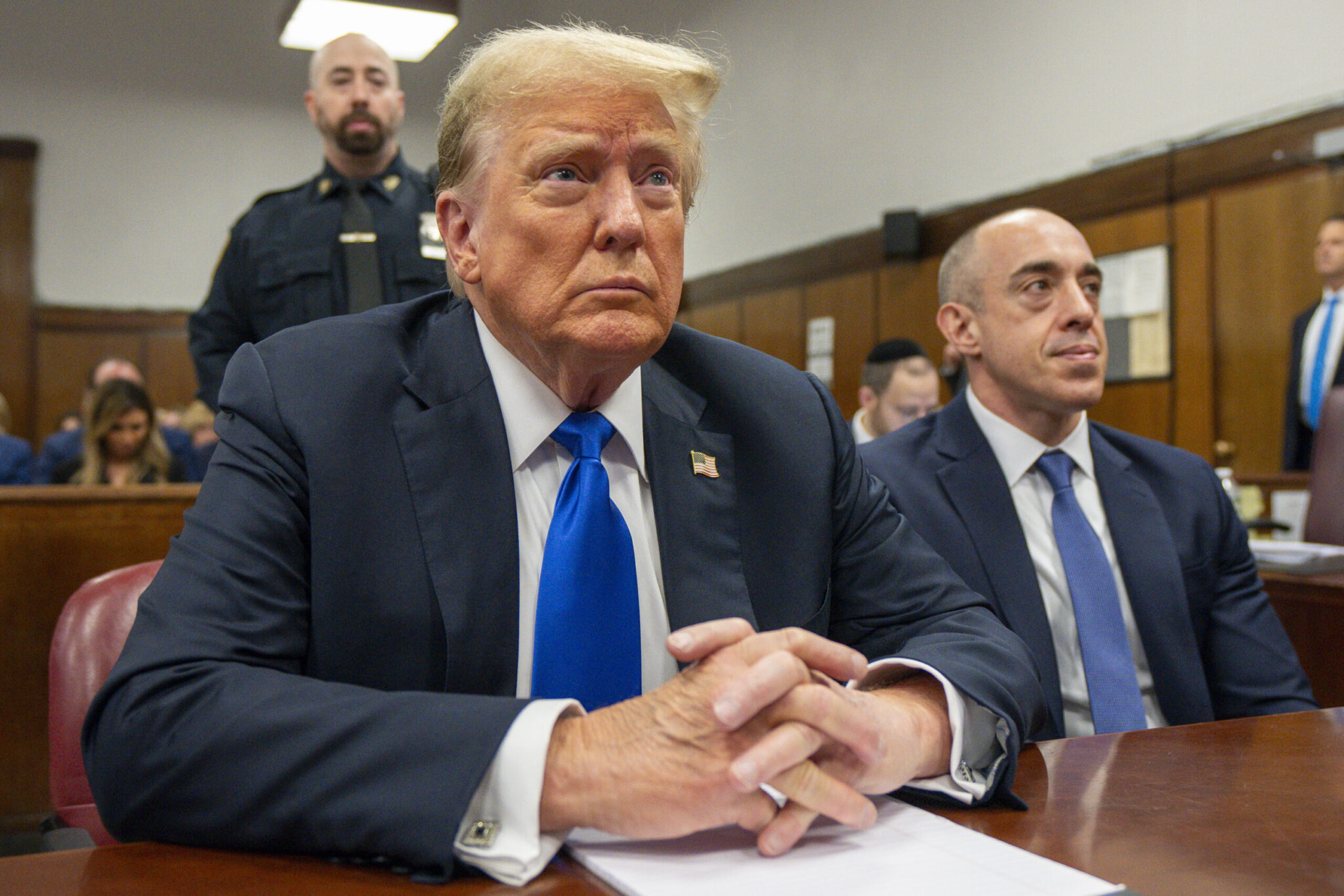
A Manhattan jury made history Thursday when it convicted Donald Trump of 34 felonies. They relate to how he paid a porn star to stay quiet just before the 2016 election — and his actions cast doubt on Trump’s legitimacy during his one term as president.
Despite now being a felon, Trump is for the third time the GOP nominee. Most of Ohio’s Republican leaders reacted with outrage to his conviction, while the governor didn’t have much to say, and the one statewide Democrat said the jury had spoken.
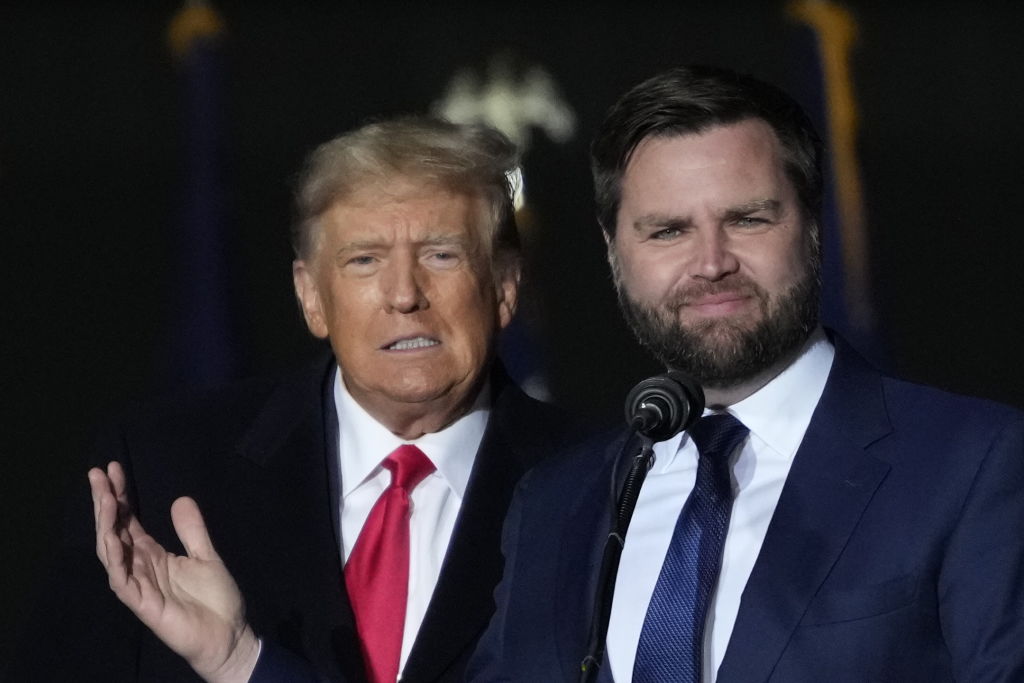
Sen. J.D. Vance is on the shortlist to be Trump’s vice presidential pick and he took to the airwaves to call Trump’s prosecution political, and to say a lot of other stuff as well. On X Thursday, Vance falsely accused the Democratic Party of inventing a crime just to prosecute Trump and he made reference to a conspiracy theory with anti-semitic overtones.
“This decision is a disgrace to the rule of law and our Constitution,” Vance wrote. “Dems invented a felony to ‘get Trump,’ with the help of a Soros funded prosecutor and a Biden donor Judge, who rigged the entire case to get this outcome. This isn’t justice, it’s election interference.”
Actually, as the jury found, it was Trump who committed election interference. And legal experts pointed out that Trump’s lawyers helped pick the jury, put on witnesses and had input in the jury’s instructions. Trump himself could have taken the witness stand, but chose not to.
Speaking from the White House Friday, President Joe Biden criticized Trump supporters for claiming that the justice system was rigged against Trump without providing any concrete evidence.
“It’s reckless, it’s dangerous, it’s irresponsible for anyone to say this was rigged just because they don’t like the verdict,” Biden said.
Ohio Attorney General Dave Yost, a likely contender for the GOP nomination to be governor in 2026, also slammed the proceedings that ended in Trump’s conviction.
“This verdict is likely to be overturned. It is not the first unjust verdict, and it is why we have courts of appeals,” he said on X. “The aptly named (Manhattan District Attorney) Alvin Bragg picked his defendant and campaigned on prosecuting him — disreputable and unethical conduct that tarnished the justice system.”
When it comes to courts of appeal, Yost has had his own difficulties. A panel of the 6th U.S. Circuit Court of Appeals on Wednesday ruled that Yost was improperly blocking signature gathering for a proposed amendment to the state Constitution that would reduce immunities the state has have from being sued. Yost on Thursday said he’d seek a ruling from the entire court.
Some of the AG’s critics have accused him of stalling.
He refused to approve a summary of the ballot language, which supporters need if they’re to gather 420,000 verified signatures from registered voters in time for the measure to make the November ballot. Yost is refusing to answer questions about a similar maneuver in 2019 that helped kill a voter-initiated repeal of a law at the center of the biggest bribery scandal in Ohio history.
Lt. Gov. Jon Husted is likely to vie with Yost for the gubernatorial nomination. Like many other Ohio Republicans, he, too, said he was outraged over Trump’s conviction for having an extramarital tryst with a porn star, paying to silence her in order to improperly influence an election and then falsifying business records to cover it all up.
“This quote from President Trump is ultimately the truth of the matter: ‘The real verdict is gonna be Nov. 5, by the people,’” Husted said on X. He then reposted that while saying further, “If you are mad about it, do something about it by donating, volunteering and voting.”
Ever merciless, some commenters reminded the lieutenant governor that he was roundly booed at a 2020 Trump rally in Vandalia as he encouraged attendees to wear masks at the height of the coronavirus pandemic. Trump played a lead role in politicizing mask wearing and downplaying a scourge that has killed nearly 1.2 million Americans.
Ohio’s top elections official also rushed onto social media to defend a newly minted felon who tried to overturn the results of the 2020 election and thereby steal the votes of 81 million Americans.
“Partisan prosecutor,” Secretary of State Frank LaRose said on X. “Activist judge. Sham trial. Bogus verdict. It’s a sad day in America when a political party is so afraid of losing its grip on power that they’re willing to abuse justice to game an election. This will not stand.”
One wag also pointed out that a jury had just found that Trump falsified numerous business records to further his conspiracy and that as Secretary of State, LaRose is in charge of Ohio’s business records. It’s unclear what — if anything — LaRose would have done if the former president faked them here in the Buckeye State.
Cleveland businessman Bernie Moreno, who is challenging Democrat Sherrod Brown for Ohio’s other Senate seat, was also vociferous in his support of the only ex-president to also bear the title “felon.”
“Today is a dark day for American democracy,” Moreno said on X. “Joe Biden and his leftwing allies engaged in election interference to prosecute their top political opponent on bogus charges. This verdict is representative of a banana republic, not a democracy. Sherrod Brown and DC Democrats should be ashamed of this weaponization of our justice system.”
His statement ignores the fact that the Biden Justice Department declined to prosecute Trump on the charges of which the New York jurors found him guilty. It also ignores the fact that the Biden Justice Department is prosecuting the president’s own son and a sitting Democratic senator.
Brown, his Democratic opponent, is facing a hard reelection in a Republican-leaning state. When asked to comment on Trump’s conviction Friday, Sen. Brown stuck to general principals.
“I’m not a lawyer or a judge but I’ve said from the beginning that no one is above the law,” he said in an email. “Ultimately this is up to the legal system to sort out and for the American people to decide in November.”
Gov. Mike DeWine’s office didn’t immediately respond to a request for comment. He’s a Republican who got on Trump’s bad side early in the pandemic, when DeWine implemented health orders that were recommended by experts.
MARTY SCHLADEN
Marty Schladen has been a reporter for decades, working in Indiana, Texas and other places before returning to his native Ohio to work at The Columbus Dispatch in 2017. He’s won state and national journalism awards for investigations into utility regulation, public corruption, the environment, prescription drug spending and other matters.
Ohio Capital Journal is part of States Newsroom, the nation’s largest state-focused nonprofit news organization.
WASHINGTON — Jurors in New York state court on Thursday found Donald Trump guilty on all 34 felony counts of falsifying business records to cover up hush money payments to a porn star ultimately to influence the outcome of the 2016 presidential election.
The first-ever criminal trial of a former U.S. president wrapped up in Manhattan, marking an extraordinary moment in American history not only for a former leader, but for one who is seeking to again hold the Oval Office. Trump, the Republican Party’s presumed 2024 presidential nominee, is now a convicted felon.
The jury deliberated for more than 11 hours, beginning Wednesday just before 11:30 a.m. Eastern and delivering the verdict to Justice Juan Merchan just after 5 p.m. Thursday, according to reporters at the courthouse.
New York does not allow recording in the courtroom but provides public transcripts of the proceedings. States Newsroom covered the trial in person on May 20.
Trump now faces penalties ranging from probation to up to four years in prison for each charge of falsifying business records in the first degree. It is unclear when Merchan will sentence Trump.
New York state prosecutors charged 34 felonies against the former president for each of the 11 invoices, 11 checks, and 12 ledger entries tied to reimbursing his former personal lawyer Michael Cohen.
Cohen, often referred to as Trump’s former “fixer,” said during trial testimony that he wired $130,000 to adult film star and director Stormy Daniels days before the 2016 election to silence her about an alleged sexual encounter with Trump.
Three criminal cases, two federal and one in Georgia, also still hang in the balance for Trump, but the likelihood of another trial happening before November’s election is slim.
This developing story will be updated.
ASHLEY MURRAY
Ashley Murray covers the nation’s capital as a senior reporter for States Newsroom. Her coverage areas include domestic policy and appropriations.
Ohio Capital Journal is part of States Newsroom, the nation’s largest state-focused nonprofit news organization.
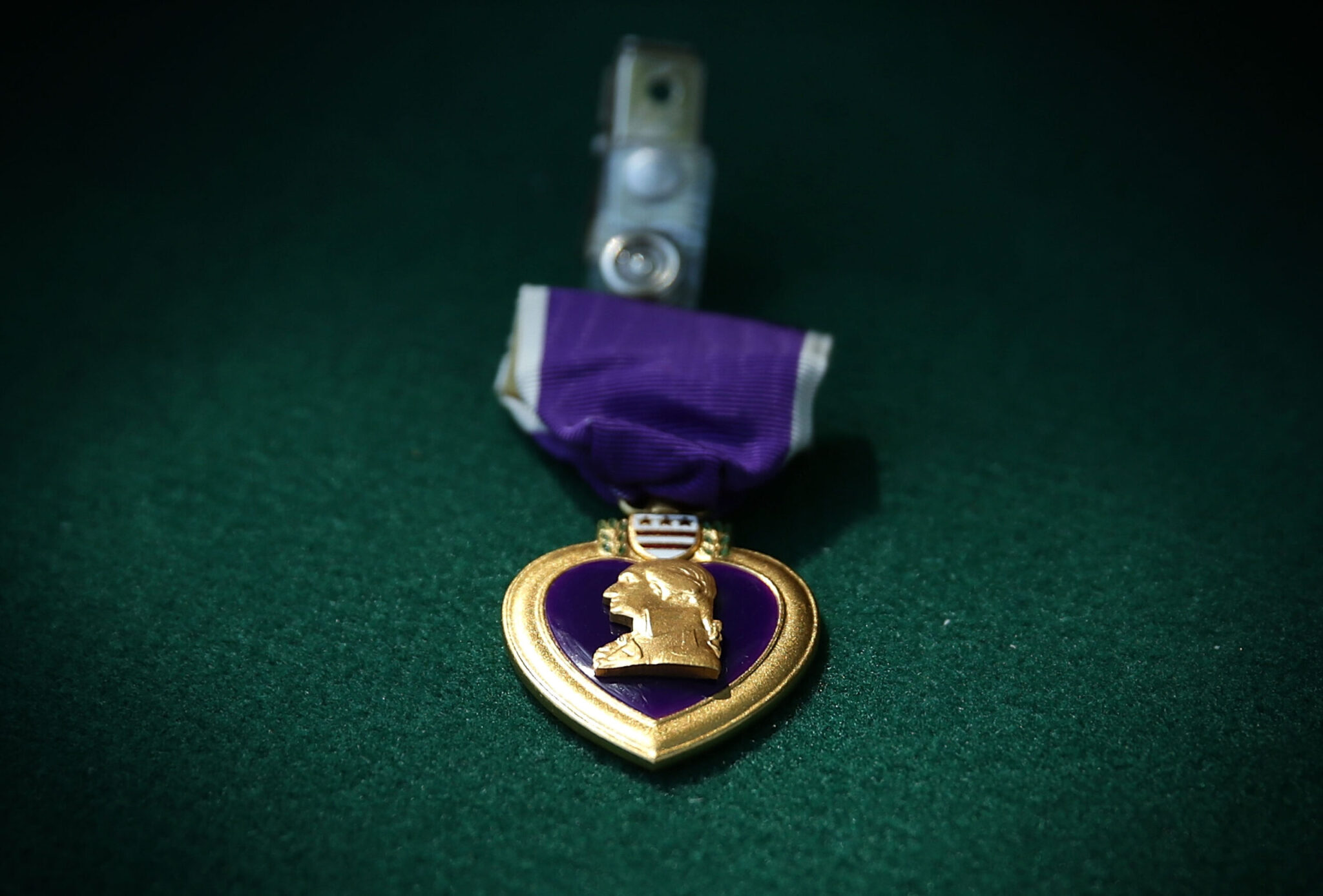
WASHINGTON — When a Purple Heart recipient named Pat reached out to U.S. Sen. Patty Murray in November to inform her that he couldn’t transfer his GI bill benefits to his children, he wasn’t expecting congressional action to solve the problem.
He simply just wanted to let the Washington state Democrat know, he told States Newsroom in an exclusive interview.
With a child about to head to college, Pat, who didn’t want his last name used, had recently been told by the Army that he couldn’t transfer his education benefits to them because he received the Purple Heart after he was medically discharged. This rule does not apply to those who receive the medal while still in service.
Murray and Thom Tillis, a North Carolina Republican, introduced a bipartisan bill Thursday aimed at closing that loophole.
The legislation, titled the Purple Heart Veterans Education Act, would permit retroactive award recipients who served on or after Sept. 11, 2001 to transfer their education benefits to one or more dependents. It was unveiled just ahead of Memorial Day, when the nation honors its deceased service members.
“As the daughter of a Purple Heart recipient, I’ve seen firsthand the enormous sacrifices Purple Heart veterans make to defend our freedoms, and I feel strongly that we should be doing absolutely everything we can to help all veterans and their families thrive,” Murray said in a statement Thursday.
“It doesn’t make any sense that service members who are awarded a Purple Heart after their service can’t transfer their GI benefits to their dependents, while those who receive it during their service can—and I am grateful to Pat, my constituent in Washington state who brought this gap in the law to my attention,” continued Murray, a senior member of the Senate Committee on Veterans Affairs.
“Our legislation will close this loophole and allow more children of Purple Heart veterans to further their education. I want to thank Senator Tillis for joining me on this legislation and I’ll be working hard to get it passed into law.”
Glitch in education benefits
Pat was medically discharged from the U.S. Army and retroactively received a Purple Heart for his actions during Iran’s retaliatory missile barrage in January 2020 on an Iraq airbase, after a U.S. drone strike killed Iranian Gen. Qassem Soleimani.
The Army later approved 39 Purple Hearts for service members who experienced the attack, according to a December 2021 report by the Army Times.
As his teenager looks to enroll at Central Washington University next year, Pat found out that by law his education benefits would only be available for transfer if he had received the award while still in service.
“My thought was, ‘I doubt that legislators would have done that intentionally.’ I just thought, you know, people probably just didn’t think about how that happens — that some people are going to get retroactive Purple Hearts, or for whatever reason in evaluating them, they’re delayed. So it’s not like an unusual thing,” Pat said in a phone interview.
“I wasn’t thinking much was going to happen, but I just wanted to write Senator Murray, who is my local senator, and let her know the issue. They responded by saying, ‘That’s an oversight on our part, and we want to make good on that.’”
Pat said he’s “grateful for Sen. Murray” and hopes his action is able to help other Purple Heart veterans. For now, his family is moving forward with the college enrollment process for his child, he said.
Benefits and dependents
Among the provisions in the legislation, Murray and Tillis’ bill would also allow veterans to split up 36 months worth of benefits to each of their dependents. For example, they could transfer 20 months to one and 16 months to another.
The bill, if enacted, would also prohibit the benefits from being treated as marital property or a marital estate asset.
And, the bill would permit dependents to access unused benefits if their veteran family member has died.
“Purple Heart recipients are heroes who honorably served our country at great costs, and this oversight that prevents servicemembers who received this distinguished award after their service from transferring their GI bill benefits to their dependents needs to be corrected immediately,” Tillis said in a statement Thursday.
“I am proud to co-introduce this commonsense legislation with Senator Murray to close this loophole and ensure every Purple Heart recipient and dependents are able to further their education,” continued Tillis, who also sits on the Senate’s Veterans’ Affairs Committee.
The number of veterans who retroactively received the Purple Heart after their post-9/11 service is unclear. The bill is estimated to cost $500,000 in mandatory spending over 10 years, according to an informal analysis provided to Murray’s office by the nonpartisan Congressional Budget Office.
The bill has received praise from veterans groups, including the Iraq and Afghanistan Veterans of America.
“Unfortunately, not every veteran’s service and sacrifice on behalf of the United States of America is fully recognized while they’re still in uniform,” IAVA CEO and Iraq War veteran Allison Jaslow said in a statement Thursday.
“The Purple Heart Veterans Education Act ensures that those veterans who’ve endured bodily harm on behalf of our nation, but weren’t recognized for it until their service concluded, are able to turn that recognition into an investment in the education of their loved ones.”
More Purple Heart recipients
The wars in Afghanistan and Iraq have “greatly increased” the number of Purple Heart recipients as the Department of Defense has added some traumatic brain injuries as a recognized condition for the award, according to the nonpartisan Congressional Research Service.
It wasn’t until a 2017 law that Purple Heart recipients were able to receive full post-9/11 GI Bill benefits regardless of their length of service. Previously, the recipients had to have 36 months of active service.
The Department of Defense does not maintain a record of the number of recipients, according to the CRS, but by law they do maintain a publicly accessible list with the permission of the veteran or next of kin.
Military historians and the National Purple Heart Hall of Honor estimate about 1.8 million Purple Hearts have been awarded since 1932. The Army Historical Foundation estimated as of 2016 that 30,000 Purple Hearts had been awarded since 2001. The CRS cited this statistic.
ASHLEY MURRAY
Ashley Murray covers the nation’s capital as a senior reporter for States Newsroom. Her coverage areas include domestic policy and appropriations.
Ohio Capital Journal is part of States Newsroom, the nation’s largest state-focused nonprofit news organization.
The Ohio Restaurant & Hospitality Alliance released the results of the survey earlier this week, which received 990 responses from tipped employees working at full-service restaurants across Ohio. The online survey was conducted in April by national research and consulting firm CorCom Inc. and had a 3% margin of error.
The survey comes as Raise the Wage Ohio is collecting signatures to put a proposed constitutional amendment on Ohio’s ballot that would raise the minimum wage to $12.75 an hour starting Jan. 1, 2025 and would eliminate Ohio’s tipped wage. Minimum wage would go up to $15 an hour starting on Jan. 1, 2026. Raise the Wage is part of a national campaign run by One Fair Wage.
“We believe it would really devastate the third largest industry in our state, which employs about 550,000 Ohioans and is still trying to recover from the pandemic,” said John Barker, president and CEO of the Ohio Restaurant and Hospitality Alliance. “Our industry is currently trying to weather the cumulative effect of record high inflation over the last three years.”
Raise the Wage Ohio needs to collect more than 413,000 signatures by July and they currently have more than 410,000 signatures, said Mariah Ross, the executive director of One Fair Wage.
Ohio’s current minimum wage is $10.45 an hour for non-tipped employees and $5.25 for tipped employees. An employer in Ohio can pay tipped employees half the starting wage, so tipped employees are guaranteed to receive the full minimum wage, but most earn a lot more through tipping.
“Zero restaurant workers make less than minimum wage by law. This has always been true,” said Todd Bowen, ORHA’s managing director of external affairs and government relations.
The median income for tipped workers in Ohio is $27 an hour, according to ORHA.
“The current system works well, but this proposal would force servers and bartenders to live on an hourly wage, which we know would lower their income, and it would nearly triple labor costs for restaurants and bars and other businesses employ tip workers,” Barker said.
Raising the minimum wage would force restaurant operators to raise their menu prices by about 20-30%, he said.
The survey also revealed 83% of tipped employees are earning $20 per hour or more and 64% of tipped employees are earning anywhere between $25 to more than $40 per hour.
Nearly 70% said they make more now than they could in a job in a different industry and 64% like having a flexible schedule.
“You might have a mom, you may have a student in college who can work when they want and they can make good money while they’re doing it,” said Lloyd Corder, a professor at Carnegie Mellon University who leads the consulting firm.
If tipped wages are eliminated, 91% worry tipped employees would earn less money and 85% think customers would not tip on top of a mandatory service charge.
One Fair Wage called the results misleading.
“This is a mischaracterization of One Fair Wage’s proposal, which advocates for a full minimum wage plus tips, not one in place of the other,” One Fair Wage said in a statement. “The survey employs questions that skew the true nature of the policy and is part of an ongoing strategy to mislead workers.”
Workers speak out against raising minimum wage
Laurie Torres, owner & operator of Mallorca Restaurant in Cleveland, worries raising minimum wage could potentially close her restaurant. She said she would have to raise her prices more than 22% if the minimum wage ballot measure passed — something she has shared with her customers.
“Time and time again customers say they would visit less often,” Torres said. “And tip less dollars. If the ballot initiative passes my guests would pay more. My servers would make less and there is a real chance I would have to close my restaurant and the doors to a place so many call home. … My restaurant is just like your favorite restaurant. Are you ready to say goodbye to it?”
Lindsay Odell, a bartender at Submarine House in Huber Heights, said she easily makes more than $30 an hour — more than her engineer husband.
“If this did pass, this would change my life,” she said. “This would be terrible. I would never be a bartender and I love being a bartender. That’s all I’ve ever done. It’s all I ever want to do.”
The potential ballot measure could have a “devastating impact” on communities, Bowen said.
“It’s often a cool restaurant or a cool brewery that makes a neighborhood or development or a small community vibrant and anything that negatively impacts hospitality negatively impacts those communities,” he said.
Senate Bill 256 would raise the minimum wage for non-tipped workers to $15 and tipped to $7.50 by 2028.
“We think Senator Blessing’s approach has a slower, thoughtful, measured approach to $15 that gets there over a number of years … but do so without devastating Ohio’s businesses and the communities that they rely on,” Bowen said.
Megan Henry is a reporter for the Ohio Capital Journal and has spent the past five years reporting in Ohio on various topics including education, healthcare, business and crime. She previously worked at The Columbus Dispatch, part of the USA Today Network.
Ohio Capital Journal is part of States Newsroom, the nation’s largest state-focused nonprofit news organization.
Ohio Attorney General Dave Yost this year brought criminal charges against four figures who were involved in the biggest bribery scandal in state history.
Many thought they were long overdue. That’s especially true of cases filed against men accused of funding the conspiracy, but who still hadn’t been charged by federal prosecutors four years after the last of the alleged wrongdoing took place — and almost a year after two others began lengthy prison sentences.
But Yost’s own name came up several times in the federal trial and his office last week again ignored detailed questions about the matter.
The attorney general played an important role in the defeat of an attempted repeal of the corrupt bailout. And there were claims that he believed that the bailout was a bad law, but kept his mouth shut out of loyalty to one of the conspirators — and to the law’s major beneficiary.
The issue is politically fraught for Yost because the state charges he filed this year have raised new questions about Lt. Gov. Jon Husted’s involvement in the scandal. Yost and Husted are widely expected to face each other in the 2026 race to be Ohio’s Republican nominee for governor.
New charges
Former House Speaker Larry Householder, R-Glenford, was sentenced to 20 years in federal prison last June for his role in a scheme in which Akron-based FirstEnergy paid more than $60 million to make him speaker in 2018 and to pass and protect a $1.3 billion ratepayer bailout the following year. It’s one of the biggest scandals in Ohio history, and so far it has also sent former GOP Chairman Matt Borges to prison for five years, resulted in two more guilty pleas — and seen two defendants die by suicide.
But U.S. Attorney Kenneth Parker sidestepped a pretty important question last June when he stood in front of the federal courthouse in Cincinnati and boasted to the press about the convictions and sentences his assistants had just won. He was asked, what about the people who paid the bribes? Would they be charged? If so, when?
All Parker would say was that the investigation was ongoing.
In December, his team indicted Sam Randazzo, Gov. Mike DeWine’s nominee to be Ohio’s top utility regulator. In a deferred prosecution agreement, FirstEnergy said it paid Randazzo a $4.3 million bribe just before he became regulator. From that post, he did a number of lucrative favors for the company related to the bailout and he improperly helped with other matters as well, according to the indictment.
But still uncharged by the feds are former FirstEnergy CEO Chuck Jones and Vice President Michael Dowling, the executives alleged to have directed truckloads of company money into 501(c)(4) dark money groups that financed the scandal.
In February, a team of state prosecutors led by Yost stepped into the void by securing a grand jury indictment against Jones, Dowling and Randazzo. The charges relate to the bailout scandal, and also to a decade’s worth of shady dealings that allegedly paid Randazzo more than $10 million and ripped off industrial energy users and residential customers alike.
In April, Randazzo died by suicide.
Other questions
The state indictment also raised new questions about the cozy relationships between the DeWine/Husted administration, FirstEnergy and Randazzo.
Weeks before they were inaugurated, DeWine and Husted had dinner in downtown Columbus with Jones and Dowling — FirstEnergy’s top leadership — and discussed whether Randazzo would be acceptable to regulate the company. Jones and Dowling then drove about a mile to Randazzo’s German Village residence and negotiated the $4.3 million payoff, according to text messages that are being used in multiple court proceedings.
The state indictment alleges that DeWine’s chief of staff, Laurel Dawson, knew about the payoff before the governor appointed Randazzo to chair the Public Utilities Commission of Ohio. But Dawson — whose husband was a FirstEnergy lobbyist who allegedly received a $10,000 loan from Randazzo — isn’t talking publicly about what she knew or what she told her boss.
DeWine also continues to stand behind his former governmental affairs director, Dan McCarthy, who lobbied the legislature on DeWine’s behalf to pass the bailout law.
Just before taking that job, McCarthy, too, was a FirstEnergy lobbyist — a job in which he set up a dark-money group that became a conduit for tens of millions in funding for the scandal. In last year’s trial, the prosecution presented evidence that FirstEnergy VP Dowling in 2019 ordered a subordinate to keep the then-DeWine aide’s name off of a $10 million infusion into the corrupt bailout even after being told that it would violate IRS rules to do so.
DeWine and his staff haven’t explained what McCarthy and Dawson knew about the corrupt machinations as the bailout law was in the works — or when DeWine signed it mere hours after its passage.
DeWine, Husted and their administration also haven’t explained what they knew about the long, shady relationship between Randazzo and FirstEnergy described in the state indictment. The governor’s spokesman has tried to suggest that it was common knowledge, but extensive evidence shows that Randazzo and FirstEnergy went to great lengths to conceal it.
DeWine also has said he didn’t know about millions in dark money contributions FirstEnergy made in 2018 to support his gubernatorial bid. But a University of Cincinnati political scientist said it’s simply not believable that a company would make that kind of an expenditure and not make sure the beneficiary knew about it. That seems especially true for a company that subsequently admitted that it paid millions more in outright bribes.
For his part, Husted won’t comment on the $1 million in dark money FirstEnergy spent supporting his 2018 bid for governor, or whether he promoted Randazzo for the regulatory job when he dropped his bid and joined DeWine’s ticket.
Husted and Yost, the attorney general, are widely regarded as the frontrunners for the 2026 GOP gubernatorial nomination in a state that hasn’t elected a Democrat to that job since 2006.
There hasn’t been any suggestion that Yost brought charges in the bailout scandal as a way of embarrassing his likely opponent. But at the same time, Yost’s office has avoided questions about his own involvement in the bailout controversy.
According to text messages presented at last year’s federal court trial, Yost was drawn into the fight at a critical time. The bailout passed the Householder-run House at the end of May 2019, but a month later, opposition was growing in the state Senate.
Borges, the former GOP chair who had run some of Yost’s political campaigns, had a June 26, 2019 text conversation with Juan Cespedes, who was also being paid to push the corrupt bailout law. Borges intimated that Yost believed that the law was a bad one.
The AG “‘would be out front (in opposition) if not for (FirstEnergy) support and your involvement,’” Borges quoted Yost as saying.
A spokesperson for Yost declined to comment at the time, citing the fact that he’d been subpoenaed in the case.
Regardless of the AG’s view, so many people agreed that the bailout was a horrible law that an effort to undertake the cumbersome repeal process was getting underway even before it passed. Borges noted to Cespedes that Yost would have to give his approval before a repeal could get on the ballot. The AG would try to help them there, too, Borges said.
DeWine signed the bailout, House Bill 6, the day the Senate passed it — July 23, 2019. Six days later, repeal advocates had gathered 1,000 signatures from registered voters and submitted a summary of the repeal to Yost for his approval.
Time was of the essence because under Ohio law, repeal advocates had to gather another 265,000 voters’ signatures within 90 days of the law’s passage to get it on the ballot. But first they had to wait for Yost to approve the ballot summary.
The attorney general waited the full 10 days allotted him and then issued a rejection letter that seems at odds with any concept of “summary.”
“He listed a lot of different things,” said Rachael Belz, CEO of Ohio Citizen Action, which was strongly opposed to the bailout. “It seemed like a lot to overcome. It didn’t seem very neutral.”
The repeal was a referendum — the only one for which Yost has considered summary language since he’s been attorney general. Of the 26 other summaries he’s rejected, the vast majority were for proposed constitutional amendments and the rest were for initiated statutes.
His rejection of the summary for the bailout repeal stands out for its length. It’s more than twice as long as his other rejections are on average, according to information available on the attorney general’s website.
In the event, Yost’s initial rejection did heavy damage to the repeal effort.
Proponents on Aug. 16, 2019 submitted a new summary, which Yost certified on Aug. 29, 2019. But by that time, the repeal team had only 54 days left of the original 90 to gather and submit more than a quarter-million valid signatures. Their time to complete the gargantuan task was cut almost in half, in other words.
What followed was a lying, xenophobic and sometimes-violent campaign to defeat the repeal into which FirstEnergy plowed $36 million in dark money. Perhaps unsurprisingly, the repeal couldn’t get enough signatures and parts of the corrupt bailout law are still on the books.
Yost’s office didn’t respond to questions about his role in the repeal — or Borge’s statements that were presented at the former political boss’s criminal trial. But for Belz of Citizen Action, there’s plenty of blame to spread among Ohio’s statewide leaders.
“I don’t think Yost’s hands are clean,” she said. “I don’t think Husted’s hands are clean. I don’t think DeWine’s hands are clean. I don’t know whose hands are clean. Frankly, that’d be a shorter list.”
MARTY SCHLADEN
Marty Schladen has been a reporter for decades, working in Indiana, Texas and other places before returning to his native Ohio to work at The Columbus Dispatch in 2017. He’s won state and national journalism awards for investigations into utility regulation, public corruption, the environment, prescription drug spending and other matters.
Ohio Capital Journal is part of States Newsroom, the nation’s largest state-focused nonprofit news organization.
A recently offered resolution in the Ohio Senate urges the federal government to keep sexual orientation and gender identification out of anti-discrimination rules used in education funding.
State Sen. Andrew Brenner, R-Delaware, brought forth the resolution, Senate Concurrent Resolution 11, on Tuesday, asking the United States Department of Education to “exclude sexual orientation and gender identity from Title IX,” according to the resolution language.
Title IX is a 1970’s-era law that prohibits gender discrimination in education where federal funding is received. New changes would add the LGBTQ+ supports based on gender identity and sexual orientation, along with harassment protections for pregnant students and students with children. The changes were released by the DOE in April, and would take effect in August.
Brenner’s resolution states that, if passed, the 135th General Assembly in Ohio “find that this broad expansion of Title IX is damaging to all women’s sports,” and urges the U.S. DOE to “remove all references to sexual orientation and gender identity” from the law.
It also asks that Congress and President Joe Biden amend the law “to specify that ‘sex’ does not include sexual orientation or gender identity.”
A resolution is merely a request of the legislature, not a law or enforceable duty. But the resolution furthers messages from the Republican side of the General Assembly against transgender and other LGBTQ+ issues.
Bills currently under consideration in the Ohio Legislature related to transgender issues include House Bill 183, which would keep transgender students from using bathrooms and locker rooms assigned to their gender identity, and House Bill 8, which requires public schools to tell parents about sexuality content in class materials and allow alternatives to the content. HB 8 would also require school districts to notify parents about a student’s sexuality in a mandatory disclosure clause.
HB 183 was voted out of its committee recently, and HB 8 has already passed the House, with hearings continuing in the Senate Education Committee.
The General Assembly already passed House Bill 68, banning gender-affirming care for minors and keeping transgender students from playing on sports teams that fit with their gender identity.
Ohio Attorney General Dave Yost asked the Ohio Supreme Court to lift the temporary pause in enforcement of the law in a late-April filing, saying “one judge from one county does not have more power than the governor’s veto pen.”
Gov. Mike DeWine vetoed the bill, but his veto was overridden by legislators.
Yost has taken a state stance when it comes to Title IX as well. Before the new proposed resolution came about, the attorney general joined a lawsuit against changes to the Title IX language, announced at the end of April by Yost’s office.
He represents the state of Ohio in the suit led by Tennessee, and also joined by leaders in Kentucky, Indiana, Virginia and West Virginia against the U.S. DOE and the Secretary of Education, Miguel Cardona.
As part of the lawsuit, Yost argues the final Title IX rule with inclusion of sexual orientation and gender identity would “preempt Ohio laws governing athletics … causing irreparable harm to the State of Ohio’s sovereign lawmaking authority,” citing laws that provide separate teams for males and females.
The suit states that Ohio received more than $5.2 billion in federal funding in 2023, and “expects to receive additional funds of equal or greater amount in future fiscal years.”
SUSAN TEBBEN
Susan Tebben is an award-winning journalist with a decade of experience covering Ohio news, including courts and crime, Appalachian social issues, government, education, diversity and culture. She has worked for The Newark Advocate, The Glasgow (KY) Daily Times, The Athens Messenger, and WOUB Public Media. She has also had work featured on National Public Radio.
Ohio Capital Journal is part of States Newsroom, the nation’s largest state-focused nonprofit news organization.