Tag: Ohio Capital Journal

  • Ohio Ballot Board approves language for August amendment proposal despite objections

    Ohio Ballot Board approves language for August amendment proposal despite objections

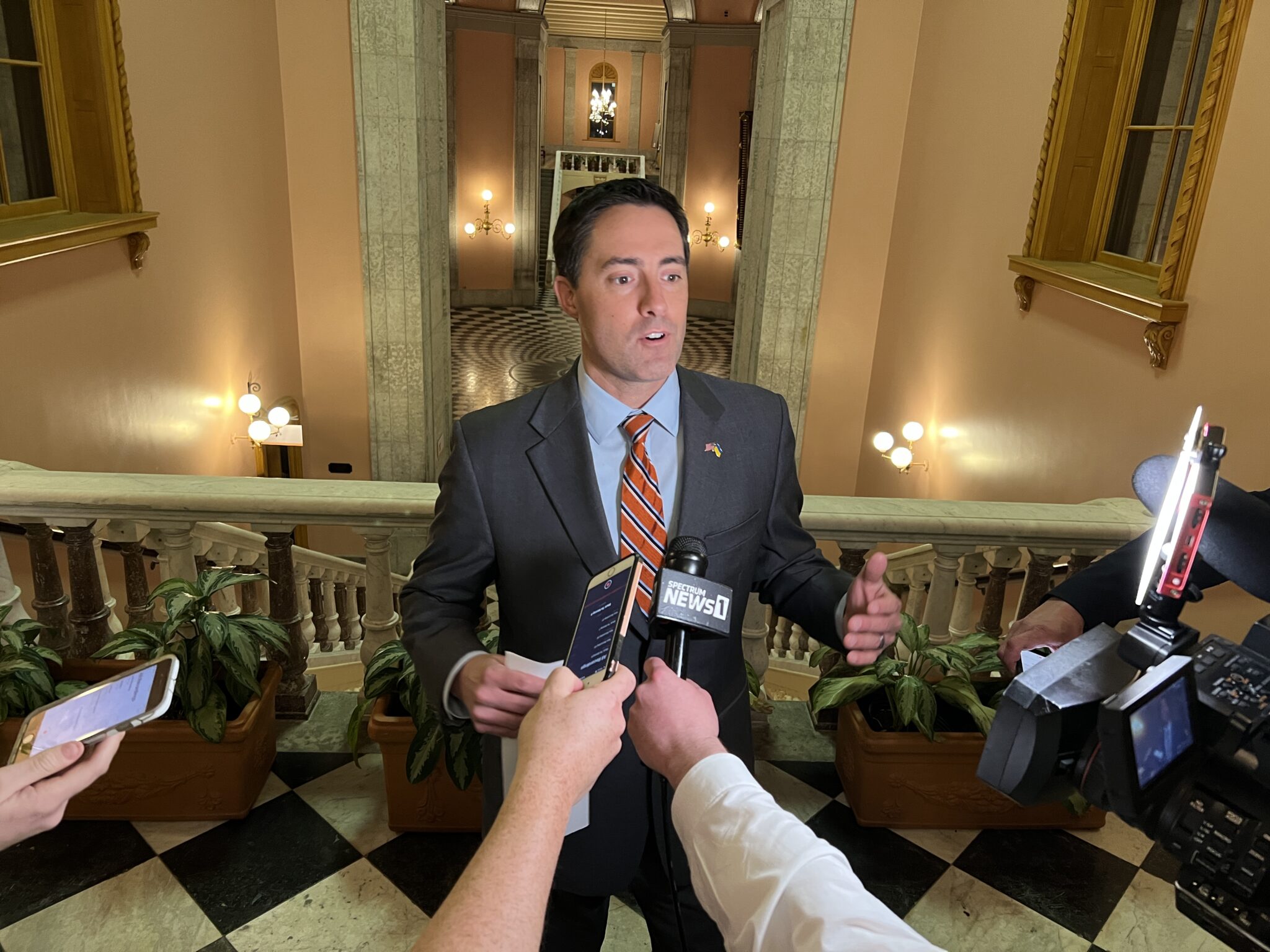
    Ohio Secretary of State Frank LaRose talks to reporters. (Photo by Susan Tebben, OCJ.)

    Republican lawmakers’ proposal would make it harder for voters to amend Ohio Constitution by raising bar to 60%

    BY:  Ohio Capital Journal

    The Ohio Ballot Board has approved language for an August ballot measure from Ohio Republican lawmakers. The proposal asks voters whether to make it harder to pass future constitutional amendments by requiring 60% of the vote. The board’s two Democrats and an outside organization currently suing to block the August election criticized the ballot language and it’s explanation.

    What’s the ballot board and what does it do?

    The five-member panel determines what exactly voters will read when they get their ballot. The Ohio Secretary of State chairs the board consisting of four other members selected by legislative leaders in the Ohio House and Senate. No more than two of those selections can be from the same party.

    In addition to drafting the exact ballot language, the board also comes up with an explanation of what the proposal would do. However, the board’s secretary Jeff Hobday explained that wording carries very specific requirements.

    “If a condensed version of the proposal is used, the ballot language must not omit substance of a proposal that is material,” Hobday said. “Additionally, if the proposed amendment is condensed, the resulting language must not result in or imply a persuasive argument.”

    The board also set the terms for disseminating information about the proposal, and designated the groups responsible for drafting arguments for and against the measure.

    Pushback

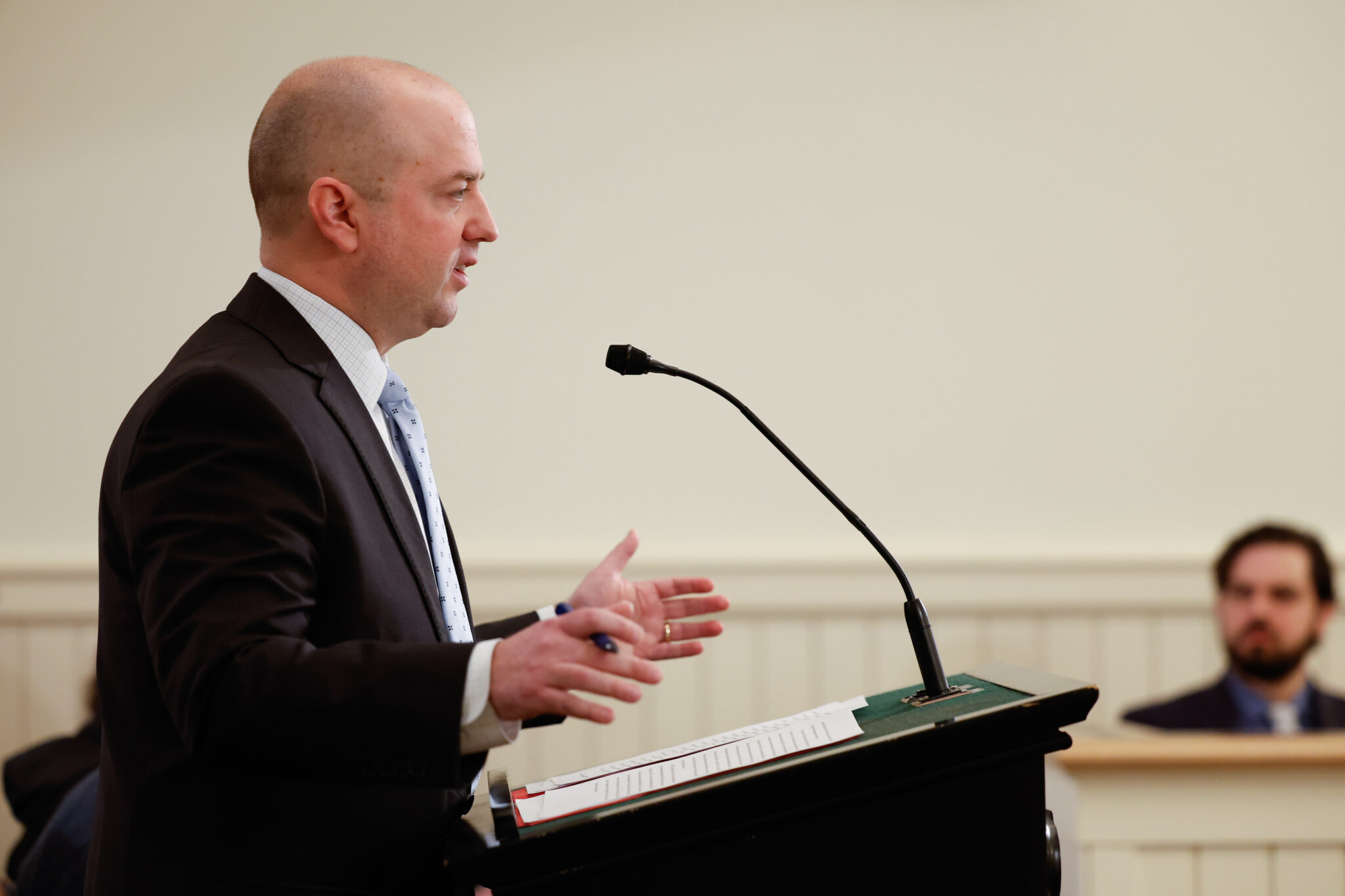
    Attorney Don McTigue, who’s representing the organization One Person One Vote, pointed to numerous passages in the ballot board’s draft language that fail to give a neutral presentation.

    “None of the bullet points explain what the current constitutional provision is,” he argued. “It’s not telling the voters what change they’re being asked to make.”

    He repeatedly argued voters should see the current requirements and how they’d change — rather than just the changes the amendment offers. Voters should know the requirement is going from a simple majority to 60%; they should know signature requirements will expand from 44 to all 88 counties.

    McTigue added that one line is flatly untrue.

    “The statement about at least 5% of the eligible voters of each county is actually not accurate,” he explained. “It’s 5% of the most recent gubernatorial vote in that county.”

    He also took issue with the title Secretary LaRose came up with for the proposal: “elevating the standards to qualify for and to pass any constitutional amendment.” State law requires the title be “true and impartial,” McTigue argued, and not likely to “create prejudice for or against” the proposal.

    “We believe that there is an egregious violation of those standards with regard to the first three words that say elevating the standards,” McTigue said. “Elevating is a word that has connotations, that most people would say, meaning to raise up in status, raise up in honor.”

    He argued the title should instead use a value neutral term like “change” or “modify.”

    The Democrats’ take

    Board member Rep. Elliot Forhan, D-South Euclid, took up McTigue’s argument about needing to describe current law as well as the change. He brought up the state supreme court’s comparison to local zoning changes.

    “You wouldn’t ask a subdivision or a municipality to approve a change in the zoning law if you didn’t explain to them exactly what the change in the zoning was,” he explained. “Our state supreme court said, something of this nature has a far greater effect than a change in the zoning law.”

    “The omission of what the existing law is,” he added, “that it, at the moment, only requires a simple majority, that indeed fails to meet that standard.”

    Another board member, Sen. Bill DeMora, D-Columbus, criticized the ballot description’s use of the phrase “proposed by a 2/3 majority” of state lawmakers. The standard to make the ballot is a 3/5 majority in each chamber.

    “I’ll point out that 88 members of the 132 members of the General Assembly voted for it, which is exactly two thirds and that’s why we use that language,” LaRose explained.

    LaRose only arrives at that figure because the state Senate’s lopsided GOP majority. In the House, the margin was much narrower.

    “In the House actually 62 people voted in the affirmative for the amendment,” DeMora argued, “and two thirds would be 66 out of 99, so two thirds is clearly incorrect.”

    The margin of victory in the General Assembly, of course, is irrelevant to the proposal once it goes before voters. For instance, none of the past three general assembly initiated amendments’ explanations made any mention of vote margin. Its inclusion, regardless of how LaRose calculated it, only underscores critics’ concerns about “prejudicial” language.

    The Republican side

    The board’s GOP members were remarkably quiet throughout the hearing. Aside from LaRose explaining his math and introducing agenda items, the only times they piped up was to second his motions to approve.

    Despite the objections of Democrats, the board voted along party lines to approve the draft ballot language and explanation. They made no changes.

    Follow OCJ Reporter Nick Evans on Twitter.

    __________________________

    Nick Evans
    NICK EVANS

    Nick Evans has spent the past seven years reporting for NPR member stations in Florida and Ohio. He got his start in Tallahassee, covering issues like redistricting, same sex marriage and medical marijuana. Since arriving in Columbus in 2018, he has covered everything from city council to football. His work on Ohio politics and local policing have been featured numerous times on NPR.

    MORE FROM AUTHOR

  • Gerrymandered Ohio Statehouse gives voters no recourse through initiated statute, only constitution

    Gerrymandered Ohio Statehouse gives voters no recourse through initiated statute, only constitution

    OPINION

    Citizens could work tirelessly to pass an initiated statute and the rigged Ohio legislature could then simply overturn it

    by David DeWitt – Ohio Capital Journal

    In order to understand the bad faith of the Republican arguments for attacking Ohio voters and asking us to enshrine 41% minority rule over our Ohio Constitution, voters need to understand the power dynamics at play when it comes to initiated statutes versus amendments to the Ohio Constitution.

    In Ohio, citizens have two options for proposing changes through a ballot initiative: They can offer a statute, which changes law under Ohio Revised Code, or a constitutional amendment, which amends the Ohio Constitution.

    Time and again we hear gerrymandered Ohio Republican lawmakers making some variation on their argument that the constitution is our “foundational document” and that if voters want a change, they should attempt an initiated statute to change the law, instead of adding an amendment to the Ohio Constitution.

    Here’s what they want citizens to forget: Ohio law offers no protection for a newly passed statute. Lawmakers can immediately repeal or modify whatever changes voters approve.

    This means that well-meaning citizens of Ohio could raise money, spend countless hours gathering signatures, put in enormous volunteer time, talk to their friends and neighbors, knock on doors, and generally work themselves to the bone to get a statute initiative on the ballot and passed, and then our unconstitutionally gerrymandered supermajority Republican legislature could repeal it the next day.

    Some states have provisions to protect from this situation. If a citizen-initiated statute passes, the General Assembly is not allowed to just overturn it, sometimes for a given number of years, or they must reach an extremely high bar to do so. Ohio does not have this. That is a huge difference.

    The fact that there is no such protection for citizen-initiated statutes in Ohio, combined with the fact that our Statehouse is unconstitutionally gerrymandered for unrepresentative Republican supermajorities in both chambers, means that it would be foolish for any citizen group working on an issue that our misrepresentative legislature refuses to address to spend all that time and effort passing a statute just to be kicked in the teeth by that same misrepresentative legislature.

    Over the years as a newspaper reporter in Athens, I would ask people bringing, for instance, initiatives for the legalization of medicinal cannabis, why they were going for a constitutional amendment and not a statute. The answer was always the same: Because the Statehouse would just override it. Why spend all that time and money on something that they will just override?

    When you understand this, you understand why groups bring amendments instead of statutes. This also reveals the wildly condescending deceit of these Ohio Republicans attacking 175 years of Ohio majority voter authority over our constitution.

    Presumably, they understand these dynamics, too. And yet, they shriek and wail about all these groups they say are trying to write law into the constitution instead of just bringing statutes.

    The simplest, easiest way to incentivize groups to put forward citizen-initiated statutes instead of amendments would be for them to create some kind of protection for those statutes from being overturned by the legislature.

    Instead of this type of moderate, reasonable change that would alleviate the concerns Ohio Republicans claim that they have, they are going for Ohio voters’ throats.

    We all know — and they have made clear in private and in public — that their effort is really aimed to stop an abortion rights amendment slated for the November ballot, and to stop voters from any effort toward further anti-gerrymandering reform.

    That gerrymandering piece of the puzzle is also what makes their arguments so offensively disingenuous.

    Ohio Republicans would not have had the votes to bring this $20 million, Aug. 8 special election if they hadn’t ignored the Ohio Constitution by forcing Ohioans in 2022 to vote under district maps declared unconstitutional by a bipartisan Ohio Supreme Court five times.

    In doing so, they flagrantly violated the will of Ohio voters who passed anti-gerrymandering reform for Statehouse districts in 2015 with more than 71% of the vote.

    Them now claiming the mantle of “protecting the Ohio Constitution” is ridiculous on its face. They have shown repeatedly they don’t give a damn about the integrity of the Ohio Constitution. They have flagrantly violated the Ohio Constitution, the rule of law, the orders of the Ohio Supreme Court, and the will of Ohio voters, with staggering contempt.

    This is Lucy asking Charlie Brown to try to kick the football just one more time. I can only conclude they are either themselves just not very smart, or they’re so deeply cynical that they think Ohioans are profoundly stupid. Probably a mixture of both, depending on the lawmaker.

    Even if you wanted to have a good faith discussion on citizen initiatives and the Ohio Constitution, you would have to meet a couple premises off the bat: You would have to have a legitimate and representative legislature that isn’t gerrymandered, and you would have to have some sort of enforceable protection for citizen-initiated statutes. Ohio has neither.

    Are some things such as marijuana or casino laws better off in Ohio Revised Code? Probably. But Ohio Republicans rigging the game at every step of the process has rendered that discussion moot. Constitutional amendments are the only effective tool of direct power Ohio citizens have left.

    Other issues such as civil and human rights stand wholly appropriate to the Ohio Constitution, firmly out of the manipulative reach of corrupt, unscrupulous lawmakers.

    So that remains the primary question for Ohio voters: Should a 41% minority, alongside a rigged, extremist legislature acting on behalf of radical special interests, have authority over our most fundamental human and civil rights? Voters ought to think wisely.

    _______________________________

    David DeWitt
    DAVID DEWITT

    OCJ Editor-in-Chief and Columnist David DeWitt has been covering government, politics, and policy in Ohio since 2007, including education, health care, crime and courts, poverty, state and local government, business, labor, energy, environment, and social issues. He has worked for the National Journal, The New York Observer, The Athens NEWS, and Plunderbund.com. He holds a bachelor’s degree from Ohio University’s E.W. Scripps School of Journalism and is a board member of the E.W. Scripps Society of Alumni and Friends. He can be found on Twitter @DC_DeWitt

    MORE FROM AUTHOR

  • House leaders tee up supermajority amendment measure for floor vote

    House leaders tee up supermajority amendment measure for floor vote

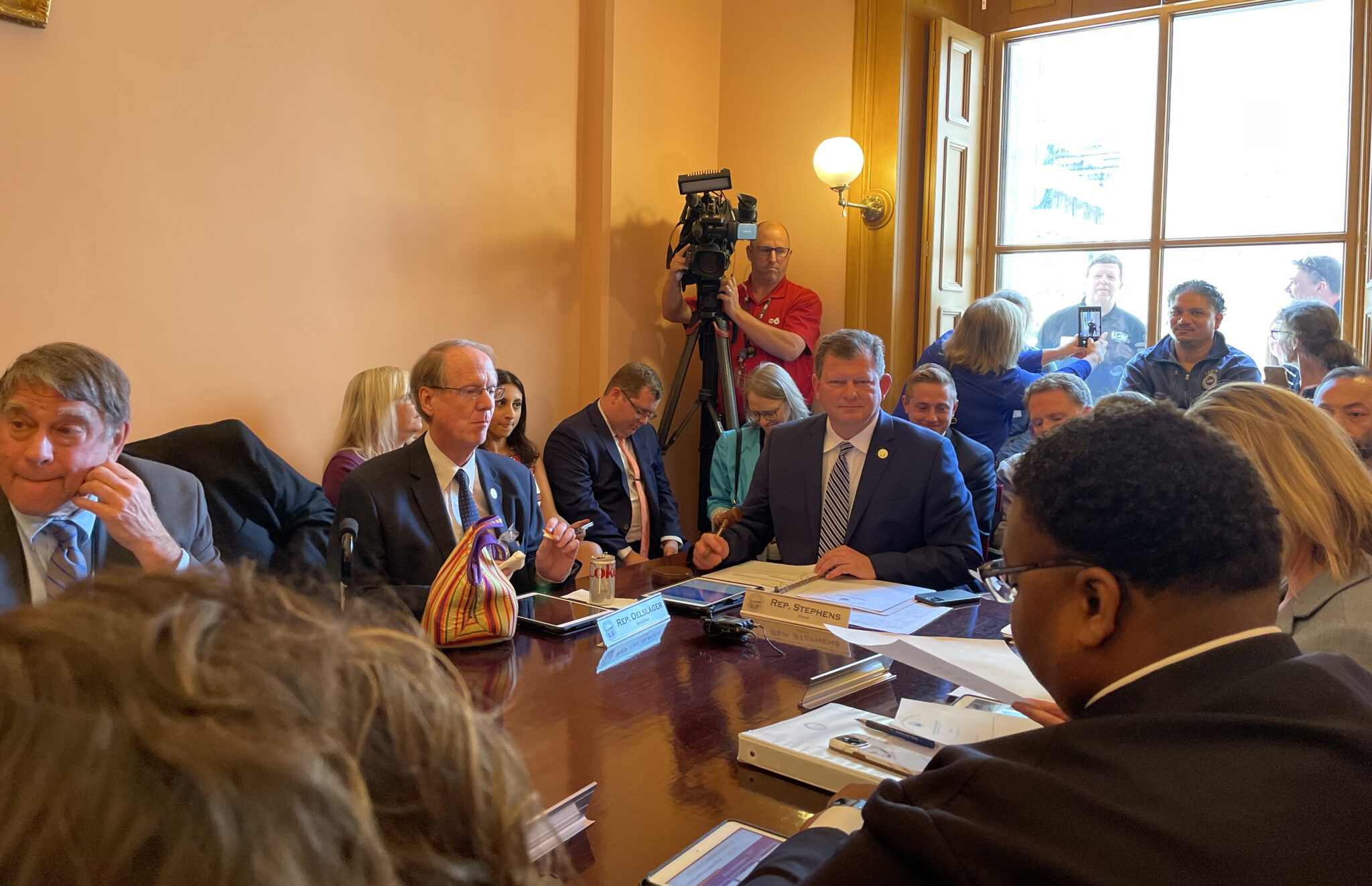
    House Speaker Jason Stephens presiding over an uncharacteristically packed Rules Committee hearing. Some members of the public forced to leave, watched through the windows from outside. (photo by Nick Evans)

    It remains an open question, however, just when voters might weigh in on the issue

    BY:  – MAY 10, 2023 5:00 AM Ohio Capital Journal

    The stage is set for a long-awaited House vote on SJR 2. The resolution would ask voters whether the threshold for amending the constitution should be 60% rather than a simple majority.

    But lawmakers pushing the plan may not be celebrating yet. A parallel effort to send the question to voters before they consider an abortion rights amendment seems to have fallen short.

    Supermajority amendment backers are now left to decide whether to accept half a loaf, or to try some last-minute maneuver to set up an August special election.

    Speaking after the vote to place SJR 2 on the House calendar, the House speaker and the minority leader said they expected the latter. But it’s not clear what that gambit might look like, or if it would succeed.

    Killing August

    Placing the 60% amendment on the ballot in August was never part of the plan. Lawmakers voted to get rid of those elections around the same time the first attempt at imposing a supermajority threshold fell apart. They only thought to revive August elections after the latest supermajority effort missed the deadline for the May primary.

    Lawmakers pursued a May and then an August election to ensure an abortion rights amendment would have to clear a higher bar. But that argument didn’t move everyone in the Republican caucus.

    Rep. Sharon Ray, R-Wadsworth, offered an amendment to SJR 2 stripping out reference to August elections.

    “When we did away with August special elections last year after we put our precinct election officials through a very difficult year, you know, we said we were not going to do this anymore,” Ray explained.

    She added the upcoming calendar is a bit of a disaster for boards of elections. In addition to conducting a special election, they have to manage filings for local candidates running for school board, city council or mayor this November.

    Election day in August would be August 8. The deadline for those local filings? August 9.

    “In addition to two different election calendars that are overlapping they’ll have all these filings and I just don’t think it’s fair,” Ray said.

    Still, Ray said her reticence only extends to the August elections—not the underlying supermajority proposal.

    “I think August, to spend $20 million for an election that’s going to have probably an 8% turnout is really not our best option,” Ray said. “A November election, I will vote to put it on the ballot so people can decide then.”

     Rep. Sharon Ray, R-Wadsworth, arguing for her amendment. (photo by Nick Evans) 

    The Rules committee

    Ray’s amendment is unusual for its timing, coming up in the Rules and Reference Committee. It’s typically the last stop for legislation before going to the House floor. It gives House Speaker Jason Stephens, who leads the committee, significant control over when and if a proposal goes before the chamber.

    But while the Rules committee sets the agenda, it rarely deals with policy amendments. Tuesday, after a two-and-a-half-hour delay, the committee met, and approved Ray’s changes. Every Republican on the committee – with the exception of state Rep. Jay Edwards, R-Nelsonville – voted to advance the proposal to the floor.

    “We’re close to this being jammed down our throats and I think it’s wrong, and I don’t think there was enough discussion had on this entire premise,” Edwards argued.

    Every Democrat voted against advancing SJR 2.

    Notably, if the House approves changes to SJR 2, the Senate would have to agree before it makes the ballot.

    Shenanigans

    Despite Ray’s amendment excising August election provisions, Republican and Democratic leaders had no illusions about the issue being dead. House Minority Leader Allison Russo said she expects an amendment when the resolution comes up for a floor vote.

    “Well, certainly they can get on the floor tomorrow and take that language right back out and amend it, which I wouldn’t be surprised if that happens,” Russo said. “So, you know, some of this is theatrics, I think.”

    Russo argued that even if Republicans are successful, the proposition is a loser at the ballot box — regardless of when it goes before voters.

    She also criticized Speaker Stephens for letting the resolution advance. Stephens only won the speakership with the support of Democrats, and his reluctance to advance a supermajority measure was a big reason why. But Russo sidestepped questions of whether Stephens had violated a deal with Democrats.

    “This isn’t about reneging on Democrats,” she said. “It’s about reneging on the people of Ohio and taking away a right that they have had for over a century.”

    For Stephens’ part, he echoed Russo’s expectations about last minute floor amendments.

    “There will probably be more than one amendment, I guess, on this resolution tomorrow, one of the amendments will probably be for an August election,” Stephens said. “So, we’ll have that debate tomorrow.”

    And the August election is not a problem, Stephens said. He offered the dubious assertion they can hold one without passing any additional legislation at all.

    “Yeah, the legislature has the constitutional authority to create an election day,” Stephens argued.

    This despite lawmakers passing a bill just months ago limiting August elections to municipalities in fiscal emergencies or primaries for Congressional vacancies. And despite lawmakers working, and eventually failing, to pass legislation this session to explicitly allow special elections for amendments offered by the general assembly.

    Can he do that?

    Steven Steinglass, dean emeritus at Cleveland State’s law school and one of the foremost experts on the Ohio Constitution, flatly rejected Stephens’ contention.

    “The answer is they do not have that power, and if that is what he said he’s getting bad advice from his lawyers or whoever he seeks advice from,” Steinglass said.

    The problem, he explained, is that recent legislation restricting the circumstances under which an August election can happen. Those restrictions are in statute, and a joint resolution doesn’t change statutes. In the end it boils down to a separation of powers issue.

    “It’s been clear for 125 years that you cannot add statutory type language to a joint resolution,” Steinglass explained. “They’re two different legal instruments, if you will. The point is that the governor has no role regarding joint resolutions, but the governor could veto a statutory change.”

    He cited the relevant case law from 1897, as well.

    “The Ohio Supreme Court said, and I quote, the statute law of the state can neither be repealed nor amended by a joint resolution of the General Assembly,” Steinglass said.

    Follow OCJ Reporter Nick Evans on Twitter.

    _________________________

    NICK EVANS

    Nick Evans has spent the past seven years reporting for NPR member stations in Florida and Ohio. He got his start in Tallahassee, covering issues like redistricting, same sex marriage and medical marijuana. Since arriving in Columbus in 2018, he has covered everything from city council to football. His work on Ohio politics and local policing have been featured numerous times on NPR.

    MORE FROM AUTHOR

  • Bipartisan sponsors, advocates: Support Ohio bill improving pregnancy, housing, infant services

    Bipartisan sponsors, advocates: Support Ohio bill improving pregnancy, housing, infant services

    BY:  Ohio Capital Journal

    The state’s operating budget is showing progress in the areas of infant supports, including a housing pilot program to benefit pregnant people and even doula services, but a bipartisan duo in the Ohio House wants to do better.

    State Reps. Andrea White, R-Kettering, and Latyna Humphrey, D-Columbus, joined with advocacy groups on Tuesday to talk about House Bill 7, with supporters heading straight to a proponent hearing immediately following the press conference on the bill.

    White and Humphrey introduced the bill to the House Families and Aging Committee on April 25, but as the budget process continues with various appropriations showing up and being revised from the governor’s initial executive proposal, White said it’s important to keep up with funding, especially when it comes to Ohio’s infants and mothers.

    “Ohio’s doing very well, but we’re not going to accept no for an answer,” White said.

    HB 7 has provisions to support doula services, pregnancy and postpartum individuals, children and families in poverty, early intervention, child care, a cost savings study for the Medicaid program and the Head Start Program.

    “The initiatives in this bill will support and empower families … and establish systemic changes that will remove barriers to services and reduce administrative burden to both programs and the state,” said Julie Stone, executive director of the Ohio Head Start Association.

    The legislators and groups supporting the legislation pointed to widely reported statistics showing Ohio as one of the lowest-succeeding in the country when it comes to infant mortality, with 1 out of 150 babies unable to live to see their first birthday, and the infant mortality rate at 14.1 per 1,000 births for Black babies in Ohio, and 5.5 per 1,000 for white babies.

    “In this case, if we do not invest now, there will not be an opportunity, for many, for us to pay later because we are losing too many lives,” White said.

    Improving supports for the doula program in Ohio has been an ongoing struggle, with various bills attempting to bring funding to the effort, including one currently sitting in the Ohio Senate.

    In HB 7, like similar legislation attempted in the past, the Ohio Board of Nursing would be required to establish a registry of certified doulas, a Doula Advisory Board would be established within the board of nursing, and the Department of Medicaid would house a program to cover doula services through a Medicaid provider agreement.

    Doula programs have frequently asked for Medicaid reimbursement to be a part of the resources they can access, since many programs are using their own funds or that of donors to provide pregnancy-related services and education.

    “The doula programs are clearly one of the more outstanding programs we have seen in this nation,” said Angela Dawson, executive director for the Ohio Commission on Minority Health.

    The doula programs already work to improve pregnancy outcomes throughout the state with 12 “infant mortality hubs” funded throughout the state as well, according to Dawson. But full investment into doula services could actually end up saving the state money through avoidance of complications in pregnancy, and raising the state’s ranking when it comes to infant mortality.

    “The reality is that Ohio has never achieved the infant mortality goal for African American babies, we have an opportunity before us … let our vote prepare the state for the children,” Dawson said.

    The current draft of the budget, which is still up for approval in the Ohio Senate, includes $16 million in funding for the Healthy Beginnings at Home program, a research study that tests the impacts of rental assistance and housing services on infant mortality.

    Under HB 7, the program would receive $15 million more in fiscal year 2024 “to support stable housing initiatives for pregnant mothers and to improve maternal and infant health outcomes,” according to an analysis by the Legislative Service Commission, and $1 million in both 2024 and 2025 for the Move to Prosper program, “which makes affordable rental housing available in neighborhoods that offer access to opportunities.”

    Amy Riegel, executive director of the Coalition on Homelessness and Housing in Ohio, said the funding would allow them to expand the study to more areas in the state, and “make it a statistically significant study that can be replicated” nationally.

    ___________________

    Susan Tebben is an award-winning journalist with a decade of experience covering Ohio news, including courts and crime, Appalachian social issues, government, education, diversity and culture. She has worked for The Newark Advocate, The Glasgow (KY) Daily Times, The Athens Messenger, and WOUB Public Media. She has also had work featured on National Public Radio.

    MORE FROM AUTHOR

  • Ohio House committee narrowly advances 60% supermajority provision despite opposition

    Ohio House committee narrowly advances 60% supermajority provision despite opposition

    House Speaker Stephens cancels Wednesday session
    BY:  Ohio Capital Journal

    In an Ohio House committee, witnesses pleaded with lawmakers to reject the effort to install a 60% threshold for future constitutional amendments. The joint resolution they’re considering would put the question to voters on an upcoming ballot. After breaking for an extended recess around lunch time, lawmakers heard more testimony and voted to advance the resolution.

    But the 7-6 margin was probably tighter than supporters wanted. All five Democrats on the committee voted against it, and of the eight Republicans on the committee, only state Rep. Brett Hudson Hillyer, R-Ulrichsville, who previously floated amendments to make the resolution more palatable to opponents, voted against it.

    Elsewhere in the Statehouse, a different House committee set to vote on restoring August elections Tuesday morning delayed its start. Almost six hours later, the chair canceled the hearing.

    The same conservative lawmakers pushing to bring back August elections got rid of them just a few months ago. At the time, they argued they’re too costly and generate meager voter turnout. But now, an August election day suits their plan to advance the supermajority amendment.

    Taken together the two proposals represent a last-ditch effort by some Republican lawmakers to hobble an abortion rights amendment ahead of November’s election. More than 200 interest groups have come out against the effort. Four previous governors and five previous attorneys general — Republican and Democratic — have also publicly criticized the plan.

    But the proposal’s opponents got a reprieve of sorts from House Speaker Jason Stephens. The Kitts Hill Republican scrapped Wednesday’s House session after declining to schedule the 60% supermajority or August special election measures.

    That puts an exceptional amount of pressure on the House session scheduled for May 10 — the last day lawmakers can approve the measures in time for an August election.

    SJR 2 opposition

    During Tuesday’s hearing, opponents harped on what they called the hypocrisy of lawmakers pushing the supermajority resolution forward. From the outset, Republicans backing the proposal have contended their effort is a way to discourage “out of state special interests” from buying the state constitution, and that it has nothing to do with undermining an abortion rights amendment on the horizon.

    A group called Save Our Constitution PAC is now running ads targeting five GOP members perceived as insufficiently supportive. The funding for those ads comes, not from Ohio, but from Illinois billionaire Richard Uihlein. The owner of the shipping supplies company Uline, has previously funded far-right candidates around the country and groups promoting election denialism.

    Dorsey Hager from the Columbus Central Ohio Building and Construction Trades Council criticized Uihlein’s involvement.

    “An idea introduced to protect the Ohio constitution — our Constitution — from special interest is actually being promoted by a group funded by an Illinois billionaire who’s trying to change Ohio’s constitution,” he said.

    Save Our Constituion PAC’s treasurer is David Langdon, the same Cincinnati attorney who’s behind the non-profit Protect Women Ohio. That organization is currently running spurious attack ads against the abortion rights amendment.

    The ACLU’s Gary Daniels drew a bright line between efforts in favor of the joint resolution and those in opposition of abortion rights.

    “Soda taxes, casinos, former House Speakers, monopolies and evil special interests are among the list of reasons supporters have cooked up to argue SJR 2 is necessary,” Daniels argued.

    “But Ohioans know — and very few supporters are left pretending — this involves anything but abortion and gerrymandering.”

    All 88 Counties

    Opponents also keyed in on a less discussed, but potentially even more consequential set of restrictions added to the resolution.

    Not only would organizers seeking a constitutional amendment need to clear 60% at the ballot, they’d first need to gather signatures from 5% of the electorate in all of Ohio’s 88 counties. Current law requires that percentage from at least 44 counties and grants organizers a “cure period” to gather valid signatures if the ones they turn get rejected.

    “To cover all 88 counties, and then be denied that cure period,” Trevor Martin argued, “is again, it’s devastating to the citizen initiative process.”

    Mia Lewis from Common Cause Ohio explained legitimate signatures can get rejected for mundane discrepancies. Say you’ve moved but haven’t updated your voter registration — using your current address would scrap your signature. Sometimes organizers gather signatures for close to year. If you move in the interim and update your registration, that old signature gets thrown out.

    “It’s blindfolding the people that are trying to collect the signatures and telling them to take this leap of faith,” she argued. “There is no way for them to know how many of those signatures won’t be valid. They don’t know how many people are going to move. They don’t know how many people have put the wrong address that doesn’t match the registration.”

    She called requiring signatures from all 88 counties and eliminating the cure period “punitive.”

    Bonds

    Opponents also took aim at the supermajority threshold’s impact on bond issues. Hager, from the Trades Council, brought up a school bond issue in his hometown of Marysville.

    “If this passes, they’re gonna be able to add on to the STEM school in Marysville where they’ll be able to produce more kids in science, technology that will go to work at Scott’s, go to work at Honda (and) keep those industries growing and thriving,” Hager argued.

    Requiring a 60% supermajority, he contended, would endanger those investments.

    But Rep. Brian Stewart, R-Ashville, argued bonds aren’t a big issue. Stewart, who’s sponsoring the House version of the 60% threshold measure, argued every bond for the last 15 years would clear the bar.

    “Why are you in your sort of fear mongering over 1990 bond issues when we’ve passed every bond issue for the last 15 years with over 60% of the vote?” Stewart asked Jen Miller from the Leauge of Women Voters of Ohio.

    Miller acknowledged Stewart is correct about the most recent bond proposals. But taking a longer view the track record gets murky.

    Former state representative and Dispatch editor Mike Curtin analyzed bond issues going back to 1980. Under a simple majority, two thirds passed, but with a 60% supermajority the record flips. Of the eighteen bond issues only eight would pass, and two of those just barely.

    Noting how that picture changes with a broader view, Miller pressed Stewart on the growing opposition for his legislation.

    “If this were such a great proposal, would we have so many former AGs and governors of both political parties coming out in opposition? Would you have to 240 organizations and growing come out in opposition? Would you need a million dollars from an out-of-state megadonor billionaire?” Miller asked.

    “You wouldn’t.”

    Follow OCJ Reporter Nick Evans on Twitter.

    ______________________

    NICK EVANS

    Nick Evans has spent the past seven years reporting for NPR member stations in Florida and Ohio. He got his start in Tallahassee, covering issues like redistricting, same sex marriage and medical marijuana. Since arriving in Columbus in 2018, he has covered everything from city council to football. His work on Ohio politics and local policing have been featured numerous times on NPR.

    MORE FROM AUTHOR

  • Manufacturers, consumers blast plan to make ratepayers subsidize charging stations

    Manufacturers, consumers blast plan to make ratepayers subsidize charging stations

    An electric vehicle charging station. Photo courtesy Wikimedia Commons.

    BY:  Ohio Capital Journal

    The number of electric vehicles on U.S. roadways is expected to ramp up dramatically in the coming years, and with it the number of charging stations will have to grow as well.

    Now groups representing Ohio utility consumers and manufacturers are trying to kill a plan that would force ratepayers to finance the electricity infrastructure needed to serve those charging stations. The people who will be profiting from those stations or the utilities themselves should bear those costs, they said.

    In addition, they said, the way the language is written “is generally lacking in consumer protections.” That’s famously been a problem with Ohio utilities and the agency that’s supposed to be regulating them.

    A provision in House Bill 33, a draft state budget, would allow monopoly utilities to impose higher rates to fund economic-development activities such as supplying EV stations even though subsidies for such activities are already available from the state and local governments, the advocates said.

    “The federal government is making substantial funds available to local governments for electric vehicle charging stations,” Maureen Willis, legal director for the Ohio Consumers’ Counsel, told the House Finance Committee last week, according to a written copy of her testimony. “That is occurring under the federal infrastructure bill. Ohio’s share of the funding is significant.”

    The growth in sales of electric vehicles through the rest of the decade is expected to be enormous — going from 4.6 of all new passenger-vehicle sales in 2021 to a projected 40% to 50% in 2030, the U.S. Bureau of Labor Statistics reports.

    Driving such high expectations are a $7,500 tax credit for electric vehicles under last year’s Inflation Reduction Act. And earlier this month, President Joe Biden proposed two new EPA rules aimed at dramatically reducing greenhouse-gas emissions from vehicles by 2030.

    And, because nobody wants to drive a battery powered vehicle out into the boonies without being sure they’ll be able to charge it, $7.5 billion was built into last year’s Bipartisan Infrastructure Law to subsidize building out a national network of charging stations.

    Building out the system might seem laudable in the face of catastrophic climate change. But Ohio’s electric utilities and the Public Utilities Commission that’s supposed to be regulating them have a history of abusing ratepayers.

    The PUCO has allowed more than $1 billion in rate hikes that were later ruled illegal by the state Supreme Court. But, because of the way the “riders” were written, there’s no way to make the utilities refund the money. In one instance, Akron-based FirstEnergy collected $460 million and then couldn’t show whether the money was spent on bribes, much less whether any of it was spent on its stated purpose.

    And, speaking of bribes, the PUCO and a very recent employee in 2019 drafted a bailout law that was at the center of a scandal in which FirstEnergy and AEP spent $61 million to help pass a $1.3 billion bailout. Former House Speaker Larry Householder and former Ohio GOP Chairman Matt Borges last month were convicted of racketeering in the matter.

    Now, consumer and manufacturing representatives say, someone is again trying to give Ohio utilities broad latitude to raise rates on their customers.

    Ryan Augsburger, president of the Ohio Manufacturers’ Association, this week told the House Finance Committee that the provision in the draft budget would allow Ohio utilities to collect from ratepayers for expenses that taxpayers are already subsidizing. And, he said, the wording of the provision is so loose that utilities would have great flexibility in applying it.

    “The electric utilities are already poised to benefit from recovery of costs associated with infrastructure expansion,” Augsburger said, according to a written copy of his comments. “This new language grants electric utilities swift cost recovery from customers for all net costs associated with infrastructure development and economic development projects… Cost recovery from customers is to make the electric utility whole after (the utilities) have already received funds from the All Ohio Future Fund for the economic development projects.”

    Willis of the Consumers’ Counsel said the language allowing for utility increases “is generally lacking in consumer protections.”

    ___________________________

    MARTY SCHLADEN

    Marty Schladen has been a reporter for decades, working in Indiana, Texas and other places before returning to his native Ohio to work at The Columbus Dispatch in 2017. He’s won state and national journalism awards for investigations into utility regulation, public corruption, the environment, prescription drug spending and other matters.

    MORE FROM AUTHOR

  • Ohio House begins hearings to bring back August elections

    Ohio House begins hearings to bring back August elections

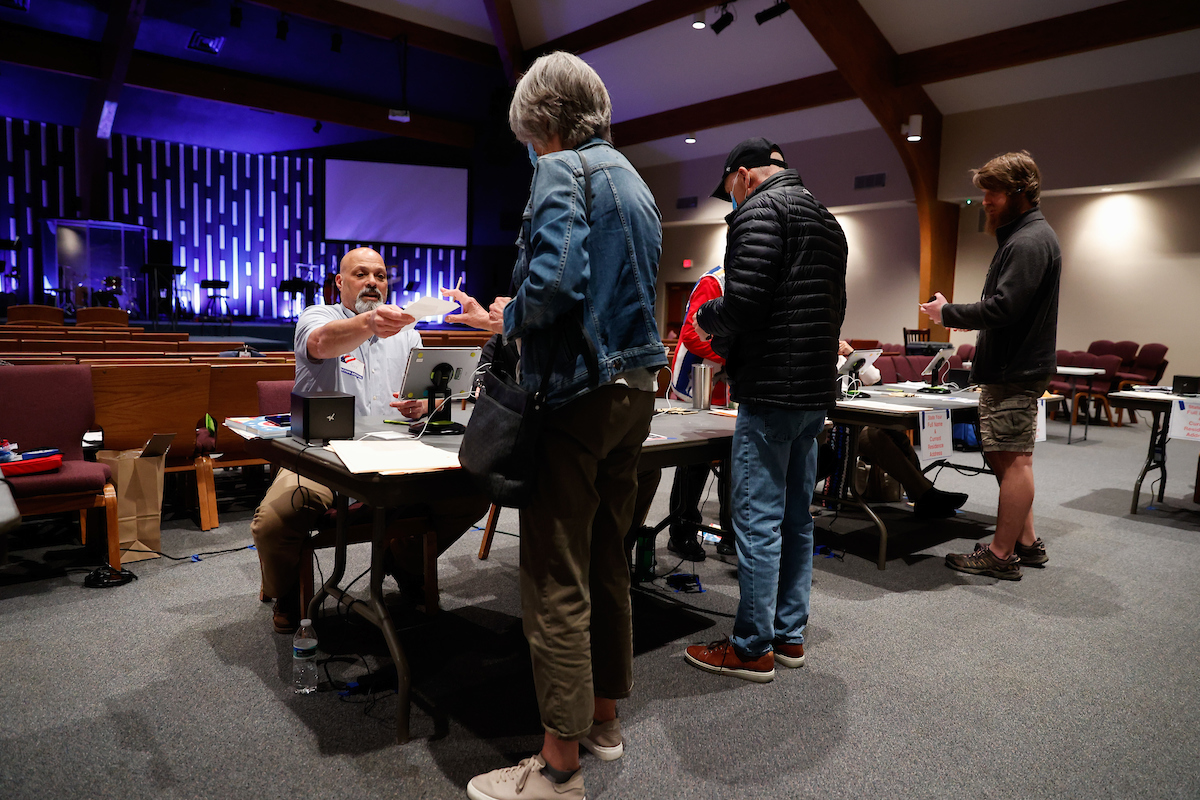
     NEW ALBANY, OH — MAY 03: Roster judge Jeff Greenberg checks a voter during the Ohio primary election, May 3, 2022, at the Grace Life Nazarene Church voting location, New Albany, Ohio. (Photo by Graham Stokes. Republish photo only with original story.)

    BY:  Ohio Capital Journal

    An Ohio House committee took up two measures Wednesday aimed at re-establishing an August special election. Lawmakers eliminated nearly all such contests in the waning days of the last session, just a few short months ago.

    But with an abortion amendment looking likely to appear on the November ballot, Republicans are pulling out all the stops in a bid to raise the threshold for constitutional amendments first.

    That threshold resolution has already passed the Senate. If Republicans in the House can cobble together enough votes, voters will soon decide whether it should take a 60% supermajority to amend the state constitution. The two elections measures in the House would settle the question of when.

    Non-sequiturs and counting noses

    At the outset of Wednesday’s hearing, committee chair Rep. Bob Peterson, R-Washington Court House, admonished members and witnesses to stick to the substance of the August election bills. Throughout the hearing he tried — valiantly — to maintain that separation, but it proved a losing effort.

    In the end, the move to reinstate August elections has only arisen as an counterpart of the feverish bid to raise the constitutional threshold.

    That became clear in the testimony offered by the bill’s sponsors and supporters. Instead of presenting a case for an August election’s necessity, they often offered non-sequiturs.

    “Our hopes were to get SJR 2 or HJR 1 to the ballot in May, but things didn’t work out in time,” Sen. Theresa Gavarone, R-Bowling Green, argued.

    Later, in a back and forth with Rep. Dani Isaacsohn, D-Cincinnati, Sen. Rob McColley, R-Napoleon, added that a May election would’ve been preferable “because it was already scheduled.”

    “Did you know that we have an election scheduled already for November?” Isaachson asked.

    Separately, McColley acknowledged the reasoning behind Republicans’ effort to bring back the August election date. Again, their logic boils down to a political calculation inextricable from raising the constitutional threshold.

    “In order to get 60 votes for this, there are other considerations that needed to be made for enough members to get us over the 60-vote threshold I had to be on in August,” McColley explained.

    Some members, notably former chair of the House constitutional resolutions committee, Scott Wiggam, R-Wayne County, flatly rejected allowing the constitutional threshold question on the same ballot as an abortion rights measure. In a letter for House Speaker Jason Stephens, after his ouster from the committee, Wiggam elaborated.

    “If that initiative and HJR 1 were both to pass we could see the very real scenario of abortion on demand placed in Ohio’s constitution with a 50% plus 1 vote and then it be protected with the 60% threshold because of HJR 1’s passing,” he wrote. “It is well known that this scenario is not acceptable to the Republican Caucus.”

    Low turnout

    Democrats repeatedly hammered the sponsors about timing because August elections typically involve far lower voter turnout. In the most recent August election, turnout averaged just 8% statewide.

    Rep. Susan Manchester, R-Waynesfield, however, argued back that low turnout isn’t “a forgone conclusion.”

    She pointed to her own election in 2022.

    “I’m proud to say that my district had the highest voter turnout in the entire state, and it was equal if not similar to what the turnout is during a November or May election.” Manchester argued. “So let’s not underestimate the voice of our citizenry and wanting to participate in this process.”

    At best, however, Manchester’s boast is a bit of an exaggeration. The 18.23% turnout in Auglaize County in 2022’s August election was the most in the state, but it was not quite in line with prior elections. It was four percentage points behind the 2020 primary, marred by COVID-19 and more than eight percentage points behind the 2018 primary.

    When it comes to general elections, the August 2022 turnout is a pittance. The 2022 general election saw 58.47% turnout — more than three times the turnout in August. In 2020, Auglaize turnout was nearly 80% and in 2018 it cleared 60%.

    The problem, as critics of August elections — many of them Republicans — have consistently noted, is that the contests are an inconsistent grab bag of local issues like school or construction levies. They aren’t the sort of issues the average voter spends an enormous amount of time thinking about, and they come up at a time most voters aren’t thinking about heading to the polls.

    To that end, Rep. Richard Brown, D-Canal Winchester, asked Manchester if she’d voted in any recent August elections. Manchester admitted she couldn’t recall. But aside from the 2022 primary, Auglaize County hasn’t had an August election in at least ten years.

    Still, for all her optimism about turnout, even Manchester isn’t immune from sitting out a sleepy election or two. According to the Auglaize County board of elections, her even-year voting record is basically flawless, save missing a primary in 2014. But when it comes to odd-year elections where posts like city council, mayor and school board get decided, she’s only shown up once since casting her first ballot in 2006.

    Follow OCJ Reporter Nick Evans on Twitter.

    _________________

    NICK EVANS

    Nick Evans has spent the past seven years reporting for NPR member stations in Florida and Ohio. He got his start in Tallahassee, covering issues like redistricting, same sex marriage and medical marijuana. Since arriving in Columbus in 2018, he has covered everything from city council to football. His work on Ohio politics and local policing have been featured numerous times on NPR.

    MORE FROM AUTHOR


  • U.S. Supreme Court justices take lavish gifts — then raise the bar for bribery prosecutions

    U.S. Supreme Court justices take lavish gifts — then raise the bar for bribery prosecutions

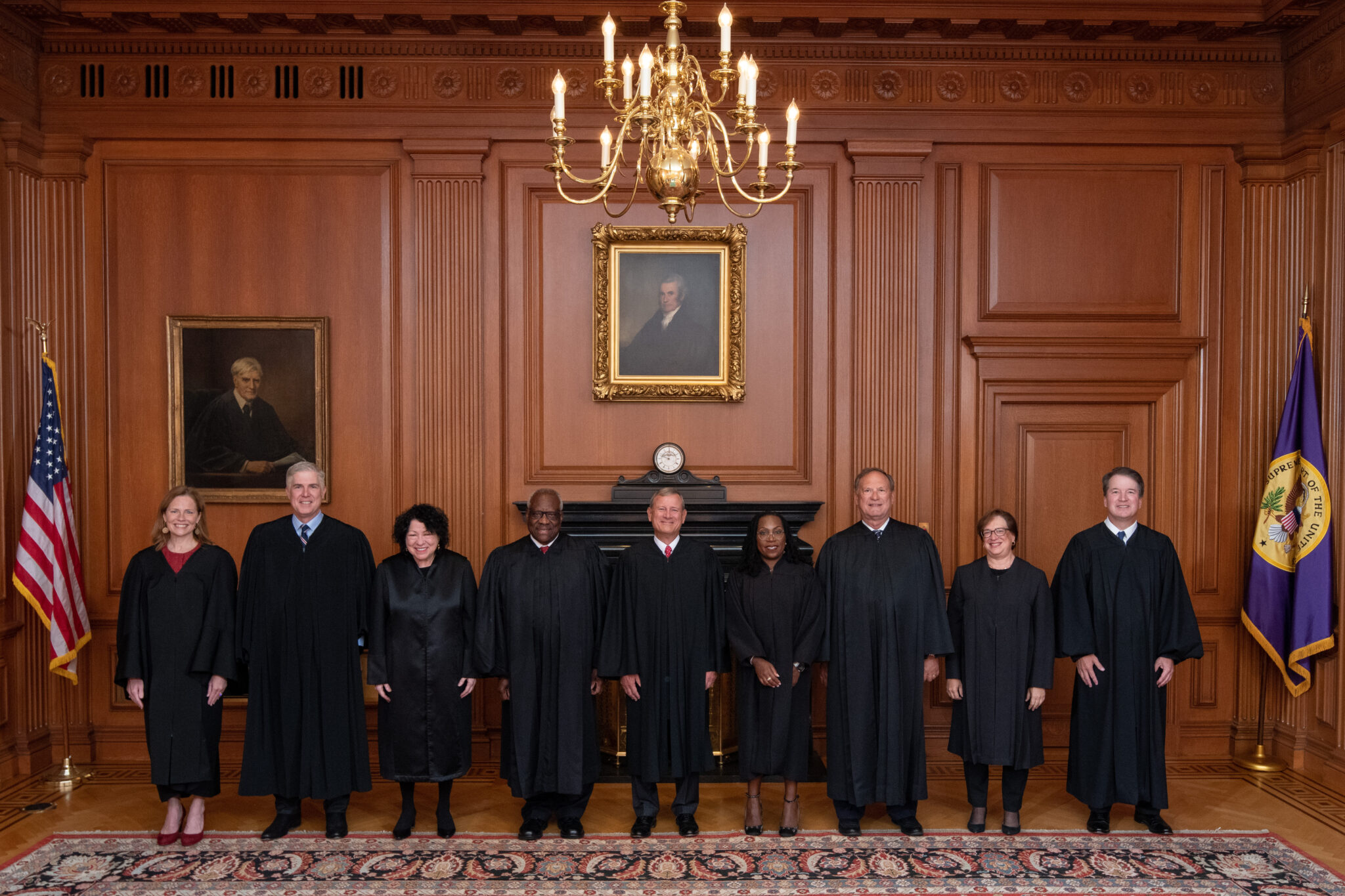
    Members of the U.S. Supreme Court in the Justices’ Conference Room. From left to right: Associate Justices Amy Coney Barrett, Neil M. Gorsuch, Sonia Sotomayor, and Clarence Thomas, Chief Justice John G. Roberts, Jr., and Associate Justices Ketanji Brown Jackson, Samuel A. Alito, Jr., Elena Kagan, and Brett M. Kavanaugh. (Photo from the Collection of the Supreme Court of the United States.)

     Ohio Capital Journal

    Justice Clarence Thomas might be the most egregious when it comes to taking gifts and not disclosing them, but he’s not alone. His colleagues on the U.S. Supreme Court also haven’t been shy about taking fancy freebies from rich people — many of whom have an interest in the actions of the court.

    The justices seem not to think it’s fair to have to entertain themselves on their $268,000 salaries that are in addition to whatever other income they get from book deals, investments and other sources. So it might not be a coincidence that in 2016, those same justices unanimously voted to make it a lot harder to prosecute public officials — including themselves — for accepting bribes.

    “Family trips”

    No matter how much fun they are to hang out with, average people aren’t likely to be offered a $500,000 Indonesian vacation on a private jet and a superyacht. Nor is a billionaire likely to buy your mother’s house, pour tens of thousands into it, and let her live there rent-free.

    But when ProPublica exposed those regal freebies — and the fact that Thomas failed to disclose those and others for decades — the justice in a statement characterized them as just the kinds of things good buddies do when they want to hang out. And he implied that his status as a Supreme Court justice had nothing to do with it.

    Describing Texas billionaire and conservative activist Harlan Crow and his wife as among Thomas and his wife’s “dearest friends,” Thomas wrote, “As friends do, we have joined them on a number of family trips during the more than quarter century we have known them.” He added that he had no conflict because it was “personal hospitality from close personal friends, who did not have business before the court.”

    Thomas made the claim even though Crow has spent at least $14.7 million on conservative causes over the years — including to move the judiciary to the right. That figure doesn’t include any 501(c)(4) dark money contributions by Crow that Thomas helped to facilitate with his affirmative vote in the 2010 split decision, Citizens United v FEC.

    Crow didn’t make Thomas’s acquaintance until he was on the Supreme Court and it seems unlikely that their friendship would be so dear if Thomas’s powers were limited to working a cash register — the most common job in the United States — as opposed to having a potentially dispositive say over the meaning of the U.S. Constitution. And in his statement, Thomas didn’t mention that as part of many of the freebies he’s taken from Crow, the justice was in close proximity with other conservative activists who also have had business before and a strong interest in the makeup of the federal courts.

    Across the ideological spectrum

    Thomas has been far from alone on the court in enjoying the largesse of the uber-wealthy.

    Late liberal Justice Ruth Bader Ginsberg in 2018 took a trip to Israel compliments of billionaire Morris Kahn, who had business before the court just a year earlier.

    Late Justice Antonin Scalia took at least 258 subsidized trips while he was on the court and he was on one when he suddenly died in 2016.

    Scalia’s more-liberal colleague, retired Justice Stephen Breyer, took at least 225 subsidized trips between 2004 and 2016. They include a 2013 trip to the exclusive island of Nantucket compliments of private-equity billionaire David Rubenstein, Gabe Roth, executive director of the group Fix the Court, reported.

    Those were some of the 1,309 trips Supreme Court justices took compliments of others between 2004 and 2019, according to a list compiled by the watchdog group Open Secrets. That’s nine trips per justice, per year, and it’s unlikely they stayed at the Holiday Inn on most of them.

    And those are just the ones that justices have disclosed. It’s unclear how many — like decades of Thomas’ travels — have been unreported, or whether the justices will suffer any consequences for not reporting them.

    Disturbing examples of such non-disclosure continue to flow in — thanks to investigative reporters, not the justices themselves.

    On Tuesday, Politico reported that Justice Neil Gorsuch had been trying for some time in 2017 to unload a 40-acre property he co-owned in Colorado. Nine days after he was confirmed to the Supreme Court, the property was purchased by the CEO of a law firm that has had numerous cases before the court — and whose clients Gorsuch has sided with much more often than not.

    Gorsuch disclosed that he made between $250,000 and $500,000 off of the sale, but he left blank the box that would have informed the public of the identity of the person who paid the money, and who had a lot of lucrative business that Gorsuch would preside over, Politico reported.

    Despite all the ethical lapses, at least some justices from across the ideological spectrum are indignant at the notion that their conduct should be scrutinized. When Sen. Chuck Grassley, R-Iowa, in 2006 proposed an inspector general to keep an eye on the justices, liberal icon Ginsberg likened it to “Stalinism, saying that such oversight ‘is a really scary idea’ that ‘sounds to me very much like [how] the Soviet Union was,’” Roth of Fix the Court wrote.

    Watering down bribery prosecutions

    In the midst of such hostility to oversight, the court in 2016 took up McDonnell v United States. Perhaps not surprisingly, it sided in its decision with a powerful public official who had taken expensive gifts from a wealthy friend who was pushing a special interest.

    Former Virginia Gov. Bob McDonnell and his wife had been convicted in 2014 on charges of bribery. But the McDonnells appealed their convictions, arguing that federal prosecutors failed to show that McDonnell undertook an “official act” in return for the presents they received.

    The couple got about $175,000 worth of stuff from Jonnie Williams, including rides in a private plane, a Rolex, $20,000 worth of designer clothing, a $50,000 loan and $15,000 for their daughter’s wedding. Williams, the CEO of Star Scientific, was trying to market a nutritional supplement made from a compound found in tobacco, and he wasn’t having much luck interesting the scientific community in conducting research.

    To help, the governor directed Williams’ proposals for research at the Medical College of Virginia and the University of Virginia School of Medicine to his director of health and human services. When that didn’t bear fruit, McDonnell hosted a lunch at the governor’s mansion and brought in university officials. Even so, the actual scientists were skeptical of Williams’ claims and didn’t embrace his supplement.

    As a general matter, governors have great sway over state budgets and public universities partly depend on state funding. Governors also often appoint public universities’ governing boards — in the case of the University of Virginia, the Board of Visitors. So, when McDonnell pushed Williams’ supplement on his health director and on university officials, it probably wasn’t easy for them to say no.

    But in writing for the Supreme Court in the case, Chief Justice John Roberts said McDonnell’s attempts to help Williams didn’t amount to an “official act.”

    “An ‘official act’ is defined as ‘any decision or action on any question, matter, cause, suit, proceeding or controversy, which may at any time be pending, or which may by law be brought before any public official, in such official’s official capacity, or in such official’s place of trust or profit,’” Roberts wrote.

    Somehow, he and the other eight justices couldn’t see it as an abuse of the governor’s place of trust or profit when he brought subordinates and quasi-subordinates to his official residence to hear a new-age medical pitch from a guy who had given the governor $175,000 in fancy presents. Perhaps the gifts the justices themselves were taking had influenced them in ways they didn’t see.

    Out of touch

    In an interview last week, Roth of Fix the Court said the Supreme Court decision in McDonnell made it a lot harder to prosecute public officials in federal court for taking bribes.

    “I think (the decision) appears to be a simultaneously textualist and tone-deaf decision,” he said. “The opinion is focusing on what the parameters of what the law are as written by Congress, but it’s never that easy. It’s never just, ‘Oh, hey, I’m going to do a bribe.’”

    Perhaps making it seem extra tone-deaf lately has been Roberts’ continued inaction as Thomas’s failure to report millions in gifts and payments to his wife from conservative groups is serially revealed.

    In concluding his opinion in McDonnell, the chief justice seemed to express his own hostility to oversight, slamming federal prosecutors for their “boundless interpretation” of bribery laws.

    The claim seems hard to square with exploding dark money expenditures by undisclosed special-interests as federal corruption prosecutions have gone down in recent decades. But Roberts implied that the feds are out of control when it comes to charging public officials with taking bribes.

    “There is no doubt that this case is distasteful; it may be worse than that,” Roberts wrote. “But our concern is not with tawdry tales of Ferraris, Rolexes, and ball gowns. It is instead with the broader legal implications of the Government’s boundless interpretation of the federal bribery statute. A more limited interpretation of the term ‘official act’ leaves ample room for prosecuting corruption, while comporting with the text of the statute and the precedent of this Court.”

    Recent revelations about the lavish freebies Thomas and his colleagues have been accepting cast the decision in a new light. Roth said that when the McDonnell decision was handed down seven years ago, the public wasn’t as sensitized to the fact that many on the court are taking ritzy presents from oligarchs, granting them extended facetime and then pretending it doesn’t influence their decisions.

    “I was screaming about this in 2016,” he said. “Now folks are getting wise to the fact that the lavishness is not restricted to state officials in Virginia, but it has in fact infected the highest court. It is an incredibly elite, incredibly out-of-touch institution.”

    Take me out to the ballgame

    Roberts illustrated such a lack of self-awareness in his opinion.

    He used an example of a social interaction that overzealous bribery prosecutions might dampen that is wildly different from Thomas’ trip to Indonesia, Ginsberg’s to the Holy Land and Scalia’s many, many luxurious hunting vacations that came compliments of billionaires. What’s wrong, Roberts asked, with constituents wanting to take an official to a good, old-fashioned ballgame?

    “The basic compact underlying representative government assumes that public officials will hear from their constituents and act appropriately on their concerns — whether it is the union official worried about a plant closing or the homeowners who wonder why it took five days to restore power to their neighborhood after a storm,” the chief justice wrote. “The Government’s position could cast a pall of potential prosecution over these relationships if the union had given a campaign contribution in the past or the homeowners invited the official to join them on their annual outing to the ballgame.”

    When wealthy patrons shower justices with gifts — the like of which average Americans will never see — it’s only logical to think they expect something in return, Roth said.

    “The justices say they only care about what they see or read that exists within the four corners of the page,” he said. “But clearly if someone is taking the time to get to know someone once he’s already on the court you can’t help but expect there to be some sort of quid pro quo or ulterior motives there.”

    He added that it’s up to Congress to fix the problem.

    “We need laws to change, not justices who don’t care that much about ethics to begin with,” Roth said.

    ____________________

    MARTY SCHLADEN

    Marty Schladen has been a reporter for decades, working in Indiana, Texas and other places before returning to his native Ohio to work at The Columbus Dispatch in 2017. He’s won state and national journalism awards for investigations into utility regulation, public corruption, the environment, prescription drug spending and other matters.

    MORE FROM AUTHOR

  • Ohio Attorney General Dave Yost jumps into Florida abortion fight

    Ohio Attorney General Dave Yost jumps into Florida abortion fight

    Ohio Attorney General Dave Yost. (Photo by Justin Merriman/Getty Images)

    Question hinges around whether local prosecutors can be removed for saying they won’t bring charges under abortion bans

    BY:  – Ohio Capital Journal

    Ohio Attorney General Dave Yost and 14 other attorneys general are arguing in federal court that Florida Gov. Ron DeSantis was within his powers when he removed a local prosecutor who had spoken out against the state’s restrictive new abortion law.

    But the group that represents Ohio’s local prosecutors doesn’t seem comfortable with that claim, expressing worries that the Florida case threatens the principle of “prosecutorial discretion” — that faced with many possible crimes and limited time and resources, prosecutors need great latitude to decide which cases are most wisely brought.

    Yost said his friend-of-the-court brief doesn’t violate that principle. He said that he doesn’t want to impinge on prosecutors’ decisions about individual cases, but only to allow for their removal when they make blanket statements that they won’t enforce laws they don’t agree with.

    “This case is about a ‘prosecutor’s veto’ — the nullification of a democratically passed law by the act of an executive,” Yost said in an email Thursday. “The application of discretion to a single case is proper; the application of discretion to every case arising under a statute eliminates the legislative act itself, the core function of a democratically elected government.”

    Sunshine State spat

    Yost on Wednesday led the Republican attorneys general in filing a friend-of-the-court brief with the 11th U.S. Circuit Court of Appeals in Atlanta. It argues that DeSantis — who is widely thought to be seeking the Republican presidential nomination — had the power to remove Hillsborough County prosecutor Andrew Warren last August over positions Warren took regarding the state’s new abortion law and other matters.

    Warren, whose jurisdiction includes Tampa, signed declarations by a group of progressive prosecutors opposing charging people under laws restricting abortion and transgender care, the Florida Phoenix reported. DeSantis also objected to a Warren policy that his office usually would not bring low-level cases arising from bike or pedestrian stops in which a disproportionate number of minorities have historically been prosecuted, the Phoenix reported.

    Warren sued DeSantis in U.S. district court in an attempt to be reinstated.

    Judge Robert Hinkle found that DeSantis violated Warren’s First Amendment rights and separate provisions in the Florida Constitution by removing Warren. But, the judge ruled, the 11th Amendment to the U.S. Constitution barred him from reversing the removal because it was based solely on state law. In making the ruling, the judge looked past the First Amendment violation, saying DeSantis would have removed Warren even if he hadn’t violated the prosecutor’s free-speech rights.

    Warren appealed to the 11th Circuit, arguing that Judge Hinkle’s reasoning was “perverse.”

    “DeSantis’s violation of one (of Warren’s rights) cannot be permitted to excuse the violation of the other,” said a friend-of-the-court brief signed by Warren’s attorney. “The district court erred by ignoring the deeply intertwined nature of these protections. The decision below contributed to the disenfranchisement of Hillsborough County voters and allowed the governor to censor the speech of another duly elected official.”

    Separation of powers

    In their brief, Yost and the other Republican AGs argued that Warren and prosecutors like him jeopardize another constitutional principle when they say they’re not interested in bringing cases under laws with which they don’t agree — the separation of powers between the legislative and judicial branches of government. As part of the executive branch, it’s not a prosecutor’s job to decide which laws have force and which don’t, they said.

    The attorneys general of Alabama, Arkansas, Georgia, Kentucky, Louisiana, Mississippi, Missouri, Montana, Nebraska, South Carolina, South Dakota, Texas, Utah and West Virginia joined Yost in signing the brief. All of the states have some abortion restrictions on the books and most have laws that the Guttmacher Institute rates as “very restrictive” or “most restrictive.”

    Local prosecutors can’t unilaterally decide not to enforce those or other laws, the amicus brief said.

    “Those prosecutors have considerable discretion to decide whether to prosecute violations in particular cases,” the brief said. “They do not have the power to effectively repeal laws by categorically suspending enforcement.”

    It added, “The states can properly remove from office prosecutors who make non-prosecution pledges. These pledges violate the traditional separation of powers between government branches.”

    However, there are some devilish details involved. For example, how do you define “pledge” and how do you reconcile removing prosecutors for signing such documents with their right to free speech?

    Lou Tobin, executive director of the Ohio Prosecuting Attorneys Association, slammed prosecutors who make such pledges.

    He singled out Philadelphia District Attorney Larry Krasner, who survived an impeachment attempt after Krasner said the office would no longer prosecute marijuana possession, would slash prosecutions of sex workers, sought reduced sentences for other crimes and called to abolish Pennsylvania’s death penalty. Tobin also slammed Los Angeles County District Attorney George Gascon, who survived a recall attempt that started just when he took office. Like Krasner, Gascon did things like slash marijuana prosecutions and worked to end cash bail.

    But perhaps tellingly, Tobin didn’t mention the Florida prosecutor DeSantis removed and he said such an action is exceedingly grave.

    “Ohio has processes in place for the removal of public officers who refuse or willfully neglect to enforce the laws or to perform any official duty imposed by law,” Tobin said in an email Thursday. “It is a process that has been in place since before the General Code became the Revised Code in 1953, it does not involve the attorney general, it should not involve the attorney general, and it is a process that should be used rarely and with extreme caution.”

    Tobin also seemed to call out DeSantis for acting out of political motives.

    “Threats to unilaterally and summarily remove prosecutors from office are just as damaging to the justice system as people like Larry Krasner and George Gascon,” Tobin said. “We’re heading down a very dangerous road when those threats are made to score political points.”

    More than abortion

    In entering the dispute, Yost is again wading into national abortion politics. Last year, just after rushing to enact Ohio’s strict six-week abortion ban, the attorney general went on Fox News to question the existence of a 10-year-old rape victim who reportedly had to go to Indiana for an abortion. Days later, her existence was confirmed when Columbus police made an arrest in the case.

    While the Ohio law was in effect, obstetricians and maternal fetal medicine doctors said that aspects of it sometimes conflicted with what was in the best interest of their patients. DeSantis signed a similar law in Florida earlier this month.

    But Yost said that in filing the brief in the Florida case he wasn’t trying push local prosecutors to charge doctors every time they think abortion laws might have been violated. He was asked if he thought prosecutors should be able to bring a strong violent-crime or public-corruption case over a weak abortion case if they don’t have the resources to bring both.

    “Of course,” Yost replied. “… this is a case about one politician’s arrogance to cancel an entire category of criminal prohibition that was enacted by the elected Legislature. If you don’t see the danger in that, imagine your own most hated politician — whomever that might be — vowing that they will not prosecute Clean Water Act violations because it’s a violation of private property rights. Should such arrogance be without redress? Of course not.”

    Yost and his colleagues are arguing that prosecutors who say they won’t enforce abortion restrictions and other laws are abusing their power. But some critics argue that many of the post-Dobbs restrictions are themselves abuses of power. A majority of Americans don’t support them and many — such as Ohio’s six-week ban — were passed by gerrymandered legislatures.

    But Yost said his effort isn’t solely about enforcement of Ohio’s abortion law, under which doctors could be charged with felonies.

    “This is not an argument about abortion, although that was the individual motivation of the prosecutor who was removed,” he said. “But this same principle applies to prosecutors (who) would refuse to prosecute all thefts under a $1,000, or those who refuse to prosecute any firearms offense. Prosecutors do not get to make up the law, or revoke it — they only get to enforce it.”

    ____________________

    MARTY SCHLADEN

    Marty Schladen has been a reporter for decades, working in Indiana, Texas and other places before returning to his native Ohio to work at The Columbus Dispatch in 2017. He’s won state and national journalism awards for investigations into utility regulation, public corruption, the environment, prescription drug spending and other matters.

    MORE FROM AUTHOR

  • Child care advocates, chamber of commerce urge reconsideration of budget

    Child care advocates, chamber of commerce urge reconsideration of budget

    Photo courtesy Wikimedia Commons.

    BY:  Ohio Capital Journal

    Policy and business advocates alike are hoping the Ohio legislature will reconsider changes to the state budget with regard to the child care workforce and scholarships.

    The House revised the budget bill last week, eliminating $150 million in American Rescue Plan funds that were a part of the governor’s executive budget proposal to establish a child care scholarship for “critical occupations and other direct service professionals,” according to the budget analysis by the Legislative Service Commission.

    The scholarships would have been awarded to those with household incomes at or below 200% of the federal poverty level.

    Even the Ohio Chamber of Commerce jumped on board with support for scholarships in testimony on the state budget last week. The chamber’s senior vice president, former Republican legislator Rick Carfagna, called child care “one of the biggest workforce dynamics of late.”

    “The Ohio Chamber urges this committee to reconsider funding for child care scholarships and to increase infant and toddler child care capacity in communities throughout the state,” Carfagna said in his testimony.

    According to the chamber, more than half of rural Ohioans and 39% of all Ohioans live in a “child care desert,” defined as an area where more than 50 children younger than 5 have no child care providers or any area where there are three times as many children as licensed child care slots.

    Carfagna said the chamber supported increasing the poverty level eligibility for publicly funded childcare, which would be raised to 160% under the budget, as an expansion that would strengthen Ohio’s employee base.

    “However, we caution of the access bottlenecks in place as Ohio still lacks a corresponding increase in provider workforce to accommodate the FPL increase and follow proper ratios,” Carfagna testified.

    The ARPA funding would have also been directed toward efforts to “increase access to licensed child care programs for infants and toddlers and streamline administrative efficiency of the child care program,” the governor’s proposal stated.

    “If lawmakers don’t support child care professionals, child care providers will continue to struggle to recruit and retain staff and Ohio will remain unable to meet the child care needs of our families,” said Policy Matters Ohio executive director Hannah Halbert after the substitute budget bill was announced.

    The Cleveland based preschool and child care advocacy group PRE4CLE sees the $150 million funding as a vital step in not only bringing in needed child care workers, but keeping them around.

    “We have many child care centers with classrooms that can’t open (because of staffing shortages),” said Katie Kelly, PRE4CLE executive director. “There are waiting lists in the hundreds of families for centers … it’s causing incredible disruptions for families.”

    For families, that could mean not taking jobs due to a lack of child care, something that has an outsized impact on women, according to Kelly.

    For children, it could mean slower development and longterm impacts on their education.

    “Children who have access to quality child care … have a much greater chance of starting kindergarten ready to succeed,” Kelly told the OCJ.

    Not only do advocates like Kelly hope to see the return of the $150 million child care investment in Ohio’s budget, but also another $75 million to support grants that would help the state’s child care workforce, “which faces an ongoing crisis that makes it hard to hire and retain child care workers.”

    _________________________

    Susan Tebben is an award-winning journalist with a decade of experience covering Ohio news, including courts and crime, Appalachian social issues, government, education, diversity and culture. She has worked for The Newark Advocate, The Glasgow (KY) Daily Times, The Athens Messenger, and WOUB Public Media. She has also had work featured on National Public Radio.

    MORE FROM AUTHOR