The Ohio Senate Republican budget passed last week put forth a new vision for social safety net spending in Ohio.
The proposal suggests reduced spending on food banks, housing for pregnant women, affordable housing, and school meals for poor children. It also proposes making it harder for low-income people to get access to Medicaid, SNAP (formerly known as “food stamps”), and other public benefits.
These changes to the budget are used to fund income and commercial activity tax cuts.
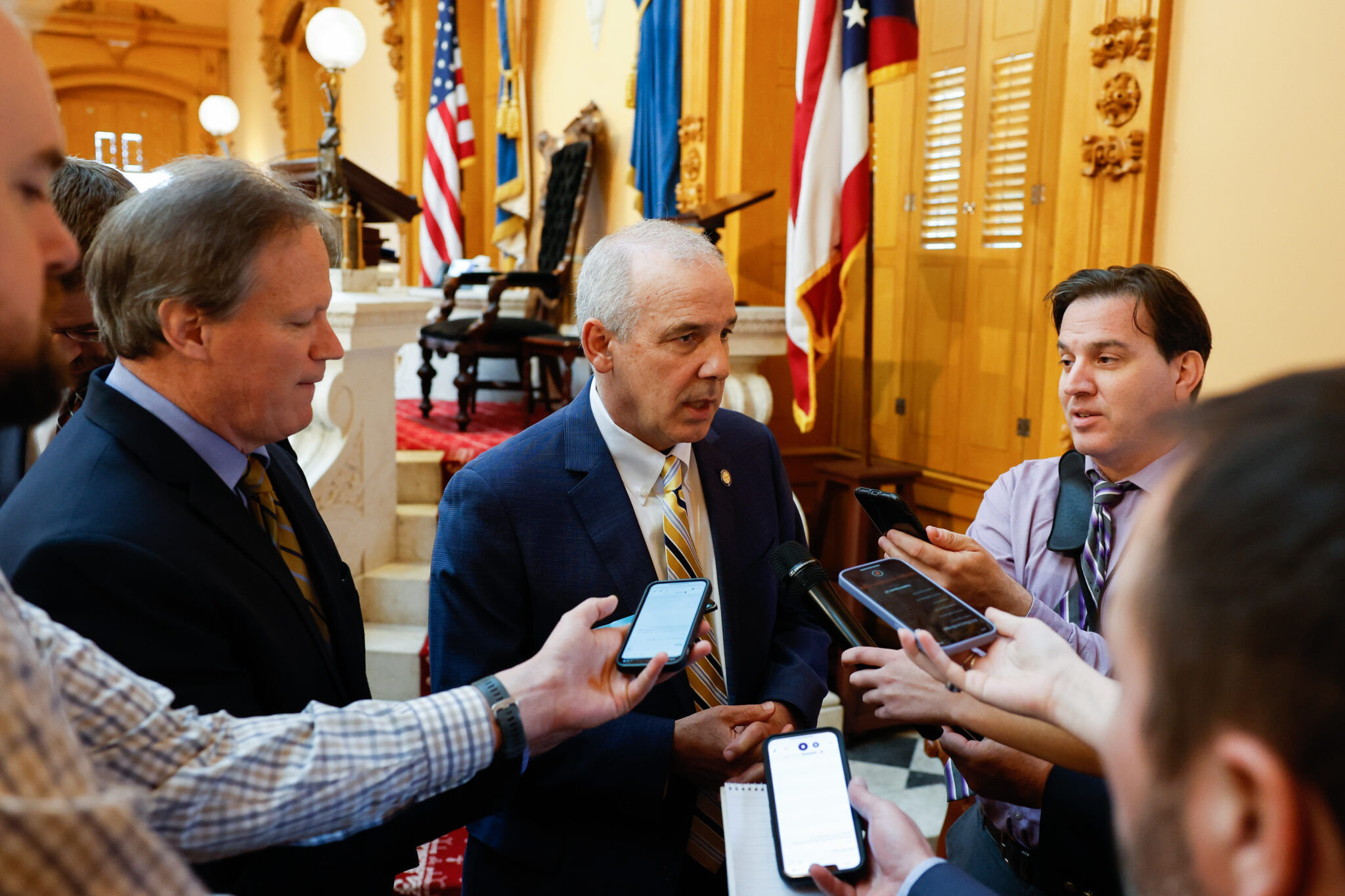
When Senate President Matt Huffman was asked about this range of cuts to social services, his explanation was that he is trying to “stimulate” a conversation about sustainability of the Temporary Assistance for Needy Families fund. He expressed worry that the fund would be insolvent in five years if spending and revenue continues at current levels for years into the future.
So let’s talk about it.
Temporary Assistance for Needy Families (often shortened to “TANF”) is a relatively small program that mainly provides income to very poor Ohioans. It is the successor to the Aid for Families with Dependent Children (AFDC) program. This was the program that had gained the dreaded label of “welfare” in the early 90s.
Many politicians did not like AFDC because it gave cash to low-income families. It became a massive dog whistle punching bag for the Reagan administration, who was able to vilify it to such effect that it was ultimately the Clinton administration that finished the program, following up on a campaign promise to “end welfare as we know it.”
And he did. The new TANF program was a block grant given out to states to not only provide cash assistance, but also to pilot a range of different programs focused on getting people to work.
Early on, this change was seen as a success. Poverty abated and employment, especially among single mothers, increased. But this was the 90s–a period of economic expansion.
The subsequent recession of the early 00s followed by the Great Recession of 2007 to 2009 exposed how these changes to the social safety net had made it less resilient and kicked out many of the supports previously in place to hold struggling families up.
While new programs from the 90s like the earned income tax credit are a good tool for supporting families who have work, they fail when structural problems make work unavailable on a massive scale.
All this is to say Huffman has a little bit of a point here. Block granting TANF took one of the most straightforward and effective income support programs in U.S. history and capped it, limiting its potential effectiveness greatly. Now the dollars available for supporting low-income families need to come from somewhere else.
Is the answer to this problem to cut social spending left and right and use that as a tool to fund income tax cuts and cuts to commercial activity? Probably not. If the plan put forth in the Senate is adopted, it will represent a massive transfer of income from the most needy Ohioans to those with the most resources already. Seems like a big cost to try to make a point.
ROB MOORE
Rob Moore is the principal for Scioto Analysis, a public policy analysis firm based in Columbus. Moore has worked as an analyst in the public and nonprofit sectors and has analyzed diverse issue areas such as economic development, environment, education, and public health. He holds a Master of Public Policy from the University of California Berkeley’s Goldman School of Public Policy and a Bachelor of Arts in Philosophy from Denison University.
Along party lines, the Ohio Supreme Court on Friday gave the green light to an attempt by Republican leaders of the state’s gerrymandered legislature to make it much harder for voters to amend the state Constitution. The court ruled in a 4-3 decision that it’s OK for the issue to be placed on the Aug. 8 ballot even though the legislature just outlawed such elections in January.
The Republican majority said that regardless of the law, the Ohio Constitution gives the legislature great latitude in deciding when elections will be held. In a dissent, the Democratic minority argued that while that might be the case, the legislature still has to follow the laws it has passed — and change the ones it doesn’t like.
Issue 1 would raise the percentage of votes needed to pass a voter-initiated amendment from 50% to 60%. It would also require that a given number of the hundreds of thousands of signatures needed to get an amendment on the ballot come from each of Ohio’s 88 counties instead of the current 44.
Republican leaders, including Secretary of State Frank LaRose, pushing the amendment have given inconsistent reasons for why it’s needed. But to partisan audiences they’ve conceded that one reason for putting the matter on the ballot in a low-turnout Aug. 8 election is to try to block a voter-initiated abortion-rights amendment expected to be on the ballot in November.
One, Rep. Brian Stewart, R-Ashville, also admitted to colleagues last year that he wants to make it harder for another anti-gerrymandering amendment to pass. Ohio’s current lawmakers represent districts that an earlier bipartisan Supreme Court repeatedly ruled were unconstitutional under two amendments already overwhelmingly passed by voters.
The voting-rights group One Person One Vote sought an order stopping the Aug. 8 election, noting that under a law signed by Gov. Mike DeWine on Jan. 6, almost all statewide August elections are prohibited.
The Republican majority on Friday agreed — kind of. In its opinion it said the law does not authorize, “an August special election for a statewide office, question, or issue.”
Even so, the opinion — signed by Republican Justices Sharon L. Kennedy, Pat DeWine and Joe Deters and concurred with by Justice Pat Fischer — says the legislature doesn’t have to follow that law.
“Regardless of what the Revised Code provides with respect to special elections, however, Article XVI, Section 1 of the Ohio Constitution controls the matter before us,” it said. “That provision authorizes the General Assembly to submit the issue ‘at either a special or a general election as the General Assembly may prescribe.’”
That’s ludicrous, Justice Michael Donnelly said, in essence, in one of two dissents. If the legislature wants to hold an Aug. 8 election, it needs to change the law that it so recently passed, he argued.
“But rather than changing the law, the General Assembly and respondent, Secretary of State Frank LaRose, want to be told that the Ohio Constitution allows the General Assembly to break its own laws,” Donnelly wrote. “Rather than doing the work themselves, they want this court to fix their mess and do their work for them. Sadly, a majority of this court obliges.”
Democratic Justices Melody Stewart and Jennifer Brunner joined in the dissent and Brunner wrote a separate dissent of her own.
In it, Brunner said the majority is wrong to claim that since the Ohio Constitution delegates to the legislature the power to determine the time of elections, that allows it to violate the law it passed prohibiting them in August. Laws frequently constrain constitutional rights, such as those related to speech and guns, she argued.
“Many of our statutory laws burden some constitutional right in some way, and yet they are presumed to be constitutional when enacted and are not struck down unless they are found to have impermissibly burdened a constitutional right,” she wrote.
Dennis Willard, spokesman for plaintiffs One Person One Vote said in a statement that despite Friday’s reversal, his group would continue to work to get people to polls and vote no on Aug. 8.
“Today’s ruling is disappointing, but the choice before voters remains the same no matter when we vote: Preserve majority rule in Ohio, or dismantle it,” he said. “We’re confident Ohio voters will see Issue 1 for the scam that it is: a corrupt power grab by special interests and politicians.”
MARTY SCHLADEN
Marty Schladen has been a reporter for decades, working in Indiana, Texas and other places before returning to his native Ohio to work at The Columbus Dispatch in 2017. He’s won state and national journalism awards for investigations into utility regulation, public corruption, the environment, prescription drug spending and other matters.
The Ohio Chamber of Commerce is supporting a proposed amendment to the state Constitution that has huge implications for such issues as abortion, gun control, and even democracy itself.
But Steve Stivers, president and CEO of the chamber, isn’t willing to talk about those things as his organization joins the effort to make it much harder for voters to amend the Ohio Constitution.
The Chamber last month came out in support of a proposal by Ohio’s Republican-controlled legislature that would make it far harder for voters to gather enough signatures to put a constitutional amendment on the ballot. It would also require a majority of at least 60% to pass it instead of the current 50%. In doing so, the Chamber is joining forces with Ohio Right to Life, the Buckeye Firearms Association, and an out-of-state, election-denying billionaire.
The measure, Issue 1, will be on the ballot Aug. 8 because Republicans in the legislature last month reversed a ban on such elections that they passed just last year because voter turnout in the dog days of summer is typically abysmal. In August 2022 it was 7.9%.
On May 11, Stivers issued a statement saying the Chamber takes no position on abortion rights — even though the measure it’s supporting is intended to block a voter-initiated abortion-rights amendment that is expected to appear on the November ballot. Stivers also said the group isn’t taking a position on other “social” issues that are popular with voters, but the Republican supermajority in the state legislature — declared an unconstitutional gerrymander multiple times by a bipartisan Ohio Supreme Court — seems determined to stymie.
“The Ohio Chamber Board voted today to take no position on the November election’s reproductive rights issue,” Stivers said. “The Ohio Chamber is a business association and takes positions on business issues, not social issues. While we support protecting our constitution in August, this has everything to do with subjects like minimum wage, employment at-will, and other business issues.”
That ignores businesses’ interest in avoiding unpopular legislation such as Ohio’s harsh abortion restrictions passed out of an extremely gerrymandered legislature. A survey conducted last August indicated that a third of job seekers wouldn’t even consider working in states with strict abortion limitations and that 27% percent of workers in states with the most restrictive abortion laws wanted to leave.
But Stivers, a former Republican congressman, has declined to discuss such things. Since issuing the May 11 statement, the Chamber hasn’t responded to requests for an interview with Stivers, and it ignored written questions that were sent as a follow-up.
Lack of transparency
The refusal of the state’s most prominent business organization to discuss the ramifications of a constitutional change it’s supporting adds another undemocratic layer to an initiative that already has many, said Catherine Turcer, executive director of Common Cause Ohio, which opposes State Issue 1. She said the Chamber and its members will sink lots of corporate money into the fight to cut voters’ power, but it doesn’t want to be open with them.
“One of the challenges with corporate donations and business organizations is that the money does the talking,” Turcer said. “It gets spent on elections, but we don’t hear directly from the people behind it. And we should expect to hear that because at the end of the day, a corporation doesn’t get to vote. At the end of the day, a corporation is an artificial entity. (Behind them are) human beings making decisions and we should understand what is happening. Or at least the press should have an opportunity to ask questions.”
The position the Chamber is taking in favor of State Issue 1 is out of step with four former governors of both parties, five former Ohio attorneys general, and more than 240 organizations — such as Turcer’s — who are adamantly opposed to the measure because they believe it would effectively lock Ohio voters out of their state Constitution.
The provision Issue 1 seeks to change was championed by former President Theodore Roosevelt as a way to force an unresponsive government to address the public’s concerns.
Adopted in 1912, it sets a high bar for voters to gain access to the Ohio Constitution. It requires supporters of an amendment to gather a large number of voter signatures (413,000 for the abortion-rights amendment planned for the November ballot) and it requires that a given number of them be gathered in each of 44 counties in the various regions of the state. After all that, it also has to gain a majority of the vote to become part of the Constitution.
Under Issue 1, Republicans in the legislature, anti-abortion groups, pro-gun groups — and the Chamber — want to require 60% of the vote for an amendment to pass, even as they try to pass the restriction under the current, 50% requirement. In other words, they’re trying to get a simple majority in a low-turnout Aug. 8 election to pass an amendment saying that a 40% minority can quash future amendments supported by 59.9% of Ohio voters.
Issue 1 “is a proposal to substantially diminish the most significant power held by the people, the power of initiative petition to amend the Ohio Constitution. Our Constitution leaves no doubt about this,” Ohio Supreme Court Justice Jennifer Brunner, wrote in a partial dissent published on Monday. She was dissenting because she thought the court didn’t go far enough in ruling that parts of Issue 1 are “likely to mislead voters.”
Like Brunner, Turcer argues that the effort to enhance the power of the gerrymandered legislature relative to the voters is undemocratic. And — along with former Republican Gov. Bob Taft — she argues that even from the standpoint of its supporters, the measure is shortsighted.
“It’s problematic that organizations decided to make it harder for citizens to change the Constitution because they don’t like specific policies. But it’s not always going to be 2023,” Turcer said. “There are a number of different ways we can improve the state and leaving that to a minority of Ohio voters is really scary. It’s really scary to think that a majority of voters — whether it’s 55% or 58% — approve of something, but they can’t actually put that policy in place.”
Misleading claims
Adding to accusations that the proposed change is anti-democratic are the misleading reasons proponents have given for needing it.
Stivers, Ohio Secretary of State Frank LaRose, and other proponents argue that voter access needs to be ratcheted down to “protect” the Ohio Constitution from monied out-of-state interests. But when he announced an earlier version of the measure last year, LaRose couldn’t point to any examples of such interests amending the Constitution in the past.
At the same press conference last year in which LaRose claimed he was trying to protect the Constitution, he also claimed that he was thinking long-term. He said he wasn’t trying to block the expected amendment protecting abortion rights.
The Republican majority members of the Ohio Redistricting Commission in 2021 and 2022. Top row from left, Ohio Gov. Mike DeWine and Secretary of State Frank LaRose. Bottom row from left Ohio Auditor Keith Faber, then-House Speaker Bob Cupp, and Senate President Matt Huffman. Official photos.
LaRose also denied that he wanted to foil another attempt by Ohio voters to stop extreme gerrymandering after he and other Republicans on the state Redistricting Commission ignored repeated orders by the state Supreme Court to follow earlier amendments passed with 70% of the vote. The Republican commissioners last year ran out the clock on the process and lawmakers in the consequently unconstitutional districts voted to put the amendment that would make it much harder for Ohio voters to amend the Constitution on the Aug. 8 ballot.
In her dissenting opinion Monday, Justice Brunner said that by ignoring constitutional prohibitions against gerrymandering, Republican leaders make it easy to come up with the needed votes for the legislature to put a constitutional amendment on the ballot while making it almost impossible for voters to do the same.
“If the General Assembly continues to ignore (anti-gerrymandering) orders of this court regarding the state legislative redistricting process, gaining a three-fifths vote should not be difficult for it to accomplish,” she wrote.
Lack of candor
Turcer of Common Cause said that business groups such as the Chamber ignore issues like gerrymandering at their peril. That’s because lawmakers from gerrymandered districts have every incentive to cater to the most charged-up elements of their base and ignore everybody else. It‘s an engine that produces extreme legislation that can prompt boycotts, protests and require businesses to provide special benefits to protect employees.
“The folks who do support Issue 1 and the special election clearly don’t care about gerrymandering — the manipulation of district lines to manipulate elections and policy,” Turcer said. “Gerrymandering has a profound consequence for our business leaders and the business community. It is extremely short-sighted to not think about how challenging it will be to do a citizen initiative with the news rules that are in place.”
LaRose again demonstrated in May that he was being less than forthright when he claimed his support for the effort was only out of concern for the future integrity of the Ohio Constitution, and not current fights over abortion and gerrymandering.
“That’s not what this kind of a change should ever be about,” LaRose said last November.
The lack of candor about their reasons for wanting to effectively lock Ohio voters out of the state Constitution seems to extend even to the name of the campaign committee supporting the measure: Save Our Constitution.
It’s possible that Stivers, the Chamber, and other business interests are narrowly focused on stopping a minimum wage hike to $15 an hour — which enjoys the support from 60% of the public.
The Chamber might also be responding to pressure from legislative Republicans. The Cleveland Plain Dealer reported that GOP leaders last month put the arm on corporate lobbyists to contribute to the Issue 1 push as they draw up a multi-billion dollar state budget that is of great interest to the companies the lobbyists represent.
Either way, Turcer said, the Chamber and its members are trying to water down democracy for their own, narrow purposes.
“For political expediency, they would like to make it harder for us to participate in direct democracy,” she said. “They would prefer to dilute the power of voters rather than promote their own policy agenda with voters.”
MARTY SCHLADEN
Marty Schladen has been a reporter for decades, working in Indiana, Texas and other places before returning to his native Ohio to work at The Columbus Dispatch in 2017. He’s won state and national journalism awards for investigations into utility regulation, public corruption, the environment, prescription drug spending and other matters.
Those on the ground trying to eradicate hunger in Ohio say the new budget proposal from the state Senate would only exacerbate the problem.
After finding out that many of Ohio’s foodbank clients are forced to choose between paying for food and things like utilities and medicine, the Ohio Association of Foodbanks urged the state legislature to include increased funding to the Ohio Food Program and Agricultural Clearance Program (OFPACP), along with hopes that the federal government would make positive changes to the Supplemental Nutrition Assistance Program.
“Clearly (the study’s) findings had the reverse impact on the Senate Republicans,” OAF executive director Lisa Hamler-Fugitt, told the OCJ. “If enacted, (the Senate’s budget proposal) will make hunger, insecurity, and poverty worse than it is now.”
The Ohio Senate’s version of the budget, headed to the chamber’s finance committee, would reduce the OFPACP funding and added a request for the Department of Medicaid to establish work reporting requirements for Medicaid.
The House version of House Bill 33, the official title of the budget bill, included $15 million per year for the next two years to the food and agricultural clearance program, and created free-lunch eligibility for any student who qualified for the reduced lunch program as well.
Neither of those are included in the Senate version.
“Eliminating increased funding to help workers, families, older adults, disabled Ohioans and marginalized people put food on the table, when the state of Ohio has incredible resources at its disposal, is cruel and short-sighted,” the OAF said in a statement.
The Hunger Network in Ohio disparaged the GOP version of the budget for cutting funding not only to the hunger efforts, but also to K-12 education and free and reduced lunches in schools.
“We cannot continue to balance our budget on the backs of hardworking and hungry Ohioans,” said Nick Bates, director of the network. “This proposal will leave Ohioans hungry, our schools under-resourced, and families without the resources to get ahead.”
According to Hamler-Fugitt, the association of foodbanks provided take-home groceries to more than 3 million state residents in the last quarter, over 30% more than the same time last year.
In the research study by the OAF, two in three Ohio households who come to the foodbanks have had to cut the size of meals or skip meals due to a lack of money, which could be attributed to rising food costs and a reduction in SNAP monies boosted during the pandemic.
The association study also found that only 5% of SNAP participants’ benefits lasted a full month since the end of the pandemic-expanded program, which stopped in March.
Ending the program resulted in a monthly loss of about $90 per person on average, according to the OAF.
The Senate Finance Committee will hold hearings on the budget and conduct a floor vote on the bill. The deadline for passage is the end of June.
SUSAN TEBBEN
Susan Tebben is an award-winning journalist with a decade of experience covering Ohio news, including courts and crime, Appalachian social issues, government, education, diversity and culture. She has worked for The Newark Advocate, The Glasgow (KY) Daily Times, The Athens Messenger, and WOUB Public Media. She has also had work featured on National Public Radio.
Public and private education supporters had a mixed bag of reactions to the state budget proposal released by the Ohio Senate GOP on Tuesday.
Public school advocates criticized the bill’s provisions making private school vouchers almost universal at 450% of the federal poverty level, allowing those who may be able to pay for the private education to be eligible for scholarships.
“Paying private school tuition for wealthy families is not a good use of our education dollars, especially when the state is still trying to accomplish the full and fair public school funding that is required by Ohio’s constitution,” Ohio Federation of Teachers president Melissa Cropper said after the budget draft was released.
Ohio Senate GOP leadership proclaimed that “significant reforms” were on the horizon in education policy, with Senate President Matt Huffman saying the new education budget would bring “the results our parents should expect for their children’s education.”
Senate Republicans said school districts would receive “at least the level of state aid they received this school year,” and Senate Finance Committee Chair Matt Dolan, R-Chagrin Falls, touted the increase of the minimum state share of instruction from 5% to 10%, but certain “guarantees” would be eliminated in the current education funding formula.
One of those eliminated guarantees would be $106.8 million to 36 districts, which paid residents for private school scholarships.
“The state now directly funds students where they are educated making this giveaway a wasteful use of taxpayer funds,” an announcement on the budget stated.
Those direct funds will be distributed on a sliding scale based on income if the budget bill passes as written, but the eligibility level in the proposal stands at an annual income of $135,000 for a family of four.
“Every student in Ohio will be eligible for a scholarship worth at least 10% of the maximum scholarship regardless of income,” Senate GOP leaders said in a release.
The full scholarship would award $6,165 for K-8 students and $8,407 for high school students.
Senate Minority Leader Nickie Antonio, D-Lakewood, used her initial reaction to the budget proposal to discredit changes made to the private school vouchers.
“A program that was intended to help low-income children could now subsidize wealthy families to continue to send their children to private schools,” Antonio said in a statement. “Our caucus will be spending the next few days digging into the details to follow the money.”
One thing the budget won’t be paying for under the Senate’s budget proposal is an expansion of a statewide free breakfast and lunch program. The House inserted a provision to make school meals free for anyone whose household income qualified them for free or reduced meals, considered a small win by school nutritionists who asked for completely universal school meals.
In the Senate version, that provision has been removed.
Many of those who dislike the education parts of the budget proposal spoke out against Senate Bill 1, legislation that would restructure the Ohio Department of Education to become the Ohio Department of Education and Workforce (DEW), and work within the governor’s office under two deputy directors, one for primary and secondary education, and another for workforce development.
The bill, and the provision now in the budget draft, “transfers most of the powers and duties of the State Board of Education and the Superintendent of Public Instruction to the DEW,” according to budget documents.
The State Board of Ed and the state superintendent would retain power “regarding educator licensure, licensee disciplinary actions, school district territory transfers and certain other areas,” the budget proposal states.
Odds are opponents will be back to decry the inclusion of SB 1’s language in the new budget. Cropper said including the restructure would be “too big of a reorganization to shove through as part of a budget bill.”
“It deserves more attention and a more thoughtful, deliberative legislative process,” according to Cropper.
The same message was sent by opponents of the bill in the last General Assembly, when that version of the restructuring came late in the GA session, and died as the lame duck session ended.
It reappeared at the beginning of the year, and has been going through the committee process in the last few months.
Some right-wing groups praised the education provisions of the budget, with the Thomas B. Fordham Institute complimenting the preservation of third-grade retention and the expansion of vouchers. The group also said the Senate version has “taken another step towards a more coherent and accountable governance system,” referring to SB 1, which they have supported.
“Greater parent empowerment, accountable school systems and strong evidence-based literacy policies can only help increase student achievement,” said Fordham’s Ohio research director, Aaron Churchill.
The Buckeye Institute’s Greg R. Lawson called the proposal “a significant step toward putting students first,” with the plan to universalize private school vouchers and improve charter school funding.
SUSAN TEBBEN
Susan Tebben is an award-winning journalist with a decade of experience covering Ohio news, including courts and crime, Appalachian social issues, government, education, diversity and culture. She has worked for The Newark Advocate, The Glasgow (KY) Daily Times, The Athens Messenger, and WOUB Public Media. She has also had work featured on National Public Radio.
The Ohio House Insurance Committee heard Wednesday from supporters of a bill that would prohibit insurance requirements for gun owners.
No city in Ohio is actively contemplating — much less pursuing — such a requirement. Nationwide, there are vanishingly few examples of gun insurance provisions. New Jersey approved a state law, but it’s on hold amid a court challenge. The city of San Jose in California has approved a local ordinance which took effect earlier this year.
An inventive lot
Rob Sexton from the Buckeye Firearms Association brushed off the lack of local insurance proposals, arguing gun control advocates are “an inventive lot.” He said imposing an insurance prohibition is simply getting ahead of people who are “continually seeking ways to get around what seem like obvious constitutional protections, to prohibit or restrict firearm possession and ownership.”
Sexton described the approach as one of several “insidious” policy efforts.
“They don’t seek to ban firearms outright but rather to raise the cost of owning a firearm,” Sexton said, “thereby denying self-defense rights to those with less financial means.”
“It’s not clear,” he added, “whether insurance companies would even offer such a product if the state of Ohio did mandate it.”
Rep. Bride Rose Sweeney, D-Westlake, made the comparison to auto insurance.
“Do supporters think that the state has a role to play in keeping people safe when they’re engaging in, you know, having a car?”
Sexton offered the response that driving, unlike gun ownership, doesn’t find its roots in a constitutional right.
COLUMBUS, Ohio — MAY 10: State Rep. Bride Rose Sweeney, D-Westlake, speaks during the Ohio House session, May 10, 2023, at the Statehouse in Columbus, Ohio. (Photo by Graham Stokes for Ohio Capital Journal. Republish photo only with original story.)
Who should bear the burden?
Even though no one in Ohio is actually proposing insurance requirements for gun ownership, Sweeney made a case for their utility. She pushed back on Sexton’s argument that the Victims of Crimes Act fund already fills the role that insurance would. Sweeney noted the fund often runs dry and victims face hurdles in gaining access.
“What is your your solution? Because if that’s it, in one way or another it is the taxpayers who are going to be on the hook for paying for the ambulances,” she argued.
“Over 5,000 people every year are in some way directly impacted,” she continued. “Either they’re killed or they are shot. What do we do to make sure that they don’t go into financial ruin in this state because of someone else’s actions?”
Sexton balked at how to reform the victims compensation system, but argued the question of crime and prosecution is a society-wide issue.
“We believe that the burden for all of that, including the court system, incarceration, prosecution, law enforcement, that’s a societal problem at large,” Sexton said, “And therefore, we shouldn’t take one group of people who are overwhelmingly law abiding people and subject them to cost burdens.”
Nick Evans has spent the past seven years reporting for NPR member stations in Florida and Ohio. He got his start in Tallahassee, covering issues like redistricting, same sex marriage and medical marijuana. Since arriving in Columbus in 2018, he has covered everything from city council to football. His work on Ohio politics and local policing have been featured numerous times on NPR.
Judges denied two delays in recent days that would have been key to a bribery and money laundering scandal that took place in Ohio between 2017 to 2020. Lawyers in one suit called it “one of the largest corruption and bribery schemes in U.S. history.”
Denial of a delay in one court case means that a player will still be sentenced late next month.
In denying the other, the judge in that case agreed with two former FirstEnergy executives who said federal law enforcement has them in its crosshairs. But she ordered that they be questioned under oath anyway.
One of those denied was former Ohio Republican Party Chairman Matt Borges, who on March 9 was convicted of racketeering along with former Ohio House Speaker Larry Householder, R-Glenford. Two others who were also charged in 2020 pleaded guilty and a third died by suicide.
Householder directed the effort in 2018 to elect friendly representatives who would make him speaker. He led the 2019 legislative fight to pass the bailout. And he engineered the nasty, dishonest battle to beat back an attempted repeal.
Borges’ role was much more limited. He acted as a go-between with statewide officials such as Attorney General Dave Yost and Secretary of State Frank LaRose — and he paid a worker on the repeal campaign $15,000 as the worker shared inside information about its likelihood of success.
Even though Householder’s role in the scandal was much bigger than that of Borges, each faces a sentence of up to 20 years in prison on the one count of racketeering of which he was convicted. Householder is scheduled to be sentenced in the Potter Stewart U.S. Courthouse in Cincinnati on June 29. Borges was scheduled for sentencing the next day.
But after his conviction, Borges asked the court for extra time to file post-trial motions asking that his conviction be thrown out. U.S. District Judge Timothy Black agreed, giving him until April 24.
Borges didn’t file anything by that deadline. But on May 15, Borges again asked permission to file post-trial motions. He argued that his conviction was on much shakier ground in light of two decisions handed down on May 11 by the U.S. Supreme Court: Ciminelli vs. United States and Percoco vs. United States.
Judge Black, however, on Monday agreed with Assistant U.S. Attorney Emily Glatfelter that the legal theories those decisions dealt with were “neither charged, nor argued, nor instructed” in Borges’ case. Black added that it’s important to keep the case moving.
“Finally, this case has been litigated, tried, and a verdict returned. Defendant Borges is now scheduled for sentencing on June 30, 2023. Disrupting the schedule would needlessly undermine the interests in judicial efficiency and finality,” the judge wrote.
Former FirstEnergy CEO Charles “Chuck” Jones. Source: FirstEnergy, via Flickr
Similarly, a separate federal judge declined to postpone sworn depositions of the two former FirstEnergy executives who directed more than $60 million in corporate cash to Householder-controlled dark money groups that fueled the scandal. She did so even as she acknowledged that former CEO Chuck Jones and former Vice President Michael Dowling “fear they are next in line for indictment” and don’t want to incriminate themselves in their depositions.
U.S. Magistrate Judge Kimberly Jolson is helping to manage the administration of a massive class-action suit against FirstEnergy, Jones and Dowling over the Householder scandal. Investors say the recklessness of the scheme cost them big — especially when it came to light and stock values plummeted.
Alleging federal securities fraud, lawyers for pension funds and other investors have said in court filings, “FirstEnergy and its most senior executives bankrolled one of the largest corruption and bribery schemes in U.S. history.”
Last Friday, Jolson also rejected attempts by Jones and Dowling — the former FirstEnergy executives — to delay sworn depositions to September or even later. The depositions had been scheduled for this week and next, but plaintiffs and defendants agreed to a short delay while Jolson considered the request.
In asking to hold off until Sept. 8, Jones and Dowling said that having to give a deposition under oath put them in a position in which they were damned if they did, and damned if they didn’t.
Answering questions could put them in criminal jeopardy, but if they took the Fifth, the jury in the class-action case is free to conclude they have something bad to hide, Jones and Dowling argued. They added that it’s certain that the feds are coming after them.
“Although the defendants in (the Householder trial) have been found guilty (but are yet to be sentenced) and charges have not yet been brought against Jones or Dowling, there can be no doubt that the government’s investigation into Jones and Dowling remains ongoing,” their motion said.
Judge Jolson replied that she had to weigh those concerns against those of FirstEnergy investors, who already have been fighting the case for nearly three years.
Jones and Dowling “say the stay is temporary, (but) their grounds supporting the stay could extend for months or even years,” Jolson wrote. “Presently, they request that the depositions be delayed until at least September 8, 2023. (Jones and Dowling) have chosen this date because it is the first date on which investigations and proceedings conducted by PUCO might resume—after a third six-month stay of those proceedings was recently granted at the request of” federal prosecutors.
The judge added it didn’t help the former executives’ argument that they haven’t been indicted yet because waiting until that question is resolved is a recipe for further delay.
Jolson said she understood the executives’ dilemma.
“In sum, there is substantial overlap between the issues in this case and the criminal investigation surrounding the Householder case,” she wrote. “And (Jones and Dowling) are faced with legitimate concerns regarding the invocation of their Fifth Amendment rights.”
Jolson added, however, that granting a delay would privilege the former executives who funded the corrupt bailout scheme over the aggrieved investors and the public.
“A stay of these key depositions at this moment — with no clear end in sight — would throw a wrench into the works of discovery and impede or even halt the litigation,” she wrote. “It would privilege the interests of (Jones and Dowling) above those of Plaintiffs, the public (whose interests are particularly implicated given that this is a class action), and the Court.”
MARTY SCHLADEN
Marty Schladen has been a reporter for decades, working in Indiana, Texas and other places before returning to his native Ohio to work at The Columbus Dispatch in 2017. He’s won state and national journalism awards for investigations into utility regulation, public corruption, the environment, prescription drug spending and other matters.
House Bill 183 would require K-12 schools and colleges to mandate that students could only use the bathroom or locker room that matches their sex assigned at birth.
State Rep. Jean Schmidt, a Clermont County Republican, is a co-sponsor of the bill.
A bill banning transgender students from being able to use the bathroom and locker room that aligns with their gender identity was recently introduced by a pair of Ohio Republican legislators.
House Bill 183 — introduced by state Rep. Beth Lear, R-Galena, and state Rep. Adam Bird, R-New Richmond — would require K-12 schools and colleges to mandate that students could only use the bathroom or locker room that matches their sex assigned at birth. It would also prohibit schools from allowing students to share overnight accommodations with the opposite sex.
“No school shall permit a member of the female biological sex to use a student restroom, locker room, changing room, or shower room that has been designated by the school for the exclusive use of the male biological sex,” the bill’s language reads. “No school shall permit a member of the male biological sex to use a student restroom, locker room, changing room, or shower room that has been designated by the school for the exclusive use of the female biological sex.”
Lear did not respond to the OCJ’s request for comment. Bird, who was unable to speak to the OCJ, posted on Twitter that the bill is about protecting children.
“Protecting them from what?” Erin Upchurch, Executive Director of Kaleidoscope Youth Center, said in response. “Nobody is being protected with this bill.”
The bill says this would not prohibit a school from having single-occupancy facilities. It also says this would not apply to someone helping a person with a disability or a child younger than 10 years old being assisted by a parent, guardian, or family member.
Other states like Kentucky, Tennessee, and Iowa have laws that ban K-12 transgender students from using bathrooms that match their gender identity. Kansas and Florida both recently passed laws with bathroom bans that go beyond schools.
Opposition
HB 183 has drawn swift opposition and Upchurch said the bill is “blatantly discriminatory.”
“They’re truly fixated on attacking the transgender, non-binary community and especially young people,” Upchurch said. “It’s creating problems that don’t exist … It creates this very, I think, bizarre fixation on body parts and genitals of young people.”
As a parent, she said it’s concerning that people are worried about what’s underneath her children’s clothes.
COLUMBUS, OH — JUNE 18: Members of the LGBTQ+ community and supporters celebrate during the 41st annual Stonewall Columbus Pride March, June 18, 2022, at the High Street, Columbus, Ohio. (Photo by Graham Stokes)
“Now, bathrooms in schools will be even more unsafe for trans kids, making them altogether inaccessible,” Maria Bruno, Public Policy Director of Equality Ohio, said in a statement. “The sponsors of this bill should try not to go to the bathroom for 8 hours and tell us how that goes before signing up trans students to have to do exactly that.”
Thirty percent of LGBTQ+ students said they were prevented from using the bathroom that aligned with their gender, and 26% were stopped from using the locker room that aligned with their gender, according to Ohio’s 2021 state snapshot by GLSEN, which examines the school experiences of LGBTQ middle and high school students.
When looking specifically at transgender and nonbinary students, 42% were prevented from using the bathroom that aligned with their gender and 36% couldn’t use the locker room that aligned with their gender, according to the Ohio GLSEN report.
Nearly 1 in 5 transgender and nonbinary young people attempted suicide in the past year, according to the Trevor Project’s 2023 survey of mental health of LGBTQ youth.
Anti-trans bills in Statehouse
This is the third anti-trans bill that has been introduced so far this General Assembly.
House Bill 68, also known as the Save Adolescents from Experimentation Act (SAFE Act), would prohibit physicians from providing gender-affirming care, including puberty blockers and hormone therapy, to trans youth. More than 200 people submitted opponent testimony to the House Public Health Committee this week.
“Hatred is the only word I can think of, because I can’t imagine another reason why our adult elected officials are literally coming for and attacking the livelihood, the wellness and the well being of young people,” Upchurch said. “Because they keep adding on to them, it just becomes more and more obvious what they’re trying to do, and that is to obliterate and eradicate an entire community.”
Megan Henry is a reporter for the Ohio Capital Journal and has spent the last five years reporting on various topics including education, healthcare, business and crime at The Columbus Dispatch, part of the USA Today Network.
A four-year-old recorded sermon given by Ohio state Rep. Gary Click, R-Vickery, may shine a light on the religious motivations behind Ohio’s proposed health care ban for trans youth.
The sermon, which was posted on the YouTube channel of Fremont Baptist Church, where Click is a pastor, shows Click defending conversion therapy and suggesting that homosexuality and the idea that one can be trans are pushed by Satan in order to undermine the family.
Throughout the sermon, Click emphasizes his view that God provided a specific plan for the family. Click suggests that homosexuality, trans people, and single-parent homes all break from this plan. He claims that Satan works to stray individuals away from the plan, which he says leads to the “crumbling” of society.
Click is the sponsor of HB 68, also known as the Save Adolescents from Experimentation Act or SAFE Act. The SAFE Act would prohibit physicians from providing gender-affirming care, including puberty blockers and hormone therapy, to trans youth. Gender-affirming care is supported by every major medical organization in the United States.
Click denies that his bill has religious motivations, but his sermon suggests otherwise.
“You’re not born that way,” Click says about trans people during the sermon. “God’s not going to curse you in the wrong body. He’s not going to curse you with desires that cannot be adequately and appropriately and biologically fulfilled correctly.”
At one point, Click appears to admit to having helped with attempted conversion. After condemning a California bill that sought to ban the practice as “an assault on the First Amendment,” Click describes conversion therapy as counseling “someone who struggles with those same-sex attractions, or struggles with their gender identity,” by showing them “what the bible says” and how to be “at one with the body God gave them.” Following this, he says, “I’ve helped people overcome that before.”
During his recent sponsor testimony for HB 68, Click said that he has never practiced conversion therapy and does not know anyone who has, following a question on the topic by state Rep. Rachel Baker, D-Cincinnati.
Conversion therapy has been condemned by several medical associations and human rights groups, including the American Academy of Pediatrics, the American Medical Association, the National Association of Social Workers, the United Nations, and more.
When asked by OCJ for comment, Click said that it is “inaccurate” to say that he has promoted or practiced conversion therapy. He said that “conversion therapy requires force or at minimum an act of trying to change someone into something that they do not wish to be… When an individual is struggling with unwanted feelings and they approach me or someone else, it is entirely ethical to listen to them, pray with them, and provide encouragement and strength, and reinforcement as they determine for themselves how they wish to live.”
Towards the end of the sermon, Click shows a picture of himself with Tony Perkins. Perkins is the president of the Family Research Council (FRC), a right-wing Christian organization that is labeled as an anti-LGBTQ hate group by the Southern Poverty Law Center.
Click finishes by discussing a trip he took to the U.S. Holocaust Memorial Museum in Washington D.C. While displaying a picture of himself standing next to a wall featuring the famous poem “First they came”, which is about the human rights atrocities of Nazi Germany, he further discusses what he deems as an attempt to “undermine our values.”
“When the family crumbles, society crumbles,” Click says. “If the church is silent, then the church will be held responsible. We can’t afford to be silent.”
In addition to the sermon, Click’s affiliation with the missionary group Baptist International Outreach (BIO) raises similar questions. A doctrinal statement posted on BIO’s website states that “homosexuality is an abomination to God and a scourge to any society.” It also calls homosexuality a “sin” that occurs due to people “giving into the perverseness that is in his or her heart.” The statement further claims that the Bible “condemns cross-dressing and effeminacy.”
Click’s biography on Fremont Baptist Temple’s website states that he “currently serves in an advisory capacity for Baptist International Outreach.” In his response to OCJ’s request for comment, Click clarified that he is “no longer serving [in an advisory capacity] with BIO.” He said that BIO is “a good organization” and that he is “not familiar with what their doctrinal statement currently says.”
In his response, Click also said that his role as a pastor and his role as a representative do not conflict. In bold letters, he wrote “the fact that science and the Scripture harmonize is not a conspiracy, it is a reality.” Click did not specify what science he was referring to.
While Click claims that his role as a pastor and as a representative do not conflict, he spends the final section of his sermon discussing the role of Christian conservatives in politics and encourages his audience to become politically involved. He discusses his role as a lobbyist for an international Christian school association and says the goal of his lobbying was to “reclaim our values.”
While encouraging his audience to get involved politically, Click lists several right-wing Christian political organizations and discusses being personal friends with the organization’s leaders. One of these organizations is Citizens for Community Values, now called Center for Christian Virtue (CCV). CCV approached Click in the spring of 2021 to put forth the SAFE Act.
________________________
RILEY ROLIFF
Riley Roliff is a freelance journalist and a student at Cleveland State University. Her reporting focuses on LGBTQ+ issues and the role of money in politics.
Ohio ranked 36th in enrollment at age 4 and 27th at enrollment at age 3, according to Rutgers University’s National Institute for Early Education Research.
Despite preschool enrollment and state spending for programs increasing, Ohio ranked low in a new early childhood education report released last Thursday.
“Ohio leaders must address this ongoing lack of access, lackluster quality and related issues of teacher retention and pay to ensure that all children have access to the educational opportunities they deserve,” Allison Friedman-Krauss, the report’s lead author, said in a news release.
Enrollment in Ohio’s state-funded preschool during the 2021-2022 school year was 16,732, an increase of 1,680, according to the report. 57% of Ohio school districts offered state preschool programs.
State spending for preschool programs was $66,928,000, an increase of $1,722,262 when adjusted for inflation. Ohio’s state spending per child enrolled in preschool was $4,000, which ranked 36th in the nation. This is down $332 from the previous school year.
Ohio does not have universal preschool, but according to the report, seven states are working towards universal preschool: California, Colorado, Hawaii, Illinois, Michigan, New Jersey, and New Mexico.
“Ohio should assess its support for preschool against neighbors and other states that provide much stronger support for access, quality standards, and funding per child. Ohio’s young children deserve no less than others,” W. Steven Barnett Ph.D., NIEER’s senior co-director, said in a news release.
The study analyzed early learning and development standards, curriculum supports, teacher and assistant teacher education, specialized training for teachers, staff professional development, class size, staff-child ratio, screening and referral, and a continuous quality improvement system.
Ohio met only five of the 10 quality standards benchmarks: early learning & development standards; curriculum supports; teacher specialized training; screening and referral; and continuous quality improvement system.
National preschool figures
The report showed a 13% increase in enrollment in state-funded preschools. Enrollment, however, is down 8% compared to pre-pandemic levels.
Preschool spending per child in 2021-2022 was $6,571, “essentially the same as it was 20 years ago after adjusting for inflation,” according to researchers.
“Progress in expanding access to high-quality state-funded preschool over the last two decades has been slow and uneven, despite proven benefits to children, families and our nation’s economy as a whole,” Friedman-Krauss said.
States spent $9.9 billion on preschool in 2021-2022, including $393 million in federal Covid-19 relief funds.
Ohio’s Budget
The state’s proposed two-year operating budget would create the Ohio Department of Children and Youth and the department’s director would be a member of the governor’s cabinet. The department would be the state’s primary children’s services agency and would oversee early learning and education, including preschool.
The Ohio House’s version of the budget also allocates $61 million per fiscal year increases to the Early Childhood Education grants, which is estimated to expand preschool to more than 15,000 additional children. The budget is currently in the Senate.
In January, Gov. Mike DeWine announced the Ohio Department of Job and Family Services (ODJFS) will receive $48 million in federal grants over the next three years to increase access to early childhood care and education.
ODJFS is partnering with the Ohio Departments of Education; Health; Mental Health and Addiction Services; Medicaid; and Developmental Disabilities to implement the grant programs which will increase access to early childhood education and create long-term local, state and federal funding for early childhood education programs.
“It will fund a needs assessment to determine the best way to provide safe and enriching early child care and education for young children with physical disabilities and emotional needs,” ODJFS Director Matt Damschroder said in a release.
Megan Henry is a reporter for the Ohio Capital Journal and has spent the last five years reporting on various topics including education, healthcare, business and crime at The Columbus Dispatch, part of the USA Today Network.