Tag: Ohio Capital Journal

  • Clermont and Warren County don’t have enough poll workers for Tuesday’s Special Election

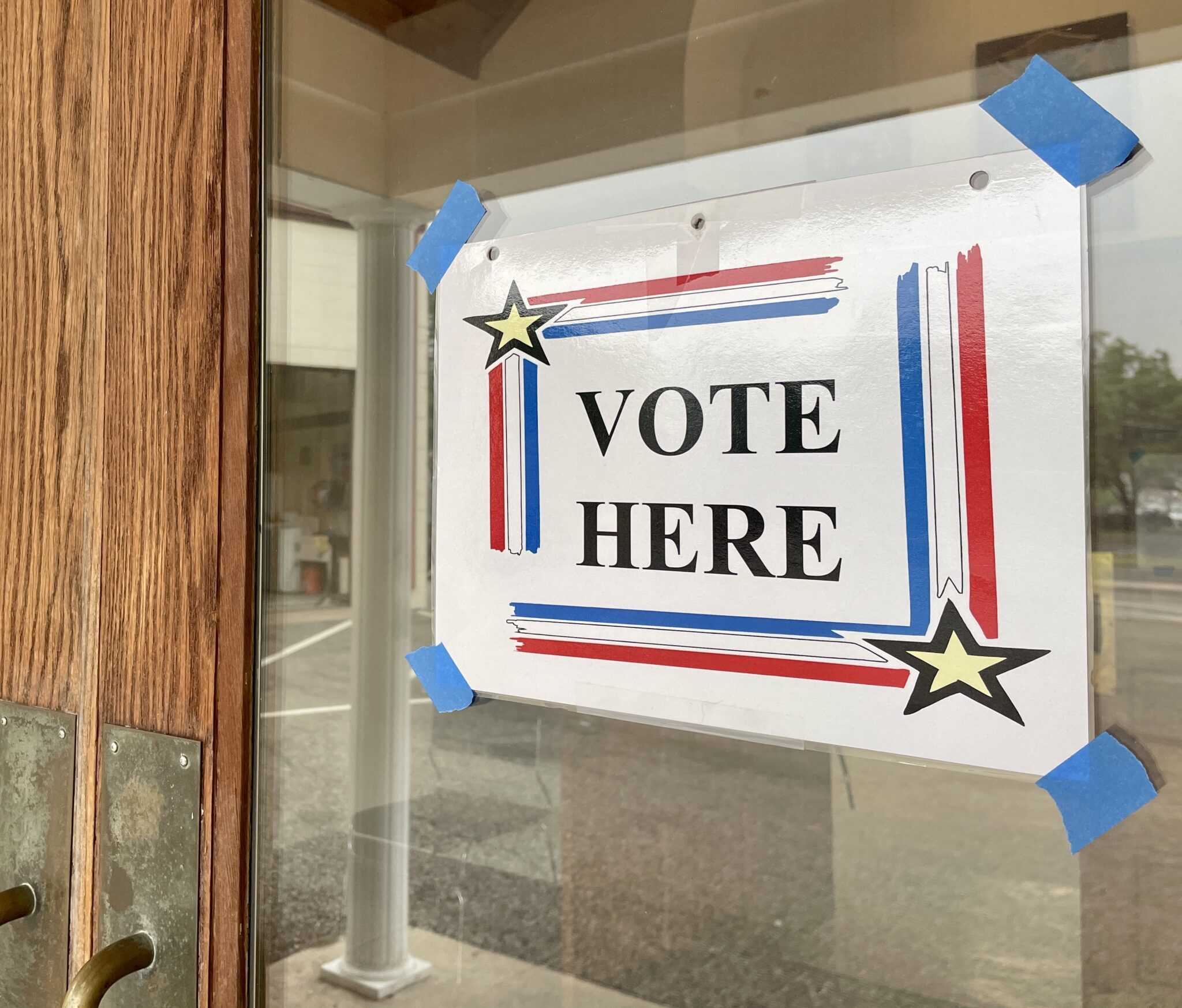
    Clermont and Warren County don’t have enough poll workers for Tuesday’s Special Election

    Photo by the New Jersey Monitor/States Newsroom

    Butler and Hamilton have also not met their “Goal”

    BY:  Ohio Capital Journal

    Twenty-three Ohio counties don’t have the minimum number of poll workers needed for Tuesday’s special election.

    These counties don’t have enough poll workers as of Thursday morning: Ashtabula, Clermont, Columbiana, Coshocton, Defiance, Fulton, Greene, Harrison, Highland, Huron, Jefferson, Knox, Licking, Madison, Mahoning, Marion, Montgomery, Shelby, Stark, Trumbull, Van Wert, Warren, and Washington.

    Currently, 32,310 poll workers have signed up to help, according to the Ohio Secretary of State’s Poll Worker Tracker. That surpasses the statewide needed minimum, but some counties haven’t met their local goal.

    “While many Ohio counties have passed the minimum number of poll workers needed to conduct the election, Ohio Secretary of State Frank LaRose set a goal of 115% of the minimum needed to ensure a sufficient number of poll workers is available in every county in case of an unforeseen circumstances,” the secretary of state said in a news release.

    Fifty counties have not met their goal for poll workers as of Thursday morning: Ashtabula, Athens, Auglaize, Butler, Clark, Clermont, Clinton, Columbiana, Coshocton, Darke, Defiance, Delaware, Erie, Fayette, Fulton, Greene, Hamilton, Hancock, Harrison, Highland, Huron, Jackson, Jefferson, Knox, Lake, Licking, Lorain, Madison, Mahoning, Marion, Meigs, Montgomery, Noble, Paulding, Pike, Ross, Sandusky, Scioto, Seneca, Shelby, Stark, Summit, Trumbull, Van Wert, Vinton, Warren, Washington, Wayne, Williams, and Wood.

    Of those 50 counties, 27 have met the minimum requirements of poll workers needed.

    Poll workers are paid for their work on Election Day and Ohioans can sign up at VoteOhio.gov/DefendDemocracy.

    Polls are open on Election Day from 6:30 a.m. through 7:30 p.m.

    Follow OCJ Reporter Megan Henry on Twitter.


    Megan Henry
    MEGAN HENRY

    Megan Henry is a reporter for the Ohio Capital Journal and has spent the past five years reporting in Ohio on various topics including education, healthcare, business and crime. She previously worked at The Columbus Dispatch, part of the USA Today Network.

    MORE FROM AUTHOR


  • Former state rep, Hamilton County resident sue to keep abortion rights amendment from November ballot

    Former state rep, Hamilton County resident sue to keep abortion rights amendment from November ballot

    Getty Stock Image

    BY:  – Ohio Capital Journal

    A lawsuit has been filed with the Ohio Supreme Court in an attempt to block a proposed abortion rights amendment from going to voters in November.

    Days after the Ohio Secretary of State verified that the campaign to get a reproductive health amendment on the ballot had collected enough valid Ohio voter signatures to be sent to voters, former Republican state Rep. Thomas Brinkman is at the top of a lawsuit to keep that from happening.

    Brinkman is joined by Hamilton County resident Jennifer Giroux, a candidate for House of Representatives’ 27th district and owner of a Catholic shop in Madeira.

    The main arguments in the lawsuit against Secretary of State Frank LaRose, the state and the coalition of groups who created the proposed amendment claim that the petition proposal “failed to comply with all of the statutory requirements for an initiative petition,” including listing existing laws that would be changed or removed if the constitutional amendment is approved by voters.

    The proposed constitutional amendment would codify abortion in the state, and allow pregnancy decisions to be between the pregnant person and a physician, and viability to be determined by medical experts.

    “Even though certain existing statutory provisions would be repealed if the proposed amendment to the Ohio Constitution … is adopted, the initiative petition failed to include the text of such statutory provisions and, thus, the initiative petition violates requirements established by law and must be invalidated,” attorney Curt Hartman wrote in the lawsuit.

    This is the second such lawsuit Hartman has filed regarding the abortion amendment. The first time, he sued the Ohio Ballot Board on behalf of two members of Cincinnati Right to Life, saying the board did not deliberate enough about the issue before approving the measure, opening the door for signature collection.

    In that case, the Ohio Supreme Court unanimously ruled the board had not abused its discretion or disregarded law in approving the petition, and that signature collection could go forward.

    On Saturday, the Ohio Supreme Court set a deadline for 4 p.m. Monday to receive the first filings in the case, and an Aug. 7 deadline for all documentation from both sides.


    Susan Tebben
    SUSAN TEBBEN

    Susan Tebben is an award-winning journalist with a decade of experience covering Ohio news, including courts and crime, Appalachian social issues, government, education, diversity and culture. She has worked for The Newark Advocate, The Glasgow (KY) Daily Times, The Athens Messenger, and WOUB Public Media. She has also had work featured on National Public Radio.

    MORE FROM AUTHOR

  • Parents have no right to allow their children’s gender transition, Republicans say

    Parents have no right to allow their children’s gender transition, Republicans say

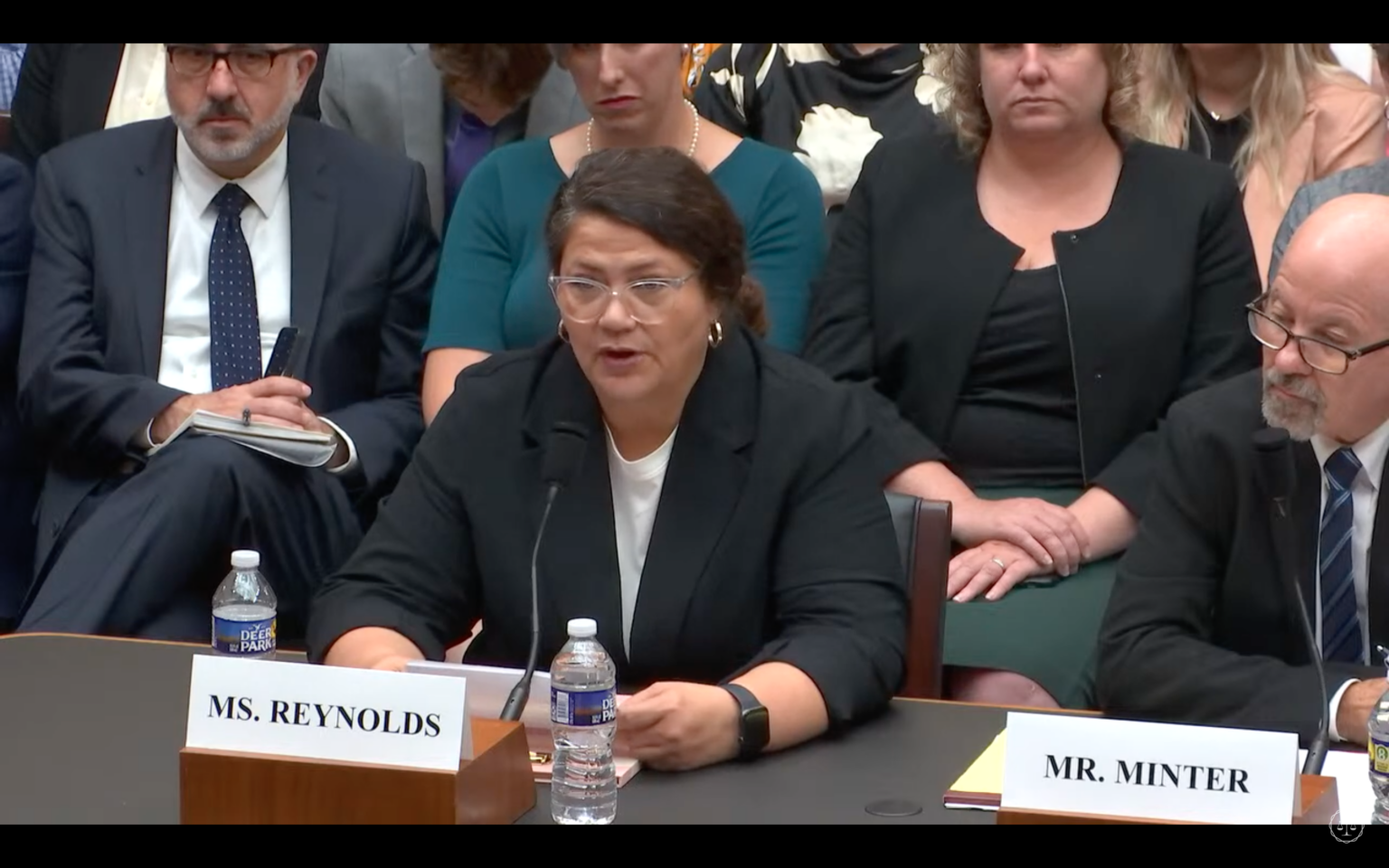
    Myriam Reynolds of Texas, the mother of a transgender son, said before he received care, he was unhappy and she has “no doubt that the health care my son accessed was life-saving.” (Screenshot from committee webcast)


    WASHINGTON — U.S. House Republicans on a panel for limited federal government on Thursday argued that parents should not be allowed to let their transgender children have access to gender-affirming care.

    “A parent has no right to sexually transition a young child,” the chair of the House Judiciary Subcommittee on the Constitution and Limited Government, Rep. Mike Johnson of Louisiana, said at a hearing on transgender youth. “Our American legal system recognizes the important public interest in protecting children from abuse and physical harm. No parent has a constitutional right to injure their children.”

    Johnson, and several other Republicans, floated the idea that the federal government should get involved, but did not offer specifics on potential legislation. They argued that gender-affirming surgery should not be allowed for transgender minors. That type of surgery is rarely performed on patients under 18.

    In Johnson’s home state, the Louisiana Legislature in early July voted to override a veto from Gov. John Bel Edwards, allowing a ban on gender-affirming health care for transgender youth to become law.

    Thursday’s hearing reflects a broader trend. At least 21 Republican-led states have passed laws banning or restricting gender-affirming care for minors, according to the Movement Advancement Project, an organization that tracks LGBTQ+ state policies.

    The wave of legislation has had a chilling effect on health care providers, who are wary of providing other care to transgender youth, such as mental health and other medical care.

    Gender-affirming care can be social affirmations such as adopting a hairstyle or clothes that align with a transgender youth’s gender identity, or the use of puberty blockers and hormone therapy. Typically, in adulthood it can be gender-affirming surgery.

    “When our Republican colleagues allege that gender-affirming care raises particular dangers or due process issues, that is fearmongering at its worst,” the top Democrat on the panel, Rep. Mary Gay Scanlon of Pennsylvania, said. “Picking on already vulnerable kids in order to stir up chaos that they hope to ride to success at the ballot box.”

    Democrats said the hearing is a pattern of GOP lawmakers attacking transgender kids and their families.

    Scanlon said that barring parents from making those decisions would be in violation of their parental rights. Republicans passed legislation for a federal “Parents Bill of Rights” in March pertaining to access to education-related materials.  

    State laws

    Several federal courts have either blocked or struck down state laws banning gender-affirming care for transgender youth, such as in AlabamaArkansasFlorida and Indiana.

    The top Democrat on the House Judiciary Committee, Rep. Jerry Nadler of New York, asked one of the Democratic witnesses, Shannon Minter, an attorney, what the federal courts have concluded about states moving to pass bans on gender-affirming care.

    Minter, who is the legal director of the National Center for Lesbian Rights and is also transgender, said the federal courts have found that those state laws “severely burden parents’ fundamental rights to make medical decisions for their own children.”

    “They’re blatantly discriminatory,” he said. “They violate the guarantee of equal protection because they do something that has just never been done before in this country, which is single out a particular group of people, transgender young people, in order to deny them medical care.”

    Despite the federal court cases, Johnson argued that states have the right to regulate gender-affirming care, such as puberty blockers.

    Puberty blockers were first approved by the Food and Drug Administration in 1993 to temporarily pause puberty in children who were going through it too early. When used in gender-affirming care for transgender youth, those adolescents can choose to start hormone therapy, in which they receive either estrogen or testosterone treatments, whichever one that aligns with their gender identity.

    “We’re limited government conservatives, right,” Johnson said. “We obviously recognize that parents have a natural and fundamental right to the bringing up of their children to make decisions with regard to their care and custody and control. But at the same time, our legal system in this country, our law does not allow a parent to physically or mentally abuse or harm a child.”

    May Mailman a senior legal fellow at the Independent Woman’s Law Center, a conservative advocacy organization, said states should be able to regulate who can have access to transgender health care.

    “Unfortunately, I think you’re seeing this movement that states should not be able to regulate the practice of medicine and somehow federal judges should,” she said.

    Life-saving care

    One of the Democratic witnesses, Myriam Reynolds, is the mother of a transgender son. She said before he received care, he was unhappy and she has “no doubt that the health care my son accessed was life-saving.”

    Reynolds said any health care provided to her son was through slow and careful decisions that were approved by her and her husband and that their son always had the opportunity to stop if he wanted to. He received puberty blockers as well as counseling.

    “When my child came out, as transgender, there was not the hysteria that there is now about this,” she said. “To be looked at as a child abuser, or you know an indoctrinate or something like that, it feels very hateful and divisive.”

    Texas Republican Rep. Wesley Hunt said that instead of parents jumping to gender-affirming care when a child tells them they have gender dysphoria, meaning their gender identity differs from the sex they were assigned at birth, they should instead question “the root cause of that feeling.”

    He compared that decision to his toddlers, whom if they could “have their way, they would have ice cream for breakfast, lunch and dinner and for every single meal in between. Oh, the wisdom of children.”

    “In a sane country, we know that children aren’t mature enough to make adult decisions that will impact the rest of their lives, that’s why we have parents,” he said. “Children cry for ice cream, but as parents, we have the wisdom to know that ice cream is not in their best interests, particularly their long-term interest.”

    He said that in 2024, Republicans will have an opportunity to “stop all this foolishness.”

    Florida Republican Rep. Matt Gaetz, who is not a member of the panel, took aim at a recently passed law in Washington that protects transgender youth seeking gender-affirming care who are estranged from their parents.

    “I am against transitioning children against the will of their parents,” he said.

    Title IX

    Several of the Republican witnesses criticized the Department of Education’s new rule that updates Title IX to allow transgender youth who attend public schools from competing in sports that align with their gender identity.

    The rule came as states with Republican state legislatures have passed laws banning transgender students from competing in sports that align with their gender identity.

    One of the witnesses, Paula Scanlan, is a former NCAA athlete who swam at the University of Pennsylvania and shared a locker room with Lia Thomas, the first openly trans woman to compete in the NCAA women’s division. Scanlan said she opposed the Biden administration’s changes to Title IX and that transgender women should not be allowed to compete in sports that align with their gender identity.

    House Republicans recently passed legislation to ban transgender girls from competing in the sports that align with their gender identity, a move that mirrors legislation passed by Republican-controlled state legislatures.

    Mailman, with the Independent Woman’s Law Center, said that gender ideology has destroyed “women and girls, by dissolving legal protections for women in athletics.”

    Reynolds said as soon as her son came out as transgender, he stopped playing sports because of the rhetoric about transgender athletes competing in sports that align with their gender identity.

    “That left a big hole in his life,” she said.


    Ariana Figueroa
    ARIANA FIGUEROA

    Ariana covers the nation’s capital for States Newsroom. Her areas of coverage include politics and policy, lobbying, elections and campaign finance.

    MORE FROM AUTHOR

  • “No shooting death is just a number,” Ohioans call for common gun sense

    “No shooting death is just a number,” Ohioans call for common gun sense

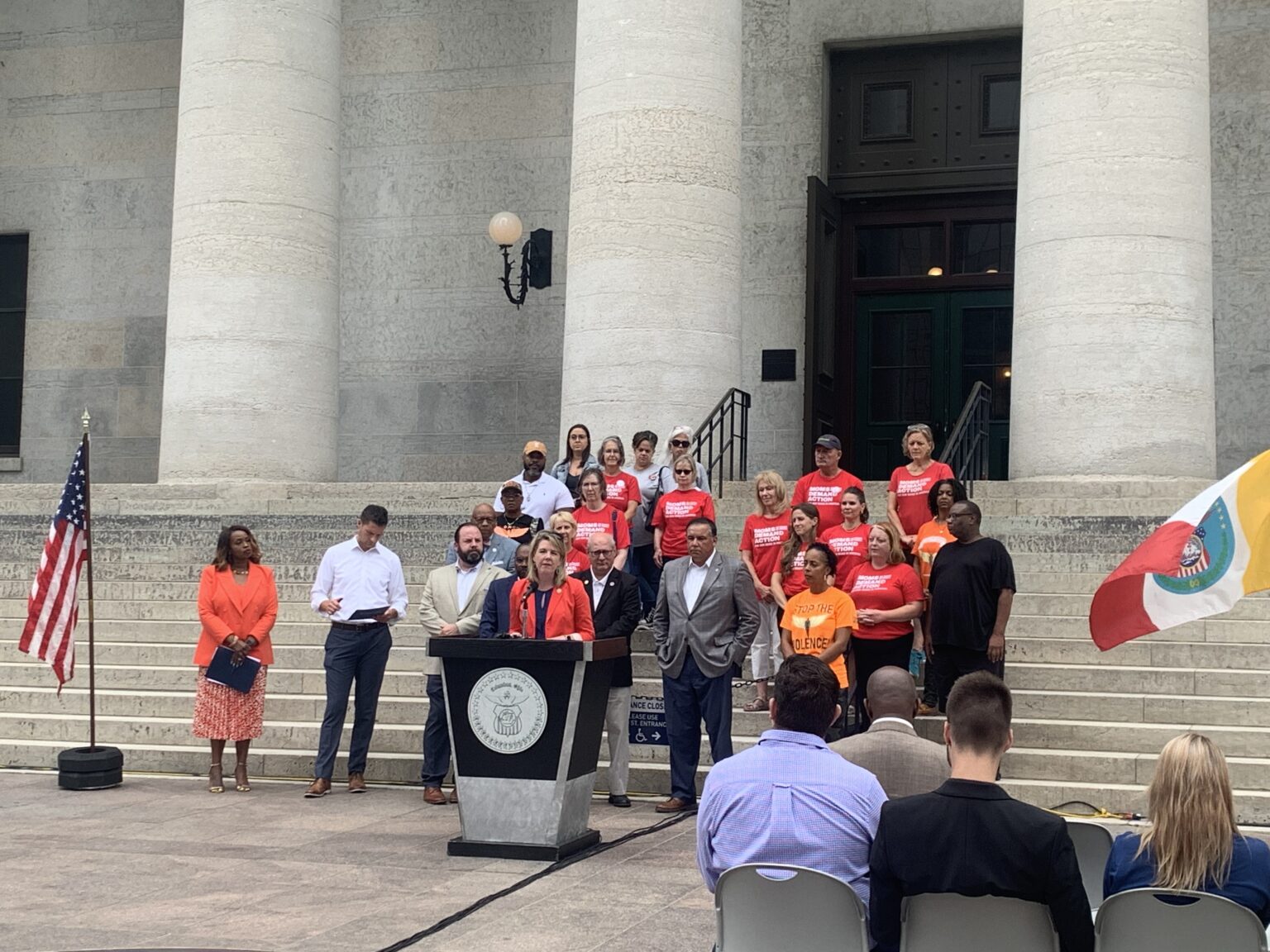
     Ohio House Minority Leader Allison Russo, D-Upper Arlington, spoke about the need for common-sense gun legislation during a press conference outside the Ohio Statehouse on July 27. (Photo by Megan Henry, Ohio Capital Journal.)

    A recent Suffolk University/USA Today poll shows 92% of Ohioans want mandatory background checks for firearm purchases — including 99% Democrats and 88% Republicans.

    BY:  Ohio Capital Journal

    Ohioans across the political spectrum want common sense guns laws.

    A recent Suffolk University/USA Today poll shows 92% of Ohioans want mandatory background checks for firearm purchases — including 99% Democrats and 88% Republicans.

    But instead, the Republican-controlled Statehouse has loosened gun laws.

    “Let’s call a spade a spade,” said Ohio House Minority Leader Allison Russo, D-Upper Arlington. “Ohio has some of the worst pro-gun crime and anti-cop-laws in the country. And nothing has been done about it.”

    Russo and State Sen. Hearcel Craig, D-Columbus, joined Columbus city leaders in calling for common sense gun laws during a press conference in front of the Ohio Statehouse Thursday.

    “No shooting death is just a number,” said Columbus Mayor Andrew J. Ginther. “It represents a father, a mother, brother, sister, a friend, a neighbor. And each one causes ever widening ripples of unspeakable grief, pain, and loss. … We need our state legislators to use every lever at their disposal to get the guns off our streets and bring down the violence.”

    Common sense gun laws are not a knock against those who use weapons in appropriate ways, Craig said.

    “This is about why do you have an automatic weapon to go deer hunting to shoot 30 bullets at a time?” he asked.

    Gun violence is the leading cause of death for children in the United States.

    “That should outrage every single citizen in this state,” Russo said. “These children deserve better. They deserve more from us. They deserve to be able to grow up in this state and have a thriving future.”

    Firearms accounted for nearly a fifth of childhood deaths (ages 1-18) and nearly 3,600 children died in gun-related incidents in 2021, according to the Centers for Disease Control and Prevention Wonder database.

    Kids worry about being gunned down when they go to school and play in the park, said Jene Patrick, with the nonprofit group Mothers of Murdered Columbus Children.

    “Common sense gun laws allow our children to go to school and feel safe,” Patrick said. “It allows our children to go to playgrounds and ride our bikes throughout the neighborhood and feel comfortable.”

    Poll results

    About three-fourths of Ohioans want laws mandating safe storage of guns and red flag laws that would allow family members or police to remove firearms from people they fear will harm themselves or others, according to the survey.

    Ninety-two percent of Democrats and 65% Republicans are in support of safe storage gun laws.

    When it came to red flag laws, 92% of Democrats and 59% of Republicans were in favor.

    Eighty-eight percent of Ohioans want mandatory training for concealed carry licenses  — including 96% Democrats and 83% Republicans, according to the survey.

    The Suffolk University/USA Today poll surveyed 500 registered Ohio voters earlier this month over the phone. Their margin of error is +/- 4.4 percentage points.

    Ohio legislation

    Ohio Gov. Mike DeWine signed a bill into law last year that got rid of all training, background check and permitting requirements to carry a concealed weapon.

    “The laws they pushed through allow practically anyone to own a gun with zero training,” Ginther said. “That kind of Wild Wild West mentality has no chance of making our families or our officers safer. We need the state and federal governments to step up to help us keep illegal guns off our streets.”

     (Photo by Ethan Miller/Getty Images) 

    A law went into effect in 2021 that no longer requires people to retreat before they can justifiably hurt or kill someone with a gun in self-defense.

    DeWine also signed a bill into law that gives local boards of education the authority to decide whether to allow their teachers and school workers to carry firearms.

    Twenty-two Ohio school districts and one Christian school have staff members who are either authorized or in the training process to carry weapons on school grounds as of March 31.

    State Rep. Al Cutrona, R-Canfield, introduced a bill a couple months ago that would exempt guns and ammunition from sales tax in Ohio.

    Some common sense legislation has been introduced, but hasn’t made it very far.

    State Reps. Jessica Miranda, D-Forest Park, and Darnell T. Brewer, D-Cleveland, introduced a bill in May that would prohibit a person from not properly securing a firearm with the goal of eliminating shootings involving minors by 2032.

    Republican State Sen. Matt Dolan introduced a bill last General Assembly that would have enacted red flag laws, which protect the public and the gun owner by temporarily removing a firearm from someone deemed by a judge to be suffering from a severe mental health condition. The bill never made it out of committee.

    “All we’ve seen come out of this extremist gerrymandered Statehouse are laws that encourage more gun crimes,” Russo said.

    Dayton mass shooting

     DAYTON, OH – AUGUST 4: Law enforcement officials investigate the scene where a gunman opened fire on a crowd of people over night on Fifth Avenue in the Oregon District on August 4, 2019 in Dayton, Ohio. In the second mass shooting in the U.S. within 24 hours a gunman left nine dead and another 27 wounded after only a minute of shooting. (Photo by Matthew Hatcher/Getty Images) 

    After a 2019 mass shooting in Dayton killed nine people, chants of “do something” drowned out Gov. Mike DeWine’s speech during a vigil for the victims.

    “Even after the calls to do something after a mass shooting — killing our neighbors in Dayton — they’ve turned a blind eye to reality, fact and reason, and passed the most dangerous and reckless gun laws in the history of the state,” Ginther said.

    Craig echoed that sentiment.

    “Four years after they asked us to do something, and yet the question remains — What have we done?” he asked.

    Craig said there have been more than 2,500 mass shootings in the past four years, 101 in Ohio and 21 in Columbus.

    “Today it’s about us linking hands and saying very clearly to the legislature … if you can’t do it, then get out of the way so that the municipalities, those that are on the ground, can make decisions about our children and their lives,” Craig asked.

    Columbus and gun violence

    Columbus has had 88 homicides so far this year and 78 of them involved a gun, Ginther said. The state’s capital has also had 15 domestic violence related deaths.

    2021 was the city’s deadliest year on record with 205 homicides. Ginther declared gun violence a public health crisis in Columbus in February 2022 and Columbus City Council passed new gun-control legislation at the end of last year.

    “I wake up every morning in my community, hearing gunfire,” Craig said. “This is real, and it’s palatable, we ought to be doing something.”

    Jene Patrick remembers opening up Facebook and learning 32-year-old Carrington Willis was killed in a shooting in September 2020. She followed Willis on Facebook and remembered watching him read a book to his daughter’s preschool class on Facebook days before he died.

    “We are calling out to our legislators to pass common sense gun safe laws,” said Patrick. “It’s bigger than being Republicans or Democrats. It’s bigger than politics.”

    The Columbus Division of Police recovered more than 3,330 firearms last year, the most ever collected, Ginther said. CPD is on track to recover even more guns this year — having already recovered more than 1,900 guns so far this year, he said.

    “All of this demonstrates just how deadly and detrimental gun violence is to the safety and security of our communities,” said Ginther.


    Follow OCJ Reporter Megan Henry on Twitter.

    Megan Henry
    MEGAN HENRY

    Megan Henry is a reporter for the Ohio Capital Journal and has spent the past five years reporting in Ohio on various topics including education, healthcare, business and crime. She previously worked at The Columbus Dispatch, part of the USA Today Network.

    MORE FROM AUTHOR

  • Supporters of recreational marijuana in Ohio have 10 days to collect about 700 valid signatures for ballot

    Supporters of recreational marijuana in Ohio have 10 days to collect about 700 valid signatures for ballot

    BY:  Ohio Capital Journal

    Not enough valid signatures were collected to put recreational marijuana on Ohio’s November ballot.

    The Coalition to Regulate Marijuana like Alcohol submitted 123,367 valid signatures, but 124,046 signatures were needed. Supporters will now have 10 days to collect the needed 679 valid signatures.

    “It looks like we came up a little short in this first phase, but now we have 10 days to find just 679 voters to sign a supplemental petition – this is going to be easy, because a majority of Ohioans support our proposal to regulate and tax adult use marijuana,” Tom Haren, a spokesman for the Coalition to Regulate Marijuana Like Alcohol, said in a statement.

    This would legalize and regulate cultivation, manufacturing, testing and sale of marijuana to Ohioans 21 and up.

    It would also legalize home grow for Ohioans 21 and up with a limit of six plants per person and 12 plants per residence, and impose a 10% tax at the point of sale for each transaction.

    The Coalition to Regulate Marijuana Like Alcohol submitted 223,176 signatures earlier this month.

     COLUMBUS, Ohio — JUNE 05: Field staffers for the Coalition to Regulate Marijuana Like Alcohol deliver boxes containing petitions with 222,198 signatures to Ohio Secretary of State Frank LaRose, July 5, 2023, at the loading dock of the Office of the Ohio Secretary of State, 180 E Broad St in Columbus, Ohio. (Photo by Graham Stokes for Ohio Capital Journal. Republish photo only with original article.) 

    Franklin County submitted the most valid signatures with 26,090, followed up by Hamilton County with 18,097 and Cuyahoga County with 14,073.

    The proposal was submitted by citizens through an initiated statute, so it is not an amendment to the state’s constitution and is not affected by Issue 1. Early voting for Aug. 8’s special election is currently underway where Ohioans will decide if they want to make it harder to amend the state’s constitution.

    Twenty-three states and Washington D.C. have legalized the recreational use and sale of cannabis.

    Medical marijuana

    Ohio legalized medical marijuana in 2016, but the first dispensary didn’t open until 2019.

    There are 370,287 registered patients in Ohio and 174,591 patients with both an active registration and an active recommendation as of May 31, according to the Ohio Medical Marijuana Control Program.

    House Bill 168

    There is another way recreational marijuana could be legalized in Ohio.

    State Reps. Jamie Callender, R-Concord, and Casey Weinstein, D-Hudson, introduced House Bill 168 in May which would allow Ohioans 21 and older to cultivate, purchase and possess marijuana.

    The bipartisan bill is currently in House committee.

    Follow OCJ Reporter Megan Henry on Twitter.


    Megan Henry
    MEGAN HENRY

    Megan Henry is a reporter for the Ohio Capital Journal and has spent the past five years reporting in Ohio on various topics including education, healthcare, business and crime. She previously worked at The Columbus Dispatch, part of the USA Today Network.

    MORE FROM AUTHOR

  • Ohio abortion rights amendment a go for November ballot

    Ohio abortion rights amendment a go for November ballot

    495,938 valid signatures certified to bring proposal to Ohio voters

    BY:  Ohio Capital Journal

    An abortion rights amendment proposed for the Ohio Constitution was certified on Tuesday to go forward for consideration by voters in November as nearly 500,000 signatures in support were verified by the Secretary of State’s office.

    In a letter to the campaign that collected signatures to put the ballot measure to Ohioans this year, Secretary of State Frank LaRose said 495,938 valid signatures were recorded, and a total of 55 counties fulfilled the percentage requirements for verification.

    “Therefore, in the absence of judicial direction to the contrary, I will direct the boards of election to place the proposed amendment on the November 7, 2023, general election ballot,” LaRose wrote.

    When advocates turned their boxes of signatures in to the secretary of state’s office on the July 5 deadline, they reported more than 700,000 signatures were submitted to be verified statewide.

    Despite the lower number, the final tally is well above Ohio’s legal requirements to put an amendment proposal on the ballot.

    Based on current law, abortion rights advocates needed to collect 413,487 signatures in 44 of 88 counties, a number based on election results from the last governor’s race.

    Ohioans United for Reproductive Rights (OURR), a coalition of groups supporting the the codification of abortion rights in the state constitution, celebrated the news, but also set their sights on another hurdle at the ballot: Issue 1, hitting voters next month in the August 8 primary.

    Issue 1 would make it harder for Ohio voters to amend the constitution by raising the threshold from a simple majority to 60%. If passed, Issue 1 would require the abortion ballot measure to meet that threshold.

    It would also require proposals made after January 1, 2024, to meet signature requirements in all 88 counties instead of the current requirement of 44 counties.

    “Now that the petition drive is complete, we’re eager to continue the campaign to enshrine those rights in Ohio’s constitution and ensure that Ohioans will never again be subject to draconian reproductive health care policies imposed by extremists,” wrote Lauren Blauvelt and Dr. Lauren Beene, executive committee members for the OURR, in a statement.

    “This is a major step for Ohio, but it’s bigger than just one state,” said Kimberly Inez McGuire, executive director for Unite for Reproductive and Gender Equity. “This is about reversing the tide of abortion bans and securing a better future for us all.”

    GOP leaders including LaRose have admitted Issue 1 supporters are motivated by their desire to stop the abortion rights amendment.

    The campaign standing in opposition to the abortion amendment, Protect Women Ohio, and anti-abortion lobby Ohio Right to Life, decried the new development, pushing ahead with their efforts to block the amendment from passage.

    Peter Range, CEO of Ohio Right to Life, called the amendment “anti-life,” and said it is “even more imperative that every pro-life Ohioan votes yes on Issue 1 this August to ensure that our constitution, our preborn and our families are protected,” according to a statement sent by the group.

    Protect Women Ohio said they have spent “an initial” $8 million on TV, radio and digital ads in support of Issue 1, and against the November abortion amendment.

    With the amendment now allowed to go to the ballot, the Ohio Ballot Board chaired by LaRose will draft the language voters will read about the measure on their ballots.

    Recent polls show 57.6% of Ohioans support the abortion rights amendment, while 32.4% oppose it and 10% are undecided. On the Aug. 8 Issue 1 effort to change the threshold for passage of amendments from 50% to 60%, another recent poll showed 57.2% of Ohioans oppose Issue 1, while 26% support it, and 17% are undecided.


    Susan Tebben
    SUSAN TEBBEN

    Susan Tebben is an award-winning journalist with a decade of experience covering Ohio news, including courts and crime, Appalachian social issues, government, education, diversity and culture. She has worked for The Newark Advocate, The Glasgow (KY) Daily Times, The Athens Messenger, and WOUB Public Media. She has also had work featured on National Public Radio.

    MORE FROM AUTHOR

    ____________________

    Related Loveland Magazine Interview:

  • State Board of Education of Ohio discusses changes coming with budget approval

    State Board of Education of Ohio discusses changes coming with budget approval

    BY:  Ohio Capital Journal

    In their first meeting since the state budget was approved with sweeping changes to Ohio’s State Board of Education, the group discussed the impacts it will face.

    “This is going to be another chapter here and I want to be as proactive and on top of this chapter as I can, and as we can,” said Paul LaRue, president of the board.

    Among the billions of dollars and hundreds of things approved by Gov. Mike DeWine last week were the provisions previously contained in Senate Bill 1, which transfer most of the powers away from the board and into the executive branch.

    The changes would rename the department overseeing the board to the Ohio Department of Education and Workforce and create a cabinet-level position that would direct the department. Two deputy directors would also be a part of the new department, one for primary and secondary education and another for workforce.

    “The board needs to be thinking about in the upcoming months, about what these things look like,” said Chris Woolard, interim superintendent of public instruction.

    Woolard’s job will change as well, though he will remain the secretary of the board and serve as the board’s “executive officer,” conducting policy and administrative functions of the board and staff of the board, according to Tony Palmer, chief legal counsel for the ODE.

    “Most of the responsibilities that are currently with the superintendent are transferred under the budget bill to the director of the Department of Education and Workforce,” Palmer told the board.

    As for the board, it will retain powers related to educator licensure, discipline, teacher evaluation systems, and appointment of the superintendent. They can also make recommendations to the DEW directors regarding priorities for education, according to Palmer.

    Several board members wrote to DeWine prior to his signing of the budget to ask him to remove the SB 1 provisions, calling the changing of the roles a “power grab.”

    At this week’s board of ed meetings, members continued to criticize the move, questioning the enforcement measures to make sure the new oversight is the right move and truly improves the state of student test scores and education in general.

    “What we kept hearing was that they needed to get rid of the state board because somebody was not being held accountable, but they never defined what that meant,” said board member Antoinette Miranda. “I’m just wondering if (the DEW directors) are going to get fired when the scores come back the same.”

    Miranda’s fellow board member Diana Fessler claimed Pearson Education, a company who creates student assessment tests, would help with the change “by changing the test questions, and they can change the scores and the cutoff scores besides.”

    “I think the kids are going to be doing amazingly well in no time at all,” Fessler said. “But it’ll be a lie from the pit of hell.”

    Jessica Voltolini, chief of staff for the ODE, said officials are still reviewing all of the provisions of the budget and the changeover, working on a 180-day timeline: 90 days preparing before the October effective date of the bill, and the 90 days following, when implementation of all of the changes will be made.

    But Voltolini said the “very high-level overview” the department has taken so far hasn’t shown any additional level of accountability for the directors, other than that they would need to confirmed by the Ohio Senate.

    Teresa Fedor, one of the most recently elected board members and a former state senator, accused the governor of going against a constitutional amendment passed in 1953, in which voters moved the ODE into its own department.

    “Not some of it, all of it,” Fedor said. “And (DeWine) is breaking the constitutional intent and message right now, so we need to have clarification on how decisions are going to be made by this group.”

    The board may face further changes if just-introduced legislation makes its way through the General Assembly. Former board member, now state Rep. Sarah Fowler Arthur, R-Ashtabula, introduced a measure this month that would eliminate governor-appointed positions on the board and reduce the group to 15 elected-only positions.

    That measure will be assigned to a committee for consideration before it can move for a full vote of the House and Senate.


    Susan Tebben
    SUSAN TEBBEN

    Susan Tebben is an award-winning journalist with a decade of experience covering Ohio news, including courts and crime, Appalachian social issues, government, education, diversity and culture. She has worked for The Newark Advocate, The Glasgow (KY) Daily Times, The Athens Messenger, and WOUB Public Media. She has also had work featured on National Public Radio.

    MORE FROM AUTHOR

  • “Corners are cut to dispense prescriptions,” CVS employee tells Ohio Board of Pharmacy

    “Corners are cut to dispense prescriptions,” CVS employee tells Ohio Board of Pharmacy

    A CVS store. Photo by Lynne Terry, Oregon Capital Chronicle, States Newsroom.

    After years of buying and closing competitors, CVS understaffing leads to chaos and delays, Ohio regulator says

    BY: Ohio Capital Journal

    At least eight CVS pharmacies in Ohio are so understaffed that they have seen rampant turnover, dirty conditions, lack of controls over dangerous drugs and wait times as long as a month for prescriptions, according to reports by the Ohio Board of Pharmacy.

    The waits have been so long that a harried CVS pharmacist in Wooster said he was “actively triaging prescriptions to ensure lifesaving, life-sustaining medications are filled in a timely manner.”

    In one case, pharmacy workers told inspectors they begged their superiors — unsuccessfully — to close their pharmacies so they could catch up. In another, a pharmacy did intermittently close, making it impossible for patients to get their medicines during the closures.

    In another instance, Board of Pharmacy inspectors couldn’t tell if employees were stealing controlled substances. In yet another, they couldn’t tell if CVS was improperly billing insurers for scripts it didn’t fill.

    And in several additional cases, inspectors repeatedly found expired and adulterated drugs on pharmacy shelves and filled prescriptions that gave patients the wrong instructions.

    “Corners are cut to dispense prescriptions,” at least one employee at Toledo’s CVS store No. 10246 told investigators last year. Workers there added, “Supervisors/District Managers do not respond to staff calls for help,” the report said.

    The accounts come from inspection reports going back to 2020 that the Capital Journal obtained under the Ohio Public Records Act. At least some of the inspections came in response to patient complaints to the board, which licenses Ohio pharmacies.

    The inspections come after CVS — already the nation’s largest pharmacy retailer — has for years bought up competitors, closed them and moved the prescriptions of the closed pharmacies to existing CVS stores. Critics raised concerns about the practice, known as “buy and close,” at least as early as 2019.

    “Staff at this location was not increased,” a pharmacist at Dayton’s CVS store No. 2528 said last September after the store had absorbed two other closed pharmacies’ prescriptions. She quit the following month.

    For its part, CVS didn’t answer questions about specific allegations in the reports, which it referred to as “isolated incidents.”

    “We’re working with the Board of Pharmacy to resolve allegations of isolated incidents, most of which date back a year or more,” Amy Thibault, director of communications for CVS Pharmacy said in an email Wednesday. “The health and well-being of our patients is our number one priority.”

    Rampant turnover

    Pharmacies across the country found themselves under siege as the coronavirus pandemic took hold in the spring of 2020. They were conducting tests and, when they became available, providing COVID vaccines in addition to already administering those for flu and shingles.

    At the same time, some pharmacy employees were reluctant to work face-to-face with the public in a health care setting — especially before there were vaccines against a disease that has killed more than 1 million Americans.

    But according to the Board of Pharmacy reports, turnover in the CVS stores they investigated seemed particularly bad. And it seemed to be linked to stress from overwork — as well as the parent corporation’s inability or unwillingness to do anything about it.

    For example, when an inspector arrived at CVS store No. 2063 in Canton on Sept. 13, 2020, the staff was so harried that it took them 20 minutes to even acknowledge the inspector. The staff said that the store had lost a pharmacist and six technicians “within a short time.”

    As workers scrambled, they sweltered in a pharmacy in which the air conditioning unit was broken and an alarm in a drug cooler failed to warn them that it was too warm at 46.4 degrees Fahrenheit.

    “Pharmacy staff and an assistant store manager stated they have asked district leaders to close the store down temporarily to get caught up filling prescriptions as well as clean and organize the pharmacy, but this request was denied,” the report said.

    When an inspector returned to the pharmacy on Oct. 29, 2021, things had only gotten worse.

    “All pharmacy staff that was present for the September 2021 inspection quit or transferred out of CVS #2063,” the report said.

    Even more alarmingly, understaffing there created delays that easily could have harmed patients’ health — despite workers’ best efforts to “triage” which prescriptions to fill first.

    “The pharmacy was over a month behind in filling prescriptions,” the report said.

    Especially bad at CVS

    During the pandemic, conditions were universally difficult for pharmacies, but CVS might have been a special case.

    An owner of an independent pharmacy in Northern Ohio said things were rough for everybody, and that he’s still having trouble keeping enough pharmacy technicians on his staff. But, he said, that never led him to consider temporary closures, or anything like the delays filling prescriptions and other problems seen at some CVS stores.

    The pharmacist depends on CVS Caremark — the corporation’s gargantuan pharmacy benefit manager — for his business and asked not to be named. But, he said, he’s talked to CVS pharmacists who have been under pressure so great that it affected their mental health.

    The stress appeared to extend even to the upper ranks of CVS’s pharmacy operation.

    In July 2021, Ken Sidwell became leader of the district which includes Canton CVS store #2063. When he was interviewed by the Board of Pharmacy, he said the store was short-staffed when he got the job.

    Just three months later, Sidwell was gone. On Oct. 29, 2021, the new district leader, Kenneth Cook, told the Board of Pharmacy that the store “is in the process of hiring new pharmacy staff as well as transferring staff from an overstaffed CVS location.”

    CVS spokeswoman Thibault said the company’s policies ensure that its stores are not dangerously short of pharmacy workers.

    “Decisions about staffing, labor hours, workflow process, technology enhancements and other operational factors are made to ensure we have appropriate levels of staffing and resources in place at our pharmacies,” she said. “We have comprehensive policies and procedures in place to support prescription safety and we continue to make important strides, including using technology to support our pharmacy teams.”

    Buy and close

    Not only is CVS the nation’s largest pharmacy retailer, its parent corporation also owns Aetna, a top-10 insurer. It’s also buying up medical centers and physicians practices, helping to make it the nation’s sixth-largest corporation.

    And crucially for pharmacies everywhere, CVS owns the nation’s largest pharmacy benefit manager, CVS Caremark. It and Express Scripts and OptumRx are estimated to control more than 80% of the marketplace and they’re under investigation for possible anti-competitive practices by the Federal Trade Commission.

    Pharmacy benefit managers, or PBMs, act as middlemen for insurers in the drug supply chain. They decide which drugs are covered, so they have great power to negotiate huge, non-transparent rebates and other discounts from drugmakers.

    At the same time, they create pharmacy networks. And, because they control access to so many millions of patients, most small-chain and independent pharmacists think they have little choice about contracting with them on whatever terms the big PBMs choose.

    “Take-it-or-leave-it” contracts, the pharmacists call them.

    CVS has long said that it maintains strict firewalls between its retail and PBM operations, but small pharmacy operations in Ohio and elsewhere aren’t so sure.

    After seeing their reimbursements from CVS Caremark plummet in late 2016, CVS’s “Acquisition Unit” in 2017 sent many of its competitor pharmacies letters saying that it knew times were hard for them and offering to buy them out.

    In many instances, CVS didn’t put its sign on the store it had just purchased. CVS instead closed the stores and folded all of their prescriptions into an existing CVS pharmacy.

    Some pharmacists call the practice “buy and close.”

    In 2019, when CVS bought 20 stores owned by Medina-based Ritzman Pharmacy and closed all but three, critics said it was classic buy-and-close.

    Two of the now-closed pharmacies were in Wooster, one of the cities in which inspectors now find problems in a still-open CVS pharmacy. Three more — in Sugarcreek, Millersburg and Dover — were to the rural south of Canton and Massillon, where CVS stores found themselves seriously stretched in the years since.

    Mount Vernon-based Conway’s Pharmacy in 2019 partnered with Knox County to open a pharmacy in Danville on the edge of Amish Country after CVS bought and closed the only pharmacy there a few years earlier. The closure meant that Danville residents — many poor, disabled or both — had to drive 20 minutes or more to get their medicines or to consult with a pharmacist.

    Such practices have fueled fears that pharmacy deserts are being created in Ohio and elsewhere.

    Lack of accountability

    The constant churn in CVS staffing found by Board of Pharmacy investigators led to breakdowns in accounting for dangerous drugs, including opioids, the inspection reports said.

    For example, between June 10 and Sept. 22, 2022 Dayton’s CVS store No. 2528 reported 75 oxycodone, 100 hydromorphone and 70 amphetamine pills were missing. In each instance, “CVS Pharmacy was unable to determine a reason for the loss,” the inspection report said.

    For most of that period, no “Responsible Person” was in charge.

    The role is as the name implies. The Ohio Administrative Code says, “The Responsible Person shall be responsible for the practice of the profession of pharmacy, including, but not limited to, the supervision and control of dangerous drugs as required…”

    That person would normally be the managing pharmacist at a drugstore. But for months after May 26, 2022, there was no such person at the Dayton CVS, according to the report. Inspectors interviewed pharmacist Jean Getter, who said she was asked to serve as temporary manager after the previous Responsible Person, pharmacist Tyler Philo, left.

    Getter said that even though she wasn’t the Responsible Person, she asked for help sorting out the safe that contained controlled substances because “it was a mess.”

    “She asked the previous Responsible Person and also the District Leader about cleaning up the safe, but it never happened,” the report said.

    An inventory of dangerous drugs is supposed to be conducted whenever there is a change of Responsible Person at a pharmacy, but that kept not happening at the Dayton CVS, Getter said.

    “No one ever became the permanent Responsible Person, which is why Ms. Getter left CVS in August,” the report said.

    Then Pharmacy Board investigators interviewed Philo, the previous Responsible Person and learned something even more confounding.

    “He was not aware (four months after he left that) he was still listed as the Responsible Person for CVS Pharmacy #2528,” the report said.

    Controlled substances

    Board of Pharmacy inspectors also found serious potential problems in CVS stores’ tracking controlled drugs — including the kinds of drugs that have fueled Ohio’s opioid crisis.

    Some problems were as simple as leaving deliveries of dangerous drugs at the front of the store for nine hours because pharmacy staffers were too busy to get them. But others might have been more sophisticated.

    At Toledo CVS store No. 10246, inspectors conducted, Multiple audits consisting of 241 controlled substances were conducted by representatives from the Board between on or about November 11, 2021 and on or about April 27, 2022.”

    In 42% of cases, they found that too much or too little of the drugs had been provided. They discovered “significant losses” of amphetamines and the painkiller tramadol.

    “Additional losses and overages were discovered, some of which were reported to the board, but many were not reported at all, or not reported in a timely fashion,” report said. It added that auditing what happened to controlled substances was difficult “because CVS records showed multiple significant inventory adjustments and changes in medication counts…”

    Counterintuitively, investigators found that on some days when controlled substances were delivered to the Toledo pharmacy, inventories of the drugs actually went down. That might indicate “diversion” — a term used in the industry for stealing drugs.

    “It remains questionable if counts were entered as negative numbers in error, or if staff were entering negative numbers to mask the diversion of drugs received on that day,” the report said.

    In the same store, inspectors discovered chaotic conditions.

    On repeated visits, inspectors found “expired/adulterated” medications on pharmacy shelves and workers told them they hadn’t had time to address the issue. The inspectors also painted a picture of general chaos.

    “Shelving for drug storage had collapsed and medications were crushed beneath the shelving units. Drug stock crowded the aisle floors,” the report said, adding, “The counter used for non-sterile compounding was overflowing with (over-the-counter) medications and return-to-stock bottles. Staff food and beverages were also stored in this area. Moldy/rotting food was found on the counter.”

    Beyond delays and lacking controls, inspectors found another problem at the store that could endanger patients’ health.

    Inspectors on March 3, 2022 reviewed 49 prescriptions filled at the store. They found that seven “had errors in the directions to patients.”

    And when inspectors talked to employees, they heard echoes of the complaints at other CVS pharmacies they’d visited.

    • “The pharmacy is always short staffed.”
    • “The workplace was described as hectic. There is no downtime to catch up on tasks.”
    • “Morale among store employees is poor.”

    Delays and questions about improper billing

    When inspectors visited CVS store No. 8248 in Massillon in late 2021, they found a pharmacy so understaffed that “the pharmacy would close intermittently,” meaning “patients were unable to pick-up/receive their prescriptions.”

    They again found confusion over who was legally responsible.

    “The Responsible Person, Abbey Yannerella, was listed as the Responsible Person at this location as well as CVS #2063; however, she was no longer working at” the Massillon store, the report said.

    They found something else that raised serious questions.

    The store in October 2021 had more than 2,000 prescriptions waiting to be filled, the oldest of which had been waiting for 13 days. A month later, the pharmacist on duty told inspectors that after scripts go unfilled for 14 days, they’re “deleted from the queue.”

    The inspectors found one such prescription that was labeled “Print Ready.”

    “The prescription’s status indicating ‘Print Ready’ means the prescription was processed through insurance,” the report said. “When a prescription is deleted from the queue, the pharmacy does not reverse the insurance claim.”

    CVS didn’t respond directly when asked how often scenarios like this occur — or whether it routinely bills insurers for prescriptions it fails to fill for two weeks and then deletes from its system.

    On Nov. 28, 2021 a new Responsible Person, pharmacist Nayan Patel, had been named. He told investigators that the deletion of prescriptions after 14 days was a requirement of the U.S. Centers for Medicare and Medicaid Services. He added that the scripts are placed back into the queue after their deletion.

    However, “When asked to explain this process further, he could not elaborate,” the report said.

    Then on Feb. 4, 2022, the Board of Pharmacy learned that Patel was Responsible Person for two CVS pharmacies without the special permission required by the board. When the board notified a CVS district leader of that fact, “The district leader notified the board Mr. Patel is no longer the Responsible Person of” Massillon CVS store No. 8248, the report said.

    Penalties

    The board has notified CVS that it can impose penalties ranging from fines to revoking their licenses as a “Terminal Distributor of Dangerous Drugs” at each of the locations in which it found violations.

    So far, CVS store #3613 in Columbus received a $1,000 fine and a written reprimand last August, Board of Pharmacy spokesman Cameron McNamee said in an email Thursday. The violations outlined in that report seem considerably less severe than those found in some other CVS pharmacies.

    Violations found at CVS’s Canton store No. 2063 — where staff turnover was particularly rampant — are slated to be considered at the board’s Nov. 7-8 meeting McNamee said.

    Hearings for the other stores are yet to be scheduled.


    Marty Schladen
    MARTY SCHLADEN

    Marty Schladen has been a reporter for decades, working in Indiana, Texas and other places before returning to his native Ohio to work at The Columbus Dispatch in 2017. He’s won state and national journalism awards for investigations into utility regulation, public corruption, the environment, prescription drug spending and other matters.

    MORE FROM AUTHOR

  • Ohio abortion rights supporters submit signatures, gunning for November ballot

    Ohio abortion rights supporters submit signatures, gunning for November ballot

    BY:  Ohio Capital Journal

    Two trucks loaded with more than 400 boxes rolled into the Ohio Secretary of State’s Office Wednesday. In those boxes were 710,000 signatures abortions rights advocates say prove they have the support they need to bring a ballot measure asking voters to put abortion care in the Ohio Constitution.

    “Those (402) boxes are filled with hope, and love, and freedom of bodily autonomy … of being able to say ‘we decide what happens to us,’” said Kellie Copeland, executive director of Pro-Choice Ohio.

    In the last 12 weeks, advocates from groups including Ohioans for Reproductive Freedom and Ohio Physicians for Reproductive Rights have gone to farmer’s markets, held drive-through signing events, and reached across the state to collect the nearly 414,000 signatures required of them to place a measure on an Ohio voting ballot. Signature-gatherers collect far more than that minimum in an attempt to make sure enough signatures are correct and valid to meet the threshold.

     COLUMBUS, Ohio — JULY 05: Field staffer for Ohioans United for Reproductive Rights, Carlos Ortiz unloads the first of 402 boxes of petitions with over 700,000 signatures being delivered to Ohio Secretary of State Frank LaRose, July 5, 2023, at the loading dock of the Office of the Ohio Secretary of State, downtown Columbus, Ohio. (Photo by Graham Stokes for Ohio Capital Journal. Republish photo only with original article.) 

    Bill Wood was one of many collecting signatures, and he said he was overwhelmed by the support he saw the past three months.

    “What amazed me is that even late in this process, there were people who were coming up to us and saying, ‘I have been looking forward to signing this, thank you for being here,’” Wood said. “The number of thank-you’s and compliments and wonderful support that we got from people at every stage was amazing.”

    As part of the Westerville Progressive Alliance, he said he has participated in many signature drives and campaigns over the years.

    “I will tell you when we brought this to our people, we have never seen an outpouring of interest and commitment like we’ve seen this year,” Wood said.

    He said the Westerville group alone collected 9,000 signatures.

    The measure would allow abortion in the state via an amendment to the Ohio Constitution, that states “every individual has a right to make and carry out one’s own reproductive decisions, including but not limited to decisions on contraception, fertility treatment, continuing one’s own pregnancy, miscarriage care and abortion.”

    “Ultimately, this is about giving my patients, our patients, our friends, our families, their power back,” said Dr. Marcela Azevedo, co-founder of OPRR.

    If approved, the amendment would bar the state from doing anything to “directly or indirectly burden, penalize, prohibit, interfere with, or discriminate against either an individual’s voluntary exercise of this right or a person or entity that assists an individual exercising this right, unless the state demonstrates that it is using the least restrictive means to advance the individual’s health in accordance with widely accepted and evidence-based standards of care,” according to the ballot language certified by the Ohio Ballot Board.

    Abortion can, however, be prohibited “after fetal viability,” defined in the proposed amendment as “the point in pregnancy when, in the professional judgment of the pregnant patient’s treating physician, the fetus has a significant likelihood of survival outside the uterus with reasonable measures.”

    Pro-abortion rights groups say signatures were collected in every Ohio county, something that may come in handy with another constitutional amendment, Issue 1, on the ballot in August that would require 60% of Ohio voters to approve of a measure, and require signatures to come from all 88 counties, rather than just the 44 of 88 required in current law.

    Now, the Secretary of State’s Office will have until July 25 to verify the signatures and determine whether the measure has enough valid Ohio voter support to move forward.

    If the number falls short of the required amount, advocates have 10 days to file a supplementary petition with more signatures, which must be from registered Ohio voters who didn’t sign the previous petition.

    The groups working to get the measure on the ballot estimate the campaign to do it may cost approximately $35 million.

    A spokesperson for Secretary of State Frank LaRose did not respond to requests for comment.


    Susan Tebben
    SUSAN TEBBEN

    Susan Tebben is an award-winning journalist with a decade of experience covering Ohio news, including courts and crime, Appalachian social issues, government, education, diversity and culture. She has worked for The Newark Advocate, The Glasgow (KY) Daily Times, The Athens Messenger, and WOUB Public Media. She has also had work featured on National Public Radio.

    MORE FROM AUTHOR

  • “An attack on all trans people,” transgender youth speak out against Ohio legislation

    “An attack on all trans people,” transgender youth speak out against Ohio legislation

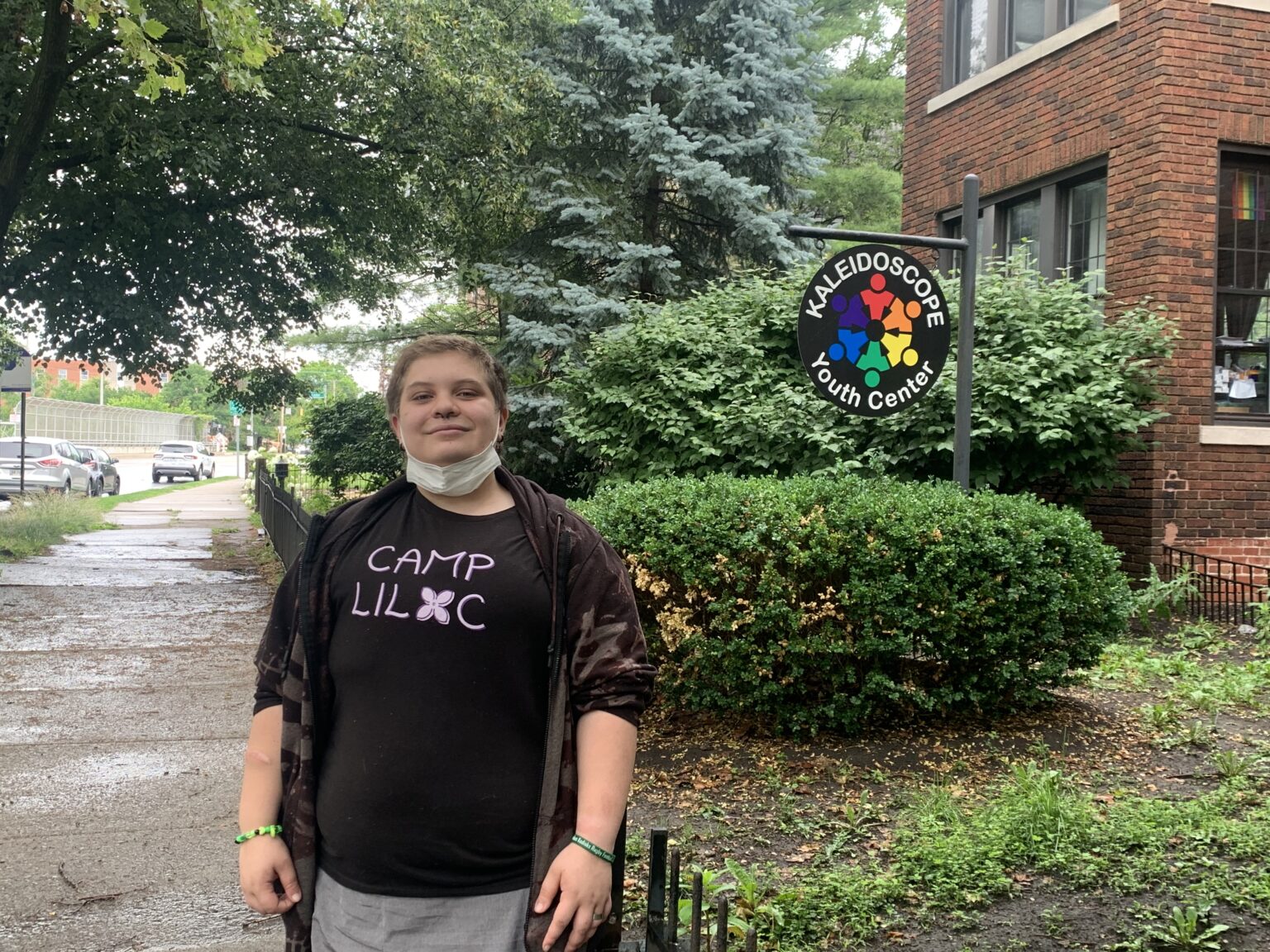
    Nathan Alvarez, 15, stands outside Kaleidoscope Youth Center on June 23. He is worried about a bill that would require K-12 schools and colleges to mandate that students could only use the bathroom or locker room that matches their sex assigned at birth. (Photo by Megan Henry, Ohio Capital Journal) Ohio Capital Journal talked to three transgender youths who are concerned about these bills and their potential implications.

    BY:  – Ohio Capital Journal

    Nathan Alvarez is used to people laughing or snickering at him when he uses the men’s bathroom.

    Despite that, the 15-year-old says his high school is one place he doesn’t have to worry about that happening because they have a couple of gender neutral bathrooms and anyone can use the men and women’s restroom.

    But a bill banning transgender students from being able to use the bathroom and locker room that aligns with their gender identity would change all that.

    State Reps. Beth Lear, R-Galena, and Adam Bird, R-New Richmond, recently introduced House Bill 183 which would require K-12 schools and colleges to mandate that students could only use the bathroom or locker room that matches their sex assigned at birth. HB 183 is still in House committee, awaiting sponsor testimony.

    “It would be hell (if the bill were to pass),” Alvarez said, who uses he/him pronouns. “Hearing about it disgusted me. Like it violently disgusted me.”

    HB 183 is one of a handful of anti-trans bills that have been introduced so far in the Ohio General Assembly.

    Doctors wouldn’t be able to give puberty blockers and hormone therapy to trans youth, trans athletes wouldn’t be able to participate in women’s sports, educators would be forced to out students to their parents and require public schools to give parental notification before teaching “sexuality content” if these various anti-trans bills pass through the Republican-controlled Ohio Statehouse.

    OCJ talked to three transgender youths who are concerned about these bills and their potential implications.

    “It’s an attack on all trans people,” said Ko Rupert, who uses she/it pronouns. “They are all uniquely bad, but their uniqueness is important.”

    And it’s not just happening in Ohio.

    There have been more than 220 bills introduced nationwide specifically targeting transgender and non-binary people, according to the Human Rights Campaign year-to-date snapshot from May 23.

    Fifteen laws have been enacted banning gender affirming care for transgender youth and four additional laws have been passed that censor school curriculum like books, according to HRC.

    “It’s very hard to see what’s been already happening in other states and how the bills that they are trying to pass here in Ohio are not even that different,” Jaylah Hollins, 19 said. “I feel like it’s not really in the interest of Ohioans, but only in the interest of anti-trans lobbyists from out of state.”

    House Bill 8

    Hollins is going to start attending Columbus State Community College this fall for social work and hopes to one day work for an organization that helps transgender people.

    “Hopefully if these bills don’t pass, we can try and make Ohio a place where it can be a refuge for trans kids and trans adults,” Hollins, said, who uses she/her pronouns. “Ensuring that trans kids have access to medical care and that adults have access to the facilities that align with their gender identity shouldn’t be politicized in the first place.”

     An advocate for the rights of trans children and their parents holds up a sign. Photo by Morgan Trau, WEWS. 

    While she said all the anti-trans bills are harmful, House Bill 8 stands out to her as the most damning.

    State Reps. D.J. Swearingen, R-Huron, and Sara Carruthers, R-Hamilton, introduced HB 8 which would require public schools to give parents a heads up before teaching “sexuality content” and school staff would have to out students to their parents. HB 8 recently passed the Ohio House.

    “I feel like they don’t see it as putting children in harm’s way when it most likely is because you can’t expect a parent to be able to deal with knowing that their child is within an LGBT umbrella and not have to try and resort to what they may not see at the time as harmful approaches to their child’s identity,” Hollins said.

    She said these bills would prevent children from learning more about themselves and make them feel as though they deserved to be punished because of how they identify.

    “It won’t allow children to be able to understand others who are maybe different from them,” Hollins said. “It will encourage isolation and I think the most devastating would be suicidal ideation, especially with trans and non-binaries who already know that they are coming from families who are unaccepting of those identities.”

    She’s said she’s still debating if she’ll stay in Ohio after college.

    “It’s still hard for me to think about, but for me, I think I would want to stay in Ohio and fight for trans youth,” Hollins said.

    Rupert, a 20-year-old Ohio State University graduate student, is also worried about HB 8 and the stripping away of youth rights.

    “Young people can make decisions, can know their bodies and understand and have a deep relationship with their gender and sexuality and romantic orientations,” Rupert said.

    Alvarez tries to speak out against the anti-trans bills when he gets the chance and even recently appeared on Good Morning America. But he’s not old enough to vote.

    “It’s upsetting to know that there are adults making choices for people to make choices about me. And I don’t have a choice,” Alvarez, of Reynoldsburg, said. “It’s scary.”

    He hopes to move out of Ohio one day and relocate to Washington.

    Anti-trans and anti-LGBTQ bills

    House Bill 68, also known as the  Save Adolescents from Experimentation Act (SAFE Act), would prevent doctors from giving puberty blockers and hormone therapy to trans youth. It would also ban physicians from performing gender reassignment surgery on a minor.

    Many opponents, however, have testified that no Ohio children’s hospital currently performs gender-affirming surgery on those under 18.

    House Bill 6 would prevent trans athletes from participating in Ohio women’s sports and was woven into HB 68, which recently passed the House and now awaits Senate committee consideration.

    Follow OCJ Reporter Megan Henry on Twitter.

    ______________________

    Megan Henry
    MEGAN HENRY

    Megan Henry is a reporter for the Ohio Capital Journal and has spent the past five years reporting in Ohio on various topics including education, healthcare, business and crime. She previously worked at The Columbus Dispatch, part of the USA Today Network.

    MORE FROM AUTHOR