Tag: Ohio Capital Journal

  • Nebraska’s Ted Carter named next president at Ohio State

    Nebraska’s Ted Carter named next president at Ohio State

    BY:  Ohio Capital Journal

    LINCOLN, NEBRASKA — Barring a last-minute change of heart on either side, the University of Nebraska will need a new president soon.

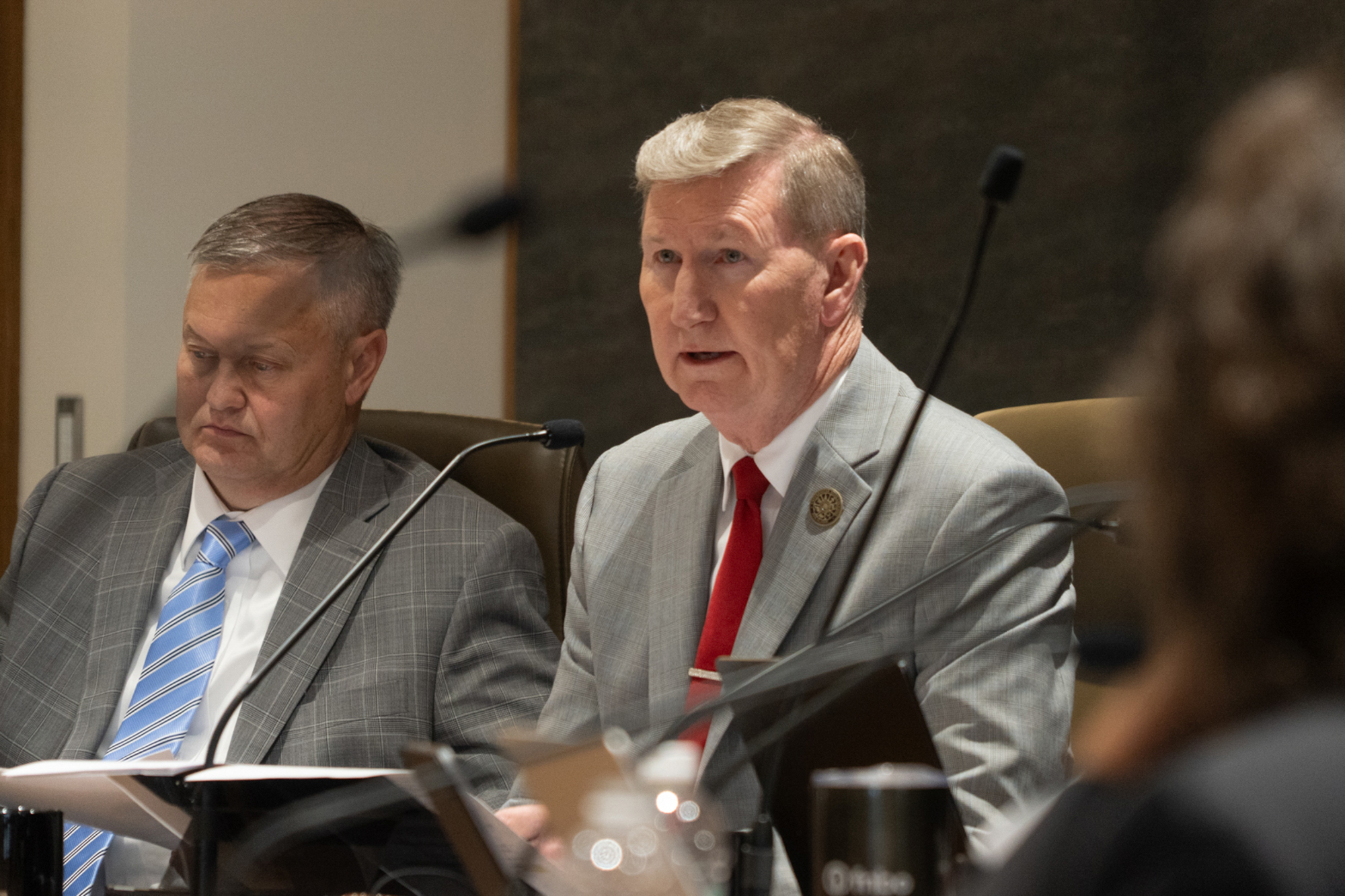
    NU system President Ted Carter, the former superintendent of the U.S. Naval Academy and a vice admiral, is expected to be named the next president at The Ohio State University in Columbus.

    UPDATE: The Ohio State Board of Trustees did name Carter as the university’s next president during their Tuesday meeting.

    Privately confirmed

    Multiple people who have been informed this week of Carter’s pending departure confirmed the hiring to the Nebraska Examiner.

    “Yes, he is gone,” one university leader said.

    “It’s true, what you heard,” an elected official said.

    “You’re not wrong,” a state official said.

    Members of the NU Board of Regents reached Tuesday either declined to comment or did not immediately return calls seeking comment. Representatives of the University of Nebraska system did not immediately return calls or messages seeking comment.

    Helped bridge political divide


    Carter just received a positive evaluation and notice for his work during the 2022-23 academic year, including notice that he would receive a $144,000 bonus.

    The regents cited his work boosting a private fundraising campaign to raise $3 billion, and his efforts to secure more state funding for NU than Gov. Jim Pillen, a former regent, proposed in his first state budget. They also mentioned increased research funding and improved retention rates for young students.

    Carter said he would donate that bonus to charity, partly because the university’s campuses in Curtis, Kearney, Lincoln and Omaha are coping with a $58 million budget shortfall, the Lincoln Journal Star reported.

    The NU president helped launch the Nebraska Promise program that helped low- and middle-income Nebraskans attend NU tuition-free. He has been working on a five-year plan to improve the university system. He also helped the campus navigate the COVID-19 pandemic.

    Carter made waves in Nebraska with his ability to persuade conservative and liberal constituencies about the value of investing state and private resources in higher education, several political observers said.

    State changing

    But the state has changed since he arrived in January 2020. A more conservative Legislature increasingly puts university spending and actions in the political crosshairs. including public spats between former Gov. Pete Ricketts and former University of Nebraska-Lincoln Chancellor Ronnie Green.

    Carter also defended academic freedom in 2021 when Pillen, then a member of the NU Board of Regents running for governor, tried to pass a resolution banning the imposition of critical race theory on NU campuses. The resolution failed.

    Carter has answered some of those changes by trading on the trust he had earned and, as his critics explained, consolidating power in the president’s office.

    The most recent example came in June, when the NU Board of Regents unanimously moved final decision-making authority over Husker athletics under Carter instead of under the UNL chancellor.


    Aaron Sanderford
    AARON SANDERFORD

    Political reporter Aaron Sanderford has tackled various news roles in his 20-plus year career. He has reported on politics, crime, courts, government and business for the Omaha World-Herald and Lincoln Journal-Star. He also worked as an assignment editor and editorial writer. He was an investigative reporter at KMTV.

    MORE FROM AUTHOR

  • Ohio Gov. Mike DeWine gets plaudits for OneOhio pick, pans for the process

    Ohio Gov. Mike DeWine gets plaudits for OneOhio pick, pans for the process

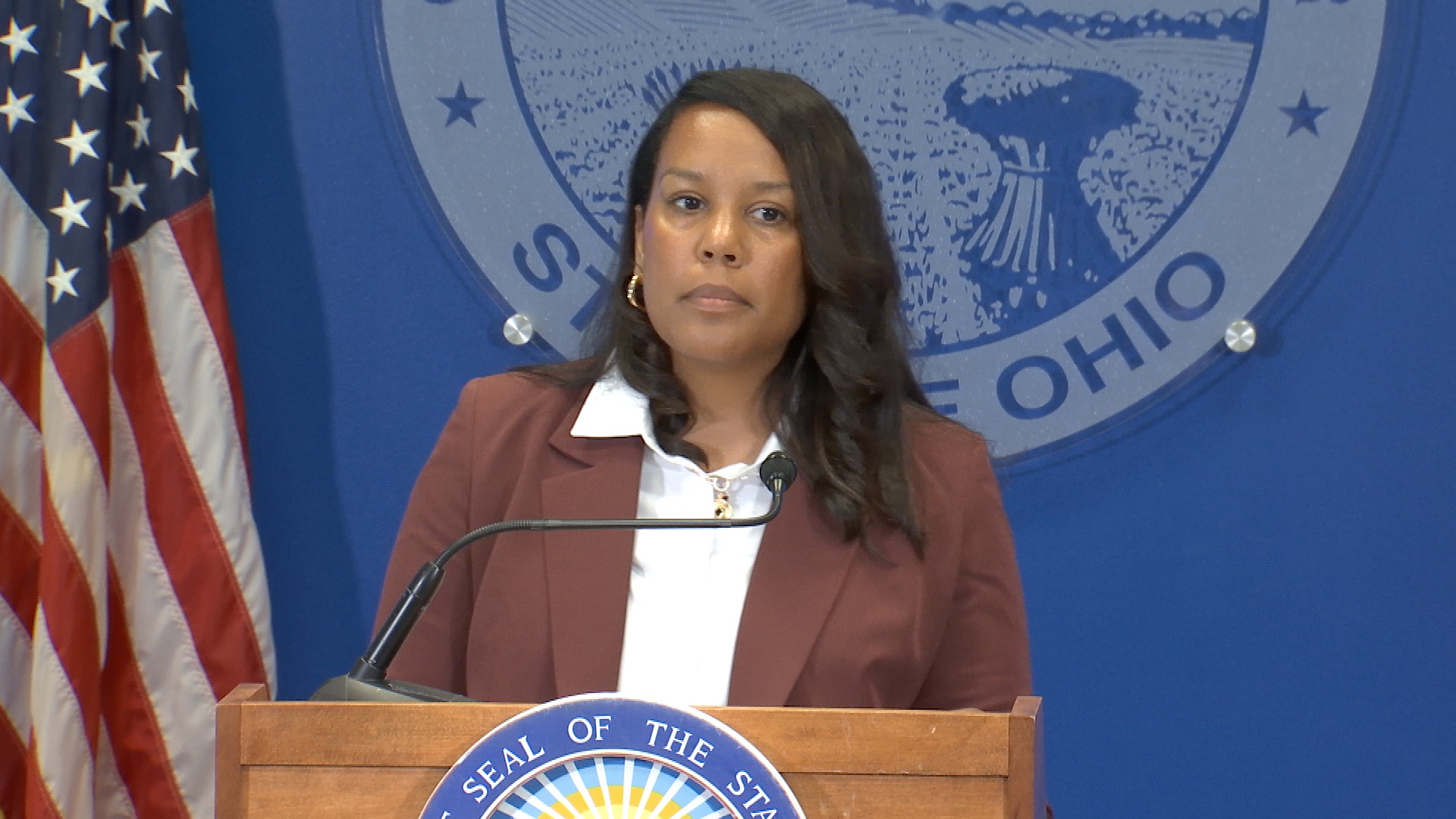
    OneOhio Recovery Foundation Executive Director Alisha Nelson. (Photo by Morgan Trau)

    BY:  Ohio Capital Journal

    This week, Ohio Gov. Mike DeWine tapped an executive director to lead the OneOhio Recovery Foundation. The nonprofit charged with administering more than $1 billion in opioid settlement money has faced criticism over lack of transparency. While critics of OneOhio praise DeWine’s pick, they argue the nomination process was opaque.

    The background

    State and local officials negotiated the OneOhio Recovery Foundation as way to manage opioid settlement money flowing to Ohio. The organization’s 29-member board hints at the competing interests. The governor, attorney general and general assembly all get to name board members. The state is then divided into 19 regions in which local leaders get to tap board members.

    In all, the agreement gives the nonprofit control over 55% of the $2 billion coming to Ohio.

    The memorandum of understanding that established OneOhio insists “meetings shall be open, and documents shall be public to the same extent they would be if the Foundation was a public entity.”

    But when Harm Reduction Ohio president Dennis Cauchon tried to attend the group’s first meeting in 2022, OneOhio turned him away. HRO then filed a public records request for documents related to the meeting. OneOhio didn’t respond.

    HRO sued OneOhio in the state supreme court. The justices decided — unanimously — that OneOhio is the functional equivalent of public entity and must comply with the records request.

    Dissatisfied with that outcome, state lawmakers added language to the budget explicitly defining OneOhio as not a public entity. Gov. Mike Dewine signed the budget on July 4. Eight days later, the OneOhio board voted to send DeWine their short list for executive director.

     Gov. Mike DeWine introducing OneOhio Recovery Foundation executive director Alisha Nelson (left) and Ohio Department of Children and Youth director Kara Wente. (Photo by Morgan Trau) 

    The director

    When DeWine announced his decision, he noted the OneOhio board “conducted an extensive national search” and he praised all three candidates. In the end though, he landed on Alicia Nelson.

    “For more than 16 years,” he said, “Alicia has turned her passion and life experiences into a career promoting and developing policies that support long term recovery and the advancement of the behavioral health field.”

    DeWine would know. As attorney general, he selected Nelson to lead his office’s anti-drug efforts. Shortly after taking office as governor, he turned to her again to lead RecoveryOhio, a new agency tasked with addressing mental health and drug abuse. Nelson also has experience working with the Alcohol Drug and Mental Health, or ADAMH, board of Franklin County. In the private sector, DeWine described how she’s worked to improve mental health payments within the Medicaid system.

    Nelson said she and the OneOhio board are committed to transparency, and she took a long view of the work in front of them.

    “What does it take to see the vision of 2050, where we want to be, to really see this issue abated and that no one else has to struggle with the loss of a loved one,” she said.

    Cauchon, from Harm Reduction Ohio, spoke glowingly of Nelson as well. He described her as “a talented, wonderful person and totally qualified.”

    He recalled how at RecoveryOhio she was instrumental in clearing bureaucratic hurdles for naloxone distribution. “It was just like a technical administrative thing that was having serious consequences,” he explained, “but she cared.”

    “I think that OneOhio is fortunate to have her as the executive director,” he said. “I have no problems with her at all. In fact, I salute her. I’ve worked with her in the past, and I have great respect for her.”

    The process

    The problem, Cauchon said, is how the board arrived at its short list. He claims the OneOhio held numerous meetings without public notice as they conducted their national search. Although the state budget asserts OneOhio doesn’t have to comply with state open meetings laws, those provisions won’t take effect until October.

    The controlling mandate, Cauchon said, is a restraining order granted by Franklin County Common Pleas Judge Mark Serrott in April. That order explicitly directs the board to comply with open meetings laws “for all meetings and subcommittee meetings.” Serrott made a point of insisting on adequate public notice, and that any exempt meetings must be “identified and disclosed.”

    In July, Judge Serrott extended that order through the budget’s October effective date.

    According to OneOhio’s February 2023 meeting minutes, the firm contracted to conduct the search said their team would meet with OneOhio’s personnel committee “twice per month to update the committee on candidates applying for the position.” OneOhio’s website shows no meeting minutes for that subcommittee after February.

    “It’s unfortunate,” Cauchon said, “because if they’d done it as the law requires, the outcome could have been the same — maybe would have been the same. But it’s like their cultural view that they’re a secret society, and that they’re a secret club.”

    Harm Reduction Ohio filed a motion to compel discovery against OneOhio and to hold the organization in contempt. The judge denied the first and sealed both motions. OneOhio has until next week to provide its response to the contempt motion.

    In a statement, OneOhio spokeswoman Connie Luck said, “we strongly dispute the claims made and will be responding through the proper legal channels.”

    Follow OCJ Reporter Nick Evans on Twitter.


    Nick Evans
    NICK EVANS

    Nick Evans has spent the past seven years reporting for NPR member stations in Florida and Ohio. He got his start in Tallahassee, covering issues like redistricting, same sex marriage and medical marijuana. Since arriving in Columbus in 2018, he has covered everything from city council to football. His work on Ohio politics and local policing have been featured numerous times on NPR.

    MORE FROM AUTHOR

  • Next generation of COVID-19 vaccines and therapies gets a $1.4 billion boost

    Next generation of COVID-19 vaccines and therapies gets a $1.4 billion boost

    A nurse holds a vial of COVID-19 vaccine and syringe. (Getty Images)

    BY:  Ohio Capital Journal

    WASHINGTON — The Biden administration on Tuesday announced a $1.4 billion investment in developing the so-called next generation of COVID-19 vaccines and treatments.

    Health and Human Services Secretary Xavier Becerra and Assistant Secretary for Preparedness and Response Dawn O’Connell made the announcement, saying the funding is part of the $5 billion program they hope will help the country get ahead of any future changes in COVID-19.

    “This is an investment in expanding our country’s ability to respond to the future variants that we might see coming out of COVID,” Becerra said. “It’s an investment in better protecting all of our community, including those who are immunocompromised, and who don’t respond well to the existing vaccines.”

    The $1.4 billion in funding should allow clinical trials for a new monoclonal antibody to start this autumn with clinical trials for a new COVID-19 vaccine starting as soon as the winter, O’Connell said.

    “Project NextGen is operationalizing the lessons we’ve learned about the COVID-19 virus to broaden the nation’s medicine cabinet and increase protection for all communities,” O’Connell said.

    The Biden administration, she said, expects to announce additional funding for Project NextGen programs before the end of the fiscal year on Sept. 30.

    The projects funded on Tuesday include

    • $1 billion for four Phase IIb clinical trial studies on a COVID-19 vaccine. That funding will go to ICON Government and Public Health Solutions, Inc of Hinckley, Ohio; Pharm-Olam, LLC, of Houston, Texas; Technical Resources International (TRI), Inc., of Bethesda, Maryland; and Rho Federal Systems, Inc., Durham, North Carolina.
    • $326 million to Regeneron for a monoclonal antibody to prevent COVID-19.
    • $100 million to Global Health Investment Corp., a non-profit organization that is managing an investment portfolio known as BARDA Ventures, referring to the federal agency called Biomedical Advanced Research and Development Authority. The portfolio should “expand investments in new technologies that will accelerate responses in the future,” according to a statement from HHS.
    • $10 million to Johnson & Johnson Innovation for a competition through Blue Knight, which HHS said in its statement is a partnership between BARDA and JLABS.

    An HHS official said the department is in the process of identifying the COVID-19 vaccines that will move into the Phase IIb clinical trials.

    Once the vaccines are identified, the HHS official said, the department would be able to “accelerate” their movement into clinical trials since a lot of the preparation to start a clinical trial can be going on before the vaccines are identified.

    The HHS official said the timeline for moving the next generation of COVID-19 vaccines to doctors’ offices and pharmacies will be determined by the data and how effective they may be when compared with the current vaccines.


    Jennifer Shutt
    JENNIFER SHUTT

    Jennifer covers the nation’s capital as a senior reporter for States Newsroom. Her coverage areas include congressional policy, politics and legal challenges with a focus on health care, unemployment, housing and aid to families.

    MORE FROM AUTHOR

  • Ohio Ballot Board sets language for proposed recreational marijuana law

    Ohio Ballot Board sets language for proposed recreational marijuana law

    BY:  Ohio Capital Journal

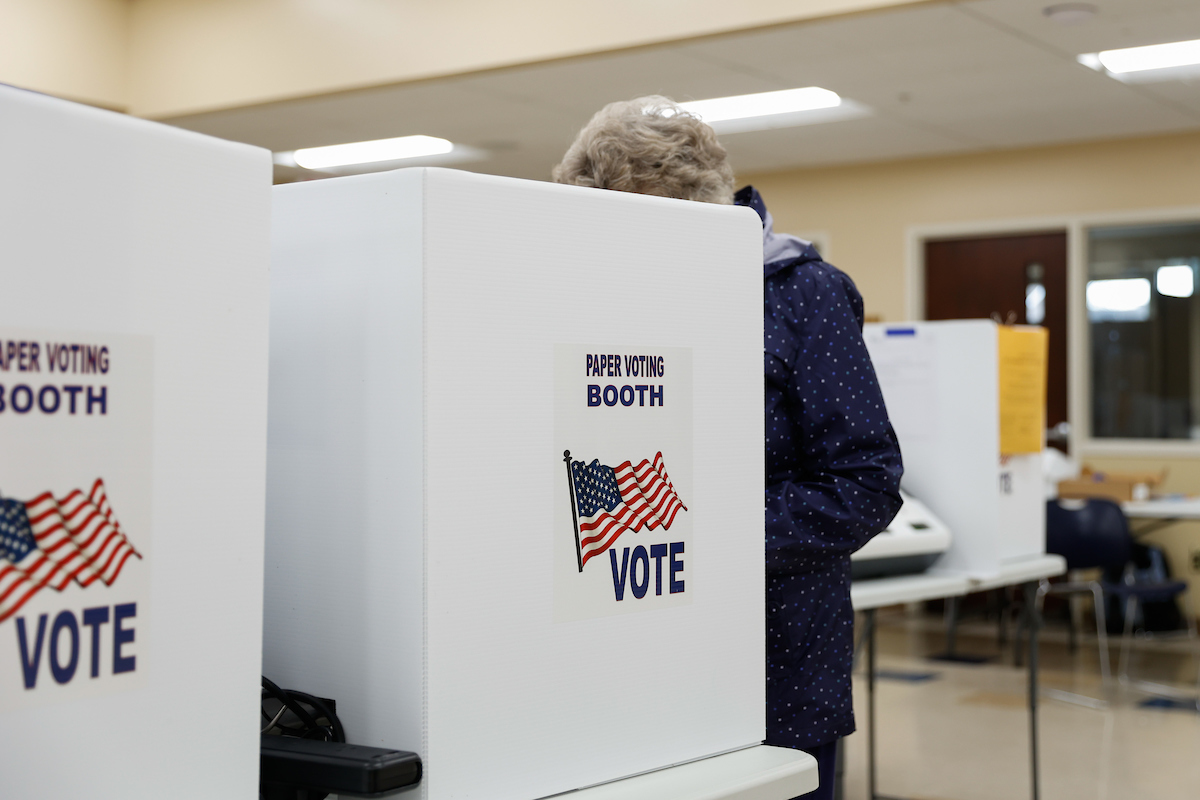
    The Ohio Ballot Board unanimously voted Thursday to solidify the language voters will see for the proposed recreational marijuana law in the November election.

    The Coalition to Regulate Marijuana like Alcohol is backing the ballot proposal which would legalize and regulate cultivation, manufacturing, testing and the sale of marijuana to Ohioans 21 and up. It would also legalize home grow for Ohioans 21 and up with a limit of six plants per person and 12 plants per residence, and impose a 10% tax at the point of sale for each transaction.

    “Unanimous approval by the bipartisan ballot board should assure voters that ‘What they see is what they’ll get’,” Coalition to Regulate Marijuana like Alcohol spokesperson Tom Haren said in a statement. “That means: hundreds of millions of dollars in new revenue and stringent regulation like we already have in our existing medical marijuana market. We are looking forward to putting the illicit market out of business this November.”

    The proposal will be State Issue 2 on the Nov. 7 election.

    No one spoke during the public comment portion of Thursday’s meeting in regards to Issue 2 nor was there discussion about it among the five-person Ballot Board, chaired by Ohio Secretary of State Frank LaRose. State Rep. Elliot Forhan, D-South Euclid, citizen William N. Morgan, Sens. Theresa Gavarone, R-Bowling Green and Paula Hicks-Hudson, D-Toledo are also on the board.

    The Ballot Board determines what language voters will see on ballot.

    After originally not getting enough valid signatures, CRMA ended up collecting more than enough after the 10-day cure period, winding up with 127,772 valid signatures — 3,000 more than needed to get on the ballot.

    The ballot language

     COLUMBUS, Ohio — AUGUST 24: The Ohio Ballot Board meeting to certify the language for Issue 1, the proposed constitutional amendment entitled “The Right to Reproductive Freedom with Protections for Health and Safety” and Issue 2 entitled “An Act to Control and Regulate Adult Use Cannabis,” August 24, 2023, at the Ohio Statehouse in Columbus, Ohio. (Photo by Graham Stokes for Ohio Capital Journal) 

    The proposed law would establish the Division of Cannabis Control within the Department of Commerce which would “regulate, investigate, and penalize adult use cannabis operators, adult use testing laboratories and individuals required to be licensed.”

    It would create five funds in the state treasury: the adult use tax fund, the cannabis social equity and jobs fund; the host community cannabis fund; the substance abuse and addiction fund, and the division of cannabis control and tax commissioner fund.

    Landlords or an employer would have the authority “to prohibit the adult use of cannabis in certain circumstances, and prohibit the operation of a motor vehicle while using or under the influence of adult use cannabis and from using any other combustible adult use cannabis while a passenger in a motor vehicle.”

    The proposed law would require the Division of Cannabis Control to enter into an agreement with the Department of Mental Health and Addiction Services to establish a program for cannabis addiction services.

    Follow OCJ Reporter Megan Henry on Twitter.


    Megan Henry
    MEGAN HENRY

    Megan Henry is a reporter for the Ohio Capital Journal and has spent the past five years reporting in Ohio on various topics including education, healthcare, business and crime. She previously worked at The Columbus Dispatch, part of the USA Today Network.

    MORE FROM AUTHOR

  • Report: CEOs who pay poorly do fabulously

    Report: CEOs who pay poorly do fabulously

    BY:  Ohio Capital Journal

    Ticketmaster isn’t just crappy to its customers and to the musicians whose shows it manages ticket sales for.

    As a dominant event middleman, it tacks on hefty fees and has the effrontery to call them “convenience charges.” And bands complain that by the time parent company Live Nation Entertainment deducts its many cuts for their shows, they’re left struggling to survive while others profit from their work.

    Turns out, Live Nation also pays its employees poorly while paying its CEO, Michael Rapino, like a pharaoh. In 2022, the median Live Nation employee earned just $25,673, while Rapino hauled in a tidy $139 million, or more than 5,400 times as much as the employee who fell in the middle of his company’s income distribution, according to a report that was released today.

    The findings were part of the 29th annual “Executive Excess” report by the Institute for Policy Studies, a progressive Washington, D.C. think tank. While companies complained about the lack of available workers during the pandemic, this year’s report says that for at least 100 corporations, executives managed to keep worker pay down while giving themselves huge raises.

    “In response to strikes and union organizing drives, corporate leaders routinely insist that they simply lack the wherewithal to raise employee pay,” the report said. “And yet top executives seem to have little trouble finding resources for enriching themselves and wealthy shareholders.”

    The report said that in the case of Live Nation, the company wants investors to know that the situation isn’t as unfair as all that. If you take into account the fact that most of the company’s employees are part-time and and set them aside — and if you set aside a mammoth payment Rapino received in 2022 — the CEO only made 350 times as much as his median-paid, full-time worker did.

    “In its (U.S. Securities and Exchange Commission) proxy statement, the company takes great pains to point out that if you nix the CEO’s $109 million stock grant and all of the company’s primarily part-time employees from the calculation, the Live Nation pay ratio would be merely 353 to 1,” the report said.

    The mechanism CEOs have often used to boost their pay over the past few years has been the stock buyback. Instead of reinvesting profits in research, equipment or in rank-and-file employees, companies often use a hefty chunk of that money to repurchase shares of company stock — which increases the value of those shares and those that remain outstanding.

    Companies say they do stock buybacks to consolidate ownership, stabilize stock prices or return value to shareholders. But by happy coincidence, the executives deciding to do the buybacks are often huge shareholders in their companies because much of their compensation is in the form of company stock.

    In other words, when company leaders undertake stock buybacks, they’re usually giving themselves big raises.

    The huge, plutocrat-friendly Trump tax cuts in 2017 sparked a wave of stock buybacks that seems to have continued through 2022. But while they boosted executive pay, at least in the early going, the average worker saw little benefit.

    In fact, workers’ share of corporate income continued its decades-long slide — while executives were lavishly rewarded for enacting mass layoffs and keeping down workers’ pay.

    The Institute for Policy Research report compiled a list of the “Low Wage 100” — the 100 firms listed on the S&P 500 who paid the worker that fell in the middle of their pay range the least. When the researchers looked at this group, they found that it bought back $340 billion worth of stock in 2022 and their CEOs’ stock holdings increased at three times the rate of their median workers’ pay.

    At the top of the buyback list was home-improvement mega-store owner Lowes, which bought back $35 billion in stock. While its median employee made just less than $30,000 in 2022, CEO Marvin Ellison made $17.5 million, the report said.

    While many workers for Low Wage 100 companies effectively subsidized their CEOs’ gargantuan salaries with under-compensated work, employees with half those companies were also subsidizing them with their federal tax dollars.

    Fifty one of the companies received a combined $24 billion in federal contracts between fiscal years 2020 and 2023. During the same period, those companies engaged in $160 billion worth of stock buybacks, the report said.

    Amazon was the biggest in the group, getting more than $10 billion in federal business, much of it for classified work for the National Security Agency and the Department of Defense. As it did, Amazon’s top corporate leadership has done quite well.

    “Under CEO Andy Jassy’s two years at the helm, Amazon has spent $5.9 billion on stock buybacks, an outlay that has helped inflate Jassy’s personal stock holdings to $265 million,” the report said. “These millions do not include the bulk of his 2021 mega-grant, a reward that will vest over 10 years.”

    There have been steps taken to address the interconnected problems of stock buybacks, skyrocketing executive pay and depressed wages.

    As part of the 2022 Inflation Reduction Act, Congress passed and President Biden signed a 1% excise tax on buybacks and Biden proposed raising it to 4% in this year’s State of the Union address.

    The Department of Commerce also plans to give preference for subsidies under the CHIPS Act to semiconductor makers who don’t engage in buybacks, the Institute for Policy Studies report said.


    Marty Schladen
    MARTY SCHLADEN

    Marty Schladen has been a reporter for decades, working in Indiana, Texas and other places before returning to his native Ohio to work at The Columbus Dispatch in 2017. He’s won state and national journalism awards for investigations into utility regulation, public corruption, the environment, prescription drug spending and other matters.

    MORE FROM AUTHOR

  • Abortion amendment ballot language submitted, Ballot Board set to meet Thursday

    Abortion amendment ballot language submitted, Ballot Board set to meet Thursday

    Abortion rights groups request full text on November ballots

    BY:  Ohio Capital Journal

    Gearing up for an Ohio Ballot Board meeting where constitutional amendment language regarding reproductive health will be considered, groups pushing for the measure want to see the entire text of the amendment on November ballots.

    In a letter received by the Ohio Secretary of State on Monday, attorney Donald McTigue represented petitioners for the constitutional amendment in asking the board to use full text of the proposed amendment or a condensed version, so that voters can read the entire thing on their ballots in the general election this year.

    “By using the full text, voters will see for themselves the language they are being asked to approve and can make a free and independent decision on this fundamental question,” McTigue wrote.

    The abortion rights groups also argued that, in using the full text, “there can be no dispute about whether legal standards have been satisfied or whether the condensed text misleads, deceives or defrauds voters,” according to the letter.

    The ballot measure’s title, as submitted by the groups for approval by the ballot board, is “To Establish the Right to Reproductive Freedom with Protections for Health and Safety.”

    Because of the rejection of Issue 1 earlier this month at the polls, which would have raised the threshold to approve a constitutional amendment, a simple majority is needed to pass the measure.

    In the language of the amendment, it specifies that “every individual has a right to make and carry out one’s own reproductive decisions, including but not limited to” contraception, fertility treatments, pregnancy, miscarriage care and abortion.

    It prohibits the state from doing anything to “directly or indirectly burden, penalize, prohibit, interfere with or discriminate against” the exercise of the rights in the amendment, or those who assist in the exercise of the rights.

    The amendment makes exceptions in terms of abortion, in which it would be “prohibited after fetal viability.”

    “But in no case may such an abortion be prohibited if in the professional judgment of the pregnant patient’s treating physician it is necessary to protect the pregnant patient’s life or health,” the amendment states.

    “Any attempt to alter wording away from the text of the amendment should be seen for what it is: an attempt to confuse and mislead voters,” said Lauren Blauvelt, of Ohioans United for Reproductive Rights, in a statement announcing the submission of the ballot language.

    Opposition groups have claimed the amendment would impact parental rights and allow “late-term abortion,” neither of which are included in the language submitted to the ballot board. “Late-term abortion” is not considered a legitimate medical term.

    Two different lawsuits attempting to keep the amendment from going before voters have been rejected by the Ohio Supreme Court.

    Most recently, a former state legislator and a Catholic Ohio resident asked that the measure be blocked because it was unclear what laws it sought to change. A separate previous lawsuit argued the Ohio Ballot Board abused its power by improperly considering, and thus moving the ballot measure forward so that signatures could be collected in support of it.

    That signature collection amounted to nearly 500,000 valid Ohio voter signatures, which allowed the measure to head to the ballot.

    Another abortion-related lawsuit is still in the process of making it through the state’s highest court. That lawsuit was filed by Ohio Attorney General Dave Yost, challenging a Hamilton County court’s right to pause a six-week abortion ban implemented almost immediately after the Dobbs decision overturned Roe v. Wade.

    That law was passed in 2019, but has since been entangled in court cases. It bans abortion after six weeks gestation and was in place for several months following the Dobbs decision before being halted by the courts.

    The Ohio Ballot Board is scheduled to consider and vote on the language on Thursday, where they will also consider language regarding a proposed statute for recreational marijuana.


    Susan Tebben
    SUSAN TEBBEN

    Susan Tebben is an award-winning journalist with a decade of experience covering Ohio news, including courts and crime, Appalachian social issues, government, education, diversity and culture. She has worked for The Newark Advocate, The Glasgow (KY) Daily Times, The Athens Messenger, and WOUB Public Media. She has also had work featured on National Public Radio.

    MORE FROM AUTHOR

    ___________________
    [pdf-embedder url=”https://lovelandmagazine.com/wp-content/uploads/2023/08/The-Right-to-Reproductive-Freedom-with-Protections-for-Health-and-Safety.pdf”]
  • Proposed recreational marijuana law is headed to the November ballot in Ohio

    Proposed recreational marijuana law is headed to the November ballot in Ohio

    BY:  Ohio Capital Journal

    A proposed recreational marijuana law will be on Ohio’s November ballot after all.

    The Secretary of State’s office verified 4,405 additional valid petition signatures — bringing the grand total to 127,772, Secretary of State Frank LaRose said Wednesday in a letter to the campaign. 124,046 signatures were needed.

    The Coalition to Regulate Marijuana like Alcohol’s statute initiative would legalize and regulate cultivation, manufacturing, testing and sale of marijuana to Ohioans 21 and up. It would also legalize home grow for Ohioans 21 and up with a limit of six plants per person and 12 plants per residence, and impose a 10% tax at the point of sale for each transaction.

    “We are grateful to the thousands of Ohioans who helped us get to this point and are excited to bring our proposal to regulate marijuana like alcohol before Ohio voters this coming Election Day,” spokesperson Tom Haren said.

    This comes after the coalition initially came up just short of collecting enough valid signatures. The coalition submitted 223,176 signatures in July, but only 123,367 were found to be valid signatures. They recently submitted 6,545 additional signatures after the 10-day cure period.

    Hamilton County submitted the most valid signatures with 1,914. Next was Franklin County with 711 and Montgomery County with 626.

    Twenty-three states and Washington D.C. have legalized the recreational use and sale of cannabis.

    The proposed marijuana statute will be on Nov. 7’s ballot alongside the reproductive rights amendment.

    Follow OCJ Reporter Megan Henry on Twitter.


    Megan Henry
    MEGAN HENRY

    Megan Henry is a reporter for the Ohio Capital Journal and has spent the past five years reporting in Ohio on various topics including education, healthcare, business and crime. She previously worked at The Columbus Dispatch, part of the USA Today Network.

    MORE FROM AUTHOR

  • Fulton grand jury indicts Trump, members of his inner circle

    Fulton grand jury indicts Trump, members of his inner circle

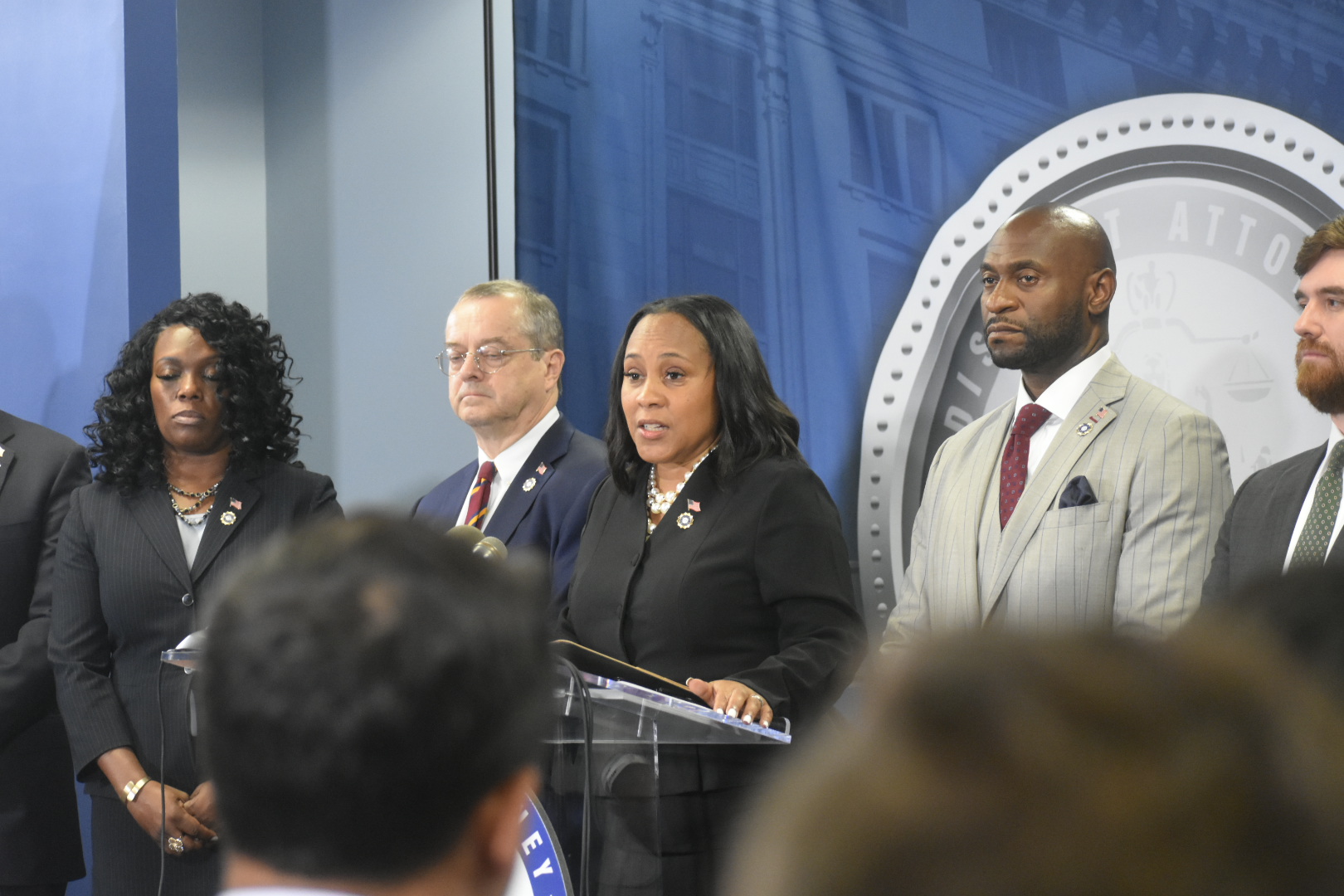
    Fulton County District Attorney Fani Willis discusses the indictments against former President Donald Trump and 18 others on Monday, Aug. 14, 2023. (Photo by Ross Williams/Georgia Recorder, States Newsroom.)

    BY:  AND  Ohio Capital Journal

    Former President Donald Trump and several members of his inner circle were indicted Monday in Fulton County Georgia’s sweeping investigation into 2020 election interference.

    Fulton County District Attorney Fani Willis held a press conference late Monday night to briefly discuss the grand jury’s felony conspiracy and racketeering charges being levied against the 2024 Republican presidential frontrunner and other allies that include his former chief-of-staff Mark Meadows, his personal attorney Rudy Giuliani and ex-Georgia Republican Party Chairman David Shafer.

    Nineteen people were indicted on 41 charges after the grand jury’s vote to hand up indictments and Fulton Judge Robert McBurney’s unsealing of the charges Monday evening.

    “All elections in our nation are administered by the states, which are given the responsibility of ensuring a fair process and an accurate counting of the votes,” Willis said late Monday evening. “That includes elections for presidential electors, Congress state officials and local offices. The state’s role in this process is essential to the functioning of our democracy.”

    “The indictment alleges that rather than abide by Georgia’s legal process for election challenges, the defendants engaged in a criminal racketeering enterprise to overturn Georgia’s presidential election result,” Willis said.

    It is the fourth time the former president has been indicted this year, and it is the second indictment directly tied to Trump’s attempts to stay in power after losing his bid for reelection.

    The defendants will have until noon on Friday, Aug. 25 to turn themselves in, Willis said.

    Read the 98-page indictment below.

    “I remind everyone here that an indictment is only a series of allegations based on a grand jury determination of probable cause to support the charges. It is now the duty of my office to prove these charges in the indictment beyond a reasonable doubt at trial,” Willis said.

    Willis said she plans to push for a trial to be held within the next six months, but acknowledged that will be up to the judge.

    Felony charges of false statements, forgery, racketeering and election fraud, solicitation of a government employee have also been filed against in the case that’s been more than a year in the making.

    The sweeping probe centers on Trump and a number of his supporters who lodged unfounded claims that widespread election fraud cost him the 2020 election in Georgia by nearly 12,000 votes. In early 2022, Willis launched the investigation after a recording of a phone call where Trump asked Republican Secretary of State Brad Raffensperger to “find” enough votes was released to the public.

    Willis, an Atlanta Democrat, has been accused of political bias by Trump and his attorneys who argue she has held fundraisers for candidates of her party in the past.

    And on Monday, Reuters reported that a document outlining charges against Trump appeared briefly on the Fulton County court’s website. A Fulton County courts spokesperson issued a statement Monday in response to a “fictitious document that has been circulated online and reported by various media outlets.”

    Trump’s Georgia-based attorneys blasted the brief appearance of the document in a statement, calling it part of a pattern that has “plagued this case from its very inception.”

    “This was not a simple administrative mistake,” Drew Findling and Jennifer Little said in a joint statement. “A proposed indictment should only be in the hands of the District Attorney’s Office, yet it somehow made its way to the clerk’s office and was assigned a case number and a judge before the grand jury even deliberated.”

    Trump also took to his social media site, Truth Social, to bemoan the indictment, calling Willis a “rabid partisan” and accusing her of timing the indictment to “maximally interfere” in next year’s presidential race. Willis brushed off the criticism when asked about the president’s comments.

    “I make decisions in this office based on the facts and the law. The law is completely nonpartisan,” Willis said.

    The group of 16 fake electors who met at the Georgia Capitol in December 2020 includes current and former state and local GOP officials, ex-Coffee County GOP Chairwoman Cathy Latham, and newly elected state Sen. Shawn Still.

    Giuliani pressed Georgia Republicans to set themselves up as alternate electors to counter state Democrat electors casting votes for Joe Biden after GOP election officials confirmed the current president as the winner of Georgia’s 2020 presidential election. The plan at first was for the “fake electors” to serve as a placeholder should the former president prevail in court challenges to Georgia’s results. But when Trump’s court challenges were all either dismissed or withdrawn, the alternate electors still signed paperwork swearing they were legitimate delegates.

    An eventful day

    Even before the prospect of a Monday grand jury decision, a throng of national and local press had assembled outside the Fulton County courthouse Monday morning where they tried to catch the witnesses as they left to quiz them on the process.

    The relative calm outside the courthouse was disrupted at one point Monday when opponents of a controversial public safety training center attempted to march through the area around the courthouse that has been closed off for the indictments. Among the group’s chants: “Donald Trump. Andre Dickens. I don’t know the f—— difference.”

    But inside the courthouse the grand jury proceeding moved at a faster pace than expected, and by late Monday afternoon, an indictment seemed possible. At least two witnesses – former Republican Lt. Gov. Geoff Duncan and Atlanta journalist George Chidi – who were originally set to testify Tuesday were moved up to Monday.

    Duncan, who did not seek reelection last year, brushed aside specific questions about his grand jury testimony Monday but he spoke generally about how he viewed his participation in the process. And politically, he described this moment in time as a potential “pivot point” for Republicans.

    “I think it’s important to tell the truth,” Duncan told reporters afterwards. “And to respond to the constitutional duties of answering the questions of the grand jury. It’s important for us as a country to finally figure out exactly what happened, and let Americans decide. Instead of misinformation and tweets, let America decide what’s next for us.”

    Other witnesses include state Sen. Jen Jordan and state Rep. Bee Nguyen, two Democrats who were part of the December 2020 legislative meetings where Rudy Giuliani pushed a false narrative in hopes of getting the General Assembly to intervene.

    Nguyen confirmed in a statement Monday that she had testified before the grand jury.

    “No individual is above the law, and I will continue to fully cooperate with any legal proceedings seeking the truth and protecting our democracy,” Nguyen said. “I believe that every individual who wrongfully and illegally tried to overturn our valid elections should be held accountable so that we can have, as John Adams said, ‘a government of laws, and not of men.’”

    Chidi, who testified before the special purpose grand jury, said late Monday that he was dismissed without testifying Monday. He called it a victory for journalists.

    The independent Atlanta reporter walked into the fake electors’ meeting at the state Capitol after noticing someone who would have likely served as a GOP elector had Trump won Georgia. He said he was intrigued when the person acted strangely toward him, so he started streaming on Facebook live and followed the man into the meeting room before quickly being ushered out.

    When he asked what kind of meeting it was, a woman said they were having an “education” meeting, he said.

    “Plainly, they were not having an education meeting. So, up until five minutes ago, the district attorney believed that that observation was relevant to these legal proceedings,” Chidi told a group of reporters who swarmed around him as he left the courthouse. “And perhaps it still is, but the jury may have enough information without me to make a decision.”

    [pdf-embedder url=”https://lovelandmagazine.com/wp-content/uploads/2023/08/CRIMINAL-INDICTMENT.pdf”]______________________

    Stanley Dunlap
    STANLEY DUNLAP

    Stanley Dunlap has covered government and politics for news outlets in Georgia and Tennessee for the past decade. At The (Macon) Telegraph he told readers about Macon-Bibb County’s challenges implementing its recent consolidation, with a focus on ways the state Legislature determines the fate of local communities. He used open records requests to break a story of a $400 million pension sweetheart deal a county manager steered to a friendly consultant. The Georgia Associated Press Managing Editors named Stanley a finalist for best deadline reporting for his story on the death of Gregg Allman and best beat reporting for explanatory articles on the 2018 Macon-Bibb County budget deliberations. The Tennessee Press Association honored him for his reporting on the disappearance of Holly Bobo, which became a sensational murder case that generated national headlines.

    MORE FROM AUTHOR

    Jill Nolin
    JILL NOLIN

    Jill Nolin has spent nearly 15 years reporting on state and local government in four states, focusing on policy and political stories and tracking public spending. She has spent the last five years chasing stories in the halls of Georgia’s Gold Dome, earning recognition for her work showing the impact of rising opioid addiction on the state’s rural communities. She is a graduate of Troy University.

    MORE FROM AUTHOR
  • Gov. DeWine highlights science of reading provisions in the new state budget

    Gov. DeWine highlights science of reading provisions in the new state budget

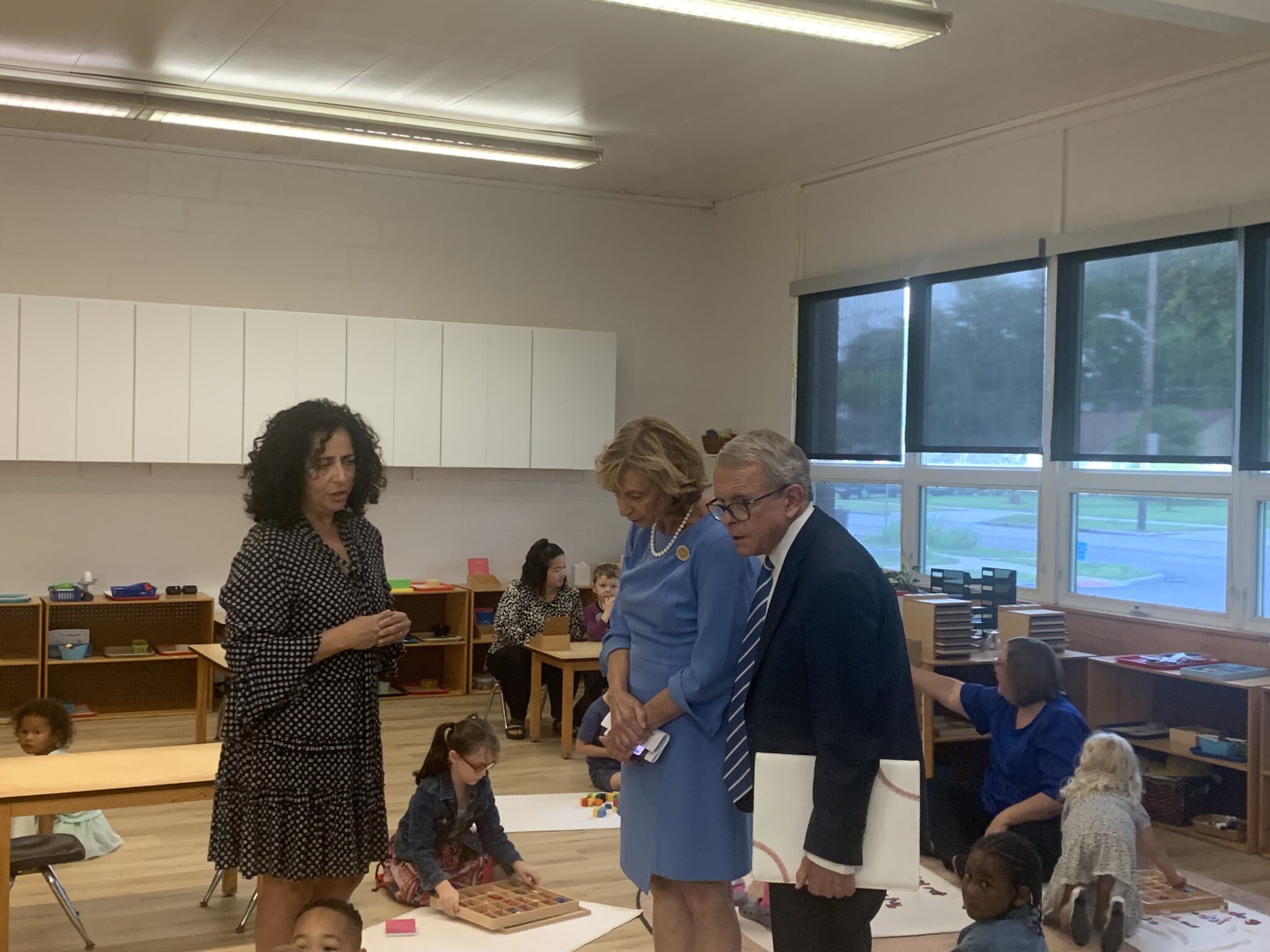
    Rekha Kohli, director of student and family services at Columbus Montessori Education Center, talks with Ohio Gov. Mike DeWine and First Lady Fran DeWine during a classroom visit about the science of reading on Aug. 10. (Photo by Megan Henry, Ohio Capital Journal.)

    A chunk of Ohio’s two-year operating budget is going toward implementing the science of reading — $86 million for educator professional development, $64 million for curriculum and instructional materials, and $18 million for literacy coaches.

    BY:  Ohio Capital Journal

    Students arranged red and blue letters to spell various words such as “lip,” “twin,” and “keys.”

    Ohio Gov. Mike DeWine and first lady Fran DeWine observed about two dozen children, ages 3-6, spelling words at Columbus Montessori Education Center Thursday morning.

    The schools aligns with the science of reading, which is based on decades of research that shows how the human brain learns to read and incorporates phonemic awareness, phonics, fluency, vocabulary, and comprehension.

    Soon all Ohio schools will align with the science of reading as a chunk of Ohio’s two-year operating budget goes towards implementation — $86 million for educator professional development, $64 million for curriculum and instructional materials, and $18 million for literacy coaches.

    “There are many instructional methods out there, but the proven best way to teach reading is through the science of reading instruction,” DeWine said. “Reading is certainly the key that unlocks the door to so many, many things.”

    DeWine said Ohio has committed $26 million in federal COVID related funding to pay for various materials and literacy coaches for non-public schools to align with the science of reading.

    “Every student in the state should have the ability to follow the science of reading,” he said. “We want to make sure that no matter where a student goes to school, they have the best opportunity to learn to read.”

    Next steps of implementation

     Photo by Megan Henry, Ohio Capital Journal. 

    It’s not clear what each Ohio school district currently uses for their reading curriculum, so the Ohio Department of Education will soon be sending out a survey to school districts to gather information that information, said Chris Woolard, interim superintendent of public instruction.

    “Any Ohio school that is not already using a curriculum that is aligned with this proven method will begin aligning to it this school year,” DeWine said.

    ODE will also come up with a list of curriculum and instructional materials that line up with the science of reading. Under the budget, Ohio schools have to start using those learning materials by the 2024-25 school year.

    The budget funds 100 literacy coaches who will help public schools with the lowest level of proficiency in literacy based on their performance in the state’s English language arts assessment. While the coaches are going to be under the direction of ODE, they won’t be employed by the department.

    “I don’t know that 100 is enough, candidly,” DeWine said. “From what we’ve seen as we’ve traveled around the state, coaches are just vitally important in the area of literacy.”

    Teacher prep programs

    The science of reading budget goes beyond K-12 schools. It also requires the Ohio Department of Higher Education Chancellor to create an audit process that documents how every educator training program aligns with teaching the science of reading instruction. The audit must be completed with summaries publicly released by March 31.

    The Chancellor will also be able to rescind the approval of educator training programs that don’t align with teaching the science of reading instruction a year after the initial audit, and programs would be evaluated every four years.

    “The challenge is many teachers were not taught this way through no fault of their own they were not taught that way. This is a big chance for many teachers, classrooms and schools. It’s not going to be done overnight,” DeWine said.

    Statewide tour

    DeWine visited about a dozen Ohio schools in the spring that align with the science of reading and often touted these statistics during the budget process — 40% of Ohio’s third-graders are not proficient in reading and 33% of third graders were not proficient in reading before COVID-19.

     COLUMBUS, Ohio — APRIL 06: Second grade teacher Bernadette Monroe talks to her students during a visit by Ohio Governor Mike DeWine, Principal Miracle Reynolds (left), and Interim Superintendent/CEO of Columbus City Schools, Dr. Angela Chapman, to observe the implementation of the Science of Reading program, April 6, 2023, at Southwood Elementary School in Columbus, Ohio. (Photo by Graham Stokes for Ohio Capital Journal. Republish photo only with original article.) 

    During those tours, a conversation with a particular high school student stood out to him the most.

    “The student basically said, ‘They gave up on me. I didn’t think I could ever read, but the interventional specialist started working with me and started using the science of reading and I can now read’,” DeWine said.

    An 8-minute video on ODE’s website shows highlights from DeWine’s tour.

    “It’s proven that (the science of reading) works and that it produces better readers. It’s literally like a road map to reading,” Arnita Washington, a kindergarten teacher at Warrensville Heights Elementary in Cuyahoga County said in the video.

    Students said during the video they feel confident to break down new words.

    “Your brain is putting this into your working memory, so you can apply this later when you come to words that you don’t know,” Ohio Department of Education Literacy Chief Melissa Weber-Mayrer said during the video.

    Follow OCJ Reporter Megan Henry on Twitter.


    Megan Henry
    MEGAN HENRY

    Megan Henry is a reporter for the Ohio Capital Journal and has spent the past five years reporting in Ohio on various topics including education, healthcare, business and crime. She previously worked at The Columbus Dispatch, part of the USA Today Network.

    MORE FROM AUTHOR

  • Money paid, favors done. Messages detail relationship between Ohio regulator and energy executives

    Money paid, favors done. Messages detail relationship between Ohio regulator and energy executives

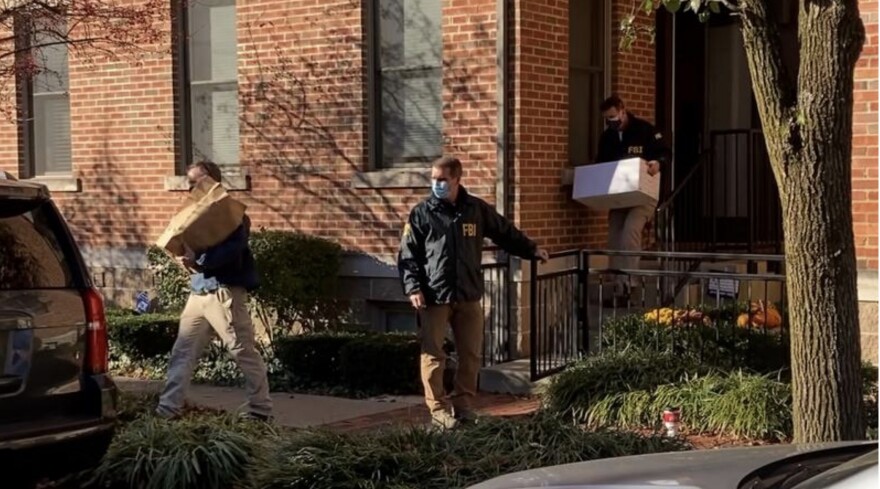
    FBI agents remove boxes of materials from PUCO Chairman Sam Randazzo’s condo in Columbus Nov. 17, 2020. Photo courtesy of Daniel Konik/Statehouse News Bureau.
    BY:  Ohio Capital Journal

    In early 2019, news of financial ties between Akron-based FirstEnergy and the man incoming-Gov. Mike DeWine had named to lead the Public Utilities Commission of Ohio began to spread. And as it did, FirstEnergy’s top executives feared they wouldn’t have a regulator they could control, according to documents filed in federal court late last week.

    “Great. Now we have none on the list” of nominees, then-CEO Chuck Jones texted Vice President Michael Dowling. Jones later added, ruefully, “Always need a backup plan.”

    As it happened, the nominee, Sam Randazzo, ended up being appointed to the commission after being paid $4.3 million by FirstEnergy. He proceeded to help draft a law providing the utility with a $1.3 billion bailout. The company spent another $60 million to pass and then to protect it from a citizen-initiated repeal in what law-enforcement officials have called one of the biggest bribery and money-laundering scandals in state history.

    Randazzo, Jones and Dowling haven’t been charged in the scandal, but after a jury trial that convicted two others, two guilty pleas, and a suicide, the three men could be the next targets as federal authorities continue their probe.

    If authentic, the communications filed on Friday indicate that the three met in Randazzo’s Columbus condo in December 2018. And they appear to show that the FirstEnergy executives agreed to pay Randazzo a large sum in exchange for favors when Randazzo became the state’s chief regulator.

    Another communication 23 months later — just after the FBI searched the condo in November 2020 — shows Randazzo providing a friend “the number for my home which the FBI does not have.”

    Demanding records

    Lawyers for Randazzo, Jones and Dowling didn’t immediately respond to requests for comment Monday, but attorneys for the former executives have said in separate court filings that they believe the feds are investigating their clients.

    The documents filed in federal court on Friday are part of a huge class-action suit against FirstEnergy, Jones, Dowling and a number of other defendants.

    In a deferred prosecution agreement, FirstEnergy in 2021 agreed to pay $230 million and admitted wrongdoing, including by bribing Randazzo. But the class-action plaintiffs — large pension and investment funds — are arguing that the company violated securities law by not disclosing its corrupt conduct. And, they argue, the company lost much of its value when that conduct came to light, leaving investors holding the bag.

    Randazzo has denied wrongdoing and he isn’t a defendant in the case, but the class-action plaintiffs want him to produce all communications relating to how he spent the $4.3 million he got from FirstEnergy just as he was poised to become its most powerful regulator.

    The plaintiffs have been accusing Randazzo since April of foot-dragging. They obtained the messages they filed Friday from a third party and are pointing to them as examples of Randazzo’s lack of cooperation.

    Early arrangements

    The earliest of the messages was on Dec. 18, 2018, and it appears that the three men had recently met in the residence that the FBI later searched.

    “Got it, Sam,” Dowling, then the FirstEnergy vice president, texted Randazzo. “Good seeing you as well. Thanks for the hospitality. Cool condo.”

    The “got it” was in response to a column of numbers Randazzo sent that appear to indicate that he was expecting payments from FirstEnergy through 2024:

    • 2019 — 1,633,333
    • 2020 — 600,000
    • 2021 — 600,000
    • 2022 — 600,000
    • 2023 — 600,000
    • 2024 — 300,000

    A seventh entry said “Total 4,333,333” — an amount equal to what FirstEnergy said was a bribe.

    The following day, Jones, the CEO, told Randazzo that he wouldn’t have to wait that long for the money, according to the filings. Jones also made it clear that he expected access to Randazzo.

    “We’re going to get this handled this year, paid in full, no discount,” the message says. “Don’t forget about us or Hurricane Chuck may show up on your doorstep! Of course, no guarantee he won’t show up sometime anyway.”

    Randazzo’s response seemed to be meant to reassure — and he linked the money to favors.

    “Made me laugh — you guys are welcome anytime and anywhere I can open the door,” he said. “Let me know how you want me to structure the invoices. Thanks.”

    Connections

    But on Jan. 30, 2019, problems popped up with Randazzo’s nomination.

    FirstEnergy’s nuclear-owning subsidiary, FirstEnergy Solutions, was going through bankruptcy and it had listed the Sustainability Funding Alliance of Ohio on one of its disclosures. Randazzo controlled the group and FirstEnergy had paid him millions through it in the past. Now the press was on to the matter.

    “Chuck — Sam Randazzo is going to pull out of the PUCO process ASAP and it’s related to a disclosure on a (FirstEnergy Solutions) bankruptcy filing,” Dowling texted Jones, according to the documents filed Friday. “Reporters called (FirstEnergy) today inquiring about the relationship between (FirstEnergy Solutions) and a group called the Sustainability Funding Alliance of Ohio. You can guess the rest.”

    That’s when Jones lamented not having a “backup plan” in the event that Randazzo was not seated on the utility commission. Dowling agreed.

    “This is awful,” he wrote. “The FirstEnergy Solutions bankruptcy filing names that group and Sam names the same group on a financial disclosure statement. Unreal. I don’t know why it was listed in the (FirstEnergy Solutions) bankruptcy filing. The payments we made year-end ’18 came from (FirstEnergy) Corp. Services.”

    Dowling was ready to throw Randazzo under the bus if the connection proved to be an embarrassment to the incoming DeWine administration.

    “They’re going to be mad at Sam (and hopefully not us) for not disclosing the financial relationship,” Dowling wrote. “That’s Sam’s responsibility.”

    A day later, however, the financial connection between FirstEnergy and Randazzo apparently wasn’t sufficiently embarrassing and he was picked to head up the PUCO.

    “A bullet grazed the temple,” Dowling told Jones, according to one of the texts filed last week.

    “Forced DeWine/Husted to perform battlefield triage,” Jones responded, referring to Lt. Gov. Jon Husted. “It’s a rough game.”

    A still rougher game

    In a trial held in Cincinnati from late January to mid-March, prosecutors put on witnesses and displayed communications describing Randazzo’s 2019 role in drafting House Bill 6, the bailout bill. Not only did it provide $1 billion to prop up two failing nuclear plants FirstEnergy was spinning off, it charged ratepayers about $100 million a year to insulate the company from an economic downturn. For FirstEnergy, it was easy money, in other words.

    In June, U.S. District Judge Timothy Black sentenced former Ohio House Speaker Larry Householder, R-Glenford, to 20 years in prison for orchestrating the racketeering scandal. Former state GOP Chairman Matt Borges got five years for his role.

    By November of 2019, HB 6 was on the books after FirstEnergy and a subsidiary plowed $36 million into a brutal, dishonest effort to turn back a citizen-initiated repeal. But the FirstEnergy executives weren’t done with Randazzo.

    On Nov. 10, 2019, Jones texted a coal executive that another cloud loomed for FirstEnergy.

    “And the (FirstEnergy) rescue project is not over,” Jones said, according to documents filed as part of the class-action suit. “At (Edison Electric Institute) financial conference. Stock is gonna get hit with Ohio 2024. Need Sam to get rid of the ‘Ohio 2024’ hole.”

    That was an apparent reference to a requirement that FirstEnergy file a “rate case” with the PUCO in 2024. In such a proceeding, regulators assess a utility’s operations and make a judgment about whether its rates and revenues are reasonable.

    FirstEnergy was apparently afraid they wouldn’t be. On Nov. 21, 2019, just 11 days after Jones expressed his concerns, the PUCO under Randazzo’s leadership issued an order saying it was “no longer necessary or appropriate” to require FirstEnergy to file a rate case.

    The next day, Jones wanted to express his appreciation to Randazzo. He did so by sending the erstwhile regulator a list of prices for six energy stocks that day. FirstEnergy stocks were up 1.5%. The next highest was Avangrid, which was up 0.86%.

    “Thank you!!” Jones wrote.

    Randazzo replied, “Ha — as you know, what comes up may come down… Thanks for the note. Spoke to Mike (Dowling) last night.”

    Then Jones said, “My Mom taught me to say Thank you.”

    Flying high

    By the start of 2020, things seemed to be going well for those who orchestrated the bailout.

    FirstEnergy Solutions would emerge from bankruptcy in February as a separate company, Energy Harbor. The class-action plaintiffs argue that one of FirstEnergy’s major goals in the scheme was to prop up the nuclear plants, get them off their books and shed the liability of having to pay for a decades-long process to close and clean up after them.

    At the same time, FirstEnergy was funneling millions more dark-money dollars into an effort to get the state’s legislature to put a constitutional amendment on the ballot. It would change the state’s term-limits so Householder could stay speaker for another 16 years — and presumably continue to do the utilities’ bidding.

    But then in July 2020, it all crashed down.

    On July 21, the FBI arrested Householder, Borges and other conspirators. By the next day, FirstEnergy stock had lost 34% of its value, the class-action plaintiffs contend.

    FirstEnergy fired Jones and Dowling the following October. And then in November, 2020, Randazzo was forced to resign from the PUCO after the FBI searched his condo.

    “Pretty stressful few days which started Monday at 6:00 when 10-12 FBI agents with their guns drawn announced their arrival at our home,” Randazzo emailed a friend on Nov. 21, according to the documents filed by the class-action plaintiffs. “But, Carol and I are handling it and doing better each day. Neighbors, friends (like you) family, PUCO staff and people I have worked for over the years have been great. Roger Sugarman (his attorney) is my new hero. So onward!”

    Then Randazzo encouraged the friend to call him on the number he believed that the FBI didn’t have.

    _________________________

    Marty Schladen
    MARTY SCHLADEN

    Marty Schladen has been a reporter for decades, working in Indiana, Texas and other places before returning to his native Ohio to work at The Columbus Dispatch in 2017. He’s won state and national journalism awards for investigations into utility regulation, public corruption, the environment, prescription drug spending and other matters.

    MORE FROM AUTHOR