Tag: Ohio Capital Journal

  • Ohio Issue 1 and Issue 2 carry massive significance for younger voters

    Ohio Issue 1 and Issue 2 carry massive significance for younger voters

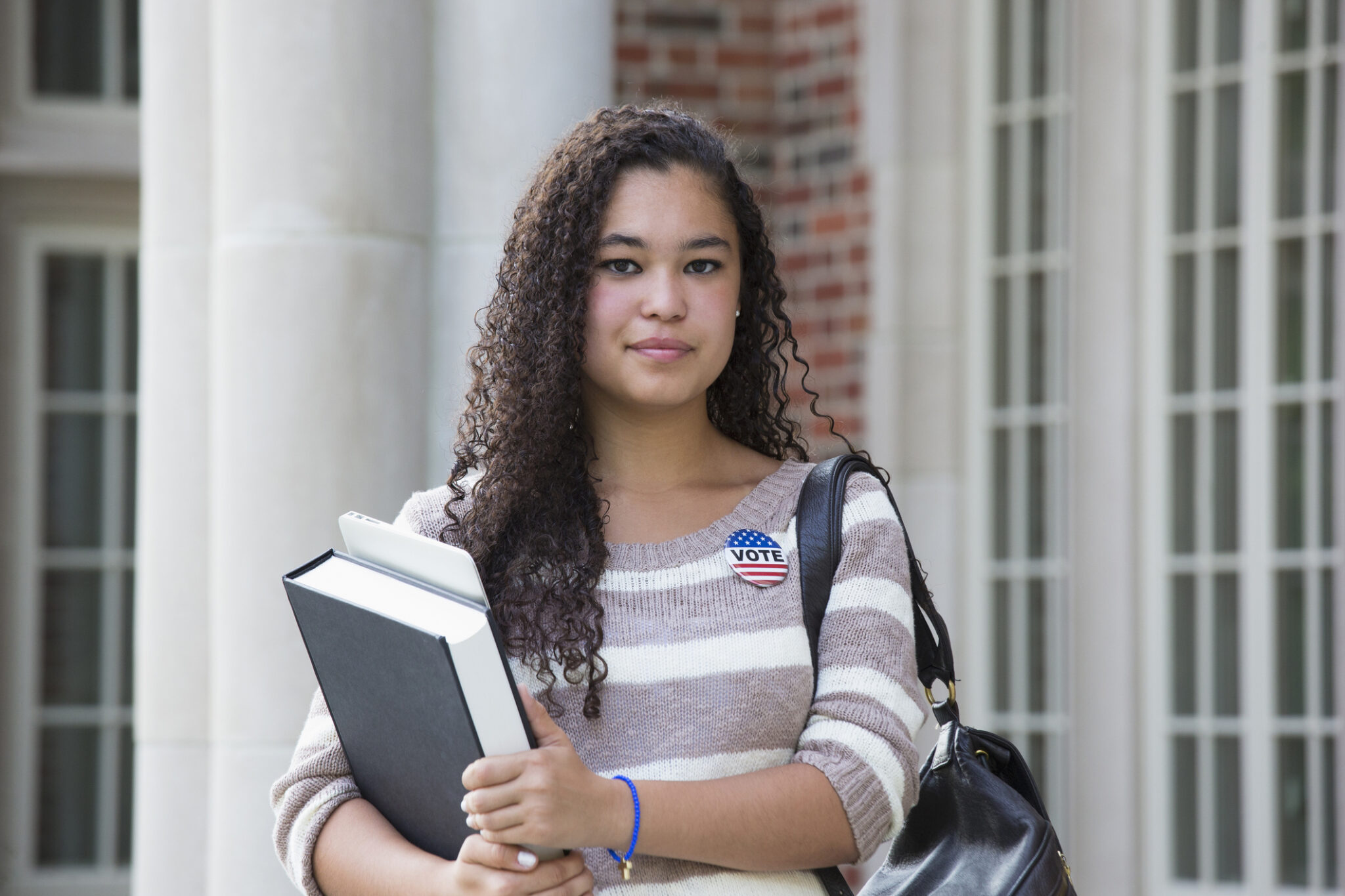
    A college student voter. Getty Images.

    COMMENTARY

    Gen Z and millennial voters could play an important role in deciding fate of reproductive rights amendment and marijuana law

    by David DeWitt

    For Gen Z and millennial Ohio voters, Issue 1 and Issue 2 are critically important. Whether we vote and how we vote will shape what kind of rights and freedoms we have for ourselves and our loved ones well into the future.

    Issue 1 would establish a state constitutional right to “make and carry out one’s own reproductive decisions,” including decisions about abortion, contraception, fertility treatment, miscarriage care, and continuing pregnancy.

    Issue 2 would create a new state law to legalize and regulate recreational marijuana for adults aged 21 and above, including cultivation, processing, sale, purchase, possession, and home growth.

    Tussling over legal access to abortion care and the criminalization of marijuana has shaped American politics for decades, and they stand as two issues where the consequences of law and policy fall heaviest on younger people.

    In an average of births in Ohio between 2019 and 2021, 4.9% were to women under the age of 20, and 2.5% were to women ages 40 and older, while 92.6% were to women ages 20 to 39, according to the March of Dimes.

    Using Ohio Department of Health statistics for 2022, patients 17 and under received 2.5% of abortions performed, and patients over age 40 received 3% of abortions performed, while patients between the ages of 18 and 40 received 94.5% of abortions performed.

    According to the FBI Crime Data Explorer — which does not sort by type of drug involved in state-by-state data — 60% of drug violations in Ohio in 2022 were charged against people between the ages of 20 and 39, a far higher percentage than any other age group. Nationwide, it wasn’t until 2020 that other drugs took over marijuana possession as the No. 1 reason for a drug-related arrest. Nevertheless, more than 315,000 people across America were arrested for marijuana possession in 2020, accounting for 27.5% of drug-related arrests. Also in 2020, Black Americans accounted for about 38.8% of marijuana possession arrests despite representing just 13.6% of the population.

    Younger voters are notoriously unreliable at showing up to vote during non-presidential elections, much less odd-number year elections. Even during presidential elections they show up to the polls at lower rates than other age groups.

    The 2020 presidential election, for instance, had the highest turnout of the 21st century, with 66.8% of citizens 18 years and older voting, but for voters ages 18 to 24, only 51.4% cast ballots, according to U.S. Census Bureau reports. In 2018, Americans ages 18 to 29 made up 11% of voters and 30% of non-voters, according to Pew Research Center. In 2022, they made up 10% of voters and 27% of non-voters.

    This Nov. 7 in Ohio, the stakes are highest for millennial and Gen Z voters. What kind of present and future do we want for ourselves and for Ohio?

    What rights do we want to establish in the constitution, or would we rather leave it up to the politicians to determine our generations’ access to reproductive medical care?

    What kind of freedom do we think adults 21 and over should have from criminal marijuana charges, or should Ohio continue to saddle adults with drug offense records over cannabis possession?

    Voting is our most precious and fundamental right, the spigot from which all of our other rights and freedoms flow. Gen Z and millennial generation voters must participate in these critical decisions, or we are relinquishing significant power over our lives to others who do not bear the same burdens of impact.

    As the writer David Foster Wallace observed, “In reality, there is no such thing as not voting: you either vote by voting, or you vote by staying home and tacitly doubling the value of some Diehard’s vote.”

    Early voting in Ohio has begun. Here is everything voters need to know:

    When do I vote?

    For early, in-person voting, vote at your local county board of elections on these days:

    • Oct. 26-27: 8:00 a.m. – 5:00 p.m.
    • Oct. 30: 7:30 a.m. – 7:30 p.m.
    • Oct. 31: 7:30 a.m. – 8:30 p.m.
    • Nov. 1-3: 7:30 a.m. – 7:30 p.m.
    • Nov. 4: 8:00 a.m. – 4:00 p.m.
    • Nov. 5: 1:00 p.m. – 5:00 p.m.

    Citizens can no longer vote on Nov. 6, the Monday before the election.

    Mailed absentee ballots must be postmarked by Nov. 6.

    On Election Day Nov. 7, vote at your polling location. Find your polling place by clicking or tapping here.

    Polls are open from 6:30 a.m. to 7:30 p.m. on Election Day. If you are in line at the time polls close, stay in line, because you can still cast your ballot.

    If absentee ballots are not returned by mail, they must be received by your board of elections by 7:30 p.m. on Election Day.

    What do I need to vote?

    In order to cast a ballot, voters must have an unexpired Photo ID such as a passport or driver’s license. Previously, voters were able to use non-photo documentation such as bank statements, government checks or utility bills to vote. That is no longer the case under a new law passed in Ohio last year. Student IDs are not considered valid under that law.

    CLICK HERE for more information on ID requirements.

    Here is the list of acceptable types of valid photo ID:

    • Ohio driver’s license
    • State of Ohio ID card
    • Interim ID form issued by the Ohio BMV
    • A US passport
    • A US passport card
    • US military ID card
    • Ohio National Guard ID card
    • US Department of Veterans Affairs ID card

    More information for voters

    To check your voter registration status, find your polling place, view your sample ballot and more, head to the Ohio Secretary of State’s VoteOhio.gov website.


    David DeWitt
    DAVID DEWITT

    OCJ Editor-in-Chief and Columnist David DeWitt has been covering government, politics, and policy in Ohio since 2007, including education, health care, crime and courts, poverty, state and local government, business, labor, energy, environment, and social issues. He has worked for the National Journal, The New York Observer, The Athens NEWS, and Plunderbund.com. He holds a bachelor’s degree from Ohio University’s E.W. Scripps School of Journalism and is a board member of the E.W. Scripps Society of Alumni and Friends. He can be found on Twitter @DC_DeWitt

    MORE FROM AUTHOR

  • For some religious Ohioans, Issue 1 about autonomy more than beliefs

    For some religious Ohioans, Issue 1 about autonomy more than beliefs

    Members of the Jewish community have spoken out against abortion bans in Ohio, saying it infringes on their religious freedom. Photo by Morgan Trau, WEWS.

    BY:  AND Ohio Capital Journal

    Religious variations abound in the state of Ohio, and some members of different churches are taking what they’ve learned in their lives and through decades of experience into the ballot box as they vote on Issue 1, the reproductive rights constitutional amendment.

    For Catholics like Alexandra Belcher and Jennifer Perry, Issue 1 is a choice between the opinions of their religious leaders and their experiences with bodily autonomy.

    For Perry, a physician assistant from Tiffin, growing up Catholic meant she believed in pro-life messages up until she voted in her first election.

    “I voted Republican because that’s what the religious leaders said supported pro-life values,” Perry said.

    Now that she works in medicine and has gone through multiple complicated pregnancies, Perry developed a perspective built on her experiences and not the values of far-away leaders.

    “My view of what defines pro-life and what defines pro-choice has become just so much broader, and it’s not a black and white issue at all,” Perry told the OCJ.

    With the “narrow” view that life begins at conception, Perry said she felt her belief system did “a disservice” to her in preparing for the future.

    “We weren’t given both sides of the coin,” she said. “We weren’t given both perspectives.”

    Struggling with infertility, and losing a “desperately wanted” child in a second-trimester miscarriage brought her new light on the struggles even individuals who want to become parents must go through.

    “I desperately wanted that child, my husband desperately wanted that child, and I had to go through labor and delivery knowing that child wasn’t going to be ours,” Perry said. “To think that a mother … would have to go through that out-of-state, not with her family and friends or her chosen doctor, that’s just excruciating to me.”

    Perry is still a practicing Catholic, and feels strongly that she and those like her should stay in the church and help bring those perspectives to fellow parishioners, in hopes of bringing change to the opinions of the religion.

    The Catholic Conference of Ohio, which calls itself “the official voice of the Catholic Church in Ohio on matters of public policy,” has taken a strong opposing stance on Issue 1. The conference produced a letter signed by nine leaders in Ohio dioceses including Cincinnati, Cleveland, Toledo, Steubenville, Columbus, Youngstown, Canton and Parma.

    “The Church must not be silent and cannot remain on the sidelines when confronted with such a clear threat to human life,” the letter from Feb. 28 stated.

     COLUMBUS, OH — MAY 14, 2022: Hundreds gather at a rally to support abortion rights less than two weeks after a leaked Supreme Court draft opinion showed a likely reversal of Roe v. Wade, May 14, 2022, at the Ohio Statehouse, Columbus, Ohio. (Photo by Graham Stokes for the Ohio Capital Journal. Republish photo only with original article.) 

    For Cleveland-area pharmacist Alexandra Belcher, she has no problem ignoring the opinions the church has on abortion, but remains open to talking with her friends and fellow parishioners about the nuances of reproductive health.

    “The more I grew up, the more I realized this can not be up to somebody else,” Belcher told the OCJ.

    Belcher went to Catholic school for 12 years, and is still a practicing Catholic, but nothing could have prepared her for her ectopic pregnancy, an unviable pregnancy that can be life-threatening for the pregnant person.

    “In my medical chart, the resolution is coded as an abortion,” she said.

    But that resolution involved medication that was administered in a hospital, so Belcher could be monitored by a doctor.

    “The awful thing about those drugs is that they take you into labor and delivery,” she said. “So all you can hear is crying babies, the song they play (when a baby is born), and I sat there for hours while they made sure everything was going well with my medication.”

    Even after leaving the hospital, Belcher suffered “excruciating” pain, so much so that when she went into labor in her next pregnancy, she was surprised to find how much less severe the pain of childbirth was for her.

    “Nobody is going into a decision to have an abortion joyfully, whatever has happened to get them to the point of an abortion,” Belcher said. “It’s still not a joyful decision.”

    Members of other religions, including faith leaders, are thinking about Issue 1 with a focus on the freedom to decide rather than the wrath of a higher power.

    Rev. Timothy Ahrens showed his support for Issue 1 in an ad by Ohioans United For Reproductive Rights.

    “As a pastor I’ve counseled families on the most important personal decisions, even abortion,” he said in the 30-second ad. “Abortion is a private family decision. Government needs to stay out of family decision making.”

    Ahrens is the senior minister of the First Congregational Church of the United Church of Christ in downtown Columbus, a role he has served in since 2000. He has been a pastor for nearly 40 years.

    The United Church of Christ supports reproductive issues and a woman’s right to have an abortion, according to the denomination’s general synod and statements regarding freedom of choice.

    “The laws of Ohio right now hurt my mother, my sister, my sister-in-law, my wife, my daughters, my daughter-in-laws and my granddaughters,” Ahrens said. “I feel very strongly that the government needs to get out of trying to manage people’s lives in relation to reproductive freedom.”

    Ahrens acknowledged that other Christians denominations disagree with his stance on abortion.

    “Those who stand against abortion do so based on biblical, foundational thoughts,” Ahrens. “I don’t look at what they’re saying as groundless.”

    He mentioned Psalm 139 as a passage that mentions God “knit me together in my mother’s womb.”

    “It never says I knew you at the moment of conception,” Ahrens said. “This has a range of perspectives, if we really sat down and boiled it down to the moment of conception.”

    While it’s clear what most religious denominations think abortion, it’s ultimately up to the individual members of a congregation to cast their ballot on Issue 1.

    “It comes down to how closely people who are part of religious congregations are listening to the cues that they are being given,” said Kim Conger, University of Cincinnati’s director of the masters of public administration, who studies how religious advocacy groups impact politics.

    “There seems to be more variation across different parishes about how strongly a priest is pushing on the idea of not just that abortion is a sin, but voting for issue 1 would be a sin,” Conger said.

    The idea of one religion stepping up to tell individuals what they should believe about reproductive health doesn’t sit well with Belcher or Perry, and as medical professionals, they don’t agree with the state getting involved either.

    “The reasoning is not because it’s in the best interest, or because there is evidence-based medicine, the reasoning is this magical belief that this group of cells is a person who has rights,” Belcher said.

    For Perry, the reproductive debate comes down to American roots in religious freedom and the necessity for separation of church and state.

    “Because we allow for so many different expressions of religion, or at least we’re supposed to, if that starts to crumble, I feel like the fabric or the foundation of what America was build on starts to crumble,” Perry said.

    Watching battles with insurance companies and socio-economic issues for patients having necessary medical treatment, Perry also sees much bigger issues the state could be addressing instead.

    “It’s very hard to be in health care right now, and this is another huge burden you’re placing on these providers,” she said.

    Having faced these moral and professional questions, Perry and Belcher both hope for a future for their children where medical decisions are made between a patient and a medical provider, without the intervention of either the government or their chosen religion.

    “I think that when it comes down to it, if I’m ever faced with the pearly gates, the God that I believe in will understand,” Belcher said.


    Megan Henry
    MEGAN HENRY

    Megan Henry is a reporter for the Ohio Capital Journal and has spent the past five years reporting in Ohio on various topics including education, healthcare, business and crime. She previously worked at The Columbus Dispatch, part of the USA Today Network.

    MORE FROM AUTHOR

    Susan Tebben
    SUSAN TEBBEN

    Susan Tebben is an award-winning journalist with a decade of experience covering Ohio news, including courts and crime, Appalachian social issues, government, education, diversity and culture. She has worked for The Newark Advocate, The Glasgow (KY) Daily Times, The Athens Messenger, and WOUB Public Media. She has also had work featured on National Public Radio.

    MORE FROM AUTHOR

  • Judge rules overhaul of Ohio K-12 education can begin

    Judge rules overhaul of Ohio K-12 education can begin

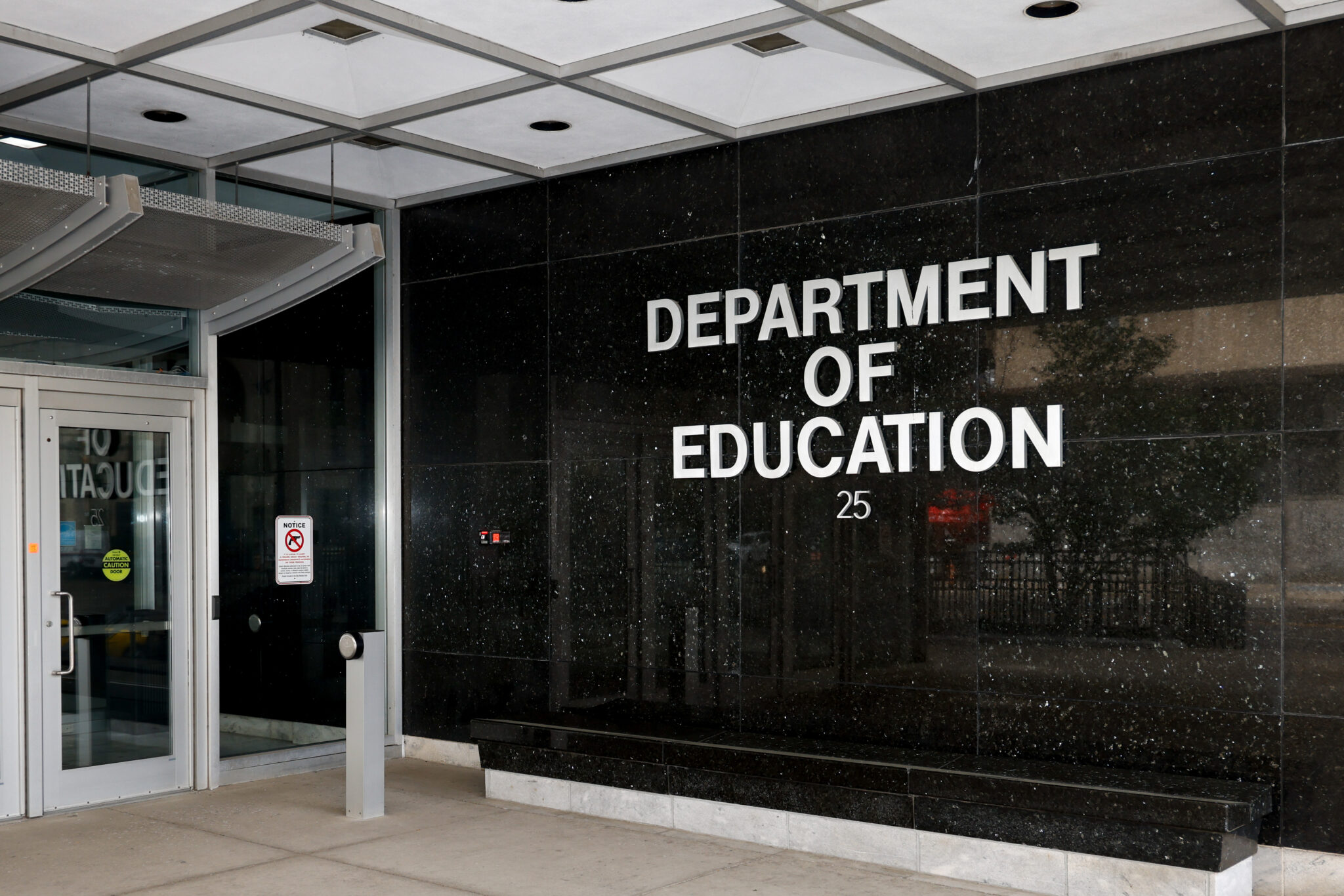
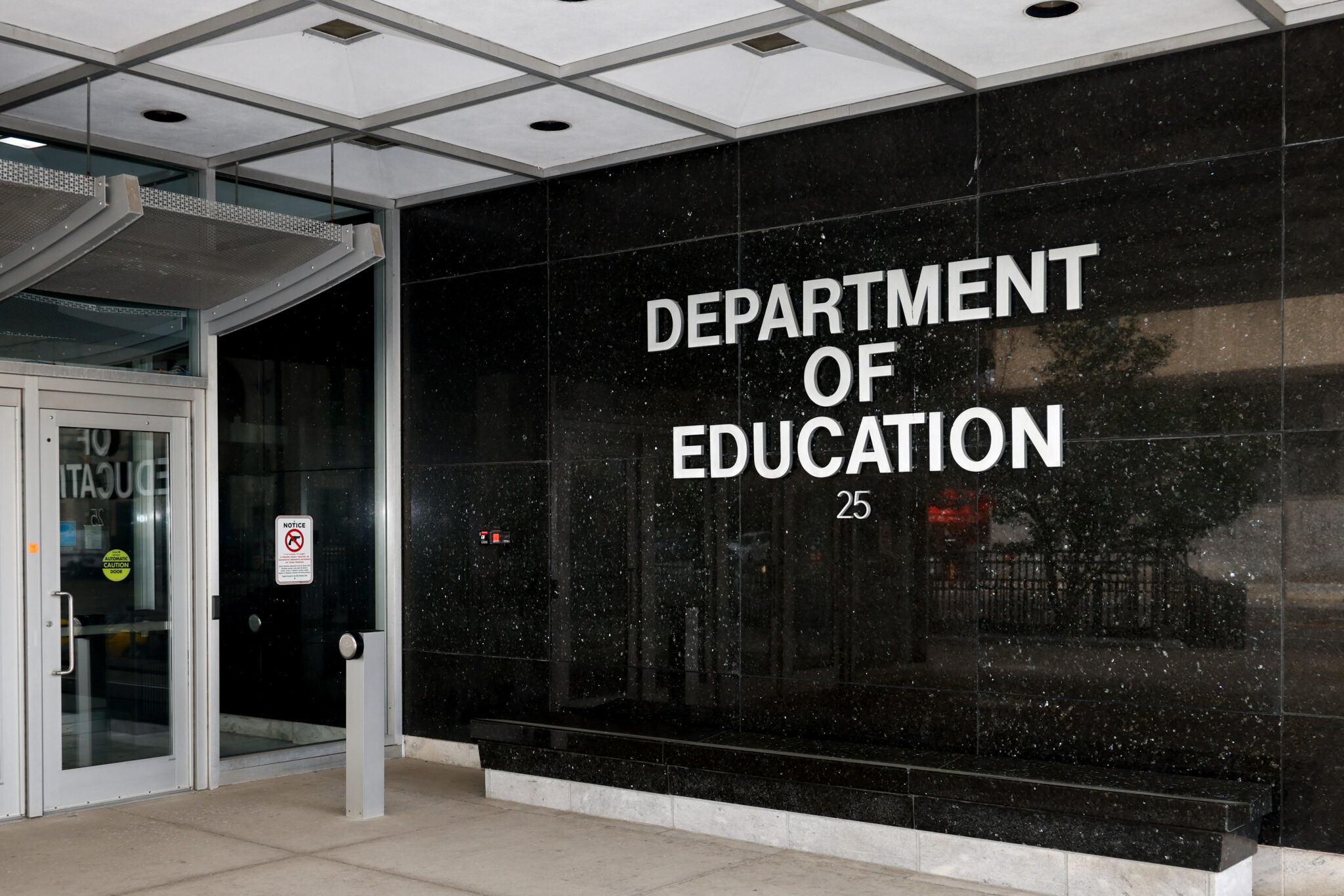
    The Ohio Department of Education becomes the Ohio Department of Education and Workforce, which creates a cabinet-level director position and puts the department under the governor’s office.

    BY:  Ohio Capital Journal

    Control over Ohio K-12 education can officially start to transfer to Gov. Mike DeWine’s administration after a month-long battle in court.

    Retired Franklin County Common Pleas Court Judge Richard Frye denied a preliminary injunction request to stop the transfer of power of K-12 education from the state school board to the governor’s office on Friday, the last day the temporary restraining order was in effect.

    “I am thrilled that the restraining order has been dissolved and we can focus on the important work of moving forward to help our kids be better prepared for life after high school, whether choosing additional training, beginning a career, or heading to college,” DeWine said in a statement Friday.

    Under the state’s two-year budget, the Ohio Department of Education becomes the Ohio Department of Education and Workforce, which creates a cabinet-level director position and puts the department under the governor’s office.

    Jessica Voltolini will be the interim director of the Department of Education and Workforce starting Monday, DeWine said.

    “She will lead the department as we resume our search for the director and deputy director positions,” he said.

    Voltolini most recently served as the Ohio Department of Education’s chief of staff and she was one of two candidates former interim superintendent of public instruction Dr. Stephanie Siddens recommended to fill her role when she left the department earlier this year. The state board of education picked Chris Woolard as the interim state superintendent.

    The new law also reduces the State Board of Education’s power to teacher disciplinary and licensure cases and territory disputes. The state board of education no longer has various administrative powers or control over curriculum standards.

    Seven members of the Ohio State Board of Education originally filed a lawsuit against Ohio Gov. Mike DeWine on Sept. 19 in an attempt to block these changes from taking place. Judge Karen Held Phipps issued the temporary restraining order Sept. 21, which was eventually extended until Oct. 20.

    “The temporary order we won to stop Gov. DeWine’s education takeover from going into effect was dissolved and an interim order was issued,” Democracy Forward, the plaintiff’s legal counsel, said Friday afternoon in a statement. “We await a final decision on our request to block the law while the case proceeds, and we are confident that democracy and the Ohio Constitution will ultimately prevail.”

    Lawsuit

    On Oct. 1, the lawsuit was amended and State Board of Education members Christina Collins and Michelle Newman, former Toledo Public School Board President Stephanie Eichenberg and the Toledo Public School Board were named the plaintiffs in the case.

    Collins, Newman and Eichenberg all have children attending Ohio public schools. The plaintiffs were represented by Democracy Forward and Ulmer & Berne LLP.

    Franklin County Magistrate Jennifer Hunt held an all-day preliminary injunction hearing on Oct. 2 and the judge’s temporary restraining order continued, but DeWine held a press conference later that day saying he was going to continue with the changes anyway.

    The plaintiffs asked the judge for clarification of the restraining order and the temporary restraining order was extended until Oct. 20.

    Chief Counsel and Ethics Officer for the Ohio Attorney General Bridget Coontz, who was representing the original state school board members, was disqualified from being involved in the lawsuit after she sent an Oct. 3 email with legal advice to the counsel for defendants, Julie Pfeiffer, the section chief at the Ohio Attorney General’s Office.

    Ohio State Board of Education

    Since Ohio voters passed a constitutional amendment in 1953 to create the State Board of Education, the plaintiffs argued these changes in the state budget were unconstitutional.

    Hunt, however, disagreed.

    “The Legislature has complete authority to grant, or remove, the respective powers and duties of the State Board and the Superintendent, and the State Board has no constitutional right to retain all the powers transferred under the Challenged Provisions,” she wrote in her decision.

    The Ohio State Board of Education is currently made up of 19 members — 11 elected and eight appointed by DeWine.

    State Superintendent Search

    The search firm tasked with identifying superintendent candidates paused their search because of “the recent lawsuit and other events that surround the Board’s current situation,” President of Ray & Associates Michael Collins wrote in an Oct. 9 letter obtained by the Ohio Capital Journal.

    “Plaintiffs failed to prove by clear and convincing evidence that they will suffer any of their claimed injuries if injunctive relief is denied,” Hunt wrote in her decision. “Defendants argue that an injunction will cause confusion, unrest and chaos for Ohio’s educational system.”

    Follow OCJ Reporter Megan Henry on Twitter.


    Megan Henry
    MEGAN HENRY

    Megan Henry is a reporter for the Ohio Capital Journal and has spent the past five years reporting in Ohio on various topics including education, healthcare, business and crime. She previously worked at The Columbus Dispatch, part of the USA Today Network.

    MORE FROM AUTHOR

  • Innovation Ohio report shines light on Ohio’s ‘missing voters’

    Innovation Ohio report shines light on Ohio’s ‘missing voters’

     (Photo by Stephen Maturen/Getty Images)

    BY:  Ohio Capital Journal

    “It all comes down to turnout.”

    The enduring mantra of candidates and campaigners is self-evident to the point of banality. But buried in that simple formula are questions about how exactly to drive engagement and who specifically needs additional encouragement.

    On the eve of an election with two hot button statewide issues topping the ballot, Innovation Ohio Education Fund has released a report digging into the 2.7 million voters sitting out of Ohio’s elections. The report details demographics for voters who are eligible but not registered as well as those who are registered but inactive.

    Report data

    Innovation Ohio’s study relies on data from the U.S. Census, the Ohio Secretary of State and the commercial voter database Catalist. Researchers started with Ohio’s universe of potential voters — the citizen voting age population, or CVAP — and compared it those who actually showed up between 2018 and 2022. Then they split those who didn’t cast ballots into two camps: unregistered and inactive.

    In all, 2 million eligible Ohioans remain unregistered. Another 700,000 are on the rolls but have missed the past three federal elections.

    “They’re in danger of being purged, right?” Innovation Ohio President and CEO Desiree Tims explained.

    As part of its annual voter list maintenance procedures, Ohio’s secretary of state identifies any voters who have not participated in the past four years. County boards first send a postcard warning voters about the impending cancellation. If the voter doesn’t respond, or take a handful of other actions, election officials remove their name from the rolls.

    “So, we know that if we don’t remind people there’s an election, you have to vote, you have to participate, then they will be purged,” Tims described. “And then when they want to vote, they’ll show up at the polls, and then they won’t have an opportunity to participate and let their voice be heard.”

    There are notable similarities among the unregistered and inactive voters — unsurprisingly the biggest share of both show up in and around urban centers. But there are also notable demographic differences. Compared to the CVAP, unregistered voters tend to be older; inactive voters tend to be younger with a greater share of Black voters.

    Who are the inactives?

    About 86% of Ohio’s registered voters are white, with Black and Latino voters accounting for 11% and 2% respectively. But among the inactives, Black voters account for nearly twice that many. Tims explained roughly 1 in 5 inactive voters are Black.

    When it comes to age, Ohio’s CVAP splits cleanly right around age 50, with half of voters falling below and half above. But at 64% of the total, younger Ohioans represent a bigger share of inactive voters. A slight majority of the subset are female, and in terms of geographic distribution, they tend to cluster around college campuses.

    Who are the unregistered voters?

    The voters who are eligible but unregistered reflects the Ohio’s CVAP closely when it comes to race and geography. Similar to the overall voting population, 82% of unregistered voters are white and 11% are Black. Their geographic distribution follows the statewide pattern as well, with large shares near the three Cs and nearby suburban counties.

    Men are over-represented in the unregistered population. Among registered voters, men account for 47% of the total; among unregistered voters they represent 57% of the population.

    Where the unregistered population stands out, however, is age. While a large majority of inactive voters are younger than 50, 70% of the unregistered population are older.

    Takeaways

    Tims argued the report demonstrates organizers need more than one approach when it comes to voter outreach. She contends the challenge isn’t crafting different messages, it’s figuring out ways to get them across.

    “I think the biggest opportunity is that we have to meet people where they are, they aren’t going to come to us,” she said.

    “Policy wonks and experts and politicians, the people who are engaged, tend to watch the news, they read newspapers, they are online,” she added. “But a lot of the people that we miss are in different spaces. And so what we have to do is reach out to them to meet them where they are in order to engage them in the process.”

    The electoral opportunities could be significant. About a quarter million votes separated the top two candidates in last year’s U.S. Senate race. The report demonstrates there are more than ten times that many potential voters sitting on the sidelines. The authors note Black unregistered and inactive voters alone easily exceed that margin of victory.

    Answering why voters aren’t engaging in the process falls outside the bounds of the report, but Tims offered a few possibilities. She noted the COVID-19 pandemic happened right in the middle of their dataset. Ditto a contentious redistricting process. Meanwhile, especially at a national level, some politicians are trying to drag their parties to greater extremes.

    “I’m sure that has also served a role in turning off people who said ‘I don’t want to get involved in the disputes,’” Tims said.

    She argued all of those political currents make participation more stressful, and Ohio’s lawmakers have only added to the burden by imposing strict new photo ID requirements and cutting back early and absentee voting options.

    “I think all of that probably culminates to stress,” she said. “And when people are thinking about feeding their families and making their bills, I think this extra layer of stress probably deters them away from participating.”

    At the same time, Ohio has pulled out of ERIC, the multi-state compact that shares voter information to maintain accurate rolls. One of the requirements of ERIC membership is for state elections officials to actively encourage unregistered voters to participate. Tims said dropping those efforts aren’t going to increase engagement.

    State lawmakers are also considering proposals that would close Ohio’s primary elections by requiring voters to affirmatively choose a party. Tims wouldn’t commit Innovation Ohio to a formal position on the idea. She expressed doubts, though, that it would lead to more participation.


    Follow OCJ Reporter Nick Evans on Twitter.

    Nick Evans
    NICK EVANS

    Nick Evans has spent the past seven years reporting for NPR member stations in Florida and Ohio. He got his start in Tallahassee, covering issues like redistricting, same sex marriage and medical marijuana. Since arriving in Columbus in 2018, he has covered everything from city council to football. His work on Ohio politics and local policing have been featured numerous times on NPR.

    MORE FROM AUTHOR

  • Ohio Issue 1: Attacks on parental rights do not appear in amendment

    Ohio Issue 1: Attacks on parental rights do not appear in amendment

    BY:  Ohio Capital Journal

    Editor’s Note: This article is part of a series looking at the language of Ohio Issue 1 and the reproductive rights it would impact. The full language of the amendment can be found here.

    __________

    The topic of parental rights does not appear in Ohio Issue 1 on the ballot Nov. 7.

    There is no mention of denying any rights to parents in the process of enshrining reproductive rights like abortion, contraception, miscarriage care and infertility treatment into the Ohio Constitution.

    “I don’t think Issue 1 would affect parent’s rights at all,” said Tracy Thomas, the Seiberling Chair for Constitutional Law and director of the University of Akron’s Center for Constitutional Law.

    Having studied reproductive rights cases in Ohio and nationwide, including the Dobbs case that overturned Roe v. Wade, Thomas said historically, “parental rights have consistently been retained.”

    “I would expect that those (rights) can all stay consistent,” Thomas told the Capital Journal.

    Ohio Attorney General Dave Yost also acknowledged that previous abortion rights court cases have upheld parental consent in a legal analysis of Issue 1 he released in early October.

    Yost went on to say “the amendment does not specifically address parental consent.”

    But, Yost argued, that consent “would certainly be challenged on the basis that Issue 1 gives abortion rights to any pregnant ‘individual,’ not just to a ‘woman.’”

    The term “individual” is currently used 36 times in the Ohio Constitution, including in the definition of “health care system,” the eligibility of officeholders, and clauses on temporary housing and corporate property.

    Only one use of the word “individual” is connected to a gender specifier: the constitutional language on marriage status “only one man and one woman” can be in a marriage “valid or recognized by this state,” and “relationships of unmarried individuals” can not hold the same legal status.

     COLUMBUS, Ohio — OCTOBER 06: Sister Amor of the Bridgettine Sisters of Columbus holds a sign on High Street during the Ohio March for Life against November’s Issue 1 reproductive rights amendment, October 6, 2023, outside the Statehouse in Columbus, Ohio. (Photo by Graham Stokes for Ohio Capital Journal. Republish photo only with original article.) 

    Still, Religious lobbies and anti-abortion rights groups that oppose the amendment have used that message as one of their primary arguments against the measure since the effort to get it on the ballot began.

    In a new ad for the Issue 1 opposition group Protect Women Ohio, a coalition including Ohio Right to Life and other anti-abortion rights groups, Gov. Mike DeWine and First Lady Fran DeWine feature as leaders against the measure.

    Fran DeWine is shown in the ad saying Issue 1 “would deny parents the right to be involved when their daughter is making the most important decision of her life.”

    Gov. DeWine admits in the ad that Ohioans “are divided on the issue of abortion,” but calls Issue 1 “not right for Ohio.”

    The Catholic Conference of Ohio pointed to the first line of the proposed amendment and the word “individual,” saying the use of the word would allow anyone under age 18 to “have an abortion, or make any reproductive decision without their parents’ consent or notification.”

    State Sen. Kristina Roegner, R-Hudson, the sponsor of the six-week abortion ban law that is currently on hold as court cases determine its fate, co-sponsored a resolution in the Ohio Senate on Oct. 11 officially standing against Issue 1.

    In opposing Issue 1, she said the measure was “extreme, nefarious” and would “harm women and take away parental rights.”

    The resolution passed with the GOP majority unanimously approving it. The seven Democratic senators all voted against the measure.

    The resolution itself proclaims “parents are the ultimate arbiter of what is best for their children.”

    In one paragraph of the resolution, sponsors Roegner and state Sen. Michele Reynolds, R-Canal Winchester, write that Issue 1 “will eliminate many, if not all, state laws regarding abortion,” including “parental notification requirements.”

    In the next paragraph, the resolution states Issue 1 “may” eliminate parental rights.

    Senate Minority Leader Nickie Antonio, D-Lakewood, pushed back against the resolution by bringing up a decade-old legal process present in Ohio called “judicial bypass.”

    Judicial bypass, as it stands now, has been around since 2012 in the state, after then-Gov. John Kasich signed a law that prohibits forcing a minor to have an abortion, but leaves in place a legal way for minors to petition juvenile court to bypass parental consent.

    The Ohio Supreme Court explained the process in Rule 23 of a 2015 amendment to its “rules of superintendence,” an internal operations document for all Ohio courts.

    The legal method uses the court system to allow underage individuals to make decisions for themselves where parental consent would typically be necessary, such as in cases of abuse.

    “If the court finds by clear and convincing evidence that the minor is sufficiently mature and well enough informed to decide intelligently whether to have an abortion, the court shall grant the petition and permit the minor to consent to the abortion,” the law states.


    Read Part 1 and 2…


    Susan Tebben
    SUSAN TEBBEN

    Susan Tebben is an award-winning journalist with a decade of experience covering Ohio news, including courts and crime, Appalachian social issues, government, education, diversity and culture. She has worked for The Newark Advocate, The Glasgow (KY) Daily Times, The Athens Messenger, and WOUB Public Media. She has also had work featured on National Public Radio.

    MORE FROM AUTHOR

  • Ohio Ballot Board approves anti-gerrymandering amendment. Proposal to go forward

    Ohio Ballot Board approves anti-gerrymandering amendment. Proposal to go forward

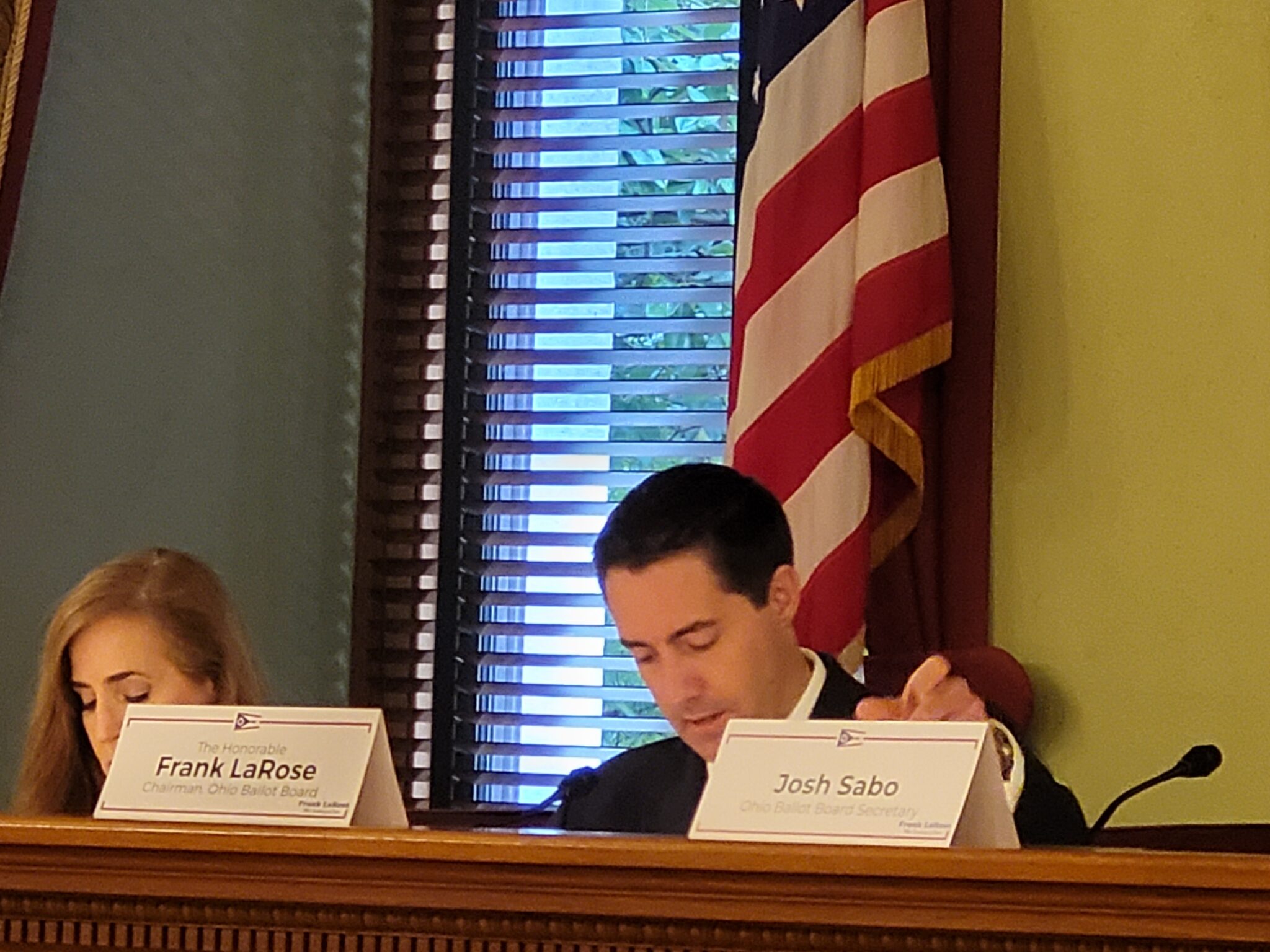
    Ohio Secretary of State Frank LaRose and the rest of the Ohio Ballot Board approve the language of a proposed anti-gerrymandering amendment that is likely to appear on the ballot next year. (Photo by Marty Schladen, Ohio Capital Journal.)

    Signature gathering can proceed

    BY:  Ohio Capital Journal

    Activists who hope to pass an anti-gerrymandering amendment to the Ohio Constitution can now begin gathering the nearly half-million signatures on the need to get the measure on the November 2024 ballot after the amendment was approved as a single issue by the Ohio Ballot Board Thursday.

    Without much ceremony, the board unanimously agreed that the proposed amendment pertains to a single subject, which is required under Ohio law.

    The timing of the approval is significant because early voting on two other measures that are on this year’s ballot started yesterday (Thursday.) Voting has begun on Issue 1, a constitutional amendment protecting abortion rights, and Issue 2, a voter-initiated statute legalizing recreational marijuana. The general election for those measures is Nov. 7.

    Activists trying to get the anti-gerrymandering amendment on next year’s ballot have to gather about 415,000 verified signatures of registered voters. And because of a relatively high rate of rejections in previous efforts, they want to gather hundreds of thousands more than that.

    They say that having the summary language approved now enables them to do their work at county boards of election, where registered voters are gathering to cast ballots on this year’s abortion and marijuana measures. Petition circulators will also be able to work voter-rich environments near polling places on Election Day.

    The approval comes in the nick of time for the activists. Attorney General Dave Yost twice rejected the summary language for the petitions as not adequately reflecting the proposed amendment itself before approving it on its third attempt.

    Ohio is regarded as one of the most extremely gerrymandered states in the country. While Donald Trump carried the state with less than 54% of the vote in 2020, Republicans control 68% of seats in the state House, 78% in the state Senate and 66% of the state’s seats in the U.S. House of Representatives.

    That’s despite the fact that in 2015 and 2018, amendments to curb extreme partisan gerrymandering in the legislature and Congress both passed with more than 70% of the vote.

    After the 2020 Census, the Republican-dominated Redistricting Commission created by those amendments seven times ignored rulings by a bipartisan majority of the Ohio Supreme Court. The rulings said the districts the commission had drawn violated the anti-gerrymandering provisions of those same amendments.

    So now Ohio’s lawmakers are representing districts that the state’s highest court has ruled unconstitutional.

    Former Chief Justice Maureen O’Connor, a Republican, voted with the court’s three Democrats in ruling that the districts were unconstitutional, but she was forced to retire last year because of her age.

    Now she’s working with anti-gerrymandering activists to try to get the latest proposed amendment on next year’s ballot. It attempts to eliminate power grabs when district lines are drawn by creating an independent commission to draw them. That’s in contrast to the current one, which is composed entirely of elected officials.

    Ohio Secretary of State Frank LaRose voted with the other Republicans on the Redistricting Commission in support of the current, unconstitutional maps. In his role as head of the Ballot Board, on Thursday he voted to approve the latest proposed anti-gerrymandering amendment. But he emphasized that it was only a vote on whether its language regarded a single subject.

    “I will remind you again that we are not here today to debate the merits of the proposal, but only whether it constitutes a single proposed amendment to the Ohio Constitution,” he said.

    But Sen. Paula Hicks-Hudson, D-Toledo, commented on the merits, anyway.

    “I’d like to recognize and support the citizens of Ohio who have moved to create a fair opportunity… for their districts to be drawn to reflect all the things Ohioans believe are important and to have a government that is responsive to the citizens of the state of Ohio,” she said.

    After that, LaRose again emphasized that the vote wasn’t on the merits of the proposed anti-gerrymandering amendment.


    Marty Schladen
    MARTY SCHLADEN

    Marty Schladen has been a reporter for decades, working in Indiana, Texas and other places before returning to his native Ohio to work at The Columbus Dispatch in 2017. He’s won state and national journalism awards for investigations into utility regulation, public corruption, the environment, prescription drug spending and other matters.

    MORE FROM AUTHOR

  • Access to expensive fertility treatment in Ohio varies but the Issue 1 amendment seeks to protect it

    Access to expensive fertility treatment in Ohio varies but the Issue 1 amendment seeks to protect it

    BY:  Ohio Capital Journal

    Editor’s Note: This article is part of a series looking at the language of Ohio Issue 1 and the reproductive rights it would impact. The full language of the amendment can be found here.

    When Roe v. Wade was overturned in June 2022, the physicians at Ohio Reproductive Medicine took to their website, hoping to reassure patients that their care would still be available.

    “It is truly hard to fathom that in 2022, our reproductive freedom, a fundamental human right, is now at risk,” the statement on the website read.

    Though the Columbus business said it strongly opposed the overturning of Roe as a whole, the focus of their statement was on those undergoing or considering fertility treatments.

    “We ardently stand alongside our current and past patients — as well as anyone who wishes to build a family in the future with the help of fertility treatments,” according to the statement.

    The effects that repealing nationwide abortion access would have on fertility treatments like in-vitro fertilization (IVF) weren’t clearly spelled out by the U.S. Supreme Court in its Dobbs decision, but physicians have worried about what various bans mean when it comes to fertilized embryos and the definition of the start of life.

    A hard-fought battle

    Infertility can happen for 10% to 15% of couples, according to the American Society for Reproductive Medicine, and CDC data found 1 in 5 women in the U.S. couldn’t get pregnant after a year of trying.

    For those who have insurance and/or can afford fertility treatments, the process is long, arduous, and often involves disappointment along the way if an implanted embryo fails to turn into a pregnancy, or becomes a medical complication.

    Ohioans have expressed worry that they won’t be able to utilize fertility treatments in the same way if abortion is banned in the state, whether that be at six-weeks under current law (though that law is held up in court and not currently being enforced), or if other regulations fall into place keeping physicians from treating life-threatening ectopic pregnancies or miscarriages, which are considered “spontaneous abortions” by the medical community.

    After the Dobbs v. Jackson Women’s Health Organization ruling from the U.S. Supreme Court overturning nationwide abortion rights, the fears regarding fertility treatments came closer to home, as state Rep. Gary Click, R-Vickery, introduced a bill that would have considered the start of “personhood” to be the moment of conception.

    That, physicians said, could include fertilized embryos sitting in cryogenic chambers at their facilities.

    The “life begins at conception” message has been used by anti-abortion groups nationwide for many years, though the medical community does not universally agree on the beginning of life, or if there’s one certain point when cardiac activity begins in a fetus.

    At a rally one year ago to support anti-abortion causes, state Rep. Jena Powell, R-Arcanum, spoke of ways to “abolish abortion” in the state, making the claim that the “science is crystal clear” that “life begins at conception.”

    Powell urged support for the “personhood” bill.

    “The shackles are no longer holding us back as state legislators, and we can and we must be a voice for the unborn child in Ohio,” Powell said at the time.

    The cost of access

    Fertility treatments and the freezing of embryos has become a common practice, but that doesn’t mean it’s available to everyone, because it’s a costly endeavor with complicated insurance regulations.

    The Center for Reproductive Rights says barriers to access include “limited information, restrictive laws and policies, stigma, high costs and more.”

    “Issues surrounding assisted reproduction implicate core human rights — including the rights to health, sexual and reproductive health, decision making about reproductive life (such as if and when to have children), benefit from scientific progress, equality and non-discrimination and informed consent,” the center said in a statement.

    The center’s research on infertility and IVF access in the United States showed that in 2020, clinical infertility impacted about 12% of women ages 15-44, but only 24% of people in the U.S. seeking care for infertility could access it.

    “The limited number of private insurance markets and public programs covering infertility services, combined with high out-of-pocket expenses, result in significant economic barriers to needed infertility treatment,” the CRR stated in the report.

    Self-pay packages at the University Hospitals Fertility Center in Northeast Ohio, for example, price IVF, including lab work and one embryo transfer at $12,775.

    An egg donor package runs $14,030 for self-pay patients, and a surrogate (also called a “gestational carrier”) is priced at more than $15,000.

    Ohio law mandates that private health insurance cover basic services, including “medically necessary” services that could fall under fertility treatment. The Ohio Revised Code includes “infertility services” under “preventative health care services.”

    Though this could include the diagnosis of infertility and treatment of reproductive system problems, other services involved in the process may not be included.

    “Many procedures fall into a gray zone, including IVF, which leaves much interpretation and denial of claims,” according to Ohio Reproductive Medicine.

    In 2021, Ohio added “reproductive health services” into the Ohio Administrative Code, allowing Medicaid-eligible individuals access to “pregnancy prevention services,” including “contraceptive management,” pregnancy testing and “fertility awareness.”

    What is not covered under Medicaid is infertility treatment, including IVF, “assisted reproductive technologies,” artificial insemination, or surgery to “promote or restore fertility.”

    Ohio is not alone in keeping Medicaid recipients out of the fertility treatment landscape, as very few states nationally extend those services through Medicaid.


    Read Part 1:


    Susan Tebben
    SUSAN TEBBEN

    Susan Tebben is an award-winning journalist with a decade of experience covering Ohio news, including courts and crime, Appalachian social issues, government, education, diversity and culture. She has worked for The Newark Advocate, The Glasgow (KY) Daily Times, The Athens Messenger, and WOUB Public Media. She has also had work featured on National Public Radio.

    MORE FROM AUTHOR

  • ‘Legacy of neglect’ showcased in Ohio schools report

    ‘Legacy of neglect’ showcased in Ohio schools report

    Stock image from Pixabay.

    BY:  – Ohio Capital Journal

    A report from an Ohio think tank examined the new budget changes and private school voucher impacts on public schools over the last year.

    Research from Policy Matters Ohio said divestments from public schools at the state level “hurt public school students everywhere – especially those in rural counties.”

    Furthering study of the impact the COVID-19 pandemic had on education, Policy Matters’ Tanisha Pruitt and Cassie Mohr said those pandemic effects combined with “Ohio’s legacy of inadequate, inequitable funding” have “weakened the role school plays as a foundational public institution.”

    Ohio was ranked 21st in a U.S. News & World Report on K-12 education and 46th in an EdWeek ranking of equitable distribution of education funding, both of which were cited as part of the 2023 report.

    “Ohio’s students deserve a world-class education, including safe and well-resourced schools that are staffed by teachers who are well trained and fairly paid,” Pruitt and Mohr wrote.

    The new report also confirmed what advocates have repeatedly noted over the years that the public school funding model has been debated — that the vast majority of Ohio students are enrolled in public schools.

    Of the nearly 2 million students enrolled in K-12 education in Ohio, 88.6% are in public schools, and 8.8% are in private schools, while 2.7% are home-schooled.

    Private school vouchers saw a significant change in Ohio’s most recent two-year budget this summer, when legislators opened the state-paid subsidies to 450% of the federal poverty level, nearly universal eligibility.

    But also included in the budget was another phase-in of the Fair School Funding Plan, a six-year effort to dive into the real cost of funding public school students, and fund the schools on an individual basis based on their needs.

    “When fully implemented, the six-year FSFP will correct the over-reliance on local property taxes, eliminate funding caps on districts, and base funding on per-pupil cost estimates that more accurately reflect what it takes to educate a diverse student population,” the report stated.

    Policy Matters’ report focused largely on public schools, where they found a student population that is “somewhat more racially diverse than the state overall” with a makeup that is 16.4% Black versus the 13.3% population in the state overall, and serving a large population of more than 800,000 who are considered economically disadvantaged.

    Pruitt and Mohr remained skeptical of the ultimate success of the FSFP, however, as legislators have “only incrementally moved funding through the formula.”

    “If legislators follow through on their promise to fully realize the FSFP by 2026, they will be helping every public school in the state to be equitably funded, and helping ensure that we live in a state where every child has what they need to succeed in school and after graduation,” the report stated.

    Senate President Matt Huffman has commented in the past that he wouldn’t support funding more than two years at a time, to avoid saddling future General Assemblies with budget items with which they may not agree.

    Teachers

     Source: Policy Matters Ohio 

    The constraints of COVID had their effect on teachers as well, but even outside of the pandemic education methods, educators still face pressures, according to the 2023 report.

    “Teachers recently have experienced a rash of targeted political campaigns to stoke division by denying the identities of trans and nonbinary students, as well as censoring what teachers are allowed to teach in the classroom,” Pruitt and Mohr wrote.

    Beyond that, compensation levels have not kept up over the years, with the Ohio Department of Education showing an average annual salary of $69,130 for an Ohio teacher in the 2022-2023 school year. That amounts to a decrease of more than 6% from the 2018-2019 school year, according to the new Policy Matters research.

    “These factors contribute to one of the most significant problems facing Ohio schools today: too many have too few teachers to give our kids the education they deserve,” according to Pruitt and Mohr.

    The state has also seen a dip in newly licensed teachers as well, with more than 9,000 teachers leaving their jobs in 2021, but only 5,388 earning a new license.

    “Recruitment declines can be attributed to low pay, poor working conditions and other economic factors,” researchers found. New teachers are paid less, and face mounting student loans on top of a salary that is often less than fellow graduates in other professions, they said.

    But licensure was addressed in the budget, with a clause allowing substitutes to have one-year temporary substitute teaching license which could increase the number of subs, and some members of the military could obtain a “military educator license.”

    “While these changes have the potential to boost our educators workforce, they weaken teacher training requirements, which could negatively affect the quality of classroom education, especially in high-poverty schools that already grapple with recruiting and retaining highly qualified educators,” Policy Matters researchers argued.

    The state needs to improve the recruitment methods, according to the report. It could use models like the one pursued by Cincinnati Public Schools superintendent Iranetta Wright, who pledged to recruit more teachers who matched the demographics of her school, but also keep teachers from being saddled with debt by increasing funding for grant programs and teacher residency programs.

    State testing

    For the teachers who are in schools, state testing can be a significant part of the school year, and despite their best efforts, inequities can shine through in even the standardized assessments for subjects like math and reading.

    A 2022 National Assessment of Educational Progress showed fourth and eighth graders in the state “were not statistically different from the national average,” according to Pruitt and Mohr, and Ohio was ranked 21st in a U.S. News & World Report ranking on pre-K-12 education.

    “However, these statewide metrics can mask a high degree of variability among districts, schools and student populations, with predictable disparities,” Policy Matters stated in their 2023 report.

    Disparities among English Language Arts and math scores, for example, don’t have a single cause, researchers found, but “inequities in school funding track closely with gaps in academic achievement.”

     Source: Policy Matters Ohio 

    An analysis of test scores and categories from the Ohio Department of Education showed disparities among student races, but also showed a universal trend that economically disadvantaged students “are more likely to live in school districts with concentrations of poverty – including in rural and Appalachian counties – where property-value-based school funding shortchanges them,” the researchers found.

    In terms of kindergarten readiness, COVID had a negative impact, and in the 2022-23 school year, Ohio’s kindergarten-bound students showed the lowest rate of readiness since 2014, when the state began using a Kindergarten Readiness Assessment.

    “A dropoff in kindergarten readiness was likely inevitable after COVID; Ohio needs to make significant investments in early childhood education to begin recovery,” Pruitt and Mohr said in their analysis.

    The researchers criticized legislative priorities like restructuring the Ohio Department of Education, something that is now being fought over in court. But other curricular level efforts, like one to change the social studies lessons in schools and another that would bar teachers from teaching “any oral or written instruction, presentation, image or description of sexual concepts or gender ideology,” don’t fall under improvements, according to Pruitt and Mohr’s analysis.

    The recommendations they do hope will be implemented include the full implementation of the Fair School Funding Plan, elimination of the private school vouchers at universal eligibility levels, better pay for teachers and the creation of a “pathway to becoming an educator” that helps recruit teachers of diverse backgrounds.

    “More funding should be dedicated to attracting new educators, especially from underrepresented populations, while ensuring the teachers coming out of these programs are fully qualified and prepared to give our kids the best education possible,” the researchers concluded.


    Susan Tebben
    SUSAN TEBBEN

    Susan Tebben is an award-winning journalist with a decade of experience covering Ohio news, including courts and crime, Appalachian social issues, government, education, diversity and culture. She has worked for The Newark Advocate, The Glasgow (KY) Daily Times, The Athens Messenger, and WOUB Public Media. She has also had work featured on National Public Radio.

    MORE FROM AUTHOR

  • Pharmacies file antitrust suit against massive drug middleman

    Pharmacies file antitrust suit against massive drug middleman

    A CVS store. Photo by Lynne Terry, Oregon Capital Chronicle, States Newsroom.

    BY:  Ohio Capital Journal

    A class-action suit has been filed in federal court on behalf of community pharmacies claiming that health giant CVS has used its dominance as a drug middleman to force pharmacies to pay large, after-the-fact fees in Medicare transactions.

    The suit was filed last week in Seattle on behalf of Osterhaus Pharmacy, which until last year did business in Maquoketa, a small town in eastern Iowa. The lawyers representing the pharmacy say they also represent other, “similarly situated” pharmacies.

    It’s the latest antitrust action against CVS and two other dominant middlemen — Express Scripts and OptumRx — which are known as pharmacy benefit managers. The Federal Trade Commission last year opened an investigation into all three companies, and Ohio Attorney General Dave Yost in March sued Express Scripts, alleging violations of the state’s antitrust law.

    Pharmacy benefit managers, or PBMs, occupy a pivotal position in the drug-supply chain.

    Each of the big three is part of a corporation that also owns a major health insurer. CVS owns Aetna, UnitedHealth owns OptumRx and Express Scripts and Cigna are part of the same corporation.

    The PBMs represent those and other insurers when it comes to filling prescriptions for people covered by the insurers. Among their functions, they create lists of drugs that are covered by the plans, create networks of pharmacies and they determine how much to reimburse those businesses for the medicines they dispense.

    The suit filed in Seattle argues that under the Medicare Part D program — which covers prescriptions for the elderly — CVS is forcing pharmacies to join its networks and agree to a system of arbitrary clawbacks long after CVS Caremark initially reconciles claims.

    The company is able to do so because it and the other two large PBMs are estimated to control 80% of that marketplace, the suit says. In other words, pharmacies have to sign contracts on CVS’s terms or give up the business of millions of insured patients.

    And in addition to its heft as a PBM, CVS is “vertically integrated.” It owns the largest retail pharmacy chain, a large mail-order pharmacy operation and a top-10 insurer. The lawsuit filed last week said CVS is able to control too many sides of prescription transactions.

    “This vertical consolidation has served CVS Caremark well,” it said. “It now controls not just the pricing of drugs, not just the selection of the drugs covered by Part D Plans, and not just the selection of pharmacies in each Part D network; CVS Caremark also controls access to at least a third of the Medicare beneficiaries enrolled in PBM-affiliated Plans. Pharmacies must accept the increasingly anti-competitive pricing and contract terms set forth by CVS Caremark or face exclusion from its Part D network.”

    For its part, CVS said the claims are false.

    “We believe the allegations are without merit and intend to defend ourselves vigorously,” spokesman Phillip Blando said in an email Monday.

    The suit alleges that some CVS fees in the Medicare Part D program violate the Sherman Antitrust Act of 1890 — which is aimed at keeping companies from using market dominance to suppress competition.

    That body of law has strong ties to Ohio. The Sherman Act was sponsored by an Ohio senator, John Sherman, and signed by an Ohio (and Indiana) president, Benjamin Harrison.

    The Buckeye State also has long had its own antitrust law, which the suit filed in Seattle last week referenced as it quoted from Yost’s suit against Express Scripts.

    “PBMs are modern gangsters… ” the Ohio suit says. “They were designed to protect and negotiate on behalf of employers and consumers after Big Pharma was criticized for overpricing medications, but instead they have absolutely destroyed transparency, scheming in the shadows to control drug prices on all sides of the market.”

    The latest suit specifically targets direct-and-indirect remuneration, or DIR, fees charged by CVS in its Part D program.

    Those are performance-based fees pharmacies have to pay if they want to be in the CVS network. The suit says CVS’s use of them has grown dramatically and increasingly rapidly over the past 13 years.

    “From 2010 to 2020, pharmacy DIR fees increased by more than 100,000%—that is, they grew more than 1,000 times larger,” the suit said. “In 2021, DIR fees increased an additional 33% from 2020 levels to $12.6 billion.”

    The suit says that all network pharmacies must pay minimum DIR fees, but they can be forced to pay much more because of factors pharmacies can’t control.

    “For example, CVS Caremark penalizes an Independent Pharmacy on adherence if a patient discontinues fulfilling her prescriptions at the pharmacy, regardless of circumstances,” the suit says. “The cause may be that the patient spends winters in a different part of the country and fills her prescriptions there, or the patient was told by the physician to discontinue using a drug, or the patient died, or the manufacturer has discontinued manufacturing the drug. CVS Caremark could assess performance so that Independent Pharmacies are not penalized for these events, none of which is within pharmacy control or actually measures pharmacy performance, but it has chosen not to do so.”


    Marty Schladen
    MARTY SCHLADEN

    Marty Schladen has been a reporter for decades, working in Indiana, Texas and other places before returning to his native Ohio to work at The Columbus Dispatch in 2017. He’s won state and national journalism awards for investigations into utility regulation, public corruption, the environment, prescription drug spending and other matters.

    MORE FROM AUTHOR

  • Governor begins Ohio’s K-12 education overhaul despite judge extending temporary restraining order

    Governor begins Ohio’s K-12 education overhaul despite judge extending temporary restraining order

    BY:  Ohio Capital Journal

    Ohio Gov. Mike DeWine is moving forward with an overhaul of Ohio’s education department and state board of education despite a Franklin County judge extending a temporary restraining order to prevent that from happening.

    After an all-day preliminary injunction hearing on Monday, Franklin County Magistrate Jennifer Hunt ruled that the temporary restraining order blocking lawmakers’ attempts to overhaul Ohio’s K-12 education system remains in effect until the court makes a decision on the case, which must happen by Wednesday at noon.

    “There is certainly a potential for chaos,” DeWine said during what he called a “very unusual press conference” Monday night. “Questions such as who will send out the checks that go to our public schools across the state of Ohio, who will make the determination about eligibility for school choice. I can not let this situation fester.”

    Even though the temporary restraining order is still in effect, the education department changes are still going forward because Tuesday marks 90 days since DeWine signed the state’s operating budget into law which included these changes, DeWine said.

    As of Tuesday, he said, the Ohio Department of Education ceases to exist and is now the Ohio Department of Education and Workforce, as set forth in the budget DeWine signed into law in July. Interim Superintendent Chris Woolard is in charge of the department.

    But it’s more than just a name change. This creates a cabinet-level director position, puts the department under the governor’s office, and limits the State Board of Education’s power to teacher disciplinary and licensure cases and territory disputes.

    “We believe, based upon what our lawyers tell us, that the new department can in fact function,” DeWine said.

    He said they will follow the court order and not name the new cabinet-level director, even though “we were actively in the process of finding” candidates before the temporary restraining order was put in place.

    “We will not take an active part in any way as governor in the creation of the Department of Education and Workforce,” DeWine said. “The new department has money going into that department by reason of the budget that was passed by the General Assembly.”

    Lawsuit

    Seven members of the Ohio State Board of Education filed a lawsuit against DeWine on Sept. 19 in an effort to block the education department changes in the state budget bill. The lawsuit was filed in the Franklin County Court of Common Pleas.

    The original plaintiffs were Christina Collins, Teresa Fedor, Kathleen Hofmann, Tom Jackson, Meryl Johnson, Antoinette Miranda, and Michelle Newman. Franklin County Judge Karen Held Phipps issued the temporary restraining order Sept. 21.

    The lawsuit complaint was amended on Sunday and now Collins, Newman, Stephanie Eichenberg and the Toledo Public School Board are the plaintiffs in the case. Eichenberg is a former Toledo Public School Board president. They are being represented by Democracy Forward and Ulmer & Berne LLP.

    “The Court already ruled that the DeWine Administration’s takeover of the State Board of Education in Ohio must be halted until it has an opportunity to issue a decision,” Skye Perryman, President and CEO of Democracy Forward, said in Monday night in a statement. “If the Governor is suggesting the state will not comply with the Court’s order, then he would be in contempt of the Court.”

    Collins, Eichenberg and Toledo Public School Board President Shenna Barnes testified as plaintiffs, and ODE’s Chief of Staff Jessica Voltolini testified for the defense on Monday.

    Collins said during Monday’s hearing that she filed the lawsuit as a concerned parent, not as a state board of education member.

    “The public and transparent nature that I have enjoyed for my entire career and my entire time being a parent is gone,” she said. “There is no public debate. There is nothing that I as a parent can follow to understand why things are being done and how those things will my effect my children.”

    She is the mother of six children, with four currently attending public schools. She said she has reached out to her state board of education representative over the years about questions and concerns over implementing the state’s dyslexia policy, standardize testing and the Third Grade Reading Guarantee.

    Collins, who was elected to the state board of education in 2021, said she started looking into how to file a lawsuit on July 5, a day after DeWine signed the budget into law.

    “I felt like this looked like it was similar to the agenda of our human resources committee on a local education board,” Stephanie Eichenberg said during Monday’s hearing when she was asked what she thought of the new responsibilities of the state board of education.

    Barnes said her working relationship with the state school board “is very vital” and explained how she has worked with state board of education members to put in legislative changes in place at the local level.

    “We need someone who can give us real-time information, that gives us factual information but also responds to us when we ask questions,” Barnes said.

    Ohio voters passed a constitutional amendment in 1953 that created a State Board of Education with the power to appoint a Superintendent of Public Instruction. The Ohio State Board of Education is currently made up of 19 members — 11 elected, and eight appointed by Gov. DeWine.

    Senate Bill 1

    These changes to the Ohio Department of Education and State Board of Education started out as Senate Bill 1, which Sen. Bill Reineke, R-Tiffin, introduced in January.

    The Ohio Senate voted along party lines to pass SB 1 in March — which sent it to the Ohio House, but it stayed in committee. The Senate added SB 1 to the state budget in June, which DeWine signed into law in July.

    The seven board members who originally filed the lawsuit previously wrote a letter to DeWine the day he received the budget and asked him to veto the “power grab” of changing the state board’s roles.

    Follow OCJ Reporter Megan Henry on Twitter.


    Megan Henry
    MEGAN HENRY

    Megan Henry is a reporter for the Ohio Capital Journal and has spent the past five years reporting in Ohio on various topics including education, healthcare, business and crime. She previously worked at The Columbus Dispatch, part of the USA Today Network.

    MORE FROM AUTHOR