Tag: Ohio Capital Journal

  • Ohio law banning gender-affirming care and trans athletes heads to Gov. Mike DeWine’s desk

    Ohio law banning gender-affirming care and trans athletes heads to Gov. Mike DeWine’s desk

    COLUMBUS, Ohio — DECEMBER 13: Advocates for the trans community protest outside the Senate Chamber while inside lawmakers debated and passed HB 68 that bans gender-affirming care for transgender youth and bars transgender kids from participating on sports teams, December 13, 2023, at the Statehouse in Columbus, Ohio. (Photo by Graham Stokes for Ohio Capital Journal. Republish photo only with original article.)

    BY:  Ohio Capital Journal

    A bill that would block doctors from providing gender-affirming care to trans youth and prevent trans athletes from participating in Ohio women’s sports is going to Ohio Gov. Mike DeWine’s desk.

    The Ohio Senate passed House Bill 68 in a 24-8 vote Wednesday afternoon and the Ohio House concurred with the Senate amendments in a 61-27 vote Wednesday night. DeWine now has 10 business days to sign or veto the bill.

    “We await a final bill to review before offering formal comment,” DeWine’s press secretary Dan Tierney said in an email Wednesday afternoon.

    State Senator Nathan Manning, R-North Ridgeville, was the lone Republican who joined Senate Democrats in voting against the bill.

    HB 68, introduced by Rep. Gary Click, R-Vickery, would block doctors from providing gender-affirming care to trans youth, including puberty blockers and hormone therapy.

    The bill would ban physicians from performing gender reassignment surgery on a minor, but many opponents have testified that no Ohio children’s hospital currently performs gender-affirming surgery on those under 18. An amendment was added to HB 68 Wednesday that added a grandfather clause that would allow doctors who already started treatment on patients to continue.

    Gender-affirming care is supported by every major medical organization in the United States. Children’s hospitals across Ohio, the Ohio Children’s Hospital Association and the Ohio Academy of Family Physicians all oppose HB 68.

    House Minority Leader Allison Russo, D-Upper Arlington, said she hopes DeWine will listen to the medical professionals who oppose the bill.

    “The bill is so cruel on so many levels but at the end of the day this violates parents rights to make decisions about their children’s own healthcare,” she said. “It’s putting the government in the middle of families and their healthcare providers.”

    Twenty-two other states have passed a law that blocks gender affirming care, according to the Human Rights Campaign.

    Gender-affirming surgery for minors is not common with less than 3,700 performed in the U.S. on patients ages 12 to 18 from 2016 through 2019, according to a study published in August in JAMA Network Open. It’s unclear how many of those patients were 18 when they underwent those surgeries.

    Ohio House Speaker Jason Stephens, R-Kitts Hill, said the bill empowers parents.

    “The important part is protecting children and making sure parents know what’s going on,” he said.

    State Senator Bill DeMora, D-Columbus, called HB 68 a disgusting piece of legislation.

    “Current hospital policies ensure gender-affirming care for minors who seek it is safe, medically necessary, and appropriate,” DeMora said in a statement. “It’s clear that this bill is targeting youth already at an increased risk of suicide and violence, and subjecting them to even more risk.”

    He took a moment to speak directly to transgender people during the Senate session.

    “Your life has meaning and purpose,” DeMora said. “You are seen, valued and loved.”

    Trans athlete ban

    House Bill 6 — which prevents trans athletes from participating in Ohio women’s sports — was rolled into HB 68 back in June. The would prevent males from playing female sports, but everyone would still be able to play on co-ed teams.

    There were only six transgender high school female student athletes in Ohio, the Capital Journal previously reported in the spring.

    If a trans girl wants to play on a team with cis girls in Ohio, she must go through hormone treatments for at least one year or show no physical or  physiological advantages, according to the Ohio High School Athletic Association.

    Twenty-three states have passed similar laws in regards to transgender athletes since 2020, according to ESPN.

     COLUMBUS, Ohio — DECEMBER 13: An advocate for the trans community protests outside the Senate Chamber while inside lawmakers debated and passed HB 68 that bans gender-affirming care for transgender youth and bars transgender kids from participating on sports teams, December 13, 2023, at the Statehouse in Columbus, Ohio. (Photo by Graham Stokes for Ohio Capital Journal) 

    “It is two bills, so much for single subject,” Senate Minority Leader Nickie J. Antonio, D-Lakewood, said.

    She sent a letter to Senators urging them not to pass the bill on Monday.

    “This bill strips rights away from parents and bans children’s access to evidence-based healthcare,” Antonio said in a statement after the bill passed the Senate. “Physicians need to be able to have comprehensive care discussions with patients and their families, but this bill puts them in an impossible position.”

    Hundreds of people submitted opponent testimony against the bill last week during a marathon Senate Government Oversight Committee meeting.

    “We don’t make laws just for the hundreds of people that come and testify,” Senate President Matt Huffman said when asked about this. “We make laws for over 11 million people.”

    Opponents speaks out and protest

    LGBTQ+ advocates who oppose HB 68 had a press conference Wednesday morning to speak out against HB 68 —  arguing families shouldn’t have to decide whether it’s safe to stay in Ohio.

    “Ohio is home and I will not be legislated to leave,” said Densil Porteous, Executive Director of Stonewall Columbus.

     COLUMBUS, Ohio — DECEMBER 13: Advocates for the trans community protest outside the Senate Chamber and repeatedly shouted “shame” when they heard that lawmakers had passed HB 68 that bans gender-affirming care for transgender youth and bars transgender kids from participating on sports teams, December 13, 2023, at the Statehouse in Columbus, Ohio. (Photo by Graham Stokes for Ohio Capital Journal) 

    This bill will make it more challenging for trans and non-binary people, said Dara Adkison, a member of TransOhio.

    “HB 68 will cause people to leave Ohio and no one should be forced from their home for any reason, but especially not because of extreme laws undermining their freedom and safety,” Adkison said.

    Mallory Golski, the civic engagement & advocacy manager for Kaleidoscope Youth Center, spoke in place of a high school student who couldn’t attend the event because they had school tests to take.

    “The people who this bill targets are teenagers,” Golski said. “They are young people who shouldn’t have to make a decision about whether they should show up to school or show up to the statehouse to convince lawmakers of their inherent dignity.”

    She knows many transgender kids who are happier when they receive gender affirmation or care.

    “Taking that away from trans minors would be a detriment,” Golski said.

    Evangelical Lutheran Deacon Nick Bates and father of a 13-year-old nonbinary child said bills like HB 68 force trans children and adults back into hiding.

    “Sadly, HB 68 and other bills targeting trans and non-conforming youth take this peace, comfort and joy up the chimney like the Grinch stealing the Christmas tree,” Bates said.

    Follow OCJ Reporter Megan Henry on Twitter.


    Megan Henry
    MEGAN HENRY

    Megan Henry is a reporter for the Ohio Capital Journal and has spent the past five years reporting in Ohio on various topics including education, healthcare, business and crime. She previously worked at The Columbus Dispatch, part of the USA Today Network.

    MORE FROM AUTHOR

  • Paul Craft will be Ohio’s next State Superintendent of Public Instruction

    Paul Craft will be Ohio’s next State Superintendent of Public Instruction

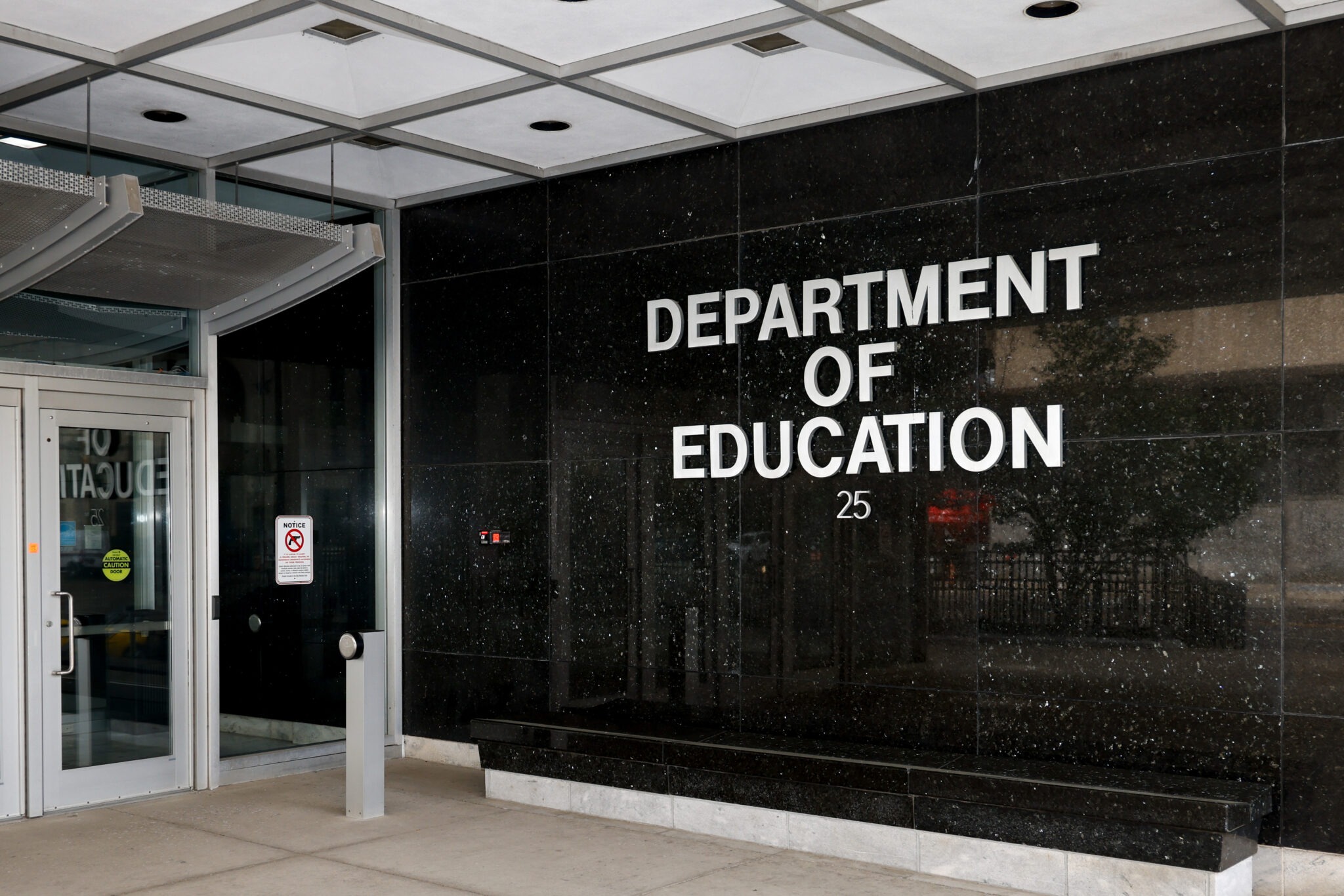
    The Ohio Department of Education in Columbus, Ohio. (Photo by Graham Stokes for Ohio Capital Journal. Republish photo only with original story.)

    BY:  Ohio Capital Journal

    The Ohio State Board of Education appointed Paul Craft to be the next State Superintendent of Public Instruction during Tuesday’s monthly meeting.

    Paul Craft (Buckeye Valley Local Schools Photo)

    Craft’s first day as superintendent will be Jan. 1 and his annual salary will be $190,000, according to the state board resolution.

    “Ohio is home to outstanding educators and school personnel, and I’m excited to lead the work to ensure we have an excellent education workforce ready to make a difference for students,” Craft said in a statement.

    He is currently the superintendent of Buckeye Valley Local Schools, a role he has served in since August 2022. He was also the superintendent of Delaware City Schools for nine years and previously worked in Upper Arlington City Schools, according to his LinkedIn profile.

    He was also the CEO of Metropolitan Educational Technology Association (META) Solutions for three years and previously served in the Ohio Army National Guard for over 30 years, according to his LinkedIn.

    Craft received his undergraduate degree in secondary education and leadership from the University of Montana and his masters in educational leadership from Ohio State University.

    “We want to make sure Ohio is a national leader when it comes to our teaching workforce, and Paul Craft will position us to advance the work focused on having excellent educators in our classrooms,” Paul LaRue, president of the State Board of Education of Ohio, said in a statement.

    The other finalists for state superintendent were Jeffrey Greenley, the superintendent of Belpre City Schools, and Julia Simmerer, the Ohio Department of Education and Workforce Senior Executive Director for the Center for Teaching, Leading, and Learning.

    The vote came down to Craft and Greenley. Fifteen members voted for Craft while board members Michelle Newman and Christina Collins voted for Greenley after coming out of executive session.

    “We received a lot of wonderful letters in support of Mr. Greenley and his qualifications, so I really wanted to proudly put his name forward, but I will proudly vote in support of this resolution,” Newman said before voting to appoint Craft.

    All board members voted in favor of the resolution to appoint Craft as superintendent.

    Chris Woolard is currently the interim state Superintendent of Public Instruction and search firm Ray & Associates helped the board find superintendent candidates.

    Follow OCJ Reporter Megan Henry on Twitter.

    Megan Henry
    MEGAN HENRY

    Megan Henry is a reporter for the Ohio Capital Journal and has spent the past five years reporting in Ohio on various topics including education, healthcare, business and crime. She previously worked at The Columbus Dispatch, part of the USA Today Network.

    MORE FROM AUTHOR

  • Second closed primaries measure gets a hearing in the Ohio House

    Second closed primaries measure gets a hearing in the Ohio House

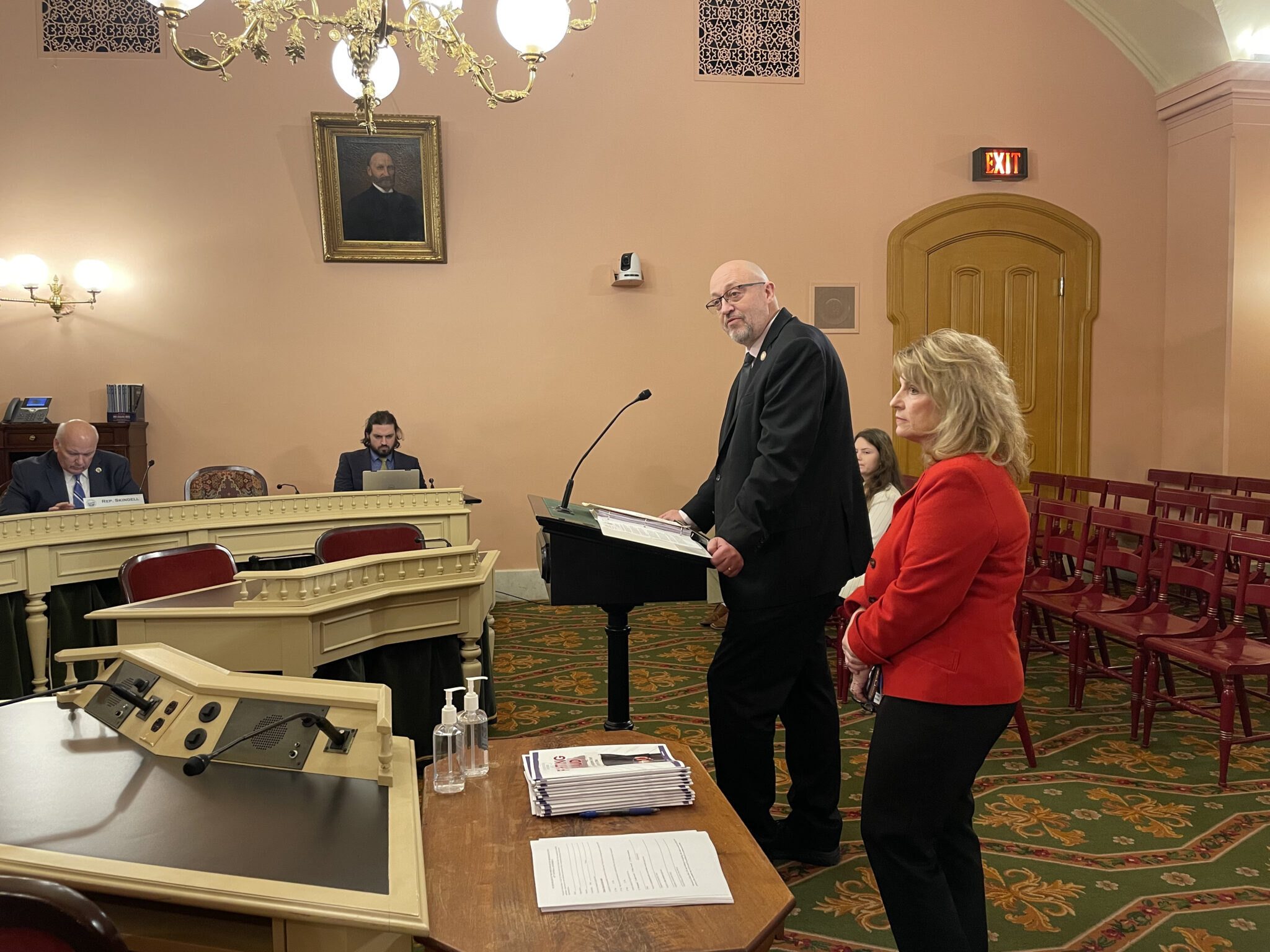
    Rep. Gary Click, R-Vickery, describing a bill he’s co-sponsoring with Rep. Jennifer Gross, R-West Chester, to close Ohio’s primary elections. (Photo by Nick Evans, Ohio Capital Journal.)

    BY:  – Ohio Capital Journal

    Two Ohio lawmakers want voters to declare their party months before the primary election. But in its first committee hearing this week the idea was met with pushback from both sides of the aisle.

    The proposal is actually one of two measures in the Ohio House calling for closed primaries elections. Their most notable difference is deadlines. One, sponsored by Rep. Thomas Hall, R-Madison Twp., allows voters to change party affiliation up to 30 days prior to an election. But the one introduced this week, proposed by Reps. Jennifer Gross, R-West Chester, and Gary Click, R-Vickery, pushes that deadline back to Dec. 31 of the prior year.

    If their proposal were in effect today, voters would have to declare their party before heading to their New Year’s Eve party if they want to have a say in next year’s presidential primary.

    The stakes

    In committee, Gross argued a closed primary is desirable because it “grants Ohioans more faith in the election process, without fear of meddling by crossover on the date of the election.”

    Click added, “when one party has an uncontested candidate, while the others other parties still sorting through the process, there’s a temptation to rate the opponents primary simply to spoil the process.”

    Click cited the example of Rush Limbaugh’s “Operation Chaos” during the 2008 Democratic primary.

    “I did not participate in that, I did not think it was ethical to do so,” Click insisted, “but I do know a lot of people who did.”

    However, political scientists have cast serious doubt on the actual impact of Limbaugh’s campaign. And while voters crossing party lines certainly does happen, researchers contend “party raiding” is rare. More often voters cast a ballot for a different party’s candidate because they like that candidate — not because they dislike that candidate’s opponent in the primary.

    The gap

    Both proposals would grandfather in a party’s existing voters, but that still presents a challenging math problem.

    Currently, Ohioans don’t select their party affiliation when they register to vote. Instead, they declare their affiliation by requesting that party’s ballot. As of the last statewide primary election in 2022, Ohio had more than 7.9 million registered voters. But less than 1.7 million of them aligned with the Democratic or Republican party by actually casting a ballot.

    That means if either bill were in effect today, more than 6 million Ohioans could be in limbo — unaffiliated and thus unable to vote on partisan candidates next March.

    Hall attempts to create a more orderly transition by tying his cut off to the voter registration deadline. In previous committee hearings he’s argued “people know there’s an election coming and know to update their party registration.”

    But by setting the deadline months earlier, Gross and Click create a gap that could disenfranchise unaffiliated voters as well as those who want to change party in good faith.

    There are voters who reliably vote Republican or Democratic, but just don’t show up for midterm primaries. There are voters who normally vote for Democrats, but have grown disillusioned with President Joe Biden. And there are voters who normally vote for Republicans who oppose former President Donald Trump.

    Under Click and Gross’s bill, if those voters select their party after Dec. 31, they would be barred from voting in any party’s 2024 primary election.

    The pushback

    Rep. Dani Isaacsohn, D-Cincinnati, criticized the sponsors, suggesting their proposal would only contribute to existing partisan divisions. Rep. Bill Seitz, R-Cincinnati, meanwhile, asked how boards are supposed to verify the provisional ballots cast by unaffiliated voters.

    Gross seemed to discount Seitz’s concerns.

    “They are independents or are non-registered because they do not vote in the primary — agree?,” she asked.

    “Yeah,” Seitz replied, “But now they want to.”

    Gross just sidestepped and reiterated the bill’s provisions.

    “If they pulled in February in order to vote in March, they would not be a registered Republican or Democrat,” she said. “They would be provisional, and then they would be an actual Republican or Democrat for the next primary. So ‘provisional,’ the definition of provisional, and what that looks like we will need to get back to you.”

    But Seitz’s line of questioning seems to imagine a more flexible bill than the one before committee. Although Gross and Click’s measure creates path for unaffiliated voters to cast provisional ballots under an obscure partisan challenge process, it’s a dead end. According to the bill analysis if the board determines the voter is unaffiliated or missed the cut off the ballot can’t be counted.

    And while Gross emphasized a roughly 90-day deadline for selecting one’s party, committee members were quick to note that undersells its impact — sometimes dramatically.

    “Sometimes a primary is not held until September,” Rep. Mike Skindell, D-Lakewood, said, “particularly in municipal election years, so you’re looking nine months out.”

    He added that during midterm cycles when the primary is in May, the candidate filing deadline isn’t until February. Skindell argued voters make their decision based on who is running, and asked if the sponsors would consider moving their cut off to 30 days after the filing deadline.

    “I would hate to make a commitment to it right here at the moment,” Click said, but said he’d consider a different frameworks, offering 90 days before an election as an example.

    Follow OCJ Reporter Nick Evans on Twitter.


    Nick Evans
    NICK EVANS

    Nick Evans has spent the past seven years reporting for NPR member stations in Florida and Ohio. He got his start in Tallahassee, covering issues like redistricting, same sex marriage and medical marijuana. Since arriving in Columbus in 2018, he has covered everything from city council to football. His work on Ohio politics and local policing have been featured numerous times on NPR.

    MORE FROM AUTHOR

  • Former Ohio public utilities chairman Sam Randazzo indicted by federal grand jury for bribery, embezzlement

    Former Ohio public utilities chairman Sam Randazzo indicted by federal grand jury for bribery, embezzlement

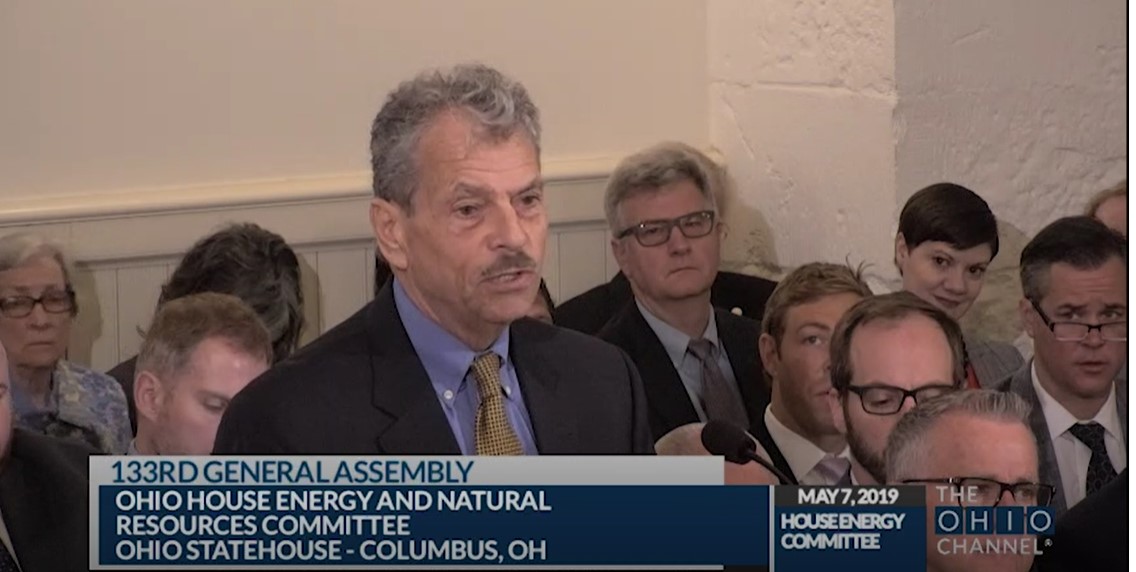
    Then-PUCO Chair Sam Randazzo testifies as an interested party regarding House Bill 6 on May 7, 2019. Source: Ohio Channel.

    BY:  Ohio Capital Journal

    The former chairman of the Public Utilities Commission of Ohio has been indicted by a federal grand jury on bribery and embezzlement charges, the U.S. Attorney’s Office for the Southern District of Ohio announced in a news release Monday.

    Sam Randazzo, 74, of Columbus, self-surrendered at U.S. District Court in Cincinnati Monday morning, the release said. Randazzo is charged in an 11-count indictment that was returned on Nov. 29 and he was scheduled for an initial appearance later Monday.

    The charges stem from an ongoing investigation into what federal prosecutors have called the biggest political bribery scandal in state history, where Akron-based FirstEnergy paid more than $60 million in 2018 and 2019 to get the legislature to pass and protect a $1.3 billion bailout that was mostly intended to benefit FirstEnergy.

    Former House Speaker Larry Householder, R-Glenford, in June was sentenced to 20 years in federal prison after a jury found him guilty of racketeering for his role in the scheme. Former Ohio GOP Chairman Matt Borges was sentenced to five years in the same case.

    FirstEnergy fired two of its top executives, CEO Chuck Jones and Vice President Michael Dowling. And it signed a deferred prosecution agreement admitting wrongdoing and committing to pay a $230 million fine.

    Jones, Dowling and Randazzo denied wrongdoing, but in the agreement, FirstEnergy said the executives paid Randazzo a $4.3 million bribe just as Ohio Gov. Mike DeWine was nominating him to be the top Ohio regulator overseeing FirstEnergy.

    “Public officials — whether elected or appointed — are tasked with upholding the highest level of integrity in their duties and responsibilities. Such service to the public must be selfless, not selfish,” said U.S. Attorney Kenneth L. Parker in Monday morning’s release. “Through the indictment unsealed today, we seek to hold Randazzo accountable for his alleged illegal activities.”

    FirstEnergy said the payment was made through Randazzo’s “consulting company in return for (Randazzo) performing official action in his capacity as (Public Utilities Commission of Ohio) Chairman to further FirstEnergy Corp.’s interests” and that “it was under no legal obligation to make the payment … ”

    Randazzo was the PUCO chairman from April 2019 until November 2020, when he resigned.

    Randazzo faces one count of conspiring to commit travel act bribery and honest services wire fraud, two counts of travel act bribery, two counts of honest services wire fraud, one count of wire fraud and five counts of making illegal monetary transactions.

    According to the indictment, Randazzo allegedly received more than $4.3 million from an energy company and its affiliates to provide favorable official actions for the company through PUCO proceedings.

    For example, it is alleged that in November 2019, Randazzo included language in a PUCO Opinion and Order that would address an issue for the energy company that was slated to happen in 2024.

    “Stock is gonna get hit with Ohio 2024. Need Sam to get rid of the ‘Ohio 2024 hole,’” an energy executive text message read. Another executive messaged, in part: “I spoke with Sam today. Told me 2024 issue will be handled next Thursday.” The next Thursday, the PUCO decision included language alleviating the 2024 issue.

    A March 2020 text message from an executive mentions that Randazzo “will get it done for us but cannot just jettison all process.” The message references specific official actions before continuing: “…a lot of talk going on in the halls of PUCO about does he work there or for us? He’ll move it as fast as he can.”

    It is alleged that Randazzo received the bribe money from the energy company through his consulting business, Sustainability Funding Alliance of Ohio, Inc. (SFA), which was registered in Ohio in March 2010. SFA filings name Randazzo as the president and sole representative of the business and lists Randazzo’s home address as the business address.

    The charging document alleges that Randazzo also used his consulting business, SFA, to carry out an embezzlement scheme, funneling to himself at least a million dollars meant for an association of large, industrial energy users in Ohio.

    Randazzo was the general counsel of the industry group for multiple years, including from 2010 until his PUCO appointment, and at times served as the industry group’s executive director. Randazzo controlled the industry group’s bank accounts.

    It is alleged Randazzo entered into settlements with companies on behalf of the industry group and kept portions of the settlement payments for himself.  As one method to conceal his alleged embezzling, Randazzo allegedly created a fictitious member of the industry group that received payments along with legitimate members.

    For example, in March 2019, it is alleged Randazzo attempted to conceal his embezzling by wiring approximately $1.1 million between bank accounts under his control.

    If convicted as charged, the defendant could face up to 20 years in prison.

    In the release, FBI Cincinnati Special Agent in Charge J. William Rivers said the indictment outlines an alleged scheme in which a public regulatory official ignored the Ohio consumers he was responsible for protecting, instead taking a bribe from an energy company seeking favors.

    “The FBI will remain vigilant in investigating allegations of corruption at all levels of government and hold those who violate the law accountable for their actions,” he said.

    Last week, it was revealed that plaintiffs in a civil suit related to the massive bribery and money-laundering scandal have subpoenaed documents from DeWine and they’re scheduling a sworn deposition with Lt. Gov. Jon Husted.

    Ohio Consumers’ Counsel Maureen Willis in a statement Monday called the indictment an important step to bring justice to Ohio utility consumers.

    “It underscores the need for near-term reform of the PUCO selection process that led to his appointment as Chair of the PUCO,” she said. “OCC’s calls for reform so far have gone unanswered. Ohioans deserve better from the public officials in this state.”

  • More than 342,000 Ohioans have lost their Medicaid coverage since April

    More than 342,000 Ohioans have lost their Medicaid coverage since April

     File photo by Justin Sullivan/Getty Images.

    Ohioans can lose their Medicaid coverage before they are no longer eligible or they can be unenrolled for procedural reasons

    BY:  Ohio Capital Journal

    More than 342,000 Ohioans have lost their Medicaid coverage so far since the COVID-19 pandemic protections ended April 1, according to the Ohio Department of Medicaid.

    Ohioans can lose their Medicaid coverage before they are no longer eligible or they can be unenrolled for procedural reasons — meaning “they don’t respond to the multiple requests for information needed to process a renewal,” Lisa Lawless, the spokesperson for the Ohio Department of Medicaid, said in an email.

    Ohioans who lost their Medicaid coverage because of procedural reasons, according to the Ohio Department of Medicaid.

    • October — 52,782
    • September — 57,292
    • August — 59,378
    • July — 61,123
    • June — 55,666
    • May — 49,367
    • April — 46,707

    Ohioans who lost their Medicaid coverage because they were ineligible for renewal, according to the Ohio Department of Medicaid.

    • October — 18,585
    • September —  16,297
    • August — 16,972
    • July — 17,383
    • June — 18,990
    • May — 23,064
    • April — 21,284

    Losing Medicaid coverage can really disrupt someone’s life and be traumatic for people, said Kathryn Poe, a budget and health researcher at Policy Matters Ohio.

    “You’re seeing families all of a sudden learn when they go to CVS or when they go to the doctor that they’re no longer covered by Medicaid,” Poe said. “A lot of folks didn’t realize that they had to re-enroll. … It’s perhaps coming as a little bit of a shock.”

    More than 2.5 million in the United States have lost their Medicaid coverage since April 1 and  71% of those people were unenrolled because of procedural reasons, said Jennifer Tolbert, KFF’s director of the State Health Reform and Data Program and an associate director of its Program on Medicaid and the Uninsured.

    “The consequences of losing Medicaid, even for a short period of time can be very disruptive, and in some cases devastating for people,” she said. “Many people enrolled in Medicaid have either significant physical health or mental health challenges or conditions that they are dealing with.”

    Anecdotally, Tolbert has heard stories of people who either forgo their medication and suffer the consequences or pay thousands of dollars out-of-pocket after losing their Medicaid coverage, which is the government’s insurance program for low-income and disabled people.

    “People in poverty are the people on Medicaid,” Poe said. “It’s affecting people that have probably the least amount of power in our society.”

    States unwinding Medicaid

    Congress passed the Families First Coronavirus Response Act in March 2020 which gave states enhanced federal matching dollars for their Medicaid programs. Because of this, states were barred from disenrolling people from Medicaid, even if they were ineligible.

    But now that COVID is no longer a public health emergency in the United States, states are going through Medicaid unwinding — dropping people who are either no longer eligible or didn’t turn in their paperwork.

    Ohio’s disenrollment process

    Ohioans may be contacted up to eight times — through the mail, text messages and phone calls — before being unenrolled from Medicaid, Lawless said.

    But if someone has moved, changed their number or doesn’t have internet access they might not have been notified about potentially losing their coverage.

    “If they can’t get a hold of you after a few times you can just get kicked off,” Poe said. “People are just getting kicked off of their health care coverage, because Medicaid can’t find them. And that feels really rather unacceptable to me.”

    More than 3 million Ohioans are enrolled in Medicaid and the Medicaid renewal process starts 60 days before their annual renewal date. Ohioans receive a final notice of disenrollment before losing their coverage, Lawless said.

    Ohioans can renew their Medicaid coverage by returning a completed renewal packet to their county Jobs and Families Services office, by calling 1-844-640-6466 or online through the Ohio Benefits eligibility portal.

    Follow OCJ Reporter Megan Henry on Twitter.

    Megan Henry
    MEGAN HENRY

    Megan Henry is a reporter for the Ohio Capital Journal and has spent the past five years reporting in Ohio on various topics including education, healthcare, business and crime. She previously worked at The Columbus Dispatch, part of the USA Today Network.

    MORE FROM AUTHOR

  • Ohio Gov. Mike DeWine and Lt. Gov. Jon Husted subpoenaed in civil suit over bailout scandal

    Ohio Gov. Mike DeWine and Lt. Gov. Jon Husted subpoenaed in civil suit over bailout scandal

    COLUMBUS, OH — MAY 03: Ohio Gov. Mike DeWine joined on stage by First Lady Fran DeWine, grandson Calvin, Lt. Gov. Jon Husted and Second Lady Tina Husted to celebrate DeWine winning the Republican Party nomination for governor in the Ohio primary election, May 3, 2022, at the DeWine-Husted campaign headquarters, Columbus, Ohio. (Photo by Graham Stokes for the Ohio Capital Journal. Republish photo only with original article.)

    BY:  

    Plaintiffs in a civil suit related to a massive bribery and money-laundering scandal have subpoenaed documents from Ohio Gov. Mike DeWine and they’re scheduling a sworn deposition with Lt. Gov. Jon Husted.

    There have been four criminal convictions so far in the scandal and U.S. Attorney Kenneth L. Parker has said the investigation is continuing. However, there is no indication that DeWine or Husted is an object of it.

    Even so, members of the DeWine-Husted administration were significant players in the scandal and DeWine’s nominee to head up the Public Utilities Commission of Ohio could be a target of the probe.

    The demands for documents and testimony come in a class-action suit that big investors in Akron-based FirstEnergy filed against the company over its involvement in the scheme. Between 2017 and 2020, the company paid out more than $60 million to gain a $1.3 billion ratepayer bailout that was mostly intended to prop up two failing nuclear plants in Northern Ohio.

    Among those already convicted are former Ohio House Speaker Larry Householder, R-Glenford, who was sentenced to 20 years in prison for his role in what federal authorities said might be the biggest bribery and money-laundering scheme in Ohio history. Former state Republican Chairman Matt Borges in June was sentenced to five years for his role.

    However, others who played prominent roles in the scandal are yet to be charged.

    They include former FirstEnergy CEO Chuck Jones and former Vice President Michael Dowling, who directed the money to make Householder speaker in 2018 and then pass and and protect House Bill 6, the corrupt bailout legislation. They also include Sam Randazzo, DeWine’s first nominee to chair the Public Utilities Commission of Ohio.

    Jones, Dowling and Randazzo deny wrongdoing, but in a deferred prosecution agreement, FirstEnergy said Jones and Dowling paid Randazzo a $4.3 million bribe just as DeWine was selecting Randazzo to be FirstEnergy’s top regulator. In that post, Randazzo helped write the corrupt bailout bill and he helped FirstEnergy avoid a scheduled audit known as a “rate case” that was slated for 2024.

    Large investors such as pension and investment funds are suing FirstEnergy over the scandal, arguing that the company violated securities laws by not disclosing its reckless conduct. And then, when the feds made arrests in July 2020, its stock value plummeted — as did their investments.

    The plaintiffs in the civil case have been battling with Randazzo — who is not a defendant — since April over whether he has complied with judges’ orders to produce documents relevant to the $4.3 million in FirstEnergy money he received just before he began regulating the company.

    A magistrate judge and a special master in the case have consistently rebuked Randazzo for not cooperating more fully, with the most recent instance coming last week. Randazzo appealed up the food chain, asking Magistrate Judge Kimberly Jolson not to hold him to a disclosure order from the special master, Shawn K. Judge.

    The plaintiffs in the civil case asked Jolson to make Randazzo comply with Judge’s order to cough up more information. As part of the filing, they provided a table of depositions they’ve scheduled or are in the process of scheduling. To prepare for some, they presumably could use the information and documents they’re demanding of Randazzo.

    One deposition they’re scheduling is of Randazzo himself, which has a “target period” of March 4 to March 29.

    Another is of Husted, the lieutenant governor, which has a target period of Feb. 28 to March 19. Dave Anderson of the Energy and Policy Institute first flagged the document that listed Husted’s deposition.

    Hayley Carducci, Husted’s spokeswoman, on Tuesday said Husted is cooperating.

    “We’re aware of the civil investor lawsuit against First Energy,” she said in an email. “The Lt. Governor has already provided public records pertaining to this, and we will continue to comply as we have done in the past. There’s no new information to disclose.”

    As with Randazzo, Husted is not a defendant in the civil case.

    DeWine also has recently received a subpoena for documents in the civil case.

    “We’re reviewing it with counsel for what can be provided,” Press Secretary Dan Tierney said in an interview. “Our office is subject to the public records act and in a sense this is no different.”

    Tierney pointed out a distinction between the class-action suit and the case which has already convicted Householder and Borges and proceedings that could charge others.

    “This is a civil case and anybody has a right to bring a civil case if they want,” Tierney said of the proceeding in which the governor’s documents had been subpoenaed. “The civil process is where people say they’ve been damaged and they want the court to award damages. That is far different than the criminal case in which the federal government said public integrity laws had been violated.”

    He added, “It still remains in the criminal case that nobody in our office or the lieutenant governor’s office has been questioned or subpoenaed or had any legal filings like that.”

    Even in the absence of such requests, DeWine and his administration were involved several ways in the drafting and passage of the corrupt utility bailout:

    • He nominated Randazzo to head up the PUCO a day after it was publicly revealed that FirstEnergy had paid a group controlled by Randazzo millions of dollars over the years. “Forced DeWine/Husted to perform battlefield triage,” FirstEnergy CEO Jones said in a text message to Dowling. “It’s a rough game.”
    • While he was still a FirstEnergy lobbyist, Dan McCarthy set up Partners for Progress, a 501(c)(4) “dark money” group through which Jones, Dowling and others funneled millions into the conspiracy. DeWine hired McCarthy as his legislative affairs director and kept him in that post for a year after Householder and the others were arrested.
    • HB 6, the bailout legislation, was highly controversial as Householder jammed it through the legislature, other lawmakers testified at his trial. Even so, DeWine signed it the day it passed and when Householder was arrested, the governor’s first position was to keep the law in place — and part of it still is. DeWine reversed himself a day later, calling to repeal and replace the subsidies.

    Morgan Trau contributed to this report.


    Marty Schladen
    MARTY SCHLADEN

    Marty Schladen has been a reporter for decades, working in Indiana, Texas and other places before returning to his native Ohio to work at The Columbus Dispatch in 2017. He’s won state and national journalism awards for investigations into utility regulation, public corruption, the environment, prescription drug spending and other matters.

    MORE FROM AUTHOR

  • More signs that criminal investigation into Ohio utility bailout continues

    More signs that criminal investigation into Ohio utility bailout continues

    Davis-Besse Nuclear Power Station with electricity pylons, Ohio. Getty Images.

    BY:  Ohio Capital Journal

    Five have been charged and four have been convicted in a massive bribery and money-laundering scandal, but there were more signs this week that the federal criminal investigation is continuing.

    In court documents filed in a separate case on Monday, a special master said that a major player in the conspiracy — Akron-based FirstEnergy — continues to cooperate with federal prosecutors. The same documents order the major beneficiary of the conspiracy, a former FirstEnergy subsidiary, to do more to cooperate in a federal class-action suit.

    Former House Speaker Larry Householder, R-Glenford, and former GOP Chairman Matt Borges in June were respectively sentenced to 20 and five years in federal prison for their roles in the conspiracy. Two others have pleaded guilty and await sentencing, while a third who was charged died by suicide.

    In the conspiracy, FirstEnergy and its then-subsidiary paid more than $60 million from 2017 to 2019 to make Householder speaker so he could pass and protect a $1.3 billion bailout. Of that sum, the vast majority was intended to prop up two nuclear plants owned by the subsidiary, then called FirstEnergy Solutions.

    Over the course of a six-week trial in Cincinnati early this year, prosecutors put on evidence that FirstEnergy found itself in a precarious state because its heavy investments in coal and nuclear-powered generation were being undercut by cheap natural gas. Top executives with the company — including then-CEO Chuck Jones and Vice President Michael Dowling — desperately sought a ratepayer bailout to prop up the nuclear plants so they could spin them off and get most of the liability associated with closing and cleaning them up off their books.

    In 2019, as Householder was shepherding the bailout through the legislature, FirstEnergy Solutions was in bankruptcy and emerged in February 2020. It had a new name, Energy Harbor, and it was no longer a subsidiary of FirstEnergy.

    Five months later, the FBI arrested Householder and the others. Then large pension and investment funds sued FirstEnergy, saying the reckless, undisclosed conduct of its top executives caused investors to lose billions when that conduct hit the public fan.

    FirstEnergy signed a deferred prosecution agreement admitting wrongdoing and agreeing to pay a $230 million penalty to the government. But that didn’t get it off the hook in the multiple civil suits it’s faced, including the class action filed in the Southern District of Ohio by large investors.

    As part of the suit, those investors have been battling FirstEnergy for communications and other information that might implicate officials other than Jones and Dowling, who were fired.

    They’re also battling Sam Randazzo. He isn’t named in the suit, but FirstEnergy said he took a $4.3 million bribe from Jones and Dowling just as Gov. Mike DeWine nominated Randazzo to chair the Public Utilities Commission of Ohio at the beginning of 2019. The class-action plaintiffs say Randazzo might be sitting on text messages and other communications relevant to the conspiracy.

    Jones, Dowling and Randazzo deny criminal wrongdoing in the scandal, but U.S. Attorney Kenneth L. Parker in June said that the investigation was continuing. On Monday, Special Master Shawn Judge also said in a court filing that the investigation continues — and that FirstEnergy is cooperating.

    “During this jury trial, the government highlighted Jones’s and Dowling’s purported relationships with Householder and involvement in the conspiracy,” Judge wrote, referring to the criminal trial earlier this year. “And multiple representations before the Court suggest that FirstEnergy’s cooperation with government investigations is ongoing.”

    Judge is helping to referee the numerous discovery disputes in the class-action case. In this instance, he ordered Energy Harbor to provide almost everything the FirstEnergy investors wanted.

    As a now-independent company, Energy Harbor said it’s not a defendant in the civil case, so it shouldn’t be put to the trouble and expense to provide the information the pension and investment funds are demanding.

    But Judge noted that while it was still a FirstEnergy subsidiary, the company “​​contributed $43 million of the $60 million paid to Householder and his affiliates in exchange for the official action of passing (the bailout law) and defending it from a repeal referendum.”

    In addition, Judge wrote, the subsidiary’s lobbyist, Juan Cespedes, helped direct some of those funds and pleaded guilty to his role in the racketeering conspiracy.

    Judge then ordered Energy Harbor to provide the plaintiffs with the information they requested, but reduced the time period the required documents span by several months.


    Marty Schladen
    MARTY SCHLADEN

    Marty Schladen has been a reporter for decades, working in Indiana, Texas and other places before returning to his native Ohio to work at The Columbus Dispatch in 2017. He’s won state and national journalism awards for investigations into utility regulation, public corruption, the environment, prescription drug spending and other matters.

    MORE FROM AUTHOR

  • Ohioans hit food banks in record numbers as SNAP requirements hinder assistance programs

    Ohioans hit food banks in record numbers as SNAP requirements hinder assistance programs

     Feeding America and Akron-Canton Regional Food Bank host Hungry to Help Lesson Plan for students at an Ohio elementary school in Fairlawn, Ohio. (Photo by Duane Prokop/Getty Images for Feeding America)

    BY:  Ohio Capital Journal

    As Ohio food banks see record-breaking amounts of need, the state is also at risk of losing federal funding that could help residents get essential needs and boosts in employment.

    After the most recent state budget passed with a plan to redesign the education and training piece of the state’s Supplemental Nutrition Assistance Program (SNAP), food and employment advocates across the state watched as the program became a “compliance machine,” rather than a way to bring Ohioans out of poverty.

    “The bottom line is that our current program that we’ve been running for many, many years in Ohio does not … meet the needs of employers, it does not increase employment, it does not increase wages,” Rachel Cahill, a visiting fellow with the Center for Community Solutions, said during a recent webinar by the Ohio Workforce Coalition.

    The federally-funded SNAP program’s future in Ohio could also be at risk after negative evaluations from the US Department of Agriculture and federal agencies meant to “assess how well our staff employment training program is working or not working,” according to Hope Lane-Gavin, director of nutrition policy and programs with the Ohio Association of Food Banks.

    “Ohio has continued to produce bad management evaluations … that determine we are not screening participants for exemptions adequately and we are not providing supportive services,” said Lane-Gavin, who also participated in the OWC webinar on SNAP benefits and local implementation.

    Cahill said she is in a work group aimed at redesigning the state SNAP program. She mentioned a “written warning letter” that was sent to the state from the USDA saying federal funding for the next fiscal year may be in jeopardy if the state doesn’t bring their program into compliance.

    “If we don’t get this right, if we don’t redesign this well, we are going to lose that federal funding, and we won’t be able to support the type of programs … that we have now,” Cahill said.

    The Ohio Department of Job and Family Services’ SNAP Employment & Training Plan states a new policy was implemented by the state effective July 1, 2023, “to help ensure all requirements are being met prior to sanctioning an individual who is non-compliant with SNAP E&T.”

    The document states the change was made as a result of notification from the USDA’s Food and Nutrition Service, which said “until Ohio is in full compliance with regulations affecting program access, the state must take steps immediately to ensure that SNAP E&T participants are not improperly sanctioned.”

     Stock image of a food pantry courtesy Hurlburt Field. 

    The current Ohio program expands on work requirements that are already in place through the federal SNAP program’s regulations by including the state option of mandatory employment requirements for “able-bodied adults without dependents” or ABAWDS.

    Under the federal program, while there are work requirements, there is also a three-month grace period allowing individuals to attempt to gain employment before they’re removed from the SNAP program.

    With Ohio’s mandatory employment and training, that three-month grace period does not exist for ABAWDS, unless they’ve been a victim of domestic violence, according to Lane-Gavin.

    “So, the federal time limit recognizes that individuals need access to food first before any meaningful attempts are made at identifying adequate and sustainable employment,” Lane-Gavin said.

    Job training and barriers

    For those programs who provide job training to SNAP-eligible Ohioans, the idea that someone is forced to participate doesn’t necessarily improve the chances of success.

    At the Center for Employment Opportunities, an Ohio-based program working to help formerly incarcerated individuals re-enter the workforce, program leaders would rather work with those who commit voluntarily. That way, CEO knows those that come to their program are ready to improve their lives, rather than merely check a state-mandated box.

    “Individuals are coming to CEO really motivated to work, but are facing barriers in connecting to the right opportunities,” Bacon said.

    Bacon said studies of their program participants show about 80% of them are eligible for SNAP, and access to basic necessities as the formerly incarcerated come back out is needed as they navigate their new situation.

    “We know that there’s a need, we know that people need both training and food security, and we’re seeing that play out in our program,” Bacon said.

    While advocates are hoping for state reform, the opportunity for federal reform outside of the long-awaited farm bill, at least for one “unintended consequence” of the work requirements included in SNAP, could be on the horizon.

    Federal legislation called the Training & Nutrition Stability Act, co-sponsored by Ohio Republican U.S. Rep. Max Miller, was touted by Bacon as a fix for a clause in SNAP eligibility that counts wages earned in job training toward benefit levels. Counting those wages could potentially reduce benefits or make a household ineligible, Bacon said.

    The TNSA would exclude that income with regard to eligibility.

    Locally, Lane-Gavin said the state needs to jump in to help county Job and Family Services agencies deal with the heavy implementation load that comes from the mandatory education and training requirements.

    “Our county agencies are stretched thin … and SNAP employment and training is a compliance issue,” Lane-Gavin said. “It is just a paperwork machine.”

    Part of the changes needed as part of the SNAP program in Ohio is a “paradigm shift” for county JFS offices that will not only allow them to stem the flow of paperwork, but also gain back the trust of program participants, who may have “animosity” because of the “punitive” nature of the current program, according to Cahill.

    “If we really want to do meaningful recruitment and outreach for an employment and training program … we are going to have to do some rebuilding of trust with the community and that’s not going to happen overnight,” Cahill said.


    Susan Tebben
    SUSAN TEBBEN

    Susan Tebben is an award-winning journalist with a decade of experience covering Ohio news, including courts and crime, Appalachian social issues, government, education, diversity and culture. She has worked for The Newark Advocate, The Glasgow (KY) Daily Times, The Athens Messenger, and WOUB Public Media. She has also had work featured on National Public Radio.

    MORE FROM AUTHOR

  • Signature collection can begin anew after Ohio redistricting amendment passes next step

    Signature collection can begin anew after Ohio redistricting amendment passes next step

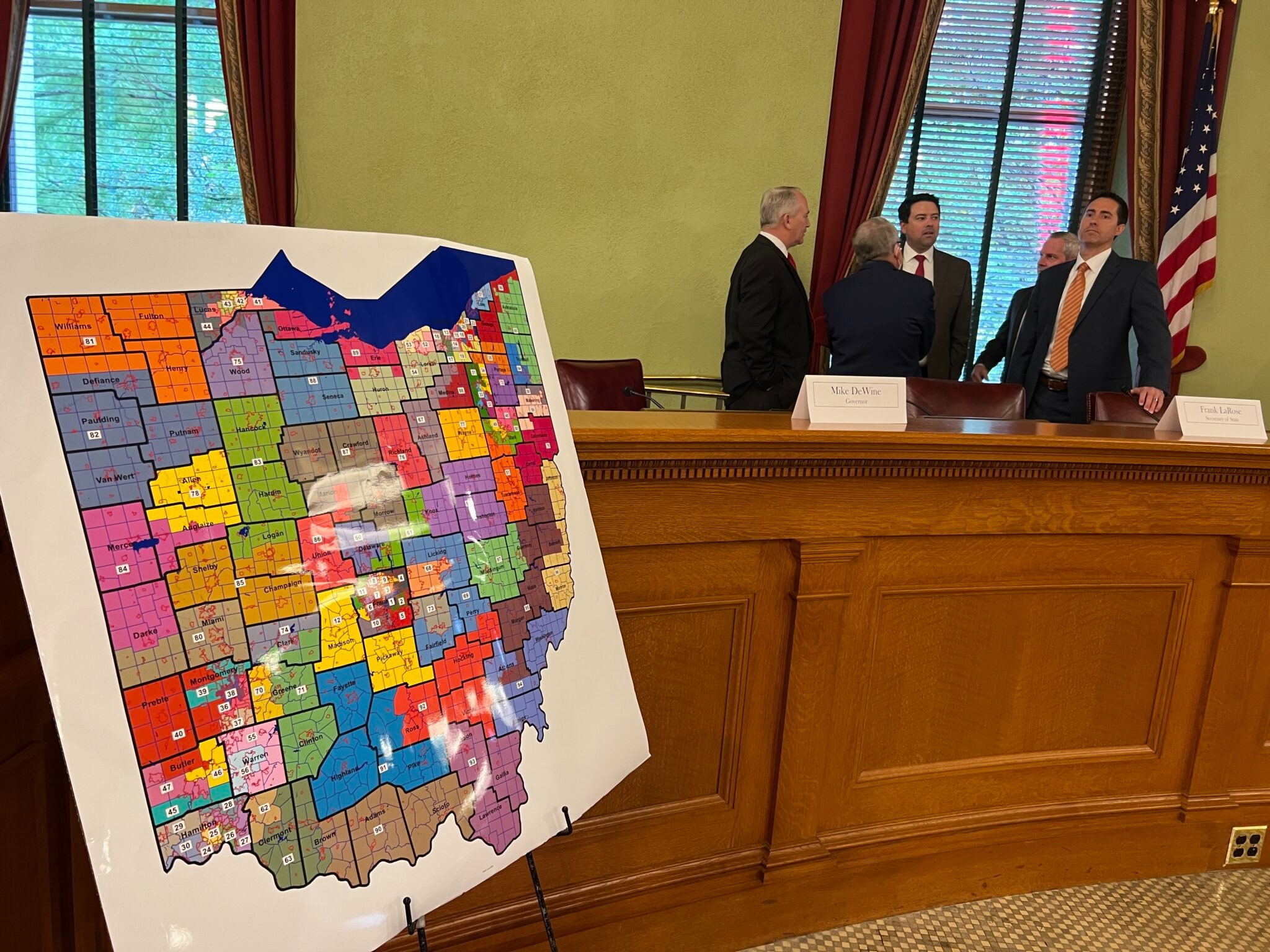
    The Republican members of the Ohio Redistricting Commission talk before a 2023 public hearing on statehouse district maps. (Photo: Susan Tebben, OCJ)

    BY:  – Ohio Capital Journal

    The newest measure to change the Ohio Constitution and reform the redistricting process in Ohio has cleared its most recent hurdle: a typo.

    The Ohio Ballot Board met Monday, quickly certifying a proposed constitutional amendment that would “replace the current politician-run redistricting process.” The board’s only role is to determine if an amendment follows the legal requirements that the measure only contain one amendment to the state’s constitution.

    The certification came as no surprise, since the board had previously certified the amendment in October. This time around, the re-certification was needed after the creator of the proposed amendment, anti-gerrymandering group Citizens Not Politicians, noticed a typo in one of the deadlines mentioned in the amendment.

    Attorney Don McTigue was present at Monday’s ballot board meeting, and said that nothing about the intent of the amendment changes with the correction of the error.

    The amendment also went through multiple rounds of revisions, after Ohio Attorney General Dave Yost rejected the measure twice, saying amendment reviewers identified “omissions and misstatements” that the AG said would “mislead a potential signer as to the actual scope and effect of the proposed amendment.”

    The amendment would replace the current redistricting process, also created through a constitutional amendment, and would eliminate the Ohio Redistricting Commission as it stands now, a seven-member panel made up of all elected officials, five from the GOP majority and two Democrats.

    The commission would be replaced with a “citizen-led commission,” chosen by a bipartisan panel. If approved by the voters, the amendment would create the Ohio Citizens Redistricting Commission, which would have 15 members, five matching the political party of the governor at the time, five from the party of the gubernatorial candidate who received the second-most votes in the most recent election, and five unaffiliated members.

    The amendment also specifically lays out anti-gerrymandering mechanisms that have been a sticking point throughout the last two years, as the Ohio Redistricting Commission tumbled through the process of six different statehouse district maps and two congressional maps, all but one of which (the most recent statehouse districts) has been rejected as unconstitutional by the Ohio Supreme Court.

    The statehouse districts adopted in September by the current commission are being challenged in a case before the state’s highest court, but no decision has been made.

    The ORC has been rife with chaos and uncertainty as well, as the last two years contained multiple line-up changes, arguments over deadlines and lack of action, and even a stumbled start to the most recent adoption process.

    In the new amendment proposal, the citizen-led commission would have to create a redistricting plan with political party proportions that “correspond closely to statewide partisan preferences of the voters of Ohio,” and the commission has to state how the districts’ partisan divide was determined.

    The group who wrote the measure defines “correspond closely” as no more than a 3-percentage-point difference between the redistricting plans and the statewide voter preferences, “unless arithmetically impossible.”

    The Ohio Supreme Court holds the jurisdiction for all court challenges of redistricting plans in the amendment, just as it does in the current system. That system was criticized, however, for not creating enough of an enforcement mechanism. The state supreme court rejected seven different district maps, but did not hold commission members in contempt for missing deadlines.

    The commission also did not receive any consequences for eschewing a proposal from court-ordered mapmakers, brought in on the taxpayers’ dime, and passing a map that was nearly identical to a previous, unconstitutional statehouse map.

    In the new process, if approved by voters, “special masters” would be chosen to “review the record before the commission and hold a public hearing” if a court challenged is filed against a redistricting plan. Then, a report must be issued “as to whether the commission abused its discretion in its determination that the adopted plan complies with the partisan fairness criteria required by the amendment for a redistricting plan.”

    Once the report from the special masters is released, objections to the report can be filed with the Ohio Supreme Court, who will ultimately rule on the maps.

    The commission would have an appropriation from the Ohio General Assembly of $7 million for 2025 redistricting under the new measure, plus more for the bipartisan panel who chooses the commission.

    The cost of the special masters would come from the Ohio Supreme Court’s budget, according to the amendment language.

    Signature collection for the initiative can begin again, now that the state ballot board has re-approved the measure. According to Citizens Not Politicians, the group must collect 413,487 valid Ohio voter signatures by July 3, 2024, to qualify for the general election next year.


    Susan Tebben
    SUSAN TEBBEN

    Susan Tebben is an award-winning journalist with a decade of experience covering Ohio news, including courts and crime, Appalachian social issues, government, education, diversity and culture. She has worked for The Newark Advocate, The Glasgow (KY) Daily Times, The Athens Messenger, and WOUB Public Media. She has also had work featured on National Public Radio.

    MORE FROM AUTHOR