Tag: Ohio Capital Journal

  • OH AG forces Dollar General to pay up — by supporting food banks

    OH AG forces Dollar General to pay up — by supporting food banks

    The Dollar General store in Loveland, Ohio

    BY:  – Ohio Capital Journal

    Ohio Attorney General Dave Yost on Thursday announced that Dollar General would pay $750,000 to Ohio’s food banks.

    It was part of $1 million the chain — which typically locates itself in underserved neighborhoods — is paying to settle allegations that it ripped off customers by posting one price on store shelves and then charging more at the cash register.

    Auditors in Butler County found that one store there was engaged in the practice 88% of the time, and county auditors elsewhere in Ohio also found such activity, but less frequently.

    “Most people don’t shop at Dollar General because they have a lot of extra money to spend,” a statement from Yost’s office quoted him as telling a gathering of county auditors in Westerville Thursday. “So when a bottle of shampoo that should cost $1 costs $2 at the checkout, that’s a real thing. And you all brought it to light.”

    In signing the settlement, Goodlettsville, Tennessee-based Dollar General stipulated that it wasn’t admitting wrongdoing. But critics of the company, which has 980 stores in Ohio, say it does plenty of harm to poor communities — both out in the country and in big cities.

    In a June event hosted by the Institute for Self Reliance, panelists said that consolidation in the grocery sector — including by Dollar General — is driving independent stores out of poor neighborhoods and they’re taking healthy foods like fresh produce with them.

    One member of the panel, Rev. Dr. Donald Perryman of the Center of Hope Community Baptist Church in Toledo, said that police there compiled statistics indicating that the presence of such dollar stores increased crime. A September report by CBS News found similar problems nationwide.

    Workers at the stores aren’t just vulnerable to crime. Retail Dive this summer reported that Dollar General had racked up $21 million in fines from the U.S. Occupational Safety and Health Administration since 2017 and had paid just $4 million so far.

    A February report by The Institute for Self Reliance also told of what it called predatory, anticompetitive practices dollar stores use to drive traditional grocers away. It described how a small grocer called Dave’s Market was left struggling to survive in the Collinwood neighborhood of Cleveland.

    Seven Dollar General and Family Dollar stores popped up within a two-mile radius selling the packaged, processed foods that Dave’s also depended on for much of its profit. But the dollar stores didn’t sell the fresh produce and meat that Dave’s offered. The store closed and took those offerings with it last year.

    Then there’s the attorney general’s lawsuit, filed last November, claiming that some Dollar General stores were ripping off customers by pricing items one way on the shelves and then charging more when it came time to pay. Yost on Thursday told the county auditors that each of Ohio’s 88 counties has a Dollar General and food banks in each would get $1,000 for that first store. The remainder of the $750,000 would be divided up based on the number of stores a county has, he said.


    Marty Schladen
    MARTY SCHLADEN

    Marty Schladen has been a reporter for decades, working in Indiana, Texas and other places before returning to his native Ohio to work at The Columbus Dispatch in 2017. He’s won state and national journalism awards for investigations into utility regulation, public corruption, the environment, prescription drug spending and other matters.

    MORE FROM AUTHOR

  • Pharmacy middleman grants huge bonuses for winning business meant to help the poor

    Pharmacy middleman grants huge bonuses for winning business meant to help the poor

    BY:  Ohio Capital Journal

    Medicaid might be a taxpayer-funded health program for the poor, but that doesn’t mean others aren’t getting rich off of it — including employees of a company the state is suing on antitrust grounds.

    Several employees of drug middleman Express Scripts last year raked in bonuses of $750,000 each for getting the business of a managed-care company that depends on Medicaid for the bulk of its business.

    In other words, in addition to their already-high pay, they received bonuses that were 18 times the average American’s annual pay just for landing a contract.  And that contract is with a company that has already paid out $88.3 million to settle claims that it had defrauded the Ohio Medicaid program.

    It might be striking to the average taxpayer that people with huge corporations are profiting so lavishly off of programs for the poor. But one of the Express Scripts employees — who also helped prepare the company for a federal antitrust investigation — said the bonuses were “well earned.”

    Ohio Attorney General Dave Yost in March sued Express Scripts and several other healthcare companies under the Valentine Act — Ohio’s antitrust law — claiming that the companies participate in  “a complex ‘pay to play’ rebate system that, perversely, pushes manufacturers to increase drug prices in order to be placed on, or receive, preferred placement on PBM formularies.”

    As a pharmacy benefit manager, or PBM, St. Louis-based Express Scripts represents health insurers — including parent company Cigna — in drug transactions. It decides which drugs are covered and uses that leverage to extract rebates from drug manufacturers who want to get their products on its “formularies,” or lists of covered drugs.

    Express Scripts also creates networks of pharmacies and it decides how much to reimburse them for the drugs they dispense. And because it keeps much of the data about rebates and reimbursements secret, it’s hard to know how much they’re passing along to insurers and pharmacies and how much they’re pocketing.

    It’s sure to be a lot. Two thirds of Cigna’s $110 billion in revenue last year came from its Express Scripts subsidiary, the PBM’s former president said in a sworn statement in June.

    The executive, Amy Bricker, resigned her post earlier in January to take another with another vast healthcare player, CVS.

    That company owns another huge PBM, CVS Caremark, and between it, Express Scripts and OptumRx (part of UnitedHealth) they control the prescription coverage of more than 70% of the insured people in the United States.

    As part of her sworn statement, Bricker stuck to the company line.

    “As a PBM, Express Scripts’ goal is to reduce the cost of prescription medication for its clients—the Payor Entities,” she said. “As President of Express Scripts, I was responsible for Express Scripts’ relationships with its (client insurance companies) as well as the tools/levers utilized to lower the cost of prescription medications.”

    However, Yost and many others maintain that the big PBMs actually force drugmakers to raise list prices in order to provide ever-growing rebates to PBMs and there’s been some research to support that. And there’s the fact that an investigation found that in 2017, CVS Caremark and OptumRx billed Ohio Medicaid $223 million more for prescription drugs than they paid the pharmacies that had purchased and dispensed them.

    Those claims and others last year prompted the Federal Trade Commission to open a major, ongoing investigation into the big PBMs.

    Bricker said that while she was still president of Express Scripts, one of her duties was to help the company respond to the FTC investigation. But the whole reason she was making the statement centered around another major enterprise she led — acquiring the business of Centene.

    That company, also based in St. Louis, is the largest Medicaid managed-care company in the United States. It acts as health insurer on behalf of states as they administer the federal-state health program for the poor.

    When it acts as insurer, Centene hires PBMs to handle drug transactions. And in that capacity, the company has had its problems in Ohio and elsewhere. Yost sued Centene in early 2021 on claims that it used two of its own PBMs to bilk Ohio Medicaid out of tens of millions.

    Within months, the company agreed to pay Ohio $88.3 million to settle the suit — and it announced that it was setting aside more than $1 billion to settle similar claims with more than 20 other states that hadn’t even sued it. Centene later announced that it would exit the PBM business.

    Centene had used CVS Caremark as its PBM until last November, when it announced that it was moving $35 billion in prescription business on behalf of 20 million clients to Express Scripts.

    Centene manages care in health sectors other than Medicaid, such as Medicare and for prisons. But last year it derived almost two-thirds of its revenue — or $94 billion — from its Medicaid business, according to the company’s financial statements.  So roughly $23 billion of the new revenue Express Scripts is getting from the contract is coming from tax-funded health programs for the poor.

    As president of Express Scripts, Bricker led the effort to snatch that business away from CVS. But early this year after Express Scripts parent company Cigna didn’t make her part of its top executive team, Bricker announced that she was leaving and going to work for… CVS.

    Cigna and Express Scripts sued, citing a non-compete clause and expressing fears that Bricker might use insider knowledge to help win Centene’s business back for CVS. At least for now, a federal judge in Missouri has stopped Bricker from going to work for her erstwhile employer.

    The back-and-forth court filings shed some light on how prescription drugs and taxpayer-funded health programs for the poor are used to pad the paychecks of the very rich.

    In suing, Cigna cited the “high six-figure spot bonus” it gave Bricker after she got the Centene contract and it cited other big awards she received since 2019. The company is demanding that she repay $1.5 million in restricted stock and stock options that she received.

    For her part, Bricker didn’t betray any sense of irony in her response as she defended the huge “spot bonus” she got for winning a big book of mostly Medicaid business.

    “The Amended Complaint specifically references Express Scripts recent successful bid for the Centene contract, and that I earned a significant, one-time bonus for my integral role in achieving that business success,” she wrote in her sworn statement. “The bonus was $750,000. The context Cigna omits from its Amended Complaint is that the contract is worth billions of dollars to Cigna over its five-year term. Several members of the Express Scripts team received this one-time bonus which was appropriate given the magnitude of the contract and well earned.”

    Cigna didn’t respond when asked how many such bonuses it awarded or what Bricker’s total compensation was. Nor did it respond when asked how it justified them, given that most of the new business ultimately is from taxpayer dollars intended to provide healthcare for poor people.

    There’s a reason why Bricker might think a $750,000 spot bonus should be routine for a job well done. It pales in comparison to what the top bosses in her industry get.

    Cigna CEO David Cordani and CVS CEO Karen Lynch each were paid more than $20 million last year, while Centene CEO Sarah London was paid more than $13 million. For perspective — and assuming a 70-hour workweek — the lowest-paid of those executives gets in a day about as much as the median worker in the United States earns all year.


    Marty Schladen
    MARTY SCHLADEN

    Marty Schladen has been a reporter for decades, working in Indiana, Texas and other places before returning to his native Ohio to work at The Columbus Dispatch in 2017. He’s won state and national journalism awards for investigations into utility regulation, public corruption, the environment, prescription drug spending and other matters.

    MORE FROM AUTHOR

  • Coal company got big payback from HB 6

    Coal company got big payback from HB 6

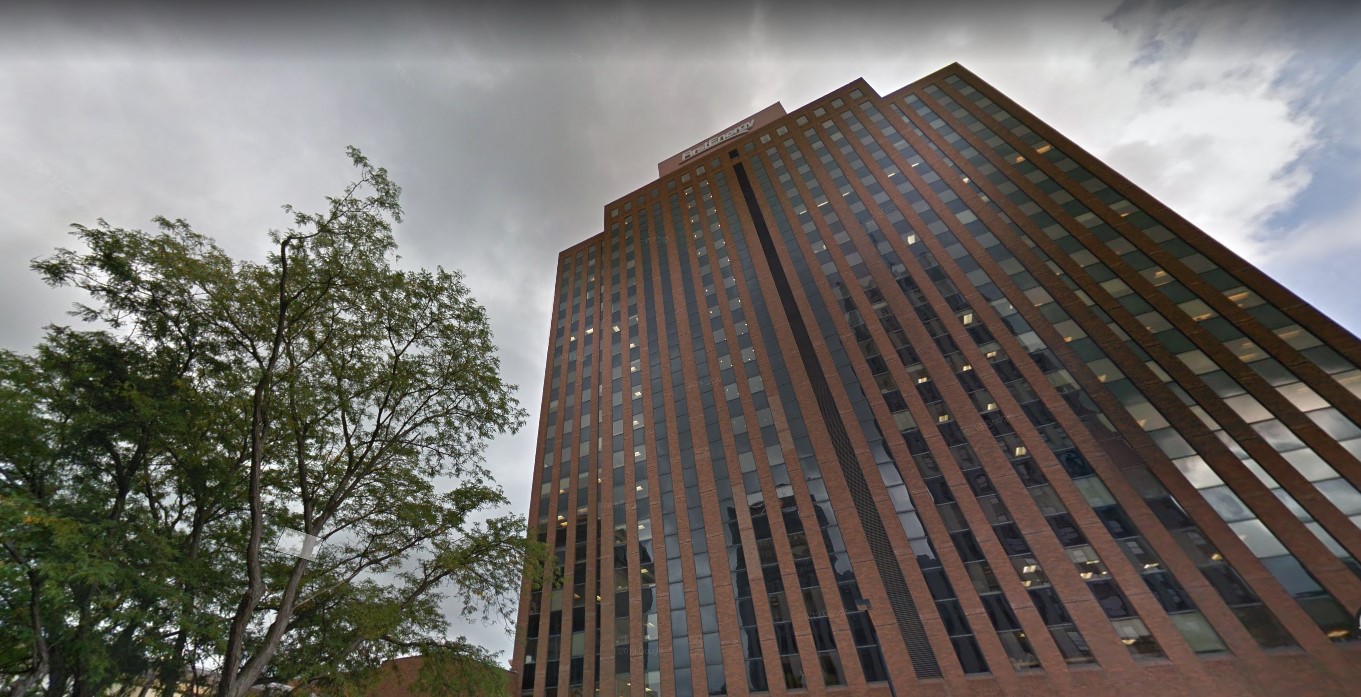
    FirstEnergy’s headquarters in Akron. Source: Google Maps.

    BY: Ohio Capital Journal

    A coal company got roughly $12.6 million above market prices to supply one of the 1950s-era plants subsidized by Ohio House Bill 6. That’s roughly 50 times the amount the company gave to the dark money group at the center of that coal and nuclear bailout law, according to a new analysis from the Checks and Balances Project.

    In other developments:

    • An evidentiary hearing about the reasonableness and prudence of the subsidized coal plants’ costs wrapped up last week. But it’s unclear when regulators might issue rulings.
    • In a separate FirstEnergy case, opponents want regulators to deny or limit more customer charges, saying the rider items should be considered in the company’s full rate case to be filed next May. The evidentiary hearing is expected to continue until Nov. 21.
    • Former Ohio House Speaker Larry Householder and lobbyist Matt Borges have appealed their criminal convictions but still haven’t filed their briefs. The Department of Justice has not yet filed additional criminal charges related to HB 6, either.

    Coal company overpayments

    A new report highlights how much Resource Fuels has collected for coal supplied to one of the two 1950s-era coal plants subsidized by HB 6 and run by the Ohio Valley Electric Company, or OVEC.

    OVEC paid roughly $12.6 million to Resource Fuels in above-market charges for coal, said Ray Locker, executive director of the Checks and Balances Project, which produced the report. And as a result of HB 6’s coal subsidies, Ohio ratepayers have been paying utilities for their share of OVEC’s costs that exceed their revenue.

    In 2018, Resources Fuels also sent $250,000 to Generation Now, the main dark money group in the HB 6 corruption scandal. The Energy and Policy Institute reported that wire transfer earlier this year and connected Resource Fuels to the Boich Companies, which the Columbus Dispatch had earlier identified as “Company C” in the 2020 criminal complaint against Householder and others.

    So, Resource Fuels “donated $250,000 to Generation Now to facilitate everything for Larry Householder. And the excess money they’ve been paid on this coal contract is 50 times more,” Locker said.

    To back up his calculations, Locker reviewed testimony statements filed with the Public Utilities Commission of Ohio by Elizabeth Stanton, an expert witness for the Office of the Ohio Consumers’ Counsel, and from John Seryak, an expert witness for the Ohio Manufacturers’ Association Energy Group. The case file also includes redacted audit reports from London Economics International.

    Stanton’s testimony showed that Clifty Creek, one of the two HB 6-subsidized coal plants, paid about one-fifth more per million BTUs (units of heat value) for coal bought from Resource Fuels, compared to another supplier of coal from the same mine. The price per million BTUs paid to Resource Fuels was also more than that paid to companies providing coal with a higher average heat value.

    The PUCO had let some utilities collect OVEC costs from ratepayers even before HB 6 passed. Seryak’s testimony said London Economics “repeatedly found that the cost under the Resource Fuels coal contracts is unusually high.” OVEC had a long-term deal with Resource Fuels, but it was neither prudent nor reasonable, he added. In his view, Ohio utilities have used the HB 6 coal subsidy riders “to recoup losses resulting from an unreasonable decision.”

    Seryak’s testimony also connected Resource Fuels to the Boich Companies and discussed the HB 6 corruption scandal.

    American Electric Power and Duke Energy both want the PUCO to strike parts of the testimony, arguing against Seryak’s point that the PUCO should not authorize recovery of the coal subsidies while the HB 6 investigations continue. They also want to keep out evidence about cost reviews of pre-HB 6 OVEC riders, which supports points made by Seryak and others.

    The PUCO’s hearing examiners struck those parts of Seryak’s testimony on Nov. 6 without a written opinion. The Ohio Manufacturers’ Association Energy Group appealed that decision to the full PUCO on Nov. 13.

    “That’s a total smokescreen to divert people from the details of these contracts,” Locker said. “The information is out there. And now they’re trying to stick the genie back in the bottle and say it doesn’t matter.”

    Representatives of the Boich Companies did not provide comments in response to Energy News Network’s questions.

    Read more: 

    Waiting

    The PUCO wrapped up its evidentiary hearing on the 2020 OVEC charges about which Seryak and Stanton provided testimony on Nov. 6. The hearing started on Halloween and took less than one week. Besides the above-market payments to Resource Fuels, challengers contended that other spending by the OVEC coal plants was not reasonable and prudent, including costs related to times when it was uneconomic to run them.

    Briefs and reply briefs are due Jan. 8 and Jan. 29, said Matt Schilling, spokesperson for the PUCO. After that, parties will wait for regulators to decide whether to disallow any costs that have already been passed through to ratepayers. Adjustments would presumably be reflected in future charges for the OVEC plants, which run through 2030.

    That wait could take a while. Regulators still have not ruled on challengers’ objections to pre-HB 6 OVEC plant costs. Nor have lawmakers advanced bills to repeal the subsidies.

    Costs for the coal subsidies continue to mount. The Office of the Ohio Consumers’ Counsel estimates those subsidies have cost ratepayers nearly $221 million since 2020 began.

    Read more:

    FirstEnergy riders

    The PUCO began another evidentiary hearing on Nov. 7 in a FirstEnergy rider case with roughly $1.4 billion at stake. The PUCO currently expects that hearing to continue through Nov. 21, Schilling said.

    Among other things, FirstEnergy wants to extend a “delivery capital recovery” charge. That DCR rider is involved in one of four cases the PUCO has put on hold since August 2022 while the Department of Justice considers more criminal charges related to HB 6. The new case also presents questions about possible side deals that may affect settlements. That issue was raised in another of the stayed cases.

    Despite the parallels, regulators declared on Oct. 18 that the rider case and two grid modernization cases “are completely unrelated” and refused to lift the stay. The PUCO also refused to put the rider case on hold, because it also deals with charges for customers who don’t choose a competitive electricity supplier. The current tariff for that is due to expire, and Ohio law requires a plan for those customers to be in place, the order said.

    The case “introduces various mechanisms aimed at ensuring the ongoing investment and maintenance of the distribution system,” FirstEnergy spokesperson Lauren Siburkis said, talking about the case’s charges for all customers. Those include the DCR rider and an advanced metering infrastructure rider, plus charges for vegetation management and storm mitigation.

    The increase for a residential customer using about 750 kilowatt-hours per month of electricity would initially be $3.11 per month. But witnesses for multiple challengers want regulators to deny various riders.

    For example, Justin Bieber, an expert for Kroger, said in a filed testimony statement that the DCR rider is improper “single-issue ratemaking.” Instead, he said, it should properly be considered in a full ratemaking case, which would look at all of a utilities’ revenues and expenses. He had a similar view about the vegetation management rider. FirstEnergy is due to file a full ratemaking case next May.

    Greg Meyer, an expert for the Office of the Ohio Consumers’ Counsel, similarly challenged the DCR rider, along with the advanced metering rider and storm recovery rider. Aside from the single-issue ratemaking problem, he noted that a process already exists for utilities to recoup major storm costs if they show the costs would impact their total operations.

    Colleen Shutrump, another expert for the Ohio Consumers’ Counsel, objected to a proposed energy efficiency rider, saying customers could get efficiency services in a competitive market.

    If approved, the riders would last eight years, with some possible adjustments in next year’s ratemaking case. A hearing on charges in a separate grid modernization case is set for January.

    Read more:

    Convictions on appeal

    Former Ohio House Speaker Larry Householder and lobbyist Matt Borges appealed their criminal convictions related to HB 6 this summer. Yet their lawyers have sought multiple extensions to file legal briefs on the trial court’s alleged errors.

    The filings are currently due next month, with the government’s responses due in January. For now, both remain in federal prisons.

    Meanwhile, Borges and Householder are still defendants in the state of Ohio’s HB 6 civil case, along with former PUCO Chair Sam Randazzo, FirstEnergy, Energy Harbor (formerly FirstEnergy Solutions), two former FirstEnergy executives and others.

    Borges’ amended answer filed on Oct. 25 denies liability for the state’s claims under the Ohio Corrupt Practices Act. The filing also says he wouldn’t be liable anyway because of the legal doctrines of in pari delicto or unclean hands. Those doctrines basically say plaintiffs can’t recover on a civil claim if they themselves engaged in wrongdoing.

    Borges’ lawyers did not respond to the Energy News Network’s request for comments about which state actors and what conduct they say supports those defenses.

    More charges?

    The Department of Justice has not yet filed charges against anyone other than Householder, Borges and others named in their July 2020 criminal complaint and indictment. (Three of the other defendants named have settled, and one has died.) As noted above, four FirstEnergy regulatory cases remain stayed, although various civil cases against the company continue to move ahead.

    A Nov. 6 order in one of the shareholder cases calls for Ebony Yeboah-Amankweh, a former lawyer and ethics officer for FirstEnergy, to answer plaintiffs’ lawyers’ questions under oath in a pretrial process called a deposition. The company ended her employment a few months after the 2020 complaint came out.

    A separate Nov. 6 order requires Randazzo to turn over documents and information which plaintiffs in that case have sought for months. Randazzo will also have to pay costs arising from the documents dispute.

    People from regulatory agencies or utilities “should not get to have their lawyers pick and choose what discovery and subpoena requests they will respond to, and what documents they will turn over,” said Dave Anderson, policy and communications manager for the Energy and Policy Institute.

    Read more:

    This article first appeared on Energy News Network and is republished here under a Creative Commons license.


    Kathiann M. Kowalski, Energy News Network
    KATHIANN M. KOWALSKI, ENERGY NEWS NETWORK

    Kathi is the author of 25 books and more than 600 articles, and writes often on science and policy issues. In addition to her journalism career, Kathi is an alumna of Harvard Law School and has spent 15 years practicing law. She is a member of the Society of Environmental Journalists and the National Association of Science Writers. Kathi covers the state of Ohio.

    MORE FROM AUTHOR

  • Veterans’ health care coverage expanded by Biden administration

    Veterans’ health care coverage expanded by Biden administration

    BY:  Ohio Capital Journal

    Biden administration officials said Friday the Department of Veterans Affairs will expand health care coverage for certain groups of veterans and their families and create new programs meant to make care more accessible. Veterans Day fell on Saturday.

    The VA will make coverage of certain toxic burn pit-related conditions available sooner than anticipated. Family members of veterans who served at North Carolina’s Marine Corps Base Camp Lejeune from 1953-1987 will be eligible to have the costs of treating Parkinson’s disease. And all World War II veterans will be eligible for no-cost health care, including at nursing homes, the department said in a series of news releases.

    The administration will also create a new graduate medical education program to help expand health care availability for veterans in rural, tribal and other underserved communities, the department said. And the VA will spend $5 million on an advertising campaign aimed at having more veterans sign up for services.

    “As we head into Veterans Day, we’re reminded of the fundamental promise that our country makes to anyone who signs up to serve in the military: If you fight for us, we’ll fight for you,” Veterans Affairs Deputy Secretary Tanya Bradsher told reporters on a Thursday call in advance of the announcements.

    The administration announced five changes meant to expand veterans’ benefits.

    The VA will speed up coverage for burn pit exposure that was part of a bipartisan law passed last year.

    The law, which provides health care benefits to veterans exposed to toxic chemicals from burn pits in Iraq and Afghanistan and certain other veterans, was written to be phased in over no more than 10 years.

    But President Joe Biden is directing the VA to make all affected veterans eligible for expanded benefits by early next year, according to a White House fact sheet.

    The Camp Lejeune Family Member Program will be expanded to cover Parkinson’s disease. The program, which covers a host of conditions related to the contaminated drinking water at the base, did not previously include Parkinson’s.

    Veterans of World War II who served anytime from Dec. 7, 1941, to the end of 1946, are entitled to no-cost VA health care, meaning no co-pays or monthly premiums, the department said. That includes care at nursing homes.

    To expand availability, the department is also creating a pilot program to reimburse residents and residency programs, including those outside of VA facilities, that serve veteran patients. The program would fund 100 physicians in rural, tribal and underserved communities, according to a VA news release.

    And to encourage veterans to take advantage of their benefits, the department is planning a national advertising campaign focused on “some of the most tangible, cost-saving benefits” veterans are entitled to, according to the VA.

    The multimedia campaign will tout the low-cost or no-cost health care, education, home loan and memorial service programs, the VA said.


    Jacob Fischler
    JACOB FISCHLER

    Jacob covers federal policy as a senior reporter for States Newsroom. Based in Oregon, he focuses on Western issues. His coverage areas include climate, energy development, public lands and infrastructure.

    MORE FROM AUTHOR

  • Gov. DeWine calls on legislators to modify recreational marijuana law before it goes into effect

    Gov. DeWine calls on legislators to modify recreational marijuana law before it goes into effect

    BY:  Ohio Capital Journal

    Ohio Gov. Mike DeWine says he accepts that Ohioans have voted to legalize recreational marijuana, but is calling on legislators to make changes to the law before it goes into effect on Dec. 7.

    “My recommendation to the General Assembly is that they take action to make sure that both rights are protected,” DeWine said Thursday morning to a group of reporters during his first remarks about Tuesday’s election.

    “People have a right to smoke it. People have a right to consume it. But also that everybody else’s who doesn’t choose to do so is also protected with their rights as well.”

    Leading up to the election, DeWine was a vocal critic of Issue 2, which legalizes and regulates the cultivation, manufacturing, testing and the sale of marijuana to Ohioans 21 and up.

    “We respect what the people have done,” DeWine said. “What the people have clearly told us is they want legal marijuana in Ohio. We are going to see that they have that. We’re also going to live up to our responsibility to all the people in the state of Ohio, whether they voted for it or voted against it.”

    In doing so, he wants to make sure various protections are in place, starting with Ohio’s children.

    “One goal will be to make sure that they are protected from advertising in regard to marijuana,” DeWine said. “We want to do everything within our power to reduce the number of inadvertent consumption of gummy bears, cookies and other products that have marijuana.”

    Last year, a 10-year-old Upper Arlington elementary student mistakenly brought her dad’s edible marijuana gummies to school and shared with them other students during lunch, thinking they were leftover Easter candy. After eating the gummies, the students became nauseous, experienced hallucinations and had elevated heart rates, so they were all taken to a local hospital for treatment.

    “We have every responsibility to do everything we can to keep those (emergency room visits) numbers down as much as we can,” DeWine said.

    BUCKEYE LAKE, Ohio — AUGUST 17: A worker holds a tray of green apple marijuana edibles that will be packaged for medical sale, August 17, 2023, at the PharmaCann, Inc.’s cultivation and processing facility in Buckeye Lake, Ohio. (Photo by Graham Stokes for Ohio Capital Journal)
     BUCKEYE LAKE, Ohio — AUGUST 17: A worker holds a tray of green apple marijuana edibles that will be packaged for medical sale, August 17, 2023, at the PharmaCann, Inc.’s cultivation and processing facility in Buckeye Lake, Ohio. (Photo by Graham Stokes for Ohio Capital Journal. Republish photo only with original story.) 

    He said he also feels obligated to protect adults who don’t want to inhale or smell marijuana when they are walking around.

    “They make a choice not to use marijuana, they should be protected from being in a place where they have to deal with that,” he said.

    DeWine also wants to reduce the number of drivers under the influence of marijuana. This was an issue the opposition group Protect Ohio Workers and Families harped on throughout election season — predicting Ohio would see an additional 48 fatal vehicle crashes and 2,298 more injury crashes if Issue 2 passed.

    Issue 2 is a citizen initiative, meaning Ohio lawmakers can make changes to the law — something DeWine hopes can happen by Dec. 7.

    “I would hope … that when Dec. 7 comes and goes that we will be able to inform the people of the state exactly how this program will roll out,” he said. “I think it would be good if that was all done by the 7th so that we’re not in a situation of taking something away from people.”

    DeWine said he has a Monday morning meeting scheduled with Ohio House Speaker Jason Stephens, R-Kitts Hill, and Ohio Senate President Matt Huffman — two republicans who were quick to hint at making changes to Issue 2 after the race was called.

    “Now is the time for the legislature to lead on how best to allocate tax revenues while responsibly regulating the industry,” Stephens said in a statement.

    Huffman said lawmakers may clarify language “regarding  limits for THC and tax rates as well as other parts of the statute.”

    Follow OCJ Reporter Megan Henry on Twitter.

    Reporter Nick Evans contributed to this story. 


    Megan Henry
    MEGAN HENRY

    Megan Henry is a reporter for the Ohio Capital Journal and has spent the past five years reporting in Ohio on various topics including education, healthcare, business and crime. She previously worked at The Columbus Dispatch, part of the USA Today Network.

    MORE FROM AUTHOR


  • Gov. DeWine taps Steve Dackin as head of Ohio K-12 education, despite previous ethics investigation

    Gov. DeWine taps Steve Dackin as head of Ohio K-12 education, despite previous ethics investigation

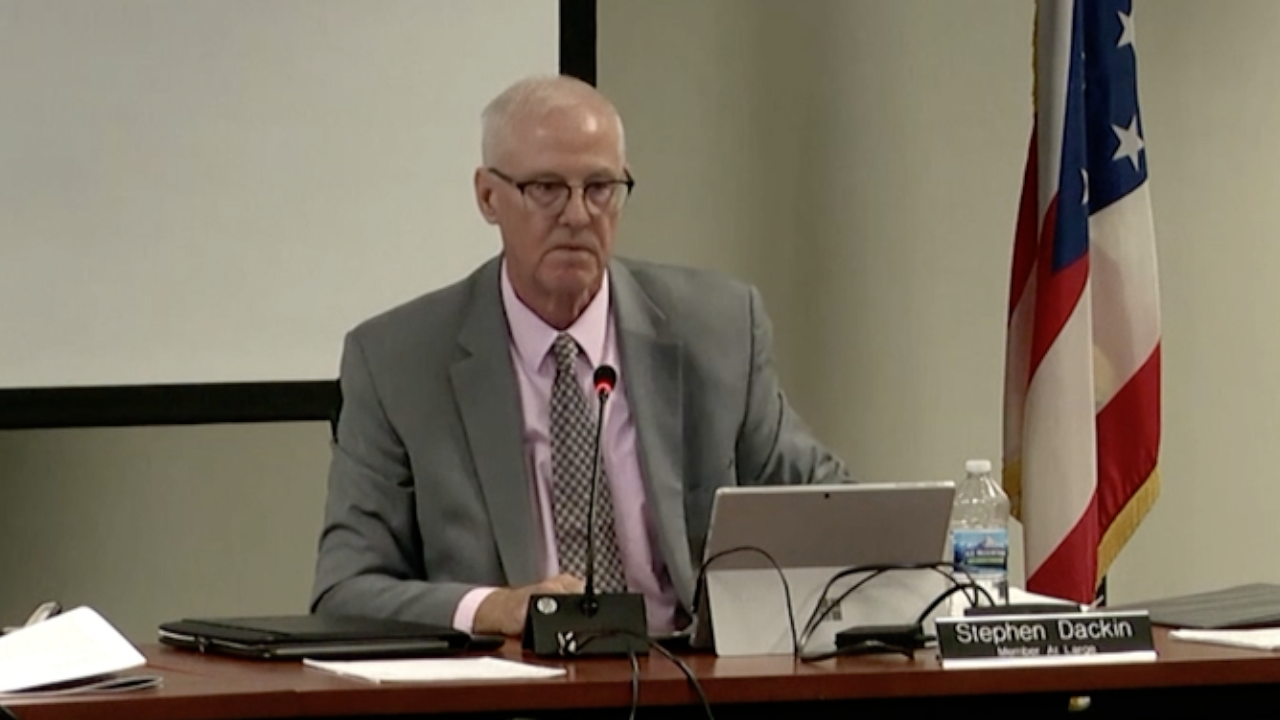
    Steve Dackin. Photo from The Ohio Channel.

    BY:  Ohio Capital Journal

    Ohio Gov. Mike DeWine nominated Steve Dackin to lead the new Department of Education and Workforce — despite Dackin’s previous ethics investigation during his less than two-week stint as state superintendent.

    Dackin previously served as the vice president of the Ohio State Board of Education and had access to the job applications for the state superintendent position in 2022 after Paolo DeMaria retired in 2021.

    In February 2022, Dackin resigned from the Ohio State Board of Education days before the application deadline and applied for the state superintendent position.

    The State Board of Education voted Dackin for state superintendent on May 10, 2022, and he assumed office on May 23, 2022. In between those 13 days, the Ohio Ethics Commission opened an investigation into Dackin.

    He resigned 11 days later on June 3, 2022, and signed a settlement with the Ohio Ethics Commission to avoid criminal prosecution in October 2022. Dackin did not take any compensation for the 11 days he was in charge of the Ohio Department of Education.

    “Dackin has a broad base of experience that will benefit Ohio’s continued efforts to create a transformative education system that provides the resources and support for students and serves as a pipeline of talented young people to Ohio employers, colleges, universities, and career and technical education centers, helping every Ohioan live up to their God-given potential,” DeWine said in a statement Thursday afternoon announcing his pick.

    The Director of the Department of Education and Workforce must be confirmed by the Ohio Senate.

    DeWine’s appointment comes weeks after a Franklin County Common Pleas Court Judge denied a preliminary injunction request to stop the transfer of power of K-12 education from the state school board to the governor’s office, which allowed the Ohio Department of Education to became the Ohio Department of Education and Workforce.

    This created a cabinet-level director position and puts the department under the governor’s office.

    The conservative think tank Fordham Institute’s Vice President for Ohio Policy and Advocacy Chad Aldis praised DeWine’s appointment of Dackin.

    “Steve Dackin is a widely respected leader and educator who has served Ohio students for decades in a wide variety of roles including as a teacher, principal, and superintendent,” Aldis said in a statement.

    The business coaltion Ohio Excels also celebrated DeWine’s appointment.

    “We were proud to support him before and praise the governor for picking this talented, committed education leader to guide this new department at this critical time,” Lisa Gray, president of Ohio Excels, said in a statment.

    Dackin was superintendent of Reynoldsburg City Schools from 2007-2014 and then worked as the superintendent of school and community partnerships for Columbus State Community College until December 2021.

    He earned his undergraduate degree in history from Ohio Northern University and his master’s in educational administration from the University of Dayton.

    Follow OCJ Reporter Megan Henry on Twitter.


    Megan Henry
    MEGAN HENRY

    Megan Henry is a reporter for the Ohio Capital Journal and has spent the past five years reporting in Ohio on various topics including education, healthcare, business and crime. She previously worked at The Columbus Dispatch, part of the USA Today Network.

    MORE FROM AUTHOR

  • FirstEnergy seeks $1.4 billion more from Ohio ratepayers. Watchdog objects

    FirstEnergy seeks $1.4 billion more from Ohio ratepayers. Watchdog objects

    Getty Images

    BY:  Ohio Capital Journal

    Even as its former top executives await possible criminal charges for gouging ratepayers, Akron-based FirstEnergy is seeking a $1.4 billion rate increase. The state’s consumer watchdog objects, saying the company’s profits are higher than normal and that it should use a more thorough process to prove that it really needs the money.

    The electric utility is seeking the increase as part of its “electric security plan” — a package of investments aimed at improving reliability and efficiency.

    “Our plan will build on the significant enhancements we’ve made to reinforce the grid against progressively stronger storms,” a statement on the FirstEnergy website quotes Patricia Mullin, acting president of FirstEnergy’s Ohio operations, as saying. “We’re committed to making the right investments to ensure a modern, more reliable grid while also keeping electric bills affordable, and we will continue working with interested stakeholders to ensure an open and thorough review of our proposal.”

    However, the state’s consumer watchdog, the Ohio Consumers’ Counsel, is objecting to the proposal on several grounds. For example, OCC contends that FirstEnergy is already highly profitable and shouldn’t need more of the ratepayers money.

    That’s not true, FirstEnergy spokeswoman Lauren Siburkis said in an email.

    “Our most recently disclosed return on equity in Ohio (shared during the third quarter earnings call) shows that to be 6.2%, which is much lower than the recently authorized returns in Ohio of 9.5% to 10%,” she said.

    However, the company, which operates in several states, appears to be doing quite well overall. In its third-quarter financial disclosure, the company reported that so far this year its per share earnings are up 17% over last year.

    OCC, the consumer watchdog, also objects to the mechanism through which FirstEnergy is seeking the rate hike. It’s asking the Public Utilities Commission of Ohio to approve “riders” in a process that isn’t as rigorous as a full “rate case.” That’s when regulators and others scrutinize many aspects of a utility’s operations and its books to ensure they’re not unfairly profiting from the monopolies that regulators grant them.

    FirstEnergy has abused the rider process in the past. As part of a huge bribery and money-laundering scandal, the company in 2019 received a “decoupling rider” that allowed the company to bill customers tens of millions to cover shortfalls in revenue.

    Chuck Jones, then the company’s CEO, boasted to investors that the rider made the company “somewhat recession-proof.” The rider was repealed after FirstEnergy admitted wrongdoing in a deferred prosecution agreement.

    OCC is arguing that going through a full rate case is the best way to prevent mischief and inefficiency.

    “Reliance on an excessive number of trackers, riders and other special regulatory mechanisms decreases a utility’s incentive to manage all aspects of its business in a cost-effective manner,” regulatory auditing expert Greg Meyer said in testimony to the regulatory commission that OCC sent to reporters last week. “FirstEnergy seems to ignore the fact that under its proposed (electric security plan), FirstEnergy’s consumers will be required to pay for energy-efficiency programs, demand-response programs and the multiple riders, in between base rate cases. These charges will add costs to the bills of FirstEnergy’s consumers without a review of all the relevant factors of FirstEnergy’s operations.”

    Asked why FirstEnergy didn’t seek the rate hike as part of a full rate case, Siburkis seemed to say FirstEnergy couldn’t wait six months, when one is scheduled.

    “The settlement we reached in 2021, which received the PUCO’s approval and delivered $306 million in customer benefits, explicitly requires us to submit the rate case in May 2024, no sooner and no later,” she said.

    That settlement was a deferred prosecution agreement in which FirstEnergy ponied up $230 million in fines and said that in addition to other bad acts, Jones and former Vice President Michael Dowling bribed Sam Randazzo — Gov. Mike DeWine’s first appointment to chair the PUCO — $4.3 million in exchange for regulatory and other favors.

    Jones and Dowling were fired and Randazzo resigned. All three men deny wrongdoing, but in court filings, they have acknowledged that federal law enforcement is investigating their conduct.

    Four already have been convicted over their participation in the scandal. Former Ohio House Speaker Larry Householder in June was sentenced to 20 years in federal prison for shepherding the corrupt utility bailout through the legislature. Former state GOP Chairman Matt Borges was sentenced to five years for playing a lesser role, and two others have pleaded guilty and await sentencing.

    For six weeks early this year, federal prosecutors put on a mountain of evidence in a Cincinnati courtroom about how FirstEnergy spent more than $60 million helping Householder bribe and bully through a $1.3 billion utility bailout that benefitted that company far more than any other utility.

    Now it’s asking for almost the same amount without going through the most rigorous regulatory scrutiny. Asked why ratepayers should trust FirstEnergy’s claims, Siburkis said the company has turned the page on its ugly recent past.

    “FirstEnergy has accepted responsibility for its actions related to House Bill 6 and has taken significant steps to put past issues behind us,” she said. “Today, we are a different, stronger company with a sound strategy and focused on a bright future.”


    Marty Schladen
    MARTY SCHLADEN

    Marty Schladen has been a reporter for decades, working in Indiana, Texas and other places before returning to his native Ohio to work at The Columbus Dispatch in 2017. He’s won state and national journalism awards for investigations into utility regulation, public corruption, the environment, prescription drug spending and other matters.

    MORE FROM AUTHOR

  • Ohio lawmakers want to make daylight saving time permanent

    Ohio lawmakers want to make daylight saving time permanent

    Getty Image

    The Ohio House State and Local Government Committee passed a resolution Tuesday that urges Congress to enact the Sunshine Uniformity Act of 2023, which would permanently switch Ohio to Daylight Saving Time.

    BY:  Ohio Capital Journal

    The clocks will fall back this weekend, but Ohio lawmakers are urging Congress to get rid of the time change and make daylight saving time permanent.

    The Ohio House State and Local Government Committee passed a resolution Tuesday that urges Congress to enact the Sunshine Uniformity Act of 2023, which would permanently switch Ohio to daylight saving time.

    House Concurrent Resolution 7, which now goes to the House floor, would not immediately change Ohio clocks. Only federal law could make that change. State Reps. Rodney Creech, R-West Alexandria, and Bob Peterson, R-Sabina introduced the resolution in May.

    “We simply no longer need the biannual tradition of changing our clocks,”  Creech said in his testimony.

    State Reps. Latyna Humprhey, D-Columbus, and Daniel Troy, D-Willowick, voted against the resolution.

    Clocks are set for daylight saving time from March to November. Permanent daylight savings would bump the sunrise and sunset back an hour, leading to darker mornings and lighter nights. The proposed resolution would push the sunrise back until almost 9 a.m. and the sunset until after 6 p.m. on the shortest day of the year.

    Ohioans simply don’t want to change their clocks, he said when speaking to the Ohio House State and Local Government Committee in May.

    “Switching to daylight saving time would increase the hours of sunlight in the evenings year round and could help combat some mental health issues from the darker winter evenings we currently have on standard time,” Creech said. “…When you’ve been at work all day, the last thing you want to do is open that door to go outside and it’s dark out,” Creech said. “It gives a little more daylight at the end of the day.”

    Young students walking to school or waiting for the bus in the morning in the dark is a concern with making daylight saving time permanent. But Peterson addressed that issue in his sponsor testimony and suggested school districts adjust their start times during the winter months.

    Rep. Marilyn John, R-Richland County, said she was one of the first students on the school bus in the morning.

    “It was dark every morning I got on the school bus, so from a safety standpoint I made it all the way through school and we had no issues,” she said.

    Standard Time

    President of Save Standard Time Jay Pea wants to make standard time permanent, what he refers to as God’s time.

    He argues standard time would not improve people’s health and safety, but it would also benefit schoolchildren, farmers and commuters.

    “(Daylight saving time) would deprive morning light needed by farmers, construction workers, and other outdoor laborers,” Pea wrote in his testimony. “It would disrupt worship for those who pray daily at sunrise. It would increase the need for morning heat and evening air conditioning in homes.”

    History of daylight savings

    Daylight saving time started in the United States as a way to save fuel during World War I and a year-round Daylight Saving Time policy was adopted during World War II.

    The Uniform Time Act in 1966 requires the country use daylight saving time, but gives states the option to opt out and remain on standard time year-round. Arizona, Hawaii and five U.S. territories have already adopted permanent standard time.

    The United States previously tried year-round daylight saving time in 1974 as a way to reduce the country’s energy consumption during the energy crisis, but the switch only lasted eight months before going back to standard time in the fall.

    Follow OCJ Reporter Megan Henry on Twitter.


    Megan Henry
    MEGAN HENRY

    Megan Henry is a reporter for the Ohio Capital Journal and has spent the past five years reporting in Ohio on various topics including education, healthcare, business and crime. She previously worked at The Columbus Dispatch, part of the USA Today Network.

    MORE FROM AUTHOR

  • Despite one response, recent polling indicates abortion-rights amendment has a good chance

    Despite one response, recent polling indicates abortion-rights amendment has a good chance

    BY:  Ohio Capital Journal

    A poll released last week received attention because a response to one of its questions. It seemed to show a close contest for an abortion-rights amendment that’s on the ballot next Tuesday.

    But a closer look at that and another recent poll indicate that opponents of the amendment still face an uphill fight.

    Issue 1 would build abortion rights into the Ohio Constitution up to the point of fetal viability outside the pregnant person’s body. It comes after the U.S. Supreme Court last year overturned Roe v Wade, clearing the way for enforcement of harsh state abortion limits already on the books.

    In Ohio’s case, that means banning the overwhelming majority of abortions after about six weeks of pregnancy — even when the pregnancy is the result of rape or incest.

    As horror stories stemming from enforcement of such laws proliferated, state ballot measures protecting abortion rights have been on an unbroken winning streak, with a measure last year carrying conservative Kansas by a gobsmacking 19-point margin.

    Those results leave abortion opponents desperate for a win and abortion-rights advocates eager to continue building momentum.

    So, when Ohio Northern University last week released a poll, one of its findings drew keen interest. It asked whether respondents agreed with the summary language of Issue 1 that will appear on the ballot. While that might sound like a technicality, the exact wording that will be on the ballot is important.

    In August, Secretary of State Frank LaRose, an abortion opponent, led a split Ohio Ballot Board in adopting a ballot “summary.” Not only is the “summary” roughly the same length as the amendment itself, it differs from the amendment in ways that critics say are intended to mislead.

    For example, it substituted the term “unborn child” for “fetal viability.”

    In an attempt to capture the effect that might have on the vote, pollsters at Ohio Northern asked some respondents whether they agreed with that amendment language and asked others whether they agreed with the language proposed by the League of Women Voters. The disparity was big.

    An overwhelming 68% agreed with the amendment as described by the League of Women Voters. But that number shrank to just 52% for the respondents who were asked about the language that will actually be on the ballot, thanks to LaRose and two others on the Ballot Board.

    But what does that mean practically?

    “Change in Ballot language may have big effect on support for Issue 1,” reads the title of that section of the Ohio Northern poll report.

    However, the same poll found that 65% of respondents think that abortion should be legal in most circumstances and 57% believed the Supreme Court shouldn’t have overturned Roe v Wade.

    More to the point, 70% said they had heard “quite a lot about Issue 1” and another 24% said they had heard some about it. That means that almost all respondents know something about the matter and presumably many will have formed opinions before going into the voting booth and seeing the Ballot Board’s language.

    “If this were a more obscure issue, the language would matter vastly more,” said University of Cincinnati political scientist David Niven. “But when this is the headline act of the entire election, almost no one is going to the polls to read the language on the ballot and make up their mind there.”

    If, as their detractors claim, LaRose and two others on the ballot board intended to dampen support for Issue 1 by using the language they did, they picked the wrong topic, Niven said.

    “There’s a boatload of good research that says language matters,” he said. “But it’s entirely based on the idea that you’re confronting this issue based on the language presented to you rather than confronting the issue based on deeply held beliefs.”

    The idea that the controversial ballot language will crash up against already-formed opinions also seems bolstered by another of the poll’s findings: When asked how they planned to vote on Issue 1, 60% said yes.

    That jibes with the results of the Baldwin Wallace University Ohio Pulse Poll released earlier in October. In it, 58% said they would vote in support of Issue 1.

    However, these are just polls — imperfect predictors in the best of circumstances. The fates of Issue 1, marijuana-legalizing Issue 2 and other matters on the ballot depend heavily on what happens Tuesday. That’s because more than 52% of respondents to the Baldwin Wallace poll said they’d wait until Election Day to cast their ballots.


    Marty Schladen
    MARTY SCHLADEN

    Marty Schladen has been a reporter for decades, working in Indiana, Texas and other places before returning to his native Ohio to work at The Columbus Dispatch in 2017. He’s won state and national journalism awards for investigations into utility regulation, public corruption, the environment, prescription drug spending and other matters.

    MORE FROM AUTHOR

  • LaRose uses state newsletter to promote Senate campaign

    LaRose uses state newsletter to promote Senate campaign

    Loveland, Ohio via Ohio Capital Journal

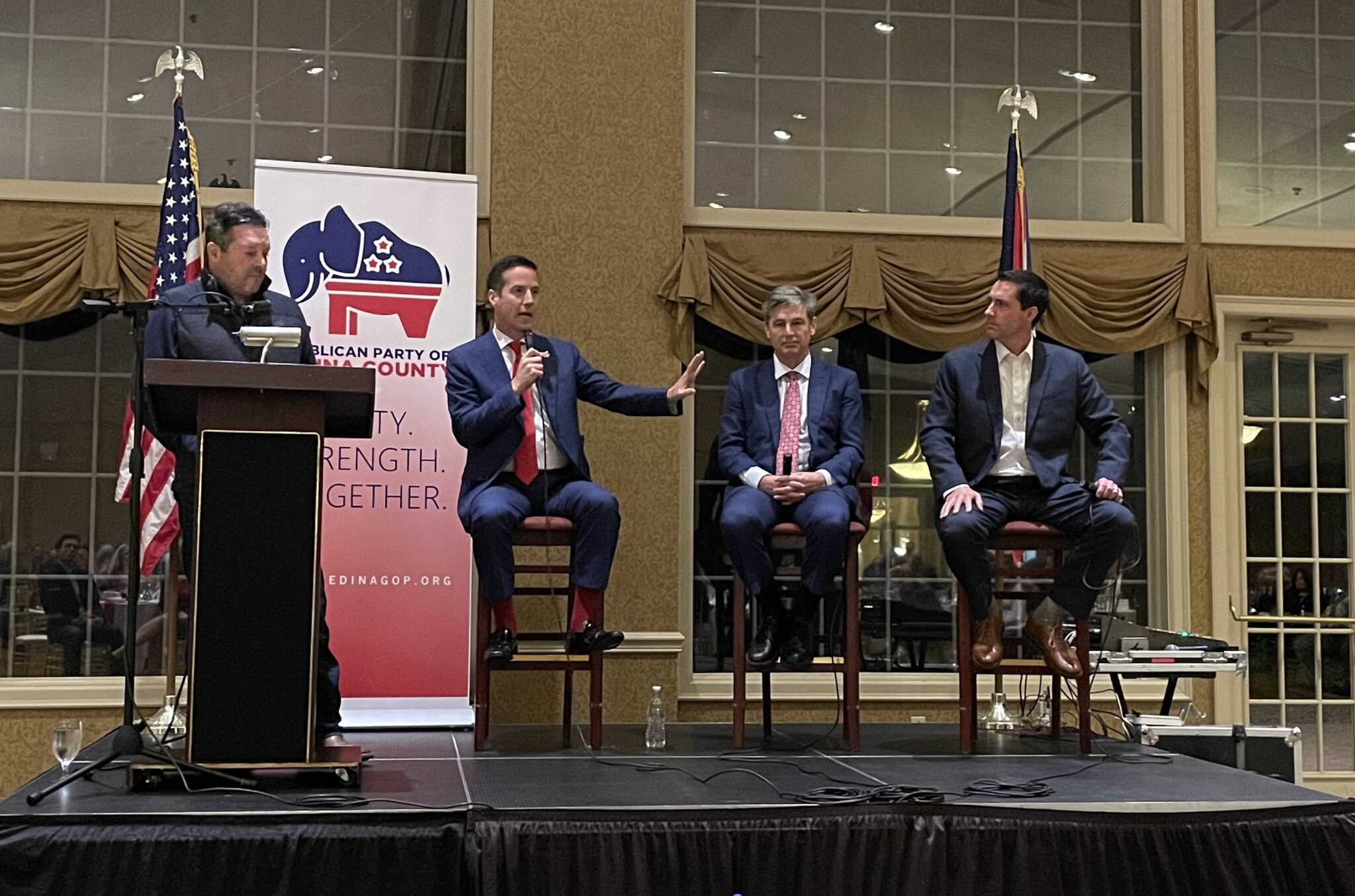
    Left to right, forum moderator, Bloomdaddy from WTAM Radio, Bernie Moreno, Sen. Matt Dolan, R-Chagrin Falls, OH Sec. of State Frank LaRose. (Photo by Nick Evans, Ohio Capital Journal.)

    BY:  

    Frustrated former employees told the press that in their office “everything revolved around” Secretary of State Frank LaRose’s run for U.S. Senate. Now LaRose appears to be using the taxpayer-funded office’s newsletter in that campaign.

    As a state official, LaRose isn’t supposed to use state resources in his political campaigns. And as secretary of state, it’s especially important that he wall off politics from his official duties because LaRose administers elections — including those in which he’s running.

    However, as he seeks the Republican nomination to take on Democratic U.S. Sen. Sherrod Brown next year, LaRose has become an increasingly hard-edged partisan as he seeks the endorsement of former President Donald Trump, who continues to attack the underpinnings of democracy itself.

    In addition to ignoring state Supreme Court orders regarding partisan gerrymandering, LaRose championed a measure in an August special election that would have made it almost impossible for citizen-initiated amendments to make it onto the ballot, much less into the Ohio Constitution. The measure failed badly, but LaRose and his allies tried to force it through ahead of a vote on an amendment protecting abortion rights that takes place a week from tomorrow, and an anti-gerrymandering amendment that is expected to be on the ballot in 2024.

    Substantial ethical questions also have arisen as LaRose juggles his senatorial ambitions with his duty to conduct secure, fair elections in Ohio.

    The Columbus Dispatch earlier this month reported on high staff turnover, with one former staffer telling the paper “Everything (in the secretary of state’s office) revolved around the Senate run.”

    Last month, NBC4 reported that LaRose was moving the secretary of state’s office from its location of 20 years and into a building where he had also registered his campaign with the Federal Election Commission.

    Then earlier this month, the Capital Journal reported that LaRose almost certainly recorded a campaign interview with election denier and conspiracy theorist Steve Bannon from the same building.

    LaRose refuses to answer questions about such activities. But he claims to have no campaign headquarters while he soon will be running his state office from the building where his campaign is registered.

    If LaRose uses people working on state time or uses state offices in his campaign, it could violate a section of Ohio law prohibiting the use of state resources to raise funds for a campaign.

    Paul Nick, executive director of the Ohio Ethics Commission, this week said his agency needs to know more about LaRose’s new office arrangements.

    “The Commission doesn’t pass judgment without first gathering and evaluating all of the facts,” Nick said in an email. “Determining whether a public official’s agency may relocate to the same office building as that official’s campaign headquarters requires deeper inquiry. We would encourage the Secretary of State to contact us for guidance on such questions.”

    Philip Richter, executive director of the Ohio Elections Commission, said his agency would have to be asked in order to look into the matter.

    “The only way for the Commission to take action on the statute is if an affidavit of complaint is filed with the Commission that would start the Commission’s processes on addressing those types of allegations,” Richter said in an email Thursday.  “The Commission cannot simply commence an investigation without the filing of a complaint.”

    Now LaRose appears to have used his office’s newsletter to promote his campaign.

    The Oct. 20 edition of the Secretary of State’s “Week in Review” offers updates about the coming election and it notes that October is Domestic Violence Awareness Month. There are also blurbs about LaRose’s travels and activities during the week.

    But the newsletter also has an “In Case You Missed It” section. It contained the top of an article by The Marietta Times that prominently featured the political message LaRose wants to convey to people who will be voting in the GOP Senate Primary.

    The second paragraph said LaRose “also confirmed his credentials as a conservative Republican who wants to make Sherrod Brown a former U.S. Senator, not the incumbent. Brown has been Ohio’s senior U.S. senator for a dozen years and the only Democratic statewide elected official in Ohio, with the exception of a few nonpartisan judicial races.”

    The newsletter then linked to the full story, which quoted LaRose bashing Brown for allegedly helping to make the country “weaker, poorer and less secure,” and the Biden administration over the economy and border security.

    LaRose’s office didn’t respond to questions about the newsletter.

    The state auditor is responsible for policing misuse of state resources. A spokesman said Thursday that a law regarding politicking in taxpayer-funded newsletters applies only to officials with “political subdivisions” such as counties. The law prohibits them from publishing a newsletter that “supports or opposes the nomination or election of a candidate for public office.”


    Marty Schladen
    MARTY SCHLADEN

    Marty Schladen has been a reporter for decades, working in Indiana, Texas and other places before returning to his native Ohio to work at The Columbus Dispatch in 2017. He’s won state and national journalism awards for investigations into utility regulation, public corruption, the environment, prescription drug spending and other matters.

    MORE FROM AUTHOR