Tag: Ohio Capital Journal

  • Ohio’s Republican U.S. Senate candidates spar in first televised debate

    Ohio’s Republican U.S. Senate candidates spar in first televised debate

     (From left) Sec. of State Frank LaRose, Bernie Moreno, and state Sen. Matt Dolan, R-Chagrin Falls, on the debate stage. (Photo courtesy of WCMH-TV.)

    BY:  –  Ohio Capital Journal

    The three Ohio Republican candidates competing for their party’s U.S. Senate nomination met Monday in the race’s first televised statewide debate.

    State Sen. Matt Dolan, R-Chagrin Falls, Ohio Sec. of State Frank LaRose, and Cleveland-area businessman Bernie Moreno tussled over issues like immigration, abortion and the economy. Each insists they should be the state’s Republican standard bearer, while their competitors would fall flat against Ohio Democratic U.S. Sen. Sherrod Brown.

    The debate sets the stage for what could be a consequential and highly competitive race. While presidential campaigns have largely moved away from Ohio to focus on other battlegrounds, the state could help determine who controls the closely divided Senate.

    Ohio’s primary election is March 19.

     Ohio’s first televised statewide U.S. Senate debate for 2024. (Photo courtesy of WCMH-TV.) 

    Immigration

    The debate kicked off with a discussion of immigration and the U.S.-Mexico border. It’s been a perennial issue for Republicans and one that all three candidates have made a centerpiece of their campaigns. But the rhetoric has grown sharper since Ohio’s last U.S. Senate campaign in 2022.

    During the last cycle, now-U.S. Sen. J.D. Vance, R-OH, argued cartels should be designated terrorist organizations. Now, all three Republican candidates embrace the idea.

    Does LaRose agree the U.S. should use drone strikes against them? “100%,” he said, adding, “we must define these cartels as foreign terrorist organizations and use the full force of the U.S. military and the U.S. federal government to kill them so that they can’t kill our fellow Americans.”

    LaRose has also proposed deploying three military divisions to the border.

    Moreno criticized that rhetoric as “irresponsible.”

    “We have to work with Mexico to give Mexico the option,” he argued, “They can be our largest legal trading partner or our largest illegal trading partner — they can’t be both.”

    Similarly, Dolan argued the administration should threaten to withhold aid and trade with Mexico to compel its participation in fighting cartels.

    But all three candidates readily staked out an even more radical position — ending birthright citizenship. “Birthright citizenship is a bad idea,” LaRose argued, adding people who came to the country illegally should not be able to “take advantage of that.”

    It’s an idea former President Donald Trump has dangled for years, but birthright citizenship is guaranteed by the Fourteenth Amendment.

     Sec. of State Frank LaRose, left, and Bernie Moreno. (Photo courtesy of WCMH-TV.) 

    Abortion

    The candidates also made their case for a national abortion ban — even if they quibbled with the terminology.

    “You’re using that word, I’m not,” Moreno argued before pitching “a 15-week floor where there’s common sense restrictions after 15 weeks.”

    Dolan signed on to 15 weeks, with “the three exceptions,” presumably rape, incest, and health of the mother.

    LaRose argued “it’s not enough to be pro-birth” and insisted “we need to make sure there are supports available” for prospective mothers.

    Still, like the others, LaRose argued, “the states can set their own standards, but there should be a bare minimum that we look at at the federal level.”

    But after the U.S. Supreme Court’s decision overturning Roe v. Wade sent abortion policy back to the states, the moderators pressed the candidates on why they believe federal lawmakers should be involved at all.

    “I don’t want it to be a federal issue,” Dolan insisted, “but I don’t want late term abortions to be the norm in the United States of America because that is out of touch.”

    A few minutes later, however, the moderators asked Dolan whether federal lawmakers should pursue anti-trans legislation and he offered a different argument.

    “No,” he said, “the Tenth Amendment makes it clear. The issues that are not expressly stated in the Constitution are left to the states and in Ohio.”

     OH Sec. of State Frank LaRose, speaking, and Bernie Moreno. (Photo courtesy of WCMH-TV.) 

    The economy and federal spending

    When it comes to backing stopgap continuing resolutions to keep the federal government funded, LaRose and Moreno both readily embraced shutting down the federal government as a negotiation tactic.

    “You would never run a business that way,” Moreno said, dismissing the approach as kicking the can down the road. “Republicans need to go into a negotiation with nothing off the table,” he added.

    LaRose insisted “if the Democrats are unwilling to join us on border security, if they’re unwilling to get the out-of-control spending under control, you bet I’m willing to shut down the government.”

    He added it’s not something to “relish” but “absolutely a tool we have to be willing to use.”

    Dolan stands out for his experience actually drafting budgets as the Ohio Senate’s Finance committee chair. And while he said he wouldn’t use continuing resolutions, he emphasized his ability to get agreement.

    “You have to be willing to make difficult choices and I have a career where I have made difficult choices,” Dolan argued, “They always haven’t been the best political choice for me, but they’ve always been the best for Ohio.”

     Bernie Moreno, left, and state Sen. Matt Dolan, R-Chagrin Falls. (Photo courtesy of WCMH-TV.) 

    The Trump factor

    Moreno got the former president’s endorsement late last month — a boon for the candidate after Trump’s backing helped propel Vance’s primary victory in 2022.

    LaRose had sought Trump’s endorsement as well, and after falling short, argued what matters is who will have the president’s back in the Senate. But Moreno pushed back.

    “The reality is he did endorse me,” Moreno insisted. “He knows who Frank LaRose is and doesn’t think that Frank will have his back and understands that dynamic.”

    In this campaign, and his unsuccessful run in 2022, Dolan has made a point of not seeking Trump’s approval. He insists “I’m about enacting Trump policies,” but that his chief focus is on Ohio voters.

    “They know that I will fight for Ohio,” Dolan argued, “and they also know the only thing you can trust about my two opponents is that when the political winds change, they will change with it.”

    It’s one of the few areas in which the candidates diverge, even if it’s more a matter of style than substance.

    A much more significant divergence is evident when it comes to funding for Ukraine. All three have vocally supported aid for Israel — LaRose quoting the Bible in doing so. But when it comes to Ukraine, LaRose contends “not another penny will go to Ukraine until we’ve secured the southern border.”

    “The world’s most exceptional nation can do things to make sure that our world is safer and more importantly, that America is more secure,” LaRose argued, “and that means that we need to create the circumstances where the fight in Ukraine can end very rapidly.”

    Moreno wants nothing to do with additional aid to Ukraine, arguing instead “what we need to do is drive towards peace and end the killing in Ukraine.”

    But Dolan, noting he represents a substantial Ukrainian population, said he views the issue differently. “This isn’t a balance sheet war for them,” he said, “this is real.”

    “If the United States does not continue to provide ammunition, weaponry, and aid to Ukraine, then Ohio boys and girls will be fighting Russia, in Poland, Western Europe or the Baltics,” Dolan argued.

    “That is a result of their policies,” he said of LaRose and Moreno.

    Democratic prebuttal

    Meanwhile, Democrats in Ohio are feeling a bit optimistic after recent victories for marijuana and abortion rights ballot measures. After voters approved Issue 1, enshrining abortion access in the state constitution, the Ohio Democratic Party began arguing abortion would be on the ballot again in 2024. All three Republican candidates, party chair Liz Walters argued, support a national abortion ban.

    Even as Republicans have tried to steer the race onto more favorable territory, former President Donald Trump has dragged it back — calling the repeal of Roe v. Wade during his administration “a miracle.

    In a call with reporters before Monday’s debate, the party aimed to keep the issue front and center. Dr. Catherine Romanos, a family doctor in Columbus, said her patients “breathed a sigh of relief” after the passage of Issue 1 last November.

    “They asked me less often if what they’re doing is breaking the law and they seem confident to come and get the care that they need,” she said.

    Echoing the warning that Republican candidates would support national abortion restrictions, Romanos argued “They think they know better than Ohioans. They’re wrong.”

    Follow OCJ Reporter Nick Evans on Twitter.


    Nick Evans
    NICK EVANS

    Nick Evans has spent the past seven years reporting for NPR member stations in Florida and Ohio. He got his start in Tallahassee, covering issues like redistricting, same sex marriage and medical marijuana. Since arriving in Columbus in 2018, he has covered everything from city council to football. His work on Ohio politics and local policing have been featured numerous times on NPR.

    MORE FROM AUTHOR

  • Ohio launching $20 million, decade-long study to improve behavioral health outcomes

    Ohio launching $20 million, decade-long study to improve behavioral health outcomes

    Getty Images illustration of therapy session.

    The study seeks to better understand the root causes of mental illness, substance use disorders, and suicide.

    BY:  Ohio Capital Journal

    This story is about suicide. If you or someone you know needs support now, call or text 988 or chat 988lifeline.org.

    The state of Ohio is embarking on a decade-long study to better understand the root causes of mental illness, substance use disorders, and suicide.

    The Ohio Department of Mental Health and Addiction Services is providing a $20 million grant to fund the State of Ohio Action for the Resiliency (SOAR) study, Ohio Gov. Mike DeWine announced during a press conference Friday.

    “Currently, there’s a lot that we don’t know and the SOAR study is a huge step forward in advancing our understanding of mental health and substance use disorders,” said Ohio State University President Ted Carter. “This study will provide key data that will shape the future of mental health across Ohio and beyond.”

    “There’s nobody that is not affected by this,” Carter said. “There’s somebody that you know in your family, your community, your neighborhood that is affected by this.”

    The study will go for at least a decade with the hope it will continue for decades to come and will look at generations of families from all across Ohio who are affected by mental illness and substance abuse disorders, DeWine said. Funding for the SOAR study comes from the state’s two-year operating budget.

    “We know mental illness and substance use disorders are preventable, treatable, and people can and do recover,” said Ohio Department of Mental Health and Addiction Services Director LeeAnne Cornyn.

    The SOAR study has two main projects — the SOAR Wellness Discovery Survey and the SOAR Brain Health Study.

    The wellness study will study as many as 15,000 people across Ohio’s 88 counties to learn how skills may help overcoming adversity. The brain health study will look at 3,600 Ohioan in families to help look at the biological, psychological, and social factors that help people handle adversity.

    “There’s still an awful lot to know about mental health,” DeWine said. “And candidly, the research in this field has not been as robust as it has been in other areas. … It will give us a complete picture of each participant to uncover why, for example, two people in similar circumstances or with similar health have very, very different outcomes.”

    Ohio State University will lead the study and is partnering with hospitals and universities around the state: Bowling Green State University, Central State University, Kent State University, Nationwide Children’s Hospital, Northeast Ohio Medical University, Case Western Reserve University, University Hospital in Cleveland, Ohio University, the University of Cincinnati, Cincinnati Children’s Hospital, University of Toledo and Wright State University.

    The SOAR study will be led by Dr. Luan Phan, chair of the Department of Psychiatry and Behavioral Health at the Ohio State University College of Medicine.

    “Our approach … is to identify the factors that can be modified to reduce risk and build resilience in the face of stress, trauma and adversity,” Phan said. “It’s important to identify what we don’t know — the root causes, the risks, the preventive factors of mental illness, to explain what, I feel, are fairly simple, but fundamental questions: who gets ill? Why did they get ill? How do they get ill? And when do they get ill?”

    Researchers hope this study will do for mental health what the Framingham Heart Study has done for heart disease.

    The Framingham Heart Study was initiated by the United State Public Health Service in 1948 to investigate the risk factors for cardiovascular disease. It has enrolled more than 15,000 study participants.

    “Ohio represents a microcosm of our country,” Phan said. “What we learn here can be disseminated and scaled broadly. Other states will not only copy and adopt what we have done, they will be compelled to do so.”

    Suicide and opioid overdose deaths

    Nineteen Ohioans die prematurely every day from unintentional overdose and suicide, Phan said.

    Opioid overdose deaths increased by more than 300% since 2010 in Ohio, said Dr. John Warner, CEO of Ohio State University Wexner Medical Center.

    Suicide deaths in Ohio increased 8% to 1,766 deaths from 2020 to 2021 — meaning five Ohioans die by suicide every day, according to Ohio Department of Health’s Suicide Demographics and Trends 2021 report.

    The 988 Suicide & Crisis Lifeline received 8,793 calls from Ohio area codes from July 2022 to May 2023, according to the Ohio Department of Mental Health and Addiction Services.

    During that same time, there was an average of 2,014 texts and 2,007 chats per month to 988 from Ohio area codes.

    Follow OCJ Reporter Megan Henry on X.


    Megan Henry
    MEGAN HENRY

    Megan Henry is a reporter for the Ohio Capital Journal and has spent the past five years reporting in Ohio on various topics including education, healthcare, business and crime. She previously worked at The Columbus Dispatch, part of the USA Today Network.

    MORE FROM AUTHOR

  • Ohio transgender adults speak against proposed administrative rules that would change health care

    Ohio transgender adults speak against proposed administrative rules that would change health care

     Getty Images

    The rules would collect data on transgender medical care and modify the treatment of those with gender dysphoria, requiring medical consent from a psychiatrist, an endocrinologist and a bioethicist before moving forward with treatment.

    BY:  –  

    Ohio transgender adults are deeply concerned Gov. Mike DeWine’s proposed administrative rules would make it harder for them to access gender-affirming care.

    DeWine announced two proposed rules earlier this month that would collect data on transgender medical care and modify the treatment of those with gender dysphoria, including requiring patients under 21 undergo six months of counseling before receiving more treatment.

    “Anytime the government is telling its citizens what they can and cannot do with their own bodies, it sets a very, very, very dangerous precedent,” said Vincent-Natasha Gay, a transgender adult who lives in central Ohio.

    The rules are just proposals at this point and have not gone into effect. Ohioans still have time to submit comments regarding the proposed rules.

    “They need to not be implemented,” said Lis Regula, a transgender man living in Columbus. “It would make us the worst state in the entire nation for adults and children who want to obtain gender-affirming care.”

    A major issue Terry Brown has with the administrative rules is that they deal with adults.

    “You’re talking about restricting people who are classified as adults in the eyes of the law,” Brown, a trans man, said.

    The Ohio Senate Democratic Caucus recently sent a letter to DeWine expressing their concerns about how the proposed rules could get in the way of adults accessing gender-affirming care.

    “While these rules may have been drafted with the intention of taking a more pragmatic approach than the legislature, in reality, this proposal could make it more difficult for trans Ohioans to receive the life-saving medical care that they need,” the letter said. “The proposed rules go even further than House Bill 68 by interfering with the lives and medical care of both trans children and trans adults.”

    House Bill 68 would ban gender-affirming care for trans youth. DeWine vetoed HB 68, but the House voted to override his veto last week. The Senate will vote to override the veto on Wednesday next week.

    One of the proposed administrative rules would require obtaining medical consent from a psychiatrist, an endocrinologist, and a bioethicist before moving forward with treatment.

    DeWine’s spokesperson Dan Tierney said this rule would only apply to people who start receiving treatment after the rule takes effect.

    “It’s the Department of Health’s intention that it applies to treatment that starts moving forward after the enactment of the rule,” Tierney said. “That’s the way House Bill 68 was written. We intend this to be consistent with that.”

    Lawmakers added a grandfather clause to HB 86 that would allow doctors who already started treatment on patients to continue.

    But transgender adults argue the language of the proposed rules is vague and ambiguous.

    Silhouette of doctor in white coat with stethoscope and LGBT badge on pocket
     Getty Images. 

    “I feel like that was not very clear at all,” Brown said. “Because of that vagueness, we really still don’t know how it’s going to be applied.”

    This just leaves Regula with more questions about continuing care.

    “That doesn’t address if someone has to put a pause on things for some reason if they’re going to be able to get back to their treatment,” Regula said.

    Vincent-Natasha Gay is currently receiving gender-affirming care and would be considered grandfathered in under the proposed administrative rules.

    “But that shouldn’t matter,” Gay said. “There are so many people out there who are trans and just don’t know they’re trans yet, or are in the closet and hiding because they’re afraid for their life. And my goodness, with these proposed rule changes, that’s just going to make that even worse.”

    Health experts say it would be harmful if someone who’s already receiving treatment abruptly stopped, Tierney said.

    “That could have some negative health consequences,” he said. “That’s certainly not the intent for anything along those lines.”

    Instead, Tierney said these rules are meant to prohibit health care providers from giving treatment without consultation.

    “Most of the providers are doing this in the comprehensive, multidisciplinary way, anyways, so they would likely be in compliance with the rule,” he said.

    The proposed rule doesn’t mean people have to sit down with a psychiatrist, an endocrinologist, and a bioethicist, Tierney said

    “The bioethicist helps develop how each facility is going to deal with cases of how the treatments occur at that particular facility,” he said. “At the very least, mental health care is generally provided by the psychiatrist, not the endocrinologist, and endocrinology is generally provided by the endocrinologist, not by the psychiatrist.”

    But Ares Page is concerned about adding people to the medical team that might not have proper training in treating transgender patients.

    “I don’t see where that’s going to be safe, and where that’s going to help us improve our safety,” said Page, a transgender adult living in Akron.

    Page is also worried how much extra it will cost to add these specialists to a person’s medical team.

    “Some people’s insurance companies may not allow them, or approve them for these specialists,” Page said.

    Ohioans have until 5 p.m. Friday to give feedback on the proposed transition care rule by emailing out to MH-SOT-rules@mha.ohio.gov with the subject line, “Comments on Gender Transition Care Rules.”

    Data Collection

    The second proposed administrative rule would require data collection around gender-affirming care, including requiring a health care provider to report non-identifying treatment for “gender-reassignment surgery, gender-transition services, genital gender reassignment surgery,” according to the proposed administrative rules.

    Under the proposed administrative rules, the Ohio Department of Health would share the aggregate data collected with Ohio lawmakers starting Jan. 31, 2025.

    But many transgender adults question why the data collection is necessary.

    “You can assign a code …  But there always has to be a place where my name goes back to the code,” Brown said.  “That is a problem.”

    Having a common data set on medical treatment will help people make an informed decision, Tierney said, who explained ODH collects data on things like pediatric flu deaths, food poisoning and abortion.

    “It’s all de-identified, it’s all aggregate,” Tierney said. “There’s really no way you could identify any patient from the data.”

    But people are concerned it would be hard to have the data be completely anonymous, especially for folks who live in a small community.

    “If it’s a matter of three (trans) people in a community and a doctor’s office or hospital system is treating all three of those people, how do you really anonymize three folks?” Regula said.

    Feedback for the data collection proposal must be sent to ODHrules@odh.ohio.gov by Feb. 5.

    Despite these proposed rules and ongoing legislation targeting trans youth, most people interviewed for this story say they would like to stay in Ohio if they can.

    “This is my home,” Regula said. “I’m an Ohio boy born and bred. I was raised here, my family is here. … I can’t imagine leaving home …  I also want to be able to make sure that my daughter and I have the medical care that we need.”

    But Page has contemplated leaving the country altogether.

    “(The government) has no right to tell me what to do with my body,” Page said.

    Follow OCJ Reporter Megan Henry on X.


    Megan Henry
    MEGAN HENRY

    Megan Henry is a reporter for the Ohio Capital Journal and has spent the past five years reporting in Ohio on various topics including education, healthcare, business and crime. She previously worked at The Columbus Dispatch, part of the USA Today Network.

    MORE FROM AUTHOR

  • The fight to feed children in Ohio continues

    The fight to feed children in Ohio continues

    Students getting their l lunch at a primary school. Photo by Amanda Mills/Centers for Disease Control and Prevention.

    BY:  Ohio Capital Journal

    The most recent state budget made changes to allow more students to be fed at no cost, but the battle to quell child hunger is still ongoing in Ohio.

    The budget bill passed last year provided more than $4 million in funding to allow any students qualified for reduced-price of free breakfast and lunch can get the meals at no cost for the 2023-2024 school year.

    It’s not quite the universal meals that school nutrition directors had asked for when budget talks began, but the final budget’s school meal provisions are progress in the right direction, child and education advocates in the state concluded.

    The programs that are still attempting to help stem the flow of student hunger are seeing the struggles that inflation has on the cost of food, and Katherine Ungar, senior policy associate with the Children’s Defense Fund of Ohio, said the stigma of the income-based school food programs is still a barrier.

    “It’s creating these categories that can create that stigma,” said Ungar.

    Ohio has taken strides to help in the future by pledging to use federal dollars to establish a summer program that will give low-income families with child of school-aged children “grocery-buying benefits” while schools are closed, according to the USDA, who estimates more than 29 million children nationally could benefit.

    “During the summer months, we estimate almost 1 million kids … lose access to meals,” Ungar said.

    CDF-Ohio researched the whole-child impacts of categories like housing, health care and food insecurity. In fiscal year, 2023, the group’s  annual data profiles showed an increase in the state’s students who were eligible for reduced-price or free school meals and considered “economically disadvantaged.”

    The number of kids qualifying for the no-cost or low-cost lunches, for which any student in a household with up to 185% of the federal poverty line is eligible, when from 46.6% in the 2021-22 school year to nearly 50% in the 2022-23 school year.

    This new summer benefit will be eligible to about 837,000 Ohio children, according to Ungar, and the economic impact of the benefit could bring $150 million into local economies.

    The Summer Electronic Benefit Transfer Program (EBT) gives eligible families who apply pre-loaded cards with $40 per child per month. The EBT program works in conjunction with Supplemental Nutrition Assistance Program (SNAP) benefits, Women, Infants and Children (WIC) funds and other nutrition assistance efforts.

    But the program can only be used if eligible families apply. Children who are certified as eligible for free or reduced-price meals at school would be eligible for the Summer EBT as well, but still have to apply through the same process as the free-or-reduced-lunch application.

    “We know there are families who qualify but have not completed the application form,” Ungar said. “Some families may not think they’re eligible, but it’s important that anyone who could be eligible applies, so that those benefits can get to the people who need them.”

    A similar program was available during the COVID-19 pandemic, and the USDA found that the program decreased “children’s food hardship” by 33%, and took between 2.7 and 3.9 million out of hunger across the country.

    According to research by the Center for Community Solutions, the pandemic EBT program brought Ohio children an estimated $2.2 billion in nutrition assistance between Spring 2020 to Summer 2023, the end of the pandemic program.


    Susan Tebben
    SUSAN TEBBEN

    Susan Tebben is an award-winning journalist with a decade of experience covering Ohio news, including courts and crime, Appalachian social issues, government, education, diversity and culture. She has worked for The Newark Advocate, The Glasgow (KY) Daily Times, The Athens Messenger, and WOUB Public Media. She has also had work featured on National Public Radio.

    MORE FROM AUTHOR

  • Ohio superintendent says state board of education may not make payroll by summer

    Ohio superintendent says state board of education may not make payroll by summer

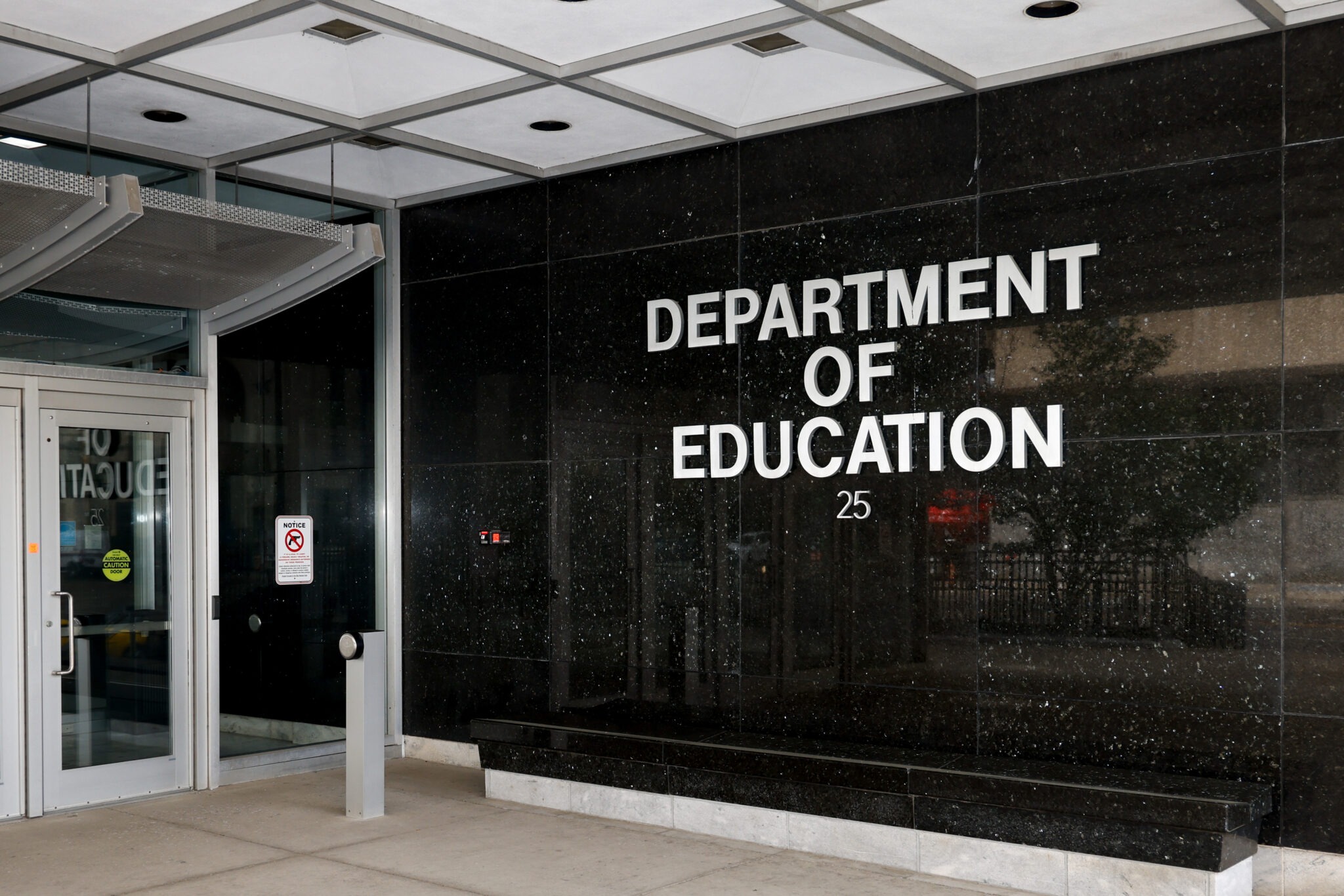
    The Ohio Department of Education and Workforce in Columbus, Ohio. (Photo by Graham Stokes for Ohio Capital Journal. Republish photo only with original story.)

    Newest superintendent’s goal target responsibilities of the board, rebuilding of relationships

    BY:  – JANUARY 12, 2024 – Ohio Capital Journal

    Pointing directly to changes made in the Ohio legislature’s most recent budget, Ohio’s new superintendent of public instruction said the State Board of Education is facing real funding issues.

    “What we face, in terms of a budget deficit right now, is a clear and present danger for our ability to do the roles that we’ve been assigned to do,” Superintendent Paul Craft told the board at his first monthly meeting, a mere six days into his tenure.

    The deficit was spelled out as part of an introduction of goals the superintendent has as he begins his job, and as the job and the role of the state board changes under the new Department of Education and Workforce. As superintendent, Craft also serves as secretary for the board.

    To stem the funding issues, which Craft said amount to a shortfall of about $2 million for a $10 million total budget in the next fiscal year, he and board members will need to work with legislative partners “pretty quickly.”

    “As we get into that June timeframe, we’ll probably not be able to make payroll,” Craft told the board. “That’s worrisome.”

    He added that staffing issues could only get worse as the year goes on, and the board will continue its struggle to maintain current staff.

    “There’s not a chance to cut our way through this and still do the educational licensure and educational professionalism functions with which we’ve been tasked,” he said.

    Board member Meryl Johnson asked Craft directly if the budget bill, House Bill 33, “left us without enough funding to do our job.”

    “Yeah,” Craft responded. “And again, that will happen from time to time. The governor had a good patch in (the budget) that would have gotten us through at least, I would say, three years. That was in the House version and it disappeared in the Senate version.”

    To Johnson, the lack of adequate funding the board is seeing indicates state leaders who supported the changes that eliminated state board roles and authorities “want to put us out of business.”

    Craft’s other proposed goals include building or rebuilding relationships between the state board and other “educational stakeholders” in an effort “to get as many interactions as we can around educational discussions … so that we continue to be viewed as a key component to the educational infrastructure in this state.”

    “So those roles that we are given, we need to make sure we’re doing those in such a way that our districts and our other educational stakeholders say ‘they’ve got their stuff together, they’re doing what we need to support our staff and students throughout the state of Ohio,’” Craft said.

    The superintendent also pledged to finish his dissertation, which he said was interrupted by the pandemic and its impact on educational data he studied. But board member John Hagan said that goal could stand to be back-burnered.

    “As far as your continuing education, I would hope that that’s the lowest priority on your list, because I think you’ve got a lot to do here and probably won’t have a lot of spare time,” Hagan said.

    One of the many other things on the superintendent’s list is a proposal by the Ohio Department of Administrative Services to move the state board to an office within the Ohio Department of Agriculture, located in Reynoldsburg.

    While the cost of housing the board downtown versus moving to the A.B. Graham Building is only marginally different, according to Craft, the losses are more professional than financial.

    “I think the loss we would get in terms of no longer being co-located with the other educational stakeholders in the state of Ohio, I can’t support from an operational perspective what the Department of Administrative Services would like to do with the team,” Craft said.

    The superintendent said the board would probably need intervention from “some other state actors” to push back against the proposed move, along with the leveraging of relationships from the board members as well.

    There was agreement among the members that the move did not seem necessary, nor were they in favor of it. The opposition brought on a resolution asking the director of the state DAS to appear in person before the board and explain the move.

    “I see no rationale that makes any sense to move out there,” said member Walt Davis. “For us to be located out there is the Gulag, frankly, and I’m strenuously opposed to it.”

    The state board’s next monthly meeting is scheduled for Feb. 12.


    Susan Tebben
    SUSAN TEBBEN

    Susan Tebben is an award-winning journalist with a decade of experience covering Ohio news, including courts and crime, Appalachian social issues, government, education, diversity and culture. She has worked for The Newark Advocate, The Glasgow (KY) Daily Times, The Athens Messenger, and WOUB Public Media. She has also had work featured on National Public Radio.

    MORE FROM AUTHOR

  • Ohio families with transgender children relieved DeWine vetoed HB 68, worry about potential override

    Ohio families with transgender children relieved DeWine vetoed HB 68, worry about potential override

    A transgender Pride flag is covered with the words “Hands Off Trans Youth.” (Photo by Greg LaRose/Louisiana Illuminator/States Newsroom)

    The Ohio House will be in session next Wednesday and the Senate’s next scheduled session is Jan. 24.

    BY:  Ohio Capital Journal

    The Burkle family huddled together to watch last week’s press conference where Ohio Gov. Mike DeWine vetoed a controversial bill that would have banned gender-affirming care for transgender youth.

    “It was a brief sigh of relief,” mom Alicia Burkle said. “We were crying and hugging.”

    Their 10-year-old daughter Astrid has socially transitioned, but has not yet started puberty blockers.

    Ohio House Bill 68 would prevent transgender athletes from playing women’s sports and would ban transgender youth from accessing gender-affirming care, including puberty blockers and hormone therapy. DeWine said during last week’s press conference his focus was on the health care component of the bill.

    The Burkles figured they had a couple of weeks before the lawmakers returned from winter break, but the Ohio House announced they will have session next Wednesday, Jan. 10. The Ohio Senate’s next schedule session is Jan. 24.

    “It’s just so hurtful and it’s exhausting,” Burkle said.

    The Ohio Capital Journal talked to three families with transgender children who were relieved DeWine vetoed HB 68, but are now concerned the legislature could override his veto.

    “We do know that this was a math problem also and that the veto was not necessarily the end,” said Nick Zingarelli, the father of a transgender teenager.

    A three-fifths vote of the members of the House and Senate is necessary to override the governor’s veto — meaning 60 representatives and 20 senators.

    HB 68 passed in December with 24 votes in the Senate and 62 votes in the House. State Sen. Nathan Manning was the lone Republican senator to vote against the bill in December. Republican state Reps. Jamie Callender and Brett Hillyer voted against the bill when it originally passed the House with 64 votes in June.

    Ohio House Speaker Jason Stephens, R-Kitts Hill, said last week he was disappointed in DeWine’s veto.

    “We will certainly discuss as a caucus and take the appropriate next steps,” Stephens said in a statement.

    Burkle family

    When the Ohio House and Senate passed HB 68 on Dec. 13, the Burkles launched into action mode by asking their doctor what next steps they can take as well as emailing and calling DeWine. Astrid even sent DeWine some handwritten letters.

    “We really didn’t get to truly enjoy the holiday because we were just so anxious about what was going to happen,” Alicia Burkle said.

    Astrid is not currently on puberty blockers and wouldn’t be covered under the grandfather clause that would allow doctors who already started treatment on patients to continue.

    “We don’t know that she would be (on puberty blockers) before the bill were to take effect, if it were to pass,” Alicia Burkle said.

    DeWine said he would pursue administrative rules banning gender-affirming surgery on minors, collecting data, and combating clinics that might pop up to try to perform ideologically-driven care. No Ohio children’s hospital currently performs gender-affirming surgery on those under 18.

    “Those are all really reasonable concessions,” Burkle said.

    The Cleveland-area family doesn’t want to move out-of-state, and hopes it doesn’t get to that point.

    “It’s certainly one of the options that we’re keeping open if that’s what we’re forced to do,” Burkle said.

    The Scagliones

    While Kat Scaglione was impressed with DeWine’s veto, she said it feels like sitting in limbo waiting to see what happens next.

    “What if this override happens?” she asked. “It feels like we’ve almost backpedaled and we’re back to where we started.”

    She has a 14-year-old transgender daughter, a 13-year-old cisgender son, and a 10-year-old transgender daughter.

    Amity, 14, is past the point of being able to get puberty blockers and is waiting on hormone treatment.

    “I am supposed to be worrying about the next test I have to study for,” Amity said. “Not whether my rights are going to disappear. …  It’s very scary to have that thought looming over your head, like all the time.”

    Kat said waiting on the governor’s decision overshadowed the holiday season.

    “My kids were sitting there writing Christmas lists and writing letters to send to the governor and to the representatives,” she said. “It didn’t feel like much of a holiday this year.”

    Zingarelli family

    The Zingarelli family celebrated DeWine’s veto.

    “It was we’re going to take the next few days just to savor this victory, because it was a huge victory,” father Nick Zingarelli said.

    His 14-year-old daughter is treated by Cincinnati Children’s Hospital Medical Center, so she would be able to continue receiving care under the grandfather clause but he wants to make sure all Ohio kids would have access to this kind of care.

    He hopes DeWine’s veto will give other Republican lawmakers pause.

    “I would hope that they would listen to the elected leader from their own party, and then consider that and say, ‘Am I on the wrong side of this issue?’ … We’re not gonna roll over on this battle. If they win in the legislature, we will see them in court,” he said.

    Follow OCJ Reporter Megan Henry on X.

    ___________

    Megan Henry
    MEGAN HENRY

    Megan Henry is a reporter for the Ohio Capital Journal and has spent the past five years reporting in Ohio on various topics including education, healthcare, business and crime. She previously worked at The Columbus Dispatch, part of the USA Today Network.

    MORE FROM AUTHOR

  • Ohio public education supporters look to 2024, lawsuit to hold private voucher system accountable

    Ohio public education supporters look to 2024, lawsuit to hold private voucher system accountable

    Getty Images

    BY:  Ohio Capital Journal

    While marijuana legislation and other bills still sit on the horizon in the second year of this term’s General Assembly, education policy can always be counted on to be a part of the discussion. 2024 should be no different.

    Ohio’s private school voucher program has been a source of strong debate among legislators and education advocates of all kinds since the 1990s, when the program began as a way to allow lower-income students to access private schools, proposed as an effort to improve education outcomes in poor-performing public school districts.

    But as public school advocates still hope to see full funding of the Fair School Funding Plan for districts across the state, they saw eye-popping increases in private school funding through vouchers that worry them almost as much as the foot-dragging that they believe has occurred when talking of public school funding.

    “You should be funding the public schools,” said Stephen Dyer, former state representative and former chair of the Ohio House Primary and Secondary Education subcommittee for the House Finance Committee. “If you want to fund the private schools, fund the private schools, but there’s no reason you can’t do both.”

    Private school voucher expansion by the numbers

    The Ohio Department of Education reported 23,272 participants in the voucher expansion for the 2023 fiscal year, up from the 20,702 reported in 2022 and even more from the year prior, when 17,155 students participated in the state-subsidized program.

    In 2021, 85% of the voucher expansion participants were below 200% of the federal poverty line, and 93% of 2022 participants were below 250% of the poverty line.

    In 2023, language on the ODE data changed to “low-income qualified” to “not low-income qualified,” removing the breakdown of federal poverty percentages. In this year’s report, 67% of participants were “low-income qualified” and 32% were “not low-income qualified.”

    With the most recent state budget, passed this summer, a GOP-led effort to expand eligibility for private school vouchers led to a ballooning of the poverty level allowed for the voucher program to 450% of the poverty line, or a household income of $135,000 or less for a family of four.

    Those receiving a scholarship can move to a private school with $6,165 in state funding for K-8 students, and $8,407 for high schoolers.

    Families with incomes above the $135,000 threshold can still be eligible for at least 10% of the maximum scholarship, even with a higher income, Senate President Matt Huffman’s office said when the budget was passed.

    Public school advocates took issue with the expansion, saying the Fair School Funding Plan, seeking to support public school districts based on their individual needs, should be the focus, considering the vast majority of students in Ohio attend traditional public schools.

    ‘A perversion of the idea behind a voucher’

    Since the most recent voucher participation numbers were released, Dyer did his own analysis of the voucher program, finding “a very different goal” compared to when it began.

    “It’s now going to wealthier, white families to subsidize the decisions they’d already made to send their kids to private schools,” Dyer told the OCJ.

    In an analysis he posted to his blog, Dyer said ODE data showed nearly nine in 10 new applications to the voucher expansion went to white students, and more new vouchers for high schoolers went to families making more than $150,000 annually than went to families making less.

    Dyer also makes an argument that has been made before by those opposing the voucher expansion: increasing private school voucher program causes “resegregation” in the public schools, with the number of white students who are leaving for private schools, vouchers in hand.

    “It’s frankly a perversion of the idea behind a voucher, which was sold as allowing poor students, students of color, students who haven’t traditionally had access to private schools, to have access,” Dyer said in an OCJ interview.

    The most recent data on Ohio’s EdChoice voucher expansion showed 66.4% of participants are white, with the Black population of voucher recipients coming in at 15%, the second highest number reported.

    In 2022, 65.9% of expansion vouchers went to white students, up from 64.1% in 2021.

    A vast majority – 9 in 10 – vouchers come from just 31 school districts, according to Dyer.

    “Those districts’ racial makeup is, on average, 21% white,” he writes in his analysis. “Yet 46% of EdChoice voucher recipients are white – more than double the percentage of white students than attend the 31 public school districts where nine in 10 voucher students would otherwise attend.”

    At the very least as the voucher program continues in Ohio, Dyer hopes a plan to audit the program is forthcoming for the billions of dollars spent to subsidize it. He pointed to an audit of the defunct Electronic Classroom of Tomorrow (ECOT), which exposed false enrollment numbers and led to court battles to claw back more than $60 million in state funding from the online charter school.

    “It’s all of our dollars, so we have a right to say what happens with all of our dollars, and we certainly have a right to audit where our dollars are going,” Dyer said.

    The lawsuit

    With a Republican supermajority in both chambers of the legislature, support of private school vouchers and “school choice” seems assured at least for the foreseeable future, so public school advocates are looking to other avenues to make change.

    Another court battle is still simmering in the Franklin County Court of Common Pleas, a lawsuit that seeks to tamp down on the voucher program in favor of the constitutional obligations the legislature has to properly fund public schools.

    The lawsuit was filed in Jan. 2022, accusing the state of Ohio of improperly and unequally funding private schools, specifically targeting the growth of the voucher program as a drain on public school resources.

    “The legislature has only moved to further expand private school vouchers in Ohio,” the leading group in the lawsuit, Vouchers Hurt Ohio, wrote in a recent statement on the program. “We do not stand a chance of changing their minds or direction so we are forced to sue to get a fair hearing in a court of law where the Ohio Constitution is respected and means something.”

    Amidst the nearly two years the case has been ongoing, time extensions have been granted and Ohio Senate President Matt Huffman has asked to be excused from a deposition due to “legislative privilege,” also arguing the testimony sought from Huffman “is neither legally relevant nor necessary.”

    Franklin County Judge Jaiza Page has not ruled on Huffman’s subpoena, but allowed subpoenas for 42 “non-party private schools” in Ohio as part of the case, selected, according to the lawsuit filers “as a representative sample based on their location, demographics, percent of EdChoice students enrolled and total EdChoice funds received.”

    Parties standing against the public school advocates in the case said the passage of the state budget, including an increase in funding for the Fair School Funding Plan along with the voucher expansion should allow for the dismissal of their complaints on funding of public schools.

    “And while plaintiffs presumably still take issue with the new, amendment program, that does not change the fact that their current complaint challenges legislation that ‘is no longer the operative legislation governing EdChoice,” attorneys arguing for dismissal stated.

    A deadline for documents and evidence in the case was Nov. 30, and the court has requested “expert reports” from both sides by Feb. 23 of next year, with a trial date set for Nov. 4, 2024.


    Susan Tebben
    SUSAN TEBBEN

    Susan Tebben is an award-winning journalist with a decade of experience covering Ohio news, including courts and crime, Appalachian social issues, government, education, diversity and culture. She has worked for The Newark Advocate, The Glasgow (KY) Daily Times, The Athens Messenger, and WOUB Public Media. She has also had work featured on National Public Radio.

    MORE FROM AUTHOR

  • Ohio Gov. Mike DeWine vetoes bill that would’ve banned gender-affirming care for trans youth

    Ohio Gov. Mike DeWine vetoes bill that would’ve banned gender-affirming care for trans youth

    JANUARY 31: Ohio Governor Mike DeWine gives the State of the State Address, January 31, 2023, in the House Chamber at the Statehouse in Columbus, Ohio. (Photo by Graham Stokes for Ohio Capital Journal. Republish photo only with original story.)

    BY:  Ohio Capital Journal

    Republican Ohio Gov. Mike DeWine has vetoed legislation that would have prohibited transgender youth from accessing gender-affirming care. His veto shoots down the controversial bill, which would also stop middle and high school trans students from participating in athletics with cisgender peers.

    He announced the decision in a press conference Friday morning, the last day that he was allowed to veto it.

    DeWine said he listened to the bill’s sponsor and also listened to physicians at the five children’s hospitals in Ohio. He said he listened to families of youth, some who had negative experiences and detransitioned, as well as those who said gender-affirming treatment saved their child’s life.

    “They told me their child is alive only because they received care,” he said, adding that he thinks people on both sides truly believe they are trying to protect youth.

    While the law would impact only a very small number of children, the consequences of the bill would be profound, DeWine said.

    “Ultimately, I believe this is about protecting human life,” he said. Both parents of trans kids and adults who received care told him that the care saved their lives.

    “These are gut-wrenching decisions that should be made my parents and should be informed by teams of doctors who are advising them. These are parents who have watched their children suffer for years, and have real concerns their children would not survive without it… Families are basing their decisions on the best medical advice they can get.”

    While he vetoed the bill, DeWine said he would pursue administrative rules to help address several concerns, including the banning of gender-affirming surgery on minors (which currently is not practiced in Ohio). He also is looking at administrative rules to collect data, and to combat clinics that might pop up to try to perform ideologically-driven care, which he said was a concern from both sides of the issue.

    What happens now?

    Trans youth, LGBTQ+ rights advocates and doctors are rejoicing at the decision.

    However, the lawmakers against the bill have another option to take away rights for trans children: The House and the Senate can override the governor on his veto. There may be an effort to do this, but it is possible it doesn’t have enough votes, according to one Republican lawmaker who originally voted in favor of the bill.

    A three-fifths vote of the members of the House and Senate is necessary to override the governor’s veto — meaning 60 representatives and 20 senators. The bill passed forward with 64 representatives originally (62 after amendments) and 24 senators. Only three Republicans have publicly been against the bill. When it was passing the House, Republican state Reps. Jamie Callender and Brett Hillyer voted against it. In the Senate, state Sen. Nathan Manning voted against it. All the GOP no votes came from Northeast Ohio lawmakers.

    In a one-on-one interview with Statehouse reporter Morgan Trau just a week before his decision, DeWine explained the research he was doing into H.B. 68.

    Morgan Trau: “Are you going to sign [H.B. 68]?”

    Governor DeWine: “Well, this is something that I’m really thinking a lot about… So I went to children’s hospital here in Columbus; I went to the children’s hospital in Akron and children’s hospital in Cincinnati — just to see how they do it, what kind of care they give to these young people. But I’ve also talked to opponents who don’t think that kind of care is appropriate… I’ve also talked to families who have told me that care is just vitally important and save their child’s life. So I’m trying to weigh all this and trying to get as much information together.”

    Morgan Trau: “You’ve always been somebody to care about children, but also parental rights. How would you reckon with signing this?”

    Governor DeWine: “I really don’t want to get too deeply into this… We’ve got to get this — I have to get this right… There’s a lot of testimony in the Statehouse that you covered and I want to look at that testimony — both pro and con.”


    Morgan Trau
    MORGAN TRAU

    Morgan Trau is a political reporter and multimedia journalist based out of the WEWS Columbus Bureau. A graduate of Syracuse University’s S.I. Newhouse School of Public Communications, Trau has previously worked as an investigative, political and fact-checking reporter in Grand Rapids, Mich. at WZZM-TV; a reporter and MMJ in Spokane, Wash. at KREM-TV and has interned at 60 Minutes and worked for CBS Interactive and PBS NewsHour.

    MORE FROM AUTHOR

  • Candidates for Ohio Supreme Court seats make it official

    Candidates for Ohio Supreme Court seats make it official

    The Gavel outside the Supreme Court of the State of Ohio, September 20, 2023, at 65 S. Front Street, Columbus, Ohio. (Photo by Graham Stokes for Ohio Capital Journal. Republish photo only with original article.)

    BY:  Ohio Capital Journal

    The Ohio Secretary of State’s Office released the names of March 19 primary candidates for the Supreme Court of Ohio. Candidates include some incumbents, one appointee going for an incumbent’s seat, and a few new faces.

    The candidates that filed are:

    • Michael Donnelly – Donnelly has been a justice on the court since 2019. Before joining the court, he spent his legal career in Cuyahoga County as a judge for the court of common pleas, elected to the position in 2004, 2010 and 2016, according to a profile on the SCO website. He also served on the Mental Health and Developmental Disabilities Court for the county after serving as an assistant county prosecutor.
    • Melody Stewart – Stewart has been on the court since 2018, after serving on the Eighth District Court of Appeals starting in 2006. She was assistant law director in Cleveland and East Cleveland, and has worked at Cleveland State University’s law school, the University of Toledo College of Law, Ursuline College and Case Western Reserve University’s School of Law.
    • Joseph Deters – Deters was appointed to the court by Gov. Mike DeWine in Jan. 2023 to fill the seat vacated when Justice Sharon Kennedy was elected as chief justice. Instead of running for the seat he currently occupies, Deters is running to replace Justice Melody Stewart on the court. Deters was previously the Hamilton County’s prosecutor and clerk of courts, and served as Ohio Treasurer in 1998 and 2002.
    • Lisa Forbes – Currently a judge for Ohio’s Eight District Court of Appeals, Forbes was elected to the position in 2020, after serving as a private litigator in Ohio.
    • Terri Jamison – Jamison and Forbes will face off this March, something the 10th District Court of Appeals judge is familiar, having run against Justice Pat Fischer in the 2022 general election. Jamison worked as an assistant public defender in the Franklin County Public Defender’s office before working in private practice. She moved on to the Franklin County Court of Common Pleas in 2021 and was elected to the court of appeals in 2020.
    • Dan Hawkins – Franklin County Court of Common Pleas judge Hawkins is running to fill the seat Deters hopes to vacate if he’s elected to take over Stewart’s seat. Hawkins was elected to the Franklin County court in 2019.
    • Megan Shanahan – Shanahan is currently a judge with the Hamilton County Court of Common Pleas, hoping to unseat Justice Donnelly on the court. Shanahan was to the county court in 2011, after being appointed in 2015. She was re-elected to the bench in 2022.

    Deters, Shanahan and Hawkins all have the endorsement of the Ohio Republican Party, who said in a statement the “makeup of the Ohio Supreme Court is at stake, and Ohioans stand ready to elect strong, conservative justices who will uphold the law as it is written.”

    The Ohio Democratic Party has endorsed incumbents Stewart and Donnelly, along with Forbes, according to their website of candidates.

    The supreme court races are currently on the partisan ballot, but another incumbent, Justice Jennifer Brunner, has sued to overturn the law allowing party affiliation to be included in supreme court justice races. Democratic Sen. Bill DeMora of Columbus also introduced Senate Bill 201 this month, hoping to reverse the law change made in 2021, saying it impacts a judge’s ability to be impartial.


    Susan Tebben
    SUSAN TEBBEN

    Susan Tebben is an award-winning journalist with a decade of experience covering Ohio news, including courts and crime, Appalachian social issues, government, education, diversity and culture. She has worked for The Newark Advocate, The Glasgow (KY) Daily Times, The Athens Messenger, and WOUB Public Media. She has also had work featured on National Public Radio.

    MORE FROM AUTHOR

  • Federal agency asks DeWine to improve child Medicaid enrollment

    Federal agency asks DeWine to improve child Medicaid enrollment

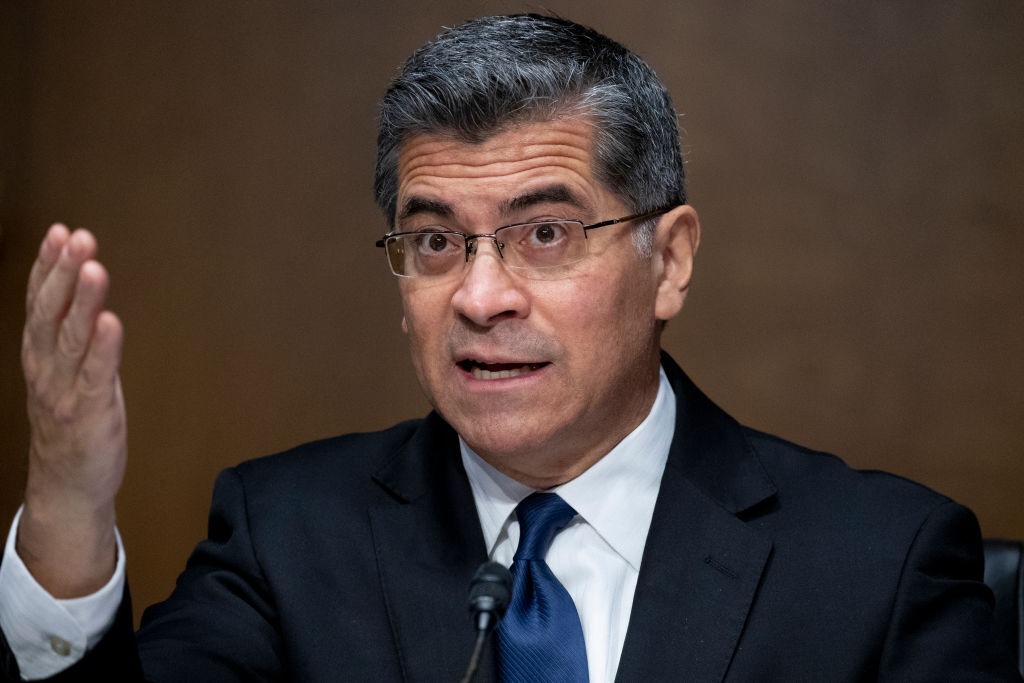
    Xavier Becerra, U.S. Secretary of Health and Human Services. (Photo by Michael Reynolds-Pool/Getty Images)

    BY:  Ohio Capital Journal

    In a recent letter to Ohio Gov. Mike DeWine, the U.S. Department of Health and Human Services said Ohio is among the top states with children losing Medicaid coverage.

    HHS Secretary Xavier Becerra sent a letter to DeWine urging the state to “ensure that no child in your state who still meets eligibility criteria for Medicaid or (the Children’s Health Insurance Program) loses their health coverage” for any reason, including “red tape” or “other avoidable reasons” as COVID-19 enrollment provisions start to fade away.

    The letter said Ohio’s Medicaid and CHIP — a program that gives health coverage to children whose families aren’t eligible for Medicaid — enrollment declined by more than 86,000 children as of Sept. 2023.

    That represents a 6% drop since March of this year, and makes Ohio the fourth-highest in declines across the U.S. during that period, the U.S. Department of Medicaid found.

    Texas was the highest with a decline of 524,909, followed by Florida with 366,633 and Georgia with 149,080.

    Becerra said keeping Medicaid enrollment up is especially important for communities of color, with more than half of children in the U.S. on Medicaid or CHIP in Hispanic, Black, Asian/Pacific Islander, American Indian or Alaska Native communities, according to the U.S. Department of Medicaid.

    “My department stands ready to do all that we can to help your state advance this goal, including by providing Ohio with the flexibility to pause procedural disenrollments for children while it adopts other strategies to ensure eligible children remain enrolled,” Becerra wrote.

    Procedural disenrollments happen when program participants don’t complete the renewal process, which can happen because the state does not have correct contact information, or simply because the participant doesn’t meet the renewal timeline.

    Those disenrollments had been halted in March 2020, but the halt ended on March 31 of this year.

    According to a tracker by KFF — nonpartisan health policy researchers formerly known as the Kaiser Family Foundation — Ohio has seen more than 514,000 individuals disenrolled as of Dec. 13, 2023, and across the states KFF studied, 71% of disenrolled participants lost their coverage because of procedural disenrollment.

    In Ohio, that number was slightly higher than the national amount, at 74%. Only 26% of those who lost coverage in Ohio were disenrolled because they were determined to be ineligible, according to KFF.

    Nationally, the analysis showed four in 10 Medicaid disenrollments were children for the 21 states who released data by age group.

    Becerra noted suggestions from HHS for Ohio to improve enrollment rates by allowing Medicaid managed care organizations to help with renewals, and giving an extra year for those who haven’t gone through the renewal process yet.

    He also encouraged improvements to the auto-renewal process, and increased outreach efforts to places such as schools and community organizations.

    The Ohio House Democratic Caucus was quick to jump on the letter’s contents, with state Rep. Dr. Beth Liston, D-Dublin, writing on behalf of the caucus to urge DeWine to continue the pause on procedural disenrollment for the next year, “while Medicaid works with the Centers for Medicare & Medicaid Services to adopt policies ensuring that children remain enrolled.”

    “No child in Ohio should go without access to the care they need,” Liston wrote in a letter to DeWine. “Every Ohioans deserves to know that their family will have coverage when they need it most.”

    DeWine’s spokesperson, Dan Tierney, verified to the OCJ that the HHS “has communicated with our administration and noted Ohio is farther ahead in redeterminations than other states, which means Ohio Medicaid is doing a better job complying with these directives than other states, which is something to be commended.”

    Tierney also said with Medicaid/CHIP numbers, perspective is also needed.

    “Ohio is our nation’s seventh largest state, so it is unsurprising that Ohio ranks where it does in this ranking of raw numbers,” he said.


    Susan Tebben
    SUSAN TEBBEN

    Susan Tebben is an award-winning journalist with a decade of experience covering Ohio news, including courts and crime, Appalachian social issues, government, education, diversity and culture. She has worked for The Newark Advocate, The Glasgow (KY) Daily Times, The Athens Messenger, and WOUB Public Media. She has also had work featured on National Public Radio.

    MORE FROM AUTHOR